

Effect of reverse transcriptase inhibitors on LINE-1 and Ty1 reverse transcriptase activities and on LINE-1 retrotransposition
Open accessThe DOI matches its Crossref record; 55 of the 55 references it cites were found in a registry or an index.
Abstract
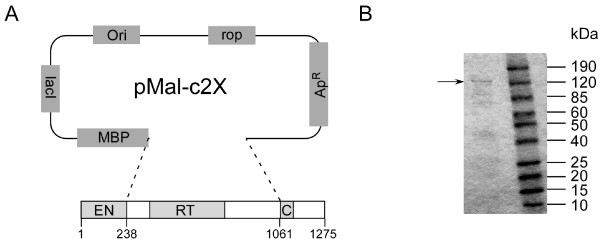
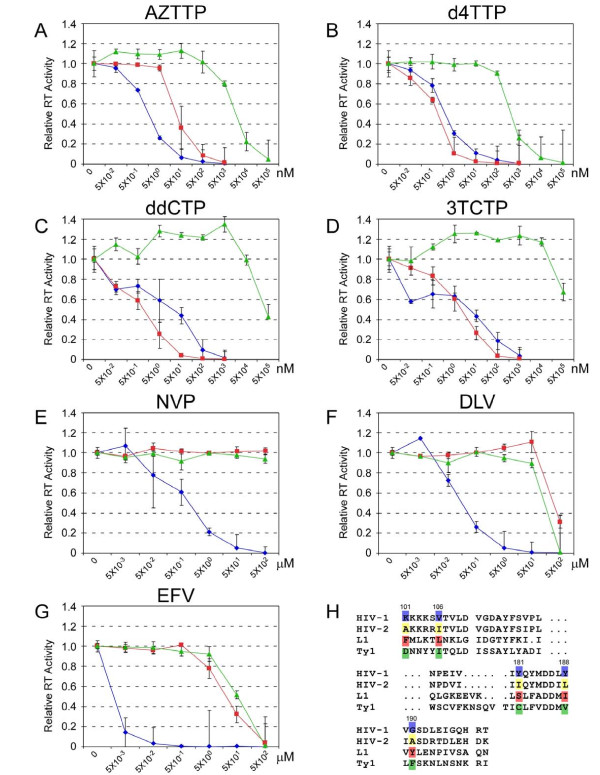
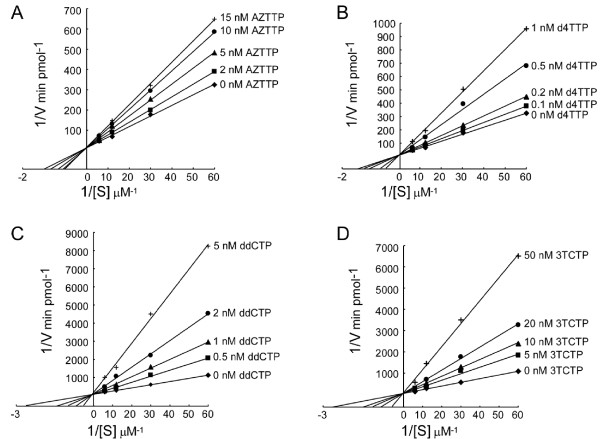
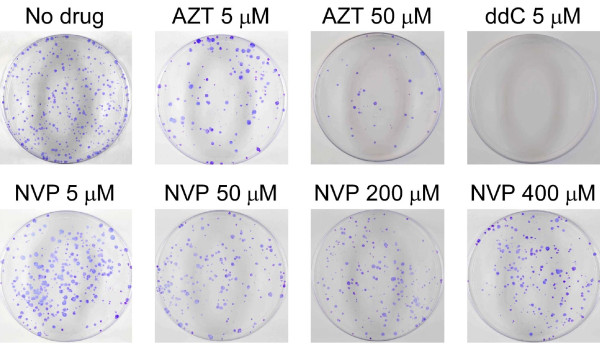
Background: LINE-1s (L1, Long Interspersed Element-1) are the most abundant autonomous non-LTR retrotransposons in the human genome and replicate by reverse transcription of an RNA intermediate. Full-length L1 encodes two open reading frames (ORF1, ORF2) and ORF2 has reverse transcriptase activity. Results: Here we expressed human L1 RT in E. coli and the purified protein displayed the same RT activity as that of ORF2p expressed in insect cells. We tested the effect of different reverse transcriptase inhibitors on L1 RT and found that all four tested nucleoside inhibitors efficiently inhibited L1 RT activity competitively. The K i values of NRTIs were calculated (AZTTP, 16.4 ± 4.21 nM; d4TTP, 0.73 ± 0.22 nM; ddCTP, 0.72 ± 0.16 nM; 3TCTP, 12.9 ± 2.07 nM). L1 RT was less sensitive to non-nucleoside reverse transcriptase inhibitors, among these nevirapine had no effect, even at concentrations up to 500 μM. We also examined the effect of RT inhibitors on L1 retrotransposition efficiency in vivo using a cell-based retrotransposition assay. Similarly, all analog inhibitors decreased L1 retrotransposition frequency with different potencies whereas nevirapine had little or no effect on L1 retrotransposition. For comparison, we also tested the same inhibitors to highly purified RT of an LTR-retrotransposon (Ty1) and found it was less sensitive to NRTIs than L1 RT and has the same inhibition profile as L1 RT to NNRTIs. Conclusions: These data indicate that bacterially expressed L1 RT is an active reverse transcriptase sensitive to nucleoside RT inhibitors but not to non-nucleoside inhibitors.
Overview
The claims and statistics of this paper haven’t been checked yet.
Free: it reads the open-access text and checks the first 5 claims that cite a source we can check. Create a free account to check every claim.
Integrity signals
Registry
Cites
Statistics
Figures
Verification
Claims the paper makes
The claims and statistics of this paper haven’t been checked yet.
Free: it reads the open-access text and checks the first 5 claims that cite a source we can check. Create a free account to check every claim.
Claims other papers make about this one
Each is checked against this paper’s own text: does it say what the citing paper says it does?
The cited source says what the claim attributes to it.
In the citing paper
“Some NRTIs developed against HIV have been found to also inhibit L1 RT activity15.”
From L1 drives IFN in senescent cells and promotes age-associated inflammation (2019) · cites this paper as [15]
In the citing paper
“Consistent with this, another group showed that NRTIs effectively inhibit the reverse transcriptase activity of the L1 protein, ORF2p, consequently reducing retrotransposition (Dai et al., 2011).”
From Cytoplasmic DNA: sources, sensing, and role in aging and disease (2021) · cites this paper as Dai et al., 2011
Self-check
Percentages, sums and reported differences re-computed from the paper’s own numbers.
The self-check needs the paper’s full text.
Citations
Cites
Thompson, J. (1997) · Nucleic Acids Research · doi:10.1093/nar/25.24.4876 · Cited by 38,993
Initial sequencing and analysis of the human genome
International Human Genome Sequencing Consortium, Whitehead Institute for Biomedical Research, C. F. G. R., Lander, E. S., Linton, L. M., Birren, B., Nusbaum, C., Zody, M. C., Baldwin, J., Devon, K., Dewar, K., et al. (2001) · Nature · doi:10.1038/35057062 · Cited by 24,216
Mitsuya, H., Weinhold, K. J., Furman, P. A., St Clair, M. H., Lehrman, S. N., Gallo, R. C., Bolognesi, D., Barry, D. W., & Broder, S. (1985) · Proceedings of the National Academy of Sciences · doi:10.1073/pnas.82.20.7096 · Cited by 1,866
Human L1 retrotransposon encodes a conserved endonuclease required for retrotransposition
Feng, Q., Moran, J. V., Kazazian, H. H., & Boeke, J. D. (1996) · Cell · doi:10.1016/s0092-8674(00)81997-2 · Cited by 1,139 · cited 2×
“ORF2 encodes a ~150 kDa multifunctional protein (ORF2p) with endonuclease (EN) [17], reverse transcriptase (RT) activities [18-20] and a cysteine-rich domain of unknown function [21].”
BackgroundSelf-citationHot L1s account for the bulk of retrotransposition in the human population
Brouha, B., Schustak, J., Badge, R. M., Lutz-Prigge, S., Farley, A. H., Moran, J. V., & Kazazian, H. H. (2003) · Proceedings of the National Academy of Sciences · doi:10.1073/pnas.0831042100 · Cited by 1,073 · cited 1×
“Though most L1 copies are functionally inactive, there are ~80-100 retrotransposition-competent L1s in human genome [2].”
BackgroundLINE-mediated retrotransposition of marked Alu sequences
Dewannieux, M., Esnault, C., & Heidmann, T. (2003) · Nature Genetics · doi:10.1038/ng1223 · Cited by 1,023 · cited 1×
“L1s have greatly shaped the human genome by their own retrotransposition and mobilization of non-autonomous elements (Alu, SINEs) in trans [3-6].”
BackgroundHigh frequency retrotransposition in cultured mammalian cells
Moran, J. V., Holmes, S. E., Naas, T. P., DeBerardinis, R. J., Boeke, J. D., & Kazazian, H. H. (1996) · Cell · doi:10.1016/s0092-8674(00)81998-4 · Cited by 1,022 · cited 2×
“The cell-based retrotransposition assay was conducted as described [26].”
BackgroundMethodSelf-citationHuman LINE retrotransposons generate processed pseudogenes
Esnault, C., Maestre, J., & Heidmann, T. (2000) · Nature Genetics · doi:10.1038/74184 · Cited by 830 · cited 1×
“L1s have greatly shaped the human genome by their own retrotransposition and mobilization of non-autonomous elements (Alu, SINEs) in trans [3-6].”
BackgroundReverse Transcriptase Encoded by a Human Transposable Element
Mathias, S. L., Scott, A. F., Kazazian, H. H., Boeke, J. D., & Gabriel, A. (1991) · Science · doi:10.1126/science.1722352 · Cited by 773 · cited 1×
“ORF2 encodes a ~150 kDa multifunctional protein (ORF2p) with endonuclease (EN) [17], reverse transcriptase (RT) activities [18-20] and a cysteine-rich domain of unknown function [21].”
BackgroundSelf-citationLander, E., Linton, L., Birren, B. W., & Nusbaum, C. (2001) · Cited by 772
Cited by
Items 101–133 of 133
Acceleration of crescent formation by L1 retrotransposon in mouse BSA-induced nephritis
MUGITANI, N., Shimizu, Y., Satake, K., Suzuki, Y., Horikoshi, S., & Tomino, Y. (2012) · Journal of Nephrology · doi:10.5301/jn.5000156 · Cited by 3
Activity of Retrotransposons in Stem Cells and Differentiated Cells
Macia, Á., Tejwani, L., Mesci, P., Muotri, A. R., & Garcia-Perez, J. L. (2017) · Springer eBooks · doi:10.1007/978-3-319-48344-3_6 · Cited by 3
Aging metabolism: intervention strategies
Martínez, E. (2017) · Virulence · doi:10.1080/21505594.2017.1305532 · Cited by 3
LINE1 RNA dysregulation impairs chromatin accessibility in C9ORF72- and TDP-43-linked ALS/FTDPreprint
Li, Y., Dou, X., Xiao, Y., Zhang, Z., Ye, Y., Wright, N., Chang, K., Liu, C., Troncoso, J. C., He, C., et al. (2025) · bioRxiv (Cold Spring Harbor Laboratory) · doi:10.1101/2025.09.30.679260 · Cited by 4
Efavirenz: New Hope in Cancer Therapy
Elango, V. D., Mugundan, U. M., & Rajanandh, M. G. (2024) · Cureus · doi:10.7759/cureus.67776 · Cited by 2
“Such micro RNAs are known for their ability to down-regulate a range of cancers and are linked to cell differentiation, Inhibition of metastasis, and prevention of carcinogenesis [8,9].”
BackgroundZhang, F., Li, M., Pan, F., Lei, W., Xi, Y., Ling, L., Myatt, L., Sun, K., & Wang, W. (2025) · Advanced Science · doi:10.1002/advs.202414682 · Cited by 3
The Other Side of the Same Coin: Beyond the Coding Region in Amyotrophic Lateral Sclerosis
Ruffo, P., Perrone, B., Perrone, F., Amicis, F. D., Iuliano, R., Bucci, C., Messina, A. A., & Conforti, F. L. (2025) · Pharmaceuticals · doi:10.3390/ph18101573 · Cited by 3
“Notably, reverse transcriptase inhibitors (RTIs), which were originally developed as antiretroviral drugs for HIV, have demonstrated efficacy in suppressing L1 retrotransposition in vitro and in vivo [44].”
Potential to use of viral reverse transcriptase inhibitors in oncology
Vlasova, O. A., Antonova, I., Magomedova, K., Usolkina, M. A., Игоревич, К. К., Belitsky, G. A., Valiev, T. T., & Геннадиевна, Я. М. (2024) · Advances in molecular oncology · doi:10.17650/2313-805x-2024-11-2-8-28 · Cited by 2
LINE-1 Retrotransposons and Their Role in Cancer
Rahbari, R., Habibi, L., García-Puche, J. L., Badge, R. M., & Garcia-Perez, J. L. (2015) · Springer eBooks · doi:10.1007/978-94-017-9639-2_3 · Cited by 3
Retrotransposons as both “architects” and “saboteurs” in the nervous system
Izquierdo‐Useros, N., Dierssen, M., Clotet, B., Elizalde‐Torrent, A., & Carriba, P. (2025) · Advances in genetics · doi:10.1016/bs.adgen.2025.11.002 · Cited by 2
LINE-1 Activation in Endocrine-Related Cancers: Molecular Mechanisms and Translational Implications
Pessoa, B. S., D’Alessandre, N. D. R., Guardia, G. D. A., Marques, J. M., Gruetzmacher, C., Craveiro, F. L., Asprino, P. F., Galante, P. A. F., & Batista, R. L. (2026) · Molecular Cancer Research · doi:10.1158/1541-7786.mcr-25-0682 · Cited by 1
Abuhassan, Q., Saeed, T. N., Al-Hussainy, A. F., Roopashree, R., Mishra, S., Nanda, A., Mukherjee, G., Rizaev, J., Taher, S. G., Alwan, M., et al. (2026) · Journal of Molecular Neuroscience · doi:10.1007/s12031-026-02532-x · Cited by 1
“Crucially, this mechanism is effective not only against retroviral reverse transcriptases but also against the endogenous machinery of LINE-1 ORF2p (Dai et al. 2011; Jones et al. 2008).”
Tenofovir, Interferon Pathways, and Mucosal Immunity: Implications for People Living With HIV
Hladik, F., Hughes, S. M., Levy, C., Creighton, R. L., Mackelprang, R. D., & Gornalusse, G. G. (2026) · American Journal of Reproductive Immunology · doi:10.1111/aji.70255 · Cited by 1
Evdokimova, V. E., Ruzanov, P., Gassmann, H., Hung, M., Zhang, Z., Ribeiro, A. S., Khoshgoo, N., Zheng, S., Pachva, M. C., Ringwalt, E. M., et al. (2026) · Cell Reports · doi:10.1016/j.celrep.2026.117708 · Cited by 1
Gim, J., Nam, G.-H., Kim, W., Lee, H.-E., Mishra, A., Choe, Y., Park, C., Kim, D., Choi, Y. H., Cha, H., et al. (2016) · Genes & Genomics · doi:10.1007/s13258-016-0457-8 · Cited by 1
“Therefore, RT sequences have been used to build phylogenetic trees (Dai et al. 2011; Shedlock 2006).”
MethodInhibition of retrotransposition improves health and extends lifespan of SIRT6 knockout micePreprint
Simon, M., Meter, M. V., Ablaeva, J., Ke, Z., González, R. S., Taguchi, T., Cecco, M. D., Leonova, K. I., Kogan, V., Helfand, S. L., et al. (2018) · bioRxiv (Cold Spring Harbor Laboratory) · doi:10.1101/460808 · Cited by 3
Mangiavacchi, A., Reppe, S., Morelli, G., D’Onghia, M., Gautvik, K. M., & Orlando, V. (2025) · bioRxiv (Cold Spring Harbor Laboratory) · doi:10.64898/2025.12.27.696700 · Cited by 1
“…to also target endogenous reverse transcriptases (RT), particularly those derived from LINE-1 (long interspersed nuclear element-1) and ERV-K (human endogenous retrovirus K) retrotransposons, two major contributors to endogenous reverse transcription activity in mammalian cells 16 17 18 19 20 21 .”
The Effects of Exercise on LINE-1 Regulation
Romero, M. A. (2019)
Improved ThwaRTing of Genome Symbionts
Goodier, J. L. (2019) · Cell chemical biology · doi:10.1016/j.chembiol.2019.07.014
Zhang, M., & Xuan, Z. (2019) · Faculty Opinions – Post-Publication Peer Review of the Biomedical Literature · doi:10.3410/f.735010803.793558596
Carvalho, D. D. D., & Ishak, C. A. (2020) · Faculty Opinions – Post-Publication Peer Review of the Biomedical Literature · doi:10.3410/f.737342811.793574228
Pieters, J., & Mode, R. (2019) · Faculty Opinions – Post-Publication Peer Review of the Biomedical Literature · doi:10.3410/f.735010803.793558622
Data from Reverse Transcriptase Inhibition Disrupts Repeat Element Life Cycle in Colorectal Cancer
Rajurkar, M., Parikh, A. R., Solovyov, A., You, E., Kulkarni, A. S., Chu, C., Xu, K. H., Jaicks, C. M., Taylor, M. S., Wu, C., et al. (2023) · doi:10.1158/2159-8290.c.6549619.v1
Drug Repurposing Patent Applications April–June 2023
Mucke, H. A. (2023) · Assay and Drug Development Technologies · doi:10.1089/adt.2023.081
Temerozo, J. R., Rodrigues, N. F., dos Santos, M. C., Hottz, E. D., Sacramento, C. Q., da Silva, A. D. P. D., Mandacaru, S. C., Moraes, E. C. D. S., Trugilho, M. R. O., Gesto, J. S. M., et al. (2022) · Figshare · doi:10.6084/m9.figshare.19641917
Temerozo, J. R., Rodrigues, N. F., dos Santos, M. C., Hottz, E. D., Sacramento, C. Q., da Silva, A. D. P. D., Mandacaru, S. C., Moraes, E. C. D. S., Trugilho, M. R. O., Gesto, J. S. M., et al. (2022) · Figshare · doi:10.6084/m9.figshare.19641920
Temerozo, J. R., Rodrigues, N. F., dos Santos, M. C., Hottz, E. D., Sacramento, C. Q., da Silva, A. D. P. D., Mandacaru, S. C., Moraes, E. C. D. S., Trugilho, M. R. O., Gesto, J. S. M., et al. (2022) · Figshare · doi:10.6084/m9.figshare.19641911
Aksenov, V., Glazunova, M., Oscorbin, I. P., Gorokhovets, N. V., Filipenko, M. L., Kurchatova, A. V., Svetlova, J. I., Kushlinskii, N. E., Stepanenko, V. N., & Ivanov, I. (2026) · Biochimica et Biophysica Acta (BBA) - Proteins and Proteomics · doi:10.1016/j.bbapap.2026.141130
Molecular mechanisms underlying heterochromatin formation in the mouse embryo
Jachowicz, J. W. (2015) · theses.fr (ABES) · doi:10.70675/2d052373zc1a4z43f4z992ez2888b80aa5a5
“The route and doses of AZT used in this study were based on previous reports (Toltzis et al. 1993; Dai et al. 2011; Malki et al. 2014)”
MethodRole of thrombopoietin in DNA repair an genomic integrity in hematopoietic stem cells
Barbieri, D. (2017) · theses.fr (ABES) · doi:10.70675/359bd204z134fz4c92z85e1zaef54e2e7826
Reverse transcriptase inhibitors induce autophagy in a LINE-1 ORF1p-dependent manner
Damizia, M., Baranzini, M., Sciamanna, I., Altieri, L., Rovella, P., Bringas, O. G. R., Hozeifi, S., Saba, L. J., Mourtzinos, A., O'shea, A., et al. (2026) · Communications Biology · doi:10.1038/s42003-026-10900-x · Cited by 1
Inhibiting LINE-1 retrotransposons therapeutically in diseasePreprint
Brandler, W. M. (2026) · ChemRxiv · doi:10.26434/chemrxiv.15011180/v1
Metadata
- Authors
- Dai, L., Huang, Q., & Boeke, J. D.
- Affiliations
- Johns Hopkins University (US)
- Corresponding author
- Boeke, Jef D
- Venue
- BMC Biochemistry
- Published
- 2011-05-05
- Volume
- 12
- Issue
- 1
- Pages
- 18-18
- ISSN
- 1471-2091 (ISSN-L)
- PMC
- PMC3103432
- OpenAlex
- W1982644994
- Cited by
- 131
- References
- 55
- Citations by year
- 2026: 6 · 2025: 10 · 2024: 7 · 2023: 7 · 2022: 13 · 2021: 10 · 2020: 18 · 2019: 13 · 2018: 6 · 2017: 12 · 2016: 4 · 2015: 7 · 2014: 5 · 2013: 11 · 2012: 1
- FWCI
- 6.92
- Type
- journal article
- Language
- en
- Open access
- hybrid
- doi.org
- Licence
- cc-by
- Locations
- BMC Biochemistry (publishedVersion, cc-by)
- PubMed Central (publishedVersion, cc-by)
- PubMed (publishedVersion)
- Funders
- National Cancer Institute (P01CA16519, P01CA016519)
- National Institute of General Medical Sciences (R01-GM36481, R01GM036481)
- Topics
- Life Sciences › Biochemistry, Genetics and Molecular Biology › Genetics › Chromosomal and Genetic Variations
- Health Sciences › Medicine › Infectious Diseases › HIV/AIDS drug development and treatment
- Life Sciences › Biochemistry, Genetics and Molecular Biology › Genetics › Virus-based gene therapy research
- Keywords
- LINE-1 retrotransposons, reverse transcriptase inhibitors, retrotransposition, Ty1 retrotransposon, nucleoside reverse transcriptase inhibitors, non-nucleoside reverse transcriptase inhibitors, nevirapine, LTR retrotransposons, competitive inhibition, Ki values, non-LTR retrotransposons
- MeSH terms
- Amino Acid Sequence, Cell-Free System, Escherichia coli, HeLa Cells, Humans, Kinetics, Molecular Sequence Data, RNA-Directed DNA Polymerase, HIV-1, HIV-2, Reverse Transcriptase Inhibitors, Long Interspersed Nucleotide Elements, Enzyme Assays
About these checks
Registry, retraction, Cites and statistics results are computed, not judged, with one exception: a printed reference that no index lists is read once by a model before it counts as a citation error. Claims are extracted by a model and kept only when their quote appears verbatim in the text; each cited source is then checked, with a model’s help, for whether it says what the claim relies on. Those verdicts can be wrong — read the claim’s quote and the cited source before relying on one.
Statistics and arithmetic are recomputed, not judged.
Confidence bands are shown only for fields calibrated on our annotated test set. None is calibrated yet, so no band is shown.
What counts as a claim ›How we measure confidence ›How we check this ›
Are you an author, or do you see a problem with this page? Request a review
Data sources
Bibliographic data: Semantic Scholar, OpenAlex, Crossref.
Contains information from the Semantic Scholar Academic Graph Datasets, made available under the ODC Attribution License (ODC-BY 1.0).
Semantic Scholar’s data is described in: Kinney, R., et al. (2023). The Semantic Scholar Open Data Platform. arXiv:2301.10140.
