

Effect of reverse transcriptase inhibitors on LINE-1 and Ty1 reverse transcriptase activities and on LINE-1 retrotransposition
Open accessThe DOI matches its Crossref record; 55 of the 55 references it cites were found in a registry or an index.
Abstract
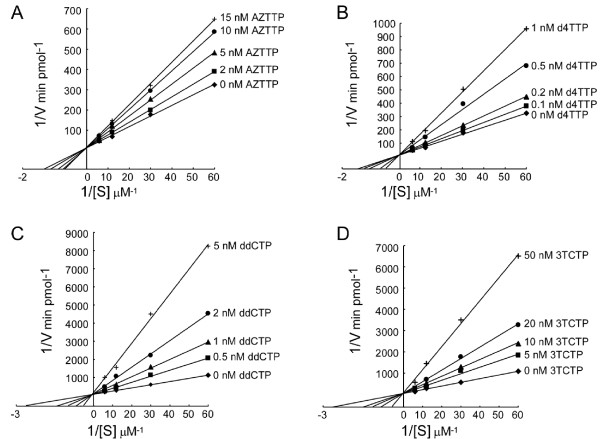
Background: LINE-1s (L1, Long Interspersed Element-1) are the most abundant autonomous non-LTR retrotransposons in the human genome and replicate by reverse transcription of an RNA intermediate. Full-length L1 encodes two open reading frames (ORF1, ORF2) and ORF2 has reverse transcriptase activity. Results: Here we expressed human L1 RT in E. coli and the purified protein displayed the same RT activity as that of ORF2p expressed in insect cells. We tested the effect of different reverse transcriptase inhibitors on L1 RT and found that all four tested nucleoside inhibitors efficiently inhibited L1 RT activity competitively. The K i values of NRTIs were calculated (AZTTP, 16.4 ± 4.21 nM; d4TTP, 0.73 ± 0.22 nM; ddCTP, 0.72 ± 0.16 nM; 3TCTP, 12.9 ± 2.07 nM). L1 RT was less sensitive to non-nucleoside reverse transcriptase inhibitors, among these nevirapine had no effect, even at concentrations up to 500 μM. We also examined the effect of RT inhibitors on L1 retrotransposition efficiency in vivo using a cell-based retrotransposition assay. Similarly, all analog inhibitors decreased L1 retrotransposition frequency with different potencies whereas nevirapine had little or no effect on L1 retrotransposition. For comparison, we also tested the same inhibitors to highly purified RT of an LTR-retrotransposon (Ty1) and found it was less sensitive to NRTIs than L1 RT and has the same inhibition profile as L1 RT to NNRTIs. Conclusions: These data indicate that bacterially expressed L1 RT is an active reverse transcriptase sensitive to nucleoside RT inhibitors but not to non-nucleoside inhibitors.
Overview
The claims and statistics of this paper haven’t been checked yet.
Free: it reads the open-access text and checks the first 5 claims that cite a source we can check. Create a free account to check every claim.
Integrity signals
Registry
Cites
Statistics
Figures
Verification
Claims the paper makes
The claims and statistics of this paper haven’t been checked yet.
Free: it reads the open-access text and checks the first 5 claims that cite a source we can check. Create a free account to check every claim.
Claims other papers make about this one
Each is checked against this paper’s own text: does it say what the citing paper says it does?
The cited source says what the claim attributes to it.
In the citing paper
“Some NRTIs developed against HIV have been found to also inhibit L1 RT activity15.”
From L1 drives IFN in senescent cells and promotes age-associated inflammation (2019) · cites this paper as [15]
In the citing paper
“Consistent with this, another group showed that NRTIs effectively inhibit the reverse transcriptase activity of the L1 protein, ORF2p, consequently reducing retrotransposition (Dai et al., 2011).”
From Cytoplasmic DNA: sources, sensing, and role in aging and disease (2021) · cites this paper as Dai et al., 2011
Self-check
Percentages, sums and reported differences re-computed from the paper’s own numbers.
The self-check needs the paper’s full text.
Citations
Cites
Thompson, J. (1997) · Nucleic Acids Research · doi:10.1093/nar/25.24.4876 · Cited by 38,993
Initial sequencing and analysis of the human genome
International Human Genome Sequencing Consortium, Whitehead Institute for Biomedical Research, C. F. G. R., Lander, E. S., Linton, L. M., Birren, B., Nusbaum, C., Zody, M. C., Baldwin, J., Devon, K., Dewar, K., et al. (2001) · Nature · doi:10.1038/35057062 · Cited by 24,216
Mitsuya, H., Weinhold, K. J., Furman, P. A., St Clair, M. H., Lehrman, S. N., Gallo, R. C., Bolognesi, D., Barry, D. W., & Broder, S. (1985) · Proceedings of the National Academy of Sciences · doi:10.1073/pnas.82.20.7096 · Cited by 1,866
Human L1 retrotransposon encodes a conserved endonuclease required for retrotransposition
Feng, Q., Moran, J. V., Kazazian, H. H., & Boeke, J. D. (1996) · Cell · doi:10.1016/s0092-8674(00)81997-2 · Cited by 1,139 · cited 2×
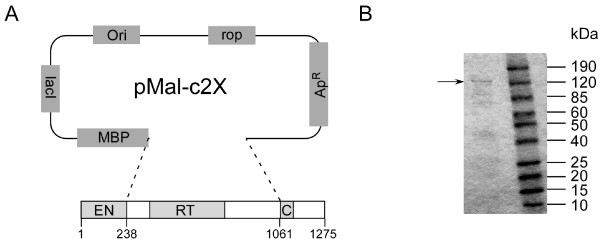
“ORF2 encodes a ~150 kDa multifunctional protein (ORF2p) with endonuclease (EN) [17], reverse transcriptase (RT) activities [18-20] and a cysteine-rich domain of unknown function [21].”
BackgroundSelf-citationHot L1s account for the bulk of retrotransposition in the human population
Brouha, B., Schustak, J., Badge, R. M., Lutz-Prigge, S., Farley, A. H., Moran, J. V., & Kazazian, H. H. (2003) · Proceedings of the National Academy of Sciences · doi:10.1073/pnas.0831042100 · Cited by 1,073 · cited 1×
“Though most L1 copies are functionally inactive, there are ~80-100 retrotransposition-competent L1s in human genome [2].”
BackgroundLINE-mediated retrotransposition of marked Alu sequences
Dewannieux, M., Esnault, C., & Heidmann, T. (2003) · Nature Genetics · doi:10.1038/ng1223 · Cited by 1,023 · cited 1×
“L1s have greatly shaped the human genome by their own retrotransposition and mobilization of non-autonomous elements (Alu, SINEs) in trans [3-6].”
BackgroundHigh frequency retrotransposition in cultured mammalian cells
Moran, J. V., Holmes, S. E., Naas, T. P., DeBerardinis, R. J., Boeke, J. D., & Kazazian, H. H. (1996) · Cell · doi:10.1016/s0092-8674(00)81998-4 · Cited by 1,022 · cited 2×
“The cell-based retrotransposition assay was conducted as described [26].”
BackgroundMethodSelf-citationHuman LINE retrotransposons generate processed pseudogenes
Esnault, C., Maestre, J., & Heidmann, T. (2000) · Nature Genetics · doi:10.1038/74184 · Cited by 830 · cited 1×
“L1s have greatly shaped the human genome by their own retrotransposition and mobilization of non-autonomous elements (Alu, SINEs) in trans [3-6].”
BackgroundReverse Transcriptase Encoded by a Human Transposable Element
Mathias, S. L., Scott, A. F., Kazazian, H. H., Boeke, J. D., & Gabriel, A. (1991) · Science · doi:10.1126/science.1722352 · Cited by 773 · cited 1×
“ORF2 encodes a ~150 kDa multifunctional protein (ORF2p) with endonuclease (EN) [17], reverse transcriptase (RT) activities [18-20] and a cysteine-rich domain of unknown function [21].”
BackgroundSelf-citationLander, E., Linton, L., Birren, B. W., & Nusbaum, C. (2001) · Cited by 772
Biology of Mammalian L1 Retrotransposons
Ostertag, E. M., & Kazazian Jr, H. H. (2001) · Annual Review of Genetics · doi:10.1146/annurev.genet.35.102401.091032 · Cited by 765 · cited 1×
“L1s have greatly shaped the human genome by their own retrotransposition and mobilization of non-autonomous elements (Alu, SINEs) in trans [3-6].”
BackgroundInhibition of HIV-1 Replication by a Nonnucleoside Reverse Transcriptase Inhibitor
Merluzzi, V. J., Hargrave, K. D., Labadia, M., Grozinger, K., Skoog, M., Wu, J. C., Shih, C.-K., Eckner, K., Hattox, S., Adams, J., et al. (1990) · Science · doi:10.1126/science.1701568 · Cited by 743 · cited 4×
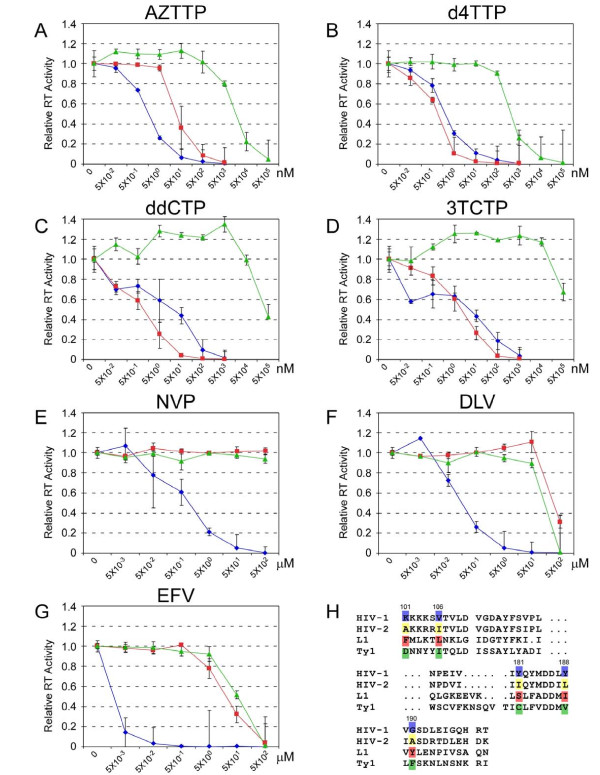
“93 nM; DLV, IC50 = 260 nM) [29,37,38] and we observed similar degrees of inhibitory effects on HIV-1 RT here (Figure 2E, F, G).”
BackgroundInfluentialHuman L1 Retrotransposition: cis Preference versus trans Complementation
Wei, W., Gilbert, N., Ooi, S. L., Lawler, J. F., Ostertag, E. M., Kazazian, H. H., Boeke, J. D., & Moran, J. V. (2001) · Molecular and Cellular Biology · doi:10.1128/mcb.21.4.1429-1439.2001 · Cited by 635 · cited 1×
“L1 proteins have a strong cis-preference and are proposed to specifically associate with their encoding mRNAs to form an RNP particle that re-enters the nucleus and integrates into the genome [22-24].”
BackgroundSelf-citationHuman L1 element target‐primed reverse transcription in vitro
Cost, G. J., Feng, Q., Jacquier, A., & Boeke, J. D. (2002) · The EMBO Journal · doi:10.1093/emboj/cdf592 · Cited by 519 · cited 3×
“TPRT, Target Primed Reverse Transcription.”
BackgroundSelf-citationYoung, S. D., Britcher, S. F., Tran, L. O., Payne, L. S., Lumma, W. C., Lyle, T. A., Huff, J. R., Anderson, P. S., Olsen, D. B., & Carroll, S. S. (1995) · Antimicrobial Agents and Chemotherapy · doi:10.1128/aac.39.12.2602 · Cited by 482 · cited 4×
“93 nM; DLV, IC50 = 260 nM) [29,37,38] and we observed similar degrees of inhibitory effects on HIV-1 RT here (Figure 2E, F, G).”
BackgroundInfluentialIsolation of an Active Human Transposable Element
Dombroski, B. A., Mathias, S. L., Nanthakumar, E., Scott, A. F., & Kazazian, H. H. (1991) · Science · doi:10.1126/science.1662412 · Cited by 443 · cited 1×
“A full-length L1 element is about 6 kb in length and contains a 5’ untranslated region (UTR), two non-overlapping open reading frames (ORF1 and ORF2), followed by a short 3’ UTR that ends in a poly adenosine tail [7-12].”
BackgroundNucleic Acid Chaperone Activity of the ORF1 Protein from the Mouse LINE-1 Retrotransposon
Martin, S. L., & Bushman, F. D. (2001) · Molecular and Cellular Biology · doi:10.1128/mcb.21.2.467-475.2001 · Cited by 348 · cited 1×
“The product of ORF1 encodes a 40 kDa protein (ORF1p) with nucleic acid binding and chaperone activities [13-16].”
BackgroundOrigin of the human L1 elements: Proposed progenitor genes deduced from a consensus DNA sequence
Scott, A. F., Schmeckpeper, B. J., Abdelrazik, M., Comey, C. T., O'Hara, B., Rossiter, J. P., Cooley, T., Heath, P., Smith, K. D., & Margolet, L. (1987) · Genomics · doi:10.1016/0888-7543(87)90003-6 · Cited by 315
Cis-preferential LINE-1 reverse transcriptase activity in ribonucleoprotein particles
Kulpa, D. A., & Moran, J. V. (2006) · Nature Structural & Molecular Biology · doi:10.1038/nsmb1107 · Cited by 290 · cited 1×
“L1 proteins have a strong cis-preference and are proposed to specifically associate with their encoding mRNAs to form an RNP particle that re-enters the nucleus and integrates into the genome [22-24].”
BackgroundCheng, Y. C., Dutschman, G. E., Bastow, K. F., Sarngadharan, M. G., & Ting, R. Y. (1987) · Journal of Biological Chemistry · doi:10.1016/s0021-9258(18)61637-0 · Cited by 226
HIV resistance to reverse transcriptase inhibitors
De Clercq, E. (1994) · Biochemical Pharmacology · doi:10.1016/0006-2952(94)90001-9 · Cited by 225
LINE-1: A mammalian transposable element
Fanning, T. G., & Singer, M. F. (1987) · Biochimica et Biophysica Acta (BBA) - Gene Structure and Expression · doi:10.1016/0167-4781(87)90112-6 · Cited by 224 · cited 1×
“A full-length L1 element is about 6 kb in length and contains a 5’ untranslated region (UTR), two non-overlapping open reading frames (ORF1 and ORF2), followed by a short 3’ UTR that ends in a poly adenosine tail [7-12].”
BackgroundRen, J., Bird, L. E., Chamberlain, P. P., Stewart-Jones, G. B., Stuart, D. I., & Stammers, D. K. (2002) · Proceedings of the National Academy of Sciences · doi:10.1073/pnas.222366699 · Cited by 201 · cited 15×
“It is known that reverse transcriptases are susceptible to RT inhibitors classified into three types: nucleoside analog inhibitors (NRTIs), nucleotide analog inhibitors (NtRTIs), and non-nucleoside inhibitors (NNRTIs).”
BackgroundInfluentialInhibition of endogenous reverse transcriptase antagonizes human tumor growth
Sciamanna, I., Landriscina, M., Pittoggi, C., Quirino, M., Mearelli, C., Beraldi, R., Mattei, E., Serafino, A., Cassano, A., Sinibaldi-Vallebona, P., et al. (2005) · Oncogene · doi:10.1038/sj.onc.1208562 · Cited by 198 · cited 2×
“As the most abundant source of endogenous RTs, L1 was assumed to be the major target of these RT inhibitors [31].”
BackgroundDefining the beginning and end of KpnI family segments.
Grimaldi, G., Skowronski, J., & Singer, M. F. (1984) · The EMBO Journal · doi:10.1002/j.1460-2075.1984.tb02042.x · Cited by 196 · cited 1×
“A full-length L1 element is about 6 kb in length and contains a 5’ untranslated region (UTR), two non-overlapping open reading frames (ORF1 and ORF2), followed by a short 3’ UTR that ends in a poly adenosine tail [7-12].”
BackgroundSequence-specific single-strand RNA binding protein encoded by the human LINE-1 retrotransposon
Hohjoh, H., & Singer, M. F. (1997) · The EMBO Journal · doi:10.1093/emboj/16.19.6034 · Cited by 189 · cited 1×
“The product of ORF1 encodes a 40 kDa protein (ORF1p) with nucleic acid binding and chaperone activities [13-16].”
BackgroundL1 retrotransposition in nondividing and primary human somatic cells
Kubo, S., Seleme, M. D. C., Soifer, H. S., Perez, J. L. G., Moran, J. V., Kazazian, H. H., & Kasahara, N. (2006) · Proceedings of the National Academy of Sciences · doi:10.1073/pnas.0601954103 · Cited by 181 · cited 1×
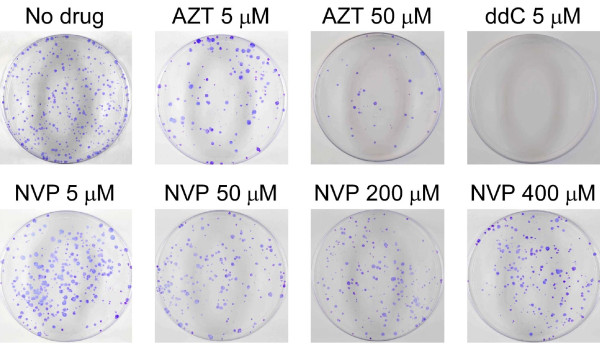
“The RT inhibitor AZT was reported to suppress L1 retrotransposition in the cell-based retrotranspostion assay [34,44].”
MethodRibonucleoprotein particle formation is necessary but not sufficient for LINE-1 retrotransposition
Kulpa, D. A., & Moran, J. V. (2005) · Human Molecular Genetics · doi:10.1093/hmg/ddi354 · Cited by 181 · cited 1×
“L1 proteins have a strong cis-preference and are proposed to specifically associate with their encoding mRNAs to form an RNP particle that re-enters the nucleus and integrates into the genome [22-24].”
BackgroundA highly active synthetic mammalian retrotransposon
Han, J. S., & Boeke, J. D. (2004) · Nature · doi:10.1038/nature02535 · Cited by 180 · cited 2×
“We have also tested these RT inhibitors on the retrotransposition of a highly active synthetic mouse L1 (ORFeus-Mm) [47,48].”
MethodSelf-citationHart, G. J., Orr, D. C., Penn, C. R., Figueiredo, H. T., Gray, N. M., Boehme, R. E., & Cameron, J. M. (1992) · Antimicrobial Agents and Chemotherapy · doi:10.1128/aac.36.8.1688 · Cited by 170 · cited 1×
“This significant difference may be caused by the metabolism of these inhibitors in vivo since the triphosphate form of 3TC and ddC were found to be ten times of that of AZT in the cell [46].”
BackgroundKolosha, V. O., & Martin, S. L. (1997) · Proceedings of the National Academy of Sciences · doi:10.1073/pnas.94.19.10155 · Cited by 167 · cited 1×
“The product of ORF1 encodes a 40 kDa protein (ORF1p) with nucleic acid binding and chaperone activities [13-16].”
BackgroundDe Clercq, E. (1993) · Medicinal Research Reviews · doi:10.1002/med.2610130303 · Cited by 166 · cited 1×
“Instead of being incorporated into the nascent DNA strand, they specifically bind to a “NNRTI pocket” motif formed by the HIV-1 RT p66 subunit [28,29].”
BackgroundFanning, T., & Singer, M. (1987) · Nucleic Acids Research · doi:10.1093/nar/15.5.2251 · Cited by 133
Size and structure of the highly repetitive BAM HI element in mice
Fanning, T. G. (1983) · Nucleic Acids Research · doi:10.1093/nar/11.15.5073 · Cited by 132 · cited 1×
“A full-length L1 element is about 6 kb in length and contains a 5’ untranslated region (UTR), two non-overlapping open reading frames (ORF1 and ORF2), followed by a short 3’ UTR that ends in a poly adenosine tail [7-12].”
BackgroundMangiacasale, R., Pittoggi, C., Sciamanna, I., Careddu, A., Mattei, E., Lorenzini, R., Travaglini, L., Landriscina, M., Barone, C. A., Nervi, C., et al. (2003) · Oncogene · doi:10.1038/sj.onc.1206354 · Cited by 126 · cited 1×
“Recent publications have indicated that two NNRTIs (nevirapine and efavirenz) effectively reduce cell proliferation and promote cell differentiation by inhibiting endogenous RT activity [30-32].”
BackgroundReverse transcription of retroviruses and LTR retrotransposons
Wilhelm, M. L., & Wilhelm, F. X. (2001) · Cellular and Molecular Life Sciences · doi:10.1007/pl00000937 · Cited by 126 · cited 1×
“2 [41,43].”
Kolosha, V. O., & Martin, S. L. (2003) · Journal of Biological Chemistry · doi:10.1074/jbc.m210487200 · Cited by 124 · cited 1×
“The product of ORF1 encodes a 40 kDa protein (ORF1p) with nucleic acid binding and chaperone activities [13-16].”
BackgroundActive retrotransposition by a synthetic L1 element in mice
An, W., Han, J. S., Wheelan, S. J., Davis, E. S., Coombes, C. E., Ye, P., Triplett, C., & Boeke, J. D. (2006) · Proceedings of the National Academy of Sciences · doi:10.1073/pnas.0605300103 · Cited by 116 · cited 1×
“We have also tested these RT inhibitors on the retrotransposition of a highly active synthetic mouse L1 (ORFeus-Mm) [47,48].”
MethodSelf-citationHIV-1 reverse transcriptase inhibitors
Safadi, Y. E., Vivet‐Boudou, V., & Marquet, R. (2007) · Applied Microbiology and Biotechnology · doi:10.1007/s00253-007-0919-7 · Cited by 111 · cited 1×
“Various studies have indicated that substitutions at positions 103, 106, 181, 188 and 190 are the most common HIV-1 mutants that reduce NVP susceptibility more than 50 fold [49].”
BackgroundHuman Immunodeficiency Virus Reverse Transcriptase
Kim, B., Hathaway, T. R., & Loeb, L. A. (1996) · Journal of Biological Chemistry · doi:10.1074/jbc.271.9.4872 · Cited by 110
Crystal Structure of the Targeting Endonuclease of the Human LINE-1 Retrotransposon
Weichenrieder, O., Repanas, K., & Perrakis, A. (2004) · Structure · doi:10.1016/j.str.2004.04.011 · Cited by 100 · cited 2×
“Among them, the structure of EN domain (amino acids 1-239) has been determined [17,35].”
BackgroundJones, R. B., Garrison, K. E., Wong, J. C., Duan, E. H., Nixon, D. F., & Ostrowski, M. A. (2008) · PLoS ONE · doi:10.1371/journal.pone.0001547 · Cited by 99
Characterization of L1 retrotransposition with high-throughput dual-luciferase assays
Xie, Y., Rosser, J. M., Thompson, T. L., Boeke, J. D., & An, W. (2011) · Nucleic Acids Research · doi:10.1093/nar/gkq1076 · Cited by 98 · cited 2×
“The RT inhibitor AZT was reported to suppress L1 retrotransposition in the cell-based retrotranspostion assay [34,44].”
MethodSelf-citationL1-mediated Retrotransposition of Murine B1 and B2 SINEs Recapitulated in Cultured Cells
Dewannieux, M., & Heidmann, T. (2005) · Journal of Molecular Biology · doi:10.1016/j.jmb.2005.03.068 · Cited by 97 · cited 1×
“L1s have greatly shaped the human genome by their own retrotransposition and mobilization of non-autonomous elements (Alu, SINEs) in trans [3-6].”
BackgroundAlthaus, I. W., Chou, J. J., Gonzales, A. J., Deibel, M. R., Kuo‐Chen, C., Kézdy, F. J., Romero, D. L., Thomas, R. C., Aristoff, P. A., Tarpley, W. G., et al. (1994) · Biochemical Pharmacology · doi:10.1016/0006-2952(94)90077-9 · Cited by 72 · cited 1×
“Obvious differences were observed for NNRTIs that inhibited HIV-1 RT activity, as expected [29,38,42] but had little effect on L1 RT.”
BackgroundInhibition of Reverse Transcription In Vivo by Elevated Manganese Ion Concentration
Bolton, E. C., Mildvan, A. S., & Boeke, J. D. (2002) · Molecular Cell · doi:10.1016/s1097-2765(02)00495-1 · Cited by 71 · cited 1×
“pQH1 was constructed by subcloning a DNA fragment containing the last 115 amino acids of Ty1 integrase and full-length RT-RH from pGEX-4T-3 [51] into the NdeI and PstI sites of the pCold I plasmid (Takara, Japan).”
MethodSelf-citationCharacterization of a synthetic human LINE-1 retrotransposon ORFeus-Hs
An, W., Dai, L., Niewiadomska, A. M., Yetil, A., O'Donnell, K. A., Han, J. S., & Boeke, J. D. (2011) · Mobile DNA · doi:10.1186/1759-8753-2-2 · Cited by 67
Self-citationClements, A. (1998) · Nucleic Acids Research · doi:10.1093/nar/26.15.3528 · Cited by 59 · cited 2×
“Interestingly, L1 ORF2p expressed in yeast lost 84% RT activity when amino acids 1-161 were deleted and 50% of activity when amino acids 952-1275 were removed [40], suggesting the importance of these two regions to its RT activity.”
BackgroundPiskareva, O., & Schmatchenko, V. (2006) · FEBS Letters · doi:10.1016/j.febslet.2005.12.077 · Cited by 54
Voorman, R. L., Maio, S. M., Hauer, M. J., Sanders, P. E., Payne, N. A., & Ackland, M. J. (1998) · PubMed · Cited by 52
Wilhelm, M. L., Boutabout, M., & Wilhelm, F. (2000) · Biochemical Journal · doi:10.1042/bj3480337 · Cited by 42 · cited 3×
“The recombinant Ty1 RT used here is essentially the same as that used in a previous publication [41] but its specific activity with poly (rA)-oligo (dT)12-18 and poly (rI)oligo (dC)12-18 template/primer is several times higher than that using poly (rC)-oligo (dG)12-18 (data not shown) [41].”
BackgroundMethodFunctional reverse transcriptase encoded by the human LINE-1 from baculovirus-infected insect cells
Piskareva, O., Den'mukhametova, S. V., & Schmatchenko, V. (2003) · Protein Expression and Purification · doi:10.1016/s1046-5928(02)00655-1 · Cited by 40 · cited 4×
“ORF2 encodes a ~150 kDa multifunctional protein (ORF2p) with endonuclease (EN) [17], reverse transcriptase (RT) activities [18-20] and a cysteine-rich domain of unknown function [21].”
BackgroundInfluentialShaharabany, M., & Hizi, A. (1992) · Journal of Biological Chemistry · doi:10.1016/s0021-9258(19)50577-4 · Cited by 38
Requirements for polyadenylation at the 3′ end of LINE-1 elements
Belancio, V. P., Whelton, M., & Deininger, P. L. (2006) · Gene · doi:10.1016/j.gene.2006.07.029 · Cited by 35 · cited 1×
“A full-length L1 element is about 6 kb in length and contains a 5’ untranslated region (UTR), two non-overlapping open reading frames (ORF1 and ORF2), followed by a short 3’ UTR that ends in a poly adenosine tail [7-12].”
BackgroundAnti-Tumor Activity of Non-Nucleosidic Reverse Transcriptase Inhibitors
Landriscina, M., Spadafora, C., Cignarelli, M., & Barone, C. A. (2007) · Current Pharmaceutical Design · doi:10.2174/138161207780249191 · Cited by 32 · cited 1×
“Recent publications have indicated that two NNRTIs (nevirapine and efavirenz) effectively reduce cell proliferation and promote cell differentiation by inhibiting endogenous RT activity [30-32].”
Background
Cited by
L1 drives IFN in senescent cells and promotes age-associated inflammation
De Cecco, M., Ito, T., Petrashen, A. P., Elias, A. E., Skvir, N. J., Criscione, S. W., Caligiana, A., Brocculi, G., Adney, E. M., Boeke, J. D., et al. (2019) · Nature · doi:10.1038/s41586-018-0784-9 · Cited by 1,255
“Some NRTIs developed against HIV have been found to also inhibit L1 RT activity 15 .”
Self-citationRoles for retrotransposon insertions in human disease
Hancks, D. C., & Kazazian, H. H. (2016) · Mobile DNA · doi:10.1186/s13100-016-0065-9 · Cited by 670
“Interestingly, nucleoside reverse-transcriptase inhibitors known to inhibit LINE-1 activity [230] can block RPE degeneration and inflammasome activation in mice injected sub-retinally with a plasmid expressing Alu [231].”
BackgroundInterventions to slow aging in humans: are we ready?
Longo, V. D., Antebi, A., Bartke, A., Barzilai, N., Brown‐Borg, H. M., Caruso, C., Curiel, T. J., Cabo, R., Franceschi, C., Gems, D., et al. (2015) · Aging Cell · doi:10.1111/acel.12338 · Cited by 592
“Some nucleoside reverse transcriptase inhibitors currently used clinically to treat HIV infection, such as lamivudine or adefovir, block retrotransposition of several endogenous elements, including LINE1, the only known active retrotransposition family in human genomes (Dai et al. , 2011).”
LINE1 Derepression in aged wild-type and SIRT6-deficient mice drives inflammation
Simon, M., Van Meter, M., Ablaeva, J., Ke, Z., Gonzalez, R. S., Taguchi, T., De Cecco, M., Leonova, K. I., Kogan, V., Helfand, S. L., et al. (2019) · Cell Metabolism · doi:10.1016/j.cmet.2019.02.014 · Cited by 498
“Several studies have reported that in addition to impeding the activity of viral polymerases, NRTIs such as 3TC and d4T, are also potent inhibitors of L1 RT (Dai et al., 2011; Jones et al., 2008).”
BackgroundThe quest to slow ageing through drug discovery
Partridge, L., Fuentealba, M., & Kennedy, B. K. (2020) · Nature Reviews Drug Discovery · doi:10.1038/s41573-020-0067-7 · Cited by 468
Metadata
- Authors
- Dai, L., Huang, Q., & Boeke, J. D.
- Affiliations
- Johns Hopkins University (US)
- Corresponding author
- Boeke, Jef D
- Venue
- BMC Biochemistry
- Published
- 2011-05-05
- Volume
- 12
- Issue
- 1
- Pages
- 18-18
- ISSN
- 1471-2091 (ISSN-L)
- PMC
- PMC3103432
- OpenAlex
- W1982644994
- Cited by
- 131
- References
- 55
- Citations by year
- 2026: 6 · 2025: 10 · 2024: 7 · 2023: 7 · 2022: 13 · 2021: 10 · 2020: 18 · 2019: 13 · 2018: 6 · 2017: 12 · 2016: 4 · 2015: 7 · 2014: 5 · 2013: 11 · 2012: 1
- FWCI
- 6.92
- Type
- journal article
- Language
- en
- Open access
- hybrid
- doi.org
- Licence
- cc-by
- Locations
- BMC Biochemistry (publishedVersion, cc-by)
- PubMed Central (publishedVersion, cc-by)
- PubMed (publishedVersion)
- Funders
- National Cancer Institute (P01CA16519, P01CA016519)
- National Institute of General Medical Sciences (R01-GM36481, R01GM036481)
- Topics
- Life Sciences › Biochemistry, Genetics and Molecular Biology › Genetics › Chromosomal and Genetic Variations
- Health Sciences › Medicine › Infectious Diseases › HIV/AIDS drug development and treatment
- Life Sciences › Biochemistry, Genetics and Molecular Biology › Genetics › Virus-based gene therapy research
- Keywords
- LINE-1 retrotransposons, reverse transcriptase inhibitors, retrotransposition, Ty1 retrotransposon, nucleoside reverse transcriptase inhibitors, non-nucleoside reverse transcriptase inhibitors, nevirapine, LTR retrotransposons, competitive inhibition, Ki values, non-LTR retrotransposons
- MeSH terms
- Amino Acid Sequence, Cell-Free System, Escherichia coli, HeLa Cells, Humans, Kinetics, Molecular Sequence Data, RNA-Directed DNA Polymerase, HIV-1, HIV-2, Reverse Transcriptase Inhibitors, Long Interspersed Nucleotide Elements, Enzyme Assays
About these checks
Registry, retraction, Cites and statistics results are computed, not judged, with one exception: a printed reference that no index lists is read once by a model before it counts as a citation error. Claims are extracted by a model and kept only when their quote appears verbatim in the text; each cited source is then checked, with a model’s help, for whether it says what the claim relies on. Those verdicts can be wrong — read the claim’s quote and the cited source before relying on one.
Statistics and arithmetic are recomputed, not judged.
Confidence bands are shown only for fields calibrated on our annotated test set. None is calibrated yet, so no band is shown.
What counts as a claim ›How we measure confidence ›How we check this ›
Are you an author, or do you see a problem with this page? Request a review
Data sources
Bibliographic data: Semantic Scholar, OpenAlex, Crossref.
Contains information from the Semantic Scholar Academic Graph Datasets, made available under the ODC Attribution License (ODC-BY 1.0).
Semantic Scholar’s data is described in: Kinney, R., et al. (2023). The Semantic Scholar Open Data Platform. arXiv:2301.10140.
