

The structural and content aspects of abstracts versus bodies of full text journal articles are different
Open accessThe DOI matches its Crossref record; 33 of the 33 references it cites were found in a registry or an index.
Abstract
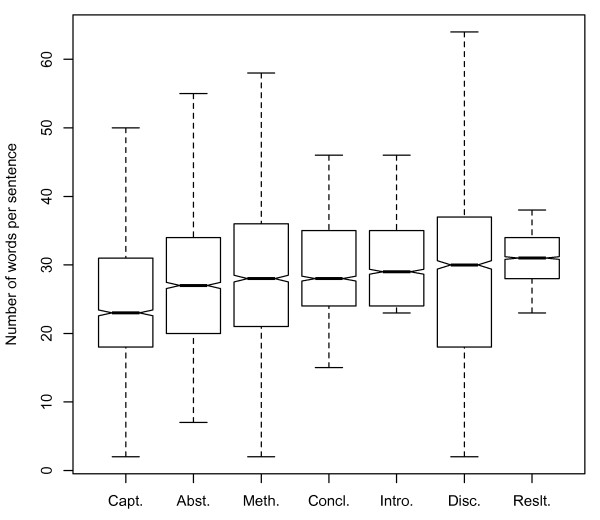
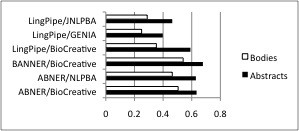
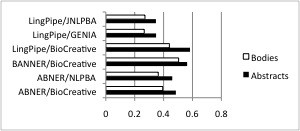
BACKGROUND: An increase in work on the full text of journal articles and the growth of PubMedCentral have the opportunity to create a major paradigm shift in how biomedical text mining is done. However, until now there has been no comprehensive characterization of how the bodies of full text journal articles differ from the abstracts that until now have been the subject of most biomedical text mining research. RESULTS: We examined the structural and linguistic aspects of abstracts and bodies of full text articles, the performance of text mining tools on both, and the distribution of a variety of semantic classes of named entities between them. We found marked structural differences, with longer sentences in the article bodies and much heavier use of parenthesized material in the bodies than in the abstracts. We found content differences with respect to linguistic features. Three out of four of the linguistic features that we examined were statistically significantly differently distributed between the two genres. We also found content differences with respect to the distribution of semantic features. There were significantly different densities per thousand words for three out of four semantic classes, and clear differences in the extent to which they appeared in the two genres. With respect to the performance of text mining tools, we found that a mutation finder performed equally well in both genres, but that a wide variety of gene mention systems performed much worse on article bodies than they did on abstracts. POS tagging was also more accurate in abstracts than in article bodies. CONCLUSIONS: Aspects of structure and content differ markedly between article abstracts and article bodies. A number of these differences may pose problems as the text mining field moves more into the area of processing full-text articles. However, these differences also present a number of opportunities for the extraction of data types, particularly that found in parenthesized text, that is present in article bodies but not in article abstracts.
Overview
The claims and statistics of this paper haven’t been checked yet.
Free: it reads the open-access text and checks the first 5 claims that cite a source we can check. Create a free account to check every claim.
Integrity signals
Registry
Cites
Statistics
Figures
Verification
Claims the paper makes
The claims and statistics of this paper haven’t been checked yet.
Free: it reads the open-access text and checks the first 5 claims that cite a source we can check. Create a free account to check every claim.
Claims other papers make about this one
Each is checked against this paper’s own text: does it say what the citing paper says it does?
The cited source says what the claim attributes to it.
In the citing paper
“As quoted from Cohen, Johnson, Verspoor, Roeder and Hunter [83]: ' Full-text articles can also present other challenges, such as the recognition and clean-up of embedded tags, non-ASCII characters, tables and figures, and even the need to convert from PDF to textual format. Access to full text is an especially troublesome issue ' [83] .”
From Automation of systematic literature reviews: A systematic literature review (2021) · cites this paper as [83]
In the citing paper
“[13,14,83] describe that this is because titles and abstracts are significantly different from full-texts.”
From Automation of systematic literature reviews: A systematic literature review (2021) · cites this paper as [83]
Self-check
Percentages, sums and reported differences re-computed from the paper’s own numbers.
The self-check needs the paper’s full text.
Citations
Cites
Jurafsky, D. S., & Martin, J. (2000) · Cited by 4,132
Accurate unlexicalized parsing
Klein, D., & Manning, C. D. (2003) · Proceedings of the 41st Annual Meeting on Association for Computational Linguistics - ACL '03 · doi:10.3115/1075096.1075150 · Cited by 3,008 · cited 1×
“6) ([30]) to a subsection of the CRAFT corpus.”
BackgroundA Simple Algorithm for Identifying Negated Findings and Diseases in Discharge Summaries
Chapman, W. W., Bridewell, W., Hanbury, P., Cooper, G. F., & Buchanan, B. G. (2001) · Journal of Biomedical Informatics · doi:10.1006/jbin.2001.1029 · Cited by 1,118 · cited 1×
“We looked at the incidence of negation because like conjunction, handling negation is a perennial problem in natural language processing [18-21].”
BackgroundProceedings of the AMIA Symposium
Schulz, S., Daumke, P., Smith, B., & Hahn, U. (2005) · Cited by 606
Overview of BioCreAtIvE: critical assessment of information extraction for biology
Hirschman, L., Yeh, A., Blaschke, C., & Valencia, A. (2005) · BMC Bioinformatics · doi:10.1186/1471-2105-6-s1-s1 · Cited by 530 · cited 1×
“In the very recent past, the TREC Genomics [10] and BioCreative competitions [11,12] have led to a large increase in work on full-text articles.”
BackgroundFriedman, C., Kra, P., Yu, H., Krauthammer, M., & Rzhetsky, A. (2001) · Bioinformatics · doi:10.1093/bioinformatics/17.suppl_1.s74 · Cited by 507
BANNER: AN EXECUTABLE SURVEY OF ADVANCES IN BIOMEDICAL NAMED ENTITY RECOGNITION
LEAMAN, R., & GONZALEZ, G. (2007) · Biocomputing 2008 · doi:10.1142/9789812776136_0062 · Cited by 479
ABNER: an open source tool for automatically tagging genes, proteins and other entity names in text
Settles, B. (2005) · Bioinformatics · doi:10.1093/bioinformatics/bti475 · Cited by 468
Procedure for quantitatively comparing the syntactic coverage of English grammars
Klavans, J., Liberman, M., Marcus, M., Roukos, S., Santorini, B., Strzalkowski, T., Abney, S., Flickenger, S., Gdaniec, C., Grishman, C., et al. (1991) · Proceedings of the workshop on Speech and Natural Language - HLT '91 · doi:10.3115/112405.112467 · Cited by 432
Mutalik, P. G., Deshpande, A., & Nadkarni, P. M. (2001) · Journal of the American Medical Informatics Association · doi:10.1136/jamia.2001.0080598 · Cited by 249
Research works printed but not linked: 4
- Nakov PI Schwartz AS Hearst MA Citances: Citation sentences for semantic analysis of bioscience text SIGIR'04 Workshop on Search and Discovery in Bioinformatics 2004
- Goldin I Chapman W Learning to detect negation with 'not' in medical texts Proceedings of the ACM SIGIR 2003
- Gasperin C Karamanis N Seal R Annotation of anaphoric relations in biomedical full-text articles using a domain-relevant scheme Proceedings of DAARC 2007 2007
- Alias-i LingPipe 3.1.2 2008
Cited by
Two new Later Stone Age sites from the Final Pleistocene in the Falémé Valley, eastern Senegal
Ndiaye, M., Lespez, L., Tribolo, C., Rassé, M., Hadjas, I., Davidoux, S., Huysecom, É., & Douze, K. (2024) · Monash University Research Portal (Monash University) · doi:10.3929/ethz-b-000667478 · Cited by 23,868
SPECTER: Document-level Representation Learning using Citation-informed Transformers
Cohan, A., Feldman, S., Beltagy, I., Downey, D., & Weld, D. (2020) · Proceedings of the 58th Annual Meeting of the Association for Computational Linguistics · doi:10.18653/v1/2020.acl-main.207 · Cited by 1,108
O’Mara-Eves, A., Thomas, J., McNaught, J., Miwa, M., & Ananiadou, S. (2015) · Systematic Reviews · doi:10.1186/2046-4053-4-5 · Cited by 681
“Cohen and colleagues have investigated more widely the implications for text mining of processing abstracts as opposed to full-text articles, and moreover mention a second issue, to do with problems that may arise for systems in going from the processing of abstracts to the processing of full text, but note that there…”
BackgroundAutomation of systematic literature reviews: A systematic literature review
van Dinter, R., Tekinerdogan, B., & Catal, C. (2021) · Information and Software Technology · doi:10.1016/j.infsof.2021.106589 · Cited by 432
“Access to full text is an especially troublesome issue ” [83] .”
BackgroundPubTator central: automated concept annotation for biomedical full text articles
Wei, C.-H., Allot, A., Leaman, R., & Lu, Z. (2019) · Nucleic Acids Research · doi:10.1093/nar/gkz389 · Cited by 400
“Previous work has shown that the content of the full article text is substantially different from the abstracts (49).”
BackgroundO’Mara-Eves, A., Thomas, J., McNaught, J., Miwa, M., & Ananiadou, S. (2015) · Systematic Reviews · doi:10.1186/s13643-015-0031-5 · Cited by 353
Concept annotation in the CRAFT corpus
Bada, M., Eckert, M., Evans, D., Garcia, K., Shipley, K., Sitnikov, D., Baumgartner, W. A., Cohen, K. B., Verspoor, K., Blake, J. A., et al. (2012) · BMC Bioinformatics · doi:10.1186/1471-2105-13-161 · Cited by 272
“In the biomedical domain, having access to full-length articles is increasingly seen as important for concept-identification and information-extraction efforts [57-60].”
BackgroundSelf-citationText-mining solutions for biomedical research: enabling integrative biology
Rebholz-Schuhmann, D., Oellrich, A., & Hoehndorf, R. (2012) · Nature Reviews Genetics · doi:10.1038/nrg3337 · Cited by 225
“…tissues and whole organisms; and from analyses that are entirely literature-based to analy ses that integrate information from the literature with data sets from other domains, including genome-wide association studies (GWASs), gene expression, functional genomics, biochemistry and phenotyping 16 .”
BackgroundAnaphora and coreference resolution: A review
Sukthanker, R., Poria, S., Cambria, E., & Thirunavukarasu, R. (2020) · Information Fusion · doi:10.1016/j.inffus.2020.01.010 · Cited by 194
Westergaard, D., Stærfeldt, H.-H., Tønsberg, C., Jensen, L. J., & Brunak, S. (2018) · PLOS Computational Biology · doi:10.1371/journal.pcbi.1005962 · Cited by 190
“Full-text articles and abstracts are structurally different [17].”
BackgroundKrishna, A., Biryukov, M., Trefois, C., Antony, P. M., Hussong, R., Lin, J., Heinäniemi, M., Glusman, G., Köglsberger, S., Boyd, O., et al. (2014) · BMC Genomics · doi:10.1186/1471-2164-15-1154 · Cited by 166
“These are cues that help to identify principle aspects of article’s content [68,69].”
Background1. Introduction to natural language processing
(2014) · Natural Language Processing · doi:10.1075/nlp.11.01ch1 · Cited by 166
Verspoor, K., Cohen, K. B., Lanfranchi, A., Warner, C., Johnson, H. L., Roeder, C., Choi, J. D., Funk, C., Malenkiy, Y., Eckert, M., et al. (2012) · BMC Bioinformatics · doi:10.1186/1471-2105-13-207 · Cited by 145
“Prior work has looked at differences in performance based on training on the WSJ versus biomedical abstracts; thework reported here adds a new dimension to genre variability by introducing the full text of biomedical articles, which differ with respect to structure and content from bothWSJ articles and biomedical abst…”
BackgroundInfluentialSelf-citationLayout-aware text extraction from full-text PDF of scientific articles
Ramakrishnan, C., Patnia, A., Hovy, E., & Burns, G. A. (2012) · Source Code for Biology and Medicine · doi:10.1186/1751-0473-7-7 · Cited by 128
“…scientific publications and since access to information in full-text documents is vital for developing effective text-mining applications [7], it is essential to the general BioNLP community that developers of such applications can extract the textual content from PDF files accurately…”
BackgroundFiorini, N., Lipman, D. J., & Lu, Z. (2017) · eLife · doi:10.7554/elife.28801 · Cited by 124
“In addition to making more content available to users, the availability of the full text (including the text in figures and tables) could lead to improved search if we can develop automated methods for coping with the increased complexity associated with full texts ( Cohen et al., 2010 ).”
BackgroundLarge-Scale Event Extraction from Literature with Multi-Level Gene Normalization
Van Landeghem, S., Björne, J., Wei, C.-H., Hakala, K., Pyysalo, S., Ananiadou, S., Kao, H.-Y., Lu, Z., Salakoski, T., Van de Peer, Y., et al. (2013) · PLoS ONE · doi:10.1371/journal.pone.0055814 · Cited by 121
“These numbers confirm that full texts are more sparsely populated with information on biomolecular processes than abstracts, supporting the findings of earlier, smaller scale evaluations [43].”
ResultPast, current and future trends in enterprise architecture—A view beyond the horizon
Gampfer, F., Jürgens, A., Müller, M., & Buchkremer, R. (2018) · Computers in Industry · doi:10.1016/j.compind.2018.03.006 · Cited by 137
Broad-coverage biomedical relation extraction with SemRep
Kilicoglu, H., Rosemblat, G., Fiszman, M., & Shin, D. (2020) · BMC Bioinformatics · doi:10.1186/s12859-020-3517-7 · Cited by 130
Biomedical Natural Language Processing
Bretonnel Cohen, K., & Demner-Fushman, D. (2014) · Natural Language Processing · doi:10.1075/nlp.11 · Cited by 100
Self-citationThe Genia Event and Protein Coreference tasks of the BioNLP Shared Task 2011
Kim, J.-D., Nguyen, N. L.-T., Wang, Y., Tsujii, J., Takagi, T., & Yonezawa, A. (2012) · BMC Bioinformatics · doi:10.1186/1471-2105-13-s11-s1 · Cited by 97
“Note that however this observation contrasts to the recent report about a substantial performance drop of protein mention detection in full papers [13], and that the performance reported in this paper is obtained when the gold protein annotation is given.”
ResultBioCause: Annotating and analysing causality in the biomedical domain
Mihăilă, C., Ohta, T., Pyysalo, S., & Ananiadou, S. (2013) · BMC Bioinformatics · doi:10.1186/1471-2105-14-2 · Cited by 105
“have looked at biomedical articles noticed significant differences between abstracts and full papers regarding structural, morpho-syntactic and discourse features [35] and event and meta-knowledge aspects [36].”
BackgroundBiological network extraction from scientific literature: state of the art and challenges
Li, C., Liakata, M., & Rebholz‐Schuhmann, D. (2013) · Briefings in Bioinformatics · doi:10.1093/bib/bbt006 · Cited by 94
“Indeed, abstracts contain condensed information, but it is the case that most detailed bio-events and information pertaining to networks is found in the body of the articles, which also contains more noise [156].”
BackgroundMüller, H.-M., Auken, K. M. V., Li, Y., & Sternberg, P. W. (2018) · BMC Bioinformatics · doi:10.1186/s12859-018-2103-8 · Cited by 85
“…of, full text may have challenges, e.g. the increased complexity of sentence structure in full text and difficulty in parsing information in figures and tables [54, 55], numerous studies show the need for, and effectiveness of, full text searches over those solely of abstracts [13, 55 – 58].”
BackgroundA novel feature-based approach to extract drug–drug interactions from biomedical text
Bui, Q.-C., Sloot, P. M. A., van Mulligen, E. M., & Kors, J. A. (2014) · Bioinformatics · doi:10.1093/bioinformatics/btu557 · Cited by 84
Unified Medical Language System term occurrences in clinical notes: a large-scale corpus analysis
Wu, S. T., Liu, H., Li, D., Tao, C., Musen, M. A., Chute, C. G., & Shah, N. H. (2012) · Journal of the American Medical Informatics Association · doi:10.1136/amiajnl-2011-000744 · Cited by 80
Rediscovering Don Swanson:The Past, Present and Future of Literature-based Discovery
Smalheiser, N. R. (2017) · Journal of Data and Information Science · doi:10.1515/jdis-2017-0019 · Cited by 74
A survey on annotation tools for the biomedical literature
Neves, M., & Leser, U. (2012) · Briefings in Bioinformatics · doi:10.1093/bib/bbs084 · Cited by 76
“The use of full texts is a crucial issue in biomedical research, as studies have proven that the differences between results obtained only from abstracts compared to full texts are significant [92, 93].”
BackgroundProceedings of the BioNLP 2018 workshop
(2018) · doi:10.18653/v1/w18-23 · Cited by 71
Data Analysis and Data Mining: Current Issues in Biomedical Informatics
Diomidous, M., Sarkar, I. N., Takabayashi, K., Ziegler, A., McCray, A. T., & Bellazzi, R. (2011) · Methods of Information in Medicine · doi:10.3414/me11-06-0002 · Cited by 82
“As a consequence, a noteworthy effort has been devoted to designing and applying a number of recent technologies, such as text mining [26, 27], temporal data mining [28], workflow mining [29], and networks analysis [30].”
BackgroundWBI-DDI: Drug-Drug Interaction Extraction using Majority Voting
Thomas, P. E., Neves, M., Rocktäschel, T., & Leser, U. (2013) · Joint Conference on Lexical and Computational Semantics · Cited by 69
Biomedical Event Extraction as Sequence Labeling
Ramponi, A., van der Goot, R., Lombardo, R., & Plank, B. (2020) · Conference on Empirical Methods in Natural Language Processing (EMNLP) · doi:10.18653/v1/2020.emnlp-main.431 · Cited by 81
“Processing multiple heads has previously been done for relation extraction us-ing multi-head selection (Bekoulis et al., 2018a,b), and sequence labeling has been employed for joint entity and relation classification (Dai et al., 2019) with inter-token attention.”
MethodmiRTex: A Text Mining System for miRNA-Gene Relation Extraction
Li, G., Ross, K. E., Arighi, C. N., Peng, Y., Wu, C. H., & Vijay-Shanker, K. (2015) · PLOS Computational Biology · doi:10.1371/journal.pcbi.1004391 · Cited by 61
“Additionally, a previous study [47] noted that there are differences between the text in abstracts and full-length article miRTex: Text Mining of miRNA-Gene Relation”
BackgroundBiomedical text mining for research rigor and integrity: tasks, challenges, directions
Kilicoglu, H. (2017) · Briefings in Bioinformatics · doi:10.1093/bib/bbx057 · Cited by 61
A visual analysis approach to validate the selection review of primary studies in systematic reviews
Felizardo, K. R., Andery, G. F., Paulovich, F. V., Minghim, R., & Maldonado, J. C. (2012) · Information and Software Technology · doi:10.1016/j.infsof.2012.04.003 · Cited by 60
Cohen, K. B., Lanfranchi, A., Choi, M., Bada, M. A., Baumgartner, W. A., Panteleyeva, N., Verspoor, K. M., Palmer, M. S., & Hunter, L. (2017) · BMC Bioinformatics · doi:10.1186/s12859-017-1775-9 · Cited by 74
Self-citationTorii, M., Arighi, C. N., Li, G., Wang, Q., Wu, C. H., & Vijay‐Shanker, K. (2014) · IEEE Transactions on Computational Biology and Bioinformatics · doi:10.1109/tcbb.2014.2372765 · Cited by 61
“Writing styles in the full-text articles, however, can be different from those in abstracts [43] and that might affect the performance of RLIMS-P.”
BackgroundOpen-domain Anatomical Entity Mention Detection
Ohta, T., Pyysalo, S., Tsujii, J., & Ananiadou, S. (2012) · Research Explorer (The University of Manchester) · Cited by 78
The BioLexicon: a large-scale terminological resource for biomedical text mining
Thompson, P., McNaught, J., Montemagni⋄, S., Calzolari, N., Gratta, R. D., Lee, V., Marchi, S., Monachini, M., Pęzik, P., Quochi, V., et al. (2011) · BMC Bioinformatics · doi:10.1186/1471-2105-12-397 · Cited by 62
“In [82], the performance of BioLemmatizer on the CRAFT corpus development set [84] is compared with 8 other tools that perform lemmatisation.”
MethodLitSense: making sense of biomedical literature at sentence level
Allot, A., Chen, Q., Kim, S., Vera Alvarez, R., Comeau, D. C., Wilbur, W. J., & Lu, Z. (2019) · Nucleic Acids Research · doi:10.1093/nar/gkz289 · Cited by 56
“An earlier study shows that retrieval performance can decrease by more than 10% when PubMed and PMC articles are simply combined for keyword search (5) due to the various differences and complexities in full-text retrieval (6,7).”
BackgroundPathway and Network Approaches for Identification of Cancer Signature Markers from Omics Data
Wang, J., Zuo, Y., Man, Y.-G., Avital, I., Stojadinovic, A., Liu, M., Yang, X., Varghese, R. S., Tadesse, M. G., & Ressom, H. W. (2014) · Journal of Cancer · doi:10.7150/jca.10631 · Cited by 72
“The most prominent shift is to integrate information from the literature with data sets from other domains such as gene expression profiles [84], genome-wide association studies (GWASs), biochemistry and phenotype [84,85].”
BackgroundRavikumar, K., Liu, H., Cohn, J. D., Wall, M. E., & Verspoor, K. M. (2012) · Journal of Biomedical Semantics · doi:10.1186/2041-1480-3-s3-s2 · Cited by 53
“2010 [22] to be a challenge in processing full-text articles.”
BackgroundSelf-citationCurrent findings from research on structured abstracts: an update
Hartley, J. (2014) · Journal of the Medical Library Association : JMLA · doi:10.3163/1536-5050.102.3.002 · Cited by 51
MeSH: a window into full text for document summarization
Bhattacharya, S., Ha−Thuc, V., & Srinivasan, P. (2011) · Bioinformatics · doi:10.1093/bioinformatics/btr223 · Cited by 49
“But full texts are more expensive to process not only in terms of their much ∗ To whom correspondence should be addressed. in terms of what it takes to achieve high levels of accuracy. full texts contain embellishments that elaborate, contextualize, contrast, supplement, etc., the core ideas of a…”
Pressing needs of biomedical text mining in biocuration and beyond: opportunities and challenges
Singhal, A., Leaman, R., Catlett, N., Lemberger, T., McEntyre, J., Polson, S., Xenarios, I., Arighi, C., & Lu, Z. (2016) · Database · doi:10.1093/database/baw161 · Cited by 48
“A particular concern is the ability of the system to handle not only abstracts, but also full text documents (47–52).”
BackgroundMining the pharmacogenomics literature--a survey of the state of the art
Hahn, U., Cohen, K. B., Garten, Y., & Shah, N. H. (2012) · Briefings in Bioinformatics · doi:10.1093/bib/bbs018 · Cited by 49
“This pattern, drops in performance of TM software running on full text documents compared with the processing of abstracts by the same program, has been observed with stunning systematicity (see also [53]) and can be explained by the increase of linguistic complexity when moving from abstracts to full texts (see also…”
BackgroundSelf-citationImproving Chemical Named Entity Recognition in Patents with Contextualized Word Embeddings
Zhai, Z., Nguyen, D. Q., Akhondi, S. A., Thorne, C., Druckenbrodt, C., Cohn, T., Gregory, M., & Verspoor, K. M. (2019) · BioNLP Workshop and Shared Task (BioNLP) · doi:10.18653/v1/w19-5035 · Cited by 61
“There are substantial linguistic differences between ab-a stracts and the corresponding full text publications (Cohen et al., 2010).”
BackgroundSelf-citationLarge language models to process, analyze, and synthesize biomedical texts: a scoping review
Doneva, S. E., Qin, S., Sick, B., Ellendorff, T., Goldman, J.-P., Schneider, G., & Ineichen, B. V. (2024) · Discover Artificial Intelligence · doi:10.1007/s44163-024-00197-2 · Cited by 50
“Article abstracts and article bodies can differ not only in content, but also in their structural, linguistic, and semantic composition [72].”
Three Dimensions of Reproducibility in Natural Language Processing
Cohen, K. B., Xia, J., Zweigenbaum, P., Callahan, T. J., Hargraves, O., Goss, F. R., Ide, N., Névéol, A., Grouin, C., & Hunter, L. (2018) · Language Resources and Evaluation Conference (LREC) · doi:10.63317/58wtisabky5x · Cited by 77
“This conclusion in our paper (Cohen et al., 2010), which was quite clearly stated—it actually formed the title of the paper—was important at the time (and presumably now) because it demonstrated the importance of what has since become a major theme in biomedical natural language processing.”
BackgroundResultSelf-citationJimeno Yepes, A., & Verspoor, K. (2014) · Database · doi:10.1093/database/bau003 · Cited by 44
“the analysis of protein residues in [26], as well as the general observation of differences between abstracts and full texts, with full texts argued to have more ‘content’ [33, 34].”
BackgroundSelf-citationConceptual Modeling: Topics, Themes, and Technology Trends
Storey, V. C., Lukyanenko, R., & Castellanos, A. (2023) · ACM Computing Surveys · doi:10.1145/3589338 · Cited by 55
“The circled terms show, for example, how the topic of ontology progressed over the 15-year analysis.”
Enhancing Search: Events and Their Discourse Context
Ananiadou, S., Thompson, P., & Nawaz, R. (2013) · Lecture notes in computer science · doi:10.1007/978-3-642-37256-8_27 · Cited by 43
“Whilst the scheme was designed via examination of biomedical abstracts, it is also important that meta-knowledge should also be readily identifiable for events in full papers, especially given the recent trend of extending event extraction techniques to apply to full papers [44].”
BackgroundMethodCohen, K. B., Verspoor, K. M., Fort, K., Funk, C., Bada, M. A., Palmer, M. S., & Hunter, L. (2017) · Springer eBooks · doi:10.1007/978-94-024-0881-2_53 · Cited by 41
“evidence indicating that the bodies of journal articles contain much information that is not present in the abstracts, and that the textual and structural characteristics of article bodies are different from those of abstracts [8, 26, 90, 84, 18, 2, 48, 51, 13].”
Self-citationNano-enabled drug delivery: A research profile
Zhou, X. H., Porter, A. L., Robinson, D. K. R., Shim, M. S., & Guo, Y. (2014) · Nanomedicine Nanotechnology Biology and Medicine · doi:10.1016/j.nano.2014.03.001 · Cited by 42
Lee, K., Lee, S., Park, S., Kim, S., Kim, S., Choi, K., Tan, A. C., & Kang, J. (2016) · Database · doi:10.1093/database/baw043 · Cited by 44
Adapting a General Semantic Interpretation Approach to Biological Event Extraction
Halil Kilicoglu, B., & Bergler, S. (n.d.) · Cited by 39
Mutationmapper: A Tool to Aid the Mapping of Protein Mutation Data
Vohra, S., & Biggin, P. C. (2013) · PLoS ONE · doi:10.1371/journal.pone.0071711 · Cited by 36
“We suggest that this probably reflects author’s tendency to discuss other proteins within the more general discussions of a complete paper rather than the more focused confines of the abstract as has been discussed before [28].”
BackgroundText mining patents for biomedical knowledge
Rodriguez‐Esteban, R., & Bundschus, M. (2016) · Drug Discovery Today · doi:10.1016/j.drudis.2016.05.002 · Cited by 39
Text Mining Improves Prediction of Protein Functional Sites
Verspoor, K. M., Cohn, J. D., Ravikumar, K. E., & Wall, M. E. (2012) · PLoS ONE · doi:10.1371/journal.pone.0032171 · Cited by 34
“In E3, we found errors that were representative of previously noted broad differences between abstracts and full text publications [37].”
BackgroundSelf-citationThe linguistic construal of disciplinarity: A data‐mining approach using register features
Teich, E., Degaetano‐Ortlieb, S., Fankhauser, P., Kermes, H., & Lapshinova‐Koltunski, E. (2015) · Journal of the Association for Information Science and Technology · doi:10.1002/asi.23457 · Cited by 41
“…distinguished by their content or topic but also by their register, genre, and style, can be found in stylometry as well as translatology (e.g., Argamon et al., 2007; Baroni & Bernardini, 2006; Cohen, Johnson, Verspoor, Roeder, & Hunter, 2010; Rybicki, 2006; Volansky, Ordan, & Wintner, 2011, 2013).”
BackgroundA Multi-Channel Convolutional Neural Network approach to automate the citation screening process
van Dinter, R., Catal, C., & Tekinerdoğan, B. (2021) · Applied Soft Computing · doi:10.1016/j.asoc.2021.107765 · Cited by 37
Text mining for systems biology
Fluck, J., & Hofmann‐Apitius, M. (2013) · Drug Discovery Today · doi:10.1016/j.drudis.2013.09.012 · Cited by 33
A robust approach to extract biomedical events from literature
Bui, Q.-C., & Sloot, P. M. A. (2012) · Bioinformatics · doi:10.1093/bioinformatics/bts487 · Cited by 33
GLiNER-BioMed: a suite of efficient models for open biomedical named entity recognition
Yazdani, A., Stepanov, I., & Teodoro, D. (2026) · Bioinformatics · doi:10.1093/bioinformatics/btag322 · Cited by 34
“As noted by Cohen et al. (2010), full-text bodies differ substantially from abstracts, and performance on such documents remains to be verified.”
A visual analysis approach to update systematic reviews
Felizardo, K. R., Nakagawa, E. Y., MacDonell, S. G., & Maldonado, J. C. (2014) · Proceedings of the 18th International Conference on Evaluation and Assessment in Software Engineering · doi:10.1145/2601248.2601252 · Cited by 33
Tudor, C. O., ROSS, K. E., Li, G., Vijay‐Shanker, K., Wu, C. H., & Arighi, C. N. (2015) · Database · doi:10.1093/database/bav020 · Cited by 31
“Writing styles in the full-text articles are different from those in abstracts (33).”
BackgroundTEXT COMPLEXITY AND TEXT SIMPLIFICATION
Temnikova, I. (2012) · OpenGrey (Institut de l'Information Scientifique et Technique) · Cited by 31
Kissa, M., Tsatsaronis, G., & Schroeder, M. (2014) · Methods · doi:10.1016/j.ymeth.2014.11.017 · Cited by 27
From POS tagging to dependency parsing for biomedical event extraction
Nguyen, D. Q., & Verspoor, K. (2019) · BMC Bioinformatics · doi:10.1186/s12859-019-2604-0 · Cited by 24
“It has been observed that there are substantial linguistic differences between the abstracts and the corresponding full text publications [9]; hence it is important to consider both contexts when assessing NLP tools in biomedical domain.”
BackgroundSelf-citationKim, J.-D., Kim, J.-J., Han, X., & Rebholz‐Schuhmann, D. (2015) · BMC Bioinformatics · doi:10.1186/1471-2105-16-s10-s3 · Cited by 24
“It is thus expected that the subject domain of the two datasets would be close to each other, i.e. NF-kappa B transcription factors vs. human transcription factors , while the nature of the texts might be quite different, i.e. full papers vs. abstracts [23].”
BackgroundGuo, Y., Silins, I., Stenius, U., & Korhonen, A. (2013) · Bioinformatics · doi:10.1093/bioinformatics/btt163 · Cited by 24
Névéol, A., Wilbur, W. J., & Lu, Z. (2012) · Database · doi:10.1093/database/bas026 · Cited by 23
“showed that the content of abstract text and full-text was significantly different (23).”
BackgroundText mining for neuroanatomy using WhiteText with an updated corpus and a new web application
French, L., Liu, P., Marais, O., Koreman, T., Tseng, L., Lai, A., & Pavlidis, P. (2015) · Frontiers in Neuroinformatics · doi:10.3389/fninf.2015.00013 · Cited by 23
“Like Cohen and colleagues we believe better tools may be needed to fully exploit the different content and structure of full text (Cohen et al., 2010).”
BackgroundAn analysis on the entity annotations in biological corpora
Neves, M. (2014) · F1000Research · doi:10.12688/f1000research.3216.1 · Cited by 23
Chapter 16: Text Mining for Translational Bioinformatics
Cohen, K. B., & Hunter, L. (2013) · PLoS Computational Biology · doi:10.1371/journal.pcbi.1003044 · Cited by 23
“Abstracts have been shown to have different structural and content characteristics from article bodies [17]; most research to date has focused on abstracts, and it is clear that new approaches will be required to fully exploit the information in article bodies.”
BackgroundSelf-citationExamining linguistic shifts between preprints and publications
Nicholson, D. N., Rubinetti, V., Hu, D., Thielk, M., Hunter, L., & Greene, C. S. (2022) · PLoS Biology · doi:10.1371/journal.pbio.3001470 · Cited by 21
“Scientists have provided the community with a number of tools that aide future text mining systems [31–33] as well as advice on how to train and test future text processing systems [34–36].”
BackgroundSelf-citationAre Abstracts Enough for Hypothesis Generation?
Sybrandt, J., Carrabba, A., Herzog, A., & Safro, I. (2018) · IEEE International Conference on Big Data (BigData) · doi:10.1109/bigdata.2018.8621974 · Cited by 24
Semantically Enabling Pharmacogenomic Data for the Realization of Personalized Medicine
Samwald, M., Coulet, A., Huerga, I., Powers, R. L., Luciano, J., Freimuth, R. R., Whipple, F. W., Pichler, E., Prud’hommeaux, E., Dumontier, M., et al. (2012) · Pharmacogenomics · doi:10.2217/pgs.11.179 · Cited by 19
A three-way perspective on scientific discourse annotation for knowledge extraction
Liakata, M., Thompson, P. M., de Waard, A., Nawaz, R., Maat, H. P., & Ananiadou, S. (2012) · Research Explorer (The University of Manchester) · Cited by 24
Kilicoglu, H., & Bergler, S. (2012) · BMC Bioinformatics · doi:10.1186/1471-2105-13-s11-s7 · Cited by 20
“[43] show that structure and content of biomedical abstracts and article bodies differ markedly and suggest that some of these differences may pose problems in processing full-text articles.”
BackgroundZheng, K., Mei, Q., Yang, L., Manion, F. J., Balis, U. J., & Hanauer, D. A. (2011) · PubMed · Cited by 20
Automated annotation of functional imaging experiments via multi-label classification
Turner, M. D., Chakrabarti, C., Jones, T. B., Xu, J., Fox, P. T., Luger, G. F., Laird, A. R., & Turner, J. A. (2013) · Frontiers in Neuroscience · doi:10.3389/fnins.2013.00240 · Cited by 22
“It is important to note that the classifiers developed on abstracts may not generalize directly, without any change; as noted in Cohen et al. (2010), the linguistic content of abstracts is different from the content and structure of the full text of the document.”
BackgroundWu, Z. Z., & Blake, C. L. (2015) · Journal of Biomedical Informatics · doi:10.1016/j.jbi.2015.07.013 · Cited by 24
Building a Coreference-Annotated Corpus from the Domain of Biochemistry
Batista-Navarro, R., & Ananiadou, S. (2011) · Cited by 16
Bioinformatics Tools for the Functional Interpretation of Quantitative Proteomics Results
de Villavicencio-Díaz, T. N., Rodríguez‐Ulloa, A., Guirola, O., & Pérez‐Riverol, Y. (2014) · Current Topics in Medicinal Chemistry · doi:10.2174/1568026613666131204105110 · Cited by 15
Modeling intra-textual variation with entropy and surprisal: topical vs. stylistic patterns
Degaetano‐Ortlieb, S., & Teich, E. (2017) · Joint SIGHUM Workshop on Computational Linguistics for Cultural Heritage, Social Sciences, Humanities and Literature (LaTeCH-CLfL) · doi:10.18653/v1/w17-2209 · Cited by 14
Do Peers See More in a Paper Than Its Authors?
Divoli, A., Nakov, P., & Hearst, M. A. (2012) · Advances in Bioinformatics · doi:10.1155/2012/750214 · Cited by 18
“, use of parenthesized text, tables, and figures), and content from abstracts, has posed many new challenges for biomedical text processing, for example, standard tools like part-ofspeech and gene mention taggers were found to perform much worse on article bodies than on abstracts [7].”
BackgroundInvestigating Domain-Specific Information for Neural Coreference Resolution on Biomedical Texts
Trieu, H.-L., Nguyen, N. T. H., Miwa, M., & Ananiadou, S. (2018) · Workshop on Biomedical Language Processing (BioNLP) · doi:10.18653/v1/w18-2324 · Cited by 17
DETECTION OF PROTEIN CATALYTIC SITES IN THE BIOMEDICAL LITERATURE
Verspoor, K. M., MacKinlay, A., Cohn, J. D., & Wall, M. E. (2012) · Pacific Symposium on Biocomputing (PSB) · doi:10.1142/9789814447973_0042 · Cited by 13
Self-citationPubMedMiner: Mining and Visualizing MeSH-based Associations in PubMed.
Zhang, Y., Sarkar, I. N., & Chen, E. S. (2014) · PubMed · Cited by 13
Minutolo, A., Guarasci, R., Damiano, E., Pietro, G. D., Fujita, H., & Esposito, M. (2022) · Neural Computing and Applications · doi:10.1007/s00521-022-07641-3 · Cited by 15
“A different approach is proposed by CRAFT [34] and by its successor HANNAPIN corpus [35].”
MethodThe use of linear models in quantitative research
Torres, A. F. C., & Akbaritabar, A. (2024) · Quantitative Science Studies · doi:10.1162/qss_a_00294 · Cited by 18
“For example, if a method is standardized and widely used, there may be no need to mention it in the article ’ s abstract (Blake, 2010; Cohen, Johnson et al., 2010; Westergaard, Stærfeldt et al., 2018).”
MethodSemantic characteristics of NLP-extracted concepts in clinical notes vs. biomedical literature.
Wu, S., & Liu, H. (2011) · PubMed · Cited by 17
Hassanzadeh, H., Nguyen, A. N., & Verspoor, K. M. (2019) · Journal of Biomedical Informatics · doi:10.1016/j.jbi.2019.103321 · Cited by 13
Self-citationTowards a unified search: Improving PubMed retrieval with full text
Kim, W. B., Yeganova, L. E., Comeau, D. C., Wilbur, W. J., & Lu, Z. (2022) · Journal of Biomedical Informatics · doi:10.1016/j.jbi.2022.104211 · Cited by 13
Nazemi, K., Klepsch, M. J., Burkhardt, D., & Kaupp, L. (2020) · International Conference on Information Visualisation (IV) · doi:10.1109/iv51561.2020.00065 · Cited by 10
“They found out that part-of-speech tag-gers perform notably better on abstracts [1, p. 9] and suggested the ability to deal with parenthesized text in full-texts for an improved information extraction.”
BackgroundMethodWriting to advance knowledge: The impact of readability on knowledge diffusion in OSCM
Jeong, S., Rogers, Z. S., & Washispack, S. (2021) · Decision Sciences · doi:10.1111/deci.12543 · Cited by 12
Parenthetically speaking: classifying the contents of parentheses for text mining.
Cohen, K. B., Christiansen, T., & Hunter, L. (2011) · PubMed · Cited by 9
Self-citationAnalysing Entity Type Variation across Biomedical Subdomains
Mihăilă, C., Batista-Navarro, R., & Ananiadou, S. (2012) · Research Explorer (The University of Manchester) · Cited by 9
Meta-Knowledge Annotation at the Event Level: Comparison between Abstracts and Full Papers
Nawaz, R., Thompson, P. M., & Ananiadou, S. (2012) · Research Explorer (The University of Manchester) · Cited by 9
2010 Translational bioinformatics year in review
Altman, R. B., & Miller, K. S. (2011) · Journal of the American Medical Informatics Association · doi:10.1136/amiajnl-2011-000328 · Cited by 11
Metadata
- Authors
- Cohen, K. B., Johnson, H. L., Verspoor, K., Roeder, C., & Hunter, L. E.
- Affiliations
- University of Colorado Boulder (US)
- University of Colorado Anschutz (US)
- Corresponding author
- Cohen, K Bretonnel
- Venue
- BMC Bioinformatics
- Published
- 2010-09-29
- Volume
- 11
- Issue
- 1
- Pages
- 492-492
- ISSN
- 1471-2105 (ISSN-L)
- PMC
- PMC3098079
- OpenAlex
- W2075322787
- Cited by
- 174
- References
- 33
- Citations by year
- 2026: 3 · 2025: 4 · 2024: 6 · 2023: 4 · 2022: 8 · 2021: 12 · 2020: 9 · 2019: 6 · 2018: 9 · 2017: 10 · 2016: 8 · 2015: 13 · 2014: 32 · 2013: 14 · 2012: 27
- FWCI
- 6.52
- Type
- journal article
- Language
- en
- Open access
- gold
- doi.org
- Licence
- cc-by
- creativecommons.org/licenses/by/2.0 (tdm)
- Locations
- BMC Bioinformatics (publishedVersion, cc-by)
- PubMed Central (publishedVersion, cc-by)
- PubMed (publishedVersion)
- Minerva Access (University of Melbourne) (submittedVersion, other-oa)
- DOAJ (DOAJ: Directory of Open Access Journals) (submittedVersion)
- Funders
- National Institute of General Medical Sciences (R01GM083649)
- U.S. National Library of Medicine (R01LM008111, R01LM009254, 1 R01LM010120-D1, R01LM010120)
- Topics
- Health Sciences › Medicine › Health Informatics › Biomedical Text Mining and Ontologies
- Physical Sciences › Computer Science › Artificial Intelligence › Advanced Text Analysis Techniques
- Social Sciences › General Social Sciences › Computational and Text Analysis Methods
- Keywords
- biomedical text mining, part-of-speech tagging, PubMed Central
- MeSH terms
- Abstracting and Indexing, Natural Language Processing, Terminology as Topic, Periodicals as Topic, MEDLINE, Information Storage and Retrieval
About these checks
Registry, retraction, Cites and statistics results are computed, not judged, with one exception: a printed reference that no index lists is read once by a model before it counts as a citation error. Claims are extracted by a model and kept only when their quote appears verbatim in the text; each cited source is then checked, with a model’s help, for whether it says what the claim relies on. Those verdicts can be wrong — read the claim’s quote and the cited source before relying on one.
Statistics and arithmetic are recomputed, not judged.
Confidence bands are shown only for fields calibrated on our annotated test set. None is calibrated yet, so no band is shown.
What counts as a claim ›How we measure confidence ›How we check this ›
Are you an author, or do you see a problem with this page? Request a review
Data sources
Bibliographic data: Semantic Scholar, OpenAlex, Crossref.
Contains information from the Semantic Scholar Academic Graph Datasets, made available under the ODC Attribution License (ODC-BY 1.0).
Semantic Scholar’s data is described in: Kinney, R., et al. (2023). The Semantic Scholar Open Data Platform. arXiv:2301.10140.
