

GSVA: gene set variation analysis for microarray and RNA-Seq data
Open accessThe DOI matches its Crossref record; 68 of the 69 references it cites were found in a registry or an index.
Abstract
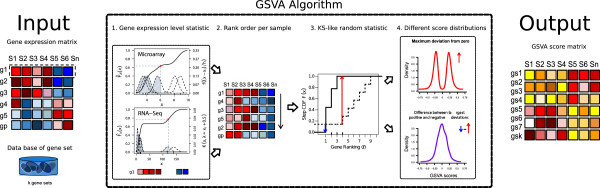
Background: Gene set enrichment (GSE) analysis is a popular framework for condensing information from gene expression profiles into a pathway or signature summary. The strengths of this approach over single gene analysis include noise and dimension reduction, as well as greater biological interpretability. As molecular profiling experiments move beyond simple case-control studies, robust and flexible GSE methodologies are needed that can model pathway activity within highly heterogeneous data sets. Results: To address this challenge, we introduce Gene Set Variation Analysis (GSVA), a GSE method that estimates variation of pathway activity over a sample population in an unsupervised manner. We demonstrate the robustness of GSVA in a comparison with current state of the art sample-wise enrichment methods. Further, we provide examples of its utility in differential pathway activity and survival analysis. Lastly, we show how GSVA works analogously with data from both microarray and RNA-seq experiments. Conclusions: GSVA provides increased power to detect subtle pathway activity changes over a sample population in comparison to corresponding methods. While GSE methods are generally regarded as end points of a bioinformatic analysis, GSVA constitutes a starting point to build pathway-centric models of biology. Moreover, GSVA contributes to the current need of GSE methods for RNA-seq data. GSVA is an open source software package for R which forms part of the Bioconductor project and can be downloaded at http://www.bioconductor.org .
Overview
The claims and statistics of this paper haven’t been checked yet.
Free: it reads the open-access text and checks the first 5 claims that cite a source we can check. Create a free account to check every claim.
Integrity signals
Registry
Cites
Statistics
Figures
Verification
Claims the paper makes
The claims and statistics of this paper haven’t been checked yet.
Free: it reads the open-access text and checks the first 5 claims that cite a source we can check. Create a free account to check every claim.
Claims other papers make about this one
Each is checked against this paper’s own text: does it say what the citing paper says it does?
In the citing paper
“GSVA is a non-parametric, unsupervised method that estimates the variation in gene set enrichment across samples in an expression dataset [44].”
From Integrated multi-omics analysis revealed the molecular networks and potential targets of cellular senescence in Alzheimer’s disease (2025) · cites this paper as [44]
In the citing paper
“Users can compute gene scores inside the pipeline by supplying a custom YAML formatted description file with the desired set(s) of genes and choosing one of the available methods for computing such gene scores. Available methods include PLAGE (Tomfohr et al. 2005), GSVA (Hänzelmann et al. 2013), SINGSCORE (Foroutan et al. 2021), SAMS (Souiai et al. 2001), and SSGSEA (Hänzelmann et al. 2013) as we”
From nf-core/nanostring: a pipeline for reproducible NanoString nCounter analysis (2024) · cites this paper as Hänzelmann et al. 2013
In the citing paper
“We also calculated GSVA scores using different gene inclusion cut-offs (top 100 and top 500 genes), and correlation between GSVA signatures across different cut-offs was > 0.97.”
From Alzheimer’s disease transcriptional landscape in ex vivo human microglia (2025) · cites this paper as [43]
In the citing paper
“the ‘within-control’ and ‘within-AD’ stratification shares with same axis, with distinct molecular states from gene set variance analysis 43 based on DEGs from AD diagnoses, (CERAD) and (Clinical), amyloid β plaque density, ApoE4 allele counts, and Braak stage (High vs. Middle)”
From Alzheimer’s disease transcriptional landscape in ex vivo human microglia (2025) · cites this paper as [43]
Self-check
Percentages, sums and reported differences re-computed from the paper’s own numbers.
The self-check needs the paper’s full text.
Citations
Cites
R: A Language and Environment for Statistical Computing
R Core Team (2025) · doi:10.32614/r.manuals · Cited by 352,181
Controlling the False Discovery Rate: A Practical and Powerful Approach to Multiple Testing
Benjamini, Y., & Hochberg, Y. (1995) · Journal of the Royal Statistical Society Series B: Statistical Methodology · doi:10.1111/j.2517-6161.1995.tb02031.x · Cited by 109,482 · cited 1×
“) approach [63] to obtain corrected p-values.”
Subramanian, A., Tamayo, P., Mootha, V. K., Mukherjee, S., Ebert, B. L., Gillette, M. A., Paulovich, A., Pomeroy, S. L., Golub, T. R., Lander, E. S., et al. (2005) · Proceedings of the National Academy of Sciences · doi:10.1073/pnas.0506580102 · Cited by 53,625 · cited 9×
“Most GSE methods, such as GSEA [4], are supervised and population based, in that they compute an enrichment score per gene set to describe the entire data set, modeled on a phenotype (discrete, such as case-control, or continuous).”
BackgroundMethodInfluentialRobinson, M. D., McCarthy, D. J., & Smyth, G. K. (2010) · Bioinformatics · doi:10.1093/bioinformatics/btp616 · Cited by 41,364 · cited 1×
“The nature of these data, however, often requires specific statistical models and bioinformatic methods for their analysis, as in the case of differential expression analysis [45].”
MethodDensity Estimation for Statistics and Data Analysis
Silverman, B. W. (2018) · Routledge eBooks · doi:10.1201/9781315140919 · Cited by 15,796
Huang, D. W., Sherman, B. T., & Lempicki, R. A. (2009) · Nucleic Acids Research · doi:10.1093/nar/gkn923 · Cited by 14,108 · cited 1×
“Many other supervised, population based approaches have also been described [12,17,20,31-34].”
BackgroundMapping and quantifying mammalian transcriptomes by RNA-Seq
Mortazavi, A., Williams, B. A., McCue, K., Schaeffer, L., & Wold, B. (2008) · Nature Methods · doi:10.1038/nmeth.1226 · Cited by 13,696 · cited 1×
“The application of high-throughput sequencing to interrogate RNA concentration in biological samples, popularly known as RNA-seq, is steadily becoming the technology of choice to profile gene expression [44].”
BackgroundBioconductor: open software development for computational biology and bioinformatics
Gentleman, R. C., Carey, V. J., Bates, D. M., Bolstad, B., Dettling, M., Dudoit, S., Ellis, B., Gautier, L., Ge, Y., Gentry, J., et al. (2004) · Genome Biology · doi:10.1186/gb-2004-5-10-r80 · Cited by 12,172 · cited 1×
“Microarray data processing Data analysis was performed using the R [59] and Bioconductor [60] software.”
MethodSmyth, G. K. (2004) · Statistical Applications in Genetics and Molecular Biology · doi:10.2202/1544-6115.1027 · Cited by 11,829
Mootha, V. K., Lindgren, C. M., Eriksson, K.-F., Subramanian, A., Sihag, S., Lehar, J., Puigserver, P., Carlsson, E., Ridderstråle, M., Laurila, E., et al. (2003) · Nature Genetics · doi:10.1038/ng1180 · Cited by 10,197 · cited 1×
“Many methodological variations of GSE methods have been proposed [1–6], including non-parametric enrichment statistics [4,7], battery testing [8–10], and focused gene set testing [1,11,12].”
Method
Research works printed but not linked: 2
- Wu D Lim E Vaillant F Asselin-Labat ML Visvader JE Smyth GK ROAST: rotation gene set tests for complex microarray experiments Bioinformatics (Oxford, England) 2010 26 17 2176 2182 [ http://www.ncbi.nlm.nih.gov/pubmed/20610611]. [PMID: 20610611] PMC2922896 20610611 · DOI · Paper page
- Bolstad BM Low-level analysis of high-density oligonucleotide array data: background, normalization and summarization PhD thesis, University of Waikato 2004. [ http://bmbolstad.com/Dissertation/Bolstad_2004_Dissertation.pdf]
Cited by
Items 901–1,000 of 1,085
Easy and efficient ensemble gene set testing with EGSEA
Alhamdoosh, M., Law, C. W., Tian, L., Sheridan, J. M., Ng, M., & Ritchie, M. E. (2017) · F1000Research · doi:10.12688/f1000research.12544.1 · Cited by 74
Sethi, N. S., Kikuchi, O., Duronio, G. N., Stachler, M. D., McFarland, J. M., Ferrer-Luna, R., Zhang, Y., Bao, C., Bronson, R. T., Patil, D. T., et al. (2020) · Nature Genetics · doi:10.1038/s41588-019-0574-9 · Cited by 72
Collagen-rich omentum is a premetastatic niche for integrin α2-mediated peritoneal metastasis
Huang, Y., Liang, C.-Y., Ritz, D., Coelho, R., Septiadi, D., Estermann, M., Cumin, C., Rimmer, N., Schötzau, A., López, M. N., et al. (2020) · eLife · doi:10.7554/elife.59442 · Cited by 81
“To analyze the enrichment of common collagen genes in normal tissues and ovarian cancer tissues, the GSVA method (Hänzelmann et al., 2013) were performed to acquire the GSVA enrichment score of collagen gene set from each patient.”
MethodShomali, M., Cheng, J., Sun, F., Koundinya, M., Guo, Z., Hebert, A. T., McManus, J., Levit, M. N., Hoffmann, D., Courjaud, A., et al. (2021) · Molecular Cancer Therapeutics · doi:10.1158/1535-7163.mct-20-0390 · Cited by 69
“An ER Activity Score was then assessed using gene set variation analysis (GSVA) on the ER Signature (52).”
MethodGong, J., Li, R., Chen, Y., Zhuo, Z., Chen, S., Cao, J., Zhang, Q., Chong, Y., & Hu, B. (2021) · Briefings in Bioinformatics · doi:10.1093/bib/bbaa427 · Cited by 81
Heath, O. M., Berlato, C., Maniati, E., Lakhani, A., Pegrum, C., Kotantaki, P., Elorbany, S., Böhm, S., Barry, S. T., Annibaldi, A., et al. (2021) · Cancer Immunology Research · doi:10.1158/2326-6066.cir-20-0968 · Cited by 72
“A,Boxplots illustrating expression ofAdgre1 and theGSVA scores of TAM signature (24) in control (Ctrl) and AZD7507 (AZD)-treated samples.”
BackgroundMethodNuclear FGFR1 Regulates Gene Transcription and Promotes Antiestrogen Resistance in ER+ Breast Cancer
Servetto, A., Kollipara, R. K., Formisano, L., Lin, C.-C. A., Lee, K., Sudhan, D. R., Ericsson, P. I. G., Chatterjee, S., Zotano, Á. G., Mendiratta, S., et al. (2021) · Clinical Cancer Research · doi:10.1158/1078-0432.ccr-20-3905 · Cited by 81
Zhao, G., Tian, Z., Tian, T., Zhu, Z.-P., Zhao, W.-J., Tian, H., Cheng, X., Hu, F., Hu, M., Tian, S., et al. (2021) · Cell Metabolism · doi:10.1016/j.cmet.2021.05.014 · Cited by 77
Ren, B., Yang, J., Wang, C., Yang, G., Wang, H., Chen, Y., Xu, R., Fan, X., You, L., Zhang, T., et al. (2021) · Journal of Hematology & Oncology · doi:10.1186/s13045-021-01131-0 · Cited by 88
“We also defined these significantly upregulated genes as a gene set to perform a similar gene set variation analysis (GSVA) method to obtain the gene sets enrichment score for each patient with pancreatic cancer from the TCGA cohort (n = 176).”
MethodInfluentialSchaettler, M. O., Richters, M. M., Wang, A. Z., Skidmore, Z. L., Fisk, B., Miller, K. E., Vickery, T. L., Kim, A. H., Chicoine, M. R., Osbun, J. W., et al. (2022) · Cancer Discovery · doi:10.1158/2159-8290.cd-21-0291 · Cited by 69
Wang, H., Zhou, Y., Zhang, Y., Fang, S., Zhang, M., Li, H., Xu, F., Liu, L., Liu, J., Zhao, Q., et al. (2022) · Journal for ImmunoTherapy of Cancer · doi:10.1136/jitc-2021-004302 · Cited by 74
Yu, G., Bao, J.-H., Zhan, M., Wang, J., Li, X., Gu, X., Song, S., Yang, Q., Liu, Y., Wang, Z., et al. (2022) · Frontiers in Immunology · doi:10.3389/fimmu.2022.914577 · Cited by 77
“GSVA and GSEA Gene set variation analysis (GSVA) is a non-parametric, unsupervised method for estimating the variation of gene set enrichments in the gene expression data, which is commonly used for exploring the variation in the pathway and biological process activity in the samples of an expression dataset (35).”
MethodWang, X., Liu, C., Chen, J., Chen, L., Ren, X., Hou, M., Cui, X., Jiang, Y., Liu, E., Zong, Y., et al. (2022) · Cell Discovery · doi:10.1038/s41421-022-00445-8 · Cited by 79
Chi, H., Peng, G., Yang, J., Zhang, J., Song, G., Xie, X., Strohmer, D. F., Lai, G., Zhao, S., Wang, R., et al. (2022) · Frontiers in Endocrinology · doi:10.3389/fendo.2022.1056310 · Cited by 80
“Analysis of pathway differences across clusters using the “GSVA” R package (26).”
MethodPyroptosis relates to tumor microenvironment remodeling and prognosis: A pan-cancer perspective
Khan, M. B., Ai, M.-L., Du, K., Song, J., Wang, B., Lin, J., Ren, A., Chen, C., Huang, Z., Qiu, W., et al. (2022) · Frontiers in Immunology · doi:10.3389/fimmu.2022.1062225 · Cited by 73
““R” package GSVA was utilized to calculate GSVA-score which represented integrated-level of PRGs’ expression and was defined as the pyroptosis level to computationally dissect the tissue samples into high and low pyroptotic samples (39).”
MethodOpenPBTA: The Open Pediatric Brain Tumor Atlas
Shapiro, J. A., Gaonkar, K. S., Spielman, S. J., Savonen, C., Bethell, C. J., Jin, R., Rathi, K. S., Zhu, Y., Egolf, L. E., Farrow, B., et al. (2023) · Cell Genomics · doi:10.1016/j.xgen.2023.100340 · Cited by 87
Functional Contribution and Clinical Implication of Cancer-Associated Fibroblasts in Glioblastoma
Galbo, P. M., Madsen, A. T., Liu, Y., Peng, M., Yao, W., Ciesielski, M. J., Fenstermaker, R. A., Graff, S., Montagna, C., Segall, J. E., et al. (2023) · Clinical Cancer Research · doi:10.1158/1078-0432.ccr-23-0493 · Cited by 81
Dong, W., Li, J., & Zhuang, Z. (2024) · Aging · doi:10.18632/aging.205376 · Cited by 94
GANT61, a GLI inhibitor, sensitizes glioma cells to the temozolomide treatment
Li, J., Cai, J., Zhao, S., Yao, K., Sun, Y., Li, Y., Chen, L., Li, R., Zhai, X., Zhang, J., et al. (2016) · Journal of Experimental & Clinical Cancer Research · doi:10.1186/s13046-016-0463-3 · Cited by 72
“Gene set variation analysis (GSVA) with Gli expression was analyzed by GSVA package [27] of R (https:// www.”
MethodDrivers of AR indifferent anti-androgen resistance in prostate cancer cells
Handle, F., Preković, S., Helsen, C., den Broeck, T. V., Smeets, E., Moris, L., Eerlings, R., Kharraz, S. E., Urbanucci, A., Mills, I. G., et al. (2019) · Scientific Reports · doi:10.1038/s41598-019-50220-1 · Cited by 76
Bao, X., Shi, R., Zhao, T., & Wang, Y. (2020) · Molecular Oncology · doi:10.1002/1878-0261.12670 · Cited by 75
Baseline immunity and impact of chemotherapy on immune microenvironment in cervical cancer
Zhang, Y., Yu, M., Jing, Y., Cheng, J., Zhang, C., Cheng, L., Lu, H., Cai, M., Wu, J., Wang, W., et al. (2020) · British Journal of Cancer · doi:10.1038/s41416-020-01123-w · Cited by 74
Wang, P., Guo, Q., Hao, Y., Liu, Q., Gao, Y., Zhi, H., Li, X., Shang, S., Guo, S., Zhang, Y., et al. (2020) · Nucleic Acids Research · doi:10.1093/nar/gkaa1017 · Cited by 72
“Based on the genetic signatures of the 14 functional states, the functional state of single cancer cells in each dataset were evaluated using the gene set variation analysis (GSVA) package in R (16).”
MethodLeem, G., Park, J., Jeon, M., Kim, E.-S., Kim, S. W., Lee, Y. J., Choi, S. J., Choi, B., Park, S., Jung, I., et al. (2020) · Journal for ImmunoTherapy of Cancer · doi:10.1136/jitc-2020-001650 · Cited by 75
Hong, Y., Lin, M., Ou, D., Huang, Z., & Shen, P. (2021) · BMC Cancer · doi:10.1186/s12885-021-08559-0 · Cited by 82
Zhang, S., Jiang, C., Han, G., Hao, D., Lian, J., Liu, Y., Cai, Q., Zhang, R., McIntosh, J. M., Wang, R., et al. (2021) · Nature Communications · doi:10.1038/s41467-021-22872-z · Cited by 77
A Machine Learning Model to Predict the Triple Negative Breast Cancer Immune Subtype
Chen, Z., Wang, M., Wilde, R. L. D., Feng, R., Su, M., la Roche, L. A. T.-D., & Shi, W. (2021) · Frontiers in Immunology · doi:10.3389/fimmu.2021.749459 · Cited by 89
“The levels of immune cells were estimated by the “ GSVA ” package in the R language (32).”
MethodPan-cancer analysis reveals molecular patterns associated with age
Shah, Y., Verma, A., Marderstein, A. R., White, J. B., Bhinder, B., Medina, J. S. G., & Elemento, O. (2021) · Cell Reports · doi:10.1016/j.celrep.2021.110100 · Cited by 88
Pérez-Núñez, I., Rozalén, C., Palomeque, J. Á., Sangrador, I., Dalmau, M., Comerma, L., Hernández‐Prat, A., Casadevall, D., Menéndez, S., Liu, D. D., et al. (2022) · Nature Cancer · doi:10.1038/s43018-022-00339-4 · Cited by 69
Wang, Z.-H., Zhang, P., Peng, W., Ye, L., Xiang, X., Wei, X., Niu, Y., Zhang, S., Xue, Q., Wang, H.-L., et al. (2022) · OncoImmunology · doi:10.1080/2162402x.2022.2160558 · Cited by 75
“Enriched metabolic pathways in FOXP3 NKT-like cells were determined by Gene Set Variation Analysis (GSVA) score and metabolic score according to our previous study.(16,19)”
MethodDai, L.-J., Ma, D., Xu, Y.-Z., Li, M., Li, Y., Xiao, Y., Jin, X., Wu, S., Zhao, Y., Wang, H., et al. (2023) · Nature Communications · doi:10.1038/s41467-023-40715-x · Cited by 76
TNRC18 engages H3K9me3 to mediate silencing of endogenous retrotransposons
Zhao, S., Lu, J., Pan, B., Fan, H., Byrum, S. D., Xu, C., Kim, A., Guo, Y., Kanchi, K., Gong, W., et al. (2023) · Nature · doi:10.1038/s41586-023-06688-z · Cited by 69
“We tested genes for differential expression in DESeq2 (v.1.38.2) 71 in R, and GSEA on Molecular Signatures database (MSigDB) C2 curated gene sets 72 was conducted using GSVA (v.1.30.1) 73 in R.”
MethodInfluentialDufva, O., Gandolfi, S., Huuhtanen, J., Dashevsky, O., Duàn, H., Saeed, K., Klievink, J., Nygren, P. J., Bouhlal, J., Lahtela, J., et al. (2023) · Immunity · doi:10.1016/j.immuni.2023.11.008 · Cited by 88
Zhang, S., Liu, Y., Sun, Y., Liu, Q., Gu, Y. J., Huang, Y., Zeng, Z., Tang, F., & Ouyang, Y. (2024) · Molecular Cancer · doi:10.1186/s12943-023-01924-6 · Cited by 77
Timing and location dictate monocyte fate and their transition to tumor-associated macrophages
Dunsmore, G., Guo, W., Li, Z., Bejarano, D. A., Pai, R., Yang, K. L., Kwok, I., Tan, L., Ng, M. S. F., de la Calle‐Fabregat, C., et al. (2024) · Science Immunology · doi:10.1126/sciimmunol.adk3981 · Cited by 84
“S1 to S13 tables S1 and S2 References ( 61 – 63 ) Other Supplementary Material for this manuscript includes the following: Data files S1 to S11 mDaR Reproducibility checklist”
MethodTaniguchi, H., Chakraborty, S., Takahashi, N., Banerjee, A., Caeser, R., Zhan, Y. A., Tischfield, S. E., Chow, A. T., Nguyen, E. M., Quintanal-Villalonga, À., et al. (2024) · Science Advances · doi:10.1126/sciadv.ado4618 · Cited by 89
Gene set analysis approaches for RNA-seq data: performance evaluation and application guideline
Rahmatallah, Y., Emmert‐Streib, F., & Glazko, G. V. (2015) · Briefings in Bioinformatics · doi:10.1093/bib/bbv069 · Cited by 77
McGrath, J. S., Honrado, C., Moore, J. H., Adair, S. J., Varhue, W. B., Salahi, A., Farmehini, V., Goudreau, B. J., Nagdas, S., Blais, E. M., et al. (2019) · Analytica Chimica Acta · doi:10.1016/j.aca.2019.12.033 · Cited by 68
“A uthor M anuscript A uthor M anuscript A uthor M anuscript A uthor M anuscript Gene Set Variation Analysis (GSVA) [45] was performed using the Gene Ontology Molecular Function (GO MF) collection [46, 47].”
MethodInfluentialBeird, H. C., Wu, C.-C., Ingram, D. R., Wang, W., Alimohamed, A., Gumbs, C. E., Little, L., Song, X., Feig, B. W., Roland, C. L., et al. (2018) · Molecular Case Studies · doi:10.1101/mcs.a002386 · Cited by 75
“Immune signature analysis was performed in gene signature sets of 28 different immune cell types (Bindea et al. 2013) using the R package Gene Set Variation Analysis (GSVA) (Hänzelmann et al. 2013).”
MethodSridhar, S., Liu, H., Pham, T., Damera, G., & Newbold, P. (2019) · Respiratory Research · doi:10.1186/s12931-018-0968-8 · Cited by 73
Single-cell lineage mapping of a diverse virus-specific naive CD4 T cell repertoire
Khatun, A., Kasmani, M. Y., Zander, R., Schauder, D., Snook, J. P., Shen, J., Wu, X., Burns, R., Chen, Y., Lin, C., et al. (2020) · The Journal of Experimental Medicine · doi:10.1084/jem.20200650 · Cited by 67
Xu, H., Zheng, X., Zhang, S., Yi, X., Zhang, T., Wei, Q., Li, H., & Ai, J. (2021) · Molecular Cancer · doi:10.1186/s12943-021-01465-w · Cited by 79
Chen, D., Li, J., Huang, Y., Wei, P., Miao, W., Yang, Y., & Gao, Y. (2022) · Journal of Neuroinflammation · doi:10.1186/s12974-022-02471-5 · Cited by 76
“Also, the original expression counts matrix of microglia subset were used as an input for GSVA using GSVA package [30].”
MethodGordon, K. S., Kyung, T., Perez, C. R., Holec, P. V., Ramos, A., Zhang, A. Q., Agarwal, Y., Liu, Y., Koch, C. E., Starchenko, A., et al. (2022) · Nature Biomedical Engineering · doi:10.1038/s41551-022-00896-0 · Cited by 74
Rivas, E. I., Linares, J., Zwick, M., Gómez‐Llonín, A., Guiu, M., Labernadie, A., Badia-Ramentol, J., Lladó, A., Bardia, L., Pérez-Núñez, I., et al. (2022) · Nature Communications · doi:10.1038/s41467-022-32782-3 · Cited by 78
Identification of immune infiltration and cuproptosis-related subgroups in Crohn’s disease
Yuan, Y., Fu, M., Li, N., & Ye, M. (2022) · Frontiers in Immunology · doi:10.3389/fimmu.2022.1074271 · Cited by 78
“GSVA (26) was performed to clearly state the functional distinctions between the Cuproptosis subclusters found via previous cluster analysis.”
MethodInfluentialLi, Y., Ma, C., Liao, S., Qi, S., Meng, S., Cai, W., Dai, W., Cao, R. F., Dong, X., Krämer, B. K., et al. (2022) · Frontiers in Immunology · doi:10.3389/fimmu.2022.969509 · Cited by 84
Vitamin B5 supports MYC oncogenic metabolism and tumor progression in breast cancer
Kreuzaler, P. A., Inglese, P., Ghanate, A. D., Gjelaj, E., Wu, V., Panina, Y., Méndez‐Lucas, A., Maclachlan, C., Patani, N., Hubert, C. B., et al. (2023) · Nature Metabolism · doi:10.1038/s42255-023-00915-7 · Cited by 75
Qin, C., Zhang, M., Mou, D., Zhou, L., Dong, M., Huang, L., Wang, W., Cai, S.-B., You, Y., Shang, K., et al. (2024) · Science Immunology · doi:10.1126/sciimmunol.adj9730 · Cited by 69
Murali, B., Ren, Q., Luo, X., Faget, D. V., Wang, C., Johnson, R. M., Gruosso, T., Flanagan, K. C., Fu, Y., Leahy, K., et al. (2018) · Cancer Research · doi:10.1158/0008-5472.can-18-0234 · Cited by 67
“p38MAPK-dependent factors on 53 human breast cancer samples spanning all molecular subtypes (39) and observed that not only IL-6 (Fig.”
ATR expands embryonic stem cell fate potential in response to replication stress
Atashpaz, S., Shams, S. S., Gonzalez, J. M., Sebestyén, E., Arghavanifard, N., Gnocchi, A., Albers, E., Minardi, S. P., Fagà, G., Soffientini, P., et al. (2020) · eLife · doi:10.7554/elife.54756 · Cited by 72
Li, H., Peng, C., Zhu, C., Nie, S., Qian, X., Shi, Z., Shi, M., Yan, L., Ding, X., Zhang, S., et al. (2021) · Clinical Epigenetics · doi:10.1186/s13148-021-01016-6 · Cited by 77
Zheng, W., Zhang, S., Guo, H., Chen, X., Huang, Z., Jiang, S., & Li, M. (2021) · Cell Communication and Signaling · doi:10.1186/s12964-021-00728-9 · Cited by 72
CD8+ T cells inhibit metastasis and CXCL4 regulates its function
Joseph, R., Soundararajan, R., Vasaikar, S. V., Yang, F., Allton, K. L., Tian, L. H., den Hollander, P., Isgandarova, S., Haemmerle, M., Mino, B., et al. (2021) · British Journal of Cancer · doi:10.1038/s41416-021-01338-5 · Cited by 73
“We also analysed TCGA transcriptomics data for correlations between CXCL4-producing platelets, MDSCs, and CD8 + T cells using the Gene Set Variation Analysis method 39 with immune marker gene sets previously described.”
MethodIdentification of NOTCH4 mutation as a response biomarker for immune checkpoint inhibitor therapy
Long, J., Wang, D., Yang, X., Wang, A., Lin, Y. S., Zheng, M., Zhang, H., Sang, X., Wang, H., Hu, K., et al. (2021) · BMC Medicine · doi:10.1186/s12916-021-02031-3 · Cited by 72
Systems approaches identify the consequences of monosomy in somatic human cells
Chunduri, N. K., Menges, P., Zhang, X., Wieland, A., Gotsmann, V. L., Mardin, B. R., Buccitelli, C., Korbel, J. O., Willmund, F., Kschischo, M., et al. (2021) · Nature Communications · doi:10.1038/s41467-021-25288-x · Cited by 74
Foy, J., Karabajakian, A., Ortiz‐Cuaran, S., Boussageon, M., Michon, L., Bouaoud, J., Fekiri, D., Robert, M., Baffert, K.-A., Herve, G., et al. (2022) · European Journal of Cancer · doi:10.1016/j.ejca.2022.06.034 · Cited by 73
Chi, H., Peng, G., Wang, R., Yang, F., Xie, X., Zhang, J., Xu, K., Gu, T., Yang, X., & Tian, G. (2022) · Cells · doi:10.3390/cells11213436 · Cited by 77
“Gene characteristics favorably associated with cancer immunity cycles and therapy were enriched in the lowrisk and high-risk groups using the GSVA algorithm [34].”
MethodIntegrated proteogenomic characterization of medullary thyroid carcinoma
Xiao Hua, S. H. I., Sun, Y., Shen, C., Zhang, Y., Shi, R., Zhang, F., Liao, T., Lv, G., Zhu, Z., Jiao, L., et al. (2022) · Cell Discovery · doi:10.1038/s41421-022-00479-y · Cited by 70
Sakuma, M., Blombery, P. A., Meggendorfer, M., Haferlach, C., Lindauer, M., Martens, U. M., Kern, W., Haferlach, T., & Walter, W. (2023) · Leukemia · doi:10.1038/s41375-023-01857-5 · Cited by 73
“Single-sample gene set enrichment analysis (ssGSEA) was done through the GSVA R package [14] with parameter mx.”
MethodLei, P., Pereira, E. R., Andersson, P., Amoozgar, Z., van Wijnbergen, J. W., O’Melia, M. J., Zhou, H., Chatterjee, S., Ho, W. W., Posada, J. M., et al. (2023) · The Journal of Experimental Medicine · doi:10.1084/jem.20221847 · Cited by 79
Lei, X., de Groot, D., Welters, M. J. P., de Wit, T., Schrama, E., van Eenennaam, H., Santegoets, S. J. A. M., Oosenbrug, T., van der Veen, A. G., Vos, J. L., et al. (2024) · Cellular and Molecular Immunology · doi:10.1038/s41423-024-01133-1 · Cited by 74
Wang, Z., Liu, C., Zheng, S., Yao, Y., Wang, S., Wang, X., Yin, E., Zeng, Q., Zhang, C., Zhang, G., et al. (2024) · Cancer Cell · doi:10.1016/j.ccell.2024.05.002 · Cited by 74
The tumor-intrinsic role of the m 6 A reader YTHDF2 in regulating immune evasion
Xiao, S., Ma, S., Sun, B., Pu, W., Duan, S., Han, J., Ya-qun, H., Zhang, J., Peng, Y., He, C., et al. (2024) · Science Immunology · doi:10.1126/sciimmunol.adl2171 · Cited by 77
“For each tumor, we evaluated the signature using the default parameters of GSVA R package (version 1.48.2) ( 68 ).”
MethodInfluentialZuo, S., Wang, Y., Bao, H., Zhang, Z., Yang, N., Jia, M., Zhang, Q., Jian, A., Ji, R., Zhang, L., et al. (2024) · Nature Communications · doi:10.1038/s41467-024-51736-5 · Cited by 84
Peng, X., Sun, B., Tang, C., Shi, C., Xie, X., Wang, X., Jiang, D., Li, S., Jia, Y., Wang, Y., et al. (2024) · Developmental Cell · doi:10.1016/j.devcel.2024.12.011 · Cited by 77
Wu, M., Mei, F., Liu, W., & Jiang, J. (2020) · Biomedicine & Pharmacotherapy · doi:10.1016/j.biopha.2019.109637 · Cited by 66
The in vivo genetic program of murine primordial lung epithelial progenitors
Ikonomou, L., Herriges, M. J., Lewandowski, S. L., Marsland, R., Villacorta-Martín, C., Caballero, I. S., Frank, D. B., Sanghrajka, R. M., Dame, K., Kańduła, M. M., et al. (2020) · Nature Communications · doi:10.1038/s41467-020-14348-3 · Cited by 71
Cao, R., Yuan, L., Ma, B., Wang, G., & Tian, Y. (2020) · Cancer Cell International · doi:10.1186/s12935-020-01362-0 · Cited by 83
“jsp) [35], were used to analyse the change of pathway enrichment based on IRLS through package “GSVA” in R [36].”
MethodDynamically remodeled hepatic extracellular matrix predicts prognosis of early-stage cirrhosis
Wu, Y., Cao, Y., Xu, K., Zhu, Y., Qiao, Y., Wu, Y., Chen, J., Li, C., Zeng, R., & Ge, G. (2021) · Cell Death and Disease · doi:10.1038/s41419-021-03443-y · Cited by 73
Identification of gastric cancer subtypes based on pathway clustering
Li, L., & Wang, X. (2021) · npj Precision Oncology · doi:10.1038/s41698-021-00186-z · Cited by 72
Phenotypic plasticity underlies local invasion and distant metastasis in colon cancer
Sacchetti, A., Teeuwssen, M., Verhagen, M., Joosten, R., Xu, T., Stabile, R., van der Steen, B., Watson, M. M., Gusinac, A., Kim, W. K., et al. (2021) · eLife · doi:10.7554/elife.61461 · Cited by 66
“Epithelial and mesenchymal scores were computed using the Rmagic (imputation) (van Dijk et al., 2018) and GSVA (Hanzelmann et al., 2013) (scoring) packages.”
InfluentialGao, Y., Wang, H., Li, H., Ye, X., Xia, Y., Yuan, S., Lu, J., Xie, X., Wang, L., & Zhang, J. (2021) · OncoImmunology · doi:10.1080/2162402x.2021.1936758 · Cited by 80
Fang, Y. V., Wang, Y., Zeng, D., Zhi, S., Shu, T., Huang, N., Zheng, S., Wu, J., Liu, Y., Huang, G., et al. (2021) · OncoImmunology · doi:10.1080/2162402x.2021.1951019 · Cited by 73
“Single-sample GSEA (ssGSEA) was used to generate infiltration scores for 16 immune cell types and cytotoxic cells for each tumor based on previously published gene sets(19) using the R package, “gsva”.(20) Immune scores, microenvironment scores, and stroma scores were processed using xCell.”
MethodChida, K., Kawazoe, A., Suzuki, T., Kawazu, M., Ueno, T., Takenouchi, K., Nakamura, Y., Kuboki, Y., Kotani, D., Kojima, T., et al. (2022) · Clinical Cancer Research · doi:10.1158/1078-0432.ccr-22-0041 · Cited by 70
“After GSEA, leading-edge analysis was performed to determine genes with a high impact on each pathway; the genes that overlapped across significant pathwayswere further identified (15, 16).”
MethodLee, K., Lin, C.-C. A., Servetto, A., Bae, J., Kandagatla, V., Ye, D., Kim, G. M., Sudhan, D. R., Mendiratta, S., Ericsson, P. I. G., et al. (2022) · Cancer Immunology Research · doi:10.1158/2326-6066.cir-21-0826 · Cited by 74
Neuzillet, C., Nicolle, R., Raffenne, J., Tijeras‐Raballand, A., Brunel, A., Astorgues‐Xerri, L., Vacher, S., Arbaretaz, F., Fanjul, M., Hilmi, M., et al. (2022) · The Journal of Pathology · doi:10.1002/path.6011 · Cited by 69
“CAF signatures were applied to those 6,569 cells using the Gene Set Variation Analysis (GSVA) R package [36] with default parameters.”
MethodZethoven, M., Martelotto, L. G., Pattison, A., Bowen, B., Balachander, S., Flynn, A., Rossello, F. J., Hogg, A., Miller, J. A., Fryšák, Z., et al. (2022) · Nature Communications · doi:10.1038/s41467-022-34011-3 · Cited by 91
Zhou, J., Ma, X., He, X., Chen, B., Yuan, J., Jin, Z., Li, L., Wang, Z., Xiao, Q., Cai, Y., et al. (2023) · Proceedings of the National Academy of Sciences · doi:10.1073/pnas.2215732120 · Cited by 79
“To obtain an overview of the potential connections between the UFMylation activity and tumor immunogenicity, we grouped the high (top 50th percentile) and low (bottom 50th percentile) UFL1 expressions (FPKM) across 33 cancer types from The Cancer Genome Atlas (TCGA) and calculated the corresponding enrichment scores o…”
MethodHu, W., Liu, S.-Q., Zhu, K., Li, W., Yang, Z.-J., Yang, Q., Zhong-chao, Z., & Chang, J. (2023) · International Immunopharmacology · doi:10.1016/j.intimp.2023.110505 · Cited by 77
Obesity-associated changes in molecular biology of primary breast cancer
Nguyen, H.-L., Geukens, T., Maetens, M., Aparicio, S. A. J. R., Bassez, A., Borg, Å., Brock, J. E., Broeks, A., Caldas, C., Cardoso, F., et al. (2023) · Nature Communications · doi:10.1038/s41467-023-39996-z · Cited by 82
Parry, E. M., Lemvigh, C. K., Deng, S., Dangle, N. J., Ruthen, N. G., Knisbacher, B. A., Broséus, J., Hergalant, S., Guièze, R., Li, S., et al. (2023) · Cancer Cell · doi:10.1016/j.ccell.2023.08.013 · Cited by 77
Li, Y.-W., Dai, L.-J., Wu, X., Zhao, S., Xu, Y.-Z., Jin, X., Xiao, Y., Wang, Y., Lin, C., Zhou, Y.-F., et al. (2024) · Cancer Research · doi:10.1158/0008-5472.can-23-4066 · Cited by 79
Riveiro, M. E., Astorgues‐Xerri, L., Vázquez, R., Frapolli, R., Kwee, I., Rinaldi, A., Odore, E., Rezaï, K., Békradda, M., Inghirami, G. G., et al. (2016) · Oncotarget · doi:10.18632/oncotarget.13181 · Cited by 69
“Differential expression of gene sets was calculated using the gene set variation analysis (GSVA) method [56].”
MethodSubsets of mononuclear phagocytes are enriched in the inflamed colons of patients with IBD
Liu, H., Dasgupta, S., Fu, Y., Bailey, B., Roy, C., Lightcap, E. S., & Faustin, B. (2019) · BMC Immunology · doi:10.1186/s12865-019-0322-z · Cited by 65
“Similarly, GSVA and ssGSEA could be applied to assess the enrichment of a gene set in the top of a ranked gene expression profile for an individual sample [27].”
Yu, S., Hu, C., Cai, L., Du, X., Lin, F. Y., Yu, Q., Liu, L., Zhang, C. L., Liu, X., Li, W., et al. (2020) · Frontiers in Oncology · doi:10.3389/fonc.2020.01778 · Cited by 64
RetractedEndogenous retroviruses drive KRAB zinc-finger protein family expression for tumor suppression
Ito, J., Kimura, I., Soper, A., Coudray, A., Koyanagi, Y., Nakaoka, H., Inoue, I., Turelli, P., Trono, D., & Sato, K. (2020) · Science Advances · doi:10.1126/sciadv.abc3020 · Cited by 64
“Calculation of the gene set–wise expression score using GSVA The VST-normalized expression matrix was converted to a gene set– wise expression score matrix using GSVA (49) with the gene sets prepared above.”
InfluentialThe Beneficial Role of Sunitinib in Tumor Immune Surveillance by Regulating Tumor PD‐L1
Li, H., Kuang, X., Liang, L., Ye, Y., Zhang, Y., Li, J., Ma, F., Tao, J., Lei, G., Zhao, S., et al. (2020) · Advanced Science · doi:10.1002/advs.202001596 · Cited by 69
Liang, Z.-J., Wan, Y., Zhu, D., Wang, M., Jiang, H., Huang, D., Luo, L., Chen, M.-J., Yang, W., Li, H., et al. (2021) · Frontiers in Oncology · doi:10.3389/fonc.2021.569295 · Cited by 68
“Gene Set Variation Analysis (GSVA) and Correlation Analysis In regard to the enrichment results of the KEGG pathway, the expression spectra of the KEGG pathway were made using gsva of the GSVA package (28), which were used to visualize heat maps.”
MethodZhang, C., Zhou, L., Wang, Z., Gao, W., Chen, W., Zhang, H., Jing, B., Zhu, X., Chen, L., Zheng, C., et al. (2021) · Cell Death & Disease · doi:10.1038/s41419-021-03644-5 · Cited by 64
Chen, D., Zhang, Y., Wang, W., Chen, H., Ling, T., Yang, R., Wang, Y., Duan, C., Liu, Y., Guo, X., et al. (2021) · Advanced Science · doi:10.1002/advs.202100311 · Cited by 71
Li, Y., He, Y., Chen, S., Wang, Q., Yang, Y., Shen, D., Ma, J., Wen, Z., Ning, S., & Chen, H. (2022) · Frontiers in Immunology · doi:10.3389/fimmu.2022.810338 · Cited by 72
Hu, Y., Zeng, N., Ge, Y., Wang, D., Qin, X., Zhang, W., Jiang, F., & Liu, Y. (2022) · Frontiers in Endocrinology · doi:10.3389/fendo.2022.847760 · Cited by 79
“Geneset variation analysis (GSVA) is an algorithm that converts an expression matrix with a single gene into an expression matrix with a specific gene set and calculates its ES (22).”
MethodJiang, Z., Chen, Z., Xu, Y., Li, H., Li, Y., Peng, L., Han, S., Liu, X., Wu, H., Wu, L., et al. (2024) · Advanced Science · doi:10.1002/advs.202305489 · Cited by 90
Malla, S. B., Byrne, R. M., Lafarge, M. W., Corry, S. M., Fisher, N. C., Tsantoulis, P. K., Mills, M. L., Ridgway, R. A., Lannagan, T. R. M., Najumudeen, A. K., et al. (2024) · Nature Genetics · doi:10.1038/s41588-024-01654-5 · Cited by 76
“The ssGSEA scores in bulk datasets were generated with the GSVA R package (v.1.42.0) with the ‘ ssgsea’ method 52 and ssgsea.norm = T .”
InfluentialGuttman‐Yassky, E., Kabashima, K., Staumont-Sallé, D., Nahm, W. K., Pauser, S., da Rosa, J. C., Martel, B. C., Madsen, D. E., Røpke, M. A., Arlert, P., et al. (2024) · Allergy · doi:10.1111/all.16108 · Cited by 78
“29,30 3 | RESULTS”
Yang, Z., Liu, X., Xu, H., Teschendorff, A. E., Xu, L., Li, J., Fu, M., Liu, J., Zhou, H., Wang, Y., et al. (2024) · Communications Biology · doi:10.1038/s42003-024-06488-9 · Cited by 77
“We use the single-sample Gene Set Enrichment Analysis (ssGSEA) algorithm to estimate the activity of tumor samples by the immune signatures obtained 86 .”
Gaifem, J., Rodrigues, C. S., Petralia, F., Alves, I., Leite-Gomes, E., Cavadas, B., Dias, A. M., Moreira-Barbosa, C., Revés, J., Laird, R. M., et al. (2024) · Nature Immunology · doi:10.1038/s41590-024-01916-8 · Cited by 77
Zheng, L., Gu, M., Li, X., Hu, X., Chen, C., Kang, Y., Pan, B., Chen, W., Xian, G., Wu, X., et al. (2024) · Annals of the Rheumatic Diseases · doi:10.1136/ard-2024-225778 · Cited by 78
“33 75”
Voyle, N., Keohane, A., Newhouse, S., Lunnon, K., Johnston, C., Soininen, H. S., Kłoszewska, I., Mecocci, P., Tsolaki, M., Vellas, B. J., et al. (2015) · Journal of Alzheimer s Disease · doi:10.3233/jad-150440 · Cited by 71
Metadata
- Authors
- Hänzelmann, S., Castelo, R., & Guinney, J.
- Affiliations
- Hospital Del Mar (ES)
- Universitat Pompeu Fabra (ES)
- Sage Bionetworks (US)
- Corresponding author
- Castelo, Robert
- Guinney, Justin
- Venue
- BMC Bioinformatics
- Published
- 2013-01-16
- Volume
- 14
- Issue
- 1
- Pages
- 7-7
- ISSN
- 1471-2105 (ISSN-L)
- PMC
- PMC3618321
- OpenAlex
- W2159707944
- Cited by
- 15,440
- References
- 69
- Citations by year
- 2026: 1912 · 2025: 2459 · 2024: 2961 · 2023: 2686 · 2022: 2580 · 2021: 1518 · 2020: 676 · 2019: 295 · 2018: 142 · 2017: 99 · 2016: 44 · 2015: 30 · 2014: 17 · 2013: 15
- FWCI
- 15.84
- Type
- journal article
- Language
- en
- Open access
- gold
- doi.org
- Licence
- cc-by
- Locations
- BMC Bioinformatics (publishedVersion, cc-by)
- Europe PMC (PubMed Central) (publishedVersion, cc-by)
- PubMed Central (publishedVersion, cc-by)
- PubMed (publishedVersion)
- Repositori digital de la UPF (Universitat Pompeu Fabra) (publishedVersion, cc-by)
- RECERCAT (Consorci de Serveis Universitaris de Catalunya) (submittedVersion, cc-by)
- Funders
- Instituto de Salud Carlos III
- National Cancer Institute (U54CA149237)
- Topics
- Life Sciences › Biochemistry, Genetics and Molecular Biology › Molecular Biology › Bioinformatics and Genomic Networks
- Life Sciences › Biochemistry, Genetics and Molecular Biology › Molecular Biology › Gene expression and cancer classification
- Life Sciences › Biochemistry, Genetics and Molecular Biology › Molecular Biology › Genomics and Phylogenetic Studies
- Keywords
- gene set variation analysis, gene set enrichment analysis, survival analysis, microarray data, RNA-seq data
- MeSH terms
- Analysis of Variance, Female, Humans, Ovarian Neoplasms, Software, Genetic Variation, Leukemia, Biphenotypic, Acute, Survival Analysis, Sequence Analysis, RNA, Statistics, Nonparametric, Oligonucleotide Array Sequence Analysis, Gene Expression Profiling, Precursor Cell Lymphoblastic Leukemia-Lymphoma
About these checks
Registry, retraction, Cites and statistics results are computed, not judged, with one exception: a printed reference that no index lists is read once by a model before it counts as a citation error. Claims are extracted by a model and kept only when their quote appears verbatim in the text; each cited source is then checked, with a model’s help, for whether it says what the claim relies on. Those verdicts can be wrong — read the claim’s quote and the cited source before relying on one.
Statistics and arithmetic are recomputed, not judged.
Confidence bands are shown only for fields calibrated on our annotated test set. None is calibrated yet, so no band is shown.
What counts as a claim ›How we measure confidence ›How we check this ›
Are you an author, or do you see a problem with this page? Request a review
Data sources
Bibliographic data: Semantic Scholar, OpenAlex, Crossref.
Contains information from the Semantic Scholar Academic Graph Datasets, made available under the ODC Attribution License (ODC-BY 1.0).
Semantic Scholar’s data is described in: Kinney, R., et al. (2023). The Semantic Scholar Open Data Platform. arXiv:2301.10140.
