

GSVA: gene set variation analysis for microarray and RNA-Seq data
Open accessThe DOI matches its Crossref record; 68 of the 69 references it cites were found in a registry or an index.
Abstract
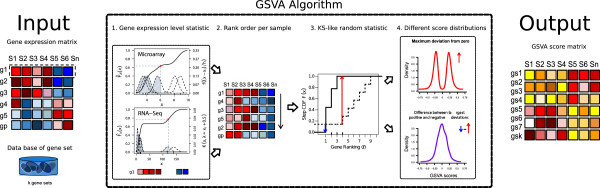
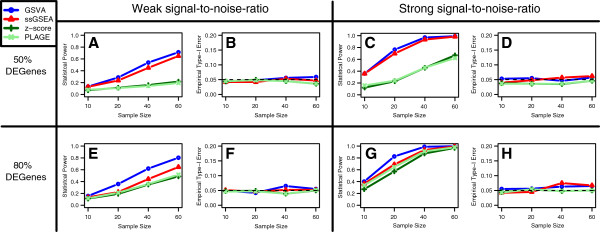
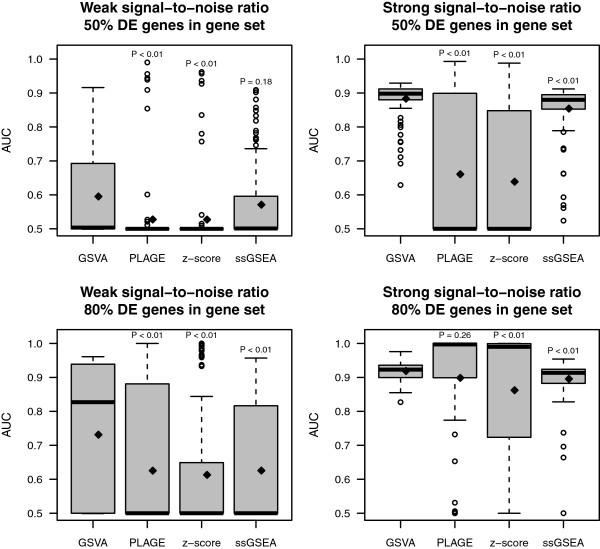
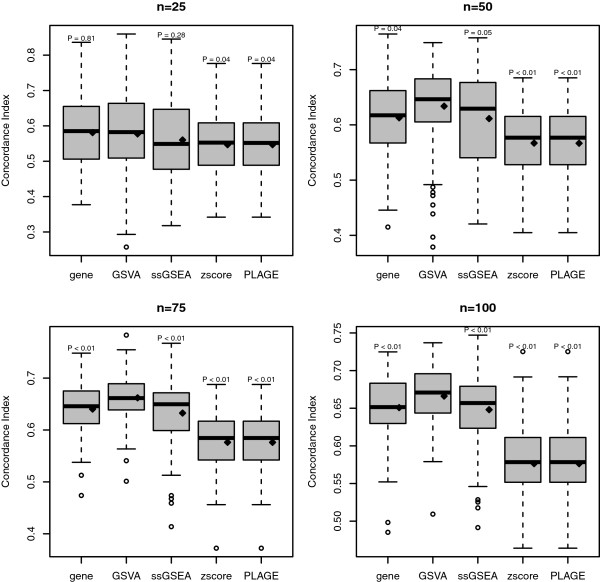
Background: Gene set enrichment (GSE) analysis is a popular framework for condensing information from gene expression profiles into a pathway or signature summary. The strengths of this approach over single gene analysis include noise and dimension reduction, as well as greater biological interpretability. As molecular profiling experiments move beyond simple case-control studies, robust and flexible GSE methodologies are needed that can model pathway activity within highly heterogeneous data sets. Results: To address this challenge, we introduce Gene Set Variation Analysis (GSVA), a GSE method that estimates variation of pathway activity over a sample population in an unsupervised manner. We demonstrate the robustness of GSVA in a comparison with current state of the art sample-wise enrichment methods. Further, we provide examples of its utility in differential pathway activity and survival analysis. Lastly, we show how GSVA works analogously with data from both microarray and RNA-seq experiments. Conclusions: GSVA provides increased power to detect subtle pathway activity changes over a sample population in comparison to corresponding methods. While GSE methods are generally regarded as end points of a bioinformatic analysis, GSVA constitutes a starting point to build pathway-centric models of biology. Moreover, GSVA contributes to the current need of GSE methods for RNA-seq data. GSVA is an open source software package for R which forms part of the Bioconductor project and can be downloaded at http://www.bioconductor.org .
Overview
The claims and statistics of this paper haven’t been checked yet.
Free: it reads the open-access text and checks the first 5 claims that cite a source we can check. Create a free account to check every claim.
Integrity signals
Registry
Cites
Statistics
Figures
Verification
Claims the paper makes
The claims and statistics of this paper haven’t been checked yet.
Free: it reads the open-access text and checks the first 5 claims that cite a source we can check. Create a free account to check every claim.
Claims other papers make about this one
Each is checked against this paper’s own text: does it say what the citing paper says it does?
In the citing paper
“GSVA is a non-parametric, unsupervised method that estimates the variation in gene set enrichment across samples in an expression dataset [44].”
From Integrated multi-omics analysis revealed the molecular networks and potential targets of cellular senescence in Alzheimer’s disease (2025) · cites this paper as [44]
In the citing paper
“Users can compute gene scores inside the pipeline by supplying a custom YAML formatted description file with the desired set(s) of genes and choosing one of the available methods for computing such gene scores. Available methods include PLAGE (Tomfohr et al. 2005), GSVA (Hänzelmann et al. 2013), SINGSCORE (Foroutan et al. 2021), SAMS (Souiai et al. 2001), and SSGSEA (Hänzelmann et al. 2013) as we”
From nf-core/nanostring: a pipeline for reproducible NanoString nCounter analysis (2024) · cites this paper as Hänzelmann et al. 2013
In the citing paper
“We also calculated GSVA scores using different gene inclusion cut-offs (top 100 and top 500 genes), and correlation between GSVA signatures across different cut-offs was > 0.97.”
From Alzheimer’s disease transcriptional landscape in ex vivo human microglia (2025) · cites this paper as [43]
In the citing paper
“the ‘within-control’ and ‘within-AD’ stratification shares with same axis, with distinct molecular states from gene set variance analysis 43 based on DEGs from AD diagnoses, (CERAD) and (Clinical), amyloid β plaque density, ApoE4 allele counts, and Braak stage (High vs. Middle)”
From Alzheimer’s disease transcriptional landscape in ex vivo human microglia (2025) · cites this paper as [43]
Self-check
Percentages, sums and reported differences re-computed from the paper’s own numbers.
The self-check needs the paper’s full text.
Citations
Cites
R: A Language and Environment for Statistical Computing
R Core Team (2025) · doi:10.32614/r.manuals · Cited by 352,181
Controlling the False Discovery Rate: A Practical and Powerful Approach to Multiple Testing
Benjamini, Y., & Hochberg, Y. (1995) · Journal of the Royal Statistical Society Series B: Statistical Methodology · doi:10.1111/j.2517-6161.1995.tb02031.x · Cited by 109,482 · cited 1×
“) approach [63] to obtain corrected p-values.”
Subramanian, A., Tamayo, P., Mootha, V. K., Mukherjee, S., Ebert, B. L., Gillette, M. A., Paulovich, A., Pomeroy, S. L., Golub, T. R., Lander, E. S., et al. (2005) · Proceedings of the National Academy of Sciences · doi:10.1073/pnas.0506580102 · Cited by 53,625 · cited 9×
“Most GSE methods, such as GSEA [4], are supervised and population based, in that they compute an enrichment score per gene set to describe the entire data set, modeled on a phenotype (discrete, such as case-control, or continuous).”
BackgroundMethodInfluentialRobinson, M. D., McCarthy, D. J., & Smyth, G. K. (2010) · Bioinformatics · doi:10.1093/bioinformatics/btp616 · Cited by 41,364 · cited 1×
“The nature of these data, however, often requires specific statistical models and bioinformatic methods for their analysis, as in the case of differential expression analysis [45].”
MethodDensity Estimation for Statistics and Data Analysis
Silverman, B. W. (2018) · Routledge eBooks · doi:10.1201/9781315140919 · Cited by 15,796
Huang, D. W., Sherman, B. T., & Lempicki, R. A. (2009) · Nucleic Acids Research · doi:10.1093/nar/gkn923 · Cited by 14,108 · cited 1×
“Many other supervised, population based approaches have also been described [12,17,20,31-34].”
BackgroundMapping and quantifying mammalian transcriptomes by RNA-Seq
Mortazavi, A., Williams, B. A., McCue, K., Schaeffer, L., & Wold, B. (2008) · Nature Methods · doi:10.1038/nmeth.1226 · Cited by 13,696 · cited 1×
“The application of high-throughput sequencing to interrogate RNA concentration in biological samples, popularly known as RNA-seq, is steadily becoming the technology of choice to profile gene expression [44].”
BackgroundBioconductor: open software development for computational biology and bioinformatics
Gentleman, R. C., Carey, V. J., Bates, D. M., Bolstad, B., Dettling, M., Dudoit, S., Ellis, B., Gautier, L., Ge, Y., Gentry, J., et al. (2004) · Genome Biology · doi:10.1186/gb-2004-5-10-r80 · Cited by 12,172 · cited 1×
“Microarray data processing Data analysis was performed using the R [59] and Bioconductor [60] software.”
MethodSmyth, G. K. (2004) · Statistical Applications in Genetics and Molecular Biology · doi:10.2202/1544-6115.1027 · Cited by 11,829
Mootha, V. K., Lindgren, C. M., Eriksson, K.-F., Subramanian, A., Sihag, S., Lehar, J., Puigserver, P., Carlsson, E., Ridderstråle, M., Laurila, E., et al. (2003) · Nature Genetics · doi:10.1038/ng1180 · Cited by 10,197 · cited 1×
“Many methodological variations of GSE methods have been proposed [1–6], including non-parametric enrichment statistics [4,7], battery testing [8–10], and focused gene set testing [1,11,12].”
Method
Research works printed but not linked: 2
- Wu D Lim E Vaillant F Asselin-Labat ML Visvader JE Smyth GK ROAST: rotation gene set tests for complex microarray experiments Bioinformatics (Oxford, England) 2010 26 17 2176 2182 [ http://www.ncbi.nlm.nih.gov/pubmed/20610611]. [PMID: 20610611] PMC2922896 20610611 · DOI · Paper page
- Bolstad BM Low-level analysis of high-density oligonucleotide array data: background, normalization and summarization PhD thesis, University of Waikato 2004. [ http://bmbolstad.com/Dissertation/Bolstad_2004_Dissertation.pdf]
Cited by
Items 501–600 of 1,085
Gong, H., Liu, Z., Yuan, C., Luo, Y., Chen, Y., Zhang, J., Cui, Y., Zeng, B., Liu, J., Li, H., et al. (2024) · Computers in Biology and Medicine · doi:10.1016/j.compbiomed.2024.108198 · Cited by 128
Blasco, M. T., Navas, C., Martín-Serrano, G., Graña-Castro, O., Lechuga, C. G., Martín-Díaz, L., Djurec, M., Li, J., Morales-Cacho, L., Esteban-Burgos, L., et al. (2019) · Cancer Cell · doi:10.1016/j.ccell.2019.03.002 · Cited by 115
Multigene signature for predicting prognosis of patients with 1p19q co-deletion diffuse glioma
Hu, X., Martínez-Ledesma, E., Zheng, S., Kim, H., Barthel, F. P., Jiang, T., Hess, K. R., & Verhaak, R. G. W. (2017) · Neuro-Oncology · doi:10.1093/neuonc/now285 · Cited by 116
Maniati, E., Berlato, C., Gopinathan, G., Heath, O. M., Kotantaki, P., Lakhani, A., McDermott, J. R., Pegrum, C., Delaine‐Smith, R. M., Pearce, O. M. T., et al. (2019) · Cell Reports · doi:10.1016/j.celrep.2019.12.034 · Cited by 118
Ningarhari, M., Caruso, S., Hirsch, T. Z., Bayard, Q., Franconi, A., Védie, A.-L., Noblet, B., Blanc, J.-F., Amaddeo, G., Ganne, N., et al. (2021) · Journal of Hepatology · doi:10.1016/j.jhep.2020.11.052 · Cited by 116
Lehtiö, J., Arslan, T., Siavelis, I., Pan, Y., Socciarelli, F., Berkovska, O., Umer, H. M., Mermelekas, G., Pirmoradian, M., Jönsson, M., et al. (2021) · Nature Cancer · doi:10.1038/s43018-021-00259-9 · Cited by 131
Schaub, J. A., Alakwaa, F., McCown, P. J., Naik, A. S., Nair, V., Eddy, S. F., Menon, R., Otto, E. A., Demeke, D., Hartman, J., et al. (2023) · Journal of Clinical Investigation · doi:10.1172/jci164486 · Cited by 133
Characterizing cancer metabolism from bulk and single-cell RNA-seq data using METAFlux
Huang, Y., Mohanty, V., Dede, M., Tsai, K., Daher, M., Li, L., Rezvani, K., & Chen, K. (2023) · Nature Communications · doi:10.1038/s41467-023-40457-w · Cited by 141
“Several scoring methods exist, for example, ssGSEA 25 , Seurat AddModuleScore 26 , AUCell 27 , singscore 28 , Z -score, etc.”
Spatial mapping of transcriptomic plasticity in metastatic pancreatic cancer
Pei, G., Min, J., Rajapakshe, K., Branchi, V., Liu, Y., Selvanesan, B. C., Thege, F. I., Sadeghian, D., Zhang, D., Cho, K. S., et al. (2025) · Nature · doi:10.1038/s41586-025-08927-x · Cited by 148
FBXO44 promotes DNA replication-coupled repetitive element silencing in cancer cells
Shen, J. Z., Qiu, Z., Wu, Q., Finlay, D., Garcia, G., Sun, D., Rantala, J., Barshop, W., Hope, J. L., Gimple, R. C., et al. (2021) · Cell · doi:10.1016/j.cell.2020.11.042 · Cited by 113
Chéry, L., Lam, H.-M., Coleman, I., Lakely, B., Coleman, R., Larson, S., Aguirre-Ghiso, J. A., Xia, J., Gulati, R., Nelson, P. S., et al. (2014) · Oncotarget · doi:10.18632/oncotarget.2480 · Cited by 113
“Erythroid progenitorlike and prostate enrichment scores were calculated using the Gene Set Variation Analysis (GSVA) Bioconductor package in R [33].”
MethodZhu, L., Narloch, J. L., Onkar, S., Joy, M., Broadwater, G., Luedke, C., Hall, A. H. S., Kim, R., Pogue–Geile, K. L., Sammons, S. L., et al. (2019) · Journal for ImmunoTherapy of Cancer · doi:10.1186/s40425-019-0755-1 · Cited by 128
“We inferred the immune abundance from RNAseq data using single-sample gene set enrichment analysis (ssGSEA, i.e. immune score in ESTIMATE) [10], gene set variation analysis (GSVA) [11] and deconvolution methods --- CIBERSORT [12] and TIMER [13].”
MethodPatient‐derived renal cell carcinoma organoids for personalized cancer therapy
Li, Z., Xu, H., Yu, L., Wang, J., Meng, Q., Mei, H., Cai, Z., Chen, W., & Huang, W. (2022) · Clinical and Translational Medicine · doi:10.1002/ctm2.970 · Cited by 124
Chen, H., Yang, W., Li, Y., Ma, L., & Ji, Z. (2023) · Frontiers in Immunology · doi:10.3389/fimmu.2023.1198878 · Cited by 131
Therapy-induced lipid uptake and remodeling underpin ferroptosis hypersensitivity in prostate cancer
Tousignant, K. D., Rockstroh, A., Poad, B. L. J., Talebi, A., Young, R. S. E., Taherian Fard, A., Gupta, R., Zang, T., Wang, C., Lehman, M. L., et al. (2020) · Cancer & Metabolism · doi:10.1186/s40170-020-00217-6 · Cited by 112
“For functional annotation and gene network analysis, filtered gene lists were examined using QIAGEN’s Ingenuity® Pathway Analysis (IPA®, QIAGEN, Redwood City, www.qiagen.com/ingenuity) and ‘Gene Set Variation Analysis’ (GSVA) [22], ‘Gene Set Enrichment Analysis’ (GSEA) [23], ‘Gene Ontology enRIchment anaLysis and visu…”
MethodInfluentialChen, Z., Hu, Z., Sui, Q., Huang, Y., Zhao, M., Li, M., Liang, J., Lu, T., Zhan, C., Lin, Z., et al. (2021) · International Journal of Biological Sciences · doi:10.7150/ijbs.67556 · Cited by 124
“GSVA package[61] was applied in our study to calculate the metabolic pathway scores.”
MethodLee, B. Y., Hogg, E. K. J., Below, C., Kononov, A., Blanco‐Gómez, A., Heider, F., Xu, J., Hutton, C., Zhang, X. M., Scheidt, T., et al. (2021) · Nature Communications · doi:10.1038/s41467-021-27607-8 · Cited by 125
Wang, W., Lu, Z., Wang, M., Liu, Z., Wu, B., Yang, C., He, H., & Gong, P. (2022) · Frontiers in Immunology · doi:10.3389/fimmu.2022.998236 · Cited by 140
A ZNRF3-dependent Wnt/β-catenin signaling gradient is required for adrenal homeostasis
Basham, K. J., Rodriguez, S., Turcu, A. F., Lerário, A. M., Logan, C. Y., Rysztak, M. R., Gómez-Sánchez, C. E., Breault, D. T., Koo, B., Clevers, H. C., et al. (2019) · Genes & Development · doi:10.1101/gad.317412.118 · Cited by 126
Jammula, S., Katz‐Summercorn, A., Li, X., Linossi, C., Smyth, E. C., Killcoyne, S., Biasci, D., Subhash, V. V., Abbas, S., Blasko, A., et al. (2020) · Gastroenterology · doi:10.1053/j.gastro.2020.01.044 · Cited by 116
Qi, Z., Xu, Z., Zhang, L., Zou, Y., Li, J., Yan, W., Li, C., Liu, N., & Wu, H. (2022) · Nature Communications · doi:10.1038/s41467-021-27833-0 · Cited by 137
Chi, H., Jiang, P., Xu, K., Zhao, Y., Song, B., Peng, G., He, B., Liu, X., Xia, Z., & Tian, G. (2022) · Frontiers in Genetics · doi:10.3389/fgene.2022.984273 · Cited by 135
“The “GSVA” R package was used to perform GSVA enrichment analysis (Hanzelmann et al., 2013).”
MethodBrain-wide neuronal circuit connectome of human glioblastoma
Sun, Y. Y., Wang, X., Zhang, D. Y., Zhang, Z., Bhattarai, J. P., Wang, Y., Park, K. H., Dong, W., Hung, Y.-F., Yang, Q., et al. (2025) · Nature · doi:10.1038/s41586-025-08634-7 · Cited by 136
Wisdom, A. J., Mowery, Y. M., Hong, C. S., Himes, J. E., Nabet, B. Y., Qin, X., Zhang, D., Chen, L., Fradin, H., Patel, R., et al. (2020) · Nature Communications · doi:10.1038/s41467-020-19917-0 · Cited by 120
Oka, M., Xu, L., Suzuki, T., Yoshikawa, T., Sakamoto, H., Uemura, H., Yoshizawa, A. C., Suzuki, Y., Nakatsura, T., Ishihama, Y., et al. (2021) · Genome Biology · doi:10.1186/s13059-020-02240-8 · Cited by 108
“For more detailed characterizations of each sample, we applied a gene set variation analysis (GSVA) [58] and calculated the correlation between the number of isoforms and the GSVA enrichment scores.”
MethodInfluentialTang, B., Zhu, J., Zhao, Z., Lu, C., Liu, S., Fang, S., Zheng, L., Zhang, N., Chen, M., Xu, M., et al. (2021) · Journal of Advanced Research · doi:10.1016/j.jare.2021.01.018 · Cited by 117
Yu, T., Ma, D., Liu, Y., Xiao, Y., Gong, Y., Jiang, Y., Shao, Z.-M., Hu, X., & Di, G. (2021) · Molecular Therapy · doi:10.1016/j.ymthe.2021.03.003 · Cited by 127
Bonaventura, P., Alcazer, V., Mutez, V., Tonon, L., Martin, J., Chuvin, N., Michel, E., Boulos, R. E., Estornes, Y., Valladeau-Guilemond, J., et al. (2022) · Science Advances · doi:10.1126/sciadv.abj3671 · Cited by 108
“IFN- signature was calculated by single-sample gene set variation analysis ( 39 ) based on the HALLMARK_INTERFERON_ GAMMA_RESPONSE signature from the Molecular Signature Database (http://software.broadinstitute.org/gsea/msigdb/index.jsp).”
MethodIntegrated proteogenomic characterization of urothelial carcinoma of the bladder
Xu, N., Yao, Z., Shang, G., Ye, D., Wang, H., Zhang, H., Qu, Y., Xu, F., Wang, Y., Qin, Z., et al. (2022) · Journal of Hematology & Oncology · doi:10.1186/s13045-022-01291-7 · Cited by 109
Integrated proteogenomic characterization of glioblastoma evolution
Kim, K., Migliozzi, S., Koo, H., Hong, J.-H., Park, S. M., Kim, S., Kwon, H. J., Ha, S., Garofano, L., Oh, Y. T., et al. (2024) · Cancer Cell · doi:10.1016/j.ccell.2023.12.015 · Cited by 131
Tau filaments are tethered within brain extracellular vesicles in Alzheimer’s disease
Fowler, S. L., Behr, T. S., Turkes, E., O'Brien, D. P., Cauhy, P. M., Rawlinson, I., Edmonds, M. J., Foiani, M. S., Schaler, A. W., Crowley, G., et al. (2024) · Nature Neuroscience · doi:10.1038/s41593-024-01801-5 · Cited by 130
“1c) was performed using the ssGSEA method from the GSVA R package 72 .”
Widespread parainflammation in human cancer
Aran, D., Lasry, A., Zinger, A., Biton, M., Pikarsky, E., Hellman, A., Butte, A. J., & Ben-Neriah, Y. (2016) · Genome Biology · doi:10.1186/s13059-016-0995-z · Cited by 109
Liu, K., Newbury, P. A., Glicksberg, B. S., Zeng, B., Paithankar, S., Andrechek, E. R., & Chen, B. (2019) · Nature Communications · doi:10.1038/s41467-019-10148-6 · Cited by 132
Predicting and affecting response to cancer therapy based on pathway-level biomarkers
Ben‐Hamo, R., Berger, A. J., Gavert, N. S., Miller, M. L., Pines, G., Oren, R., Pikarsky, E., Benes, C. H., Neuman, T., Zwang, Y., et al. (2020) · Nature Communications · doi:10.1038/s41467-020-17090-y · Cited by 129
Zhao, Z., Ding, Y., Tran, L. J., Chai, G., & Li, L. (2023) · Frontiers in Immunology · doi:10.3389/fimmu.2023.1196892 · Cited by 128
Chiricozzi, A., Suárez‐Fariñas, M., Fuentes‐Duculan, J., Cueto, I., Li, K., Tian, S., Brodmerkel, C. M., & Krueger, J. G. (2015) · British Journal of Dermatology · doi:10.1111/bjd.14034 · Cited by 121
Prognostic Value of a Nine‐Gene Signature in Glioma Patients Based on mRNA Expression Profiling
Bao, Z., Li, M., Wang, J., Zhang, C., Wang, H., Yan, W., Liu, Y., Zhang, W., Chen, L., & Jiang, T. (2013) · CNS Neuroscience & Therapeutics · doi:10.1111/cns.12171 · Cited by 114
“For another functional annotation, we also conducted GSVA by GSVA package [7] of R.”
MethodExploiting Drug Addiction Mechanisms to Select against MAPKi-Resistant Melanoma
Hong, A., Moriceau, G., Sun, L., Lomeli, S. H., Piva, M., Damoiseaux, R. D., Holmen, S. L., Sharpless, N. E., Hugo, W., & Lo, R. S. (2018) · Cancer Discovery · doi:10.1158/2159-8290.cd-17-0682 · Cited by 118
Guo, Y., Walsh, A. M., Canavan, M., Wechalekar, M. D., Cole, S., Yin, X., Scott, B., Loza, M. J., Orr, C. K., McGarry, T., et al. (2018) · PLoS ONE · doi:10.1371/journal.pone.0192704 · Cited by 119
Du, T., Zhu, L., Levine, K. M., Tasdemir, N., Lee, A. V., Vignali, D. A. A., Houten, B. V., Tseng, G. C., & Oesterreich, S. (2018) · Scientific Reports · doi:10.1038/s41598-018-25357-0 · Cited by 121
Yang, S. Y. C., Lheureux, S., Karakasis, K., Burnier, J. V., Bruce, J. P., Clouthier, D., Danesh, A., Quevedo, R., Dowar, M., Hanna, Y., et al. (2018) · Genome Medicine · doi:10.1186/s13073-018-0590-x · Cited by 123
Simbolo, M., Barbi, S., Fassan, M., Mafficini, A., Alì, G., Vicentini, C., Sperandio, N., Corbo, V., Rusev, B. C., Mastracci, L., et al. (2019) · Journal of Thoracic Oncology · doi:10.1016/j.jtho.2019.05.003 · Cited by 111
Cathepsin S Regulates Antigen Processing and T Cell Activity in Non-Hodgkin Lymphoma
Dheilly, E., Battistello, E., Katanayeva, N., Sungalee, S., Michaux, J., Duns, G., Wehrle, S., Sordet‐Dessimoz, J., Mina, M., Racle, J., et al. (2020) · Cancer Cell · doi:10.1016/j.ccell.2020.03.016 · Cited by 125
Cell Lineage-Based Stratification for Glioblastoma
Wang, Z., Sun, D., Chen, Y.-J., Xie, X., Shi, Y., Tabar, V. S., Brennan, C., Bale, T., Jayewickreme, C. D., Laks, D. R., et al. (2020) · Cancer Cell · doi:10.1016/j.ccell.2020.06.003 · Cited by 111
“Next, we calculated gene set enrichment scores by GSVA package (Hanzelmann et al., 2013) based on single sample gene expression profiles.”
MethodWang, S., Xiong, Y., Zhang, Q., Su, D., Yu, C., Cao, Y., Pan, Y., Lu, Q., Zuo, Y., & Yang, L. (2020) · Briefings in Bioinformatics · doi:10.1093/bib/bbaa311 · Cited by 140
Avalle, L., Raggi, L., Monteleone, E., Savino, A., Viavattene, D., Statello, L., Camperi, A., Stabile, S. A., Salemme, V., Marzo, N. D., et al. (2022) · Oncogene · doi:10.1038/s41388-021-02172-y · Cited by 120
“For the additional datasets, percentage of stroma was computed as in [26] making use of the GSVA package [54] for ssGSEA.”
MethodZheng, X., Song, J., Yu, C., Zhou, Z., Liu, X., Yu, J., Xu, G., Yang, J., He, X., Bai, X., et al. (2022) · Signal Transduction and Targeted Therapy · doi:10.1038/s41392-022-00881-8 · Cited by 127
Chen, A., & Kong, L. (2018) · Journal of genetics and genomics/Journal of Genetics and Genomics · doi:10.1016/j.jgg.2018.08.002 · Cited by 118
Pommier, R. M., Sanlaville, A., Tonon, L., Kielbassa, J., Thomas, E., Ferrari, A., Sertier, A.-S., Hollande, F., Martinez, P., Tissier, A., et al. (2020) · Nature Communications · doi:10.1038/s41467-020-17249-7 · Cited by 129
How the AHR Became Important in Cancer: The Role of Chronically Active AHR in Cancer Aggression
Wang, Z., Snyder, M., Kenison, J. E., Yang, K., Lara, B., Lydell, E., Bennani, K., Novikov, O., Federico, A. N., Monti, S., et al. (2020) · International Journal of Molecular Sciences · doi:10.3390/ijms22010387 · Cited by 136
Park, J., Daniels, J., Wartewig, T., Ringbloom, K. G., Martínez‐Escala, M. E., Choi, S., Thomas, J. J., Doukas, P. G., Yang, J., Snowden, C. K., et al. (2021) · Blood · doi:10.1182/blood.2020009655 · Cited by 119
Hu, J., Othmane, B., Yu, A., Li, H., Cai, Z., Chen, X., Ren, W., Chen, J., & Zu, X. (2021) · BMC Medicine · doi:10.1186/s12916-021-02163-6 · Cited by 128
“The enrichment scores of these signatures in BLCA samples were calculated using the ssGSEA algorithm [57].”
MethodMyofibroblast YAP/TAZ activation is a key step in organ fibrogenesis
He, X., Tolosa, M. F., Zhang, T., Goru, S. K., Ulloa Severino, L., Misra, P. S., McEvoy, C. M., Caldwell, L., Szeto, S. G., Gao, F., et al. (2022) · JCI Insight · doi:10.1172/jci.insight.146243 · Cited by 106
“Hepatic stellate cells and myofibroblasts were identified using marker genes supplied in the manuscript, and these populations were subsetted to a smaller object and subjected to GSVA for enriched YAP transcriptional signature genes in fibrotic versus control livers.”
MethodInfluentialYap suppresses T-cell function and infiltration in the tumor microenvironment
Stampouloglou, E., Cheng, N., Federico, A., Slaby, E., Monti, S., Szeto, G. L., & Varelas, X. (2020) · PLOS Biology · doi:10.1371/journal.pbio.3000591 · Cited by 104
Cao, R., Yuan, L., Ma, B., Wang, G., Qiu, W., & Tian, Y. (2019) · Cancer Immunology Immunotherapy · doi:10.1007/s00262-020-02649-x · Cited by 121
“05 and t value > 2 using the package “limma” and “GSVA” in R [31].”
Liu, Z., Zhang, Y., Shi, C., Zhou, X., Xu, K., Jiao, D., Sun, Z., & Han, X. (2021) · Journal of Translational Medicine · doi:10.1186/s12967-020-02697-y · Cited by 138
Zhang, Z., Yu, Y., Zhang, Z., Li, D., Liang, Z., Wang, L., Chen, Y., Liang, Y., & Niu, H. (2023) · Journal of Experimental & Clinical Cancer Research · doi:10.1186/s13046-023-02900-0 · Cited by 123
“Gene Set Variation Analysis (GSVA) was performed by “GSVA” R package [19].”
MethodSubudhi, I., Konieczny, P., Prystupa, A., Castillo, R., Sze-Tu, E., Xing, Y., Rosenblum, D., Reznikov, I., Sidhu, I., Loomis, C. A., et al. (2024) · Immunity · doi:10.1016/j.immuni.2024.04.022 · Cited by 123
Kim, H., Park, S., Jeong, S., Lee, Y. J., Lee, H., Kim, C. G., Kim, K. H., Hong, S., Lee, J., Kim, S., et al. (2019) · Hepatology · doi:10.1002/hep.30881 · Cited by 116
“Gene set variation analysis (GSVA) was performed using the R package, GSVA.”
MethodInfluentialTokumaru, Y., Oshi, M., Katsuta, E., Yan, L., Satyananda, V., Matsuhashi, N., Futamura, M., Akao, Y., Yoshida, K., & Takabe, K. (2020) · PubMed · Cited by 110
Cellular origins and genetic landscape of cutaneous gamma delta T cell lymphomas
Daniels, J., Doukas, P. G., Escala, M. E. M., Ringbloom, K. G., Shih, D. J. H., Yang, J., Tegtmeyer, K., Park, J., Thomas, J. J., Selli, M. E., et al. (2020) · Nature Communications · doi:10.1038/s41467-020-15572-7 · Cited by 105
An algorithm to quantify intratumor heterogeneity based on alterations of gene expression profiles
Li, M., Zhang, Z., Li, L., & Wang, X. (2020) · Communications Biology · doi:10.1038/s42003-020-01230-7 · Cited by 118
Oshi, M., Asaoka, M., Tokumaru, Y., Angarita, F. A., Yan, L., Matsuyama, R., Zsiros, E., Ishikawa, T., Endo, I., & Takabe, K. (2020) · Cancers · doi:10.3390/cancers12103038 · Cited by 105
“0) [71,72] with MSigDB Hallmark gene sets [73].”
MethodHe, Q., Yang, J., & Jin, Y. (2022) · Briefings in Bioinformatics · doi:10.1093/bib/bbac291 · Cited by 113
Alterations in PD-L1 succinylation shape anti-tumor immune responses in melanoma
Liang, L., Kuang, X., He, Y., Zhu, L., Lau, P., Li, X., Luo, D., Gong, L., Zhou, W., Zhang, F., et al. (2025) · Nature Genetics · doi:10.1038/s41588-025-02077-6 · Cited by 132
xCell: Digitally portraying the tissue cellular heterogeneity landscapePreprint
Aran, D., Hu, Z., & Butte, A. J. (2017) · bioRxiv (Cold Spring Harbor Laboratory) · doi:10.1101/114165 · Cited by 105
Lin, W., Wang, Y., Chen, Y., Wang, Q., Gu, Z., & Zhu, Y. (2021) · Oxidative Medicine and Cellular Longevity · doi:10.1155/2021/8060477 · Cited by 127
“Gene set variation analysis (GSVA) is an approach that allows the assessment of potential changes in pathway activity [4].”
BackgroundCrespo‐Garcia, S., Fournier, F., Diaz-Marin, R., Klier, S. M., Ragusa, D., Masaki, L., Cagnone, G., Blot, G., Hafiane, I., Dejda, A., et al. (2024) · Nature Medicine · doi:10.1038/s41591-024-02802-4 · Cited by 122
“51.1) 69 at the single-cell level, allowing differential analysis of pathway expression between STZ and control retinal cell types.”
InfluentialYoussef, K. K., Narwade, N. P., Arcas, A., Márquez-Galera, Á., Jiménez-Castaño, R., López-Blau, C., Fazilaty, H., García-Gutierrez, D., Cano, A., Galcerán, J., et al. (2024) · Nature Cancer · doi:10.1038/s43018-024-00839-5 · Cited by 134
Rapid idiosyncratic mechanisms of clinical resistance to KRAS G12C inhibition
Tsai, Y. S., Woodcock, M. G., Azam, S. H., Thorne, L. B., Kanchi, K. L., Parker, J. S., Vincent, B. G., & Pecot, C. V. (2022) · Journal of Clinical Investigation · doi:10.1172/jci155523 · Cited by 103
Multiomic disease signatures converge to cytotoxic CD8 T cells in primary Sjögren's syndrome
Tasaki, S., Suzuki, K., Nishikawa, A., Kassai, Y., Takiguchi, M., Kurisu, R., Okuzono, Y., Miyazaki, T., Takeshita, M., Yoshimoto, K., et al. (2017) · Annals of the Rheumatic Diseases · doi:10.1136/annrheumdis-2016-210788 · Cited by 115
Combinatorial Targeting by MicroRNAs Co-ordinates Post-transcriptional Control of EMT
Cursons, J., Pillman, K. A., Scheer, K. G., Gregory, P. A., Foroutan, M., Hediyeh-zadeh, S., Toubia, J., Crampin, E. J., Goodall, G. J., Bracken, C. P., et al. (2018) · Cell Systems · doi:10.1016/j.cels.2018.05.019 · Cited by 111
“GSVA (with ssGSEA) (Hanzelmann et al., 2013; Verhaak et al., 2013) via R/Bioconductor v.”
MethodInfluentialPrognostic significance of immune landscape in tumour microenvironment of endometrial cancer
Li, B., & Wan, X. (2020) · Journal of Cellular and Molecular Medicine · doi:10.1111/jcmm.15408 · Cited by 122
JAK–STAT Signaling in Inflammatory Breast Cancer Enables Chemotherapy-Resistant Cell States
Stevens, L. E., Peluffo, G., Qiu, X., Temko, D., Fassl, A., Li, Z., Trinh, A., Seehawer, M., Jovanović, B., Alečković, M., et al. (2022) · Cancer Research · doi:10.1158/0008-5472.can-22-0423 · Cited by 111
Huang, X., Pang, M.-J., Li, J.-Y., Chen, H., Sun, J., Song, Y., Ni, H.-J., Ye, S.-Y., Bai, S., Li, T., et al. (2023) · Nature Communications · doi:10.1038/s41467-023-36310-9 · Cited by 122
Liu, J., Shi, Y., & Zhang, Y. (2023) · The EPMA Journal · doi:10.1007/s13167-023-00327-3 · Cited by 131
“In our study, we obtained the ICD score for each TCGA-KIRC sample by utilizing the ssGSEA from the R package “GSVA” [25].”
MethodGrammes, F., Reveco, F. E., Romarheim, O. H., Landsverk, T., Mydland, L. T., & Øverland, M. (2013) · PLoS ONE · doi:10.1371/journal.pone.0083213 · Cited by 114
“GSE was analyzed using the GSVA algorithm implemented in the ‘‘GSVA’’ package [62].”
Sidders, B. S., Zhang, P., Goodwin, K., O’Connor, G., Russell, D. L., Borodovsky, A., Armenia, J., McEwen, R. K., Linghu, B., Bendell, J. C., et al. (2020) · Clinical Cancer Research · doi:10.1158/1078-0432.ccr-19-2183 · Cited by 107
Wei, J., Chen, Z., Hu, M., He, Z., Jiang, D., Long, J., & Du, H. (2021) · Frontiers in Cell and Developmental Biology · doi:10.3389/fcell.2021.749210 · Cited by 119
Osteocytes regulate senescence of bone and bone marrow
Ding, P., Gao, C., Gao, Y., Liu, D., Li, H., Xu, J., Chen, X., Huang, Y., Zhang, C., Zheng, M., et al. (2022) · eLife · doi:10.7554/elife.81480 · Cited by 102
Liu, W., Hu, H., Shao, Z., Lv, X., Zhang, Z., Deng, X., Song, Q., Han, Y. N., Guo, T., Xiong, L., et al. (2023) · Bone Research · doi:10.1038/s41413-022-00237-6 · Cited by 115
Brown, D. V., Daniel, P. M., D’Abaco, G. M., Gogos, A., Ng, W., Morokoff, A. P., & Mantamadiotis, T. (2015) · Oncotarget · doi:10.18632/oncotarget.3365 · Cited by 111
“Patients were classified as belonging to either CD133-M or CD44-M subtypes based on their gene set signature scores as computed by GSVA [41] (see methods).”
MethodInfluentialS. aureus Evades Macrophage Killing through NLRP3-Dependent Effects on Mitochondrial Trafficking
Cohen, T. S., Boland, M. L., Boland, B. B., Takahashi, V., Tovchigrechko, A., Lee, Y., Wilde, A. D., Mazaitis, M. J., Jones-Nelson, O., Tkaczyk, C., et al. (2018) · Cell Reports · doi:10.1016/j.celrep.2018.02.027 · Cited by 103
Wang, Z., Wang, Z., Zhang, C., Liu, X., Li, G., Liu, S., Sun, L., Liang, J., Hu, H., Liu, Y., et al. (2018) · Cancer Science · doi:10.1111/cas.13744 · Cited by 104
“The gene sets enrichment analysis (GSVA) package was used to calculate the enrichment status in certain immune response pathways.(22) Multiple covariates Cox proportional hazard analysis was performed”
MethodGenomic Signatures Predict the Immunogenicity of BRCA-Deficient Breast Cancer
Kraya, A., Maxwell, K. N., Wubbenhorst, B. S., Wenz, B. M., Pluta, J. B., Rech, A. J., Dorfman, L. M., Lunceford, N., Barrett, A., Mitra, N., et al. (2019) · Clinical Cancer Research · doi:10.1158/1078-0432.ccr-18-0468 · Cited by 110
“diff’ to ‘TRUE’, which provides a unimodal and approximately 6 Gaussian distribution of enrichment scores (48).”
BackgroundMethodHarrill, J., Shah, I., Setzer, R. W., Haggard, D., Auerbach, S., Judson, R., & Thomas, R. S. (2019) · Current Opinion in Toxicology · doi:10.1016/j.cotox.2019.05.004 · Cited by 101
Alteration in TET1 as potential biomarker for immune checkpoint blockade in multiple cancers
Wu, H., Chen, Y., Wang, Z.-X., Zhao, Q., He, M.-M., Wang, Y.-N., Wang, F., & Xu, R. (2019) · Journal for ImmunoTherapy of Cancer · doi:10.1186/s40425-019-0737-3 · Cited by 108
Song, C., Guo, Z., Yu, D., Wang, Y., Wang, Q., Dong, Z., & Hu, W. (2020) · Frontiers in Oncology · doi:10.3389/fonc.2020.01300 · Cited by 120
“To reveal pathway enrichment between low- and high-risk patients, we used the “GSVA” package in R (19) to evaluate t score and assign pathway activity conditions.”
MethodTh2/Th1 Cytokine Imbalance Is Associated With Higher COVID-19 Risk Mortality
Pavel, A. B., Glickman, J. W., Michels, J. R., Kim‐Schulze, S., Miller, R. L., & Guttman‐Yassky, E. (2021) · Frontiers in Genetics · doi:10.3389/fgene.2021.706902 · Cited by 119
“, 2020) by gene set variation analysis (Hanzelmann et al., 2013), and modeled the Th2/Th1 balance as the difference between Th2 and Th1 enrichment scores.”
Zhang, Z., Cui, F., Cao, C., Wang, Q., & Zou, Q. (2021) · Computers in Biology and Medicine · doi:10.1016/j.compbiomed.2021.105092 · Cited by 107
“0), 50 hallmark gene sets in the Molecular Signatures Database (MSigDB) were utilized for enrichment [48].”
Han, G., Deng, Q., Marques-Piubelli, M. L., Dai, E., Dang, M., Ma, M. C. J., Li, X., Yang, H., Henderson, J. M., Kudryashova, O. M., et al. (2022) · Blood Cancer Discovery · doi:10.1158/2643-3230.bcd-21-0075 · Cited by 113
“To estimate the intensity of each of the gene sets in bulk expression data (bulk RNA-seq or microarray data), gene signature scores were quantified using in-house python implementation of ssGSEA (64) as previously described in Kotlov and colleagues (25) and Bagaev and colleagues (26) and below.”
MethodRadiogenomic analysis reveals tumor heterogeneity of triple-negative breast cancer
Jiang, L., You, C., Xiao, Y., Wang, H., Su, G.-H., Xia, B., Zheng, R., Zhang, D.-D., Jiang, Y., Gu, Y., et al. (2022) · Cell Reports Medicine · doi:10.1016/j.xcrm.2022.100694 · Cited by 117
Integrated Multi-Omics Landscape of Liver Metastases
Yang, S., Qian, L., Li, Z., Li, Y., Bai, J., Zheng, B. J., Chen, K., Qiu, X., Cai, G., Wang, S., et al. (2022) · Gastroenterology · doi:10.1053/j.gastro.2022.11.029 · Cited by 120
Griffiths, J. I., Wallet, P., Pflieger, L. T., Stenehjem, D. D., Liu, X., Cosgrove, P. A., Leggett, N. A., McQuerry, J. A., Shrestha, G., Rossetti, M. M., et al. (2020) · Proceedings of the National Academy of Sciences · doi:10.1073/pnas.1918937117 · Cited by 110
Ferroptosis‐related gene signature predicts prognosis and immunotherapy in glioma
Wan, R., Wang, P., Xia, Q., Zhou, H., & Mao, X. (2021) · CNS Neuroscience & Therapeutics · doi:10.1111/cns.13654 · Cited by 115
Jin, Y., Wang, Z., He, D., Zhu, Y., Chen, X., & Cao, K. (2021) · Cancer Medicine · doi:10.1002/cam4.4341 · Cited by 107
Falcomatà, C., Bärthel, S., Widholz, S. A., Schneeweis, C., Montero, J. J., Toska, A., Mir, J., Kaltenbacher, T., Heetmeyer, J., Swietlik, J. J., et al. (2022) · Nature Cancer · doi:10.1038/s43018-021-00326-1 · Cited by 110
Zhou, J., Huang, J., Li, Z., Song, Q., Yang, Z., Wang, L., & Meng, Q. (2023) · Frontiers in Immunology · doi:10.3389/fimmu.2023.1168780 · Cited by 120
“Gene set variation analysis (GSVA) is an unsupervised, nonparametric method for assessing transcriptome gene set enrichment (19).”
MethodLiu, Q., Ma, L., Jones, T., Palomero, L., Pujana, M. Á., Martinez‐Ruiz, H., Ha, P. K., Murnane, J. P., Cuartas, I., Seoane, J., et al. (2018) · Clinical Cancer Research · doi:10.1158/1078-0432.ccr-18-1346 · Cited by 108
“The ssGSEA scores were computed using the GSVA package in Bioconductor (37).”
MethodIdentification of Prognostic Genes in the Tumor Microenvironment of Hepatocellular Carcinoma
Xiang, S., Li, J., Shen, J., Zhao, Y., Wu, X., Li, M., Yang, X., Kaboli, P. J., Du, F., Zheng, Y., et al. (2021) · Frontiers in Immunology · doi:10.3389/fimmu.2021.653836 · Cited by 113
“21203/rs.3.rs-33230/v1) is scored based on 29 published immune-related genes (the immune gene set includes immune cell types, functions, and pathways) to quantify the immune infiltration level of 29 immune signatures in each HCC sample using the R package, GSVA (32), and the scores were standardized for each individua…”
Method
Metadata
- Authors
- Hänzelmann, S., Castelo, R., & Guinney, J.
- Affiliations
- Hospital Del Mar (ES)
- Universitat Pompeu Fabra (ES)
- Sage Bionetworks (US)
- Corresponding author
- Castelo, Robert
- Guinney, Justin
- Venue
- BMC Bioinformatics
- Published
- 2013-01-16
- Volume
- 14
- Issue
- 1
- Pages
- 7-7
- ISSN
- 1471-2105 (ISSN-L)
- PMC
- PMC3618321
- OpenAlex
- W2159707944
- Cited by
- 15,440
- References
- 69
- Citations by year
- 2026: 1912 · 2025: 2459 · 2024: 2961 · 2023: 2686 · 2022: 2580 · 2021: 1518 · 2020: 676 · 2019: 295 · 2018: 142 · 2017: 99 · 2016: 44 · 2015: 30 · 2014: 17 · 2013: 15
- FWCI
- 15.84
- Type
- journal article
- Language
- en
- Open access
- gold
- doi.org
- Licence
- cc-by
- Locations
- BMC Bioinformatics (publishedVersion, cc-by)
- Europe PMC (PubMed Central) (publishedVersion, cc-by)
- PubMed Central (publishedVersion, cc-by)
- PubMed (publishedVersion)
- Repositori digital de la UPF (Universitat Pompeu Fabra) (publishedVersion, cc-by)
- RECERCAT (Consorci de Serveis Universitaris de Catalunya) (submittedVersion, cc-by)
- Funders
- Instituto de Salud Carlos III
- National Cancer Institute (U54CA149237)
- Topics
- Life Sciences › Biochemistry, Genetics and Molecular Biology › Molecular Biology › Bioinformatics and Genomic Networks
- Life Sciences › Biochemistry, Genetics and Molecular Biology › Molecular Biology › Gene expression and cancer classification
- Life Sciences › Biochemistry, Genetics and Molecular Biology › Molecular Biology › Genomics and Phylogenetic Studies
- Keywords
- gene set variation analysis, gene set enrichment analysis, survival analysis, microarray data, RNA-seq data
- MeSH terms
- Analysis of Variance, Female, Humans, Ovarian Neoplasms, Software, Genetic Variation, Leukemia, Biphenotypic, Acute, Survival Analysis, Sequence Analysis, RNA, Statistics, Nonparametric, Oligonucleotide Array Sequence Analysis, Gene Expression Profiling, Precursor Cell Lymphoblastic Leukemia-Lymphoma
About these checks
Registry, retraction, Cites and statistics results are computed, not judged, with one exception: a printed reference that no index lists is read once by a model before it counts as a citation error. Claims are extracted by a model and kept only when their quote appears verbatim in the text; each cited source is then checked, with a model’s help, for whether it says what the claim relies on. Those verdicts can be wrong — read the claim’s quote and the cited source before relying on one.
Statistics and arithmetic are recomputed, not judged.
Confidence bands are shown only for fields calibrated on our annotated test set. None is calibrated yet, so no band is shown.
What counts as a claim ›How we measure confidence ›How we check this ›
Are you an author, or do you see a problem with this page? Request a review
Data sources
Bibliographic data: Semantic Scholar, OpenAlex, Crossref.
Contains information from the Semantic Scholar Academic Graph Datasets, made available under the ODC Attribution License (ODC-BY 1.0).
Semantic Scholar’s data is described in: Kinney, R., et al. (2023). The Semantic Scholar Open Data Platform. arXiv:2301.10140.
