

GSVA: gene set variation analysis for microarray and RNA-Seq data
Open accessThe DOI matches its Crossref record; 68 of the 69 references it cites were found in a registry or an index.
Abstract
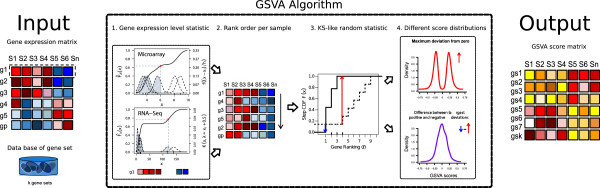
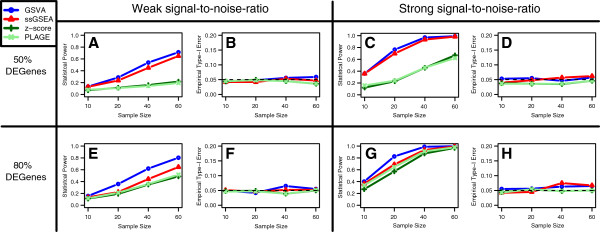
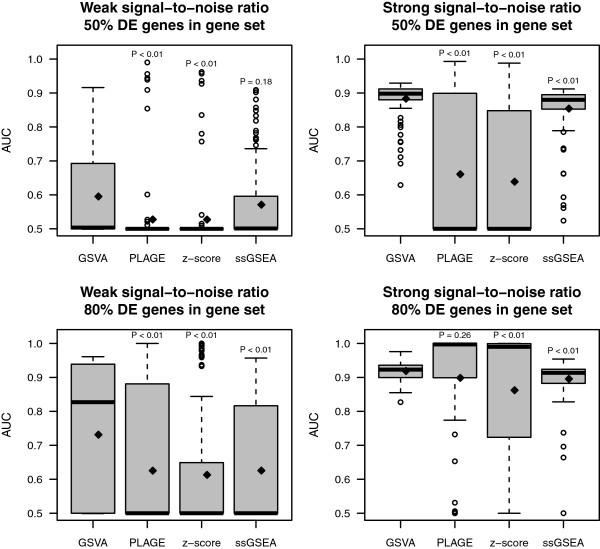
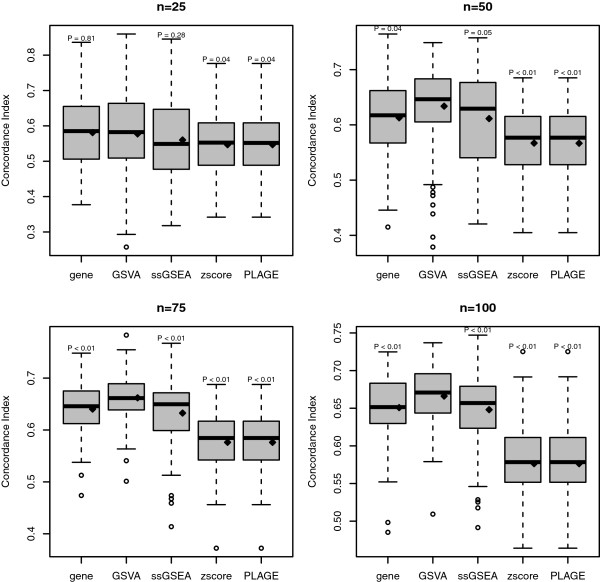
Background: Gene set enrichment (GSE) analysis is a popular framework for condensing information from gene expression profiles into a pathway or signature summary. The strengths of this approach over single gene analysis include noise and dimension reduction, as well as greater biological interpretability. As molecular profiling experiments move beyond simple case-control studies, robust and flexible GSE methodologies are needed that can model pathway activity within highly heterogeneous data sets. Results: To address this challenge, we introduce Gene Set Variation Analysis (GSVA), a GSE method that estimates variation of pathway activity over a sample population in an unsupervised manner. We demonstrate the robustness of GSVA in a comparison with current state of the art sample-wise enrichment methods. Further, we provide examples of its utility in differential pathway activity and survival analysis. Lastly, we show how GSVA works analogously with data from both microarray and RNA-seq experiments. Conclusions: GSVA provides increased power to detect subtle pathway activity changes over a sample population in comparison to corresponding methods. While GSE methods are generally regarded as end points of a bioinformatic analysis, GSVA constitutes a starting point to build pathway-centric models of biology. Moreover, GSVA contributes to the current need of GSE methods for RNA-seq data. GSVA is an open source software package for R which forms part of the Bioconductor project and can be downloaded at http://www.bioconductor.org .
Overview
The claims and statistics of this paper haven’t been checked yet.
Free: it reads the open-access text and checks the first 5 claims that cite a source we can check. Create a free account to check every claim.
Integrity signals
Registry
Cites
Statistics
Figures
Verification
Claims the paper makes
The claims and statistics of this paper haven’t been checked yet.
Free: it reads the open-access text and checks the first 5 claims that cite a source we can check. Create a free account to check every claim.
Claims other papers make about this one
Each is checked against this paper’s own text: does it say what the citing paper says it does?
In the citing paper
“GSVA is a non-parametric, unsupervised method that estimates the variation in gene set enrichment across samples in an expression dataset [44].”
From Integrated multi-omics analysis revealed the molecular networks and potential targets of cellular senescence in Alzheimer’s disease (2025) · cites this paper as [44]
In the citing paper
“Users can compute gene scores inside the pipeline by supplying a custom YAML formatted description file with the desired set(s) of genes and choosing one of the available methods for computing such gene scores. Available methods include PLAGE (Tomfohr et al. 2005), GSVA (Hänzelmann et al. 2013), SINGSCORE (Foroutan et al. 2021), SAMS (Souiai et al. 2001), and SSGSEA (Hänzelmann et al. 2013) as we”
From nf-core/nanostring: a pipeline for reproducible NanoString nCounter analysis (2024) · cites this paper as Hänzelmann et al. 2013
In the citing paper
“We also calculated GSVA scores using different gene inclusion cut-offs (top 100 and top 500 genes), and correlation between GSVA signatures across different cut-offs was > 0.97.”
From Alzheimer’s disease transcriptional landscape in ex vivo human microglia (2025) · cites this paper as [43]
In the citing paper
“the ‘within-control’ and ‘within-AD’ stratification shares with same axis, with distinct molecular states from gene set variance analysis 43 based on DEGs from AD diagnoses, (CERAD) and (Clinical), amyloid β plaque density, ApoE4 allele counts, and Braak stage (High vs. Middle)”
From Alzheimer’s disease transcriptional landscape in ex vivo human microglia (2025) · cites this paper as [43]
Self-check
Percentages, sums and reported differences re-computed from the paper’s own numbers.
The self-check needs the paper’s full text.
Citations
Cites
R: A Language and Environment for Statistical Computing
R Core Team (2025) · doi:10.32614/r.manuals · Cited by 352,181
Controlling the False Discovery Rate: A Practical and Powerful Approach to Multiple Testing
Benjamini, Y., & Hochberg, Y. (1995) · Journal of the Royal Statistical Society Series B: Statistical Methodology · doi:10.1111/j.2517-6161.1995.tb02031.x · Cited by 109,482 · cited 1×
“) approach [63] to obtain corrected p-values.”
Subramanian, A., Tamayo, P., Mootha, V. K., Mukherjee, S., Ebert, B. L., Gillette, M. A., Paulovich, A., Pomeroy, S. L., Golub, T. R., Lander, E. S., et al. (2005) · Proceedings of the National Academy of Sciences · doi:10.1073/pnas.0506580102 · Cited by 53,625 · cited 9×
“Most GSE methods, such as GSEA [4], are supervised and population based, in that they compute an enrichment score per gene set to describe the entire data set, modeled on a phenotype (discrete, such as case-control, or continuous).”
BackgroundMethodInfluentialRobinson, M. D., McCarthy, D. J., & Smyth, G. K. (2010) · Bioinformatics · doi:10.1093/bioinformatics/btp616 · Cited by 41,364 · cited 1×
“The nature of these data, however, often requires specific statistical models and bioinformatic methods for their analysis, as in the case of differential expression analysis [45].”
MethodDensity Estimation for Statistics and Data Analysis
Silverman, B. W. (2018) · Routledge eBooks · doi:10.1201/9781315140919 · Cited by 15,796
Huang, D. W., Sherman, B. T., & Lempicki, R. A. (2009) · Nucleic Acids Research · doi:10.1093/nar/gkn923 · Cited by 14,108 · cited 1×
“Many other supervised, population based approaches have also been described [12,17,20,31-34].”
BackgroundMapping and quantifying mammalian transcriptomes by RNA-Seq
Mortazavi, A., Williams, B. A., McCue, K., Schaeffer, L., & Wold, B. (2008) · Nature Methods · doi:10.1038/nmeth.1226 · Cited by 13,696 · cited 1×
“The application of high-throughput sequencing to interrogate RNA concentration in biological samples, popularly known as RNA-seq, is steadily becoming the technology of choice to profile gene expression [44].”
BackgroundBioconductor: open software development for computational biology and bioinformatics
Gentleman, R. C., Carey, V. J., Bates, D. M., Bolstad, B., Dettling, M., Dudoit, S., Ellis, B., Gautier, L., Ge, Y., Gentry, J., et al. (2004) · Genome Biology · doi:10.1186/gb-2004-5-10-r80 · Cited by 12,172 · cited 1×
“Microarray data processing Data analysis was performed using the R [59] and Bioconductor [60] software.”
MethodSmyth, G. K. (2004) · Statistical Applications in Genetics and Molecular Biology · doi:10.2202/1544-6115.1027 · Cited by 11,829
Mootha, V. K., Lindgren, C. M., Eriksson, K.-F., Subramanian, A., Sihag, S., Lehar, J., Puigserver, P., Carlsson, E., Ridderstråle, M., Laurila, E., et al. (2003) · Nature Genetics · doi:10.1038/ng1180 · Cited by 10,197 · cited 1×
“Many methodological variations of GSE methods have been proposed [1–6], including non-parametric enrichment statistics [4,7], battery testing [8–10], and focused gene set testing [1,11,12].”
Method
Research works printed but not linked: 2
- Wu D Lim E Vaillant F Asselin-Labat ML Visvader JE Smyth GK ROAST: rotation gene set tests for complex microarray experiments Bioinformatics (Oxford, England) 2010 26 17 2176 2182 [ http://www.ncbi.nlm.nih.gov/pubmed/20610611]. [PMID: 20610611] PMC2922896 20610611 · DOI · Paper page
- Bolstad BM Low-level analysis of high-density oligonucleotide array data: background, normalization and summarization PhD thesis, University of Waikato 2004. [ http://bmbolstad.com/Dissertation/Bolstad_2004_Dissertation.pdf]
Cited by
Items 1,001–1,085 of 1,085
Oshi, M., Newman, S., Tokumaru, Y., Yan, L., Matsuyama, R., Endo, I., Katz, M. H. G., & Takabe, K. (2020) · Cancers · doi:10.3390/cancers12102871 · Cited by 71
“The gene set variation analysis (GSVA) algorithm [70] was utilized to measure the G2M score as the GSVA score for the “HALLMARK_G2M target” gene set of the MSigDb Hallmark collection [71] using the GSVA Bioconductor package (version 3.”
MethodComprehensive characterization of the rRNA metabolism-related genes in human cancer
Cui, K., Liu, C., Li, X., Zhang, Q., & Li, Y. (2019) · Oncogene · doi:10.1038/s41388-019-1026-9 · Cited by 69
Li, M., Lin, A., Luo, P., Shen, W., Xiao, D., Gou, L., Zhang, J., & Guo, L. (2020) · Aging · doi:10.18632/aging.102683 · Cited by 62
Pilot study of bempegaldesleukin in combination with nivolumab in patients with metastatic sarcoma
D’Angelo, S. P., Richards, A. L., Conley, A. P., Woo, H. J., Dickson, M. A., Gounder, M., Kelly, C., Keohan, M. L., Movva, S., Thornton, K., et al. (2022) · Nature Communications · doi:10.1038/s41467-022-30874-8 · Cited by 60
Silva, T. C., Young, J. I., Zhang, L., Gomez, L., Schmidt, M. A., Varma, A., Chen, X. S., Martin, E. R., & Wang, L. (2022) · doi:10.1101/2022.04.11.22273748 · Cited by 57
Martínez, B. A., Shrotri, S., Kingsmore, K. M., Bachali, P., Grammer, A. C., & Lipsky, P. E. (2022) · Science Advances · doi:10.1126/sciadv.abn4776 · Cited by 56
Joshi, M., Kim, J., D’Alessandro, A., Monk, E., Bruce, K., Elajaili, H., Nozik-Grayck, E., Goodspeed, A., Costello, J. C., & Schlaepfer, I. R. (2020) · Cancers · doi:10.3390/cancers12113431 · Cited by 54
“Gene Set Variation Analysis (GSVA) was performed using the GSVA R package [63], to score several gene sets with a Poison distribution.”
MethodConcurrent loss of the Y chromosome in cancer and T cells impacts outcome
Chen, X., Shen, Y., Choi, S., Abdel-Hafiz, H. A., Basu, M., Hoelzen, L., Tufano, M., Kailasam Mani, S. K., Ranjpour, M., Zhu, J., et al. (2025) · Nature · doi:10.1038/s41586-025-09071-2 · Cited by 50
“Each signature was assessed using ssGSEA implemented through the GSVA R package 49 (v.1.44.5).”
InfluentialWei, C., Sun, W., Shen, K., Zhong, J., Liu, W., Gao, Z., Xu, Y., Wang, L., Hu, T., Ren, M., et al. (2023) · Nature Communications · doi:10.1038/s41467-023-43980-y · Cited by 49
Alzheimer’s disease-related transcriptional sex differences in myeloid cells
Coales, I., Tsartsalis, S., Fancy, N., Weinert, M., Clode, D., Owen, D., & Matthews, P. M. (2022) · Journal of Neuroinflammation · doi:10.1186/s12974-022-02604-w · Cited by 49
“Accordingly, leading edge analysis was performed on the female enriched IR-AD gene sets from each of the peripheral myeloid population analysed via GSVA (non E2-treated F-MCs, Flo-MDMs, and F-MGL).”
MethodInfluentialLi, H., Chen, J., Li, Z., Chen, M., Ou, Z., Mo, M., Wang, R., Tong, S., Liu, P., Cai, Z., et al. (2023) · Advanced Science · doi:10.1002/advs.202300110 · Cited by 49
Zeng, B., Glicksberg, B. S., Newbury, P., Chekalin, E., Xing, J., Liu, K., Wen, A., Chow, C., & Chen, B. (2021) · Nature Protocols · doi:10.1038/s41596-020-00430-z · Cited by 48
hECA: The cell-centric assembly of a cell atlas
Chen, S., Luo, Y., Gao, H., Li, F., Chen, Y., Li, J., You, R., Hao, M., Bian, H., Xi, X., et al. (2022) · iScience · doi:10.1016/j.isci.2022.104318 · Cited by 48
“For a sketchy study on the metabolic landscape of T cells across multiple organs, we evaluated each cell’s metabolic activity scores with GSVA, which produced comparable values across multiple clusters or datasets and alleviated possible batch effects in the data from multiple sources (Hänzelmann et al., 2013).”
MethodDing, Z., Dong, Z., Chen, Z., Hong, J., Yan, L., Li, H., Yao, S., Yan, Y., Yang, Y., Yang, C., et al. (2021) · Frontiers in Immunology · doi:10.3389/fimmu.2021.733530 · Cited by 47
“Single-sample gene-set enrichment analysis (ssGSEA) is a unique GSEA method used to calculate separate enrichment scores for each sample (22).”
MethodXie, W., Ke, Y., You, Q., Li, J., Chen, L., Li, D., Fang, J., Chen, X., Zhou, Y., Chen, L., et al. (2022) · Arteriosclerosis, Thrombosis, and Vascular Biology · doi:10.1161/atvbaha.121.316883 · Cited by 46
Wu, X., Zhang, S., Zhang, Z., He, Z., Xu, Z., Wang, W., Jin, Z., You, J., Guo, Y., Zhang, L., et al. (2024) · npj Precision Oncology · doi:10.1038/s41698-024-00670-2 · Cited by 43
“The “ GSVA ” R software package 53 was employed for gene set variation analysis, while the Hallmark gene set from the Molecular Signatures Database was used to explore alterations in signaling pathways.”
MethodZhu, X., Tian, X., Ji, L., Zhang, X., Cao, Y., Shen, C., Hu, Y., Wong, J. W. H., Fang, J.-Y., Hong, J., et al. (2021) · npj Precision Oncology · doi:10.1038/s41698-021-00142-x · Cited by 41
Holzscheck, N., Söhle, J., Kristof, B., Grönniger, E., Gallinat, S., Wenck, H., Winnefeld, M., Falckenhayn, C., & Kaderali, L. (2020) · Aging · doi:10.18632/aging.103499 · Cited by 40
“described in [44] and implemented in the GSVA [45] R package.”
MethodRegion-specific cellular and molecular basis of liver regeneration after acute pericentral injury.
Wang, S., Wang, X., Shan, Y., Tan, Z., Su, Y., Cao, Y., Wang, S., Dong, J., Gu, J., & Wang, Y. (2024) · Cell Stem Cell · doi:10.1016/j.stem.2024.01.013 · Cited by 51
Prostate cancer reshapes the secreted and extracellular vesicle urinary proteomes
Khoo, A., Govindarajan, M., Qiu, Z., Liu, L. Y., Ignatchenko, V., Waas, M., Macklin, A., Keszei, A., Neu, S., Main, B. P., et al. (2024) · Nature Communications · doi:10.1038/s41467-024-49424-5 · Cited by 40
Prostate Cancer Reshapes the Secreted and Extracellular Vesicle Urinary Proteomes
Khoo, A., Govindarajan, M., Qiu, Z., Liu, L. Y., Ignatchenko, V., Waas, M., Macklin, A., Keszei, A., Main, B. P., Yang, L., et al. (2023) · doi:10.1101/2023.07.23.550214 · Cited by 40
Huang, Y., Xie, Y., Zhang, Y., Liu, Z., Jiang, W., Ye, Y., Tang, J., Li, Z., Yin, Z., & Lin, X.-J. (2025) · Molecular Cancer · doi:10.1186/s12943-025-02370-2 · Cited by 41
“GSVA [39] was conducted by calculating rank-based statistics for each gene set corresponding to specific pathways which were downloaded and processed from the GO (https:// www. geneo ntolo gy. org/) or KEGG database (https:// www. kegg. jp/).”
Feiten, A. F., Dahm, K., Schlepckow, K., van Lengerich, B., Suh, J. H., Reifschneider, A., Wefers, B., Bartos, L. M., Wind-Mark, K., de Weerd, L., et al. (2026) · Nature Communications · doi:10.1038/s41467-026-68706-8 · Cited by 39
APOE genotype determines cell-type-specific pathological landscape of Alzheimer’s disease
Li, Z., Martens, Y. A., Ren, Y., Jin, Y., Sekiya, H., Doss, S. V., Kouri, N., Castanedes-Casey, M., Christensen, T. A., Miller Nevalainen, L. B., et al. (2025) · Neuron · doi:10.1016/j.neuron.2025.02.017 · Cited by 39
Jammihal, T., Saliby, R. M., Labaki, C., Soulati, H., Gallegos, J., Peris, A., McCurry, D., Yu, C., Shah, V., Poduval, D., et al. (2025) · Nature Cancer · doi:10.1038/s43018-024-00896-w · Cited by 38
“Previously described continuous subtype classification 29 by Buttner et al. was applied to assign tumor samples to one of the main histological subtypes: ccRCC, papillary RCC and chromophobe RCC. GSEA was performed on the samples using the MsigDB hallmark or canonical (C2CP) pathways 68–72 .”
Lin, M., Xu, F., Sun, J., Song, J., Shen, Y., Lu, S., Ding, H., Lan, L., Chen, C., Ma, W., et al. (2024) · Critical Care · doi:10.1186/s13054-024-05000-3 · Cited by 38
“The integrated abundance of proteins was then calculated by utilizing the Cluster-Profiler package of R [20].”
MethodYi, R., Hong, S., Zhang, Y., Lin, A., Ying, H., Zou, W., Wang, Q., Wei, T., Cheng, Q., Zhu, W., et al. (2022) · Frontiers in Cell and Developmental Biology · doi:10.3389/fcell.2022.757137 · Cited by 37
“We then used the gene set variation analysis (GSVA) algorithm (Hänzelmann et al., 2013) and the following gene sets to estimate pathway enrichment scores (ESs) for each sample: Gene Ontology (GO) (The Gene Ontology Resourc, 2019), Kyoto Encyclopedia of Genes and Genomes (KEGG) (Kanehisa et al.”
MethodYang, B., Su, Z., Chen, G., Zeng, Z., Tan, J., Wu, G., Zhu, S., & Lin, L. (2021) · Oncology Letters · doi:10.3892/ol.2021.12441 · Cited by 36
Zhu, X., Fang, H., Gladysz, K., Barbour, J. A., & Wong, J. W. H. (2021) · European Journal of Cancer · doi:10.1016/j.ejca.2021.08.003 · Cited by 35
Schultz, C. W., McCarthy, G. A., Nerwal, T., Nevler, A., DuHadaway, J. B., McCoy, M. D., Jiang, W., Brown, S. Z., Goetz, A., Jain, A., et al. (2021) · Molecular Cancer Therapeutics · doi:10.1158/1535-7163.mct-20-0652 · Cited by 34
Costa-Verdera, H., Meneghini, V., Fitzpatrick, Z., Abou Alezz, M., Fabyanic, E., Huang, X., Dzhashiashvili, Y., Ahiya, A., Mangiameli, E., Valeri, E., et al. (2025) · Nature Communications · doi:10.1038/s41467-025-58778-3 · Cited by 32
AAV vectors trigger DNA damage responses and STING-dependent inflammation in human CNS cells
Costa-Verdera, H., Meneghini, V., Fitzpatrick, Z., Alezz, M. A., Fabyanic, E., Huang, X., Dzhashiashvili, Y., Ahiya, A., Mangiameli, E., Valeri, E., et al. (2024) · doi:10.21203/rs.3.rs-4171795/v1 · Cited by 32
Guidelines for using sigQC for systematic evaluation of gene signatures
Dhawan, A., Barberis, A., Cheng, W.-C., Domingo, E., West, C., Maughan, T., Scott, J. G., Harris, A. L., & Buffa, F. M. (2019) · Nature Protocols · doi:10.1038/s41596-019-0136-8 · Cited by 31
Proteogenomics reveals sex-biased aging genes and coordinated splicing in cardiac aging
Han, Y., Wennersten, S. A., Wright, J. M., Ludwig, R. W., Lau, E., & Lam, M. P. Y. (2022) · American Journal of Physiology-Heart and Circulatory Physiology · doi:10.1152/ajpheart.00244.2022 · Cited by 31
Proteogenomic characterization of age and sex interactions in cardiac gene expression
Han, Y., Wennersten, S. A., Wright, J., Ludwig, R. W., Lau, E., & Lam, M. P. Y. (2022) · doi:10.1101/2022.05.11.491401 · Cited by 31
Entorhinal cortex vulnerability to human APP expression promotes hyperexcitability and tau pathology
Goettemoeller, A. M., Banks, E., Kumar, P., Olah, V. J., McCann, K. E., South, K., Ramelow, C. C., Eaton, A., Duong, D. M., Seyfried, N. T., et al. (2024) · Nature Communications · doi:10.1038/s41467-024-52297-3 · Cited by 30
Alzheimer’s disease transcriptional landscape in ex vivo human microglia
Kosoy, R., Fullard, J. F., Bendl, J., Kleopoulos, S. P., Shao, Z., Argyriou, S., Mathur, D., Psychogyiou, K., Malakates, P., Vicari, J., et al. (2025) · Nature Neuroscience · doi:10.1038/s41593-025-02020-2 · Cited by 30
Mitra, A., Andrews, M. C., Roh, W., De Macedo, M. P., Hudgens, C. W., Carapeto, F., Singh, S., Reuben, A., Wang, F., Mao, X., et al. (2020) · Nature Communications · doi:10.1038/s41467-020-15538-9 · Cited by 27
Identification of metabolism-related subtypes and feature genes in Alzheimer’s disease
Lian, P., Cai, X., Wang, C., Liu, K., Yang, X., Wu, Y., Zhang, Z., Ma, Z., Cao, X., & Xu, Y. (2023) · Journal of Translational Medicine · doi:10.1186/s12967-023-04324-y · Cited by 29
“Gene set variation analysis (GSVA) represents an unsupervised and nonparametric approach to gene set enrichment analysis that estimates the score attributed to a particular pathway or signature based on transcriptomic data [13].”
BackgroundPlattner, C., Lamberti, G., Blattmann, P., Kirchmair, A., Rieder, D., Loncova, Z., Sturm, G., Scheidl, S., Ijsselsteijn, M., Fotakis, G., et al. (2023) · iScience · doi:10.1016/j.isci.2023.108399 · Cited by 27
Shen, M., Li, S., Zhao, Y., Liu, Y., Liu, Z., Huan, L., Qiao, Y., Wang, L., Han, L., Chen, Z., et al. (2022) · Cell Death & Disease · doi:10.1038/s41419-022-05187-9 · Cited by 25
Li, G.-Q., Wang, Y.-K., Zhou, H., Jin, L.-G., Wang, C.-Y., Albahde, M., Wu, Y., Li, H.-Y., Zhang, W.-K., Li, B.-H., et al. (2021) · Frontiers in Cell and Developmental Biology · doi:10.3389/fcell.2021.630355 · Cited by 24
Zhou, L., Li, H., Cai, H., Liu, W., Pan, E., Yu, D., & He, S. (2022) · Frontiers in Oncology · doi:10.3389/fonc.2022.809589 · Cited by 24
“ssGSEA was performed using the R package “GSVA” to quantify the enrichment scores of 28 immune cells in OSCC samples in TCGA-OSCC and GSE30784 datasets (19).”
MethodPorter, R. L., Sun, S., Flores, M. N., Berzolla, E., You, E., Phillips, I. E., KC, N., Desai, N., Tai, E. C., Szabolcs, A., et al. (2022) · Journal of Clinical Investigation · doi:10.1172/jci155931 · Cited by 24
“The gsva() function, which employs the method described by Hänzelmann, Castelo, and Guinney (52), was applied.”
Li, F., Tang, H., Luo, X., Li, X., Luo, K., Liu, S., Liang, J., Liao, S., Zhong, C., Zhan, X., et al. (2023) · Cancer Science · doi:10.1111/cas.15821 · Cited by 22
Yu, W., Zhao, X., Jalloh, A. S., Li, Y., Zhao, Y., Dinner, B., Yang, Y., Ouyang, S., Tian, T., Zhao, Z., et al. (2023) · Journal of the American Chemical Society · doi:10.1021/jacs.3c02602 · Cited by 21
CombPDX: a unified statistical framework for evaluating drug synergism in patient-derived xenografts
Huang, L., Wang, J., Fang, B., Meric-Bernstam, F., Roth, J. A., & Ha, M. J. (2022) · Scientific Reports · doi:10.1038/s41598-022-16933-6 · Cited by 21
ProteoMixture: A cell type deconvolution tool for bulk tissue proteomic data
Teng, P.-N., Schaaf, J. P., Abulez, T., Hood, B. L., Wilson, K. N., Litzi, T. J., Mitchell, D., Conrads, K. A., Hunt, A. L., Olowu, V., et al. (2024) · iScience · doi:10.1016/j.isci.2024.109198 · Cited by 21
Ning, Z., Liu, Y., Wan, M., Zuo, Y., Chen, S., Shi, Z., Xu, Y., Li, H., Ko, H., Zhang, J., et al. (2024) · Cellular & Molecular Biology Letters · doi:10.1186/s11658-024-00600-x · Cited by 20
“The average normalized gene expression profiles for each cell type were first computed at the individual level and then calculated the pathway activity scores using the R package GSVA (v.1.42.0) [24].”
MethodInfluentialNavigating Transcriptomic Connectivity Mapping Workflows to Link Chemicals with Bioactivities
Shah, I., Bundy, J., Chambers, B., Everett, L. J., Haggard, D., Harrill, J., Judson, R. S., Nyffeler, J., & Patlewicz, G. (2022) · Chemical Research in Toxicology · doi:10.1021/acs.chemrestox.2c00245 · Cited by 19
Wang, J., Chen, X., Wu, D., Jia, C., Lian, Q., Pan, Y., & Yang, J. (2024) · Liver Research · doi:10.1016/j.livres.2024.11.001 · Cited by 18
Chia, M., Ng, A. H. Q., Ravikrishnan, A., Mohamed Naim, A. N., Wearne, S., Common, J., & Nagarajan, N. (2026) · Nature Biotechnology · doi:10.1038/s41587-025-02797-4 · Cited by 18
“Gene set variation analysis (GSVA) 62 was used to estimate samplespecific immune pathway activities to find associations between host markers and metagenomic abundances of microbes.”
Wang, Y., Ju, X., Hua, R., Chen, J., Dai, X., Liu, L., Wang, G., Bai, Y., Hu, H., & Li, X. (2024) · British Journal of Cancer · doi:10.1038/s41416-024-02856-8 · Cited by 18
“Univariate and multivariate Cox risk proportional regression models were used to assess the effect of clinical characteristics and ir-PPS on the ICIs prognosis of patients.”
The expression of immune related genes and potential regulatory mechanisms in schizophrenia
Yu, S., Qu, Y., Du, Z., Ou, M., Lu, R., Yuan, J., Jiang, Y., & Zhu, H. (2024) · Schizophrenia Research · doi:10.1016/j.schres.2023.11.007 · Cited by 17
Ji, C., Tang, Y., Zhang, Y., Huang, X., Li, C., Yang, Y., Wu, Q., Xia, X., Cai, Q., Qi, X.-R., et al. (2023) · Cell Reports · doi:10.1016/j.celrep.2023.112712 · Cited by 16
Yang, Y., Zhang, W., Wang, X., Yang, J., Cui, Y., Song, H., Li, W., Li, W., Wu, L., Du, Y., et al. (2023) · Frontiers in Cell and Developmental Biology · doi:10.3389/fcell.2023.998666 · Cited by 16
Yoshimura, A., Horinaka, M., Yaoi, T., Ono, H., Itoh, K., Yamada, T., Takayama, K., & Sakai, T. (2024) · British Journal of Cancer · doi:10.1038/s41416-024-02727-2 · Cited by 15
“The cells were analysed using a BD Accuri C6 Flow Cytometer (BD Biosciences, San Jose, CA, USA), and the number of cells in the G0-G1, S, G2-M, and sub G1 phases was quanti fi ed.”
Zhang, X., Xiao, Q., Zhang, C., Zhou, Q., & Xu, T. (2024) · Journal of Cellular and Molecular Medicine · doi:10.1111/jcmm.18262 · Cited by 14
“35 The top 30 enriched pathways were visualized via a heat - map, offering an overview of pathway activation patterns among the various clusters.”
MethodGRAMD1B is a regulator of lipid homeostasis, autophagic flux and phosphorylated tau
Acosta Ingram, D., Turkes, E., Kim, T. Y., Vo, S., Sweeney, N., Bonte, M.-A., Rutherford, R., Julian, D. L., Pan, M., Marsh, J., et al. (2025) · Nature Communications · doi:10.1038/s41467-025-58585-w · Cited by 12
Pybus, A. F., Bitarafan, S., Brothers, R. O., Rohrer, A., Khaitan, A., Moctezuma, F. R., Udeshi, K., Davies, B., Triplett, S., Griffin, M. N., et al. (2024) · Journal of Neuroinflammation · doi:10.1186/s12974-024-03128-1 · Cited by 12
“Gene set variation analysis (GSVA) was conducted on the normalized and variance-stabilized count matrix in R using the gsva package, also available on Bioconductor [71].”
MethodLian, Q., Ma, C., Wang, X., Wang, J., Zeng, J., Zhang, J., & Li, Y. (2025) · Frontiers in Immunology · doi:10.3389/fimmu.2025.1668627 · Cited by 10
“Immune microenvironment characterization was performed using single-sample gene set enrichment analysis (ssGSEA) implemented via the GSVA package (34), utilizing 24 gene sets corresponding to immune cell signatures (35).”
Zheng, X., Wang, Y., & Qiu, X. (2024) · European Journal of Pharmacology · doi:10.1016/j.ejphar.2024.176840 · Cited by 10
Human haematopoietic stem cells remember inflammatory stress
Zeng, A. G. X., Nagree, M. S., Jakobsen, N. A., Shah, S., Varesi, A., Kang, J. R. W., Murison, A., Cheong, J.-G., Turkalj, S., Zhang, X., et al. (2026) · Nature · doi:10.1038/s41586-026-10522-7 · Cited by 10
Wang, M., Yan, X., Dong, Y., Li, X., & Gao, B. (2024) · PLOS Computational Biology · doi:10.1371/journal.pcbi.1012113 · Cited by 9
“To convert gene expression data into scores for particular biological processes, we utilized the R packages "GSVA" [73] and "msigdbr."”
MethodFoamy microglia link oxylipins to disease progression in multiple sclerosis
van der Vliet, D., Di, X., Shamorkina, T. M., Coulon-Bainier, C., Pavlovic, A., van der Vliet, I. A. C. M., Zeng, Y., Macnair, W., van Egmond, N., Chen, J. Q. A., et al. (2026) · Nature Neuroscience · doi:10.1038/s41593-026-02302-3 · Cited by 18
Xu, X., Dong, Y., Liu, J., Zhang, P., Yang, W., & Dai, L. (2024) · Journal of Inflammation Research · doi:10.2147/jir.s480574 · Cited by 9
“Based on the expression of model genes, gene set variation analysis (GSVA) enrichment analysis 19 was conducted to investigate the involvement of biological pathways in the development of NASH.”
Multi-omics analysis identifies glioblastoma dependency on H3K9me3 methyltransferase activity
Xie, Q., Du, Y., Ghosh, S., Rajendran, S., Cohen-Gadol, A. A., Baizabal, J.-M., Nephew, K. P., Han, L., & Shen, J. (2025) · NPJ Precision Oncology · doi:10.1038/s41698-025-00829-5 · Cited by 10
Hu, C., Yin, L., Chen, Z., Waldron, R. T., Lugea, A., Lin, Y., Zhai, X., Wen, L., Han, Y.-P., Pandol, S. J., et al. (2021) · Computational and Structural Biotechnology Journal · doi:10.1016/j.csbj.2021.11.031 · Cited by 8
“At the same time, Gene Set Variation Analysis (GSVA) [14] was used to evaluate the GSVA score of each PSC signature gene in each sample.”
MethodLiu, J., Wang, X., Lin, J., Li, S., Deng, G., & Wei, J. (2021) · International Journal of General Medicine · doi:10.2147/ijgm.s329005 · Cited by 8
Liu, X., Tang, G., Chen, Y., Li, Y., Li, H., & Wang, X. (2025) · Cancer Research · doi:10.1158/0008-5472.can-24-1472 · Cited by 8
An, H., Fang, W., Chen, H., Huang, W., Liu, H., Zhang, Z., Zhao, H., Zhang, Y., Zhao, M., Qiu, J., et al. (2025) · Computer Methods and Programs in Biomedicine · doi:10.1016/j.cmpb.2025.108929 · Cited by 6
Comprehensive characterization of the transcriptional landscape in Alzheimer’s disease (AD) brains
Chen, C., Zhang, Z., Liu, Y., Hong, W., Karahan, H., Wang, J., Li, W., Diao, L., Yu, M., Saykin, A. J., et al. (2025) · Science Advances · doi:10.1126/sciadv.adn1927 · Cited by 12
Umbaugh, C. S., Groth, M., Erkut, C., Lee, K.-S., Marinho, J., Linder, S., Iser, F., Kapp, J. N., Schroeter, P., Dolaner, S., et al. (2025) · Science Advances · doi:10.1126/sciadv.adu2796 · Cited by 6
Masson, H., Tat, J., Di Giusto, P., Antonakoudis, A., Shamie, I., Baghdassarian, H., Samoudi, M., Robinson, C. M., Kuo, C.-C., Koga, N., et al. (2025) · Cell Systems · doi:10.1016/j.cels.2025.101453 · Cited by 6
Xu, Y., Liu, S., Zhou, Z., Qin, H., Zhang, Y., Zhang, G., Ma, H., Han, X., Liu, H., & Liu, Z. (2025) · Human Molecular Genetics · doi:10.1093/hmg/ddae189 · Cited by 6
Mao, R., & Li, J. (2024) · BMC Medical Genomics · doi:10.1186/s12920-024-02008-0 · Cited by 5
“Subsequently, ssGSEA [32] was employed to assess differences in immune cell abundance between the clusters.”
MethodInfluentialnf-core/nanostring: a pipeline for reproducible NanoString nCounter analysis
Peltzer, A., Mohr, C., Stadermann, K. B., Zwick, M., & Schmid, R. (2024) · Bioinformatics · doi:10.1093/bioinformatics/btae019 · Cited by 5
Jang, D., Shim, E., Shin, J., Kim, S., Ciotlos, S., Kim, H. J., Gil, T., Kim, Y., & Jeon, O. H. (2026) · Aging Cell · doi:10.1111/acel.70540 · Cited by 2
“48.3) was conducted to calculate enrichment scores for predefined gene sets and identify pathway alterations across primary and secondary SnC subclusters (Hänzelmann et al. 2013).”
InfluentialZhang, W., Chen, K., Tian, W., Zhang, Q., Sun, L., Wang, Y., Liu, M., & Zhang, Q. (2022) · Frontiers in Oncology · doi:10.3389/fonc.2022.849242 · Cited by 2
EXOSC3 G191 Variants Trigger System-Wide Recalibration of RNA Processing Machinery
Wijeratne, H. R. S., Runnebohm, A. M., Barron, M. P., Hampton, A. J., Li, R., Peck Justice, S. A., Lenceski, S. H., Rooney, J. D., Smith-Kinnaman, W. R., Chang, G. S., et al. (2026) · doi:10.64898/2026.01.26.701775 · Cited by 2
“Pathway activity scores were computed using the gsva() function from the GSVA R package 156 , specifying method = "ssgsea".”
Yang, M., Li, S., Li, R., Dong, Y., Zhou, M., Zhao, J., Liu, M., & Tan, R. (2026) · New Biotechnology · doi:10.1016/j.nbt.2026.05.006
Liu, Z., Dang, B., Wang, X., Liu, Y., Wang, C., & Lin, C. (2025) · Medical Oncology · doi:10.1007/s12032-025-03205-2
“GSVA can offer enhanced sensitivity for evaluating the enrichment alterations in biological pathway activity across samples [27].”
Analysis of intracellular and intercellular crosstalk from omics data
Chiodi, A., Pelucchi, P., & Mosca, E. (2023) · bioRxiv (Cold Spring Harbor Laboratory) · doi:10.1101/2023.08.10.552776
Zhao, H., Yin, X., Wang, S., Yu, W., Geng, Z., Sun, Y., Jiao, W., Yu, H., Zhang, Y., Wang, P., et al. (2026) · Nucleic Acids Research · doi:10.1093/nar/gkag1027
Magrangeas, F., Cherkaoui, M., Bessonneau-Gaborit, V., Derrien, J., Chevalier, C., Guérin-Charbonnel, C., Diamond, B., Samur, M. K., (IFM), I. F. D. M., Hulin, C., et al. (2026) · Nature Medicine · doi:10.1038/s41591-026-04692-0
Metadata
- Authors
- Hänzelmann, S., Castelo, R., & Guinney, J.
- Affiliations
- Hospital Del Mar (ES)
- Universitat Pompeu Fabra (ES)
- Sage Bionetworks (US)
- Corresponding author
- Castelo, Robert
- Guinney, Justin
- Venue
- BMC Bioinformatics
- Published
- 2013-01-16
- Volume
- 14
- Issue
- 1
- Pages
- 7-7
- ISSN
- 1471-2105 (ISSN-L)
- PMC
- PMC3618321
- OpenAlex
- W2159707944
- Cited by
- 15,440
- References
- 69
- Citations by year
- 2026: 1912 · 2025: 2459 · 2024: 2961 · 2023: 2686 · 2022: 2580 · 2021: 1518 · 2020: 676 · 2019: 295 · 2018: 142 · 2017: 99 · 2016: 44 · 2015: 30 · 2014: 17 · 2013: 15
- FWCI
- 15.84
- Type
- journal article
- Language
- en
- Open access
- gold
- doi.org
- Licence
- cc-by
- Locations
- BMC Bioinformatics (publishedVersion, cc-by)
- Europe PMC (PubMed Central) (publishedVersion, cc-by)
- PubMed Central (publishedVersion, cc-by)
- PubMed (publishedVersion)
- Repositori digital de la UPF (Universitat Pompeu Fabra) (publishedVersion, cc-by)
- RECERCAT (Consorci de Serveis Universitaris de Catalunya) (submittedVersion, cc-by)
- Funders
- Instituto de Salud Carlos III
- National Cancer Institute (U54CA149237)
- Topics
- Life Sciences › Biochemistry, Genetics and Molecular Biology › Molecular Biology › Bioinformatics and Genomic Networks
- Life Sciences › Biochemistry, Genetics and Molecular Biology › Molecular Biology › Gene expression and cancer classification
- Life Sciences › Biochemistry, Genetics and Molecular Biology › Molecular Biology › Genomics and Phylogenetic Studies
- Keywords
- gene set variation analysis, gene set enrichment analysis, survival analysis, microarray data, RNA-seq data
- MeSH terms
- Analysis of Variance, Female, Humans, Ovarian Neoplasms, Software, Genetic Variation, Leukemia, Biphenotypic, Acute, Survival Analysis, Sequence Analysis, RNA, Statistics, Nonparametric, Oligonucleotide Array Sequence Analysis, Gene Expression Profiling, Precursor Cell Lymphoblastic Leukemia-Lymphoma
About these checks
Registry, retraction, Cites and statistics results are computed, not judged, with one exception: a printed reference that no index lists is read once by a model before it counts as a citation error. Claims are extracted by a model and kept only when their quote appears verbatim in the text; each cited source is then checked, with a model’s help, for whether it says what the claim relies on. Those verdicts can be wrong — read the claim’s quote and the cited source before relying on one.
Statistics and arithmetic are recomputed, not judged.
Confidence bands are shown only for fields calibrated on our annotated test set. None is calibrated yet, so no band is shown.
What counts as a claim ›How we measure confidence ›How we check this ›
Are you an author, or do you see a problem with this page? Request a review
Data sources
Bibliographic data: Semantic Scholar, OpenAlex, Crossref.
Contains information from the Semantic Scholar Academic Graph Datasets, made available under the ODC Attribution License (ODC-BY 1.0).
Semantic Scholar’s data is described in: Kinney, R., et al. (2023). The Semantic Scholar Open Data Platform. arXiv:2301.10140.
