

GSVA: gene set variation analysis for microarray and RNA-Seq data
Open accessThe DOI matches its Crossref record; 68 of the 69 references it cites were found in a registry or an index.
Abstract
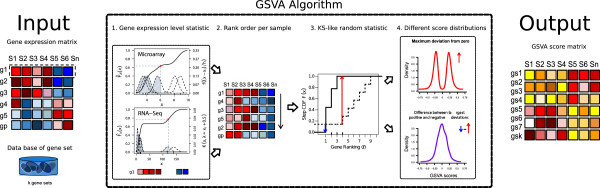
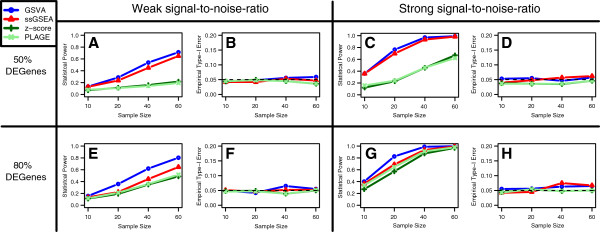
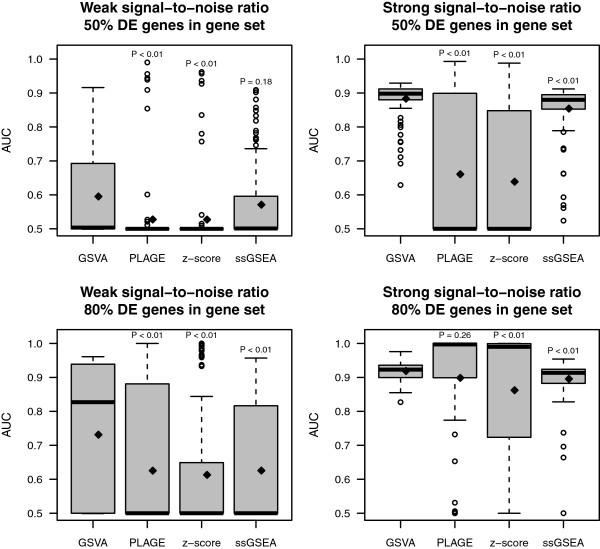
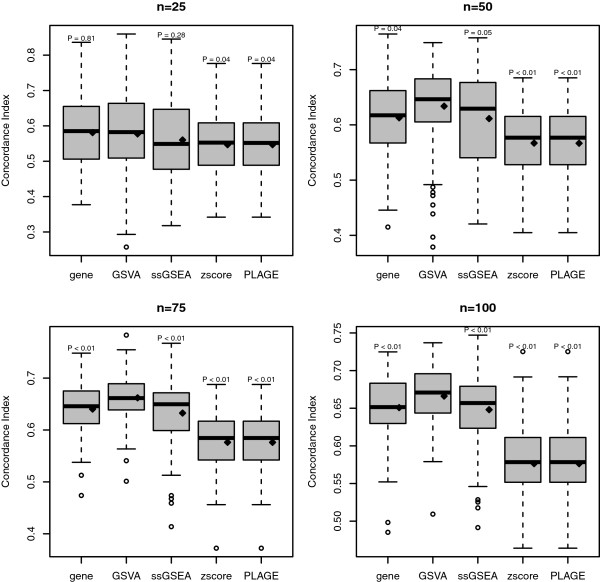
Background: Gene set enrichment (GSE) analysis is a popular framework for condensing information from gene expression profiles into a pathway or signature summary. The strengths of this approach over single gene analysis include noise and dimension reduction, as well as greater biological interpretability. As molecular profiling experiments move beyond simple case-control studies, robust and flexible GSE methodologies are needed that can model pathway activity within highly heterogeneous data sets. Results: To address this challenge, we introduce Gene Set Variation Analysis (GSVA), a GSE method that estimates variation of pathway activity over a sample population in an unsupervised manner. We demonstrate the robustness of GSVA in a comparison with current state of the art sample-wise enrichment methods. Further, we provide examples of its utility in differential pathway activity and survival analysis. Lastly, we show how GSVA works analogously with data from both microarray and RNA-seq experiments. Conclusions: GSVA provides increased power to detect subtle pathway activity changes over a sample population in comparison to corresponding methods. While GSE methods are generally regarded as end points of a bioinformatic analysis, GSVA constitutes a starting point to build pathway-centric models of biology. Moreover, GSVA contributes to the current need of GSE methods for RNA-seq data. GSVA is an open source software package for R which forms part of the Bioconductor project and can be downloaded at http://www.bioconductor.org .
Overview
The claims and statistics of this paper haven’t been checked yet.
Free: it reads the open-access text and checks the first 5 claims that cite a source we can check. Create a free account to check every claim.
Integrity signals
Registry
Cites
Statistics
Figures
Verification
Claims the paper makes
The claims and statistics of this paper haven’t been checked yet.
Free: it reads the open-access text and checks the first 5 claims that cite a source we can check. Create a free account to check every claim.
Claims other papers make about this one
Each is checked against this paper’s own text: does it say what the citing paper says it does?
In the citing paper
“GSVA is a non-parametric, unsupervised method that estimates the variation in gene set enrichment across samples in an expression dataset [44].”
From Integrated multi-omics analysis revealed the molecular networks and potential targets of cellular senescence in Alzheimer’s disease (2025) · cites this paper as [44]
In the citing paper
“Users can compute gene scores inside the pipeline by supplying a custom YAML formatted description file with the desired set(s) of genes and choosing one of the available methods for computing such gene scores. Available methods include PLAGE (Tomfohr et al. 2005), GSVA (Hänzelmann et al. 2013), SINGSCORE (Foroutan et al. 2021), SAMS (Souiai et al. 2001), and SSGSEA (Hänzelmann et al. 2013) as we”
From nf-core/nanostring: a pipeline for reproducible NanoString nCounter analysis (2024) · cites this paper as Hänzelmann et al. 2013
In the citing paper
“We also calculated GSVA scores using different gene inclusion cut-offs (top 100 and top 500 genes), and correlation between GSVA signatures across different cut-offs was > 0.97.”
From Alzheimer’s disease transcriptional landscape in ex vivo human microglia (2025) · cites this paper as [43]
In the citing paper
“the ‘within-control’ and ‘within-AD’ stratification shares with same axis, with distinct molecular states from gene set variance analysis 43 based on DEGs from AD diagnoses, (CERAD) and (Clinical), amyloid β plaque density, ApoE4 allele counts, and Braak stage (High vs. Middle)”
From Alzheimer’s disease transcriptional landscape in ex vivo human microglia (2025) · cites this paper as [43]
Self-check
Percentages, sums and reported differences re-computed from the paper’s own numbers.
The self-check needs the paper’s full text.
Citations
Cites
R: A Language and Environment for Statistical Computing
R Core Team (2025) · doi:10.32614/r.manuals · Cited by 352,181
Controlling the False Discovery Rate: A Practical and Powerful Approach to Multiple Testing
Benjamini, Y., & Hochberg, Y. (1995) · Journal of the Royal Statistical Society Series B: Statistical Methodology · doi:10.1111/j.2517-6161.1995.tb02031.x · Cited by 109,482 · cited 1×
“) approach [63] to obtain corrected p-values.”
Subramanian, A., Tamayo, P., Mootha, V. K., Mukherjee, S., Ebert, B. L., Gillette, M. A., Paulovich, A., Pomeroy, S. L., Golub, T. R., Lander, E. S., et al. (2005) · Proceedings of the National Academy of Sciences · doi:10.1073/pnas.0506580102 · Cited by 53,625 · cited 9×
“Most GSE methods, such as GSEA [4], are supervised and population based, in that they compute an enrichment score per gene set to describe the entire data set, modeled on a phenotype (discrete, such as case-control, or continuous).”
BackgroundMethodInfluentialRobinson, M. D., McCarthy, D. J., & Smyth, G. K. (2010) · Bioinformatics · doi:10.1093/bioinformatics/btp616 · Cited by 41,364 · cited 1×
“The nature of these data, however, often requires specific statistical models and bioinformatic methods for their analysis, as in the case of differential expression analysis [45].”
MethodDensity Estimation for Statistics and Data Analysis
Silverman, B. W. (2018) · Routledge eBooks · doi:10.1201/9781315140919 · Cited by 15,796
Huang, D. W., Sherman, B. T., & Lempicki, R. A. (2009) · Nucleic Acids Research · doi:10.1093/nar/gkn923 · Cited by 14,108 · cited 1×
“Many other supervised, population based approaches have also been described [12,17,20,31-34].”
BackgroundMapping and quantifying mammalian transcriptomes by RNA-Seq
Mortazavi, A., Williams, B. A., McCue, K., Schaeffer, L., & Wold, B. (2008) · Nature Methods · doi:10.1038/nmeth.1226 · Cited by 13,696 · cited 1×
“The application of high-throughput sequencing to interrogate RNA concentration in biological samples, popularly known as RNA-seq, is steadily becoming the technology of choice to profile gene expression [44].”
BackgroundBioconductor: open software development for computational biology and bioinformatics
Gentleman, R. C., Carey, V. J., Bates, D. M., Bolstad, B., Dettling, M., Dudoit, S., Ellis, B., Gautier, L., Ge, Y., Gentry, J., et al. (2004) · Genome Biology · doi:10.1186/gb-2004-5-10-r80 · Cited by 12,172 · cited 1×
“Microarray data processing Data analysis was performed using the R [59] and Bioconductor [60] software.”
MethodSmyth, G. K. (2004) · Statistical Applications in Genetics and Molecular Biology · doi:10.2202/1544-6115.1027 · Cited by 11,829
Mootha, V. K., Lindgren, C. M., Eriksson, K.-F., Subramanian, A., Sihag, S., Lehar, J., Puigserver, P., Carlsson, E., Ridderstråle, M., Laurila, E., et al. (2003) · Nature Genetics · doi:10.1038/ng1180 · Cited by 10,197 · cited 1×
“Many methodological variations of GSE methods have been proposed [1–6], including non-parametric enrichment statistics [4,7], battery testing [8–10], and focused gene set testing [1,11,12].”
Method
Research works printed but not linked: 2
- Wu D Lim E Vaillant F Asselin-Labat ML Visvader JE Smyth GK ROAST: rotation gene set tests for complex microarray experiments Bioinformatics (Oxford, England) 2010 26 17 2176 2182 [ http://www.ncbi.nlm.nih.gov/pubmed/20610611]. [PMID: 20610611] PMC2922896 20610611 · DOI · Paper page
- Bolstad BM Low-level analysis of high-density oligonucleotide array data: background, normalization and summarization PhD thesis, University of Waikato 2004. [ http://bmbolstad.com/Dissertation/Bolstad_2004_Dissertation.pdf]
Cited by
Items 601–700 of 1,085
Abe, Y., Sakata‐Yanagimoto, M., Fujisawa, M., Miyoshi, H., Suehara, Y., Hattori, K., Kusakabe, M., Sakamoto, T., Nishikii, H., Nguyen, T. B., et al. (2022) · Nature Cell Biology · doi:10.1038/s41556-022-00866-3 · Cited by 109
Murayama, T., Nakayama, J., Jiang, X., Miyata, K., Morris, A. D., Cai, K. Q., Prasad, R. M., Ma, X., Efimov, A., Belani, N., et al. (2024) · Cancer Discovery · doi:10.1158/2159-8290.cd-23-0486 · Cited by 124
Zeng, D., Fang, Y., Qiu, W., Luo, P., Wang, S., Shen, R., Gu, W., Huang, X., Mao, Q., Wang, G., et al. (2024) · Cell Reports Methods · doi:10.1016/j.crmeth.2024.100910 · Cited by 143
Taylor, M. A., Hughes, A. M., Walton, J. B., Coenen-Stass, A. M. L., Magiera, Ł., Mooney, L. M., Bell, S., Staniszewska, A. D., Sandin, L. C., Barry, S. T., et al. (2019) · Journal for ImmunoTherapy of Cancer · doi:10.1186/s40425-019-0794-7 · Cited by 113
Glickman, J. W., Dubin, C., Renert‐Yuval, Y., Dahabreh, D., Kimmel, G. W., Auyeung, K. L., Estrada, Y. D., Singer, G., Krueger, J. G., Pavel, A. B., et al. (2020) · Journal of the American Academy of Dermatology · doi:10.1016/j.jaad.2020.04.138 · Cited by 98
Guttman‐Yassky, E., Pavel, A. B., Diaz, A., Zhang, N., DUCA, E. D., Estrada, Y. D., King, B., Banerjee, A., Banfield, C. R., Cox, L. A., et al. (2021) · Journal of Allergy and Clinical Immunology · doi:10.1016/j.jaci.2021.10.036 · Cited by 107
Qing, X., Xu, W., Liu, S., Chen, Z., Ye, C., & Zhang, Y. (2022) · Frontiers in Immunology · doi:10.3389/fimmu.2022.843077 · Cited by 121
Tagliazucchi, G. M., Wiecek, A. J., Withnell, E., & Secrier, M. (2023) · Nature Communications · doi:10.1038/s41467-023-36439-7 · Cited by 104
Genomic and immune landscape Of metastatic pheochromocytoma and paraganglioma
Calsina, B., Piñeiro-Yáñez, E., Martínez‐Montes, Á. M., Caleiras, E. J., Fernández-Sanromán, Á., Monteagudo, M., Torres‐Pérez, R., Torre, C. F., Pulgarín-Alfaro, M., Gil, E., et al. (2023) · Nature Communications · doi:10.1038/s41467-023-36769-6 · Cited by 126
Xu, F., Ye, M., Zhang, Y., Li, W., Li, M., Wang, H., Qiu, X., Xu, Y., Yin, J., Hu, Q., et al. (2020) · Cancer Science · doi:10.1111/cas.14356 · Cited by 97
Duraj, T., Garcia‐Romero, N., Carrión-Navarro, J., Madurga, R., de Méndivil, A. O., Prat-Acín, R., García‐Cañamaque, L., & Ayuso‐Sacido, Á. (2021) · Cells · doi:10.3390/cells10020202 · Cited by 107
“Gene set variation analysis (GSVA) was performed on each sample to obtain an enrichment score (ES) using the GSVA R package [42].”
MethodInfluentialTumor vessel co-option probed by single-cell analysis
Teuwen, L.-A. M. N., de Rooij, L. P. M. H., Cuypers, A., Rohlenová, K., Dumas, S. J., García‐Caballero, M., Meta, E., Amersfoort, J., Taverna, F., Becker, L. M., et al. (2021) · Cell Reports · doi:10.1016/j.celrep.2021.109253 · Cited by 106
Lam, K. H. B., Leon, A. J., Hui, W., Lee, S. C.-E. S., Batruch, I., Faust, K., Klekner, Á., Hutóczki, G., Koritzinsky, M., Richer, M., et al. (2022) · Nature Communications · doi:10.1038/s41467-021-27667-w · Cited by 106
Hu, Z., Mao, X., Chen, M., Wu, X., Zhu, T., Liu, Y., Zhang, Z., Fan, W., Xie, P., Yuan, S., et al. (2022) · Diabetes · doi:10.2337/db21-0551 · Cited by 109
Data analysis guidelines for single-cell RNA-seq in biomedical studies and clinical applications
Su, M., Pan, T., Chen, Q.-Z., Zhou, W., Gong, Y., Xu, G., Yan, H.-Y., Li, S., Shi, Q.-Z., Zhang, Y., et al. (2022) · Military Medical Research · doi:10.1186/s40779-022-00434-8 · Cited by 145
“Single sample GSEA (ssGSEA) and gene set variation analysis (GSVA) [183], which are analogues to GSEA and designed for enrichment analysis of single bulk samples, have now been widely used in scRNA-seq to compute signature scores [184, 185].”
MethodTian, Y., Xiao, H., Yang, Y., Zhang, P., Yuan, J., Zhang, W., Chen, L., Fan, Y., Zhang, J., Cheng, H., et al. (2023) · Molecular Cancer · doi:10.1186/s12943-022-01706-6 · Cited by 113
“Gene set variation analysis (GSVA) was adopted to ascribe signaling pathway variation scores to the gene sets, thus assessing the biological significance [25].”
MethodXiong, D., Wang, Y., Singavi, A. K., Mackinnon, A. C., George, B., & You, M. (2018) · iScience · doi:10.1016/j.isci.2018.10.021 · Cited by 100
Yao, Z., Zheng, Z., Wu, K., & Junhua, Z. (2020) · Aging · doi:10.18632/aging.103101 · Cited by 111
“And we applied Single Cell Gene Set Enrichment Analysis (ssGSEA) to estimate the infiltration of immune cells [14] using the GSVA R package [15].”
MethodSkwarski, M., McGowan, D. R., Belcher, E., Chiara, F., Stavroulias, D., McCole, M., Derham, J. L., Chu, K.-Y., Teoh, E., Chauhan, J. S., et al. (2021) · Clinical Cancer Research · doi:10.1158/1078-0432.ccr-20-4128 · Cited by 104
Ho, W. W., Gomes-Santos, I. L., Aoki, S., Datta, M., Kawaguchi, K., Talele, N. P., Roberge, S., Ren, J. P., Liu, H., Chen, I. X., et al. (2021) · Proceedings of the National Academy of Sciences · doi:10.1073/pnas.2105323118 · Cited by 102
Cucolo, L., Chen, Q., Qiu, J., Yu, Y., Klapholz, M., Budinich, K. A., Zhang, Z., Shao, Y., Brodsky, I. E., Jordan, M. S., et al. (2022) · Immunity · doi:10.1016/j.immuni.2022.03.007 · Cited by 104
Al-Sawaf, O., Zhang, C., Jin, H. Y., Robrecht, S., Choi, Y., Balasubramanian, S., Kotak, A., Chang, Y. M., Fink, A. M., Tausch, E., et al. (2023) · Nature Communications · doi:10.1038/s41467-023-37648-w · Cited by 94
“Gene set variation analysis (GSVA) was conductedusingthe GSVA package 35 .”
de Jong, F. C., Laajala, T. D., Hoedemaeker, R. F., Jordan, K. R., van der Made, A. C. J., Boevé, E. R., van der Schoot, D. K. E., Nieuwkamer, B. B., Janssen, E. A. M., Mahmoudi, T., et al. (2023) · Science Translational Medicine · doi:10.1126/scitranslmed.abn4118 · Cited by 111
In vitro modeling of CD8 + T cell exhaustion enables CRISPR screening to reveal a role for BHLHE40
Wu, J. E., Manne, S., Ngiow, S. F., Baxter, A. E., Huang, H., Freilich, E., Clark, M. L., Lee, J. H., Chen, Z., Khan, O., et al. (2023) · Science Immunology · doi:10.1126/sciimmunol.ade3369 · Cited by 108
Jiang, Y., Ma, D., Jin, X., Xiao, Y., Yu, Y., Shi, J., Zhou, Y.-F., Fu, T., Lin, C., Dai, L.-J., et al. (2024) · Nature Cancer · doi:10.1038/s43018-024-00725-0 · Cited by 131
“Using the ‘gsva’ function in the R package gene set variation analysis (GSVA) (v.1.40.1) 63 , single-sample GSEA scores were determined for each sample.”
MethodInfluentialPan-cancer proteogenomics characterization of tumor immunity
Petralia, F., Ma, W., Yaron, T. M., Caruso, F. P., Tignor, N. L., Wang, J. M., Charytonowicz, D., Johnson, J. L., Huntsman, E. M., Marino, G. B., et al. (2024) · Cell · doi:10.1016/j.cell.2024.01.027 · Cited by 115
Jiang, Y., Wang, Y., Chen, G., Sun, F., Wu, Q., Huang, Q., Zeng, D., Qiu, W., Wang, J., Yao, Z., et al. (2024) · Cell Metabolism · doi:10.1016/j.cmet.2024.05.013 · Cited by 107
Genetic and phenotypic attributes of splenic marginal zone lymphoma
Bonfiglio, F., Bruscaggin, A., Guidetti, F., di Bergamo, L. T., Faderl, M., Spina, V., Condoluci, A., Bonomini, L., Forestieri, G., Koch, R., et al. (2021) · Blood · doi:10.1182/blood.2021012386 · Cited by 103
Yang, J., Xing, X., Luo, L., Zhou, X., Feng, J.-X., Huang, K., Liu, H., Jin, S., Liu, Y.-N., Zhang, S.-H., et al. (2023) · Science Immunology · doi:10.1126/sciimmunol.abq2424 · Cited by 112
The Impact of Inflammation-Induced Tumor Plasticity during Myeloid Transformation
Yeaton, A., Cayanan, G., Loghavi, S., Dolgalev, I., Leddin, E. M., Loo, C. E., Torabifard, H., Nicolet, D., Wang, J., Corrigan, K., et al. (2022) · Cancer Discovery · doi:10.1158/2159-8290.cd-21-1146 · Cited by 94
Tumor Immunity and Survival as a Function of Alternative Neopeptides in Human Cancer
Rech, A. J., Balli, D., Mantero, A., Ishwaran, H., Nathanson, K. L., Stanger, B. Z., & Vonderheide, R. H. (2018) · Cancer Immunology Research · doi:10.1158/2326-6066.cir-17-0559 · Cited by 94
“Gene expression analysis Gene set enrichment scores were generated using the gene set variation analysis (GSVA) R/Bioconductor package (36).”
MethodLocalized Metabolomic Gradients in Patient-Derived Xenograft Models of Glioblastoma
Randall, E. C., Lopez, B. G. C., Peng, S., Regan, M. S., Abdelmoula, W. M., Basu, S. S., Santagata, S., Yoon, H., Haigis, M. C., Agar, J. N., et al. (2019) · Cancer Research · doi:10.1158/0008-5472.can-19-0638 · Cited by 97
“The levels of palmitoylcarnitine and ATP (measured by MALDI FT ICR MSI), Figure 5a & 5b, are displayed alongside GSVA plots for fatty acid metabolism and glycolysis respectively, Figure 5c & 5d, for each specimen.”
MethodInfluentialLotsberg, M. L., Wnuk-Lipińska, K., Terry, S., Tan, T. Z., Lü, N., Trachsel-Moncho, L., Røsland, G. V., Siraji, M. I., Hellesøy, M., Rayford, A. J., et al. (2020) · Journal of Thoracic Oncology · doi:10.1016/j.jtho.2020.01.015 · Cited by 103
Bao, X., Zhang, H., Wu, W., Cheng, S., Dai, X., Zhu, X., Fu, Q., Tong, Z., Liu, L., Zheng, Y., et al. (2020) · Journal for ImmunoTherapy of Cancer · doi:10.1136/jitc-2020-001437 · Cited by 94
Li, J., Rao, B., Yang, J., Liu, L., Huang, M., Liu, X., Cui, G., Li, C., Han, Q., Yang, H., et al. (2020) · Frontiers in Oncology · doi:10.3389/fonc.2020.00769 · Cited by 97
Cai, L., Liu, H., Huang, F., Fujimoto, J., Girard, L., Chen, J., Li, Y., Zhang, Y.-A., Deb, D., Stastny, V., et al. (2021) · Communications Biology · doi:10.1038/s42003-021-01842-7 · Cited by 103
Prurigo Nodularis Is Characterized by Systemic and Cutaneous T Helper 22 Immune Polarization
Belzberg, M., Alphonse, M. P., Brown, I. D., Williams, K. A., Khanna, R., Ho, B. K., Wongvibulsin, S., Pritchard, T., Roh, Y. S., Sutaria, N. H., et al. (2021) · Journal of Investigative Dermatology · doi:10.1016/j.jid.2021.02.749 · Cited by 101
Griffiths, J. I., Chen, J., Cosgrove, P. A., O’Dea, A. P., Sharma, P., Ma, C. X., Trivedi, M. S., Kalinsky, K. M., Wisinski, K. B., O'Regan, R. M., et al. (2021) · Nature Cancer · doi:10.1038/s43018-021-00215-7 · Cited by 105
Luo, Y., Xu, Z., Wang, B., Niu, Q., Su, X., Bai, Y., Zhu, S., Zhao, C., Sun, Y., Wang, J., et al. (2021) · Nature Communications · doi:10.1038/s41467-021-24213-6 · Cited by 112
Zhao, B., Luo, H., He, J., Huang, X., Chen, S., Fu, X., Zeng, W., Tian, Y., Liu, S., Li, C., et al. (2021) · BMC Biology · doi:10.1186/s12915-021-01127-9 · Cited by 112
“GSEA was performed to establish whether a set of genes in specific GO terms were significantly differed from the other stages using the R package GSVA [94, 95], together with the annotated gene sets C5 v.”
MethodInfluentialQiu, Z., Zhao, L., Shen, J., Liang, Z., Wu, Q., Yang, K., Min, L., Gimple, R. C., Yang, Q., Bhargava, S., et al. (2022) · Cancer Discovery · doi:10.1158/2159-8290.cd-20-1848 · Cited by 93
Shi, Y. X., Zhang, Q., Bi, H., Lu, M., Tan, Y., Zou, D., Ge, L., Chen, Z., Liu, C., Ci, W., et al. (2022) · Genome biology · doi:10.1186/s13059-022-02651-9 · Cited by 109
“0) to estimate pathway activity scores for single cell [78].”
BackgroundGong, L., Gu, Y., Han, X., Luan, C., Liu, C., Wang, X., Sun, Y., Zheng, M., Fang, M., Yang, S., et al. (2022) · Neuroscience Bulletin · doi:10.1007/s12264-022-00897-8 · Cited by 108
“Furthermore, we used a novel gene set analysis method to infer activity maps by calculating the GSVA score of cell spots in the scar area [41].”
MethodNeuronal activity-dependent mechanisms of small cell lung cancer pathogenesis
Savchuk, S., Gentry, K. M., Wang, W., Carleton, E., de Biagi, C. A. O., Luthria, K. D., Yalçın, B., Ni, L., Farnsworth, H. C., Davis, R. A., et al. (2025) · Nature · doi:10.1038/s41586-025-09492-z · Cited by 153
Bacteria-to-Human Protein Networks Reveal Origins of Endogenous DNA Damage
Xia, J., Chiu, L.-Y., Nehring, R. B., Núñez, M. A. B., Mei, Q., Perez, M., Zhai, Y., Fitzgerald, D. M., Pribis, J. P., Wang, Y., et al. (2019) · Cell · doi:10.1016/j.cell.2018.12.008 · Cited by 107
Beane, J., Mazzilli, S. A., Campbell, J. D., Duclos, G. E., Krysan, K., Moy, C. H., Perdomo, C., Schäffer, M., Liu, G., Zhang, S., et al. (2019) · Nature Communications · doi:10.1038/s41467-019-09834-2 · Cited by 106
“Using GSVA scores calculated across all the DC biopsies for each of the 9 modules, we calculated which scores were statistically different between progressive/persistent versus regressive disease in the samples belonging to the Proliferative subtype (Table S6).”
MethodInfluentialActivation of group 2 innate lymphoid cells after allergen challenge in asthmatic patients
Winkler, C., Hochdörfer, T., Israelsson, E., Hasselberg, A., Cavallin, A., Thörn, K., Muthas, D., Shojaee, S., Lueer, K., Müller, M., et al. (2019) · Journal of Allergy and Clinical Immunology · doi:10.1016/j.jaci.2019.01.027 · Cited by 108
Zuo, S., Wei, M., Zhang, H., Chen, A., Wu, J., Wei, J., & Dong, J. (2019) · Journal of Translational Medicine · doi:10.1186/s12967-019-1899-y · Cited by 107
Multiomics Analysis Reveals Distinct Immunogenomic Features of Lung Cancer with Ground-Glass Opacity
Chen, K., Bai, J., Reuben, A., Zhao, H., Kang, G., Zhang, C., Qi, Q., Xu, Y., Hubert, S., Chang, L., et al. (2021) · American Journal of Respiratory and Critical Care Medicine · doi:10.1164/rccm.202101-0119oc · Cited by 104
Liu, K., Chen, S., & Lu, R. (2021) · Bioengineered · doi:10.1080/21655979.2021.1984004 · Cited by 105
Zheng, S., Zou, Y., Tang, Y., Yang, A., Liang, J.-Y., Wu, L., Tian, W., Xiao, W., Xie, X., Yang, L., et al. (2022) · OncoImmunology · doi:10.1080/2162402x.2021.2020984 · Cited by 105
“The GSVA package was used for gene set variation analysis (GSVA).(53) The GSVA results were compared between the high- and low-CAF infiltration groups and are displayed.”
MethodPGAM1 Inhibition Promotes HCC Ferroptosis and Synergizes with Anti‐PD‐1 Immunotherapy
Zheng, Y.-M., Wang, Y., Zhou, L., Wan, J., Jiang, L., Song, D., Wei, C., Gao, C., Shi, G., Zhou, J., et al. (2023) · Advanced Science · doi:10.1002/advs.202301928 · Cited by 117
Wang, C., Armasu, S. M., Kalli, K. R., Maurer, M. J., Heinzen, E. P., Keeney, G. L., Cliby, W. A., Oberg, A. L., Kaufmann, S. H., & Goode, E. L. (2017) · Clinical Cancer Research · doi:10.1158/1078-0432.ccr-17-0246 · Cited by 97
“Briefly, gene set activation scores for each subtype signature were computed using single-sample gene set enrichment analysis (ssGSEA) (22), and raw enrichment scores were expressed as relative z-scores to account for various sizes of signatures.”
MethodTakahashi, K., Pavlidis, S. P., Kwong, F. N. K., Hoda, U., Rossios, C., Sun, K., Loza, M. J., Baribaud, F., Chanez, P., Fowler, S. J., et al. (2018) · European Respiratory Journal · doi:10.1183/13993003.02173-2017 · Cited by 110
Andor, N., Lau, B. T., Catalanotti, C., Sathe, A., Kubit, M. A., Chen, J., Blaj, C., Cherry, A. M., Bangs, C. D., Grimes, S. M., et al. (2020) · NAR Genomics and Bioinformatics · doi:10.1093/nargab/lqaa016 · Cited by 93
Wang, L., Sebra, R., Sfakianos, J. P., Allette, K., Wang, W., Yoo, S., Bhardwaj, N., Schadt, E. E., Yao, X., Galsky, M. D., et al. (2020) · Genome Medicine · doi:10.1186/s13073-020-0720-0 · Cited by 113
Genetic subgroups inform on pathobiology in adult and pediatric Burkitt lymphoma
Thomas, N., Dreval, K., Gerhard, D. S., Hilton, L. K., Abramson, J. S., Ambinder, R. F., Barta, S. K., Bartlett, N. L., Bethony, J. M., Bhatia, K. G., et al. (2022) · Blood · doi:10.1182/blood.2022016534 · Cited by 98
Gao, Y., Chi, Y., Chen, Y., Wang, W., Li, H., Zheng, W., Zhu, P., An, J., Duan, Y., Sun, T., et al. (2023) · Nature Communications · doi:10.1038/s41467-023-39958-5 · Cited by 116
Rajeshkumar, N. V., Yabuuchi, S., Pai, S. G., De Oliveira, E., Kamphorst, J. J., Rabinowitz, J. D., Tejero, H., Al-Shahrour, F., Hidalgo, M., Maitra, A., et al. (2017) · Clinical Cancer Research · doi:10.1158/1078-0432.ccr-17-1115 · Cited by 90
Carnevalli, L. S., Sinclair, C., Taylor, M. A., Gutierrez, P. M., Langdon, S., Coenen-Stass, A. M. L., Mooney, L. M., Hughes, A. M., Jarvis, L., Staniszewska, A. D., et al. (2018) · Journal for ImmunoTherapy of Cancer · doi:10.1186/s40425-018-0457-0 · Cited by 94
Tumor microenvironment modulation enhances immunologic benefit of chemoradiotherapy
Hanoteau, A., Newton, J. M., Krupar, R., Huang, C. L., Liu, H., Gaspero, A., Gartrell, R. D., Saenger, Y. M., Hart, T. D., Santegoets, S. J. A. M., et al. (2019) · Journal for ImmunoTherapy of Cancer · doi:10.1186/s40425-018-0485-9 · Cited by 104
TP53 Mutations Promote Immunogenic Activity in Breast Cancer
Liu, Z., Jiang, Z., Gao, Y., Wang, L., Chen, C., & Wang, X. (2018) · Journal of Oncology · doi:10.1155/2019/5952836 · Cited by 102
“2, R package) score [33, 34] of the gene set representing the immune signature (a higher ssGSEA score indicated a higher activity) (Supplementary Table S3).”
BackgroundBaseline microbiota composition modulates antibiotic-mediated effects on the gut microbiota and host
Lavelle, A., Hoffmann, T. W., Pham, H., Langella, P., Guédon, É., & Sokol, H. (2019) · Microbiome · doi:10.1186/s40168-019-0725-3 · Cited by 105
Nrf2 and SQSTM1/p62 jointly contribute to mesenchymal transition and invasion in glioblastoma
Pölönen, P., Deen, A. J., Leinonen, H. M., Jyrkkänen, H.-K., Linna-Kuosmanen, S., Mononen, M., Jain, A., Tuomainen, T., Pasonen‐Seppänen, S., Hartikainen, J. M., et al. (2019) · Oncogene · doi:10.1038/s41388-019-0956-6 · Cited by 95
“ROC analysis comparing Nrf2 activity predictions on a gold standard gene set Gene set variation analysis (GSVA) available as an R/ Bioconductor package contains several enrichment analysis implementations, including GSVA, ssGSEA, and combined Z-score.”
MethodInfluentialKim, K. H., Kim, H. K., Kim, H., Kim, C. G., Lee, H., Han, J. W., Choi, S. J., Jeong, S., Jeon, M., Kim, H., et al. (2020) · Cellular and Molecular Immunology · doi:10.1038/s41423-020-0427-6 · Cited by 104
Single-cell transcriptomic Atlas of mouse cochlear aging
Sun, G., Zheng, Y., Fu, X., Zhang, W., Ren, J., Ma, S., Sun, S., He, X., Wang, Q., Ji, Z., et al. (2022) · Protein & Cell · doi:10.1093/procel/pwac058 · Cited by 131
“The gene-by-cell matrix was converted to geneset-by-cell matrix and GSVA scores were computed for gene sets with a minimum of five detected genes.”
MethodInfluentialKim, M. J., Kim, K., Park, H. J., Kim, G.-R., Hong, K. H., Oh, J. H., Son, J., Park, D. J., Kim, D., Choi, J.-M., et al. (2023) · Nature Immunology · doi:10.1038/s41590-022-01373-1 · Cited by 90
Jia, Y., Zhang, B., Zhang, C., Kwong, D. L., Chang, Z., Li, S., Wang, Z., Han, H., Li, J., Zhong, Y., et al. (2023) · Advanced Science · doi:10.1002/advs.202204565 · Cited by 105
Large-scale analysis reveals the specific clinical and immune features of B7-H3 in glioma
Zhang, C., Zhang, Z., Li, F., Shen, Z., Qiao, Y., Li, L., Liu, S., Song, M., Zhao, X., Ren, F., et al. (2018) · OncoImmunology · doi:10.1080/2162402x.2018.1461304 · Cited by 104
Oshi, M., Newman, S., Tokumaru, Y., Yan, L., Matsuyama, R., Endo, I., Nagahashi, M., & Takabe, K. (2020) · International Journal of Molecular Sciences · doi:10.3390/ijms21186708 · Cited by 95
“10) [63], similar to how we measured KRAS signaling score [30], G2M”
BackgroundWang, W., Zhong, Y., Zhuang, Z., Xie, J., Lu, Y., Huang, C., Sun, Y., Wu, L. L., Yin, J., Yu, H., et al. (2021) · Clinical and Translational Medicine · doi:10.1002/ctm2.253 · Cited by 100
Togami, K., Chung, S. S., Madan, V., Booth, C. A. G., Kenyon, C. M., Cabal‐Hierro, L., Taylor, J., Kim, S. S., Griffin, G. K., Ghandi, M., et al. (2021) · Cancer Discovery · doi:10.1158/2159-8290.cd-20-1513 · Cited by 96
Jackson, Z., Hong, C., Schauner, R., Dropulić, B., Caimi, P. F., Lima, M. J. G. D., Giraudo, M. F., Gupta, K., Reese, J., Hwang, T. H., et al. (2022) · Cancer Discovery · doi:10.1158/2159-8290.cd-21-1586 · Cited by 91
Lim, E. A., Bendell, J. C., Falchook, G. S., Bauer, T. M., Drake, C. G., Choe, J. H., George, D. J., Karlix, J. L., Ulahannan, S. V., Sachsenmeier, K. F., et al. (2022) · Clinical Cancer Research · doi:10.1158/1078-0432.ccr-22-0612 · Cited by 98
Zhang, F., Zhang, Q., Zhu, J., Yao, B., Ma, C., Qiao, N., He, S., Ye, Z., Wang, Y., Han, R., et al. (2022) · Cell Research · doi:10.1038/s41422-022-00736-5 · Cited by 111
Macrophages promote anti-androgen resistance in prostate cancer bone disease
Li, X.-F., Selli, Ç., Zhou, H., Cao, J., Wu, S., Ma, R., Lu, Y., Zhang, C., Xun, B., Lam, A. D., et al. (2023) · The Journal of Experimental Medicine · doi:10.1084/jem.20221007 · Cited by 102
He, M., He, Q., Cai, X., Liu, J., Deng, H., Li, F., Zhong, R., Lu, Y. H., Peng, H., Wu, X., et al. (2023) · Journal for ImmunoTherapy of Cancer · doi:10.1136/jitc-2022-005539 · Cited by 105
Proteogenomic analysis of chemo-refractory high-grade serous ovarian cancer
Chowdhury, S., Kennedy, J. J., Ivey, R. G., Murillo, O. D., Hosseini, N., Song, X., Petralia, F., Calinawan, A. P., Savage, S. R., Berry, A. B., et al. (2023) · Cell · doi:10.1016/j.cell.2023.07.004 · Cited by 112
Liu, W., You, W., Lan, Z., Ren, Y., Gao, S., Li, S., Chen, W., Huang, C., Zeng, Y., Xiao, N., et al. (2024) · Cell Reports Medicine · doi:10.1016/j.xcrm.2024.101448 · Cited by 115
de Assis, L. V. M., Kinker, G. S., Moraes, M. N., Markus, R. P., Fernandes, P. A. C. M., & Castrucci, A. M. D. L. (2018) · Frontiers in Oncology · doi:10.3389/fonc.2018.00185 · Cited by 99
“We performed ssGSEA using the GSVA R package (50) and DNA repair-related KEGG pathways (51), namely: base excision repair (hsa03410), nucleotide excision repair (hsa03420), mismatch repair (hsa03430), homologous recombination (hsa03440), and non-homologous end joining (hsa0345).”
MethodIdentification and characterization of a novel stay‐green QTL that increases yield in maize
Zhang, J., Fengler, K. A., Hemert, J. L. V., Gupta, R., Mongar, N., Sun, J., Allen, W. B., Wang, Y., Weers, B. P., Mo, H., et al. (2019) · Plant Biotechnology Journal · doi:10.1111/pbi.13139 · Cited by 109
“To confirm our hypothesis, Gene Set Variation Analysis (GSVA) (Hanzelmann et al. , 2013) was used to aggregate gene expression into pathway concordant expression scores for all member genes with similar temporal patterns.”
Cerebro: interactive visualization of scRNA-seq data
Hillje, R., Pelicci, P. G., & Luzi, L. (2019) · Bioinformatics · doi:10.1093/bioinformatics/btz877 · Cited by 90
Zheng, S., Zou, Y., Liang, J., Xiao, W., Yang, A., Meng, T., Lu, S., Luo, Z.-B., & Xie, X. (2020) · Molecular Oncology · doi:10.1002/1878-0261.12747 · Cited by 101
Yan, J., Zhao, Y., Chen, Y., Wang, W., Duan, W., Wang, L., Zhang, S., Ding, T., Liu, L., Sun, Q., et al. (2021) · EBioMedicine · doi:10.1016/j.ebiom.2021.103583 · Cited by 95
“Then, a gene set variation analysis (GSVA) was performed for each enriched pathway to calculate a patient-specific GSVA score that quantified the pathway activity [22].”
MethodSong, K., Minami, J. K., Huang, A. J. Y., Dehkordi, S. R., Lomeli, S. H., Luebeck, J., Goodman, M. H., Moriceau, G., Krijgsman, O., Dharanipragada, P., et al. (2021) · Cancer Discovery · doi:10.1158/2159-8290.cd-20-0936 · Cited by 88
Zhang, J., Lü, T., Lu, S., Ma, S., Han, D., Zhang, K., Xu, C., Liu, S., Gan, L., Wu, X., et al. (2023) · Computational and Structural Biotechnology Journal · doi:10.1016/j.csbj.2022.12.049 · Cited by 94
Du, H., Li, S., Lu, J., Tang, L.-Z., Jiang, X., He, X., Liang, J., Liao, X., Cui, T., Huang, Y., et al. (2023) · Burns & Trauma · doi:10.1093/burnst/tkad020 · Cited by 94
“The GSVA R package was used to estimate the enrichment scores of each sample [25].”
MethodYang, J., Li, S., Li, Z., Yao, L., Liu, M., Tong, K., Xu, Q., Yu, B., Peng, R., Gui, T., et al. (2023) · Advanced Science · doi:10.1002/advs.202304617 · Cited by 125
Guo, D., Zhang, X., Zhang, S.-Q., Zhang, S., Zhang, X., Yan, J., Dong, S.-Y., Zhu, K., Yang, X.-R., Fan, J., et al. (2024) · Molecular Cancer · doi:10.1186/s12943-024-02062-3 · Cited by 108
“34.0) [75].”
InfluentialWilliamson, D., Schwalbe, E. C., Hicks, D., Aldinger, K. A., Lindsey, J. C., Crosier, S., Richardson, S., Goddard, J., Hill, R. M., Castle, J., et al. (2022) · Cell Reports · doi:10.1016/j.celrep.2022.111162 · Cited by 87
Catalina, M. D., Bachali, P., Geraci, N., Grammer, A. C., & Lipsky, P. E. (2019) · Communications Biology · doi:10.1038/s42003-019-0382-x · Cited by 95
Tempora: Cell trajectory inference using time-series single-cell RNA sequencing data
Tran, T. N., & Bader, G. D. (2020) · PLoS Computational Biology · doi:10.1371/journal.pcbi.1008205 · Cited by 88
“Tempora calculates the average gene expression over all cells in a cluster for all clusters as input by the users and determines the pathway enrichment profile of each cluster using GSVA [17].”
MethodInfluentialCharacterization of the fatty acid metabolism in colorectal cancer to guide clinical therapy
Ding, C., Shan, Z., Li, M., Chen, H., Li, X., & Jin, Z. (2021) · Molecular Therapy — Oncolytics · doi:10.1016/j.omto.2021.02.010 · Cited by 109
ITGB2 as a prognostic indicator and a predictive marker for immunotherapy in gliomas
Xu, H., Zhang, A., Han, X., Li, Y., Zhang, Z., Song, L., Wang, W., & Lou, M. (2021) · Cancer Immunology Immunotherapy · doi:10.1007/s00262-021-03022-2 · Cited by 92
Rapid idiosyncratic mechanisms of clinical resistance to KRAS G12C inhibition
Tsai, Y., Woodcock, M. G., Azam, S. H., Thorne, L. B., Kanchi, K., Parker, J. S., Vincent, B. G., & Pecot, C. V. (2022) · DOAJ (DOAJ: Directory of Open Access Journals) · Cited by 87
Activation of CD8+ T Cells in Chronic Obstructive Pulmonary Disease Lung
Villaseñor-Altamirano, A. B., Jain, D. S., Jeong, Y., Menon, J. A., Kamiya, M., Haider, H., Manandhar, R., Sheikh, M. D. A., Athar, H., Merriam, L. T., et al. (2023) · American Journal of Respiratory and Critical Care Medicine · doi:10.1164/rccm.202305-0924oc · Cited by 102
Tumor-associated NK cells drive MDSC-mediated tumor immune tolerance through the IL-6/STAT3 axis
Neo, S., Tong, L., Chong, J., Liu, Y., Xu, J., Oliveira, M. M. S., Chen, Y., Chen, Z., Lee, K., Burduli, N., et al. (2024) · Science Translational Medicine · doi:10.1126/scitranslmed.adi2952 · Cited by 98
Consensus molecular subtype classification of colorectal adenomas
Komor, M. A., Bosch, L. J., Bounova, G., Bolijn, A. S., Delis‐van Diemen, P. M., Rausch, C., Hoogstrate, Y., Stubbs, A. P., de Jong, M., Jenster, G., et al. (2018) · The Journal of Pathology · doi:10.1002/path.5129 · Cited by 86
“the ESTIMATE algorithm [33] was used, as well as single-sample GSEA with the GSVA Bioconductor package [34], with the ‘invasive front’ and ‘central tumour’ signatures [35].”
MethodProteome activity landscapes of tumor cell lines determine drug responses
Frejno, M., Meng, C., Ruprecht, B., Oellerich, T., Scheich, S., Kleigrewe, K., Drecoll, E., Samaras, P., Hogrebe, A., Helm, D., et al. (2020) · Nature Communications · doi:10.1038/s41467-020-17336-9 · Cited by 90
Tang, R., Wu, Z., Rong, Z., Xu, J., Wang, W., Zhang, B., Yu, X., & Shi, S. (2021) · Briefings in Bioinformatics · doi:10.1093/bib/bbab388 · Cited by 87
Metadata
- Authors
- Hänzelmann, S., Castelo, R., & Guinney, J.
- Affiliations
- Hospital Del Mar (ES)
- Universitat Pompeu Fabra (ES)
- Sage Bionetworks (US)
- Corresponding author
- Castelo, Robert
- Guinney, Justin
- Venue
- BMC Bioinformatics
- Published
- 2013-01-16
- Volume
- 14
- Issue
- 1
- Pages
- 7-7
- ISSN
- 1471-2105 (ISSN-L)
- PMC
- PMC3618321
- OpenAlex
- W2159707944
- Cited by
- 15,440
- References
- 69
- Citations by year
- 2026: 1912 · 2025: 2459 · 2024: 2961 · 2023: 2686 · 2022: 2580 · 2021: 1518 · 2020: 676 · 2019: 295 · 2018: 142 · 2017: 99 · 2016: 44 · 2015: 30 · 2014: 17 · 2013: 15
- FWCI
- 15.84
- Type
- journal article
- Language
- en
- Open access
- gold
- doi.org
- Licence
- cc-by
- Locations
- BMC Bioinformatics (publishedVersion, cc-by)
- Europe PMC (PubMed Central) (publishedVersion, cc-by)
- PubMed Central (publishedVersion, cc-by)
- PubMed (publishedVersion)
- Repositori digital de la UPF (Universitat Pompeu Fabra) (publishedVersion, cc-by)
- RECERCAT (Consorci de Serveis Universitaris de Catalunya) (submittedVersion, cc-by)
- Funders
- Instituto de Salud Carlos III
- National Cancer Institute (U54CA149237)
- Topics
- Life Sciences › Biochemistry, Genetics and Molecular Biology › Molecular Biology › Bioinformatics and Genomic Networks
- Life Sciences › Biochemistry, Genetics and Molecular Biology › Molecular Biology › Gene expression and cancer classification
- Life Sciences › Biochemistry, Genetics and Molecular Biology › Molecular Biology › Genomics and Phylogenetic Studies
- Keywords
- gene set variation analysis, gene set enrichment analysis, survival analysis, microarray data, RNA-seq data
- MeSH terms
- Analysis of Variance, Female, Humans, Ovarian Neoplasms, Software, Genetic Variation, Leukemia, Biphenotypic, Acute, Survival Analysis, Sequence Analysis, RNA, Statistics, Nonparametric, Oligonucleotide Array Sequence Analysis, Gene Expression Profiling, Precursor Cell Lymphoblastic Leukemia-Lymphoma
About these checks
Registry, retraction, Cites and statistics results are computed, not judged, with one exception: a printed reference that no index lists is read once by a model before it counts as a citation error. Claims are extracted by a model and kept only when their quote appears verbatim in the text; each cited source is then checked, with a model’s help, for whether it says what the claim relies on. Those verdicts can be wrong — read the claim’s quote and the cited source before relying on one.
Statistics and arithmetic are recomputed, not judged.
Confidence bands are shown only for fields calibrated on our annotated test set. None is calibrated yet, so no band is shown.
What counts as a claim ›How we measure confidence ›How we check this ›
Are you an author, or do you see a problem with this page? Request a review
Data sources
Bibliographic data: Semantic Scholar, OpenAlex, Crossref.
Contains information from the Semantic Scholar Academic Graph Datasets, made available under the ODC Attribution License (ODC-BY 1.0).
Semantic Scholar’s data is described in: Kinney, R., et al. (2023). The Semantic Scholar Open Data Platform. arXiv:2301.10140.
