

GSVA: gene set variation analysis for microarray and RNA-Seq data
Open accessThe DOI matches its Crossref record; 68 of the 69 references it cites were found in a registry or an index.
Abstract
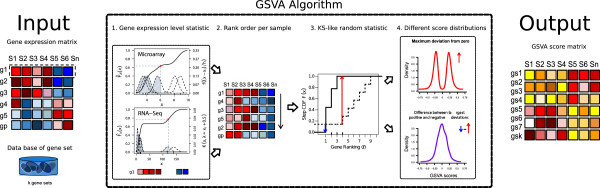
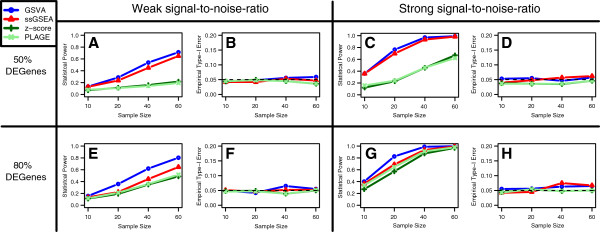
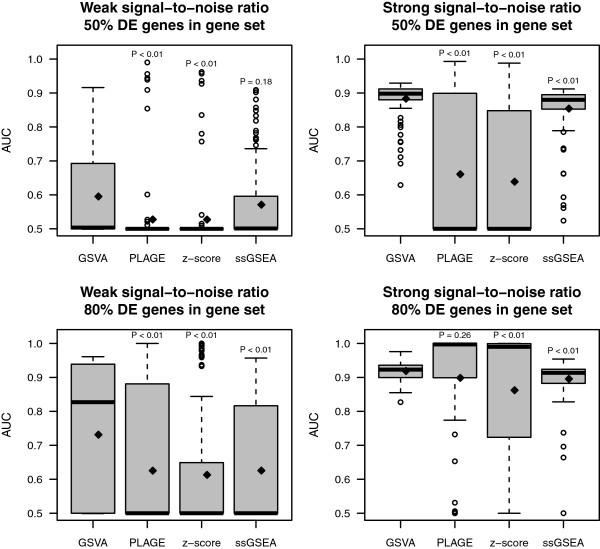
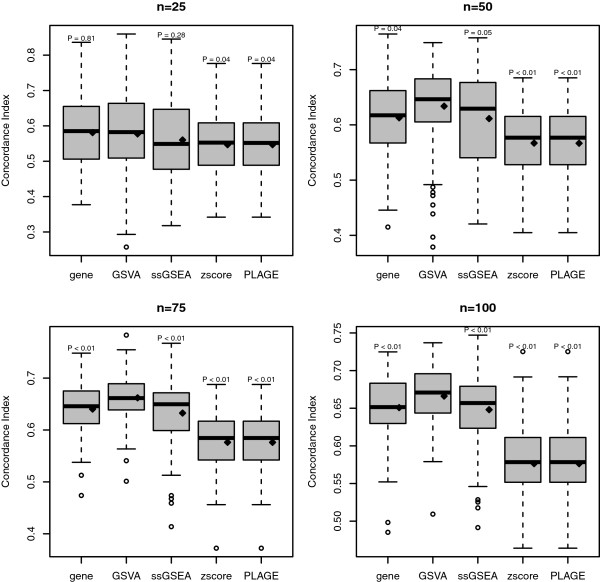
Background: Gene set enrichment (GSE) analysis is a popular framework for condensing information from gene expression profiles into a pathway or signature summary. The strengths of this approach over single gene analysis include noise and dimension reduction, as well as greater biological interpretability. As molecular profiling experiments move beyond simple case-control studies, robust and flexible GSE methodologies are needed that can model pathway activity within highly heterogeneous data sets. Results: To address this challenge, we introduce Gene Set Variation Analysis (GSVA), a GSE method that estimates variation of pathway activity over a sample population in an unsupervised manner. We demonstrate the robustness of GSVA in a comparison with current state of the art sample-wise enrichment methods. Further, we provide examples of its utility in differential pathway activity and survival analysis. Lastly, we show how GSVA works analogously with data from both microarray and RNA-seq experiments. Conclusions: GSVA provides increased power to detect subtle pathway activity changes over a sample population in comparison to corresponding methods. While GSE methods are generally regarded as end points of a bioinformatic analysis, GSVA constitutes a starting point to build pathway-centric models of biology. Moreover, GSVA contributes to the current need of GSE methods for RNA-seq data. GSVA is an open source software package for R which forms part of the Bioconductor project and can be downloaded at http://www.bioconductor.org .
Overview
The claims and statistics of this paper haven’t been checked yet.
Free: it reads the open-access text and checks the first 5 claims that cite a source we can check. Create a free account to check every claim.
Integrity signals
Registry
Cites
Statistics
Figures
Verification
Claims the paper makes
The claims and statistics of this paper haven’t been checked yet.
Free: it reads the open-access text and checks the first 5 claims that cite a source we can check. Create a free account to check every claim.
Claims other papers make about this one
Each is checked against this paper’s own text: does it say what the citing paper says it does?
In the citing paper
“GSVA is a non-parametric, unsupervised method that estimates the variation in gene set enrichment across samples in an expression dataset [44].”
From Integrated multi-omics analysis revealed the molecular networks and potential targets of cellular senescence in Alzheimer’s disease (2025) · cites this paper as [44]
In the citing paper
“Users can compute gene scores inside the pipeline by supplying a custom YAML formatted description file with the desired set(s) of genes and choosing one of the available methods for computing such gene scores. Available methods include PLAGE (Tomfohr et al. 2005), GSVA (Hänzelmann et al. 2013), SINGSCORE (Foroutan et al. 2021), SAMS (Souiai et al. 2001), and SSGSEA (Hänzelmann et al. 2013) as we”
From nf-core/nanostring: a pipeline for reproducible NanoString nCounter analysis (2024) · cites this paper as Hänzelmann et al. 2013
In the citing paper
“We also calculated GSVA scores using different gene inclusion cut-offs (top 100 and top 500 genes), and correlation between GSVA signatures across different cut-offs was > 0.97.”
From Alzheimer’s disease transcriptional landscape in ex vivo human microglia (2025) · cites this paper as [43]
In the citing paper
“the ‘within-control’ and ‘within-AD’ stratification shares with same axis, with distinct molecular states from gene set variance analysis 43 based on DEGs from AD diagnoses, (CERAD) and (Clinical), amyloid β plaque density, ApoE4 allele counts, and Braak stage (High vs. Middle)”
From Alzheimer’s disease transcriptional landscape in ex vivo human microglia (2025) · cites this paper as [43]
Self-check
Percentages, sums and reported differences re-computed from the paper’s own numbers.
The self-check needs the paper’s full text.
Citations
Cites
R: A Language and Environment for Statistical Computing
R Core Team (2025) · doi:10.32614/r.manuals · Cited by 352,181
Controlling the False Discovery Rate: A Practical and Powerful Approach to Multiple Testing
Benjamini, Y., & Hochberg, Y. (1995) · Journal of the Royal Statistical Society Series B: Statistical Methodology · doi:10.1111/j.2517-6161.1995.tb02031.x · Cited by 109,482 · cited 1×
“) approach [63] to obtain corrected p-values.”
Subramanian, A., Tamayo, P., Mootha, V. K., Mukherjee, S., Ebert, B. L., Gillette, M. A., Paulovich, A., Pomeroy, S. L., Golub, T. R., Lander, E. S., et al. (2005) · Proceedings of the National Academy of Sciences · doi:10.1073/pnas.0506580102 · Cited by 53,625 · cited 9×
“Most GSE methods, such as GSEA [4], are supervised and population based, in that they compute an enrichment score per gene set to describe the entire data set, modeled on a phenotype (discrete, such as case-control, or continuous).”
BackgroundMethodInfluentialRobinson, M. D., McCarthy, D. J., & Smyth, G. K. (2010) · Bioinformatics · doi:10.1093/bioinformatics/btp616 · Cited by 41,364 · cited 1×
“The nature of these data, however, often requires specific statistical models and bioinformatic methods for their analysis, as in the case of differential expression analysis [45].”
MethodDensity Estimation for Statistics and Data Analysis
Silverman, B. W. (2018) · Routledge eBooks · doi:10.1201/9781315140919 · Cited by 15,796
Huang, D. W., Sherman, B. T., & Lempicki, R. A. (2009) · Nucleic Acids Research · doi:10.1093/nar/gkn923 · Cited by 14,108 · cited 1×
“Many other supervised, population based approaches have also been described [12,17,20,31-34].”
BackgroundMapping and quantifying mammalian transcriptomes by RNA-Seq
Mortazavi, A., Williams, B. A., McCue, K., Schaeffer, L., & Wold, B. (2008) · Nature Methods · doi:10.1038/nmeth.1226 · Cited by 13,696 · cited 1×
“The application of high-throughput sequencing to interrogate RNA concentration in biological samples, popularly known as RNA-seq, is steadily becoming the technology of choice to profile gene expression [44].”
BackgroundBioconductor: open software development for computational biology and bioinformatics
Gentleman, R. C., Carey, V. J., Bates, D. M., Bolstad, B., Dettling, M., Dudoit, S., Ellis, B., Gautier, L., Ge, Y., Gentry, J., et al. (2004) · Genome Biology · doi:10.1186/gb-2004-5-10-r80 · Cited by 12,172 · cited 1×
“Microarray data processing Data analysis was performed using the R [59] and Bioconductor [60] software.”
MethodSmyth, G. K. (2004) · Statistical Applications in Genetics and Molecular Biology · doi:10.2202/1544-6115.1027 · Cited by 11,829
Mootha, V. K., Lindgren, C. M., Eriksson, K.-F., Subramanian, A., Sihag, S., Lehar, J., Puigserver, P., Carlsson, E., Ridderstråle, M., Laurila, E., et al. (2003) · Nature Genetics · doi:10.1038/ng1180 · Cited by 10,197 · cited 1×
“Many methodological variations of GSE methods have been proposed [1–6], including non-parametric enrichment statistics [4,7], battery testing [8–10], and focused gene set testing [1,11,12].”
Method
Research works printed but not linked: 2
- Wu D Lim E Vaillant F Asselin-Labat ML Visvader JE Smyth GK ROAST: rotation gene set tests for complex microarray experiments Bioinformatics (Oxford, England) 2010 26 17 2176 2182 [ http://www.ncbi.nlm.nih.gov/pubmed/20610611]. [PMID: 20610611] PMC2922896 20610611 · DOI · Paper page
- Bolstad BM Low-level analysis of high-density oligonucleotide array data: background, normalization and summarization PhD thesis, University of Waikato 2004. [ http://bmbolstad.com/Dissertation/Bolstad_2004_Dissertation.pdf]
Cited by
Items 201–300 of 1,085
A Review of Single-Cell RNA-Seq Annotation, Integration, and Cell–Cell Communication
Cheng, C., Chen, W., Jin, H., & Chen, X. (2023) · Cells · doi:10.3390/cells12151970 · Cited by 224
“Common scoring methods, like single sample gene set enrichment analysis (ssGSEA, [69]), gene set variation analysis (GSVA, [70]), and Singscore [71], were initially designed for bulk RNA-seq data.”
MethodZuo, S., Wei, M., Wang, S., Dong, J., & Wei, J. (2020) · Frontiers in Immunology · doi:10.3389/fimmu.2020.01218 · Cited by 224
Lu, X., Jiang, L., Zhang, L., Zhu, Y., Hu, W., Wang, J., Ruan, X., Xu, Z., Meng, X., Gao, J., et al. (2019) · Neoplasia · doi:10.1016/j.neo.2019.04.003 · Cited by 223
Refining colorectal cancer classification and clinical stratification through a single-cell atlas
Khaliq, A. M., Erdogan, C., Kurt, Z., Turgut, S. S., Grunvald, M. W., Rand, T., Khare, S., Borgia, J. A., Hayden, D. M., Pappas, S. G., et al. (2022) · Genome Biology · doi:10.1186/s13059-022-02677-z · Cited by 214
“0), a non-parametric, unsupervised method to estimate the gene set variations and evaluation of pathway enrichment, and pathway scores were calculated for each cell using standard settings [98, 99].”
MethodMulti-omics monitoring of drug response in rheumatoid arthritis in pursuit of molecular remission
Tasaki, S., Suzuki, K., Kassai, Y., Takeshita, M., Murota, A., Kondo, Y., Ando, T., Nakayama, Y., Okuzono, Y., Takiguchi, M., et al. (2018) · Nature Communications · doi:10.1038/s41467-018-05044-4 · Cited by 221
Single-cell analysis supports a luminal-neuroendocrine transdifferentiation in human prostate cancer
Dong, B., Miao, J., Wang, Y., Luo, W., Ji, Z., Lai, H., Zhang, M., Cheng, X., Wang, J., Fang, Y., et al. (2020) · Communications Biology · doi:10.1038/s42003-020-01476-1 · Cited by 218
Cellular architecture of human brain metastases
Gonzalez, H., Mei, W., Robles, I., Hagerling, C., Allen, B. M., Hauge Okholm, T. L., Nanjaraj, A., Verbeek, T., Kalavacherla, S., van Gogh, M., et al. (2022) · Cell · doi:10.1016/j.cell.2021.12.043 · Cited by 219
Bareche, Y., Buisseret, L., Gruosso, T., Girard, E., Venet, D., Dupont, F., Desmedt, C., Larsimont, D., Park, M., Rothé, F., et al. (2020) · JNCI: Journal of the National Cancer Institute · doi:10.1093/jnci/djz208 · Cited by 215
“Gene set variation analysis (GSVA) was performed to compute the 16 immune cell type scores, using the gsva (30) R package with default parameters.”
MethodBaghela, A., Pena, O. M., Lee, A. H., Baquir, B., Falsafi, R., An, A., Farmer, S. W., Hurlburt, A., Mondragon-Cardona, A., Rivera, J. D., et al. (2022) · eBioMedicine · doi:10.1016/j.ebiom.2021.103776 · Cited by 209
Lung cancer scRNA-seq and lipidomics reveal aberrant lipid metabolism for early-stage diagnosis
Wang, G., Qiu, M., Xing, X., Zhou, J., Yao, H., Li, M., Yin, R., Hou, Y., Li, Y., Pan, S., et al. (2022) · Science Translational Medicine · doi:10.1126/scitranslmed.abk2756 · Cited by 218
Network-based machine learning approach to predict immunotherapy response in cancer patients
Kong, J., Ha, D., Lee, J., Kim, I., Park, M., Im, S.-H., Shin, K., & Kim, S. (2022) · Nature Communications · doi:10.1038/s41467-022-31535-6 · Cited by 219
“To estimate the pathway expression levels, we used Reactome pathways downloaded from the MSigDB database 26 and performed single-sample GSEA (ssGSEA) 66 using the GSVA R package 67 .”
MethodSanij, E., Hannan, K. M., Xuan, J., Yan, S., Ahern, J. E., Trigos, A. S., Brajanovski, N., Son, J., Chan, K. T., Kondrashova, O., et al. (2020) · Nature Communications · doi:10.1038/s41467-020-16393-4 · Cited by 214
An entropy-based metric for assessing the purity of single cell populations
Liu, B., Li, C., Li, Z., Wang, D., Ren, X., & Zhang, Z. (2020) · Nature Communications · doi:10.1038/s41467-020-16904-3 · Cited by 216
Time-resolved systems immunology reveals a late juncture linked to fatal COVID-19
Liu, C., Martins, A. J., Lau, W. W., Rachmaninoff, N., Chen, J., Imberti, L., Mostaghimi, D., Fink, D. L., Burbelo, P. D., Dobbs, K., et al. (2021) · Cell · doi:10.1016/j.cell.2021.02.018 · Cited by 216
“The scores were generated using gene set variation analysis (GSVA) method implemented by the GSVA R package (Hänzelmann et al., 2013).”
Hwang, S., Kwon, A.-Y., Jeong, J.-Y., Kim, S., Kang, H., Park, J., Kim, J.-H., Han, O. J., Lim, S. M., & An, H. J. (2020) · Scientific Reports · doi:10.1038/s41598-019-57218-9 · Cited by 215
Iron accumulation drives fibrosis, senescence and the senescence-associated secretory phenotype
Maus, M., López-Polo, V., Mateo, L., Lafarga, M., Aguilera, M., De Lama, E., Meyer, K., Sola, A., Lopez-Martinez, C., López-Alonso, I., et al. (2023) · Nature Metabolism · doi:10.1038/s42255-023-00928-2 · Cited by 215
Multi-omics prediction of immune-related adverse events during checkpoint immunotherapy
Jing, Y., Liu, J., Ye, Y., Pan, L., Deng, H., Wang, Y., Yang, Y., Diao, L., Lin, S. H., Mills, G. B., et al. (2020) · Nature Communications · doi:10.1038/s41467-020-18742-9 · Cited by 215
PRMT5 inhibition disrupts splicing and stemness in glioblastoma
Sachamitr, P., Ho, J. C., Ciamponi, F. E., Ba-Alawi, W., Coutinho, F. J., Guilhamon, P., Kushida, M. M., Cavalli, F. M. G., Lee, L., Rastegar, N., et al. (2021) · Nature Communications · doi:10.1038/s41467-021-21204-5 · Cited by 212
EGFR-activated myofibroblasts promote metastasis of pancreatic cancer
Mucciolo, G., Araos Henríquez, J., Jihad, M., Pinto Teles, S., Manansala, J. S., Li, W., Ashworth, S., Lloyd, E. G., Cheng, P. S. W., Luo, W., et al. (2024) · Cancer Cell · doi:10.1016/j.ccell.2023.12.002 · Cited by 211
Memon, D., Schoenfeld, A. J., Ye, D., Fromm, G., Rizvi, H., Zhang, X., Keddar, M. R., Mathew, D., Yoo, K. J., Qiu, J., et al. (2024) · Cancer Cell · doi:10.1016/j.ccell.2023.12.013 · Cited by 207
Metabolic Diversity in Human Non-Small Cell Lung Cancer Cells
Chen, P.-H., Cai, L., Huffman, K., Yang, C., Kim, J., Faubert, B., Boroughs, L., Ko, B., Sudderth, J., McMillan, E. A., et al. (2019) · Molecular Cell · doi:10.1016/j.molcel.2019.08.028 · Cited by 212
Liu, Q., Zhang, J., Guo, C., Wang, M., Wang, C., Yan, Y., Sun, L., Wang, D., Zhang, L., Yu, H., et al. (2024) · Cell · doi:10.1016/j.cell.2023.12.004 · Cited by 207
Zhou, C., Peng, S., Lin, A., Jiang, A., Peng, Y., Gu, T., Liu, Z., Cheng, Q., Zhang, J., & Luo, P. (2023) · eClinicalMedicine · doi:10.1016/j.eclinm.2023.101967 · Cited by 213
Comprehensive Benchmarking and Integration of Tumor Microenvironment Cell Estimation Methods
Jiménez-Sánchez, A., Cast, O., & Miller, M. L. (2019) · Cancer Research · doi:10.1158/0008-5472.can-18-3560 · Cited by 210
Grabovska, Y., Mackay, A., O’Hare, P., Crosier, S., Finetti, M., Schwalbe, E. C., Pickles, J. C., Fairchild, A. R., Avery, A., Cockle, J., et al. (2020) · Nature Communications · doi:10.1038/s41467-020-18070-y · Cited by 213
Immune landscapes associated with different glioblastoma molecular subtypes
Martinez-Lage, M., Lynch, T. M., Bi, Y., Cocito, C., Way, G. P., Pal, S., Haller, J., Yan, R. E., Ziober, A., Nguyen, A., et al. (2019) · Acta Neuropathologica Communications · doi:10.1186/s40478-019-0803-6 · Cited by 211
“We performed single sample gene set enrichment analysis (ssGSEA) [3] using an R implementation [15].”
Kuo, C.-H. S., Pavlidis, S., Loza, M., Baribaud, F., Rowe, A., Pandis, I., Hoda, U., Rossios, C., Sousa, A., Wilson, S. J., et al. (2017) · American Journal of Respiratory and Critical Care Medicine · doi:10.1164/rccm.201512-2452oc · Cited by 207
Tan, Z., Chen, X., Zuo, J., Fu, S., Wang, H., & Wang, J. (2023) · Journal of Translational Medicine · doi:10.1186/s12967-023-04056-z · Cited by 208
Papanicolaou, M., Parker, A. L., Yam, M., Filipe, E. C., Wu, S. Z., Chitty, J. L., Wyllie, K., Tran, E., Mok, E., Nadalini, A., et al. (2022) · Nature Communications · doi:10.1038/s41467-022-32255-7 · Cited by 208
Geffen, Y., Anand, S., Akiyama, Y., Yaron, T. M., Song, Y., Johnson, J. L., Govindan, A., Babur, Ö., Li, Y., Huntsman, E., et al. (2023) · Cell · doi:10.1016/j.cell.2023.07.013 · Cited by 209
Zhang, X.-C., Wang, J., Shao, G.-G., Wang, Q., Qu, X., Wang, B., Moy, C., Fan, Y., Albertyn, Z., Huang, X., et al. (2019) · Nature Communications · doi:10.1038/s41467-019-09762-1 · Cited by 209
Zhu, J., Fan, Y., Xiong, Y., Wang, W., Chen, J., Xia, Y., Lei, J., Gong, L., Sun, S., & Jiang, T. (2022) · Experimental & Molecular Medicine · doi:10.1038/s12276-022-00896-9 · Cited by 201
Osr2 functions as a biomechanical checkpoint to aggravate CD8+ T cell exhaustion in tumor
Zhang, J., Li, J., Hou, Y., Lin, Y., Zhao, H., Shi, Y., Chen, K., Nian, C., Tang, J., Pan, L., et al. (2024) · Cell · doi:10.1016/j.cell.2024.04.023 · Cited by 202
A gene expression signature of TREM2hi macrophages and γδ T cells predicts immunotherapy response
Xiong, D., Wang, Y., & You, M. (2020) · Nature Communications · doi:10.1038/s41467-020-18546-x · Cited by 208
exoRBase 2.0: an atlas of mRNA, lncRNA and circRNA in extracellular vesicles from human biofluids
Lai, H., Li, Y., Zhang, H., Hu, J., Liao, J., Su, Y., Li, Q., Chen, B., Li, C., Wang, Z., et al. (2022) · Nucleic Acids Research · doi:10.1093/nar/gkab1085 · Cited by 207
“The ssGSEA method implemented in the R GSVA package was then used to analyze the enrichment scores of these 11 536 MSigDB pathways for each sample based on exLR expression profiles (38,39).”
Epithelial cells activate fibroblasts to promote esophageal cancer development
Chen, Y., Zhu, S., Liu, T., Zhang, S., Lu, J., Fan, W., Lin, L., Xiang, T., Yang, J., Zhao, X., et al. (2023) · Cancer Cell · doi:10.1016/j.ccell.2023.03.001 · Cited by 204
Xing, X., Yang, F., Huang, Q., Guo, H., Li, J., Qiu, M., Bai, F., & Wang, J. (2021) · Science Advances · doi:10.1126/sciadv.abd9738 · Cited by 205
“To assign pathway activity estimates to individual cells, we applied GSVA using standard settings, as implemented in the GSVA (21) R package (version 1.”
BackgroundMethodInfluentialZhang, S., Fang, W., Zhou, S., Zhu, D., Chen, R., Gao, X., Li, Z., Fu, Y., Zhang, Y., Yang, F., et al. (2023) · Nature Communications · doi:10.1038/s41467-023-40727-7 · Cited by 201
A comparison of gene set analysis methods in terms of sensitivity, prioritization and specificity
Tarca, A. L., Bhatti, G., & Romero, R. (2013) · PLoS ONE · doi:10.1371/journal.pone.0079217 · Cited by 203
“The methods in this category that we considered in this work were: Pathway Level Analysis of Gene Expression (PLAGE) [22], Z-score [23], Single Sample GSEA (SSGSEA) [24] and Gene Set Variation Analysis (GSVA) [25].”
MethodInfluentialAutologous T cell therapy for MAGE-A4+ solid cancers in HLA-A*02+ patients: a phase 1 trial
Hong, D. S., Van Tine, B. A., Biswas, S., McAlpine, C., Johnson, M. L., Olszanski, A. J., Clarke, J. M., Araujo, D., Blumenschein, G. R., Kebriaei, P., et al. (2023) · Nature Medicine · doi:10.1038/s41591-022-02128-z · Cited by 203
Gabitova-Cornell, L., Surumbayeva, A., Peri, S., Franco-Barraza, J., Restifo, D., Weitz, N., Ogier, C., Goldman, A. R., Hartman, T. R., Francescone, R., et al. (2020) · Cancer Cell · doi:10.1016/j.ccell.2020.08.015 · Cited by 203
“Gene set variation analysis (GSVA, (Hanzelmann et al., 2013)) was applied to the RMA normalized expression data to identify pathways that are enriched in a single sample (method arguments: function=‘gsva’; mx.”
MethodFinn, R. S., Liu, Y., Zhu, Z., Martin, M., Rugo, H. S., Diéras, V., Im, S.-A., Gelmon, K. A., Harbeck, N., Lu, D. R., et al. (2020) · Clinical Cancer Research · doi:10.1158/1078-0432.ccr-19-0751 · Cited by 201
“In addition to individual genes, we also assessed whether any biologically defined gene signatures might predict benefit with palbociclib plus letrozole by summarizing the data in thousands of MSigDB gene sets using the GSVA algorithm (22).”
MethodY chromosome loss in cancer drives growth by evasion of adaptive immunity
Abdel-Hafiz, H. A., Schafer, J. M., Chen, X., Xiao, T., Gauntner, T. D., Li, Z., & Theodorescu, D. (2023) · Nature · doi:10.1038/s41586-023-06234-x · Cited by 197
Transcription Factor Activities Enhance Markers of Drug Sensitivity in Cancer
Garcia-Alonso, L., Iorio, F., Matchan, A., Fonseca, N., Jaaks, P., Peat, G., Pignatelli, M., Falcone, F., Benes, C. H., Dunham, I., et al. (2018) · Cancer Research · doi:10.1158/0008-5472.can-17-1679 · Cited by 202
“Given a matrix of normalised gene expression values per sample, the first step consisted in 11 a gene-wise normalisation employing a kernel estimator of the cumulative density function 12 (kcdf)(19).”
Multi-omics profiling of younger Asian breast cancers reveals distinctive molecular signatures
Kan, Z., Ding, Y., Kim, J., Jung, H. H., Chung, W., Lal, S., Cho, S., Fernandez-Banet, J., Lee, S. K., Kim, S. W., et al. (2018) · Nature Communications · doi:10.1038/s41467-018-04129-4 · Cited by 202
The Cancer SENESCopedia: A delineation of cancer cell senescence
Jochems, F., Thijssen, B., De Conti, G., Jansen, R., Pogacar, Z., Groot, K., Wang, L., Schepers, A., Wang, C., Jin, H., et al. (2021) · Cell Reports · doi:10.1016/j.celrep.2021.109441 · Cited by 201
“, 2009), as implemented in the GSVAR package (Hänzelmann et al., 2013).”
MethodMCT4-dependent lactate secretion suppresses antitumor immunity in LKB1-deficient lung adenocarcinoma
Qian, Y., Galan-Cobo, A., Guijarro, I., Dang, M., Molkentine, D., Poteete, A., Zhang, F., Wang, Q., Wang, J., Parra, E., et al. (2023) · Cancer Cell · doi:10.1016/j.ccell.2023.05.015 · Cited by 193
Kim, K.-T., Lee, H. W., Lee, H.-O., Song, H. J., Jeong, D. E., Shin, S., Kim, H., Shin, Y., Nam, D.-H., Jeong, B. C., et al. (2016) · Genome Biology · doi:10.1186/s13059-016-0945-9 · Cited by 198
“way or signature across samples, we implemented the GSVA algorithm [61] in RNA-seq data.”
MethodExome sequencing identifies highly recurrent MED12 somatic mutations in breast fibroadenoma
Lim, W. K., Ong, C. K., Tan, J., Thike, A. A., Ng, C. C. Y., Rajasegaran, V., Myint, S. S., Nagarajan, S., Nasir, N. D. M., McPherson, J. R., et al. (2014) · Nature Genetics · doi:10.1038/ng.3037 · Cited by 196
Rossios, C., Pavlidis, S., Hoda, U., Kuo, C.-H., Wiegman, C., Russell, K., Sun, K., Loza, M. J., Baribaud, F., Durham, A. L., et al. (2018) · Journal of Allergy and Clinical Immunology · doi:10.1016/j.jaci.2017.02.045 · Cited by 196
“Signatures summarized by using gene set variation analysis We evaluated gene expression related to IL-13 activation using gene set variation analysis (GSVA), which calculates sample-wise enrichment scores (ESs) irrespective of any group labels, thus enabling implementation of null hypothesis-based statistical analysis…”
MethodDrug-induced adverse events prediction with the LINCS L1000 data
Wang, Z., Clark, N. R., & Ma’ayan, A. (2016) · Bioinformatics · doi:10.1093/bioinformatics/btw168 · Cited by 195
IRF4 instructs effector Treg differentiation and immune suppression in human cancer
Alvisi, G., Brummelman, J., Puccio, S., Mazza, E. M. C., Tomada, E. P., Losurdo, A., Zanon, V., Peano, C., Colombo, F. S., Scarpa, A., et al. (2020) · Journal of Clinical Investigation · doi:10.1172/jci130426 · Cited by 195
Extensive Remodeling of the Immune Microenvironment in B Cell Acute Lymphoblastic Leukemia
Witkowski, M. T., Dolgalev, I., Evensen, N. A., Ma, C., Chambers, T., Roberts, K. G., Sreeram, S., Dai, Y., Tikhonova, A. N., Lasry, A., et al. (2020) · Cancer Cell · doi:10.1016/j.ccell.2020.04.015 · Cited by 192
“A uthor M anuscript A uthor M anuscript A uthor M anuscript A uthor M anuscript REAGENT or RESOURCE SOURCE IDENTIFIER GSVA Hanzelmann et al., 2013 https://bioconductor.org/packages/GSVA/ SingleR Aran et al., 2019 https://bioconductor.org/packages/SingleR/ Other PerkinElmer IVIS Lumina III XR PerkinElmer N/A Illumina H…”
MethodInfluentialWu, J., Liu, Q., Zhang, X., Tan, M., Li, X., Liu, P., Wu, L., Jiao, F., Lin, Z., Wu, X., et al. (2022) · Cell Death & Disease · doi:10.1038/s41419-022-05115-x · Cited by 187
“GSVA implemented in the GSVA package [59] was used for GSEA, and p values were calculated with the moderated t-tests in the limma R package.”
MethodImplementing a Functional Precision Medicine Tumor Board for Acute Myeloid Leukemia
Malani, D., Kumar, A., Brück, O., Kontro, M., Yadav, B., Hellesøy, M., Kuusanmäki, H., Dufva, O., Kankainen, M., Eldfors, S., et al. (2022) · Cancer Discovery · doi:10.1158/2159-8290.cd-21-0410 · Cited by 193
“488 489 Gene set variance analysis (GSVA) 490 GSVA(48) (Gene-set Variation Analysis) was used to calculate pathway activation scores (R 491 package version 1.”
Wang, Z., Zhang, C., Liu, X., Wang, Z., Sun, L., Li, G., Liang, J., Hu, H., Liu, Y., Zhang, W., et al. (2016) · OncoImmunology · doi:10.1080/2162402x.2016.1196310 · Cited by 193
Hoang, S. A., Oseini, A., Feaver, R. E., Cole, B. K., Asgharpour, A., Vincent, R., Siddiqui, M., Lawson, M. J., Day, N. C., Taylor, J. M., et al. (2019) · Scientific Reports · doi:10.1038/s41598-019-48746-5 · Cited by 192
CDKN2A deletion remodels lipid metabolism to prime glioblastoma for ferroptosis
Minami, J. K., Morrow, D., Bayley, N. A., Fernandez, E. G., Salinas, J. J., Tse, C., Zhu, H., Su, B., Plawat, R., Jones, A., et al. (2023) · Cancer Cell · doi:10.1016/j.ccell.2023.05.001 · Cited by 191
Tekpli, X., Lien, T., Røssevold, A. H., Nebdal, D., Borgen, E., Ohnstad, H. O., Kyte, J. A., Vallon-Christersson, J., Fongaard, M., Due, E. U., et al. (2019) · Nature Communications · doi:10.1038/s41467-019-13329-5 · Cited by 192
Zhao, Q., Huang, L., Qin, G., Qiao, Y., Ren, F., Shen, C., Wang, S., Liu, S., Lian, J., Wang, D., et al. (2021) · Cancer Letters · doi:10.1016/j.canlet.2021.06.009 · Cited by 191
An EMT‐related gene signature for the prognosis of human bladder cancer
Cao, R., Yuan, L., Ma, B., Wang, G., Qiu, W., & Tian, Y. (2020) · Journal of Cellular and Molecular Medicine · doi:10.1111/jcmm.14767 · Cited by 190
Immunogenomic Landscape of Hematological Malignancies
Dufva, O., Pölönen, P., Brück, O., Keränen, M. A. I., Klievink, J., Mehtonen, J., Huuhtanen, J., Kumar, A., Malani, D., Siitonen, S., et al. (2020) · Cancer Cell · doi:10.1016/j.ccell.2020.06.002 · Cited by 190
Duraiswamy, J., Turrini, R., Minasyan, A., Barras, D., Crespo, I., Grimm, A. J., Casado, J., Genolet, R., Benedetti, F., Wicky, A., et al. (2021) · Cancer Cell · doi:10.1016/j.ccell.2021.10.008 · Cited by 190
Lu, H., Xu, X., Fu, D., Gu, Y., Fan, R., Yi, H., He, X., Wang, C., Ouyang, B., Zhao, P., et al. (2022) · Cell Host & Microbe · doi:10.1016/j.chom.2022.07.003 · Cited by 190
Krueger, J. G., Wharton, K. A., Schlitt, T., Suprun, M., Torene, R. I., Jiang, X., Wang, C. Q., Fuentes-Duculan, J., Hartmann, N., Peters, T., et al. (2019) · Journal of Allergy and Clinical Immunology · doi:10.1016/j.jaci.2019.04.029 · Cited by 188
Histone H3.3G34-Mutant Interneuron Progenitors Co-opt PDGFRA for Gliomagenesis
Chen, C. C. L., Deshmukh, S., Jessa, S., Hadjadj, D., Lisi, V., Andrade, A. F., Faury, D., Jawhar, W., Dali, R., Suzuki, H., et al. (2020) · Cell · doi:10.1016/j.cell.2020.11.012 · Cited by 188
“In the case of cell line datasets, the sample size was not adequate to perform GSEA, and thus enrichment of human radial glia and interneuron gene signatures was evaluated using singlesample GSEA (ssGSEA)(Barbie et al., 2009) using the GSVA(Hanzelmann et al., 2013) package (v1.”
InfluentialShao, W., Yang, Z., Fu, Y., Zheng, L., Liu, F., Chai, L., & Jia, J. (2021) · Frontiers in Cell and Developmental Biology · doi:10.3389/fcell.2021.676485 · Cited by 190
Metabolism‐associated molecular classification of hepatocellular carcinoma
Yang, C., Huang, X., Liu, Z., Qin, W., & Wang, C. (2020) · Molecular Oncology · doi:10.1002/1878-0261.12639 · Cited by 189
“Gene set variation analysis (GSVA) is a nonparametric and unsupervised gene set enrichment method that can estimate the score of certain pathway or signature based on transcriptomic data (Hanzelmann et al., 2013).”
BackgroundCourtney, K. D., Ma, Y., Diaz de Leon, A., Christie, A., Xie, Z., Woolford, L., Singla, N., Joyce, A., Hill, H., Madhuranthakam, A. J., et al. (2020) · Clinical Cancer Research · doi:10.1158/1078-0432.ccr-19-1459 · Cited by 188
“16) was completed using the GSVA package (36) with the ssGSEA method.”
MethodHu, J., Wang, S.-G., Hou, Y., Chen, Z., Liu, L., Li, R., Li, N., Zhou, L., Yang, Y., Wang, L., et al. (2024) · Nature Genetics · doi:10.1038/s41588-024-01662-5 · Cited by 188
“42.0) 69 analysis in ‘ssGSEA’ mode.”
InfluentialWang, D., Prager, B. C., Gimple, R. C., Aguilar, B., Alizadeh, D., Tang, H., Lv, D., Starr, R., Brito, A., Wu, Q., et al. (2021) · Cancer Discovery · doi:10.1158/2159-8290.cd-20-1243 · Cited by 183
“html) (94) and plotted using pheatmap (https://cran.”
Evolution of immune and stromal cell states and ecotypes during gastric adenocarcinoma progression
Wang, R., Song, S., Qin, J., Yoshimura, K., Peng, F., Chu, Y., Li, Y., Fan, Y., Jin, J., Dang, M., et al. (2023) · Cancer Cell · doi:10.1016/j.ccell.2023.06.005 · Cited by 187
Johnson, L. R., Lee, D. Y., Eacret, J. S., Ye, D., June, C. H., & Minn, A. J. (2021) · Cell · doi:10.1016/j.cell.2021.08.004 · Cited by 187
Qin, H., Abulaiti, A., Maimaiti, A., Abulaiti, Z., Fan, G., Aili, Y., Ji, W., Wang, Z., & Wang, Y. (2023) · Journal of Translational Medicine · doi:10.1186/s12967-023-04468-x · Cited by 187
“In addition, Gene Set Variation Analysis (GSVA) was performed to investigate the heterogeneity of various biological processes, using the “GSVA” package [43].”
MethodLiu, Z., Zhao, Y., Kong, P., Liu, Y., Huang, J., Xu, E., Wei, W., Li, G., Cheng, X., Xue, L., et al. (2023) · Cancer Cell · doi:10.1016/j.ccell.2022.12.004 · Cited by 184
Cillo, A. R., Cardello, C., Shan, F., Karapetyan, L., Kunning, S., Sander, C., Rush, E., Karunamurthy, A., Massa, R. C., Rohatgi, A., et al. (2024) · Cell · doi:10.1016/j.cell.2024.06.036 · Cited by 180
Chemotherapy induces dynamic immune responses in breast cancers that impact treatment outcome
Park, Y. H., Lal, S., Lee, J. E., Choi, Y.-L., Wen, J., Ram, S., Ding, Y., Lee, S.-H., Powell, E., Lee, S. K., et al. (2020) · Nature Communications · doi:10.1038/s41467-020-19933-0 · Cited by 186
Liu, Y., Feng, W., Dai, Y., Bao, M., Yuan, Z., He, M., Qin, Z., Liao, S., He, J., Huang, Q., et al. (2021) · Frontiers in Oncology · doi:10.3389/fonc.2021.709210 · Cited by 183
“jsp), and GSVA was performed as previously described (39).”
MethodJu, M., Bi, J., Wei, Q., Jiang, L., Guan, Q., Zhang, M., Song, X., Chen, T., Fan, J., Li, X., et al. (2021) · Briefings in Bioinformatics · doi:10.1093/bib/bbaa345 · Cited by 185
“The NLRP3 inflammasome score was calculated based on the single-sample gene-set enrichment analysis (ssGSEA) [20] using the NLRP3-inflammasome-related gene set (Table S2) to quantify the expression levels of these genes for each cancer.”
MethodLiu, Z., Guo, C., Dang, Q., Wang, L., Liu, L., Weng, S., Xu, H., Lu, T., Sun, Z., & Han, X. (2022) · eBioMedicine · doi:10.1016/j.ebiom.2021.103750 · Cited by 181
Sanchez, A., Furberg, H., Kuo, F., Vuong, L., Ged, Y., Patil, S., Ostrovnaya, I., Petruzella, S., Reising, A., Patel, P., et al. (2020) · The Lancet Oncology · doi:10.1016/s1470-2045(19)30797-1 · Cited by 181
Crespo-Garcia, S., Tsuruda, P. R., Dejda, A., Ryan, R. D., Fournier, F., Chaney, S. Y., Pilon, F., Dogan, T., Cagnone, G., Patel, P., et al. (2021) · Cell Metabolism · doi:10.1016/j.cmet.2021.01.011 · Cited by 182
IFNγ-Dependent Tissue-Immune Homeostasis Is Co-opted in the Tumor Microenvironment
Nirschl, C. J., Suárez-Fariñas, M., Izar, B., Prakadan, S., Dannenfelser, R., Tirosh, I., Liu, Y., Zhu, Q., Devi, K. S. P., Carroll, S. L., et al. (2017) · Cell · doi:10.1016/j.cell.2017.06.016 · Cited by 182
Rosati, D., Palmieri, M., Brunelli, G., Morrione, A., Iannelli, F., Frullanti, E., & Giordano, A. (2024) · Computational and Structural Biotechnology Journal · doi:10.1016/j.csbj.2024.02.018 · Cited by 175
“…Visualisation, and Integrated Discovery) [126], Metascape [127], GSEA (Gene Set Enrichment Analysis) [128], GSVA (Gene Set Variation Analysis) [129] and Cytoscape [130] are the most widely used bioinformatic analysis tools to identify biological pathways involved in any specific biological…”
BackgroundMethodGouin, K. H., Ing, N., Plummer, J. T., Rosser, C. J., Ben Cheikh, B., Oh, C., Chen, S. S., Chan, K. S., Furuya, H., Tourtellotte, W. G., et al. (2021) · Nature Communications · doi:10.1038/s41467-021-25103-7 · Cited by 178
Phenotypic plasticity and genetic control in colorectal cancer evolution
Househam, J., Heide, T., Cresswell, G. D., Spiteri, I., Kimberley, C., Zapata, L., Lynn, C., James, C., Mossner, M., Fernandez-Mateos, J., et al. (2022) · Nature · doi:10.1038/s41586-022-05311-x · Cited by 180
“69 ).”
Combining multiple tools outperforms individual methods in gene set enrichment analyses
Alhamdoosh, M., Ng, M., Wilson, N. J., Sheridan, J. M., Huynh, H., Wilson, M. J., & Ritchie, M. E. (2017) · Bioinformatics · doi:10.1093/bioinformatics/btw623 · Cited by 180
“Similarly, gsva calculates a Kolmogorov-Smirnov-like rank statistic for every gene set in each sample and uses linear modelling to estimate the gene set signifi-cance for each experimental condition (H¨anzelmann et al. , 2013).”
MethodYan, Y., Sun, D., Hu, J., Chen, Y., Sun, L., Yu, H., Xiong, Y., Huang, Z., Xia, H., Zhu, X., et al. (2025) · Nature Genetics · doi:10.1038/s41588-024-01998-y · Cited by 170
The lncRNA HOTAIR impacts on mesenchymal stem cells via triple helix formation
Kalwa, M., Hänzelmann, S., Otto, S., Kuo, C.-C., Franzen, J., Joussen, S., Fernandez-Rebollo, E., Rath, B., Koch, C., Hofmann, A., et al. (2016) · Nucleic Acids Research · doi:10.1093/nar/gkw802 · Cited by 179
“Although the gene expression changes in this study were only very small and can hardly be validated on single gene level, they are overall significantly associated with senescenceassociated gene expression, relevant GSVA categories, and predicted HOTAIR target regions.”
BackgroundMethodInfluentialSelf-citationTao, N., Li, H., Deng, L., Zhao, S., Ouyang, J., Wen, M., Chen, W., Zeng, K., Wei, C., & Liu, Y.-N. (2022) · ACS Nano · doi:10.1021/acsnano.1c07504 · Cited by 179
Apolipoprotein E induces pathogenic senescent-like myeloid cells in prostate cancer
Bancaro, N., Calì, B., Troiani, M., Elia, A. R., Arzola, R. A., Attanasio, G., Lai, P., Crespo, M., Gurel, B., Pereira, R., et al. (2023) · Cancer Cell · doi:10.1016/j.ccell.2023.02.004 · Cited by 177
Pontarini, E., Murray-Brown, W. J., Croia, C., Lucchesi, D., Conway, J., Rivellese, F., Fossati-Jimack, L., Astorri, E., Prediletto, E., Corsiero, E., et al. (2020) · Annals of the Rheumatic Diseases · doi:10.1136/annrheumdis-2020-217646 · Cited by 176
Kim, R., An, M., Lee, H., Mehta, A., Heo, Y. J., Kim, K.-M., Lee, S.-Y., Moon, J., Kim, S. T., Min, B.-H., et al. (2022) · Cancer Discovery · doi:10.1158/2159-8290.cd-21-0888 · Cited by 174
“The GSVA algorithm was used to explore the whole-transcriptome dataset (23).”
An Immune-Related Signature Predicts Survival in Patients With Lung Adenocarcinoma
Zhang, M., Zhu, K., Pu, H., Wang, Z., Zhao, H., Zhang, J., & Wang, Y. (2019) · Frontiers in Oncology · doi:10.3389/fonc.2019.01314 · Cited by 177
“Then, the ssGSEA function of the R software package GSVA (19) was utilized to analyze the KEGG functional enrichment score of each sample in the training set.”
MethodMandula, J. K., Chang, S., Mohamed, E., Jimenez, R., Sierra-Mondragon, R. A., Chang, D. C., Obermayer, A. N., Moran-Segura, C. M., Das, S., Vazquez-Martinez, J. A., et al. (2022) · Cancer Cell · doi:10.1016/j.ccell.2022.08.016 · Cited by 173
Integrative molecular characterization of sarcomatoid and rhabdoid renal cell carcinoma
Bakouny, Z., Braun, D. A., Shukla, S. A., Pan, W., Gao, X., Hou, Y., Flaifel, A., Tang, S., Bosma-Moody, A., He, M. X., et al. (2021) · Nature Communications · doi:10.1038/s41467-021-21068-9 · Cited by 174
Redirecting abiraterone metabolism to fine-tune prostate cancer anti-androgen therapy
Li, Z., Alyamani, M., Li, J., Rogacki, K., Abazeed, M., Upadhyay, S. K., Balk, S. P., Taplin, M.-E., Auchus, R. J., & Sharifi, N. (2016) · Nature · doi:10.1038/nature17954 · Cited by 171
Park, J., Yang, J., Wenzel, A. T., Ramachandran, A., Lee, W. J., Daniels, J. C., Kim, J., Martinez-Escala, E., Amankulor, N., Pro, B., et al. (2017) · Blood · doi:10.1182/blood-2017-02-768234 · Cited by 172
Thomas, A., Takahashi, N., Rajapakse, V. N., Zhang, X., Sun, Y., Ceribelli, M., Wilson, K. M., Zhang, Y., Beck, E., Sciuto, L., et al. (2021) · Cancer Cell · doi:10.1016/j.ccell.2021.02.014 · Cited by 173
“ssGSEA enrichment scores were computed using the GSVA R/ Bioconductor package(Hanzelmann et al., 2013) and gene sets obtained from MSigDB.”
MethodDing, Y., Zuo, Y., Zhang, B., Fan, Y., Xu, G., Cheng, Z., Ma, S., Fang, S., Tian, A., Gao, D., et al. (2025) · Cell · doi:10.1016/j.cell.2025.06.047 · Cited by 217
Metadata
- Authors
- Hänzelmann, S., Castelo, R., & Guinney, J.
- Affiliations
- Hospital Del Mar (ES)
- Universitat Pompeu Fabra (ES)
- Sage Bionetworks (US)
- Corresponding author
- Castelo, Robert
- Guinney, Justin
- Venue
- BMC Bioinformatics
- Published
- 2013-01-16
- Volume
- 14
- Issue
- 1
- Pages
- 7-7
- ISSN
- 1471-2105 (ISSN-L)
- PMC
- PMC3618321
- OpenAlex
- W2159707944
- Cited by
- 15,440
- References
- 69
- Citations by year
- 2026: 1912 · 2025: 2459 · 2024: 2961 · 2023: 2686 · 2022: 2580 · 2021: 1518 · 2020: 676 · 2019: 295 · 2018: 142 · 2017: 99 · 2016: 44 · 2015: 30 · 2014: 17 · 2013: 15
- FWCI
- 15.84
- Type
- journal article
- Language
- en
- Open access
- gold
- doi.org
- Licence
- cc-by
- Locations
- BMC Bioinformatics (publishedVersion, cc-by)
- Europe PMC (PubMed Central) (publishedVersion, cc-by)
- PubMed Central (publishedVersion, cc-by)
- PubMed (publishedVersion)
- Repositori digital de la UPF (Universitat Pompeu Fabra) (publishedVersion, cc-by)
- RECERCAT (Consorci de Serveis Universitaris de Catalunya) (submittedVersion, cc-by)
- Funders
- Instituto de Salud Carlos III
- National Cancer Institute (U54CA149237)
- Topics
- Life Sciences › Biochemistry, Genetics and Molecular Biology › Molecular Biology › Bioinformatics and Genomic Networks
- Life Sciences › Biochemistry, Genetics and Molecular Biology › Molecular Biology › Gene expression and cancer classification
- Life Sciences › Biochemistry, Genetics and Molecular Biology › Molecular Biology › Genomics and Phylogenetic Studies
- Keywords
- gene set variation analysis, gene set enrichment analysis, survival analysis, microarray data, RNA-seq data
- MeSH terms
- Analysis of Variance, Female, Humans, Ovarian Neoplasms, Software, Genetic Variation, Leukemia, Biphenotypic, Acute, Survival Analysis, Sequence Analysis, RNA, Statistics, Nonparametric, Oligonucleotide Array Sequence Analysis, Gene Expression Profiling, Precursor Cell Lymphoblastic Leukemia-Lymphoma
About these checks
Registry, retraction, Cites and statistics results are computed, not judged, with one exception: a printed reference that no index lists is read once by a model before it counts as a citation error. Claims are extracted by a model and kept only when their quote appears verbatim in the text; each cited source is then checked, with a model’s help, for whether it says what the claim relies on. Those verdicts can be wrong — read the claim’s quote and the cited source before relying on one.
Statistics and arithmetic are recomputed, not judged.
Confidence bands are shown only for fields calibrated on our annotated test set. None is calibrated yet, so no band is shown.
What counts as a claim ›How we measure confidence ›How we check this ›
Are you an author, or do you see a problem with this page? Request a review
Data sources
Bibliographic data: Semantic Scholar, OpenAlex, Crossref.
Contains information from the Semantic Scholar Academic Graph Datasets, made available under the ODC Attribution License (ODC-BY 1.0).
Semantic Scholar’s data is described in: Kinney, R., et al. (2023). The Semantic Scholar Open Data Platform. arXiv:2301.10140.
