

Phylogeographic history of grey wolves in Europe
Open accessThe DOI matches its Crossref record; 59 of the 59 references it cites were found in a registry or an index.
Abstract
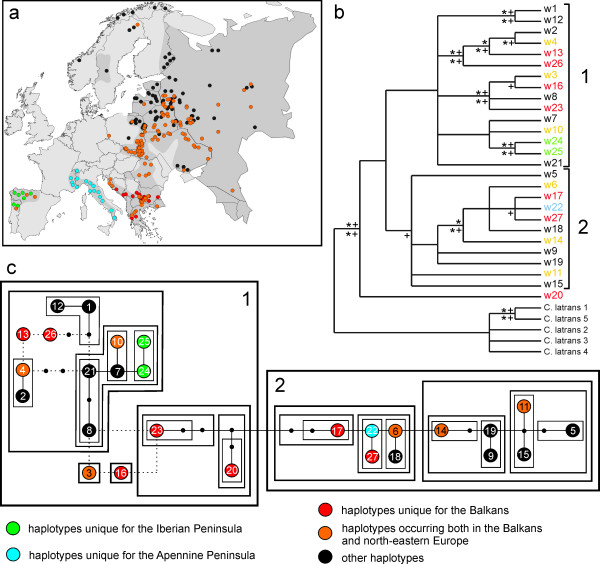
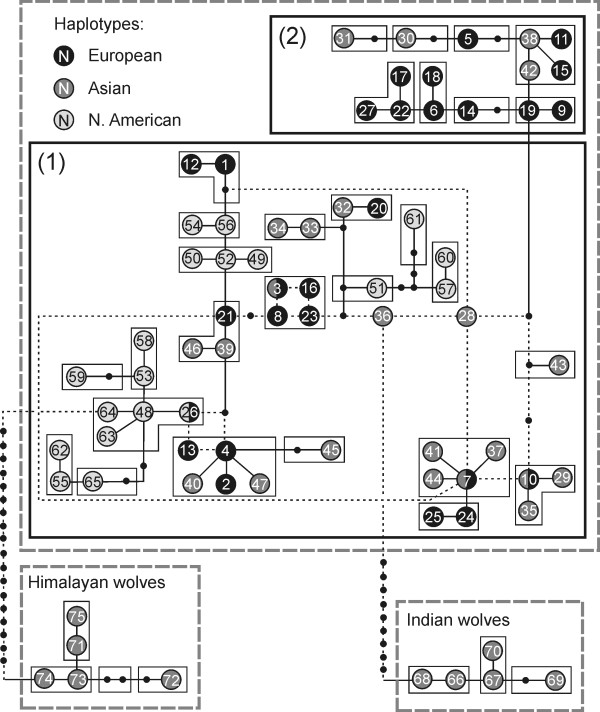
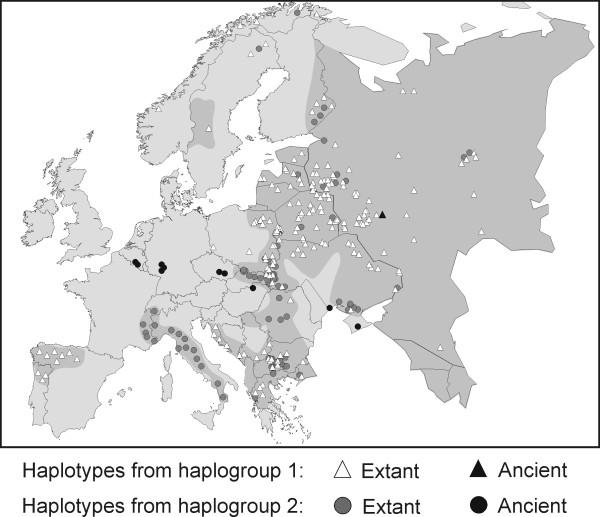
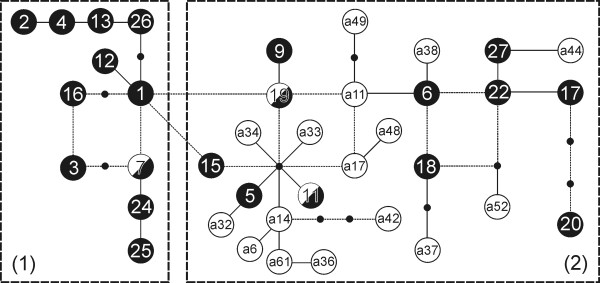
BACKGROUND: While it is generally accepted that patterns of intra-specific genetic differentiation are substantially affected by glacial history, population genetic processes occurring during Pleistocene glaciations are still poorly understood. In this study, we address the question of the genetic consequences of Pleistocene glaciations for European grey wolves. Combining our data with data from published studies, we analysed phylogenetic relationships and geographic distribution of mitochondrial DNA haplotypes for 947 contemporary European wolves. We also compared the contemporary wolf sequences with published sequences of 24 ancient European wolves. RESULTS: We found that haplotypes representing two haplogroups, 1 and 2, overlap geographically, but substantially differ in frequency between populations from south-western and eastern Europe. A comparison between haplotypes from Europe and other continents showed that both haplogroups are spread throughout Eurasia, while only haplogroup 1 occurs in contemporary North American wolves. All ancient wolf samples from western Europe that dated from between 44,000 and 1,200 years B.P. belonged to haplogroup 2, suggesting the long-term predominance of this haplogroup in this region. Moreover, a comparison of current and past frequencies and distributions of the two haplogroups in Europe suggested that haplogroup 2 became outnumbered by haplogroup 1 during the last several thousand years. CONCLUSIONS: Parallel haplogroup replacement, with haplogroup 2 being totally replaced by haplogroup 1, has been reported for North American grey wolves. Taking into account the similarity of diets reported for the late Pleistocene wolves from Europe and North America, the correspondence between these haplogroup frequency changes may suggest that they were associated with ecological changes occurring after the Last Glacial Maximum.
Overview
The claims and statistics of this paper haven’t been checked yet.
Free: it reads the open-access text and checks the first 5 claims that cite a source we can check. Create a free account to check every claim.
Integrity signals
Registry
Cites
Statistics
Figures
Verification
Claims the paper makes
The claims and statistics of this paper haven’t been checked yet.
Free: it reads the open-access text and checks the first 5 claims that cite a source we can check. Create a free account to check every claim.
Claims other papers make about this one
Each is checked against this paper’s own text: does it say what the citing paper says it does?
The check wasn’t confident either way, so it gives no verdict — never disputed.
In the citing paper
“Such bottlenecks were partly caused by human persecution, suggesting that some wolf populations are the result of an extreme selection for shy animals (i.e., those who were able to elude human hunters) [38–40].”
From Comparing wolves and dogs: current status and implications for human ‘self-domestication’ (2022) · cites this paper as [40]
Experimental — accuracy not yet measured
Self-check
Percentages, sums and reported differences re-computed from the paper’s own numbers.
The self-check needs the paper’s full text.
Citations
Cites
Thompson, J. D., Higgins, D. G., & Gibson, T. J. (1994) · Nucleic Acids Research · doi:10.1093/nar/22.22.4673 · Cited by 64,617 · cited 1×
“Sequences were compared using BLAST and aligned using Clustal W algorithm (Thompson et al. 1994) to identify different haplotypes.”
MRBAYES: Bayesian inference of phylogenetic trees.
Huelsenbeck, J. P., & Ronquist, F. (2001) · Bioinformatics · doi:10.1093/bioinformatics/17.8.754 · Cited by 21,937 · cited 1×
“Additionally, we constructed Bayesian trees in MrBayes 3.2 [ 27 ] using a model of nucleotide substitution estimated in MrModeltest 2.2 [28].”
InfluentialMODELTEST: testing the model of DNA substitution.
Posada, D., & Crandall, K. A. (1998) · Bioinformatics · doi:10.1093/bioinformatics/14.9.817 · Cited by 19,820 · cited 1×
“For distance and likelihood-based trees we used a model of nucleotide substitution estimated in Modeltest 3.6 [ 26 ].”
InfluentialArlequin (version 3.0): An integrated software package for population genetics data analysis
Excoffier, L., Laval, G., & Schneider, S. (2005) · Evolutionary Bioinformatics · doi:10.1177/117693430500100003 · Cited by 14,280 · cited 1×
“1 [42] for these analyses.”
BEAST: Bayesian evolutionary analysis by sampling trees
Drummond, A. J., & Rambaut, A. (2007) · BMC Evolutionary Biology · doi:10.1186/1471-2148-7-214 · Cited by 12,919
Median-joining networks for inferring intraspecific phylogenies
Bandelt, H. J., Forster, P., & Rohl, A. (1999) · Molecular Biology and Evolution · doi:10.1093/oxfordjournals.molbev.a026036 · Cited by 11,742 · cited 1×
“510 [30].”
TCS: a computer program to estimate gene genealogies
Clement, M., Posada, D., & Crandall, K. A. (2000) · Molecular Ecology · doi:10.1046/j.1365-294x.2000.01020.x · Cited by 9,861 · cited 4×
“We also constructed haplotype networks using the statistical parsimony method implemented in the software TCS [29] and the median-joining method implemented in the software Network 4.510 [30].”
MethodInfluentialFu, Y.-X. (1997) · Genetics · doi:10.1093/genetics/147.2.915 · Cited by 7,164
The genetic legacy of the Quaternary ice ages
Hewitt, G. (2000) · Nature · doi:10.1038/35016000 · Cited by 7,127 · cited 2×
“Background Historical processes during the Pleistocene glaciations had a profound effect on intra-specific genetic differentiation [1-3].”
PAUP * [Phylogenetic Analysis Using Parsimony (and Other Methods)]
Cummings, M. P. (2004) · Dictionary of Bioinformatics and Computational Biology · doi:10.1002/0471650129.dob0522 · Cited by 5,215
MRBAYES: Bayesian inference of phylogeny
Huelsenbeck, J. P., & Ronquist, F. (2001) · Bioinformatics · Cited by 4,892
Some genetic consequences of ice ages, and their role in divergence and speciation
HEWITT, G. (1996) · Biological Journal of the Linnean Society · doi:10.1006/bijl.1996.0035 · Cited by 4,106 · cited 2×
“Background Historical processes during the Pleistocene glaciations had a profound effect on intra-specific genetic differentiation [1-3].”
Defining ‘Evolutionarily Significant Units’ for conservation
Moritz, C. (1994) · Trends in Ecology & Evolution · doi:10.1016/0169-5347(94)90057-4 · Cited by 3,348 · cited 1×
“Discussion We found that with the exception of Indian and Himalayan lineages, contemporary worldwide grey wolves show no evolutionary significant units in terms of reciprocally monophyletic clades with allopatric distributions [43], which is consistent with earlier studies [14,20,22].”
Templeton, A. R., Crandall, K. A., & Sing, C. F. (1992) · Genetics · doi:10.1093/genetics/132.2.619 · Cited by 3,251
Comparative phylogeography and postglacial colonization routes in Europe
TABERLET, P., FUMAGALLI, L., WUST‐SAUCY, A., & COSSON, J. (1998) · Molecular Ecology · doi:10.1046/j.1365-294x.1998.00289.x · Cited by 2,987 · cited 2×
“Background Historical processes during the Pleistocene glaciations had a profound effect on intra-specific genetic differentiation [1-3].”
Post-glacial re-colonization of European biota
Hewitt, G. M. (1999) · Biological Journal of the Linnean Society · doi:10.1006/bijl.1999.0332 · Cited by 2,986
MrModeltest 2.2. Program Distributed by the Author
Nylander, J. A. A., Nylander, J., & Nylander, J. A. A. (2004) · Medical Entomology and Zoology · Cited by 2,648
Wolves: Behavior, Ecology, and Conservation
Mech, L. D., & Boitani, L. (2003) · University of Chicago Press eBooks · doi:10.7208/chicago/9780226516981.001.0001 · Cited by 1,116
Multiple and Ancient Origins of the Domestic Dog
Vilà, C., Savolainen, P., Maldonado, J. E., Amorim, I. R., Rice, J. E., Honeycutt, R. L., Crandall, K. A., Lundeberg, J., & Wayne, R. K. (1997) · Science · doi:10.1126/science.276.5319.1687 · Cited by 1,091 · cited 1×
“Therefore, we sequenced an additional control region fragment using primers L16462 and H222 [18] for 42 wolves carrying each of the 22 European haplotypes detected in Ref.”
Assessing the Causes of Late Pleistocene Extinctions on the Continents
Barnosky, A. D., Koch, P. L., Feranec, R. S., Wing, S. L., & Shabel, A. B. (2004) · Science · doi:10.1126/science.1101476 · Cited by 1,084 · cited 1×
“However, a general mechanism underlying those species-specific population histories, leading to the extinction of some lineages or entire species and the survival of others, still remains unclear [11,12].”
GENETIC EVIDENCE FOR A PLEISTOCENE POPULATION EXPLOSION
Rogers, A. R. (1995) · Evolution · doi:10.1111/j.1558-5646.1995.tb02297.x · Cited by 1,083 · cited 1×
“We performed the mismatch distribution analysis [38], where we counted each haplotype occurring in a local population only once (to eliminate the bias connected with the likely presence of close kin; see Ref.”
Genetic Evidence for an East Asian Origin of Domestic Dogs
Savolainen, P., Zhang, Y.-P., Luo, J., Lundeberg, J., & Leitner, T. (2002) · Science · doi:10.1126/science.1073906 · Cited by 960 · cited 1×
“For this purpose, we collected mtDNA control region sequence data on contemporary and historical grey wolves from Asia and North America from published studies [14,15, 19-23 ] and NCBI database (Table S1 in Additional file 1). We compared the 230 bp fragment, common to all considered sequences.”
Templeton, A. R., & Sing, C. F. (1993) · Genetics · doi:10.1093/genetics/134.2.659 · Cited by 689
Speciation durations and Pleistocene effects on vertebrate phylogeography
Avise, J. C., Walker, D., & Johns, G. C. (1998) · Proceedings of the Royal Society of London. Series B: Biological Sciences · doi:10.1098/rspb.1998.0492 · Cited by 595 · cited 1×
“Genetic divergences between these mtDNA lineages are often dated to early Pleistocene or Pliocene [1-5], which may suggest their long-term geographic separation.”
Estimating population size by genotyping faeces
Kohn, M. H., York, E. C., Kamradt, D. A., Haught, G., Sauvajot, R. M., & Wayne, R. K. (1999) · Proceedings of the Royal Society of London. Series B: Biological Sciences · doi:10.1098/rspb.1999.0686 · Cited by 574 · cited 2×
“Applying the rarefaction curve method [33], we estimated the total number of haplotypes currently occurring in contemporary European wolves at 29 (28.”
MethodRescue of a severely bottlenecked wolf (Canis lupus) population by a single immigrant
Vilà, C., Sundqvist, A., Flagstad, Ø., Seddon, J., rnerfeldt, S. B., Kojola, I., Casulli, A., Sand, H., Wabakken, P., & Ellegren, H. (2003) · Proceedings of the Royal Society of London. Series B: Biological Sciences · doi:10.1098/rspb.2002.2184 · Cited by 497
Genetic Evidence for a Pleistocene Population Explosion
Rogers, A. R. (1995) · Evolution · doi:10.2307/2410314 · Cited by 465
Dynamics of Pleistocene Population Extinctions in Beringian Brown Bears
Barnes, I., Matheus, P., Shapiro, B., Jensen, D., & Cooper, A. (2002) · Science · doi:10.1126/science.1067814 · Cited by 400 · cited 2×
“However, recent studies based on mtDNA preserved in remains of Late Pleistocene mammals showed that an association between phylogenetic structure and geography does not necessarily imply long-term genetic isolation [6-9].”
Germonpré, M., Sablin, M. V., Stevens, R. E., Hedges, R. E. M., Hofreiter, M., Stiller, M., & Després, V. R. (2009) · Journal of Archaeological Science · doi:10.1016/j.jas.2008.09.033 · Cited by 392 · cited 3×
“For example, the horse - supposedly one of the most important prey species of the Pleistocene wolves [10,45] - did not become extinct in Europe, unlike in North America [e.”
Mitochondrial DNA phylogeography and population history of the grey wolf Canis lupus
Vilà, C., Amorim, I. R., Leonard, J. A., Posada, D., Castroviejo, J., Petrucci‐Fonseca, F., Crandall, K. A., Ellegren, H., & Wayne, R. K. (1999) · Molecular Ecology · doi:10.1046/j.1365-294x.1999.00825.x · Cited by 367 · cited 5×
“The Iberian and Apennine populations have very reduced genetic diversity, likely resulting from historical bottlenecks [14,15], and the fixation of a particular haplogroup may result from a strong drift.”
MethodInfluentialPopulation genetics of Ice Age brown bears
Leonard, J. A., Wayne, R. K., & Cooper, A. (2000) · Proceedings of the National Academy of Sciences · doi:10.1073/pnas.040453097 · Cited by 309 · cited 1×
“However, recent studies based on mtDNA preserved in remains of Late Pleistocene mammals showed that an association between phylogenetic structure and geography does not necessarily imply long-term genetic isolation [6-9].”
Evidence for Time Dependency of Molecular Rate Estimates
Ho, S. Y. W., Shapiro, B., Phillips, M. J., Cooper, A., & Drummond, A. J. (2007) · Systematic Biology · doi:10.1080/10635150701435401 · Cited by 277 · cited 1×
“Using a substitution rate calibrated by divergences between species may lead to an overestimation of recent divergence times [36].”
Ecological factors influence population genetic structure of European grey wolves
PILOT, M., JEDRZEJEWSKI, W., BRANICKI, W., SIDOROVICH, V. E., JEDRZEJEWSKA, B., STACHURA, K., & FUNK, S. M. (2006) · Molecular Ecology · doi:10.1111/j.1365-294x.2006.03110.x · Cited by 247 · cited 5×
“The phylogenetic proximity of mtDNA haplotypes alone does not directly imply ecological similarity, but makes it likely, taking into account a significant correlation between genetic and ecological differentiation in contemporary wolves [13,47-49].”
InfluentialSelf-citationRapid body size decline in Alaskan Pleistocene horses before extinction
Dale Guthrie, R. (2003) · Nature · doi:10.1038/nature02098 · Cited by 242 · cited 1×
“[50]].”
Climate and habitat barriers to dispersal in the highly mobile grey wolf
GEFFEN, E., ANDERSON, M. J., & WAYNE, R. K. (2004) · Molecular Ecology · doi:10.1111/j.1365-294x.2004.02244.x · Cited by 238 · cited 2×
“The phylogenetic proximity of mtDNA haplotypes alone does not directly imply ecological similarity, but makes it likely, taking into account a significant correlation between genetic and ecological differentiation in contemporary wolves [13,47-49].”
Lack of phylogeography in European mammals before the last glaciation
Hofreiter, M., Serre, D., Rohland, N., Rabeder, G., Nagel, D., Conard, N., Münzel, S., & Pääbo, S. (2004) · Proceedings of the National Academy of Sciences · doi:10.1073/pnas.0403618101 · Cited by 231 · cited 3×
“Based on this finding, it has been suggested that current phylogeographic patterns are transient relics of the last glaciation [8].”
Valière, N., Fumagalli, L., Gielly, L., Miquel, C., Lequette, B., Poulle, M., Weber, J., Arlettaz, R., & Taberlet, P. (2003) · Animal Conservation · doi:10.1017/s1367943003003111 · Cited by 220 · cited 1×
“We collected information about mtDNA control region sequences of 947 contemporary wolves from 23 European countries, based on our published [13] and new data (for 674 individuals from 11 countries, altogether) and studies by other authors [14-17] (for details, see Supplementary Data).”
Randi, E., Lucchini, V., Christensen, M. F., Mucci, N., Funk, S. M., Dolf, G., & Loeschcke, V. (2000) · Conservation Biology · doi:10.1046/j.1523-1739.2000.98280.x · Cited by 209 · cited 3×
“We collected information about mtDNA control region sequences of 947 contemporary wolves from 23 European countries, based on our published [13] and new data (for 674 individuals from 11 countries, altogether) and studies by other authors [14-17] (for details, see Supplementary Data).”
MethodMegafaunal Extinctions and the Disappearance of a Specialized Wolf Ecomorph
Leonard, J. A., Vilà, C., Fox-Dobbs, K., Koch, P. L., Wayne, R. K., & Van Valkenburgh, B. (2007) · Current Biology · doi:10.1016/j.cub.2007.05.072 · Cited by 208
Stiller, M., Green, R. E., Ronan, M., Simons, J. F., Du, L., He, W., Egholm, M., Rothberg, J. M., Keates, S. G., Ovodov, N. D., et al. (2006) · Proceedings of the National Academy of Sciences · doi:10.1073/pnas.0605327103 · Cited by 202
MUSIANI, M., LEONARD, J. A., CLUFF, H. D., GATES, C. C., MARIANI, S., PAQUET, P. C., VILÀ, C., & WAYNE, R. K. (2007) · Molecular Ecology · doi:10.1111/j.1365-294x.2007.03458.x · Cited by 198 · cited 2×
“The phylogenetic proximity of mtDNA haplotypes alone does not directly imply ecological similarity, but makes it likely, taking into account a significant correlation between genetic and ecological differentiation in contemporary wolves [13,47-49].”
LEONARD, J. A., VILÀ, C., & WAYNE, R. K. (2005) · Molecular Ecology · doi:10.1111/j.1365-294x.2004.02389.x · Cited by 170
VALDIOSERA, C. E., GARCÍA, N., ANDERUNG, C., DALÉN, L., CRÉGUT‐BONNOURE, E., KAHLKE, R., STILLER, M., BRANDSTRÖM, M., THOMAS, M. G., ARSUAGA, J. L., et al. (2007) · Molecular Ecology · doi:10.1111/j.1365-294x.2007.03590.x · Cited by 148 · cited 1×
“However, recent studies based on mtDNA preserved in remains of Late Pleistocene mammals showed that an association between phylogenetic structure and geography does not necessarily imply long-term genetic isolation [6-9].”
Ecological and genetic spatial structuring in the Canadian lynx
Rueness, E. K., Stenseth, N. C., O’Donoghue, M., Boutin, S. A., Ellegren, H., & Jakobsen, K. S. (2003) · Nature · doi:10.1038/nature01942 · Cited by 143 · cited 1×
“[13,47-49,51]], and it is likely that they had a similar effect on demographic and evolutionary processes in ancient populations.”
Hoelzel, A. R., Natoli, A., Dahlheim, M. E., Olavarría, C., Baird, R. W., & Black, N. A. (2002) · Proceedings of the Royal Society B Biological Sciences · doi:10.1098/rspb.2002.2033 · Cited by 142
Ancient wolf lineages in India
Sharma, D. K., Maldonado, J. E., Jhala, Y. V., & Fleischer, R. C. (2004) · Proceedings of the Royal Society of London. Series B: Biological Sciences · doi:10.1098/rsbl.2003.0071 · Cited by 137 · cited 3×
“Discussion We found that with the exception of Indian and Himalayan lineages, contemporary worldwide grey wolves show no evolutionary significant units in terms of reciprocally monophyletic clades with allopatric distributions [43], which is consistent with earlier studies [14,20,22].”
MethodLucchini, V., Galov, A., & Randi, E. (2004) · Molecular Ecology · doi:10.1046/j.1365-294x.2004.02077.x · Cited by 132 · cited 1×
“However, the analysis of contemporary nuclear DNA data suggested that Italian wolves have been genetically isolated for thousands of generations south of Alps [ 44 ].”
Flagstad, Ø., Walker, C. W., Vilà, C., Sundqvist, A. ‐., Fernholm, B., Hufthammer, A. K., Wiig, Ø., Koyola, I., & Ellegren, H. (2003) · Molecular Ecology · doi:10.1046/j.1365-294x.2003.01784.x · Cited by 129 · cited 1×
“We collected information about mtDNA control region sequences of 947 contemporary wolves from 23 European countries, based on our published [13] and new data (for 674 individuals from 11 countries, altogether) and studies by other authors [14-17] (for details, see Supplementary Data).”
Historical and ecological determinants of genetic structure in arctic canids
CARMICHAEL, L. E., KRIZAN, J., NAGY, J. A., FUGLEI, E., DUMOND, M., JOHNSON, D., VEITCH, A., BERTEAUX, D., & STROBECK, C. (2007) · Molecular Ecology · doi:10.1111/j.1365-294x.2007.03381.x · Cited by 124 · cited 2×
“The phylogenetic proximity of mtDNA haplotypes alone does not directly imply ecological similarity, but makes it likely, taking into account a significant correlation between genetic and ecological differentiation in contemporary wolves [13,47-49].”
Genetic Structure and Extinction of the Woolly Mammoth, Mammuthus primigenius
Barnes, I., Shapiro, B., Lister, A., Kuznetsova, T., Sher, A., Guthrie, D., & Thomas, M. G. (2007) · Current Biology · doi:10.1016/j.cub.2007.05.035 · Cited by 123 · cited 1×
“However, a general mechanism underlying those species-specific population histories, leading to the extinction of some lineages or entire species and the survival of others, still remains unclear [11,12].”
The genetical archaeology of the human genome
von Haeseler, A., Sajantila, A., & Pääbo, S. (1996) · Nature Genetics · doi:10.1038/ng1096-135 · Cited by 121 · cited 2×
“21), consistent with a recent demographic expansion [41].”
A Comparison of Phylogenetic Network Methods Using Computer Simulation
Woolley, S. M., Posada, D., & Crandall, K. A. (2008) · PLoS ONE · doi:10.1371/journal.pone.0001913 · Cited by 118
Tsuda, K., Kikkawa, Y., Yonekawa, H., & Tanabe, Y. (1997) · Genes & Genetic Systems · doi:10.1266/ggs.72.229 · Cited by 115 · cited 1×
“For this purpose, we collected mtDNA control region sequence data on contemporary and historical grey wolves from Asia and North America from published studies [14,15,19-23] and NCBI database (Table S1 in Additional file 1).”
MethodElevated substitution rates estimated from ancient DNA sequences
Ho, S. Y. W., Kolokotronis, S., & Allaby, R. G. (2007) · Biology Letters · doi:10.1098/rsbl.2007.0377 · Cited by 104 · cited 1×
“However, the 95% HPDI of this estimate were broad and overlapped with those estimated for the control region in other mammals and birds based on ancient DNA data [52].”
Aggarwal, R. K., Kivisild, T., Ramadevi, J., & Singh, L. (2007) · Journal of Zoological Systematics & Evolutionary Research · doi:10.1111/j.1439-0469.2006.00400.x · Cited by 89 · cited 3×
“Discussion We found that with the exception of Indian and Himalayan lineages, contemporary worldwide grey wolves show no evolutionary significant units in terms of reciprocally monophyletic clades with allopatric distributions [43], which is consistent with earlier studies [14,20,22].”
MethodUsing Classical Population Genetics Tools with Heterochroneous Data: Time Matters!
Depaulis, F., Orlando, L., & Hänni, C. (2009) · PLoS ONE · doi:10.1371/journal.pone.0005541 · Cited by 43 · cited 1×
“Ancient data were excluded from these analyses because of their short length, and because their inclusion could substantially bias the results [37].”
Pleistocene Extinctions: Haunting the Survivors
Hofreiter, M. (2007) · Current Biology · doi:10.1016/j.cub.2007.06.031 · Cited by 24 · cited 6×
“Hofreiter M, Serre D, Rohland N, Rebeder G, Nagel D, Conrad N, Münzel S, Pääbo S: Lack of phylogeography in European mammals before the last glaciation.”
InfluentialThe evolutionary rate of tuatara revisited
Miller, H. C., Moore, J. A., Allendorf, F. W., & Daugherty, C. H. (2008) · Trends in Genetics · doi:10.1016/j.tig.2008.09.007 · Cited by 21 · cited 1×
“Low number of ancient samples analysed and the presence of population structure may lead to an overestimation of the mutation rate [53], and it may be the case in our study.”
(2001)
Cited by
Skoglund, P., Ersmark, E., Palkopoulou, E., & Dalén, L. (2015) · Current Biology · doi:10.1016/j.cub.2015.04.019 · Cited by 310
“The latter scenario would be consistent with an earlier finding of a morphologically distinct wolf population adapted to megafaunal prey in Late Pleistocene Beringia [20], as well as mitochondrial DNA evidence for a Holocene replacement of European gray wolves [21].”
Hindrikson, M., Remm, J., Pilot, M., Godinho, R., Stronen, A. V., Baltrūnaité, L., Czarnomska, S. D., Leonard, J. A., Randi, E., Nowak, C., et al. (2017) · Biological Reviews · doi:10.1111/brv.12298 · Cited by 190
“…widespread and continuous European wolf population, as suggested from studies involving Bulgarian (Randi et al., 2000; Moura et al., 2014; Pilot et al., 2014a), Croatian (Gomerčić et al., 2010; Fabbri et al., 2014), and other populations in the Balkans (Pilot et al., 2010; Djan et al., 2014).”
BackgroundInfluentialSelf-citationWorldwide patterns of genomic variation and admixture in gray wolves
Fan, Z., Silva, P., Gronau, I., Wang, S., Armero, A. S., Schweizer, R. M., Ramirez, O., Pollinger, J., Galaverni, M., Ortega Del-Vecchyo, D., et al. (2016) · Genome Research · doi:10.1101/gr.197517.115 · Cited by 209
“…and turnover also is supported by recent mtDNA sequence analysis of modern and ancient wolves from the Last Glacial Maximum (Leonard et al. 2007; Pilot et al. 2010; Thalmann et al. 2013) and the dynamic pattern of turnover in other large carnivores such as brown and polar bears, hyenas, and…”
BackgroundGuo, X., Zhang, Z., Qi, L., Liu, S., Tang, Y., & Zhao, Z. (2022) · IEEE Transactions on Automation Science and Engineering · doi:10.1109/tase.2021.3133601 · Cited by 169
Palaeolithic dog skulls at the Gravettian Předmostí site, the Czech Republic
Germonpré, M., Lázničková-Galetová, M., & Sablin, M. V. (2012) · Journal of Archaeological Science · doi:10.1016/j.jas.2011.09.022 · Cited by 161
Metadata
- Authors
- Pilot, M., Branicki, W., Jędrzejewski, W., Goszczyński, J., Jędrzejewska, B., Dykyy, I., Shkvyrya, M., & Tsingarska, E.
- Affiliations
- Museum and Institute of Zoology (PL)
- Jagiellonian University (PL)
- Mammal Research Institute (PL)
- Warsaw University of Life Sciences (PL)
- Lviv University (UA)
- Corresponding author
- Pilot, Małgorzata
- ORCID
- Venue
- BMC Evolutionary Biology
- Published
- 2010
- Volume
- 10
- Issue
- 1
- Pages
- 104
- ISSN
- 1471-2148 (ISSN-L)
- PMC
- PMC2873414
- OpenAlex
- W2058327638
- Cited by
- 158
- References
- 59
- Citations by year
- 2026: 11 · 2025: 4 · 2024: 7 · 2023: 10 · 2022: 12 · 2021: 17 · 2020: 9 · 2019: 16 · 2018: 6 · 2017: 9 · 2016: 6 · 2015: 8 · 2014: 11 · 2013: 13 · 2012: 11
- FWCI
- 5.76
- Type
- journal article
- Language
- en
- Open access
- gold
- doi.org
- Licence
- cc-by
- Locations
- BMC Evolutionary Biology (publishedVersion, cc-by)
- PubMed Central (publishedVersion, cc-by)
- PubMed (publishedVersion)
- Lincoln Repository (University of Lincoln) (acceptedVersion)
- DOAJ (DOAJ: Directory of Open Access Journals) (submittedVersion, cc-by-sa)
- Figshare (submittedVersion, cc-by)
- Funders
- Fundacja na rzecz Nauki Polskiej
- EuroNatur Stiftung
- Topics
- Life Sciences › Biochemistry, Genetics and Molecular Biology › Genetics › Genetic diversity and population structure
- Life Sciences › Biochemistry, Genetics and Molecular Biology › Genetics › Forensic and Genetic Research
- Life Sciences › Biochemistry, Genetics and Molecular Biology › Genetics › Genetic and phenotypic traits in livestock
- Keywords
- grey wolf, wolf, phylogeography, Quaternary glaciation, mitochondrial haplotypes, ancient DNA, Last Glacial Maximum, genetic differentiation
- MeSH terms
- Animals, DNA, Mitochondrial, Europe, Phylogeny, Wolves
About these checks
Registry, retraction, Cites and statistics results are computed, not judged, with one exception: a printed reference that no index lists is read once by a model before it counts as a citation error. Claims are extracted by a model and kept only when their quote appears verbatim in the text; each cited source is then checked, with a model’s help, for whether it says what the claim relies on. Those verdicts can be wrong — read the claim’s quote and the cited source before relying on one.
Statistics and arithmetic are recomputed, not judged.
Confidence bands are shown only for fields calibrated on our annotated test set. None is calibrated yet, so no band is shown.
What counts as a claim ›How we measure confidence ›How we check this ›
Are you an author, or do you see a problem with this page? Request a review
Data sources
Bibliographic data: Semantic Scholar, OpenAlex, Crossref.
Contains information from the Semantic Scholar Academic Graph Datasets, made available under the ODC Attribution License (ODC-BY 1.0).
Semantic Scholar’s data is described in: Kinney, R., et al. (2023). The Semantic Scholar Open Data Platform. arXiv:2301.10140.
