

Age modifies the genotype-phenotype relationship for the bitter receptor TAS2R38.
Open accessThe DOI matches its Crossref record; 63 of the 63 references it cites were found in a registry or an index.
Abstract
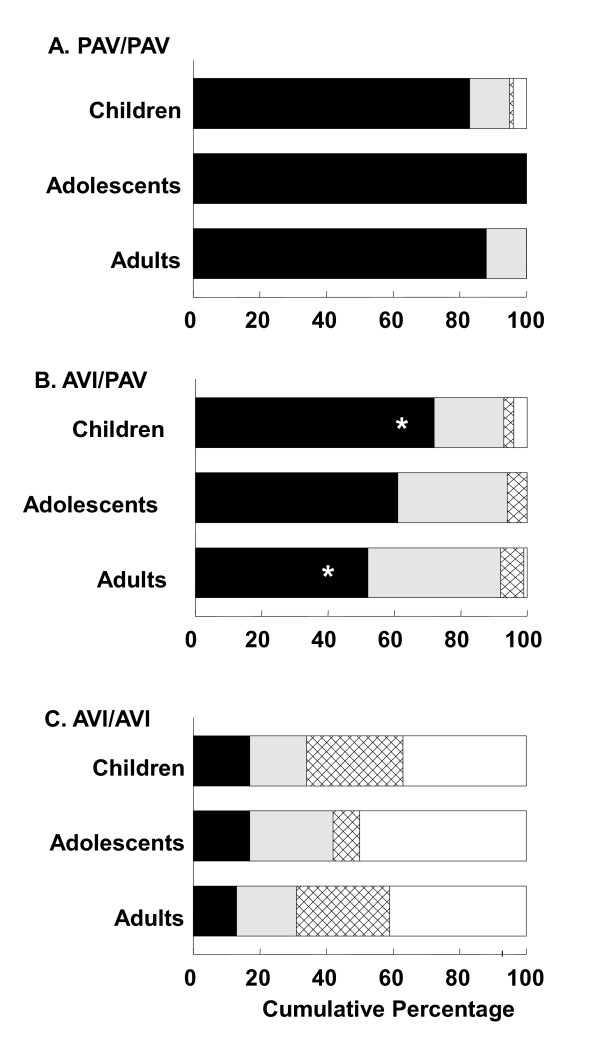
Background: The purpose of this study was to investigate the effect of TAS2R38 haplotypes and age on human bitter taste perception. Results: Children (3 to 10 yrs), adolescents (11 to 19 yrs) and adults (mostly mothers, 20 to 55 yrs (N = 980) were measured for bitter taste thresholds for 6-n-propylthiouracil (PROP) and genotyped for three polymorphisms of the AS2R38 gene (A49P, V262A, I296V). Subjects were grouped by haplotype and age, as well as sex and race/ethnicity, and compared for PROP thresholds. Subjects with the same haplotype were similar in bitter threshold regardless of race/ethnicity (all ages) or sex (children and adolescents; all p-values > 0.05) but age was a modifier of the genotype-phenotype relationship. Specifically, AVI/PAV heterozygous children could perceive a bitter taste at lower PROP concentrations than could heterozygous adults, with the thresholds of heterozygous adolescents being intermediate (p < 0.001). Similar age effects were not observed for subjects with the PAV/PAV or AVI/AVI homozygous haplotypes (p > 0.05) perhaps because there is less variation in taste perception among these homozygotes. Conclusions: These data imply that the change in PROP bitter sensitivity which occurs over the lifespan (from bitter sensitive to less so) is more common in people with a particular haplotype combination, i.e., AVI/PAV heterozygotes.
Overview
The claims and statistics of this paper haven’t been checked yet.
Free: it reads the open-access text and checks the first 5 claims that cite a source we can check. Create a free account to check every claim.
Integrity signals
Registry
Cites
Statistics
Figures
Verification
Claims the paper makes
The claims and statistics of this paper haven’t been checked yet.
Free: it reads the open-access text and checks the first 5 claims that cite a source we can check. Create a free account to check every claim.
Claims other papers make about this one
Each is checked against this paper’s own text: does it say what the citing paper says it does?
The source backs part of the claim, not all of it — or backs it for a different population, condition or comparison.
In the citing paper
“Because children are more sensitive to bitter tastes than are adults (45, 57), some children may be more sensitive to the unpleasant aftertastes of these LCS.”
From Sweetness and Food Preference (2012) · cites this paper as [57]
Experimental — accuracy not yet measured
Self-check
Percentages, sums and reported differences re-computed from the paper’s own numbers.
The self-check needs the paper’s full text.
Citations
Cites
Nonparametric Statistics for the Behavioral Sciences
Guitton, H., & Siegel, S. (1958) · Revue économique · doi:10.2307/3498751 · Cited by 35,245
Handbook of Sensory Physiology
Sanders, M. D. (1975) · British Journal of Ophthalmology · doi:10.1136/bjo.59.2.111-c · Cited by 7,166
Scheet, P., & Stephens, M. (2006) · The American Journal of Human Genetics · doi:10.1086/502802 · Cited by 1,941 · cited 1×
“Haplotypes were identified by tracing the parental origin of the alleles when possible, or otherwise they were inferred by expectation-maximization methods using an algorithm implemented by the computer program fastPHASE [59].”
MethodT2Rs Function as Bitter Taste Receptors
Chandrashekar, J., Mueller, K. L., Hoon, M. A., Adler, E., Feng, L., Guo, W., Zuker, C. S., & Ryba, N. J. P. (2000) · Cell · doi:10.1016/s0092-8674(00)80706-0 · Cited by 1,401 · cited 1×
“PROP bitterness is not entirely explained by alleles of the TAS2R38 gene [12,35-37] and these other modifiers (like taste papillae number) could be age-sensitive and more influential in heterozygous diplotypes [38].”
BackgroundHandbook of Sensory Physiology,
(1973) · Archives of Neurology · doi:10.1001/archneur.1973.00490200090018 · Cited by 1,058
Kim, U.-K., Jorgenson, E., Coon, H., Leppert, M., Risch, N., & Drayna, D. (2003) · Science · doi:10.1126/science.1080190 · Cited by 904 · cited 7×
“The differences in allele frequencies we found replicated those reported by others [11].”
BackgroundResultInfluentialToxic constituents of plant foodstuffs
(1981) · Food and Cosmetics Toxicology · doi:10.1016/0015-6264(81)90458-2 · Cited by 885
PTC/PROP tasting: Anatomy, psychophysics, and sex effects
Bartoshuk, L. M., Duffy, V. B., & Miller, I. J. (1994) · Physiology & Behavior · doi:10.1016/0031-9384(94)90361-1 · Cited by 813 · cited 1×
“Bitter sensitivity to PROP and PTC have been assessed in the past in two ways (threshold versus intensity) and each method has several variations [26,48-50].”
BackgroundBufe, B., Breslin, P. A. S., Kuhn, C., Reed, D. R., Tharp, C. D., Slack, J. P., Kim, U.-K., Drayna, D., & Meyerhof, W. (2005) · Current Biology · doi:10.1016/j.cub.2005.01.047 · Cited by 708 · cited 4×
“Adults heterozygous for the TAS2R38 gene do not express mRNA of each haplotype in a one-to-one proportion [12], so it is possible that heterozygous children might have a skewed expression pattern, perhaps over expressing the taster allele.”
BackgroundInfluentialSelf-citationGenetic variation in a human odorant receptor alters odour perception
Keller, A., Zhuang, H., Chi, Q., Vosshall, L. B., & Matsunami, H. (2007) · Nature · doi:10.1038/nature06162 · Cited by 661 · cited 1×
“Alleles of a particular smell receptor predict the threshold to this odorant [47].”
Background
Research works printed but not linked: 1
- Ehrhardt VS Vergleichende Geschmacksprufung von PTC und Conteben Homo 1952 3 153 162
Cited by
Early Influences on the Development of Food Preferences
Ventura, A. K., & Worobey, J. (2013) · Current Biology · doi:10.1016/j.cub.2013.02.037 · Cited by 626
“Compared to adults, children are more sensitive to bitter tastes [51,74,75].”
BackgroundOntogeny of taste preferences: basic biology and implications for health
Mennella, J. A. (2014) · The American Journal of Clinical Nutrition · doi:10.3945/ajcn.113.067694 · Cited by 443
Self-citationThe sweetness and bitterness of childhood: Insights from basic research on taste preferences
Mennella, J. A., & Bobowski, N. K. (2015) · Physiology & Behavior · doi:10.1016/j.physbeh.2015.05.015 · Cited by 399
“Although one may expect individuals with the heterozygous TAS2R38 genotype (PAV/AVI) to have a sensitivity to PROP intermediate to that of both homozygous genotypes (PAV/PAV and AVI/AVI), as a group these individuals show a wide range of sensitivities [66, 68].”
BackgroundInfluentialSelf-citationDrewnowski, A., Mennella, J. A., Johnson, S. L., & Bellisle, F. (2012) · The Journal of Nutrition · doi:10.3945/jn.111.149575 · Cited by 347
“Because children are more sensitive to bitter tastes than are adults (45,57), some children may be more sensitive to the unpleasant aftertastes of these LCS.”
BackgroundSelf-citationThe Bad Taste of Medicines: Overview of Basic Research on Bitter Taste
Mennella, J. A., Spector, A. C., Reed, D. R., & Coldwell, S. E. (2013) · Clinical Therapeutics · doi:10.1016/j.clinthera.2013.06.007 · Cited by 296
“Based on the procedures of Anliker et al,(139) children were presented, in succession, with samples of water and then 3 increasing concentrations of PROP (56, 180, and 560 μM) and were asked to taste the sample without swallowing.(137,140,141) If the solution tasted like “water” or “nothing,” then they were asked to g…”
MethodSelf-citationde Araujo, I. E., Schatzker, M., & Small, D. M. (2020) · Annual Review of Psychology · doi:10.1146/annurev-psych-122216-011643 · Cited by 262
Reed, D. R., & Knaapila, A. (2010) · Progress in Molecular Biology and Translational Science · doi:10.1016/b978-0-12-375003-7.00008-x · Cited by 251
Self-citationTaste and Flavor Perceptions of Glucosinolates, Isothiocyanates, and Related Compounds
Bell, L., Oloyede, O. O., Lignou, S., Wagstaff, C., & Methven, L. (2018) · Molecular Nutrition & Food Research · doi:10.1002/mnfr.201700990 · Cited by 214
“To complicate matters further, intensity of perception also varies with age; being greater in infants and children, and much reduced in the elderly [39].”
Holdt, L. M., & Teupser, D. (2012) · Arteriosclerosis, Thrombosis, and Vascular Biology · doi:10.1161/atvbaha.111.232678 · Cited by 189
Exploring influences on food choice in a large population sample: The Italian Taste project
Monteleone, E., Spinelli, S., Dinnella, C., Endrizzi, I., Laureati, M., Pagliarini, E., Sinesio, F., Gasperi, F., Torri, L., Aprea, E., et al. (2017) · Food Quality and Preference · doi:10.1016/j.foodqual.2017.02.013 · Cited by 178
Differences in taste sensitivity between obese and non-obese children and adolescents
Overberg, J., Hummel, T., Krude, H., & Wiegand, S. (2012) · Archives of Disease in Childhood · doi:10.1136/archdischild-2011-301189 · Cited by 168
Vegetable and Fruit Acceptance during Infancy: Impact of Ontogeny, Genetics, and Early Experiences
Mennella, J. A., Reiter, A. R., & Daniels, L. M. (2016) · Advances in Nutrition · doi:10.3945/an.115.008649 · Cited by 149
“Genetically based differences in receptors for bitter taste are particularly well known for the related bitter compounds phenylthiocarbamide and 6-n-propylthiouracil (PROP); some people can detect these at low concentrations, 212S Supplement but others need much higher concentrations or cannot detect at all (54, 55).”
BackgroundInfluentialSelf-citationBiological Control of Appetite: A Daunting Complexity
MacLean, P. S., Blundell, J. E., Mennella, J. A., & Batterham, R. L. (2017) · Obesity · doi:10.1002/oby.21771 · Cited by 140
“Although bitter taste differs widely among individuals, at psychophysical and genetic levels, children are more sensitive to the taste of some bitters (34), which sweet and salty taste can partially mask or block (35,36).”
BackgroundSelf-citationComplementary Foods and Flavor Experiences: Setting the Foundation
Mennella, J. A., & Trabulsi, J. (2012) · Annals of Nutrition and Metabolism · doi:10.1159/000335337 · Cited by 155
Self-citationTepper, B. J., Banni, S., Melis, M., Crnjar, R., & Barbarossa, I. T. (2014) · Nutrients · doi:10.3390/nu6093363 · Cited by 134
“However, both kinds of psychophysics approaches showed high intra-subject variability not attributable to measurement errors [74] that are comparable with changes observed by others [114,116,117].”
BackgroundFlavor Perception and Preference Development in Human Infants
Forestell, C. A. (2017) · Annals of Nutrition and Metabolism · doi:10.1159/000478759 · Cited by 138
The changing role of the senses in food choice and food intake across the lifespan
Boesveldt, S., Bobowski, N. K., McCrickerd, K., Maître, I., Sulmont‐Rossé, C., & Forde, C. G. (2018) · Food Quality and Preference · doi:10.1016/j.foodqual.2018.02.004 · Cited by 134
Lipchock, S. V., Reed, D. R., & Mennella, J. A. (2011) · Clinics in Perinatology · doi:10.1016/j.clp.2011.08.008 · Cited by 128
“Studies in children and their mothers indicate that the phenotype-genotype relationship for PROP sensitivity varies with age, such that AVI/PAV heterozygous children are more sensitive to PROP than are heterozygous adults, with adolescents being intermediate[25,33].”
BackgroundSelf-citationHuman bitter perception correlates with bitter receptor messenger RNA expression in taste cells
Lipchock, S. V., Mennella, J. A., Spielman, A. I., & Reed, D. R. (2013) · American Journal of Clinical Nutrition · doi:10.3945/ajcn.113.066688 · Cited by 118
“PAV-TAS2R38 expression amounts positively correlated with psychophysical ratings of bitterness for PROP [r(16) = 0.”
BackgroundMethodInfluentialSelf-citationGarneau, N. L., Nuessle, T. M., Sloan, M. M., Santorico, S. A., Coughlin, B. C., & Hayes, J. E. (2014) · Frontiers in Integrative Neuroscience · doi:10.3389/fnint.2014.00033 · Cited by 98
“These factors include: sex and age in addition to TAS2R38 diplotype (Bartoshuk et al., 1994; Kim et al., 2003; Hayes et al., 2008; Tepper et al., 2008; Khataan et al., 2009; Mennella et al., 2010).”
BackgroundJoseph, P. V., Reed, D. R., & Mennella, J. A. (2015) · Nursing Research · doi:10.1097/nnr.0000000000000138 · Cited by 112
“…allele frequency may be an especially sensitive genetic marker of racial ancestry (Guo & Reed, 2001), a variable with large and reliable effect on sweet preference (Mennella et al., 2005) and bitter taste thresholds (Guo & Reed, 2001; Mennella et al., 2010b; Mennella, Pepino, Duke, & Reed, 2010a).”
BackgroundSelf-citationHuman T2R38 Bitter Taste Receptor Expression in Resting and Activated Lymphocytes
Tran, H. T. T., Herz, C., Ruf, P., Stetter, R., & Lamy, E. (2018) · Frontiers in Immunology · doi:10.3389/fimmu.2018.02949 · Cited by 100
“In particular, the psychophysical bitter sensitivities as recognized by the T2R38 receptor on the tongue also have been shown to decrease over lifespan (26).”
BackgroundPerception of bitterness, sweetness and liking of different genotypes of lettuce
Chadwick, M., Gawthrop, F., Michelmore, R. W., Wagstaff, C., & Methven, L. (2015) · Food Chemistry · doi:10.1016/j.foodchem.2015.10.105 · Cited by 92
“…perception is known to deteriorate with age, especially with regards to bitterness perception due to its natural association with harmful toxins which are a presumed as a greater hazard to children (Mennella et al., 2010), but we lacked the sample size and range of ages to look into this further.”
Mennella, J. A., Reed, D. R., Mathew, P. S., Roberts, K. M., & Mansfield, C. J. (2014) · Chemical Senses · doi:10.1093/chemse/bju053 · Cited by 90
“Mennella, Roberts, Mathew, and Reed were involved in statistical analysis.”
BackgroundSelf-citationWhy We Must Continue to Investigate Menthol’s Role in the African American Smoking Paradox
Alexander, L. A., Trinidad, D. R., Sakuma, K.-L. K., Pokhrel, P., Herzog, T. A., Clanton, M. S., Moolchan, E. T., & Fagan, P. (2016) · Nicotine & Tobacco Research · doi:10.1093/ntr/ntv209 · Cited by 94
Keller, K. L., & Adise, S. (2016) · Annual Review of Nutrition · doi:10.1146/annurev-nutr-071715-050916 · Cited by 96
Nolden, A. A., McGeary, J. E., Knopik, V. S., & Hayes, J. E. (2013) · Chemical Senses · doi:10.1093/chemse/bjt017 · Cited by 92
Shen, Y., Kennedy, O. B., & Methven, L. (2016) · Food Quality and Preference · doi:10.1016/j.foodqual.2016.01.005 · Cited by 86
Taste Perception and Food Choices
Negri, R., Feola, M. D., Domenico, S. D., Scala, M. G., Artesi, G., Valente, S., Smarrazzo, A., Turco, F., Morini, G., & Greco, L. (2011) · Journal of Pediatric Gastroenterology and Nutrition · doi:10.1097/mpg.0b013e3182473308 · Cited by 85
“Sex and age also can influence the expression of phenotype in children: it has been shown that the percentage of nontasters does not differ by sex in young children (14,15), but at puberty more nontaster individuals are boys and more taster individuals are girls (16).”
BackgroundDinnella, C., Monteleone, E., Piochi, M., Spinelli, S., Prescott, J., Pierguidi, L., Gasperi, F., Laureati, M., Pagliarini, E., Predieri, S., et al. (2018) · Chemical Senses · doi:10.1093/chemse/bjy058 · Cited by 81
“Aging has been associated with lowered responsiveness to PROP, and it has been suggested that phenotypic expression of TAS2R38 gene varies with age (Mennella et al. 2010).”
BackgroundGenetic variation in the hTAS2R38 taste receptor and food consumption among Finnish adults
Sandell, M. A., Hoppu, U., Mikkilä, V., Mononen, N., Kähönen, M. A. P., Männistö, S., Rönnemaa, T., Viikari, J. S. A., Lehtimäki, T. J., & Raitakari, O. T. (2014) · Genes & Nutrition · doi:10.1007/s12263-014-0433-3 · Cited by 78
“The hTAS2R38 taste receptor genotype distribution varies between population groups (Mennella et al. 2010).”
BackgroundInfluentialNolden, A. A., McGeary, J. E., & Hayes, J. E. (2013) · Chemosensory Perception · doi:10.1007/s12078-013-9149-9 · Cited by 76
“Additional variance can be attributed to age (Mennella et al. 2010) and fungiform papillae density (Bartoshuk et al.”
BackgroundFactors Influencing the Phenotypic Characterization of the Oral Marker, PROP
Tepper, B. J., Melis, M., Koelliker, Y., Gasparini, P., Ahijevych, K., & Barbarossa, I. T. (2017) · Nutrients · doi:10.3390/nu9121275 · Cited by 88
“These data suggest that the penetrance of this gene (the extent to which environmental factors such as age, influence the phenotypic expression of this trait), varies with age [99].”
BackgroundExploring Ethnic Differences in Taste Perception
Williams, J. A., Bartoshuk, L. M., Fillingim, R. B., & Dotson, C. D. (2016) · Chemical Senses · doi:10.1093/chemse/bjw021 · Cited by 88
Quinine Bitterness and Grapefruit Liking Associate with Allelic Variants in TAS2R31
Hayes, J. E., Feeney, E. L., Nolden, A. A., & McGeary, J. E. (2015) · Chemical Senses · doi:10.1093/chemse/bjv027 · Cited by 70
“Within the chemical senses, the canonical example of gene association between thiourea bitterness and TAS2R38 variation has been repeatedly and robustly replicated by numerous research teams (e.g., Kim et al. 2003; Bufe et al. 2005; Kim et al. 2005; Hayes et al. 2008; Mennella et al. 2010; Allen et al. 2013; Behrens e…”
BackgroundNon-Volatile Compounds Involved in Bitterness and Astringency of Pulses: A Review
Karolkowski, A., Belloir, C., Briand, L. V., & Salles, C. (2023) · Molecules · doi:10.3390/molecules28083298 · Cited by 68
“Many factors such as age, pathology, medication, dietary habits and salivary composition, have been shown to alter bitter perception [30,31,42].”
BackgroundPetty, S., Salamé, C., Mennella, J. A., & Pepino, M. Y. (2020) · Nutrients · doi:10.3390/nu12071918 · Cited by 75
“For some bitter agents, children are more sensitive in detecting taste (lower detection thresholds) than adults, with the changeover occurring in adolescence [36].”
BackgroundSelf-citationAge-Related Differences in Bitter Taste and Efficacy of Bitter Blockers
Mennella, J. A., Reed, D. R., Roberts, K. M., Mathew, P. S., & Mansfield, C. J. (2014) · PLoS ONE · doi:10.1371/journal.pone.0103107 · Cited by 72
“Consistent with a large body of research on age-related changes in sweet, salty, and bitter tastes [9,22,42,43], the pattern of preferences was also different between the age groups: children preferred the taste NaG over water more than did the adults.”
BackgroundResultInfluentialSelf-citationHagen, E. H., Roulette, C. J., & Sullivan, R. J. (2013) · Frontiers in Psychiatry · doi:10.3389/fpsyt.2013.00142 · Cited by 68
“This age dependence might be greatest in T2R38 heterozygotes (163).”
BackgroundChildren’s perceptions about medicines: individual differences and taste
Mennella, J. A., Roberts, K. M., Mathew, P. S., & Reed, D. R. (2015) · BMC Pediatrics · doi:10.1186/s12887-015-0447-z · Cited by 63
“Genetic analyses were conducted assuming a dominant model [13, 16, 18] in which children with one or two bitter sensitive alleles were grouped and compared to children who were homozygous for the insensitive allele.”
BackgroundMethodSelf-citationDeshaware, S., & Singhal, R. S. (2017) · Gene · doi:10.1016/j.gene.2017.06.047 · Cited by 63
“The prevalence of PAV/PAV, PAV/AVI and AVI/AVI was found to be 18%, 45% and 25% respectively in Caucasian population, 16%, 33% and 14% respectively in African-American population and 22%, 18% and 34% respectively in population of Asian, Hispanic and mixed ancestry (Mennella et al., 2010).”
BackgroundToffoli, A. D., Spinelli, S., Monteleone, E., Arena, E., Monaco, R. D., Endrizzi, I., Toschi, T. G., Laureati, M., Napolitano, F., Torri, L., et al. (2019) · Nutrients · doi:10.3390/nu11061329 · Cited by 72
The pharmacology of bitter taste receptors and their role in human airways
Devillier, P., Naline, E., & Grassin‐Delyle, S. (2015) · Pharmacology & Therapeutics · doi:10.1016/j.pharmthera.2015.08.001 · Cited by 62
Genetic and environmental influences on liking and reported intakes of vegetables in Irish children
Feeney, E. L., O'Brien, S. A., Scannell, A. G. M., Markey, A., & Gibney, E. R. (2013) · Food Quality and Preference · doi:10.1016/j.foodqual.2013.09.009 · Cited by 70
Psychophysical Dissection of Genotype Effects on Human Bitter Perception
Mennella, J. A., Pepino, M. Y., Duke, F. F., & Reed, D. R. (2010) · Chemical Senses · doi:10.1093/chemse/bjq106 · Cited by 62
Self-citationBitter taste receptors as sensors of gut luminal contents
Sternini, C., & Rozengurt, E. (2024) · Nature Reviews Gastroenterology & Hepatology · doi:10.1038/s41575-024-01005-z · Cited by 69
“Ability to taste PROP or PTC bitterness seems to decline with age, an effect that is genotype-dependent 171 .”
Early‐life influences on obesity: from preconception to adolescence
Wahlqvist, M. L., Krawetz, S. A., Rizzo, N., Domínguez-Bello, M. G., Szymanski, L. M., Barkin, S. L., Yatkine, A., Waterland, R. A., Mennella, J. A., Desai, M., et al. (2015) · Annals of the New York Academy of Sciences · doi:10.1111/nyas.12778 · Cited by 68
Self-citationOrtega, F. J., Agüera, Z., Sabater, M., Moreno‐Navarrete, J. M., Alonso‐Ledesma, I., Xifra, G., Botas, P., Delgado, E., Jiménez‐Múrcia, S., Fernández‐García, J. C., et al. (2016) · Molecular Nutrition & Food Research · doi:10.1002/mnfr.201500804 · Cited by 68
Cheng, X. C., Shi, L., Nie, S., Wang, F., Li, X., Xu, C., Wang, P., Yang, B., Li, Q., Pan, Z., et al. (2011) · Diabetes · doi:10.2337/db10-0185 · Cited by 60
Genick, U. K., Kutalik, Z., Ledda, M., Destito, M. C. S., de Souza, M. M., Cirillo, C. A., Godinot, N., Martin, N., Morya, E., Sameshima, K., et al. (2011) · PLoS ONE · doi:10.1371/journal.pone.0027745 · Cited by 59
“Even age (Figure 3a), which is known to influence both overall [34] and PROP-specific [26] taste sensitivity explains only 3.8% of the overall variation in PROP detection thresholds.”
BackgroundInfluentialBitter taste genetics – the relationship to tasting, liking, consumption and health
Beckett, E., Martin, C., Yates, Z. R., Veysey, M. J., Duesing, K., & Lucock, M. D. (2014) · Food & Function · doi:10.1039/c4fo00539b · Cited by 56
Ervina, E., Berget, I., & Almli, V. L. (2020) · Foods · doi:10.3390/foods9091315 · Cited by 49
“[75] also concluded that there are age differences in PROP responsiveness, suggesting that when matched for the TAS2R38 genotype, children tend to be more sensitive than adults.”
BackgroundIs food refusal in autistic children related to TAS2R38 genotype?
Riccio, M. P., Franco, C., Negri, R., Ferrentino, R. I., Maresca, R., D'alterio, E., Greco, L., & Bravaccio, C. (2018) · Autism Research · doi:10.1002/aur.1912 · Cited by 44
The Effects of Caffeine Mouth Rinsing on Exercise Performance: A Systematic Review
Ehlert, A. M., Twiddy, H. M., & Wilson, P. B. (2020) · International Journal of Sport Nutrition and Exercise Metabolism · doi:10.1123/ijsnem.2020-0083 · Cited by 44
Turner‐McGrievy, G. M., Tate, D. F., Moore, D. T., & Popkin, B. M. (2013) · Journal of Food Science · doi:10.1111/1750-3841.12008 · Cited by 54
Robino, A., Mezzavilla, M., Pirastu, N., Dognini, M., Tepper, B. J., & Gasparini, P. (2014) · PLoS ONE · doi:10.1371/journal.pone.0091716 · Cited by 43
“Moreover, post-receptor differences in peripheral signalling to the central nervous system (CNS) may also play a defining role in chemosensory responses [8–63].”
BackgroundThe impact of bitter perception and genotypic variation of TAS2R38 on food choice
Feeney, E. L. (2011) · Nutrition Bulletin · doi:10.1111/j.1467-3010.2010.01870.x · Cited by 49
Are caffeine’s performance-enhancing effects partially driven by its bitter taste?
Pickering, C. (2019) · Medical Hypotheses · doi:10.1016/j.mehy.2019.109301 · Cited by 45
“Repeated exposure to caffeine reduces the sensation of bitterness [92], as does smoking [93] and aging [94].”
BackgroundBell, L., Methven, L., & Wagstaff, C. (2016) · Food Chemistry · doi:10.1016/j.foodchem.2016.11.153 · Cited by 40
“Observed TAS2R38 diplotype frequencies were compared with expected frequencies (Mennella et al. 2010) by Pearson’s chi-squared test.”
InfluentialAssociation of a novel TAS2R38 haplotype with alcohol intake among Mexican-Mestizo population
Ramos-López, O., Román, S., Martínez‐López, E., González-Aldaco, K., Ojeda‐Granados, C., Sepúlveda-Villegas, M., & Panduro, A. (2015) · Annals of Hepatology · doi:10.1016/s1665-2681(19)30768-9 · Cited by 39
Nolden, A. A., McGeary, J. E., & Hayes, J. E. (2020) · Chemical Senses · doi:10.1093/chemse/bjaa028 · Cited by 37
Role of Saliva in the Oral Processing of Food
Carpenter, G. H. (2012) · Wiley eBooks · doi:10.1002/9781444360943.ch3 · Cited by 37
Melis, M., Pintus, S., Mastinu, M., Fantola, G., Moroni, R., Pepino, M. Y., & Barbarossa, I. T. (2021) · Nutrients · doi:10.3390/nu13010250 · Cited by 36
Self-citationBarham, H. P., Taha, M. A., Broyles, S. T., Stevenson, M. M., Zito, B. A., & Hall, C. A. (2021) · JAMA Network Open · doi:10.1001/jamanetworkopen.2021.11410 · Cited by 36
The hTAS2R38 genotype is associated with sugar and candy consumption in preschool boys
Hoppu, U., Laitinen, K., Jaakkola, J., & Sandell, M. A. (2014) · Journal of Human Nutrition and Dietetics · doi:10.1111/jhn.12249 · Cited by 37
The Ontogeny of Taste Perception and Preference Throughout Childhood
Forestell, C. A., & Mennella, J. A. (2015) · Wiley eBooks · doi:10.1002/9781118971758.ch36 · Cited by 44
“…in sweet and salt taste preferences in children as young as 5 years of age and how differences in preferences relate to a variety of factors, including analgesia, obesity, dietary habits, and depression (Cowart and Beauchamp 1990; Mennella et al., 2010b, 2011b, 2005; Pepino and Mennella 2005a).”
BackgroundMethodInfluentialSelf-citationBobowski, N. K., Reed, D. R., & Mennella, J. A. (2016) · Scientific Reports · doi:10.1038/srep39135 · Cited by 35
Self-citationMikołajczyk-Stecyna, J., Malinowska, A. M., & Chmurzyńska, A. (2017) · Appetite · doi:10.1016/j.appet.2017.04.029 · Cited by 32
Variant in a common odorant-binding protein gene is associated with bitter sensitivity in people
Barbarossa, I. T., Özdener, M. H., Melis, M., Love-Gregory, L. D., Mitreva, M., Abumrad, N. A., & Pepino, M. Y. (2017) · Behavioural Brain Research · doi:10.1016/j.bbr.2017.05.015 · Cited by 32
“Involvement of olfaction in bitterness perception suggests that the age-related declines in olfactory sensitivity [8] and those in perception of PROP [9] and other bitter compounds [10] are likely to be related.”
BackgroundSelf-citationRanmal, S. R., Walsh, J., & Tuleu, C. (2025) · Frontiers in Drug Delivery · doi:10.3389/fddev.2025.1553286 · Cited by 34
Robino, A., Concas, M. P., Spinelli, S., Pierguidi, L., Tepper, B. J., Gasparini, P., Prescott, J., Monteleone, E., Toschi, T. G., Torri, L., et al. (2021) · Food Quality and Preference · doi:10.1016/j.foodqual.2021.104361 · Cited by 30
The Cambridge Handbook of Infant Development: Brain, Behavior, and Cultural Context
Lockman, J. J., & Tamis-LeMonda, C. S. (2020) · Cambridge University Press eBooks · doi:10.1017/9781108351959 · Cited by 35
Pioltine, M. B., de Melo, M. E., Santos, A. S., Machado, A. D., Fernandes, A. E., Fujiwara, C. T. H., Cercato, C., & Mancini, M. C. (2018) · Journal of Personalized Medicine · doi:10.3390/jpm8010007 · Cited by 30
Revisiting recent etiological theories of functions
Kraemer, D. M. (2014) · Biology & Philosophy · doi:10.1007/s10539-014-9430-6 · Cited by 31
The roles of genes in the bitter taste
Smail, H. O. (2019) · Global Medical Genetics · doi:10.3934/genet.2019.4.88 · Cited by 29
“affiliation research have additionally provided clues about receptor-ligand pairs Currently, not all bitter chemical substances have a regarded receptor and not all receptors have a known ligand [22].”
Melis, M., Arca, M., Aragoni, M. C., Cabras, T., Caltagirone, C., Castagnola, M., Crnjar, R., Messana, I., Tepper, B. J., & Barbarossa, I. T. (2015) · PLoS ONE · doi:10.1371/journal.pone.0131104 · Cited by 29
Olfactory and gustatory sensitivity in adults with attention-deficit/hyperactivity disorder
Weiland, R., Macht, M. L., Ellgring, H., Groß‐Lesch, S., Lesch, K., & Pauli, P. (2011) · ADHD Attention Deficit and Hyperactivity Disorders · doi:10.1007/s12402-010-0052-9 · Cited by 32
“However, PROP status classification by K-means is positively correlated with age, which contradicts the evidence that older subjects become less sensitive to the bitterness of PROP (Kalmus and Trotter 1962; Mennella et al. 2010).”
ResultLipchock, S. V., Reed, D. R., & Mennella, J. A. (2012) · Clinical Therapeutics · doi:10.1016/j.clinthera.2012.02.006 · Cited by 33
Self-citationHofmann, T. F., Krautwurst, D., & Schieberle, P. (2018) · Journal of Agricultural and Food Chemistry · doi:10.1021/acs.jafc.7b06144 · Cited by 34
Marquezin, M. C. S., Pedroni-Pereira, A., Araujo, D. S., Rosar, J. V., Barbosa, T. D. S., & Castelo, P. M. (2016) · Acta Odontologica Scandinavica · doi:10.1080/00016357.2016.1191085 · Cited by 29
“and plays an essential role in eating behaviour.[7] Taste sub-”
BackgroundINOUE, H., Yamakawa‐Kobayashi, K., Suzuki, Y., NAKANO, T., Hayashi, H., & Kuwano, T. (2013) · Journal of Nutritional Science and Vitaminology · doi:10.3177/jnsv.59.16 · Cited by 28
A potential sex dimorphism in the relationship between bitter taste and alcohol consumption
Beckett, E., Duesing, K., Boyd, L., Yates, Z. R., Veysey, M. J., & Lucock, M. D. (2017) · Food & Function · doi:10.1039/c6fo01759b · Cited by 25
Bahrick, L. E., Lickliter, R., & Todd, J. T. T. (2020) · Cambridge University Press eBooks · doi:10.1017/9781108351959.011 · Cited by 31
Sensory Aspects of Bitter and Sweet Tastes During Early Childhood
Hayes, J. E., & Johnson, S. L. (2017) · Nutrition Today · doi:10.1097/nt.0000000000000201 · Cited by 27
“No such differences were seen for either group of homozygotes.(29) In a separate study, the proportion of adolescents who perceived bitterness from PROP was intermediate between adults and children,(29,54) again suggesting that bitter-taste phenotype may change with age.”
BackgroundFareed, M., Shah, A., Hussain, R., & Afzal, M. (2012) · Egyptian Journal of Medical Human Genetics · doi:10.1016/j.ejmhg.2012.01.003 · Cited by 30
“[28], i.”
Oftedal, K. N., & Tepper, B. J. (2013) · Physiology & Behavior · doi:10.1016/j.physbeh.2013.05.016 · Cited by 26
“Since these sites are not in perfect linkage disequilibrium, the haplotypes for the first two sites were imputed based on observed allele frequencies and knowledge gained through genotyping thousands of similar samples (Mennella et al., 2011, 2012).”
BackgroundRanmal, S. R., Nhouchi, Z., Keeley, A., Adler, L., Lavarde, M., Pensé‐Lhéritier, A., & Tuleu, C. (2023) · International Journal of Pharmaceutics · doi:10.1016/j.ijpharm.2023.123494 · Cited by 20
“A later study showed that children aged 3 to 10 years old showed increased bitterness sensitivity, whereas from adolescence (11 to 19 years), the relationship between receptor genotype and bitterness perception started to resemble the adult pattern (Mennella, Pepino et al. 2010).”
Neophobia, sensory experience and child’s schemata contribute to food choices
Finistrella, V., Gianni, N., Fintini, D., Menghini, D., Amendola, S., Donini, L. M., & Manco, M. (2024) · Eating and Weight Disorders - Studies on Anorexia Bulimia and Obesity · doi:10.1007/s40519-024-01657-5 · Cited by 27
“Mennella and Pepino’s interesting studies [52, 53] on the nutrigenomics of taste found that genetic variation of the A49P allele of the TAS2R38 taste gene influenced bitter perception, being, however, subject to modification by repeated sensory experiences and aging.”
BackgroundThe Development of Flavor Perception and Acceptance: The Roles of Nature and Nurture
Forestell, C. A. (2016) · Nestlé Nutrition Institute Workshop series · doi:10.1159/000439504 · Cited by 26
Joseph, P. V., Mennella, J. A., Cowart, B. J., & Pepino, M. Y. (2021) · Journal of Visualized Experiments · doi:10.3791/62384 · Cited by 21
Self-citationMennella, J. A., Mathew, P. S., & Lowenthal, E. D. (2017) · Clinical Therapeutics · doi:10.1016/j.clinthera.2017.08.012 · Cited by 15
Self-citationMeasuring Sweet and Bitter Taste in Children: Individual Variation due to Age and Taste Genetics
Mennella, J. A., Nolden, A. A., & Bobowski, N. K. (2018) · Elsevier eBooks · doi:10.1016/b978-0-12-811716-3.00001-4 · Cited by 22
Self-citationBaker, A. N., Miranda, A. M., Garneau, N. L., & Hayes, J. E. (2018) · Chemical Senses · doi:10.1093/chemse/bjy053 · Cited by 18
Pani, D., Usai, I., Cosseddu, P., Melis, M., Sollai, G., Crnjar, R., Barbarossa, I. T., Raffo, L., & Bonfiglio, A. (2017) · PLoS ONE · doi:10.1371/journal.pone.0177246 · Cited by 14
Infant Emotion Development and Temperament
Aktar, E., & Pérez‐Edgar, K. E. (2020) · Cambridge University Press eBooks · doi:10.1017/9781108351959.026 · Cited by 18
Treatment Protocol for COVID-19 Based on T2R Phenotype
Taha, M. A., Hall, C. A., Shortess, C. J., Rathbone, R. F., & Barham, H. P. (2021) · Viruses · doi:10.3390/v13030503 · Cited by 15
Barajas‐Ramírez, J. A., Quintana‐Castro, R., Oliart‐Ros, R. M., & Angulo‐Guerrero, O. (2016) · Flavour and Fragrance Journal · doi:10.1002/ffj.3319 · Cited by 15
TAS2R38 polymorphisms and oral diseases in Thais: a cross-sectional study
Khimsuksri, S., Paphangkorakit, J., Pitiphat, W., & Coldwell, S. E. (2022) · BMC Oral Health · doi:10.1186/s12903-022-02043-2 · Cited by 12
“In contrast, rare haplotypes (AAV, AAI) have been reported in Caucasians and Africans, resulting in different genotypes among those populations [21, 27].”
BackgroundInfluentialExtragustatory bitter taste receptors in head and neck health and disease
Harris, J., Lee, R. J., & Carey, R. M. (2024) · Journal of Molecular Medicine · doi:10.1007/s00109-024-02490-0 · Cited by 14
“T2R38 sensitivity decreases with age, particularly for PAV/AVI heterozygotes [60], which might contribute to more severe COVID-19 disease in older cohorts [58].”
Cross-Cultural Perspectives on Parent–Infant Interactions
Bornstein, M. H., & Esposito, G. (2020) · Cambridge University Press eBooks · doi:10.1017/9781108351959.029 · Cited by 12
Metadata
- Authors
- Mennella, J. A., Pepino, M. Y., Duke, F. F., & Reed, D. R.
- Affiliations
- Monell Chemical Senses Center (US)
- Corresponding author
- Reed, Danielle R
- Venue
- BMC Genetics
- Published
- 2010-07-01
- Volume
- 11
- Issue
- 1
- Pages
- 60-60
- ISSN
- 1471-2156 (ISSN-L)
- PMC
- PMC3087510
- OpenAlex
- W2159207807
- Cited by
- 185
- References
- 63
- Citations by year
- 2026: 4 · 2025: 6 · 2024: 7 · 2023: 7 · 2022: 6 · 2021: 11 · 2020: 39 · 2019: 5 · 2018: 13 · 2017: 16 · 2016: 12 · 2015: 15 · 2014: 11 · 2013: 14 · 2012: 11
- FWCI
- 10.01
- Type
- journal article
- Language
- en
- Open access
- gold
- doi.org
- Licence
- cc-by
- Locations
- BMC Genetics (publishedVersion, cc-by)
- Europe PMC (PubMed Central) (publishedVersion, cc-by)
- PubMed Central (publishedVersion, cc-by)
- PubMed (publishedVersion)
- DOAJ (DOAJ: Directory of Open Access Journals) (submittedVersion, cc-by-sa)
- Funders
- National Institute on Alcohol Abuse and Alcoholism (R01AA009523, AA09523)
- National Institute on Drug Abuse (T32DA07313, T32DA007313)
- National Institute on Deafness and Other Communication Disorders (R03DC003509, R01DC004698, DC004698)
- Eunice Kennedy Shriver National Institute of Child Health and Human Development (HD 37119, R01HD037119)
- Topics
- Health Sciences › Nursing › Nutrition and Dietetics › Biochemical Analysis and Sensing Techniques
- Life Sciences › Neuroscience › Sensory Systems › Olfactory and Sensory Function Studies
- Life Sciences › Neuroscience › Sensory Systems › Ion Channels and Receptors
- Keywords
- TAS2R38, bitter taste perception, PROP sensitivity, age effects, genotype-phenotype correlation, haplotypes, children, adolescents, lifespan development, sex differences, race and ethnicity
- MeSH terms
- Taste Receptors, Type 2, Adolescent, Adult, Age Factors, Child, Child, Preschool, Ethnicity, Female, Genotype, Haplotypes, Humans, Male, Middle Aged, Polymorphism, Genetic, Sex Factors, Taste Threshold, Receptors, G-Protein-Coupled
About these checks
Registry, retraction, Cites and statistics results are computed, not judged, with one exception: a printed reference that no index lists is read once by a model before it counts as a citation error. Claims are extracted by a model and kept only when their quote appears verbatim in the text; each cited source is then checked, with a model’s help, for whether it says what the claim relies on. Those verdicts can be wrong — read the claim’s quote and the cited source before relying on one.
Statistics and arithmetic are recomputed, not judged.
Confidence bands are shown only for fields calibrated on our annotated test set. None is calibrated yet, so no band is shown.
What counts as a claim ›How we measure confidence ›How we check this ›
Are you an author, or do you see a problem with this page? Request a review
Data sources
Bibliographic data: Semantic Scholar, OpenAlex, Crossref.
Contains information from the Semantic Scholar Academic Graph Datasets, made available under the ODC Attribution License (ODC-BY 1.0).
Semantic Scholar’s data is described in: Kinney, R., et al. (2023). The Semantic Scholar Open Data Platform. arXiv:2301.10140.
