

De novo sequencing and analysis of the American ginseng root transcriptome using a GS FLX Titanium platform to discover putative genes involved in ginsenoside biosynthesis
Open accessThe DOI matches its Crossref record; 59 of the 59 references it cites were found in a registry or an index.
Abstract
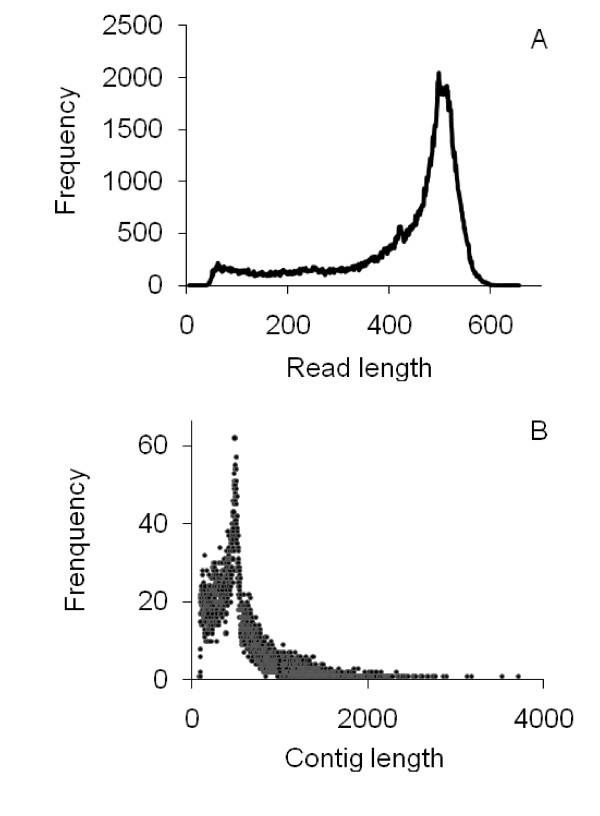
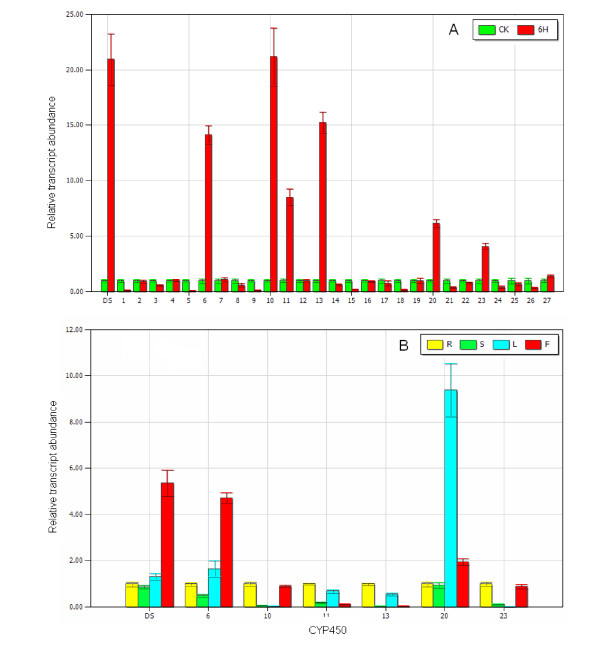
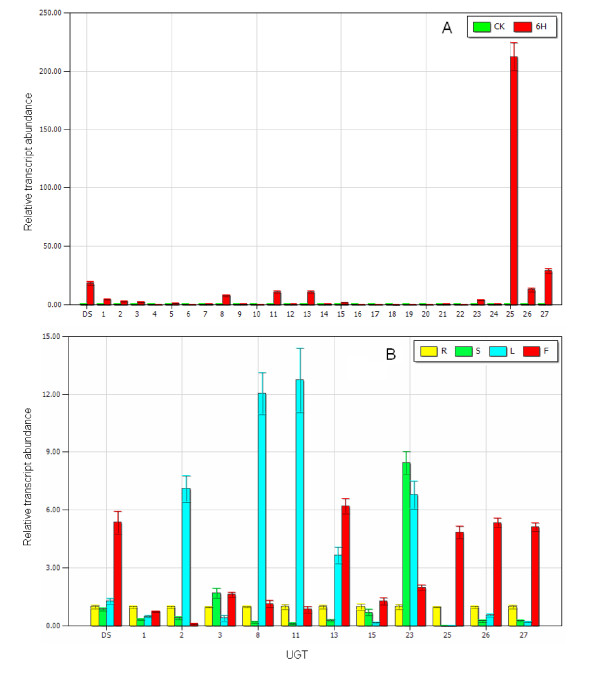
Background: American ginseng ( Panax quinquefolius L.) is one of the most widely used herbal remedies in the world. Its major bioactive constituents are the triterpene saponins known as ginsenosides. However, little is known about ginsenoside biosynthesis in American ginseng, especially the late steps of the pathway. Results: In this study, a one-quarter 454 sequencing run produced 209,747 high-quality reads with an average sequence length of 427 bases. De novo assembly generated 31,088 unique sequences containing 16,592 contigs and 14,496 singletons. About 93.1% of the high-quality reads were assembled into contigs with an average 8-fold coverage. A total of 21,684 (69.8%) unique sequences were annotated by a BLAST similarity search against four public sequence databases, and 4,097 of the unique sequences were assigned to specific metabolic pathways by the Kyoto Encyclopedia of Genes and Genomes. Based on the bioinformatic analysis described above, we found all of the known enzymes involved in ginsenoside backbone synthesis, starting from acetyl-CoA via the isoprenoid pathway. Additionally, a total of 150 cytochrome P450 (CYP450) and 235 glycosyltransferase unique sequences were found in the 454 cDNA library, some of which encode enzymes responsible for the conversion of the ginsenoside backbone into the various ginsenosides. Finally, one CYP450 and four UDP-glycosyltransferases were selected as the candidates most likely to be involved in ginsenoside biosynthesis through a methyl jasmonate (MeJA) inducibility experiment and tissue-specific expression pattern analysis based on a real-time PCR assay. Conclusions: We demonstrated, with the assistance of the MeJA inducibility experiment and tissue-specific expression pattern analysis, that transcriptome analysis based on 454 pyrosequencing is a powerful tool for determining the genes encoding enzymes responsible for the biosynthesis of secondary metabolites in non-model plants. Additionally, the expressed sequence tags (ESTs) and unique sequences from this study provide an important resource for the scientific community that is interested in the molecular genetics and functional genomics of American ginseng.
Overview
The claims and statistics of this paper haven’t been checked yet.
Free: it reads the open-access text and checks the first 5 claims that cite a source we can check. Create a free account to check every claim.
Integrity signals
Registry
Cites
Statistics
Figures
Verification
Claims the paper makes
The claims and statistics of this paper haven’t been checked yet.
Free: it reads the open-access text and checks the first 5 claims that cite a source we can check. Create a free account to check every claim.
Claims other papers make about this one
Each is checked against this paper’s own text: does it say what the citing paper says it does?
The cited source says what the claim attributes to it.
In the citing paper
“The newly developed high throughput sequencing technology, i.e. Next Generation Sequencing (NGS), including the Roche/454 Genome Sequencer FLX Instrument, the ABI SOLiD System, and the Illumina Genome Analyser, is a powerful and cost-efficient tool for advanced research in many areas, including re-sequencing, microRNA expression profiling, DNA methylation, especially de novo transcriptome”
Self-check
Percentages, sums and reported differences re-computed from the paper’s own numbers.
The self-check needs the paper’s full text.
Citations
Cites
Analysis of Relative Gene Expression Data Using Real-Time Quantitative PCR and the 2−ΔΔCT Method
Livak, K. J., & Schmittgen, T. D. (2001) · Methods · doi:10.1006/meth.2001.1262 · Cited by 180,860
Basic local alignment search tool
Altschul, S. F., Gish, W., Miller, W., Myers, E. W., & Lipman, D. J. (1990) · Journal of Molecular Biology · doi:10.1006/jmbi.1990.9999 · Cited by 98,669 · cited 1×
“Functional annotation with the BLAST program The assembled unique transcripts were compared with the sequences in GenBank's non-redundant database using the BLASTN algorithm to find and remove ribosomal RNA sequences [55].”
KEGG: Kyoto Encyclopedia of Genes and Genomes
Kanehisa, M. (2000) · Nucleic Acids Research · doi:10.1093/nar/28.1.27 · Cited by 37,077 · cited 1×
“Pathway assignment with KEGG Pathway assignments were carried out according to KEGG mapping [56].”
KEGG: Kyoto Encyclopedia of Genes and Genomes
Ogata, H., Goto, S., Sato, K., Fujibuchi, W., Bono, H., & Kanehisa, M. (1999) · Nucleic Acids Research · doi:10.1093/nar/27.1.29 · Cited by 31,232
Glycosyltransferases: Structures, Functions, and Mechanisms
Lairson, L. L., Henrissat, B., Davies, G. J., & Withers, S. G. (2008) · Annual Review of Biochemistry · doi:10.1146/annurev.biochem.76.061005.092322 · Cited by 2,079 · cited 1×
“From a chemical point of view, sugar conjugation results in both increased stability and water solubility [36-38].”
The impact of next-generation sequencing technology on genetics
Mardis, E. R. (2008) · Trends in Genetics · doi:10.1016/j.tig.2007.12.007 · Cited by 2,053 · cited 1×
“Over the last few years, next-generation sequencing (NGS) technologies have led to a revolution in genomics and genetics and provided cheaper and faster delivery of sequencing information [18,19].”
Wasternack, C. (2007) · Annals of Botany · doi:10.1093/aob/mcm079 · Cited by 1,835 · cited 1×
“The plant signaling compound MeJA induces or increases the biosynthesis of many secondary metabolites [33].”
Next-generation sequencing transforms today's biology
Schuster, S. C. (2008) · Nature Methods · doi:10.1038/nmeth1156 · Cited by 1,807 · cited 1×
“com, was released in 2005 and produces about 200,000 reads with an average read length of 100 bases per run [20,21].”
Applications of next-generation sequencing technologies in functional genomics
Morozova, O., & Marra, M. A. (2008) · Genomics · doi:10.1016/j.ygeno.2008.07.001 · Cited by 1,188 · cited 1×
“Over the last few years, next-generation sequencing (NGS) technologies have led to a revolution in genomics and genetics and provided cheaper and faster delivery of sequencing information [18,19].”
Mackenzie, P. I., Owens, I. S., Burchell, B., Bock, K. W., Bairoch, A., Belanger, A., Gigleux, S. F., Green, M., Hum, D. W., Iyanagi, T., et al. (1997) · Pharmacogenetics · doi:10.1097/00008571-199708000-00001 · Cited by 1,183 · cited 1×
“Thus far, almost all functionally characterized glycosyltransferases involved in the biosynthesis of secondary metabolites belong to UGTs and have a so-called plant secondary product glycosyltransferase (PSPG) motif, which is generally located in the C-terminal portion of the protein [37,39].”
Medicinal Plants and Phytomedicines. Linking Plant Biochemistry and Physiology to Human Health
Briskin, D. P. (2000) · Plant Physiology · doi:10.1104/pp.124.2.507 · Cited by 602 · cited 1×
“It is one of the most extensively used medicinal plants in both East Asia and the West as a remedy or adaptogen to promote vitality, enhance physical performance, and increase resistance to stress and aging [2,3].”
GLYCOSYLTRANSFERASES OF LIPOPHILIC SMALL MOLECULES
Bowles, D., Lim, E.-K., Poppenberger, B., & Vaistij, F. E. (2006) · Annual Review of Plant Biology · doi:10.1146/annurev.arplant.57.032905.105429 · Cited by 529 · cited 1×
“From a chemical point of view, sugar conjugation results in both increased stability and water solubility [ 36-38 ].”
Plant secondary metabolism glycosyltransferases: the emerging functional analysis
Gachon, C. M. M., Langlois-Meurinne, M., & Saindrenan, P. (2005) · Trends in Plant Science · doi:10.1016/j.tplants.2005.09.007 · Cited by 523 · cited 3×
“The PSPG motif exists in all known UGTs that are involved in the biosynthesis of secondary metabolites [ 37 ].”
The molecular ecologist's guide to expressed sequence tags
BOUCK, A., & VISION, T. (2007) · Molecular Ecology · doi:10.1111/j.1365-294x.2006.03195.x · Cited by 509 · cited 1×
“ESTs can also be used for other functional genomic projects, including gene expression profiling, microarrays, molecular markers, and physical mapping [15,17].”
Sequencing and de novo analysis of a coral larval transcriptome using 454 GSFlx
Meyer, E., Aglyamova, G. V., Wang, S., Buchanan-Carter, J., Abrego, D., Colbourne, J. K., Willis, B. L., & Matz, M. V. (2009) · BMC Genomics · doi:10.1186/1471-2164-10-219 · Cited by 479 · cited 1×
“thaliana [43], and the medicinal herb Artemisia annua [44], as well as fish [45,46], insects [47,48], and worms [49,50].”
A Review of 12 Commonly Used Medicinal Herbs
O'Hara, M. (1998) · Archives of Family Medicine · doi:10.1001/archfami.7.6.523 · Cited by 477 · cited 1×
“It is one of the most extensively used medicinal plants in both East Asia and the West as a remedy or adaptogen to promote vitality, enhance physical performance, and increase resistance to stress and aging [2,3].”
Navrot, N., Collin, V., Gualberto, J., Gelhaye, E., Hirasawa, M., Rey, P., Knaff, D. B., Issakidis, E., Jacquot, J.-P., & Rouhier, N. (2006) · Plant Physiology · doi:10.1104/pp.106.089458 · Cited by 408 · cited 1×
“Some transcripts encoding peroxidases were also highly expressed, and these enzymes may play a role in resistance to abiotic or biotic stresses [25].”
CYTOCHROME P450: Nature's Most Versatile Biological Catalyst
Coon, M. J. (2005) · Annual Review of Pharmacology and Toxicology · doi:10.1146/annurev.pharmtox.45.120403.100030 · Cited by 395 · cited 1×
“Cytochrome P450s Cytochrome P450 proteins are the largest family of plant proteins and catalyze most of the oxidation steps in plant secondary metabolism [27,28].”
Seki, H., Ohyama, K., Sawai, S., Mizutani, M., Ohnishi, T., Sudo, H., Akashi, T., Aoki, T., Saito, K., & Muranaka, T. (2008) · Proceedings of the National Academy of Sciences · doi:10.1073/pnas.0803876105 · Cited by 388 · cited 5×
“For example, a licorice-amyrin 11oxidase gene was successfully identified by the analysis of a collection of ESTs from the stolons of Glycyrrhiza uralensis; this gene encodes a CYP450 that plays a key role in the biosynthesis of the triterpene sweetener glycyrrhizin [16].”
InfluentialSampling the Arabidopsis Transcriptome with Massively Parallel Pyrosequencing
Weber, A. P. M., Weber, K. L., Carr, K., Wilkerson, C., & Ohlrogge, J. B. (2007) · Plant Physiology · doi:10.1104/pp.107.096677 · Cited by 366 · cited 1×
“thaliana [43], and the medicinal herb Artemisia annua [44], as well as fish [45,46], insects [47,48], and worms [49,50].”
Lee, M.-H., Jeong, J.-H., Seo, J.-W., Shin, C.-G., Kim, Y.-S., In, J.-G., Yang, D.-C., Yi, J.-S., & Choi, Y.-E. (2004) · Plant and Cell Physiology · doi:10.1093/pcp/pch126 · Cited by 362 · cited 1×
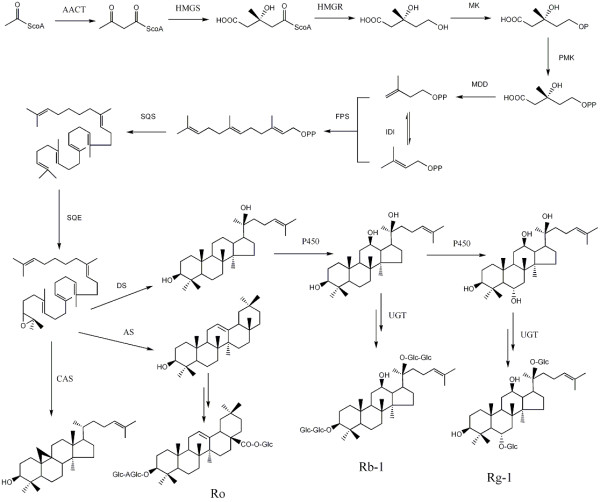
“Ginsenosides are synthesized by the isoprenoid pathway and share the same precursor, 2,3-oxidosqualene, with sterol [10].”
The tomato DWARF enzyme catalyses C-6 oxidation in brassinosteroid biosynthesis
Bishop, G. J., Nomura, T., Yokota, T., Harrison, K., Noguchi, T., Fujioka, S., Takatsuto, S., Jones, J. D. G., & Kamiya, Y. (1999) · Proceedings of the National Academy of Sciences · doi:10.1073/pnas.96.4.1761 · Cited by 332 · cited 1×
“Thus far, all known triterpenes and sterol hydroxylases have been classified into two clans: the CYP71 clan and the CYP85 clan [16,29-32].”
Kushiro, T., Shibuya, M., & Ebizuka, Y. (1998) · European Journal of Biochemistry · doi:10.1046/j.1432-1327.1998.2560238.x · Cited by 320 · cited 5×
“For OSC expression analysis, AS2 expression in the flower tissue was arbitrarily chosen to be the calibrator of tissue gene expression.”
InfluentialAchnine, L., Huhman, D. V., Farag, M. A., Sumner, L. W., Blount, J. W., & Dixon, R. A. (2005) · The Plant Journal · doi:10.1111/j.1365-313x.2005.02344.x · Cited by 309 · cited 2×
“A similar procedure was previously described in the characterization of other CYP450s or UGTs involved in the biosynthesis of triterpene saponins[16,51].”
Plant cytochromes P450: tools for pharmacology, plant protection and phytoremediation
Morant, M., Bak, S., Møller, B. L., & Werck-Reichhart, D. (2003) · Current Opinion in Biotechnology · doi:10.1016/s0958-1669(03)00024-7 · Cited by 295 · cited 1×
“Cytochrome P450s Cytochrome P450 proteins are the largest family of plant proteins and catalyze most of the oxidation steps in plant secondary metabolism [27,28].”
Biological Activities and Chemistry of Saponins from Panax ginseng C. A. Meyer
Park, J. D., Rhee, D. K., & Lee, Y. H. (2005) · Phytochemistry Reviews · doi:10.1007/s11101-005-2835-8 · Cited by 264 · cited 1×
“Each ginsenoside reportedly has different pharmacological effects, including nervous system regulation, immune system modulation, and anticancer, antioxidant, and antihypertensive activities [ 6-9 ].”
Comparison of the pharmacological effects of Panax ginseng and Panax quinquefolium
CHEN, C.-F., CHIOU, W.-F., & ZHANG, J.-T. (2008) · Acta Pharmacologica Sinica · doi:10.1111/j.1745-7254.2008.00868.x · Cited by 264 · cited 1×
“oleanane type is represented by only one saponin, Ro, which is a minor component in American ginseng [4,5].”
Comparative 454 pyrosequencing of transcripts from two olive genotypes during fruit development
Alagna, F., D'Agostino, N., Torchia, L., Servili, M., Rao, R., Pietrella, M., Giuliano, G., Chiusano, M. L., Baldoni, L., & Perrotta, G. (2009) · BMC Genomics · doi:10.1186/1471-2164-10-399 · Cited by 263 · cited 1×
“Using this technology, a number of EST libraries have been successfully constructed from plants, including maize [40], chestnut [41], olive [42], the model plant A.”
Barakat, A., DiLoreto, D. S., Zhang, Y., Smith, C., Baier, K., Powell, W. A., Wheeler, N., Sederoff, R., & Carlson, J. E. (2009) · BMC Plant Biology · doi:10.1186/1471-2229-9-51 · Cited by 243 · cited 1×
“Using this technology, a number of EST libraries have been successfully constructed from plants, including maize [40], chestnut [41], olive [42], the model plant A.”
Shimada, Y., Fujioka, S., Miyauchi, N., Kushiro, M., Takatsuto, S., Nomura, T., Yokota, T., Kamiya, Y., Bishop, G. J., & Yoshida, S. (2001) · Plant Physiology · doi:10.1104/pp.126.2.770 · Cited by 227 · cited 1×
“Thus far, all known triterpenes and sterol hydroxylases have been classified into two clans: the CYP71 clan and the CYP85 clan [16,29-32].”
Global characterization of Artemisia annua glandular trichome transcriptome using 454 pyrosequencing
Wang, W., Wang, Y., Zhang, Q., Qi, Y., & Guo, D. (2009) · BMC Genomics · doi:10.1186/1471-2164-10-465 · Cited by 224 · cited 1×
“thaliana [43], and the medicinal herb Artemisia annua [44], as well as fish [45,46], insects [47,48], and worms [49,50].”
Dammarenediol‐II synthase, the first dedicated enzyme for ginsenoside biosynthesis, in Panax ginseng
Tansakul, P., Shibuya, M., Kushiro, T., & Ebizuka, Y. (2006) · FEBS Letters · doi:10.1016/j.febslet.2006.08.044 · Cited by 223 · cited 2×
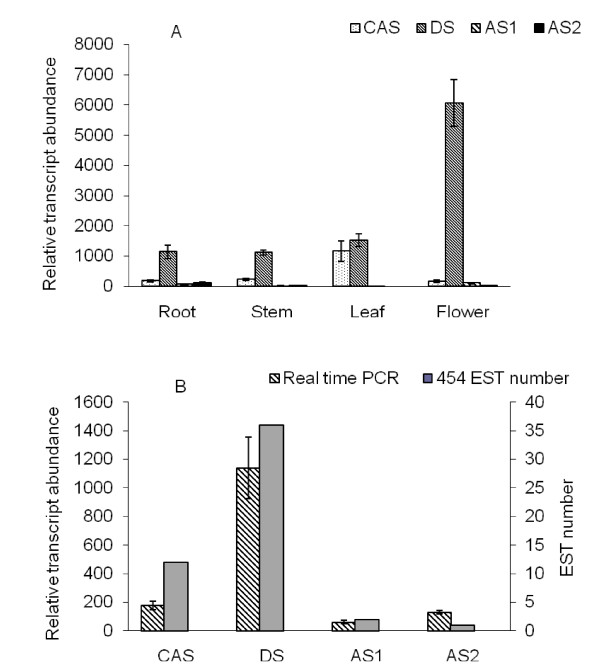
“Four OSC genes of American ginseng, cycloartenol synthase (CAS) [26], dammarenediol-II synthase (DS) [12,13], β-amyrin synthase 1 (AS1), and β-amyrin synthase 2 (AS2) [11], exist in the 454 cDNA library.”
Neuroprotective effect of 20(S)-ginsenoside Rg3 on cerebral ischemia in rats
Tian, J., Fu, F., Geng, M., Jiang, Y., Yang, J., Jiang, W., Wang, C., & Liu, K. (2005) · Neuroscience Letters · doi:10.1016/j.neulet.2004.10.030 · Cited by 199 · cited 1×
“Each ginsenoside reportedly has different pharmacological effects, including nervous system regulation, immune system modulation, and anticancer, antioxidant, and antihypertensive activities [6-9].”
Dual biosynthetic pathways to phytosterol via cycloartenol and lanosterol in Arabidopsis
Ohyama, K., Suzuki, M., Kikuchi, J., Saito, K., & Muranaka, T. (2009) · Proceedings of the National Academy of Sciences · doi:10.1073/pnas.0807675106 · Cited by 191 · cited 6×
“In contrast, CAS expression was the lowest in flowers.”
InfluentialArabidopsis CYP90B1 catalyses the early C‐22 hydroxylation of C27, C28 and C29 sterols
Fujita, S., Ohnishi, T., Watanabe, B., Yokota, T., Takatsuto, S., Fujioka, S., Yoshida, S., Sakata, K., & Mizutani, M. (2006) · The Plant Journal · doi:10.1111/j.1365-313x.2005.02639.x · Cited by 188 · cited 1×
“Thus far, all known triterpenes and sterol hydroxylases have been classified into two clans: the CYP71 clan and the CYP85 clan [16,29-32].”
Han, J. Y., Kwon, Y. S., Yang, D. C., Jung, Y. R., & Choi, Y. E. (2006) · Plant and Cell Physiology · doi:10.1093/pcp/pcl032 · Cited by 184 · cited 3×
“Four OSC genes of American ginseng, cycloartenol synthase (CAS) [26], dammarenediol-II synthase (DS) [12,13], β-amyrin synthase 1 (AS1), and β-amyrin synthase 2 (AS2) [11], exist in the 454 cDNA library.”
Kim, Y.-S., Hahn, E.-J., Murthy, H. N., & Paek, K.-Y. (2004) · Biotechnology Letters · doi:10.1007/s10529-004-3183-2 · Cited by 170 · cited 1×
“It has been reported that MeJA stimulates ginsenoside production in cultured ginseng cells [34] and adventitious roots [35], and up-regulates the genes involved in the biosynthesis of dammaranetype ginsenosides, such as SS (squalene synthase), Squalene epoxidase (SE), DS [13,34].”
Hale, M. C., McCormick, C. R., Jackson, J. R., & DeWoody, J. A. (2009) · BMC Genomics · doi:10.1186/1471-2164-10-203 · Cited by 163 · cited 1×
“thaliana [43], and the medicinal herb Artemisia annua [44], as well as fish [45,46], insects [47,48], and worms [49,50].”
Shibuya, M., Hoshino, M., Katsube, Y., Hayashi, H., Kushiro, T., & Ebizuka, Y. (2006) · The FEBS Journal · doi:10.1111/j.1742-4658.2006.05120.x · Cited by 161 · cited 2×
“Thus far, all known triterpenes and sterol hydroxylases have been classified into two clans: the CYP71 clan and the CYP85 clan [16,29-32].”
Differential effects of ginsenosides on NO and TNF-α production by LPS-activated N9 microglia
Wu, C. F., Bi, X. L., Yang, J., Zhan, J. Y., Dong, Y. X., Wang, J., Wang, J. M., Zhang, R., & Li, X. (2006) · International Immunopharmacology · doi:10.1016/j.intimp.2006.04.021 · Cited by 155 · cited 1×
“Each ginsenoside reportedly has different pharmacological effects, including nervous system regulation, immune system modulation, and anticancer, antioxidant, and antihypertensive activities [6-9].”
Hahn, D. A., Ragland, G. J., Shoemaker, D. D., & Denlinger, D. L. (2009) · BMC Genomics · doi:10.1186/1471-2164-10-234 · Cited by 148 · cited 1×
“thaliana [43], and the medicinal herb Artemisia annua [44], as well as fish [45,46], insects [47,48], and worms [49,50].”
Schlag, E. M., & McIntosh, M. S. (2006) · Phytochemistry · doi:10.1016/j.phytochem.2006.05.028 · Cited by 139 · cited 1×
“oleanane type is represented by only one saponin, Ro, which is a minor component in American ginseng [4,5].”
Meesapyodsuk, D., Balsevich, J., Reed, D. W., & Covello, P. S. (2007) · Plant Physiology · doi:10.1104/pp.106.088484 · Cited by 133 · cited 1×
“Also, three UGTs in triterpene saponin biosynthesis have been identified: UGT73K1 and UGT71G1 from Medicago truncatula [51]and UGT74 M1 from Saponaria vaccaria [52].”
Cruse‐Sanders, J. M., & Hamrick, J. L. (2004) · American Journal of Botany · doi:10.3732/ajb.91.4.540 · Cited by 127 · cited 2×
“) is a perennial understory herb from the Araliaceae family, which is native to the eastern forests of North America [1].”
Potential Role of Ginseng in the Treatment of Colorectal Cancer
Wang, C., & Yuan, C. (2008) · The American Journal of Chinese Medicine · doi:10.1142/s0192415x08006545 · Cited by 121 · cited 1×
“Each ginsenoside reportedly has different pharmacological effects, including nervous system regulation, immune system modulation, and anticancer, antioxidant, and antihypertensive activities [6-9].”
Discovery of genes for ginsenoside biosynthesis by analysis of ginseng expressed sequence tags
Jung, J., Park, H.-W., Hahn, Y., Hur, C.-G., In, D. S., Chung, H.-J., Liu, J. R., & Choi, D. (2003) · Plant Cell Reports · doi:10.1007/s00299-003-0678-6 · Cited by 118 · cited 1×
“ginseng leaf [53]; nine CYP450s and 12 UGTs were found from more than 11,000 ESTs from five ginseng library [54].”
Expressed Sequence Tags: An Overview
Parkinson, J., & Blaxter, M. (2009) · Methods in Molecular Biology · doi:10.1007/978-1-60327-136-3_1 · Cited by 114 · cited 2×
“EST sequencing represents a rapid and relatively economical method for analyzing the transcribed region of the genome [15].”
Thanh, N. T., Murthy, H. N., Yu, K., Hahn, E.-J., & Paek, K. (2004) · Applied Microbiology and Biotechnology · doi:10.1007/s00253-004-1759-3 · Cited by 114 · cited 1×
“It has been reported that MeJA stimulates ginsenoside production in cultured ginseng cells [34] and adventitious roots [35], and up-regulates the genes involved in the biosynthesis of dammaranetype ginsenosides, such as SS (squalene synthase), Squalene epoxidase (SE), DS [13,34].”
Progress in understanding of ginsenoside biosynthesis
Liang, Y., & Zhao, S. (2008) · Plant Biology · doi:10.1111/j.1438-8677.2008.00064.x · Cited by 104 · cited 1×
“According to the proposed pathway (Shown in Figure 1), some specific CYP450s and UDP-glycosyltransferases (UGTs) may catalyze the conversion of dammarenediol-II or β-amyrin to various ginsenosides [14].”
Deep sampling of the Palomero maize transcriptome by a high throughput strategy of pyrosequencing
Vega-Arreguín, J. C., Ibarra-Laclette, E., Jiménez-Moraila, B., Martínez, O., Vielle-Calzada, J. P., Herrera-Estrella, L., & Herrera-Estrella, A. (2009) · BMC Genomics · doi:10.1186/1471-2164-10-299 · Cited by 93
Kristiansson, E., Asker, N., Förlin, L., & Larsson, D. J. (2009) · BMC Genomics · doi:10.1186/1471-2164-10-345 · Cited by 90 · cited 1×
“thaliana [43], and the medicinal herb Artemisia annua [44], as well as fish [45,46], insects [47,48], and worms [49,50].”
Zagrobelny, M., Scheibye-Alsing, K., Jensen, N. B., Møller, B. L., Gorodkin, J., & Bak, S. (2009) · BMC Genomics · doi:10.1186/1471-2164-10-574 · Cited by 80
Lum, J. H., Fung, K.-L., Cheung, P., Wong, M., Lee, C., Kwok, F., Leung, M. C. P., Hui, P., & Lo, S. C. (2002) · PROTEOMICS · doi:10.1002/1615-9861(200209)2:9<1123::aid-prot1123>3.0.co;2-s · Cited by 70
Comparative analysis of expressed sequence tags (ESTs) of ginseng leaf
Kim, M. K., Lee, B.-S., In, J.-G., Sun, H., Yoon, J.-H., & Yang, D. (2006) · Plant Cell Reports · doi:10.1007/s00299-005-0095-0 · Cited by 61 · cited 1×
“ginseng leaf [53]; nine CYP450s and 12 UGTs were found from more than 11,000 ESTs from five ginseng library [54].”
Chi, K. R. (2007) · Nature Methods · doi:10.1038/nmeth1154 · Cited by 61 · cited 1×
“com, was released in 2005 and produces about 200,000 reads with an average read length of 100 bases per run [20,21].”
Wu, Q., Song, J., Sun, Y., Suo, F., Li, C., Luo, H., Liu, Y., Li, Y., Zhang, X., Yao, H., et al. (2009) · Physiologia Plantarum · doi:10.1111/j.1399-3054.2009.01309.x · Cited by 56
Self-citationTranscriptome analysis for Caenorhabditis elegansbased on novel expressed sequence tags
Shin, H., Hirst, M., Bainbridge, M. N., Magrini, V., Mardis, E., Moerman, D. G., Marra, M. A., Baillie, D. L., & Jones, S. J. (2008) · BMC Biology · doi:10.1186/1741-7007-6-30 · Cited by 55 · cited 1×
“thaliana [43], and the medicinal herb Artemisia annua [44], as well as fish [45,46], insects [47,48], and worms [49,50].”
Characterization of RNase-like major storage protein from the ginseng root by proteomic approach
Kim, S. I., Kweon, S.-M., Kim, E. A., Kim, J. Y., Kim, S., Yoo, J. S., & Park, Y. M. (2004) · Journal of Plant Physiology · doi:10.1016/j.jplph.2004.01.001 · Cited by 42 · cited 1×
“ginseng major latex-like protein (mlp151) [23,24].”
Novel regulatory interactions and activities of mammalian tRNA synthetases
Ko, Y., Park, H., & Kim, S. (2002) · PROTEOMICS · doi:10.1002/1615-9861(200209)2:9<1325::aid-prot1325>3.0.co;2-4 · Cited by 34
Cited by
Molecular activities, biosynthesis and evolution of triterpenoid saponins
Augustin, J. M., Kuzina, V., Andersen, S. B., & Bak, S. (2011) · Phytochemistry · doi:10.1016/j.phytochem.2011.01.015 · Cited by 799
Genome sequence of the model medicinal mushroom Ganoderma lucidum
Chen, S., Xu, J., Liu, C., Zhu, Y., Nelson, D. R., Zhou, S., Li, C., Wang, L., Guo, X., Sun, Y., et al. (2012) · Nature Communications · doi:10.1038/ncomms1923 · Cited by 579
Self-citationAmberg, J. J., Goforth, R. R., & Sepúlveda, M. S. (2013) · Sexual Development · doi:10.1159/000354280 · Cited by 477
Wang, Z., Fang, B., Chen, J., Zhang, X., Luo, Z., Huang, L., Chen, X., & Li, Y. (2010) · BMC Genomics · doi:10.1186/1471-2164-11-726 · Cited by 433
Self-citationWei, W., Qi, X., Wang, L., Zhang, Y., Hua, W., Li, D., Lv, H., & Zhang, X. (2011) · BMC Genomics · doi:10.1186/1471-2164-12-451 · Cited by 423
Metadata
- Authors
- Sun, C., Li, Y., Wu, Q., Luo, H., Sun, Y., Song, J., Lui, E. M., & Chen, S.
- Affiliations
- Chinese Academy of Medical Sciences & Peking Union Medical College (CN)
- Western University (CA)
- Corresponding author
- Chen, Shilin
- Venue
- BMC Genomics
- Published
- 2010-04-24
- Volume
- 11
- Issue
- 1
- Pages
- 262-262
- ISSN
- 1471-2164 (ISSN-L)
- PMC
- PMC2873478
- OpenAlex
- W2154109695
- Cited by
- 286
- References
- 59
- Citations by year
- 2026: 1 · 2025: 2 · 2024: 7 · 2023: 3 · 2022: 11 · 2021: 14 · 2020: 24 · 2019: 11 · 2018: 16 · 2017: 13 · 2016: 15 · 2015: 32 · 2014: 32 · 2013: 27 · 2012: 39
- FWCI
- 13.69
- Type
- journal article
- Language
- en
- Open access
- gold
- doi.org
- Licence
- cc-by
- Locations
- BMC Genomics (publishedVersion, cc-by)
- Europe PMC (PubMed Central) (publishedVersion, cc-by)
- PubMed Central (publishedVersion, cc-by)
- PubMed (publishedVersion)
- DOAJ (DOAJ: Directory of Open Access Journals) (submittedVersion)
- Scholarship@Western (Western University) (submittedVersion)
- Funders
- National Natural Science Foundation of China
- Topics
- Life Sciences › Biochemistry, Genetics and Molecular Biology › Molecular Biology › Plant biochemistry and biosynthesis
- Life Sciences › Pharmacology, Toxicology and Pharmaceutics › Pharmacology › Ginseng Biological Effects and Applications
- Life Sciences › Biochemistry, Genetics and Molecular Biology › Molecular Biology › Genomics and Phylogenetic Studies
- Keywords
- Panax quinquefolius, ginsenoside biosynthesis, root transcriptome, de novo assembly, cytochrome P450, glycosyltransferases, UDP-glycosyltransferase, methyl jasmonate induction, tissue-specific gene expression, triterpenoid saponins, secondary metabolite biosynthesis, expressed sequence tags
- MeSH terms
- Panax, Plant Roots, Expressed Sequence Tags, Gene Expression Profiling, Ginsenosides
About these checks
Registry, retraction, Cites and statistics results are computed, not judged, with one exception: a printed reference that no index lists is read once by a model before it counts as a citation error. Claims are extracted by a model and kept only when their quote appears verbatim in the text; each cited source is then checked, with a model’s help, for whether it says what the claim relies on. Those verdicts can be wrong — read the claim’s quote and the cited source before relying on one.
Statistics and arithmetic are recomputed, not judged.
Confidence bands are shown only for fields calibrated on our annotated test set. None is calibrated yet, so no band is shown.
What counts as a claim ›How we measure confidence ›How we check this ›
Are you an author, or do you see a problem with this page? Request a review
Data sources
Bibliographic data: Semantic Scholar, OpenAlex, Crossref.
Contains information from the Semantic Scholar Academic Graph Datasets, made available under the ODC Attribution License (ODC-BY 1.0).
Semantic Scholar’s data is described in: Kinney, R., et al. (2023). The Semantic Scholar Open Data Platform. arXiv:2301.10140.
