

The DOI matches its Crossref record; 34 of the 34 references it cites were found in a registry or an index.
Improving ancient DNA read mapping against modern reference genomes
Open accessAbstract
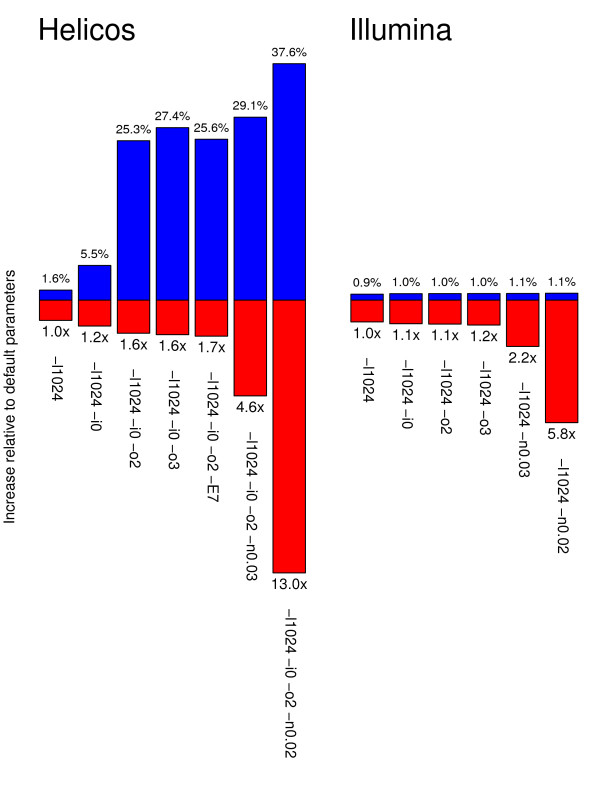
Background: Next-Generation Sequencing has revolutionized our approach to ancient DNA (aDNA) research, by providing complete genomic sequences of ancient individuals and extinct species. However, the recovery of genetic material from long-dead organisms is still complicated by a number of issues, including post-mortem DNA damage and high levels of environmental contamination. Together with error profiles specific to the type of sequencing platforms used, these specificities could limit our ability to map sequencing reads against modern reference genomes and therefore limit our ability to identify endogenous ancient reads, reducing the efficiency of shotgun sequencing aDNA. Results: In this study, we compare different computational methods for improving the accuracy and sensitivity of aDNA sequence identification, based on shotgun sequencing reads recovered from Pleistocene horse extracts using Illumina GAIIx and Helicos Heliscope platforms. We show that the performance of the Burrows Wheeler Aligner (BWA), that has been developed for mapping of undamaged sequencing reads using platforms with low rates of indel-types of sequencing errors, can be employed at acceptable run-times by modifying default parameters in a platform-specific manner. We also examine if trimming likely damaged positions at read ends can increase the recovery of genuine aDNA fragments and if accurate identification of human contamination can be achieved using a strategy previously suggested based on best hit filtering. We show that combining our different mapping and filtering approaches can increase the number of high-quality endogenous hits recovered by up to 33%. Conclusions: We have shown that Illumina and Helicos sequences recovered from aDNA extracts could not be aligned to modern reference genomes with the same efficiency unless mapping parameters are optimized for the specific types of errors generated by these platforms and by post-mortem DNA damage. Our findings have important implications for future aDNA research, as we define mapping guidelines that improve our ability to identify genuine aDNA sequences, which in turn could improve the genotyping accuracy of ancient specimens. Our framework provides a significant improvement to the standard procedures used for characterizing ancient genomes, which is challenged by contamination and often low amounts of DNA material.
Overview
The claims and statistics of this paper haven’t been checked yet.
Run the check — free, no account needed. It reads the open-access text and checks the sources it cites.
Integrity signals
Registry
Cites
Statistics
Figures
Verification
Claims the paper makes
The claims and statistics of this paper haven’t been checked yet.
Run the check — free, no account needed. It reads the open-access text and checks the sources it cites.
Claims other papers make about this one
Each is checked against this paper’s own text: does it say what the citing paper says it does?
The source backs part of the claim, not all of it — or backs it for a different population, condition or comparison.
In the citing paper
“This had a beneficial impact in terms of sensitivity (99.60% vs 97.34% for the mapping of reads containing the alternate allele) and a more balanced alternate allele representation (0.49936) but also increases error rates, for example increasing the rate of false mapping short microbial reads (Additional file 1: Fig. S9).”
From Removing reference bias and improving indel calling in ancient DNA data analysis by mapping to a sequence variation graph (2020) · cites this paper as [13]
Experimental — accuracy not yet measuredThe cited source says what the claim attributes to it.
In the citing paper
“decreasing the -n edit distance parameter from the default value of 0.04 to 0.02 [13] or 0.01 [14] allows more mismatches and increases sensitivity”
From Removing reference bias and improving indel calling in ancient DNA data analysis by mapping to a sequence variation graph (2020) · cites this paper as [13]
The cited source says what the claim attributes to it.
In the citing paper
“Parameters maximizing mapping specificity and sensitivity can be identified using aDNA read simulators such as 16 gargammel 180 , and depend on the evolutionary distance to the reference genome used, DNA fragment size and the amount of post-mortem damage 111,181-184 .”
From Ancient DNA analysis (2021) · cites this paper as [181]
The cited source says what the claim attributes to it.
In the citing paper
“While some guidelines exist for the analysis of ancient genomic data, for example for mapping 162,181,183 or data authentication 56,57,329 , and automated tools embedding critical analytical procedures within open-source pipelines are available 187,188,241,242 , there is still no consensus on a”
From Ancient DNA analysis (2021) · cites this paper as [181]
Self-check
Percentages, sums and reported differences re-computed from the paper’s own numbers.
The self-check needs the paper’s full text.
Citations
Cites
Fast and accurate short read alignment with Burrows-Wheeler transform
Li, H., & Durbin, R. (2009) · Bioinformatics · doi:10.1093/bioinformatics/btp324 · Cited by 58,607
A draft sequence of the Neandertal genome
Green, R. E., Krause, J., Briggs, A. W., Maricic, T., Stenzel, U., Kircher, M., Patterson, N., Li, H., Zhai, W., Fritz, M. H.-Y., et al. (2010) · Science · doi:10.1126/science.1188021 · Cited by 4,318
Genetic history of an archaic hominin group from Denisova Cave in Siberia
Reich, D., Green, R. E., Kircher, M., Krause, J., Patterson, N., Durand, E. Y., Viola, B., Briggs, A. W., Stenzel, U., Johnson, P. L. F., et al. (2010) · Nature · doi:10.1038/nature09710 · Cited by 1,991
Patterns of damage in genomic DNA sequences from a neandertal
Briggs, A. W., Stenzel, U., Johnson, P. L. F., Green, R. E., Kelso, J., Prüfer, K., Meyer, M., Krause, J., Ronan, M. T., Lachmann, M., et al. (2007) · Proceedings of the National Academy of Sciences · doi:10.1073/pnas.0704665104 · Cited by 981
Ancient human genome sequence of an extinct Palaeo-Eskimo
Rasmussen, M., Li, Y., Lindgreen, S., Pedersen, J. S., Albrechtsen, A., Moltke, I., Metspalu, M., Metspalu, E., Kivisild, T., Gupta, R., et al. (2010) · Nature · doi:10.1038/nature08835 · Cited by 849
Self-citationGenome Sequence, Comparative Analysis, and Population Genetics of the Domestic Horse
Wade, C. M., Giulotto, E., Sigurdsson, S., Zoli, M., Gnerre, S., Imsland, F., Lear, T. L., Adelson, D. L., Bailey, E., Bellone, R. R., et al. (2009) · Science · doi:10.1126/science.1178158 · Cited by 822
The complete mitochondrial DNA genome of an unknown hominin from southern Siberia
Krause, J., Fu, Q., Good, J. M., Viola, B., Shunkov, M. V., Derevianko, A. P., & Pääbo, S. (2010) · Nature · doi:10.1038/nature08976 · Cited by 818
An aboriginal Australian genome reveals separate human dispersals into Asia
Rasmussen, M., Guo, X., Wang, Y., Lohmueller, K. E., Rasmussen, S., Albrechtsen, A., Skotte, L., Lindgreen, S., Metspalu, M., Jombart, T., et al. (2011) · Science · doi:10.1126/science.1211177 · Cited by 787
Self-citationAnalysis of one million base pairs of Neanderthal DNA
Green, R. E., Krause, J., Ptak, S. E., Briggs, A. W., Ronan, M. T., Simons, J. F., Du, L., Egholm, M., Rothberg, J. M., Paunović, M., et al. (2006) · Nature · doi:10.1038/nature05336 · Cited by 758
Species-specific responses of Late Quaternary megafauna to climate and humans
Lorenzen, E. D., Nogués-Bravo, D., Orlando, L., Weinstock, J., Binladen, J., Marske, K. A., Ugan, A., Borregaard, M. K., Gilbert, M. T. P., Nielsen, R., et al. (2011) · Nature · doi:10.1038/nature10574 · Cited by 638
Self-citation
Cited by
Sorted by citations
Items 201–300 of 326
Using sedimentary prokaryotic communities to assess historical changes in the Gippsland Lakes
Pérez, V., Liu, Y., Wong, W. W., Kessler, A. J., Cook, P. L. M., Zawadzki, A., Moore, N. E., Kurte, L., Child, D. P., Hotchkis, M. A. C., et al. (2023) · Freshwater Biology · doi:10.1111/fwb.14182 · Cited by 7
Günther, T., Goldberg, A., & Schraiber, J. G. (2025) · G3 Genes Genomes Genetics · doi:10.1093/g3journal/jkaf172 · Cited by 8
Insights Into Aboriginal Australian Mortuary Practices: Perspectives From Ancient DNA
Wasef, S., Wright, J. L., Adams, S., Westaway, M., Flinders, C., Willerslev, E., & Lambert, D. M. (2020) · Frontiers in Ecology and Evolution · doi:10.3389/fevo.2020.00217 · Cited by 7
Self-citationPalaeoecological and genetic analyses of Late Pleistocene bears in Asiatic Russia
Kosintsev, P. A., Bocherens, H., Kirillova, I., Levchenko, V. A., Zazovskaya, E. P., Трофимова, С. С., Lan, T., & Lindqvist, C. (2021) · Boreas · doi:10.1111/bor.12570 · Cited by 8
Collin, T. C., Drosou, K., O'Riordan, J., Meshveliani, T., Pinhasi, R., & Feeney, R. N. M. (2020) · bioRxiv (Cold Spring Harbor Laboratory) · doi:10.1101/2020.04.20.050369 · Cited by 8
Vogel, N. A., Rubin, J. D., Pedersen, A. G., Sackett, P. W., Pedersen, M. W., & Renaud, G. (2024) · Molecular Biology and Evolution · doi:10.1093/molbev/msae203 · Cited by 6
Андреева, Т. В., Дмитриевна, С. А., Gusev, F. E., Malyarchuk, A. B., Доценко, Г. С., Dudko, N. A., Plotnikova, M. Y., Станиславовна, К. С., Manakhov, A. D., Ustkachkintseva, T. V., et al. (2025) · Science Advances · doi:10.1126/sciadv.ads8179 · Cited by 8
Advancing responsible genomic analyses of ancient mollusc shells
Martin-Roy, R., Thyrring, J., Mata, X., Bangsgaard, P., Bennike, O., Christiansen, G., Funder, S., Gotfredsen, A. B., Gregersen, K. M., Hansen, C. H., et al. (2024) · PLoS ONE · doi:10.1371/journal.pone.0302646 · Cited by 6
The genomic origin of early maize in eastern North America
Ramos‐Madrigal, J., Fritz, G. J., Schroeder, B. A., Smith, B. D., Sánchez-Barreiro, F., Carøe, C., Runge, A. K. W., Boer, S., McGrath, K. M., Vieira, F. G., et al. (2024) · Cell · doi:10.1016/j.cell.2024.11.003 · Cited by 6
Rey‐Iglesia, A., Pryor, A. J. E., de Jager, D., Wilson, T., Teeter, M. A., Margaryan, A., Khaskhanov, R., Meillour, L. L., Troché, G., Welker, F., et al. (2024) · Quaternary Environments and Humans · doi:10.1016/j.qeh.2024.100049 · Cited by 9
Rey‐Iglesia, A., de Jager, D., Presslee, S., Qvistgaard, S. S., Sindbæk, S. M., & Lorenzen, E. D. (2023) · Journal of Archaeological Science · doi:10.1016/j.jas.2023.105773 · Cited by 5
Ferrari, G., Lischer, H. E. L., Neukamm, J., Rayo, E., Borel, N., Pospischil, A., Rühli, F. J., Bouwman, A., & Campana, M. G. (2018) · Genes · doi:10.3390/genes9090436 · Cited by 6
Using in silico predicted ancestral genomes to improve the efficiency of paleogenome reconstruction
Vieira, F. G., Castruita, J. A. S., & Gilbert, M. T. P. (2020) · Ecology and Evolution · doi:10.1002/ece3.6925 · Cited by 5
Genomic signatures of rapid adaptive divergence in a tropical montane species
Ericson, P. G. P., Irestedt, M., She, H., & Qu, Y. (2021) · Biology Letters · doi:10.1098/rsbl.2021.0089 · Cited by 6
Modi, A., Vizzari, M. T., Catalano, G., Agostini, R. B., Vai, S., Lari, M., Vergata, C., Zaro, V., Liccioli, L., Fedi, M., et al. (2022) · Frontiers in Genetics · doi:10.3389/fgene.2022.945227 · Cited by 8
Iadarola, B., Lavezzari, D., Modi, A., Esposti, C. D., Beltrami, C., Rossato, M., Zaro, V., Napione, E., Latella, L., Lari, M., et al. (2021) · Scientific Reports · doi:10.1038/s41598-021-00559-1 · Cited by 5
Lin, C., Lu, Y., Liu, S., Wang, Z., Yao, L., Yin, Y., & Jiao, L. (2023) · Forensic Science International Genetics · doi:10.1016/j.fsigen.2023.103006 · Cited by 5
Lubbe, P., Rawlence, N. J., Dussex, N., Kardialsky, O., & Knapp, M. (2025) · Molecular Ecology · doi:10.1111/mec.17648 · Cited by 6
SNPest: a probabilistic graphical model for estimating genotypes
Lindgreen, S., Krogh, A., & Pedersen, J. S. (2014) · BMC Research Notes · doi:10.1186/1756-0500-7-698 · Cited by 5
Self-citationVicedomini, R., Righetti, N., Polit, L., Condémi, S., Longo, L., & Carbone, A. (2021) · bioRxiv (Cold Spring Harbor Laboratory) · doi:10.1101/2021.10.30.466563 · Cited by 5
Optimizing ancient DNA recovery from archaeological plant seeds
Bolognesi, G., Latorre, A., Marini, M., Codato, A., Fontani, F., Saggioro, F., Luiselli, D., Basso, P., Cilli, E., & Bellin, D. (2025) · Scientific Reports · doi:10.1038/s41598-025-21743-7 · Cited by 4
Patterns of aDNA damage through time and environments—lessons from herbarium specimens
Porrelli, S., Fornasiero, A., Le, H. P., Yin, W., Rodríguez, M. E. N., Mohammed, N., Himmelbach, A., Clarke, A. C., Stein, N., Kersey, P. J., et al. (2026) · GigaScience · doi:10.1093/gigascience/giag026 · Cited by 4
Exploring Fennoscandian agricultural history through genetic analysis of aged crop materials
Lundström, M. (2018) · Linköping studies in science and technology. Dissertations · doi:10.3384/diss.diva-152569 · Cited by 4
Kostova, R., Popkonstantinov, K., Schroeder, H., Willerslev, E., Sultanov, A., Kazan, G., & Higham, T. (2020) · Journal of Archaeological Science Reports · doi:10.1016/j.jasrep.2019.102082 · Cited by 4
Self-citationA Study on Burrows-Wheeler Aligner’s Performance Optimization for Ancient DNA Mapping
Sarmento, C. D., Guimarães, S. M. F., Kılınç, G. M., Götherström, A., Pires, A. E., Ginja, C., & Fonseca, N. A. (2021) · Lecture notes in networks and systems · doi:10.1007/978-3-030-86258-9_11 · Cited by 4
Elalouf, J., Palacio, P., Bon, C., Berthonaud, V., Maksud, F., Stafford, T. W., & Hitte, C. (2022) · Ecology and Evolution · doi:10.1002/ece3.9238 · Cited by 4
Rapid genotyping of targeted viral samples using Illumina short-read sequencing data
Váradi, A., Kaszab, E., Kardos, G., Prépost, E., Szarka, K., & Laczkó, L. (2022) · PLoS ONE · doi:10.1371/journal.pone.0274414 · Cited by 4
Andreeva, T., Manakhov, A. D., Станиславовна, К. С., & Rogaev, E. I. (2021) · Biochemistry (Moscow) · doi:10.1134/s0006297921120063 · Cited by 4
Heraclides, A., & Fernández‐Domínguez, E. (2022) · International Journal of Molecular Sciences · doi:10.3390/ijms23094651 · Cited by 3
Ravasini, F., Barbaro, C. C., Scheib, C. L., Tambets, K., Metspalu, M., Cruciani, F., Trombetta, B., & D’Atanasio, E. (2025) · Genome Biology and Evolution · doi:10.1093/gbe/evaf149 · Cited by 4
Bone Adhered Sediments as a Source of Target and Environmental DNA and Proteins
de-Dios, T., Bonucci, B., Barbieri, R., Kushniarevich, A., D’Atanasio, E., Dittmar, J. M., Cessford, C., Solnik, A., Robb, J., Warinner, C., et al. (2025) · Molecular Biology and Evolution · doi:10.1093/molbev/msaf202 · Cited by 6
Jepsen, A. H., Poggiali, B., Jensen, M., Kling, D., Zavala, E. I., Børsting, C., Andersen, J. D., Tillmar, A., & Kampmann, M. (2026) · Forensic Science International: Genetics · doi:10.1016/j.fsigen.2026.103505 · Cited by 2
Hiding in plain sight: the biomolecular identification of pinniped use in medieval manuscripts
Lévêque, É., Teasdale, M. D., Fiddyment, S., Bro‐Jørgensen, M. H., Spindler, L., Macleod, R., Bougard, F., Olsen, M. T., & Collins, M. J. (2025) · Royal Society Open Science · doi:10.1098/rsos.241090 · Cited by 3
Ancient microbial DNA and proteins preserve in concretions covering human remains
Bonucci, B., de-Dios, T., Barbieri, R., Thompson, J. E., Panella, S., Radina, F., Sivilli, S., Kabral, H., Solnik, A., Tafuri, M. A., et al. (2025) · iScience · doi:10.1016/j.isci.2025.113182 · Cited by 4
Self-citationLlanos-Lizcano, A., Hämmerle, M., Sperduti, A., Sawyer, S., Zagorc, B., Özdoğan, K. T., Guellil, M., Cheronet, O., Kuhlwilm, M., Pinhasi, R., et al. (2025) · Scientific Reports · doi:10.1038/s41598-024-85038-z · Cited by 6
Genomics and proteomics in bioarchaeology - Review
Pérez, G. D., Mora-Jiménez, I., Rey, I., Sánchez-Cañete, F. J. S., Luque, F., Muñiz, A. M., Gálvez, M., Galdós, J. S., Sánchez, A., Tham, T. E. R., et al. (2013) · Dialnet (Universidad de la Rioja) · Cited by 3
Computational Tools for Population Genomics
Salojärvi, J. (2018) · Population genomics · doi:10.1007/13836_2018_57 · Cited by 3
Genomic analysis of Irish bog butter
Mattiangeli, V., Cooke, N. P., Maoldúin, R. Ó., Sikora, M., Mulhall, I., Bradley, D. G., & Teasdale, M. D. (2020) · Journal of Archaeological Science Reports · doi:10.1016/j.jasrep.2020.102368 · Cited by 5
Indigenous peoples in eastern Brazil: insights from 19 th century genomes and metagenomesPreprint
Dávalos, D. I. C., Cárdenas, Y. O. A., Bravo-Lopez, M., Neuenschwander, S., Reis, S., Bastos, M., Stenderup, J. T., Yediay, F. E., Villa-Islas, V., Reyna-Blanco, C. S., et al. (2022) · bioRxiv (Cold Spring Harbor Laboratory) · doi:10.1101/2022.01.27.477466 · Cited by 5
A complete mitochondrial genome of a Roman-era Plasmodium falciparumPreprint
Llanos-Lizcano, A., Hämmerle, M., Sperduti, A., Sawyer, S., Zagorc, B., Özdoğan, K. T., Guellil, M., Cheronet, O., Kuhlwilm, M., Pinhasi, R., et al. (2024) · bioRxiv (Cold Spring Harbor Laboratory) · doi:10.1101/2024.03.05.583465 · Cited by 3
Psonis, N., Vassou, D., Nafplioti, A., Tabakaki, E., Pavlidis, P., Stamatakis, A., & Poulakakis, N. (2024) · Forensic Science International Genetics · doi:10.1016/j.fsigen.2024.103060 · Cited by 2
Lavretsky, P. (2020) · Population genomics · doi:10.1007/13836_2020_76 · Cited by 5
Catalano, G., Modi, A., Ollà, A., Giordano, L., Spigo, U., Liccioli, L., Barone, S., Caramelli, D., Lari, M., & Sìneo, L. (2023) · Journal of Archaeological Science Reports · doi:10.1016/j.jasrep.2023.103887 · Cited by 2
Burial of two closely related infants under a “dragon stone” from prehistoric Armenia
Bobokhyan, A. A., Iraeta-Orbegozo, M., McColl, H., Mkrtchyan, R., Սիմոնյան, Հ., Ramos‐Madrigal, J., Valtueña, A. A., Hnila, P., Gilibert, A., & Margaryan, A. (2024) · Journal of Archaeological Science Reports · doi:10.1016/j.jasrep.2024.104601 · Cited by 3
Ancient Mitochondrial Genomes Provide New Clues in the History of the Akhal-Teke Horse in China
Zhu, S., Zhang, N., Zhang, J., Shao, X., Guo, Y., & Cai, D. (2024) · Genes · doi:10.3390/genes15060790 · Cited by 2
The final plague outbreak in Scotland 1644–1649: Historical, archaeological, and genetic evidence
Dittmar, J. M., Crozier, R., de-Dios, T., Scheib, C. L., Armstrong, J. W., Pape, J., MacLennan, R., Craig, R., & Oxenham, M. F. (2024) · PLoS ONE · doi:10.1371/journal.pone.0306432 · Cited by 2
sedimix : a workflow for the analysis of hominin nuclear DNA sequences from sediments
Xu, J., Zavala, E. I., & Moorjani, P. (2026) · Bioinformatics · doi:10.1093/bioinformatics/btag004 · Cited by 2
García, E. V., Martínez-Lamas, L., Álvarez-Fernández, M., Varela-Aneiros, I., Freitas, M. D., Posse, J. L., & Dios, P. D. (2022) · Microorganisms · doi:10.3390/microorganisms10061098 · Cited by 2
Oteo‐García, G., Martín, L. A., Beneyto, J. P., Foody, M. G. B., Yau, B., Pala, M., Edwards, C. J., & Richards, M. B. (2023) · Presses universitaires de Provence eBooks · doi:10.4000/books.pup.68218 · Cited by 2
Ancient genomes reveal a rare maternal lineage of domestic horse in China
Zhu, S., Zhang, N., Yan, X., Shao, X., Guo, Y., Gao, X., Feng, C., & Cai, D. (2024) · Journal of Archaeological Science Reports · doi:10.1016/j.jasrep.2024.104592 · Cited by 2
Atmore, L. M., Martínez-García, L., Makowiecki, D., André, C., Lõugas, L., Barrett, J. H., & Star, B. (2022) · bioRxiv (Cold Spring Harbor Laboratory) · doi:10.1101/2022.05.18.492457 · Cited by 2
Bone adhered soil as a source of target and environmental DNA and proteinsPreprint
de-Dios, T., Bonucci, B., Barbieri, R., Kushniarevich, A., D'Atanasio, E., Dittmar, J. M., Cessford, C., Solnik, A., Robb, J., Warinner, C., et al. (2024) · bioRxiv · doi:10.1101/2024.09.10.611648 · Cited by 2
Armstrong, E. E., Curry, C., Solari, K. A., Morgan, S., Patterson, B. D., Agwanda, B. R., Parker, L. D., McInerney, N. R., Helgen, L. E., Helgen, K. M., et al. (2025) · bioRxiv (Cold Spring Harbor Laboratory) · doi:10.1101/2025.02.26.640359 · Cited by 2
Mudge, C., Dallwitz, R., Llamas, B., & Austin, J. J. (2020) · Frontiers in Ecology and Evolution · doi:10.3389/fevo.2020.505233 · Cited by 1
Sharif, M. B., Mohaseb, A. F., Orlando, L., Saliari, K., Kunst, G. K., Czeika, S., Mashkour, M., Cucchi, T., Peters, J., Trixl, S., et al. (2025) · iScience · doi:10.1016/j.isci.2025.113224 · Cited by 1
Self-citationEvidence of long-term purging of mutation burden in killer whale Orcinus orca genomes
Foote, A. D., Gilbert, M. T. P., Gopalakrishnan, S., Louis, M., Martin, M. D., Morin, P. A., Nykänen, M., Scharff‐Olsen, C. H., & Excoffier, L. (2025) · Heredity · doi:10.1038/s41437-025-00806-5 · Cited by 2
Przelomska, N. A. S., Campana, M. G., James, H. F., Kistler, L., McInerney, N. R., Pérez-Escobar, O. A., Hagemann, M. E., Groombridge, J. J., & Fleischer, R. C. (2025) · Biology Letters · doi:10.1098/rsbl.2025.0265 · Cited by 1
Ancient DNA of the Toronto Subway Deer adds to the extinction list of ice age megafauna
Kessler, C., Haddrath, O., Lim, B. K., & Shafer, A. B. A. (2025) · Biology Letters · doi:10.1098/rsbl.2025.0497 · Cited by 1
An efficient preprocessing workflow tailored for mitochondrial genome assembly from fragmented DNA
Zhou, Y., Gao, P., Yang, S., & Xu, Y. (2025) · Forensic Science International · doi:10.1016/j.forsciint.2025.112770 · Cited by 1
Ancient grains illuminate the mosaic origin of domesticated wheat
Lev-Mirom, Y., Ashkenazy, N., Klymiuk, V., Ens, J., Wiebe, K., Schuenemann, V. J., Eilam, T., Kulikovsky, S., Lavi, B. A., Günther, T., et al. (2026) · Nature Plants · doi:10.1038/s41477-026-02283-y · Cited by 1
de Jager, D., Wilson, A. M., Rey‐Iglesia, A., Faith, J. T., O’Brien, K., Black, W., Seconna, W., Hall, O., Szpak, P., & Lorenzen, E. D. (2026) · Quaternary Science Reviews · doi:10.1016/j.quascirev.2026.110076 · Cited by 1
Steinbach, A., Kun, J., Urban, P. P., Palkovics, T., Polgár, B., & Schneider, G. (2024) · Pathogens · doi:10.3390/pathogens13050386 · Cited by 1
A historical Hawaiian Avipoxvirus genome reconstructed from an 1898 museum specimen
Eibner-Gebhardt, M. W., Fleischer, R. C., & Campana, M. G. (2025) · iScience · doi:10.1016/j.isci.2025.112153 · Cited by 1
Wilson, T., Kuch, M., Poinar, D., Rockarts, J., Wainman, B. C., Morgello, S., & Poinar, H. N. (2025) · BioTechniques · doi:10.1080/07366205.2025.2473842 · Cited by 1
A biomolecular anthropological investigation of William Adams, the first SAMURAI from England
Mizuno, F., Ishiya, K., Matsushita, M., Matsushita, T., Hampson, K., Hayashi, M., Tokanai, F., Kurosaki, K., & Ueda, S. (2020) · Scientific Reports · doi:10.1038/s41598-020-78723-2 · Cited by 1
Mudge, C., Gray, L. J., & Austin, J. J. (2021) · Emu - Austral Ornithology · doi:10.1080/01584197.2021.1998782 · Cited by 1
Reconstructing the Human Past using Ancient and Modern Genomes
Skoglund, P. (2013) · Uppsala University Publications (Uppsala University) · Cited by 1
de-Dios, T., Fontsere, C., Renom, P., Stiller, J., Llovera, L., Uliano‐Silva, M., Wright, C. J., Lizano, E., Navarro, A., Robbins, R. K., et al. (2021) · SSRN Electronic Journal · doi:10.2139/ssrn.3917157 · Cited by 1
Museomic approaches to genotype historic Cinchona barksPreprint
Canales, N. A., Gardner, E. M., Gress, T., Walker, K., Bieker, V. C., Martin, M. D., Nesbitt, M., Antonelli, A., Rønsted, N., & Barnes, C. J. (2022) · bioRxiv (Cold Spring Harbor Laboratory) · doi:10.1101/2022.04.26.489609 · Cited by 1
Ancient environmental genomics: An IntroductionPreprint
Nguyen, N. (2022) · doi:10.22541/au.166012157.74707420/v2 · Cited by 1
Chen, H., Baetsen-Young, A. M., Thompson, A., Day, B., Lovis, W. A., & Wróbel, G. (2023) · Research Square · doi:10.21203/rs.3.rs-2592230/v1 · Cited by 1
Ancient DNA of the Toronto Subway Deer Adds to the Extinction List of Ice Age MegafaunaPreprint
Kessler, C., Haddrath, O., Lim, B. K., & Shafer, A. B. A. (2025) · bioRxiv (Cold Spring Harbor Laboratory) · doi:10.1101/2025.09.15.676284 · Cited by 1
Genetic history of Rus’Preprint
Андреева, Т. В., Станиславовна, К. С., Malyarchuk, A. B., Gusev, F. E., Ustkachkintseva, T. V., Adrianova, I. Y., Доценко, Г. С., Дмитриевна, С. А., Kuznetsova, I. L., Dudko, N. A., et al. (2025) · bioRxiv (Cold Spring Harbor Laboratory) · doi:10.64898/2025.12.30.695215 · Cited by 1
A comparative analysis dataset for improving genuine SNP identification in ancient maize aDNA
Chen, H., & Madzima, T. F. (2026) · Data in Brief · doi:10.1016/j.dib.2026.112623 · Cited by 1
Phylogenetic assembly of paleogenomes integrating ancient DNA data
Luhmann, N. (2017) · PUB – Publications at Bielefeld University (Bielefeld University)
Huang, J., Zhong, Y., Makohon-Moore, A. P., White, T., Jasin, M., Norell, M. A., Wheeler, W. C., & Iacobuzio–Donahue, C. A. (2020) · bioRxiv (Cold Spring Harbor Laboratory) · doi:10.1101/2020.11.16.384677
Economic and Historical Significance of Canning in Appalachia
Durst, K. (2014)
Андреева, Т. В., Manakhov, A. D., Станиславовна, К. С., & Rogaev, E. I. (2021) · Biochemistry (Moscow) · doi:10.31857/s032097252112006x
A WINERY ON THE PHANAGORIA ACROPOLIS
Завойкин, А. А., & Завойкина, Н. В. (2021) · Краткие сообщения Института археологии (КСИА) · doi:10.25681/iaras.0130-2620.265.104-124
Tracing the evolutionary path of the CCR5delta32 deletion via ancient and modern genomesPreprint
Ravn, K., Cobuccio, L., Muktupavela, R. A., Meisner, J., Benros, M. E., Korneliussen, T. S., Sikora, M., Willerslev, E., Allentoft, M. E., Irving-Pease, E. K., et al. (2023) · medRxiv · doi:10.1101/2023.06.15.23290026
Self-citationOteo‐García, G., Martín, L. A., Beneyto, J. P., Yau, B., Pala, M., Edwards, C. J., & Richards, M. B. (2023) · Presses universitaires de Provence eBooks · doi:10.4000/books.pup.68326
Mizuno, F., Tokanai, F., Kumagai, M., Ishiya, K., Sugiyama, S., Hayashi, M., Kurosaki, K., & Ueda, S. (2023) · Annals of Human Biology · doi:10.1080/03014460.2023.2261844
Psonis, N., Vassou, D., Nafplioti, A., Tabakaki, E., Pavlidis, P., Stamatakis, A., & Poulakakis, N. (2023) · SSRN Electronic Journal · doi:10.2139/ssrn.4647981
Lalueza‐Fox, C., de-Dios, T., Fontsere, C., Renom, P., Stiller, J., Llovera, L., Uliano‐Silva, M., Wright, C. J., Lizano, E., Navarro, A., et al. (2024) · doi:10.22541/au.170669351.10063278/v1
Ellegaard, M. R., Ebenesersdóttir, S. S., Moore, K. H. S., Petersen, A., Vågene, Å. J., Bieker, V. C., Denham, S. D., Cavalleri, G. L., Gilbert, E. H., Werge, T. M., et al. (2024) · iScience · doi:10.1016/j.isci.2024.111076
Fifteenth century CE Bolivian maize reveals genetic affinities with ancient Peruvian maize
Chen, H., Baetsen-Young, A. M., Thompson, A., Day, B., Madzima, T. F., Wasef, S., Casanovas, C. R., Lovis, W. A., & Wróbel, G. (2025) · eLife · doi:10.7554/elife.106818.3 · Cited by 1
Андреева, Т. В., Дмитриевна, С. А., Станиславовна, К. С., Manakhov, A. D., Валерьевич, П. Д., & Rogaev, E. I. (2025) · Vavilov Journal of Genetics and Breeding · doi:10.18699/vjgb-25-45
Multifaceted analysis reveals diet and kinship of Late Pleistocene ‘Tumat Puppies’
Runge, A. K. W., Niemann, J., Germonpré, M., Drucker, D. G., Bocherens, H., Boxleitner, K., Ramos‐Madrigal, J., Linderholm, A. E., Stanton, D. W. G., Kandyba, A. V., et al. (2025) · Quaternary Research · doi:10.1017/qua.2025.10
Chen, H., Baetsen-Young, A. M., Thompson, A., Day, B., Madzima, T. F., Wasef, S., Casanovas, C. R., Lovis, W. A., & Wróbel, G. (2025) · eLife · doi:10.7554/elife.106818.1 · Cited by 2
Fifteenth century CE Bolivian maize reveals genetic affinities with ancient Peruvian maizePreprint
Chen, H., Baetsen-Young, A. M., Thompson, A., Day, B., Madzima, T. F., Wasef, S., Casanovas, C. R., Lovis, W. A., & Wróbel, G. (2025) · eLife · doi:10.7554/elife.106818 · Cited by 3
Chen, Z., Millard, A., & Fernandez, E. (2025) · bioRxiv (Cold Spring Harbor Laboratory) · doi:10.1101/2025.06.26.661798
Chen, H., & Madzima, T. F. (2025) · bioRxiv (Cold Spring Harbor Laboratory) · doi:10.1101/2025.07.22.666096
Fifteenth century CE Bolivian maize reveals genetic affinities with ancient Peruvian maizePreprint
Chen, H., Baetsen-Young, A. M., Thompson, A., Day, B., Madzima, T. F., Wasef, S., Casanovas, C. R., Lovis, W. A., & Wróbel, G. (2025) · eLife · doi:10.7554/elife.106818.2
(2023) · CSIRO Publishing eBooks · doi:10.1071/9781486314935.bk08025_part3
Lessons learned: Recommendations for reproducible paleogenomic data analyses
Souilmi, Y., Oliva, A., Davidson, R., Williams, M. P., Ravishankar, S., Roca‐Rada, X., Pérez, V., Tobler, R., & Llamas, B. (2025) · The American Journal of Human Genetics · doi:10.1016/j.ajhg.2025.10.011
Metagenomic classification of ancient virusesPreprint
Marques, L., Pinho, A. J., & Pratas, D. (2025) · bioRxiv (Cold Spring Harbor Laboratory) · doi:10.1101/2025.11.07.687203
Albizuri, S., Nadal, J., Cuervo, M. M., Grandal‐d'Anglade, A., Orlando, L., Fages, A., Mercadal, O., Mestres, J., Farré, J., & López-Cachero, F. J. (2025) · Journal of Archaeological Science Reports · doi:10.1016/j.jasrep.2025.105506
Self-citationHe, J., Wang, L., Yu, L., Wu, X., Yan, Z., Ning, C., Zhang, F., & Song, G. (2025) · Journal of Archaeological Science · doi:10.1016/j.jas.2025.106452
Klumplerová, M., Šplíchalová, P., Oppelt, J., Futas, J., Kohutová, A., Musilová, P., Kubickova, S., Vodička, R., Orlando, L., & Hořín, P. (2020) · Figshare · doi:10.6084/m9.figshare.13031374
Self-citation
Metadata
- Authors
- Schubert, M., Ginolhac, A., Lindgreen, S., Thompson, J. F., AL-Rasheid, K. A., Willerslev, E., Krogh, A., & Orlando, L.
- Affiliations
- University of Copenhagen (DK)
- Helicos Biosciences (United States) (US)
- Corresponding author
- Orlando, Ludovic
- Venue
- BMC Genomics
- Published
- 2012-05-10
- Volume
- 13
- Issue
- 1
- Pages
- 178-178
- ISSN
- 1471-2164 (ISSN-L)
- PMC
- PMC3468387
- OpenAlex
- W2034552366
- Cited by
- 325
- References
- 34
- Citations by year
- 2026: 22 · 2025: 34 · 2024: 25 · 2023: 24 · 2022: 26 · 2021: 38 · 2020: 34 · 2019: 19 · 2018: 25 · 2017: 12 · 2016: 25 · 2015: 12 · 2014: 20 · 2013: 9
- FWCI
- 5.28
- Type
- journal article
- Language
- en
- Open access
- gold
- doi.org
- Licence
- cc-by
- Locations
- BMC Genomics (publishedVersion, cc-by)
- Europe PMC (PubMed Central) (publishedVersion, cc-by)
- PubMed Central (publishedVersion, cc-by)
- PubMed (publishedVersion)
- Research at the University of Copenhagen (University of Copenhagen) (publishedVersion, cc-by)
- DOAJ (DOAJ: Directory of Open Access Journals) (submittedVersion)
- Open Repository and Bibliography (University of Luxembourg) (submittedVersion)
- Funders
- National Research Foundation
- Danmarks Grundforskningsfond
- King Saud University
- Lundbeckfonden (R109-2012-9995, R70-2010-6286, R38-2008-3048, R24-2008-2527)
- Novo Nordisk
- Danmarks Frie Forskningsfond
- Novo Nordisk Fonden
- National Institutes of Health
- National Human Genome Research Institute
- Topics
- Life Sciences › Biochemistry, Genetics and Molecular Biology › Molecular Biology › Genomics and Phylogenetic Studies
- Life Sciences › Biochemistry, Genetics and Molecular Biology › Genetics › Forensic and Genetic Research
- Social Sciences › Arts and Humanities › Archeology (arts and humanities) › Paleopathology and ancient diseases
- Keywords
- ancient DNA, read mapping, reference genome alignment, sequencing errors, read trimming, Pleistocene horses, shotgun sequencing
- MeSH terms
- DNA Damage, Fossils, Genotype, Humans, Sequence Analysis, DNA, High-Throughput Nucleotide Sequencing
About these checks
Registry, retraction, Cites and statistics results are computed, not judged, with one exception: a printed reference that no index lists is read once by a model before it counts as a citation error. Claims are extracted by a model and kept only when their quote appears verbatim in the text; each cited source is then checked, with a model’s help, for whether it says what the claim relies on. Those verdicts can be wrong — read the claim’s quote and the cited source before relying on one.
Statistics and arithmetic are recomputed, not judged.
Confidence bands are shown only for fields calibrated on our annotated test set. None is calibrated yet, so no band is shown.
What counts as a claim ›How we measure confidence ›How we check this ›
Are you an author, or do you see a problem with this page? Request a review
