

The DOI matches its Crossref record; 34 of the 34 references it cites were found in a registry or an index.
Improving ancient DNA read mapping against modern reference genomes
Open accessAbstract
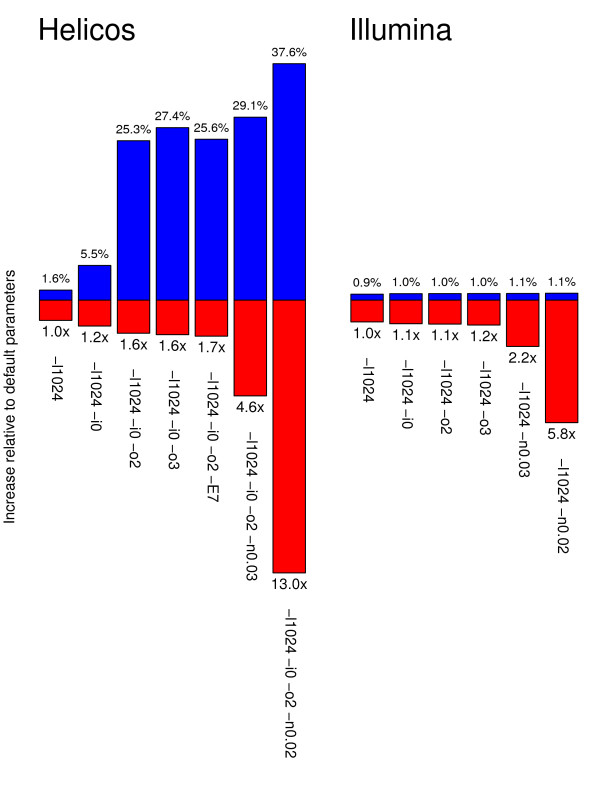
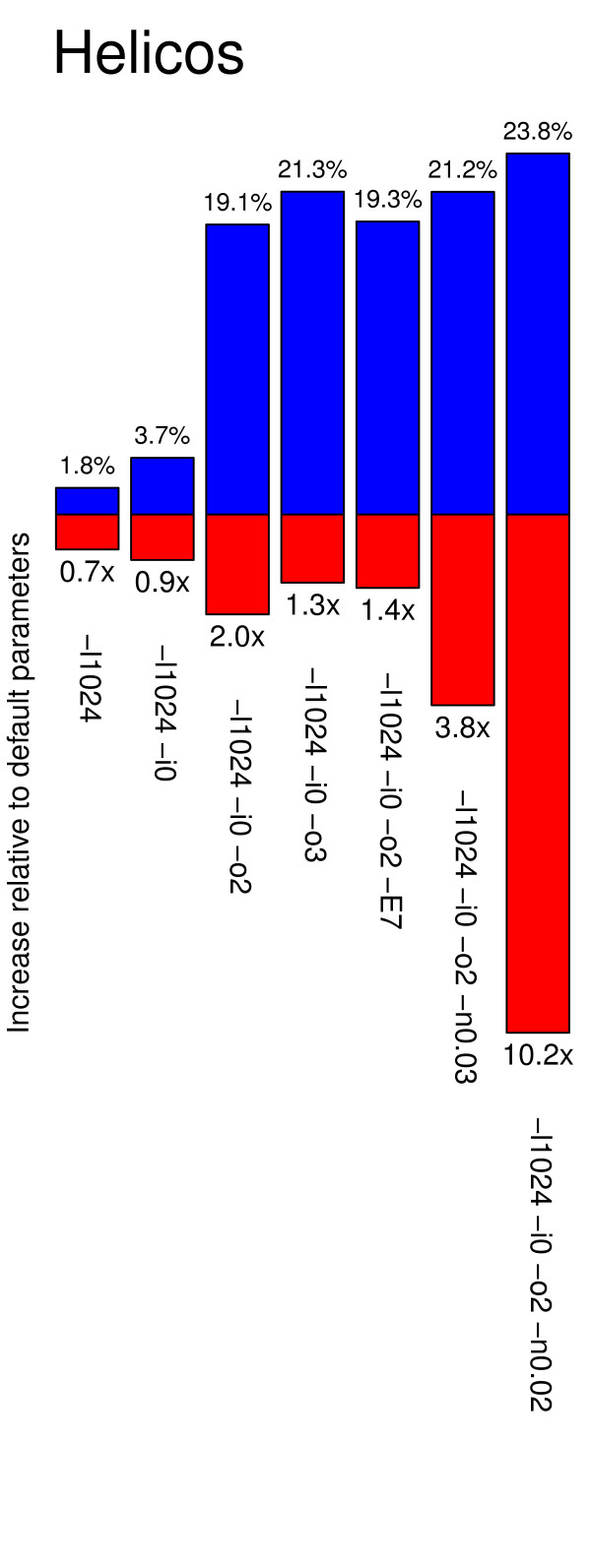
Background: Next-Generation Sequencing has revolutionized our approach to ancient DNA (aDNA) research, by providing complete genomic sequences of ancient individuals and extinct species. However, the recovery of genetic material from long-dead organisms is still complicated by a number of issues, including post-mortem DNA damage and high levels of environmental contamination. Together with error profiles specific to the type of sequencing platforms used, these specificities could limit our ability to map sequencing reads against modern reference genomes and therefore limit our ability to identify endogenous ancient reads, reducing the efficiency of shotgun sequencing aDNA. Results: In this study, we compare different computational methods for improving the accuracy and sensitivity of aDNA sequence identification, based on shotgun sequencing reads recovered from Pleistocene horse extracts using Illumina GAIIx and Helicos Heliscope platforms. We show that the performance of the Burrows Wheeler Aligner (BWA), that has been developed for mapping of undamaged sequencing reads using platforms with low rates of indel-types of sequencing errors, can be employed at acceptable run-times by modifying default parameters in a platform-specific manner. We also examine if trimming likely damaged positions at read ends can increase the recovery of genuine aDNA fragments and if accurate identification of human contamination can be achieved using a strategy previously suggested based on best hit filtering. We show that combining our different mapping and filtering approaches can increase the number of high-quality endogenous hits recovered by up to 33%. Conclusions: We have shown that Illumina and Helicos sequences recovered from aDNA extracts could not be aligned to modern reference genomes with the same efficiency unless mapping parameters are optimized for the specific types of errors generated by these platforms and by post-mortem DNA damage. Our findings have important implications for future aDNA research, as we define mapping guidelines that improve our ability to identify genuine aDNA sequences, which in turn could improve the genotyping accuracy of ancient specimens. Our framework provides a significant improvement to the standard procedures used for characterizing ancient genomes, which is challenged by contamination and often low amounts of DNA material.
Overview
The claims and statistics of this paper haven’t been checked yet.
Run the check — free, no account needed. It reads the open-access text and checks the sources it cites.
Integrity signals
Registry
Cites
Statistics
Figures
Verification
Claims the paper makes
The claims and statistics of this paper haven’t been checked yet.
Run the check — free, no account needed. It reads the open-access text and checks the sources it cites.
Claims other papers make about this one
Each is checked against this paper’s own text: does it say what the citing paper says it does?
The source backs part of the claim, not all of it — or backs it for a different population, condition or comparison.
In the citing paper
“This had a beneficial impact in terms of sensitivity (99.60% vs 97.34% for the mapping of reads containing the alternate allele) and a more balanced alternate allele representation (0.49936) but also increases error rates, for example increasing the rate of false mapping short microbial reads (Additional file 1: Fig. S9).”
From Removing reference bias and improving indel calling in ancient DNA data analysis by mapping to a sequence variation graph (2020) · cites this paper as [13]
Experimental — accuracy not yet measuredThe cited source says what the claim attributes to it.
In the citing paper
“decreasing the -n edit distance parameter from the default value of 0.04 to 0.02 [13] or 0.01 [14] allows more mismatches and increases sensitivity”
From Removing reference bias and improving indel calling in ancient DNA data analysis by mapping to a sequence variation graph (2020) · cites this paper as [13]
The cited source says what the claim attributes to it.
In the citing paper
“Parameters maximizing mapping specificity and sensitivity can be identified using aDNA read simulators such as 16 gargammel 180 , and depend on the evolutionary distance to the reference genome used, DNA fragment size and the amount of post-mortem damage 111,181-184 .”
From Ancient DNA analysis (2021) · cites this paper as [181]
The cited source says what the claim attributes to it.
In the citing paper
“While some guidelines exist for the analysis of ancient genomic data, for example for mapping 162,181,183 or data authentication 56,57,329 , and automated tools embedding critical analytical procedures within open-source pipelines are available 187,188,241,242 , there is still no consensus on a”
From Ancient DNA analysis (2021) · cites this paper as [181]
Self-check
Percentages, sums and reported differences re-computed from the paper’s own numbers.
The self-check needs the paper’s full text.
Citations
Cites
Fast and accurate short read alignment with Burrows-Wheeler transform
Li, H., & Durbin, R. (2009) · Bioinformatics · doi:10.1093/bioinformatics/btp324 · Cited by 58,607
A draft sequence of the Neandertal genome
Green, R. E., Krause, J., Briggs, A. W., Maricic, T., Stenzel, U., Kircher, M., Patterson, N., Li, H., Zhai, W., Fritz, M. H.-Y., et al. (2010) · Science · doi:10.1126/science.1188021 · Cited by 4,318
Genetic history of an archaic hominin group from Denisova Cave in Siberia
Reich, D., Green, R. E., Kircher, M., Krause, J., Patterson, N., Durand, E. Y., Viola, B., Briggs, A. W., Stenzel, U., Johnson, P. L. F., et al. (2010) · Nature · doi:10.1038/nature09710 · Cited by 1,991
Patterns of damage in genomic DNA sequences from a neandertal
Briggs, A. W., Stenzel, U., Johnson, P. L. F., Green, R. E., Kelso, J., Prüfer, K., Meyer, M., Krause, J., Ronan, M. T., Lachmann, M., et al. (2007) · Proceedings of the National Academy of Sciences · doi:10.1073/pnas.0704665104 · Cited by 981
Ancient human genome sequence of an extinct Palaeo-Eskimo
Rasmussen, M., Li, Y., Lindgreen, S., Pedersen, J. S., Albrechtsen, A., Moltke, I., Metspalu, M., Metspalu, E., Kivisild, T., Gupta, R., et al. (2010) · Nature · doi:10.1038/nature08835 · Cited by 849
Self-citationGenome Sequence, Comparative Analysis, and Population Genetics of the Domestic Horse
Wade, C. M., Giulotto, E., Sigurdsson, S., Zoli, M., Gnerre, S., Imsland, F., Lear, T. L., Adelson, D. L., Bailey, E., Bellone, R. R., et al. (2009) · Science · doi:10.1126/science.1178158 · Cited by 822
The complete mitochondrial DNA genome of an unknown hominin from southern Siberia
Krause, J., Fu, Q., Good, J. M., Viola, B., Shunkov, M. V., Derevianko, A. P., & Pääbo, S. (2010) · Nature · doi:10.1038/nature08976 · Cited by 818
An aboriginal Australian genome reveals separate human dispersals into Asia
Rasmussen, M., Guo, X., Wang, Y., Lohmueller, K. E., Rasmussen, S., Albrechtsen, A., Skotte, L., Lindgreen, S., Metspalu, M., Jombart, T., et al. (2011) · Science · doi:10.1126/science.1211177 · Cited by 787
Self-citationAnalysis of one million base pairs of Neanderthal DNA
Green, R. E., Krause, J., Ptak, S. E., Briggs, A. W., Ronan, M. T., Simons, J. F., Du, L., Egholm, M., Rothberg, J. M., Paunović, M., et al. (2006) · Nature · doi:10.1038/nature05336 · Cited by 758
Species-specific responses of Late Quaternary megafauna to climate and humans
Lorenzen, E. D., Nogués-Bravo, D., Orlando, L., Weinstock, J., Binladen, J., Marske, K. A., Ugan, A., Borregaard, M. K., Gilbert, M. T. P., Nielsen, R., et al. (2011) · Nature · doi:10.1038/nature10574 · Cited by 638
Self-citationA draft genome of Yersinia pestis from victims of the Black Death
Bos, K. I., Schuenemann, V. J., Golding, G. B., Burbano, H. A., Waglechner, N., Coombes, B. K., McPhee, J. B., DeWitte, S. N., Meyer, M., Schmedes, S., et al. (2011) · Nature · doi:10.1038/nature10549 · Cited by 619
Gilbert, M. T. P., Bandelt, H.-J., Hofreiter, M., & Barnes, I. (2005) · Trends in Ecology & Evolution · doi:10.1016/j.tree.2005.07.005 · Cited by 602
Multiplexed DNA Sequence Capture of Mitochondrial Genomes Using PCR Products
Maričić, T., Whitten, M., & Pääbo, S. (2010) · PLoS ONE · doi:10.1371/journal.pone.0014004 · Cited by 581
Targeted Retrieval and Analysis of Five Neandertal mtDNA Genomes
Briggs, A. W., Good, J. M., Green, R. E., Krause, J., Maričić, T., Stenzel, U., Lalueza‐Fox, C., Rudan, P., Brajković, D., Kućan, Ž., et al. (2009) · Science · doi:10.1126/science.1174462 · Cited by 508
Removal of deaminated cytosines and detection of in vivo methylation in ancient DNA
Briggs, A. W., Stenzel, U., Meyer, M., Krause, J., Kircher, M., & Pääbo, S. (2010) · Nucleic Acids Research · doi:10.1093/nar/gkp1163 · Cited by 491
Ancient Biomolecules from Deep Ice Cores Reveal a Forested Southern Greenland
Willerslev, E., Cappellini, E., Boomsma, W., Nielsen, R., Hebsgaard, M. B., Brand, T. B., Hofreiter, M., Bunce, M., Poinar, H. N., Dahl-Jensen, D., et al. (2007) · Science · doi:10.1126/science.1141758 · Cited by 430
Self-citationmapDamage: testing for damage patterns in ancient DNA sequences
Ginolhac, A., Rasmussen, M., Gilbert, M. T. P., Willerslev, E., & Orlando, L. (2011) · Bioinformatics · doi:10.1093/bioinformatics/btr347 · Cited by 363
Self-citationSequencing the nuclear genome of the extinct woolly mammoth
Miller, W., Drautz, D. I., Ratan, A., Pusey, B. N., Qi, J., Lesk, A. M., Tomsho, L. P., Packard, M., Zhao, F., Sher, A. V., et al. (2008) · Nature · doi:10.1038/nature07446 · Cited by 353
Expression profiling of microRNAs by deep sequencing
Creighton, C. J., Reid, J. G., & Gunaratne, P. H. (2009) · Briefings in Bioinformatics · doi:10.1093/bib/bbp019 · Cited by 296
Brotherton, P., Endicott, P., Sánchez, J. J. M., Beaumont, M., Barnett, R., Austin, J. J., & Cooper, A. (2007) · Nucleic Acids Research · doi:10.1093/nar/gkm588 · Cited by 261
Schuenemann, V. J., Bos, K. I., DeWitte, S. N., Schmedes, S. E., Jamieson, J., Mittnik, A., Forrest, S., Coombes, B. K., Wood, J. W., Earn, D. J. D., et al. (2011) · Proceedings of the National Academy of Sciences · doi:10.1073/pnas.1105107108 · Cited by 260
Long-term persistence of bacterial DNA
Willerslev, E., Hansen, A. J., Rønn, R., Brand, T. B., Barnes, I., Wiuf, C., Gilichinsky, D., Mitchell, D., & Cooper, A. (2004) · Current Biology · doi:10.1016/j.cub.2003.12.012 · Cited by 232
Self-citationPaleo-Eskimo mtDNA Genome Reveals Matrilineal Discontinuity in Greenland
Gilbert, M. T. P., Kivisild, T., Grønnow, B., Andersen, P. K., Metspalu, E., Reidla, M., Tamm, E., Axelsson, E., Götherström, A., Campos, P. F., et al. (2008) · Science · doi:10.1126/science.1159750 · Cited by 220
Self-citationRecharacterization of ancient DNA miscoding lesions: insights in the era of sequencing-by-synthesis
Gilbert, M. T. P., Binladen, J., Miller, W., Wiuf, C., Willerslev, E., Poinar, H. N., Carlson, J. E., Leebens‐Mack, J., & Schuster, S. C. (2006) · Nucleic Acids Research · doi:10.1093/nar/gkl483 · Cited by 212
Self-citationStiller, M., Green, R. E., Ronan, M., Simons, J. F., Du, L., He, W., Egholm, M., Rothberg, J. M., Keates, S. G., Ovodov, N. D., et al. (2006) · Proceedings of the National Academy of Sciences · doi:10.1073/pnas.0605327103 · Cited by 199
The neandertal genome and ancient DNA authenticity
Green, R. E., Briggs, A. W., Krause, J., Prüfer, K., Burbano, H. A., Siebauer, M., Lachmann, M., & Pääbo, S. (2009) · The EMBO Journal · doi:10.1038/emboj.2009.222 · Cited by 190
Pathogenicity and immunogenicity of influenza viruses with genes from the 1918 pandemic virus
Tumpey, T. M., García‐Sastre, A., Taubenberger, J. K., Palese, P., Swayne, D. E., & Basler, C. F. (2004) · Proceedings of the National Academy of Sciences · doi:10.1073/pnas.0308391100 · Cited by 176
Computational challenges in the analysis of ancient DNA
Prüfer, K., Stenzel, U., Hofreiter, M., Pääbo, S., Kelso, J., & Green, R. E. (2010) · Genome Biology · doi:10.1186/gb-2010-11-5-r47 · Cited by 155
Withering Away--25,000 Years of Genetic Decline Preceded Cave Bear Extinction
Stiller, M., Baryshnikov, G. F., Bocherens, H., Grandal‐d'Anglade, A., Hilpert, B., Münzel, S. C., Pinhasi, R., Rabeder, G., Rosendahl, W., Trinkaus, E., et al. (2010) · Molecular Biology and Evolution · doi:10.1093/molbev/msq083 · Cited by 150
Virtual terminator nucleotides for next-generation DNA sequencing
Bowers, J., Mitchell, J., Beer, E., Buzby, P. R., Causey, M., Efcavitch, J. W., Jarosz, M. V., Krzymańska-Olejnik, E., Kung, L. A., Lipson, D., et al. (2009) · Nature Methods · doi:10.1038/nmeth.1354 · Cited by 139
Self-citationTrue single-molecule DNA sequencing of a pleistocene horse bonePreprint
Orlando, L., Ginolhac, A., Raghavan, M., Vilstrup, J. T., Rasmussen, M., Magnussen, K., Steinmann, K. E., Kapranov, P., Thompson, J. F., Zazula, G. D., et al. (2011) · Genome Research · doi:10.1101/gr.122747.111 · Cited by 130
Self-citationSingle Molecule Sequencing with a HeliScope Genetic Analysis System
Thompson, J. F., & Steinmann, K. E. (2010) · Current Protocols in Molecular Biology · doi:10.1002/0471142727.mb0710s92 · Cited by 110
Self-citationImproving the performance of true single molecule sequencing for ancient DNA
Ginolhac, A., Vilstrup, J. T., Stenderup, J. T., Rasmussen, M., Stiller, M., Shapiro, B., Zazula, G. D., FROESE, D. G., Steinmann, K. E., Thompson, J. F., et al. (2012) · BMC Genomics · doi:10.1186/1471-2164-13-177 · Cited by 46
Self-citationHart, C. E., Lipson, D., Ozsolak, F., Raz, T., Steinmann, K. E., Thompson, J. F., & Milos, P. M. (2010) · Methods in enzymology on CD-ROM/Methods in enzymology · doi:10.1016/s0076-6879(10)72002-4 · Cited by 45
Self-citation
Cited by
Sorted by citations
mapDamage2.0: fast approximate Bayesian estimates of ancient DNA damage parameters
Jónsson, H., Ginolhac, A., Schubert, M., Johnson, P. L. F., & Orlando, L. (2013) · Bioinformatics · doi:10.1093/bioinformatics/btt193 · Cited by 1,669
Self-citationPopulation genomics of Bronze Age Eurasia
Allentoft, M. E., Sikora, M., Sjögren, K.-G., Rasmussen, S., Rasmussen, M., Stenderup, J., Damgaard, P. B., Schroeder, H., Ahlström, T., Vinner, L., et al. (2015) · Nature · doi:10.1038/nature14507 · Cited by 1,550
Self-citationUpper Palaeolithic Siberian genome reveals dual ancestry of Native Americans
Raghavan, M., Skoglund, P., Graf, K. E., Metspalu, M., Albrechtsen, A., Moltke, I., Rasmussen, S., Stafford Jr, T. W., Orlando, L., Metspalu, E., et al. (2014) · Nature · doi:10.1038/nature12736 · Cited by 963
Self-citationNeanderthal behaviour, diet, and disease inferred from ancient DNA in dental calculus
Weyrich, L. S., Duchêne, S., Soubrier, J., Arriola, L. A., Llamas, B., Breen, J., Morris, A. G., Alt, K. W., Caramelli, D., Dresely, V., et al. (2017) · Nature · doi:10.1038/nature21674 · Cited by 603
Genomic evidence for the Pleistocene and recent population history of Native Americans
Raghavan, M., Steinrücken, M., Harris, K., Schiffels, S., Rasmussen, S., DeGiorgio, M., Albrechtsen, A., Valdiosera, C., Ávila-Arcos, M. C., Malaspinas, A.-S., et al. (2015) · Science · doi:10.1126/science.aab3884 · Cited by 540
Self-citation
Metadata
- Authors
- Schubert, M., Ginolhac, A., Lindgreen, S., Thompson, J. F., AL-Rasheid, K. A., Willerslev, E., Krogh, A., & Orlando, L.
- Affiliations
- University of Copenhagen (DK)
- Helicos Biosciences (United States) (US)
- Corresponding author
- Orlando, Ludovic
- Venue
- BMC Genomics
- Published
- 2012-05-10
- Volume
- 13
- Issue
- 1
- Pages
- 178-178
- ISSN
- 1471-2164 (ISSN-L)
- PMC
- PMC3468387
- OpenAlex
- W2034552366
- Cited by
- 325
- References
- 34
- Citations by year
- 2026: 22 · 2025: 34 · 2024: 25 · 2023: 24 · 2022: 26 · 2021: 38 · 2020: 34 · 2019: 19 · 2018: 25 · 2017: 12 · 2016: 25 · 2015: 12 · 2014: 20 · 2013: 9
- FWCI
- 5.28
- Type
- journal article
- Language
- en
- Open access
- gold
- doi.org
- Licence
- cc-by
- Locations
- BMC Genomics (publishedVersion, cc-by)
- Europe PMC (PubMed Central) (publishedVersion, cc-by)
- PubMed Central (publishedVersion, cc-by)
- PubMed (publishedVersion)
- Research at the University of Copenhagen (University of Copenhagen) (publishedVersion, cc-by)
- DOAJ (DOAJ: Directory of Open Access Journals) (submittedVersion)
- Open Repository and Bibliography (University of Luxembourg) (submittedVersion)
- Funders
- National Research Foundation
- Danmarks Grundforskningsfond
- King Saud University
- Lundbeckfonden (R109-2012-9995, R70-2010-6286, R38-2008-3048, R24-2008-2527)
- Novo Nordisk
- Danmarks Frie Forskningsfond
- Novo Nordisk Fonden
- National Institutes of Health
- National Human Genome Research Institute
- Topics
- Life Sciences › Biochemistry, Genetics and Molecular Biology › Molecular Biology › Genomics and Phylogenetic Studies
- Life Sciences › Biochemistry, Genetics and Molecular Biology › Genetics › Forensic and Genetic Research
- Social Sciences › Arts and Humanities › Archeology (arts and humanities) › Paleopathology and ancient diseases
- Keywords
- ancient DNA, read mapping, reference genome alignment, sequencing errors, read trimming, Pleistocene horses, shotgun sequencing
- MeSH terms
- DNA Damage, Fossils, Genotype, Humans, Sequence Analysis, DNA, High-Throughput Nucleotide Sequencing
About these checks
Registry, retraction, Cites and statistics results are computed, not judged, with one exception: a printed reference that no index lists is read once by a model before it counts as a citation error. Claims are extracted by a model and kept only when their quote appears verbatim in the text; each cited source is then checked, with a model’s help, for whether it says what the claim relies on. Those verdicts can be wrong — read the claim’s quote and the cited source before relying on one.
Statistics and arithmetic are recomputed, not judged.
Confidence bands are shown only for fields calibrated on our annotated test set. None is calibrated yet, so no band is shown.
What counts as a claim ›How we measure confidence ›How we check this ›
Are you an author, or do you see a problem with this page? Request a review
