

Transcriptomic and proteomic analyses of the Aspergillus fumigatus hypoxia response using an oxygen-controlled fermenter
Open accessThe DOI matches its Crossref record; 90 of the 91 references it cites were found in a registry or an index.
Abstract
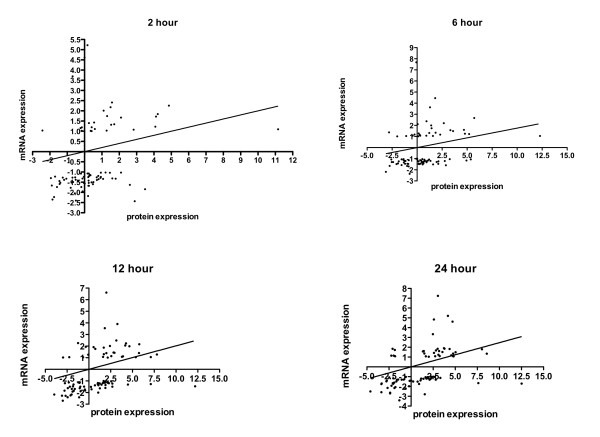
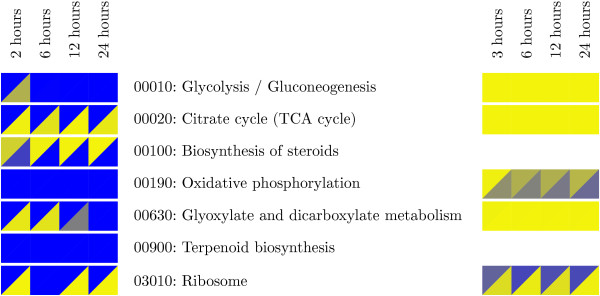
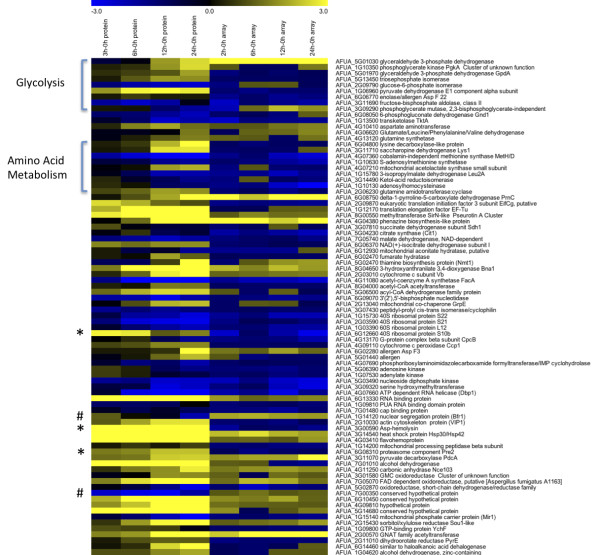
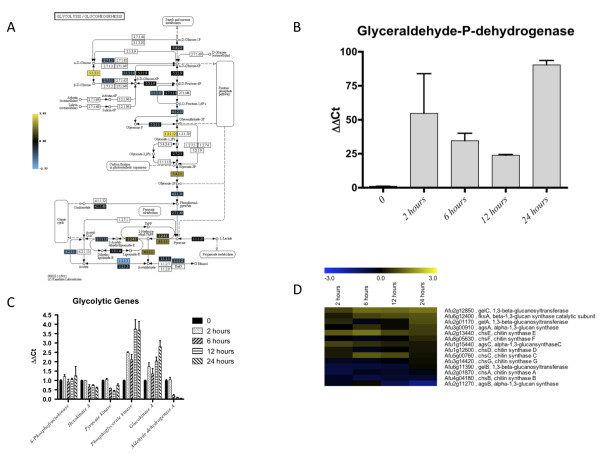
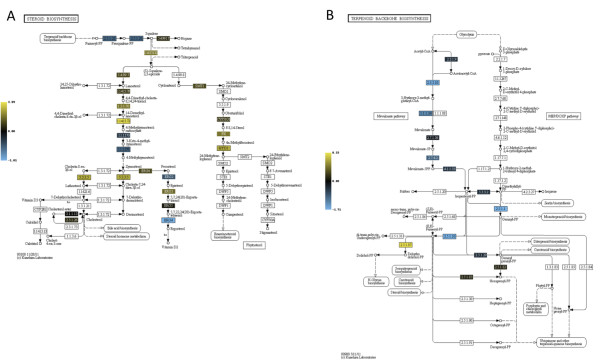
Background: Aspergillus fumigatus is a mold responsible for the majority of cases of aspergillosis in humans. To survive in the human body, A. fumigatus must adapt to microenvironments that are often characterized by low nutrient and oxygen availability. Recent research suggests that the ability of A. fumigatus and other pathogenic fungi to adapt to hypoxia contributes to their virulence. However, molecular mechanisms of A. fumigatus hypoxia adaptation are poorly understood. Thus, to better understand how A. fumigatus adapts to hypoxic microenvironments found in vivo during human fungal pathogenesis, the dynamic changes of the fungal transcriptome and proteome in hypoxia were investigated over a period of 24 hours utilizing an oxygen-controlled fermenter system. Results: Significant increases in transcripts associated with iron and sterol metabolism, the cell wall, the GABA shunt, and transcriptional regulators were observed in response to hypoxia. A concomitant reduction in transcripts was observed with ribosome and terpenoid backbone biosynthesis, TCA cycle, amino acid metabolism and RNA degradation. Analysis of changes in transcription factor mRNA abundance shows that hypoxia induces significant positive and negative changes that may be important for regulating the hypoxia response in this pathogenic mold. Growth in hypoxia resulted in changes in the protein levels of several glycolytic enzymes, but these changes were not always reflected by the corresponding transcriptional profiling data. However, a good correlation overall (R 2 = 0.2, p < 0.05) existed between the transcriptomic and proteomics datasets for all time points. The lack of correlation between some transcript levels and their subsequent protein levels suggests another regulatory layer of the hypoxia response in A. fumigatus . Conclusions: Taken together, our data suggest a robust cellular response that is likely regulated both at the transcriptional and post-transcriptional level in response to hypoxia by the human pathogenic mold A. fumigatus . As with other pathogenic fungi, the induction of glycolysis and transcriptional down-regulation of the TCA cycle and oxidative phosphorylation appear to major components of the hypoxia response in this pathogenic mold. In addition, a significant induction of the transcripts involved in ergosterol biosynthesis is consistent with previous observations in the pathogenic yeasts Candida albicans and Cryptococcus neoformans indicating conservation of this response to hypoxia in pathogenic fungi. Because ergosterol biosynthesis enzymes also require iron as a co-factor, the increase in iron uptake transcripts is consistent with an increased need for iron under hypoxia. However, unlike C. albicans and C. neoformans , the GABA shunt appears to play an important role in reducing NADH levels in response to hypoxia in A. fumigatus and it will be intriguing to determine whether this is critical for fungal virulence. Overall, regulatory mechanisms of the A. fumigatus hypoxia response appear to involve both transcriptional and post-transcriptional control of transcript and protein levels and thus provide candidate genes for future analysis of their role in hypoxia adaptation and fungal virulence.
Overview
The claims and statistics of this paper haven’t been checked yet.
Free: it reads the open-access text and checks the first 5 claims that cite a source we can check. Create a free account to check every claim.
Integrity signals
Registry
Cites
Statistics
Figures
Verification
Claims the paper makes
The claims and statistics of this paper haven’t been checked yet.
Free: it reads the open-access text and checks the first 5 claims that cite a source we can check. Create a free account to check every claim.
Claims other papers make about this one
Each is checked against this paper’s own text: does it say what the citing paper says it does?
The cited source says what the claim attributes to it.
In the citing paper
“Major transcriptional and metabolic changes have been identified during growth under limited oxygen concentrations (397–399).”
From Aspergillus fumigatus and Aspergillosis in 2019 (2019) · cites this paper as [398]
Self-check
Percentages, sums and reported differences re-computed from the paper’s own numbers.
The self-check needs the paper’s full text.
Citations
Cites
Bradford, M. M. (1976) · Analytical Biochemistry · doi:10.1016/0003-2697(76)90527-3 · Cited by 255,302
Analysis of Relative Gene Expression Data Using Real-Time Quantitative PCR and the 2−ΔΔCT Method
Livak, K. J., & Schmittgen, T. D. (2001) · Methods · doi:10.1006/meth.2001.1262 · Cited by 180,860
Controlling the False Discovery Rate: A Practical and Powerful Approach to Multiple Testing
Benjamini, Y., & Hochberg, Y. (1995) · Journal of the Royal Statistical Society Series B: Statistical Methodology · doi:10.1111/j.2517-6161.1995.tb02031.x · Cited by 109,482
Systematic and integrative analysis of large gene lists using DAVID bioinformatics resources
Huang, D. W., Sherman, B. T., & Lempicki, R. A. (2009) · Nature Protocols · doi:10.1038/nprot.2008.211 · Cited by 35,890
Kohonen, T. (2001) · Springer Series in Information Sciences · doi:10.1007/978-3-642-56927-2 · Cited by 16,019
Mass Spectrometric Sequencing of Proteins from Silver-Stained Polyacrylamide Gels
Shevchenko, A., Wilm, M., Vorm, O., & Mann, M. (1996) · Analytical Chemistry · doi:10.1021/ac950914h · Cited by 8,995
Open source clustering software
de Hoon, M. J. L., Imoto, S., Nolan, J., & Miyano, S. (2004) · Bioinformatics · doi:10.1093/bioinformatics/bth078 · Cited by 3,043
HIF-1α is essential for myeloid cell-mediated inflammation
Cramer, T., Yamanishi, Y., Clausen, B. E., Förster, I., Pawlinski, R., Mackman, N., Haase, V. H., Jaenisch, R., Corr, M., Nizet, V., et al. (2003) · Cell · doi:10.1016/s0092-8674(03)00154-5 · Cited by 2,046
Damerval, C., De Vienne, D., Zivy, M., & Thiellement, H. (1986) · ELECTROPHORESIS · doi:10.1002/elps.1150070108 · Cited by 795
Nosocomial fungal infections: epidemiology, diagnosis, and treatment
Perlroth, J., Choi, B., & Spellberg, B. (2007) · Medical Mycology · doi:10.1080/13693780701218689 · Cited by 738 · cited 1×
“The frequency of invasive fungal infections (IFIs) has increased among immunosuppressed patient populations with the mold Aspergillus fumigatus the second most frequent cause of IFIs [1].”
Background
Cited by
Items 101–145 of 145
tRNA-dependent addition of amino acids to cell wall and membrane components
Grob, G., Hemmerle, M., Yakobov, N., Mahmoudi, N., Fischer, F., Senger, B., & Becker, H. D. (2022) · Biochimie · doi:10.1016/j.biochi.2022.09.017 · Cited by 7
Li, Y., Li, H., Sun, T., & Ding, C. (2021) · Frontiers in Cellular and Infection Microbiology · doi:10.3389/fcimb.2021.774340 · Cited by 6
Lim, J.-Y., Kim, Y.-J., & Park, H. (2022) · Journal of Fungi · doi:10.3390/jof8010056 · Cited by 6
Wangsanut, T., Khamto, N., Alinejad‐Rokny, H., & Pongpom, M. (2025) · Frontiers in Cellular and Infection Microbiology · doi:10.3389/fcimb.2025.1717070 · Cited by 5
Dysfunction of Ras-GAP protein AfgapA contributes to hypoxia fitness in Aspergillus fumigatus
Bian, C., Kusuya, Y., Hagiwara, D., Ban, S., Lu, Y., Nagayama, M., & Takahashi, H. (2022) · Current Genetics · doi:10.1007/s00294-022-01249-9 · Cited by 4
Rajasenan, S., Osmani, A. H., & Osmani, S. A. (2022) · Fungal Genetics and Biology · doi:10.1016/j.fgb.2022.103739 · Cited by 3
Use of red, far-red, and near-infrared light in imaging of yeasts and filamentous fungi
Pócsi, I., Szigeti, Z. M., Emri, T., Boczonádi, I., Vereb, G., & Szöllõsi, J. (2022) · Applied Microbiology and Biotechnology · doi:10.1007/s00253-022-11967-2 · Cited by 3
Aspergillus- Human Interactions: From the Environment to Clinical Significance
Thammahong, A. (2022) · IntechOpen eBooks · doi:10.5772/intechopen.98509 · Cited by 2
Qin, Y.-L., Ren, J., Sun, W.-B., Wang, Y.-Y., Zhang, S.-B., Lv, Y., Zhai, H.-C., & Hu, Y. (2026) · International Journal of Food Microbiology · doi:10.1016/j.ijfoodmicro.2026.111763 · Cited by 2
Rashid, Z., Nabi, A., Nabi, N., Lateef, I., Nisa, Q., Fayaz, T., Gulzar, G., Bashir, A., Shah, M. D., Zargar, S. M., et al. (2024) · Fungal Biology · doi:10.1016/j.funbio.2024.03.008 · Cited by 2
Bromley, M., Johns, A., Davies, E., Fraczek, M. G., Gilsenan, J. M., Kurbatova, N., Keays, M., Kapushesky, M., Gut, M., Gut, I. G., et al. (2017) · PLoS ONE · doi:10.1371/journal.pone.0171787 · Cited by 2
Strong toluene and p-cymene emission from waterlogged hotspots of a temperate mixed-forest soilPreprint
Lee, H., Stippich, T., Petersen, J., Meine, D., Brzozon, J., Sulzer, M., Dedden, L., Christen, A., Kattenborn, T., Werner, C., et al. (2025) · doi:10.5194/egusphere-2025-5426 · Cited by 2
Puerner, C. T. S., Wilkins, O. M., & Cramer, R. A. (2026) · mBio · doi:10.1128/mbio.03487-25 · Cited by 1
Self-citationDifferentially expressed proteins in the interaction of Paracoccidioides lutzii with human monocytes
Oliveira, F. C. S., Pessoa, W. F. B., Mares, J. H., Freire, H. P. S., de Souza, E. A., Pirovani, C. P., & Romano, C. C. (2021) · Revista Iberoamericana de Micología · doi:10.1016/j.riam.2020.09.006 · Cited by 1
Host-Induced Stress Response in Human Pathogenic Fungi
Viana, R., Pais, P., Cavalheiro, M., Galocha, M., & Teixeira, M. C. (2021) · Elsevier eBooks · doi:10.1016/b978-0-12-819990-9.00035-4 · Cited by 1
Omics Data Exploration: Across Scales and Dimensions.
Su, G. (2013) · Deep Blue (University of Michigan) · Cited by 1
Özkan-Kotiloğlu, S. (2014) · Spiral (Imperial College London) · doi:10.25560/44122 · Cited by 1
The dual role of SrbA from Paracoccidioides lutzii: a hypoxic regulator
de Sousa, L. O., Oliveira, L. N., Naves, R. B., Pereira, A. L. A., Silva, K. S. F. E., Soares, C. M. D. A., & Lima, P. D. S. (2021) · Brazilian Journal of Microbiology · doi:10.1007/s42770-021-00527-x · Cited by 1
Análise molecular da anidrase carbônica no fungo patogênico humano Aspergillus fumigatus
Canela, H. M. S. (2013) · Digital Library of Theses and Dissertations (Universidade de São Paulo) · doi:10.11606/d.60.2013.tde-29012014-091548 · Cited by 1
Zhou, L., Liu, Y., Ma, Y., Qiao, F., Xie, H., & Luo, Q. (2024) · Fermentation · doi:10.3390/fermentation10090445 · Cited by 1
Colonización fúngica en pacientes con fiibrosis quísticas sometidos a trasplante pulmonar
Bernal, C., & de la Luz, M. (2017) · Deposito de Investigacion Universidad de Sevilla (University of Seville) · Cited by 1
13 Functional Genomics to Characterize Opportunistic Pathogens
Heinekamp, T., Valiante, V., Koester-Eiserfunke, N., & Brakhage, A. A. (2014) · Springer eBooks · doi:10.1007/978-3-642-45218-5_13
Proteomics and Its Application to the Human Pathogenic Fungus Aspergillus fumigatus
Krüger, T., & Kniemeyer, O. (2024) · The mycota · doi:10.1007/978-3-031-64853-3_11
Self-citationBlosser, S. J. (2013) · Montana State University ScholarWorks (Montana State University)
Fernandes, R. B. (2019) · Digital Library of Theses and Dissertations (Universidade de São Paulo) · doi:10.11606/t.41.2019.tde-04062019-085223
Analysis of Short-Term Responses to Hypoxia During Stirred-Tank Fermentation in Aspergillus oryzae
Araki, S., Susukida, S., Miyazawa, K., Kumagai, T., Tokashiki, J., & Abe, K. (2026) · Journal of Fungi · doi:10.3390/jof12050347
Metabolic engineering of mannitol metabolism to improve protein production in Fusarium venenatum
Liu, X., Ma, L., Zhang, R., Yang, Y., Chen, W., Long, L., Zheng, Y., & Li, D. (2026) · Systems Microbiology and Biomanufacturing · doi:10.1007/s43393-026-00519-8
Choo, K. K., Chin, V. K., Chong, P. P., Ho, S. H., & Yong, P. V. C. (2019) · Journal of Health and Translational Medicine · doi:10.22452/jummec.vol22no2.4
Burgain, A. (2020) · Corpus Université Laval (Université Laval)
The Role of Hypoxic Adaptation in the Pathogenesis of Histoplasmosis
DuBois, J. C. (2015) · OhioLink ETD Center (Ohio Library and Information Network)
Mattila, H. (2020) · Helda - University of Helsinki Institutional Repository
Baeza, M., Gutiérrez, M. S., Gómez, M., & Alcaíno, J. (2026) · Journal of Fungi · doi:10.3390/jof12030200
Keuschnig, C. (2016) · theses.fr (ABES) · doi:10.70675/b1d6150cz87eez44a4z9fa2z8e73527c5fb6
Unique Metabolic Responses to Hypoxia and Nitric Oxide by Filamentous Fungi
Masuo, S., & Takaya, N. (2015) · Springer eBooks · doi:10.1007/978-4-431-55248-2_9
Characterising the response to gliotoxinexposure in Aspergillus fumigatus ΔgliTand ΔgliZ
Hammel, S. (2013) · Maynooth University ePrints and eTheses Archive (Maynooth University)
Voltan, A. R. (2013) · Americanae (AECID Library)
A Global and Targeted ProteomicInvestigation of Aspergillus fumigatus
Owens, R. A. (2012) · Maynooth University ePrints and eTheses Archive (Maynooth University)
Margalit, A. (2019) · Maynooth University ePrints and eTheses Archive (Maynooth University)
Buiate, E. A. S. (2015) · UKnowledge (University of Kentucky)
Fungal production of biofuel and flavor compounds in liquid and solid state
Schoen, H. R. (2017)
Sieber, C. M. K. (2015) · mediaTUM (Technical University of Munich)
Evaluation of in vitro and in vivo models to study human fungal pathogens
Maurer, E. (2014) · Digital Library of the University of Innsbruck (University of Innsbruck)
Mucorales Identification and Detection of Azole Resistance : The Molds and The Maze
Ferreira Caramalho, R. D. (2017) · Digital Library of the University of Innsbruck (University of Innsbruck)
G-Protein-gekoppelte Rezeptoren in Aspergillus fumigatus
Föge, M. (2016) · Common Library Network (Der Gemeinsame Bibliotheksverbund)
Proteomic maps of members of the Paracoccidioides complex
Pigosso, L. L. (2012) · LA Referencia (Red Federada de Repositorios Institucionales de Publicaciones Científicas)
Metadata
- Authors
- Barker, B. M., Kroll, K., Vödisch, M., Mazurie, A., Kniemeyer, O., & Cramer, R. A.
- Affiliations
- Montana State University (US)
- Leibniz-Institut für Naturstoff-Forschung und Infektionsbiologie e. V. - Hans-Knöll-Institut (HKI) (DE)
- Corresponding author
- Kniemeyer, Olaf
- Cramer, Robert A
- Venue
- BMC Genomics
- Published
- 2012-02-06
- Volume
- 13
- Issue
- 1
- Pages
- 62-62
- ISSN
- 1471-2164 (ISSN-L)
- PMC
- PMC3293747
- OpenAlex
- W2078167303
- Cited by
- 127
- References
- 91
- Citations by year
- 2026: 4 · 2025: 6 · 2024: 6 · 2023: 5 · 2022: 9 · 2021: 12 · 2020: 8 · 2019: 6 · 2018: 8 · 2017: 12 · 2016: 6 · 2015: 8 · 2014: 20 · 2013: 11 · 2012: 6
- FWCI
- 5.78
- Type
- journal article
- Language
- en
- Open access
- gold
- doi.org
- Licence
- cc-by
- Locations
- BMC Genomics (publishedVersion, cc-by)
- Europe PMC (PubMed Central) (publishedVersion, cc-by)
- PubMed Central (publishedVersion, cc-by)
- PubMed (publishedVersion)
- Montana State University ScholarWorks (Montana State University) (submittedVersion, cc-by)
- DOAJ (DOAJ: Directory of Open Access Journals) (submittedVersion)
- Funders
- Montana State University
- National Institutes of Health (project 2, RR 020185)
- National Institute of Allergy and Infectious Diseases (R01 AI81838, L40 AI084526, R01AI081838)
- National Center for Research Resources (P20RR020185, RR 020185)
- Topics
- Life Sciences › Biochemistry, Genetics and Molecular Biology › Molecular Biology › Fungal and yeast genetics research
- Health Sciences › Medicine › Infectious Diseases › Antifungal resistance and susceptibility
- Health Sciences › Medicine › Infectious Diseases › Fungal Infections and Studies
- Keywords
- Aspergillus fumigatus, hypoxia response, aspergillosis, fungal pathogenesis, transcriptome, proteome, ergosterol biosynthesis, iron metabolism, sterol metabolism, GABA shunt, glycolysis, TCA cycle, post-transcriptional regulation, transcription factors, fungal virulence
- MeSH terms
- Carbamide Peroxide, Aspergillus fumigatus, Citric Acid Cycle, Ergosterol, Fungal Proteins, Glycolysis, NAD, Oxidative Phosphorylation, Peroxides, RNA, Messenger, Transcription Factors, Urea, Electrophoresis, Gel, Two-Dimensional, Cluster Analysis, Proteome, Transcriptome
About these checks
Registry, retraction, Cites and statistics results are computed, not judged, with one exception: a printed reference that no index lists is read once by a model before it counts as a citation error. Claims are extracted by a model and kept only when their quote appears verbatim in the text; each cited source is then checked, with a model’s help, for whether it says what the claim relies on. Those verdicts can be wrong — read the claim’s quote and the cited source before relying on one.
Statistics and arithmetic are recomputed, not judged.
Confidence bands are shown only for fields calibrated on our annotated test set. None is calibrated yet, so no band is shown.
What counts as a claim ›How we measure confidence ›How we check this ›
Are you an author, or do you see a problem with this page? Request a review
Data sources
Bibliographic data: Semantic Scholar, OpenAlex, Crossref.
Contains information from the Semantic Scholar Academic Graph Datasets, made available under the ODC Attribution License (ODC-BY 1.0).
Semantic Scholar’s data is described in: Kinney, R., et al. (2023). The Semantic Scholar Open Data Platform. arXiv:2301.10140.
