

Transcriptomic and proteomic analyses of the Aspergillus fumigatus hypoxia response using an oxygen-controlled fermenter
Open accessThe DOI matches its Crossref record; 90 of the 91 references it cites were found in a registry or an index.
Abstract
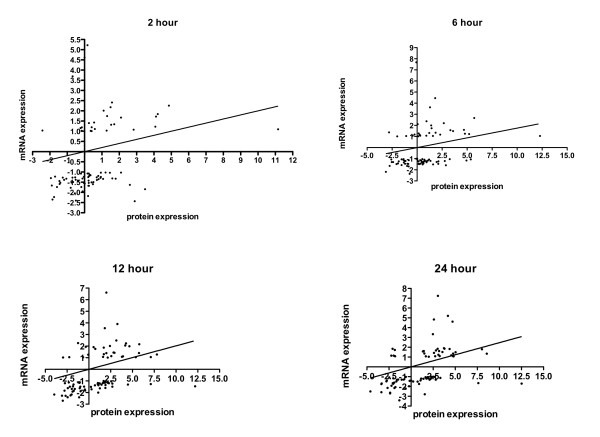
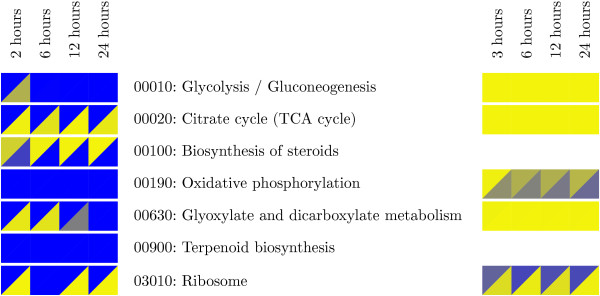
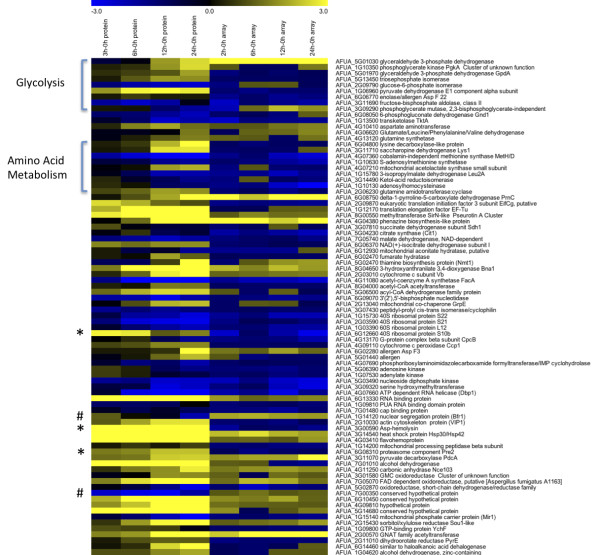
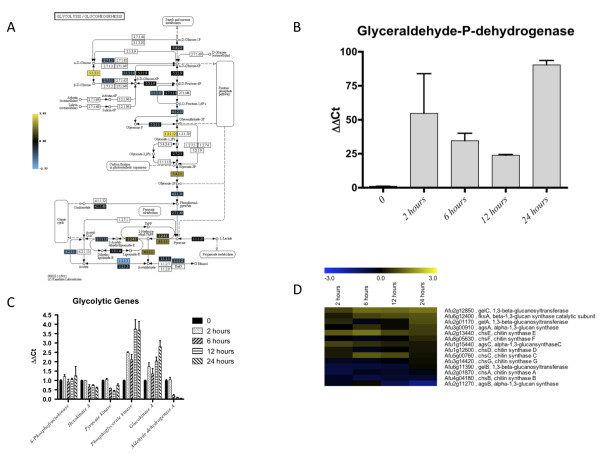
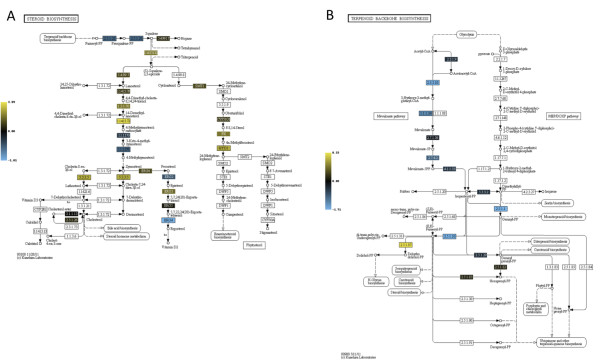
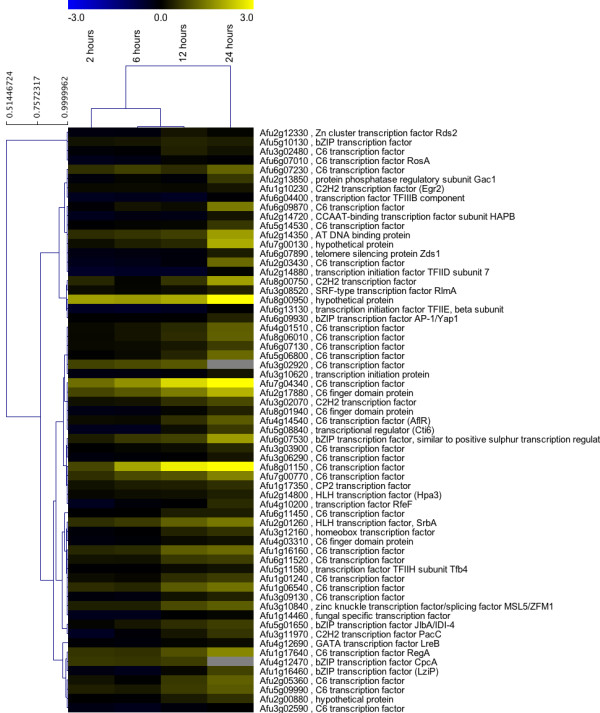
Background: Aspergillus fumigatus is a mold responsible for the majority of cases of aspergillosis in humans. To survive in the human body, A. fumigatus must adapt to microenvironments that are often characterized by low nutrient and oxygen availability. Recent research suggests that the ability of A. fumigatus and other pathogenic fungi to adapt to hypoxia contributes to their virulence. However, molecular mechanisms of A. fumigatus hypoxia adaptation are poorly understood. Thus, to better understand how A. fumigatus adapts to hypoxic microenvironments found in vivo during human fungal pathogenesis, the dynamic changes of the fungal transcriptome and proteome in hypoxia were investigated over a period of 24 hours utilizing an oxygen-controlled fermenter system. Results: Significant increases in transcripts associated with iron and sterol metabolism, the cell wall, the GABA shunt, and transcriptional regulators were observed in response to hypoxia. A concomitant reduction in transcripts was observed with ribosome and terpenoid backbone biosynthesis, TCA cycle, amino acid metabolism and RNA degradation. Analysis of changes in transcription factor mRNA abundance shows that hypoxia induces significant positive and negative changes that may be important for regulating the hypoxia response in this pathogenic mold. Growth in hypoxia resulted in changes in the protein levels of several glycolytic enzymes, but these changes were not always reflected by the corresponding transcriptional profiling data. However, a good correlation overall (R 2 = 0.2, p < 0.05) existed between the transcriptomic and proteomics datasets for all time points. The lack of correlation between some transcript levels and their subsequent protein levels suggests another regulatory layer of the hypoxia response in A. fumigatus . Conclusions: Taken together, our data suggest a robust cellular response that is likely regulated both at the transcriptional and post-transcriptional level in response to hypoxia by the human pathogenic mold A. fumigatus . As with other pathogenic fungi, the induction of glycolysis and transcriptional down-regulation of the TCA cycle and oxidative phosphorylation appear to major components of the hypoxia response in this pathogenic mold. In addition, a significant induction of the transcripts involved in ergosterol biosynthesis is consistent with previous observations in the pathogenic yeasts Candida albicans and Cryptococcus neoformans indicating conservation of this response to hypoxia in pathogenic fungi. Because ergosterol biosynthesis enzymes also require iron as a co-factor, the increase in iron uptake transcripts is consistent with an increased need for iron under hypoxia. However, unlike C. albicans and C. neoformans , the GABA shunt appears to play an important role in reducing NADH levels in response to hypoxia in A. fumigatus and it will be intriguing to determine whether this is critical for fungal virulence. Overall, regulatory mechanisms of the A. fumigatus hypoxia response appear to involve both transcriptional and post-transcriptional control of transcript and protein levels and thus provide candidate genes for future analysis of their role in hypoxia adaptation and fungal virulence.
Overview
The claims and statistics of this paper haven’t been checked yet.
Free: it reads the open-access text and checks the first 5 claims that cite a source we can check. Create a free account to check every claim.
Integrity signals
Registry
Cites
Statistics
Figures
Verification
Claims the paper makes
The claims and statistics of this paper haven’t been checked yet.
Free: it reads the open-access text and checks the first 5 claims that cite a source we can check. Create a free account to check every claim.
Claims other papers make about this one
Each is checked against this paper’s own text: does it say what the citing paper says it does?
The cited source says what the claim attributes to it.
In the citing paper
“Major transcriptional and metabolic changes have been identified during growth under limited oxygen concentrations (397–399).”
From Aspergillus fumigatus and Aspergillosis in 2019 (2019) · cites this paper as [398]
Self-check
Percentages, sums and reported differences re-computed from the paper’s own numbers.
The self-check needs the paper’s full text.
Citations
Cites
Bradford, M. M. (1976) · Analytical Biochemistry · doi:10.1016/0003-2697(76)90527-3 · Cited by 255,302
Analysis of Relative Gene Expression Data Using Real-Time Quantitative PCR and the 2−ΔΔCT Method
Livak, K. J., & Schmittgen, T. D. (2001) · Methods · doi:10.1006/meth.2001.1262 · Cited by 180,860
Controlling the False Discovery Rate: A Practical and Powerful Approach to Multiple Testing
Benjamini, Y., & Hochberg, Y. (1995) · Journal of the Royal Statistical Society Series B: Statistical Methodology · doi:10.1111/j.2517-6161.1995.tb02031.x · Cited by 109,482
Systematic and integrative analysis of large gene lists using DAVID bioinformatics resources
Huang, D. W., Sherman, B. T., & Lempicki, R. A. (2009) · Nature Protocols · doi:10.1038/nprot.2008.211 · Cited by 35,890
Kohonen, T. (2001) · Springer Series in Information Sciences · doi:10.1007/978-3-642-56927-2 · Cited by 16,019
Mass Spectrometric Sequencing of Proteins from Silver-Stained Polyacrylamide Gels
Shevchenko, A., Wilm, M., Vorm, O., & Mann, M. (1996) · Analytical Chemistry · doi:10.1021/ac950914h · Cited by 8,995
Open source clustering software
de Hoon, M. J. L., Imoto, S., Nolan, J., & Miyano, S. (2004) · Bioinformatics · doi:10.1093/bioinformatics/bth078 · Cited by 3,043
HIF-1α is essential for myeloid cell-mediated inflammation
Cramer, T., Yamanishi, Y., Clausen, B. E., Förster, I., Pawlinski, R., Mackman, N., Haase, V. H., Jaenisch, R., Corr, M., Nizet, V., et al. (2003) · Cell · doi:10.1016/s0092-8674(03)00154-5 · Cited by 2,046
Damerval, C., De Vienne, D., Zivy, M., & Thiellement, H. (1986) · ELECTROPHORESIS · doi:10.1002/elps.1150070108 · Cited by 795
Nosocomial fungal infections: epidemiology, diagnosis, and treatment
Perlroth, J., Choi, B., & Spellberg, B. (2007) · Medical Mycology · doi:10.1080/13693780701218689 · Cited by 738 · cited 1×
“The frequency of invasive fungal infections (IFIs) has increased among immunosuppressed patient populations with the mold Aspergillus fumigatus the second most frequent cause of IFIs [1].”
BackgroundDiscovering motifs in ranked lists of DNA sequences
Eden, E., Lipson, D., Yogev, S., & Yakhini, Z. (2007) · PLoS Computational Biology · doi:10.1371/journal.pcbi.0030039 · Cited by 696 · cited 1×
“The method described previously [78], for which an implementation is available http://github.”
MethodA hierarchical unsupervised growing neural network for clustering gene expression patterns
Herrero, J., Valencia, A., & Dopazo, J. (2001) · Bioinformatics · doi:10.1093/bioinformatics/17.2.126 · Cited by 622
Regulation of Sterol Synthesis in Eukaryotes
Espenshade, P. J., & Hughes, A. L. (2007) · Annual Review of Genetics · doi:10.1146/annurev.genet.41.110306.130315 · Cited by 593 · cited 1×
“Most likely, HmgR plays a significant role in coordinately altering the biosynthetic activity of these pathways [46].”
BackgroundZheng, L., Roeder, R. G., & Luo, Y. (2003) · Cell · doi:10.1016/s0092-8674(03)00552-x · Cited by 534
Schrettl, M., Bignell, E., Kragl, C., Joechl, C., Rogers, T., Arst, H. N., Haynes, K., & Haas, H. (2004) · The Journal of Experimental Medicine · doi:10.1084/jem.20041242 · Cited by 493 · cited 1×
“A literature search provides a list of iron-related transcripts to investigate the microarray results [47-49].”
BackgroundDistinct Roles for Intra- and Extracellular Siderophores during Aspergillus fumigatus Infection
Schrettl, M., Bignell, E., Kragl, C., Sabiha, Y., Loss, O., Eisendle, M., Wallner, A., Arst, H. N., Haynes, K., & Haas, H. (2007) · PLoS Pathogens · doi:10.1371/journal.ppat.0030128 · Cited by 405 · cited 1×
“A literature search provides a list of iron-related transcripts to investigate the microarray results [47-49].”
BackgroundWillger, S. D., Puttikamonkul, S., Kim, K.-H., Burritt, J. B., Grahl, N., Metzler, L. J., Barbuch, R., Bard, M., Lawrence, C. B., & Cramer, R. A. (2008) · PLoS Pathogens · doi:10.1371/journal.ppat.1000200 · Cited by 345 · cited 16×
“In addition, we previously observed a significant reduction in several ergosterol biosynthesis enzyme-encoding transcripts in response to hypoxia in the A. fumigatus SREBP null mutant (SrbA, Afu2g01260) [10].”
BackgroundSelf-citationSREBP pathway responds to sterols and functions as an oxygen sensor in fission yeast.
Hughes, A. L., Todd, B. L., & Espenshade, P. J. (2005) · Cell · doi:10.1016/j.cell.2005.01.012 · Cited by 320 · cited 1×
“Importantly, previous research has identified sterols as an oxygen sensing system in fungi including Saccharomyces cerevisiae and Schizosaccharomyces pombe [37,38].”
BackgroundHapX-Mediated Adaption to Iron Starvation Is Crucial for Virulence of Aspergillus fumigatus
Schrettl, M., Beckmann, N., Varga, J., Heinekamp, T., Jacobsen, I. D., Jöchl, C., Moussa, T. A., Wang, S., Gsaller, F., Blatzer, M., et al. (2010) · PLoS Pathogens · doi:10.1371/journal.ppat.1001124 · Cited by 284 · cited 8×
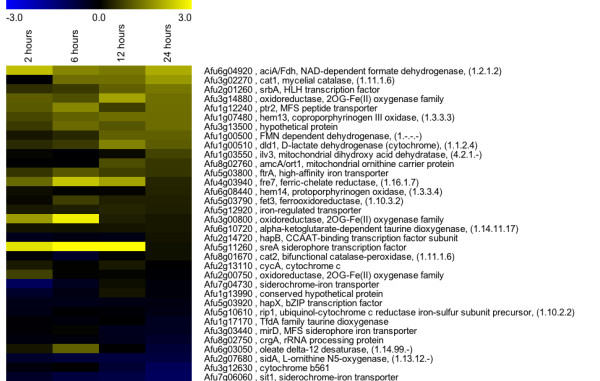
“These transcripts are further evaluated in Figure 13. has increased transcript levels at 2, 6, and 12 hours hypoxia, while HapX (Afu5g03920) transcripts are correspondingly slightly reduced.”
BackgroundInfluentialAtg11 Links Cargo to the Vesicle-forming Machinery in the Cytoplasm to Vacuole Targeting Pathway
Yorimitsu, T., & Klionsky, D. J. (2005) · Molecular Biology of the Cell · doi:10.1091/mbc.e04-11-1035 · Cited by 280 · cited 1×
“cerevisiae, and has been shown to be involved in trafficking of autophagosomes and cytoplasm to vacuole (Cvt) vesicles [56].”
BackgroundSreA‐mediated iron regulation in Aspergillus fumigatus
Schrettl, M., Kim, H. S., Eisendle, M., Kragl, C., Nierman, W. C., Heinekamp, T., Werner, E. R., Jacobsen, I., Illmer, P., Yi, H., et al. (2008) · Molecular Microbiology · doi:10.1111/j.1365-2958.2008.06376.x · Cited by 266
Meijer, W. H., van der Klei, I. J., Veenhuis, M., & Kiel, J. A. K. W. (2007) · Autophagy · doi:10.4161/auto.3595 · Cited by 262
Transcriptional regulation of carbohydrate metabolism in the human pathogen Candida albicans
Askew, C., Sellam, A., Epp, E., Hogues, H., Mullick, A., Nantel, A., & Whiteway, M. (2009) · PLoS Pathogens · doi:10.1371/journal.ppat.1000612 · Cited by 260 · cited 5×
“With regard to fungi, transcriptional induction of genes in glycolysis and repression of aerobic respiration appears to be a main feature of the hypoxia response in the yeast Candida albicans, a facultative anaerobe [11,16,17].”
BackgroundInfluentialFumarate Reductase Activity Maintains an Energized Membrane in Anaerobic Mycobacterium tuberculosis
Watanabe, S., Zimmermann, M., Goodwin, M. B., Sauer, U., Barry, C. E., & Boshoff, H. I. (2011) · PLoS Pathogens · doi:10.1371/journal.ppat.1002287 · Cited by 246 · cited 1×
“These transcripts are key factors in the reductive branch of the TCA cycle, which in some organisms such as Mycobacterium tuberculosis are important for the reoxidation of intracellular NADH during hypoxic growth [51].”
Backgroundvan den Berg, M. A., de Jong-Gubbels, P., Kortland, C. J., van Dijken, J. P., Pronk, J. T., & Steensma, H. Y. (1996) · Journal of Biological Chemistry · doi:10.1074/jbc.271.46.28953 · Cited by 244
Coleman, S. T., Fang, T. K., Rovinsky, S. A., Turano, F. J., & Moye-Rowley, W. S. (2001) · Journal of Biological Chemistry · doi:10.1074/jbc.m007103200 · Cited by 237
Lessing, F., Kniemeyer, O., Wozniok, I., Loeffler, J., Kurzai, O., Haertl, A., & Brakhage, A. A. (2007) · Eukaryotic Cell · doi:10.1128/ec.00267-07 · Cited by 221 · cited 1×
“fumigatus cultivated under normoxic and hypoxic conditions and carried out as described previously [86].”
MethodSelf-citationGrahl, N., Puttikamonkul, S., Macdonald, J. M., Gamcsik, M. P., Ngo, L. Y., Hohl, T. M., & Cramer, R. A. (2011) · PLoS Pathogens · doi:10.1371/journal.ppat.1002145 · Cited by 217 · cited 4×
“The rationale for our study is the emerging evidence that hypoxia is a critical component of the pathogenesis of IA and other human mycoses [7,8,10,11,13,14,16,17].”
BackgroundSelf-citationChang, Y. C., Bien, C. M., Lee, H., Espenshade, P. J., & Kwon‐Chung, K. J. (2007) · Molecular Microbiology · doi:10.1111/j.1365-2958.2007.05676.x · Cited by 212
Weidner, G., d'Enfert, C., Koch, A., Mol, P. C., & Brakhage, A. A. (1998) · Current Genetics · doi:10.1007/s002940050350 · Cited by 212
Dopazo, J., & Carazo, J. M. (1997) · Journal of Molecular Evolution · doi:10.1007/pl00006139 · Cited by 192
Evolution of the coordinate regulation of glycolytic enzyme genes by hypoxia
Webster, K. A. (2003) · Journal of Experimental Biology · doi:10.1242/jeb.00516 · Cited by 189
Setiadi, E. R., Doedt, T., Cottier, F., Noffz, C., & Ernst, J. F. (2006) · Journal of Molecular Biology · doi:10.1016/j.jmb.2006.06.040 · Cited by 182
Chun, C. D., Liu, O. W., & Madhani, H. D. (2007) · PLoS Pathogens · doi:10.1371/journal.ppat.0030022 · Cited by 181
Blatzer, M., Barker, B. M., Willger, S. D., Beckmann, N., Blosser, S. J., Cornish, E. J., Mazurie, A., Grahl, N., Haas, H., & Cramer, R. A. (2011) · PLoS Genetics · doi:10.1371/journal.pgen.1002374 · Cited by 175 · cited 14×
“In addition, we previously observed a significant reduction in several ergosterol biosynthesis enzyme-encoding transcripts in response to hypoxia in the A. fumigatus SREBP null mutant (SrbA, Afu2g01260) [10].”
BackgroundSelf-citationTodd, B. L., Stewart, E. V., Burg, J. S., Hughes, A. L., & Espenshade, P. J. (2006) · Molecular and Cellular Biology · doi:10.1128/mcb.26.7.2817-2831.2006 · Cited by 172 · cited 2×
“One mechanism is thought to be through direct transcriptional regulation by the fungal SREBP transcription factor, which has been shown to be a key transcriptional regulator of ergosterol biosynthesis [10,13,14,27,43].”
BackgroundHaas, H., Zadra, I., Stöffler, G., & Angermayr, K. (1999) · Journal of Biological Chemistry · doi:10.1074/jbc.274.8.4613 · Cited by 168
Schmelz, S., & Naismith, J. H. (2009) · Current Opinion in Structural Biology · doi:10.1016/j.sbi.2009.09.004 · Cited by 168
Da Silva Ferreira, M. E., Colombo, A. L., Paulsen, I., Ren, Q., Wortman, J., Huang, J., Goldman, M. H. S., & Goldman, G. H. (2005) · Medical Mycology · doi:10.1080/13693780400029114 · Cited by 158 · cited 1×
“To fully explore the observed significance of steroid biosynthesis genes, we compiled a complete list of ergosterol genes from previously published work that includes the entire pathway from acetyl-CoA to ergosterol, including terpenoid backbone biosynthesis [39].”
BackgroundWieser, J., & Adams, T. H. (1995) · Genes & Development · doi:10.1101/gad.9.4.491 · Cited by 157
Liebmann, B., Gattung, S., Jahn, B., & Brakhage, A. A. (2003) · Molecular Genetics and Genomics · doi:10.1007/s00438-003-0852-0 · Cited by 139
Delgado, M. L., O’Connor, J. E., Azorı́n, I., Renau-Piqueras, J., Gil, M. L., & Gozalbo, D. (2001) · Microbiology · doi:10.1099/00221287-147-2-411 · Cited by 139
G-protein and cAMP-mediated signaling in aspergilli: A genomic perspective
Lafon, A., Han, K.-H., Seo, J.-A., Yu, J.-H., & d’Enfert, C. (2006) · Fungal Genetics and Biology · doi:10.1016/j.fgb.2006.02.001 · Cited by 137
Hirayarna, T., Maeda, T., Saito, H., & Shinozaki, K. (1995) · Molecular and General Genetics MGG · doi:10.1007/bf00290358 · Cited by 136
Regulation of the Hypoxic Response in Candida albicans
Synnott, J. M., Guida, A., Mulhern-Haughey, S., Higgins, D. G., & Butler, G. (2010) · Eukaryotic Cell · doi:10.1128/ec.00159-10 · Cited by 132 · cited 6×
“With regard to fungi, transcriptional induction of genes in glycolysis and repression of aerobic respiration appears to be a main feature of the hypoxia response in the yeast Candida albicans, a facultative anaerobe [11,16,17].”
BackgroundInfluentialVödisch, M., Scherlach, K., Winkler, R., Hertweck, C., Braun, H.-P., Roth, M., Haas, H., Werner, E. R., Brakhage, A. A., & Kniemeyer, O. (2011) · Journal of Proteome Research · doi:10.1021/pr1012812 · Cited by 128
Self-citationKniemeyer, O., Leßing, F., Scheibner, O., Hertweck, C., & Brakhage, A. A. (2005) · Current Genetics · doi:10.1007/s00294-005-0047-9 · Cited by 127
Self-citationYasmin, S., Alcazar-Fuoli, L., Gründlinger, M., Puempel, T., Cairns, T., Blatzer, M., Lopez, J. F., Grimalt, J. O., Bignell, E., & Haas, H. (2012) · Proceedings of the National Academy of Sciences · doi:10.1073/pnas.1106399108 · Cited by 126
Han, K., Seo, J., & Yu, J. (2004) · Molecular Microbiology · doi:10.1111/j.1365-2958.2004.04163.x · Cited by 124
A Role for Sterol Levels in Oxygen Sensing in Saccharomyces cerevisiae
Davies, B. S. J., & Rine, J. (2006) · Genetics · doi:10.1534/genetics.106.059964 · Cited by 123 · cited 1×
“Importantly, previous research has identified sterols as an oxygen sensing system in fungi including Saccharomyces cerevisiae and Schizosaccharomyces pombe [37,38].”
BackgroundPuttikamonkul, S., Willger, S. D., Grahl, N., Perfect, J. R., Movahed, N., Bothner, B., Park, S., Paderu, P., Perlin, D. S., & Cramer Jr, R. A. (2010) · Molecular Microbiology · doi:10.1111/j.1365-2958.2010.07254.x · Cited by 119
Self-citationIdentification and Characterization of New Inhibitors of the Escherichia coli MurA Enzyme
Baum, E. Z., Montenegro, D. A., Licata, L., Turchi, I. J., Webb, G. C., Foleno, B. D., & Bush, K. (2001) · Antimicrobial Agents and Chemotherapy · doi:10.1128/aac.45.11.3182-3188.2001 · Cited by 118
de Groot, M. J. L., Daran-Lapujade, P., van Breukelen, B., Knijnenburg, T. A., de Hulster, E. A. F., Reinders, M. J. T., Pronk, J. T., Heck, A. J. R., & Slijper, M. (2007) · Microbiology · doi:10.1099/mic.0.2007/009969-0 · Cited by 117
The Yeast Cln3 Protein is an Unstable Activator of Cdc28
Cross, F. R., & Blake, C. M. (1993) · Molecular and Cellular Biology · doi:10.1128/mcb.13.6.3266 · Cited by 113
FungiFun: A web-based application for functional categorization of fungal genes and proteins
Priebe, S., Linde, J., Albrecht, D., Guthke, R., & Brakhage, A. A. (2010) · Fungal Genetics and Biology · doi:10.1016/j.fgb.2010.11.001 · Cited by 112
Garzia, A., Etxebeste, O., Herrero‐García, E., Ugalde, U., & Espeso, E. A. (2010) · Molecular Microbiology · doi:10.1111/j.1365-2958.2010.07063.x · Cited by 107
Immune responses against Aspergillus fumigatus: what have we learned?
Cramer, R. A., Rivera, A., & Hohl, T. M. (2011) · Current Opinion in Infectious Diseases · doi:10.1097/qco.0b013e328348b159 · Cited by 101
Self-citationResponses to hypoxia in fungal pathogens
Ernst, J. F., & Tielker, D. (2009) · Cellular Microbiology · doi:10.1111/j.1462-5822.2008.01259.x · Cited by 94
Azole resistance in allergic bronchopulmonary aspergillosis and Aspergillus bronchitis
Howard, S. J., Pasqualotto, A. C., & Denning, D. W. (2009) · Clinical Microbiology and Infection · doi:10.1111/j.1469-0691.2009.02911.x · Cited by 93
Lee, H., Bien, C. M., Hughes, A. L., Espenshade, P. J., Kwon‐Chung, K. J., & Chang, Y. C. (2007) · Molecular Microbiology · doi:10.1111/j.1365-2958.2007.05844.x · Cited by 83
Wei, H., Vienken, K., Weber, R., Bunting, S., Requena, N., & Fischer, R. (2003) · Fungal Genetics and Biology · doi:10.1016/j.fgb.2003.10.006 · Cited by 77
Blosser, S. J., & Cramer, R. A. (2012) · Antimicrobial Agents and Chemotherapy · doi:10.1128/aac.05027-11 · Cited by 77
Self-citationOxygen requirements of Aspergillus species
HALL, L. A., & DENNING, D. W. (1994) · Journal of Medical Microbiology · doi:10.1099/00222615-41-5-311 · Cited by 73
Proteomic analysis of Aspergillus nidulans cultured under hypoxic conditions
Shimizu, M., Fujii, T., Masuo, S., Fujita, K., & Takaya, N. (2008) · PROTEOMICS · doi:10.1002/pmic.200701163 · Cited by 71
Vödisch, M., Albrecht, D., Leßing, F., Schmidt, A. D., Winkler, R., Guthke, R., Brakhage, A. A., & Kniemeyer, O. (2009) · PROTEOMICS · doi:10.1002/pmic.200800394 · Cited by 71
Self-citationAspergillus fumigatus metabolism: Clues to mechanisms of in vivo fungal growth and virulence
Willger, S. D., Grahl, N., Willger, S. D., Grahl, N., & Cramer, R. A. (2009) · Medical Mycology · doi:10.1080/13693780802455313 · Cited by 69
Self-citationBoelte, K. C., Gordy, L. E., Joyce, S., Thompson, M. A., Yang, L., & Lin, P. C. (2011) · PLoS ONE · doi:10.1371/journal.pone.0018534 · Cited by 66
Xiao, P., Shin, K.-S., Wang, T., & Yu, J. (2010) · Eukaryotic Cell · doi:10.1128/ec.00198-10 · Cited by 62
Aspergillus fumigatus AcuM regulates both iron acquisition and gluconeogenesis: A. fumigatus AcuM
Liu, H., Gravelat, F. N., Chiang, L. Y., Chen, D., Vanier, G., Ejzykowicz, D. E., Ibrahim, A. S., Nierman, W. C., Sheppard, D. C., & Filler, S. G. (2010) · Molecular Microbiology · doi:10.1111/j.1365-2958.2010.07389.x · Cited by 61
4-Methyl sterols regulate fission yeast SREBP-Scap under low oxygen and cell stress.
Hughes, A. L., Lee, C.-Y. S., Bien, C. M., & Espenshade, P. J. (2007) · Journal of Biological Chemistry · doi:10.1074/jbc.m701326200 · Cited by 60
Regulation of hypoxia adaptation: an overlooked virulence attribute of pathogenic fungi?
Grahl, N., & Cramer, R. A. (2010) · Medical Mycology · doi:10.3109/13693780902947342 · Cited by 59
Self-citationAZF1 Is a Glucose-Dependent Positive Regulator of CLN3 Transcription in Saccharomyces cerevisiae
Newcomb, L. L., Hall, D. D., & Heideman, W. (2002) · Molecular and Cellular Biology · doi:10.1128/mcb.22.5.1607-1614.2002 · Cited by 58
Alcazar-Fuoli, L., Mellado, E., Garcia-Effron, G., Buitrago, M. J., Lopez, J. F., Grimalt, J. O., Cuenca-Estrella, J. M., & Rodriguez-Tudela, J. L. (2006) · Antimicrobial Agents and Chemotherapy · doi:10.1128/aac.50.2.453-460.2006 · Cited by 57
Masuo, S., Terabayashi, Y., Shimizu, M., Fujii, T., Kitazume, T., & Takaya, N. (2010) · Molecular Genetics and Genomics · doi:10.1007/s00438-010-0576-x · Cited by 53
Fleck, C. B., & Brock, M. (2010) · Eukaryotic Cell · doi:10.1128/ec.00362-09 · Cited by 53
Diano, A., Peeters, J., Dynesen, J., & Nielsen, J. (2009) · Biotechnology and Bioengineering · doi:10.1002/bit.22329 · Cited by 48
Vagnoli, P., Coons, D. M., & Bisson, L. F. (1998) · FEMS Microbiology Letters · doi:10.1111/j.1574-6968.1998.tb12886.x · Cited by 39
Implications of hypoxic microenvironments during invasive aspergillosis
Wezensky, S. J., & Cramer, R. A. (2011) · Medical Mycology · doi:10.3109/13693786.2010.495139 · Cited by 37
Self-citationErgosterol regulates sterol regulatory element binding protein (SREBP) cleavage in fission yeast.
Porter, J. R., Burg, J. S., Espenshade, P. J., & Iglesias, P. A. (2010) · Journal of Biological Chemistry · doi:10.1074/jbc.m110.144337 · Cited by 36 · cited 2×
“pombe, activation of the SREBP Sre1 by proteolytic cleavage has been linked to sensing of total ergosterol levels in the cell [44].”
BackgroundShen, W.-C., Wieser, J., Adams, T. H., & Ebbole, D. J. (1998) · Genetics · doi:10.1093/genetics/148.3.1031 · Cited by 36
Lai, L., Kissinger, M. T., Burke, P. V., & Kwast, K. E. (2008) · BMC Genomics · doi:10.1186/1471-2164-9-627 · Cited by 31
Stein, T., Kricke, J., Becher, D., & Lisowsky, T. (1998) · Current Genetics · doi:10.1007/s002940050398 · Cited by 29
Doy, C. H., PATEMAN, J. A., Olsen, J. E., Kane, H. J., & Creaser, E. H. (1985) · DNA · doi:10.1089/dna.1985.4.105 · Cited by 27
Mayr, M., May, D., Gordon, O. M., Madhu, B., Gilon, D., Yin, X., Xing, Q., Drozdov, I. A., Ainali, C., Tsoka, S., et al. (2011) · Journal of Molecular and Cellular Cardiology · doi:10.1016/j.yjmcc.2011.02.010 · Cited by 24
Oxygenomics in environmental stress
Sone, H., Akanuma, H., & Fukuda, T. (2010) · Redox Report · doi:10.1179/174329210x12650506623843 · Cited by 23
Bonatti, H., Lass‐Flörl, C., Angerer, K., Singh, N., Lechner, M., Stelzmueller, I., Singh, R., Schmid, T. A., & Geltner, C. (2010) · Mycoses · doi:10.1111/j.1439-0507.2009.01729.x · Cited by 22
Integration of Transcriptome and Proteome Data from Human-Pathogenic Fungi by Using a Data Warehouse
Albrecht, D., Kniemeyer, O., Brakhage, A. A., Berth, M., & Guthke, R. (2007) · Berichte aus der medizinischen Informatik und Bioinformatik/Journal of integrative bioinformatics · doi:10.1515/jib-2007-52 · Cited by 18
Self-citationGürcan, Ş., Tikveşli, M., Eryıldız, C., Evci, C., & Ener, B. (2010) · PubMed · Cited by 5
Defining Mapping Mashups with BioXMash
Hunt, E., Jakubowska, J., Bösinger, C., & Norrie, M. C. (2007) · Berichte aus der medizinischen Informatik und Bioinformatik/Journal of integrative bioinformatics · doi:10.1515/jib-2007-64 · Cited by 5
Opportunistic Fungal Infections, Part 2: Candida and Aspergillus
Barron, M. A., & Madinger, N. E. (2008) · Infections in medicine · Cited by 4
Kohonen, T. (1997) · Springer Series in Information Sciences · doi:10.1007/978-3-642-97966-8
Cited by
Aspergillus fumigatus and Aspergillosis in 2019
Latgé, J.-P., & Chamilos, G. (2019) · Clinical Microbiology Reviews · doi:10.1128/cmr.00140-18 · Cited by 1,400
Aspergillus fumigatus morphology and dynamic host interactions
van de Veerdonk, F. L., Gresnigt, M. S., Romani, L., Netea, M. G., & Latgé, J.-P. (2017) · Nature Reviews Microbiology · doi:10.1038/nrmicro.2017.90 · Cited by 490
Dynamic Fungal Cell Wall Architecture in Stress Adaptation and Immune Evasion
Hopke, A., Brown, A. J. P., Hall, R. A., & Wheeler, R. T. (2018) · Trends in Microbiology · doi:10.1016/j.tim.2018.01.007 · Cited by 228
“For example, multiple conserved pathways, including MAP kinase and protein kinase A signaling, coordinate the expression of cell wall genes with other stress genes in A. fumigatus , and signals other than cell wall stresses can trigger the cell wall integrity pathway and cell wall genes [31 – 33].”
BackgroundChung, D., Barker, B. M., Carey, C. C., Merriman, B., Werner, E. R., Lechner, B. E., Dhingra, S., Cheng, C., Xu, W., Blosser, S. J., et al. (2014) · PLoS Pathogens · doi:10.1371/journal.ppat.1004487 · Cited by 193
Self-citationHypoxia and Fungal Pathogenesis: To Air or Not To Air?
Grahl, N., Shepardson, K. M., Chung, D., & Cramer, R. A. (2012) · Eukaryotic Cell · doi:10.1128/ec.00031-12 · Cited by 179
Self-citation
Metadata
- Authors
- Barker, B. M., Kroll, K., Vödisch, M., Mazurie, A., Kniemeyer, O., & Cramer, R. A.
- Affiliations
- Montana State University (US)
- Leibniz-Institut für Naturstoff-Forschung und Infektionsbiologie e. V. - Hans-Knöll-Institut (HKI) (DE)
- Corresponding author
- Kniemeyer, Olaf
- Cramer, Robert A
- Venue
- BMC Genomics
- Published
- 2012-02-06
- Volume
- 13
- Issue
- 1
- Pages
- 62-62
- ISSN
- 1471-2164 (ISSN-L)
- PMC
- PMC3293747
- OpenAlex
- W2078167303
- Cited by
- 127
- References
- 91
- Citations by year
- 2026: 4 · 2025: 6 · 2024: 6 · 2023: 5 · 2022: 9 · 2021: 12 · 2020: 8 · 2019: 6 · 2018: 8 · 2017: 12 · 2016: 6 · 2015: 8 · 2014: 20 · 2013: 11 · 2012: 6
- FWCI
- 5.78
- Type
- journal article
- Language
- en
- Open access
- gold
- doi.org
- Licence
- cc-by
- Locations
- BMC Genomics (publishedVersion, cc-by)
- Europe PMC (PubMed Central) (publishedVersion, cc-by)
- PubMed Central (publishedVersion, cc-by)
- PubMed (publishedVersion)
- Montana State University ScholarWorks (Montana State University) (submittedVersion, cc-by)
- DOAJ (DOAJ: Directory of Open Access Journals) (submittedVersion)
- Funders
- Montana State University
- National Institutes of Health (project 2, RR 020185)
- National Institute of Allergy and Infectious Diseases (R01 AI81838, L40 AI084526, R01AI081838)
- National Center for Research Resources (P20RR020185, RR 020185)
- Topics
- Life Sciences › Biochemistry, Genetics and Molecular Biology › Molecular Biology › Fungal and yeast genetics research
- Health Sciences › Medicine › Infectious Diseases › Antifungal resistance and susceptibility
- Health Sciences › Medicine › Infectious Diseases › Fungal Infections and Studies
- Keywords
- Aspergillus fumigatus, hypoxia response, aspergillosis, fungal pathogenesis, transcriptome, proteome, ergosterol biosynthesis, iron metabolism, sterol metabolism, GABA shunt, glycolysis, TCA cycle, post-transcriptional regulation, transcription factors, fungal virulence
- MeSH terms
- Carbamide Peroxide, Aspergillus fumigatus, Citric Acid Cycle, Ergosterol, Fungal Proteins, Glycolysis, NAD, Oxidative Phosphorylation, Peroxides, RNA, Messenger, Transcription Factors, Urea, Electrophoresis, Gel, Two-Dimensional, Cluster Analysis, Proteome, Transcriptome
About these checks
Registry, retraction, Cites and statistics results are computed, not judged, with one exception: a printed reference that no index lists is read once by a model before it counts as a citation error. Claims are extracted by a model and kept only when their quote appears verbatim in the text; each cited source is then checked, with a model’s help, for whether it says what the claim relies on. Those verdicts can be wrong — read the claim’s quote and the cited source before relying on one.
Statistics and arithmetic are recomputed, not judged.
Confidence bands are shown only for fields calibrated on our annotated test set. None is calibrated yet, so no band is shown.
What counts as a claim ›How we measure confidence ›How we check this ›
Are you an author, or do you see a problem with this page? Request a review
Data sources
Bibliographic data: Semantic Scholar, OpenAlex, Crossref.
Contains information from the Semantic Scholar Academic Graph Datasets, made available under the ODC Attribution License (ODC-BY 1.0).
Semantic Scholar’s data is described in: Kinney, R., et al. (2023). The Semantic Scholar Open Data Platform. arXiv:2301.10140.
