

Transcriptomic and proteomic analyses of the Aspergillus fumigatus hypoxia response using an oxygen-controlled fermenter
Open accessThe DOI matches its Crossref record; 90 of the 91 references it cites were found in a registry or an index.
Abstract
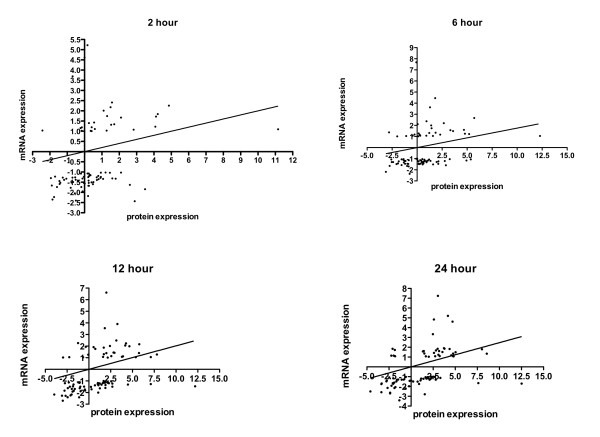
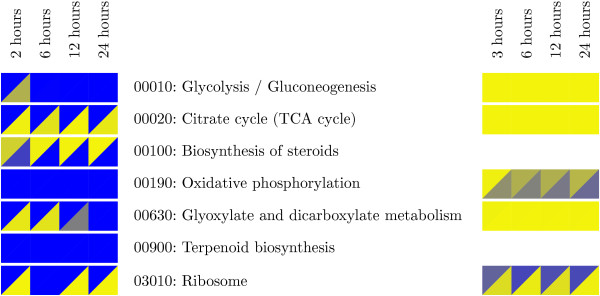
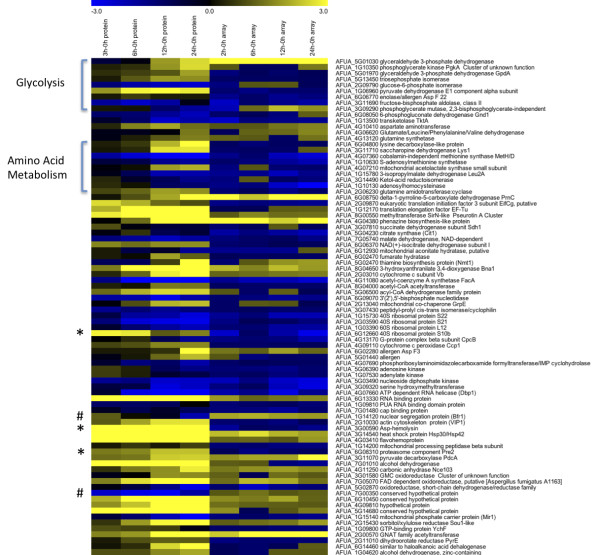
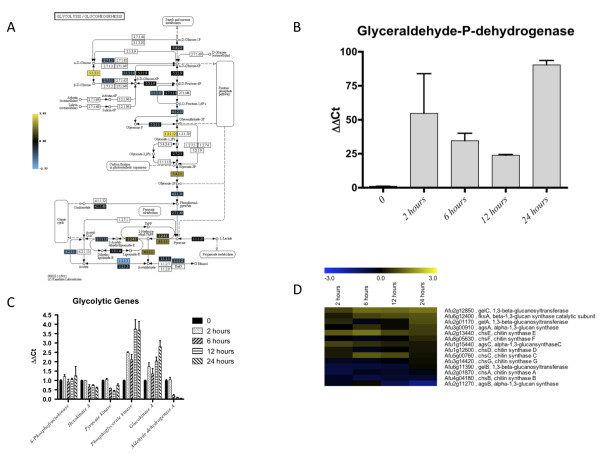
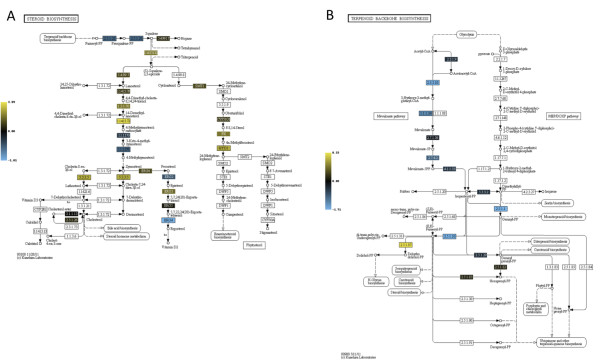
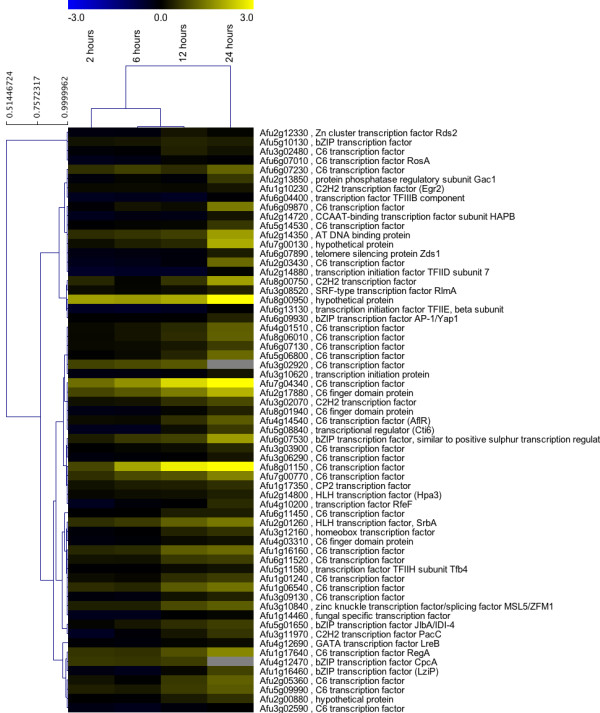
Background: Aspergillus fumigatus is a mold responsible for the majority of cases of aspergillosis in humans. To survive in the human body, A. fumigatus must adapt to microenvironments that are often characterized by low nutrient and oxygen availability. Recent research suggests that the ability of A. fumigatus and other pathogenic fungi to adapt to hypoxia contributes to their virulence. However, molecular mechanisms of A. fumigatus hypoxia adaptation are poorly understood. Thus, to better understand how A. fumigatus adapts to hypoxic microenvironments found in vivo during human fungal pathogenesis, the dynamic changes of the fungal transcriptome and proteome in hypoxia were investigated over a period of 24 hours utilizing an oxygen-controlled fermenter system. Results: Significant increases in transcripts associated with iron and sterol metabolism, the cell wall, the GABA shunt, and transcriptional regulators were observed in response to hypoxia. A concomitant reduction in transcripts was observed with ribosome and terpenoid backbone biosynthesis, TCA cycle, amino acid metabolism and RNA degradation. Analysis of changes in transcription factor mRNA abundance shows that hypoxia induces significant positive and negative changes that may be important for regulating the hypoxia response in this pathogenic mold. Growth in hypoxia resulted in changes in the protein levels of several glycolytic enzymes, but these changes were not always reflected by the corresponding transcriptional profiling data. However, a good correlation overall (R 2 = 0.2, p < 0.05) existed between the transcriptomic and proteomics datasets for all time points. The lack of correlation between some transcript levels and their subsequent protein levels suggests another regulatory layer of the hypoxia response in A. fumigatus . Conclusions: Taken together, our data suggest a robust cellular response that is likely regulated both at the transcriptional and post-transcriptional level in response to hypoxia by the human pathogenic mold A. fumigatus . As with other pathogenic fungi, the induction of glycolysis and transcriptional down-regulation of the TCA cycle and oxidative phosphorylation appear to major components of the hypoxia response in this pathogenic mold. In addition, a significant induction of the transcripts involved in ergosterol biosynthesis is consistent with previous observations in the pathogenic yeasts Candida albicans and Cryptococcus neoformans indicating conservation of this response to hypoxia in pathogenic fungi. Because ergosterol biosynthesis enzymes also require iron as a co-factor, the increase in iron uptake transcripts is consistent with an increased need for iron under hypoxia. However, unlike C. albicans and C. neoformans , the GABA shunt appears to play an important role in reducing NADH levels in response to hypoxia in A. fumigatus and it will be intriguing to determine whether this is critical for fungal virulence. Overall, regulatory mechanisms of the A. fumigatus hypoxia response appear to involve both transcriptional and post-transcriptional control of transcript and protein levels and thus provide candidate genes for future analysis of their role in hypoxia adaptation and fungal virulence.
Overview
The claims and statistics of this paper haven’t been checked yet.
Free: it reads the open-access text and checks the first 5 claims that cite a source we can check. Create a free account to check every claim.
Integrity signals
Registry
Cites
Statistics
Figures
Verification
Claims the paper makes
The claims and statistics of this paper haven’t been checked yet.
Free: it reads the open-access text and checks the first 5 claims that cite a source we can check. Create a free account to check every claim.
Claims other papers make about this one
Each is checked against this paper’s own text: does it say what the citing paper says it does?
The cited source says what the claim attributes to it.
In the citing paper
“Major transcriptional and metabolic changes have been identified during growth under limited oxygen concentrations (397–399).”
From Aspergillus fumigatus and Aspergillosis in 2019 (2019) · cites this paper as [398]
Self-check
Percentages, sums and reported differences re-computed from the paper’s own numbers.
The self-check needs the paper’s full text.
Citations
Cites
Bradford, M. M. (1976) · Analytical Biochemistry · doi:10.1016/0003-2697(76)90527-3 · Cited by 255,302
Analysis of Relative Gene Expression Data Using Real-Time Quantitative PCR and the 2−ΔΔCT Method
Livak, K. J., & Schmittgen, T. D. (2001) · Methods · doi:10.1006/meth.2001.1262 · Cited by 180,860
Controlling the False Discovery Rate: A Practical and Powerful Approach to Multiple Testing
Benjamini, Y., & Hochberg, Y. (1995) · Journal of the Royal Statistical Society Series B: Statistical Methodology · doi:10.1111/j.2517-6161.1995.tb02031.x · Cited by 109,482
Systematic and integrative analysis of large gene lists using DAVID bioinformatics resources
Huang, D. W., Sherman, B. T., & Lempicki, R. A. (2009) · Nature Protocols · doi:10.1038/nprot.2008.211 · Cited by 35,890
Kohonen, T. (2001) · Springer Series in Information Sciences · doi:10.1007/978-3-642-56927-2 · Cited by 16,019
Mass Spectrometric Sequencing of Proteins from Silver-Stained Polyacrylamide Gels
Shevchenko, A., Wilm, M., Vorm, O., & Mann, M. (1996) · Analytical Chemistry · doi:10.1021/ac950914h · Cited by 8,995
Open source clustering software
de Hoon, M. J. L., Imoto, S., Nolan, J., & Miyano, S. (2004) · Bioinformatics · doi:10.1093/bioinformatics/bth078 · Cited by 3,043
HIF-1α is essential for myeloid cell-mediated inflammation
Cramer, T., Yamanishi, Y., Clausen, B. E., Förster, I., Pawlinski, R., Mackman, N., Haase, V. H., Jaenisch, R., Corr, M., Nizet, V., et al. (2003) · Cell · doi:10.1016/s0092-8674(03)00154-5 · Cited by 2,046
Damerval, C., De Vienne, D., Zivy, M., & Thiellement, H. (1986) · ELECTROPHORESIS · doi:10.1002/elps.1150070108 · Cited by 795
Nosocomial fungal infections: epidemiology, diagnosis, and treatment
Perlroth, J., Choi, B., & Spellberg, B. (2007) · Medical Mycology · doi:10.1080/13693780701218689 · Cited by 738 · cited 1×
“The frequency of invasive fungal infections (IFIs) has increased among immunosuppressed patient populations with the mold Aspergillus fumigatus the second most frequent cause of IFIs [1].”
Background
Cited by
Aspergillus fumigatus and Aspergillosis in 2019
Latgé, J.-P., & Chamilos, G. (2019) · Clinical Microbiology Reviews · doi:10.1128/cmr.00140-18 · Cited by 1,400
Aspergillus fumigatus morphology and dynamic host interactions
van de Veerdonk, F. L., Gresnigt, M. S., Romani, L., Netea, M. G., & Latgé, J.-P. (2017) · Nature Reviews Microbiology · doi:10.1038/nrmicro.2017.90 · Cited by 490
Dynamic Fungal Cell Wall Architecture in Stress Adaptation and Immune Evasion
Hopke, A., Brown, A. J. P., Hall, R. A., & Wheeler, R. T. (2018) · Trends in Microbiology · doi:10.1016/j.tim.2018.01.007 · Cited by 228
“For example, multiple conserved pathways, including MAP kinase and protein kinase A signaling, coordinate the expression of cell wall genes with other stress genes in A. fumigatus , and signals other than cell wall stresses can trigger the cell wall integrity pathway and cell wall genes [31 – 33].”
BackgroundChung, D., Barker, B. M., Carey, C. C., Merriman, B., Werner, E. R., Lechner, B. E., Dhingra, S., Cheng, C., Xu, W., Blosser, S. J., et al. (2014) · PLoS Pathogens · doi:10.1371/journal.ppat.1004487 · Cited by 193
“Three genes were chosen from this analysis as positive for enrichment in all ChIP conditions (srbA, erg11A and erg25A) based on previous microarray experiments [40].”
BackgroundMethodSelf-citationHypoxia and Fungal Pathogenesis: To Air or Not To Air?
Grahl, N., Shepardson, K. M., Chung, D., & Cramer, R. A. (2012) · Eukaryotic Cell · doi:10.1128/ec.00031-12 · Cited by 179
“13 fermentation, ergosterol biosynthesis, the γ-aminobutyrate (GABA) shunt, and iron 273 uptake were induced in hypoxia (5).”
BackgroundSelf-citationHagiwara, D., Miura, D., Shimizu, K., Paul, S., Ohba, A., Gonoi, T., Watanabe, A., Kamei, K., Shintani, T., Moye-Rowley, W. S., et al. (2017) · PLOS Pathogens · doi:10.1371/journal.ppat.1006096 · Cited by 156
Interference of Aspergillus fumigatus with the immune response
Heinekamp, T., Schmidt, H., Lapp, K., Pähtz, V., Shopova, I., Köster-Eiserfunke, N., Krüger, T., Kniemeyer, O., & Brakhage, A. A. (2015) · Seminars in Immunopathology · doi:10.1007/s00281-014-0465-1 · Cited by 123
Self-citationKowalski, C. H., Beattie, S. R., Fuller, K. K., McGurk, E. A., Tang, Y.-W., Hohl, T. M., Obar, J. J., & Cramer, R. A. (2016) · mBio · doi:10.1128/mbio.01515-16 · Cited by 123
Self-citationBeattie, S. R., Mark, K. M. K., Thammahong, A., Ries, L. N. A., Dhingra, S., Caffrey-Carr, A. K., Cheng, C., Black, C. C., Bowyer, P., Bromley, M. J., et al. (2017) · PLOS Pathogens · doi:10.1371/journal.ppat.1006340 · Cited by 103
Self-citationFungal biofilm morphology impacts hypoxia fitness and disease progression
Kowalski, C. H., Kerkaert, J. D., Liu, K.-W., Bond, M. C., Hartmann, R., Nadell, C. D., Stajich, J., & Cramer, R. A. (2019) · Nature Microbiology · doi:10.1038/s41564-019-0558-7 · Cited by 101
Self-citationTranscriptional and Proteomic Responses to Carbon Starvation in Paracoccidioides
Lima, P. D. S., Casaletti, L., Bailão, A. M., de Vasconcelos, A. T. R., Fernandes, G. D. R., & Soares, C. M. D. A. (2014) · PLoS neglected tropical diseases · doi:10.1371/journal.pntd.0002855 · Cited by 82
Regulation of Secondary Metabolism by the Velvet Complex Is Temperature-Responsive in Aspergillus
Lind, A., Smith, T. D., Satterlee, T. R., Calvo, A. M., & Rokas, A. (2016) · G3 Genes Genomes Genetics · doi:10.1534/g3.116.033084 · Cited by 78
Hypoxia enhances innate immune activation to Aspergillus fumigatus through cell wall modulation
Shepardson, K. M., Ngo, L. Y., Aimanianda, V., Latgé, J.-P., Barker, B. M., Blosser, S. J., Iwakura, Y., Hohl, T. M., & Cramer, R. A. (2013) · Microbes and Infection · doi:10.1016/j.micinf.2012.11.010 · Cited by 75
Self-citationLiu, S., Le Mauff, F., Sheppard, D. C., & Zhang, S. (2022) · npj Biofilms and Microbiomes · doi:10.1038/s41522-022-00347-3 · Cited by 72
Huang, Y., Xu, X., Huang, H., Jing, J., Zhao, H., Wang, L., & Long, X. (2018) · Applied Microbiology and Biotechnology · doi:10.1007/s00253-018-9013-6 · Cited by 72
Maguire, S. L., Wang, C., Holland, L. M., Brunel, F., Neuvéglise, C., Nicaud, J.-M., Zavrel, M., White, T. C., Wolfe, K. H., & Butler, G. (2014) · PLoS Genetics · doi:10.1371/journal.pgen.1004076 · Cited by 69
“fumigatus [74], but expression of glycolysis is reduced in others such as Trichoderma reesii [75].”
BackgroundTashiro, M., Takazono, T., & Izumikawa, K. (2024) · Therapeutic Advances in Infectious Disease · doi:10.1177/20499361241253751 · Cited by 65
Sellam, A., van het Hoog, M., Tebbji, F., Beaurepaire, C., Whiteway, M., & Nantel, A. (2014) · Eukaryotic Cell · doi:10.1128/ec.00292-13 · Cited by 63
Insights into the cellular responses to hypoxia in filamentous fungi
Hillmann, F., Shekhova, E., & Kniemeyer, O. (2015) · Current Genetics · doi:10.1007/s00294-015-0487-9 · Cited by 63
Self-citationOwens, R. A., Hammel, S., Sheridan, K. J., Jones, G. W., & Doyle, S. (2014) · PLoS ONE · doi:10.1371/journal.pone.0106942 · Cited by 62
Hypoxia: A Double-Edged Sword During Fungal Pathogenesis?
Chung, H., & Lee, Y. (2020) · Frontiers in Microbiology · doi:10.3389/fmicb.2020.01920 · Cited by 61
Wang, J., Wu, Y., Gong, Y., Yu, S., & Liu, G. (2015) · Journal of Industrial Microbiology & Biotechnology · doi:10.1007/s10295-015-1628-3 · Cited by 61
Elucidating the fungal stress response by proteomics
Kroll, K. L., Pähtz, V., & Kniemeyer, O. (2013) · Journal of Proteomics · doi:10.1016/j.jprot.2013.06.001 · Cited by 58
Self-citationFazius, F., Shelest, E., Gebhardt, P., & Brock, M. (2012) · Molecular Microbiology · doi:10.1111/mmi.12076 · Cited by 57
The crucial role of iron uptake in Aspergillus fumigatus virulence
Moore, M. M. (2013) · Current Opinion in Microbiology · doi:10.1016/j.mib.2013.07.012 · Cited by 56
Anticancer Action and Mechanism of Ergosterol Peroxide from Paecilomyces cicadae Fermentation Broth
He, L., Shi, W., Liu, X., Zhao, X., & Zhang, Z. (2018) · International Journal of Molecular Sciences · doi:10.3390/ijms19123935 · Cited by 56
Fountain, J. C., Koh, J., Yang, L., Pandey, M. K., Nayak, S. N., Bajaj, P., Zhuang, W., Chen, Z.-Y., Kemerait, R. C., Lee, R. D., et al. (2018) · Scientific Reports · doi:10.1038/s41598-018-21653-x · Cited by 56
Genetic deficiency of NOD2 confers resistance to invasive aspergillosis
Gresnigt, M. S., Cunha, C., Jaeger, M., Gonçalves, S. M., Malireddi, R. K. S., Ammerdorffer, A., Lubbers, R., Oosting, M., Raşid, O., Jouvion, G., et al. (2018) · Nature Communications · doi:10.1038/s41467-018-04912-3 · Cited by 54
Comparative metabolic profiling of Ophiocordyceps sinensis and its cultured mycelia using GC–MS
Zhang, J., Yu, H., Li, S., Zhong, X., Wang, H., & Liu, X. (2020) · Food Research International · doi:10.1016/j.foodres.2020.109241 · Cited by 51
Mirhakkak, M. H., Chen, X., Ni, Y., Heinekamp, T., Sae-Ong, T., Xu, L.-L., Kurzai, O., Barber, A. E., Brakhage, A. A., Boutin, S., et al. (2023) · Nature Communications · doi:10.1038/s41467-023-39982-5 · Cited by 51
Metabolic Reprogramming in the Opportunistic Yeast Candida albicans in Response to Hypoxia
Burgain, A., Tebbji, F., Khemiri, I., & Sellam, A. (2020) · mSphere · doi:10.1128/msphere.00913-19 · Cited by 49
Blosser, S. J., Merriman, B., Grahl, N., Chung, D., & Cramer, R. A. (2014) · Microbiology · doi:10.1099/mic.0.080440-0 · Cited by 47
Self-citationBlachowicz, A., Chiang, A. J., Romsdahl, J., Kalkum, M., Wang, C., & Venkateswaran, K. (2019) · Fungal Genetics and Biology · doi:10.1016/j.fgb.2019.01.001 · Cited by 33
Pigosso, L. L., Baeza, L. C., Tomazett, M. V., Faleiro, M. B. R., de Moura, V. M. B. D., Bailão, A. M., Borges, C. L., Rocha, J. A. P., Fernandes, G. R., Gauthier, G. M., et al. (2017) · Virulence · doi:10.1080/21505594.2017.1355660 · Cited by 48
Boecker, S., Grätz, S., Kerwat, D., Adam, L., Schirmer, D., Richter, L., Schütze, T., Petras, D., Süßmuth, R. D., & Meyer, V. (2018) · Fungal Biology and Biotechnology · doi:10.1186/s40694-018-0048-3 · Cited by 48
Bromley, M., Johns, A., Davies, E., Fraczek, M., Mabey Gilsenan, J., Kurbatova, N., Keays, M., Kapushesky, M., Gut, M., Gut, I., et al. (2016) · PLOS ONE · doi:10.1371/journal.pone.0158724 · Cited by 45
Iannitti, R. G., Casagrande, A., LUCA, A. D., Cunha, C., Sorci, G., Riuzzi, F., Borghi, M., Galosi, C., Massi-Benedetti, C., Oury, T. D., et al. (2013) · American Journal of Respiratory and Critical Care Medicine · doi:10.1164/rccm.201305-0986oc · Cited by 45
A possible role for fumagillin in cellular damage during host infection by Aspergillus fumigatus
Guruceaga, X., Ezpeleta, G., Mayayo, E., Sueiro-Olivares, M., Abad-Diaz-De-Cerio, A., Aguirre Urízar, J. M., Liu, H. G., Wiemann, P., Bok, J. W., Filler, S. G., et al. (2018) · Virulence · doi:10.1080/21505594.2018.1526528 · Cited by 44
Hypoxia and Gene Expression in Eukaryotic Microbes
Butler, G. (2013) · Annual Review of Microbiology · doi:10.1146/annurev-micro-092412-155658 · Cited by 44
Aspergilli: Models for systems biology in filamentous fungi
Brandl, J., & Andersen, M. R. (2017) · Current Opinion in Systems Biology · doi:10.1016/j.coisb.2017.09.005 · Cited by 44
Comparative proteomics in the genus Paracoccidioides
Pigosso, L. L., Parente, A. F. A., Coelho, A. S. G., Silva, L. P., Borges, C. L., Bailão, A. M., & Soares, C. M. D. A. (2013) · Fungal Genetics and Biology · doi:10.1016/j.fgb.2013.07.008 · Cited by 44
Updates in Paracoccidioides Biology and Genetic Advances in Fungus Manipulation
Chaves, A. F. A., Navarro, M. V., de Barros, Y. N., Silva, R. S., Xander, P. B., & Batista, W. L. (2021) · Journal of Fungi · doi:10.3390/jof7020116 · Cited by 43
Kroll, K., Pähtz, V., Hillmann, F., Vaknin, Y., Schmidt-Heck, W., Roth, M., Jacobsen, I. D., Osherov, N., Brakhage, A. A., & Kniemeyer, O. (2014) · Eukaryotic Cell · doi:10.1128/ec.00084-14 · Cited by 42
Self-citationRNAseq analysis of Aspergillus fumigatus in blood reveals a just wait and see resting stage behavior
Irmer, H., Tarazona, S., Sasse, C., Olbermann, P., Loeffler, J., Krappmann, S., Conesa, A., & Braus, G. H. (2015) · BMC Genomics · doi:10.1186/s12864-015-1853-1 · Cited by 41
Thammahong, A., Caffrey-Card, A. K., Dhingra, S., Obar, J. J., & Cramer, R. A. (2017) · mBio · doi:10.1128/mbio.00056-17 · Cited by 40
Self-citationAspergillus fumigatus tryptophan metabolic route differently affects host immunity
Zelante, T., Choera, T., Beauvais, A., Fallarino, F., Paolicelli, G., Pieraccini, G., Pieroni, M., Galosi, C., Beato, C., LUCA, A. D., et al. (2021) · Cell Reports · doi:10.1016/j.celrep.2020.108673 · Cited by 40
Losada, L., Barker, B. M., Pakala, S., Pakala, S., Joardar, V., Zafar, N., Mounaud, S., Fedorova, N., Nierman, W. C., & Cramer, R. A. (2014) · Mycopathologia · doi:10.1007/s11046-014-9779-8 · Cited by 38
“fumigatus to hypoxia using microarrays [9].”
BackgroundMethodInfluentialSelf-citationZhao, S., & Gibbons, J. G. (2018) · PLoS ONE · doi:10.1371/journal.pone.0201611 · Cited by 38
Lima, P. D. S., Chung, D., Bailão, A. M., Cramer, R. A., & Soares, C. M. D. A. (2015) · PLoS neglected tropical diseases · doi:10.1371/journal.pntd.0004282 · Cited by 38
Self-citationSecretomic Survey of Trichoderma harzianum Grown on Plant Biomass Substrates
Gómez‐Mendoza, D. P., Junqueira, M., do Vale, L. H. F., Domont, G. B., Filho, E. X. F., de Sousa, M. V., & Ricart, C. A. O. (2014) · Journal of Proteome Research · doi:10.1021/pr400971e · Cited by 37
Low temperature promotes the production and efflux of terpenoids in yeast
Qin, L., Ma, D., Lin, G., Sun, W., & Li, C. (2024) · Bioresource Technology · doi:10.1016/j.biortech.2024.130376 · Cited by 36
Zhu, P., Dong, S., Li, S., Xu, X., & Xu, H. L. (2014) · Biochemical Engineering Journal · doi:10.1016/j.bej.2014.06.011 · Cited by 35
de Souza, W. R., Morais, E. R., Krohn, N. G., Savoldi, M., Goldman, M. H. S., Rodrigues, F. J. S., Caldana, C., Semelka, C., Tikunov, A. P., Macdonald, J. M., et al. (2013) · PLoS ONE · doi:10.1371/journal.pone.0062088 · Cited by 33
Aspergillus fumigatus escape mechanisms from its harsh survival environments
Liu, F., Zeng, M., Zhou, X., Huang, F., & Song, Z. (2024) · Applied Microbiology and Biotechnology · doi:10.1007/s00253-023-12952-z · Cited by 33
DuBois, J. C., Pasula, R., Dade, J., & Smulian, A. G. (2015) · Medical Mycology · doi:10.1093/mmy/myv073 · Cited by 32
Ortiz, S. C., Pennington, K., Thomson, D. D., & Bertuzzi, M. (2022) · Journal of Fungi · doi:10.3390/jof8030264 · Cited by 31
Smelling the difference: Transcriptome, proteome and volatilome changes after mating
Freihorst, D., Brunsch, M., Wirth, S., Krause, K., Kniemeyer, O., Linde, J., Kunert, M., Boland, W., & Kothe, E. (2016) · Fungal Genetics and Biology · doi:10.1016/j.fgb.2016.08.007 · Cited by 31
Self-citationSniffing out the hypoxia volatile metabolic signature of Aspergillus fumigatus
Rees, C. A., Stefanuto, P.-H., Beattie, S. R., Bultman, K. M., Cramer, R. A., & Hill, J. E. (2017) · Journal of Breath Research · doi:10.1088/1752-7163/aa7b3e · Cited by 29
“fumigatus responds to low-oxygen conditions by changing its gene expression profile and metabolic enzyme production [17, 18], altering its production of virulence factors, and increasing its utilization of low oxygen (hypoxia response) respiratory pathways [19].”
BackgroundMethodSelf-citationGenome-Wide Analysis of Hypoxia-Responsive Genes in the Rice Blast Fungus, Magnaporthe oryzae
Choi, J., Chung, H., Lee, G.-W., Koh, S.-K., Chae, S., & Lee, Y. (2015) · PLoS ONE · doi:10.1371/journal.pone.0134939 · Cited by 27
The novel globin protein fungoglobin is involved in low oxygen adaptation of Aspergillus fumigatus
Hillmann, F., Linde, J., Beckmann, N., Cyrulies, M., Strassburger, M., Heinekamp, T., Haas, H., Guthke, R., Kniemeyer, O., & Brakhage, A. A. (2014) · Molecular Microbiology · doi:10.1111/mmi.12679 · Cited by 26
“It is very likely that this situation also applies for filamentous fungi, as in A. fumigatus massive induction of nitric oxide-detoxifying flavohaemoglobin was seen on the transcriptomic and proteomic level during hypoxia (Vödisch et al., 2011; Barker et al., 2012).”
BackgroundMethodResultSelf-citationInflammation in aspergillosis: the good, the bad, and the therapeutic
Carvalho, A., Cunha, C., Iannitti, R. G., LUCA, A. D., Giovannini, G., Bistoni, F., & Romani, L. R. (2012) · Annals of the New York Academy of Sciences · doi:10.1111/j.1749-6632.2012.06754.x · Cited by 26
A PAS Protein Directs Metabolic Reprogramming during Cryptococcal Adaptation to Hypoxia
Zhao, Y., & Lin, X. (2021) · mBio · doi:10.1128/mbio.03602-20 · Cited by 26
Guan, N., Zhuge, X., Li, J., Shin, H., Wu, J., Shi, Z., & Liu, L. (2014) · Applied Microbiology and Biotechnology · doi:10.1007/s00253-014-6228-z · Cited by 25
Inmunopatología de las micosis invasivas por hongos filamentosos
García‐Vidal, C., & Salavert, M. (2014) · Revista Iberoamericana de Micología · doi:10.1016/j.riam.2014.09.001 · Cited by 26
Proteomics of hosts and pathogens in cystic fibrosis
Kamath, K. S., Kumar, S. S., Kaur, J., Venkatakrishnan, V., Paulsen, I. T., Nevalainen, H. K. M., & Molloy, M. P. (2015) · PROTEOMICS - CLINICAL APPLICATIONS · doi:10.1002/prca.201400122 · Cited by 25
Zampieri, D., Nora, L. C., Basso, V., Camassola, M., & Dillon, A. J. P. (2014) · Current Genetics · doi:10.1007/s00294-014-0421-6 · Cited by 25
Dimethyl fumarate ameliorates fungal keratitis by limiting fungal growth and inhibiting pyroptosis
Gu, L., Lin, J., Wang, Q., Zhang, L., Yin, M., Lin, H., Zheng, H., Zhao, G., & Li, C. (2023) · International Immunopharmacology · doi:10.1016/j.intimp.2023.109721 · Cited by 24
Recent Advances in Understanding the Human Fungal Pathogen Hypoxia Response in Disease Progression
Puerner, C. T. S., Vellanki, S., Strauch, J. L., & Cramer, R. A. (2023) · Annual Review of Microbiology · doi:10.1146/annurev-micro-032521-021745 · Cited by 23
Self-citationAzole-Resistant Aspergillus fumigatus: Epidemiology, Diagnosis, and Treatment Considerations
Zubovskaia, A. (2025) · Journal of Fungi · doi:10.3390/jof11100731 · Cited by 24
Kroll, K., Shekhova, E., Mattern, D. J., Thywissen, A., Jacobsen, I. D., Strassburger, M., Heinekamp, T., Shelest, E., Brakhage, A. A., & Kniemeyer, O. (2016) · Molecular Microbiology · doi:10.1111/mmi.13377 · Cited by 22
Self-citationKerkaert, J. D., Mauff, F. L., Wucher, B. R., Beattie, S. R., Vesely, E. M., Sheppard, D. C., Nadell, C. D., & Cramer, R. A. (2022) · mBio · doi:10.1128/mbio.02933-21 · Cited by 22
Self-citationÁlvarez, M., Núñez, F., Delgado, J., Andrade, M. J., & Rodrigues, P. (2022) · International Journal of Food Microbiology · doi:10.1016/j.ijfoodmicro.2022.109858 · Cited by 22
The Third International Symposium on Fungal Stress – ISFUS
Alder-Rangel, A., Idnurm, A., Brand, A., Brown, A. J. P., Gorbushina, A. A., Kelliher, C., de Campos, C. B. L., Levin, D. E., Bell‐Pedersen, D., Dadachova, E., et al. (2020) · Fungal Biology · doi:10.1016/j.funbio.2020.02.007 · Cited by 21
The yeast hypoxic responses, resources for new biotechnological opportunities
González-Siso, M.-I., Becerra, M., Maceiras, M. L., Vizoso‐Vázquez, Á., & Cerdán, M. E. (2012) · Biotechnology Letters · doi:10.1007/s10529-012-1039-8 · Cited by 20
Pathogenic Fungal Sensing and Responses to Stressful Host Environments
Rapala, J. R., Anderson, F. M., Larkin, A., & O’Meara, T. R. (2025) · Annual Review of Microbiology · doi:10.1146/annurev-micro-051024-033116 · Cited by 19
Glucose Metabolism and Use of Alternative Carbon Sources in Medically-Important Fungi
Chew, S. Y., & Than, L. T. L. (2021) · Elsevier eBooks · doi:10.1016/b978-0-12-819990-9.00068-8 · Cited by 19
Proteomics as a New-Generation Tool for Studying Moulds Related to Food Safety and Quality
Álvarez, M., Andrade, M. J., Núñez, F., Rodríguez, M., & Delgado, J. (2023) · International Journal of Molecular Sciences · doi:10.3390/ijms24054709 · Cited by 19
Li, X., Jiang, Y., Ma, L., Ma, X., Liu, Y., Shan, J., Ma, K., & Xing, F. (2020) · Frontiers in Microbiology · doi:10.3389/fmicb.2020.01497 · Cited by 19
The second International Symposium on Fungal Stress: ISFUS
Alder-Rangel, A., Bailão, A. M., da Cunha, A. F., Soares, C. M. A., Wang, C., Bonatto, D., Dadachova, E., Hakalehto, E., Eleuthério, E. C. A., Fernandes, É. K. K., et al. (2017) · Fungal Biology · doi:10.1016/j.funbio.2017.10.011 · Cited by 18
Maurer, E., Binder, U., Sparber, M., Lackner, M., Caramalho, R., & Lass‐Flörl, C. (2014) · Antimicrobial Agents and Chemotherapy · doi:10.1128/aac.04424-14 · Cited by 18
Regulation of SREBP during hypoxia requires Ofd1-mediated control of both DNA bindingand degradation
Porter, J. R., Lee, C.-Y. S., Espenshade, P. J., & Iglesias, P. A. (2012) · Molecular Biology of the Cell · doi:10.1091/mbc.e12-06-0451 · Cited by 17
Impact of oxygen supply on production of terpenoids by microorganisms: State of the art
Liu, T., Xiao, H., Xiao, J., & Zhong, J. (2020) · Chinese Journal of Chemical Engineering · doi:10.1016/j.cjche.2020.12.006 · Cited by 17
Burr, R., & Espenshade, P. J. (2017) · Seminars in Cell and Developmental Biology · doi:10.1016/j.semcdb.2017.08.043 · Cited by 17
Machata, S., Müller, M. M., Lehmann, R., Sieber, P., Panagiotou, G., Carvalho, A., Cunha, C., Lagrou, K., Maertens, J. A., Slevogt, H., et al. (2020) · Virulence · doi:10.1080/21505594.2020.1824960 · Cited by 16
McElroy, A. E., Hice, L. A., Frisk, M. G., Purcell, S. L., Phillips, N. C., & Fast, M. D. (2015) · Comparative Biochemistry and Physiology Part D Genomics and Proteomics · doi:10.1016/j.cbd.2015.01.006 · Cited by 16
Shekhova, E., Ivanova, L., Krüger, T., Stroe, M. C., Macheleidt, J., Kniemeyer, O., & Brakhage, A. A. (2019) · PROTEOMICS · doi:10.1002/pmic.201800339 · Cited by 16
Self-citationEffect of Reduced Oxygen on the Antifungal Susceptibility of Clinically Relevant Aspergilli
Binder, U., Maurer, E., Lackner, M., & Lass‐Flörl, C. (2014) · Antimicrobial Agents and Chemotherapy · doi:10.1128/aac.04204-14 · Cited by 15
Chen, C., Wang, C., Chen, F., Cai, Z., Yuan, J., Hua, Y., Shi, J., Liu, Z., Zou, L., Liu, X., et al. (2023) · Journal of Plant Growth Regulation · doi:10.1007/s00344-023-10908-1 · Cited by 14
Proteomic analysis of Aspergillus fumigatus – clinical implications
Moloney, N. M., Owens, R. A., & Doyle, S. (2016) · Expert Review of Proteomics · doi:10.1080/14789450.2016.1203783 · Cited by 13
Shepardson, K. M., & Cramer, R. A. (2013) · Current Opinion in Microbiology · doi:10.1016/j.mib.2013.03.003 · Cited by 13
Self-citationExploration and characterization of hypoxia-inducible endogenous promoters in Aspergillus niger
Xiao, X., Ouyang, L., Qi, J., & Chu, J. (2021) · Applied Microbiology and Biotechnology · doi:10.1007/s00253-021-11417-5 · Cited by 13
Xu, W., Peng, J., Li, D., Tsui, C. K. M., Long, Z., Wang, Q., Mei, H., & Liu, W. (2017) · Medical Mycology · doi:10.1093/mmy/myx081 · Cited by 12
Parente-Rocha, J. A., Tomazett, M. V., Pigosso, L. L., Bailão, A. M., de Souza, A. F., Paccez, J. D., Baeza, L. C., Pereira, M., Bailão, M. G. S., Borges, C. L., et al. (2017) · Fungal Biology · doi:10.1016/j.funbio.2017.10.009 · Cited by 13
Jiang, Y., Chen, Z., Zhang, J., Zhao, W., Sheng, C., Lu, M., Li, T., & Ning, J. (2025) · Food Research International · doi:10.1016/j.foodres.2025.116266 · Cited by 11
Wiedner, S. D., Ansong, C. K., Webb‐Robertson, B., Pederson, L. M., Fortuin, S., Hofstad, B. A., Shukla, A. K., Panisko, E. A., Smith, R. D., & Wright, A. (2013) · Molecular & Cellular Proteomics · doi:10.1074/mcp.m112.026534 · Cited by 10
Zohbi, R., Wex, B., & Khalaf, R. A. (2014) · Yeast · doi:10.1002/yea.3039 · Cited by 10
iTRAQ-based proteomic analysis of Paracoccidioides brasiliensis in response to hypoxia
Oliveira, L. N., Lima, P. D. S., Araújo, D. S., Portis, I. G., Júnior, A. D. C. M. D. S., Coelho, A. S. G., de Sousa, M. V., Ricart, C. A. O., Fontes, W., & Soares, C. M. D. A. (2021) · Microbiological Research · doi:10.1016/j.micres.2021.126730 · Cited by 9
Improved Mixing Properties of Stirred Fermentation of an Aspergillus oryzae Hyphal Dispersion Mutant
Susukida, S., Miyazawa, K., Ichikawa, H., Muto, K., Yoshimi, A., Kumagai, T., Kato, Y., & Abe, K. (2025) · Biotechnology and Bioengineering · doi:10.1002/bit.70004 · Cited by 9
Jiang, B., Xing, Y., Li, G., Zhang, N., Lian, L., Sun, G., & Zhang, D. (2020) · Frontiers in Microbiology · doi:10.3389/fmicb.2019.02906 · Cited by 8
Schoen, H. R., Knighton, W. B., & Peyton, B. (2017) · Microbiology · doi:10.1099/mic.0.000555 · Cited by 7
Metadata
- Authors
- Barker, B. M., Kroll, K., Vödisch, M., Mazurie, A., Kniemeyer, O., & Cramer, R. A.
- Affiliations
- Montana State University (US)
- Leibniz-Institut für Naturstoff-Forschung und Infektionsbiologie e. V. - Hans-Knöll-Institut (HKI) (DE)
- Corresponding author
- Kniemeyer, Olaf
- Cramer, Robert A
- Venue
- BMC Genomics
- Published
- 2012-02-06
- Volume
- 13
- Issue
- 1
- Pages
- 62-62
- ISSN
- 1471-2164 (ISSN-L)
- PMC
- PMC3293747
- OpenAlex
- W2078167303
- Cited by
- 127
- References
- 91
- Citations by year
- 2026: 4 · 2025: 6 · 2024: 6 · 2023: 5 · 2022: 9 · 2021: 12 · 2020: 8 · 2019: 6 · 2018: 8 · 2017: 12 · 2016: 6 · 2015: 8 · 2014: 20 · 2013: 11 · 2012: 6
- FWCI
- 5.78
- Type
- journal article
- Language
- en
- Open access
- gold
- doi.org
- Licence
- cc-by
- Locations
- BMC Genomics (publishedVersion, cc-by)
- Europe PMC (PubMed Central) (publishedVersion, cc-by)
- PubMed Central (publishedVersion, cc-by)
- PubMed (publishedVersion)
- Montana State University ScholarWorks (Montana State University) (submittedVersion, cc-by)
- DOAJ (DOAJ: Directory of Open Access Journals) (submittedVersion)
- Funders
- Montana State University
- National Institutes of Health (project 2, RR 020185)
- National Institute of Allergy and Infectious Diseases (R01 AI81838, L40 AI084526, R01AI081838)
- National Center for Research Resources (P20RR020185, RR 020185)
- Topics
- Life Sciences › Biochemistry, Genetics and Molecular Biology › Molecular Biology › Fungal and yeast genetics research
- Health Sciences › Medicine › Infectious Diseases › Antifungal resistance and susceptibility
- Health Sciences › Medicine › Infectious Diseases › Fungal Infections and Studies
- Keywords
- Aspergillus fumigatus, hypoxia response, aspergillosis, fungal pathogenesis, transcriptome, proteome, ergosterol biosynthesis, iron metabolism, sterol metabolism, GABA shunt, glycolysis, TCA cycle, post-transcriptional regulation, transcription factors, fungal virulence
- MeSH terms
- Carbamide Peroxide, Aspergillus fumigatus, Citric Acid Cycle, Ergosterol, Fungal Proteins, Glycolysis, NAD, Oxidative Phosphorylation, Peroxides, RNA, Messenger, Transcription Factors, Urea, Electrophoresis, Gel, Two-Dimensional, Cluster Analysis, Proteome, Transcriptome
About these checks
Registry, retraction, Cites and statistics results are computed, not judged, with one exception: a printed reference that no index lists is read once by a model before it counts as a citation error. Claims are extracted by a model and kept only when their quote appears verbatim in the text; each cited source is then checked, with a model’s help, for whether it says what the claim relies on. Those verdicts can be wrong — read the claim’s quote and the cited source before relying on one.
Statistics and arithmetic are recomputed, not judged.
Confidence bands are shown only for fields calibrated on our annotated test set. None is calibrated yet, so no band is shown.
What counts as a claim ›How we measure confidence ›How we check this ›
Are you an author, or do you see a problem with this page? Request a review
Data sources
Bibliographic data: Semantic Scholar, OpenAlex, Crossref.
Contains information from the Semantic Scholar Academic Graph Datasets, made available under the ODC Attribution License (ODC-BY 1.0).
Semantic Scholar’s data is described in: Kinney, R., et al. (2023). The Semantic Scholar Open Data Platform. arXiv:2301.10140.
