

The peptide semax affects the expression of genes related to the immune and vascular systems in rat brain focal ischemia: genome-wide transcriptional analysis
Open accessThe DOI matches its Crossref record; 55 of the 55 references it cites were found in a registry or an index; none of the 9 sources its claims cite is checked for support yet.
Abstract
BACKGROUND: The nootropic neuroprotective peptide Semax (Met-Glu-His-Phe-Pro-Gly-Pro) has proved efficient in the therapy of brain stroke; however, the molecular mechanisms underlying its action remain obscure. Our genome-wide study was designed to investigate the response of the transcriptome of ischemized rat brain cortex tissues to the action of Semax in vivo. RESULTS: The gene-expression alteration caused by the action of the peptide Semax was compared with the gene expression of the "ischemia" group animals at 3 and 24 h after permanent middle cerebral artery occlusion (pMCAO). The peptide predominantly enhanced the expression of genes related to the immune system. Three hours after pMCAO, Semax influenced the expression of some genes that affect the activity of immune cells, and, 24 h after pMCAO, the action of Semax on the immune response increased considerably. The genes implicated in this response represented over 50% of the total number of genes that exhibited Semax-induced altered expression. Among the immune-response genes, the expression of which was modulated by Semax, genes that encode immunoglobulins and chemokines formed the most notable groups. In response to Semax administration, 24 genes related to the vascular system exhibited altered expression 3 h after pMCAO, whereas 12 genes were changed 24 h after pMCAO. These genes are associated with such processes as the development and migration of endothelial tissue, the migration of smooth muscle cells, hematopoiesis, and vasculogenesis. CONCLUSIONS: Semax affects several biological processes involved in the function of various systems. The immune response is the process most markedly affected by the drug. Semax altered the expression of genes that modulate the amount and mobility of immune cells and enhanced the expression of genes that encode chemokines and immunoglobulins. In conditions of rat brain focal ischemia, Semax influenced the expression of genes that promote the formation and functioning of the vascular system.The immunomodulating effect of the peptide discovered in our research and its impact on the vascular system during ischemia are likely to be the key mechanisms underlying the neuroprotective effects of the peptide.
Overview
CoChat Summary
## TL;DR
This genome-wide rat study found that the neuroprotective peptide Semax alters cortex gene expression after focal ischemia, with the strongest effects on immune-response genes and additional effects on vascular-system genes. The authors argue these immunomodulatory and vascular effects may help explain Semax’s neuroprotective action in stroke.
## Key findings
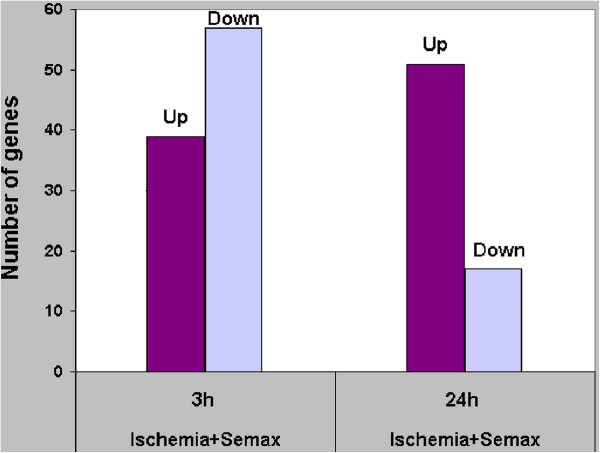
- Using the RatRef-12 Expression BeadChip, Semax changed expression of 96 genes at 3 h after pMCAO and 68 genes at 24 h after pMCAO, relative to the ischemia group.
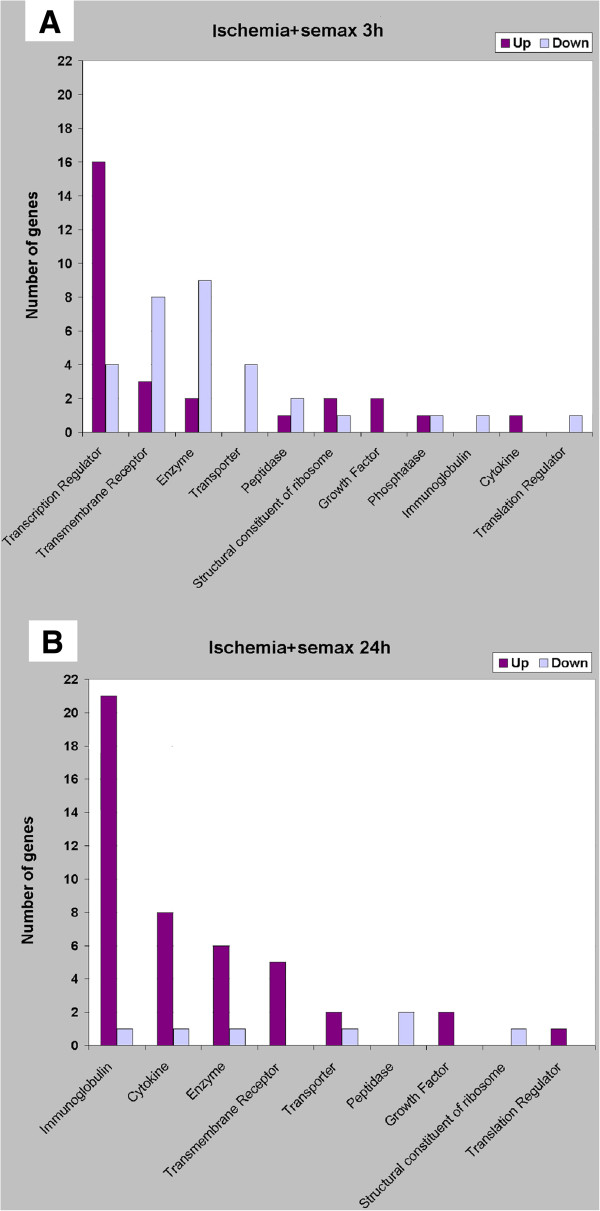
- At 3 h, Semax mainly increased transcription factors and altered genes linked to immune and vascular processes; at 24 h, gene induction was more prominent, especially for immunoglobulin and chemokine genes.
- The immune response was the most affected biological process: at 24 h, genes involved in the immune response represented over 50% of all Semax-altered genes.
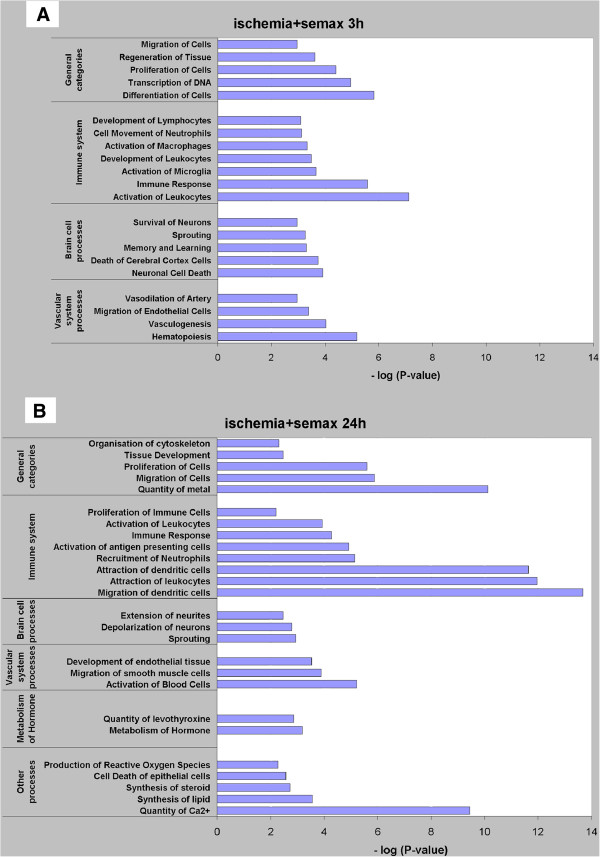
- Semax altered 24 vascular-system genes at 3 h and 12 vascular-system genes at 24 h; these were associated with endothelial development/migration, smooth muscle migration, hematopoiesis, vasculogenesis, and artery vasodilation.
## Methods
- Adult male Wistar rats (270–320 g) underwent permanent middle cerebral artery occlusion (pMCAO) to induce focal cerebral ischemia.
- Rats were assigned to ischemia or ischemia + Semax groups; Semax was given intraperitoneally at 100 μg/kg at 15 min, 1 h, 4 h, and 8 h after pMCAO, and tissues were collected at 3 h and 24 h post-operation, with at least five animals per time point.
- Gene expression in ischemic frontoparietal cortex was measured with the Illumina RatRef-12 Expression BeadChip, and functional enrichment was analyzed with Ingenuity iReport using a 1.5-fold change and P < 0.05 cutoff for selected genes.
## Limitations
- The paper states that the functional significance of many altered genes remains unknown, and that future research is needed to uncover the full scope of Semax’s mechanisms.
- The study is expression-based and does not directly test whether the observed immune/vascular transcriptional changes cause neuroprotection; this is evident from the text.
- Only two post-ischemia time points (3 h and 24 h) were examined, which limits temporal resolution; this is evident from the text.
Model-written summary. Check it against the paper before relying on it.
Integrity signals
Registry
Cites
Statistics
Figures
Verification
Claims the paper makes
0 Valid · 0 Not valid · 6 Not checked · 36 Own results and interpretations
In the paper
“In addition, Semax affected DCs, the presence of which in rat cerebral hemisphere ischemia-damaged tissues had been reported by other researchers [14].”
§ The peptide semax affects the expression of genes related to the immune and vascular systems in rat brain focal ischemia: genome-wide transcriptional analysis > Discussion > Response of immune system cells to Semax administration and regulation of the expression of genes encoding chemokines and immunoglobulins
What the sources say
- Not checked yetcites [14] Felger JC Abe T Kaunzner UW Gottfried-Blackmore A Gal-Toth J McEwen BS Iadecola C Bulloch K Brain dendritic cells in ischemic stroke: time course, activation state, and origin Brain Behav Immun 2010 15 724 737 10.1016/j.bbi.2009.11.002 19914372 PMC2885548 source
plainstates a cause- Asserted: passes — The authors put it forward as true.
- Checkable: passes — It can be checked against evidence.
- Load-bearing: unclear — It is unclear whether the paper’s conclusions depend on it.
- Based: passes — The paper gives a reason why it holds.
A result the paper reports from its own data — it cites no other source for it, so there is none to check. The quote shows it is in the paper.
In the paper
“The processes that developed 24 h after pMCAO, which involved leukocytes, remained significant.”
§ The peptide semax affects the expression of genes related to the immune and vascular systems in rat brain focal ischemia: genome-wide transcriptional analysis > Discussion > Response of immune system cells to Semax administration and regulation of the expression of genes encoding chemokines and immunoglobulins
plain- Asserted: passes — The authors put it forward as true.
- Checkable: passes — It can be checked against evidence.
- Load-bearing: passes — The paper’s conclusions depend on it.
- Based: passes — The paper gives a reason why it holds.
A result the paper reports from its own data — it cites no other source for it, so there is none to check. The quote shows it is in the paper.
In the paper
“Our results showed that Semax enhanced the expression of genes encoding protein products that promote intracellular Ca2+ accumulation.”
§ The peptide semax affects the expression of genes related to the immune and vascular systems in rat brain focal ischemia: genome-wide transcriptional analysis > Conclusions
plainstates a cause- Asserted: passes — The authors put it forward as true.
- Checkable: passes — It can be checked against evidence.
- Load-bearing: passes — The paper’s conclusions depend on it.
- Based: passes — The paper gives a reason why it holds.
A result the paper reports from its own data — it cites no other source for it, so there is none to check. The quote shows it is in the paper.
In the paper
“During the active stage of ischemia and the response of late-response genes, i.e., 24 h after pMCAO, we observed increased levels of transcripts encoding transmembrane receptors and enzymes, especially cytokines and immunoglobulins.”
§ The peptide semax affects the expression of genes related to the immune and vascular systems in rat brain focal ischemia: genome-wide transcriptional analysis > Discussion > Different profiles of gene expression elicited by Semax administration 3 and 24 h after pMCAO
plainstates a cause- Asserted: passes — The authors put it forward as true.
- Checkable: passes — It can be checked against evidence.
- Load-bearing: passes — The paper’s conclusions depend on it.
- Based: passes — The paper gives a reason why it holds.
A result the paper reports from its own data — it cites no other source for it, so there is none to check. The quote shows it is in the paper.
In the paper
“Special attention should be drawn to the processes that were most significantly associated with immune cell activity and calcium ion regulation, namely, the migration and attraction of dendritic cells (DCs), the attraction of leukocytes (Figure 3B), and the regulation of the levels of Ca2+ (Figure 3B, Table 3).”
§ The peptide semax affects the expression of genes related to the immune and vascular systems in rat brain focal ischemia: genome-wide transcriptional analysis > Results > Biological processes that were significantly associated with the genes that exhibited altered expression levels in response to the administration of the peptide
plainstates an association- Asserted: passes — The authors put it forward as true.
- Checkable: passes — It can be checked against evidence.
- Load-bearing: passes — The paper’s conclusions depend on it.
- Based: passes — The paper gives a reason why it holds.
17 more claims
Create a free account to see all 42 claims and to verify the 4 references still open.
- It may state two separate claims as one. 16
- Probably not a substantial claim. 5
Claims other papers make about this one
Each is checked against this paper’s own text: does it say what the citing paper says it does?
The source backs part of the claim, not all of it — or backs it for a different population, condition or comparison.
In the citing paper
“It has been shown that Semax decreases ischemic brain damage in clinical and animal studies by inducing the expression of neurotrophins and their receptors [45,46,47,48,49,50].”
From Protective Effects of PGC-1α Activators on Ischemic Stroke in a Rat Model of Photochemically Induced Thrombosis (2021) · cites this paper as [49]
Experimental — accuracy not yet measuredThe cited source says what the claim attributes to it.
In the citing paper
“significantly affects the expression of genes associated with the processes of the immune response [15,16]”
From Brain Protein Expression Profile Confirms the Protective Effect of the ACTH(4–7)PGP Peptide (Semax) in a Rat Model of Cerebral Ischemia–Reperfusion (2021) · cites this paper as [15]
The cited source says what the claim attributes to it.
In the citing paper
“Using microchips RatRef-12 BeadChips, it was shown that peptide Semax affects the expression of genes related to the immune and vascular systems in rat fronto-parietal cortex after permanent middle cerebral artery occlusion (pMCAO) [26,27].”
From Novel Insights into the Protective Properties of ACTH(4-7)PGP (Semax) Peptide at the Transcriptome Level Following Cerebral Ischaemia-Reperfusion in Rats (2020) · cites this paper as [26]
The check wasn’t confident either way, so it gives no verdict — never disputed.
In the citing paper
“The ischemic suppression of translational processes is accompanied by the downregulation of peptide neurohormones and neurotransmitters, as well as their receptors [49,103].”
From Protective Effects of PGC-1α Activators on Ischemic Stroke in a Rat Model of Photochemically Induced Thrombosis (2021) · cites this paper as [49]
Experimental — accuracy not yet measured
Citations
Cites
Single-step method of RNA isolation by acid guanidinium thiocyanate-phenol-chloroform extraction
Chomczynski, P., & Sacchi, N. (1987) · Analytical Biochemistry · doi:10.1016/0003-2697(87)90021-2 · Cited by 46,426
Ischemic Cell Death in Brain Neurons
Lipton, P. (1999) · Physiological Reviews · doi:10.1152/physrev.1999.79.4.1431 · Cited by 3,043 · cited 1×
“Three hours after pMCAO was used in the analysis as a time point inside the therapeutic window of the drug and within the response time of early-response genes [13].”
MethodThresholds in cerebral ischemia - the ischemic penumbra.
Astrup, J., Siesjö, B. K., & Symon, L. (1981) · Stroke · doi:10.1161/01.str.12.6.723 · Cited by 2,820 · cited 1×
“At the 24 h time point the infarction area reaches its maximal dimensions and the formation of the penumbra is completed [54].”
BackgroundThe immunology of stroke: from mechanisms to translation
Iadecola, C., & Anrather, J. (2011) · Nature Medicine · doi:10.1038/nm.2399 · Cited by 2,596 · cited 1×
“Studies are available regarding the contribution of the immune system to ischemic damages [37], the neuroprotective and healing effect of immune-cell activation [38,39], the protective role of the immune system, and its therapeutic function [40-42].”
BackgroundInflammatory mechanisms in ischemic stroke: role of inflammatory cells
Jin, R., Yang, G., & Li, G. (2010) · Journal of Leukocyte Biology · doi:10.1189/jlb.1109766 · Cited by 1,521
Autoimmune T cells protect neurons from secondary degeneration after central nervous system axotomy
Moalem, G., Leibowitz–Amit, R., Yoles, E., Mor, F., Cohen, I. R., & Schwartz, M. (1999) · Nature Medicine · doi:10.1038/4734 · Cited by 889
Calcium, ischemia and excitotoxicity
Szydlowska, K., & Tymianski, M. (2010) · Cell Calcium · doi:10.1016/j.ceca.2010.01.003 · Cited by 762
Role of T Lymphocytes and Interferon-γ in Ischemic Stroke
Yilmaz, G., Arumugam, T. V., Stokes, K. Y., & Granger, D. N. (2006) · Circulation · doi:10.1161/circulationaha.105.593046 · Cited by 722 · cited 1×
“It is well known that the penetration of inflammatory/immune cells into brain tissues during the postischemia hours aggravates the situation [17-19].”
BackgroundA model of focal ischemic stroke in the rat: reproducible extensive cortical infarction.
Chen, S. T., Hsu, C. Y., Hogan, E. L., Maricq, H., & Balentine, J. D. (1986) · Stroke · doi:10.1161/01.str.17.4.738 · Cited by 594
Stroke and the immune system: from pathophysiology to new therapeutic strategies
Macrez, R., Ali, C., Toutirais, O., Le Mauff, B., Defer, G., Dirnagl, U., & Vivien, D. (2011) · The Lancet Neurology · doi:10.1016/s1474-4422(11)70066-7 · Cited by 560
Cerebral ischemia and inflammation
Iadecola, C., & Alexander, M. (2001) · Current Opinion in Neurology · doi:10.1097/00019052-200102000-00014 · Cited by 466
Post‐ischemic brain damage: pathophysiology and role of inflammatory mediators
Amantea, D., Nappi, G., Bernardi, G., Bagetta, G., & Corasaniti, M. T. (2009) · The FEBS Journal · doi:10.1111/j.1742-4658.2008.06766.x · Cited by 459
Neuroprotective role of the innate immune system by microglia
Glezer, I., Simard, A. R., & Rivest, S. (2007) · Neuroscience · doi:10.1016/j.neuroscience.2007.02.055 · Cited by 371
Bajetto, A., Bonavia, R., Barbero, S., & Schettini, G. (2002) · Journal of Neurochemistry · doi:10.1046/j.1471-4159.2002.01091.x · Cited by 318
Sattler, R., Charlton, M. P., Hafner, M., & Tymianski, M. (1998) · Journal of Neurochemistry · doi:10.1046/j.1471-4159.1998.71062349.x · Cited by 273
Vasoactive intestinal peptide: a neuropeptide with pleiotropic immune functions
Delgado, M., & Ganea, D. (2013) · Amino Acids · doi:10.1007/s00726-011-1184-8 · Cited by 192
Neuro-immune crosstalk in CNS diseases
Kerschensteiner, M., Meinl, E., & Hohlfeld, R. (2008) · Neuroscience · doi:10.1016/j.neuroscience.2008.09.009 · Cited by 183
Neuronal Chemokines: Versatile Messengers In Central Nervous System Cell Interaction
de Haas, A. H., van Weering, H. R. J., de Jong, E. K., Boddeke, H. W. G. M., & Biber, K. P. H. (2007) · Molecular Neurobiology · doi:10.1007/s12035-007-0036-8 · Cited by 182
Emerich, D. F., Dean, R. L., & Bartus, R. T. (2002) · Experimental Neurology · doi:10.1006/exnr.2001.7835 · Cited by 177
Chemokines in CNS injury and repair
Järve, A., & Müller, H. W. (2012) · Cell and Tissue Research · doi:10.1007/s00441-012-1427-3 · Cited by 168
Post-ischaemic neovascularization and inflammation
Silvestre, J.-S., Mallat, Z., Tedgui, A., & Levy, B. I. (2008) · Cardiovascular Research · doi:10.1093/cvr/cvn027 · Cited by 150
Brain dendritic cells in ischemic stroke: Time course, activation state, and origin
Felger, J. C., Abe, T., Kaunzner, U. W., Gottfried-Blackmore, A., Gal-Toth, J., McEwen, B. S., Iadecola, C., & Bulloch, K. (2010) · Brain, Behavior, and Immunity · doi:10.1016/j.bbi.2009.11.002 · Cited by 148 · cited 1×
“In addition, Semax affected DCs, the presence of which in rat cerebral hemisphere ischemiadamaged tissues had been reported by other researchers [14].”
BackgroundTargeting ischemic penumbra Part I: from pathophysiology to therapeutic strategy
Liu, S., Levine, S. R., & Winn, H. R. (2010) · Journal of Experimental Stroke and Translational Medicine · doi:10.6030/1939-067x-3.1.47 · Cited by 137
Sanchez, M.-J., Gottgens, B., Sinclair, A. M., Stanley, M., Begley, C. G., Hunter, S., & Green, A. R. (1999) · Development · doi:10.1242/dev.126.17.3891 · Cited by 136
Novel therapeutic strategies targeting innate immune responses and early inflammation after stroke
Shichita, T., Ago, T., Kamouchi, M., Kitazono, T., Yoshimura, A., & Ooboshi, H. (2012) · Journal of Neurochemistry · doi:10.1111/j.1471-4159.2012.07941.x · Cited by 136 · cited 1×
“Studies are available regarding the contribution of the immune system to ischemic damages [37], the neuroprotective and healing effect of immune-cell activation [38,39], the protective role of the immune system, and its therapeutic function [40-42].”
BackgroundRostène, W., Dansereau, M., Godefroy, D., Van Steenwinckel, J., Goazigo, A. R., Mélik‐Parsadaniantz, S., Apartis, E., Hunot, S., Beaudet, N., & Sarret, P. (2011) · Journal of Neurochemistry · doi:10.1111/j.1471-4159.2011.07371.x · Cited by 133
Chemokines and their receptors in the brain: Pathophysiological roles in ischemic brain injury
Minami, M., & Satoh, M. (2003) · Life Sciences · doi:10.1016/j.lfs.2003.09.019 · Cited by 123
Coultas, L., Bouillet, P., Stanley, E. G., Brodnicki, T. C., Adams, J. M., & Strasser, A. (2004) · Molecular and Cellular Biology · doi:10.1128/mcb.24.4.1570-1581.2004 · Cited by 115
New Vessels after Stroke: Postischemic Neovascularization and Regeneration
Liman, T. G., & Endres, M. (2012) · Cerebrovascular Diseases · doi:10.1159/000337155 · Cited by 99
The role of dendritic cells in CNS autoimmunity
Zozulya, A. L., Clarkson, B. D. S., Ortler, S., Fábry, Z., & Wiendl, H. (2010) · Journal of Molecular Medicine · doi:10.1007/s00109-010-0607-4 · Cited by 93
Kostulas, N., Li, H.-L., Xiao, B.-G., Huang, Y.-M., Kostulas, V., & Link, H. (2002) · Stroke · doi:10.1161/hs0402.105379 · Cited by 91
Nelson, T. E., & Gruol, D. L. (2004) · Journal of Neuroimmunology · doi:10.1016/j.jneuroim.2004.07.009 · Cited by 88
Immune and Inflammatory Responses to Stroke: Good Or Bad?
McCombe, P. A., & Read, S. J. (2008) · International Journal of Stroke · doi:10.1111/j.1747-4949.2008.00222.x · Cited by 70
Neuropeptides in learning and memory processes
de Wied, D. (1997) · Behavioural Brain Research · doi:10.1016/s0166-4328(97)86050-0 · Cited by 63 · cited 2×
“The neuroprotective and nootropic properties of Semax were previously associated only with events that are directly relevant to nervous tissues [2,7,11].”
Dolga, A. M., Terpolilli, N. A., Kepura, F., Nijholt, I. M., Knaus, H.-G., D’Orsi, B., Prehn, J. H. M., Eisel, U. L. M., Plant, T., Plesnila, N., et al. (2011) · Cell Death and Disease · doi:10.1038/cddis.2011.30 · Cited by 61
Neuronal Ca2+-Activated K+ Channels Limit Brain Infarction and Promote Survival
Liao, Y., Kristiansen, A.-M., Oksvold, C. P., Tuvnes, F. A., Gu, N., Rundén‐Pran, E., Ruth, P., Sausbier, M., & Storm, J. F. (2010) · PLoS ONE · doi:10.1371/journal.pone.0015601 · Cited by 55
Dmitrieva, V. G., Povarova, O. V., Skvortsova, V. I., Limborska, S. A., Myasoedov, N. F., & Dergunova, L. V. (2010) · Cellular and Molecular Neurobiology · doi:10.1007/s10571-009-9432-0 · Cited by 54
Self-citationvan Gassen, K. L. I., Netzeband, J. G., Graan, P. N. E. D., & Gruol, D. L. (2005) · European Journal of Neuroscience · doi:10.1111/j.1460-9568.2005.04113.x · Cited by 54
Modulation of the Postischemic Immune Response to Improve Stroke Outcome
Becker, K. J. (2010) · Stroke · doi:10.1161/strokeaha.110.592881 · Cited by 46
Storozhevykh, T. P., Tukhbatova, G. R., Senilova, Y. E., Pinelis, V. G., Andreeva, L. A., & Myasoyedov, N. F. (2007) · Bulletin of Experimental Biology and Medicine · doi:10.1007/s10517-007-0192-x · Cited by 41
Bashkatova, V. G., Koshelev, V. B., Fadyukova, O. E., Alexeev, A. A., Vanin, A. F., Rayevsky, K. S., Ashmarin, I. P., & Armstrong, D. M. (2001) · Brain Research · doi:10.1016/s0006-8993(00)03324-2 · Cited by 36 · cited 1×
“The action of Semax causes the inhibition of nitric oxide synthesis [4], improves the trophic supply of the brain [5], and protects the nervous system effectively against diseases of the optic nerve [6].”
BackgroundStavchansky, V. V., Yuzhakov, V. V., Botsina, A. Y., Skvortsova, V. I., Bondurko, L. N., Tsyganova, M. G., Limborska, S. A., Myasoedov, N. F., & Dergunova, L. V. (2011) · Journal of Molecular Neuroscience · doi:10.1007/s12031-010-9421-2 · Cited by 34
Self-citationTargeting ischemic brain injury with intravenous immunoglobulin
Arumugam, T. V., Selvaraj, P. K., Woodruff, T. M., & Mattson, M. P. (2008) · Expert Opinion on Therapeutic Targets · doi:10.1517/14728222.12.1.19 · Cited by 34
Adaptation of siblings of female rats given ethanol effect of N-acetyl-L-cysteine
Rajakrishnan, V., Viswanathan, P., & Menon, V. P. (1997) · Amino Acids · doi:10.1007/bf01373013 · Cited by 21
(1999) · PubMed · Cited by 21
Self-citationCaolo, V., Molin, D. G. M., & Post, M. J. (2012) · Stem Cells International · doi:10.1155/2012/805602 · Cited by 20
Expression of sphingomyelin synthase 1 gene in rat brain focal ischemia
Dmitrieva, V. G., Torshina, E. V., Yuzhakov, V. V., Povarova, O. V., Skvortsova, V. I., Limborska, S. A., & Dergunova, L. V. (2008) · Brain Research · doi:10.1016/j.brainres.2007.10.056 · Cited by 19
Self-citationXin, J., Mesnard, N. A., Beahrs, T., Wainwright, D. A., Serpe, C. J., Alexander, T. D., Sanders, V. M., & Jones, K. J. (2012) · Brain, Behavior, and Immunity · doi:10.1016/j.bbi.2012.02.011 · Cited by 17 · cited 1×
“However, some studies support the neuroprotective abilities of immune cells [21,22].”
ResultIntravenous Immunoglobulin Reduces Infarct Volume but Not Edema Formation in Acute Stroke
Walberer, M., Nedelmann, M., Ritschel, N., Mueller, C., Tschernatsch, M., Stolz, E. P., Bachmann, G. F., Blaes, F., & Gerriets, T. (2009) · NeuroImmunoModulation · doi:10.1159/000258692 · Cited by 16
[Increased resistance to hypoxia effected by the neuropeptide preparation SEMAX].
(1992) · PubMed · Cited by 15
Gusev, E. I., Skvortsova, V. I., Miasoedov, N. F., Nezavibatko, V. N., Zhuravleva, E., & Vanichkin, A. (1997) · PubMed · Cited by 13
Evaluation of therapeutic effect of new Russian drug semax in optic nerve disease
Polunin, G. S., Nurieva, S. M., Baiandin, D. L., & Sheremet, N. L. (2000) · PubMed · Cited by 13
[Cytoprotective effect of neuropeptides on immunocompetent cells (in vitro study)].
Garmanchuk, L., Perepelitsyna, E. M., Mv, S., et al. (2009) · PubMed · Cited by 5
Effects of Semax on Ca2+ responses of human neutrophils.
Astashkin, E. I., YuB, B., Grivennikov, I. A., Smirnov, O. N., Глезер, М. Г., Sv, G., & Nf, M. (2000) · PubMed · Cited by 5
[Cytoprotective effect of neuropeptides on immunocompetent cells (in vitro study)].
Garmanchuk, L., Perepelitsyna, E. M., Сидоренко, М. В., An, M., & Евгеньевич, К. А. (2009) · PubMed · doi:10.30906/0869-2092-2009-72-4-28-32 · Cited by 5
Cited by
Peptide Regulation of Gene Expression: A Systematic Review
Khavinson, V. K., Popovich, I. G., Linkova, N. S., Mironova, E. S., & Ilina, A. (2021) · Molecules · doi:10.3390/molecules26227053 · Cited by 51
Neuroprotective Peptides and New Strategies for Ischemic Stroke Drug Discoveries
Dergunova, L. V., Filippenkov, I. B., Limborska, S. A., & Myasoedov, N. F. (2023) · Genes · doi:10.3390/genes14050953 · Cited by 40
Self-citationFilippenkov, I. B., Stavchansky, V. V., Denisova, A. E., Yuzhakov, V. V., Sevan’kaeva, L. E., Sudarkina, O. Y., Dmitrieva, V. G., Gubsky, L. V., Myasoedov, N. F., Limborska, S. A., et al. (2020) · Genes · doi:10.3390/genes11060681 · Cited by 29
“Using microchips RatRef-12 BeadChips, it was shown that peptide Semax affects the expression of genes related to the immune and vascular systems in rat fronto-parietal cortex after permanent middle cerebral artery occlusion (pMCAO) [26,27].”
BackgroundMethodInfluentialSelf-citationIdentification of more objective biomarkers for Blood-Stasis syndrome diagnosis
Liao, J., Liu, Y., & Wang, J. (2016) · BMC Complementary and Alternative Medicine · doi:10.1186/s12906-016-1349-9 · Cited by 28
Medvedeva, E. V., Dmitrieva, V. G., Limborska, S. A., Myasoedov, N. F., & Dergunova, L. V. (2017) · Molecular Genetics and Genomics · doi:10.1007/s00438-017-1297-1 · Cited by 23
Self-citation
Metadata
- Authors
- Medvedeva, E. V., Dmitrieva, V. G., Povarova, O. V., Limborska, S. A., Skvortsova, V. I., Myasoedov, N. F., & Dergunova, L. V.
- Affiliations
- Russian Academy of Sciences (RU)
- Pirogov Russian National Research Medical University (RU)
- Corresponding author
- Medvedeva, Ekaterina V
- Venue
- BMC Genomics
- Published
- 2014
- Volume
- 15
- Issue
- 1
- Pages
- 228
- ISSN
- 1471-2164 (ISSN-L)
- PMC
- PMC3987924
- OpenAlex
- W2086093537
- Cited by
- 33
- References
- 54
- Citations by year
- 2026: 1 · 2025: 4 · 2024: 2 · 2023: 3 · 2022: 3 · 2021: 5 · 2020: 3 · 2019: 1 · 2018: 1 · 2017: 1 · 2016: 8 · 2015: 1
- FWCI
- 1.73
- Type
- journal article
- Language
- en
- Open access
- gold
- doi.org
- Licence
- cc-by
- Locations
- BMC Genomics (publishedVersion, cc-by)
- Europe PMC (PubMed Central) (publishedVersion, cc-by)
- PubMed Central (publishedVersion, cc-by)
- PubMed (publishedVersion)
- Funders
- Russian Foundation for Basic Research (13-04-40083-Н)
- Russian Academy of Sciences
- Topics
- Life Sciences › Neuroscience › Neurology › Neuroprotection in Cerebral Ischemia
- Life Sciences › Neuroscience › Neurology › Neuroinflammation and Neurodegeneration Mechanisms
- Health Sciences › Medicine › Clinical Neurology › Acute Ischemic Stroke Management
- Keywords
- Semax, cerebral ischemia, middle cerebral artery occlusion, neuroprotection, transcriptome, immune response genes, chemokines, immunoglobulins, endothelial cells, smooth muscle cell migration, hematopoiesis, vasculogenesis, immunomodulation, rat cortex
- MeSH terms
- Adrenocorticotropic Hormone, Animals, Cerebral Cortex, Brain Ischemia, Endothelium, Vascular, Gene Expression Regulation, Immune System, Male, Peptide Fragments, Genome, Rats, Wistar, Neuroprotective Agents, Rats, Transcriptome
About these checks
Registry, retraction, Cites and statistics results are computed, not judged, with one exception: a printed reference that no index lists is read once by a model before it counts as a citation error. Claims are extracted by a model and kept only when their quote appears verbatim in the text; each cited source is then checked, with a model’s help, for whether it says what the claim relies on. Those verdicts can be wrong — read the claim’s quote and the cited source before relying on one.
A language model drew the claims from the paper on 2026-10-10, under version 3 of the claim definition (model deepseek-v4.1-flash, prompt extract-v3).
A second model labelled each claim on 2026-10-10 (model jev-1.13-20260917, definition revision gold-guideline-v0.2).
Statistics and arithmetic are recomputed, not judged.
Confidence bands are shown only for fields calibrated on our annotated test set. None is calibrated yet, so no band is shown.
What counts as a claim ›How we measure confidence ›How we check this ›
Are you an author, or do you see a problem with this page? Request a review
Data sources
Bibliographic data: Semantic Scholar, OpenAlex, Crossref.
Contains information from the Semantic Scholar Academic Graph Datasets, made available under the ODC Attribution License (ODC-BY 1.0).
Semantic Scholar’s data is described in: Kinney, R., et al. (2023). The Semantic Scholar Open Data Platform. arXiv:2301.10140.
