

The DOI matches its Crossref record; 75 of the 76 references it cites were found in a registry or an index.
The transcriptional landscape of mouse beta cells compared to human beta cells reveals notable species differences in long non-coding RNA and protein-coding gene expression
Open accessAbstract
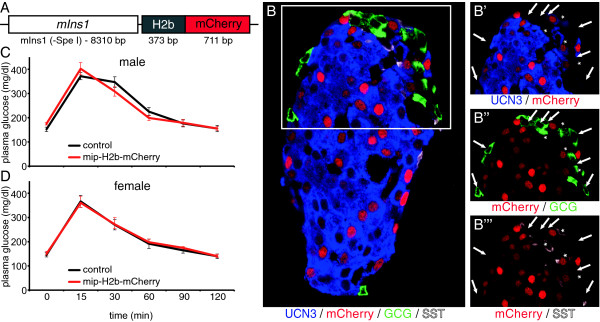
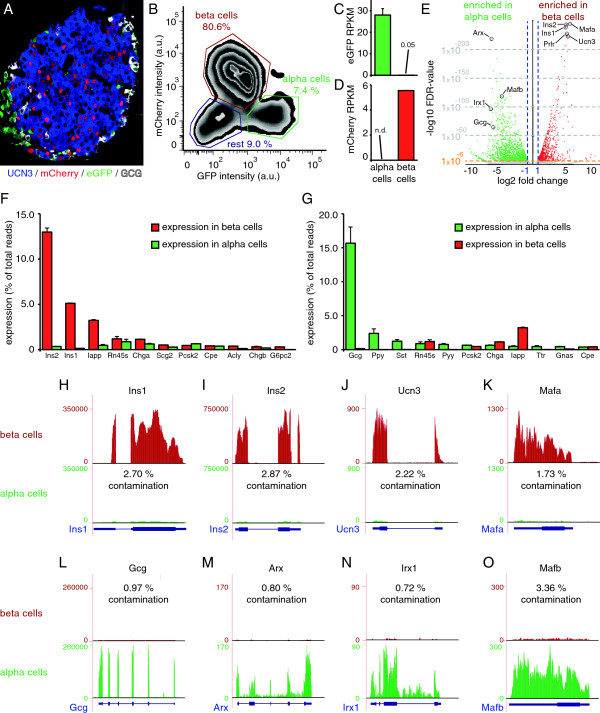
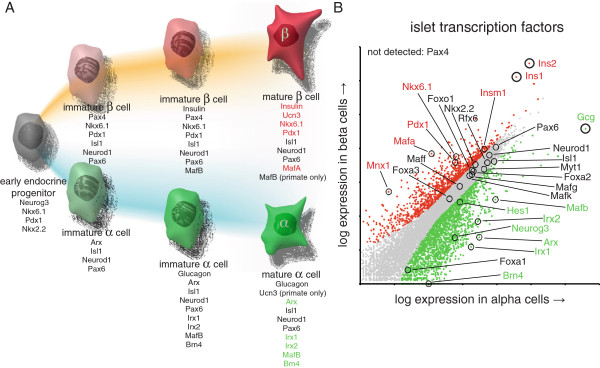
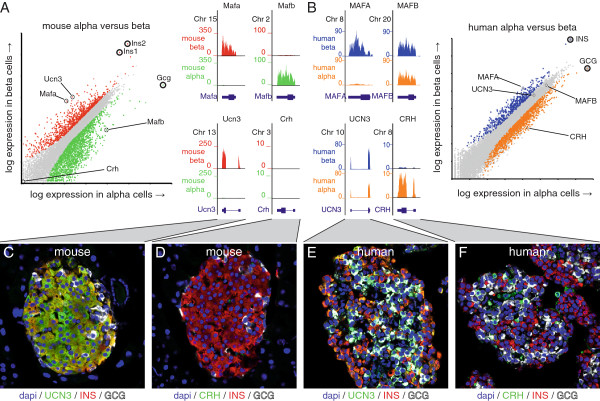
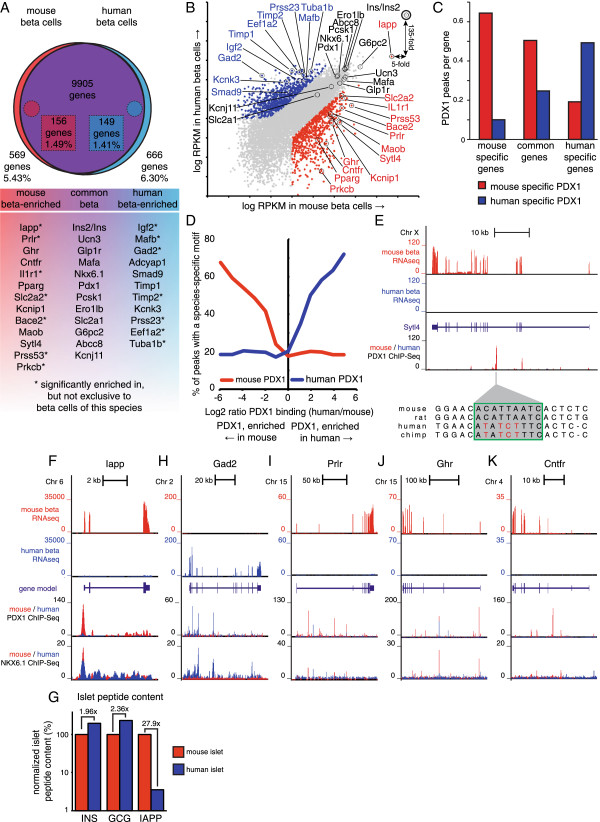
BACKGROUND: Insulin producing beta cell and glucagon producing alpha cells are colocalized in pancreatic islets in an arrangement that facilitates the coordinated release of the two principal hormones that regulate glucose homeostasis and prevent both hypoglycemia and diabetes. However, this intricate organization has also complicated the determination of the cellular source(s) of the expression of genes that are detected in the islet. This reflects a significant gap in our understanding of mouse islet physiology, which reduces the effectiveness by which mice model human islet disease. RESULTS: To overcome this challenge, we generated a bitransgenic reporter mouse that faithfully labels all beta and alpha cells in mouse islets to enable FACS-based purification and the generation of comprehensive transcriptomes of both populations. This facilitates systematic comparison across thousands of genes between the two major endocrine cell types of the islets of Langerhans whose principal hormones are of cardinal importance for glucose homeostasis. Our data leveraged against similar data for human beta cells reveal a core common beta cell transcriptome of 9900+ genes. Against the backdrop of overall similar beta cell transcriptomes, we describe marked differences in the repertoire of receptors and long non-coding RNAs between mouse and human beta cells. CONCLUSIONS: The comprehensive mouse alpha and beta cell transcriptomes complemented by the comparison of the global (dis)similarities between mouse and human beta cells represent invaluable resources to boost the accuracy by which rodent models offer guidance in finding cures for human diabetes.
Overview
The claims and statistics of this paper haven’t been checked yet.
Run the check — free, no account needed. It reads the open-access text and checks the sources it cites.
Integrity signals
Registry
Cites
Statistics
Figures
Verification
Claims the paper makes
The claims and statistics of this paper haven’t been checked yet.
Run the check — free, no account needed. It reads the open-access text and checks the sources it cites.
Claims other papers make about this one
Each is checked against this paper’s own text: does it say what the citing paper says it does?
The check wasn’t confident either way, so it gives no verdict — never disputed.
In the citing paper
“A tetrameric complex of two α- and two β-subunits, the Na-K ATPase of both mouse and human β-cells is predominantly composed of α1-, β1- and β3-subunits (56, 68).”
From Pancreatic β-Cell Electrical Activity and Insulin Secretion: Of Mice and Men (2018) · cites this paper as [56]
Experimental — accuracy not yet measuredThe check wasn’t confident either way, so it gives no verdict — never disputed.
In the citing paper
“However, Ryrs are only expressed at low levels in mouse β-cells (56).”
From Pancreatic β-Cell Electrical Activity and Insulin Secretion: Of Mice and Men (2018) · cites this paper as [56]
Experimental — accuracy not yet measuredThe check wasn’t confident either way, so it gives no verdict — never disputed.
In the citing paper
“Mouse β-cells express Slc1a5 (encoding the transporter ASCT20) (56), which mediates Na+-dependent uptake of glutamate into the β-cell (Appendix Figure 11A).”
From Pancreatic β-Cell Electrical Activity and Insulin Secretion: Of Mice and Men (2018) · cites this paper as [56]
Experimental — accuracy not yet measuredThe check wasn’t confident either way, so it gives no verdict — never disputed.
In the citing paper
“Interestingly, mouse β-cells express Epac2 at ≈10-fold higher levels than their human counterparts (56).”
From Pancreatic β-Cell Electrical Activity and Insulin Secretion: Of Mice and Men (2018) · cites this paper as [56]
Experimental — accuracy not yet measured
Self-check
Percentages, sums and reported differences re-computed from the paper’s own numbers.
The self-check needs the paper’s full text.
Citations
Cites
1 retracted
Baeyens, L., Lemper, M., Leuckx, G., Groef, S. D., Bonfanti, P., Stangé, G. M., Shemer, R., Nord, C., Scheel, D. W., Pan, F. C., et al. (2013) · Nature Biotechnology · doi:10.1038/nbt.2747 · Cited by 179
RetractedSTAR: ultrafast universal RNA-seq aligner
Dobin, A., Davis, C. A., Schlesinger, F., Drenkow, J., Zaleski, C., Jha, S., Batut, P., Chaisson, M., & Gingeras, T. R. (2013) · Bioinformatics · doi:10.1093/bioinformatics/bts635 · Cited by 51,709
BEDTools: a flexible suite of utilities for comparing genomic features
Quinlan, A. R., & Hall, I. M. (2010) · Bioinformatics · doi:10.1093/bioinformatics/btq033 · Cited by 27,437
Differential expression analysis for sequence count data
Anders, S., & Huber, W. (2010) · Genome Biology · doi:10.1186/gb-2010-11-10-r106 · Cited by 15,581
Trapnell, C., Williams, B. A., Pertea, G., Mortazavi, A., Kwan, G., van Baren, M. J., Salzberg, S. L., Wold, B. J., & Pachter, L. (2010) · Nature Biotechnology · doi:10.1038/nbt.1621 · Cited by 15,556
Huang, D. W., Sherman, B. T., & Lempicki, R. A. (2009) · Nucleic Acids Research · doi:10.1093/nar/gkn923 · Cited by 14,108
Mapping and quantifying mammalian transcriptomes by RNA-Seq
Mortazavi, A., Williams, B. A., McCue, K., Schaeffer, L., & Wold, B. (2008) · Nature Methods · doi:10.1038/nmeth.1226 · Cited by 13,696
Heinz, S., Benner, C., Spann, N., Bertolino, E., Lin, Y. C., Laslo, P., Cheng, J. X., Murre, C., Singh, H., & Glass, C. K. (2010) · Molecular Cell · doi:10.1016/j.molcel.2010.05.004 · Cited by 13,382
Self-citationLong non-coding RNAs: insights into functions
Mercer, T. R., Dinger, M. E., & Mattick, J. S. (2009) · Nature Reviews Genetics · doi:10.1038/nrg2521 · Cited by 5,654
Cabili, M. N., Trapnell, C., Goff, L. A., Koziol, M. J., Tazón‐Vega, B., Regev, A., & Rinn, J. L. (2011) · Genes & Development · doi:10.1101/gad.17446611 · Cited by 3,551
neurogenin3 is required for the development of the four endocrine cell lineages of the pancreas
Gradwohl, G., Dierich, A., LeMeur, M., & Guillemot, F. (2000) · Proceedings of the National Academy of Sciences · doi:10.1073/pnas.97.4.1607 · Cited by 1,435
The unique cytoarchitecture of human pancreatic islets has implications for islet cell function
Cabrera, O., Berman, D. M., Kenyon, N. S., Ricordi, C., Berggren, P.-O., & Caicedo, A. (2006) · Proceedings of the National Academy of Sciences · doi:10.1073/pnas.0510790103 · Cited by 1,312
Applied bioinformatics for the identification of regulatory elements
Wasserman, W. W., & Sandelin, A. (2004) · Nature Reviews Genetics · doi:10.1038/nrg1315 · Cited by 1,233
Glucose-induced β cell production of IL-1β contributes to glucotoxicity in human pancreatic islets
Maedler, K., Sergeev, P., Ris, F., Oberholzer, J., Joller‐Jemelka, H. I., Spinas, G. A., Kaiser, N., Halban, P. A., & Donath, M. Y. (2002) · Journal of Clinical Investigation · doi:10.1172/jci15318 · Cited by 1,141
Glucose-induced β cell production of IL-1β contributes to glucotoxicity in human pancreatic islets
Maedler, K., Sergeev, P., Ris, F., Oberholzer, J., Joller‐Jemelka, H. I., Spinas, G. A., Kaiser, N., Halban, P. A., & Donath, M. Y. (2017) · Journal of Clinical Investigation · doi:10.1172/jci92172 · Cited by 1,113
Islet Amyloid Polypeptide, Islet Amyloid, and Diabetes Mellitus
Westermark, P., Andersson, A., & Westermark, G. T. (2011) · Physiological Reviews · doi:10.1152/physrev.00042.2009 · Cited by 1,044
Type 1 Diabetes: Etiology, Immunology, and Therapeutic Strategies
Van Belle, T. L., Coppieters, K. T., & Von Herrath, M. G. (2011) · Physiological Reviews · doi:10.1152/physrev.00003.2010 · Cited by 1,022
Glucose-induced β cell production of IL-1β contributes to glucotoxicity in human pancreatic islets
Maedler, K., Sergeev, P., Ris, F., Oberholzer, J., Joller‐Jemelka, H. I., Spinas, G. A., Kaiser, N., Halban, P. A., & Donath, M. Y. (2002) · Journal of Clinical Investigation · doi:10.1172/jci200215318 · Cited by 1,006
The evolution of lncRNA repertoires and expression patterns in tetrapods
Necsulea, A., Soumillon, M., Warnefors, M., Liechti, A., Daish, T., Zeller, U., Baker, J. C., Grützner, F., & Kaessmann, H. (2014) · Nature · doi:10.1038/nature12943 · Cited by 984
Regulation of glucose transport by insulin: traffic control of GLUT4
Leto, D., & Saltiel, A. R. (2012) · Nature Reviews Molecular Cell Biology · doi:10.1038/nrm3351 · Cited by 848
Sosa‐Pineda, B., Chowdhury, K., Torres, M., Oliver, G. C., & Gruß, P. (1997) · Nature · doi:10.1038/386399a0 · Cited by 804
Brissova, M., Fowler, M. J., Nicholson, W. E., Chu, A., Hirshberg, B., Harlan, D. M., & Powers, A. C. (2005) · Journal of Histochemistry & Cytochemistry · doi:10.1369/jhc.5c6684.2005 · Cited by 797
Glucagonocentric restructuring of diabetes: A pathophysiologic and therapeutic makeover
Unger, R. H., & Cherrington, A. D. (2012) · Journal of Clinical Investigation · doi:10.1172/jci60016 · Cited by 670
Opposing actions of Arx and Pax4 in endocrine pancreas developmentPreprint
Collombat, P., Mansouri, A., Hecksher‐Sørensen, J., Serup, P., Krull, J., Gradwohl, G., & Gruß, P. (2003) · Genes & Development · doi:10.1101/gad.269003 · Cited by 598
Serotonin regulates pancreatic beta cell mass during pregnancy
Kim, H., Toyofuku, Y., Lynn, F. C., Chak, E., Uchida, T., Mizukami, H., Fujitani, Y., Kawamori, R., Miyatsuka, T., Kosaka, Y., et al. (2010) · Nature Medicine · doi:10.1038/nm.2173 · Cited by 586
Cytotoxicity of Human p I 7 Interleukin-1 for Pancreatic Islets of Langerhans
Bendtzen, K., Mandrup-Poulsen, T. R., Nerup, J., Nielsen, J. H., Dinarello, C. A., & Svenson, M. (1986) · Science · doi:10.1126/science.3086977 · Cited by 529
Pancreatic islet enhancer clusters enriched in type 2 diabetes risk-associated variants
Pasquali, L., Gaulton, K. J., Rodríguez‐Seguí, S. A., Mularoni, L., Miguel-Escalada, I., Akerman, İ., Tena, J. J., Morán, I., Gómez-Marín, C., van de Bunt, M., et al. (2014) · Nature Genetics · doi:10.1038/ng.2870 · Cited by 521
Inactivation of specific β cell transcription factors in type 2 diabetes
Guo, S., Dai, C., Guo, M., Taylor, B., Harmon, J. S., Sander, M., Robertson, R. P., Powers, A. C., & Stein, R. (2013) · Journal of Clinical Investigation · doi:10.1172/jci65390 · Cited by 520
Morán, I., Akerman, İ., van de Bunt, M., Xie, R., Benazra, M., Nammo, T., Arnes, L., Nakić, N., García-Hurtado, J., Rodríguez‐Seguí, S. A., et al. (2012) · Cell Metabolism · doi:10.1016/j.cmet.2012.08.010 · Cited by 450
Adaptive changes in pancreatic beta cell fractional area and beta cell turnover in human pregnancy
Butler, A. E., Cao-Minh, L., Galasso, R., Rizza, R. A., Corradin, A., Cobelli, C., & Butler, P. C. (2010) · Diabetologia · doi:10.1007/s00125-010-1809-6 · Cited by 435
Hormonal regulation of hepatic glucose production in health and disease
Lin, H. V., & Accili, D. (2011) · Cell Metabolism · doi:10.1016/j.cmet.2011.06.003 · Cited by 429
Inflammatory mediators and islet ?-cell failure: a link between type 1 and type 2 diabetes
Donath, M. Y., St�rling, J., Maedler, K., & Mandrup-Poulsen, T. (2003) · Journal of Molecular Medicine · doi:10.1007/s00109-003-0450-y · Cited by 422
Epigenomic plasticity enables human pancreatic α to β cell reprogramming
Bramswig, N. C., Everett, L. J., Schug, J., Dorrell, C., Liu, C., Luo, Y., Streeter, P. R., Naji, A., Grompe, M., & Kaestner, K. H. (2013) · Journal of Clinical Investigation · doi:10.1172/jci66514 · Cited by 416
Islet architecture: A comparative study
Kim, A., Miller, K. W. P., Jo, J., Kilimnik, G., Wojcik, P., & Hara, M. (2009) · Islets · doi:10.4161/isl.1.2.9480 · Cited by 384
Nkx6.1 Is Essential for Maintaining the Functional State of Pancreatic Beta Cells
Taylor, B. L., Liu, F., & Sander, M. (2013) · Cell Reports · doi:10.1016/j.celrep.2013.08.010 · Cited by 360
Pancreas dorsal lobe agenesis and abnormal islets of Langerhans in Hlxb9-deficient mice
Harrison, K. A., Thaler, J. P., Pfaff, S. L., Gu, H., & Kehrl, J. H. (1999) · Nature Genetics · doi:10.1038/12674 · Cited by 358
Innervation Patterns of Autonomic Axons in the Human Endocrine Pancreas
Rodriguez-Diaz, R., Abdulreda, M. H., Formoso, A. L., Gans, I., Ricordi, C., Berggren, P.-O., & Caicedo, A. (2011) · Cell Metabolism · doi:10.1016/j.cmet.2011.05.008 · Cited by 356 · cited 1×
“Mice are widely used as models for islet disease, despite marked differences between rodent and primate islet architecture and innervation [31-34].”
Inflammation in obesity and diabetes: islet dysfunction and therapeutic opportunity
Donath, M. Y., Dalmas, É., Sauter, N. S., & Böni-Schnetzler, M. (2013) · Cell Metabolism · doi:10.1016/j.cmet.2013.05.001 · Cited by 338
Rapid Turnover of Long Noncoding RNAs and the Evolution of Gene Expression
Kutter, C., Watt, S., Stefflova, K., Wilson, M. D., Gonçalves, Â., Ponting, C. P., Odom, D. T., & Marques, A. C. (2012) · PLoS Genetics · doi:10.1371/journal.pgen.1002841 · Cited by 335
Cooperation between brain and islet in glucose homeostasis and diabetes
Schwartz, M. W., Seeley, R. J., Tschöp, M. H., Woods, S. C., Morton, G. J., Myers, M. G., & D’Alessio, D. A. (2013) · Nature · doi:10.1038/nature12709 · Cited by 327
Physiologic action of glucagon on liver glucose metabolism
Ramnanan, C. J., Edgerton, D. S., Kraft, G., & Cherrington, A. D. (2011) · Diabetes Obesity and Metabolism · doi:10.1111/j.1463-1326.2011.01454.x · Cited by 293
Transgenic mice with green fluorescent protein-labeled pancreatic β-cells
Hara, M., Wang, X., Kawamura, T., Bindokas, V. P., Dizon, R. F., Alcoser, S. Y., Magnuson, M. A., & Bell, G. I. (2003) · American Journal of Physiology-Endocrinology and Metabolism · doi:10.1152/ajpendo.00321.2002 · Cited by 293
The MafA transcription factor appears to be responsible for tissue-specific expression of insulin
Matsuoka, T., Artner, I., Henderson, E., Means, A. L., Sander, M., & Stein, R. W. (2004) · Proceedings of the National Academy of Sciences · doi:10.1073/pnas.0306233101 · Cited by 274
Long Noncoding RNAs Usher In a New Era in the Biology of Enhancers
Ørom, U. A., & Shiekhattar, R. (2013) · Cell · doi:10.1016/j.cell.2013.08.028 · Cited by 254
Schaffer, A., Taylor, B., Benthuysen, J., Liu, J., Thorel, F., Yuan, W., Jiao, Y., Kaestner, K., Herrera, P., Magnuson, M., et al. (2013) · PLoS Genetics · doi:10.1371/journal.pgen.1003274 · Cited by 246
Proliferation of sorted human and rat beta cells
Parnaud, G., Bosco, D., Berney, T., Pattou, F., Kerr-Conte, J., Donath, M. Y., Bruun, C., Mandrup-Poulsen, T., Billestrup, N., & Halban, P. A. (2007) · Diabetologia · doi:10.1007/s00125-007-0855-1 · Cited by 232
Phylogeny and evolution of class-I helical cytokines
Huising, M. O., Kruiswijk, C. P., & Flik, G. (2006) · Journal of Endocrinology · doi:10.1677/joe.1.06591 · Cited by 229
Self-citationZhang, Q., Ramracheya, R., Lahmann, C., Tarasov, A., Bengtsson, M., Braha, O., Braun, M., Brereton, M., Collins, S., Galvanovskis, J., et al. (2013) · Cell Metabolism · doi:10.1016/j.cmet.2013.10.014 · Cited by 225
Artner, I., Lay, J. E. L., Hang, Y., Elghazi, L., Schisler, J. C., Henderson, E., Sosa‐Pineda, B., & Stein, R. W. (2006) · Diabetes · doi:10.2337/diabetes.55.02.06.db05-0946 · Cited by 209
Cell-type, allelic, and genetic signatures in the human pancreatic beta cell transcriptome
Nica, A. C., Ongen, H., Irminger, J.-C., Bosco, D., Berney, T., Antonarakis, S. E., Halban, P. A., & Dermitzakis, E. T. (2013) · Genome Research · doi:10.1101/gr.150706.112 · Cited by 189
Smith, S. B., Ee, H. C., Conners, J. R., & German, M. S. (1999) · Molecular and Cellular Biology · doi:10.1128/mcb.19.12.8272 · Cited by 188
Islet-enriched gene expression and glucose-induced insulin secretion in human and mouse islets
Dai, C., Brissova, M., Hang, Y., Thompson, C. S., Poffenberger, G., Shostak, A., Chen, Z., Stein, R. W., & Powers, A. C. (2011) · Diabetologia · doi:10.1007/s00125-011-2369-0 · Cited by 185
Riedel, M. J., Asadi, A., Wang, R., Ao, Z., Warnock, G. L., & Kieffer, T. J. (2011) · Diabetologia · doi:10.1007/s00125-011-2344-9 · Cited by 166
Gene Regulatory Networks Governing Pancreas Development
Arda, H. E., Benitez, C. M., & Kim, S. K. (2013) · Developmental Cell · doi:10.1016/j.devcel.2013.03.016 · Cited by 163
Holland, A. M., Góñez, L. J., Naselli, G., MacDonald, R. J., & Harrison, L. C. (2005) · Diabetes · doi:10.2337/diabetes.54.9.2586 · Cited by 163
Zuo, Y., Lubischer, J. L., Kang, H., Tian, L., Mikesh, M., Marks, A., Scofield, V. L., Maika, S. D., Newman, C. S., Krieg, P. A., et al. (2004) · Journal of Neuroscience · doi:10.1523/jneurosci.3934-04.2004 · Cited by 162
Wang, S., Jensen, J. N., Seymour, P. A., Hsu, W., Dor, Y., Sander, M., Magnuson, M. A., Serup, P., & Gu, G. (2009) · Proceedings of the National Academy of Sciences · doi:10.1073/pnas.0904247106 · Cited by 160
Placental lactogens induce serotonin biosynthesis in a subset of mouse beta cells during pregnancy
Schraenen, A., Lemaire, K., de Faudeur, G., Hendrickx, N., Granvik, M., Lommel, L. V., Mallet, J. J., Vodjdani, G., Gilon, P., Binart, N., et al. (2010) · Diabetologia · doi:10.1007/s00125-010-1913-7 · Cited by 150
Searching for statistically significant regulatory modules
Bailey, T. L., & Noble, W. S. (2003) · Bioinformatics · doi:10.1093/bioinformatics/btg1054 · Cited by 142
Beta cell proliferation and growth factors
Nielsen, J. H., Svensson, C., Galsgaard, E. D., Møldrup, A., & Billestrup, N. (1999) · Journal of Molecular Medicine · doi:10.1007/s001090050302 · Cited by 135
Urocortin III Is Expressed in Pancreatic β-Cells and Stimulates Insulin and Glucagon Secretion
Li, C., Chen, P., Vaughan, J. M., Blount, A. L., Chen, A., Jamieson, P. M., Rivier, J., Smith, M. S., & Vale, W. (2003) · Endocrinology · doi:10.1210/en.2002-0087 · Cited by 127
Research Resource: RNA-Seq Reveals Unique Features of the Pancreatic β-Cell Transcriptome
Ku, G., Kim, H., Vaughn, I. W., Hangauer, M. J., Oh, C., German, M. S., & McManus, M. T. (2012) · Molecular Endocrinology · doi:10.1210/me.2012-1176 · Cited by 116
Hoffman, B. G., Robertson, G., Zavaglia, B., Beach, M., Cullum, R., Lee, S., Soukhatcheva, G., Li, L., Wederell, E. D., Thiessen, N., et al. (2010) · Genome Research · doi:10.1101/gr.104356.109 · Cited by 115 · cited 2×
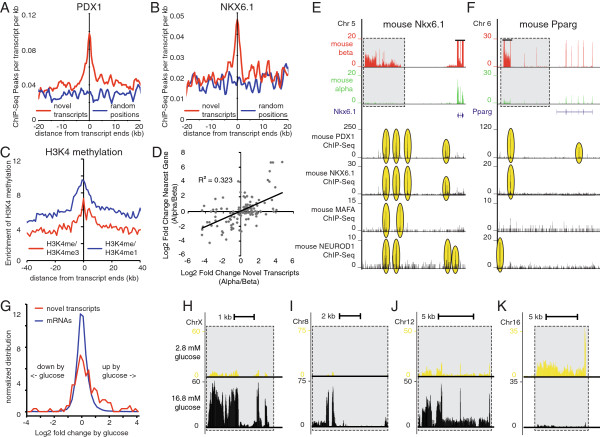
“They also were enriched for histone H3 lysine 4 (H3K4) mono-methyl and tri-methyl signatures that mark transcriptionally active loci (Figure 6C) [45].”
Couzin-Frankel, J. (2013) · Science · doi:10.1126/science.342.6161.922 · Cited by 107
Notch signalling suppresses apoptosis in adult human and mouse pancreatic islet cells
Dror, V., Nguyen, V., Walia, P., Kalynyak, T. B., Hill, J. A., & Johnson, J. D. (2007) · Diabetologia · doi:10.1007/s00125-007-0835-5 · Cited by 103
van der Meulen, T., Xie, R., Kelly, O. G., Vale, W., Sander, M., & Huising, M. (2012) · PLoS ONE · doi:10.1371/journal.pone.0052181 · Cited by 98
Self-citationHuising, M. O., van der Meulen, T., Vaughan, J. M., Matsumoto, M., Donaldson, C. J., Park, H., Billestrup, N., & Vale, W. (2009) · Proceedings of the National Academy of Sciences · doi:10.1073/pnas.0913610107 · Cited by 90
Self-citationIdentification and analysis of murine pancreatic islet enhancers
Tennant, B., Robertson, A. G., Kramer, M. M., Li, L., Zhang, X., Beach, M., Thiessen, N., Chiu, R., Mungall, K. L., Whiting, C. J., et al. (2012) · Diabetologia · doi:10.1007/s00125-012-2797-5 · Cited by 72
Research Resource: The Pdx1 Cistrome of Pancreatic Islets
Khoo, C., Yang, J., Weinrott, S. A., Kaestner, K. H., Naji, A., Schug, J., & Stoffers, D. A. (2012) · Molecular Endocrinology · doi:10.1210/me.2011-1231 · Cited by 72
Human Pancreatic β-Cell G1/S Molecule Cell Cycle Atlas
Fiaschi‐Taesch, N., Kleinberger, J. W., Salim, F. G., Troxell, R., Wills, R. C., Tanwir, M., Casinelli, G. P., Cox, A. E., Takane, K. K., Scott, D. K., et al. (2013) · Diabetes · doi:10.2337/db12-0777 · Cited by 69
Advances in our understanding of the pathophysiology of Type 1 diabetes: lessons from the NOD mouse
Jayasimhan, A., Mansour, K. P., & Slattery, R. M. (2013) · Clinical Science · doi:10.1042/cs20120627 · Cited by 63
Transcriptional regulation of α ‐cell differentiation
Bramswig, N. C., & Kaestner, K. H. (2011) · Diabetes Obesity and Metabolism · doi:10.1111/j.1463-1326.2011.01440.x · Cited by 56
Prolactin Supplementation to Culture Medium Improves β-Cell Survival
Yamamoto, T., Mita, A., Ricordi, C., Messinger, S., Miki, A., Sakuma, Y., Timoneri, F., Barker, S., Fornoni, A., Molano, R. D., et al. (2010) · Transplantation · doi:10.1097/tp.0b013e3181d98af1 · Cited by 41
From pancreatic islet formation to beta-cell regeneration
Ben-Othman, N., Courtney, M. L., Vieira, A., Pfeifer, A., Druelle, N., Gjernes, E., Faurite, B., Avolio, F., & Collombat, P. (2013) · Diabetes Research and Clinical Practice · doi:10.1016/j.diabres.2013.01.013 · Cited by 27
A mouse model for monitoring islet cell genesis and developing therapies for diabetes
Shimajiri, Y., Kosaka, Y., Scheel, D. W., Lynn, F. C., Kishimoto, N. Y., Wang, J., Zhao, S., & German, M. S. (2010) · Disease Models & Mechanisms · doi:10.1242/dmm.002998 · Cited by 13
Cited by
Sorted by citations
Single-Cell Transcriptome Profiling of Human Pancreatic Islets in Health and Type 2 Diabetes
Segerstolpe, Å., Palasantza, A., Eliasson, P., Andersson, E.-M., Andréasson, A.-C., Sun, X., Picelli, S., Sabirsh, A., Clausen, M., Bjursell, M. K., et al. (2016) · Cell Metabolism · doi:10.1016/j.cmet.2016.08.020 · Cited by 1,550
Baron, M., Veres, A., Wolock, S. L., Faust, A. L., Gaujoux, R., Vetere, A., Ryu, J. H., Wagner, B. K., Shen-Orr, S. S., Klein, A. M., et al. (2016) · Cell Systems · doi:10.1016/j.cels.2016.08.011 · Cited by 1,508
A Single-Cell Transcriptome Atlas of the Human Pancreas
Muraro, M. J., Dharmadhikari, G., Grün, D., Gröen, N., Dielen, T., Jansen, E., van Gurp, L., Engelse, M. A., Carlotti, F., de Koning, E. J. P., et al. (2016) · Cell Systems · doi:10.1016/j.cels.2016.09.002 · Cited by 1,307
Pancreatic β-Cell Electrical Activity and Insulin Secretion: Of Mice and Men
Rorsman, P., & Ashcroft, F. M. (2018) · Physiological Reviews · doi:10.1152/physrev.00008.2017 · Cited by 793
RNA Sequencing of Single Human Islet Cells Reveals Type 2 Diabetes Genes
Xin, Y., Kim, J., Okamoto, H., Ni, M., Wei, Y., Adler, C., Murphy, A. J., Yancopoulos, G. D., Lin, C., & Gromada, J. (2016) · Cell Metabolism · doi:10.1016/j.cmet.2016.08.018 · Cited by 684
Metadata
- Authors
- Benner, C., van der Meulen, T., Cacéres, E., Tigyi, K., Donaldson, C. J., & Huising, M. O.
- Affiliations
- Salk Institute for Biological Studies (US)
- Corresponding author
- Huising, Mark O
- Venue
- BMC Genomics
- Published
- 2014-07-22
- Volume
- 15
- Issue
- 1
- Pages
- 620-620
- ISSN
- 1471-2164 (ISSN-L)
- PMC
- PMC4124169
- OpenAlex
- W2139458690
- Cited by
- 302
- References
- 76
- Citations by year
- 2026: 9 · 2025: 18 · 2024: 11 · 2023: 44 · 2022: 24 · 2021: 30 · 2020: 33 · 2019: 20 · 2018: 27 · 2017: 41 · 2016: 24 · 2015: 18 · 2014: 1
- FWCI
- 27.78
- Type
- journal article
- Language
- en
- Open access
- gold
- doi.org
- Licence
- cc-by
- Locations
- BMC Genomics (publishedVersion, cc-by)
- PubMed Central (publishedVersion, cc-by)
- PubMed (publishedVersion)
- eScholarship (California Digital Library) (submittedVersion)
- Funders
- Vanderbilt University
- National Institutes of Health (DK026741)
- National Institute of Diabetes and Digestive and Kidney Diseases (P01DK026741)
- Topics
- Health Sciences › Medicine › Endocrinology, Diabetes and Metabolism › Pancreatic function and diabetes
- Life Sciences › Biochemistry, Genetics and Molecular Biology › Genetics › Diabetes and associated disorders
- Life Sciences › Biochemistry, Genetics and Molecular Biology › Molecular Biology › Single-cell and spatial transcriptomics
- Keywords
- pancreatic beta cells, alpha cells, islet transcriptome, long non-coding RNA, species differences, human-mouse comparison, receptor repertoire, diabetes model, glucose homeostasis, insulin, glucagon
- MeSH terms
- Red Fluorescent Protein, Animals, Flow Cytometry, Glucagon, Humans, Luminescent Proteins, Receptors, Cell Surface, RNA, Transcription Factors, Gene Library, Sequence Analysis, RNA, Glucagon-Secreting Cells, Insulin-Secreting Cells, Mice, Transcriptome, RNA, Long Noncoding
About these checks
Registry, retraction, Cites and statistics results are computed, not judged, with one exception: a printed reference that no index lists is read once by a model before it counts as a citation error. Claims are extracted by a model and kept only when their quote appears verbatim in the text; each cited source is then checked, with a model’s help, for whether it says what the claim relies on. Those verdicts can be wrong — read the claim’s quote and the cited source before relying on one.
Statistics and arithmetic are recomputed, not judged.
Confidence bands are shown only for fields calibrated on our annotated test set. None is calibrated yet, so no band is shown.
What counts as a claim ›How we measure confidence ›How we check this ›
Are you an author, or do you see a problem with this page? Request a review
