

The DOI matches its Crossref record; 75 of the 76 references it cites were found in a registry or an index.
The transcriptional landscape of mouse beta cells compared to human beta cells reveals notable species differences in long non-coding RNA and protein-coding gene expression
Open accessAbstract
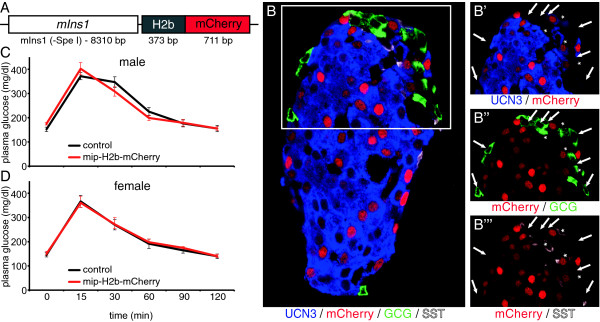
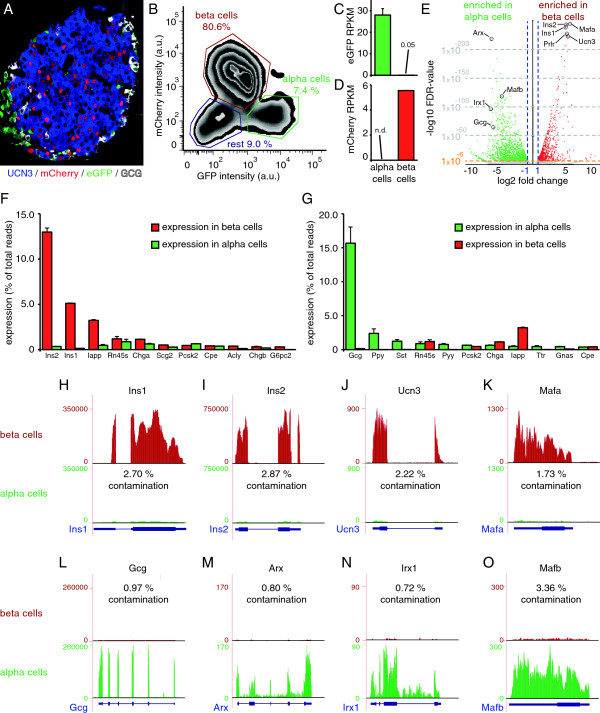
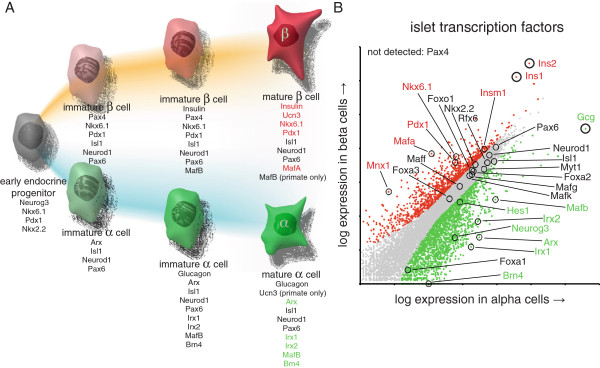
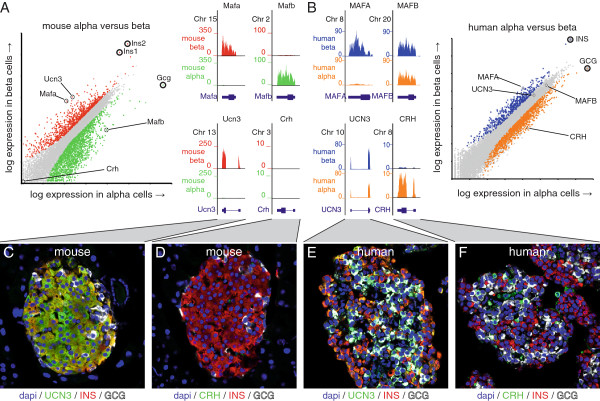
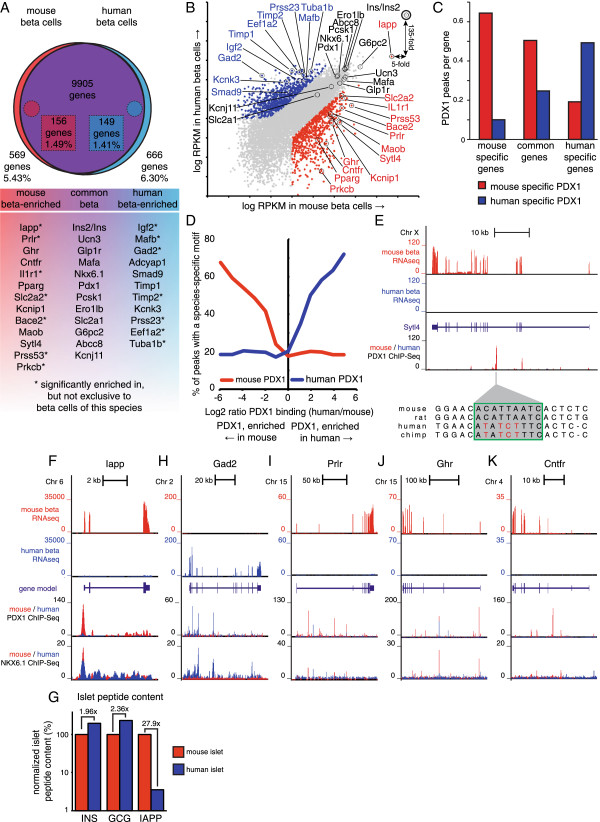
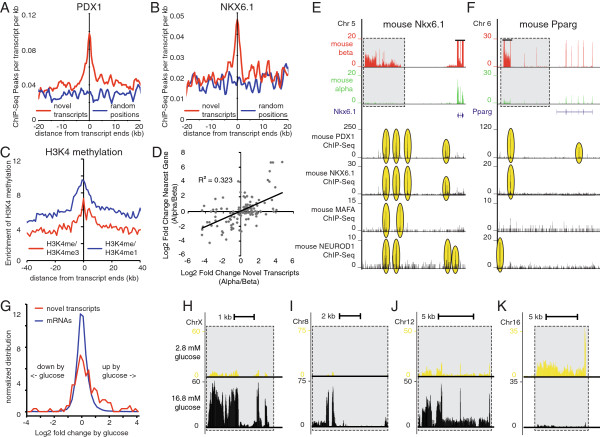
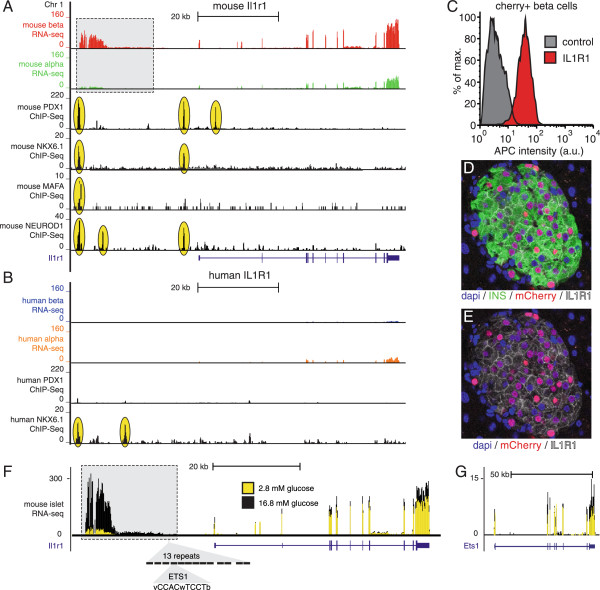
BACKGROUND: Insulin producing beta cell and glucagon producing alpha cells are colocalized in pancreatic islets in an arrangement that facilitates the coordinated release of the two principal hormones that regulate glucose homeostasis and prevent both hypoglycemia and diabetes. However, this intricate organization has also complicated the determination of the cellular source(s) of the expression of genes that are detected in the islet. This reflects a significant gap in our understanding of mouse islet physiology, which reduces the effectiveness by which mice model human islet disease. RESULTS: To overcome this challenge, we generated a bitransgenic reporter mouse that faithfully labels all beta and alpha cells in mouse islets to enable FACS-based purification and the generation of comprehensive transcriptomes of both populations. This facilitates systematic comparison across thousands of genes between the two major endocrine cell types of the islets of Langerhans whose principal hormones are of cardinal importance for glucose homeostasis. Our data leveraged against similar data for human beta cells reveal a core common beta cell transcriptome of 9900+ genes. Against the backdrop of overall similar beta cell transcriptomes, we describe marked differences in the repertoire of receptors and long non-coding RNAs between mouse and human beta cells. CONCLUSIONS: The comprehensive mouse alpha and beta cell transcriptomes complemented by the comparison of the global (dis)similarities between mouse and human beta cells represent invaluable resources to boost the accuracy by which rodent models offer guidance in finding cures for human diabetes.
Overview
The claims and statistics of this paper haven’t been checked yet.
Run the check — free, no account needed. It reads the open-access text and checks the sources it cites.
Integrity signals
Registry
Cites
Statistics
Figures
Verification
Claims the paper makes
The claims and statistics of this paper haven’t been checked yet.
Run the check — free, no account needed. It reads the open-access text and checks the sources it cites.
Claims other papers make about this one
Each is checked against this paper’s own text: does it say what the citing paper says it does?
The check wasn’t confident either way, so it gives no verdict — never disputed.
In the citing paper
“A tetrameric complex of two α- and two β-subunits, the Na-K ATPase of both mouse and human β-cells is predominantly composed of α1-, β1- and β3-subunits (56, 68).”
From Pancreatic β-Cell Electrical Activity and Insulin Secretion: Of Mice and Men (2018) · cites this paper as [56]
Experimental — accuracy not yet measuredThe check wasn’t confident either way, so it gives no verdict — never disputed.
In the citing paper
“However, Ryrs are only expressed at low levels in mouse β-cells (56).”
From Pancreatic β-Cell Electrical Activity and Insulin Secretion: Of Mice and Men (2018) · cites this paper as [56]
Experimental — accuracy not yet measuredThe check wasn’t confident either way, so it gives no verdict — never disputed.
In the citing paper
“Mouse β-cells express Slc1a5 (encoding the transporter ASCT20) (56), which mediates Na+-dependent uptake of glutamate into the β-cell (Appendix Figure 11A).”
From Pancreatic β-Cell Electrical Activity and Insulin Secretion: Of Mice and Men (2018) · cites this paper as [56]
Experimental — accuracy not yet measuredThe check wasn’t confident either way, so it gives no verdict — never disputed.
In the citing paper
“Interestingly, mouse β-cells express Epac2 at ≈10-fold higher levels than their human counterparts (56).”
From Pancreatic β-Cell Electrical Activity and Insulin Secretion: Of Mice and Men (2018) · cites this paper as [56]
Experimental — accuracy not yet measured
Self-check
Percentages, sums and reported differences re-computed from the paper’s own numbers.
The self-check needs the paper’s full text.
Citations
Cites
1 retracted
Baeyens, L., Lemper, M., Leuckx, G., Groef, S. D., Bonfanti, P., Stangé, G. M., Shemer, R., Nord, C., Scheel, D. W., Pan, F. C., et al. (2013) · Nature Biotechnology · doi:10.1038/nbt.2747 · Cited by 179
RetractedSTAR: ultrafast universal RNA-seq aligner
Dobin, A., Davis, C. A., Schlesinger, F., Drenkow, J., Zaleski, C., Jha, S., Batut, P., Chaisson, M., & Gingeras, T. R. (2013) · Bioinformatics · doi:10.1093/bioinformatics/bts635 · Cited by 51,709
BEDTools: a flexible suite of utilities for comparing genomic features
Quinlan, A. R., & Hall, I. M. (2010) · Bioinformatics · doi:10.1093/bioinformatics/btq033 · Cited by 27,437
Differential expression analysis for sequence count data
Anders, S., & Huber, W. (2010) · Genome Biology · doi:10.1186/gb-2010-11-10-r106 · Cited by 15,581
Trapnell, C., Williams, B. A., Pertea, G., Mortazavi, A., Kwan, G., van Baren, M. J., Salzberg, S. L., Wold, B. J., & Pachter, L. (2010) · Nature Biotechnology · doi:10.1038/nbt.1621 · Cited by 15,556
Huang, D. W., Sherman, B. T., & Lempicki, R. A. (2009) · Nucleic Acids Research · doi:10.1093/nar/gkn923 · Cited by 14,108
Mapping and quantifying mammalian transcriptomes by RNA-Seq
Mortazavi, A., Williams, B. A., McCue, K., Schaeffer, L., & Wold, B. (2008) · Nature Methods · doi:10.1038/nmeth.1226 · Cited by 13,696
Heinz, S., Benner, C., Spann, N., Bertolino, E., Lin, Y. C., Laslo, P., Cheng, J. X., Murre, C., Singh, H., & Glass, C. K. (2010) · Molecular Cell · doi:10.1016/j.molcel.2010.05.004 · Cited by 13,382
Self-citationLong non-coding RNAs: insights into functions
Mercer, T. R., Dinger, M. E., & Mattick, J. S. (2009) · Nature Reviews Genetics · doi:10.1038/nrg2521 · Cited by 5,654
Cabili, M. N., Trapnell, C., Goff, L. A., Koziol, M. J., Tazón‐Vega, B., Regev, A., & Rinn, J. L. (2011) · Genes & Development · doi:10.1101/gad.17446611 · Cited by 3,551
Cited by
Sorted by citations
Single-Cell Transcriptome Profiling of Human Pancreatic Islets in Health and Type 2 Diabetes
Segerstolpe, Å., Palasantza, A., Eliasson, P., Andersson, E.-M., Andréasson, A.-C., Sun, X., Picelli, S., Sabirsh, A., Clausen, M., Bjursell, M. K., et al. (2016) · Cell Metabolism · doi:10.1016/j.cmet.2016.08.020 · Cited by 1,550
Baron, M., Veres, A., Wolock, S. L., Faust, A. L., Gaujoux, R., Vetere, A., Ryu, J. H., Wagner, B. K., Shen-Orr, S. S., Klein, A. M., et al. (2016) · Cell Systems · doi:10.1016/j.cels.2016.08.011 · Cited by 1,508
A Single-Cell Transcriptome Atlas of the Human Pancreas
Muraro, M. J., Dharmadhikari, G., Grün, D., Gröen, N., Dielen, T., Jansen, E., van Gurp, L., Engelse, M. A., Carlotti, F., de Koning, E. J. P., et al. (2016) · Cell Systems · doi:10.1016/j.cels.2016.09.002 · Cited by 1,307
Pancreatic β-Cell Electrical Activity and Insulin Secretion: Of Mice and Men
Rorsman, P., & Ashcroft, F. M. (2018) · Physiological Reviews · doi:10.1152/physrev.00008.2017 · Cited by 793
RNA Sequencing of Single Human Islet Cells Reveals Type 2 Diabetes Genes
Xin, Y., Kim, J., Okamoto, H., Ni, M., Wei, Y., Adler, C., Murphy, A. J., Yancopoulos, G. D., Lin, C., & Gromada, J. (2016) · Cell Metabolism · doi:10.1016/j.cmet.2016.08.018 · Cited by 684
Dror, E., Dalmas, É., Meier, D. T., Wueest, S., Thévenet, J., Thienel, C., Timper, K., Nordmann, T. M., Traub, S., Schulze, F., et al. (2017) · Nature Immunology · doi:10.1038/ni.3659 · Cited by 411
Pancreatic β cell enhancers regulate rhythmic transcription of genes controlling insulin secretion
Perelis, M., Marcheva, B., Ramsey, K. M., Schipma, M. J., Hutchison, A. L., Taguchi, A., Peek, C. B., Hong, H., Huang, W., Omura, C., et al. (2015) · Science · doi:10.1126/science.aac4250 · Cited by 384
DiGruccio, M. R., Mawla, A. M., Donaldson, C. J., Noguchi, G. M., Vaughan, J., Cowing-Zitron, C., van der Meulen, T., & Huising, M. O. (2016) · Molecular Metabolism · doi:10.1016/j.molmet.2016.04.007 · Cited by 353
Self-citationProlactin — a pleiotropic factor in health and disease
Bernard, V., Young, J., & Binart, N. (2019) · Nature Reviews Endocrinology · doi:10.1038/s41574-019-0194-6 · Cited by 283
Urocortin3 mediates somatostatin-dependent negative feedback control of insulin secretion
van der Meulen, T., Donaldson, C. J., Cáceres, E., Hunter, A. E., Cowing-Zitron, C., Pound, L. D., Adams, M. W., Zembrzycki, A., Grove, K. L., & Huising, M. O. (2015) · Nature Medicine · doi:10.1038/nm.3872 · Cited by 256
Self-citationSingle‐cell transcriptomes reveal characteristic features of human pancreatic islet cell types
Li, J., Klughammer, J., Farlik, M., Penz, T., Spittler, A., Barbieux, C., Berishvili, E., Bock, C., & Kubicek, S. (2015) · EMBO Reports · doi:10.15252/embr.201540946 · Cited by 257
Human Pancreatic β Cell lncRNAs Control Cell-Specific Regulatory Networks
Akerman, İ., Tu, Z., Beucher, A., Rolando, D., Sauty-Colace, C., Benazra, M., Nakić, N., Yang, J., Wang, H., Pasquali, L., et al. (2016) · Cell Metabolism · doi:10.1016/j.cmet.2016.11.016 · Cited by 249
A 3D map of the islet routes throughout the healthy human pancreas
Ionescu-Tirgoviste, C., Gagniuc, P. A., Gagniuc, E., Mardare, L., Popescu, I., Dima, S., & Militaru, M. (2015) · Scientific Reports · doi:10.1038/srep14634 · Cited by 251
Age-Dependent Pancreatic Gene Regulation Reveals Mechanisms Governing Human β Cell Function
Arda, H. E., Li, L., Tsai, J., Torre, E. A., Rosli, Y., Peiris, H., Spitale, R. C., Dai, C., Gu, X., Qu, K., et al. (2016) · Cell Metabolism · doi:10.1016/j.cmet.2016.04.002 · Cited by 222
Virgin Beta Cells Persist throughout Life at a Neogenic Niche within Pancreatic Islets
van der Meulen, T., Mawla, A. M., DiGruccio, M. R., Adams, M. W., Nies, V. J. M., Dólleman, S., Liu, S., Ackermann, A. M., Cáceres, E. L., Hunter, A. E., et al. (2017) · Cell Metabolism · doi:10.1016/j.cmet.2017.03.017 · Cited by 231
Self-citationIslet inflammation in type 2 diabetes
Böni‐Schnetzler, M., & Meier, D. T. (2019) · Seminars in Immunopathology · doi:10.1007/s00281-019-00745-4 · Cited by 225
The glucoregulatory actions of leptin
D'souza, A. M., Neumann, U. H., Glavas, M. M., & Kieffer, T. J. (2017) · Molecular Metabolism · doi:10.1016/j.molmet.2017.04.011 · Cited by 220
Dean, E. D., Li, M., Prasad, N., Wisniewski, S., Deylen, A. V., Spaeth, J. M., Maddison, L. A., Botros, A., Sedgeman, L. R., Bozadjieva-Kramer, N., et al. (2017) · Cell Metabolism · doi:10.1016/j.cmet.2017.05.011 · Cited by 210
Vitamin D Switches BAF Complexes to Protect β Cells
Wei, Z., Yoshihara, E., He, N., Hah, N., Fan, W., Pinto, A. F. M., Huddy, T. F., Wang, Y., Ross, B., Estepa, G., et al. (2018) · Cell · doi:10.1016/j.cell.2018.04.013 · Cited by 207
Marroqui, L., Dos Santos, R. S., Op de beeck, A., Coomans de Brachène, A., Marselli, L., Marchetti, P., & Eizirik, D. L. (2017) · Diabetologia · doi:10.1007/s00125-016-4201-3 · Cited by 203
Long Noncoding RNAs: A New Regulatory Code in Metabolic Control
Zhao, X.-Y., & Lin, J. D. (2015) · Trends in Biochemical Sciences · doi:10.1016/j.tibs.2015.08.002 · Cited by 196
Diagnosis and treatment of type 1 diabetes at the dawn of the personalized medicine era
Akil, A. A., Yassin, E., Al-Maraghi, A., ALIYEV, E. E., Al-Malki, K., & Fakhro, K. A. (2021) · Journal of Translational Medicine · doi:10.1186/s12967-021-02778-6 · Cited by 217
Cystic fibrosis–related diabetes is caused by islet loss and inflammation
Hart, N. J., Aramandla, R., Poffenberger, G., Fayolle, C., Thames, A. H., Bautista, A., Spigelman, A. F., Babon, J. A. B., DeNicola, M., Dadi, P. K., et al. (2018) · JCI Insight · doi:10.1172/jci.insight.98240 · Cited by 183
The CRF Family of Neuropeptides and their Receptors - Mediators of the Central Stress Response
Dedic, N., Chen, A., & Deussing, J. M. (2017) · Current Molecular Pharmacology · doi:10.2174/1874467210666170302104053 · Cited by 187
CHABOSSEAU, P. L., & Rutter, G. A. (2016) · Archives of Biochemistry and Biophysics · doi:10.1016/j.abb.2016.05.022 · Cited by 176
The α-cell in diabetes mellitus
Gromada, J., Chabosseau, P., & Rutter, G. A. (2018) · Nature Reviews Endocrinology · doi:10.1038/s41574-018-0097-y · Cited by 143
Mechanisms of Macrophage Polarization in Insulin Signaling and Sensitivity
Orliaguet, L., Dalmas, É., Drareni, K., Venteclef, N., & Alzaïd, F. (2020) · Frontiers in Endocrinology · doi:10.3389/fendo.2020.00062 · Cited by 151
Pseudotemporal Ordering of Single Cells Reveals Metabolic Control of Postnatal β Cell Proliferation
Zeng, C., Mulas, F., Sui, Y., Guan, T., Miller, N., Tan, Y., Liu, F., Jin, W. L., Carrano, A. C., Huising, M. O., et al. (2017) · Cell Metabolism · doi:10.1016/j.cmet.2017.04.014 · Cited by 141
Self-citationUse of human islets to understand islet biology and diabetes: progress, challenges and suggestions
Hart, N. J., & Powers, A. C. (2018) · Diabetologia · doi:10.1007/s00125-018-4772-2 · Cited by 152
Reversal of β cell de-differentiation by a small molecule inhibitor of the TGFβ pathway
Blum, B., Roose, A. N., Barrandon, O., Maehr, R., Arvanites, A. C., Davidow, L. S., Davis, J. C., Peterson, Q. P., Rubin, L. L., & Melton, D. A. (2014) · eLife · doi:10.7554/elife.02809 · Cited by 139
Integrating the inputs that shape pancreatic islet hormone release
Noguchi, G. M., & Huising, M. O. (2019) · Nature Metabolism · doi:10.1038/s42255-019-0148-2 · Cited by 138
Self-citationPDX1 is the cornerstone of pancreatic β-cell functions and identity
Ebrahim, N., Shakirova, K. S., & Dashinimaev, E. B. (2022) · Frontiers in Molecular Biosciences · doi:10.3389/fmolb.2022.1091757 · Cited by 134
Ramracheya, R., Chapman, C., Chibalina, M., Dou, H., Miranda, C., González, A., Moritoh, Y., Shigeto, M., Zhang, Q., Braun, M., et al. (2018) · Physiological Reports · doi:10.14814/phy2.13852 · Cited by 128
Tsonkova, V. G., Sand, F. W., Wolf, X. A., Grunnet, L. G., Ringgaard, A. K., Ingvorsen, C., Winkel, L., Kalisz, M., Dalgaard, K., Bruun, C., et al. (2017) · Molecular Metabolism · doi:10.1016/j.molmet.2017.12.007 · Cited by 127
Navigating the Depths and Avoiding the Shallows of Pancreatic Islet Cell Transcriptomes
Mawla, A. M., & Huising, M. O. (2019) · Diabetes · doi:10.2337/dbi18-0019 · Cited by 119
Self-citationRole of transcription factors in the transdifferentiation of pancreatic islet cells
van der Meulen, T., & Huising, M. O. (2015) · Journal of Molecular Endocrinology · doi:10.1530/jme-14-0290 · Cited by 114
Self-citationTritschler, S., Theis, F. J., Lickert, H., & Böttcher, A. (2017) · Molecular Metabolism · doi:10.1016/j.molmet.2017.06.021 · Cited by 112
Paracrine regulation of insulin secretion
Huising, M. O. (2020) · Diabetologia · doi:10.1007/s00125-020-05213-5 · Cited by 116
Self-citationPetrenko, V., Saini, C., Giovannoni, L., Gobet, C., Sage, D., Unser, M., Heddad-Masson, M., Gu, G., Bosco, D., Gachon, F., et al. (2017) · Genes & Development · doi:10.1101/gad.290379.116 · Cited by 108
Ruan, Y., Lin, N., Ma, Q., Chen, R., Zhang, Z., Wen, W., Chen, H., & Sun, J. M. (2018) · Cellular Physiology and Biochemistry · doi:10.1159/000488434 · Cited by 106
Artemether Does Not Turn α Cells into β Cells
van der Meulen, T., Lee, S., Noordeloos, E., Donaldson, C. J., Adams, M. W., Noguchi, G. M., Mawla, A. M., & Huising, M. O. (2017) · Cell Metabolism · doi:10.1016/j.cmet.2017.10.002 · Cited by 103
Self-citationAn AI Agent for Fully Automated Multi‐Omic Analyses
Zhou, J., Zhang, B., Li, G., Chen, X., Li, H., Xu, X., Chen, S., He, W., Xu, C., Liu, L., et al. (2024) · Advanced Science · doi:10.1002/advs.202407094 · Cited by 104
Briant, L. J. B., Dodd, M. S., Chibalina, M. V., Rorsman, N. J. G., Johnson, P., Carmeliet, P., Rorsman, P., & Knudsen, J. G. (2018) · Cell Reports · doi:10.1016/j.celrep.2018.05.035 · Cited by 101
Control of insulin secretion by GLP-1
Jones, B. J., Bloom, S. R., Buenaventura, T., Tomás, A., & Rutter, G. A. (2018) · Peptides · doi:10.1016/j.peptides.2017.12.013 · Cited by 99
Hall, E., Nitert, M. D., Volkov, P., Malmgren, S., Mulder, H., Bacos, K., & Ling, C. (2017) · Molecular and Cellular Endocrinology · doi:10.1016/j.mce.2017.11.019 · Cited by 102
Covid-19 and Diabetes: A Complex Bidirectional Relationship
Muniangi-Muhitu, H., Akalestou, E., Salem, V., Misra, S., Oliver, N. S., & Rutter, G. A. (2020) · Frontiers in Endocrinology · doi:10.3389/fendo.2020.582936 · Cited by 98
20-HETE promotes glucose-stimulated insulin secretion in an autocrine manner through FFAR1
Tunaru, S., Bonnavion, R., Brandenburger, I., Preussner, J., Thomas, D., Scholich, K., & Offermanns, S. (2018) · Nature Communications · doi:10.1038/s41467-017-02539-4 · Cited by 96
Long Noncoding RNAs in Diabetes and Diabetic Complications
Leung, A., & Natarajan, R. D. (2017) · Antioxidants and Redox Signaling · doi:10.1089/ars.2017.7315 · Cited by 90
Neurotrophin Signaling Is Required for Glucose-Induced Insulin Secretion
Houtz, J., Borden, P. M., Ceasrine, A. M., Minichiello, L., & Kuruvilla, R. (2016) · Developmental Cell · doi:10.1016/j.devcel.2016.10.003 · Cited by 91
Type 2 diabetes risk alleles in PAM impact insulin release from human pancreatic β-cells
Thomsen, S. K., Raimondo, A., Hastoy, B., Sengupta, S., Dai, X., Bautista, A., Censin, J. C., Payne, A. J., Umapathysivam, M. M., Spigelman, A. F., et al. (2018) · Nature Genetics · doi:10.1038/s41588-018-0173-1 · Cited by 86
Disallowed and Allowed Gene Expression: Two Faces of Mature Islet Beta Cells
Lemaire, K., Thorrez, L., & Schuit, F. C. (2016) · Annual Review of Nutrition · doi:10.1146/annurev-nutr-071715-050808 · Cited by 86
NLRP3 inflammasome and IL-1β pathway in type 2 diabetes and atherosclerosis: Friend or foe?
Chen, X., Zhang, D., Li, Y., Wang, W., Bei, W., & Guo, J. (2021) · Pharmacological Research · doi:10.1016/j.phrs.2021.105885 · Cited by 84
Grgurević, L., Christensen, G. L., Schulz, T. J., & Vukičević, S. (2015) · Cytokine & Growth Factor Reviews · doi:10.1016/j.cytogfr.2015.12.009 · Cited by 84
A comparative analysis of human and mouse islet G-protein coupled receptor expression
Amisten, S., Atanes, P., Hawkes, R. G., Ruz‐Maldonado, I., Liu, B., Parandeh, F., Zhao, M., Huang, G. C., Salehi, A. A., & Persaud, S. J. (2017) · Scientific Reports · doi:10.1038/srep46600 · Cited by 78
Motterle, A., Gattesco, S., Peyot, M., Esguerra, J. L. S., Gómez-Ruiz, A., Laybutt, D. R., Gilon, P., Burdet, F., Ibberson, M. R., Eliasson, L., et al. (2017) · Molecular Metabolism · doi:10.1016/j.molmet.2017.08.005 · Cited by 72
Sirtuin 6 regulates glucose-stimulated insulin secretion in mouse pancreatic beta cells
Xiong, X., Wang, G., Tao, R., Wu, P., Kono, T., Li, K., Ding, W., Tong, X., Tersey, S. A., Harris, R. A., et al. (2015) · Diabetologia · doi:10.1007/s00125-015-3778-2 · Cited by 74
SurfaceGenie: a web-based application for prioritizing cell-type-specific marker candidates
Waas, M., Snarrenberg, S. T., Littrell, J., Jones, R. A., Hansen, P. A., Corbett, J. A., & Gundry, R. L. (2020) · Bioinformatics · doi:10.1093/bioinformatics/btaa092 · Cited by 70
BACH2 inhibition reverses β cell failure in type 2 diabetes models
Son, J., Ding, H., Farb, T. B., Efanov, A. M., Sun, J., Gore, J. L., Syed, S. K., Lei, Z., Wang, Q., Accili, D., et al. (2021) · Journal of Clinical Investigation · doi:10.1172/jci153876 · Cited by 72
Marroquí, L., Lopes, M., dos Santos, R. S., Grieco, F. A., Roivainen, M., Richardson, S. J., Morgan, N. G., Beeck, A. O. D., & Eizirik, D. L. (2015) · eLife · doi:10.7554/elife.06990 · Cited by 70
Böni‐Schnetzler, M., Häuselmann, S. P., Dalmas, É., Meier, D. T., Thienel, C., Traub, S., Schulze, F., Steiger, L., Dror, E., Martin, P., et al. (2018) · Cell Reports · doi:10.1016/j.celrep.2018.01.063 · Cited by 77
ATF5 regulates β-cell survival during stress
Juliana, C. A., Yang, J., Rozo, A. V., Good, A. L., Groff, D., Wang, S.-Z., Green, M. R., & Stoffers, D. A. (2017) · Proceedings of the National Academy of Sciences · doi:10.1073/pnas.1620705114 · Cited by 68
Long Non-Coding RNAs in Metabolic Organs and Energy Homeostasis
Giroud, M., & Scheideler, M. (2017) · International Journal of Molecular Sciences · doi:10.3390/ijms18122578 · Cited by 69
β‐Cell dysfunction in diabetes: a crisis of identity?
Brereton, M. F., Rohm, M., & Ashcroft, F. M. (2016) · Diabetes Obesity and Metabolism · doi:10.1111/dom.12732 · Cited by 71
Rottner, A. K., Ye, Y., Navarro‐Guerrero, E., Rajesh, V., Pollner, A., Bevacqua, R. J., Yang, J., Spigelman, A. F., Baronio, R., Bautista, A., et al. (2022) · Nature Genetics · doi:10.1038/s41588-022-01261-2 · Cited by 63
Loss of the transcription factor MAFB limits β-cell derivation from human PSCs
Russell, R., Carnese, P., Hennings, T. G., Walker, E. M., Russ, H. A., Liu, J. S., Giacometti, S., Stein, R. W., & Hebrok, M. (2020) · Nature Communications · doi:10.1038/s41467-020-16550-9 · Cited by 62
The Difference δ-Cells Make in Glucose Control
Huising, M. O., van der Meulen, T., Huang, J. L., Pourhosseinzadeh, M. S., & Noguchi, G. M. (2018) · Physiology · doi:10.1152/physiol.00029.2018 · Cited by 65
Self-citationChen, H., Kleinberger, J. W., Takane, K. K., Salim, F. G., Fiaschi‐Taesch, N., Pappas, K., Parsons, R. E., Jiang, J., Zhang, Y., Liu, H., et al. (2015) · Diabetes · doi:10.2337/db15-0083 · Cited by 59
Pathways governing development of stem cell‐derived pancreatic β cells: lessons from embryogenesis
Al‐Khawaga, S., Memon, B., Butler, A. E., Taheri, S., Abou‐Samra, A., & Abdelalim, E. M. (2017) · Biological reviews/Biological reviews of the Cambridge Philosophical Society · doi:10.1111/brv.12349 · Cited by 59
A transcriptional cross species map of pancreatic islet cells
Tritschler, S., Thomas, M., Böttcher, A., Ludwig, B., Schmid, J., Schubert, U., Kemter, E., Wolf, E., Lickert, H., & Theis, F. J. (2022) · Molecular Metabolism · doi:10.1016/j.molmet.2022.101595 · Cited by 57
Pullen, T. J., Huising, M. O., & Rutter, G. A. (2017) · Frontiers in Genetics · doi:10.3389/fgene.2017.00041 · Cited by 57
Self-citationSinger, R. A., Arnes, L., Cui, Y., Wang, J., Gao, Y., Guney, M. A., Burnum-Johnson, K., Rabadán, R., Ansong, C. K., Orr, G., et al. (2019) · Cell Metabolism · doi:10.1016/j.cmet.2019.09.013 · Cited by 58
Szlapinski, S. K., & Hill, D. J. (2020) · Current Vascular Pharmacology · doi:10.2174/1570161118666200320111209 · Cited by 56
Gupta, P., Sharma, G., Lahiri, A., & Barthwal, M. K. (2021) · Journal of Leukocyte Biology · doi:10.1002/jlb.3a0620-348rr · Cited by 56
Tarifeño-Saldivia, E., Lavergne, A., Bernard, A., Padamata, K., Bergemann, D., Voz, M. L., Manfroid, I., & Peers, B. (2017) · BMC Biology · doi:10.1186/s12915-017-0362-x · Cited by 57
The Hippo Signaling Pathway in Pancreatic β-Cells: Functions and Regulations
Ardestani, A. D., & Maedler, K. (2017) · Endocrine Reviews · doi:10.1210/er.2017-00167 · Cited by 57
CRISPR-based genome editing in primary human pancreatic islet cells
Bevacqua, R. J., Dai, X.-Q., Lam, J. Y., Gu, X., Friedlander, M. S. H., Tellez, K., Miguel-Escalada, I., Bonàs‐Guarch, S., Atla, G., Zhao, W., et al. (2021) · Nature Communications · doi:10.1038/s41467-021-22651-w · Cited by 55
Carboneau, L., Allan, J. A., Townsend, S. E., Kimple, M. E., BREYER, R. M., & GANNON, M. A. (2017) · Molecular Metabolism · doi:10.1016/j.molmet.2017.04.002 · Cited by 54
A Versatile, Portable Intravital Microscopy Platform for Studying Beta-cell Biology In Vivo
Reissaus, C. A., Piñeros, A. R., Twigg, A. N., Orr, K. S., Conteh, A. M., Irizarry, M. M. M., Kamocka, M. M., Day, R. N., Tersey, S. A., Mirmira, R. G., et al. (2019) · Scientific Reports · doi:10.1038/s41598-019-44777-0 · Cited by 53
Intra-islet GLP-1, but not CCK, is necessary for β-cell function in mouse and human islets
de Souza, A. H., Tang, J., Yadev, A. K., Saghafi, S. T., Kibbe, C. R., Linnemann, A. K., Merrins, M. J., & Davis, D. B. (2020) · Scientific Reports · doi:10.1038/s41598-020-59799-2 · Cited by 52
Genes Affecting β-Cell Function in Type 1 Diabetes
Fløyel, T., Kaur, S., & Pociot, F. (2015) · Current Diabetes Reports · doi:10.1007/s11892-015-0655-9 · Cited by 51
Disrupted RNA editing in beta cells mimics early-stage type 1 diabetes
Knebel, U. E., Peleg, S., Dai, C., Cohen‐Fultheim, R., Jonsson, S., Poznyak, K., Israeli, M., Zamashanski, L., Gläser, B., Levanon, E. Y., et al. (2023) · Cell Metabolism · doi:10.1016/j.cmet.2023.11.011 · Cited by 50
Epigenetic modifications and long noncoding RNAs influence pancreas development and function
Arnes, L., & Sussel, L. (2015) · Trends in Genetics · doi:10.1016/j.tig.2015.02.008 · Cited by 54
Ramzy, A., Asadi, A., & Kieffer, T. J. (2020) · Diabetes · doi:10.2337/db19-0276 · Cited by 54
MafB Is Critical for Glucagon Production and Secretion in Mouse Pancreatic α Cells In Vivo
Katoh, M., Jung, Y., Ugboma, C. M., Shimbo, M., Kuno, A., Basha, W. A. A., Kudo, T., Oishi, H., & Takahashi, S. (2018) · Molecular and Cellular Biology · doi:10.1128/mcb.00504-17 · Cited by 52
Sex Differences in Maturation of Human Embryonic Stem Cell–Derived β Cells in Mice
Saber, N., Bruin, J. E., O’Dwyer, S. M., Schuster, H., Rezania, A., & Kieffer, T. J. (2018) · Endocrinology · doi:10.1210/en.2018-00048 · Cited by 49
Interrogating islets in health and disease with single-cell technologies
Carrano, A. C., Mulas, F., Zeng, C., & Sander, M. (2017) · Molecular Metabolism · doi:10.1016/j.molmet.2017.04.012 · Cited by 49
Georgiadou, E., Haythorne, E., Dickerson, M. T., López–Noriega, L., Pullen, T. J., Xavier, G. D. S., Davis, S., Martínez-Sánchez, A., Semplici, F., Rizzuto, R., et al. (2020) · Diabetologia · doi:10.1007/s00125-020-05148-x · Cited by 50
Non-Coding RNA in Pancreas and β-Cell Development
Wong, W. K. M., Sørensen, A. E., Joglekar, M. V., Hardikar, A., & Dalgaard, L. T. (2018) · Non-Coding RNA · doi:10.3390/ncrna4040041 · Cited by 51
Inflammation driven metabolic regulation and adaptation in macrophages
Gupta, S., & Sarangi, P. P. (2022) · Clinical Immunology · doi:10.1016/j.clim.2022.109216 · Cited by 46
Neuronal-ILC2 interactions regulate pancreatic glucagon and glucose homeostasis
Šestan, M., Raposo, B., Rendas, M. A., Brea, D., Pirzgalska, R. M., Rasteiro, A., Aliseychik, M., Godinho, I., Ribeiro, H., Carvalho, T., et al. (2025) · Science · doi:10.1126/science.adi3624 · Cited by 46
SIX2 and SIX3 coordinately regulate functional maturity and fate of human pancreatic β cellsPreprint
Bevacqua, R. J., Lam, J. Y., Peiris, H. S., Whitener, R. L., Kim, S., Gu, X., Friedlander, M. S. H., & Kim, S. K. (2021) · Genes & Development · doi:10.1101/gad.342378.120 · Cited by 45
Bitsi, S., Eid, L. E., Manchanda, Y., Oqua, A. I., Mohamed, N., Hansen, B., Suba, K., Rutter, G. A., Salem, V., Jones, B. J., et al. (2023) · Science Advances · doi:10.1126/sciadv.adf7737 · Cited by 44
Simpson, S., Smith, L. I. F., & Bowe, J. E. (2018) · Current Opinion in Pharmacology · doi:10.1016/j.coph.2018.08.004 · Cited by 45
Zhang, F. F., Liu, Y. H., Wang, D. W., Liu, T. S., Yang, Y., Guo, J., Pan, Y., Zhang, Y. F., Du, H., Li, L., et al. (2020) · Diabetologia · doi:10.1007/s00125-020-05090-y · Cited by 46
SIX2 Regulates Human β Cell Differentiation from Stem Cells and Functional Maturation In Vitro
Velazco-Cruz, L., Goedegebuure, M. M., Maxwell, K. G., Augsornworawat, P., Hogrebe, N. J., & Millman, J. R. (2020) · Cell Reports · doi:10.1016/j.celrep.2020.107687 · Cited by 45
Huang, Y. H., Xu, Y., Lu, Y., Zhu, S., Guo, Y., Sun, C., Xu, L., Chen, X., Zhao, Y., Yu, B., et al. (2019) · Biomaterials · doi:10.1016/j.biomaterials.2019.119266 · Cited by 43
Molecular and genetic regulation of pig pancreatic islet cell development
Kim, S., Whitener, R. L., Peiris, H. S., Gu, X., Chang, C., Lam, J. Y., Camuñas-Soler, J., Park, I., Bevacqua, R. J., Tellez, K., et al. (2020) · Development · doi:10.1242/dev.186213 · Cited by 41
Lipid Droplets’ Role in the Regulation of β-Cell Function and β-Cell Demise in Type 2 Diabetes
Tong, X., Liu, S., Stein, R. W., & Imai, Y. (2022) · Endocrinology · doi:10.1210/endocr/bqac007 · Cited by 41
TASK-1 Potassium Channels Limit Pancreatic α-Cell Calcium Influx and Glucagon Secretion
Dadi, P. K., Luo, B., Vierra, N. C., & Jacobson, D. A. (2015) · Molecular Endocrinology · doi:10.1210/me.2014-1321 · Cited by 40
Islet Long Noncoding RNAs: A Playbook for Discovery and Characterization
Singer, R. A., & Sussel, L. (2018) · Diabetes · doi:10.2337/dbi18-0001 · Cited by 40
Metadata
- Authors
- Benner, C., van der Meulen, T., Cacéres, E., Tigyi, K., Donaldson, C. J., & Huising, M. O.
- Affiliations
- Salk Institute for Biological Studies (US)
- Corresponding author
- Huising, Mark O
- Venue
- BMC Genomics
- Published
- 2014-07-22
- Volume
- 15
- Issue
- 1
- Pages
- 620-620
- ISSN
- 1471-2164 (ISSN-L)
- PMC
- PMC4124169
- OpenAlex
- W2139458690
- Cited by
- 302
- References
- 76
- Citations by year
- 2026: 9 · 2025: 18 · 2024: 11 · 2023: 44 · 2022: 24 · 2021: 30 · 2020: 33 · 2019: 20 · 2018: 27 · 2017: 41 · 2016: 24 · 2015: 18 · 2014: 1
- FWCI
- 27.78
- Type
- journal article
- Language
- en
- Open access
- gold
- doi.org
- Licence
- cc-by
- Locations
- BMC Genomics (publishedVersion, cc-by)
- PubMed Central (publishedVersion, cc-by)
- PubMed (publishedVersion)
- eScholarship (California Digital Library) (submittedVersion)
- Funders
- Vanderbilt University
- National Institutes of Health (DK026741)
- National Institute of Diabetes and Digestive and Kidney Diseases (P01DK026741)
- Topics
- Health Sciences › Medicine › Endocrinology, Diabetes and Metabolism › Pancreatic function and diabetes
- Life Sciences › Biochemistry, Genetics and Molecular Biology › Genetics › Diabetes and associated disorders
- Life Sciences › Biochemistry, Genetics and Molecular Biology › Molecular Biology › Single-cell and spatial transcriptomics
- Keywords
- pancreatic beta cells, alpha cells, islet transcriptome, long non-coding RNA, species differences, human-mouse comparison, receptor repertoire, diabetes model, glucose homeostasis, insulin, glucagon
- MeSH terms
- Red Fluorescent Protein, Animals, Flow Cytometry, Glucagon, Humans, Luminescent Proteins, Receptors, Cell Surface, RNA, Transcription Factors, Gene Library, Sequence Analysis, RNA, Glucagon-Secreting Cells, Insulin-Secreting Cells, Mice, Transcriptome, RNA, Long Noncoding
About these checks
Registry, retraction, Cites and statistics results are computed, not judged, with one exception: a printed reference that no index lists is read once by a model before it counts as a citation error. Claims are extracted by a model and kept only when their quote appears verbatim in the text; each cited source is then checked, with a model’s help, for whether it says what the claim relies on. Those verdicts can be wrong — read the claim’s quote and the cited source before relying on one.
Statistics and arithmetic are recomputed, not judged.
Confidence bands are shown only for fields calibrated on our annotated test set. None is calibrated yet, so no band is shown.
What counts as a claim ›How we measure confidence ›How we check this ›
Are you an author, or do you see a problem with this page? Request a review
