

Insights into the CRISPR/Cas system of Gardnerella vaginalis
Open accessThe DOI matches its Crossref record; 58 of the 58 references it cites were found in a registry or an index.
Abstract
BACKGROUND: Gardnerella vaginalis is identified as the predominant colonist of the vaginal tracts of women diagnosed with bacterial vaginosis (BV). G. vaginalis can be isolated from healthy women, and an asymptomatic BV state is also recognised. The association of G. vaginalis with different clinical phenotypes could be explained by different cytotoxicity of the strains, presumably based on disparate gene content. The contribution of horizontal gene transfer to shaping the genomes of G. vaginalis is acknowledged. The CRISPR loci of the recently discovered CRISPR/Cas microbial defence system provide a historical view of the exposure of prokaryotes to a variety of foreign genetic elements. RESULTS: The CRISPR/Cas loci were analysed using available sequence data from three G. vaginalis complete genomes and 18 G. vaginalis draft genomes in the NCBI database, as well as PCR amplicons of the genomic DNA of 17 clinical isolates. The cas genes in the CRISPR/Cas loci of G. vaginalis belong to the E. coli subtype. Approximately 20% of the spacers had matches in the GenBank database. Sequence analysis of the CRISPR arrays revealed that nearly half of the spacers matched G. vaginalis chromosomal sequences. The spacers that matched G. vaginalis chromosomal sequences were determined to not be self-targeting and were presumably neither constituents of mobile-element-associated genes nor derived from plasmids/viruses. The protospacers targeted by these spacers displayed conserved protospacer-adjacent motifs. CONCLUSIONS: The CRISPR/Cas system has been identified in about one half of the analysed G. vaginalis strains. Our analysis of CRISPR sequences did not reveal a potential link between their presence and the virulence of the G. vaginalis strains. Based on the origins of the spacers found in the G. vaginalis CRISPR arrays, we hypothesise that the transfer of genetic material among G. vaginalis strains could be regulated by the CRISPR/Cas mechanism. The present study is the first attempt to determine and analyse the CRISPR loci of bacteria isolated from the human vaginal tract.
Overview
The claims and statistics of this paper haven’t been checked yet.
Free: it reads the open-access text and checks the first 5 claims that cite a source we can check. Create a free account to check every claim.
Integrity signals
Registry
Cites
Statistics
Figures
Verification
Claims the paper makes
The claims and statistics of this paper haven’t been checked yet.
Free: it reads the open-access text and checks the first 5 claims that cite a source we can check. Create a free account to check every claim.
Claims other papers make about this one
Each is checked against this paper’s own text: does it say what the citing paper says it does?
The source backs part of the claim, not all of it — or backs it for a different population, condition or comparison.
In the citing paper
“This result reflects the bias in the available data on databases, as previously re ported (Pleckaityte et al., 2012; Yang et al., 2015).”
From Characterization of Limnospira platensis PCC 9108 R-M and CRISPR-Cas systems (2024) · cites this paper as Pleckaityte et al., 2012
Experimental — accuracy not yet measured
Self-check
Percentages, sums and reported differences re-computed from the paper’s own numbers.
The self-check needs the paper’s full text.
Citations
Cites
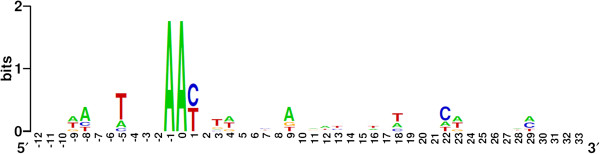
WebLogo: A Sequence Logo Generator: Figure 1
Crooks, G. E., Hon, G., Chandonia, J.-M., & Brenner, S. E. (2004) · Genome Research · doi:10.1101/gr.849004 · Cited by 12,386
CRISPR Provides Acquired Resistance Against Viruses in Prokaryotes
Barrangou, R., Fremaux, C., Deveau, H., Richards, M., Boyaval, P., Moineau, S., Romero, D. A., & Horvath, P. (2007) · Science · doi:10.1126/science.1138140 · Cited by 5,947 · cited 2×
“The spacer sequences often originate from invading viruses and plasmids [25,26].”
BackgroundGasiunas, G., Barrangou, R., Horvath, P., & Siksnys, V. (2012) · Proceedings of the National Academy of Sciences · doi:10.1073/pnas.1208507109 · Cited by 2,769
CRISPR/Cas, the Immune System of Bacteria and Archaea
Horvath, P., & Barrangou, R. (2010) · Science · doi:10.1126/science.1179555 · Cited by 2,465 · cited 2×
“Clustered Regularly Interspaced Short Palindromic Repeats (CRISPRs) and their associated cas genes constitute a bacterial and archaeal defence mechanism against exogenous nucleic acids [23].”
BackgroundVienna RNA secondary structure server
Hofacker, I. L. (2003) · Nucleic Acids Research · doi:10.1093/nar/gkg599 · Cited by 2,345 · cited 2×
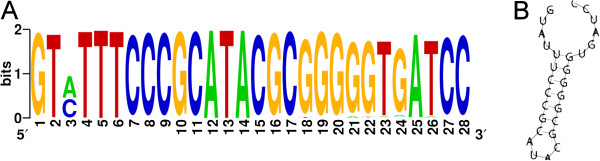
“(A) S height of the letters shows the relative frequency of the corresponding nu repeat region predicted using RNAfold [36].”
Evolution and classification of the CRISPR–Cas systems
Makarova, K. S., Haft, D. H., Barrangou, R., Brouns, S. J. J., Charpentier, E., Horvath, P., Moineau, S., Mojica, F. J. M., Wolf, Y. I., Yakunin, A. F., et al. (2011) · Nature Reviews Microbiology · doi:10.1038/nrmicro2577 · Cited by 2,331
Centers for Disease Control and Prevention Sexually Transmitted Diseases Treatment Guidelines
Workowski, K. A., & Berman, S. M. (2007) · Clinical Infectious Diseases · doi:10.1086/511430 · Cited by 1,973
CRISPR Interference Limits Horizontal Gene Transfer in Staphylococci by Targeting DNA
Marraffini, L. A., & Sontheimer, E. J. (2008) · Science · doi:10.1126/science.1165771 · Cited by 1,642 · cited 2×
“The spacer sequences often originate from invading viruses and plasmids [25,26].”
BackgroundMultiple Alignment of DNA Sequences with MAFFT
Katoh, K., Asimenos, G., & Toh, H. (2009) · Methods in Molecular Biology · doi:10.1007/978-1-59745-251-9_3 · Cited by 1,438 · cited 1×
“Spacers were compared to one another using the MAFFT program [33].”
MethodShort motif sequences determine the targets of the prokaryotic CRISPR defence system
Mojica, F. J. M., Díez-Villaseñor, C., García-Martínez, J., & Almendros, C. (2009) · Microbiology · doi:10.1099/mic.0.023960-0 · Cited by 1,426 · cited 2×
“vaginalis chromosome displayed conserved protospacer adjacent motif (PAM) sequences [41,42].”
Background
Cited by
CRISPR–Cas systems: beyond adaptive immunity
Westra, E. R., Buckling, A., & Fineran, P. C. (2014) · Nature Reviews Microbiology · doi:10.1038/nrmicro3241 · Cited by 323
Weng, S.-L., Chiu, C.-M., Lin, F.-M., Huang, W.-C., Liang, C., Yang, T., Yang, T.-L., Liu, C.-Y., Wu, W.-Y., Chang, Y.-A., et al. (2014) · PLoS ONE · doi:10.1371/journal.pone.0110152 · Cited by 308
“vaginalis is the predominant cause of bacterial vaginosis in women by disrupting normal vaginal microflora [39].”
BackgroundHorizontal gene transfer in human pathogens
Juhas, M. (2015) · Critical Reviews in Microbiology · doi:10.3109/1040841x.2013.804031 · Cited by 222
“Similarly, genome analysis did not reveal a link between CRISPR and Gardnerella vaginalis virulence (Pleckaityte et al., 2012), thus the importance of CRISPR for the pathogenicity will require further investigation.”
BackgroundIranzo, J., Lobkovsky, A. E., Wolf, Y. I., & Koonin, E. V. (2013) · Journal of Bacteriology · doi:10.1128/jb.00412-13 · Cited by 92
“In bacteria, the CRISPR-Cas loci demonstrate notable evolutionary volatility, with many cases reported when some of several closely related bacterial strains possessed CRISPR-Cas, but the others lacked it (41, 42).”
BackgroundDeng, Z.-L., Gottschick, C., Bhuju, S., Masur, C., Abels, C., & Wagner‐Döbler, I. (2018) · mSphere · doi:10.1128/mspheredirect.00262-18 · Cited by 91
“coli 377 subtype and were found in about half of the clinical isolates (36).”
BackgroundComparative pan genome analysis of oral Prevotella species implicated in periodontitis
Ibrahim, M., Subramanian, A., & Anishetty, S. (2017) · Functional & Integrative Genomics · doi:10.1007/s10142-017-0550-3 · Cited by 72
“Matches identified in phage genomes and the red-complex bacteria genomes with greater than 90% identity over at least 20 bp of the spacer sequence were considered significant as mentioned in a similar study of CRISPR-Cas systems in Gardnerella vaginalis by Pleckaityte et al. (2012).”
BackgroundSurvival and Evolution of CRISPR–Cas System in Prokaryotes and Its Applications
Shabbir, M. A. B., Hao, H., Shabbir, M. Z., Hussain, H. I., Zahid, I., Ahmed, S., Sattar, A., Iqbal, M., Li, J., & Yuan, Z. (2016) · Frontiers in Immunology · doi:10.3389/fimmu.2016.00375 · Cited by 66
Vaginotypes of the human vaginal microbiome
Mancabelli, L., Tarracchini, C., Milani, C., Lugli, G. A., Fontana, F., Turroni, F., van Sinderen, D., & Ventura, M. (2021) · Environmental Microbiology · doi:10.1111/1462-2920.15441 · Cited by 63
Koonin, E. V., & Wolf, Y. I. (2014) · Molecular BioSystems · doi:10.1039/c4mb00438h · Cited by 58
Yang, C., Lin, F., Li, Q., Li, T., & Zhao, J. (2015) · Frontiers in Microbiology · doi:10.3389/fmicb.2015.00394 · Cited by 44
“…genes in both query genomes, To reflect the whole genome relatedness on nucleotide level, ANI and tetranucleotide frequency correlation coefficients (TETRA) analysis were performed by JSpecies software (Richter and Rossello-Mora, 2009) based on MUMmer (Kurtz et al., 2004) algorithm implementation.”
BackgroundMethodOstria-Hernández, M. L., Sánchez-Vallejo, C. J., Ibarra, J. A., & Castro‐Escarpulli, G. (2015) · BMC Research Notes · doi:10.1186/s13104-015-1285-7 · Cited by 44
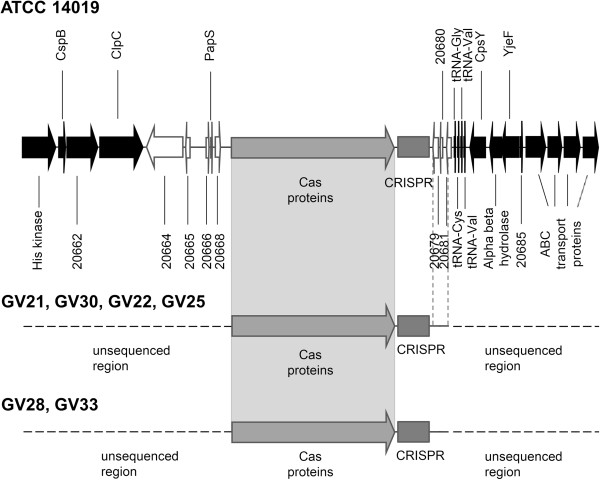
“The location of CRISPR/Cas systems is quite variable in other bacteria that have them for example in Gardnerella vaginalis it is located between clpC and the gene encoding for tRNAGly [36]; in Campylobacter jejuni (strain UPTC CF89-12) and Campylobacter lari (strain RM2100), the system is found between the tmrU struct…”
BackgroundResultInfluentialGenomes of Gardnerella Strains Reveal an Abundance of Prophages within the Bladder Microbiome
Malki, K., Shapiro, J. W., Price, T. K., Hilt, E. E., Thomas-White, K. J., Sircar, T., Rosenfeld, A. B., Kuffel, G. R., Zilliox, M. J., Wolfe, A. J., et al. (2016) · PLoS ONE · doi:10.1371/journal.pone.0166757 · Cited by 45
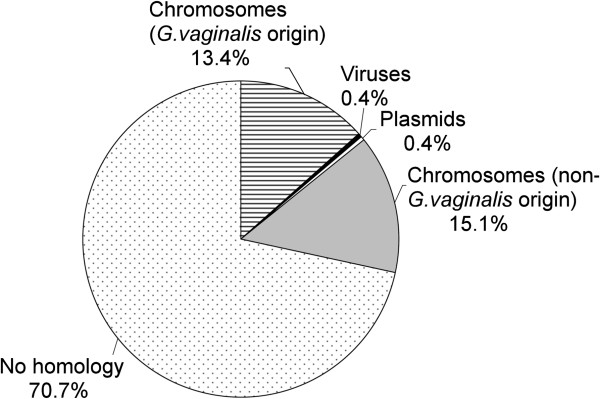
“7% of the spacers showed no homology to sequences within the GenBank database [21].”
BackgroundFriendly Fire: Biological Functions and Consequences of Chromosomal Targeting by CRISPR-Cas Systems
Heussler, G. E., & O’Toole, G. A. (2016) · Journal of Bacteriology · doi:10.1128/jb.00086-16 · Cited by 37
Lateral Gene Transfer Shapes Diversity of Gardnerella spp.
Bohr, L. L., Mortimer, T. D., & Pepperell, C. S. (2020) · Frontiers in Cellular and Infection Microbiology · doi:10.3389/fcimb.2020.00293 · Cited by 28
Transkingdom Analysis of the Female Reproductive Tract Reveals Bacteriophages form Communities
Madere, F. S., Sohn, M. B., Winbush, A. K., Barr, B., Grier, A., Palumbo, C. D., Java, J., Meiring, T. L., Williamson, A., Bekker, L., et al. (2022) · Viruses · doi:10.3390/v14020430 · Cited by 26
“vaginalis in our analysis may be attributable to the number of CRISPR/Cas defense loci found in Gardnerella species, which could provide more resistance to bacteriophage infection and establish an uneven bacteriophage burden between bacteria in BV [74].”
BackgroundCalleros, L., Betancor, L., Iraola, G., Méndez, A., Morsella, C., Paolicchi, F. A., Silveyra, S., Velilla, A. V., & Pérez, R. (2016) · Journal of Microbiological Methods · doi:10.1016/j.mimet.2016.11.012 · Cited by 25
Insights into the Human Virome Using CRISPR Spacers from Microbiomes
Hidalgo-Cantabrana, C., Sanozky-Dawes, R., & Barrangou, R. (2018) · Viruses · doi:10.3390/v10090479 · Cited by 27
“Indeed, the analyses of CRISPR spacers from Gardnerella strains have not provided clues about the invasive nucleic acid attacking this species, due to the absence of homology against databases [60], reflecting the need for increased virome sequencing data from phage and other viruses.”
BackgroundIn silico trio biomarkers for bacterial vaginosis revealed by species dominance network analysis
Ma, Z. S., & Ellison, A. M. (2021) · Computational and Structural Biotechnology Journal · doi:10.1016/j.csbj.2021.05.020 · Cited by 20
“Some even consider G. vaginalis as the predominant cause of BV [4], including asymptomatic BV (ABV) [16,56].”
BackgroundDetection and Analysis of CRISPRs of Shigella
Guo, X., Wang, Y., Duan, G., Xue, Z., Wang, L., Wang, P., Qiu, S., Xi, Y., & Yang, H. (2014) · Current Microbiology · doi:10.1007/s00284-014-0683-8 · Cited by 16
Motif depletion in bacteriophages infecting hosts with CRISPR systems
Kupczok, A., & Bollback, J. P. (2014) · BMC Genomics · doi:10.1186/1471-2164-15-663 · Cited by 15
“I-E AAY Gardnerella vaginalis computational [17]”
Wietz, M., Millán‐Aguiñaga, N., & Jensen, P. R. (2014) · BMC Genomics · doi:10.1186/1471-2164-15-936 · Cited by 14
“The Creative Commons Public Domain g/publicdomain/zero/1.0/) applies to the data made available in this article, Comparative genomics has given insight into CRISPRs from Actinobacteria [10,11], Firmicutes [12,13], Cyanobacteria [14,15], enterobacteria [16], and Archaea [17].”
BackgroundInfluentialLamberti, M., Terán, L. C., López, F. E., Pescaretti, M. D. L. M., & Delgado, M. A. (2022) · BMC Genomics · doi:10.1186/s12864-022-08711-5 · Cited by 11
Characterization of Limnospira platensis PCC 9108 R-M and CRISPR-Cas systems
Castillo, M., Guevara, G., Baldanta, S., Rodríguez, P. S., Agudo, L., Nogales, J., Carrasco, A. D., Arribas-Aguilar, F., Pérez-Pérez, J., García, J. L., et al. (2024) · Microbiological Research · doi:10.1016/j.micres.2023.127572 · Cited by 7
Ruiz-Hernández, U. E., Pelcastre-Rodríguez, L. I., Cabrero-Martínez, O. A., Hernández‐Cortez, C., & Castro‐Escarpulli, G. (2020) · Computational Biology and Chemistry · doi:10.1016/j.compbiolchem.2020.107381 · Cited by 6
Oshima, K., Hisamatsu, S., Toh, H., Nakano, A., Kiuchi, M., Kuroyanagi, H., Morita, H., & Hattori, M. (2015) · Genome Announcements · doi:10.1128/genomea.00286-15 · Cited by 6
“JCM 11026T contained a clustered regularly interspaced short palindromic repeats (CRISPR) (7, 8) region (697, 302 to 699, 159), and eight CRISPR-associated genes (GAVG_0509 to GAVG_0516) were en- coded upstream of the CRISPR region.”
BackgroundType II Restriction-Modification System from Gardnerella vaginalis ATCC 14018
Bulavaitė, A., Dalgėdienė, I., Michailovienė, V., & Plečkaitytė, M. (2020) · Pathogens · doi:10.3390/pathogens9090703 · Cited by 5
“The spacer contents in the CRISPR arrays suggest that the loci in CRISPR-positive isolates were active [27].”
BackgroundBouzek, H. K., Zepeda‐Rivera, M. A., Srinivasan, S., Lee, E. M., Strenk, S. M., Jones, D. S., McMahon, E. F., Fiedler, T. L., Kostovski, M., France, M., et al. (2026) · Nature Communications · doi:10.1038/s41467-026-74458-2 · Cited by 6
Kularatne, B. M. D. N., & Hill, J. E. (2025) · Microbiology Spectrum · doi:10.1128/spectrum.00481-25 · Cited by 4
“CRISPR/Cas sequences have been reported in some strains of G. vaginalis (65); however, none were identified in G. vaginalis ATCC 49145.”
Kenarkoohi, A., Abdoli, A., Rostamzad, A., Rashnavadi, M., Naserifar, R., Abdi, J., Shams, M., Bozorgomid, A., Saeb, S., Al-Fahad, D., et al. (2023) · BioMed Research International · doi:10.1155/2023/8069559 · Cited by 1
“This program searches the protein or nucleotide sequences and compares them to di ff erent databases and presents the results based on statistical signi fi cance between matches [40, 41].”
BackgroundMethodMridula, V. G. (2019) · International Journal for Research in Applied Science and Engineering Technology · doi:10.22214/ijraset.2019.7125
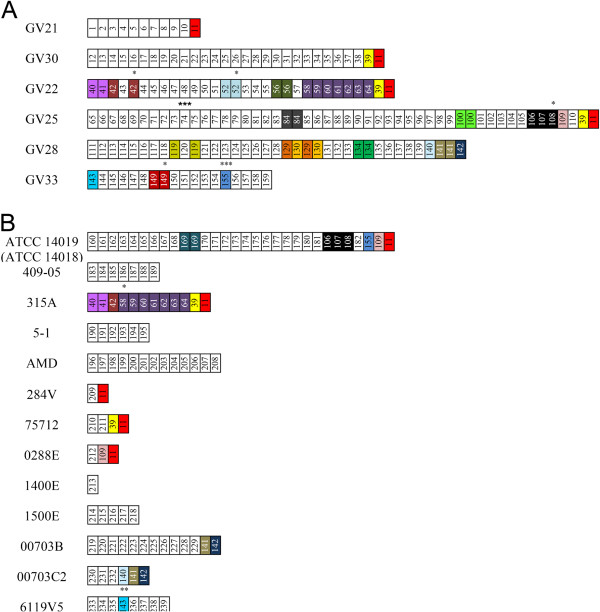
“The same number and color represent identical spacers (23).”
BackgroundSousa, E. G., Felice, A. G., Dominici, F. V., Jaiswal, A. K., Pedrosa, M. L. C., Reis, L. P., Gomes, L. G. R., Azevedo, V., & Soares, S. D. C. (2024) · Venereology · doi:10.3390/venereology3030010 · Cited by 1
“In addition, studies have shown a high genomic plasticity of G. vaginalis strains, demonstrating that HGT can occur, suggesting a high capacity to acquire genes that may be related to antibiotic resistance [22–24].”
BackgroundResultTorrez Lamberti, M. F., Terán, L. C., López, F. E., Pescaretti, M. D. L. M., & Delgado, M. A. (2022) · Figshare · doi:10.6084/m9.figshare.20279422
Torrez Lamberti, M. F., Terán, L. C., López, F. E., Pescaretti, M. D. L. M., & Delgado, M. A. (2022) · Figshare · doi:10.6084/m9.figshare.20279437
Metadata
- Authors
- Pleckaityte, M., Zilnyte, M., & Zvirbliene, A.
- Affiliations
- Vilnius University (LT)
- ORCID
- Zilnyte, Milda
- Venue
- BMC Microbiology
- Published
- 2012
- Volume
- 12
- Issue
- 1
- Pages
- 301
- ISSN
- 1471-2180 (ISSN-L)
- PMC
- PMC3559282
- OpenAlex
- W2035320449
- Cited by
- 33
- References
- 58
- Citations by year
- 2025: 2 · 2024: 1 · 2023: 2 · 2022: 4 · 2021: 2 · 2020: 3 · 2019: 1 · 2018: 2 · 2017: 1 · 2016: 4 · 2015: 3 · 2014: 6 · 2013: 2
- FWCI
- 1.42
- Type
- journal article
- Language
- en
- Open access
- gold
- doi.org
- Licence
- cc-by
- Locations
- BMC Microbiology (publishedVersion, cc-by)
- Europe PMC (PubMed Central) (publishedVersion, cc-by)
- PubMed Central (publishedVersion, cc-by)
- PubMed (publishedVersion)
- DOAJ (DOAJ: Directory of Open Access Journals) (submittedVersion, cc-by-sa)
- Topics
- Life Sciences › Biochemistry, Genetics and Molecular Biology › Molecular Biology › CRISPR and Genetic Engineering
- Life Sciences › Immunology and Microbiology › Microbiology › Reproductive tract infections research
- Life Sciences › Biochemistry, Genetics and Molecular Biology › Genetics › Bacterial Genetics and Biotechnology
- Keywords
- Gardnerella vaginalis, CRISPR-Cas, CRISPR spacers, protospacer adjacent motif, horizontal gene transfer, bacterial virulence, bacterial vaginosis, vaginal microbiota
- MeSH terms
- DNA, Bacterial, Female, Gardnerella vaginalis, Humans, Molecular Sequence Data, Recombination, Genetic, Genetic Variation, Virulence, Genome, Bacterial, Sequence Analysis, DNA, DNA, Intergenic, Gene Transfer, Horizontal, Genetic Loci
About these checks
Registry, retraction, Cites and statistics results are computed, not judged, with one exception: a printed reference that no index lists is read once by a model before it counts as a citation error. Claims are extracted by a model and kept only when their quote appears verbatim in the text; each cited source is then checked, with a model’s help, for whether it says what the claim relies on. Those verdicts can be wrong — read the claim’s quote and the cited source before relying on one.
Statistics and arithmetic are recomputed, not judged.
Confidence bands are shown only for fields calibrated on our annotated test set. None is calibrated yet, so no band is shown.
What counts as a claim ›How we measure confidence ›How we check this ›
Are you an author, or do you see a problem with this page? Request a review
Data sources
Bibliographic data: Semantic Scholar, OpenAlex, Crossref.
Contains information from the Semantic Scholar Academic Graph Datasets, made available under the ODC Attribution License (ODC-BY 1.0).
Semantic Scholar’s data is described in: Kinney, R., et al. (2023). The Semantic Scholar Open Data Platform. arXiv:2301.10140.
