

Insights into the CRISPR/Cas system of Gardnerella vaginalis
Open accessThe DOI matches its Crossref record; 58 of the 58 references it cites were found in a registry or an index.
Abstract
BACKGROUND: Gardnerella vaginalis is identified as the predominant colonist of the vaginal tracts of women diagnosed with bacterial vaginosis (BV). G. vaginalis can be isolated from healthy women, and an asymptomatic BV state is also recognised. The association of G. vaginalis with different clinical phenotypes could be explained by different cytotoxicity of the strains, presumably based on disparate gene content. The contribution of horizontal gene transfer to shaping the genomes of G. vaginalis is acknowledged. The CRISPR loci of the recently discovered CRISPR/Cas microbial defence system provide a historical view of the exposure of prokaryotes to a variety of foreign genetic elements. RESULTS: The CRISPR/Cas loci were analysed using available sequence data from three G. vaginalis complete genomes and 18 G. vaginalis draft genomes in the NCBI database, as well as PCR amplicons of the genomic DNA of 17 clinical isolates. The cas genes in the CRISPR/Cas loci of G. vaginalis belong to the E. coli subtype. Approximately 20% of the spacers had matches in the GenBank database. Sequence analysis of the CRISPR arrays revealed that nearly half of the spacers matched G. vaginalis chromosomal sequences. The spacers that matched G. vaginalis chromosomal sequences were determined to not be self-targeting and were presumably neither constituents of mobile-element-associated genes nor derived from plasmids/viruses. The protospacers targeted by these spacers displayed conserved protospacer-adjacent motifs. CONCLUSIONS: The CRISPR/Cas system has been identified in about one half of the analysed G. vaginalis strains. Our analysis of CRISPR sequences did not reveal a potential link between their presence and the virulence of the G. vaginalis strains. Based on the origins of the spacers found in the G. vaginalis CRISPR arrays, we hypothesise that the transfer of genetic material among G. vaginalis strains could be regulated by the CRISPR/Cas mechanism. The present study is the first attempt to determine and analyse the CRISPR loci of bacteria isolated from the human vaginal tract.
Overview
The claims and statistics of this paper haven’t been checked yet.
Free: it reads the open-access text and checks the first 5 claims that cite a source we can check. Create a free account to check every claim.
Integrity signals
Registry
Cites
Statistics
Figures
Verification
Claims the paper makes
The claims and statistics of this paper haven’t been checked yet.
Free: it reads the open-access text and checks the first 5 claims that cite a source we can check. Create a free account to check every claim.
Claims other papers make about this one
Each is checked against this paper’s own text: does it say what the citing paper says it does?
The source backs part of the claim, not all of it — or backs it for a different population, condition or comparison.
In the citing paper
“This result reflects the bias in the available data on databases, as previously re ported (Pleckaityte et al., 2012; Yang et al., 2015).”
From Characterization of Limnospira platensis PCC 9108 R-M and CRISPR-Cas systems (2024) · cites this paper as Pleckaityte et al., 2012
Experimental — accuracy not yet measured
Self-check
Percentages, sums and reported differences re-computed from the paper’s own numbers.
The self-check needs the paper’s full text.
Citations
Cites
WebLogo: A Sequence Logo Generator: Figure 1
Crooks, G. E., Hon, G., Chandonia, J.-M., & Brenner, S. E. (2004) · Genome Research · doi:10.1101/gr.849004 · Cited by 12,386
CRISPR Provides Acquired Resistance Against Viruses in Prokaryotes
Barrangou, R., Fremaux, C., Deveau, H., Richards, M., Boyaval, P., Moineau, S., Romero, D. A., & Horvath, P. (2007) · Science · doi:10.1126/science.1138140 · Cited by 5,947 · cited 2×
“The spacer sequences often originate from invading viruses and plasmids [25,26].”
BackgroundGasiunas, G., Barrangou, R., Horvath, P., & Siksnys, V. (2012) · Proceedings of the National Academy of Sciences · doi:10.1073/pnas.1208507109 · Cited by 2,769
CRISPR/Cas, the Immune System of Bacteria and Archaea
Horvath, P., & Barrangou, R. (2010) · Science · doi:10.1126/science.1179555 · Cited by 2,465 · cited 2×
“Clustered Regularly Interspaced Short Palindromic Repeats (CRISPRs) and their associated cas genes constitute a bacterial and archaeal defence mechanism against exogenous nucleic acids [23].”
BackgroundVienna RNA secondary structure server
Hofacker, I. L. (2003) · Nucleic Acids Research · doi:10.1093/nar/gkg599 · Cited by 2,345 · cited 2×
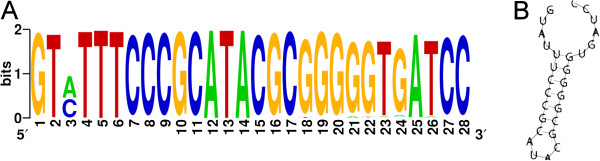
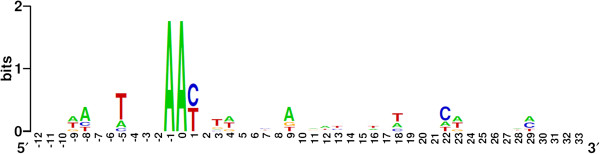
“(A) S height of the letters shows the relative frequency of the corresponding nu repeat region predicted using RNAfold [36].”
Evolution and classification of the CRISPR–Cas systems
Makarova, K. S., Haft, D. H., Barrangou, R., Brouns, S. J. J., Charpentier, E., Horvath, P., Moineau, S., Mojica, F. J. M., Wolf, Y. I., Yakunin, A. F., et al. (2011) · Nature Reviews Microbiology · doi:10.1038/nrmicro2577 · Cited by 2,331
Centers for Disease Control and Prevention Sexually Transmitted Diseases Treatment Guidelines
Workowski, K. A., & Berman, S. M. (2007) · Clinical Infectious Diseases · doi:10.1086/511430 · Cited by 1,973
CRISPR Interference Limits Horizontal Gene Transfer in Staphylococci by Targeting DNA
Marraffini, L. A., & Sontheimer, E. J. (2008) · Science · doi:10.1126/science.1165771 · Cited by 1,642 · cited 2×
“The spacer sequences often originate from invading viruses and plasmids [25,26].”
BackgroundMultiple Alignment of DNA Sequences with MAFFT
Katoh, K., Asimenos, G., & Toh, H. (2009) · Methods in Molecular Biology · doi:10.1007/978-1-59745-251-9_3 · Cited by 1,438 · cited 1×
“Spacers were compared to one another using the MAFFT program [33].”
MethodShort motif sequences determine the targets of the prokaryotic CRISPR defence system
Mojica, F. J. M., Díez-Villaseñor, C., García-Martínez, J., & Almendros, C. (2009) · Microbiology · doi:10.1099/mic.0.023960-0 · Cited by 1,426 · cited 2×
“vaginalis chromosome displayed conserved protospacer adjacent motif (PAM) sequences [41,42].”
BackgroundGrissa, I., Vergnaud, G., & Pourcel, C. (2007) · BMC Bioinformatics · doi:10.1186/1471-2105-8-172 · Cited by 888
The Streptococcus thermophilus CRISPR/Cas system provides immunity in Escherichia coli
Sapranauskas, R., Gasiunas, G., Fremaux, C., Barrangou, R., Horvath, P., & Siksnys, V. (2011) · Nucleic Acids Research · doi:10.1093/nar/gkr606 · Cited by 834 · cited 2×
“Recent findings on the role of Cas proteins in providing adaptive immunity to bacteria [39,43,57] may motivate experimental testing of hypotheses on how CRISPR/Cas impacts the regulation of the transfer of genetic material among G.”
BackgroundDiversity, Activity, and Evolution of CRISPR Loci in Streptococcus thermophilus
Horvath, P., Romero, D. A., Coûté-Monvoisin, A.-C., Richards, M., Deveau, H., Moineau, S., Boyaval, P., Fremaux, C., & Barrangou, R. (2008) · Journal of Bacteriology · doi:10.1128/jb.01415-07 · Cited by 780 · cited 2×
“strain GV25 is considered to be the most active, in terms of the degree of spacer polymorphism exhibited by both the total number of unique spacers and the total number of unique spacer arrangements [38,45].”
BackgroundSemenova, E., Jore, M. M., Datsenko, K. A., Semenova, A., Westra, E. R., Wanner, B., van der Oost, J., Brouns, S. J. J., & Severinov, K. (2011) · Proceedings of the National Academy of Sciences · doi:10.1073/pnas.1104144108 · Cited by 726 · cited 1×
“It has been suggested that 100% identity between spacer and protospacer sequences is required to provide CRISPR-mediated immunity [38]; while the tolerance for mismatches is not yet completely elucidated [39,40].”
BackgroundBacterial vaginosis and HIV acquisition: A meta-analysis of published studies
Atashili, J., Poole, C., Ndumbe, P. M., Adimora, A. A., & Smith, J. S. (2008) · AIDS · doi:10.1097/qad.0b013e3283021a37 · Cited by 706 · cited 1×
“Women with BV are at risk of poor reproductive health outcomes and the acquisition of some sexually transmitted diseases [2,4].”
BackgroundLamont, R., Sobel, J., Akins, R., Hassan, S., Chaiworapongsa, T., Kusanovic, J., & Romero, R. (2011) · BJOG: An International Journal of Obstetrics & Gynaecology · doi:10.1111/j.1471-0528.2010.02840.x · Cited by 481 · cited 1×
“independent techniques, it was demonstrated that the vaginal microbiota may differ among human populations: Hispanic and non-Hispanic black women have significantly more anaerobes and fewer lactobacilli than Asian and Caucasian women [12].”
BackgroundTemporal Variability of Human Vaginal Bacteria and Relationship with Bacterial Vaginosis
Srinivasan, S., Liu, C., Mitchell, C. M., Fiedler, T. L., Thomas, K. K., Agnew, K. J., Marrazzo, J. M., & Fredricks, D. N. (2010) · PLoS ONE · doi:10.1371/journal.pone.0010197 · Cited by 465 · cited 1×
“vaginalis in healthy women [11,12].”
Multidrug-Resistant Enterococci Lack CRISPR- cas
Palmer, K. L., & Gilmore, M. S. (2010) · mBio · doi:10.1128/mbio.00227-10 · Cited by 437
Targeted PCR for Detection of Vaginal Bacteria Associated with Bacterial Vaginosis
Fredricks, D. N., Fiedler, T. L., Thomas, K. K., Oakley, B. B., & Marrazzo, J. M. (2007) · Journal of Clinical Microbiology · doi:10.1128/jcm.01272-07 · Cited by 406
The CRISPR System: Small RNA-Guided Defense in Bacteria and Archaea
Karginov, F. V., & Hannon, G. J. (2010) · Molecular Cell · doi:10.1016/j.molcel.2009.12.033 · Cited by 384
Self-targeting by CRISPR: gene regulation or autoimmunity?
Stern, A., Keren, L., Wurtzel, O., Amitai, G., & Sorek, R. (2010) · Trends in Genetics · doi:10.1016/j.tig.2010.05.008 · Cited by 384 · cited 2×
“The spacers were not self-targeting [46], and the protospacers located on the chromosome displayed PAMs.”
BackgroundCRISPR Interference Directs Strand Specific Spacer Acquisition
Swarts, D. C., Mosterd, C., van Passel, M. W. J., & Brouns, S. J. J. (2012) · PLoS ONE · doi:10.1371/journal.pone.0035888 · Cited by 378
Leitich, H., & Kiss, H. (2007) · Best Practice & Research Clinical Obstetrics & Gynaecology · doi:10.1016/j.bpobgyn.2006.12.005 · Cited by 342 · cited 1×
“The state of asymptomatic BV has also been recognised, although Gram stains revealed a decrease in lactobacilli and an increase in the abundance of anaerobes specific to BV [8].”
BackgroundBikard, D., Hatoum-Aslan, A., Mucida, D., & Marraffini, L. A. (2012) · Cell Host & Microbe · doi:10.1016/j.chom.2012.06.003 · Cited by 318 · cited 3×
“A recent report on the ability of CRISPR/Cas to prevent natural transformation in Streptococcus pneumoniae enlarged the role of CRISPR in bacterial nucleic acidbased immunity and the impact that CRISPR has on the emergence of bacterial pathogens [43].”
BackgroundQuantitative PCR Assessments of Bacterial Species in Women with and without Bacterial Vaginosis
Zozaya-Hinchliffe, M., Lillis, R., Martin, D. H., & Ferris, M. J. (2010) · Journal of Clinical Microbiology · doi:10.1128/jcm.00851-09 · Cited by 259 · cited 1×
“vaginalis that is recovered as the prevailing inhabitant of the vaginal tracts of women diagnosed with BV is also found in BV-negative women, though at much lower numbers [5,9,10].”
BackgroundThe CHAP domain: a large family of amidases including GSP amidase and peptidoglycan hydrolases
Bateman, A., & Rawlings, N. D. (2003) · Trends in Biochemical Sciences · doi:10.1016/s0968-0004(03)00061-6 · Cited by 253 · cited 1×
“Two spacers from different strains targeted the gene encoding N-acetylmuramoyl-L-alanine amidase: a CHAP-family domain protein found to have lytic ability [49].”
BackgroundPatterson, J. L., Stull-Lane, A., Girerd, P. H., & Jefferson, K. K. (2010) · Microbiology · doi:10.1099/mic.0.034280-0 · Cited by 252 · cited 1×
“vaginalis strains in terms of virulence factors: particularly vaginolysin, sialidase, and biofilm-forming proteins [16-18].”
BackgroundThe aetiology of bacterial vaginosis
Turovskiy, Y., Sutyak Noll, K., & Chikindas, M. L. (2011) · Journal of Applied Microbiology · doi:10.1111/j.1365-2672.2011.04977.x · Cited by 249 · cited 1×
“Thus, low counts of Lactobacillus do not necessarily indicate the BV state [6,13].”
BackgroundThe Small, Slow and Specialized CRISPR and Anti-CRISPR of Escherichia and Salmonella
Touchon, M., & Rocha, E. P. C. (2010) · PLoS ONE · doi:10.1371/journal.pone.0011126 · Cited by 237 · cited 3×
“strain GV25 is considered to be the most active, in terms of the degree of spacer polymorphism exhibited by both the total number of unique spacers and the total number of unique spacer arrangements [38,45].”
BackgroundGardnerella vaginalis: characteristics, clinical considerations, and controversies
Catlin, B. W. (1992) · Clinical Microbiology Reviews · doi:10.1128/cmr.5.3.213 · Cited by 223 · cited 1×
“Background Gardnerella vaginalis, a facultatively anaerobic bacterium of the Bifidobacteriaceae family, is strongly associated with bacterial vaginosis (BV): a disease characterised by malodorous vaginal discharge [1-3].”
BackgroundCRISPR: New Horizons in Phage Resistance and Strain Identification
Barrangou, R., & Horvath, P. (2012) · Annual Review of Food Science and Technology · doi:10.1146/annurev-food-022811-101134 · Cited by 197 · cited 3×
“Analyses of CRISPR sequences have been used in a variety of applications including strain genotyping and epidemiological study, detection of evolutionary events and bottlenecks, investigation of the history of virus exposure, and host population dynamics, providing insights into the dominant routes of HGT [28-32].”
BackgroundDiversity of CRISPR loci in Escherichia coli
Díez-Villaseñor, C., Almendros, C., García-Martínez, J., & Mojica, F. J. M. (2010) · Microbiology · doi:10.1099/mic.0.036046-0 · Cited by 194 · cited 1×
“coli CAS-E subtype [44].”
Centers for Disease Control and Prevention Sexually Transmitted Disease Treatment Guidelines
Workowski, K. A., & Berman, S. M. (2011) · Clinical Infectious Diseases · doi:10.1093/cid/cir694 · Cited by 188 · cited 1×
“; licensee BioMed Cen Creative Commons Attribution License (http:/ distribution, and reproduction in any medium standard for laboratory diagnosis of BV is the Gram stain, which is used to determine the relative concentrations of lactobacilli and the bacteria characteristic of BV [7].”
Ahmed, A., Earl, J., Retchless, A., Hillier, S. L., Rabe, L. K., Cherpes, T. L., Powell, E., Janto, B., Eutsey, R., Hiller, N. L., et al. (2012) · Journal of Bacteriology · doi:10.1128/jb.00056-12 · Cited by 168 · cited 10×
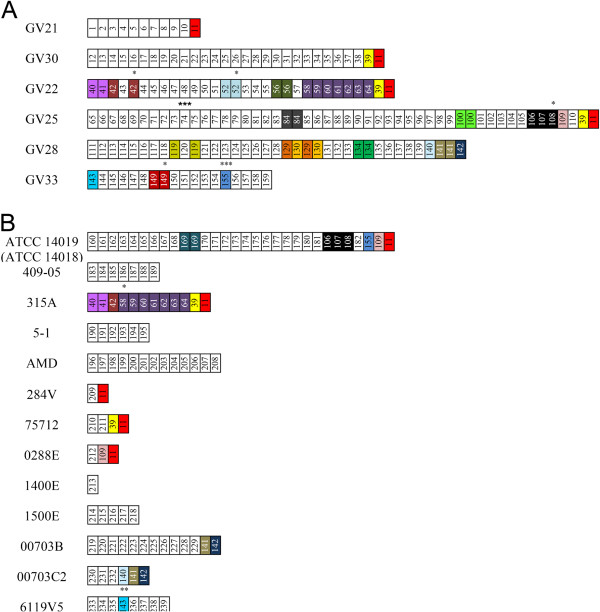
“00703Bmash [22] BV 2 or 5 + ND + ND 13 11”
BackgroundResultInfluentialHarwich, M. D., Alves, J. M., Buck, G. A., Strauss, J. F., Patterson, J. L., Oki, A. T., Girerd, P. H., & Jefferson, K. K. (2010) · BMC Genomics · doi:10.1186/1471-2164-11-375 · Cited by 168 · cited 1×
“vaginalis strains from the vaginas of BV and non-BV patients were sequenced, providing information about the bacterium and enabling comparative genomic analyses [14,15].”
MethodHeterogeneity of Vaginal Microbial Communities within Individuals
Kim, T. K., Thomas, S. M., Ho, M., Sharma, S., Reich, C. I., Frank, J. A., Yeater, K. M., Biggs, D. R., Nakamura, N., Stumpf, R., et al. (2009) · Journal of Clinical Microbiology · doi:10.1128/jcm.00854-08 · Cited by 158 · cited 1×
“vaginalis that is recovered as the prevailing inhabitant of the vaginal tracts of women diagnosed with BV is also found in BV-negative women, though at much lower numbers [5,9,10].”
BackgroundYeoman, C. J., Yildirim, S., Thomas, S. M., Durkin, A. S., Torralba, M., Sutton, G., Buhay, C. J., Ding, Y., Dugan-Rocha, S. P., Muzny, D. M., et al. (2010) · PLoS ONE · doi:10.1371/journal.pone.0012411 · Cited by 157 · cited 10×
“Moreover, G. vaginalis strains were found to encode the competence promoting proteins ComEA, ComEC, and CinA [15]; [http://blast.ncbi.nlm.nih.gov/Blast.cgi].”
BackgroundMethodInfluentialRezzonico, F., Smits, T. H. M., & Duffy, B. (2011) · Applied and Environmental Microbiology · doi:10.1128/aem.00177-11 · Cited by 146 · cited 4×
“Analyses of CRISPR sequences have been used in a variety of applications including strain genotyping and epidemiological study, detection of evolutionary events and bottlenecks, investigation of the history of virus exposure, and host population dynamics, providing insights into the dominant routes of HGT [28-32].”
BackgroundMethodInfluentialDiverse CRISPRs Evolving in Human Microbiomes
Rho, M., Wu, Y.-W., Tang, H., Doak, T. G., & Ye, Y. (2012) · PLoS Genetics · doi:10.1371/journal.pgen.1002441 · Cited by 145
Persisting Viral Sequences Shape Microbial CRISPR-based Immunity
Weinberger, A. D., Sun, C. L., Pluciński, M. M., Denef, V. J., Thomas, B. C., Horvath, P., Barrangou, R., Gilmore, M. S., Getz, W. M., & Banfield, J. F. (2012) · PLoS Computational Biology · doi:10.1371/journal.pcbi.1002475 · Cited by 143 · cited 2×
“[37], exhibited several types of conservation: nine strains of G.”
BackgroundDelaney, N. F., Balenger, S., Bonneaud, C., Marx, C. J., Hill, G. E., Ferguson-Noel, N., Tsai, P., Rodrigo, A., & Edwards, S. V. (2012) · PLoS Genetics · doi:10.1371/journal.pgen.1002511 · Cited by 140 · cited 1×
“Recent papers have demonstrated that pathogenic bacteria may lose CRISPR/ Cas under certain selective pressure [55,56].”
BackgroundExtravaginal reservoirs of vaginal bacteria as risk factors for incident bacterial vaginosis.
Marrazzo, J. M., Fiedler, T. L., Srinivasan, S., Thomas, K. K., Liu, C., Ko, D., Xie, H., Saracino, M., & Fredricks, D. N. (2012) · The Journal of Infectious Diseases · doi:10.1093/infdis/jis242 · Cited by 123 · cited 1×
“However, the human vagina is a more favourable environment for virus progression, and extravaginal reservoirs have an impact on the distribution of viruses in the vaginal tract [54].”
BackgroundBiotypes of Gardnerella vaginalis
Piot, P., Dyck, E. V., Peeters, M., Hale, J., Totten, P. A., & Holmes, K. K. (1984) · Journal of Clinical Microbiology · doi:10.1128/jcm.20.4.677-679.1984 · Cited by 116 · cited 1×
“vaginalis strain during infection, which is consistent with previous reports [21,22,52].”
ResultAroutcheva, A. A., Simoes, J. A., Behbakht, K., & Faro, S. (2001) · Clinical Infectious Diseases · doi:10.1086/323030 · Cited by 113 · cited 3×
“Therefore, some conventional methods, including pulse field gel electrophoresis, restriction fragment length polymorphism, classical ribotyping with Southern blot, and restriction enzyme analysis, are not applicable for typing this species [19-21].”
BackgroundMethodResultMenard, J. P., Mazouni, C., Salem-Cherif, I., Fenollar, F., Raoult, D., Boubli, L., Gamerre, M., & Bretelle, F. (2010) · Obstetrics & Gynecology · doi:10.1097/aog.0b013e3181c391d7 · Cited by 111 · cited 2×
“Women with BV are at risk of poor reproductive health outcomes and the acquisition of some sexually transmitted diseases [2,4].”
BackgroundThe Abi Proteins and Their Involvement in Bacteriocin Self-Immunity
Kjos, M., Snipen, L., Salehian, Z., Nes, I. F., & Diep, D. B. (2010) · Journal of Bacteriology · doi:10.1128/jb.01553-09 · Cited by 107
Gardnerella vaginalis comprises three distinct genotypes of which only two produce sialidase
Santiago, G. L. D. S., Deschaght, P., Aila, N. A. E., Kiama, T. N., Verstraelen, H., Jefferson, K. K., Temmerman, M., & Vaneechoutte, M. (2011) · American Journal of Obstetrics and Gynecology · doi:10.1016/j.ajog.2010.12.061 · Cited by 105
Fethers, K., Twin, J., Fairley, C. K., Fowkes, F. J. I., Garland, S. M., Fehler, G., Morton, A. M., Hocking, J. S., Tabrizi, S. N., & Bradshaw, C. S. (2012) · PLoS ONE · doi:10.1371/journal.pone.0030633 · Cited by 90 · cited 1×
“Background Gardnerella vaginalis, a facultatively anaerobic bacterium of the Bifidobacteriaceae family, is strongly associated with bacterial vaginosis (BV): a disease characterised by malodorous vaginal discharge [1-3].”
BackgroundPlečkaitytė, M., Janulaitienė, M., Lasickienė, R., & Žvirblienė, A. (2012) · FEMS Immunology & Medical Microbiology · doi:10.1111/j.1574-695x.2012.00940.x · Cited by 74 · cited 5×
“The isolates had been previously genotyped/biotyped and characterised with respect to the main known virulence factors, namely vaginolysin and sialidase [18].”
BackgroundMethodBrüggemann, H., Lomholt, H. B., Tettelin, H., & Kilian, M. (2012) · PLoS ONE · doi:10.1371/journal.pone.0034171 · Cited by 70 · cited 3×
“Analyses of CRISPR sequences have been used in a variety of applications including strain genotyping and epidemiological study, detection of evolutionary events and bottlenecks, investigation of the history of virus exposure, and host population dynamics, providing insights into the dominant routes of HGT [28-32].”
BackgroundCRISPR loci reveal networks of gene exchange in archaea
Brodt, A., Lurie-Weinberger, M. N., & Gophna, U. (2011) · Biology Direct · doi:10.1186/1745-6150-6-65 · Cited by 58 · cited 1×
“vaginalis CRISPR/Cas system were found to not be constituents of mobile-element-associated genes such as restrictionmodification and toxin-antitoxin systems or transposases [45,48].”
BackgroundIngianni, A., Petruzzelli, S., Morandotti, G. A., & Pompei, R. (1997) · FEMS Immunology & Medical Microbiology · doi:10.1111/j.1574-695x.1997.tb01028.x · Cited by 55 · cited 2×
“Therefore, some conventional methods, including pulse field gel electrophoresis, restriction fragment length polymorphism, classical ribotyping with Southern blot, and restriction enzyme analysis, are not applicable for typing this species [19-21].”
BackgroundMethodThe Vaginal Flora of Healthy Women Is Not Always Dominated by Lactobacillus Species
Forney, L. J., Foster, J. A., & Ledger, W. (2006) · The Journal of Infectious Diseases · doi:10.1086/508497 · Cited by 52 · cited 1×
“Thus, low counts of Lactobacillus do not necessarily indicate the BV state [6,13].”
BackgroundGoren, M. G., Yosef, I., Auster, O., & Qimron, U. (2012) · Journal of Molecular Biology · doi:10.1016/j.jmb.2012.06.037 · Cited by 43 · cited 2×
“Hypotheses about the borders of the CRISPR repeats/spacers need experimental testing; however, the idea of a “duplicon” seems attractive [47].”
BackgroundLow prevalence of DNA viruses in the human endometrium and endometriosis
Vestergaard, A. L., Knudsen, U. B., Munk, T., Rosbach, H., Bialasiewicz, S., Sloots, T. P., Martensen, P. M., & Antonsson, A. (2010) · Archives of Virology · doi:10.1007/s00705-010-0643-y · Cited by 36
Teixeira, G. S., Soares-Brandão, K. L. K., Branco, K. M. G. R., Sampaio, J. L. M., Nardi, R. M. D., Mendonça, M., Almeida, R. B., Farias, L. M., Carvalho, M. A. R., & Nicoli, J. R. (2010) · Journal of Medical Microbiology · doi:10.1099/jmm.0.019794-0 · Cited by 20 · cited 1×
“vaginalis strains produce substances antagonistic to bacterial isolates common to the vaginal microbiome [15,51].”
BackgroundImpact of CRIPSR Immunity on the Emergence of Bacterial Pathogens
Marraffini, L. A. (2010) · Future Microbiology · doi:10.2217/fmb.10.38 · Cited by 12
Wu, S. R., Hillier, S. L., & Nath, K. (1996) · Journal of Clinical Microbiology · doi:10.1128/jcm.34.1.192-195.1996 · Cited by 10 · cited 2×
“Therefore, some conventional methods, including pulse field gel electrophoresis, restriction fragment length polymorphism, classical ribotyping with Southern blot, and restriction enzyme analysis, are not applicable for typing this species [19-21].”
BackgroundMethod
Cited by
CRISPR–Cas systems: beyond adaptive immunity
Westra, E. R., Buckling, A., & Fineran, P. C. (2014) · Nature Reviews Microbiology · doi:10.1038/nrmicro3241 · Cited by 323
Weng, S.-L., Chiu, C.-M., Lin, F.-M., Huang, W.-C., Liang, C., Yang, T., Yang, T.-L., Liu, C.-Y., Wu, W.-Y., Chang, Y.-A., et al. (2014) · PLoS ONE · doi:10.1371/journal.pone.0110152 · Cited by 308
“vaginalis is the predominant cause of bacterial vaginosis in women by disrupting normal vaginal microflora [39].”
BackgroundHorizontal gene transfer in human pathogens
Juhas, M. (2015) · Critical Reviews in Microbiology · doi:10.3109/1040841x.2013.804031 · Cited by 222
“Similarly, genome analysis did not reveal a link between CRISPR and Gardnerella vaginalis virulence (Pleckaityte et al., 2012), thus the importance of CRISPR for the pathogenicity will require further investigation.”
BackgroundIranzo, J., Lobkovsky, A. E., Wolf, Y. I., & Koonin, E. V. (2013) · Journal of Bacteriology · doi:10.1128/jb.00412-13 · Cited by 92
“In bacteria, the CRISPR-Cas loci demonstrate notable evolutionary volatility, with many cases reported when some of several closely related bacterial strains possessed CRISPR-Cas, but the others lacked it (41, 42).”
BackgroundDeng, Z.-L., Gottschick, C., Bhuju, S., Masur, C., Abels, C., & Wagner‐Döbler, I. (2018) · mSphere · doi:10.1128/mspheredirect.00262-18 · Cited by 91
“coli 377 subtype and were found in about half of the clinical isolates (36).”
Background
Metadata
- Authors
- Pleckaityte, M., Zilnyte, M., & Zvirbliene, A.
- Affiliations
- Vilnius University (LT)
- ORCID
- Zilnyte, Milda
- Venue
- BMC Microbiology
- Published
- 2012
- Volume
- 12
- Issue
- 1
- Pages
- 301
- ISSN
- 1471-2180 (ISSN-L)
- PMC
- PMC3559282
- OpenAlex
- W2035320449
- Cited by
- 33
- References
- 58
- Citations by year
- 2025: 2 · 2024: 1 · 2023: 2 · 2022: 4 · 2021: 2 · 2020: 3 · 2019: 1 · 2018: 2 · 2017: 1 · 2016: 4 · 2015: 3 · 2014: 6 · 2013: 2
- FWCI
- 1.42
- Type
- journal article
- Language
- en
- Open access
- gold
- doi.org
- Licence
- cc-by
- Locations
- BMC Microbiology (publishedVersion, cc-by)
- Europe PMC (PubMed Central) (publishedVersion, cc-by)
- PubMed Central (publishedVersion, cc-by)
- PubMed (publishedVersion)
- DOAJ (DOAJ: Directory of Open Access Journals) (submittedVersion, cc-by-sa)
- Topics
- Life Sciences › Biochemistry, Genetics and Molecular Biology › Molecular Biology › CRISPR and Genetic Engineering
- Life Sciences › Immunology and Microbiology › Microbiology › Reproductive tract infections research
- Life Sciences › Biochemistry, Genetics and Molecular Biology › Genetics › Bacterial Genetics and Biotechnology
- Keywords
- Gardnerella vaginalis, CRISPR-Cas, CRISPR spacers, protospacer adjacent motif, horizontal gene transfer, bacterial virulence, bacterial vaginosis, vaginal microbiota
- MeSH terms
- DNA, Bacterial, Female, Gardnerella vaginalis, Humans, Molecular Sequence Data, Recombination, Genetic, Genetic Variation, Virulence, Genome, Bacterial, Sequence Analysis, DNA, DNA, Intergenic, Gene Transfer, Horizontal, Genetic Loci
About these checks
Registry, retraction, Cites and statistics results are computed, not judged, with one exception: a printed reference that no index lists is read once by a model before it counts as a citation error. Claims are extracted by a model and kept only when their quote appears verbatim in the text; each cited source is then checked, with a model’s help, for whether it says what the claim relies on. Those verdicts can be wrong — read the claim’s quote and the cited source before relying on one.
Statistics and arithmetic are recomputed, not judged.
Confidence bands are shown only for fields calibrated on our annotated test set. None is calibrated yet, so no band is shown.
What counts as a claim ›How we measure confidence ›How we check this ›
Are you an author, or do you see a problem with this page? Request a review
Data sources
Bibliographic data: Semantic Scholar, OpenAlex, Crossref.
Contains information from the Semantic Scholar Academic Graph Datasets, made available under the ODC Attribution License (ODC-BY 1.0).
Semantic Scholar’s data is described in: Kinney, R., et al. (2023). The Semantic Scholar Open Data Platform. arXiv:2301.10140.
