

Prevalence and characterization of Salmonella enterica from the feces of cattle, poultry, swine and hedgehogs in Burkina Faso and their comparison to human Salmonella isolates
Open accessThe DOI matches its Crossref record; 46 of the 47 references it cites were found in a registry or an index.
Abstract
BACKGROUND: Production and wild animals are major sources of human salmonellosis and animals raised for food also play an important role in transmission of antimicrobial resistant Salmonella strains to humans. Furthermore, in sub-Saharan Africa non-typhoidal Salmonella serotypes are common bloodstream isolates in febrile patients. Yet, little is known about the environmental reservoirs and predominant modes of transmission of these pathogens. The purpose of this study was to discover potential sources and distribution vehicles of Salmonella by isolating strains from apparently healthy slaughtered food animals and wild hedgehogs and by determining the genetic relatedness between the strains and human isolates. For this purpose, 729 feces samples from apparently healthy slaughtered cattle (n = 304), poultry (n = 350), swine (n = 50) and hedgehogs (n = 25) were examined for the presence of Salmonella enterica in Burkina Faso. The isolates were characterized by serotyping, antimicrobial-susceptibility testing, phage typing, and pulsed-field gel electrophoresis (PFGE) with XbaI and BlnI restriction enzymes. RESULTS: Of the 729 feces samples, 383 (53%) contained Salmonella, representing a total of 81 different serotypes. Salmonella was present in 52% of the cattle, 55% of the poultry, 16% of the swine and 96% of the hedgehog feces samples. Antimicrobial resistance was detected in 14% of the isolates. S. Typhimurium isolates from poultry and humans (obtained from a previous study) were multiresistant to the same antimicrobials (ampicillin, chloramphenicol, streptomycin, sulfonamides and trimethoprim), had the same phage type DT 56 and were closely related in PFGE. S. Muenster isolates from hedgehogs had similar PFGE patterns as the domestic animals. CONCLUSIONS: Based on our results it seems that production and wild animals can share the same Salmonella serotypes and potentially transmit some of them to humans. As the humans and animals often live in close vicinity in Africa and the hygiene control of the meat retail chain is defective, high Salmonella carriage rates of the animals can pose a major public health risk in Burkina Faso. This underlines the necessity for a joint and coordinated surveillance and monitoring programs for salmonellosis in Africa.
Overview
The claims and statistics of this paper haven’t been checked yet.
Free: it reads the open-access text and checks the first 5 claims that cite a source we can check. Create a free account to check every claim.
Integrity signals
Registry
Cites
Statistics
Figures
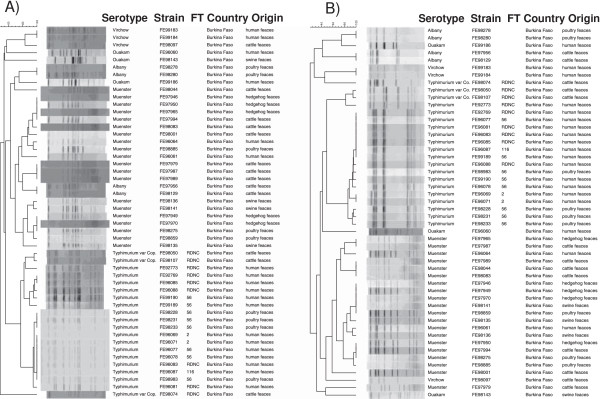
Verification
Claims the paper makes
The claims and statistics of this paper haven’t been checked yet.
Free: it reads the open-access text and checks the first 5 claims that cite a source we can check. Create a free account to check every claim.
Claims other papers make about this one
Each is checked against this paper’s own text: does it say what the citing paper says it does?
The source backs part of the claim, not all of it — or backs it for a different population, condition or comparison.
In the citing paper
“Twelve of these 16 serotypes have already been detected in food animals or edible vegetables in Burkina Faso, between 2008 and 2018”
From Contamination of street food with multidrug-resistant Salmonella, in Ouagadougou, Burkina Faso (2021) · cites this paper as [32]
Experimental — accuracy not yet measured
Self-check
Percentages, sums and reported differences re-computed from the paper’s own numbers.
The self-check needs the paper’s full text.
Citations
Cites
Methods for dilution antimicrobial susceptibility tests for bacteria that grow aerobically
Ferraro, M. J. (2000) · Medical Entomology and Zoology · Cited by 17,254
Methods for dilution antimicrobial susceptibility tests for bacteria that grow aerobically
Ferraro, M. J. (2000) · Cited by 16,875
The Global Burden of Nontyphoidal Salmonella Gastroenteritis
Majowicz, S. E., Musto, J., Scallan, E., Angulo, F. J., Kirk, M., O’Brien, S. J., Jones, T. F., Fazil, A., & Hoekstra, R. M. (2010) · Clinical Infectious Diseases · doi:10.1086/650733 · Cited by 2,442 · cited 1×
“8 million cases of gastroenteritis each year, with 155 000 deaths [1].”
BackgroundWHO estimates of the causes of death in children
Bryce, J., Boschi-Pinto, C., Shibuya, K., & Black, R. E. (2005) · The Lancet · doi:10.1016/s0140-6736(05)71877-8 · Cited by 2,096
Invasive non-typhoidal salmonella disease: an emerging and neglected tropical disease in Africa
Feasey, N. A., Dougan, G., Kingsley, R. A., Heyderman, R. S., & Gordon, M. A. (2012) · The Lancet · doi:10.1016/s0140-6736(11)61752-2 · Cited by 1,014 · cited 1×
“Typhimurium isolates from poultry further in order to know if the invasive genotype also occurs in animals as the environmental reservoirs and host ranges of invasive salmonella strains in Africa are still unknown [35].”
BackgroundRole of Nonhost Environments in the Lifestyles of Salmonella and Escherichia coli
Winfield, M. D., & Groisman, E. A. (2003) · Applied and Environmental Microbiology · doi:10.1128/aem.69.7.3687-3694.2003 · Cited by 732 · cited 1×
“Hedgehog feces might infect both cattle and swine foraging freely, since Salmonella can persist in the environment for several months to more than a year [41,42].”
BackgroundHendriksen, R. S., Vieira, A. R., Karlsmose, S., Lo Fo Wong, D. M. A., Jensen, A. B., Wegener, H. C., & Aarestrup, F. M. (2011) · Foodborne Pathogens and Disease · doi:10.1089/fpd.2010.0787 · Cited by 633
The Isolation of Antibiotic-Resistant Salmonella from Retail Ground Meats
White, D. G., Zhao, S., Sudler, R., Ayers, S., Friedman, S., Chen, S., McDermott, P. F., McDermott, S., Wagner, D. D., & Meng, J. (2001) · New England Journal of Medicine · doi:10.1056/nejmoa010315 · Cited by 549 · cited 1×
“Multiresistant Salmonella may acquire their resistance genes from microbiota of production animals before being transmitted to humans through food chain [11,12].”
BackgroundKingsley, R. A., Msefula, C. L., Thomson, N. R., Kariuki, S., Holt, K. E., Gordon, M. A., Harris, D., Clarke, L., Whitehead, S., Sangal, V., et al. (2009) · Genome Research · doi:10.1101/gr.091017.109 · Cited by 540 · cited 1×
“This is a typical pattern found in the Salmonella strains with a subSaharan distinct genotype causing epidemic invasive disease [30].”
BackgroundBacteriophage-typing designations of Salmonella typhimurium
Anderson, E. S., Ward, L. R., de Saxe, M. J., & de Sa, J. D. H. (1977) · Journal of Hygiene · doi:10.1017/s0022172400056187 · Cited by 531 · cited 1×
“Copenhagen) were further phage typed [45].”
Research works printed but not linked: 7
- [4]4. Acha PN, Szyfres B: Salmonellosis. In Zoonoses and Communicable Diseases Common to Man and Animals, Volume I: Bacterioses and Mycoses. 3rd edition.
- [5]5. Edited by Acha PN, Szyfres B. Washington, D.C: Pan American Health Organization; 2001:233-246.
- [7]7. Thorns CJ: Bacterial food-borne zoonoses. Rev Sci Tech 2000, 19:226-239.
- [10]10. Glaser CA, Angulo FJ, Rooney J: Animal-associated opportunistic infections in HIV-infected persons. Clin Infect Dis 1994, 18:14-24.
- [11]11. Riley PY, Chomel BB: Hedgehog zoonoses. Emerg Infect Dis 2005, 11:1-5.
- [16]16. CDC: African pygmy hedgehog-associated salmonellosis. MMWR Morb Mortal Wkly Rep 1995, 44:462-463.
- [44]44. Kagambèga A, Martikainen O, Siitonen A, Traoré AS, Barro N, Haukka K: Prevalence of diarrheagenic Escherichia coli virulence genes in the feces of slaughtered cattle, chickens, and pigs in Burkina Faso. MicrobiologyOpen 2012, 1:276-284.
Cited by
Manyi-Loh, C., Mamphweli, S., Meyer, E., & Okoh, A. (2018) · Molecules · doi:10.3390/molecules23040795 · Cited by 1,808
Persistent Infection and Long-Term Carriage of Typhoidal and Nontyphoidal Salmonellae
Gal-Mor, O. (2018) · Clinical Microbiology Reviews · doi:10.1128/cmr.00088-18 · Cited by 209
“More than 50% of cattle that were recently screened for Salmonella in Burkina Faso (West Africa) (224) and more than 20% of cattle screened in northeast Spain (225) were found to be contaminated with diverse NTS, indicating that persistent Salmonella infection in livestock is not uncommon and that bovine peripheral ly…”
BackgroundInfluentialThomas, K. M., de Glanville, W. A., Barker, G. C., Benschop, J., Buza, J. J., Cleaveland, S., Davis, M. A., French, N. P., Mmbaga, B. T., Prinsen, G., et al. (2019) · International Journal of Food Microbiology · doi:10.1016/j.ijfoodmicro.2019.108382 · Cited by 178
Prevalence of foodborne pathogens in food from selected African countries – A meta-analysis
Paudyal, N., Anihouvi, V. B., Hounhouigan, J. D., Matsheka, M. I., Sekwati‐Monang, B., Amoa‐Awua, W. K., Atter, A., Ackah, N. B., Mbugua, S. K., Asagbra, A. E., et al. (2017) · International Journal of Food Microbiology · doi:10.1016/j.ijfoodmicro.2017.03.002 · Cited by 175
Selaledi, L., Hassan, Z. M., Manyelo, T. G., & Mabelebele, M. (2020) · Antibiotics · doi:10.3390/antibiotics9090594 · Cited by 177
Salmonella serovars and their distribution in Nigerian commercial chicken layer farms
Fagbamila, I. O., Barco, L., Mancin, M., Kwaga, J. K. P., Ngulukun, S. S., Zavagnin, P., Lettini, A. A., Lorenzetto, M., Abdu, P. A., Kabir, J., et al. (2017) · PLoS ONE · doi:10.1371/journal.pone.0173097 · Cited by 120
Farm Fairs and Petting Zoos: A Review of Animal Contact as a Source of Zoonotic Enteric Disease
Conrad, C. C., Stanford, K., Narvaez-Bravo, C., Callaway, T., & McAllister, T. (2017) · Foodborne Pathogens and Disease · doi:10.1089/fpd.2016.2185 · Cited by 105
Rukambile, E. J., Sintchenko, V., Muscatello, G., Kock, R. A., & Alders, R. (2019) · Zoonoses and Public Health · doi:10.1111/zph.12611 · Cited by 124
“Several studies report indistinguishable Campylobacter strains from dogs and their owners (Gras et al., 2013), and Salmonella and Campylobacter strains from humans and chickens (Anderson et al., 2012; Elgroud et al., 2015; Kagambega et al., 2013), indicating cross‐infections between these hosts.”
BackgroundPhysical-chemical traits, phytotoxicity and pathogen detection in liquid anaerobic digestates
Coêlho, J. J., Prieto, M. L., Dowling, S., Hennessy, A., Casey, I. A., Woodcock, T., & Kennedy, N. M. (2018) · Waste Management · doi:10.1016/j.wasman.2018.05.017 · Cited by 107
Prevalence and risk factors of Salmonella in commercial poultry farms in Nigeria
Jibril, A. H., Okeke, I. N., Dalsgaard, A., Kudirkienė, E., Akinlabi, O. C., Bello, M. B., & Olsen, J. E. (2020) · PLoS ONE · doi:10.1371/journal.pone.0238190 · Cited by 89
“S. Chester was also the second most common serotype in poultry, in 2010, in Burkina Faso [65].”
BackgroundSalmonella Genomics in Public Health and Food Safety
Brown, E. W., Bell, R., Zhang, G., Timme, R., Zheng, J., Hammack, T. S., & Allard, M. W. (2021) · EcoSal Plus · doi:10.1128/ecosalplus.esp-0008-2020 · Cited by 99
Traoré, O., Nyholm, O., Siitonen, A., Bonkoungou, I. J. O., Traoré, A. S., Barro, N., & Haukka, K. (2015) · BMC Microbiology · doi:10.1186/s12866-015-0484-7 · Cited by 82
“Korlebu has instead been identified in cattle faeces in Ouagadougou [17].”
BackgroundSelf-citationLangata, L. M., Maingi, J. M., Musonye, H. A., Kiiru, J., & Nyamache, A. K. (2019) · BMC Research Notes · doi:10.1186/s13104-019-4068-8 · Cited by 86
Typhoidal and non-typhoidal Salmonella infections in Africa
Smith, S. I., Seriki, A. T., & Ajayi, A. (2016) · European Journal of Clinical Microbiology & Infectious Diseases · doi:10.1007/s10096-016-2760-3 · Cited by 87
“[35], in their study, carried out a comparison of NTS isolated from the faeces of cattle, poultry, swine and hedgehogs to NTS isolated from humans in Burkina Faso.”
BackgroundPrevalence and characterization of Salmonella among humans in Ghana
Andoh, L. A., Ahmed, S., Olsen, J. E., Obiri-Danso, K., Newman, M. J., Opintan, J. A., Barco, L., & Dalsgaard, A. (2017) · Tropical Medicine and Health · doi:10.1186/s41182-017-0043-z · Cited by 72
“PFGE has a high discriminatory power and is therefore often used in characterizing isolates from different sources in epidemiological studies of disease outbreaks [27, 52].”
BackgroundPotential Sources and Transmission of Salmonella and Antimicrobial Resistance in Kampala, Uganda
Afema, J. A., Byarugaba, D. K., Shah, D. H., Atukwase, E., Nambi, M., & Sischo, W. M. (2016) · PLoS ONE · doi:10.1371/journal.pone.0152130 · Cited by 86
“However, detection of Salmonella Typhimurium DT56 with similar PFGE and antimicrobial resistance (AMR) patterns in poultry and humans suggests zoonotic infections occur in sub– Saharan Africa [9].”
BackgroundResultHedgehogs as a Potential Source of Zoonotic Pathogens—A Review and an Update of Knowledge
Ruszkowski, J. J., Hetman, M., Turlewicz‐Podbielska, H., & Pomorska‐Mól, M. (2021) · Animals · doi:10.3390/ani11061754 · Cited by 68
“To date, numerous cases of salmonellosis in humans have been described, possibly linked to both pet and wild hedgehogs [7,38,41,47,63].”
BackgroundInfluentialConan, A., O’Reilly, C. E., Ogola, E., Ochieng, J. B., Blackstock, A. J., Omore, R., Ochieng, L., Moke, F., Parsons, M. B., Xiao, L., et al. (2017) · PLoS neglected tropical diseases · doi:10.1371/journal.pntd.0005795 · Cited by 65
Belina, D., Hailu, Y., Gobena, T., Hald, T., & Njage, P. M. K. (2021) · One Health Outlook · doi:10.1186/s42522-021-00048-5 · Cited by 70
Wabeto, W., Abraham, Y., & Anjulo, A. A. (2017) · Journal of Health Population and Nutrition · doi:10.1186/s41043-017-0131-z · Cited by 56
Wu, B., Ed‐Dra, A., Pan, H., Dong, C., Jia, C., & Yue, M. (2021) · Frontiers in Microbiology · doi:10.3389/fmicb.2021.704636 · Cited by 60
“Salmonella could colonize the digestive tract of animals and are excreted in feces and spread into the environment (Kagambèga et al., 2013; Bonardi, 2017; Jiang et al., 2019), then transmitted to humans via the food chain (Ed-Dra et al.”
BackgroundNair, A., Rawool, D. B., Doijad, S. P., Poharkar, K. V., Mohan, V., Barbuddhe, S. B., Kolhe, R. P., Kurkure, N. V., Kumar, A., Malik, S. V. S., et al. (2015) · Infection Genetics and Evolution · doi:10.1016/j.meegid.2015.08.012 · Cited by 66
“Earlier, few studies from other countries, have also reported detection of S. Typhi from poultry (Ajayi et al., 2011; Kagambega et al., 2013).”
ResultDell, B., Souza, M. J., & Willcox, A. S. (2020) · PLoS ONE · doi:10.1371/journal.pone.0239599 · Cited by 55
Salmonella spp. and Campylobacter spp. in poultry feces and carcasses in Ouagadougou, Burkina Faso
Kagambèga, A., Thibodeau, A., Trinetta, V., Soro, D. K., Sama, F. N., Bako, É., Bouda, C. S., Wereme N’Diaye, A., Fravalo, P., & Barro, N. (2018) · Food Science & Nutrition · doi:10.1002/fsn3.725 · Cited by 48
Self-citationChen, D., Mechlowitz, K., Li, X., Schaefer, N., Havelaar, A. H., & McKune, S. L. (2021) · Frontiers in Nutrition · doi:10.3389/fnut.2021.751686 · Cited by 55
A Public Health Insight into Salmonella in Poultry in Africa: A Review of the Past Decade: 2010–2020
Ramtahal, M. A., Amoako, D. G., Abia, A. L. K., Somboro, A. M., Bester, L. A., & Essack, S. Y. (2022) · Microbial Drug Resistance · doi:10.1089/mdr.2021.0384 · Cited by 56
The diversity of beef safety: A global reason to strengthen our current systems
Brashears, M. M., & Chaves, B. D. (2017) · Meat Science · doi:10.1016/j.meatsci.2017.03.015 · Cited by 49
Zhu, J., Zhang, D., Zhou, X., Cui, Y., Jiao, S., & Shi, X. (2019) · Food Control · doi:10.1016/j.foodcont.2019.107035 · Cited by 44
Bacteriophages: Combating Antimicrobial Resistance in Food-Borne Bacteria Prevalent in Agriculture
Au, A., Lee, H., Ye, T., Dave, U., & Rahman, M. A. (2021) · Microorganisms · doi:10.3390/microorganisms10010046 · Cited by 48
“It was suggested that the high prevalence of AMR was due to the ability of antibiotics and resistant pathogens to persist within feces, cultivating AMR for months outside animal hosts [28,29].”
BackgroundContamination of street food with multidrug-resistant Salmonella, in Ouagadougou, Burkina Faso
Nikiema, M. E. M., Pardos de la Gandara, M., Compaore, K. A. M., Ky Ba, A., Soro, K. D., Nikiema, P. A., Barro, N., Sangare, L., & Weill, F.-X. (2021) · PLoS ONE · doi:10.1371/journal.pone.0253312 · Cited by 41
Self-citationAkinola, S. A., Mwanza, M., & Ateba, C. N. (2019) · Infection and Drug Resistance · doi:10.2147/idr.s217421 · Cited by 48
Fonteneau, L., Silva, N. J., Fabre, L., Ashton, P., Torpdahl, M., Müller, L., Bouchrif, B., Boulani, A. E., Valkanou, E., Mattheus, W., et al. (2017) · Eurosurveillance · doi:10.2807/1560-7917.es.2017.22.7.30463 · Cited by 39
“S. Chester was also the second most common serotype in poultry, in 2010, in Burkina Faso [12].”
BackgroundInfluentialAnderson, T. C., Marsden-Haug, N., Morris, J. F., Culpepper, W., Bessette, N., Adams, J., Bidol, S. A., Meyer, S., Schmitz, J. E., Erdman, M. M., et al. (2016) · Zoonoses and Public Health · doi:10.1111/zph.12310 · Cited by 36
“Studies have reported the carriage of Salmonella spp. by wild African Pygmy and European hedgehogs in New Zealand, England and Burkina Faso (Smith and Robinson, 1964; Keymer et al., 1991; Kagambega et al., 2013).”
BackgroundNyabundi, D., Onkoba, N., Kimathi, R., Nyachieo, A., Juma, G., Kinyanjui, P., & Kamau, J. (2017) · Tropical Diseases Travel Medicine and Vaccines · doi:10.1186/s40794-016-0045-6 · Cited by 43
“%) is comparable to those obtained by in Korea [29] but is much lower than previously reported in Kenya [16] and Burkina Faso [12].”
BackgroundResultInfluentialSawadogo, A., Kagambèga, A., Moodley, A., Ouedraogo, A. A., Barro, N., & Dione, M. M. (2023) · Antibiotics · doi:10.3390/antibiotics12010133 · Cited by 50
“There is no compilation of data on microbial resistance on a national scale, but different studies have been carried out showing multidrug-resistant bacteria isolated from farm animals, especially poultry [11,35].”
BackgroundSelf-citationSomda, N. S., Bonkoungou, I. J. O., Sambe-Ba, B., Drabo, M. S., Wane, A. A., Sawadogo-Lingani, H., & Savadogo, A. (2021) · Journal of Agriculture and Food Research · doi:10.1016/j.jafr.2021.100167 · Cited by 33
Somda, N. S., Bonkoungou, O. J. I., Zongo, C., Kagambèga, A., Bassolé, I. H. N., Traoré, Y., Mahillon, J., Scippo, M., Hounhouigan, J. D., & Savadogo, A. (2018) · Food Science & Nutrition · doi:10.1002/fsn3.650 · Cited by 32
“In addition, the uncontrolled use of antibiotics in the livestock sector for animal diseases treatment and prevention as well as a growth promoters contribute to increase the spreading of antibiotic- resistant bacteria (Kagambèga et al., 2013).”
BackgroundSelf-citationKagambèga, A., Lienemann, T., Frye, J. G., Barro, N., & Haukka, K. (2018) · Tropical Medicine and Health · doi:10.1186/s41182-018-0086-9 · Cited by 27
“In many regions of Burkina Faso as elsewhere in Africa, traditional poultry breeding is still prevalent, allowing the poultry to roam freely in the household with people [6, 16].”
BackgroundSelf-citationDeblais, L., Kathayat, D., Helmy, Y. A., Closs, G., & Rajashekara, G. (2020) · Animal Health Research Reviews · doi:10.1017/s1466252319000124 · Cited by 33
“One such study analyzed S. Typhimurium isolates from human (n = 2) or poultry (n = 2) collected in Burkina Faso in 2015 (Kagambèga et al., 2013, 2018).”
BackgroundOmitola, O. O., & Taylor-Robinson, A. W. (2020) · Heliyon · doi:10.1016/j.heliyon.2020.e04095 · Cited by 34
Eguale, T., Asrat, D., Alemayehu, H., Nana, I., Gebreyes, W. A., Gunn, J. S., & Engidawork, E. (2018) · Zoonoses and Public Health · doi:10.1111/zph.12490 · Cited by 30
Dembelé, R., Konaté, A., Traoré, O., Kaboré, W. A. D., Soulama, I., Kagambèga, A., Traore, A. S., Guessennd, N., Aïdara‐Kane, A., Gassama‐Sow, A., et al. (2020) · BMC Pediatrics · doi:10.1186/s12887-020-02342-z · Cited by 28
Self-citationHawwas, H. A. E.-H., Aboueisha, A.-K. M., Fadel, H. M., & El-Mahallawy, H. S. (2022) · Acta veterinaria Scandinavica · doi:10.1186/s13028-022-00637-y · Cited by 30
“Apeyeme had been isolated from cattle feces and poultry drop-pings in Africa [44], from chicks in Egypt [45], as well as from poultry droppings in Vietnam [46].”
BackgroundAssoumy, A. M., Bedekelabou, A. P., Têko-Agbo, A., Ossebi, W., Akoda, K., Nimbona, F., Zeba, S. H., Zobo, A. A., Tiecoura, R. C. T., Kallo, V., et al. (2021) · Veterinary World · doi:10.14202/vetworld.2021.1020-1027 · Cited by 39
“Moreover, resistance to quinolones (flumequine) and colistin antibiotics are higher in the present study than those reported in other studies [27].”
ResultInvasive Infections with Nontyphoidal Salmonella in Sub-Saharan Africa
Mahon, B. E., & Fields, P. I. (2016) · Microbiology Spectrum · doi:10.1128/microbiolspec.ei10-0015-2016 · Cited by 34
“Several studies have cultured livestock, poultry, and retail meats and have found NTS, often with a different distribution of serotypes than are found in humans (75 – 78).”
BackgroundMather, A. E., Vaughan, T. G., & French, N. P. (2015) · Clinical Infectious Diseases · doi:10.1093/cid/civ727 · Cited by 32
“Humans (19), animals (383) Burkina Faso PFGE Salmonella Typhimurium isolates from poultry (n = 4) and humans (n = 13) clustered by PFGE patterns; some clustering of domestic animal and hedgehog isolates Kagambega et al [18]”
BackgroundResultRamtahal, M. A., Somboro, A. M., Amoako, D. G., Abia, A. L. K., Perrett, K., Bester, L. A., & Essack, S. Y. (2022) · International Journal of Microbiology · doi:10.1155/2022/5121273 · Cited by 27
“(e sources and transmission routes of NTS in food are not well understood in low- and -middle-income countries (LMICs) due to the lack of integrated epidemiological surveillance systems [10, 11].”
BackgroundMethodSalmonellosis in Cattle: Sources and Risk of Infection, Control, and Prevention
Bentum, K. E., Kuufire, E., Nyarku, R., Osei, V., Price, S. B., Bourassa, D. V., Samuel, T., Jackson, C. R., & Abebe, W. (2025) · Zoonotic Diseases · doi:10.3390/zoonoticdis5010004 · Cited by 23
Zakaria, Z., Hassan, L., Sharif, Z., Ahmad, N., Ali, R. M., Husin, S. A., Sohaimi, N. M., Bakar, S. A., & Garba, B. (2022) · Animals · doi:10.3390/ani12010097 · Cited by 27
“Enteritidis in the production of animals slaughtered for human consumption [39].”
BackgroundRaufu, I. A., Ahmed, A. O., Aremu, A., Ameh, J. A., Timme, R., Hendriksen, R. S., & Ambali, A. G. (2021) · International Journal of Food Microbiology · doi:10.1016/j.ijfoodmicro.2021.109245 · Cited by 23
Prevalence and serotype of poultry salmonellosis in Africa: a systematic review and meta-analysis
Kabeta, T., Tolosa, T., Duchateau, L., Immerseel, F. V., & Antonissen, G. (2024) · Avian Pathology · doi:10.1080/03079457.2024.2344549 · Cited by 24
Zhang, Z., Cao, C., Liu, B., Xu, X., Yan, Y., Cui, S., Chen, S., Meng, J., & Yang, B. (2018) · Foodborne Pathogens and Disease · doi:10.1089/fpd.2017.2414 · Cited by 18
“Compared to other studies (Zhao et al. , 2008, 2017; Kagambega et al. , 2013; Osman et al. , 2014; Bai et al. , 2016; Cai et al. , 2016), the sampling cites and products according to which county the patients live in and what foods they had eaten were more targeted, and combination of Xba I and Bln…”
Somda, N. S., Bonkoungou, I. J. O., Traoré, O., Bassolé, I. H. N., Yves, T., Barro, N., & Savadogo, A. (2017) · African Journal of Infectious Diseases · doi:10.21010/ajid.v11i2.4 · Cited by 20
“A study on Salmonella isolated from animal feces in Ouagadougou was resistant to one or more tested antimicrobials (Kagambega et al., 2013).”
BackgroundResultSelf-citationKahsay, A. G., Dejene, T. A., & Kassaye, E. (2023) · Infection and Drug Resistance · doi:10.2147/idr.s424345 · Cited by 19
Bonkoungou, I. J. O., Somda, N. S., Traoré, O., Zoma, B. S., Garba, Z., Drabo, K. M., & Barro, N. (2020) · African Journal of Infectious Diseases · doi:10.21010/ajid.v15i1.7 · Cited by 23
“Over the past decade, researchers have focused studies on Escherichia coli pathovars of clinical and environmental origin, which are responsible for diarrhea in children under 5 years old and adults in Burkina Faso (Bonkoungou et al., 2011; Kagambèga et al., 2013; Somda et al., 2017).”
BackgroundSelf-citationKagambèga, A., McMillan, E. A., BOUDA, S. C., Hiott, L. M., Ramadan, H. H., Soro, D. K., Sharma, P., Gupta, S. K., Barro, N., Jackson, C. R., et al. (2022) · Antibiotics · doi:10.3390/antibiotics11060782 · Cited by 16
Self-citationThe association of Salmonella enterica from aquatic environmental and clinical samples in Taiwan
Ho, Y.-N., Tsai, H., Hsu, B., & Chiou, C. (2017) · The Science of The Total Environment · doi:10.1016/j.scitotenv.2017.12.122 · Cited by 16
Zahli, R., Scheu, A.-K., Abrini, J., Copa-Patiño, J. L., Amajoud, N., Nadia, S. S., & Soliveri, J. (2021) · LWT · doi:10.1016/j.lwt.2021.112359 · Cited by 16
Hounmanou, Y. M. G., Baniga, Z., García, V., & Dalsgaard, A. (2022) · Scientific Reports · doi:10.1038/s41598-022-08200-5 · Cited by 16
Antimicrobial Resistance Profile of Salmonella Isolates from Livestock
Umeh, S. I., & Enwuru, C. P. (2014) · Open Journal of Medical Microbiology · doi:10.4236/ojmm.2014.44027 · Cited by 16
“Thirdly the transfer of the pathogens from the infected animals to humans (farm workers) by direct contact with infected animal faeces and other body fluid, and from infected animals to other meat and meat products at slaughter houses and distribution points [15] [16] [25] [26].”
BackgroundInfluentialKagambèga, A., Hiott, L. M., Boyle, D. S., McMillan, E. A., Sharma, P., Gupta, S. K., Ramadan, H., Cho, S., Humayoun, S. B., Woodley, T. A., et al. (2021) · BMC Microbiology · doi:10.1186/s12866-021-02085-6 · Cited by 15
Self-citationBaniga, Z., Mdegela, R. H., Barco, L., Kusiluka, L. J. M., & Dalsgaard, A. (2019) · Food Control · doi:10.1016/j.foodcont.2019.01.006 · Cited by 15
Ren, D., Ali, K., Isidore, J. O. B., Assta, K., Kiessoun, K., T., S. B., Alfred, S. T., & Nicolas, B. (2014) · African Journal of Microbiology Research · doi:10.5897/ajmr2014.7002 · Cited by 14
Shaibu, A. O., Okolocha, E. C., Maikai, B. V., & Olufemi, O. T. (2021) · Food Control · doi:10.1016/j.foodcont.2021.107972 · Cited by 16
Nouichi, S., OUATOUAT, R., Can, H. Y., Mezali, L., BELKADER, C., Ouar‐Korichi, M., Bertrand, S., Cantekin, Z., & Hamdi, T. M. (2018) · Journal of the Hellenic Veterinary Medical Society · doi:10.12681/jhvms.16441 · Cited by 18
“Yet, it is more than 7 times lower than the 52% found by Kagambèga et al. (2013).”
Siira, L., Naseer, U., Alfsnes, K., Hermansen, N. O., Lange, H., & Brandal, L. T. (2019) · Eurosurveillance · doi:10.2807/1560-7917.es.2019.24.4.1800186 · Cited by 14
“Chester isolates with intermediate resistance to streptomycin were discovered in poultry and cattle faeces in Burkina Faso [33,34].”
BackgroundTawfik, R. G., Gawish, M. F., Abotaleb, M. M., Nada, H. S., Morsy, K., Abumandour, M. M. A., & Torky, H. (2022) · Animals · doi:10.3390/ani12233428 · Cited by 16
Prevalence and Antimicrobial Resistance of Salmonella in Poultry Products in Central Ethiopia
Kebede, I. A., & Duga, T. (2022) · Veterinary Medicine International · doi:10.1155/2022/8625636 · Cited by 15
Ogu, G. I., & Akinnibosun, F. I. (2019) · Notulae Scientia Biologicae · doi:10.15835/nsb11210469 · Cited by 13
“This scenario is worsened by the obvious absence of well regimented national epidemiological surveillance protocol, thereby beclouding the actual understanding of the spreading routes and carriers sources of non-typhoidal Salmonella (Kagambèga et al., 2013; Akeem et al., 2017).”
BackgroundSindiyo, E., Maganga, R., Thomas, K. M., Benschop, J., Swai, E. S., Shirima, G. M., & Zadoks, R. N. (2018) · East African Health Research Journal · doi:10.24248/eahrj.v2i2.580 · Cited by 15
Keeble, E. J., & Koterwas, B. (2020) · Veterinary Clinics of North America Exotic Animal Practice · doi:10.1016/j.cvex.2020.01.011 · Cited by 12
Salmonella serovars along two beef chains in Ethiopia
Hiko, A., Irsigler, H., Ameni, G., Zessin, K.-H., & Fries, R. (2016) · The Journal of Infection in Developing Countries · doi:10.3855/jidc.6354 · Cited by 12
“[4] reported Salmonella data in cattle from Burkina Faso, and Adabara et al.”
BackgroundPrevalence and Antimicrobial Resistance of Salmonella in Market Raw Oysters in Taiwan
Lo, Y.-T., Wang, C.-L., Chen, B.-H., Hu, C.-W., & Chou, C. (2017) · Journal of Food Protection · doi:10.4315/0362-028x.jfp-16-336 · Cited by 12
Rosenkrantz, L., Amram, O., Caudell, M. A., Schuurman, N., & Call, D. R. (2019) · One Health · doi:10.1016/j.onehlt.2019.100097 · Cited by 13
Smith, S. I., Braun, S. D., Akintimehin, F., Fesobi, T. W., Bamidele, M., Coker, A. O., Monecke, S., & Ehricht, R. (2016) · Molecular and Cellular Probes · doi:10.1016/j.mcp.2016.04.001 · Cited by 12
Rosario, I., Calcines, M. I., Rodríguez-Ponce, E., Déniz, S., Real, F., Vega, S., Marín, C., Padilla, D., Martín-Barrasa, J. L., & Acosta‐Hernández, B. (2022) · Comparative Immunology Microbiology and Infectious Diseases · doi:10.1016/j.cimid.2022.101792 · Cited by 11
Wallis, C. V., Lowden, P., Marshall-Jones, Z. V., & Hilton, A. C. (2018) · BMC Microbiology · doi:10.1186/s12866-018-1153-4 · Cited by 10
“Surveillance studies by FoodNet and others to identify trends in the incidence, sources and means of transfer of pathogenic salmonellae, are conducted by epidemiological analyses of confirmed cases, as well as through characterisation of isolates to understand relatedness and identify potential common sources or reser…”
BackgroundSpatiotemporal Distribution of Salmonella enterica in European Hedgehogs in Northern Italy
Carrera, M., Tolini, C., Trogu, T., Boscarino, A., Tranquillo, V., Munari, M., Callegari, E., Tartari, D., Moreno, A. M., & Rubini, S. (2023) · Pathogens · doi:10.3390/pathogens12070946 · Cited by 10
Adzitey, F., Nsoah, J. K., & Teye, G. A. (2015) · Turkish Journal of Agriculture - Food Science and Technology · doi:10.24925/turjaf.v3i8.644-650.399 · Cited by 10
“%) in cattle faeces collected from a central abattoir at Ouagadougou, Burkina Faso (Kagambèga et al., 2013).”
BackgroundInfluentialXiong, D., Zhou, Y., Song, L., Liu, B., Matchawe, C., Chen, X., Pellé, R., Jiao, X., & Pan, Z. (2022) · Foods · doi:10.3390/foods11050742 · Cited by 10
“Although more than 2600 Salmonella serovars exist, S. enteritidis is one of the most important agents resulting in severe infection [8,9], amounting to over 60% of human salmonellosis cases in Europe [10].”
BackgroundTarazi, Y. H., & Abo‐Shehada, M. N. (2015) · Tropical Animal Health and Production · doi:10.1007/s11250-015-0854-z · Cited by 10
Bawa, I., Bsadjo Tchamba, G., Bagre, T., Bouda, S., Konate, A., Bako, E., Kagambega, A., Zongo, C., Somda, M., Savadogo, A., et al. (2016) · Journal of Applied Biosciences · doi:10.4314/jab.v95i1.6 · Cited by 9
Self-citationTouglo, K., Djeri, B., Sina, H., Boya, B., Ayadokoun, G. G., Baba-Moussa, L. S., & Ameyapoh, Y. A. (2025) · BMC Microbiology · doi:10.1186/s12866-025-04076-3 · Cited by 12
Igbinosa, E. O., & Beshiru, A. (2017) · Ife Journal of Science · doi:10.4314/ijs.v19i2.19 · Cited by 9
Hedgehogs in Contact with Humans: Zoonotic and Reverse Zoonotic Transmission of Pathogens
Đuričić, D., & Lukač, M. (2025) · Journal of Zoological and Botanical Gardens · doi:10.3390/jzbg6010015 · Cited by 7
Genome analysis of Salmonella strains isolated from imported frozen fish in Burkina Faso
Kagambèga, A., Belem, S., McMillan, E. A., Hiott, L. M., Ramadan, H. H., Soro, D. K., Sharma, P., Gupta, S. K., Barro, N., Jackson, C. R., et al. (2021) · Annals of Microbiology · doi:10.1186/s13213-021-01642-8 · Cited by 8
Self-citationTraoré, K. A., Aboubacar-Paraiso, A. R., BOUDA, S. C., Ouoba, J. B., Kagambèga, A., Roques, P., & Barro, N. (2024) · Antibiotics · doi:10.3390/antibiotics13060556 · Cited by 9
“The levels of Salmonella contamination in animals can vary depending on the country, the nature of the production system and the specific control measures in place [39].”
BackgroundSelf-citationFagan-Garcia, K., Denich, L., Tataryn, J. R., Janicki, R., Osch, O. V., Kearney, A. K., Misfeldt, C., Nadon, C. A., Gaulin, C., Mah, V., et al. (2022) · Canada Communicable Disease Report · doi:10.14745/ccdr.v48i06a06 · Cited by 8
Prévalence Et Diversité De Salmonella En Afrique : Analyse Qualitative Et Quantitative
Abdel-Kader, A. S., Oumarou, S. S., Inoussa, M. M., Diallo, B. A., & Yacoubou, B. (2017) · European Scientific Journal ESJ · doi:10.19044/esj.2017.v13n30p250 · Cited by 12
Guzman, H. P., Zhao, L., & Xagoraraki, I. (2025) · ACS ES&T Water · doi:10.1021/acsestwater.5c00506 · Cited by 6
Somda, N. S., Bonkoungou, I. J. O., Yves, T., & Savadogo, A. (2017) · International Journal of Sciences · doi:10.18483/ijsci.1305 · Cited by 7
“These finding supports the well-documented role of the presence of Salmonella in waste water and animals feces in environmental contamination in Burkina Faso as in some others developing countries (Kagambèga et al., 2013; Traoré et al., 2015).”
ResultManyori, C. I., Mumba, C., Muma, J. B., Mwale, M. M., Munyeme, M., Kaase, B. E., Häsler, B., Rich, K. M., & Skjerve, E. (2016) · Food Control · doi:10.1016/j.foodcont.2016.10.027 · Cited by 6
“64 One of the most widespread infectious foodborne disease of humans is salmonellosis 65 (Carrasco, Morales-Rueda, & García-Gimeno, 2012; Kagambèga et al., 2013; Teunis et al., 66 2010).”
BackgroundKagambèga, A., Bouda, S., Bako, E. S., Cissé, H., Barro, N., & Haukka, K. (2017) · African Journal of Microbiology Research · doi:10.5897/ajmr2017.8698 · Cited by 6
“The strains were isolated using standard bacteriological methods and serotyped according to Kauffman White scheme (Kagambega et al., 2013; Bonkoungou et al., 2013; Traoré et al., 2015).”
BackgroundMethodSelf-citationAgbaje, M., Lettini, A. A., Ojo, O. E., Longo, A., Marafin, E., Antonello, K., Zavagnin, P., Awosile, B. B., Omoshaba, E., & Dipeolu, M. A. (2019) · Revue d’élevage et de médecine vétérinaire des pays tropicaux · doi:10.19182/remvt.31484 · Cited by 9
Hiko, A., Irsigler, H., Bräutigam, L., Ameni, G., Fries, R., & Maximilian, B. (2018) · Heliyon · doi:10.1016/j.heliyon.2018.e01025 · Cited by 6
“[35] also try to asses potentially transmit of some of the same Salmonella serotypes from wild animals to humans using the same techniques in the Burkina Faso.”
MethodMogane, B., & Momba, M. N. B. (2025) · Water · doi:10.3390/w17162410 · Cited by 7
Kuboka, M., Mutie, I., Artursson, K., Lindahl, J. F., Carlsson, G. E., Mutua, F. K., & Grace, D. (2025) · Food Microbiology · doi:10.1016/j.fm.2025.105004 · Cited by 6
Prevalence and Characterization of Salmonella Isolates from Poultry Farms in Ilorin, Nigeria
Babatunde, S. K., Kolawole, D. O., Adedayo, M. R., Ajiboye, A. E., Ajao, A. T., & Mustapha, O. N. (2017) · Journal of Life Sciences Research · doi:10.20448/journal.504.2017.41.1.4 · Cited by 5
Diversity and Distribution of Salmonella Isolated from Poultry Offal in Niger (West Africa)
Abdel-Kader, A. S., Oumarou, S. S., Inoussa, M. M., Boubacar, S. A., Ousseini, M. H., & Yacoubou, B. (2019) · International Journal of Microbiology and Biotechnology · doi:10.11648/j.ijmb.20190403.16 · Cited by 8
“, 2013, did the same remark where most of the strains of Salmonella were sensible to 12 tested antibiotics [22].”
BackgroundResultInfluentialFirst report of iliacus abscess caused by Salmonella enterica serovar Othmarschen
Jha, B., Kim, C., Kim, D., Chung, J.-H., Yoon, N.-R., Jha, P., Kim, S. W., Jang, S. J., Kim, S. G., & Chung, J. K. (2015) · Journal of Infection and Chemotherapy · doi:10.1016/j.jiac.2015.09.001 · Cited by 6
Metadata
- Authors
- Kagambèga, A., Lienemann, T., Aulu, L., Traoré, A. S., Barro, N., Siitonen, A., & Haukka, K.
- Affiliations
- Université Joseph Ki-Zerbo (BF)
- Finnish Institute for Health and Welfare (FI)
- University of Helsinki (FI)
- Corresponding author
- Kagambèga, Assèta
- Venue
- BMC Microbiology
- Published
- 2013
- Volume
- 13
- Issue
- 1
- Pages
- 253
- ISSN
- 1471-2180 (ISSN-L)
- PMC
- PMC3828578
- OpenAlex
- W2062827298
- Semantic Scholar
- 44f18a71ce639176af37d9c16d60b76c0c4a92ea
- Cited by
- 144
- References
- 47
- Citations by year
- 2026: 5 · 2025: 14 · 2024: 4 · 2023: 11 · 2022: 16 · 2021: 21 · 2020: 11 · 2019: 14 · 2018: 12 · 2017: 17 · 2016: 10 · 2015: 7 · 2014: 2
- FWCI
- 9.43
- Type
- journal article
- Language
- en
- Open access
- gold
- doi.org
- Licence
- cc-by
- Locations
- BMC Microbiology (publishedVersion, cc-by)
- Europe PMC (PubMed Central) (publishedVersion, cc-by)
- PubMed Central (publishedVersion, cc-by)
- PubMed (publishedVersion)
- Työväentutkimus Vuosikirja (submittedVersion)
- STM:n Hallinnonalan avoin julkaisuarkisto (Julkari) (submittedVersion)
- Funders
- Academy of Finland (122600)
- Terveyden ja hyvinvoinnin laitos
- Topics
- Life Sciences › Agricultural and Biological Sciences › Food Science › Salmonella and Campylobacter epidemiology
- Life Sciences › Agricultural and Biological Sciences › Food Science › Listeria monocytogenes in Food Safety
- Life Sciences › Immunology and Microbiology › Microbiology › Escherichia coli research studies
- Keywords
- Salmonella enterica, non-typhoidal Salmonella, zoonotic transmission, hedgehogs, cattle, poultry, pigs, antimicrobial resistance, Salmonella typhimurium, serotyping, pulsed-field gel electrophoresis, phage typing, environmental reservoirs, Burkina Faso, food safety
- MeSH terms
- Animals, Bacteriophage Typing, Burkina Faso, Carrier State, Cattle, Feces, Hedgehogs, Humans, Microbial Sensitivity Tests, Poultry, Salmonella Infections, Animal, Serotyping, Swine, Prevalence, Electrophoresis, Gel, Pulsed-Field, Molecular Epidemiology, Salmonella enterica, Molecular Typing
About these checks
Registry, retraction, Cites and statistics results are computed, not judged, with one exception: a printed reference that no index lists is read once by a model before it counts as a citation error. Claims are extracted by a model and kept only when their quote appears verbatim in the text; each cited source is then checked, with a model’s help, for whether it says what the claim relies on. Those verdicts can be wrong — read the claim’s quote and the cited source before relying on one.
Statistics and arithmetic are recomputed, not judged.
Confidence bands are shown only for fields calibrated on our annotated test set. None is calibrated yet, so no band is shown.
What counts as a claim ›How we measure confidence ›How we check this ›
Are you an author, or do you see a problem with this page? Request a review
Data sources
Bibliographic data: Semantic Scholar, OpenAlex, Crossref.
Contains information from the Semantic Scholar Academic Graph Datasets, made available under the ODC Attribution License (ODC-BY 1.0).
Semantic Scholar’s data is described in: Kinney, R., et al. (2023). The Semantic Scholar Open Data Platform. arXiv:2301.10140.
