

Comprehensive annotation of secondary metabolite biosynthetic genes and gene clusters of Aspergillus nidulans, A. fumigatus, A. niger and A. oryzae
Open accessThe DOI matches its Crossref record; 59 of the 59 references it cites were found in a registry or an index.
Abstract
Background: Secondary metabolite production, a hallmark of filamentous fungi, is an expanding area of research for the Aspergilli. These compounds are potent chemicals, ranging from deadly toxins to therapeutic antibiotics to potential anti-cancer drugs. The genome sequences for multiple Aspergilli have been determined, and provide a wealth of predictive information about secondary metabolite production. Sequence analysis and gene overexpression strategies have enabled the discovery of novel secondary metabolites and the genes involved in their biosynthesis. The Aspergillus Genome Database (AspGD) provides a central repository for gene annotation and protein information for Aspergillus species. These annotations include Gene Ontology (GO) terms, phenotype data, gene names and descriptions and they are crucial for interpreting both small- and large-scale data and for aiding in the design of new experiments that further Aspergillus research. Results: We have manually curated Biological Process GO annotations for all genes in AspGD with recorded functions in secondary metabolite production, adding new GO terms that specifically describe each secondary metabolite. We then leveraged these new annotations to predict roles in secondary metabolism for genes lacking experimental characterization. As a starting point for manually annotating Aspergillus secondary metabolite gene clusters, we used antiSMASH (antibiotics and Secondary Metabolite Analysis SHell) and SMURF (Secondary Metabolite Unknown Regions Finder) algorithms to identify potential clusters in A. nidulans , A. fumigatus, A. niger and A. oryzae , which we subsequently refined through manual curation. Conclusions: This set of 266 manually curated secondary metabolite gene clusters will facilitate the investigation of novel Aspergillus secondary metabolites.
Overview
The claims and statistics of this paper haven’t been checked yet.
Free: it reads the open-access text and checks the first 5 claims that cite a source we can check. Create a free account to check every claim.
Integrity signals
Registry
Cites
Statistics
Figures
Verification
Claims the paper makes
The claims and statistics of this paper haven’t been checked yet.
Free: it reads the open-access text and checks the first 5 claims that cite a source we can check. Create a free account to check every claim.
Claims other papers make about this one
Each is checked against this paper’s own text: does it say what the citing paper says it does?
The cited source says what the claim attributes to it.
In the citing paper
“Thirty-nine clusters (https//www.jcvi.org/smurf) have been identified (435), and the production of most secondary metabolites is controlled by LaeA, a central transcriptional regulator acting on chromatin structure.”
From Aspergillus fumigatus and Aspergillosis in 2019 (2019) · cites this paper as [435]
Self-check
Percentages, sums and reported differences re-computed from the paper’s own numbers.
The self-check needs the paper’s full text.
Citations
Cites
The Gene Ontology (GO) database and informatics resource
Gene Ontology Consortium (2004) · Nucleic Acids Research · doi:10.1093/nar/gkh036 · Cited by 4,579 · cited 1×
“GO terms describe the activity of a gene product (Molecular Function; MF) within the cell, the biological process (Biological Process; BP) in which a gene product is involved and the location within the cell (Cellular Component; CC) where the gene product is observed [28].”
BackgroundInterProScan – an integration platform for the signature-recognition methods in InterPro
Zdobnov, E. M., & Apweiler, R. (2001) · Bioinformatics · doi:10.1093/bioinformatics/17.9.847 · Cited by 2,939 · cited 1×
“IprScan predicts InterPro domains based on protein sequences [56].”
BackgroundMedema, M. H., Blin, K., Cimermancic, P., de Jager, V., Zakrzewski, P., Fischbach, M. A., Weber, T., Takano, E., & Breitling, R. (2011) · Nucleic Acids Research · doi:10.1093/nar/gkr466 · Cited by 2,006 · cited 4×
“1 of the antiSMASH program [39] was downloaded from (http://antismash.”
MethodInfluentialAutomatic clustering of orthologs and in-paralogs from pairwise species comparisons
Remm, M., Storm, C. E. V., & Sonnhammer, E. L. L. (2001) · Journal of Molecular Biology · doi:10.1006/jmbi.2000.5197 · Cited by 1,174 · cited 1×
“Orthologous protein predictions between Saccharomyces cerevisiae, Schizosaccharomyces pombe and the Aspergillus protein sets were made by pair-wise comparisons using the InParanoid software [54].”
MethodSMURF: Genomic mapping of fungal secondary metabolite clusters
Khaldi, N., Seifuddin, F. T., Turner, G., Haft, D., Nierman, W. C., Wolfe, K. H., & Fedorova, N. D. (2010) · Fungal Genetics and Biology · doi:10.1016/j.fgb.2010.06.003 · Cited by 771 · cited 10×
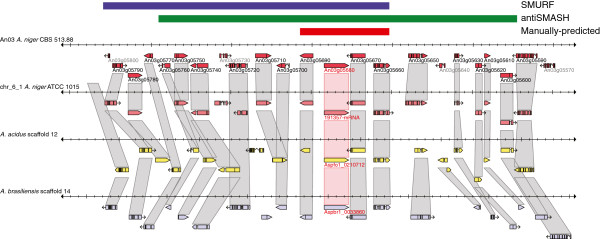
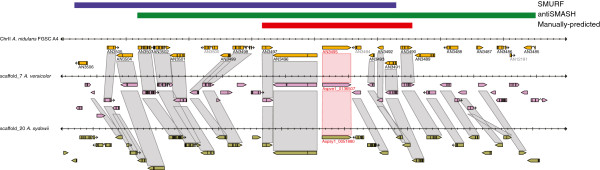
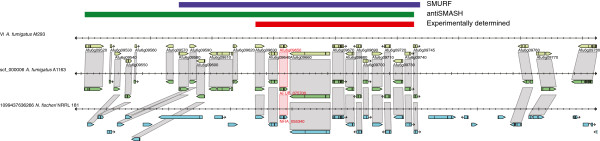
“oryzae 4 3 Manual annotation of computationally predicted gene clusters Algorithms such as SMURF [38] and antiSMASH (antibiotics and Secondary Metabolite Analysis SHell) [39] can be used to predict fungal secondary metabolite gene clusters.”
MethodResultInfluentialWormBase: a multi-species resource for nematode biology and genomics
Harris, T. W. (2004) · Nucleic Acids Research · doi:10.1093/nar/gkh066 · Cited by 715
Genomics-driven discovery of PKS-NRPS hybrid metabolites from Aspergillus nidulans
Bergmann, S., Schümann, J., Scherlach, K., Lange, C., Brakhage, A. A., & Hertweck, C. (2007) · Nature Chemical Biology · doi:10.1038/nchembio869 · Cited by 594 · cited 1×
“nidulans Cluster Summary Backbone enzyme SMURF antiSMASH Manual/experimental Boundary 1 Boundary 2 Reference Asperfuranone (afo) cluster AN1036 AN1029 - AN11288 AN1026 - AN1040 AN1029 - AN1036 ED ED [40] Asperthecin (apt) cluster AN6000 AN5989 - AN6007 AN5991 - AN6009 AN6000 - AN6002* ED, EP ED, EP [30] Aspyridone (as…”
Gene Ontology Annotations and Resources
The Gene Ontology Consortium (2012) · Nucleic Acids Research · doi:10.1093/nar/gks1050 · Cited by 553
Twenty-five coregulated transcripts define a sterigmatocystin gene cluster in Aspergillus nidulans.
Brown, D. W., Yu, J. H., Kelkar, H. S., Fernandes, M., Nesbitt, T. C., Keller, N. P., Adams, T. H., & Leonard, T. J. (1996) · Proceedings of the National Academy of Sciences · doi:10.1073/pnas.93.4.1418 · Cited by 507 · cited 2×
“parasiticus proteins involved in AF production, for which ST is a precursor [46].”
BackgroundPhylogenetic and Functional Assessment of Orthologs Inference Projects and Methods
Altenhoff, A. M., & Dessimoz, C. (2009) · PLoS Computational Biology · doi:10.1371/journal.pcbi.1000262 · Cited by 420 · cited 1×
“InParanoid was chosen based on compatibility with the existing ortholog analysis pipeline at AspGD, and comparable accuracy when compared with alternative methods [55].”
Method
Cited by
Items 101–200 of 292
A Genomics Based Discovery of Secondary Metabolite Biosynthetic Gene Clusters in Aspergillus ustus
Pi, B., Yu, D., Dai, F., Song, X., Zhu, C., Li, H., & Yu, Y. (2015) · PLoS ONE · doi:10.1371/journal.pone.0116089 · Cited by 32
“The increasing availability of Aspergillus genomes has led to a rapid identification of SMBPs in recent years and subsequently has revealed that only a small proportion of SMBPs are conserved between even closely related species [19].”
BackgroundAlves, P. C., Hartmann, D. O., Núñez, Ó., Martins, I., Gomes, T. L., Garcia, H., Galceran, M. T., Hampson, R., Becker, J. D., & Pereira, C. S. (2016) · BMC Genomics · doi:10.1186/s12864-016-2577-6 · Cited by 37
“Consistent with the greater diversity of putative compounds found in cultures exposed to either ionic liquid (Table 1, Additional file 3), in total twenty one of the sixty six predicted backbone genes [3] were found upregulated compared to the control (Table 3 and Additional file 2).”
BackgroundResultThe Transcriptome of Exophiala dermatitidis during Ex-vivo Skin Model Infection
Poyntner, C., Blasi, B., Arcalís, E., Mirastschijski, U., Sterflinger, K., & Tafer, H. (2016) · Frontiers in Cellular and Infection Microbiology · doi:10.3389/fcimb.2016.00136 · Cited by 37
Quandt, C. A., Kohler, A., Hesse, C. N., Sharpton, T. J., Martin, F. M., & Spatafora, J. W. (2015) · Environmental Microbiology · doi:10.1111/1462-2920.12840 · Cited by 37
RNA-Seq Reveals OTA-Related Gene Transcriptional Changes in Aspergillus carbonarius
Gerin, D., Angelini, R. M. D. M., Pollastro, S., & Faretra, F. (2016) · PLoS ONE · doi:10.1371/journal.pone.0147089 · Cited by 32
The iron-responsive microsomal proteome of Aspergillus fumigatus
Moloney, N. M., Owens, R. A., Meleady, P., Henry, M. A., Dolan, S. K., Mulvihill, E., CLYNES, M. M., & Doyle, S. (2015) · Journal of Proteomics · doi:10.1016/j.jprot.2015.12.025 · Cited by 37
Resorcylic Acid Lactone Biosynthesis Relies on a Stereotolerant Macrocyclizing Thioesterase
Heberlig, G. W., Wirz, M., Wang, M., & Boddy, C. N. C. (2014) · Organic Letters · doi:10.1021/ol502747t · Cited by 31
Synthetic-biology-based discovery of a fungal macrolide from Macrophomina phaseolina
Morishita, Y., Sonohara, T., Taniguchi, T., Adachi, K., Fujita, M., & Asai, T. (2020) · Organic & Biomolecular Chemistry · doi:10.1039/d0ob00519c · Cited by 31
Morishita, Y., Aoki, Y., Ito, M., Hagiwara, D., Torimaru, K., Morita, D., Kuroda, T., Fukano, H., Hoshino, Y., Suzuki, M., et al. (2020) · Organic Letters · doi:10.1021/acs.orglett.0c01975 · Cited by 31
Advances in mining and expressing microbial biosynthetic gene clusters
Xu, Z., Park, T.-J., & Cao, H. (2022) · Critical Reviews in Microbiology · doi:10.1080/1040841x.2022.2036099 · Cited by 34
“…Aspergillus nidulans serves as the primary workhorse employed to understand the fungal genetics of BGCs and the secondary metabolites they produce (Inglis et al. 2013; Yaegashi et al. 2014) and Trichoderma species are wellstudied for their biocontrol properties with great potentials to alleviate…”
BackgroundIdentification of the First Diketomorpholine Biosynthetic Pathway Using FAC-MS Technology
Robey, M. T., Ye, R., Bok, J. W., Clevenger, K. D., Islam, M. N., Chen, C., Gupta, R., Swyers, M. J., Wu, E., Gao, P., et al. (2018) · ACS Chemical Biology · doi:10.1021/acschembio.8b00024 · Cited by 30
Lin, S.-Y., Oakley, C. E., Jenkinson, C. B., Chiang, Y., Lee, C., Jones, C. G., Seidler, P. M., Nelson, H. M., Todd, R. B., Wang, C. C. C., et al. (2023) · Chemical Science · doi:10.1039/d3sc02226a · Cited by 31
Non-invasive and invasive diagnoses of aspergillosis in a rat model by mass spectrometry
Luptáková, D., Pluháček, T., Petřík, M., Novák, J., Palyzová, A., Sokolová, L., Škríba, A., Šedivá, B., Lemr, K., & Havlíček, V. (2017) · Scientific Reports · doi:10.1038/s41598-017-16648-z · Cited by 32
Etxebeste, O., & Espeso, E. A. (2019) · International Microbiology · doi:10.1007/s10123-019-00064-6 · Cited by 35
Sirtuin A regulates secondary metabolite production by Aspergillus nidulans
Itoh, E., Shigemoto, R., Oinuma, K.-I., Shimizu, M., Masuo, S., & Takaya, N. (2017) · The Journal of General and Applied Microbiology · doi:10.2323/jgam.2016.11.002 · Cited by 28
Alhadrami, H. A., Thissera, B., Hassan, M. H. A., Behery, F. A., Ngwa, C. J., Hassan, H. M., Pradel, G., Abdelmohsen, U. R., & Rateb, M. E. (2021) · Marine Drugs · doi:10.3390/md19020109 · Cited by 33
Sbaraini, N., Andreis, F. C., Thompson, C. E., Guedes, R. L. M., Junges, Â., de Oliveira, T. C., Staats, C. C., Vainstein, M. H., de Vasconcelos, A. T. R., & Schrank, A. (2017) · Frontiers in Microbiology · doi:10.3389/fmicb.2017.01063 · Cited by 32
“These BGCs usually contain backbone genes such as polyketide synthases (PKS) and non-ribosomal peptide synthetases (NRPS), as well as adjacent genes that assist in regulation, transport, and metabolite trimming (Inglis et al., 2013; Lazarus et al., 2014).”
BackgroundMetabolomics and Microbial Metabolism: Toward a Systematic Understanding
Holbrook‐Smith, D., Trouillon, J., & Sauer, U. (2023) · Annual Review of Biophysics · doi:10.1146/annurev-biophys-030722-021957 · Cited by 31
Toopaang, W., Phonghanpot, S., Punya, J., Panyasiri, C., Klamchao, K., Wasuwan, R., Srisuksam, C., Sangsrakru, D., Sonthirod, C., Tangphatsornruang, S., et al. (2017) · Fungal Biology · doi:10.1016/j.funbio.2017.04.007 · Cited by 27
Unraveling the Importance of Metabolites from Entomopathogenic Fungi in Insect Pest Management
Paschapur, A. U., Subbanna, A. R. N. S., Singh, A. K., Jeevan, B., Stanley, J., Rajashekhar, H., & Mishra, K. K. (2021) · Sustainability in plant and crop protection · doi:10.1007/978-3-030-67231-7_5 · Cited by 31
Phylogenomics and evolution of secondary metabolism in plant-associated fungi
Spatafora, J. W., & Bushley, K. E. (2015) · Current Opinion in Plant Biology · doi:10.1016/j.pbi.2015.05.030 · Cited by 29
van Dijk, J. W. A., & Wang, C. C. C. (2016) · Methods in enzymology on CD-ROM/Methods in enzymology · doi:10.1016/bs.mie.2016.02.021 · Cited by 27
Developing filamentous fungal chassis for natural product production
Fan, J., Wei, P., Li, Y., Zhang, S., Ren, Z., Li, W., & Yin, W. (2024) · Bioresource Technology · doi:10.1016/j.biortech.2024.131703 · Cited by 26
Lan, N., Yue, Q., An, Z., & Bills, G. F. (2019) · Journal of Industrial Microbiology & Biotechnology · doi:10.1007/s10295-019-02250-x · Cited by 29
Freyria, N. J., Kuo, A., Chovatia, M., Johnson, J., Lipzen, A., Barry, K., Grigoriev, I. V., & Lovejoy, C. (2022) · Communications Biology · doi:10.1038/s42003-022-03461-2 · Cited by 26
How to Completely Squeeze a Fungus—Advanced Genome Mining Tools for Novel Bioactive Substances
Schüller, A., Studt, L., & Strauss, J. (2022) · Pharmaceutics · doi:10.3390/pharmaceutics14091837 · Cited by 33
Oiartzabal‐Arano, E., Garzia, A., Gorostidi, A., Ugalde, U., Espeso, E. A., & Etxebeste, O. (2015) · Genetics · doi:10.1534/genetics.115.174342 · Cited by 26
“Genes and regulators of the biosynthesis of SMs are usually grouped in clusters within the genome [see annotation for clusters in different aspergilli in Inglis et al. (2013)].”
BackgroundYang, K., Geng, Q., Song, F., He, X., Hu, T., Wang, S., & Tian, J. (2020) · International Journal of Molecular Sciences · doi:10.3390/ijms21196994 · Cited by 27
“flavus [24,25], and here we found that only 13 transcriptional factors were located in the 11 predicted BGCs (Table S2), among which the expression levels of genes AFLA_128160 encoding a TF of cluster 5, AFLA_096330 and AFLA_096370 encoding two TFs of cluster 31 (expressing Aflatrem), and AFLA_059960 encoding a TF of…”
BackgroundIdentification and Functional Characterization of Fungal Chalcone Synthase and Chalcone Isomerase
Furumura, S., Ozaki, T., Sugawara, A., Morishita, Y., Tsukada, K., Ikuta, T., Inoue, A., & Asai, T. (2023) · Journal of Natural Products · doi:10.1021/acs.jnatprod.2c01027 · Cited by 25
Wang, W.-H., Li, C.-R., Qin, X., Yang, X., Xie, S., Jiang, Q., Zou, L.-H., Zhang, Y., Zhu, G., & Zhao, P. (2024) · Journal of Agricultural and Food Chemistry · doi:10.1021/acs.jafc.4c00371 · Cited by 24
Clevenger, K. D., Ye, R., Bok, J. W., Thomas, P. M., Islam, M. N., Miley, G. P., Robey, M. T., Chen, C., Yang, K., Swyers, M. J., et al. (2018) · Biochemistry · doi:10.1021/acs.biochem.8b00076 · Cited by 24
“Then, BenZ-C2 catalyzes formation of the Anth-NmPhe-Anth tripeptide covalently bound to BenY-T.”
BackgroundMethodInfluentialYu, Y., Blachowicz, A., Will, C., Szewczyk, E., Glenn, S., Gensberger‐Reigl, S., Nowrousian, M., Wang, C. C. C., & Krappmann, S. (2018) · Molecular Microbiology · doi:10.1111/mmi.14136 · Cited by 30
Wang, B., Li, X., Yu, D., Chen, X., Tabudravu, J. N., Deng, H., & Pan, L. (2018) · Microbiological Research · doi:10.1016/j.micres.2018.10.004 · Cited by 24
Exploring the roles of fungal-derived secondary metabolites in plant-fungal interactions
Nguyen, T. A. N., Higa, T., Shiina, A., Utami, Y. D., & Hiruma, K. (2023) · Physiological and Molecular Plant Pathology · doi:10.1016/j.pmpp.2023.102021 · Cited by 27
Griffiths, S. A., Mesarich, C. H., Overdijk, E. J. R., Saccomanno, B., WIT, P. J. G. M. D., & Collemare, J. (2016) · Molecular Plant Pathology · doi:10.1111/mpp.12527 · Cited by 26
“The necrotrophic plant-pathogenic fungi Cercospora spp. and Elsino€e spp., for instance, produce the non-specific toxins cercosporin and elsinochromes, respectively, which are photodynamic SMs that generate toxic reactive oxygen species (ROS) during host colonization (Daub and Hangarter, 1983).”
BackgroundInfluentialFunctional convergence of gliP and aspf1 in Aspergillus fumigatus pathogenicity
Liu, H., Xu, W., Solis, N. V., Woolford, C. A., Mitchell, A. P., & Filler, S. G. (2018) · Virulence · doi:10.1080/21505594.2018.1482182 · Cited by 21
Tsunematsu, Y., Maeda, N., Yokoyama, M., Chankhamjon, P., Watanabe, K., Scherlach, K., & Hertweck, C. (2018) · Angewandte Chemie International Edition · doi:10.1002/anie.201806740 · Cited by 21
Schüller, A., Wolansky, L., Berger, H., Studt, L., Gacek‐Matthews, A., Sulyok, M., & Strauss, J. (2020) · Applied Microbiology and Biotechnology · doi:10.1007/s00253-020-10900-9 · Cited by 36
Kumla, D., Sousa, E., Marengo, A., Dethoup, T., Pereira, J. A., Gales, L., Freitas‐Silva, J., da Costa, P. M., Mistry, S. C., Silva, A. M. S., et al. (2020) · Phytochemistry · doi:10.1016/j.phytochem.2020.112575 · Cited by 21
Igarashi, Y., Hanafusa, T., Gohda, F., Peterson, S., & Bills, G. F. (2014) · Mycology: An International Journal on Fungal Biology · doi:10.1080/21501203.2014.917736 · Cited by 21
“terreus, have been estimated to have as many as 50–70 individual core biosynthetic genes for non-ribosomal peptide synthases (NRPS), polyketide synthases (PKS), terpene cyclases and prenyl transferases (Inglis et al. 2013).”
BackgroundFrawley, D., Karahoda, B., Bayram, Ö. S., & Bayram, Ö. (2018) · Scientific Reports · doi:10.1038/s41598-018-34895-6 · Cited by 23
Engineering Aspergillus nidulans for heterologous ent-kaurene and gamma-terpinene production
Bromann, K., Toivari, M. H., Viljanen, K., Ruohonen, L., & Nakari‐Setälä, T. (2016) · Applied Microbiology and Biotechnology · doi:10.1007/s00253-016-7517-5 · Cited by 20
“No monoterpene biosynthetic genes have been identified by using genomic mining of A. nidulans (Wortman et al. 2009; Arnaud et al. 2012; Nielsen et al. 2013; Inglis et al. 2013).”
Sbaraini, N., Bellini, R. G., Penteriche, A., Guedes, R. L. M., Garcia, A. W. A., Gerber, A. L., Vainstein, M. H., de Vasconcelos, A. T. R., Schrank, A., & Staats, C. C. (2019) · BMC Genomics · doi:10.1186/s12864-019-6220-1 · Cited by 20
“[PKS-NRPS] and terpene cyclases [TCs]), as well as adjacent genes that assist in metabolite maturation [14, 15].”
BackgroundGerke, J., Köhler, A. M., Wennrich, J., Große, V., Shao, L., Heinrich, A. K., Bode, H. B., Chen, W., Surup, F., & Braus, G. H. (2022) · Frontiers in Fungal Biology · doi:10.3389/ffunb.2021.777474 · Cited by 25
“A. nidulans harbors more than 60 different gene clusters (Inglis et al., 2013).”
BackgroundReynolds, N. K., Stajich, J., Benny, G. L., Barry, K., Mondo, S. J., LaButti, K. M., Lipzen, A., Daum, C. G., Grigoriev, I. V., Ho, H.-M., et al. (2023) · Genome Biology and Evolution · doi:10.1093/gbe/evac185 · Cited by 20
AtfA-Independent Adaptation to the Toxic Heavy Metal Cadmium in Aspergillus nidulans
Emri, T., Gila, B. C., Antal, K., Fekete, F., Moon, H., Yu, J., & Pócsi, I. (2021) · Microorganisms · doi:10.3390/microorganisms9071433 · Cited by 19
Margalit, A., Sheehan, D., Carolan, J. C., & Kavanagh, K. A. (2022) · Microbiology · doi:10.1099/mic.0.001164 · Cited by 21
Ries, L. N. A., de Assis, L. J., Rodrigues, F. J. S., Caldana, C., Rocha, M. C., Malavazi, I., Bayram, Ö., & Goldman, G. H. (2018) · G3 Genes Genomes Genetics · doi:10.1534/g3.118.200411 · Cited by 20
Biosynthesis of Alkylcitric Acids in Aspergillus niger Involves Both Co-localized and Unlinked Genes
Palys, S., Pham, T. T. M., & Tsang, A. (2020) · Frontiers in Microbiology · doi:10.3389/fmicb.2020.01378 · Cited by 20
Picazo, I., Etxebeste, O., Requena, E., Garzia, A., & Espeso, E. A. (2020) · Microbial Genomics · doi:10.1099/mgen.0.000415 · Cited by 21
Natural products in the predatory defence of the filamentous fungal pathogen Aspergillus fumigatus
Boysen, J. M., Saeed, N., & Hillmann, F. (2021) · Beilstein Journal of Organic Chemistry · doi:10.3762/bjoc.17.124 · Cited by 19
The airway mycobiome and interactions with immunity in health and chronic lung disease
Katsoulis, O., Pitts, O. R., & Singanayagam, A. (2024) · Oxford Open Immunology · doi:10.1093/oxfimm/iqae009 · Cited by 21
Sharma, R., Xia, X., Riess, K., Bauer, R., & Thines, M. (2015) · Genome Biology and Evolution · doi:10.1093/gbe/evv162 · Cited by 19
“Key words: comparative genomics, convergent evolution, evolutionary biology, metabolic pathways, positive selection, smut fungi, Ustilaginomycotina.”
BackgroundSbaraini, N., Hu, J., Roux, I., Phan, C., Motta, H., Rezaee, H., Schrank, A., Chooi, Y., & Staats, C. C. (2021) · Fungal Genetics and Biology · doi:10.1016/j.fgb.2021.103568 · Cited by 19
Considerations for Domestication of Novel Strains of Filamentous Fungi
Pullen, R. M., Decker, S. R., Subramanian, V., Adler, M. J., Tobias, A. V., Perisin, M., Sund, C. J., Servinsky, M. D., & Kozlowski, M. T. (2025) · ACS Synthetic Biology · doi:10.1021/acssynbio.4c00672 · Cited by 18
Soukup, A. A., Fischer, G. J., Luo, J., & Keller, N. P. (2017) · Fungal Genetics and Biology · doi:10.1016/j.fgb.2017.01.004 · Cited by 17
“…in fungi have been associated with such diverse processes as stress response (Keller, 2015; Ren et al., 2016; Wang et al., 2015), polar growth (Becht et al., 2006; Inglis et al., 2013; Tey et al., 2005), nutrient acquisition (Morozov et al., 2010b), and morphological switching (Göhre et al., 2013).”
BackgroundGeneral stress response or adaptation to rapid growth in Aspergillus nidulans?
Antal, K., Gila, B. C., Pócsi, I., & Emri, T. (2019) · Fungal Biology · doi:10.1016/j.funbio.2019.10.009 · Cited by 20
Li, Y., Yan, P., Lu, X., Qiu, Y., Shang, L., Liu, G., Li, S., Mou, L., & Xie, N. (2020) · Frontiers in Microbiology · doi:10.3389/fmicb.2020.01038 · Cited by 20
Steyer, J. T., Downes, D. J., Hunter, C. C., Migeon, P., & Todd, R. B. (2021) · mBio · doi:10.1128/mbio.00768-21 · Cited by 20
Chakraborty, P. (2021) · Biochimie · doi:10.1016/j.biochi.2021.12.001 · Cited by 18
Induction of Diverse Cryptic Fungal Metabolites by Steroids and Channel Blockers
Lee, S. R., & Seyedsayamdost, M. R. (2022) · Angewandte Chemie International Edition · doi:10.1002/anie.202204519 · Cited by 16
Synthetic Biology-Based Discovery of Diterpenoid Pyrones from the Genome of Eupenicillium shearii
Morishita, Y., Tsukada, K., Murakami, K., Irie, K., & Asai, T. (2022) · Journal of Natural Products · doi:10.1021/acs.jnatprod.1c00973 · Cited by 15
Xiao, M., Wang, Y., Wang, Y., Yan, X., Zhu, Z., Tian, E., Yang, C., Ma, E., Zou, G., Zhou, Z., et al. (2023) · Green Chemistry · doi:10.1039/d3gc01770b · Cited by 15
Domingos, L. T. S., Martins, R. D. S., de Lima, L. M., Ghizelini, A. M., Ferreira‐Pereira, A., & Cotinguiba, F. (2022) · Biomolecules · doi:10.3390/biom12121820 · Cited by 14
Mining Silent Biosynthetic Gene Clusters for Natural Products in Filamentous Fungi
Wang, Y., & Mao, X. (2025) · Chemistry & Biodiversity · doi:10.1002/cbdv.202402715 · Cited by 13
“…natural products produced from filamentous fungi. in three Aspergillus species A. nidulans , A. niger and A. oryzae , each harbors over 70 BGCs [11], but many of them are silent or transcriptionally not expressed under standard experimental conditions, and may yield more NPs beyond those…”
Identification of a Novel Biosynthetic Gene Cluster in Aspergillus niger Using Comparative Genomics
Evdokias, G., Semper, C., Mora-Ochomogo, M., Falco, M. D., Nguyen, T. T. M., Savchenko, A. V., Tsang, A., & Benoit, I. (2021) · Journal of Fungi · doi:10.3390/jof7050374 · Cited by 15
“As fungal BGCs evolve rapidly [26], defining the boundary of BGCs and the role of clustered genes in the biosynthesis of secondary metabolites is very challenging and timeconsuming [27,28].”
BackgroundSix Key Traits of Fungi: Their Evolutionary Origins and Genetic Bases
Nagy, L. G., Tóth, R., Kiss, E., Slot, J. C., Gácser, A., & Kovács, G. M. (2017) · ASM Press eBooks · doi:10.1128/9781555819583.ch2 · Cited by 18
Jangid, H., Garg, S., Kashyap, P., Karnwal, A., Shidiki, A., & Kumar, G. (2024) · Frontiers in Microbiology · doi:10.3389/fmicb.2024.1379602 · Cited by 20
CRISPR-Cas9 Cytidine-Base-Editor Mediated Continuous In Vivo Evolution in Aspergillus nidulans
Tian, Y., Xu, Q., Pang, M., Ma, Y.-C., Zhang, Z., Zhang, D., Guo, D., Wang, L., Li, Q., Li, Y., et al. (2025) · ACS Synthetic Biology · doi:10.1021/acssynbio.4c00716 · Cited by 12
Ionic Liquids as Unforeseen Assets to Fight Life-Threatening Mycotic Diseases
Hartmann, D. O., Petković, M., & Pereira, C. S. (2016) · Frontiers in Microbiology · doi:10.3389/fmicb.2016.00111 · Cited by 15
“Another promising example is the case of A. nidulans, which genome has nearly 70 genes coding for multi-domain enzymes likely involved in secondary metabolite biosynthesis (Inglis et al., 2013).”
BackgroundDiscovery of a Cyclic Depsipeptide from Chaetomium mollipilium by the Genome Mining Approach
Homma, Y., Sugawara, A., Morishita, Y., Tsukada, K., Ozaki, T., & Asai, T. (2022) · Organic Letters · doi:10.1021/acs.orglett.2c01172 · Cited by 12
The DUG Pathway Governs Degradation of Intracellular Glutathione in Aspergillus nidulans
Gila, B. C., Moon, H., Antal, K., Hajdú, M., Kovács, R., Jónás, A. P., Pusztahelyi, T., Yu, J., Pócsi, I., & Emri, T. (2021) · Applied and Environmental Microbiology · doi:10.1128/aem.01321-20 · Cited by 13
Anticancer natural products from Aspergillus neoniger, an endophyte of Ficus carica
Abdou, R., Alqahtani, A. M., & Attia, H. G. (2021) · Bulletin of the National Research Centre/Bulletin of the National Research Center · doi:10.1186/s42269-021-00536-8 · Cited by 12
Shen, X., Lei, C., Zhang, A., Wang, L., Chen, D., Qi, L., Hu, Y., Chen, G., Ran, H., & Yin, W. (2024) · Journal of Agricultural and Food Chemistry · doi:10.1021/acs.jafc.4c04764 · Cited by 14
Xerophilic Fungi: Physiology, Genetics and Biotechnology
Sarkar, S., Singh, N. A., & Rai, N. (2022) · Springer eBooks · doi:10.1007/978-981-16-4907-3_13 · Cited by 11
Improving candidate Biosynthetic Gene Clusters in fungi through reinforcement learning
Almeida, H., Tsang, A., & Diallo, A. B. (2022) · Bioinformatics · doi:10.1093/bioinformatics/btac420 · Cited by 11
Kocsis, B., Lee, M.-K., Antal, K., Yu, J., Pócsi, I., Leiter, É., & Emri, T. (2023) · Cells · doi:10.3390/cells12030463 · Cited by 12
“2013 [38] and gene set enrichment analysis was carried out with the clusters separately.”
MethodLi, X., Xu, J., Wang, W., Chen, Y., Zheng, D., Di, Y., Li, P., Wang, P., & Li, Y. (2016) · Evolutionary Bioinformatics · doi:10.4137/ebo.s37532 · Cited by 11
Creamer, R., Baucom, D. L., Neyaz, M., Nusayr, T., Schardl, C. L., & Cook, D. (2021) · Journal of Fungi · doi:10.3390/jof7070538 · Cited by 14
“Aspergillus species have been identified with high numbers of PKS and NRPS gene clusters (33–81) [8,10,16] and Fusarium species with 26–32 gene clusters [15].”
BackgroundLah, L., Löber, U., Hsiang, T., & Hartmann, S. A. (2016) · Fungal Biology · doi:10.1016/j.funbio.2016.12.002 · Cited by 12
Semper, C., Pham, T. T. M., Ram, S., Palys, S., Evdokias, G., Ouedraogo, J., Moisan, M.-C., Geoffrion, N., Reid, I. D., Falco, M. D., et al. (2025) · PNAS Nexus · doi:10.1093/pnasnexus/pgaf249 · Cited by 12
8 Coordination of Fungal Secondary Metabolism and Development
Gerke, J., Köhler, A. M., Meister, C., Thieme, K. G., Amoedo, H., & Braus, G. H. (2020) · Springer eBooks · doi:10.1007/978-3-030-49924-2_8 · Cited by 17
Cao, D. T., Hung, N. V., Lien, H. T. H., Lien, H. T. H., Chae, J., Yun, H., Kim, Y. H., Pham, V. C., & Hương, Đ. T. M. (2022) · Records of Natural Products · doi:10.25135/rnp.310.2110.2248 · Cited by 10
“The secondary metabolites produced from Aspergillius species play an important role in medical, industrial, and agricultural importance [2].”
Pandit, S. S., Zheng, J., Yin, Y., Lorber, S., Puel, O., Dhingra, S., Espeso, E. A., & Calvo, A. M. (2023) · PLoS ONE · doi:10.1371/journal.pone.0286271 · Cited by 10
“To analyze changes in the expression of genes in secondary metabolite biosynthetic gene clusters (SMGs), 67 SMGs were extracted [50].”
Strategies Shaping the Transcription of Carbohydrate-Active Enzyme Genes in Aspergillus nidulans
Gila, B. C., Antal, K., Birkó, Z., Keserű, J. S., Pócsi, I., & Emri, T. (2022) · Journal of Fungi · doi:10.3390/jof8010079 · Cited by 11
Lv, Y., Xiao, J., & Pan, L. (2014) · Biotechnology Letters · doi:10.1007/s10529-014-1609-z · Cited by 10
Schruefer, S., Pschibul, A., Wong, S. S. W., Sae-Ong, T., Wolf, T., Schäuble, S., Panagiotou, G., Brakhage, A. A., Aimanianda, V., Kniemeyer, O., et al. (2023) · BMC Genomics · doi:10.1186/s12864-023-09777-5 · Cited by 11
“Afu3g01400 and Afu3g01410 belong to a putative secondary metabolite gene cluster with Afu3g01410 as its backbone enzyme [18].”
BackgroundType I and II PRMTs regulate catabolic as well as detoxifying processes in Aspergillus nidulans
Bauer, I., Lechner, L., Pidroni, A., Petrone, A.-M., Merschak, P., Lindner, H., Kremser, L., Graessle, S., Golderer, G., Birgani, S. A., et al. (2019) · Fungal Genetics and Biology · doi:10.1016/j.fgb.2019.05.006 · Cited by 11
“Mean expression of SM clusters as defined by (Inglis et al., 2013) is displayed as heat map as described previously (Gacek-Matthews et al., 2015).”
MethodResultAdetunji, M. C., Ezeokoli, O. T., Ngoma, L., & Mwanza, M. (2020) · Mycologia · doi:10.1080/00275514.2020.1804235 · Cited by 12
Strategy for efficient cloning of biosynthetic gene clusters from fungi
Li, R., Li, Z., Ma, K., Wang, G., Li, W., Liu, H., Yin, W., Zhang, P., & Liu, X. (2019) · Science China Life Sciences · doi:10.1007/s11427-018-9511-7 · Cited by 9
Yeast-based heterologous production of the Colletochlorin family of fungal secondary metabolites
Geistodt‐Kiener, A., Totozafy, J., Goff, G. L., Vergne, J., Sakai, K., Ouazzani, J., Mouille, G., Viaud, M., O’Connell, R. J., & Dallery, J. (2023) · Metabolic Engineering · doi:10.1016/j.ymben.2023.10.002 · Cited by 9
Shi, Y. H., Ozaki, T., Sugawara, A., Morishita, Y., Tan, Y. P., Shivas, R. G., Davis, R. A., & Asai, T. (2023) · Tetrahedron Letters · doi:10.1016/j.tetlet.2023.154865 · Cited by 8
Zehetbauer, F., Seidl, A., Berger, H., Sulyok, M., Kastner, F., & Strauss, J. (2022) · Fungal Genetics and Biology · doi:10.1016/j.fgb.2022.103726 · Cited by 14
5 Fungal Chromatin and Its Role in Regulation of Gene Expression
Freitag, M. (2014) · Springer eBooks · doi:10.1007/978-3-642-45218-5_5 · Cited by 11
Hybrid De Novo Genome Assembly Using MiSeq and SOLiD Short Read Data
Ikegami, T., Inatsugi, T., Kojima, I., Umemura, M., Hagiwara, H., Machida, M., & Asai, K. (2015) · PLoS ONE · doi:10.1371/journal.pone.0126289 · Cited by 11
Mahata, P. K., Dass, R. S., Gunti, L., & Thorat, P. A. (2022) · Frontiers in Microbiology · doi:10.3389/fmicb.2022.958424 · Cited by 9
Zhang, X., Leahy, I., Collemare, J., & Seidl, M. F. (2024) · Genome Biology and Evolution · doi:10.1093/gbe/evae228 · Cited by 8
“%) of the genomes show conserved synteny (Inglis et al. 2013).”
Guo, S., Pardeshi, L. A., Qin, L., Cheung, C., Liu, X., Lü, F., Mok, C. C., Parsania, C., Dong, Z., Ko, B. C. B., et al. (2025) · Communications Biology · doi:10.1038/s42003-025-08840-z · Cited by 6
Genomic Analysis and Assessment of Melanin Synthesis in Amorphotheca resinae KUC3009
Oh, J., Kim, Y. J., Kim, J. Y., Kwon, S. L., Lee, C., Lee, M.-E., Kim, J. W., & Kim, G.-H. (2021) · Journal of Fungi · doi:10.3390/jof7040289 · Cited by 8
“For reference, the number of predicted BGCs for Penicillium and Aspergillus ranges between 29 and 85 [36,42,43].”
BackgroundStress Responses Elicited by Glucose Withdrawal in Aspergillus fumigatus
Emri, T., Antal, K., Gila, B. C., Jónás, A. P., & Pócsi, I. (2022) · Journal of Fungi · doi:10.3390/jof8111226 · Cited by 7
Metadata
- Authors
- Inglis, D. O., Binkley, J., Skrzypek, M. S., Arnaud, M. B., Cerqueira, G. C., Shah, P., Wymore, F., Wortman, J. R., & Sherlock, G.
- Affiliations
- Stanford Medicine (US)
- Broad Institute (US)
- Corresponding author
- Sherlock, Gavin
- Venue
- BMC Microbiology
- Published
- 2013-04-26
- Volume
- 13
- Issue
- 1
- Pages
- 91-91
- ISSN
- 1471-2180 (ISSN-L)
- PMC
- PMC3689640
- OpenAlex
- W1985653548
- Cited by
- 293
- References
- 59
- Citations by year
- 2026: 13 · 2025: 15 · 2024: 18 · 2023: 17 · 2022: 24 · 2021: 25 · 2020: 34 · 2019: 20 · 2018: 36 · 2017: 21 · 2016: 25 · 2015: 23 · 2014: 16 · 2013: 5
- FWCI
- 16.89
- Type
- journal article
- Language
- en
- Open access
- gold
- doi.org
- Licence
- cc-by
- Locations
- BMC Microbiology (publishedVersion, cc-by)
- Europe PMC (PubMed Central) (publishedVersion, cc-by)
- PubMed Central (publishedVersion, cc-by)
- PubMed (publishedVersion)
- Funders
- National Institutes of Health
- National Institute of Allergy and Infectious Diseases (R01AI077599)
- Topics
- Life Sciences › Immunology and Microbiology › Applied Microbiology and Biotechnology › Microbial Natural Products and Biosynthesis
- Life Sciences › Biochemistry, Genetics and Molecular Biology › Molecular Biology › Fungal and yeast genetics research
- Life Sciences › Biochemistry, Genetics and Molecular Biology › Biotechnology › Microbial Metabolism and Applications
- Keywords
- secondary metabolite biosynthesis, secondary metabolite gene clusters, Aspergillus nidulans, Aspergillus fumigatus, Aspergillus niger, Aspergillus oryzae, gene ontology annotation, antiSMASH, SMURF, fungal secondary metabolites, genome annotation
- MeSH terms
- Aspergillus, Biological Products, Genes, Fungal, Multigene Family, Humans, Computational Biology, Biosynthetic Pathways
About these checks
Registry, retraction, Cites and statistics results are computed, not judged, with one exception: a printed reference that no index lists is read once by a model before it counts as a citation error. Claims are extracted by a model and kept only when their quote appears verbatim in the text; each cited source is then checked, with a model’s help, for whether it says what the claim relies on. Those verdicts can be wrong — read the claim’s quote and the cited source before relying on one.
Statistics and arithmetic are recomputed, not judged.
Confidence bands are shown only for fields calibrated on our annotated test set. None is calibrated yet, so no band is shown.
What counts as a claim ›How we measure confidence ›How we check this ›
Are you an author, or do you see a problem with this page? Request a review
Data sources
Bibliographic data: Semantic Scholar, OpenAlex, Crossref.
Contains information from the Semantic Scholar Academic Graph Datasets, made available under the ODC Attribution License (ODC-BY 1.0).
Semantic Scholar’s data is described in: Kinney, R., et al. (2023). The Semantic Scholar Open Data Platform. arXiv:2301.10140.
