

Comprehensive annotation of secondary metabolite biosynthetic genes and gene clusters of Aspergillus nidulans, A. fumigatus, A. niger and A. oryzae
Open accessThe DOI matches its Crossref record; 59 of the 59 references it cites were found in a registry or an index.
Abstract
Background: Secondary metabolite production, a hallmark of filamentous fungi, is an expanding area of research for the Aspergilli. These compounds are potent chemicals, ranging from deadly toxins to therapeutic antibiotics to potential anti-cancer drugs. The genome sequences for multiple Aspergilli have been determined, and provide a wealth of predictive information about secondary metabolite production. Sequence analysis and gene overexpression strategies have enabled the discovery of novel secondary metabolites and the genes involved in their biosynthesis. The Aspergillus Genome Database (AspGD) provides a central repository for gene annotation and protein information for Aspergillus species. These annotations include Gene Ontology (GO) terms, phenotype data, gene names and descriptions and they are crucial for interpreting both small- and large-scale data and for aiding in the design of new experiments that further Aspergillus research. Results: We have manually curated Biological Process GO annotations for all genes in AspGD with recorded functions in secondary metabolite production, adding new GO terms that specifically describe each secondary metabolite. We then leveraged these new annotations to predict roles in secondary metabolism for genes lacking experimental characterization. As a starting point for manually annotating Aspergillus secondary metabolite gene clusters, we used antiSMASH (antibiotics and Secondary Metabolite Analysis SHell) and SMURF (Secondary Metabolite Unknown Regions Finder) algorithms to identify potential clusters in A. nidulans , A. fumigatus, A. niger and A. oryzae , which we subsequently refined through manual curation. Conclusions: This set of 266 manually curated secondary metabolite gene clusters will facilitate the investigation of novel Aspergillus secondary metabolites.
Overview
The claims and statistics of this paper haven’t been checked yet.
Free: it reads the open-access text and checks the first 5 claims that cite a source we can check. Create a free account to check every claim.
Integrity signals
Registry
Cites
Statistics
Figures
Verification
Claims the paper makes
The claims and statistics of this paper haven’t been checked yet.
Free: it reads the open-access text and checks the first 5 claims that cite a source we can check. Create a free account to check every claim.
Claims other papers make about this one
Each is checked against this paper’s own text: does it say what the citing paper says it does?
The cited source says what the claim attributes to it.
In the citing paper
“Thirty-nine clusters (https//www.jcvi.org/smurf) have been identified (435), and the production of most secondary metabolites is controlled by LaeA, a central transcriptional regulator acting on chromatin structure.”
From Aspergillus fumigatus and Aspergillosis in 2019 (2019) · cites this paper as [435]
Self-check
Percentages, sums and reported differences re-computed from the paper’s own numbers.
The self-check needs the paper’s full text.
Citations
Cites
The Gene Ontology (GO) database and informatics resource
Gene Ontology Consortium (2004) · Nucleic Acids Research · doi:10.1093/nar/gkh036 · Cited by 4,579 · cited 1×
“GO terms describe the activity of a gene product (Molecular Function; MF) within the cell, the biological process (Biological Process; BP) in which a gene product is involved and the location within the cell (Cellular Component; CC) where the gene product is observed [28].”
BackgroundInterProScan – an integration platform for the signature-recognition methods in InterPro
Zdobnov, E. M., & Apweiler, R. (2001) · Bioinformatics · doi:10.1093/bioinformatics/17.9.847 · Cited by 2,939 · cited 1×
“IprScan predicts InterPro domains based on protein sequences [56].”
BackgroundMedema, M. H., Blin, K., Cimermancic, P., de Jager, V., Zakrzewski, P., Fischbach, M. A., Weber, T., Takano, E., & Breitling, R. (2011) · Nucleic Acids Research · doi:10.1093/nar/gkr466 · Cited by 2,006 · cited 4×
“1 of the antiSMASH program [39] was downloaded from (http://antismash.”
MethodInfluentialAutomatic clustering of orthologs and in-paralogs from pairwise species comparisons
Remm, M., Storm, C. E. V., & Sonnhammer, E. L. L. (2001) · Journal of Molecular Biology · doi:10.1006/jmbi.2000.5197 · Cited by 1,174 · cited 1×
“Orthologous protein predictions between Saccharomyces cerevisiae, Schizosaccharomyces pombe and the Aspergillus protein sets were made by pair-wise comparisons using the InParanoid software [54].”
MethodSMURF: Genomic mapping of fungal secondary metabolite clusters
Khaldi, N., Seifuddin, F. T., Turner, G., Haft, D., Nierman, W. C., Wolfe, K. H., & Fedorova, N. D. (2010) · Fungal Genetics and Biology · doi:10.1016/j.fgb.2010.06.003 · Cited by 771 · cited 10×
“oryzae 4 3 Manual annotation of computationally predicted gene clusters Algorithms such as SMURF [38] and antiSMASH (antibiotics and Secondary Metabolite Analysis SHell) [39] can be used to predict fungal secondary metabolite gene clusters.”
MethodResultInfluentialWormBase: a multi-species resource for nematode biology and genomics
Harris, T. W. (2004) · Nucleic Acids Research · doi:10.1093/nar/gkh066 · Cited by 715
Genomics-driven discovery of PKS-NRPS hybrid metabolites from Aspergillus nidulans
Bergmann, S., Schümann, J., Scherlach, K., Lange, C., Brakhage, A. A., & Hertweck, C. (2007) · Nature Chemical Biology · doi:10.1038/nchembio869 · Cited by 594 · cited 1×
“nidulans Cluster Summary Backbone enzyme SMURF antiSMASH Manual/experimental Boundary 1 Boundary 2 Reference Asperfuranone (afo) cluster AN1036 AN1029 - AN11288 AN1026 - AN1040 AN1029 - AN1036 ED ED [40] Asperthecin (apt) cluster AN6000 AN5989 - AN6007 AN5991 - AN6009 AN6000 - AN6002* ED, EP ED, EP [30] Aspyridone (as…”
Gene Ontology Annotations and Resources
The Gene Ontology Consortium (2012) · Nucleic Acids Research · doi:10.1093/nar/gks1050 · Cited by 553
Twenty-five coregulated transcripts define a sterigmatocystin gene cluster in Aspergillus nidulans.
Brown, D. W., Yu, J. H., Kelkar, H. S., Fernandes, M., Nesbitt, T. C., Keller, N. P., Adams, T. H., & Leonard, T. J. (1996) · Proceedings of the National Academy of Sciences · doi:10.1073/pnas.93.4.1418 · Cited by 507 · cited 2×
“parasiticus proteins involved in AF production, for which ST is a precursor [46].”
BackgroundPhylogenetic and Functional Assessment of Orthologs Inference Projects and Methods
Altenhoff, A. M., & Dessimoz, C. (2009) · PLoS Computational Biology · doi:10.1371/journal.pcbi.1000262 · Cited by 420 · cited 1×
“InParanoid was chosen based on compatibility with the existing ortholog analysis pipeline at AspGD, and comparable accuracy when compared with alternative methods [55].”
MethodChromatin-level regulation of biosynthetic gene clusters
Bok, J. W., Chiang, Y.-M., Szewczyk, E., Reyes-Dominguez, Y., Davidson, A. D., Sanchez, J. F., Lo, H.-C., Watanabe, K., Strauss, J., Oakley, B. R., et al. (2009) · Nature Chemical Biology · doi:10.1038/nchembio.177 · Cited by 381
Genomic Mining for Aspergillus Natural Products
Bok, J. W., Hoffmeister, D., Maggio-Hall, L. A., Murillo, R., Glasner, J. D., & Keller, N. P. (2006) · Chemistry & Biology · doi:10.1016/j.chembiol.2005.10.008 · Cited by 354 · cited 1×
“Terriquinone (tdi) cluster AN8514 AN8506 - AN8516 AN8508 - AN8522 AN8513 - AN8520* ED ED [47]”
Transcriptional Regulation of Chemical Diversity in Aspergillus fumigatus by LaeA
Perrin, R. M., Fedorova, N. D., Bok, J. W., Cramer, R. A., Wortman, J. R., Kim, H. S., Nierman, W. C., & Keller, N. P. (2007) · PLoS Pathogens · doi:10.1371/journal.ppat.0030050 · Cited by 352 · cited 1×
“Secondary metabolite biosynthetic genes often occur in clusters that tend to be sub-telomerically located and are coordinately regulated under certain laboratory conditions [18-20].”
BackgroundSelf-citationChiang, Y.-M., Szewczyk, E., Davidson, A. D., Keller, N., Oakley, B. R., & Wang, C. C. C. (2009) · Journal of the American Chemical Society · doi:10.1021/ja8088185 · Cited by 325 · cited 1×
“nidulans Cluster Summary Backbone enzyme SMURF antiSMASH Manual/experimental Boundary 1 Boundary 2 Reference Asperfuranone (afo) cluster AN1036 AN1029 - AN11288 AN1026 - AN1040 AN1029 - AN1036 ED ED [40] Asperthecin (apt) cluster AN6000 AN5989 - AN6007 AN5991 - AN6009 AN6000 - AN6002* ED, EP ED, EP [30] Aspyridone (as…”
Gene Ontology Consortium. The Gene Ontology (GO) database and informatics resource
Harris, M. A., Clark, J., Ireland, A., Lomax, J., Ashburner, M., Foulger, R. E., Eilbeck, K. L., Lewis, S., Marshall, B., Mungall, C., et al. (2004) · Cited by 295
Self-citationAdvances in Aspergillus secondary metabolite research in the post-genomic era
Sanchez, J. F., Somoza, A. D., Keller, N. P., & Wang, C. C. C. (2012) · Natural Product Reports · doi:10.1039/c2np00084a · Cited by 257 · cited 1×
“Based on the number of predicted secondary metabolite biosynthesis genes and the fact that the expression of many secondary metabolite gene clusters is cryptic [16], meaning that expression is not evident under standard experimental conditions, there appears to be the potential for production of many more secondary me…”
BackgroundLo, H.-C., Entwistle, R., Guo, C.-J., Ahuja, M., Szewczyk, E., Hung, J.-H., Chiang, Y.-M., Oakley, B. R., & Wang, C. C. C. (2012) · Journal of the American Chemical Society · doi:10.1021/ja209809t · Cited by 250 · cited 10×
“Abbreviations: ECS, end of cluster synteny; IGD, increase in intergenic distance; FA, change in functional annotation; ED, experimentally determined”
BackgroundInfluentialGardiner, D. M., & Howlett, B. J. (2005) · FEMS Microbiology Letters · doi:10.1016/j.femsle.2005.05.046 · Cited by 242
Accurate prediction of secondary metabolite gene clusters in filamentous fungi
Andersen, M. R., Nielsen, J. B., Klitgaard, A., Petersen, L. M., Zachariasen, M., Hansen, T. J., Blicher, L. H., Gotfredsen, C. H., Larsen, T. O., Nielsen, K. F., et al. (2013) · Proceedings of the National Academy of Sciences · doi:10.1073/pnas.1205532110 · Cited by 239
Secondary metabolism in fungi: does chromosomal location matter?
Palmer, J. M., & Keller, N. P. (2010) · Current Opinion in Microbiology · doi:10.1016/j.mib.2010.04.008 · Cited by 222 · cited 1×
“Secondary metabolite biosynthetic genes often occur in clusters that tend to be sub-telomerically located and are coordinately regulated under certain laboratory conditions [18-20].”
BackgroundChiang, Y.-M., Szewczyk, E., Nayak, T., Davidson, A. D., Sanchez, J. F., Lo, H.-C., Ho, W.-Y., Simityan, H., Kuo, E., Praseuth, A., et al. (2008) · Chemistry & Biology · doi:10.1016/j.chembiol.2008.05.010 · Cited by 204 · cited 1×
“nidulans Cluster Summary Backbone enzyme SMURF antiSMASH Manual/experimental Boundary 1 Boundary 2 Reference Asperfuranone (afo) cluster AN1036 AN1029 - AN11288 AN1026 - AN1040 AN1029 - AN1036 ED ED [40] Asperthecin (apt) cluster AN6000 AN5989 - AN6007 AN5991 - AN6009 AN6000 - AN6002* ED, EP ED, EP [30] Aspyridone (as…”
Biosynthesis and function of gliotoxin in Aspergillus fumigatus
Scharf, D. H., Heinekamp, T., Remme, N., Hortschansky, P., Brakhage, A. A., & Hertweck, C. (2012) · Applied Microbiology and Biotechnology · doi:10.1007/s00253-011-3689-1 · Cited by 199 · cited 1×
“fumigatus [14,15].”
Characterization of the Aspergillus nidulans Monodictyphenone Gene Cluster
Chiang, Y.-M., Szewczyk, E., Davidson, A. D., Entwistle, R., Keller, N. P., Wang, C. C. C., & Oakley, B. R. (2010) · Applied and Environmental Microbiology · doi:10.1128/aem.02187-09 · Cited by 198
Maiya, S., Grundmann, A., Li, S., & Turner, G. (2006) · ChemBioChem · doi:10.1002/cbic.200600003 · Cited by 189 · cited 1×
“fumigatus cluster summary Backbone enzyme SMURF antiSMASH Manual/experimental Boundary 1 Boundary 2 Reference Fumigaclavine C (fga) cluster* Afu2g18040 Afu2g17930 - Afu2g18070 Afu2g17950 - Afu2g18070 Afu2g17960 - Afu2g18060 ED ED [48] Fumitremorgin B (ftm) cluster* Afu8g00210 Afu8g00280 - Afu8g00100 Afu8g00100 - Afu8g…”
Sanchez, J. F., Entwistle, R., Hung, J.-H., Yaegashi, J., Jain, S., Chiang, Y.-M., Wang, C. C. C., & Oakley, B. R. (2011) · Journal of the American Chemical Society · doi:10.1021/ja1096682 · Cited by 180 · cited 4×
“For example, numerous genes in AspGD are annotated with mutant phenotypes affecting the production of secondary metabolites such as asperthecin [30], austinol and dehydroaustinol [31], emericellin [32], fumiquinazolines [33], orsellinic acid [34], pseurotin A [35], shamixanthones [32,36] and violaceol [37] among other…”
BackgroundInfluentialIlluminating the Diversity of Aromatic Polyketide Synthases in Aspergillus nidulans
Ahuja, M., Chiang, Y.-M., Chang, S.-L., Praseuth, M. B., Entwistle, R., Sanchez, J. F., Lo, H.-C., Yeh, H.-H., Oakley, B. R., & Wang, C. C. C. (2012) · Journal of the American Chemical Society · doi:10.1021/ja3016395 · Cited by 174
Arnaud, M. B., Cerqueira, G. C., Inglis, D. O., Skrzypek, M. S., Binkley, J., Chibucos, M. C., Crabtree, J., Howarth, C., Orvis, J., Shah, P., et al. (2012) · Nucleic Acids Research · doi:10.1093/nar/gkr875 · Cited by 173 · cited 1×
“oryzae [25,26].”
Self-citationIdentification and Characterization of the Asperthecin Gene Cluster of Aspergillus nidulans
Szewczyk, E., Chiang, Y.-M., Oakley, C. E., Davidson, A. D., Wang, C. C. C., & Oakley, B. R. (2008) · Applied and Environmental Microbiology · doi:10.1128/aem.01743-08 · Cited by 172 · cited 2×
“For example, numerous genes in AspGD are annotated with mutant phenotypes affecting the production of secondary metabolites such as asperthecin [30], austinol and dehydroaustinol [31], emericellin [32], fumiquinazolines [33], orsellinic acid [34], pseurotin A [35], shamixanthones [32,36] and violaceol [37] among other…”
Backgroundδ-(L-α-aminoadipyl)-L-cysteinyl-D-valine Synthetase from Aspergillus nidulans
van Liempt, H., von Döhren, H., & Kleinkauf, H. (1989) · Journal of Biological Chemistry · doi:10.1016/s0021-9258(19)84905-0 · Cited by 167
Bergmann, S., Funk, A. N., Scherlach, K., Schroeckh, V., Shelest, E., Horn, U., Hertweck, C., & Brakhage, A. A. (2010) · Applied and Environmental Microbiology · doi:10.1128/aem.00683-10 · Cited by 164 · cited 1×
“nidulans Cluster Summary Backbone enzyme SMURF antiSMASH Manual/experimental Boundary 1 Boundary 2 Reference Asperfuranone (afo) cluster AN1036 AN1029 - AN11288 AN1026 - AN1040 AN1029 - AN1036 ED ED [40] Asperthecin (apt) cluster AN6000 AN5989 - AN6007 AN5991 - AN6009 AN6000 - AN6002* ED, EP ED, EP [30] Aspyridone (as…”
MacCabe, A. P., van Liempt, H., Palissa, H., Unkles, S. E., Riach, M. B., Pfeifer, E., von Döhren, H., & Kinghorn, J. R. (1991) · Journal of Biological Chemistry · doi:10.1016/s0021-9258(18)98948-9 · Cited by 162 · cited 1×
“nidulans and the genes involved in the penicillin biosynthetic pathway have been extensively studied [3-5].”
BackgroundSecondary chemicals protect mould from fungivory
Rohlfs, M., Albert, M., Keller, N. P., & Kempken, F. (2007) · Biology Letters · doi:10.1098/rsbl.2007.0338 · Cited by 162 · cited 1×
“nidulans laeA mutants defective in the production of secondary metabolites are ingested more readily by the fungivorous arthropod, Folsomia candida, suggesting that secondary metabolite production can protect fungi from predation [2].”
BackgroundSterigmatocystin biosynthesis in Aspergillus nidulans requires a novel type I polyketide synthase
Yu, J. H., & Leonard, T. J. (1995) · Journal of Bacteriology · doi:10.1128/jb.177.16.4792-4800.1995 · Cited by 159 · cited 1×
“nidulans [6-10].”
Molecular genetic analysis of the orsellinic acid/F9775 genecluster of Aspergillus nidulans
Sanchez, J. F., Chiang, Y., Szewczyk, E., Davidson, A. D., Ahuja, M., Oakley, C. E., Bok, J. W., Keller, N. P., Oakley, B. R., & Wang, C. C. C. (2009) · Molecular BioSystems · doi:10.1039/b904541d · Cited by 149 · cited 2×
“For example, numerous genes in AspGD are annotated with mutant phenotypes affecting the production of secondary metabolites such as asperthecin [30], austinol and dehydroaustinol [31], emericellin [32], fumiquinazolines [33], orsellinic acid [34], pseurotin A [35], shamixanthones [32,36] and violaceol [37] among other…”
BackgroundMaiya, S., Grundmann, A., Li, X., Li, S., & Turner, G. (2007) · ChemBioChem · doi:10.1002/cbic.200700202 · Cited by 144 · cited 2×
“fumigatus cluster summary Backbone enzyme SMURF antiSMASH Manual/experimental Boundary 1 Boundary 2 Reference Fumigaclavine C (fga) cluster* Afu2g18040 Afu2g17930 - Afu2g18070 Afu2g17950 - Afu2g18070 Afu2g17960 - Afu2g18060 ED ED [48] Fumitremorgin B (ftm) cluster* Afu8g00210 Afu8g00280 - Afu8g00100 Afu8g00100 - Afu8g…”
BackgroundMacCabe, A., Riach, M. B. R., Unkles, S. E., & Kinghorn, J. R. (1990) · The EMBO Journal · doi:10.1002/j.1460-2075.1990.tb08106.x · Cited by 140 · cited 1×
“nidulans and the genes involved in the penicillin biosynthetic pathway have been extensively studied [3-5].”
BackgroundComprehensive genomic analysis of cell wall genes in Aspergillus nidulans
de Groot, P. W. J., Brandt, B. W., Horiuchi, H., Ram, A. F. J., de Koster, C. G., & Klis, F. M. (2009) · Fungal Genetics and Biology · doi:10.1016/j.fgb.2008.07.022 · Cited by 136 · cited 1×
“We also observed a gene, AN2546, that is expressed, and is predicted to encode a glycosylphosphatidylinositol (GPI)-anchored protein [53], located in the emericellamide cluster (Additional file 2); however, an AN2546 deletion strain still produces emericellamide, thus its inclusion in”
BackgroundNielsen, M. L., Nielsen, J. B., Rank, C., Klejnstrup, M. L., Holm, D. K., Brogaard, K. H., Hansen, B. G., Frisvad, J. C., Larsen, T. O., & Mortensen, U. H. (2011) · FEMS Microbiology Letters · doi:10.1111/j.1574-6968.2011.02327.x · Cited by 121 · cited 2×
“Two known meroterpenoid clusters that exhibit cross-chemistry, and are located on separate chromosomes, are the austinol (aus) clusters involved in the synthesis of austinol and dehydroaustinol [31,37].”
BackgroundRamón, D., Carramolino, L., Patiño, C., Sánchez, F., & Peñalva, M. A. (1987) · Gene · doi:10.1016/0378-1119(87)90120-x · Cited by 121
Gliotoxin production by clinical and environmental Aspergillus fumigatus strains
Kupfahl, C., Michalka, A. M., Lass‐Flörl, C., Fischer, G., Haase, G., Ruppert, T., Geginat, G., & Hof, H. (2007) · International Journal of Medical Microbiology · doi:10.1016/j.ijmm.2007.04.006 · Cited by 119 · cited 1×
“Gliotoxin is an extremely toxic secondary metabolite produced by several Aspergillus species during infection [12,13].”
BackgroundArnaud, M. B., Chibucos, M. C., Costanzo, M. C., Crabtree, J., Inglis, D. O., Lotia, A., Orvis, J., Shah, P., Skrzypek, M. S., Binkley, G., et al. (2010) · Nucleic Acids Research · doi:10.1093/nar/gkp751 · Cited by 117 · cited 1×
“oryzae [25,26].”
Self-citationBouhired, S. M., Weber, M., Kempf-Sontag, A., Keller, N. P., & Hoffmeister, D. (2007) · Fungal Genetics and Biology · doi:10.1016/j.fgb.2006.12.010 · Cited by 116 · cited 2×
“Secondary metabolite biosynthetic genes often occur in clusters that tend to be sub-telomerically located and are coordinately regulated under certain laboratory conditions [18-20].”
BackgroundLewis, R. E., Wiederhold, N. P., Lionakis, M. S., Prince, R. A., & Kontoyiannis, D. P. (2005) · Journal of Clinical Microbiology · doi:10.1128/jcm.43.12.6120-6122.2005 · Cited by 116 · cited 1×
“Gliotoxin is an extremely toxic secondary metabolite produced by several Aspergillus species during infection [12,13].”
BackgroundMárquez‐Fernández, O., Trigos, Á., Ramos-Balderas, J. L., Viniegra‐González, G., Deising, H. B., & Aguirre, J. (2007) · Eukaryotic Cell · doi:10.1128/ec.00362-06 · Cited by 88 · cited 1×
“For example, numerous genes in AspGD are annotated with mutant phenotypes affecting the production of secondary metabolites such as asperthecin [30], austinol and dehydroaustinol [31], emericellin [32], fumiquinazolines [33], orsellinic acid [34], pseurotin A [35], shamixanthones [32,36] and violaceol [37] among other…”
BackgroundGenome-Based Cluster Deletion Reveals an Endocrocin Biosynthetic Pathway in Aspergillus fumigatus
Lim, F. Y., Hou, Y., Chen, Y., Oh, J.-H., Lee, I., Bugni, T. S., & Keller, N. P. (2012) · Applied and Environmental Microbiology · doi:10.1128/aem.07710-11 · Cited by 85 · cited 1×
“nidulans non-reducing PKS (NR-PKS) mdpG, followed by analysis of culture extracts using high-performance liquid chromatography (HPLC) enabled the recent identification of endocrocin and its biosynthetic pathway intermediates [21].”
MethodAspergillus nidulans Mutants Defective in stc Gene Cluster Regulation
Butchko, R. A. E., Adams, T. H., & Keller, N. P. (1999) · Genetics · doi:10.1093/genetics/153.2.715 · Cited by 76
Gerke, J., Bayram, Ö., Feussner, K., Landesfeind, M., Shelest, E., Feussner, I., & Braus, G. H. (2012) · Applied and Environmental Microbiology · doi:10.1128/aem.01808-12 · Cited by 75 · cited 1×
“nidulans Cluster Summary Backbone enzyme SMURF antiSMASH Manual/experimental Boundary 1 Boundary 2 Reference Asperfuranone (afo) cluster AN1036 AN1029 - AN11288 AN1026 - AN1040 AN1029 - AN1036 ED ED [40] Asperthecin (apt) cluster AN6000 AN5989 - AN6007 AN5991 - AN6009 AN6000 - AN6002* ED, EP ED, EP [30] Aspyridone (as…”
Ames, B. D., Haynes, S. W., Gao, X., Evans, B. S., Kelleher, N. L., Tang, Y., & Walsh, C. T. (2011) · Biochemistry · doi:10.1021/bi201302w · Cited by 68 · cited 1×
“For example, numerous genes in AspGD are annotated with mutant phenotypes affecting the production of secondary metabolites such as asperthecin [30], austinol and dehydroaustinol [31], emericellin [32], fumiquinazolines [33], orsellinic acid [34], pseurotin A [35], shamixanthones [32,36] and violaceol [37] among other…”
BackgroundKeller, N. P., Segner, S. L., Bhatnagar, D., & Adams, T. H. (1995) · Applied and Environmental Microbiology · doi:10.1128/aem.61.10.3628-3632.1995 · Cited by 65 · cited 1×
“One approach for experimental verification is the deletion of genes with suspected roles in secondary metabolite biosynthesis followed by identification of the specific secondary metabolite profiles of the mutants by thin layer chromatography, NMR or other methods [7,8].”
MethodKelkar, H. S., Skloss, T. W., Haw, J. F., Keller, N. P., & Adams, T. H. (1997) · Journal of Biological Chemistry · doi:10.1074/jbc.272.3.1589 · Cited by 64 · cited 1×
“nidulans [6-10].”
Martín, J. F. (1992) · Journal of Industrial Microbiology & Biotechnology · doi:10.1007/bf01569737 · Cited by 60 · cited 1×
“Penicillin cluster AN2621 AN2619 - AN2625 AN2616 - AN10329 AN2621 - AN2623* ED, EP ED, EP [16,45]”
Sybil: Methods and Software for Multiple Genome Comparison and Visualization
Crabtree, J., Angiuoli, S. V., Wortman, J. R., & White, O. R. (2007) · Methods in molecular biology · doi:10.1007/978-1-59745-547-3_6 · Cited by 58 · cited 1×
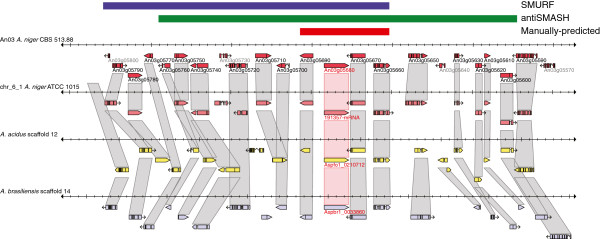
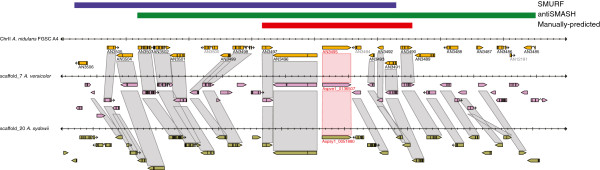
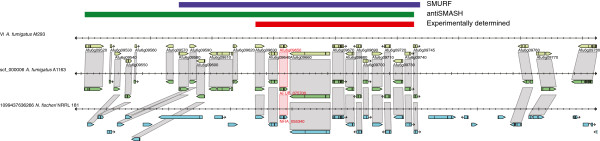
“We used the Sybil viewer [51], which displays alignments of orthologous genes across multiple species in their genomic context, to manually examine potential boundaries and to compare synteny between clusters of different species and/or strains (Figure 1) and the adjacent syntenic regions outside each predicted cluste…”
MethodSelf-citationMorton, C. O., Bouzani, M., Loeffler, J., & Rogers, T. R. (2012) · Frontiers in Microbiology · doi:10.3389/fmicb.2012.00413 · Cited by 50 · cited 1×
“fumigatus [14,15].”
Kelkar, H., Keller, N. P., & Adams, T. H. (1996) · Applied and Environmental Microbiology · doi:10.1128/aem.62.11.4296-4298.1996 · Cited by 49 · cited 1×
“One approach for experimental verification is the deletion of genes with suspected roles in secondary metabolite biosynthesis followed by identification of the specific secondary metabolite profiles of the mutants by thin layer chromatography, NMR or other methods [7,8].”
MethodNakazawa, T., Ishiuchi, K., Praseuth, A. P., Noguchi, H., Hotta, K., & Watanabe, K. (2012) · ChemBioChem · doi:10.1002/cbic.201200107 · Cited by 45 · cited 1×
“Another approach is the overexpression of predicted transcriptional regulators of secondary metabolism gene clusters with subsequent analysis of the gene expression and secondary metabolite profiles of the resulting strains, which has facilitated the identification of numerous secondary metabolites and the genes respo…”
BackgroundThe representation of heart development in the gene ontology
Khodiyar, V., Hill, D. P., Howe, D. G., Berardini, T., Tweedie, S., Talmud, P. J., Breckenridge, R. A., Bhattarcharya, S., Riley, P. R., Scambler, P. J., et al. (2011) · Developmental Biology · doi:10.1016/j.ydbio.2011.03.011 · Cited by 42 · cited 1×
“Results Identifying genes for reannotation Many branches of the GO, such as apoptosis and cardiac development [29], have recently been expanded and revised to include new terms that are highly specific to these processes.”
BackgroundAllergens/Antigens, Toxins and Polyketides of Important Aspergillus Species
Bhetariya, P. J., Madan, T., Basir, S. F., Varma, A., & Sarma, P. U. (2011) · Indian Journal of Clinical Biochemistry · doi:10.1007/s12291-011-0131-5 · Cited by 36 · cited 1×
“Background Secondary metabolites produced by fungi are a rich source of medically useful compounds because of their pharmaceutical and toxicological properties [1].”
BackgroundChemotypic and genotypic diversity in the ergot alkaloid pathway of Aspergillus fumigatus
Robinson-Thiewes, S., & Panaccione, D. G. (2012) · Mycologia · doi:10.3852/11-310 · Cited by 23 · cited 1×
“fumigatus cluster summary Backbone enzyme SMURF antiSMASH Manual/experimental Boundary 1 Boundary 2 Reference Fumigaclavine C (fga) cluster* Afu2g18040 Afu2g17930 - Afu2g18070 Afu2g17950 - Afu2g18070 Afu2g17960 - Afu2g18060 ED ED [48] Fumitremorgin B (ftm) cluster* Afu8g00210 Afu8g00280 - Afu8g00100 Afu8g00100 - Afu8g…”
Development of a PCR Protocol To Detect Aflatoxigenic Molds in Food Products
Luque, M. I., Rodríguez, A., Andrade, M. J., Martı́n, A., & Córdoba, J. J. (2011) · Journal of Food Protection · doi:10.4315/0362-028x.jfp-11-268 · Cited by 22 · cited 1×
“AF is a secondary metabolite produced mainly by Aspergillus species growing in foodstuffs [11], and it is of both medical and economic importance as contaminated food sources are toxic to humans and animals when ingested.”
Background
Cited by
antiSMASH 5.0: updates to the secondary metabolite genome mining pipeline
Blin, K., Shaw, S., Steinke, K., Villebro, R., Ziemert, N., Lee, S. Y., Medema, M. H., & Weber, T. (2019) · Nucleic Acids Research · doi:10.1093/nar/gkz310 · Cited by 2,907
“Amongst its wide range of uses, the GO has been used to predict gene clusters in eukaryotes and bacteria (35) and, in conjunction with antiSMASH, to refine cluster boundaries in antiSMASH output for Aspergillus species (36).”
MethodFungal secondary metabolism: regulation, function and drug discovery
Keller, N. P. (2019) · Nature Reviews Microbiology · doi:10.1038/s41579-018-0121-1 · Cited by 1,390
Aspergillus fumigatus and Aspergillosis in 2019
Latgé, J.-P., & Chamilos, G. (2019) · Clinical Microbiology Reviews · doi:10.1128/cmr.00140-18 · Cited by 1,400
Frisvad, J. C., Hubka, V., Ezekiel, C. N., Hong, S.-B., Nováková, A., Chen, A. J., Arzanlou, M., Larsen, T. O., Sklenář, F., Mahakarnchanakul, W., et al. (2019) · Studies in Mycology · doi:10.1016/j.simyco.2018.06.001 · Cited by 566
“The genomes of A. oryzae RIB 40 (Machida et al. 2005, Galagan et al. 2005, Inglis et al. 2013, Umemura et al. 2013a,b), and other strains of A. oryzae (Zhao et al.2012, 2013, 2014), A. flavus NRRL 3357 (= ATCC 200026) (Payne et al. 2006, Fedorova et al. 2008, Nierman et al. 2015), ATCC 2 MYA384 (=…”
de Vries, R. P., Riley, R., Wiebenga, A., Aguilar-Osorio, G., Amillis, S., Uchima, C. A., Anderluh, G., Asadollahi, M., Askin, M., Barry, K., et al. (2017) · Genome Biology · doi:10.1186/s13059-017-1151-0 · Cited by 489
Self-citation
Metadata
- Authors
- Inglis, D. O., Binkley, J., Skrzypek, M. S., Arnaud, M. B., Cerqueira, G. C., Shah, P., Wymore, F., Wortman, J. R., & Sherlock, G.
- Affiliations
- Stanford Medicine (US)
- Broad Institute (US)
- Corresponding author
- Sherlock, Gavin
- Venue
- BMC Microbiology
- Published
- 2013-04-26
- Volume
- 13
- Issue
- 1
- Pages
- 91-91
- ISSN
- 1471-2180 (ISSN-L)
- PMC
- PMC3689640
- OpenAlex
- W1985653548
- Cited by
- 293
- References
- 59
- Citations by year
- 2026: 13 · 2025: 15 · 2024: 18 · 2023: 17 · 2022: 24 · 2021: 25 · 2020: 34 · 2019: 20 · 2018: 36 · 2017: 21 · 2016: 25 · 2015: 23 · 2014: 16 · 2013: 5
- FWCI
- 16.89
- Type
- journal article
- Language
- en
- Open access
- gold
- doi.org
- Licence
- cc-by
- Locations
- BMC Microbiology (publishedVersion, cc-by)
- Europe PMC (PubMed Central) (publishedVersion, cc-by)
- PubMed Central (publishedVersion, cc-by)
- PubMed (publishedVersion)
- Funders
- National Institutes of Health
- National Institute of Allergy and Infectious Diseases (R01AI077599)
- Topics
- Life Sciences › Immunology and Microbiology › Applied Microbiology and Biotechnology › Microbial Natural Products and Biosynthesis
- Life Sciences › Biochemistry, Genetics and Molecular Biology › Molecular Biology › Fungal and yeast genetics research
- Life Sciences › Biochemistry, Genetics and Molecular Biology › Biotechnology › Microbial Metabolism and Applications
- Keywords
- secondary metabolite biosynthesis, secondary metabolite gene clusters, Aspergillus nidulans, Aspergillus fumigatus, Aspergillus niger, Aspergillus oryzae, gene ontology annotation, antiSMASH, SMURF, fungal secondary metabolites, genome annotation
- MeSH terms
- Aspergillus, Biological Products, Genes, Fungal, Multigene Family, Humans, Computational Biology, Biosynthetic Pathways
About these checks
Registry, retraction, Cites and statistics results are computed, not judged, with one exception: a printed reference that no index lists is read once by a model before it counts as a citation error. Claims are extracted by a model and kept only when their quote appears verbatim in the text; each cited source is then checked, with a model’s help, for whether it says what the claim relies on. Those verdicts can be wrong — read the claim’s quote and the cited source before relying on one.
Statistics and arithmetic are recomputed, not judged.
Confidence bands are shown only for fields calibrated on our annotated test set. None is calibrated yet, so no band is shown.
What counts as a claim ›How we measure confidence ›How we check this ›
Are you an author, or do you see a problem with this page? Request a review
Data sources
Bibliographic data: Semantic Scholar, OpenAlex, Crossref.
Contains information from the Semantic Scholar Academic Graph Datasets, made available under the ODC Attribution License (ODC-BY 1.0).
Semantic Scholar’s data is described in: Kinney, R., et al. (2023). The Semantic Scholar Open Data Platform. arXiv:2301.10140.
