

Comprehensive annotation of secondary metabolite biosynthetic genes and gene clusters of Aspergillus nidulans, A. fumigatus, A. niger and A. oryzae
Open accessThe DOI matches its Crossref record; 59 of the 59 references it cites were found in a registry or an index.
Abstract
Background: Secondary metabolite production, a hallmark of filamentous fungi, is an expanding area of research for the Aspergilli. These compounds are potent chemicals, ranging from deadly toxins to therapeutic antibiotics to potential anti-cancer drugs. The genome sequences for multiple Aspergilli have been determined, and provide a wealth of predictive information about secondary metabolite production. Sequence analysis and gene overexpression strategies have enabled the discovery of novel secondary metabolites and the genes involved in their biosynthesis. The Aspergillus Genome Database (AspGD) provides a central repository for gene annotation and protein information for Aspergillus species. These annotations include Gene Ontology (GO) terms, phenotype data, gene names and descriptions and they are crucial for interpreting both small- and large-scale data and for aiding in the design of new experiments that further Aspergillus research. Results: We have manually curated Biological Process GO annotations for all genes in AspGD with recorded functions in secondary metabolite production, adding new GO terms that specifically describe each secondary metabolite. We then leveraged these new annotations to predict roles in secondary metabolism for genes lacking experimental characterization. As a starting point for manually annotating Aspergillus secondary metabolite gene clusters, we used antiSMASH (antibiotics and Secondary Metabolite Analysis SHell) and SMURF (Secondary Metabolite Unknown Regions Finder) algorithms to identify potential clusters in A. nidulans , A. fumigatus, A. niger and A. oryzae , which we subsequently refined through manual curation. Conclusions: This set of 266 manually curated secondary metabolite gene clusters will facilitate the investigation of novel Aspergillus secondary metabolites.
Overview
The claims and statistics of this paper haven’t been checked yet.
Free: it reads the open-access text and checks the first 5 claims that cite a source we can check. Create a free account to check every claim.
Integrity signals
Registry
Cites
Statistics
Figures
Verification
Claims the paper makes
The claims and statistics of this paper haven’t been checked yet.
Free: it reads the open-access text and checks the first 5 claims that cite a source we can check. Create a free account to check every claim.
Claims other papers make about this one
Each is checked against this paper’s own text: does it say what the citing paper says it does?
The cited source says what the claim attributes to it.
In the citing paper
“Thirty-nine clusters (https//www.jcvi.org/smurf) have been identified (435), and the production of most secondary metabolites is controlled by LaeA, a central transcriptional regulator acting on chromatin structure.”
From Aspergillus fumigatus and Aspergillosis in 2019 (2019) · cites this paper as [435]
Self-check
Percentages, sums and reported differences re-computed from the paper’s own numbers.
The self-check needs the paper’s full text.
Citations
Cites
The Gene Ontology (GO) database and informatics resource
Gene Ontology Consortium (2004) · Nucleic Acids Research · doi:10.1093/nar/gkh036 · Cited by 4,579 · cited 1×
“GO terms describe the activity of a gene product (Molecular Function; MF) within the cell, the biological process (Biological Process; BP) in which a gene product is involved and the location within the cell (Cellular Component; CC) where the gene product is observed [28].”
BackgroundInterProScan – an integration platform for the signature-recognition methods in InterPro
Zdobnov, E. M., & Apweiler, R. (2001) · Bioinformatics · doi:10.1093/bioinformatics/17.9.847 · Cited by 2,939 · cited 1×
“IprScan predicts InterPro domains based on protein sequences [56].”
BackgroundMedema, M. H., Blin, K., Cimermancic, P., de Jager, V., Zakrzewski, P., Fischbach, M. A., Weber, T., Takano, E., & Breitling, R. (2011) · Nucleic Acids Research · doi:10.1093/nar/gkr466 · Cited by 2,006 · cited 4×
“1 of the antiSMASH program [39] was downloaded from (http://antismash.”
MethodInfluentialAutomatic clustering of orthologs and in-paralogs from pairwise species comparisons
Remm, M., Storm, C. E. V., & Sonnhammer, E. L. L. (2001) · Journal of Molecular Biology · doi:10.1006/jmbi.2000.5197 · Cited by 1,174 · cited 1×
“Orthologous protein predictions between Saccharomyces cerevisiae, Schizosaccharomyces pombe and the Aspergillus protein sets were made by pair-wise comparisons using the InParanoid software [54].”
MethodSMURF: Genomic mapping of fungal secondary metabolite clusters
Khaldi, N., Seifuddin, F. T., Turner, G., Haft, D., Nierman, W. C., Wolfe, K. H., & Fedorova, N. D. (2010) · Fungal Genetics and Biology · doi:10.1016/j.fgb.2010.06.003 · Cited by 771 · cited 10×
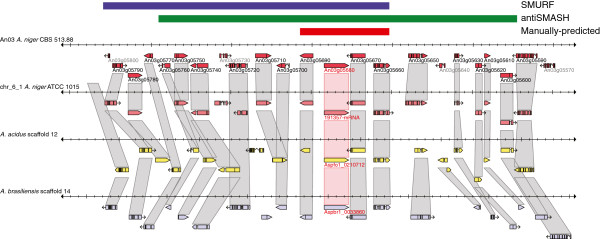
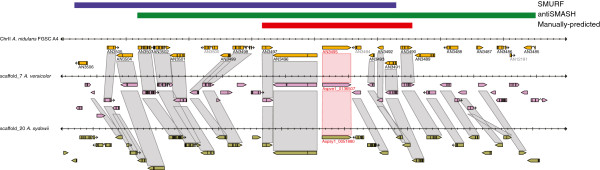
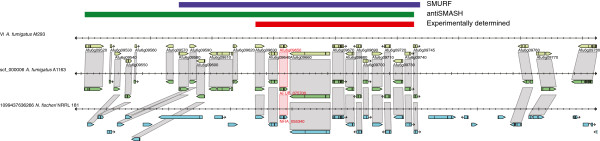
“oryzae 4 3 Manual annotation of computationally predicted gene clusters Algorithms such as SMURF [38] and antiSMASH (antibiotics and Secondary Metabolite Analysis SHell) [39] can be used to predict fungal secondary metabolite gene clusters.”
MethodResultInfluentialWormBase: a multi-species resource for nematode biology and genomics
Harris, T. W. (2004) · Nucleic Acids Research · doi:10.1093/nar/gkh066 · Cited by 715
Genomics-driven discovery of PKS-NRPS hybrid metabolites from Aspergillus nidulans
Bergmann, S., Schümann, J., Scherlach, K., Lange, C., Brakhage, A. A., & Hertweck, C. (2007) · Nature Chemical Biology · doi:10.1038/nchembio869 · Cited by 594 · cited 1×
“nidulans Cluster Summary Backbone enzyme SMURF antiSMASH Manual/experimental Boundary 1 Boundary 2 Reference Asperfuranone (afo) cluster AN1036 AN1029 - AN11288 AN1026 - AN1040 AN1029 - AN1036 ED ED [40] Asperthecin (apt) cluster AN6000 AN5989 - AN6007 AN5991 - AN6009 AN6000 - AN6002* ED, EP ED, EP [30] Aspyridone (as…”
Gene Ontology Annotations and Resources
The Gene Ontology Consortium (2012) · Nucleic Acids Research · doi:10.1093/nar/gks1050 · Cited by 553
Twenty-five coregulated transcripts define a sterigmatocystin gene cluster in Aspergillus nidulans.
Brown, D. W., Yu, J. H., Kelkar, H. S., Fernandes, M., Nesbitt, T. C., Keller, N. P., Adams, T. H., & Leonard, T. J. (1996) · Proceedings of the National Academy of Sciences · doi:10.1073/pnas.93.4.1418 · Cited by 507 · cited 2×
“parasiticus proteins involved in AF production, for which ST is a precursor [46].”
BackgroundPhylogenetic and Functional Assessment of Orthologs Inference Projects and Methods
Altenhoff, A. M., & Dessimoz, C. (2009) · PLoS Computational Biology · doi:10.1371/journal.pcbi.1000262 · Cited by 420 · cited 1×
“InParanoid was chosen based on compatibility with the existing ortholog analysis pipeline at AspGD, and comparable accuracy when compared with alternative methods [55].”
Method
Cited by
antiSMASH 5.0: updates to the secondary metabolite genome mining pipeline
Blin, K., Shaw, S., Steinke, K., Villebro, R., Ziemert, N., Lee, S. Y., Medema, M. H., & Weber, T. (2019) · Nucleic Acids Research · doi:10.1093/nar/gkz310 · Cited by 2,907
“Amongst its wide range of uses, the GO has been used to predict gene clusters in eukaryotes and bacteria (35) and, in conjunction with antiSMASH, to refine cluster boundaries in antiSMASH output for Aspergillus species (36).”
MethodFungal secondary metabolism: regulation, function and drug discovery
Keller, N. P. (2019) · Nature Reviews Microbiology · doi:10.1038/s41579-018-0121-1 · Cited by 1,390
Aspergillus fumigatus and Aspergillosis in 2019
Latgé, J.-P., & Chamilos, G. (2019) · Clinical Microbiology Reviews · doi:10.1128/cmr.00140-18 · Cited by 1,400
Frisvad, J. C., Hubka, V., Ezekiel, C. N., Hong, S.-B., Nováková, A., Chen, A. J., Arzanlou, M., Larsen, T. O., Sklenář, F., Mahakarnchanakul, W., et al. (2019) · Studies in Mycology · doi:10.1016/j.simyco.2018.06.001 · Cited by 566
“The genomes of A. oryzae RIB 40 (Machida et al. 2005, Galagan et al. 2005, Inglis et al. 2013, Umemura et al. 2013a,b), and other strains of A. oryzae (Zhao et al.2012, 2013, 2014), A. flavus NRRL 3357 (= ATCC 200026) (Payne et al. 2006, Fedorova et al. 2008, Nierman et al. 2015), ATCC 2 MYA384 (=…”
de Vries, R. P., Riley, R., Wiebenga, A., Aguilar-Osorio, G., Amillis, S., Uchima, C. A., Anderluh, G., Asadollahi, M., Askin, M., Barry, K., et al. (2017) · Genome Biology · doi:10.1186/s13059-017-1151-0 · Cited by 489
Self-citationFunctional effects of the microbiota in chronic respiratory disease
Budden, K. F., Shukla, S. D., Rehman, S. F., Bowerman, K. L., Keely, S., Hugenholtz, P., Armstrong-James, D. P. H., Adcock, I. M., Chotirmall, S. H., Chung, K. F., et al. (2019) · The Lancet Respiratory Medicine · doi:10.1016/s2213-2600(18)30510-1 · Cited by 446
How a fungus shapes biotechnology: 100 years of Aspergillus niger research
Cairns, T. C., Nai, C., & Meyer, V. (2018) · Fungal Biology and Biotechnology · doi:10.1186/s40694-018-0054-5 · Cited by 329
Cerqueira, G. C., Arnaud, M. B., Inglis, D. O., Skrzypek, M. S., Binkley, G., Simison, M., Miyasato, S. R., Binkley, J., Orvis, J., Shah, P., et al. (2014) · Nucleic Acids Research · doi:10.1093/nar/gkt1029 · Cited by 253
Self-citationHEx: A heterologous expression platform for the discovery of fungal natural products
Harvey, C. J. B., Tang, M., Schlecht, U., Horecka, J., Fischer, C. R., Lin, H.-C., Li, J., Naughton, B., Cherry, J. A., Miranda, M., et al. (2018) · Science Advances · doi:10.1126/sciadv.aar5459 · Cited by 247
Self-citationDrivers of genetic diversity in secondary metabolic gene clusters within a fungal species
Lind, A. L., Wisecaver, J. H., Lameiras, C., Wiemann, P., Palmer, J. M., Keller, N. P., Rodrigues, F., Goldman, G. H., & Rokas, A. (2017) · PLOS Biology · doi:10.1371/journal.pbio.2003583 · Cited by 218
Prototype of an intertwined secondary-metabolite supercluster
Wiemann, P., Guo, C.-J., Palmer, J. M., Sekonyela, R., Wang, C. C. C., & Keller, N. P. (2013) · Proceedings of the National Academy of Sciences · doi:10.1073/pnas.1313258110 · Cited by 195
Metabolic Gene Clusters in Eukaryotes
Nützmann, H.-W., Scazzocchio, C., & Osbourn, A. (2018) · Annual Review of Genetics · doi:10.1146/annurev-genet-120417-031237 · Cited by 192
A scalable platform to identify fungal secondary metabolites and their gene clusters
Clevenger, K. D., Bok, J. W., Ye, R., Miley, G. P., Verdan, M. H., Velk, T., Chen, C., Yang, K., Robey, M. T., Gao, P., et al. (2017) · Nature Chemical Biology · doi:10.1038/nchembio.2408 · Cited by 187
Fungal model systems and the elucidation of pathogenicity determinants
Perez-Nadales, E., Almeida Nogueira, M. F., Baldin, C., Castanheira, S., El Ghalid, M., Grund, E., Lengeler, K., Marchegiani, E., Mehrotra, P. V., Moretti, M., et al. (2014) · Fungal Genetics and Biology · doi:10.1016/j.fgb.2014.06.011 · Cited by 172
“These compounds are often synthesized by non-ribosomal peptide synthetases (NRPSs) or polyketide synthases (PKSs) (Brakhage, 2013; Inglis et al., 2013).”
BackgroundYe, Y., Minami, A., Mandi, A., Liu, C., Taniguchi, T., Kuzuyama, T., Monde, K., Gomi, K., & Oikawa, H. (2015) · Journal of the American Chemical Society · doi:10.1021/jacs.5b08319 · Cited by 168
Association of fungal secondary metabolism and sclerotial biology
Calvo, A. M., & Cary, J. W. (2015) · Frontiers in Microbiology · doi:10.3389/fmicb.2015.00062 · Cited by 160
Fungal evolution: cellular, genomic and metabolic complexity
Naranjo‐Ortiz, M. A., & Gabaldón, T. (2020) · Biological Reviews · doi:10.1111/brv.12605 · Cited by 159
“Some important pathways can be found clustered in most Fungi (Slot & Hibbett, 2007; Slot, 2017), while others appear clustered only in some species or strains (Inglis et al., 2013; Slot, 2017; Rokas et al., 2018).”
BackgroundSieber, C. M. K., Lee, W., Wong, P., Münsterkötter, M., Mewes, H., Schmeitzl, C., Varga, E., Berthiller, F., Adam, G., & Güldener, U. (2014) · PLoS ONE · doi:10.1371/journal.pone.0110311 · Cited by 155
Katayama, T., Nakamura, H., Zhang, Y., Pascal, A., Fujii, W., & Maruyama, J. (2018) · Applied and Environmental Microbiology · doi:10.1128/aem.01896-18 · Cited by 144
“Since multiple enzymes, which are often encoded in a gene cluster on the genome, are related to a biosynthetic pathway of secondary metabolites (39), introduction of many genes is required for heterologous production in filamentous fungi (40).”
BackgroundNielsen, J. C. F., & Nielsen, J. (2017) · Synthetic and Systems Biotechnology · doi:10.1016/j.synbio.2017.02.002 · Cited by 154
B acillus subtilis attachment to A spergillus niger hyphae results in mutually altered metabolism
Benoit, I., van den Esker, M. H., Patyshakuliyeva, A., Mattern, D. J., Blei, F., Zhou, M., Dijksterhuis, J., Brakhage, A. A., Kuipers, O. P., de Vries, R. P., et al. (2014) · Environmental Microbiology · doi:10.1111/1462-2920.12564 · Cited by 143
Antiviral Agents From Fungi: Diversity, Mechanisms and Potential Applications
Linnakoski, R., Reshamwala, D., Veteli, P., Cortina-Escribano, M., Vanhanen, H., & Marjomäki, V. (2018) · Frontiers in Microbiology · doi:10.3389/fmicb.2018.02325 · Cited by 124
“The genome of each fungus contains a remarkable capacity of biosynthetic gene clusters encoding the production of diverse secondary metabolites (Khaldi et al., 2010; Chen et al., 2012; Inglis et al., 2013; Han et al., 2016).”
BackgroundKjærbølling, I., Vesth, T., Frisvad, J. C., Rasmussen, J. L. N., Theobald, S., Kuo, A., Bowyer, P., Matsuda, Y., Mondo, S. J., Lyhne, E. K., et al. (2018) · Proceedings of the National Academy of Sciences · doi:10.1073/pnas.1715954115 · Cited by 123
Yaegashi, J., Oakley, B. R., & Wang, C. C. C. (2013) · Journal of Industrial Microbiology & Biotechnology · doi:10.1007/s10295-013-1386-z · Cited by 127
From Axenic to Mixed Cultures: Technological Advances Accelerating a Paradigm Shift in Microbiology
Nai, C., & Meyer, V. (2018) · Trends in Microbiology · doi:10.1016/j.tim.2017.11.004 · Cited by 119
Dallery, J., Lapalu, N., Zampounis, A., Pigné, S., Luyten, I., Amselem, J., Wittenberg, A. H. J., Zhou, S., de Queiroz, M. V., Robin, G. P., et al. (2017) · BMC Genomics · doi:10.1186/s12864-017-4083-x · Cited by 125
Li, Y. F., Tsai, K. J. S., Harvey, C. J. B., Li, J. J., Ary, B. E., Berlew, E. E., Boehman, B. L., Findley, D. M., Friant, A. G., Gardner, C. A., et al. (2016) · Fungal Genetics and Biology · doi:10.1016/j.fgb.2016.01.012 · Cited by 116
“A uthor M anuscript A uthor M anuscript A uthor M anuscript A uthor M anuscript homology to core biosynthetic enzymes (Cimermancic et al., 2014; Inglis et al., 2013; Medema and Fischbach, 2015).”
BackgroundGacek-Matthews, A., Berger, H., Sasaki, T., Wittstein, K., Gruber, C., Lewis, Z. A., & Strauss, J. (2016) · PLOS Genetics · doi:10.1371/journal.pgen.1006222 · Cited by 105
Collemare, J., & Seidl, M. F. (2019) · FEMS Microbiology Reviews · doi:10.1093/femsre/fuz018 · Cited by 112
“In contrast to H3K9me3, H3K27me3 is mainly localised at transcriptionally silent, often sub-telomerically localised genes and forms facultative heterochromatin (Jamieson et al. 2013; Freitag 2017).”
InfluentialFungal artificial chromosomes for mining of the fungal secondary metabolome
Bok, J. W., Ye, R., Clevenger, K. D., Mead, D. A., Wagner, M., Krerowicz, A., Albright, J. C., Goering, A. W., Thomas, P. M., Kelleher, N. L., et al. (2015) · BMC Genomics · doi:10.1186/s12864-015-1561-x · Cited by 104
Natural products from thioester reductase containing biosynthetic pathways
Mullowney, M. W., McClure, R. A., Robey, M. T., Kelleher, N. L., & Thomson, R. J. (2018) · Natural Product Reports · doi:10.1039/c8np00013a · Cited by 101
Something old, something new: challenges and developments in Aspergillus niger biotechnology
Cairns, T. C., Barthel, L., & Meyer, V. (2021) · Essays in Biochemistry · doi:10.1042/ebc20200139 · Cited by 120
Secondary metabolite arsenal of an opportunistic pathogenic fungus
Bignell, E., Cairns, T. C., Throckmorton, K., Nierman, W. C., & Keller, N. P. (2016) · Philosophical Transactions of the Royal Society B: Biological Sciences · doi:10.1098/rstb.2016.0023 · Cited by 92
Extrolites of Aspergillus fumigatus and Other Pathogenic Species in Aspergillus Section Fumigati
Frisvad, J. C., & Larsen, T. O. (2016) · Frontiers in Microbiology · doi:10.3389/fmicb.2015.01485 · Cited by 108
“…may help in predicting which pathogenicity factors are especially important (Galaghan et al., 2005; Nierman et al., 2005; Wortman et al., 2006; Fedorova et al., 2008; McDonagh et al., 2008; Chooi et al., 2013; Inglis et al., 2013; Cerqueira et al., 2014; Kusuya et al., 2015; Lind et al., 2015).”
BackgroundDiscovery of McrA, a master regulator of Aspergillus secondary metabolism
Oakley, C. E., Ahuja, M., Sun, W., Entwistle, R., Akashi, T., Yaegashi, J., Guo, C., Cerqueira, G., Wortman, J. R., Wang, C. C. C., et al. (2016) · Molecular Microbiology · doi:10.1111/mmi.13562 · Cited by 89
“Based on the SM BGCs defined by Inglis et al. (Inglis et al., 2013), at least five core SM biosynthetic genes from 4 BGCs showed a> 40X increase (Supporting Information Table S4) and core biosynthetic genes from 13 SM BGCs showed a> 5X increase in transcription.”
BackgroundSelf-citationTranscriptome and secretome analysis of Aspergillus fumigatus in the presence of sugarcane bagasse
de Gouvêa, P. F., Bernardi, A. V., Gerolamo, L. E., Santos, E. D. S., Riaño‐Pachón, D. M., Uyemura, S. A., & Dinamarco, T. M. (2018) · BMC Genomics · doi:10.1186/s12864-018-4627-8 · Cited by 99
An overview on the origin and production of tetrodotoxin, a potent neurotoxin
Jal, S., & Khora, S. S. (2015) · Journal of Applied Microbiology · doi:10.1111/jam.12896 · Cited by 81
“…metabolite production is reported from Vibrio (Mansson et al. 2012), Actinomycetes, myxobacteria (Ichikawa et al. 2013), filamentous fungi (Inglis et al. 2013) and several Journal of Applied Microbiology 119, 907--916 © 2015 The Society for Applied Microbiology908 1990 Listonella pelagia,…”
BackgroundMeng, X., Fang, Y., Ding, M., Zhang, Y., Jia, K., Li, Z., Collemare, J., & Liu, W. (2021) · Biotechnology Advances · doi:10.1016/j.biotechadv.2021.107866 · Cited by 81
Tagami, K., Minami, A., Fujii, R., Liu, C., Tanaka, M., Gomi, K., Dairi, T., & Oikawa, H. (2014) · ChemBioChem · doi:10.1002/cbic.201402195 · Cited by 79
Colletotrichum higginsianum as a Model for Understanding Host–Pathogen Interactions: A Review
Yan, Y., Yuan, Q., Tang, J., Huang, J., Hsiang, T., Wei, Y., & Zheng, L. (2018) · International Journal of Molecular Sciences · doi:10.3390/ijms19072142 · Cited by 92
Wu, M.-Y., Mead, M. E., Lee, M.-K., Loss, E. O., Kim, S., Rokas, A., & Yu, J. (2018) · mBio · doi:10.1128/mbio.01130-18 · Cited by 79
Lind, A., Wisecaver, J. H., Smith, T. D., Feng, X., Calvo, A. M., & Rokas, A. (2015) · PLoS Genetics · doi:10.1371/journal.pgen.1005096 · Cited by 80
Throckmorton, K., Lim, F. Y., Kontoyiannis, D. P., Zheng, W., & Keller, N. P. (2016) · Environmental Microbiology · doi:10.1111/1462-2920.13007 · Cited by 75
“…the trypacidin biosynthetic gene cluster spanned a 66 kb region with 31 genes (AFUA_4G14420 – AFUA_4G14730) (Khaldi et al., 2010; Medema et al., 2011; Inglis et al., 2013), homology with the geodin cluster suggests the tpc cluster consists of a 25 kb region with 13 genes: AFUA_4G14580 through…”
Characterization of microbial siderophores by mass spectrometry
Pluháček, T., Lemr, K., Ghosh, D., Milde, D., Novák, J., & Havlíček, V. (2016) · Mass Spectrometry Reviews · doi:10.1002/mas.21461 · Cited by 74
SchäPe, P., Kwon, M., Baumann, B., Gutschmann, B., Jung, S., Lenz, S., Nitsche, B. M., Paege, N., Schütze, T., Cairns, T. C., et al. (2018) · Nucleic Acids Research · doi:10.1093/nar/gky1183 · Cited by 91
“metabolite core enzymes (28,29) were also defined as informant ORFs.”
BackgroundInfluentialWang, G., Ran, H., Fan, J., Keller, N. P., Liu, Z., Wu, F., & Yin, W. (2022) · Science Advances · doi:10.1126/sciadv.abo6094 · Cited by 75
“Furthermore, the intermediates and shunt products spirotryprostatin F ( 25 ), cyclotryprostatin D ( 30 ), and cyclotry-prostatin B ( 31 ) derived from the fumitremorgin biosynthetic pathway ( 45 ) were overproduced in the A. fumigatus veA1 strain (fig.”
Aspergillus oryzae as a Cell Factory: Research and Applications in Industrial Production
Sun, Z., Wu, Y., Long, S., Feng, S., Jia, X., Yan, H., Ma, M., Liu, J., & Zeng, B. (2024) · Journal of Fungi · doi:10.3390/jof10040248 · Cited by 88
Dhingra, S., Lind, A., Lin, H., Tang, Y., Rokas, A., & Calvo, A. M. (2013) · PLoS ONE · doi:10.1371/journal.pone.0077147 · Cited by 80
“Previously reported secondary metabolism gene clusters [60,71] are boxed and numbered.”
BackgroundMolecular Genetics of Secondary Chemistry in Metarhizium Fungi
Donzelli, B. G. G., & Krasnoff, S. B. (2016) · Advances in genetics · doi:10.1016/bs.adgen.2016.01.005 · Cited by 70
Deep learning approaches for natural product discovery from plant endophytic microbiomes
Aghdam, S. A., & Brown, A. M. V. (2021) · Environmental Microbiome · doi:10.1186/s40793-021-00375-0 · Cited by 75
Regulation of Secondary Metabolism by the Velvet Complex Is Temperature-Responsive in Aspergillus
Lind, A., Smith, T. D., Satterlee, T. R., Calvo, A. M., & Rokas, A. (2016) · G3 Genes Genomes Genetics · doi:10.1534/g3.116.033084 · Cited by 78
Lind, A. L., Lim, F. Y., Soukup, A. A., Keller, N. P., & Rokas, A. (2018) · mSphere · doi:10.1128/msphere.00050-18 · Cited by 64
Core oxidative stress response in Aspergillus nidulans
Emri, T., Szarvas, V. E., Orosz, E., Antal, K., Park, H.-S., Han, K., Yu, J., & Pócsi, I. (2015) · BMC Genomics · doi:10.1186/s12864-015-1705-z · Cited by 75
Caesar, L. K., Kelleher, N. L., & Keller, N. P. (2020) · Fungal Genetics and Biology · doi:10.1016/j.fgb.2020.103477 · Cited by 64
Aspergillus flavus Secondary Metabolites: More than Just Aflatoxins
Cary, J. W., Gilbert, M. K., Lebar, M. D., Majumdar, R., & Calvo, A. M. (2018) · Food Safety · doi:10.14252/foodsafetyfscj.2017024 · Cited by 66
Jančič, S., Frisvad, J. C., Kocev, D., Gostinčar, C., Džeroski, S., & Gunde‐Cimerman, N. (2016) · PLoS ONE · doi:10.1371/journal.pone.0169116 · Cited by 63
Wiemann, P., Lechner, B. E., Baccile, J. A., Velk, T. A., Yin, W.-B., Bok, J. W., Pakala, S., Losada, L., Nierman, W. C., Schroeder, F. C., et al. (2014) · Frontiers in Microbiology · doi:10.3389/fmicb.2014.00530 · Cited by 60
“Analyzing genes from this category more closely, based on characterized and predicted (Khaldi et al., 2010; Medema et al., 2011; Inglis et al., 2013) gene clusters, provided an accurate view on the genes affected.”
BackgroundThieme, K. G., Gerke, J., Sasse, C., Valerius, O., Thieme, S., Aghcheh, R. K., Heinrich, A. K., Finkernagel, F., Smith, K., Bode, H. B., et al. (2018) · PLoS Genetics · doi:10.1371/journal.pgen.1007511 · Cited by 62
“Genes were assigned to secondary metabolite gene clusters according to a comprehensive secondary metabolite gene cluster annotation published by Inglis and collaborators [74].”
MethodManipulation of fungal development as source of novel secondary metabolites for biotechnology
Gerke, J., & Braus, G. H. (2014) · Applied Microbiology and Biotechnology · doi:10.1007/s00253-014-5997-8 · Cited by 64
“The resulting data uncovered a significant genomic potential in many fungi to produce secondary metabolites (Inglis et al. 2013).”
BackgroundSix Key Traits of Fungi: Their Evolutionary Origins and Genetic Bases
Nagy, L. G., Tóth, R., Kiss, E., Slot, J. C., Gácser, A., & Kovács, G. M. (2017) · Microbiology Spectrum · doi:10.1128/microbiolspec.funk-0036-2016 · Cited by 70
Han, X., Chakrabortti, A., Zhu, J., Liang, Z., & Li, J. (2016) · BMC Genomics · doi:10.1186/s12864-016-2974-x · Cited by 58
Additional oxidative stress reroutes the global response of Aspergillus fumigatus to iron depletion
Kurucz, V., Krüger, T., Antal, K., Dietl, A., Haas, H., Pócsi, I., Kniemeyer, O., & Emri, T. (2018) · BMC Genomics · doi:10.1186/s12864-018-4730-x · Cited by 67
Diversity of Secondary Metabolism in Aspergillus nidulans Clinical Isolates
Drott, M. T., Bastos, R. W., Rokas, A., Ries, L. N. A., Gabaldón, T., Goldman, G. H., Keller, N. P., & Greco, C. (2020) · mSphere · doi:10.1128/msphere.00156-20 · Cited by 57
“Of the 72 BGCs in the reference genome, 67 were well supported by previous annotation (13), and 6 were not previously identified (see Table S1; all supplemental material is available at https://doi .”
BackgroundMethodInfluentialDegradation and Detoxification of Aflatoxin B1 by Tea-Derived Aspergillus niger RAF106
Fang, Q., Du, M., Chen, J., Liu, T., Zheng, Y., Liao, Z., Zhong, Q., Wang, L., Fang, X., & Wang, J. (2020) · Toxins · doi:10.3390/toxins12120777 · Cited by 55
Grau, M. F., Entwistle, R., Chiang, Y., Ahuja, M., Oakley, C. E., Akashi, T., Wang, C. C. C., Todd, R. B., & Oakley, B. R. (2018) · ACS Chemical Biology · doi:10.1021/acschembio.8b00679 · Cited by 61
Gacek‐Matthews, A., Noble, L. M., Grünwald‐Gruber, C., Berger, H., Sulyok, M., Marcos, A. T., Strauss, J., & Andrianopoulos, A. (2015) · Molecular Microbiology · doi:10.1111/mmi.12977 · Cited by 58
Sbaraini, N., Guedes, R. L. M., Andreis, F. C., Junges, Â., de Morais, G. L., Vainstein, M. H., de Vasconcelos, A. T. R., & Schrank, A. (2016) · BMC Genomics · doi:10.1186/s12864-016-3067-6 · Cited by 59
Leong, S. L., Lantz, H., Pettersson, O. V., Frisvad, J. C., Thrane, U., Heipieper, H. J., Dijksterhuis, J., Grabherr, M. G., Pettersson, M. E., Tellgren‐Roth, C., et al. (2014) · Environmental Microbiology · doi:10.1111/1462-2920.12596 · Cited by 54
WetA bridges cellular and chemical development in Aspergillus flavus
Wu, M.-Y., Mead, M. E., Kim, S., Rokas, A., & Yu, J. (2017) · PLoS ONE · doi:10.1371/journal.pone.0179571 · Cited by 53
Villafana, R. T., Ramdass, A. C., & Rampersad, S. N. (2019) · Toxins · doi:10.3390/toxins11010036 · Cited by 60
“These BGCs usually consist of genes that encode polyketide synthases (PKS), non-ribosomal peptide synthetases (NRPS), hybrids (PKS-NRPS), terpene cyclases (TCs) and prenyltransferases (PTs) in addition to adjacent genes that assist in regulation of gene expression and in transport of the metabolites [24,25].”
BackgroundUka, V., Cary, J. W., Lebar, M. D., Puel, O., Saeger, S. D., & Mavungu, J. D. D. (2020) · Comprehensive Reviews in Food Science and Food Safety · doi:10.1111/1541-4337.12638 · Cited by 65
Nielsen, C. A. F., Folly, C., Hatsch, A., Molt, A., Schröder, H., O'Connor, S. E., & Næsby, M. (2014) · Microbial Cell Factories · doi:10.1186/s12934-014-0095-2 · Cited by 50
Pidroni, A., Faber, B., Brosch, G., Bauer, I., & Graessle, S. (2018) · Frontiers in Microbiology · doi:10.3389/fmicb.2018.02212 · Cited by 50
Wang, H., Sivonen, K., & Fewer, D. P. (2015) · Current Opinion in Genetics & Development · doi:10.1016/j.gde.2015.10.004 · Cited by 55
Higgins, S., Schadt, C. W., Matheny, P. B., & Löffler, F. E. (2018) · Genome Biology and Evolution · doi:10.1093/gbe/evy187 · Cited by 52
Graham-Taylor, C., Kamphuis, L. G., & Derbyshire, M. C. (2020) · BMC Genomics · doi:10.1186/s12864-019-6424-4 · Cited by 65
Martins, I., Hartmann, D. O., Alves, P. C., Martins, C., Garcia, H., Leclercq, C. C., Ferreira, R., He, J., Renaut, J., Becker, J. D., et al. (2014) · BMC Genomics · doi:10.1186/1471-2164-15-613 · Cited by 54
“Overall, 65 secondary metabolite gene clusters, out of the 71 estimated by now in this fungus [53], were responsive but only in a few clusters the synthase gene was largely affected.”
BackgroundInfluentialWang, B., Lv, Y., Li, X., Lin, Y., Deng, H., & Pan, L. (2017) · Research in Microbiology · doi:10.1016/j.resmic.2017.10.002 · Cited by 65
Cairns, T. C., & Meyer, V. (2017) · BMC Genomics · doi:10.1186/s12864-017-3969-y · Cited by 50
Synthetic biology of fungal natural products
Mattern, D. J., Valiante, V., Unkles, S. E., & Brakhage, A. A. (2015) · Frontiers in Microbiology · doi:10.3389/fmicb.2015.00775 · Cited by 47
“This is also true for filamentous fungi, where in some species close to 80 different gene clusters have been predicted (Inglis et al., 2013).”
BackgroundThe impact of bZIP Atf1ortholog global regulators in fungi
Leiter, É., Emri, T., Pákozdi, K., Hornok, L., & Pócsi, I. (2021) · Applied Microbiology and Biotechnology · doi:10.1007/s00253-021-11431-7 · Cited by 54
Total Heterologous Biosynthesis of Fungal Natural Products in Aspergillus nidulans
Chiang, Y., Lin, T., & Wang, C. C. C. (2022) · Journal of Natural Products · doi:10.1021/acs.jnatprod.2c00487 · Cited by 46
Vassaux, A., Meunier, L., Vandenbol, M., Baurain, D., Fickers, P., Jacques, P., & Leclère, V. (2019) · Biotechnology Advances · doi:10.1016/j.biotechadv.2019.107449 · Cited by 48
HGT-Finder: A New Tool for Horizontal Gene Transfer Finding and Application to Aspergillus genomes
Nguyen, M., Ekstrom, A., Li, X., & Yin, Y. (2015) · Toxins · doi:10.3390/toxins7104035 · Cited by 49
“We obtained a list of manually curated SMGCs for Aspfu (251 genes of 33 clusters) and Aspni (458 genes of 65 clusters) from [40].”
BackgroundMethodMinami, A., Ugai, T., Ozaki, T., & Oikawa, H. (2020) · Scientific Reports · doi:10.1038/s41598-020-70177-w · Cited by 41
“The ME search focusing on these hybrids resulted in identification of seven hypothetical NP clades: burnettramic acid (characterized hybrid: BuaA38,39, number of hybrids: 24), Sch210972 (TasS40, 20), equisetin (EqxS41, 50), fusaridione (FsdS41, 5), Ib-α (25), Ib-β (12), and Ib-γ (16) (Schemes 4 and S3, Tables S3 and S…”
BackgroundInfluentialSung, C. T., Chang, S.-L., Entwistle, R., Ahn, G., Lin, T., Petrova, V., Yeh, H.-H., Praseuth, M. B., Chiang, Y., Oakley, B. R., et al. (2017) · Fungal Genetics and Biology · doi:10.1016/j.fgb.2017.01.006 · Cited by 41
“Similarly, expression pattern data from Inglis et al. also suggested that AN10576 and AN10573 form a two-gene cluster (Inglis et al. 2013), indicating that AN10573 might be involved in the formation of a grey-brown conidiophore pigment.”
BackgroundDaly, P., van Munster, J. M., Kokolski, M., Sang, F., Blythe, M., Malla, S., Oliveira, J., Goldman, G. H., & Archer, D. B. (2016) · Fungal Genetics and Biology · doi:10.1016/j.fgb.2016.04.005 · Cited by 46
Secondary Metabolite Diversity of the Genus Aspergillus: Recent Advances
Soltani, J. (2016) · Elsevier eBooks · doi:10.1016/b978-0-444-63505-1.00035-x · Cited by 47
Identification of the Scopularide Biosynthetic Gene Cluster in Scopulariopsis brevicaulis
Lukassen, M. B., Saei, W., Søndergaard, T. E., Tamminen, A., Kumar, A., Kempken, F., Wiebe, M. G., & Sørensen, J. L. (2015) · Marine Drugs · doi:10.3390/md13074331 · Cited by 38
Zhu, C., Sheng, D., Wu, X., Wang, M., Hu, X., Li, H., & Yu, D. (2017) · Postharvest Biology and Technology · doi:10.1016/j.postharvbio.2017.07.011 · Cited by 45
Choque, É., Klopp, C., Valière, S., Raynal, J., & Mathieu, F. (2018) · BMC Genomics · doi:10.1186/s12864-018-4574-4 · Cited by 37
Chemistry and Biology of Secondary Metabolites from Aspergillus Genus
Zhang, X., Li, Z., & Gao, J. (2018) · The Natural Products Journal · doi:10.2174/2210315508666180501154759 · Cited by 36
Zhao, S., & Gibbons, J. G. (2018) · PLoS ONE · doi:10.1371/journal.pone.0201611 · Cited by 38
Mund, N. K., & Čellárová, E. (2023) · Biotechnology Advances · doi:10.1016/j.biotechadv.2023.108104 · Cited by 39
Hillman, E. T., Readnour, L. R., & Solomon, K. (2017) · Current Opinion in Systems Biology · doi:10.1016/j.coisb.2017.07.010 · Cited by 37
Nickles, G., Oestereicher, B., Keller, N. P., & Drott, M. T. (2023) · Nucleic Acids Research · doi:10.1093/nar/gkad573 · Cited by 33
Macheleidt, J., Scherlach, K., Neuwirth, T., Schmidt‐Heck, W., Straßburger, M., Spraker, J. E., Baccile, J. A., Schroeder, F. C., Keller, N. P., Hertweck, C., et al. (2015) · Molecular Microbiology · doi:10.1111/mmi.12926 · Cited by 41
“The cluster size determined here well correlates with that one manually predicted by Inglis et al. (2013).”
BackgroundTOUCAN: a framework for fungal biosynthetic gene cluster discovery
Almeida, H., Palys, S., Tsang, A., & Diallo, A. B. (2020) · NAR Genomics and Bioinformatics · doi:10.1093/nargab/lqaa098 · Cited by 40
Drivers of genetic diversity in secondary metabolic gene clusters within a fungal speciesPreprint
Lind, A. L., Wisecaver, J. H., Lameiras, C., Wiemann, P., Palmer, J. M., Keller, N. P., Rodrigues, F., Goldman, G. H., & Rokas, A. (2017) · bioRxiv (Cold Spring Harbor Laboratory) · doi:10.1101/149856 · Cited by 35
Awakening of Fungal Secondary Metabolite Gene Clusters
Fischer, J., Schroeckh, V., & Brakhage, A. A. (2016) · Fungal biology · doi:10.1007/978-3-319-27951-0_11 · Cited by 32
Metadata
- Authors
- Inglis, D. O., Binkley, J., Skrzypek, M. S., Arnaud, M. B., Cerqueira, G. C., Shah, P., Wymore, F., Wortman, J. R., & Sherlock, G.
- Affiliations
- Stanford Medicine (US)
- Broad Institute (US)
- Corresponding author
- Sherlock, Gavin
- Venue
- BMC Microbiology
- Published
- 2013-04-26
- Volume
- 13
- Issue
- 1
- Pages
- 91-91
- ISSN
- 1471-2180 (ISSN-L)
- PMC
- PMC3689640
- OpenAlex
- W1985653548
- Cited by
- 293
- References
- 59
- Citations by year
- 2026: 13 · 2025: 15 · 2024: 18 · 2023: 17 · 2022: 24 · 2021: 25 · 2020: 34 · 2019: 20 · 2018: 36 · 2017: 21 · 2016: 25 · 2015: 23 · 2014: 16 · 2013: 5
- FWCI
- 16.89
- Type
- journal article
- Language
- en
- Open access
- gold
- doi.org
- Licence
- cc-by
- Locations
- BMC Microbiology (publishedVersion, cc-by)
- Europe PMC (PubMed Central) (publishedVersion, cc-by)
- PubMed Central (publishedVersion, cc-by)
- PubMed (publishedVersion)
- Funders
- National Institutes of Health
- National Institute of Allergy and Infectious Diseases (R01AI077599)
- Topics
- Life Sciences › Immunology and Microbiology › Applied Microbiology and Biotechnology › Microbial Natural Products and Biosynthesis
- Life Sciences › Biochemistry, Genetics and Molecular Biology › Molecular Biology › Fungal and yeast genetics research
- Life Sciences › Biochemistry, Genetics and Molecular Biology › Biotechnology › Microbial Metabolism and Applications
- Keywords
- secondary metabolite biosynthesis, secondary metabolite gene clusters, Aspergillus nidulans, Aspergillus fumigatus, Aspergillus niger, Aspergillus oryzae, gene ontology annotation, antiSMASH, SMURF, fungal secondary metabolites, genome annotation
- MeSH terms
- Aspergillus, Biological Products, Genes, Fungal, Multigene Family, Humans, Computational Biology, Biosynthetic Pathways
About these checks
Registry, retraction, Cites and statistics results are computed, not judged, with one exception: a printed reference that no index lists is read once by a model before it counts as a citation error. Claims are extracted by a model and kept only when their quote appears verbatim in the text; each cited source is then checked, with a model’s help, for whether it says what the claim relies on. Those verdicts can be wrong — read the claim’s quote and the cited source before relying on one.
Statistics and arithmetic are recomputed, not judged.
Confidence bands are shown only for fields calibrated on our annotated test set. None is calibrated yet, so no band is shown.
What counts as a claim ›How we measure confidence ›How we check this ›
Are you an author, or do you see a problem with this page? Request a review
Data sources
Bibliographic data: Semantic Scholar, OpenAlex, Crossref.
Contains information from the Semantic Scholar Academic Graph Datasets, made available under the ODC Attribution License (ODC-BY 1.0).
Semantic Scholar’s data is described in: Kinney, R., et al. (2023). The Semantic Scholar Open Data Platform. arXiv:2301.10140.
