

Comprehensive annotation of secondary metabolite biosynthetic genes and gene clusters of Aspergillus nidulans, A. fumigatus, A. niger and A. oryzae
Open accessThe DOI matches its Crossref record; 59 of the 59 references it cites were found in a registry or an index.
Abstract
Background: Secondary metabolite production, a hallmark of filamentous fungi, is an expanding area of research for the Aspergilli. These compounds are potent chemicals, ranging from deadly toxins to therapeutic antibiotics to potential anti-cancer drugs. The genome sequences for multiple Aspergilli have been determined, and provide a wealth of predictive information about secondary metabolite production. Sequence analysis and gene overexpression strategies have enabled the discovery of novel secondary metabolites and the genes involved in their biosynthesis. The Aspergillus Genome Database (AspGD) provides a central repository for gene annotation and protein information for Aspergillus species. These annotations include Gene Ontology (GO) terms, phenotype data, gene names and descriptions and they are crucial for interpreting both small- and large-scale data and for aiding in the design of new experiments that further Aspergillus research. Results: We have manually curated Biological Process GO annotations for all genes in AspGD with recorded functions in secondary metabolite production, adding new GO terms that specifically describe each secondary metabolite. We then leveraged these new annotations to predict roles in secondary metabolism for genes lacking experimental characterization. As a starting point for manually annotating Aspergillus secondary metabolite gene clusters, we used antiSMASH (antibiotics and Secondary Metabolite Analysis SHell) and SMURF (Secondary Metabolite Unknown Regions Finder) algorithms to identify potential clusters in A. nidulans , A. fumigatus, A. niger and A. oryzae , which we subsequently refined through manual curation. Conclusions: This set of 266 manually curated secondary metabolite gene clusters will facilitate the investigation of novel Aspergillus secondary metabolites.
Overview
The claims and statistics of this paper haven’t been checked yet.
Free: it reads the open-access text and checks the first 5 claims that cite a source we can check. Create a free account to check every claim.
Integrity signals
Registry
Cites
Statistics
Figures
Verification
Claims the paper makes
The claims and statistics of this paper haven’t been checked yet.
Free: it reads the open-access text and checks the first 5 claims that cite a source we can check. Create a free account to check every claim.
Claims other papers make about this one
Each is checked against this paper’s own text: does it say what the citing paper says it does?
The cited source says what the claim attributes to it.
In the citing paper
“Thirty-nine clusters (https//www.jcvi.org/smurf) have been identified (435), and the production of most secondary metabolites is controlled by LaeA, a central transcriptional regulator acting on chromatin structure.”
From Aspergillus fumigatus and Aspergillosis in 2019 (2019) · cites this paper as [435]
Self-check
Percentages, sums and reported differences re-computed from the paper’s own numbers.
The self-check needs the paper’s full text.
Citations
Cites
The Gene Ontology (GO) database and informatics resource
Gene Ontology Consortium (2004) · Nucleic Acids Research · doi:10.1093/nar/gkh036 · Cited by 4,579 · cited 1×
“GO terms describe the activity of a gene product (Molecular Function; MF) within the cell, the biological process (Biological Process; BP) in which a gene product is involved and the location within the cell (Cellular Component; CC) where the gene product is observed [28].”
BackgroundInterProScan – an integration platform for the signature-recognition methods in InterPro
Zdobnov, E. M., & Apweiler, R. (2001) · Bioinformatics · doi:10.1093/bioinformatics/17.9.847 · Cited by 2,939 · cited 1×
“IprScan predicts InterPro domains based on protein sequences [56].”
BackgroundMedema, M. H., Blin, K., Cimermancic, P., de Jager, V., Zakrzewski, P., Fischbach, M. A., Weber, T., Takano, E., & Breitling, R. (2011) · Nucleic Acids Research · doi:10.1093/nar/gkr466 · Cited by 2,006 · cited 4×
“1 of the antiSMASH program [39] was downloaded from (http://antismash.”
MethodInfluentialAutomatic clustering of orthologs and in-paralogs from pairwise species comparisons
Remm, M., Storm, C. E. V., & Sonnhammer, E. L. L. (2001) · Journal of Molecular Biology · doi:10.1006/jmbi.2000.5197 · Cited by 1,174 · cited 1×
“Orthologous protein predictions between Saccharomyces cerevisiae, Schizosaccharomyces pombe and the Aspergillus protein sets were made by pair-wise comparisons using the InParanoid software [54].”
MethodSMURF: Genomic mapping of fungal secondary metabolite clusters
Khaldi, N., Seifuddin, F. T., Turner, G., Haft, D., Nierman, W. C., Wolfe, K. H., & Fedorova, N. D. (2010) · Fungal Genetics and Biology · doi:10.1016/j.fgb.2010.06.003 · Cited by 771 · cited 10×
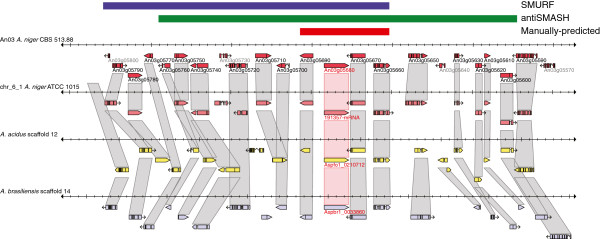
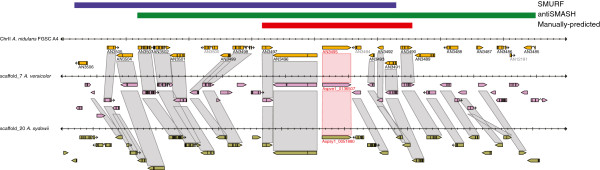
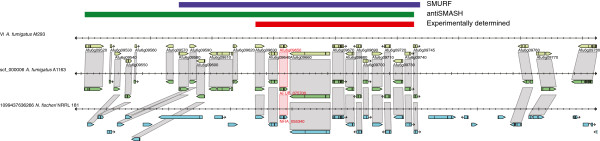
“oryzae 4 3 Manual annotation of computationally predicted gene clusters Algorithms such as SMURF [38] and antiSMASH (antibiotics and Secondary Metabolite Analysis SHell) [39] can be used to predict fungal secondary metabolite gene clusters.”
MethodResultInfluentialWormBase: a multi-species resource for nematode biology and genomics
Harris, T. W. (2004) · Nucleic Acids Research · doi:10.1093/nar/gkh066 · Cited by 715
Genomics-driven discovery of PKS-NRPS hybrid metabolites from Aspergillus nidulans
Bergmann, S., Schümann, J., Scherlach, K., Lange, C., Brakhage, A. A., & Hertweck, C. (2007) · Nature Chemical Biology · doi:10.1038/nchembio869 · Cited by 594 · cited 1×
“nidulans Cluster Summary Backbone enzyme SMURF antiSMASH Manual/experimental Boundary 1 Boundary 2 Reference Asperfuranone (afo) cluster AN1036 AN1029 - AN11288 AN1026 - AN1040 AN1029 - AN1036 ED ED [40] Asperthecin (apt) cluster AN6000 AN5989 - AN6007 AN5991 - AN6009 AN6000 - AN6002* ED, EP ED, EP [30] Aspyridone (as…”
Gene Ontology Annotations and Resources
The Gene Ontology Consortium (2012) · Nucleic Acids Research · doi:10.1093/nar/gks1050 · Cited by 553
Twenty-five coregulated transcripts define a sterigmatocystin gene cluster in Aspergillus nidulans.
Brown, D. W., Yu, J. H., Kelkar, H. S., Fernandes, M., Nesbitt, T. C., Keller, N. P., Adams, T. H., & Leonard, T. J. (1996) · Proceedings of the National Academy of Sciences · doi:10.1073/pnas.93.4.1418 · Cited by 507 · cited 2×
“parasiticus proteins involved in AF production, for which ST is a precursor [46].”
BackgroundPhylogenetic and Functional Assessment of Orthologs Inference Projects and Methods
Altenhoff, A. M., & Dessimoz, C. (2009) · PLoS Computational Biology · doi:10.1371/journal.pcbi.1000262 · Cited by 420 · cited 1×
“InParanoid was chosen based on compatibility with the existing ortholog analysis pipeline at AspGD, and comparable accuracy when compared with alternative methods [55].”
Method
Cited by
Items 201–292 of 292
Pákozdi, K., Emri, T., Antal, K., & Pócsi, I. (2023) · Journal of Fungi · doi:10.3390/jof9111060 · Cited by 7
“Sterigmato-cystin cluster genes were collected from the paper of Inglis et al. [19].”
MethodDecoding the Cryptic Genomes of Fungi: The Promise of Novel Antibiotics
Smith, K., Gautschi, J. T., & Freitag, M. (2014) · Future Microbiology · doi:10.2217/fmb.14.6 · Cited by 6
van Munster, J. M., Daly, P., Blythe, M., Ibbett, R., Kokolski, M., Gaddipati, S. R., Lindquist, E., Singan, V. R., Barry, K., Lipzen, A., et al. (2020) · Biotechnology for Biofuels · doi:10.1186/s13068-020-01702-2 · Cited by 8
Shukla, A. K., Sahoo, R., & Kadoo, N. Y. (2025) · Plant Pathology · doi:10.1111/ppa.70008 · Cited by 6
“A more complete and accurate genome assembly allows for better gene annotation, functional analysis and identification of genetic features such as virulence factors, resistance genes or metabolic pathways (Inglis et al. 2013).”
Rabot, C., Grau, M. F., Entwistle, R., Chiang, Y., de Roberts, Y. Z., Ahuja, M., Oakley, C. E., Wang, C. C. C., Todd, R. B., & Oakley, B. R. (2024) · Journal of Natural Products · doi:10.1021/acs.jnatprod.4c00483 · Cited by 5
Hirokawa, M., Ozaki, T., Tsukada, K., Sugawara, A., Morishita, Y., & Asai, T. (2025) · Journal of the American Chemical Society · doi:10.1021/jacs.5c07060 · Cited by 5
Total transcriptome response for tyrosol exposure in Aspergillus nidulans
Jakab, Á., Csillag, K., Antal, K., Boczonádi, I., Kovács, R., Pócsi, I., & Emri, T. (2024) · Fungal Biology · doi:10.1016/j.funbio.2024.01.003 · Cited by 5
Let microorganisms do the talking, let us talk more about microorganisms
Nai, C., Magrini, B., & Offe, J. (2016) · Fungal Biology and Biotechnology · doi:10.1186/s40694-016-0023-9 · Cited by 5
Supporting supervised learning in fungal Biosynthetic Gene Cluster discovery: new benchmark datasets
Almeida, H., Tsang, A., & Diallo, A. B. (2019) · IEEE International Conference on Bioinformatics and Biomedicine (BIBM) · doi:10.1109/bibm47256.2019.8983041 · Cited by 5
“In [24] the authors present manual annotation of BGCs in Aspergilli , among which a total of 79 BGCs are found in A. niger .”
BackgroundTsunematsu, Y., Maeda, N., Yokoyama, M., Chankhamjon, P., Watanabe, K., Scherlach, K., & Hertweck, C. (2018) · Angewandte Chemie · doi:10.1002/ange.201806740 · Cited by 5
Antioxidative Indole Diketopiperazine Alkaloids from Endophytic Fungi Aspergillus sp. JXC‐5
He, G.-L., Shu, Y., Huang, G., Ma, Y., Yu, Q., Zhang, W., Huang, L., Yang, Y., Xiao, H., & Wang, J. (2024) · Chemistry & Biodiversity · doi:10.1002/cbdv.202403025 · Cited by 4
“[14].”
Antibacterial Diphenyl Ethers from Fungi Aspergillus versicolor YC‐27
Huang, G., Wang, J., He, G., Zhang, W., Yu, Q., Zhang, S., Zhang, M., Cai, L., Shu, Y., & Xiao, H. (2025) · Chemistry & Biodiversity · doi:10.1002/cbdv.202500612 · Cited by 4
“Aspergillus serves as a prolific source of secondary metabolitesthatpossessconsiderablevalueinmedical,industrial, agricultural, and economic contexts [13].”
Devasahayam, B. R. F., Uthe, H., Poeschl, Y., & Deising, H. B. (2025) · Environmental Microbiology · doi:10.1111/1462-2920.70145 · Cited by 4
Zaidi, S. S. A., Kayani, M. U. R., Zhang, X., Ouyang, Y., & Shamsi, I. H. (2021) · BMC Genomics · doi:10.1186/s12864-020-07357-5 · Cited by 4
Sato, F., Sonohara, T., Fujiki, S., Sugawara, A., Morishita, Y., Ozaki, T., & Asai, T. (2024) · Beilstein Journal of Organic Chemistry · doi:10.3762/bjoc.20.65 · Cited by 4
Oliveira, L., Chevrollier, N., Dallery, J., O’Connell, R. J., Lebrun, M., Viaud, M., & Lespinet, O. (2023) · Scientific Reports · doi:10.1038/s41598-023-27813-y · Cited by 4
“The tools developed were first tested to detect PKS, NRPS, hybrid PKS-NRPS (including NRPS-PKS), and DMATS enzymes, in four species of phylogenetically unrelated plant pathogenic fungi with different host spectra, infection lifestyles and SM repertoires: (i) Botrytis cinerea (Leotiomycetes), a necrotrophic pathogen re…”
BackgroundMethodInfluentialAsano, Y., Saito, S., Ujie, Y., Iwata, C., Yaguchi, T., & Arai, M. A. (2024) · ACS Omega · doi:10.1021/acsomega.4c07124 · Cited by 4
Direct Capture Technologies for Genomics-Guided Discovery of Natural Products
Chan, A. N., Maria, K. C. S., & Li, B. (2015) · Current Topics in Medicinal Chemistry · doi:10.2174/1568026616666151012111209 · Cited by 4
“The synteny between related clusters can aid in identifying the genes that are part of the cluster, and those that are unrelated [21].”
BackgroundAspergillus: A Multifaceted Genus
Scazzocchio, C. (2019) · Elsevier eBooks · doi:10.1016/b978-0-12-809633-8.20803-0 · Cited by 5
Huber, F., & Bignell, E. (2014) · Fungal Genetics and Biology · doi:10.1016/j.fgb.2014.01.002 · Cited by 7
Rice-induced secondary metabolite gene expression inAspergillus nidulans
Lacriola, C. J., Falk, S. P., & Weisblum, B. (2020) · Journal of Industrial Microbiology & Biotechnology · doi:10.1007/s10295-020-02328-x · Cited by 4
Fungi endophytes for biofactory of secondary metabolites: Genomics and metabolism
Sarsaiya, S., Jain, A., Shi, J., & Chen, J. (2021) · Elsevier eBooks · doi:10.1016/b978-0-12-822919-4.00001-6 · Cited by 5
Mancha gris de la hoja del tomate: identificación, biología y genómica del agente etiológico
Franco, M. E. E. (2019) · El Servicio de Difusión de la Creación Intelectual (National University of La Plata) · doi:10.35537/10915/73593 · Cited by 4
SchäPe, P., Starke, S., Schuetze, T., Basenko, E. Y., Jung, S., Cairns, T. C., & Meyer, V. (2023) · bioRxiv (Cold Spring Harbor Laboratory) · doi:10.1101/2023.07.28.550800 · Cited by 6
“…Figures 4, 5 and Table 3, the glaA gene was co-expressed with 461 genes among which were genes encoding other starch degrading enzymes (e.g., the alpha-amylase amyA (An04g06930)) and the glaA sub-network was enriched with multiple processes important for the classical protein secretion route (30).”
BackgroundMethodShi, Y. H., Ozaki, T., Morishita, Y., Taniguchi, T., Sato, H., Aoyama, Y., Sugawara, A., Numata, K., Fuse, T., Matsuda, R., et al. (2025) · Organic Letters · doi:10.1021/acs.orglett.5c02504 · Cited by 3
Demirci, H., & Ordu, E. B. (2020) · Turkish Journal of Forestry | Türkiye Ormancılık Dergisi · doi:10.18182/tjf.658468 · Cited by 3
Discovery of the 2,4′‐Dihydroxy‐3′‐methoxypropiophenone Biosynthesis Genes in Aspergillus oryzae
Kan, E., Tomita, H., Katsuyama, Y., Maruyama, J., Koyama, Y., & Ohnishi, Y. (2020) · ChemBioChem · doi:10.1002/cbic.202000505 · Cited by 3
Adhikari, B. N., Callicott, K. A., & Cotty, P. J. (2021) · Microorganisms · doi:10.3390/microorganisms9010137 · Cited by 3
Advances in Chemical Epigenetic Modification Methods in the Study of Fungal Secondary Metabolites
Liu, B., Wang, Y., Chen, N., Li, C., Zhao, J., & Li, T. (2024) · Mini-Reviews in Organic Chemistry · doi:10.2174/0118756298278037231122041718 · Cited by 3
Kocsis, B., Boldizsár, I., Kovács, G. M., Nagy, T., Gyémánt, G., Csillag, K., Pócsi, I., & Leiter, É. (2024) · Fungal Biology · doi:10.1016/j.funbio.2024.11.006 · Cited by 3
Detection of Transcriptionally Active Mycotoxin Gene Clusters: DNA Microarray
Emri, T., Zalka, A., & Pócsi, I. (2016) · Methods in molecular biology · doi:10.1007/978-1-4939-6707-0_23 · Cited by 4
Duan, Y.-Q., Dang, L., Jiang, J., Zhang, Y.-P., Xiang, N., Yang, H., Du, G., Yang, H., & Li, Q. (2018) · Chemistry of Natural Compounds · doi:10.1007/s10600-018-2315-1 · Cited by 3
Nybo, J. L., Vesth, T., Theobald, S., Frisvad, J. C., Larsen, T. O., Kjærbølling, I., Rothschild-Mancinelli, K., Lyhne, E. K., Barry, K., Clum, A., et al. (2025) · Studies in Mycology · doi:10.3114/sim.2025.111.03 · Cited by 2
“…metabolites (Punt et al. 2002, Schuster et al. 2002, Ward et al. 2004, Jin et al. 2007, Dashtban et al. 2010, Meyer et al. 2011, Knuf & Nielsen 2012, Inglis et al. 2013, Richter et al. 2014, Frisvad & Larsen 2015, Yamada et al. 2015, Vries et al. 2017, Vesth et al. 2018, Sharma et al. 2019).”
Homma, Y., Hasegawa, T., Morishita, Y., Koremura, S., Sugawara, A., Ozaki, T., & Teigo, A. S. A. I. (2026) · The Journal of Antibiotics · doi:10.1038/s41429-025-00891-y · Cited by 4
“Recent genome analyses have revealed that fungal genomes have a much larger number of biosynthetic genes for natural products, which are typically organized as bio-synthetic gene clusters (BGCs) [3], than that expected from the reported compounds [4, 5].”
(FEEDAP), E. P. O. A. A. P. O. S. U. I. A. F. (2015) · EFSA Journal · doi:10.2903/j.efsa.2015.4230 · Cited by 2
“None of the genes of the biosynthetic pathways for aflatoxin production was detected in A. oryzae KCTC 10258BP, and this is considered an adequate approach to exclude aflatoxin synthesis (Kim et al., 2014).”
BackgroundComputer-aided, resistance gene-guided genome mining for proteasome and HMG-CoA reductase inhibitors
Jenkinson, C. B., Podgorny, A., Zhong, C., & Oakley, B. R. (2023) · Journal of Industrial Microbiology & Biotechnology · doi:10.1093/jimb/kuad045 · Cited by 2
“This approach depends on SM BGCs being accurately predicted by SM cluster prediction algorithms, and this is not always the case (Inglis et al .”
MethodPákozdi, K., Antal, K., Pázmándi, K., Miskei, M., Szabó, Z., Pócsi, I., & Emri, T. (2024) · Journal of Fungi · doi:10.3390/jof10120823 · Cited by 4
“…Af293 gene lists described by Flipphi et al. [36] (“Glycolysis” genes), Emri et al. [37] (“Antioxidant enzyme”, “Iron uptake”, “Heme biosynthesis”, “Fe-S cluster assembly”, “Heme binding protein”, and “Fe-S cluster protein” genes), and Inglis et al. [38] (“Siderophore cluster” genes) were used.”
Novel Food Status of Mycelium and Mushroom Product
Molitorisová, A., Monaco, A., Lackner, G., Roberts, S., & Purnhagen, K. P. (2025) · SpringerBriefs in law · doi:10.1007/978-3-031-93780-4_3 · Cited by 2
Varga, K. E., Benkő, Z., Antal, K., Pázmándi, K., Palczert, Z., Pócsi, I., & Emri, T. (2025) · BMC Genomics · doi:10.1186/s12864-025-11990-3 · Cited by 3
“…genes (FungiDB, https://fungidb.org); “ A n t i o x i d a t i v e enzyme”, “Glutathione degradation and synthesis”, “Chitinase”, “Chitine utilization”, “Glucanase” genes [52]; “Squalene-ergosterol pathway” genes [53], as well as several secondary metabolite cluster genes [54, 55].”
Draft Genome Sequence of an Unusual Ectomycorrhizal Fungus, Pseudotulostoma volvatum
Koch, R. A., Bach, C. E., Pirro, S., & Aime, M. C. (2022) · Microbiology Resource Announcements · doi:10.1128/mra.00801-21 · Cited by 2
Liu, Y., Fu, Y., Zhou, M., Hao, X., Zhang, P., & Zhu, X. (2022) · Microbiological Research · doi:10.1016/j.micres.2022.126977 · Cited by 2
Aguirre-Ortega, E., HENAO-LÓPEZ, M. J., Vargas-Alzate, J. A., Castro‐Ríos, K., & Montoya‐Estrada, C. N. (2024) · Scientia Agropecuaria · doi:10.17268/sci.agropecu.2024.004 · Cited by 2
“…was performed by bioinformatics analysis using the fungiSMASH platform, a tool that allows predicting possible gene clusters based on the presence of enzymes involved in different classes of biosynthetic pathways such as NRPS and polyketide synthases (PKS) (Chakraborty, 2022; Inglis et al., 2013).”
MethodSchüller, A., Wolansky, L., Berger, H., Studt, L., Gacek-Matthews, A., Sulyok, M., & Strauss, J. (2020) · bioRxiv · doi:10.1101/2020.04.02.022053 · Cited by 2
“Genes at this target location are predicted to be part of the BGC-AN8504 (Inglis et al., 2013) which is a putative gliP-like non-ribosomal peptide synthetase (NRPS) (Cerqueira et al., 2014).”
BackgroundZipV Is Required for Oxidative Stress Resistance and Pathogenicity in Aspergillus fumigatus
Varga, K. E., Benkő, Z., Antal, K., Povazsanyecz, B., Forgács, K., Pócsi, I., & Emri, T. (2026) · Journal of Fungi · doi:10.3390/jof12050337 · Cited by 1
“…following gene groups were examined: “Antioxidative enzyme”, and “Glutathione metabolism” genes [37]; “Respiration” genes (KEGG pathway database; https://www. kegg.jp/pathway/afm00190 (accessed on 1 March 2025)); “Reductive iron assimilation (RIA)” genes [38]; and “Siderophore cluster” genes [39].”
Exploration of Soil Resistome Through a Metagenomic Approach
Misra, S., Dixit, V. K., Pandey, S., Mishra, S. K., Bisht, N., & Chauhan, P. S. (2019) · Springer eBooks · doi:10.1007/978-981-13-9871-1_15 · Cited by 1
Systems and synthetic biology-aided biosynthesis pathway design
Zhao, X. (2020) · Elsevier eBooks · doi:10.1016/b978-0-12-821753-5.00003-4 · Cited by 1
Rational engineering of specialized metabolites in bacteria and fungi
Kamdem, R. S. T., Ogbole, O. O., Wafo, P., Uzor, P. F., Ali, Z., Ntie‐Kang, F., Khan, I. A., & Spiteller, P. (2021) · Physical Sciences Reviews · doi:10.1515/psr-2018-0170 · Cited by 2
Kumar, G., Allen, J. L., Oster, L. D. S., Rawa, M. S. A., Ramírez, E., Bok, J. W., Suen, P., Driscoll, B., Salogiannis, J., Keller, N. P., et al. (2026) · bioRxiv (Cold Spring Harbor Laboratory) · doi:10.64898/2026.03.03.708097 · Cited by 1
“While A. fumigatus strains are predicted to contain ~40 BGCs 58,59 , only ~22 secondary metabolites have been characterized 59 .”
InfluentialWu, M.-Y., Mead, M. E., Lee, M.-K., Kim, S., Rokas, A., & Yu, J. (2018) · bioRxiv (Cold Spring Harbor Laboratory) · doi:10.1101/331868
Microbial Co-Cultures as Source of Novel Drugs for Infections
Stroe, M. C., Netzker, T., Schroeckh, V., Hanf, B., & Brakhage, A. A. (2019) · Elsevier eBooks · doi:10.1016/b978-0-12-409547-2.14720-1
Engineering Saccharomyces cerevisiae for Fungal Natural Product Production
Harvey, C. J. B. (2019) · Elsevier eBooks · doi:10.1016/b978-0-12-409547-2.14741-9
Liu, L. (2020) · eDiss (Georg-August-Universität Göttingen) · doi:10.53846/goediss-7841
Salwan, R., Sharma, A., & Sharma, V. (2020) · Fungal biology · doi:10.1007/978-3-030-41870-0_6
Characterization and regulation of biosynthetic gene clusters in Aspergillus niger
Evdikias, G. (2020) · Spectrum Research Repository (Concordia University)
Interaction between the opportunistic pathogen Aspergillus fumigatus and its host
Keizer, E. (2021) · Utrecht University Repository (Utrecht University) · doi:10.33540/632
心理的ストレス・モデルに基づくストレッサ-の分析--理論的意義と教育実習ストレッサ-の実証的検討
古屋, 健., 坂田, 成., & 音山, 若. (1997) · 群馬大学教育学部紀要. 人文・社会科学編
Assessment of Aspergillus Section Fumigati in Occupational Environments – A Bibliographic Review
Sousa, P., & Viegas, C. S. B. (2021) · Elsevier eBooks · doi:10.1016/b978-0-12-819990-9.00041-x
Meister, C. (2019) · eDiss (Georg-August-Universität Göttingen) · doi:10.53846/goediss-7486
Asai, T. (2022) · YAKUGAKU ZASSHI · doi:10.1248/yakushi.21-00218
Induction of Diverse Cryptic Fungal Metabolites by Steroids and Channel Blockers
Lee, S. R., & Seyedsayamdost, M. R. (2022) · Angewandte Chemie · doi:10.1002/ange.202204519
Cánovas, D. (2018) · Faculty Opinions – Post-Publication Peer Review of the Biomedical Literature · doi:10.3410/f.733852413.793551878
Zaidi, S. S. A., Kayani, M. U. R., Zhang, X., & Shamsi, I. H. (2020) · doi:10.21203/rs.2.24239/v1
“Recent studies have already identified many natural products helpful in treating/prevention of cancer, diabetes, and cholesterol-lowering [28].”
BackgroundZhang, W., & Porterfield, W. (2018) · Faculty Opinions – Post-Publication Peer Review of the Biomedical Literature · doi:10.3410/f.733028500.793545983
Bioactive Natural Products from the Red Sea
Rateb, M. E., & Abdelmohsen, U. R. (2021) · MDPI eBooks · doi:10.3390/books978-3-0365-1587-8 · Cited by 3
Significance of Soil Fungi as an Inexaustible Source of Antibiotics
(2020) · National Journal of Biological Sciences · doi:10.37605/njbs.v1i1.1
Escobar, N., Keizer, E., van Neer, J., Arentshorst, M., van Strijp, J. A. G., Haas, P., Ram, A. F. J., Punt, P. J., Wösten, H. A. B., & de Cock, H. (2022) · bioRxiv (Cold Spring Harbor Laboratory) · doi:10.1101/2022.04.26.489527
Natural Products in the Post Genomic Era
(2017) · Royal Society of Chemistry eBooks · doi:10.1039/bk9781788010764-00690
Natural Products in the Post-genomic Era
(2022) · Royal Society of Chemistry eBooks · doi:10.1039/bk9781839165641-00740
Locus-specific chromatin proteomics using dCas-guided proximity labelling in Aspergillus nidulansPreprint
Svoboda, T., Niederdöckl-Loibl, D., Schüller, A., Hummel, K., Schlosser, S., Razzazi‐Fazeli, E., & Strauss, J. (2024) · bioRxiv (Cold Spring Harbor Laboratory) · doi:10.1101/2024.10.15.618449
Setiawan, F., Setiawan, W. A., Juliasih, N. L. G. R., Ahmadi, P., Hendri, J., & Setiawan, A. (2025) · SSRN Electronic Journal · doi:10.2139/ssrn.5110106
Determining biosynthetic gene cluster boundaries through comparative bioinformatics
Cui, J. J., & Ju, K. (2025) · Methods in enzymology on CD-ROM/Methods in enzymology · doi:10.1016/bs.mie.2025.04.001
van Munster, J. M., Daly, P., Blythe, M., Ibbett, R., Kokolski, M., Gaddipati, S. R., Lindquist, E. A., Singan, V. R., Barry, K. W., Lipzen, A., et al. (2020) · Figshare · doi:10.6084/m9.figshare.12121851
van Munster, J. M., Daly, P., Blythe, M., Ibbett, R., Kokolski, M., Gaddipati, S. R., Lindquist, E. A., Singan, V. R., Barry, K. W., Lipzen, A., et al. (2020) · Figshare · doi:10.6084/m9.figshare.12121818
Schruefer, S., Pschibul, A., Wong, S. S. W., Sae-Ong, T., Wolf, T., Schäuble, S., Panagiotou, G., Brakhage, A. A., Aimanianda, V., Kniemeyer, O., et al. (2024) · Figshare · doi:10.6084/m9.figshare.26640061
van Munster, J. M., Daly, P., Blythe, M., Ibbett, R., Kokolski, M., Gaddipati, S. R., Lindquist, E. A., Singan, V. R., Barry, K. W., Lipzen, A., et al. (2020) · Figshare · doi:10.6084/m9.figshare.12121842
Szarka, M., Vig, I., Fenyvesi, A., Gila, B. C., Antal, K., Szikszai, Z., Pócsi, I., & Emri, T. (2026) · Journal of Fungi · doi:10.3390/jof12020147 · Cited by 1
“…accessed on 15 August 2025), “Antioxidant enzyme”, “Squalene– ergosterol pathway” [37], “Glutathione synthesis, degradation, transport” [38], “Secondary metabolite cluster” [39], “Regulation of oxidative stress response” [40,41], and “Transcrip-tion factor” genes (FungiDB; fungidb.org).”
Kumar, G., Allen, J., Songster, L. D., Rawa, M. S. A., Aguilar-Ramírez, E., Bok, J. W., Suen, P., Driscoll, B., Salogiannis, J., Keller, N. P., et al. (2026) · Current Biology · doi:10.1016/j.cub.2026.09.031 · Cited by 1
Kumari, P., & Singh, M. (2026) · Journal of Biological Control · doi:10.18311/jbc/2026/50567
Vassaux, A. (2019) · theses.fr (ABES) · doi:10.70675/73b37dccz6aedz4449zb494z94860bf7a2b0 · Cited by 2
Chu, P., Zhao, Y., Chen, B., & Xu, B. (2026) · Journal of Natural Products · doi:10.1021/acs.jnatprod.6c00020
Devasahayam, B. R. F., Poeschl, Y., Uthe, H., Rennert, R. C., Hartmann, L., & Deising, H. B. (2026) · Applied and Environmental Microbiology · doi:10.1128/aem.02180-25
“Therefore, we asked how many and which of the 502 SM genes of A. nidulans harbored in 68 SMBGCs coordinating synthesis of polyketides (PKs), non-ribosomal peptides (NRPs), hybrid PK-NRPs, indoles, and terpenes (28–30), were differentially regulated in the distinct interactions investiga ted.”
Safwan, S., Maolia, B. D. I., Fitriana, Y., Wahid, A. R., & Khairi, W. (2026) · Jurnal Insan Farmasi Indonesia · doi:10.36387/jifi.v9i1.2977
Yin, R., Zhai, Z., Zhang, M., Qin, Y., Wang, J., Liang, X., Peng, Y., Zhang, X., Dan, X., Zhou, L., et al. (2026) · World Journal of Microbiology and Biotechnology · doi:10.1007/s11274-026-05135-1
“These include BGCs con - taining backbone genes encoding PKS, fatty acid synthase (FAS), NRPS, PKS-NRPS, and terpene synthase, which are detailed as follows.”
Shyong, J., & Wang, C. C. C. (2026) · RSC Chemical Biology · doi:10.1039/d6cb00043f
“7,8,27 Thus, BGC architecture influences not only metabolite biosynthesis but also the feasibility and predictability of different activation strategies.”
InfluentialPendekatan Multi-Omics untuk Eksplorasi Senyawa Antikanker Fungi Endofit
Jumrah, E. (2026) · Illea Journal of Health Sciences Public Health and Medicine · doi:10.51574/illea.v2i2.5268
“Analisis komparatif genomik terhadap panel fungi endofit menunjukkan bahwa rata-rata satu genom fungi mengandung 30-80 BGC terprediksi, namun hanya 5-15% yang memiliki korespondensi dengan metabolit yang telah teridentifikasi secara kimiawi (Inglis et al., 2013; Mao et al., 2021).”
Ebadi, M. (2026) · Research Square · doi:10.21203/rs.3.rs-11074274/v1
Metadata
- Authors
- Inglis, D. O., Binkley, J., Skrzypek, M. S., Arnaud, M. B., Cerqueira, G. C., Shah, P., Wymore, F., Wortman, J. R., & Sherlock, G.
- Affiliations
- Stanford Medicine (US)
- Broad Institute (US)
- Corresponding author
- Sherlock, Gavin
- Venue
- BMC Microbiology
- Published
- 2013-04-26
- Volume
- 13
- Issue
- 1
- Pages
- 91-91
- ISSN
- 1471-2180 (ISSN-L)
- PMC
- PMC3689640
- OpenAlex
- W1985653548
- Cited by
- 293
- References
- 59
- Citations by year
- 2026: 13 · 2025: 15 · 2024: 18 · 2023: 17 · 2022: 24 · 2021: 25 · 2020: 34 · 2019: 20 · 2018: 36 · 2017: 21 · 2016: 25 · 2015: 23 · 2014: 16 · 2013: 5
- FWCI
- 16.89
- Type
- journal article
- Language
- en
- Open access
- gold
- doi.org
- Licence
- cc-by
- Locations
- BMC Microbiology (publishedVersion, cc-by)
- Europe PMC (PubMed Central) (publishedVersion, cc-by)
- PubMed Central (publishedVersion, cc-by)
- PubMed (publishedVersion)
- Funders
- National Institutes of Health
- National Institute of Allergy and Infectious Diseases (R01AI077599)
- Topics
- Life Sciences › Immunology and Microbiology › Applied Microbiology and Biotechnology › Microbial Natural Products and Biosynthesis
- Life Sciences › Biochemistry, Genetics and Molecular Biology › Molecular Biology › Fungal and yeast genetics research
- Life Sciences › Biochemistry, Genetics and Molecular Biology › Biotechnology › Microbial Metabolism and Applications
- Keywords
- secondary metabolite biosynthesis, secondary metabolite gene clusters, Aspergillus nidulans, Aspergillus fumigatus, Aspergillus niger, Aspergillus oryzae, gene ontology annotation, antiSMASH, SMURF, fungal secondary metabolites, genome annotation
- MeSH terms
- Aspergillus, Biological Products, Genes, Fungal, Multigene Family, Humans, Computational Biology, Biosynthetic Pathways
About these checks
Registry, retraction, Cites and statistics results are computed, not judged, with one exception: a printed reference that no index lists is read once by a model before it counts as a citation error. Claims are extracted by a model and kept only when their quote appears verbatim in the text; each cited source is then checked, with a model’s help, for whether it says what the claim relies on. Those verdicts can be wrong — read the claim’s quote and the cited source before relying on one.
Statistics and arithmetic are recomputed, not judged.
Confidence bands are shown only for fields calibrated on our annotated test set. None is calibrated yet, so no band is shown.
What counts as a claim ›How we measure confidence ›How we check this ›
Are you an author, or do you see a problem with this page? Request a review
Data sources
Bibliographic data: Semantic Scholar, OpenAlex, Crossref.
Contains information from the Semantic Scholar Academic Graph Datasets, made available under the ODC Attribution License (ODC-BY 1.0).
Semantic Scholar’s data is described in: Kinney, R., et al. (2023). The Semantic Scholar Open Data Platform. arXiv:2301.10140.
