

Statistical language learning in neonates revealed by event-related brain potentials
Open accessThe DOI matches its Crossref record; 20 of the 20 references it cites were found in a registry or an index.
Abstract
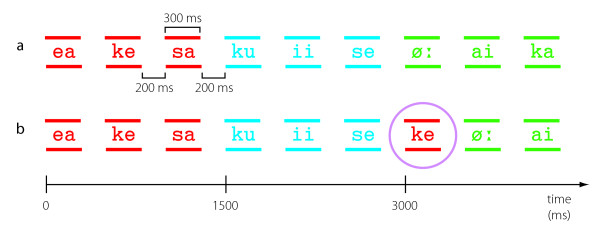
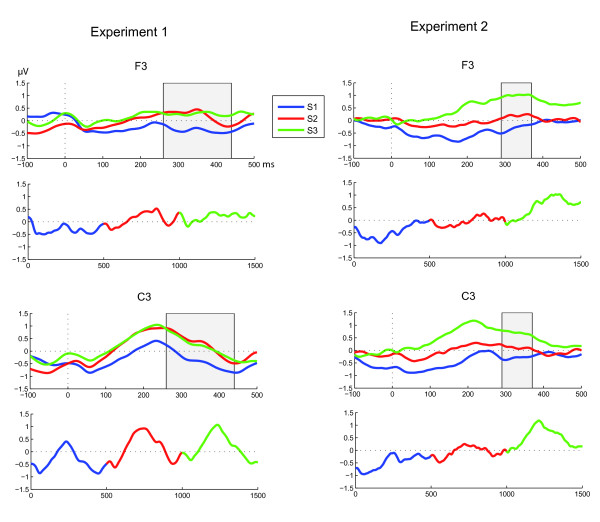
BACKGROUND: Statistical learning is a candidate for one of the basic prerequisites underlying the expeditious acquisition of spoken language. Infants from 8 months of age exhibit this form of learning to segment fluent speech into distinct words. To test the statistical learning skills at birth, we recorded event-related brain responses of sleeping neonates while they were listening to a stream of syllables containing statistical cues to word boundaries. RESULTS: We found evidence that sleeping neonates are able to automatically extract statistical properties of the speech input and thus detect the word boundaries in a continuous stream of syllables containing no morphological cues. Syllable-specific event-related brain responses found in two separate studies demonstrated that the neonatal brain treated the syllables differently according to their position within pseudowords. CONCLUSION: These results demonstrate that neonates can efficiently learn transitional probabilities or frequencies of co-occurrence between different syllables, enabling them to detect word boundaries and in this way isolate single words out of fluent natural speech. The ability to adopt statistical structures from speech may play a fundamental role as one of the earliest prerequisites of language acquisition.
Overview
The claims and statistics of this paper haven’t been checked yet.
Free: it reads the open-access text and checks the first 5 claims that cite a source we can check. Create a free account to check every claim.
Integrity signals
Registry
Cites
Statistics
Figures
Verification
Claims the paper makes
The claims and statistics of this paper haven’t been checked yet.
Free: it reads the open-access text and checks the first 5 claims that cite a source we can check. Create a free account to check every claim.
Claims other papers make about this one
Each is checked against this paper’s own text: does it say what the citing paper says it does?
The cited source says what the claim attributes to it.
In the citing paper
“Recent findings show that even sleeping newborns detect this kind of statistical structure in speech, as shown in studies using event-related brain potentials (Teinonen et al., 2009).”
From Brain mechanisms in early language acquisition (2010) · cites this paper as Teinonen et al., 2009
Self-check
Percentages, sums and reported differences re-computed from the paper’s own numbers.
The self-check needs the paper’s full text.
Citations
Cites
Statistical learning by 8-month-old infants
Saffran, J. R., Aslin, R. N., & Newport, E. L. (1996) · Science · doi:10.1126/science.274.5294.1926 · Cited by 5,659 · cited 1×
“From 6 months of age, infants use computational strategies to learn the distributional patterns of sounds [2-4], the non-adjacent dependencies required to learn grammar [5,6], and the sequential probabilities [ 7 ,8], as well as the stress patterns [9], necessary to perform word segmentation.”
BackgroundEarly language acquisition: cracking the speech code
Kuhl, P. K. (2004) · Nature Reviews Neuroscience · doi:10.1038/nrn1533 · Cited by 2,291 · cited 1×
“Statistical learning of speech and sensitivity to social cues help infants in the rapid acquisition of their first language [1].”
BackgroundLinguistic experience alters phonetic perception in infants by 6 months of age
Kuhl, P. K., Williams, K. A., Lacerda, F., Stevens, K. N., & Lindblom, B. (1992) · Science · doi:10.1126/science.1736364 · Cited by 2,086 · cited 1×
“From 6 months of age, infants use computational strategies to learn the distributional patterns of sounds [2-4], the non-adjacent dependencies required to learn grammar [5,6], and the sequential probabilities [7,8], as well as the stress patterns [9], necessary to perform word segmentation.”
BackgroundInfant sensitivity to distributional information can affect phonetic discrimination
Maye, J., Werker, J. F., & Gerken, L. (2002) · Cognition · doi:10.1016/s0010-0277(01)00157-3 · Cited by 1,364 · cited 1×
“From 6 months of age, infants use computational strategies to learn the distributional patterns of sounds [2-4], the non-adjacent dependencies required to learn grammar [5,6], and the sequential probabilities [7,8], as well as the stress patterns [9], necessary to perform word segmentation.”
BackgroundRule Learning by Seven-Month-Old Infants
Marcus, G. F., Vijayan, S., Bandi Rao, S., & Vishton, P. M. (1999) · Science · doi:10.1126/science.283.5398.77 · Cited by 1,244 · cited 1×
“From 6 months of age, infants use computational strategies to learn the distributional patterns of sounds [2-4], the non-adjacent dependencies required to learn grammar [ 5 ,6], and the sequential probabilities [7,8], as well as the stress patterns [9], necessary to perform word segmentation.”
BackgroundComputation of conditional probability statistics by 8-month-old infants
Aslin, R. N., Saffran, J. R., & Newport, E. L. (1998) · Psychological Science · doi:10.1111/1467-9280.00063 · Cited by 1,189 · cited 2×
“From 6 months of age, infants use computational strategies to learn the distributional patterns of sounds [2-4], the non-adjacent dependencies required to learn grammar [5,6], and the sequential probabilities [7,8], as well as the stress patterns [9], necessary to perform word segmentation.”
BackgroundVisual statistical learning in infancy: evidence for a domain general learning mechanism
Kirkham, N. Z., Slemmer, J. A., & Johnson, S. P. (2002) · Cognition · doi:10.1016/s0010-0277(02)00004-5 · Cited by 1,072 · cited 1×
“to learn statistical regularities in sequences of visual stimuli [10].”
BackgroundLanguage discrimination by newborns: Toward an understanding of the role of rhythm.
Nazzi, T., Bertoncini, J., & Mehler, J. (1998) · Journal of Experimental Psychology: Human Perception and Performance · doi:10.1037//0096-1523.24.3.756 · Cited by 914 · cited 1×
“For instance, it has been found that the skills necessary to discriminate different stress patterns in speech develop only after 4 months of age [11], even though newborns are able to process some rhythmic information in speech [12].”
BackgroundArtificial grammar learning by 1-year-olds leads to specific and abstract knowledge
Gomez, R. L., & Gerken, L. (1999) · Cognition · doi:10.1016/s0010-0277(99)00003-7 · Cited by 801 · cited 1×
“From 6 months of age, infants use computational strategies to learn the distributional patterns of sounds [2-4], the non-adjacent dependencies required to learn grammar [5,6], and the sequential probabilities [7,8], as well as the stress patterns [9], necessary to perform word segmentation.”
BackgroundOn short and long auditory stores.
Cowan, N. (1984) · Psychological Bulletin · doi:10.1037//0033-2909.96.2.341 · Cited by 646 · cited 1×
“Because the corpus used in the experiment consisted of 10 different words, it was highly unlikely to remain in auditory sensory memory during the experiment due to its limited capacity and interference caused by continuous stimulation [19].”
Method
Cited by
Items 201–300 of 345
Effects of healthy aging and left hemisphere stroke on statistical language learning
Fama, M. E., Schuler, K. D., Newport, E. L., & Turkeltaub, P. E. (2022) · Language Cognition and Neuroscience · doi:10.1080/23273798.2022.2030481 · Cited by 7
“In the literature on statistical learning, a speci fi c form of implicit learning, emphasis is often given to the fact that the statistical learning mechanism is available from birth (Aslin, 2017; Bulf et al., 2011; Gervain et al., 2008; Teinonen et al., 2009).”
The Effects of Cooperative and Competitive Situations on Statistical Learning
Si, Y., Chen, X., Guo, W., & Wang, B. (2022) · Brain Sciences · doi:10.3390/brainsci12081059 · Cited by 7
“Statistical learning plays an indispensable role in perception [25,26], associative learning, predictive processing [25,27], and the learning of rule-based skills [24,28], such as spoken language, music, or motor skills [24,29,30].”
BackgroundFormal language hierarchy reflects different levels of cognitive complexity.
Silva, S., Inácio, F., Sousa, D. R. E., Gaspar, N., Folia, V., & Petersson, K. M. (2022) · Journal of Experimental Psychology Learning Memory and Cognition · doi:10.1037/xlm0001182 · Cited by 8
Marlatte, H., Belchev, Z., Fraser, M., & Gilboa, A. (2023) · Neuropsychologia · doi:10.1016/j.neuropsychologia.2023.108755 · Cited by 7
The contribution of statistical learning to language and literacy acquisition
Wu, D. H., & Bulut, T. (2020) · The Psychology of learning and motivation/The psychology of learning and motivation · doi:10.1016/bs.plm.2020.02.001 · Cited by 7
The Development of Infant Feeding
Mennella, J. A., Forestell, C. A., Ventura, A. K., & Fisher, J. O. (2020) · Cambridge University Press eBooks · doi:10.1017/9781108351959.010 · Cited by 12
Neural Speech Tracking in Newborns: Prenatal Learning and Contributing FactorsPreprint
Florea, C., Reimann, M., Schmidt, F., Preiß, J., Reisenberger, E., Angerer, M., Ameen, M. S., Heib, D. P. J., Roehm, D., & Schabus, M. (2024) · SSRN Electronic Journal · doi:10.1101/2024.03.18.585222 · Cited by 11
“…that of natural speech Studies investigating the more detailed underlying factors of speech processing have shown that infants are sensitive to the rhythmical regularities in the auditory input (François et al., 2017), and can segment speech based on statistical information (Teinonen et al., 2009).”
BackgroundIndividual Differences in Statistical Learning and Semantic Adaptation: An N400 Study
Munding, M., Forgács, B., Lukics, K. S., & Lukács, Á. (2025) · Psychophysiology · doi:10.1111/psyp.70125 · Cited by 6
“Humans are equipped with this ability from the very first days of their lives (Bulf et al. 2011; Teinonen et al. 2009), and SL remains available through the entire lifespan (see e.g., Janacsek et al. 2012; Lukács and Kemény 2015).”
Modification of spectral features by nonhuman primates
Weiss, D. J., Hotchkin, C. F., & Parks, S. E. (2014) · Behavioral and Brain Sciences · doi:10.1017/s0140525x13004226 · Cited by 7
Promoting lexical learning in the speech and language therapy of children with cochlear implants
Ronkainen, R., Laakso, M., Lonka, E., & Tykkyläinen, T. (2016) · Clinical Linguistics & Phonetics · doi:10.1080/02699206.2016.1245786 · Cited by 6
“Their lexical representations might be vague as a result of auditory deprivation during infancy, when sensitivity to segmenting word-like units is already present (Teinonen et al., 2009; see also Schwartz et al., 2013).”
BackgroundEvaluating Language Acquisition Models: A Utility-Based Look at Bayesian Segmentation
Pearl, L., & Phillips, L. (2017) · Cambridge University Press eBooks · doi:10.1017/9781316676974.008 · Cited by 8
“This can be seen in infants’ ability to track statistical relationships: while transitional probabilities over syllables can be tracked at birth (Teinonen et al., 2009), transitional probabilities over segments first seems to occur around nine months (Mattys et al.”
BackgroundDagan, O., & Sagi‐Schwartz, A. (2020) · Cambridge University Press eBooks · doi:10.1017/9781108351959.025 · Cited by 12
Mechanisms of Statistical Learning in Infancy
Johnson, S. P. (2020) · Springer eBooks · doi:10.1007/978-3-030-35594-4_2 · Cited by 7
Mitsven, S. G., Messinger, D. S., Moffitt, J., & Ahn, Y. A. (2020) · Cambridge University Press eBooks · doi:10.1017/9781108351959.027 · Cited by 6
Understanding and Evaluating the Moral World in Infancy
Hamlin, J. K., & Sitch, M. J. (2020) · Cambridge University Press eBooks · doi:10.1017/9781108351959.028 · Cited by 6
Early human communication helps in understanding language evolution
Boero, D. L. (2014) · Behavioral and Brain Sciences · doi:10.1017/s0140525x13004081 · Cited by 5
Yim, D., & Yang, Y. (2021) · Eon'eo cheong'gag jang'ae yeon'gu/Communication sciences & disorders · doi:10.12963/csd.21804 · Cited by 5
Word segmentation in German-learning infants and German-speaking adults
Marimon, M. (2019) · publish.UP (University of Potsdam) · doi:10.25932/publishup-43740 · Cited by 7
Choi, D., Batterink, L. J., Black, A. K., Paller, K. A., & Werker, J. F. (2020) · PsyArXiv (OSF Preprints) · doi:10.31234/osf.io/fuqd2 · Cited by 5
The neural basis of Western music chord categorisations - effects of development and music expertise
Virtala, P. (2015) · Työväentutkimus Vuosikirja · Cited by 9
Cai, L., Hakuno, Y., Hata, M., Hoshino, E.-I., Arimitsu, T., Shinohara, N., Takahashi, T., Watson, S. K., Townsend, S. W., Mueller, J. L., et al. (2024) · PLoS Biology · doi:10.1371/journal.pbio.3002610 · Cited by 5
Environments organize the verbal brain
Catania, A. C. (2014) · Behavioral and Brain Sciences · doi:10.1017/s0140525x13003981 · Cited by 4
The impact of generative linguistics on psychology: Language acquisition, a paradigm example
Marino, C., & Gervain, J. (2019) · Acta Linguistica Academica · doi:10.1556/2062.2019.66.3.4 · Cited by 4
“Very young infants have been shown to rely on transitional probabilities for word segmentation and other linguistic tasks under a wide variety of circumstances from the earliest ages (e.g. Teinonen et al. 2009; Pelucchi, Hay, and Saffran 2009; Lany and Saffran 2010).”
BackgroundKoelsch, S., & SKEIE, G. O. (2020) · Elsevier eBooks · doi:10.1016/b978-0-12-817422-7.00001-8 · Cited by 4
Frost, R. L. A., Dunn, K., Christiansen, M. H., Gómez, R. L., & Monaghan, P. (2020) · PLoS ONE · doi:10.1371/journal.pone.0243436 · Cited by 4
“This statistical sensitivity is suggested to emerge at an early age [6]—perhaps even from birth [13]—and thus may play a key role in infants’ early language acquisition.”
BackgroundModeling the Influence of Language Input Statistics on Children's Speech Production
Roete, I., Frank, S. L., Fikkert, P., & Casillas, M. (2020) · Cognitive Science · doi:10.1111/cogs.12924 · Cited by 5
“…patterns in the environment begins in infancy (e.g., Johnson et al., 2009; Kidd, Junge, Spokes, Morrison, & Cutler, 2018; Saffran et al., 1996; Teinonen, Fellman, N ¨ a ¨ at ¨ anen, Alku, & Huotilainen, 2009), continues into adult-hood (e.g., Conway, Bauernschmidt, Huang, & Pisoni, 2010;…”
Prem, P., Saggu, S. K., Boadu, A., Saju, S., Nisbet, K., & Cummine, J. (2025) · Neuroscience · doi:10.1016/j.neuroscience.2025.09.035 · Cited by 4
Smalle, E. H. M., Karantinou, E., & Möttönen, R. (2026) · Cognitive Science · doi:10.1111/cogs.70178 · Cited by 3
“…functions (e.g., Frost et al., 2019), but also in older learners including children and adults (Palmer, Hutson, & Mattys, 2018; Raviv & Arnon, 2018; Saffran, Newport, Aslin, Tunick, & Barrueco, 1997), and even in newborns (Fló et al., 2019; Teinonen, Fellman, Näätänen, Alku, & Huotilainen, 2009).”
The Development of Touch Perception and Body Representation
Bremner, A. J. (2020) · Cambridge University Press eBooks · doi:10.1017/9781108351959.009 · Cited by 3
Marimon, M., Berdasco‐Muñoz, E., Höhle, B., & Nazzi, T. (2025) · Open Mind · doi:10.1162/opmi_a_00184 · Cited by 3
“Although newborns are already sensitive to statistical structure in a continuous artificial speech stream (Fló et al., 2019; Teinonen et al., 2009), it is from 5 months on that English-learning infants have been shown to use TPs for word segmentation (Aslin et al., 1998; Thiessen & Erickson, 2013)…”
Statistical learning of orthography-semantics regularities: A developmental neurophysiological study
Duan, R., Zhao, W., Tong, S. X., & Tong, X. (2025) · Developmental Cognitive Neuroscience · doi:10.1016/j.dcn.2025.101576 · Cited by 3
Infant Word Learning and Emerging Syntax
Levine, D., Hirsh‐Pasek, K., & Golinkoff, R. M. (2020) · Cambridge University Press eBooks · doi:10.1017/9781108351959.023 · Cited by 3
Embodied Brain Model for Understanding Functional Neural Development of Fetuses and Infants
Yamada, Y., Kanazawa, H., & Kuniyoshi, Y. (2020) · Cambridge University Press eBooks · doi:10.1017/9781108351959.001 · Cited by 5
Discovering the Neuroanatomical Correlates of Music with Machine Learning
Daikoku, T. (2021) · Springer eBooks · doi:10.1007/978-3-030-72116-9_6 · Cited by 3
Maurer, D. M. (2020) · Cambridge University Press eBooks · doi:10.1017/9781108351959.006 · Cited by 4
Testing a Structural Equation Model of Language-based Cognitive Fitness
Moxley-Paquette, E. A., & Burkholder, G. J. (2014) · Procedia - Social and Behavioral Sciences · doi:10.1016/j.sbspro.2014.01.1140 · Cited by 3
“The results of this research is consistent with vMMN-MMN research specific to setting boundaries for objects, establishing distinctions, and allowing the development of categorization skills (Kuhl et al., 2006; Teinonen et al., 2009).”
BackgroundResultNeanderthals did speak, butFOXP2doesn't prove it
Johansson, S. (2014) · Behavioral and Brain Sciences · doi:10.1017/s0140525x13004068 · Cited by 4
Names for Things… and Actions and Events
Levine, D., Strother‐Garcia, K., Hirsh‐Pasek, K., & Golinkoff, R. M. (2017) · Wiley eBooks · doi:10.1002/9781118829516.ch24 · Cited by 4
“Shortly after birth, sleeping neonates’ brain responses to speech reveal a precocious sensitivity to the statistical structure underlying language (Teinonen et al., 2009).”
BackgroundInfant Learning in the Digital Age
Rusnak, S. N., & Barr, R. (2020) · Cambridge University Press eBooks · doi:10.1017/9781108351959.016 · Cited by 4
The effect of lexical status on prosodic processing in infants learning a fixed stress language
Ragó, A., Varga, Z., Garami, L., Honbolygó, F., & Csépe, V. (2021) · Psychophysiology · doi:10.1111/psyp.13932 · Cited by 3
Cognitive constraints on vocal combinatoriality in a social bird
Watson, S. K., Mine, J. G., O’Neill, L. G., Mueller, J. L., Russell, A. F., & Townsend, S. W. (2023) · iScience · doi:10.1016/j.isci.2023.106977 · Cited by 3
“This is also reflected by the fact that the human capacity to process relationships between non-adjacent elements comes online at a later stage in development than the processing of adjacent ones.(28,29) However, it is worth mentioning that not all non-adjacent elements in a string are necessarily processed as such de…”
BackgroundBiological Preconditions for Language Development
Mueller, J. L., Männel, C., & Friederici, A. D. (2015) · Elsevier eBooks · doi:10.1016/b978-0-08-097086-8.23117-6 · Cited by 3
The Role of Empirical Evidence in Modeling Speech Segmentation
Phillips, L. (2015) · eScholarship (California Digital Library) · Cited by 4
Hayne, H., & Herbert, J. S. (2020) · Cambridge University Press eBooks · doi:10.1017/9781108351959.012 · Cited by 3
Implicit Statistical Learning of Language and Music
Tillmann, B., & Poulin-Charronnat, B. (2024) · L’Année psychologique · doi:10.3917/anpsy1.243.0409 · Cited by 2
Speech Segmentation with Prosodic and Statistical Cues Is Language-Specific in Infancy
Marimon, M., Saksida, A., Höhle, B., & Langus, A. (2025) · Languages · doi:10.3390/languages10090240 · Cited by 2
“The ability appears to be present already at birth (with speech stimuli, Teinonen et al., 2009; Fló et al., 2019; non-speech stimuli, Bulf et al., 2011; Kudo et al., 2011) and it is evolutionarily so primitive that it has been observed in several species of non-human animals (Toro & Trobalón, 2005;…”
Zu, J., & Choi, W. (2025) · Quarterly Journal of Experimental Psychology · doi:10.1177/17470218251404928 · Cited by 3
“Even infants, although they do not know complex language at an early age, can still extract regular patterns from speech input through auditory perception (Friederici et al., 2011; Gervain et al., 2008; Teinonen et al., 2009).”
Nakai, T., Daikoku, T., & Oseki, Y. (2025) · Neuroscience Research · doi:10.1016/j.neures.2025.105001 · Cited by 3
Repetitions trigger illusory awareness in implicit statistical learning
Jurchiș, R., & Preda, A. (2026) · Proceedings of the National Academy of Sciences · doi:10.1073/pnas.2526432123 · Cited by 2
“…of the information that drives their classification decisions; also, ISL operates without intention and in parallel with taxing cognitive tasks (31, 35, 36), it is present in sleeping neonates (37, 38), and in patients with disorders of consciousness (e.g., coma) (39, 40) or with amnesia (41).”
Mechanisms of statistical learning in infancy
Johnson, S. P. (2017) · Journal of Vision · doi:10.1167/17.7.31 · Cited by 2
The Infant’s Visual World: The Everyday Statistics for Visual Learning
Jayaraman, S., & Smith, L. B. (2020) · Cambridge University Press eBooks · doi:10.1017/9781108351959.020 · Cited by 4
Afazili Bireylerde Dil Becerileri ve İstatistiki Öğrenme Becerisi Arasındaki İlişkinin İncelenmesi
Bulut, T., & BAHAR, E. (2023) · Dilbilim Araştırmaları Dergisi · doi:10.18492/dad.1336925 · Cited by 2
Mueller, J. L., Weyers, I., Friederici, A. D., & Männel, C. (2024) · Frontiers in Human Neuroscience · doi:10.3389/fnhum.2024.1358380 · Cited by 2
Skill learning in the developing brain: Interactions of control and representation systems
Fandakova, Y., & Wenger, E. (2024) · The Psychology of learning and motivation/The psychology of learning and motivation · doi:10.1016/bs.plm.2024.07.002 · Cited by 2
Daikoku, T. (2025) · Lecture notes in computer science · doi:10.1007/978-3-032-02042-0_1 · Cited by 2
Vocal communication is multi-sensorimotor coordination within and between individuals
Takahashi, D. Y., & Ghazanfar, A. A. (2014) · Behavioral and Brain Sciences · doi:10.1017/s0140525x13004202 · Cited by 3
Statistical Learning in Children with Primary Language Impairment (PLI)
임동선, 이여진, 한지윤, 이지혜, 천소연, Leeseulki, kwakaram, & 한우주 (2016) · Journal of speech-language & hearing disorders · doi:10.15724/jslhd.2016.25.3.005 · Cited by 2
Exploring the Process of Statistical Language Learning
Noonan, N. B. (2018) · Scholarship@Western (Western University) · Cited by 6
Xiao, F., Liang, K., Sun, T., & He, F. (2024) · PsyCh Journal · doi:10.1002/pchj.749 · Cited by 1
“…and nonhuman animals are sensitive to statistical patterns in cross-species studies based on perceptual and cognitive mechanisms, such as sequence learning and visual processing (Bulf et al., 2021; J. N. Chen et al., 2015; Santolin et al., 2016; Santolin & Saffran, 2018; Teinonen et al., 2009).”
Children leverage predictive representations for flexible, value-guided choice
Zhang, A., Kahn, A. E., Daw, N. D., Nussenbaum, K., & Hartley, C. A. (2025) · Cognition · doi:10.1016/j.cognition.2025.106340 · Cited by 1
Bulut, T., & Şenol, N. E. G. (2026) · Psikoloji Çalışmaları / Studies in Psychology · doi:10.26650/sp2023-1618172 · Cited by 2
Zhang, W., Clackson, K., Georgieva, S., Santamaria, L., Reindl, V., Noreika, V., Darby, N., Valsdóttir, V., Santhanakrishnan, P., & Leong, V. (2026) · Nature Communications · doi:10.1038/s41467-026-75831-x · Cited by 1
“Electroencephalography (EEG) studies further con fi rm that even newborns are able to track transitional probabilities in a similar way 40 .”
Components of the Language-Ready Brain
Boeckx, C. A., & Benítez‐Burraco, A. (2016) · Frontiers research topics · doi:10.3389/978-2-88919-893-1 · Cited by 1
Eghbalzad, L., Deocampo, J. A., & Conway, C. M. (2016) · Cognitive Science · Cited by 1
Statistical Properties in Jazz Improvisation Underline Individuality of Musical Representation
Daikoku, T. (2020) · NeuroSci · doi:10.3390/neurosci1010004 · Cited by 1
“Statistical learning, which occurs even in sleeping neonates and infants [4,5], is considered an implicit and innate system in humans.”
BackgroundInfants’ Perception of Auditory Patterns
Cirelli, L. K., & Trehub, S. E. (2020) · Cambridge University Press eBooks · doi:10.1017/9781108351959.008 · Cited by 1
Amso, D., & Tummeltshammer, K. S. (2020) · Cambridge University Press eBooks · doi:10.1017/9781108351959.007 · Cited by 2
Early Knowledge About Space and Quantity
Newcombe, N. S. (2020) · Cambridge University Press eBooks · doi:10.1017/9781108351959.015 · Cited by 1
The Mirror Neuron System and Social Cognition
Fox, N. A., Salo, V. C., Debnath, R., Morales, S., & Smith, E. G. (2020) · Cambridge University Press eBooks · doi:10.1017/9781108351959.018 · Cited by 1
Oakes, L. M. (2020) · Cambridge University Press eBooks · doi:10.1017/9781108351959.014 · Cited by 1
IQ, Adaptive Intelligence, and Unconscious Processes
Allen, R. (2022) · Oxford University Press eBooks · doi:10.1093/oso/9780197501573.003.0009 · Cited by 1
Language processing in the newborn: Potential biomarkers for autism spectrum disorder
Sijin, L. I., Tingdong, W. A. N. G., Zhilin, P. E. N. G., & ZHANG, D. (2023) · Advances in Psychological Science · doi:10.3724/sp.j.1042.2023.02295 · Cited by 1
Die frühe Kindheit – Sehen, Denken und Tun
Siegler, R. S., Saffran, J. R., Gershoff, E. T., & Eisenberg, N. (2021) · Springer eBooks · doi:10.1007/978-3-662-62772-3_5 · Cited by 1
Inductive Inference in Infants and Young Children: The Role of Probabilistic Reasoning
Denison, S. (2012) · eScholarship (California Digital Library) · Cited by 1
Neger, T. M. (2017) · Max Planck Digital Library · doi:10.17617/2.2482848 · Cited by 1
Perfors, A., & Kidd, E. (2020) · PsyArXiv (OSF Preprints) · doi:10.31234/osf.io/aw3pq · Cited by 1
Kershaw, G. S. (2020) · The Sydney eScholarship Repository (The University of Sydney) · Cited by 1
What neuroimaging methods can tell us about perceptual developmentPreprint
Aslin, R. Ν., & Bejjanki, V. R. (2024) · PsyArXiv (OSF Preprints) · doi:10.31234/osf.io/qabwt · Cited by 2
Nonword processing in bilingual five year olds: Do phonotactics count?
Betancourt, K. S. (2013) · Digital Commons - University of South Florida (University of South Florida) · Cited by 2
Perceptual mechanisms of pattern generalization in songbirds
Comins, J. A. (2014) · eScholarship (California Digital Library)
Yermolayeva, Y. (2013) · KiltHub Repository · doi:10.1184/r1/6720197
Maas, J. F., & Ehmig, S. C. (2013)
Räsänen, O. J. (2013) · Aaltodoc (Aalto University)
Winkler, I. (2015) · Magyar Pszichológiai Szemle · doi:10.1556/0016.2015.70.4.1 · Cited by 1
Bye, J. K., Nguyen, B., Lu, H., & Johnson, S. P. (2014) · eScholarship (California Digital Library)
Die frühe Kindheit – Sehen, Denken und Tun
Siegler, R. S., Eisenberg, N., DeLoache, J. S., & Saffran, J. R. (2016) · Springer eBooks · doi:10.1007/978-3-662-47028-2_5 · Cited by 4
Statistical learning in brain damaged patients: A multimodal impairment
Shaqiri, A. (2014) · UWSpace (University of Waterloo)
The Role of Empirical Evidence in Modeling Speech Segmentation DISSERTATION
Phillips, L. (2015)
Vyspinska, N. (2018) · The scientific and methodological journal Foreign Languages · doi:10.32589/im.v0i4.149718
The Impact of Attention on People's Ability to Learn Two Statistical Patterns Simultaneously
Forest, T. A. (2017) · TSpace (University of Toronto) · Cited by 1
Zhao, C. (2019) · Research Explorer (The University of Manchester)
Dealing with acoustical variability in speech at birth
Issard, C. (2018) · theses.fr (ABES) · doi:10.70675/512ea991zeb89z4ab3zb5afza4aa7be213ea
The Role of Neural Entrainment in Statistical Learning
Mulgrew, J.-J. (2020) · Scholarship@Western (Western University) · Cited by 1
Lampl, M. (2020) · Cambridge University Press eBooks · doi:10.1017/9781108351959.002
Hespos, S. J., & Anderson, E. M. (2020) · Cambridge University Press eBooks · doi:10.1017/9781108351959.013 · Cited by 1
Dual Language Exposure and Early Learning
Brito, N. H. (2020) · Cambridge University Press eBooks · doi:10.1017/9781108351959.024
Reh, R. K., & Werker, J. F. (2020) · Cambridge University Press eBooks · doi:10.1017/9781108351959.021 · Cited by 1
Development During Infancy in Children Later Diagnosed with Autism Spectrum Disorder
Falck‐Ytter, T., & Jones, E. J. H. (2020) · Cambridge University Press eBooks · doi:10.1017/9781108351959.005
Dynamic Epigenetic Impact of the Environment on the Developing Brain
Champagne, F. A. (2020) · Cambridge University Press eBooks · doi:10.1017/9781108351959.003 · Cited by 1
Metadata
- Authors
- Teinonen, T., Fellman, V., Näätänen, R., Alku, P., & Huotilainen, M.
- Affiliations
- University of Helsinki (FI)
- Aalto University (FI)
- Corresponding author
- Teinonen, Tuomas
- Venue
- BMC Neuroscience
- Published
- 2009-03-13
- Volume
- 10
- Issue
- 1
- Pages
- 21-21
- ISSN
- 1471-2202 (ISSN-L)
- PMC
- PMC2670827
- OpenAlex
- W1991925383
- Cited by
- 319
- References
- 20
- Citations by year
- 2026: 7 · 2025: 17 · 2024: 16 · 2023: 17 · 2022: 19 · 2021: 20 · 2020: 55 · 2019: 17 · 2018: 15 · 2017: 16 · 2016: 22 · 2015: 18 · 2014: 25 · 2013: 15 · 2012: 15
- FWCI
- 23.43
- Type
- journal article
- Language
- en
- Open access
- gold
- doi.org
- Licence
- cc-by
- creativecommons.org/licenses/by/2.0 (tdm)
- Locations
- BMC Neuroscience (publishedVersion, cc-by)
- PubMed Central (publishedVersion, cc-by)
- PubMed (publishedVersion)
- DOAJ (DOAJ: Directory of Open Access Journals) (submittedVersion, cc-by-sa)
- Lund University Publications (Lund University) (submittedVersion)
- Funders
- Academy of Finland
- Suomen Kulttuurirahasto
- Signe ja Ane Gyllenbergin Säätiö
- Jenny ja Antti Wihurin Rahasto
- Topics
- Social Sciences › Psychology › Developmental and Educational Psychology › Language Development and Disorders
- Social Sciences › Psychology › Experimental and Cognitive Psychology › Phonetics and Phonology Research
- Life Sciences › Neuroscience › Cognitive Neuroscience › Neurobiology of Language and Bilingualism
- Keywords
- statistical learning, neonates, word segmentation, word boundary detection, speech perception, transition probabilities, pseudowords, language acquisition
- MeSH terms
- Auditory Perception, Brain, Cues, Electroencephalography, Evoked Potentials, Female, Humans, Infant, Newborn, Language Development, Male, Phonetics, Speech Perception, Verbal Learning
About these checks
Registry, retraction, Cites and statistics results are computed, not judged, with one exception: a printed reference that no index lists is read once by a model before it counts as a citation error. Claims are extracted by a model and kept only when their quote appears verbatim in the text; each cited source is then checked, with a model’s help, for whether it says what the claim relies on. Those verdicts can be wrong — read the claim’s quote and the cited source before relying on one.
Statistics and arithmetic are recomputed, not judged.
Confidence bands are shown only for fields calibrated on our annotated test set. None is calibrated yet, so no band is shown.
What counts as a claim ›How we measure confidence ›How we check this ›
Are you an author, or do you see a problem with this page? Request a review
Data sources
Bibliographic data: Semantic Scholar, OpenAlex, Crossref.
Contains information from the Semantic Scholar Academic Graph Datasets, made available under the ODC Attribution License (ODC-BY 1.0).
Semantic Scholar’s data is described in: Kinney, R., et al. (2023). The Semantic Scholar Open Data Platform. arXiv:2301.10140.
