

Statistical language learning in neonates revealed by event-related brain potentials
Open accessThe DOI matches its Crossref record; 20 of the 20 references it cites were found in a registry or an index.
Abstract
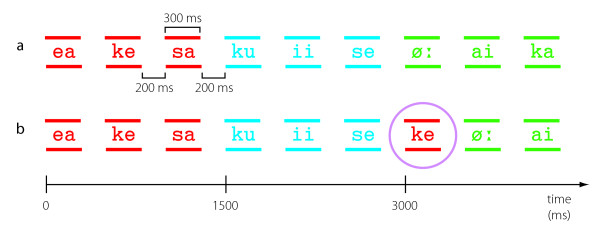
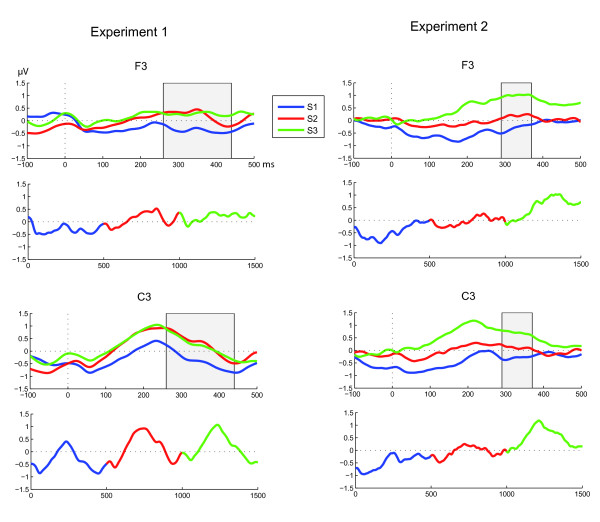
BACKGROUND: Statistical learning is a candidate for one of the basic prerequisites underlying the expeditious acquisition of spoken language. Infants from 8 months of age exhibit this form of learning to segment fluent speech into distinct words. To test the statistical learning skills at birth, we recorded event-related brain responses of sleeping neonates while they were listening to a stream of syllables containing statistical cues to word boundaries. RESULTS: We found evidence that sleeping neonates are able to automatically extract statistical properties of the speech input and thus detect the word boundaries in a continuous stream of syllables containing no morphological cues. Syllable-specific event-related brain responses found in two separate studies demonstrated that the neonatal brain treated the syllables differently according to their position within pseudowords. CONCLUSION: These results demonstrate that neonates can efficiently learn transitional probabilities or frequencies of co-occurrence between different syllables, enabling them to detect word boundaries and in this way isolate single words out of fluent natural speech. The ability to adopt statistical structures from speech may play a fundamental role as one of the earliest prerequisites of language acquisition.
Overview
The claims and statistics of this paper haven’t been checked yet.
Free: it reads the open-access text and checks the first 5 claims that cite a source we can check. Create a free account to check every claim.
Integrity signals
Registry
Cites
Statistics
Figures
Verification
Claims the paper makes
The claims and statistics of this paper haven’t been checked yet.
Free: it reads the open-access text and checks the first 5 claims that cite a source we can check. Create a free account to check every claim.
Claims other papers make about this one
Each is checked against this paper’s own text: does it say what the citing paper says it does?
The cited source says what the claim attributes to it.
In the citing paper
“Recent findings show that even sleeping newborns detect this kind of statistical structure in speech, as shown in studies using event-related brain potentials (Teinonen et al., 2009).”
From Brain mechanisms in early language acquisition (2010) · cites this paper as Teinonen et al., 2009
Self-check
Percentages, sums and reported differences re-computed from the paper’s own numbers.
The self-check needs the paper’s full text.
Citations
Cites
Statistical learning by 8-month-old infants
Saffran, J. R., Aslin, R. N., & Newport, E. L. (1996) · Science · doi:10.1126/science.274.5294.1926 · Cited by 5,659 · cited 1×
“From 6 months of age, infants use computational strategies to learn the distributional patterns of sounds [2-4], the non-adjacent dependencies required to learn grammar [5,6], and the sequential probabilities [ 7 ,8], as well as the stress patterns [9], necessary to perform word segmentation.”
BackgroundEarly language acquisition: cracking the speech code
Kuhl, P. K. (2004) · Nature Reviews Neuroscience · doi:10.1038/nrn1533 · Cited by 2,291 · cited 1×
“Statistical learning of speech and sensitivity to social cues help infants in the rapid acquisition of their first language [1].”
BackgroundLinguistic experience alters phonetic perception in infants by 6 months of age
Kuhl, P. K., Williams, K. A., Lacerda, F., Stevens, K. N., & Lindblom, B. (1992) · Science · doi:10.1126/science.1736364 · Cited by 2,086 · cited 1×
“From 6 months of age, infants use computational strategies to learn the distributional patterns of sounds [2-4], the non-adjacent dependencies required to learn grammar [5,6], and the sequential probabilities [7,8], as well as the stress patterns [9], necessary to perform word segmentation.”
BackgroundInfant sensitivity to distributional information can affect phonetic discrimination
Maye, J., Werker, J. F., & Gerken, L. (2002) · Cognition · doi:10.1016/s0010-0277(01)00157-3 · Cited by 1,364 · cited 1×
“From 6 months of age, infants use computational strategies to learn the distributional patterns of sounds [2-4], the non-adjacent dependencies required to learn grammar [5,6], and the sequential probabilities [7,8], as well as the stress patterns [9], necessary to perform word segmentation.”
BackgroundRule Learning by Seven-Month-Old Infants
Marcus, G. F., Vijayan, S., Bandi Rao, S., & Vishton, P. M. (1999) · Science · doi:10.1126/science.283.5398.77 · Cited by 1,244 · cited 1×
“From 6 months of age, infants use computational strategies to learn the distributional patterns of sounds [2-4], the non-adjacent dependencies required to learn grammar [ 5 ,6], and the sequential probabilities [7,8], as well as the stress patterns [9], necessary to perform word segmentation.”
BackgroundComputation of conditional probability statistics by 8-month-old infants
Aslin, R. N., Saffran, J. R., & Newport, E. L. (1998) · Psychological Science · doi:10.1111/1467-9280.00063 · Cited by 1,189 · cited 2×
“From 6 months of age, infants use computational strategies to learn the distributional patterns of sounds [2-4], the non-adjacent dependencies required to learn grammar [5,6], and the sequential probabilities [7,8], as well as the stress patterns [9], necessary to perform word segmentation.”
BackgroundVisual statistical learning in infancy: evidence for a domain general learning mechanism
Kirkham, N. Z., Slemmer, J. A., & Johnson, S. P. (2002) · Cognition · doi:10.1016/s0010-0277(02)00004-5 · Cited by 1,072 · cited 1×
“to learn statistical regularities in sequences of visual stimuli [10].”
BackgroundLanguage discrimination by newborns: Toward an understanding of the role of rhythm.
Nazzi, T., Bertoncini, J., & Mehler, J. (1998) · Journal of Experimental Psychology: Human Perception and Performance · doi:10.1037//0096-1523.24.3.756 · Cited by 914 · cited 1×
“For instance, it has been found that the skills necessary to discriminate different stress patterns in speech develop only after 4 months of age [11], even though newborns are able to process some rhythmic information in speech [12].”
BackgroundArtificial grammar learning by 1-year-olds leads to specific and abstract knowledge
Gomez, R. L., & Gerken, L. (1999) · Cognition · doi:10.1016/s0010-0277(99)00003-7 · Cited by 801 · cited 1×
“From 6 months of age, infants use computational strategies to learn the distributional patterns of sounds [2-4], the non-adjacent dependencies required to learn grammar [5,6], and the sequential probabilities [7,8], as well as the stress patterns [9], necessary to perform word segmentation.”
BackgroundOn short and long auditory stores.
Cowan, N. (1984) · Psychological Bulletin · doi:10.1037//0033-2909.96.2.341 · Cited by 646 · cited 1×
“Because the corpus used in the experiment consisted of 10 different words, it was highly unlikely to remain in auditory sensory memory during the experiment due to its limited capacity and interference caused by continuous stimulation [19].”
Method
Cited by
Brain mechanisms in early language acquisition
Kuhl, P. K. (2010) · Neuron · doi:10.1016/j.neuron.2010.08.038 · Cited by 798
Dweck, C. S. (2017) · Psychological Review · doi:10.1037/rev0000082 · Cited by 683
Statistical learning and language acquisition
Romberg, A. R., & Saffran, J. R. (2010) · WIREs Cognitive Science · doi:10.1002/wcs.78 · Cited by 517
The role of language in emotion: predictions from psychological constructionism
Lindquist, K. A., MacCormack, J. K., & Shablack, H. (2015) · Frontiers in Psychology · doi:10.3389/fpsyg.2015.00444 · Cited by 393
“…between phonemes and extrapolate rules of grammar in their native language (Saffran et al., 1996; Aslin et al., 1998; Maye et al., 2002; Thiessen and Saffran, 2003; Kuhl, 2004; Rivera-Gaxiola et al., 2005; Gebhart et al., 2009; Teinonen et al., 2009; Shukla et al., 2011; Krogh et al., 2013).”
BackgroundStatistical Learning: From Acquiring Specific Items to Forming General Rules
Aslin, R. N., & Newport, E. L. (2012) · Current Directions in Psychological Science · doi:10.1177/0963721412436806 · Cited by 348
“There remain two fundamental challenges for the future: (1) to provide a comprehensive theory of the statistical computations that suffice to explain such learning, and (2) to understand the neural mechanisms that support statistical learning and determine whether and how these mechanisms change over development (see…”
Music Training for the Development of Speech Segmentation
Francois, C., Chobert, J., Besson, M., & Schon, D. (2013) · Cerebral Cortex · doi:10.1093/cercor/bhs180 · Cited by 315
Statistical learning research: A critical review and possible new directions.
Frost, R., Armstrong, B. C., & Christiansen, M. H. (2019) · Psychological Bulletin · doi:10.1037/bul0000210 · Cited by 310
“…(neonates right after birth already display sensitivity to frequency of co-occurrences of syllables in an auditory stream presented for 15 min during sleep; see Teinonen, Fellman, Näätänen, Alku, & Huotilainen, 2009), assimilating the regularities in the environment seems to be exceedingly slow.”
BackgroundConway, C. M. (2020) · Neuroscience & Biobehavioral Reviews · doi:10.1016/j.neubiorev.2020.01.032 · Cited by 282
Visual statistical learning in the newborn infant
Bulf, H., Johnson, S. P., & Valenza, E. (2011) · Cognition · doi:10.1016/j.cognition.2011.06.010 · Cited by 281
“In tandem with the Teinonen et al. (2009) study on newborns’ detection of statistics in linguistic sequences, our results provide the first evidence for the existence of a learning device that computes statistics across sensory domains at birth.”
ResultErickson, L. C., & Thiessen, E. D. (2015) · Developmental Review · doi:10.1016/j.dr.2015.05.002 · Cited by 273
To belief or not belief: Children’s theory of mind
Ruffman, T. (2014) · Developmental Review · doi:10.1016/j.dr.2014.04.001 · Cited by 249
Speech Perception and Language Acquisition in the First Year of Life
Gervain, J., & Mehler, J. (2010) · Annual Review of Psychology · doi:10.1146/annurev.psych.093008.100408 · Cited by 263
“It is performed by newborns (Teinonen et al. 2009), infants at 8 and 13 months (Saffran et al. 1996), and adults (Pena et al. 2002).”
BackgroundStatistical learning: a powerful mechanism that operates by mere exposure
Aslin, R. N. (2017) · WIREs Cognitive Science · doi:10.1002/wcs.1373 · Cited by 224
Dorsal and ventral pathways in language development
Brauer, J., Anwander, A., Perani, D., & Friederici, A. D. (2013) · Brain and Language · doi:10.1016/j.bandl.2013.03.001 · Cited by 216
“…pathway D1 connecting to the PMC is already observable at birth (Perani et al., 2011) and potentially responsible for sensory-to-motor mapping (Saur et al., 2008), a function that is in place very early in language learning (Gervain et al., 2008, Perani et al., 2011 and Teinonen et al., 2009).”
BackgroundAckermann, H., Hage, S. R., & Ziegler, W. (2014) · Behavioral and Brain Sciences · doi:10.1017/s0140525x13003099 · Cited by 215
Early Language Learning and Literacy: Neuroscience Implications for Education
Kuhl, P. K. (2011) · Mind, Brain, and Education · doi:10.1111/j.1751-228x.2011.01121.x · Cited by 176
“have computational skills from birth (Teinonen et al., 2009).”
Artificial grammar learning meets formal language theory: an overview
Fitch, W. T., & Friederici, A. D. (2012) · Philosophical Transactions of the Royal Society B: Biological Sciences · doi:10.1098/rstb.2012.0103 · Cited by 201
“AGL meets FLT W. T. Fitch and A. D. Friederici 1949 is indeed the case, for both AGL [145] and natural language [146].”
BackgroundMusical Expertise Boosts Implicit Learning of Both Musical and Linguistic Structures
Francois, C., & Schon, D. (2011) · Cerebral Cortex · doi:10.1093/cercor/bhr022 · Cited by 188
Granier-Deferre, C., Bassereau, S., Ribeiro, A., Jacquet, A.-Y., & DeCasper, A. J. (2011) · PLoS ONE · doi:10.1371/journal.pone.0017304 · Cited by 184
“Furthermore, statistical learning has been demonstrated in the newborn [86].”
BackgroundAuditory perception at the root of language learning
Mueller, J. L., Friederici, A. D., & Männel, C. (2012) · Proceedings of the National Academy of Sciences · doi:10.1073/pnas.1204319109 · Cited by 156
“Eight-month-old infants, and even newborns, have been shown to be sensitive to transitional probabilities between syllables defining word-like units (7, 8).”
BackgroundAutomatic auditory intelligence: An expression of the sensory–cognitive core of cognitive processes
Näätänen, R., Astikainen, P., Ruusuvirta, T., & Huotilainen, M. (2010) · Brain Research Reviews · doi:10.1016/j.brainresrev.2010.03.001 · Cited by 162
“(See also Desjardins and Werker, 2004; Teinonen et al., 2008, 2009; Weikum et al., 2007).”
Self-citationConstraints on Statistical Learning Across Species
Santolin, C., & Saffran, J. R. (2017) · Trends in Cognitive Sciences · doi:10.1016/j.tics.2017.10.003 · Cited by 185
“Tracking Sequential Patterns Human neonates detect frequencies of co-occurrence of streams of syllables [40] and shapes [41].”
BackgroundStatistical learning as a basis for social understanding in children
Ruffman, T., Taumoepeau, M., & Perkins, C. (2012) · British Journal of Developmental Psychology · doi:10.1111/j.2044-835x.2011.02045.x · Cited by 146
Newborns are sensitive to multiple cues for word segmentation in continuous speech
Fló, A., Brusini, P., Macagno, F., Nespor, M., Mehler, J., & Ferry, A. L. (2019) · Developmental Science · doi:10.1111/desc.12802 · Cited by 170
Raviv, L., & Arnon, I. (2017) · Developmental Science · doi:10.1111/desc.12593 · Cited by 171
“First, infants do exhibit learning in both visual and auditory SL when using more implicit measures like listening times (e.g., Kirkham et al., 2002; Saffran et al., 1996) and SL was found already in newborns (e.g., Bulf et al., 2011; Teinonen et al., 2009).”
BackgroundThe emergence of probabilistic reasoning in very young infants: Evidence from 4.5- and 6-month-olds.
Denison, S., Reed, C., & Xu, F. (2013) · Developmental Psychology · doi:10.1037/a0028278 · Cited by 137
Temporal Attention as a Scaffold for Language Development
de Diego-Balaguer, R., Martinez-Alvarez, A., & Pons, F. (2016) · Frontiers in Psychology · doi:10.3389/fpsyg.2016.00044 · Cited by 65
“Thus, even when no effort to learn is given, regularities can be extracted from the input (Saffran et al., 1997), capturing our attention in an automatic manner, which is consistent with the fact that even newborns are able to detect these statistical regularities (Teinonen et al., 2009).”
BackgroundRecording Infant ERP Data for Cognitive Research
Hoehl, S., & Wahl, S. (2012) · Developmental Neuropsychology · doi:10.1080/87565641.2011.627958 · Cited by 148
“, 2005), pseudo-words (Friederici et al., 2007; Kushnerenko et al., 2001b; Teinonen et al., 2009; Weber et al., 2004), and sentences (Männel & Friederici, 2009).”
Choi, D., Batterink, L. J., Black, A. K., Paller, K. A., & Werker, J. F. (2020) · Psychological Science · doi:10.1177/0956797620933237 · Cited by 146
Statistical Learning Across Development: Flexible Yet Constrained
Krogh, L., Vlach, H. A., & Johnson, S. P. (2013) · Frontiers in Psychology · doi:10.3389/fpsyg.2012.00598 · Cited by 118
“Teinonen et al. (2009) examined statistical learning in sleeping newborns by presenting a continuous stream of three-syllable words in an artificial language similar to that employed by Saffran et al. (1996a), in which the only cues to word boundaries were the conditional relations or frequencies…”
BackgroundMethodInfluentialD’Souza, D., D’Souza, H., & Karmiloff‐Smith, A. (2017) · Journal of Child Language · doi:10.1017/s030500091700006x · Cited by 141
Thiessen, E. D. (2017) · Philosophical Transactions of the Royal Society B Biological Sciences · doi:10.1098/rstb.2016.0056 · Cited by 132
“[8,9]), and present in many species other than humans, including primates [10,11] and rats [12].”
BackgroundStatistical learning is related to early literacy-related skills
Spencer, M., Kaschak, M. P., Jones, J. L., & Lonigan, C. J. (2014) · Reading and Writing · doi:10.1007/s11145-014-9533-0 · Cited by 130
Musical Expertise and Second Language Learning
Chobert, J., & Besson, M. (2013) · Brain Sciences · doi:10.3390/brainsci3020923 · Cited by 95
“The importance of transitional probabilities in speech segmentation has been demonstrated in adults, infants and neonates [61,63–67].”
BackgroundLevine, D., Strother‐Garcia, K., Golinkoff, R. M., & Hirsh‐Pasek, K. (2016) · Otology & Neurotology · doi:10.1097/mao.0000000000000908 · Cited by 148
Central tendency effects in time interval reproduction in autism
Karaminis, T., Cicchini, G. M., Neil, L., Cappagli, G., Aagten-Murphy, D., Burr, D., & Pellicano, E. (2016) · Scientific Reports · doi:10.1038/srep28570 · Cited by 112
Brain signatures of a multiscale process of sequence learning in humans
Maheu, M., Dehaene, S., & Meyniel, F. (2019) · eLife · doi:10.7554/elife.41541 · Cited by 113
Non‐adjacent Dependency Learning in Humans and Other Animals
Wilson, B., Spierings, M. J., Ravignani, A., Mueller, J. L., Mintz, T. H., Wijnen, F. N. K., van der Kant, A., Smith, K., & Rey, A. (2018) · Topics in Cognitive Science · doi:10.1111/tops.12381 · Cited by 115
Kushnerenko, E. V., Van den Bergh, B. R. H., & Winkler, I. (2013) · Frontiers in Psychology · doi:10.3389/fpsyg.2013.00595 · Cited by 96
“…Werker, 2012) as well as musical (e.g., Phillips-Silver and Trainor, 2005; for a review, see Trainor et al., 2012) and language skills (e.g., Cheour et al., 2002b; Dehaene-Lambertz et al., 2002, 2010; Teinonen et al., 2009; for a review, see Dehaene-Lambertz et al., 2006) point in this direction.”
Sherman, L. J., Rice, K., & Cassidy, J. (2015) · Developmental Review · doi:10.1016/j.dr.2015.06.001 · Cited by 102
Musical Expertise and Statistical Learning of Musical and Linguistic Structures
Schön, D., & Clément, F. (2011) · Frontiers in Psychology · doi:10.3389/fpsyg.2011.00167 · Cited by 114
“Similar results have also been reported for newborns and adults (Aslin et al., 1998; Gervain et al., 2008; Teinonen et al., 2009), indicating a certain degree of independence from the developmental stage.”
ResultLearning across languages: bilingual experience supports dual language statistical word segmentation
Antovich, D. M., & Estes, K. G. (2017) · Developmental Science · doi:10.1111/desc.12548 · Cited by 102
Daltrozzo, J., & Conway, C. M. (2014) · Frontiers in Human Neuroscience · doi:10.3389/fnhum.2014.00437 · Cited by 111
Simultaneous segmentation and generalisation of non-adjacent dependencies from continuous speech
Frost, R. L. A., & Monaghan, P. (2015) · Cognition · doi:10.1016/j.cognition.2015.11.010 · Cited by 107
“Participants were paid £3.50, or received course credit.”
BackgroundInfluentialPrecursors to Natural Grammar Learning: Preliminary Evidence from 4-Month-Old Infants
Friederici, A. D., Mueller, J. L., & Oberecker, R. (2011) · PLoS ONE · doi:10.1371/journal.pone.0017920 · Cited by 80
“The ability to extract relations between adjacent syllables (AB) from auditory input on the basis of the statistical computation of transitional probabilities between the elements A and B may be present from birth [1], and has clearly been evidenced at 7 to 8 months of age [2–6].”
BackgroundRhythmic Grouping Biases Constrain Infant Statistical Learning
Hay, J. F., & Saffran, J. R. (2011) · Infancy · doi:10.1111/j.1532-7078.2011.00110.x · Cited by 99
Unlocking adults’ implicit statistical learning by cognitive depletion
Smalle, E. H. M., Daikoku, T., Szmalec, A., Duyck, W., & Möttönen, R. (2022) · Proceedings of the National Academy of Sciences · doi:10.1073/pnas.2026011119 · Cited by 100
Jeng, F.-C., Hu, J., Dickman, B., Montgomery-Reagan, K., Tong, M., Wu, G., & Lin, C.-D. (2011) · Ear and Hearing · doi:10.1097/aud.0b013e31821cc0df · Cited by 93
“Psychoacoustic literature on infant speech perception has provided strong evidence that the brain’s processing of suprasegmental and prosodic cues of human speech originates in the nascent, likely innately given, perceptual abilities of infants (Eimas et al. 1971; Miller & Eimas 1995; Carral et al. 2005; Friederici et…”
BackgroundStatistical learning leads to persistent memory: Evidence for one-year consolidation
Kóbor, A., Janacsek, K., Takács, Á., & Németh, D. (2017) · Scientific Reports · doi:10.1038/s41598-017-00807-3 · Cited by 89
“(5) If the mean of the 10 blocks deviated significantly from zero (in the positive direction), the given participant was included in the final sample.”
BackgroundShufaniya, A., & Arnon, I. (2018) · Cognitive Science · doi:10.1111/cogs.12692 · Cited by 92
Daikoku, T. (2018) · Brain Sciences · doi:10.3390/brainsci8060114 · Cited by 89
“Previous studies have demonstrated that auditory SL can be performed even by sleeping neonates [85,86,162].”
BackgroundInfant Directed Speech Enhances Statistical Learning in Newborn Infants: An ERP Study
Bosseler, A. N., Teinonen, T., Tervaniemi, M. H., & Huotilainen, M. (2016) · PLoS ONE · doi:10.1371/journal.pone.0162177 · Cited by 86
Self-citationLanguage Development and the Ontogeny of the Dorsal Pathway
Friederici, A. D. (2012) · Frontiers in Evolutionary Neuroscience · doi:10.3389/fnevo.2012.00003 · Cited by 75
The auditory brainstem is a barometer of rapid auditory learning
Skoe, E., Krizman, J., Spitzer, E. R., & Kraus, N. (2013) · Neuroscience · doi:10.1016/j.neuroscience.2013.03.009 · Cited by 86
“…to implicit learning (Perruchet and Pacton, 2006) within a matter of minutes, as observed in adults (Saffran et al., 1999), children (Graf Estes et al., 2007), infants (Saffran et al., 1996), neonates (Teinonen et al., 2009) and non-human species (Toro and Trobalon, 2005; Saffran et al., 2008).”
Koelsch, S., Busch, T., Jentschke, S., & Rohrmeier, M. (2016) · Scientific Reports · doi:10.1038/srep19741 · Cited by 88
Hearing It Again and Again: On-Line Subcortical Plasticity in Humans
Skoe, E., & Kraus, N. (2010) · PLoS ONE · doi:10.1371/journal.pone.0013645 · Cited by 84
“This ‘‘active search for regularity’’ is considered a universal process [5] that cuts across sensory modalities [6,7] and is evident in human neonates [8], non-human primates [9] and”
Ferry, A. L., Fló, A., Brusini, P., Cattarossi, L., Macagno, F., Nespor, M., & Mehler, J. (2015) · Developmental Science · doi:10.1111/desc.12323 · Cited by 77
Arciuli, J., & Torkildsen, J. V. K. (2012) · Frontiers in Psychology · doi:10.3389/fpsyg.2012.00324 · Cited by 86
“…found that the ability to extract statistical dependencies between adjacent elements in the speech stream appears to be present from birth, and that infants can learn non-adjacent dependencies in a natural, non-native language by 4 months of age (Teinonen et al., 2009; Friederici et al., 2011).”
BackgroundBeyond Words: How Humans Communicate Through Sound
Kraus, N., & Slater, J. (2015) · Annual Review of Psychology · doi:10.1146/annurev-psych-122414-033318 · Cited by 78
“…less than 2 days old were able to pick up on statistical patterns in an artificial language to which they were exposed for one hour during sleep (Teinonen et al. 2009), reinforcing that humans seem to be innately wired with complex pattern detection mechanisms that do not even require active…”
BackgroundSleep confers a benefit for retention of statistical language learning in 6.5 month old infants
Simon, K. N. S., Werchan, D. M., Goldstein, M. R., Sweeney, L., Bootzin, R. R., Nadel, L., & Gómez, R. L. (2016) · Brain and Language · doi:10.1016/j.bandl.2016.05.002 · Cited by 75
Individual Differences in Infant Speech Segmentation: Achieving the Lexical Shift
Kidd, E., Junge, C., Spokes, T., Morrison, L., & Cutler, A. (2018) · Infancy · doi:10.1111/infa.12256 · Cited by 70
Fló, A., Benjamin, L., Palu, M., & Dehaene‐Lambertz, G. (2022) · Scientific Reports · doi:10.1038/s41598-022-08411-w · Cited by 80
Lessons from infant learning for unsupervised machine learning
Zaadnoordijk, L., Besold, T. R., & Cusack, R. (2022) · Nature Machine Intelligence · doi:10.1038/s42256-022-00488-2 · Cited by 65
“There is an abundance of literature studying the capacity of infants for detecting and learning from statistical regularities in their physical and social environment across different domains and from birth 86,87 .”
BackgroundChanges in statistical learning across development
Forest, T. A., Schlichting, M. L., Duncan, K. D., & Finn, A. S. (2023) · Nature Reviews Psychology · doi:10.1038/s44159-023-00157-0 · Cited by 78
Social Interaction and Language Acquisition
Lytle, S. R., & Kuhl, P. K. (2017) · Wiley eBooks · doi:10.1002/9781118829516.ch27 · Cited by 95
Statistical learning effects in musicians and non-musicians: An MEG study
Paraskevopoulos, E., Kuchenbuch, A., Herholz, S. C., & Pantev, C. (2011) · Neuropsychologia · doi:10.1016/j.neuropsychologia.2011.12.007 · Cited by 75
Kudo, N., Nonaka, Y., Mizuno, N., Mizuno, K., & Okanoya, K. (2011) · Developmental Science · doi:10.1111/j.1467-7687.2011.01056.x · Cited by 66
“Similarly, with the speech stimuli, the negative deflection observed in neonates by Teinonen et al. (2009) might shape itself into the adultlike N400 waveform as the infant matures.”
BackgroundMethodResultInfluentialExploring the neurodevelopment of visual statistical learning using event-related brain potentials
Jost, E., Conway, C. M., Purdy, J. D., Walk, A. M., & Hendricks, M. A. (2014) · Brain Research · doi:10.1016/j.brainres.2014.10.017 · Cited by 67
“Even fewer studies have investigated the ERP correlates of ISL in infants or children (e.g., Teinonen et al., 2009) and to our knowledge, no single study has used ERP to directly compare such learning across different ages.”
BackgroundHoareau, M., Yeung, H. H., & Nazzi, T. (2019) · Developmental Science · doi:10.1111/desc.12803 · Cited by 62
Universal mechanisms and the development of the face network: what you see is what you get
Arcaro, M. J., Schade, P. F., & Livingstone, M. S. (2019) · Annual Review of Vision Science · doi:10.1146/annurev-vision-091718-014917 · Cited by 63
“Further, brain activity even within the first day of life can adapt to structure in the environment from minimal experience (1 hour) (Teinonen et al. 2009).”
BackgroundNeural consequences of bilingualism for cortical and subcortical function
Krizman, J., & Marian, V. (2015) · Cambridge University Press eBooks · doi:10.1017/cbo9781107447257.027 · Cited by 60
The word segmentation process as revealed by click detection
Gomez, D. M., Bion, R. A. H., & Mehler, J. (2010) · Language and Cognitive Processes · doi:10.1080/01690965.2010.482451 · Cited by 63
Thiessen, E. D., Girard, S., & Erickson, L. C. (2016) · Wiley Interdisciplinary Reviews Cognitive Science · doi:10.1002/wcs.1394 · Cited by 63
Tomalski, P., Ribeiro, H., Ballieux, H., Axelsson, E. L., Murphy, E., Moore, D. G., & Kushnerenko, E. V. (2012) · European Journal of Developmental Psychology · doi:10.1080/17405629.2012.728076 · Cited by 61
Enhanced Neonatal Brain Responses To Sung Streams Predict Vocabulary Outcomes By Age 18 Months
Clément, F., Teixidó, M., Takerkart, S., Agut, T., Bosch, L., & Rodríguez‐Fornells, A. (2017) · Scientific Reports · doi:10.1038/s41598-017-12798-2 · Cited by 60
“Both positive ERP components were significantly larger for illegal than for legal words (1st time-window: item type: F(1,25) = 4.”
BackgroundMethodInfluentialTorkildsen, J. V. K., Arciuli, J., & Wie, O. B. (2018) · Learning and Individual Differences · doi:10.1016/j.lindif.2018.11.003 · Cited by 57
Deocampo, J. A., Smith, G. N. L., Kronenberger, W. G., Pisoni, D. B., & Conway, C. M. (2018) · Language Speech and Hearing Services in Schools · doi:10.1044/2018_lshss-stlt1-17-0138 · Cited by 57
Whale song shows language-like statistical structure
Arnon, I., Kirby, S., Allen, J., Garrigue, C., Carroll, E. L., & Garland, E. C. (2025) · Science · doi:10.1126/science.adq7055 · Cited by 57
Faster Sound Stream Segmentation in Musicians than in Nonmusicians
Clément, F., Jaillet, F., Takerkart, S., & Schön, D. (2014) · PLoS ONE · doi:10.1371/journal.pone.0101340 · Cited by 58
“The role of conditional probabilities (the probability of syllable X given syllable Y) in segmenting a speech stream of nonsense pseudowords has been shown in neonates, infants and adults [23,24,26–29].”
BackgroundClément, F., & Schön, D. (2013) · Hearing Research · doi:10.1016/j.heares.2013.08.018 · Cited by 53
“Additionally, implicit electrophysiological measures may be informative when studying less accessible populations such as very young infants (Teinonen et al., 2009; Kudo et al., 2011), who are unable to deliver an overt behavioral response while being at the same time the most promising naive…”
Concurrent Statistical Learning of Adjacent and Nonadjacent Dependencies
Vuong, L. C., Meyer, A. S., & Christiansen, M. H. (2015) · Language Learning · doi:10.1111/lang.12137 · Cited by 54
“Successful learning of the adjacent dependencies is consistent with the results of many earlier studies (e.g., Saffran et al., 1996; Teinonen et al., 2009).”
ResultNeural processes underlying statistical learning for speech segmentation in dogs
Boros, M., Magyari, L., Török, D., Bozsik, A., Deme, A., & Andics, A. (2021) · Current Biology · doi:10.1016/j.cub.2021.10.017 · Cited by 51
Gómez, R. L. (2017) · Philosophical Transactions of the Royal Society B Biological Sciences · doi:10.1098/rstb.2016.0054 · Cited by 54
TRACX2: a connectionist autoencoder using graded chunks to model infant visual statistical learning
Mareschal, D., & French, R. M. (2017) · Philosophical Transactions of the Royal Society B Biological Sciences · doi:10.1098/rstb.2016.0057 · Cited by 52
“Even newborn infants are able to do this [3,4]; yet how this is achieved remains largely a mystery.”
Rhythmic structure facilitates learning from auditory input in newborn infants
Suppanen, E., Huotilainen, M., & Ylinen, S. (2019) · Infant Behavior and Development · doi:10.1016/j.infbeh.2019.101346 · Cited by 52
Self-citationDevelopment of context dependency in human space perception
Sciutti, A., Burr, D. C., Saracco, A., Sandini, G., & Gori, M. (2014) · Experimental Brain Research · doi:10.1007/s00221-014-4021-y · Cited by 50
“This ability can be traced back, at least partially, even to newborns, as neonates can learn the statistical structure of a visual sequence of discrete shapes (Bulf et al. 2011) or of a linguistic stimulus (Teinonen et al. 2009).”
BackgroundMeasuring children’s auditory statistical learning via serial recall
Kidd, E., Arciuli, J., Christiansen, M. H., Isbilen, E. S., Revius, K., & Smithson, M. J. (2020) · Journal of Experimental Child Psychology · doi:10.1016/j.jecp.2020.104964 · Cited by 52
Acquiring Complex Communicative Systems: Statistical Learning of Language and Emotion
Ruba, A. L., Pollak, S. D., & Saffran, J. R. (2022) · Topics in Cognitive Science · doi:10.1111/tops.12612 · Cited by 49
“as noted previously, even neonates track statistical regularities (Bulf et al., 2011; Fló et al., 2019; Teinonen et al., 2009).”
BackgroundDiscovering Words in Fluent Speech: The Contribution of Two Kinds of Statistical Information
Thiessen, E. D., & Erickson, L. C. (2013) · Frontiers in Psychology · doi:10.3389/fpsyg.2012.00590 · Cited by 49
“Instead, it is consistent with prior results indicating that infants are sensitive to conditional statistical information from a young age (Kirkham et al., 2002; Teinonen et al., 2009; Johnson and Tyler, 2010; Kudo et al., 2011).”
BackgroundResultPrerequisites of language acquisition in the newborn brain
Kujala, T., Partanen, E., Virtala, P., & Winkler, I. (2023) · Trends in Neurosciences · doi:10.1016/j.tins.2023.05.011 · Cited by 48
“Statistical learning [76] EEG, ERP Exp 1–2: 0.”
BackgroundDifferences in auditory timing between human and nonhuman primates
Honing, H., & Merchant, H. (2014) · Behavioral and Brain Sciences · doi:10.1017/s0140525x13004056 · Cited by 45
Of Sound Mind: How Our Brain Constructs a Meaningful Sonic World
Kraus, N. (2021) · The MIT Press eBooks · doi:10.7551/mitpress/13606.001.0001 · Cited by 63
Sensitivity to structure in action sequences: An infant event-related potential study
Monroy, C., Gerson, S. A., Domínguez‐Martínez, E., Kaduk, K., Hunnius, S., & Reid, V. M. (2017) · Neuropsychologia · doi:10.1016/j.neuropsychologia.2017.05.007 · Cited by 45
“Some research has shown that infants and adults demonstrate neural responses to sequential events based only on their statistical likelihood (Abla & Okanoya, 2009; Teinonen et al., 2009).”
Simple statistical regularities presented during sleep are detected but not retained
Batterink, L. J., & Zhang, S. (2021) · Neuropsychologia · doi:10.1016/j.neuropsychologia.2021.108106 · Cited by 40
Statistical Learning Mechanisms in Infancy
Lany, J., & Saffran, J. R. (2013) · Elsevier eBooks · doi:10.1016/b978-0-12-397267-5.00034-0 · Cited by 53
“Moreover, ERP recordings of sleeping newborn infants who were played similar streams of continuous syllables showanegativedeflectionof theERPwaveduring the first syllable of a word (Teinonen et al., 2009).”
BackgroundHáden, G. P., Bouwer, F. L., Honing, H., & Winkler, I. (2023) · Cognition · doi:10.1016/j.cognition.2023.105670 · Cited by 40
Benjamin, L., Fló, A., Palu, M., Naik, S., Melloni, L., & Dehaene‐Lambertz, G. (2022) · Developmental Science · doi:10.1111/desc.13300 · Cited by 41
Language Learning without Control: The Role of the PFC
Friederici, A. D., Mueller, J. L., Sehm, B., & Ragert, P. (2013) · Journal of Cognitive Neuroscience · doi:10.1162/jocn_a_00350 · Cited by 41
Neurophysiological preconditions of syntax acquisition
Friederici, A. D., Oberecker, R., & Bräuer, J. (2011) · Psychological Research · doi:10.1007/s00426-011-0357-0 · Cited by 37
“Electrophysiological studies have shown that neonates are able to extract statistical properties from auditory language input (Teinonen et al., 2009), and that 4-month-old infants have learned the most frequent stress pattern of their respective target language: stress on the Wrst syllable in…”
BackgroundUnraveling the nature of autism: finding order amid change
Hellendoorn, A., Wijnroks, L., & Leseman, P. P. M. (2015) · Frontiers in Psychology · doi:10.3389/fpsyg.2015.00359 · Cited by 41
“The very basic perceptual learning process of invariance and affordance detection, which we share with animals (Hauser et al., 2001; Barrett, 2011; Wood, 2013), is already present at birth (Gibson and Pick, 2000; Teinonen et al., 2009).”
Metadata
- Authors
- Teinonen, T., Fellman, V., Näätänen, R., Alku, P., & Huotilainen, M.
- Affiliations
- University of Helsinki (FI)
- Aalto University (FI)
- Corresponding author
- Teinonen, Tuomas
- Venue
- BMC Neuroscience
- Published
- 2009-03-13
- Volume
- 10
- Issue
- 1
- Pages
- 21-21
- ISSN
- 1471-2202 (ISSN-L)
- PMC
- PMC2670827
- OpenAlex
- W1991925383
- Cited by
- 319
- References
- 20
- Citations by year
- 2026: 7 · 2025: 17 · 2024: 16 · 2023: 17 · 2022: 19 · 2021: 20 · 2020: 55 · 2019: 17 · 2018: 15 · 2017: 16 · 2016: 22 · 2015: 18 · 2014: 25 · 2013: 15 · 2012: 15
- FWCI
- 23.43
- Type
- journal article
- Language
- en
- Open access
- gold
- doi.org
- Licence
- cc-by
- creativecommons.org/licenses/by/2.0 (tdm)
- Locations
- BMC Neuroscience (publishedVersion, cc-by)
- PubMed Central (publishedVersion, cc-by)
- PubMed (publishedVersion)
- DOAJ (DOAJ: Directory of Open Access Journals) (submittedVersion, cc-by-sa)
- Lund University Publications (Lund University) (submittedVersion)
- Funders
- Academy of Finland
- Suomen Kulttuurirahasto
- Signe ja Ane Gyllenbergin Säätiö
- Jenny ja Antti Wihurin Rahasto
- Topics
- Social Sciences › Psychology › Developmental and Educational Psychology › Language Development and Disorders
- Social Sciences › Psychology › Experimental and Cognitive Psychology › Phonetics and Phonology Research
- Life Sciences › Neuroscience › Cognitive Neuroscience › Neurobiology of Language and Bilingualism
- Keywords
- statistical learning, neonates, word segmentation, word boundary detection, speech perception, transition probabilities, pseudowords, language acquisition
- MeSH terms
- Auditory Perception, Brain, Cues, Electroencephalography, Evoked Potentials, Female, Humans, Infant, Newborn, Language Development, Male, Phonetics, Speech Perception, Verbal Learning
About these checks
Registry, retraction, Cites and statistics results are computed, not judged, with one exception: a printed reference that no index lists is read once by a model before it counts as a citation error. Claims are extracted by a model and kept only when their quote appears verbatim in the text; each cited source is then checked, with a model’s help, for whether it says what the claim relies on. Those verdicts can be wrong — read the claim’s quote and the cited source before relying on one.
Statistics and arithmetic are recomputed, not judged.
Confidence bands are shown only for fields calibrated on our annotated test set. None is calibrated yet, so no band is shown.
What counts as a claim ›How we measure confidence ›How we check this ›
Are you an author, or do you see a problem with this page? Request a review
Data sources
Bibliographic data: Semantic Scholar, OpenAlex, Crossref.
Contains information from the Semantic Scholar Academic Graph Datasets, made available under the ODC Attribution License (ODC-BY 1.0).
Semantic Scholar’s data is described in: Kinney, R., et al. (2023). The Semantic Scholar Open Data Platform. arXiv:2301.10140.
