

Statistical language learning in neonates revealed by event-related brain potentials
Open accessThe DOI matches its Crossref record; 20 of the 20 references it cites were found in a registry or an index.
Abstract
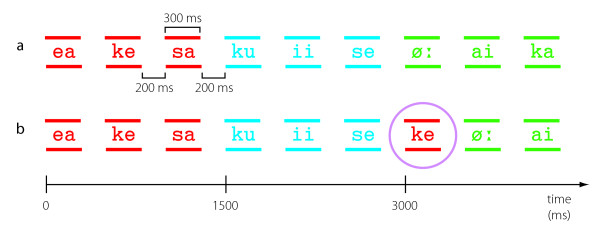
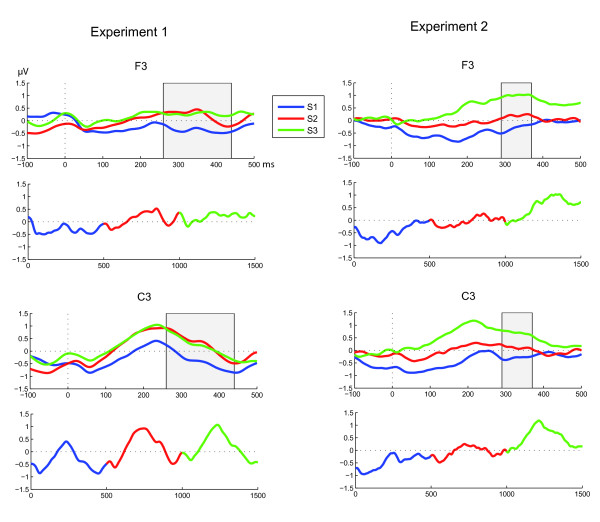
BACKGROUND: Statistical learning is a candidate for one of the basic prerequisites underlying the expeditious acquisition of spoken language. Infants from 8 months of age exhibit this form of learning to segment fluent speech into distinct words. To test the statistical learning skills at birth, we recorded event-related brain responses of sleeping neonates while they were listening to a stream of syllables containing statistical cues to word boundaries. RESULTS: We found evidence that sleeping neonates are able to automatically extract statistical properties of the speech input and thus detect the word boundaries in a continuous stream of syllables containing no morphological cues. Syllable-specific event-related brain responses found in two separate studies demonstrated that the neonatal brain treated the syllables differently according to their position within pseudowords. CONCLUSION: These results demonstrate that neonates can efficiently learn transitional probabilities or frequencies of co-occurrence between different syllables, enabling them to detect word boundaries and in this way isolate single words out of fluent natural speech. The ability to adopt statistical structures from speech may play a fundamental role as one of the earliest prerequisites of language acquisition.
Overview
The claims and statistics of this paper haven’t been checked yet.
Free: it reads the open-access text and checks the first 5 claims that cite a source we can check. Create a free account to check every claim.
Integrity signals
Registry
Cites
Statistics
Figures
Verification
Claims the paper makes
The claims and statistics of this paper haven’t been checked yet.
Free: it reads the open-access text and checks the first 5 claims that cite a source we can check. Create a free account to check every claim.
Claims other papers make about this one
Each is checked against this paper’s own text: does it say what the citing paper says it does?
The cited source says what the claim attributes to it.
In the citing paper
“Recent findings show that even sleeping newborns detect this kind of statistical structure in speech, as shown in studies using event-related brain potentials (Teinonen et al., 2009).”
From Brain mechanisms in early language acquisition (2010) · cites this paper as Teinonen et al., 2009
Self-check
Percentages, sums and reported differences re-computed from the paper’s own numbers.
The self-check needs the paper’s full text.
Citations
Cites
Statistical learning by 8-month-old infants
Saffran, J. R., Aslin, R. N., & Newport, E. L. (1996) · Science · doi:10.1126/science.274.5294.1926 · Cited by 5,659 · cited 1×
“From 6 months of age, infants use computational strategies to learn the distributional patterns of sounds [2-4], the non-adjacent dependencies required to learn grammar [5,6], and the sequential probabilities [ 7 ,8], as well as the stress patterns [9], necessary to perform word segmentation.”
BackgroundEarly language acquisition: cracking the speech code
Kuhl, P. K. (2004) · Nature Reviews Neuroscience · doi:10.1038/nrn1533 · Cited by 2,291 · cited 1×
“Statistical learning of speech and sensitivity to social cues help infants in the rapid acquisition of their first language [1].”
BackgroundLinguistic experience alters phonetic perception in infants by 6 months of age
Kuhl, P. K., Williams, K. A., Lacerda, F., Stevens, K. N., & Lindblom, B. (1992) · Science · doi:10.1126/science.1736364 · Cited by 2,086 · cited 1×
“From 6 months of age, infants use computational strategies to learn the distributional patterns of sounds [2-4], the non-adjacent dependencies required to learn grammar [5,6], and the sequential probabilities [7,8], as well as the stress patterns [9], necessary to perform word segmentation.”
BackgroundInfant sensitivity to distributional information can affect phonetic discrimination
Maye, J., Werker, J. F., & Gerken, L. (2002) · Cognition · doi:10.1016/s0010-0277(01)00157-3 · Cited by 1,364 · cited 1×
“From 6 months of age, infants use computational strategies to learn the distributional patterns of sounds [2-4], the non-adjacent dependencies required to learn grammar [5,6], and the sequential probabilities [7,8], as well as the stress patterns [9], necessary to perform word segmentation.”
BackgroundRule Learning by Seven-Month-Old Infants
Marcus, G. F., Vijayan, S., Bandi Rao, S., & Vishton, P. M. (1999) · Science · doi:10.1126/science.283.5398.77 · Cited by 1,244 · cited 1×
“From 6 months of age, infants use computational strategies to learn the distributional patterns of sounds [2-4], the non-adjacent dependencies required to learn grammar [ 5 ,6], and the sequential probabilities [7,8], as well as the stress patterns [9], necessary to perform word segmentation.”
BackgroundComputation of conditional probability statistics by 8-month-old infants
Aslin, R. N., Saffran, J. R., & Newport, E. L. (1998) · Psychological Science · doi:10.1111/1467-9280.00063 · Cited by 1,189 · cited 2×
“From 6 months of age, infants use computational strategies to learn the distributional patterns of sounds [2-4], the non-adjacent dependencies required to learn grammar [5,6], and the sequential probabilities [7,8], as well as the stress patterns [9], necessary to perform word segmentation.”
BackgroundVisual statistical learning in infancy: evidence for a domain general learning mechanism
Kirkham, N. Z., Slemmer, J. A., & Johnson, S. P. (2002) · Cognition · doi:10.1016/s0010-0277(02)00004-5 · Cited by 1,072 · cited 1×
“to learn statistical regularities in sequences of visual stimuli [10].”
BackgroundLanguage discrimination by newborns: Toward an understanding of the role of rhythm.
Nazzi, T., Bertoncini, J., & Mehler, J. (1998) · Journal of Experimental Psychology: Human Perception and Performance · doi:10.1037//0096-1523.24.3.756 · Cited by 914 · cited 1×
“For instance, it has been found that the skills necessary to discriminate different stress patterns in speech develop only after 4 months of age [11], even though newborns are able to process some rhythmic information in speech [12].”
BackgroundArtificial grammar learning by 1-year-olds leads to specific and abstract knowledge
Gomez, R. L., & Gerken, L. (1999) · Cognition · doi:10.1016/s0010-0277(99)00003-7 · Cited by 801 · cited 1×
“From 6 months of age, infants use computational strategies to learn the distributional patterns of sounds [2-4], the non-adjacent dependencies required to learn grammar [5,6], and the sequential probabilities [7,8], as well as the stress patterns [9], necessary to perform word segmentation.”
BackgroundOn short and long auditory stores.
Cowan, N. (1984) · Psychological Bulletin · doi:10.1037//0033-2909.96.2.341 · Cited by 646 · cited 1×
“Because the corpus used in the experiment consisted of 10 different words, it was highly unlikely to remain in auditory sensory memory during the experiment due to its limited capacity and interference caused by continuous stimulation [19].”
Method
Cited by
Items 101–200 of 345
Connecting Cues: Overlapping Regularities Support Cue Discovery in Infancy
Sahni, S. D., Seidenberg, M. S., & Saffran, J. R. (2010) · Child Development · doi:10.1111/j.1467-8624.2010.01430.x · Cited by 24
Neural Processing of Repetition and Non-Repetition Grammars in 7- and 9-Month-Old Infants
Wagner, J., Fox, S. E., Tager-Flusberg, H. B., & Nelson, C. A. (2011) · Frontiers in Psychology · doi:10.3389/fpsyg.2011.00168 · Cited by 35
“…1988), phonemic contrasts (e.g., Werker and Tees, 1984; Kuhl et al., 2006), structural regularities (e.g., Christophe et al., 1994), and transitional probabilities (e.g., Saffran et al., 1996; Teinonen et al., 2009; for a review of early infant language development, see Gervain and Mehler, 2010).”
BackgroundInfluentialBelief it or not: How children construct a theory of mind
Ruffman, T. (2023) · Child Development Perspectives · doi:10.1111/cdep.12483 · Cited by 37
Local Redundancy Governs Infants' Spontaneous Orienting to Visual-Temporal Sequences
Addyman, C., & Mareschal, D. (2013) · Child Development · doi:10.1111/cdev.12060 · Cited by 37
The statistical signature of morphosyntax: A study of Hungarian and Italian infant-directed speech
Gervain, J., & Erra, R. G. (2012) · Cognition · doi:10.1016/j.cognition.2012.06.010 · Cited by 39
Statistical Learning of Melodic Patterns Influences the Brain's Response to Wrong Notes
Moldwin, T., Schwartz, O., & Sussman, E. S. (2017) · Journal of Cognitive Neuroscience · doi:10.1162/jocn_a_01181 · Cited by 39
Building blocks of fetal cognition: emotion and language
Huotilainen, M. (2010) · Infant and Child Development · doi:10.1002/icd.658 · Cited by 37
Self-citationWord Segmentation Cues in German Child-Directed Speech: A Corpus Analysis
Stärk, K., Kidd, E., & Frost, R. L. A. (2021) · Language and Speech · doi:10.1177/0023830920979016 · Cited by 34
“…contained within speech (e.g., Saffran et al., 1996, 1997), and from an early age, infants can use this co-occurrence information to calculate the likely locations of word boundaries in speech (Aslin et al., 1998; Teinonen et al., 2009; see Black & Bergmann, 2017, for a meta-analytic review).”
BackgroundThe Cambridge Handbook of Infant Development: Brain, Behavior, and Cultural Context
Lockman, J. J., & Tamis-LeMonda, C. S. (2020) · Cambridge University Press eBooks · doi:10.1017/9781108351959 · Cited by 35
Daikoku, T., Yatomi, Y., & Yumoto, M. (2016) · Neuropsychologia · doi:10.1016/j.neuropsychologia.2016.12.006 · Cited by 34
“A young infant (birth from 37 weeks to 8 months) uses a statistical learning strategy to recognize boundaries between words in speech sequences (Saffran et al., 1996; Teinonen et al., 2009; Kudo et al., 2011).”
A Whole-Brain Topographic Ontology
Arcaro, M. J., & Livingstone, M. S. (2024) · Annual Review of Neuroscience · doi:10.1146/annurev-neuro-082823-073701 · Cited by 33
“While the neonate brain already shows differential responses to forward and backward speech (Pena et al. 2003), we posit that this reflects a neonate’s ability to learn and differentiate the statistical structure of their experienced speech (Saffran et al. 1996, Teinonen et al. 2009).”
Infant cognition includes the potentially human-unique ability to encode embedding
Winkler, M., Mueller, J. L., Friederici, A. D., & Männel, C. (2018) · Science Advances · doi:10.1126/sciadv.aar8334 · Cited by 29
Infants use temporal regularities to chunk objects in memory
Kibbe, M. M., & Feigenson, L. (2015) · Cognition · doi:10.1016/j.cognition.2015.09.022 · Cited by 30
Statistically coherent labels facilitate categorization in 8-month-olds
Erickson, L. C., Thiessen, E. D., & Graf Estes, K. (2014) · Journal of Memory and Language · doi:10.1016/j.jml.2014.01.002 · Cited by 29
Bahrick, L. E., Lickliter, R., & Todd, J. T. T. (2020) · Cambridge University Press eBooks · doi:10.1017/9781108351959.011 · Cited by 31
Adult-like processing of time-compressed speech by newborns: A NIRS study
Issard, C., & Gervain, J. (2016) · Developmental Cognitive Neuroscience · doi:10.1016/j.dcn.2016.10.006 · Cited by 29
Infants’ Motor Proficiency and Statistical Learning for Actions
Monroy, C., Gerson, S. A., & Hunnius, S. (2017) · Frontiers in Psychology · doi:10.3389/fpsyg.2017.02174 · Cited by 30
“…convincing evidence that infants can detect multiple types of statistical regularities in different sensory domains from early in life (Aslin, Saffran, & Newport, 1998; Fiser & Aslin, 2001; Kirkham, Slemmer, & Johnson, 2002; Slone & Johnson, 2015; Teinonen, Fellman, Näätänen, & Alku, 2009).”
BackgroundInfants with Williams syndrome detect statistical regularities in continuous speech
Cashon, C. H., Ha, O., Estes, K. G., Saffran, J. R., & Mervis, C. Β. (2016) · Cognition · doi:10.1016/j.cognition.2016.05.009 · Cited by 27
Verschoor, S. A., Paulus, M., Spapé, M., Bíró, S., & Hommel, B. (2015) · Cognition · doi:10.1016/j.cognition.2015.01.005 · Cited by 27
Clément, F., Tillmann, B., & Schön, D. (2012) · Annals of the New York Academy of Sciences · doi:10.1111/j.1749-6632.2011.06395.x · Cited by 31
Farthouat, J., Atas, A., Wens, V., Tiège, X. D., & Peigneux, P. (2018) · Scientific Reports · doi:10.1038/s41598-018-30105-5 · Cited by 25
Mark my words: High frequency marker words impact early stages of language learning.
Frost, R. L. A., Monaghan, P., & Christiansen, M. H. (2019) · Journal of Experimental Psychology Learning Memory and Cognition · doi:10.1037/xlm0000683 · Cited by 32
Linguistic and non-linguistic non-adjacent dependency learning in early development
van der Kant, A., Männel, C., Paul, M., Friederici, A. D., Höhle, B., & Wartenburger, I. (2020) · Developmental Cognitive Neuroscience · doi:10.1016/j.dcn.2020.100819 · Cited by 25
“These adjacent dependencies are readily acquired by very young infants (Gómez & Maye, 2005; Teinonen et al., 2009) as well as adults (e.”
Infants Generalize Representations of Statistically Segmented Words
Estes, K. G. (2012) · Frontiers in Psychology · doi:10.3389/fpsyg.2012.00447 · Cited by 27
“ERPs have also provided some evidence that newborns can track transitional probabilities in speech streams (Teinonen et al., 2009).”
BackgroundStatistical learning in patients in the minimally conscious state
Xu, C., Li, H., Gao, J., Li, L., He, F., Yu, J. Z., Ling, Y., Gao, J., Li, J., Melloni, L., et al. (2022) · Cerebral Cortex · doi:10.1093/cercor/bhac222 · Cited by 24
Kidd, E., Arciuli, J., Christiansen, M. H., & Smithson, M. J. (2023) · Cognitive Development · doi:10.1016/j.cogdev.2023.101335 · Cited by 27
“On a more basic level, while SL in the auditory and visual domains has been demonstrated even in newborn infants (Bulk et al., 2011; Teinonen et al., 2009), the pre-existing biases that children bring to SL across perceptual domains and how they change across development is largely unknown.”
Bosseler, A. N., Clarke, M. D., Tavabi, K., Larson, E. D., Hippe, D. S., Taulu, S., & Kuhl, P. K. (2020) · Developmental Cognitive Neuroscience · doi:10.1016/j.dcn.2020.100901 · Cited by 24
“What these studies show is that children acquire language rapidly, exploiting the statistical and distributional patterns in environmental language input to learn (1, 4-9) and that constraints on perceptual and learning processes related to attention, especially those elicited through social interaction (10, 11), are…”
Ruffman, T., Chen, L., Lorimer, B., Vanier, S., Edgar, K., Scarf, D., & Taumoepeau, M. (2022) · Developmental Science · doi:10.1111/desc.13343 · Cited by 22
Neurodevelopment of Attention, Learning, and Memory Systems in Infancy
Forest, T. A., & Amso, D. (2023) · Annual Review of Developmental Psychology · doi:10.1146/annurev-devpsych-120321-011300 · Cited by 23
Comins, J. A., & Gentner, T. Q. (2014) · Animal Cognition · doi:10.1007/s10071-014-0732-5 · Cited by 20
“Only hours after birth, infants are capable of detecting statistical regularities from sequences of speech sounds (Teinonen et al. 2009), and by 7 months of age can extract underlying abstract rules governing auditory patterns (Marcus et al.”
Developmental changes in automatic rule‐learning mechanisms across early childhood
Mueller, J. L., Friederici, A. D., & Männel, C. (2018) · Developmental Science · doi:10.1111/desc.12700 · Cited by 21
Zénon, A., & Olivier, E. (2014) · Behavioral and Brain Sciences · doi:10.1017/s0140525x13004238 · Cited by 20
The Cognitive Architecture of Infant Attachment
Luo, Y., vanMarle, K., & Groh, A. M. (2024) · Perspectives on Psychological Science · doi:10.1177/17456916241262693 · Cited by 22
“…or probabilities of occurrences, in accumulated experiences (e.g., Aslin et al., 1998; Bulf et al., 2011; Denison et al., 2013; Kochukhova & Gredebäck, 2007; Saffran et al., 1996; Teinonen et al., 2009; Xu & Garcia, 2008; for reviews, see, e.g., Aslin & Newport, 2012; Saffran & Kirkham, 2018).”
Modality, presentation, domain and training effects in statistical learning
Lukics, K. S., & Lukács, Á. (2022) · Scientific Reports · doi:10.1038/s41598-022-24951-7 · Cited by 22
Cosper, S. H., Männel, C., & Mueller, J. L. (2020) · Developmental Cognitive Neuroscience · doi:10.1016/j.dcn.2020.100821 · Cited by 18
Soares, A. P., Gutiérrez-Domínguez, F.-J., Vasconcelos, M. A. D. S., Oliveira, H. M., Tomé, D., & Jiménez, L. (2020) · Frontiers in Human Neuroscience · doi:10.3389/fnhum.2020.577991 · Cited by 23
“Subsequent studies (e.g., Cunillera et al., 2006, 2009; De Diego Balaguer et al., 2007; Abla et al., 2008; Abla and Okanoya, 2009; Teinonen et al., 2009; François et al., 2014; Mandikal-Vasuki et al., 2017a) found similar results, which provide further evidence to interpret these ERP components, particularly the N400,…”
ResultEarly Cognitive Development: Five Lessons from Infant Learning
Hunnius, S. (2022) · Oxford University Press eBooks · doi:10.1093/acrefore/9780190236557.013.821 · Cited by 21
Early Caregiver Predictability Shapes Neural Indices of Statistical Learning Later in Infancy
Forest, T. A., McCormick, S. A., Davel, L., Mlandu, N., Zieff, M. R., Khula South Africa Data Collection Team, Amso, D., Donald, K. A., & Gabard-Durnam, L. J. (2024) · Developmental Science · doi:10.1111/desc.13570 · Cited by 18
Daikoku, T., Wiggins, G. A., & Nagai, Y. (2021) · Frontiers in Neuroscience · doi:10.3389/fnins.2021.640412 · Cited by 23
Sequential learning of emotional faces is statistical at 12 months of age
Mermier, J., Quadrelli, E., Turati, C., & Bulf, H. (2022) · Infancy · doi:10.1111/infa.12463 · Cited by 19
Development of statistical learning ability across modalities, domains, and languages
Ren, J., & Wang, M. (2022) · Journal of Experimental Child Psychology · doi:10.1016/j.jecp.2022.105570 · Cited by 21
A new dimension on foetal language learning
Huotilainen, M. (2012) · Acta Paediatrica · doi:10.1111/apa.12122 · Cited by 18
Self-citationInfant Emotion Development and Temperament
Aktar, E., & Pérez‐Edgar, K. E. (2020) · Cambridge University Press eBooks · doi:10.1017/9781108351959.026 · Cited by 18
SyllabO+: A new tool to study sublexical phenomena in spoken Quebec French
Bédard, P., Audet, A.-M., Drouin, P., Roy, J. R., Rivard, J., & Tremblay, P. (2016) · Behavior Research Methods · doi:10.3758/s13428-016-0829-7 · Cited by 20
Ramos‐Escobar, N., Segura, E., Olivé, G., Rodríguez‐Fornells, A., & Clément, F. (2021) · Developmental Cognitive Neuroscience · doi:10.1016/j.dcn.2021.101010 · Cited by 17
“However, EEG-based studies in infants and children are still scarce (François et al., 2013, 2017a; Kabdebon et al., 2015; Teinonen et al., 2009), and no previous study has used frequency-tagging combined with scalp-based phase synchronization analyses to explore multimodal word learning in children.”
BackgroundThe Role of Stimulus‐Specific Perceptual Fluency in Statistical Learning
Perfors, A., & Kidd, E. (2022) · Cognitive Science · doi:10.1111/cogs.13100 · Cited by 18
Descriptive and Inferential Problems of Induction
Kalish, C. W., & Thevenow-Harrison, J. T. (2014) · The Psychology of learning and motivation/The psychology of learning and motivation · doi:10.1016/b978-0-12-800283-4.00001-0 · Cited by 20
Deocampo, J. A., King, T. Z., & Conway, C. M. (2019) · Frontiers in Psychology · doi:10.3389/fpsyg.2019.01107 · Cited by 16
Kuhl, P. K. (2021) · Wiley eBooks · doi:10.1002/9781119684527.ch5 · Cited by 18
Artificial Grammar Learning and Its Neurobiology in Relation to Language Processing and Development
Uddén, J., & Männel, C. (2018) · Oxford University Press eBooks · doi:10.1093/oxfordhb/9780198786825.013.33 · Cited by 18
“Extending this evidence, ERP studies indicate the presence of statistical mechanisms for neighboring input elements already at birth (Kudo et al., 2011; Teinonen et al., 2009).”
BackgroundDetection of regularities in auditory sequences before and at term-age in human neonates
Panzani, M., Mahmoudzadeh, M., Wallois, F., & Dehaene‐Lambertz, G. (2023) · NeuroImage · doi:10.1016/j.neuroimage.2023.120428 · Cited by 15
Neural correlates of abstract rule learning: An event-related potential study
Sun, F., Shiba, R., Abla, D., & Okanoya, K. (2012) · Neuropsychologia · doi:10.1016/j.neuropsychologia.2012.07.013 · Cited by 18
Marjanen, K. (2009) · Cited by 41
Predictive Processing during a Naturalistic Statistical Learning Task in ASD
Wagley, N., Lajiness-O’Neill, R., Hay, J. S. F., Ugolini, M., Bowyer, S. M., Kovelman, I., & Brennan, J. R. (2020) · eneuro · doi:10.1523/eneuro.0069-19.2020 · Cited by 13
“The rootmean-square (RMS) time course within three 100-ms time bins (Teinonen et al., 2009): 200–300, 250–350, and 300–400ms following syllable onset, at each location, per participant, per trial, for each repetition of the passage was entered into the statistical analysis.”
MethodStatistical-sequential learning in development
Misyak, J. B., Goldstein, M. H., & Christiansen, M. H. (2011) · De Gruyter eBooks · doi:10.1515/9781934078242.13 · Cited by 18
Neural correlates of statistical learning in developmental dyslexia: An electroencephalography study
Daikoku, T., Jentschke, S., Tsogli, V., Bergström, K., Lachmann, T., Ahissar, M., & Koelsch, S. (2023) · Biological Psychology · doi:10.1016/j.biopsycho.2023.108592 · Cited by 15
Brain Development in Infants: Structure and Experience
Richards, J. E., & Conte, S. (2020) · Cambridge University Press eBooks · doi:10.1017/9781108351959.004 · Cited by 18
Jones, S. B. (2014) · Infant Behavior and Development · doi:10.1016/j.infbeh.2014.08.008 · Cited by 13
Cross-Cultural Perspectives on Parent–Infant Interactions
Bornstein, M. H., & Esposito, G. (2020) · Cambridge University Press eBooks · doi:10.1017/9781108351959.029 · Cited by 12
One language or two? Navigating cross‐language conflict in statistical word segmentation
Antovich, D. M., & Estes, K. G. (2020) · Developmental Science · doi:10.1111/desc.12960 · Cited by 15
Tong, X., Wang, Y., & Tong, S. X. (2020) · Neuroscience Bulletin · doi:10.1007/s12264-020-00500-y · Cited by 13
Brain Research Reveals Automatic Musical Memory Functions in Children
Huotilainen, M., Putkinen, V., & Tervaniemi, M. H. (2009) · Annals of the New York Academy of Sciences · doi:10.1111/j.1749-6632.2009.04857.x · Cited by 15
Self-citationWang, H. S., Köhler, S., & Batterink, L. J. (2023) · Cognition · doi:10.1016/j.cognition.2023.105564 · Cited by 12
Perceptual Development and Statistical Learning
Thiessen, E. D., & Erickson, L. C. (2015) · Wiley eBooks · doi:10.1002/9781118346136.ch18 · Cited by 40
Prior Knowledge of Object Associations Shapes Attentional Templates and Information Acquisition
Wu, R., & Zhao, J. (2017) · Frontiers in Psychology · doi:10.3389/fpsyg.2017.00843 · Cited by 11
“, 2011), and perhaps even from birth (Teinonen et al., 2009).”
BackgroundLearning a well-formed microtonal scale: Pitch intervals and event frequencies
Leung, Y., & Dean, R. T. (2018) · Journal of New Music Research · doi:10.1080/09298215.2018.1432060 · Cited by 14
Evidence of ordinal position encoding of sequences extracted from continuous speech
Fló, A. (2021) · Cognition · doi:10.1016/j.cognition.2021.104646 · Cited by 13
Statistical learning as a domain-general mechanism of entrenchment.
Jost, E., & Christiansen, M. H. (2016) · American Psychological Association eBooks · doi:10.1037/15969-011 · Cited by 16
Smalle, E. H. M., & Bogaerts, L. (2024) · Cortex · doi:10.1016/j.cortex.2024.07.001 · Cited by 15
Prosody enhances learning of statistical dependencies from continuous speech streams in adults
Kuuluvainen, S. M., Kaskivuo, S., Vainio, M., Smalle, E. H. M., & Möttönen, R. (2025) · Cognition · doi:10.1016/j.cognition.2025.106169 · Cited by 11
“…active investigation for decades, and its mechanisms are now considered to be key to language acquisition, remaining available across the human lifespan (Fl ´ o et al., 2019; Palmer et al., 2018; Raviv & Arnon, 2018; Saffran et al., 1997; Saffran, Newport, & Aslin, 1996; Teinonen et al., 2009).”
Learning during sleep in humans – A historical review
Ataei, S., Simo, E., Bergers, M., Schoch, S. F., Axmacher, N., & Dresler, M. (2023) · Sleep Medicine Reviews · doi:10.1016/j.smrv.2023.101852 · Cited by 12
“Newborns are able to detect word boundaries and learn transitional probabilities during REM sleep [26] and learn the first syllable of words during sleep [30].”
Suppanen, E., Winkler, I., Kujala, T., & Ylinen, S. (2022) · Developmental Cognitive Neuroscience · doi:10.1016/j.dcn.2022.101113 · Cited by 11
“, 2015), and they extract regularities from speech-like sequences (Teinonen et al., 2009; François et al., 2017; Suppanen et al., 2019).”
BackgroundConstraints on statistical computations at 10 months of age: the use of phonological features
Gonzalez‐Gomez, N., & Nazzi, T. (2014) · Developmental Science · doi:10.1111/desc.12279 · Cited by 12
Capacities and neural mechanisms for auditory statistical learning across species
Schiavo, J. K., & Froemke, R. C. (2019) · Hearing Research · doi:10.1016/j.heares.2019.02.002 · Cited by 10
Infant Vocal Learning and Speech Production
Warlaumont, A. S. (2020) · Cambridge University Press eBooks · doi:10.1017/9781108351959.022 · Cited by 13
Statistical learning mechanisms in infancy
Thompson, A., Aguero, A., & Lany, J. (2020) · Elsevier eBooks · doi:10.1016/b978-0-12-814411-4.00015-9 · Cited by 10
Frost, R. L. A., Monaghan, P., & Christiansen, M. H. (2016) · MPG.PuRe (Max Planck Society) · Cited by 12
The Neural Signature of Statistical Learning of Orthography
Tong, X., Wang, Y., & Tong, S. X. (2020) · Frontiers in Human Neuroscience · doi:10.3389/fnhum.2020.00026 · Cited by 9
“This sensitivity was reflected by a late negativity in the N400 time window of 340–390 ms (Teinonen et al., 2009).”
BackgroundSoares, A. P., Gutiérrez-Domínguez, F.-J., Lages, A., Oliveira, H. M., Vasconcelos, M. A. D. S., & Jiménez, L. (2022) · Frontiers in Human Neuroscience · doi:10.3389/fnhum.2022.805723 · Cited by 12
de Abreu, R. M. D. R. M., Postarnak, S., Vulchanov, V., Baggio, G., & Vulchanova, M. (2023) · Heliyon · doi:10.1016/j.heliyon.2023.e18693 · Cited by 12
“From a developmental point of view, studies show that the ability to extract statistical regularities from a speech stream is present from birth [12], and that by twelve months, infants can extract multiple statistics (e.”
BackgroundPhysical mechanisms may be as important as brain mechanisms in evolution of speech
de Boer, B., & Perlman, M. (2014) · Behavioral and Brain Sciences · doi:10.1017/s0140525x13004007 · Cited by 9
Action in Development: Plasticity, Variability, and Flexibility
Rachwani, J., Hoch, J. E., & Adolph, K. E. (2020) · Cambridge University Press eBooks · doi:10.1017/9781108351959.017 · Cited by 17
Dysfunctions in Infants’ Statistical Learning are Related to Parental Autistic Traits
Roberta, B., Riva, V., Cantiani, C., Riboldi, E. M., Molteni, M., Cassia, V. M., & Bulf, H. (2021) · Journal of Autism and Developmental Disorders · doi:10.1007/s10803-021-04894-0 · Cited by 9
Marschik, P. B., Kaufmann, W. E., Bölte, S., Sigafoos, J., & Einspieler, C. (2014) · Behavioral and Brain Sciences · doi:10.1017/s0140525x1300410x · Cited by 9
Visual Implicit Learning Abilities in Infants at Familial Risk for Language and Learning Impairments
Bettoni, R., Cantiani, C., Riva, V., Molteni, M., Cassia, V. M., & Bulf, H. (2022) · International Journal of Environmental Research and Public Health · doi:10.3390/ijerph19031877 · Cited by 9
Acquiring recursive structures through distributional learning
Li, D., & Schuler, K. D. (2023) · Language Acquisition · doi:10.1080/10489223.2023.2185522 · Cited by 9
“In addition, some studies suggested that distributional learning is an ability available from birth (e.g., Gervain et al. 2008, Teinonen et al. 2009, Aslin 2017).”
BackgroundWinter, B. (2025) · The Journal of the Acoustical Society of America · doi:10.1121/10.0036362 · Cited by 12
Benítez‐Burraco, A. (2025) · Frontiers in Psychology · doi:10.3389/fpsyg.2024.1499994 · Cited by 8
“The finding that newborns are able to segment utterances into syllables supports this view too (Teinonen et al., 2009; Fló et al., 2019).”
Neural tracking of auditory statistical regularities in adults with and without dyslexia
Ringer, H., Sammler, D., & Daikoku, T. (2025) · Cerebral Cortex · doi:10.1093/cercor/bhaf042 · Cited by 9
“The statistical learning paradigm has yielded robust results in children (Saffran et al. 1997), infants (Saffran et al. 1996), and even neonates (Teinonen et al. 2009), and here we show that neural correlates of statistical learning of non-linguistic auditory stimuli are related to participants’…”
The evolution of coordinated vocalizations before language
Bryant, G. A. (2014) · Behavioral and Brain Sciences · doi:10.1017/s0140525x1300397x · Cited by 8
Dynamic effects of habituation and novelty detection on newborn event-related potentials
Cortesa, C. S., Hudac, C. M., & Molfese, D. L. (2019) · Brain and Language · doi:10.1016/j.bandl.2019.104695 · Cited by 8
Learning non-adjacent rules and non-adjacent dependencies from human actions in 9-month-old infants
Lu, H. S., & Mintz, T. H. (2021) · PLoS ONE · doi:10.1371/journal.pone.0252959 · Cited by 8
“Neurophysiological studies suggest that even neonates track adjacent co-occurrence statistics [6].”
BackgroundHebbian learning can explain rhythmic neural entrainment to statistical regularities
Endress, A. D. (2024) · Developmental Science · doi:10.1111/desc.13487 · Cited by 9
Pierce, L. J., Tague, E. C., & Nelson, C. A. (2021) · Cognition · doi:10.1016/j.cognition.2021.104600 · Cited by 8
Visual statistical learning in deaf and hearing infants and toddlers
Monroy, C., Yu, C., & Houston, D. M. (2022) · Infancy · doi:10.1111/infa.12474 · Cited by 8
“Statistical learning abilities have been demonstrated even in newborns (Teinonen et al., 2009), suggesting that these skills emerge from the earliest moments of life.”
Infant Object Manipulation and Play
Tamis‐LeMonda, C. S., & Lockman, J. J. (2020) · Cambridge University Press eBooks · doi:10.1017/9781108351959.019 · Cited by 10
Statistical learning across cognitive and affective domains: a multidimensional review
Wang, Y., Lu, L., & Wu, M. (2025) · Frontiers in Integrative Neuroscience · doi:10.3389/fnint.2025.1460471 · Cited by 7
Exploring Unexpected Bilingualism in Autism: Enhanced Sensitivity to Non‐Adjacent Dependencies
Dumont, C., Belenger, M., Destrebecqz, A., & Kissine, M. (2025) · Developmental Science · doi:10.1111/desc.70026 · Cited by 7
The Domain-Specific Neural Basis of Auditory Statistical Learning in 5–7-Year-Old Children
Fan, T., Decker, W., & Schneider, J. M. (2024) · Neurobiology of Language · doi:10.1162/nol_a_00156 · Cited by 7
“…that even by 8 months old, infants were able to extract temporal regularities from both linguistic syllable sequences and nonlinguistic tone sequences (Saffran et al., 1996, 1999), with some studies providing evidence that even newborns are capable of auditory SL (e.g., Teinonen et al., 2009).”
BackgroundThe basal ganglia within a cognitive system in birds and mammals
Petkov, C. I., & Jarvis, E. D. (2014) · Behavioral and Brain Sciences · doi:10.1017/s0140525x13004160 · Cited by 7
Metadata
- Authors
- Teinonen, T., Fellman, V., Näätänen, R., Alku, P., & Huotilainen, M.
- Affiliations
- University of Helsinki (FI)
- Aalto University (FI)
- Corresponding author
- Teinonen, Tuomas
- Venue
- BMC Neuroscience
- Published
- 2009-03-13
- Volume
- 10
- Issue
- 1
- Pages
- 21-21
- ISSN
- 1471-2202 (ISSN-L)
- PMC
- PMC2670827
- OpenAlex
- W1991925383
- Cited by
- 319
- References
- 20
- Citations by year
- 2026: 7 · 2025: 17 · 2024: 16 · 2023: 17 · 2022: 19 · 2021: 20 · 2020: 55 · 2019: 17 · 2018: 15 · 2017: 16 · 2016: 22 · 2015: 18 · 2014: 25 · 2013: 15 · 2012: 15
- FWCI
- 23.43
- Type
- journal article
- Language
- en
- Open access
- gold
- doi.org
- Licence
- cc-by
- creativecommons.org/licenses/by/2.0 (tdm)
- Locations
- BMC Neuroscience (publishedVersion, cc-by)
- PubMed Central (publishedVersion, cc-by)
- PubMed (publishedVersion)
- DOAJ (DOAJ: Directory of Open Access Journals) (submittedVersion, cc-by-sa)
- Lund University Publications (Lund University) (submittedVersion)
- Funders
- Academy of Finland
- Suomen Kulttuurirahasto
- Signe ja Ane Gyllenbergin Säätiö
- Jenny ja Antti Wihurin Rahasto
- Topics
- Social Sciences › Psychology › Developmental and Educational Psychology › Language Development and Disorders
- Social Sciences › Psychology › Experimental and Cognitive Psychology › Phonetics and Phonology Research
- Life Sciences › Neuroscience › Cognitive Neuroscience › Neurobiology of Language and Bilingualism
- Keywords
- statistical learning, neonates, word segmentation, word boundary detection, speech perception, transition probabilities, pseudowords, language acquisition
- MeSH terms
- Auditory Perception, Brain, Cues, Electroencephalography, Evoked Potentials, Female, Humans, Infant, Newborn, Language Development, Male, Phonetics, Speech Perception, Verbal Learning
About these checks
Registry, retraction, Cites and statistics results are computed, not judged, with one exception: a printed reference that no index lists is read once by a model before it counts as a citation error. Claims are extracted by a model and kept only when their quote appears verbatim in the text; each cited source is then checked, with a model’s help, for whether it says what the claim relies on. Those verdicts can be wrong — read the claim’s quote and the cited source before relying on one.
Statistics and arithmetic are recomputed, not judged.
Confidence bands are shown only for fields calibrated on our annotated test set. None is calibrated yet, so no band is shown.
What counts as a claim ›How we measure confidence ›How we check this ›
Are you an author, or do you see a problem with this page? Request a review
Data sources
Bibliographic data: Semantic Scholar, OpenAlex, Crossref.
Contains information from the Semantic Scholar Academic Graph Datasets, made available under the ODC Attribution License (ODC-BY 1.0).
Semantic Scholar’s data is described in: Kinney, R., et al. (2023). The Semantic Scholar Open Data Platform. arXiv:2301.10140.
