

Statistical language learning in neonates revealed by event-related brain potentials
Open accessThe DOI matches its Crossref record; 20 of the 20 references it cites were found in a registry or an index.
Abstract
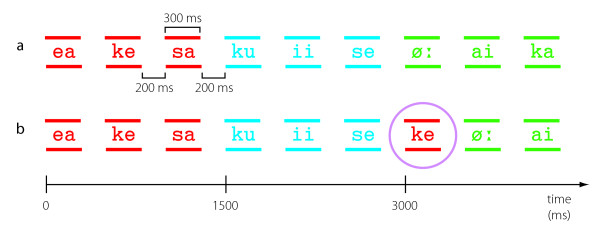
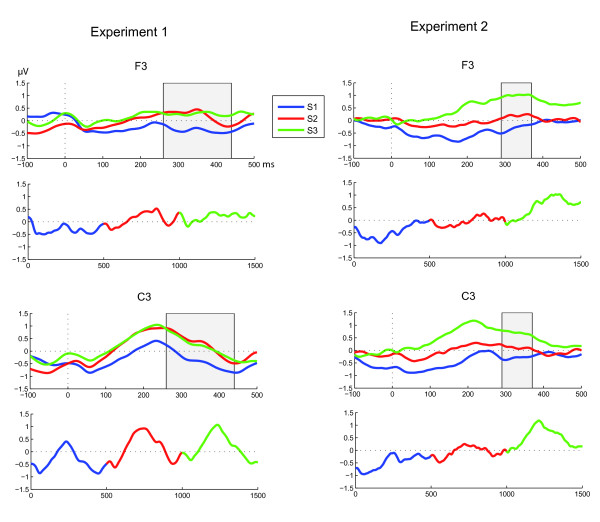
BACKGROUND: Statistical learning is a candidate for one of the basic prerequisites underlying the expeditious acquisition of spoken language. Infants from 8 months of age exhibit this form of learning to segment fluent speech into distinct words. To test the statistical learning skills at birth, we recorded event-related brain responses of sleeping neonates while they were listening to a stream of syllables containing statistical cues to word boundaries. RESULTS: We found evidence that sleeping neonates are able to automatically extract statistical properties of the speech input and thus detect the word boundaries in a continuous stream of syllables containing no morphological cues. Syllable-specific event-related brain responses found in two separate studies demonstrated that the neonatal brain treated the syllables differently according to their position within pseudowords. CONCLUSION: These results demonstrate that neonates can efficiently learn transitional probabilities or frequencies of co-occurrence between different syllables, enabling them to detect word boundaries and in this way isolate single words out of fluent natural speech. The ability to adopt statistical structures from speech may play a fundamental role as one of the earliest prerequisites of language acquisition.
Overview
The claims and statistics of this paper haven’t been checked yet.
Free: it reads the open-access text and checks the first 5 claims that cite a source we can check. Create a free account to check every claim.
Integrity signals
Registry
Cites
Statistics
Figures
Verification
Claims the paper makes
The claims and statistics of this paper haven’t been checked yet.
Free: it reads the open-access text and checks the first 5 claims that cite a source we can check. Create a free account to check every claim.
Claims other papers make about this one
Each is checked against this paper’s own text: does it say what the citing paper says it does?
The cited source says what the claim attributes to it.
In the citing paper
“Recent findings show that even sleeping newborns detect this kind of statistical structure in speech, as shown in studies using event-related brain potentials (Teinonen et al., 2009).”
From Brain mechanisms in early language acquisition (2010) · cites this paper as Teinonen et al., 2009
Self-check
Percentages, sums and reported differences re-computed from the paper’s own numbers.
The self-check needs the paper’s full text.
Citations
Cites
Statistical learning by 8-month-old infants
Saffran, J. R., Aslin, R. N., & Newport, E. L. (1996) · Science · doi:10.1126/science.274.5294.1926 · Cited by 5,659 · cited 1×
“From 6 months of age, infants use computational strategies to learn the distributional patterns of sounds [2-4], the non-adjacent dependencies required to learn grammar [5,6], and the sequential probabilities [ 7 ,8], as well as the stress patterns [9], necessary to perform word segmentation.”
BackgroundEarly language acquisition: cracking the speech code
Kuhl, P. K. (2004) · Nature Reviews Neuroscience · doi:10.1038/nrn1533 · Cited by 2,291 · cited 1×
“Statistical learning of speech and sensitivity to social cues help infants in the rapid acquisition of their first language [1].”
BackgroundLinguistic experience alters phonetic perception in infants by 6 months of age
Kuhl, P. K., Williams, K. A., Lacerda, F., Stevens, K. N., & Lindblom, B. (1992) · Science · doi:10.1126/science.1736364 · Cited by 2,086 · cited 1×
“From 6 months of age, infants use computational strategies to learn the distributional patterns of sounds [2-4], the non-adjacent dependencies required to learn grammar [5,6], and the sequential probabilities [7,8], as well as the stress patterns [9], necessary to perform word segmentation.”
BackgroundInfant sensitivity to distributional information can affect phonetic discrimination
Maye, J., Werker, J. F., & Gerken, L. (2002) · Cognition · doi:10.1016/s0010-0277(01)00157-3 · Cited by 1,364 · cited 1×
“From 6 months of age, infants use computational strategies to learn the distributional patterns of sounds [2-4], the non-adjacent dependencies required to learn grammar [5,6], and the sequential probabilities [7,8], as well as the stress patterns [9], necessary to perform word segmentation.”
BackgroundRule Learning by Seven-Month-Old Infants
Marcus, G. F., Vijayan, S., Bandi Rao, S., & Vishton, P. M. (1999) · Science · doi:10.1126/science.283.5398.77 · Cited by 1,244 · cited 1×
“From 6 months of age, infants use computational strategies to learn the distributional patterns of sounds [2-4], the non-adjacent dependencies required to learn grammar [ 5 ,6], and the sequential probabilities [7,8], as well as the stress patterns [9], necessary to perform word segmentation.”
BackgroundComputation of conditional probability statistics by 8-month-old infants
Aslin, R. N., Saffran, J. R., & Newport, E. L. (1998) · Psychological Science · doi:10.1111/1467-9280.00063 · Cited by 1,189 · cited 2×
“From 6 months of age, infants use computational strategies to learn the distributional patterns of sounds [2-4], the non-adjacent dependencies required to learn grammar [5,6], and the sequential probabilities [7,8], as well as the stress patterns [9], necessary to perform word segmentation.”
BackgroundVisual statistical learning in infancy: evidence for a domain general learning mechanism
Kirkham, N. Z., Slemmer, J. A., & Johnson, S. P. (2002) · Cognition · doi:10.1016/s0010-0277(02)00004-5 · Cited by 1,072 · cited 1×
“to learn statistical regularities in sequences of visual stimuli [10].”
BackgroundLanguage discrimination by newborns: Toward an understanding of the role of rhythm.
Nazzi, T., Bertoncini, J., & Mehler, J. (1998) · Journal of Experimental Psychology: Human Perception and Performance · doi:10.1037//0096-1523.24.3.756 · Cited by 914 · cited 1×
“For instance, it has been found that the skills necessary to discriminate different stress patterns in speech develop only after 4 months of age [11], even though newborns are able to process some rhythmic information in speech [12].”
BackgroundArtificial grammar learning by 1-year-olds leads to specific and abstract knowledge
Gomez, R. L., & Gerken, L. (1999) · Cognition · doi:10.1016/s0010-0277(99)00003-7 · Cited by 801 · cited 1×
“From 6 months of age, infants use computational strategies to learn the distributional patterns of sounds [2-4], the non-adjacent dependencies required to learn grammar [5,6], and the sequential probabilities [7,8], as well as the stress patterns [9], necessary to perform word segmentation.”
BackgroundOn short and long auditory stores.
Cowan, N. (1984) · Psychological Bulletin · doi:10.1037//0033-2909.96.2.341 · Cited by 646 · cited 1×
“Because the corpus used in the experiment consisted of 10 different words, it was highly unlikely to remain in auditory sensory memory during the experiment due to its limited capacity and interference caused by continuous stimulation [19].”
Method
Cited by
Items 301–345 of 345
An empirical test of the minimalism theory of theory of mind development
Lorimer, B. J. (2020) · Otago University Research Archive (University of Otago)
Rindlisbacher, B. (2021) · Waxmann Verlag GmbH eBooks · doi:10.31244/9783830994244
Lockman, J. J., & Tamis‐LeMonda, C. S. (2020) · Cambridge University Press eBooks · doi:10.1017/9781108351959.031
Röska-Hardy, L., Mueller, J. L., Bonhage, C., Meyer, U., Jäkel, F., Sturm, H., & Grassmann, S. (2015) · J.B. Metzler eBooks · doi:10.1007/978-3-476-05362-6_7
Estes, K. G. (2019) · Elsevier eBooks · doi:10.1016/b978-0-12-809324-5.23670-5
Lockman, J. J., & Tamis‐LeMonda, C. S. (2020) · Cambridge University Press eBooks · doi:10.1017/9781108351959.030
Predictive coding deficits in autism: Abnormalities in feedback or feedforward connectivities?
Wei, J. I. N. G., Qi, C. H. E. N., Yun Qing, X. U. E., Miao, Y. A. N. G., & ZHANG, J. (2024) · Advances in Psychological Science · doi:10.3724/sp.j.1042.2024.00813
Infants’ abilities to segment word forms from spectrally degraded speech in the first year of life
de la Cruz‐Pavía, I., Hegde, M., Cabrera, L., & Nazzi, T. (2024) · Developmental Science · doi:10.1111/desc.13533
Early Development of Sound Processing in the Service of Speech and Music Perception
Winkler, I., Gervain, J., Pena, M., Trainor, L. J., & Kujala, T. (2024) · Frontiers research topics · doi:10.3389/978-2-8325-5354-1
Reciprocal Relationship Between Statistical Learning and Chinese Character Recognition
Wu, D. H., Renaldi, A., & Huang, Y.-S. (2025) · Chinese language learning sciences · doi:10.1007/978-981-96-6669-0_7
When and How does A Theory of Mind Arise?
Ruffman, T., & Taumoepeau, M. (2013) · Emerald Group Publishing Limited eBooks · doi:10.1108/978-1-62396-513-620251006 · Cited by 1
Frühe Wortsegmentierung im monolingualen und bilingualen Spracherwerb
Unger, A. (2023) · publish.UP (University of Potsdam) · doi:10.25932/publishup-58297
Schulz, J. (2024) · Oxford University Research Archive (ORA) (University of Oxford) · doi:10.5287/ora-2zxwg6qbw · Cited by 3
Statistical Learning Across Modalities, Domains and Languages
Ren, J. (2024) · University Libraries (University of Maryland) · doi:10.13016/futw-hi5u
Beyond noise : the role of speaker variability on statistical learning
Melville, L. (2024) · cIRcle (University of British Columbia) · doi:10.14288/1.0441333
The rhythms of mother-infant interactions and language
Vanoncini, M. (2025) · publish.UP (University of Potsdam) · doi:10.25932/publishup-67409
Morf, M. (2023) · U-PAD Unimc - Open Digital Publications (University of Macerata)
Varatharaj, A. (2024) · eScholarship (California Digital Library)
Simultaneous EEG-fMRI investigation of sound sequence processing in human neonatesPreprint
Adibpour, P., Karolis, V. R., Tomazinho, I., Gallo, D., Dacosta, C., Clair, K. S., Norman, W. M., Colford, K., Aitken, F., Kabdebon, C., et al. (2026) · bioRxiv (Cold Spring Harbor Laboratory) · doi:10.64898/2026.01.09.698718
Implicitly tuned: The neural effects of social feedback on adolescent learning
Bosseler, A. N., Peterson, E. R., Stavropoulos, K. K. M., Mizrahi, J. C., Larson, E., Corrigan, N. M., Taulu, S., Meltzoff, A. N., & Kuhl, P. K. (2026) · Developmental Cognitive Neuroscience · doi:10.1016/j.dcn.2026.101809
“…on auditory statistical learning and mid-latency N400-like responses (Abla et al., 2008; Bosseler et al., 2016; Sanders and Neville, 2003a, 2003b; Tak ´ acs et al., 2021; Teinonen et al., 2009; Teinonen and Huotilainen, 2012), and was applied uniformly across all conditions, ROIs, and hemispheres.”
The cognitive and neural mechanisms of statistical learning
Liang, F., & Fu, Q. (2026) · Chinese Science Bulletin (Chinese Version) · doi:10.1360/csb-2025-5554
Statistical Learning Changes Across Development
Forest, T. A. (2022) · TSpace (University of Toronto)
Apprentissage implicite des structures linguistiques et musicales : approche multi-méthodologique
Clément, F. (2011) · theses.fr (ABES) · doi:10.70675/bbb04097z64b9z4553zad3azdccc319a0e20
Sequence encoding in preverbal infants : an electrophysiological perspective
Kabdebon, C. (2016) · theses.fr (ABES) · doi:10.70675/8f200c0bzb409z4297za66ez720ceb4bdec7
Hoareau, M. (2019) · theses.fr (ABES) · doi:10.70675/2d092f11za382z48f8z9b4bzf66ffb0c1146 · Cited by 3
Perceiving regularity in sequences : behavioural, neural and computational signatures
Maheu, M. (2019) · theses.fr (ABES) · doi:10.70675/613538edz4e03z4a21za592z9859bfee3cff
From auditory perception to memory : musicianship as a window into novel word learning
Dittinger, E. (2018) · theses.fr (ABES) · doi:10.70675/4b0f9135zfa03z4f65zae94zb2ca6c887f78
Diversity and learnability in early language acquisition : across languages and cultures
Loukatou, G. R. (2020) · theses.fr (ABES) · doi:10.70675/fa251e4dz6435z4676z904bzb030d3647f08
Feig, E. (2021) · theses.fr (ABES) · doi:10.70675/3821a7faz3944z4c9ez9a1dz8112437aa6a0 · Cited by 2
Apprentissage et émotions chez l'enfant : contexte expérimental et naturel d'apprentissage
Mazars, M. (2021) · theses.fr (ABES) · doi:10.70675/9c6e1cddz57a1z4725zab92z31db03089f77
Sequence learning in hearing-impaired children with cochlear implants
Lerousseau, J. P. (2021) · theses.fr (ABES) · doi:10.70675/76504b22zffebz40a6za948z59ac44073011
Interaction between speech and auditory processing during early development
Hegde, M. S. (2023) · theses.fr (ABES) · doi:10.70675/f36b3dd4z3247z46f0z85f7zeaced4090d3d
Zhang, W. (2026) · Lancaster EPrints (Lancaster University) · doi:10.17635/lancaster/thesis/3228
A sociomoral quarrel: a critique of nativist ideas about infants' sociomoral insights
Ruffman, T., & Kong, Q. (2026) · Frontiers in Developmental Psychology · doi:10.3389/fdpys.2026.1796738
Sprachentwicklung im ersten Lebensjahr
Kavšek, M. (2026) · Springer eBooks · doi:10.1007/978-3-642-54061-5_36-1
Foil type modulates developmental changes in statistical learning across childhood to adulthood
Liang, F., Zhu, Y., Li, R., & Fu, Q. (2026) · npj Science of Learning · doi:10.1038/s41539-026-00434-6
“Thistimingsetupensuredaconstantrhythmicpaceandperceptualclarity, consistentwithestablishedauditorystatisticallearningparadigms 62 .”
Minho Spoken Syllable Pool: a European Portuguese database
Soares, A. P., Tomé, D., Araújo, A., Canonici, V., PEREIRA, D. M. Í., Rodrigues, A. C., Lema, A., & Oliveira, H. M. (2026) · Frontiers in Communication · doi:10.3389/fcomm.2026.1811238
Cordeiro, E., Herrera-Chaves, D., Talaei, N., Castro, I., Hayman-Abello, B. A., Hayman-Abello, S., McAuley, T., Marti, A. S., Köhler, S., & Batterink, L. J. (2026) · bioRxiv (Cold Spring Harbor Laboratory) · doi:10.64898/2026.09.04.749513
Word learning in the first year of life
Saksida, A. (2014) · SDL · Cited by 3
Χριστοδούλου, Θ. (2024) · Institutional Repository Hellanicus
Puri, A. (2024) · Otago University Research Archive (University of Otago)
Metadata
- Authors
- Teinonen, T., Fellman, V., Näätänen, R., Alku, P., & Huotilainen, M.
- Affiliations
- University of Helsinki (FI)
- Aalto University (FI)
- Corresponding author
- Teinonen, Tuomas
- Venue
- BMC Neuroscience
- Published
- 2009-03-13
- Volume
- 10
- Issue
- 1
- Pages
- 21-21
- ISSN
- 1471-2202 (ISSN-L)
- PMC
- PMC2670827
- OpenAlex
- W1991925383
- Cited by
- 319
- References
- 20
- Citations by year
- 2026: 7 · 2025: 17 · 2024: 16 · 2023: 17 · 2022: 19 · 2021: 20 · 2020: 55 · 2019: 17 · 2018: 15 · 2017: 16 · 2016: 22 · 2015: 18 · 2014: 25 · 2013: 15 · 2012: 15
- FWCI
- 23.43
- Type
- journal article
- Language
- en
- Open access
- gold
- doi.org
- Licence
- cc-by
- creativecommons.org/licenses/by/2.0 (tdm)
- Locations
- BMC Neuroscience (publishedVersion, cc-by)
- PubMed Central (publishedVersion, cc-by)
- PubMed (publishedVersion)
- DOAJ (DOAJ: Directory of Open Access Journals) (submittedVersion, cc-by-sa)
- Lund University Publications (Lund University) (submittedVersion)
- Funders
- Academy of Finland
- Suomen Kulttuurirahasto
- Signe ja Ane Gyllenbergin Säätiö
- Jenny ja Antti Wihurin Rahasto
- Topics
- Social Sciences › Psychology › Developmental and Educational Psychology › Language Development and Disorders
- Social Sciences › Psychology › Experimental and Cognitive Psychology › Phonetics and Phonology Research
- Life Sciences › Neuroscience › Cognitive Neuroscience › Neurobiology of Language and Bilingualism
- Keywords
- statistical learning, neonates, word segmentation, word boundary detection, speech perception, transition probabilities, pseudowords, language acquisition
- MeSH terms
- Auditory Perception, Brain, Cues, Electroencephalography, Evoked Potentials, Female, Humans, Infant, Newborn, Language Development, Male, Phonetics, Speech Perception, Verbal Learning
About these checks
Registry, retraction, Cites and statistics results are computed, not judged, with one exception: a printed reference that no index lists is read once by a model before it counts as a citation error. Claims are extracted by a model and kept only when their quote appears verbatim in the text; each cited source is then checked, with a model’s help, for whether it says what the claim relies on. Those verdicts can be wrong — read the claim’s quote and the cited source before relying on one.
Statistics and arithmetic are recomputed, not judged.
Confidence bands are shown only for fields calibrated on our annotated test set. None is calibrated yet, so no band is shown.
What counts as a claim ›How we measure confidence ›How we check this ›
Are you an author, or do you see a problem with this page? Request a review
Data sources
Bibliographic data: Semantic Scholar, OpenAlex, Crossref.
Contains information from the Semantic Scholar Academic Graph Datasets, made available under the ODC Attribution License (ODC-BY 1.0).
Semantic Scholar’s data is described in: Kinney, R., et al. (2023). The Semantic Scholar Open Data Platform. arXiv:2301.10140.
