

Drugs developed to treat diabetes, liraglutide and lixisenatide, cross the blood brain barrier and enhance neurogenesis
Open accessThe DOI matches its Crossref record; 23 of the 23 references it cites were found in a registry or an index.
Abstract
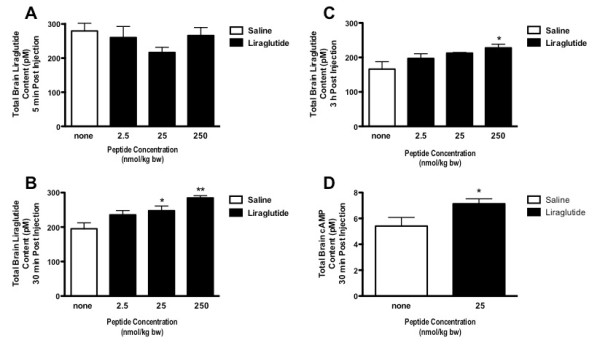
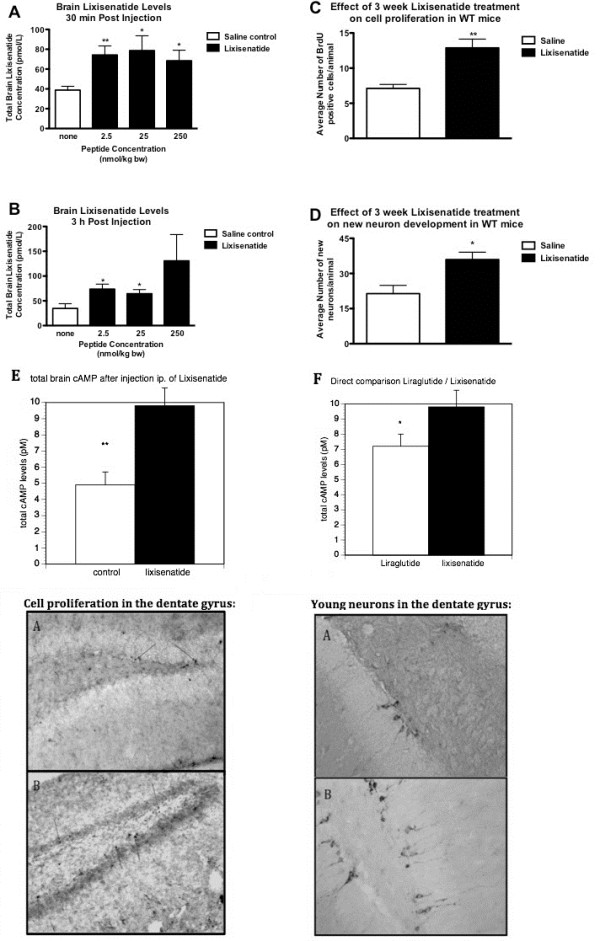
BACKGROUND: Type 2 diabetes is a risk factor for Alzheimer's disease (AD), most likely linked to an impairment of insulin signalling in the brain. Therefore, drugs that enhance insulin signalling may have therapeutic potential for AD. Liraglutide (Victoza) and exenatide (Byetta) are novel long-lasting analogues of the GLP-1 incretin hormone and are currently available to treat diabetes. They facilitate insulin signalling via the GLP-1 receptor (GLP-1R). Numerous in vitro and in vivo studies have shown that GLP-1 analogues have a range of neuroprotective properties. GLP-1Rs are expressed in the hippocampal area of the brain an important site of adult neurogenesis and maintenance of cognition and memory formation. Therefore, if GLP-1 analogues can cross the blood brain barrier, diffuse through the brain to reach the receptors and most importantly activate them, their neuroprotective effects may be realized. RESULTS: In the present study we profiled the GLP-1 receptor agonists liraglutide (Victoza) and lixisenatide (Lyxumia). We measured the kinetics of crossing the blood brain barrier (BBB), activation of the GLP-1R by measuring cAMP levels, and physiological effects in the brain on neuronal stem cell proliferation and neurogenesis. Both drugs were able to cross the BBB. Lixisenatide crossed the BBB at all doses tested (2.5, 25, or 250 nmol/kg bw ip.) when measured 30 min post-injection and at 2.5-25 nmol/kg bw ip. 3 h post-injection. Lixisenatide also enhanced neurogenesis in the brain. Liraglutide crossed the BBB at 25 and 250 nmol/kg ip. but no increase was detectable at 2.5 nmol/kg ip. 30 min post-injection, and at 250 nmol/kg ip. at 3 h post-injection. Liraglutide and lixisenatide enhanced cAMP levels in the brain, with lixisenatide being more effective. CONCLUSIONS: Our results suggest that these novel incretin analogues cross the BBB and show physiological activity and neurogenesis in the brain, which may be of use as a treatment of neurodegenerative diseases.
Overview
The claims and statistics of this paper haven’t been checked yet.
Free: it reads the open-access text and checks the first 5 claims that cite a source we can check. Create a free account to check every claim.
Integrity signals
Registry
Cites
Statistics
Figures
Verification
Claims the paper makes
The claims and statistics of this paper haven’t been checked yet.
Free: it reads the open-access text and checks the first 5 claims that cite a source we can check. Create a free account to check every claim.
Claims other papers make about this one
Each is checked against this paper’s own text: does it say what the citing paper says it does?
The source backs part of the claim, not all of it — or backs it for a different population, condition or comparison.
In the citing paper
“In addition, GLP-1 and GLP-1 analogues enter the brain through blood brain barrier [83–86].”
From Anti-Inflammatory Effects of GLP-1-Based Therapies beyond Glucose Control (2016) · cites this paper as [85]
Experimental — accuracy not yet measuredThe cited source says what the claim attributes to it.
In the citing paper
“Liraglutide can cross the blood–brain barrier 38 and demonstrates favorable effects in mouse models of AD 39 , 40 or in humans. 41 , 42 , 43”
From Critical evaluation of real‐world evidence of repurposable medicines in the Alzheimer's disease drug development pipeline using a target trial emulation (2026) · cites this paper as [38]
The check wasn’t confident either way, so it gives no verdict — never disputed.
In the citing paper
“Researchers have discovered that GLP-1RAs exhibit a noticeable increase in the level of phosphorylated ERK1/2 within the sciatic nerve of diabetic rats.”
From Glucagon-like peptide-1 receptor: mechanisms and advances in therapy (2024) · cites this paper as [402]
Experimental — accuracy not yet measured
Self-check
Percentages, sums and reported differences re-computed from the paper’s own numbers.
The self-check needs the paper’s full text.
Citations
Cites
Drucker, D. J., & Nauck, M. A. (2006) · The Lancet · doi:10.1016/s0140-6736(06)69705-5 · Cited by 3,896 · cited 1×
“Drugs that mimic incretin hormones can maintain glucose homeostasis and improve multiple symptoms of type 2 diabetes like the risk of hypoglycaemia, inadequate postprandial blood glucose control, glucose fluctuations, bcell failure, and weight gain [1,2].”
BackgroundBiology of Incretins: GLP-1 and GIP
Baggio, L. L., & Drucker, D. J. (2007) · Gastroenterology · doi:10.1053/j.gastro.2007.03.054 · Cited by 3,639 · cited 4×
“Liraglutide is also on the market and is injected peripherally once daily [1].”
BackgroundInfluentialGlucagon-like peptide-1 receptor is involved in learning and neuroprotection
During, M. J., Cao, L., Zuzga, D. S., Francis, J. S., Fitzsimons, H. L., Jiao, X., Bland, R. J., Klugmann, M., Banks, W. A., Drucker, D. J., et al. (2003) · Nature Medicine · doi:10.1038/nm919 · Cited by 851 · cited 1×
“Previous studies have shown similar effects in the brain, in particular on cell proliferation and neurogenesis [14,18-21], and our results add considerably to those findings.”
ResultMoloney, A. M., Griffin, R. J., Timmons, S., O’Connor, R., Ravid, R., & O’Neill, C. (2010) · Neurobiology of Aging · doi:10.1016/j.neurobiolaging.2008.04.002 · Cited by 764 · cited 1×
“It was also shown that insulin receptors in the brain are desensitised in AD patients [9,10].”
BackgroundMcClean, P. L., Parthsarathy, V., Faivre, E., & Hölscher, C. (2011) · The Journal of Neuroscience · doi:10.1523/jneurosci.0529-11.2011 · Cited by 698 · cited 2×
“Previous studies already had demonstrated that liraglutide also enhances neuronal progenitor proliferation and increased neurogenesis in the brain of a mouse model of Alzheimer disease [16].”
BackgroundSelf-citationHyperinsulinemia and risk of Alzheimer disease
Luchsinger, J. A., Tang, M.-X., Shea, S., & Mayeux, R. (2004) · Neurology · doi:10.1212/01.wnl.0000140292.04932.87 · Cited by 683 · cited 1×
“Epidemiological studies found a clear correlation between T2DM and the risk of developing AD [6-8].”
BackgroundGöke, R., Larsen, P. J., Mikkelsen, J. D., & Sheikh, S. P. (1995) · European Journal of Neuroscience · doi:10.1111/j.1460-9568.1995.tb00650.x · Cited by 474 · cited 1×
“GLP-1 receptors are found on neurons in the brains of rodents and humans [12,13].”
BackgroundIntracerebral streptozotocin model of type 3 diabetes: Relevance to sporadic Alzheimer’s disease
Lester-Coll, N., Rivera, E. J., Soscia, S. J., Doiron, K., Wands, J. R., & de la Monte, S. M. (2006) · Journal of Alzheimer s Disease · doi:10.3233/jad-2006-9102 · Cited by 467 · cited 1×
“It was also shown that insulin receptors in the brain are desensitised in AD patients [9,10].”
BackgroundGlucose tolerance status and risk of dementia in the community: The Hisayama Study
Ohara, T., Doi, Y., Ninomiya, T., Hirakawa, Y., Hata, J., Iwaki, T., Kanba, S., & Kiyohara, Y. (2011) · Neurology · doi:10.1212/wnl.0b013e31822f0435 · Cited by 420
Entry of exendin-4 into brain is rapid but may be limited at high doses
Kastin, A. J., & Akerstrom, V (2003) · International Journal of Obesity · doi:10.1038/sj.ijo.0802206 · Cited by 355
Neurodegenerative disorders associated with diabetes mellitus
Ristow, M. (2004) · Journal of Molecular Medicine · doi:10.1007/s00109-004-0552-1 · Cited by 352 · cited 1×
“Epidemiological studies found a clear correlation between T2DM and the risk of developing AD [6-8].”
BackgroundLi, Y., Duffy, K. B., Ottinger, M. A., Ray, B., Bailey, J. A., Holloway, H. W., Tweedie, D., Perry, T., Mattson, M. P., Kapogiannis, D., et al. (2010) · Journal of Alzheimer's Disease · doi:10.3233/jad-2010-1314 · Cited by 321 · cited 1×
“Previous studies have shown similar effects in the brain, in particular on cell proliferation and neurogenesis [14,18-21], and our results add considerably to those findings.”
ResultHamilton, A., & Hölscher, C. (2009) · NeuroReport · doi:10.1097/wnr.0b013e32832fbf14 · Cited by 227
Self-citationHamilton, A., Patterson, S., Porter, D., Gault, V. A., & Holscher, C. (2011) · Journal of Neuroscience Research · doi:10.1002/jnr.22565 · Cited by 210 · cited 1×
“Previous studies have shown similar effects in the brain, in particular on cell proliferation and neurogenesis [14,18-21], and our results add considerably to those findings.”
ResultSelf-citationVal(8)GLP-1 rescues synaptic plasticity and reduces dense core plaques in APP/PS1 mice
Gengler, S., McClean, P. L., McCurtin, R., Gault, V. A., & Hölscher, C. (2012) · Neurobiology of Aging · doi:10.1016/j.neurobiolaging.2010.02.014 · Cited by 160 · cited 2×
“The protease resistant and long-lasting GLP-1 analogue Val(8) GLP-1 enhanced synaptic plasticity in acute and chronic application and preserved synaptic functionality in the brains of a mouse model of AD [14,15].”
BackgroundResultSelf-citationPerry, T., & Greig, N. (2005) · Current Alzheimer Research · doi:10.2174/1567205054367892 · Cited by 127 · cited 1×
“Conclusion If the improvements in memory and synaptic plasticity, reduction in neurotoxic amyloid oligomer levels, numbers of amyloid plaques and of the inflammation response, and increased neurogenesis observed in previous studies [11,23] translate to humans, GLP-1 analogues such as Liraglutide or GLP-1 receptor agon…”
BackgroundBeneficial Effects of Exendin-4 on Experimental Polyneuropathy in Diabetic Mice
Himeno, T., Kamiya, H., Naruse, K., Harada, N., Ozaki, N., Seino, Y., Shibata, T., Kondo, M., Kato, J., Okawa, T., et al. (2011) · Diabetes · doi:10.2337/db10-1462 · Cited by 112
Holscher, C. (2010) · Recent Patents on CNS Drug Discovery · doi:10.2174/157488910791213130 · Cited by 102 · cited 2×
“Therefore, a promising strategy to treat AD is the use of such GLP-1 analogues [11].”
BackgroundWang, X. H., Li, L., Hölscher, C., Pan, Y. F., Chen, X. R., & Qi, J. S. (2010) · Neuroscience · doi:10.1016/j.neuroscience.2010.08.028 · Cited by 99 · cited 1×
“The protease resistant and long-lasting GLP-1 analogue Val(8) GLP-1 enhanced synaptic plasticity in acute and chronic application and preserved synaptic functionality in the brains of a mouse model of AD [14,15].”
BackgroundSelf-citationVella, A. V., Shah, P. J., Reed, A. S., Adkins, A., Basu, R., & Rizza, R. A. (2003) · Diabetologia · doi:10.1007/s00125-002-0924-4 · Cited by 96 · cited 1×
“Such drugs can be taken by non-diabetic people as they only affect blood sugar levels in hyperglycaemia [22].”
BackgroundLixisenatide for type 2 diabetes mellitus
Christensen, M., Knop, F. K., Vilsbøll, T., & Holst, J. J. (2011) · Expert Opinion on Investigational Drugs · doi:10.1517/13543784.2011.562191 · Cited by 84 · cited 7×
“T2DM has been identified as a risk factor for AD, indicating that insulin signaling failure may be a factor in initiating or accelerating the development of AD.”
BackgroundInfluentialLiraglutide: A new treatment for type 2 diabetes
Vilsboll, T. (2009) · Drugs of Today · doi:10.1358/dot.2009.45.2.1336104 · Cited by 50
The effect of exenatide re-exposure on safety and efficacy
Faludi, P., Brodows, R. G., Burger, J., Iványi, T., & Braun, D. K. (2009) · Peptides · doi:10.1016/j.peptides.2009.06.026 · Cited by 23 · cited 1×
“Exendin-4 (Byetta) has been on the market as a T2DM treatment for several years [3].”
Background
Cited by
Glucagon-like peptide 1 (GLP-1)
Müller, T. D., Finan, B., Bloom, S. R., D'Alessio, D., Drucker, D. J., Flatt, P. R., Fritsche, A., Gribble, F., Grill, H. J., Habener, J. F., et al. (2019) · Molecular Metabolism · doi:10.1016/j.molmet.2019.09.010 · Cited by 1,868
“Small peptide GLP-1R analogs including liraglutide, lixisenatide, and exendin-4 have all been demonstrated to cross the BBB upon peripheral administration [750,751], and HPLC analysis confirmed that most of the peripherally administered exendin-4 reaches the brain intact [751,752].”
BackgroundGlucagon-like peptide-1 receptor: mechanisms and advances in therapy
Zheng, Z., Zong, Y., Ma, Y., Tian, Y., Pang, Y., Zhang, C., & Gao, J. (2024) · Signal Transduction and Targeted Therapy · doi:10.1038/s41392-024-01931-z · Cited by 1,036
Athauda, D., Maclagan, K., Skene, S. S., Bajwa-Joseph, M., Letchford, D., Chowdhury, K., Hibbert, S., Budnik, N., Zampedri, L., Dickson, J., et al. (2017) · The Lancet · doi:10.1016/s0140-6736(17)31585-4 · Cited by 889
Hippocampal insulin resistance and cognitive dysfunction
Biessels, G. J., & Reagan, L. P. (2015) · Nature Reviews Neuroscience · doi:10.1038/nrn4019 · Cited by 537
Anti-Inflammatory Effects of GLP-1-Based Therapies beyond Glucose Control
Lee, Y.-S., & Jun, H.-S. (2016) · Mediators of Inflammation · doi:10.1155/2016/3094642 · Cited by 530
Metadata
- Authors
- Hunter, K., & Hölscher, C.
- Affiliations
- University of Ulster (GB)
- Corresponding author
- Hölscher, Christian
- ORCID
- Hölscher, Christian
- Venue
- BMC Neuroscience
- Published
- 2012-03-23
- Volume
- 13
- Issue
- 1
- Pages
- 33-33
- ISSN
- 1471-2202 (ISSN-L)
- PMC
- PMC3352246
- OpenAlex
- W2065372294
- Cited by
- 504
- References
- 23
- Citations by year
- 2026: 26 · 2025: 54 · 2024: 40 · 2023: 37 · 2022: 32 · 2021: 32 · 2020: 38 · 2019: 28 · 2018: 40 · 2017: 34 · 2016: 37 · 2015: 37 · 2014: 39 · 2013: 22 · 2012: 8
- FWCI
- 22.74
- Type
- journal article
- Language
- en
- Update notices
- expression_of_concern (2026-10-29)
- Open access
- gold
- doi.org
- Licence
- cc-by
- creativecommons.org/licenses/by/2.0 (tdm)
- creativecommons.org/licenses/by/2.0 (vor)
- Locations
- BMC Neuroscience (publishedVersion, cc-by)
- PubMed Central (publishedVersion, cc-by)
- PubMed (publishedVersion)
- Lancaster EPrints (Lancaster University) (acceptedVersion)
- DOAJ (DOAJ: Directory of Open Access Journals) (submittedVersion, cc-by-sa)
- Topics
- Life Sciences › Neuroscience › Cellular and Molecular Neuroscience › Alzheimer's disease research and treatments
- Life Sciences › Neuroscience › Neurology › Barrier Structure and Function Studies
- Life Sciences › Neuroscience › Developmental Neuroscience › Neurogenesis and neuroplasticity mechanisms
- Keywords
- liraglutide, lixisenatide, exenatide, GLP-1 receptor agonists, blood-brain barrier penetration, neurogenesis, cAMP signaling, insulin signaling, Alzheimer's disease, type 2 diabetes, neuroprotection, hippocampus
- MeSH terms
- Glucagon-Like Peptide-2 Receptor, Liraglutide, Animals, Blood-Brain Barrier, Brain, Dose-Response Relationship, Drug, Female, Hypoglycemic Agents, Neurons, Peptides, Mice, Glucagon-Like Peptide 1, Neurogenesis
About these checks
Registry, retraction, Cites and statistics results are computed, not judged, with one exception: a printed reference that no index lists is read once by a model before it counts as a citation error. Claims are extracted by a model and kept only when their quote appears verbatim in the text; each cited source is then checked, with a model’s help, for whether it says what the claim relies on. Those verdicts can be wrong — read the claim’s quote and the cited source before relying on one.
Statistics and arithmetic are recomputed, not judged.
Confidence bands are shown only for fields calibrated on our annotated test set. None is calibrated yet, so no band is shown.
What counts as a claim ›How we measure confidence ›How we check this ›
Are you an author, or do you see a problem with this page? Request a review
Data sources
Bibliographic data: Semantic Scholar, OpenAlex, Crossref.
Contains information from the Semantic Scholar Academic Graph Datasets, made available under the ODC Attribution License (ODC-BY 1.0).
Semantic Scholar’s data is described in: Kinney, R., et al. (2023). The Semantic Scholar Open Data Platform. arXiv:2301.10140.
