

Thresholds for statistical and clinical significance in systematic reviews with meta-analytic methods
Open accessThe DOI matches its Crossref record; 88 of the 89 references it cites were found in a registry or an index.
Abstract
BACKGROUND: Thresholds for statistical significance when assessing meta-analysis results are being insufficiently demonstrated by traditional 95% confidence intervals and P-values. Assessment of intervention effects in systematic reviews with meta-analysis deserves greater rigour. METHODS: Methodologies for assessing statistical and clinical significance of intervention effects in systematic reviews were considered. Balancing simplicity and comprehensiveness, an operational procedure was developed, based mainly on The Cochrane Collaboration methodology and the Grading of Recommendations Assessment, Development, and Evaluation (GRADE) guidelines. RESULTS: We propose an eight-step procedure for better validation of meta-analytic results in systematic reviews (1) Obtain the 95% confidence intervals and the P-values from both fixed-effect and random-effects meta-analyses and report the most conservative results as the main results. (2) Explore the reasons behind substantial statistical heterogeneity using subgroup and sensitivity analyses (see step 6). (3) To take account of problems with multiplicity adjust the thresholds for significance according to the number of primary outcomes. (4) Calculate required information sizes (≈ the a priori required number of participants for a meta-analysis to be conclusive) for all outcomes and analyse each outcome with trial sequential analysis. Report whether the trial sequential monitoring boundaries for benefit, harm, or futility are crossed. (5) Calculate Bayes factors for all primary outcomes. (6) Use subgroup analyses and sensitivity analyses to assess the potential impact of bias on the review results. (7) Assess the risk of publication bias. (8) Assess the clinical significance of the statistically significant review results. CONCLUSIONS: If followed, the proposed eight-step procedure will increase the validity of assessments of intervention effects in systematic reviews of randomised clinical trials.
Overview
The claims and statistics of this paper haven’t been checked yet.
Free: it reads the open-access text and checks the first 5 claims that cite a source we can check. Create a free account to check every claim.
Integrity signals
Registry
Cites
Statistics
Figures
Verification
Claims the paper makes
The claims and statistics of this paper haven’t been checked yet.
Free: it reads the open-access text and checks the first 5 claims that cite a source we can check. Create a free account to check every claim.
Claims other papers make about this one
Each is checked against this paper’s own text: does it say what the citing paper says it does?
The cited source says what the claim attributes to it.
In the citing paper
“To evaluate the risk of random errors and the sufficiency of cumulative evidence, trial sequential analysis (TSA) was performed for the primary acute outcome (MADRS change at day 28).”
Self-check
Percentages, sums and reported differences re-computed from the paper’s own numbers.
The self-check needs the paper’s full text.
Citations
Cites
Bias in meta-analysis detected by a simple, graphical test
Egger, M., Smith, G. D., Schneider, M., & Minder, C. (1997) · BMJ · doi:10.1136/bmj.315.7109.629 · Cited by 56,722 · cited 1×
“It is evident that such publication bias may tend to overestimate intervention effects [68].”
BackgroundMeta-analysis in clinical trials
DerSimonian, R., & Laird, N. (1986) · Controlled Clinical Trials · doi:10.1016/0197-2456(86)90046-2 · Cited by 39,552 · cited 2×
“Statistical heterogeneity should always be interpreted with caution but especially when analysing large sample sizes [21].”
BackgroundMethodDermyshi, E., Wang, Y., Yan, C., Hong, W., Qiu, G., Gong, X., & Zhang, T. (2017) · Neonatology · doi:10.1159/000454668 · Cited by 24,451
Duval, S., & Tweedie, R. (2000) · Biometrics · doi:10.1111/j.0006-341x.2000.00455.x · Cited by 14,099 · cited 1×
“The trim and fill method aims to identify and correct funnel plot asymmetry arising from publication bias [13,72].”
MethodGRADE guidelines: 1. Introduction—GRADE evidence profiles and summary of findings tables
Guyatt, G., Oxman, A. D., Akl, E. A., Kunz, R., Vist, G., Brozek, J., Norris, S., Falck-Ytter, Y., Glasziou, P., & deBeer, H. (2011) · Journal of Clinical Epidemiology · doi:10.1016/j.jclinepi.2010.04.026 · Cited by 10,681 · cited 4×
“The GRADE system provides a valid assessment of the quality of evidence in systematic reviews [2,16-19].”
BackgroundMethodInfluentialWhy Most Published Research Findings Are False
Ioannidis, J. P. A. (2005) · PLoS Medicine · doi:10.1371/journal.pmed.0020124 · Cited by 10,505
Sterne, J. A. C., White, I. R., Carlin, J. B., Spratt, M., Royston, P., Kenward, M. G., Wood, A. M., & Carpenter, J. R. (2009) · BMJ · doi:10.1136/bmj.b2393 · Cited by 7,299 · cited 2×
“If individual patient data are available, then multiple imputation might be used by the review authors, but even multiple imputation might lead to biased results if data are ‘missing not at random’ [65,66].”
BackgroundMethodCochrane Handbook for Systematic Reviews of Interventions Version 5.0.1. The Cochrane Collaboration
Higgins, J. P. T., Green, S. R., & Higgins, J. P. T. (2008) · Cited by 7,261
Schulz (1995) · doi:10.1001/jama.1995.03520290060030 · Cited by 5,634 · cited 3×
“The bias risk domains generation of allocation sequence, allocation concealment, blinding of participants and treatment providers, blinding of outcome assessors, incomplete outcome data (see paragraph below), selective outcome reporting, and industry funding have been shown to be of particular importance [13,58-64].”
BackgroundMoher, D., Cook, D. J., Eastwood, S., Olkin, I., Rennie, D., & Stroup, D. F. (1999) · The Lancet · doi:10.1016/s0140-6736(99)04149-5 · Cited by 4,826
Why Most Published Research Findings Are False
Ioannidis, J. P. A. (2005) · CHANCE · doi:10.1080/09332480.2005.10722754 · Cited by 4,702 · cited 1×
“We agree with such risks, but all things considered we do argue that a conservative scenario is more ethically defensible compared to the present-day practice of implementing interventions based on weak evidence [9,25,44,45,52,79].”
BackgroundCONSORT 2010 statement: updated guidelines for reporting parallel group randomized trials
Schulz, K. F., Altman, D. G., Moher, D., & for the CONSORT Group* (2010) · Annals of Internal Medicine · doi:10.7326/0003-4819-152-11-201006010-00232 · Cited by 3,824
Norderyd, O. M., Koch, G., Papias, A., Köhler, A. A., Helkimo, A. N., Brahm, C., Lindmark, U., Lindfors, N., Mattsson, A., Rolander, B., et al. (2015) · PubMed · Cited by 3,584
Evaluating non-randomised intervention studies
Deeks, J., Dinnes, J., D'Amico, R., Sowden, A., Sakarovitch, C., Song, F., Petticrew, M., & Altman, D. (2003) · Health Technology Assessment · doi:10.3310/hta7270 · Cited by 2,907 · cited 1×
“analyses of trials with low risk of bias are more reliable than results of single large trials [6-11].”
ResultGRADE guidelines 6. Rating the quality of evidence—imprecision
Guyatt, G. H., Oxman, A. D., Kunz, R., Brozek, J., Alonso-Coello, P., Rind, D., Devereaux, P. J., Montori, V. M., Freyschuss, B., Vist, G., et al. (2011) · Journal of Clinical Epidemiology · doi:10.1016/j.jclinepi.2011.01.012 · Cited by 2,693 · cited 4×
“Trial sequential analysis Assessment of imprecision [77]”
MethodInfluentialA Re-Evaluation of Random-Effects Meta-Analysis
Higgins, J. P. T., Thompson, S. G., & Spiegelhalter, D. J. (2009) · Journal of the Royal Statistical Society Series A: Statistics in Society · doi:10.1111/j.1467-985x.2008.00552.x · Cited by 2,569 · cited 2×
“However, this use would imply integration of complicated models and software for analysing the review results [24,40,41] and would entail the need for specifying multiple prior distributions, which has its own problems [12,24,40,41].”
BackgroundMethodWood, L., Egger, M., Gluud, L. L., Schulz, K. F., Jüni, P., Altman, D. G., Gluud, C., Martin, R. M., Wood, A. J. G., & Sterne, J. A. C. (2008) · BMJ · doi:10.1136/bmj.39465.451748.ad · Cited by 2,538 · cited 3×
“The bias risk domains generation of allocation sequence, allocation concealment, blinding of participants and treatment providers, blinding of outcome assessors, incomplete outcome data (see paragraph below), selective outcome reporting, and industry funding have been shown to be of particular importance [13,58-64].”
BackgroundSelf-citationIntHout, J., Ioannidis, J. P., & Borm, G. F. (2014) · BMC Medical Research Methodology · doi:10.1186/1471-2288-14-25 · Cited by 2,419 · cited 1×
“However, the HartungKnapp-Sidik-Jonkman random-effects model assuming a t-distribution of log (RR) (for dichotomous outcomes) seems to be a more valid meta-analysis method [22].”
MethodKjaergard, L. L., Villumsen, J., & Gluud, C. (2001) · Annals of Internal Medicine · doi:10.7326/0003-4819-135-11-200112040-00010 · Cited by 2,283
Self-citationPeters, J. L., Sutton, A. J., Jones, D. R., Abrams, K. R., & Rushton, L. (2008) · Journal of Clinical Epidemiology · doi:10.1016/j.jclinepi.2007.11.010 · Cited by 2,053 · cited 1×
“05) can be added to the funnel plot and may help to differentiate between funnel plot asymmetry caused by publication bias and other factors [70].”
BackgroundThe prevention and treatment of missing data in clinical trials
Little, R. J., D'Agostino, R., Cohen, M. L., Dickersin, K., Emerson, S. S., Farrar, J. T., Frangakis, C., Hogan, J. W., Molenberghs, G., Murphy, S. A., et al. (2012) · New England Journal of Medicine · doi:10.1056/nejmsr1203730 · Cited by 1,884 · cited 1×
“If individual patient data are available, then multiple imputation might be used by the review authors, but even multiple imputation might lead to biased results if data are ‘missing not at random’ [65,66].”
BackgroundTrial sequential analysis may establish when firm evidence is reached in cumulative meta-analysis
Wetterslev, J., Thorlund, K., Brok, J., & Gluud, C. (2008) · Journal of Clinical Epidemiology · doi:10.1016/j.jclinepi.2007.03.013 · Cited by 1,881 · cited 10×
“It has been shown that a statistically significant meta-analysis based on too low information sizes, often at a later time point, will change from statistically significant to statistically non-significant [25,26,47].”
BackgroundMethodInfluentialSelf-citationIndustry sponsorship and research outcome
Lundh, A., Lexchin, J., Mintzes, B., Schroll, J. B., & Bero, L. (2017) · Cochrane Database of Systematic Reviews · doi:10.1002/14651858.mr000033.pub3 · Cited by 1,697
Bayesian Approaches to Clinical Trials and Health‐Care Evaluation
Spiegelhalter, D. J., Abrams, K. R., & Myles, J. P. (2003) · Wiley eBooks · doi:10.1002/0470092602 · Cited by 1,673
Contradicted and Initially Stronger Effects in Highly Cited Clinical Research
Ioannidis, J. P. A. (2005) · JAMA · doi:10.1001/jama.294.2.218 · Cited by 1,465 · cited 2×
“We agree with such risks, but all things considered we do argue that a conservative scenario is more ethically defensible compared to the present-day practice of implementing interventions based on weak evidence [9,25,44,45,52,79].”
BackgroundResultEncyclopedia of Measurement and Statistics
Salkind, N. (2007) · Sage eBooks · doi:10.4135/9781412952644 · Cited by 1,420
Undue reliance on I 2 in assessing heterogeneity may mislead
Rücker, G., Schwarzer, G., Carpenter, J. R., & Schumacher, M. (2008) · BMC Medical Research Methodology · doi:10.1186/1471-2288-8-79 · Cited by 1,287
Brok, J., Thorlund, K., Gluud, C., & Wetterslev, J. (2008) · Journal of Clinical Epidemiology · doi:10.1016/j.jclinepi.2007.10.007 · Cited by 1,113
Self-citationThe appropriateness of asymmetry tests for publication bias in meta-analyses: A large survey
Ioannidis, J. P. A., & Trikalinos, T. A. (2007) · Canadian Medical Association Journal · doi:10.1503/cmaj.060410 · Cited by 1,052 · cited 1×
“If there are no trials showing statistically significant effects, then publication bias may not be a plausible explanation for funnel plot asymmetry [13,71].”
BackgroundSavović, J., Jones, H. E., Altman, D. G., Harris, R. J., Jüni, P., Pildal, J., Als-Nielsen, B., Balk, E. M., Gluud, C., Gluud, L. L., et al. (2012) · Annals of Internal Medicine · doi:10.7326/0003-4819-157-6-201209180-00537 · Cited by 1,049 · cited 3×
“The bias risk domains generation of allocation sequence, allocation concealment, blinding of participants and treatment providers, blinding of outcome assessors, incomplete outcome data (see paragraph below), selective outcome reporting, and industry funding have been shown to be of particular importance [13,58-64].”
BackgroundSelf-citationEstimating required information size by quantifying diversity in random-effects model meta-analyses
Wetterslev, J., Thorlund, K., Brok, J., & Gluud, C. (2009) · BMC Medical Research Methodology · doi:10.1186/1471-2288-9-86 · Cited by 938
Self-citationBjelakovic, G., Nikolova, D., Gluud, L. L., Simonetti, R. G., & Gluud, C. (2012) · Cochrane Database of Systematic Reviews · doi:10.1002/14651858.cd007176.pub2 · Cited by 924
Self-citationComparison of Evidence of Treatment Effects in Randomized and Nonrandomized Studies
Ioannidis, J. P. A. (2001) · JAMA · doi:10.1001/jama.286.7.821 · Cited by 919 · cited 1×
“analyses of trials with low risk of bias are more reliable than results of single large trials [6-11].”
ResultMultiple Imputation and its Application
Carpenter, J. R., & Kenward, M. G. (2013) · doi:10.1002/9781119942283 · Cited by 913
Toward Evidence-Based Medical Statistics. 2: The Bayes Factor
Goodman, S. N. (1999) · Annals of Internal Medicine · doi:10.7326/0003-4819-130-12-199906150-00019 · Cited by 912
Psychological therapies for people with borderline personality disorder.
Stoffers-Winterling, J. M., Völlm, B. A., Rücker, G., Timmer, A., Huband, N., & Lieb, K. (2012) · Cochrane Database of Systematic Reviews · doi:10.1002/14651858.cd005652.pub2 · Cited by 895
Evaluation of Experiments with Adaptive Interim Analyses
Bauer, P., & Kohne, K. (1994) · Biometrics · doi:10.2307/2533441 · Cited by 865 · cited 3×
“Because of this risk of circular reasoning, ideally, it is, necessary to adjust the required information size by applying a penalty for the weight of data from former systematic reviews (or trials) [51,78].”
BackgroundRisk of cardiovascular events and rofecoxib: cumulative meta-analysis
Jüni, P., Nartey, L., Reichenbach, S., Sterchi, R., Dieppe, P. A., & Egger, M. (2004) · The Lancet · doi:10.1016/s0140-6736(04)17514-4 · Cited by 846
Can trial sequential monitoring boundaries reduce spurious inferences from meta-analyses?
Thorlund, K., Devereaux, P. J., Wetterslev, J., Guyatt, G., Ioannidis, J. P. A., Thabane, L., Gluud, L.-L., Als-Nielsen, B., & Gluud, C. (2009) · International Journal of Epidemiology · doi:10.1093/ije/dyn179 · Cited by 833 · cited 2×
“We agree with such risks, but all things considered we do argue that a conservative scenario is more ethically defensible compared to the present-day practice of implementing interventions based on weak evidence [9,25,44,45,52,79].”
BackgroundSelf-citationGRADE guidelines: 13. Preparing Summary of Findings tables and evidence profiles—continuous outcomes
Guyatt, G. H., Thorlund, K., Oxman, A. D., Walter, S. D., Patrick, D., Furukawa, T. A., Johnston, B. C., Karanicolas, P., Akl, E. A., Vist, G., et al. (2013) · Journal of Clinical Epidemiology · doi:10.1016/j.jclinepi.2012.08.001 · Cited by 772 · cited 4×
“The GRADE system provides a valid assessment of the quality of evidence in systematic reviews [2,16-19].”
BackgroundMethodInfluentialGuyatt, G., Oxman, A. D., Sultan, S., Brozek, J., Glasziou, P., Alonso-Coello, P., Atkins, D., Kunz, R., Montori, V., Jaeschke, R., et al. (2013) · Journal of Clinical Epidemiology · doi:10.1016/j.jclinepi.2012.01.006 · Cited by 762 · cited 4×
“The GRADE system provides a valid assessment of the quality of evidence in systematic reviews [2,16-19].”
BackgroundMethodInfluentialHiggins, J., Thompson, S., Deeks, J., & Altman, D. (2002) · Journal of Health Services Research & Policy · doi:10.1258/1355819021927674 · Cited by 755 · cited 1×
“If there is absence of statistical heterogeneity (the between trial variance of the estimated intervention effects is close to zero [23]), then the fixed-effect and the randomeffects models will show identical results [13].”
ResultVitamin D supplementation for prevention of mortality in adults
Bjelakovic, G., Gluud, L. L., Nikolova, D., Whitfield, K., Wetterslev, J., Simonetti, R. G., Bjelakovic, M., & Gluud, C. (2014) · Cochrane Database of Systematic Reviews · doi:10.1002/14651858.cd007470.pub3 · Cited by 695 · cited 2×
“If trial investigators have not used valid methods (for example, multiple imputation) to deal with missing data in the included randomised clinical trials [13], then there is a risk of biased review results [20,65].”
MethodSelf-citationThe impact of study size on meta-analyses: examination of underpowered studies in Cochrane reviews
Turner, R. M., Bird, S. M., & Higgins, J. P. T. (2013) · PLoS ONE · doi:10.1371/journal.pone.0059202 · Cited by 672 · cited 1×
“Most review authors do not assess if an accrued information size is sufficient or not to detect or reject a given intervention effect, and this is problematic as nearly all meta-analyses in systematic reviews are underpowered (the meta-analyses do not have enough information to reject or accept the null hypothesis whe…”
BackgroundIndustry sponsorship and research outcome
Lundh, A., Sismondo, S., Lexchin, J., Busuioc, O. A., & Bero, L. (2012) · Cochrane Database of Systematic Reviews · doi:10.1002/14651858.mr000033.pub2 · Cited by 605 · cited 3×
“The bias risk domains generation of allocation sequence, allocation concealment, blinding of participants and treatment providers, blinding of outcome assessors, incomplete outcome data (see paragraph below), selective outcome reporting, and industry funding have been shown to be of particular importance [13,58-64].”
BackgroundStatistical Principles for Clinical Trials
Kay, R. (1998) · Journal of International Medical Research · doi:10.1177/030006059802600201 · Cited by 573
How to obtain the P value from a confidence interval
Altman, D. G., & Bland, J. M. (2011) · BMJ · doi:10.1136/bmj.d2304 · Cited by 462 · cited 1×
“Most adjustment methods have focused on adjustments of the P-value threshold, but adjusted confidence intervals can often be calculated based on an adjusted P-value and an effect estimate [12,35,36].”
MethodMurad, M. H., Montori, V. M., Ioannidis, J. P. A., Jaeschke, R., Devereaux, P. J., Prasad, K., Neumann, I., Carrasco-Labra, A., Agoritsas, T., Hatala, R., et al. (2014) · JAMA · doi:10.1001/jama.2014.5559 · Cited by 454
Bolland, M. J., Grey, A., Gamble, G. D., & Reid, I. R. (2014) · The Lancet Diabetes & Endocrinology · doi:10.1016/s2213-8587(13)70212-2 · Cited by 422 · cited 1×
“All of these aspects should be prospectively planned and published in the protocol the eight-step procedure, for example, trial sequential analyses, have already been used in several systematic reviews (for example, [75,76]) but are neither described in The Cochrane Handbook for Systematic Reviews of Interventions nor…”
MethodPogue, J. M., & Yusuf, S. (1997) · Controlled Clinical Trials · doi:10.1016/s0197-2456(97)00051-2 · Cited by 415 · cited 1×
“This hypothesised difference in effect between the compared intervention groups should be based on the most realistic intervention effect as suggested by prior evidence (for example, results from former randomised clinical trials, or known effects from other similar interventions [49-51]).”
ResultEnhancing the quality and transparency of health research
Groves, T. (2008) · BMJ · doi:10.1136/bmj.a718 · Cited by 332
Thorlund, K., Imberger, G., Walsh, M., Chu, R., Gluud, C., Wetterslev, J., Guyatt, G., Devereaux, P. J., & Thabane, L. (2011) · PLoS ONE · doi:10.1371/journal.pone.0025491 · Cited by 319 · cited 1×
“Furthermore, meta-analyses with too small accrued information size (sparse data) have an increased risk of either overestimating or underestimating the effect size and variance [25,26,44-46].”
BackgroundSelf-citationSequential methods for random‐effects meta‐analysis
Higgins, J. P. T., Whitehead, A., & Simmonds, M. (2011) · Statistics in Medicine · doi:10.1002/sim.4088 · Cited by 258 · cited 2×
“Trial sequential analysis [25,26] or another valid sequential method [53] may be used to show if information size adjusted thresholds for significance are crossed or not.”
MethodEmpirical Evaluation of Very Large Treatment Effects of Medical Interventions
Pereira, T. V., Horwitz, R. I., & Ioannidis, J. P. A. (2012) · JAMA · doi:10.1001/jama.2012.13444 · Cited by 257 · cited 2×
“We agree with such risks, but all things considered we do argue that a conservative scenario is more ethically defensible compared to the present-day practice of implementing interventions based on weak evidence [9,25,44,45,52,79].”
BackgroundWhen to stop a clinical trial.
Pocock, S. J. (1992) · BMJ · doi:10.1136/bmj.305.6847.235 · Cited by 255 · cited 2×
“We recommend analysing all primary and secondary outcome comparisons with trial sequential analysis [25,26,47,54] or another valid sequential method [25,26,53].”
BackgroundMethodEvidence at a glance: error matrix approach for overviewing available evidence
Keus, F., Wetterslev, J., Gluud, C., & van Laarhoven, C. J. (2010) · BMC Medical Research Methodology · doi:10.1186/1471-2288-10-90 · Cited by 219 · cited 2×
“The trial sequential analyses should be performed using both a fixed-effect and a random-effects model [14,25,26].”
BackgroundMethodSelf-citationJakobsen, J. C., Gluud, C., Winkel, P., Lange, T., & Wetterslev, J. (2014) · BMC Medical Research Methodology · doi:10.1186/1471-2288-14-34 · Cited by 203 · cited 9×
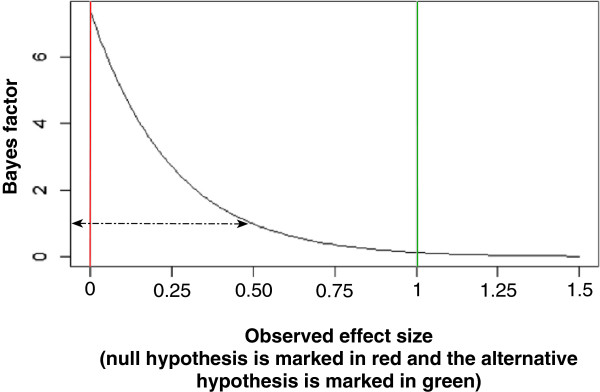
“following, we have chosen to define the alternative hypothesis (HA) as the anticipated intervention effect used in the calculation of the required information size in the trial sequential analysis (see step 4) [12], but Bayes factor can be defined differently [12].”
BackgroundMethodInfluentialSelf-citationThe COMET (Core Outcome Measures in Effectiveness Trials) Initiative
Williamson, P. R., Altman, D. G., Blazeby, J. M., Clarke, M., & Gargon, E. (2011) · Trials · doi:10.1186/1745-6215-12-s1-a70 · Cited by 194
Is meta-analysis the platinum standard of evidence?
Stegenga, J. (2011) · Studies in History and Philosophy of Science Part C: Studies in History and Philosophy of Biological and Biomedical Sciences · doi:10.1016/j.shpsc.2011.07.003 · Cited by 193 · cited 1×
“Some claim that results of systematic reviews should be considered hypothesis-generating and should primarily serve the purpose of designing future randomised clinical trials [3-5].”
BackgroundAccounting for Multiplicities in Assessing Drug Safety: A Three‐Level Hierarchical Mixture Model
Berry, S. M., & Berry, D. A. (2004) · Biometrics · doi:10.1111/j.0006-341x.2004.00186.x · Cited by 158 · cited 1×
“Some methods have been developed to deal with problems with multiplicity in systematic reviews [37-39], but no simple and completely satisfactory solution to the problem of multiple comparisons in systematic reviews has been developed yet [29,31].”
MethodIntroduction to Bayesian methods I: measuring the strength of evidence
Goodman, S. N. (2005) · Clinical Trials · doi:10.1191/1740774505cn098oa · Cited by 155 · cited 1×
“05 may therefore, in some circumstances, misleadingly indicate evidence for an intervention effect [50,55].”
BackgroundHennekens, C. H., & DeMets, D. (2009) · JAMA · doi:10.1001/jama.2009.1756 · Cited by 153 · cited 1×
“Some claim that results of systematic reviews should be considered hypothesis-generating and should primarily serve the purpose of designing future randomised clinical trials [3-5].”
BackgroundPoints to Consider on Multiplicity Issues in Clinical Trials
Watanabe, H., & Takahashi, K. (2006) · Japanese Journal of Biometrics · doi:10.5691/jjb.27.s73 · Cited by 151
Borzak, S., & Ridker, P. M. (1995) · Annals of Internal Medicine · doi:10.7326/0003-4819-123-11-199512010-00010 · Cited by 127 · cited 2×
“In advance, it will often be unknown, which outcomes the eligible trials have used and it is important to assess both beneficial and harmful intervention effects [5].”
BackgroundUse of the false discovery rate for evaluating clinical safety data
Mehrotra, D. V., & Heyse, J. F. (2004) · Statistical Methods in Medical Research · doi:10.1191/0962280204sm363ra · Cited by 126 · cited 1×
“Some methods have been developed to deal with problems with multiplicity in systematic reviews [37-39], but no simple and completely satisfactory solution to the problem of multiple comparisons in systematic reviews has been developed yet [29,31].”
MethodWood, J., Freemantle, N., King, M., & Nazareth, I. (2014) · BMJ · doi:10.1136/bmj.g2215 · Cited by 124 · cited 2×
“On the other hand, if statistical significance has been reached, then clinical significance must be assessed [11,12,16,73,74].”
BackgroundHiggins, J. P., & Spiegelhalter, D. J. (2002) · International Journal of Epidemiology · doi:10.1093/ije/31.1.96 · Cited by 121 · cited 3×
“On the other hand, if one or two trials accounts for approximately 80% or more of the total weight in a fixed-effect meta-analysis, then the random-effects metaanalysis might show erroneous results because the larger trials with the greatest precision are inappropriately down-weighted [24].”
BackgroundMethodAttention should be given to multiplicity issues in systematic reviews
Bender, R., Bunce, C., Clarke, M., Gates, S., Lange, S., Pace, N. L., & Thorlund, K. (2008) · Journal of Clinical Epidemiology · doi:10.1016/j.jclinepi.2008.03.004 · Cited by 121 · cited 13×
“There is an extensive statistical literature about problems with multiplicity in observational studies and randomised clinical trials [29], but problems with multiplicity in systematic reviews have received limited attention [29,31].”
BackgroundMethodInfluentialClarke, M., Brice, A., & Chalmers, I. (2014) · PLoS ONE · doi:10.1371/journal.pone.0102670 · Cited by 120
Bayesian multivariate meta‐analysis with multiple outcomes
Wei, Y., & Higgins, J. P. T. (2013) · Statistics in Medicine · doi:10.1002/sim.5745 · Cited by 95 · cited 2×
“However, this use would imply integration of complicated models and software for analysing the review results [24,40,41] and would entail the need for specifying multiple prior distributions, which has its own problems [12,24,40,41].”
BackgroundMethodGluud, L. L., Thorlund, K., Gluud, C., Woods, L., Harris, R., & Sterne, J. A. C. (2008) · Annals of Internal Medicine · doi:10.7326/0003-4819-149-3-200808050-00023 · Cited by 85 · cited 3×
“The bias risk domains generation of allocation sequence, allocation concealment, blinding of participants and treatment providers, blinding of outcome assessors, incomplete outcome data (see paragraph below), selective outcome reporting, and industry funding have been shown to be of particular importance [13,58-64].”
BackgroundSelf-citationThe Necessity of Randomized Clinical Trials
Jakobsen, J. (2013) · British Journal of Medicine and Medical Research · doi:10.9734/bjmmr/2013/3208 · Cited by 84 · cited 9×
“Regardless of the type of outcome, small beneficial intervention effects will often not have any clinical relevance if adverse effects are taken into consideration [11,12].”
BackgroundResultInfluentialSelf-citationClarke, M. (2006) · Textbook of Clinical Trials · doi:10.1002/9780470010167.ch3 · Cited by 84
Obtaining evidence by a single well-powered trial or several modestly powered trials
IntHout, J., Ioannidis, J. P., & Borm, G. F. (2016) · Statistical Methods in Medical Research · doi:10.1177/0962280212461098 · Cited by 73 · cited 6×
“When a treatment was assumed to have no effect but heterogeneity was present, the error rates for a single trial were increased more than 10-fold above the nominal rate [6].”
BackgroundMethodResultInfluentialBayesian Hierarchical Modeling for Detecting Safety Signals in Clinical Trials
Xia, H. A., Ma, H., & Carlin, B. P. (2011) · Journal of Biopharmaceutical Statistics · doi:10.1080/10543406.2010.520181 · Cited by 70 · cited 1×
“Some methods have been developed to deal with problems with multiplicity in systematic reviews [37-39], but no simple and completely satisfactory solution to the problem of multiple comparisons in systematic reviews has been developed yet [29,31].”
MethodPlanning future studies based on the conditional power of a meta‐analysis
Roloff, V., Higgins, J. P. T., & Sutton, A. J. (2013) · Statistics in Medicine · doi:10.1002/sim.5524 · Cited by 68 · cited 4×
“Because of this risk of circular reasoning, ideally, it is, necessary to adjust the required information size by applying a penalty for the weight of data from former systematic reviews (or trials) [51,78].”
BackgroundResultInfluentialThe evidence provided by a single trial is less reliable than its statistical analysis suggests
Borm, G. F., Lemmers, O., Fransen, J., & Donders, R. A. R. T. (2009) · Journal of Clinical Epidemiology · doi:10.1016/j.jclinepi.2008.09.013 · Cited by 61 · cited 2×
“The systematic review ought be at the top of the hierarchy of evidence [6,7,11].”
BackgroundResultImberger, G. L., Vejlby, A. D., Hansen, S. B., Møller, A. M., & Wetterslev, J. (2011) · PLoS ONE · doi:10.1371/journal.pone.0028422 · Cited by 44 · cited 4×
“Some methods have been developed to deal with problems with multiplicity in systematic reviews [37-39], but no simple and completely satisfactory solution to the problem of multiple comparisons in systematic reviews has been developed yet [29,31].”
BackgroundMethodInfluentialSelf-citationBerlin, J. A., Crowe, B. J., Whalen, E., Xia, H. A., Koro, C. E., & Kuebler, J. (2012) · Clinical Trials · doi:10.1177/1740774512465495 · Cited by 37 · cited 2×
“The overall risk of falsely rejecting the null hypothesis for at least one outcome (the family-wise error rate) will increase with the number of outcome comparisons [28,29].”
BackgroundGargon, E., Altman, D. G., Blazeby, J. M., Clarke, M. J., & Williamson, P. R. (2015) · Trials · doi:10.1186/1745-6215-16-s1-m1 · Cited by 36
Sample size calculations for clinical trials
Chow, S. (2011) · Wiley Interdisciplinary Reviews Computational Statistics · doi:10.1002/wics.155 · Cited by 35 · cited 1×
“, to define a hypothesis alternative to the null hypothesis (for example, a mean difference, an odds ratio, or a hazard ratio [13,48]).”
BackgroundEfectos del ejercicio físico sobre la depresión en adultos jóvenes: Una revisión sistemática
(2017) · Intellectum (Universidad de La Sabana) · doi:10.1186/1471 · Cited by 33
Sweet, J. J. (2014) · The Clinical Neuropsychologist · doi:10.1080/13854046.2014.934019 · Cited by 19
Gluud, L. L., Thorlund, K., Gluud, C. N., Woods, L., Harris, R., & Sterne, J. A. C. (2008) · Explore Bristol Research · Cited by 15
Self-citationHiggins, J. (2012) · Cochrane Database of Systematic Reviews · doi:10.1002/14651858.ed000049 · Cited by 13
The Likelihood as Statistical Evidence in Multiple Comparisons in Clinical Trials: No Free Lunch
Korn, E. L., & Freidlin, B. (2006) · Biometrical Journal · doi:10.1002/bimj.200510216 · Cited by 9 · cited 1×
“1 should be interpreted with caution [12,57].”
Evidence-Based Medicine 20 Years On: A View from the Inside
Agoritsas, T., & Guyatt, G. H. (2013) · Canadian Journal of Neurological Sciences / Journal Canadien des Sciences Neurologiques · doi:10.1017/s0317167100014499 · Cited by 9 · cited 9×
“Preparing summary of findings tables according to the GRADE guidelines is an excellent way to demonstrate the clinical implications of review results [16-19] (Table 1).”
BackgroundMethodInfluentialMeta‐analysis of randomized trials for health care interventions: one for all?
Sun, X., & Guyatt, G. H. (2009) · Journal of Evidence-Based Medicine · doi:10.1111/j.1756-5391.2009.01006.x · Cited by 3 · cited 2×
“Others consider systematic reviews with meta-analysis the highest level of evidence assessing the effects of healthcare interventions [1,2].”
BackgroundMethod(1999) · PubMed
Research works printed but not linked: 1
- Thorlund K Engstrøm J Wetterslev J Brok J Imberger G Gluud C User manual for trial sequential analysis (TSA) Copenhagen Trial Unit, Centre for Clinical Intervention Research 2011 1 115
Cited by
Jakobsen, J. C., Gluud, C., Wetterslev, J., & Winkel, P. (2017) · BMC Medical Research Methodology · doi:10.1186/s12874-017-0442-1 · Cited by 2,747
“Then a ‘worst-best-case’ scenario dataset is generated where it is assumed that all participants lost to follow-up in group 1 have had a harmful outcome; and that all those lost to follow-up in group 2 have had a beneficial outcome [23, 24].”
BackgroundMethodInfluentialSelf-citationTrial Sequential Analysis in systematic reviews with meta-analysis
Wetterslev, J., Jakobsen, J. C., & Gluud, C. (2017) · BMC Medical Research Methodology · doi:10.1186/s12874-017-0315-7 · Cited by 1,189
Self-citationHomocysteine lowering interventions for preventing cardiovascular events
Martí-Carvajal, A. J., Solà, I., Lathyris, D., & Salanti, G. (2009) · Cochrane Database of Systematic Reviews · doi:10.1002/14651858.cd006612.pub2 · Cited by 520
Use of the GRADE approach in systematic reviews and guidelines
Granholm, A., Alhazzani, W., & Møller, M. H. (2019) · British Journal of Anaesthesia · doi:10.1016/j.bja.2019.08.015 · Cited by 444
Psychological therapies for people with borderline personality disorder
Storebø, O. J., Stoffers-Winterling, J. M., Völlm, B. A., Kongerslev, M. T., Mattivi, J. T., Jørgensen, M. S., Faltinsen, E., Todorovac, A., Sales, C. P., Callesen, H. E., et al. (2020) · Cochrane Database of Systematic Reviews · doi:10.1002/14651858.cd012955.pub2 · Cited by 450
Metadata
- Authors
- Jakobsen, J. C., Wetterslev, J., Winkel, P., Lange, T., & Gluud, C.
- Affiliations
- Copenhagen University Hospital (DK)
- University of Copenhagen (DK)
- Corresponding author
- Jakobsen, Janus Christian
- Venue
- BMC Medical Research Methodology
- Published
- 2014-11-21
- Volume
- 14
- Issue
- 1
- Pages
- 120-120
- ISSN
- 1471-2288 (ISSN-L)
- PMC
- PMC4251848
- OpenAlex
- W2142917088
- Cited by
- 704
- References
- 89
- Citations by year
- 2026: 34 · 2025: 61 · 2024: 60 · 2023: 87 · 2022: 73 · 2021: 82 · 2020: 58 · 2019: 69 · 2018: 61 · 2017: 54 · 2016: 45 · 2015: 17 · 2014: 2
- FWCI
- 10.77
- Type
- journal article
- Language
- en
- Open access
- gold
- doi.org
- Licence
- Locations
- BMC Medical Research Methodology (publishedVersion, cc-by)
- PubMed Central (publishedVersion, cc-by)
- PubMed (publishedVersion)
- Research at the University of Copenhagen (University of Copenhagen) (publishedVersion)
- Topics
- Social Sciences › Decision Sciences › Statistics, Probability and Uncertainty › Meta-analysis and systematic reviews
- Physical Sciences › Mathematics › Statistics and Probability › Statistical Methods in Clinical Trials
- Social Sciences › Sociology and Political Science › Delphi Technique in Research
- Keywords
- statistical significance thresholds, clinical significance, meta-analysis interpretation, trial sequential analysis, required information size, Bayes factor, publication bias, subgroup analysis, sensitivity analysis, multiplicity adjustment, heterogeneity, GRADE, randomized controlled trials
- MeSH terms
- Bayes Theorem, Humans, Meta-Analysis as Topic, Models, Statistical, Statistical Distributions, Randomized Controlled Trials as Topic, Outcome Assessment, Health Care, Publication Bias, Validation Studies as Topic
About these checks
Registry, retraction, Cites and statistics results are computed, not judged, with one exception: a printed reference that no index lists is read once by a model before it counts as a citation error. Claims are extracted by a model and kept only when their quote appears verbatim in the text; each cited source is then checked, with a model’s help, for whether it says what the claim relies on. Those verdicts can be wrong — read the claim’s quote and the cited source before relying on one.
Statistics and arithmetic are recomputed, not judged.
Confidence bands are shown only for fields calibrated on our annotated test set. None is calibrated yet, so no band is shown.
What counts as a claim ›How we measure confidence ›How we check this ›
Are you an author, or do you see a problem with this page? Request a review
Data sources
Bibliographic data: Semantic Scholar, OpenAlex, Crossref.
Contains information from the Semantic Scholar Academic Graph Datasets, made available under the ODC Attribution License (ODC-BY 1.0).
Semantic Scholar’s data is described in: Kinney, R., et al. (2023). The Semantic Scholar Open Data Platform. arXiv:2301.10140.
