

Methods for the thematic synthesis of qualitative research in systematic reviews
Open accessThe DOI matches its Crossref record; 60 of the 64 references it cites were found in a registry or an index; 3 of the 48 sources its claims cite were checked for support.
Abstract
BACKGROUND: There is a growing recognition of the value of synthesising qualitative research in the evidence base in order to facilitate effective and appropriate health care. In response to this, methods for undertaking these syntheses are currently being developed. Thematic analysis is a method that is often used to analyse data in primary qualitative research. This paper reports on the use of this type of analysis in systematic reviews to bring together and integrate the findings of multiple qualitative studies. METHODS: We describe thematic synthesis, outline several steps for its conduct and illustrate the process and outcome of this approach using a completed review of health promotion research. Thematic synthesis has three stages: the coding of text 'line-by-line'; the development of 'descriptive themes'; and the generation of 'analytical themes'. While the development of descriptive themes remains 'close' to the primary studies, the analytical themes represent a stage of interpretation whereby the reviewers 'go beyond' the primary studies and generate new interpretive constructs, explanations or hypotheses. The use of computer software can facilitate this method of synthesis; detailed guidance is given on how this can be achieved. RESULTS: We used thematic synthesis to combine the studies of children's views and identified key themes to explore in the intervention studies. Most interventions were based in school and often combined learning about health benefits with 'hands-on' experience. The studies of children's views suggested that fruit and vegetables should be treated in different ways, and that messages should not focus on health warnings. Interventions that were in line with these suggestions tended to be more effective. Thematic synthesis enabled us to stay 'close' to the results of the primary studies, synthesising them in a transparent way, and facilitating the explicit production of new concepts and hypotheses. CONCLUSION: We compare thematic synthesis to other methods for the synthesis of qualitative research, discussing issues of context and rigour. Thematic synthesis is presented as a tried and tested method that preserves an explicit and transparent link between conclusions and the text of primary studies; as such it preserves principles that have traditionally been important to systematic reviewing.
Overview
CoChat Summary
TL;DR
This paper describes thematic synthesis, a three-stage method for integrating qualitative findings in systematic reviews: line-by-line coding, descriptive themes, and analytical themes. It illustrates the method with a review of children’s views on healthy eating and argues it preserves transparency while enabling new interpretive constructs.
Key findings
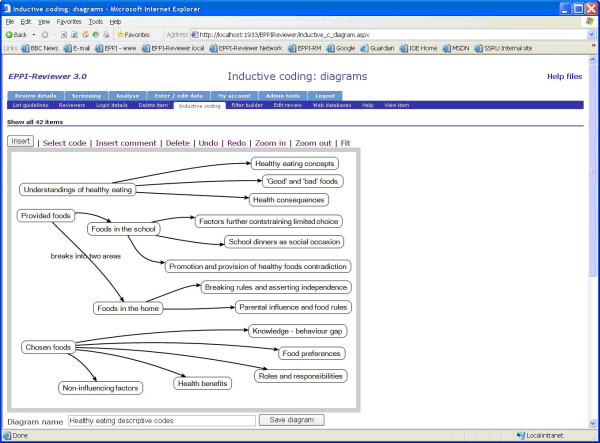
- Thematic synthesis has three overlapping stages: free line-by-line coding, development of descriptive themes, and generation of analytical themes; descriptive themes remain close to primary studies, while analytical themes go beyond them.
- In the example review, eight relevant qualitative studies yielded 36 initial codes, 12 descriptive themes, six analytical themes, and ten intervention recommendations.
- Six main issues emerged from children’s views: children do not see it as their role to be interested in health; future-health messages are not personally relevant or credible; fruit, vegetables and confectionery have different meanings; children seek food choices; eating is valued as a social occasion; and children see contradictions between promoted theory and adult practice.
- Most interventions were school-based and combined health-benefit learning with hands-on experience; interventions aligned with children’s views tended to be more effective, while multi-component physical activity plus healthy eating interventions worked less well than healthy-eating-only ones.
Methods
- Methodological paper describing thematic synthesis, illustrated with a completed systematic review of barriers to and facilitators of healthy eating among children aged four to 10 years.
- Searching involved extensive grey literature, author contact, and manual journal screening; quality was assessed using 12 criteria covering reporting, validity/reliability strategies, and appropriateness for children’s perspectives.
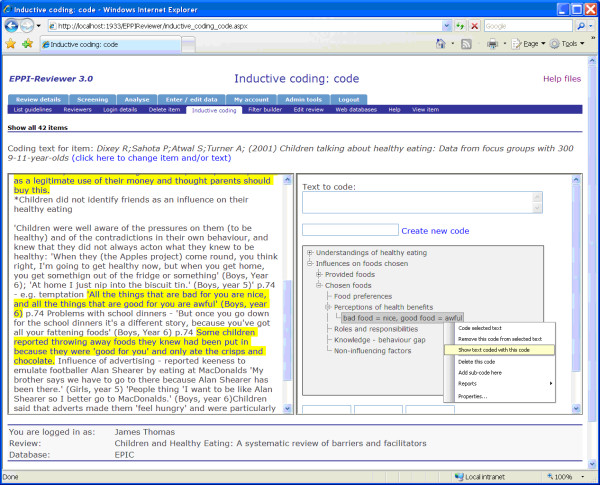
- Findings text labelled results/findings was entered verbatim into NVivo/EPPI-Reviewer; three reviewers independently coded line-by-line, grouped codes into descriptive themes, then generated analytical themes through group discussion and review questions.
Limitations
- Stated: contextual information in primary reports was very restricted, making it difficult to use context fully; there is little consensus on assessing qualitative quality and no accepted or empirically tested methods for excluding studies on quality, so all studies were included regardless of quality.
- Stated: the analytical-theme stage depends on reviewers’ judgement and insights and is potentially controversial; sensitivity analysis was done after synthesis by examining relative contributions of studies, finding poorer-quality studies contributed comparatively little and contained few unique themes.
- Evident: the method is illustrated with a single example review rather than compared empirically with other synthesis methods; the paper does not report a formal validation or inter-rater reliability for the synthesis.
Model-written summary. Check it against the paper before relying on it.
Integrity signals
Registry
Cites
Statistics
Figures
Verification
Claims the paper makes
3 Valid · 1 Not valid · 20 Not checked · 63 Own results and interpretations
A result the paper reports from its own data — it cites no other source for it, so there is none to check. The quote shows it is in the paper.
In the paper
“we found that there was very little difference in the methods we had to use to find qualitative studies compared to the methods we use when searching for studies for inclusion in a meta-analysis.”
§ Methods for the thematic synthesis of qualitative research in systematic reviews > Methods > Searching
plain- Asserted: passes — The authors put it forward as true.
- Checkable: passes — It can be checked against evidence.
- Load-bearing: unclear — It is unclear whether the paper’s conclusions depend on it.
- Based: passes — The paper gives a reason why it holds.
A result the paper states — it cites no source for it, so there is none to check. The quote shows it is in the paper.
In the paper
“Interventions that were in line with these suggestions tended to be more effective.”
§ Methods for the thematic synthesis of qualitative research in systematic reviews > Abstract > Results
hedgedstates an association- Asserted: passes — The authors put it forward as true.
- Checkable: passes — It can be checked against evidence.
- Load-bearing: passes — The paper’s conclusions depend on it.
- Based: passes — The paper gives a reason why it holds.
A result the paper states — it cites no source for it, so there is none to check. The quote shows it is in the paper.
In the paper
“In our review, it was not possible to rely on simple electronic searches of databases.”
§ Methods for the thematic synthesis of qualitative research in systematic reviews > Methods > Searching
plain- Asserted: passes — The authors put it forward as true.
- Checkable: passes — It can be checked against evidence.
- Load-bearing: unclear — It is unclear whether the paper’s conclusions depend on it.
- Based: passes — The paper gives a reason why it holds.
A result the paper reports from its own data — it cites no other source for it, so there is none to check. The quote shows it is in the paper.
In the paper
“In the event, we did not find any themes that belonged to a specific group, but another outcome of this process was a realisation that the contextual information given in the reports of studies was very restricted indeed.”
§ Methods for the thematic synthesis of qualitative research in systematic reviews > Discussion > Context and rigour in thematic synthesis
plain- Asserted: passes — The authors put it forward as true.
- Checkable: passes — It can be checked against evidence.
- Load-bearing: unclear — It is unclear whether the paper’s conclusions depend on it.
- Based: passes — The paper gives a reason why it holds.
A result the paper states — it cites no source for it, so there is none to check. The quote shows it is in the paper.
In the paper
“Interventions targeted at people with particular risk factors worked better than others, and multi-component interventions that combined the promotion of physical activity with healthy eating did not work as well as those that only concentrated on healthy eating.”
§ Methods for the thematic synthesis of qualitative research in systematic reviews > Results
plainstates a cause- Asserted: passes — The authors put it forward as true.
- Checkable: passes — It can be checked against evidence.
- Load-bearing: passes — The paper’s conclusions depend on it.
- Based: passes — The paper gives a reason why it holds.
25 more claims
Create a free account to see all 87 claims and to verify the 9 references still open.
- It may state two separate claims as one. 26
- Probably not a substantial claim. 45
Claims other papers make about this one
Each is checked against this paper’s own text: does it say what the citing paper says it does?
The source backs part of the claim, not all of it — or backs it for a different population, condition or comparison.
In the citing paper
“A thematic synthesis approach was used to integrate findings from studies with diverse methodological designs, following three key stages (Thomas & Harden, 2008).”
From Mind the gap: a systematic review of barriers, facilitators, and experiences of care transitions for people living with dementia and their informal caregivers. (2026) · cites this paper as Thomas & Harden, 2008
Experimental — accuracy not yet measuredThe source backs part of the claim, not all of it — or backs it for a different population, condition or comparison.
In the citing paper
“The thematic coding frame in Table 2 was applied to all included studies and reviewed for consistency of interpretation. This process, known as “axial coding,” ensured coded themes remained connected to and understood within the context of the source studies [13].”
From Patient-Perceived Factors Influencing Physical Activity Sensor Use in Stroke Prevention and Rehabilitation: Systematic Review of Qualitative Studies Using Thematic Synthesis (2026) · cites this paper as [13]
Experimental — accuracy not yet measuredThe source backs part of the claim, not all of it — or backs it for a different population, condition or comparison.
In the citing paper
“These data will be analysed following a three-step process. First, study data will be coded line by line by the first reviewer and checked by a second reviewer with a coding frame developed from codes derived from the data.”
From Effectiveness and acceptability of cognitive-behavioural therapy based interventions for maternal peripartum depression: A systematic review, meta-analysis and thematic synthesis protocol (2019) · cites this paper as [104]
Experimental — accuracy not yet measuredThe cited source says what the claim attributes to it.
In the citing paper
“The data coding, extraction and synthesis process was an iterative process, aligned with the thematic synthesis process outlined by Thomas 2008.”
From Health workers' perceptions and experiences of using mHealth technologies to deliver primary healthcare services: a qualitative evidence synthesis (2020) · cites this paper as Thomas 2008
The cited source says what the claim attributes to it.
In the citing paper
“To ensure the scientific reliability and trustworthiness of the findings, the qualitative analysis followed a thematic synthesis approach [25].”
From Sustainable Value Creation in Nonprofit Organizations: Processes, Determinants, and Strategic Dimensions (2026) · cites this paper as [25]
31 more claims about this paper
Create a free account to see every claim other papers make about this one.
Citations
Cites
Using thematic analysis in psychology
Braun, V., & Clarke, V. (2006) · Qualitative Research in Psychology · doi:10.1191/1478088706qp063oa · Cited by 194,414
(1997) · Cited by 4,204
Systematic reviews in the social sciences: a practical guide
(2006) · Choice Reviews Online · doi:10.5860/choice.43-5664 · Cited by 4,089
The Handbook of Research Synthesis.
Howel, D., Cooper, H., & Hedges, L. V. (1995) · Biometrics · doi:10.2307/2533295 · Cited by 3,642
Systematic Reviews in the Social Sciences: A Practical Guide
Petticrew, M., & Roberts, H. (2006) · doi:10.1002/9780470754887 · Cited by 3,586
Assessing the quality of controlled clinical trials
Jüni, P., Altman, D. G., & Egger, M. (2001) · BMJ · doi:10.1136/bmj.323.7303.42 · Cited by 3,309
Noblit, G., & Hare, R. (1988) · doi:10.4135/9781412985000 · Cited by 2,723
Qualitative Research: Rigour and qualitative research
Mays, N., & Pope, C. (1995) · BMJ · doi:10.1136/bmj.311.6997.109 · Cited by 2,715
Systematic Reviews in Health Care : Meta-Analysis in Context
Egger, M., Smith, G. D., & Altman, D. G. (2000) · Cited by 2,417
Dixon-Woods, M., Cavers, D., Agarwal, S., Annandale, E., Arthur, A., Harvey, J., Hsu, R., Katbamna, S., Olsen, R., Smith, L., et al. (2006) · BMC Medical Research Methodology · doi:10.1186/1471-2288-6-35 · Cited by 2,289
Research works printed but not linked: 9
- EPPI-Centre EPPI-Centre Methods for Conducting Systematic Reviews 2006 London: EPPI-Centre, Social Science Research Unit, Institute of Education, University of London
- Higgins J Green S (Eds) Cochrane Handbook for Systematic Reviews of Interventions 426 2006 Updated September 2006. Accessed 24th January 2007
- Sandelowski M Barroso J Handbook for Synthesising Qualitative Research 2007 New York: Springer
- Oakley A Experiments in Knowing: Gender and methods in the social sciences 2000 Cambridge: Polity Press
- Shepherd J Harden A Rees R Brunton G Oliver S Oakley A Young People and Healthy Eating: A systematic review of barriers and facilitators 2001 London: EPPI-Centre, Social Science Research Unit, Institute of Education, University of London
- Popay J Moving Beyond Effectiveness in Evidence Synthesis 2006 London: National Institute for Health and Clinical Excellence
- Boyatzis RE Transforming Qualitative Information 1998 Sage: Cleveland
- Medical Sociology Group Criteria for the evaluation of qualitative research papers Med Sociol News 1996 22 68 71
- Thomas J Brunton J EPPI-Reviewer 30: Analysis and management of data for research synthesis EPPI-Centre software 2006 London: EPPI-Centre, Social Science Research Unit, Institute of Education
Cited by
Items 301–400 of 9,166
Blockchain for Good? Digital Ledger Technology and Sustainable Development Goals
Adams, R., Kewell, B., & Parry, G. (2018) · World Sustainability Series · doi:10.1007/978-3-319-67122-2_7 · Cited by 164
Russell, S., Ogunbayo, O. J., Newham, J. J., Heslop-Marshall, K., Netts, P., Hanratty, B., Beyer, F., & Kaner, E. (2018) · npj Primary Care Respiratory Medicine · doi:10.1038/s41533-017-0069-z · Cited by 162
Sutanto, B., Singh‐Grewal, D., McNeil, H. P., O'Neill, S., Craig, J. C., Jones, J., & Tong, A. (2013) · Arthritis Care & Research · doi:10.1002/acr.22032 · Cited by 162
Reviewing Reviews of Research in Educational Leadership: An Empirical Assessment
Hallinger, P. (2014) · Educational Administration Quarterly · doi:10.1177/0013161x13506594 · Cited by 161
(2014) · Europe PMC (PubMed Central) · Cited by 193
Njau, B., Covin, C., Lisasi, E., Damian, D., Mushi, D., Boulle, A., & Mathews, C. (2019) · BMC Public Health · doi:10.1186/s12889-019-7685-1 · Cited by 160
The unspoken reality of gender bias in surgery: A qualitative systematic review
Lim, W. H., Wong, C., Jain, S. R., Ng, C. H., Tai, C. H., Devi, M. K., Samarasekera, D. D., Iyer, S. G., & Chong, C. S. (2021) · PLOS ONE · doi:10.1371/journal.pone.0246420 · Cited by 162
Gladstone, B. M., Boydell, K. M., Seeman, M. V., & McKeever, P. D. (2011) · Early Intervention in Psychiatry · doi:10.1111/j.1751-7893.2011.00287.x · Cited by 161
Challenges of International Students from Pre-Departure to Post-Study: A Literature Review
Khanal, J., & Gaulee, U. (2019) · Journal of International Students · doi:10.32674/jis.v9i2.673 · Cited by 161
Lwamba, E., Shisler, S., Ridlehoover, W., Kupfer, M., Tshabalala, N., Nduku, P., Langer, L., Grant, S., Sonnenfeld, A., Anda, D., et al. (2022) · Campbell Systematic Reviews · doi:10.1002/cl2.1214 · Cited by 163
Vandemeulebroucke, T., de Casterlé, B. D., & Gastmans, C. (2018) · Aging & Mental Health · doi:10.1080/13607863.2017.1286455 · Cited by 160
The Role of AI in Nursing Education and Practice: Umbrella Review
El Arab, R. A., Al Moosa, O. A., Abuadas, F. H., & Somerville, J. (2025) · Journal of Medical Internet Research · doi:10.2196/69881 · Cited by 202
Self-harm in older adults: systematic review
Troya, M. I., Babatunde, O., Polidano, K., Bartlam, B., McCloskey, E., Dikomitis, L., & Chew-Graham, C. A. (2019) · British Journal of Psychiatry · doi:10.1192/bjp.2019.11 · Cited by 159
Agentic AI: a comprehensive survey of architectures, applications, and future directions
Abou Ali, M., Dornaika, F., & Charafeddine, J. (2025) · Artificial Intelligence Review · doi:10.1007/s10462-025-11422-4 · Cited by 165
Patients’ Perspectives on Hemodialysis Vascular Access: A Systematic Review of Qualitative Studies
Casey, J. R., Hanson, C. S., Winkelmayer, W. C., Craig, J. C., Palmer, S., Strippoli, G. F. M., & Tong, A. (2014) · American Journal of Kidney Diseases · doi:10.1053/j.ajkd.2014.06.024 · Cited by 159
Robards, F., Kang, M., Usherwood, T., & Sanci, L. (2018) · Journal of Adolescent Health · doi:10.1016/j.jadohealth.2017.10.018 · Cited by 158
Doiron-Cadrin, P., Lafrance, S., Saulnier, M., Cournoyer, É., Roy, J.-S., Dyer, J.-O., Frémont, P., Dionne, C., MacDermid, J. C., Tousignant, M., et al. (2020) · Archives of Physical Medicine and Rehabilitation · doi:10.1016/j.apmr.2019.12.017 · Cited by 159
(2023) · doi:10.3102/00346543221105550 · Cited by 159
Challenges of conducting research in long-term care facilities: a systematic review
Lam, H. R., Chow, S. L.-M., Taylor, K., Chow, R., Lam, H., Bonin, K., Rowbottom, L., & Herrmann, N. (2018) · BMC Geriatrics · doi:10.1186/s12877-018-0934-9 · Cited by 158
Secondary Victimization: Domestic Violence Survivors Navigating the Family Law System
Laing, L. (2017) · Violence Against Women · doi:10.1177/1077801216659942 · Cited by 157
Ong, M., Jaumot‐Pascual, N., & Ko, L. T. (2020) · Journal of Engineering Education · doi:10.1002/jee.20345 · Cited by 199
Damarell, R., Morgan, D. D., & Tieman, J. (2020) · BMC Family Practice · doi:10.1186/s12875-020-01197-8 · Cited by 195
Preconditions for successful advance care planning in nursing homes: A systematic review.
Gilissen, J., Pivodic, L., Smets, T., Gastmans, C., Vander Stichele, R., Deliens, L., & Van den Block, L. (2017) · International Journal of Nursing Studies · doi:10.1016/j.ijnurstu.2016.12.003 · Cited by 156
Morrell, C. J., Sutcliffe, P., Booth, A., Stevens, J., Scope, A., Stevenson, M., Harvey, R., Bessey, A., Cantrell, A., Dennis, C.-L., et al. (2016) · Health Technology Assessment · doi:10.3310/hta20370 · Cited by 155
Patients' and healthcare professionals' views of cancer follow-up: systematic review
Lewis, R. A., Neal, R. D., Hendry, M., France, B., Williams, N. H., Russell, D., Hughes, D. A., Russell, I., Stuart, N. S., Weller, D., et al. (2009) · British Journal of General Practice · doi:10.3399/bjgp09x453576 · Cited by 155
Mothers' experiences of bottle-feeding: a systematic review of qualitative and quantitative studies
Lakshman, R., Ogilvie, D., & Ong, K. K. (2009) · Archives of Disease in Childhood · doi:10.1136/adc.2008.151910 · Cited by 155
do Nascimento, I. J. B., Abdulazeem, H. M., Vasanthan, L., Martínez, E. Z., Zucoloto, M. L., Østengaard, L., Muscat, N. A., Zapata, T., & Novillo-Ortiz, D. (2023) · The Lancet Digital Health · doi:10.1016/s2589-7500(23)00092-4 · Cited by 213
Erensoy, A., Mathrani, A., Schnack, A., Elms, J., & Baghaei, N. (2024) · Journal of Consumer Behaviour · doi:10.1002/cb.2374 · Cited by 230
Booth, A. (2016) · White Rose Research Online (University of Leeds, The University of Sheffield, University of York) · doi:10.13140/rg.2.1.2318.0562 · Cited by 153
Vo, V., Chen, G., Aquino, Y. S. J., Carter, S. M., Do, Q. N., & Woode, M. E. (2023) · Social Science & Medicine · doi:10.1016/j.socscimed.2023.116357 · Cited by 154
Miles, C., Arden-Close, E., Thomas, M., Bruton, A., Yardley, L., Hankins, M., & Kirby, S. E. (2017) · npj Primary Care Respiratory Medicine · doi:10.1038/s41533-017-0056-4 · Cited by 153
Brighton, L. J., Miller, S., Farquhar, M. C., Booth, S., Yi, D., Gao, W., Bajwah, S., Man, W. D., Higginson, I. J., & Maddocks, M. M. (2018) · Thorax · doi:10.1136/thoraxjnl-2018-211589 · Cited by 163
Yuill, C., McCourt, C., Cheyne, H., & Leister, N. (2020) · BMC Pregnancy and Childbirth · doi:10.1186/s12884-020-03023-6 · Cited by 217
Murray, A., Toussaint, A. C., Althaus, A., & Löwe, B. (2015) · Journal of Psychosomatic Research · doi:10.1016/j.jpsychores.2015.11.002 · Cited by 174
Living with breathlessness: a systematic literature review and qualitative synthesis
Hutchinson, A., Barclay-Klingle, N., Galvin, K., & Johnson, M. J. (2018) · European Respiratory Journal · doi:10.1183/13993003.01477-2017 · Cited by 176
Experiences and Perspectives of Transgender Youths in Accessing Health Care: A Systematic Review
Chong, L. S. H., Kerklaan, J., Clarke, S. P., Kohn, M. R., Baumgart, A., Guha, C., Tunnicliffe, D. J., Hanson, C. S., Craig, J. C., & Tong, A. (2021) · Archives of Pediatrics and Adolescent Medicine · doi:10.1001/jamapediatrics.2021.2061 · Cited by 172
Lawry, S., Samii, C., Hall, R., Leopold, A., Hornby, D., & Mtero, F. (2014) · Campbell Systematic Reviews · doi:10.4073/csr.2014.1 · Cited by 148
Sarkies, M., Bowles, K., Skinner, E. H., Haas, R., Lane, H., & Haines, T. P. (2017) · Implementation Science · doi:10.1186/s13012-017-0662-0 · Cited by 192
Analyzing Talk and Text II: Thematic Analysis
Herzog, C., Handke, C. W., & Hitters, E. (2019) · Springer eBooks · doi:10.1007/978-3-030-16065-4_22 · Cited by 291
Telehealth in palliative care is being described but not evaluated: a systematic review
Hancock, S., Preston, N., Jones, H., & Gadoud, A. (2019) · BMC Palliative Care · doi:10.1186/s12904-019-0495-5 · Cited by 151
Systematic review of cost effectiveness and budget impact of artificial intelligence in healthcare
El Arab, R. A., & Al Moosa, O. A. (2025) · npj Digital Medicine · doi:10.1038/s41746-025-01722-y · Cited by 149
Ryan, L., Coyne, R., Heary, C., Birney, S., Crotty, M., Dunne, R., Conlan, O., & Walsh, J. C. (2023) · Obesity Reviews · doi:10.1111/obr.13606 · Cited by 149
Silva, D. S., Ghezzi, A., de Aguiar, R. B., Cortimiglia, M. N., & ten Caten, C. S. (2020) · International Journal of Entrepreneurial Behaviour & Research · doi:10.1108/ijebr-07-2019-0425 · Cited by 271
Howard, J., Fisher, Z., Kemp, A. H., Lindsay, S., Tasker, L. H., & Tree, J. J. (2020) · Disability and Rehabilitation Assistive Technology · doi:10.1080/17483107.2020.1788181 · Cited by 188
Zygouri, I., Cowdell, F., Ploumis, A., Gouva, M., & Mantzoukas, S. (2021) · BMC Health Services Research · doi:10.1186/s12913-021-06736-2 · Cited by 214
Usonwu, I., Ahmad, R., & Curtis, K. (2021) · Reproductive Health · doi:10.1186/s12978-021-01246-0 · Cited by 228
Hanckel, B., Petticrew, M., Thomas, J., & Green, J. (2021) · BMC Public Health · doi:10.1186/s12889-021-10926-2 · Cited by 147
Self-citationRing, D., & Lawn, S. (2019) · Journal of Mental Health · doi:10.1080/09638237.2019.1581337 · Cited by 171
Martins, J., Costa, J., Sarmento, H., Marques, A., Farias, C. F. G., Onofre, M., & Valeiro, M. G. (2021) · International Journal of Environmental Research and Public Health · doi:10.3390/ijerph18094954 · Cited by 227
The rates and factors of perceived insufficient milk supply: A systematic review
Huang, Y., Liu, Y., Yu, X., & Zeng, T. (2021) · Maternal and Child Nutrition · doi:10.1111/mcn.13255 · Cited by 213
Ke, L., Huang, X., O'Connor, M., & Lee, S. (2015) · Journal of Clinical Nursing · doi:10.1111/jocn.12853 · Cited by 145
Manning, M., MacFarlane, A. E., Hickey, A., & Franklin, S. (2019) · PLoS ONE · doi:10.1371/journal.pone.0214200 · Cited by 176
Eykelenboom, M., van Stralen, M. M., Olthof, M. R., Schoonmade, L. J., Steenhuis, I. H., & Renders, C. M. (2019) · International Journal of Behavioral Nutrition and Physical Activity · doi:10.1186/s12966-019-0843-0 · Cited by 164
Compliance with removable orthodontic appliances and adjuncts: A systematic review and meta-analysis
Al‐Moghrabi, D., Colonio-Salazar, F. B., Pandis, N., & Fleming, P. S. (2017) · American Journal of Orthodontics and Dentofacial Orthopedics · doi:10.1016/j.ajodo.2017.03.019 · Cited by 176
How Adolescents Search for and Appraise Online Health Information: A Systematic Review
Freeman, J. L., Caldwell, P. H. Y., Bennett, P. A., & Scott, K. M. (2018) · The Journal of Pediatrics · doi:10.1016/j.jpeds.2017.11.031 · Cited by 174
Sepasgozar, S. M. E., Hui, F. K. P., Shirowzhan, S., Foroozanfar, M., Yang, L., & Aye, L. (2020) · Sustainability · doi:10.3390/su13010161 · Cited by 146
Broad, K., Sandhu, V. K., Sunderji, N., & Charach, A. (2017) · BMC Psychiatry · doi:10.1186/s12888-017-1538-1 · Cited by 178
Blended learning models for introductory programming courses: A systematic review
Alammary, A. S. (2019) · PLoS ONE · doi:10.1371/journal.pone.0221765 · Cited by 218
Spiritual care provision to end‐of‐life patients: A systematic literature review
Batstone, E., Bailey, C., & Hallett, N. (2020) · Journal of Clinical Nursing · doi:10.1111/jocn.15411 · Cited by 146
Naidoo, N., Nguyen, V. T., Ravaud, P., Young, B., Amiel, P., Schanté, D., Clarke, M., & Boutron, I. (2020) · BMC Medicine · doi:10.1186/s12916-019-1476-5 · Cited by 144
Woodman, C., Baillie, J., & Sivell, S. (2016) · BMJ Supportive & Palliative Care · doi:10.1136/bmjspcare-2014-000794 · Cited by 143
Coleman, S. J., Stevelink, S. A. M., Hatch, S. L., Denny, J. A., & Greenberg, N. (2017) · Psychological Medicine · doi:10.1017/s0033291717000356 · Cited by 143
Adolescent Girls’ Perceptions of Physical Activity: A Systematic Review of Qualitative Studies
Corr, M., McSharry, J., & Murtagh, E. (2018) · American Journal of Health Promotion · doi:10.1177/0890117118818747 · Cited by 176
Paes, V. M., Ong, K. K., & Lakshman, R. (2015) · BMJ Open · doi:10.1136/bmjopen-2014-007396 · Cited by 206
Women's experiences of induction of labour: Qualitative systematic review and thematic synthesis
Coates, R., Cupples, G., Scamell, A., & McCourt, C. (2018) · Midwifery · doi:10.1016/j.midw.2018.10.013 · Cited by 156
Jones, K. F., Paal, P., Symons, X., & Best, M. C. (2021) · Journal of Pain and Symptom Management · doi:10.1016/j.jpainsymman.2021.03.013 · Cited by 161
Boehmer, K. R., Gionfriddo, M. R., Rodríguez‐Gutiérrez, R., Dabrh, A. M. A., Leppin, A. L., Hargraves, I. G., May, C. R., Shippee, N. D., Castañeda-Guarderas, A., Zeballos-Palacios, C. L., et al. (2016) · BMC Family Practice · doi:10.1186/s12875-016-0525-9 · Cited by 166
Classroom dialogue and digital technologies: A scoping review
Major, L., Warwick, P., Rasmussen, I., Ludvigsen, S., & Cook, V. (2018) · Education and Information Technologies · doi:10.1007/s10639-018-9701-y · Cited by 189
Inclusion in Physical Education: Teacher Attitudes and Student Experiences. A Systematic Review
Rekaa, H., Hanisch, H. M., & Ytterhus, B. (2018) · International Journal of Disability Development and Education · doi:10.1080/1034912x.2018.1435852 · Cited by 198
McCarthy, M. J., Houghton, C., & Matvienko‐Sikar, K. (2021) · BMC Pregnancy and Childbirth · doi:10.1186/s12884-021-04271-w · Cited by 210
Radaelli, G., & Sitton‐Kent, L. (2016) · International Journal of Management Reviews · doi:10.1111/ijmr.12094 · Cited by 191
Virdun, C., Luckett, T., Lorenz, K., Davidson, P. M., & Phillips, J. L. (2016) · Palliative Medicine · doi:10.1177/0269216316673547 · Cited by 148
O’Nions, E., Happé, F., Evers, K., Boonen, H., & Noens, I. (2018) · Journal of Autism and Developmental Disorders · doi:10.1007/s10803-017-3361-4 · Cited by 140
Yılmaz, K. (2021) · MANAS Sosyal Araştırmalar Dergisi · doi:10.33206/mjss.791537 · Cited by 227
Brede, J., Cage, E., Trott, J., Palmer, L., Smith, A., Serpell, L., Mandy, W., & Russell, A. (2022) · Clinical Psychology Review · doi:10.1016/j.cpr.2022.102131 · Cited by 139
Zaidman, E. A., Scott, K. M., Hahn, D., Bennett, P., & Caldwell, P. H. (2023) · Journal of Paediatrics and Child Health · doi:10.1111/jpc.16297 · Cited by 138
Hazell, C. M., Chapman, L., Valeix, S. F., Roberts, P., Niven, J. E., & Berry, C. (2020) · Systematic Reviews · doi:10.1186/s13643-020-01443-1 · Cited by 138
Lan, M., & Hew, K. F. (2020) · International Journal of Educational Technology in Higher Education · doi:10.1186/s41239-020-0179-5 · Cited by 208
Zarzycki, M., Morrison, V., Bei, E., & Seddon, D. (2022) · Health Psychology Review · doi:10.1080/17437199.2022.2032259 · Cited by 186
Lorenc, T., Petticrew, M. P., Whitehead, M. M., Neary, D., Clayton, S., Wright, K. E., Thomson, H., Cummins, S., Sowden, A. J., & Renton, A. M. (2014) · Public Health Research · doi:10.3310/phr02020 · Cited by 174
The Integration and Coordination of Public Policies: A Systematic Comparative Review
Trein, P., Meyer, I., & Maggetti, M. (2018) · Journal of Comparative Policy Analysis Research and Practice · doi:10.1080/13876988.2018.1496667 · Cited by 203
Challenge‐based learning implementation in engineering education: A systematic literature review
Doulougeri, K., Vermunt, J. D. H. M., Bombaerts, G. J. T., & Bots, M. (2024) · Journal of Engineering Education · doi:10.1002/jee.20588 · Cited by 245
Megnin‐Viggars, O., Symington, I., Howard, L. M., & Pilling, S. (2015) · Archives of Women s Mental Health · doi:10.1007/s00737-015-0548-6 · Cited by 170
Developing cultural competence in general practitioners: an integrative review of the literature
Watt, K., Abbott, P., & Reath, J. (2016) · BMC Family Practice · doi:10.1186/s12875-016-0560-6 · Cited by 165
A Systematic Review of Music Therapy Practice and Outcomes with Acute Adult Psychiatric In-Patients
Carr, C. E., Odell‐Miller, H., & Priebe, S. (2013) · PLoS ONE · doi:10.1371/journal.pone.0070252 · Cited by 180
Chung, V. C., Ma, H., Lau, C. H., Wong, S. Y. S., Yeoh, E., & Griffiths, S. M. (2012) · Health Expectations · doi:10.1111/j.1369-7625.2012.00794.x · Cited by 159
Adams, R., Ryan, T., & Wood, E. (2021) · International Journal of Mental Health Nursing · doi:10.1111/inm.12904 · Cited by 172
Artificial intelligence in nursing: an integrative review of clinical and operational impacts
Hassanein, S., El Arab, R. A., Abdrbo, A., Abu-Mahfouz, M. S., Gaballah, M. K. F., Seweid, M. M., Almari, M., & Alzghoul, H. (2025) · Frontiers in Digital Health · doi:10.3389/fdgth.2025.1552372 · Cited by 134
Sutcliffe, K., Thomas, J., Stokes, G., Hinds, K., & Bangpan, M. (2015) · Systematic Reviews · doi:10.1186/s13643-015-0126-z · Cited by 134
Self-citationMöhler, R., & Meyer, G. (2013) · International Journal of Nursing Studies · doi:10.1016/j.ijnurstu.2013.10.004 · Cited by 158
Patient-Reported Pressure Ulcer Pain: A Mixed-Methods Systematic Review
Rutherford, C., Closs, S. J., Nixon, J., & Briggs, M. (2011) · Journal of Pain and Symptom Management · doi:10.1016/j.jpainsymman.2010.11.016 · Cited by 134
Uttley, L., Scope, A., Stevenson, M., Rawdin, A., Taylor Buck, E., Sutton, A., Stevens, J., Kaltenthaler, E., Dent-Brown, K., & Wood, C. (2015) · Health Technology Assessment · doi:10.3310/hta19180 · Cited by 134
Women’s experiences of continuous support during childbirth: a meta-synthesis
Lunda, P., Minnie, K., & Benadé, P. (2018) · BMC Pregnancy and Childbirth · doi:10.1186/s12884-018-1755-8 · Cited by 182
Jones, C. H. D., Howick, J., Roberts, N. W., Price, C. P., Heneghan, C., Plüddemann, A., & Thompson, M. J. (2013) · BMC Family Practice · doi:10.1186/1471-2296-14-117 · Cited by 156
Patient experiences of outcomes of bariatric surgery: a systematic review and qualitative synthesis
Coulman, K. D., MacKichan, F., Blazeby, J. M., & Owen‐Smith, A. (2017) · Obesity Reviews · doi:10.1111/obr.12518 · Cited by 133
‘Into the Wild’: A meta-synthesis of talking therapy in natural outdoor spaces
Cooley, S. J., Jones, C. R., Kurtz, A., & Robertson, N. (2020) · Clinical Psychology Review · doi:10.1016/j.cpr.2020.101841 · Cited by 174
How Adolescents Trust Health Information on Social Media: A Systematic Review
Freeman, J. L., Caldwell, P. H. Y., & Scott, K. M. (2023) · Academic Pediatrics · doi:10.1016/j.acap.2022.12.011 · Cited by 133
Sirdifield, C., Anthierens, S., Creupelandt, H., Chipchase, S. Y., Christiaens, T., & Siriwardena, A. N. (2013) · BMC Family Practice · doi:10.1186/1471-2296-14-191 · Cited by 131
Metasynthetic Madness: What Kind of Monster Have We Created?
Thorne, S. (2017) · Qualitative Health Research · doi:10.1177/1049732316679370 · Cited by 132
Houghton, C., Dowling, M., Meskell, P., Hunter, A., Gardner, H., Conway, A., Treweek, S., Sutcliffe, K., Noyes, J., Devane, D., et al. (2017) · Cochrane Database of Systematic Reviews · doi:10.1002/14651858.mr000045 · Cited by 130
Metadata
- Authors
- Thomas, J., & Harden, A.
- Affiliations
- University of London (GB)
- Corresponding author
- Thomas, James
- Venue
- BMC Medical Research Methodology
- Published
- 2008-07-10
- Volume
- 8
- Issue
- 1
- Pages
- 45-45
- ISSN
- 1471-2288 (ISSN-L)
- PMC
- PMC2478656
- OpenAlex
- W2109305774
- Cited by
- 9,312
- References
- 64
- Citations by year
- 2026: 1606 · 2025: 1253 · 2024: 1082 · 2023: 899 · 2022: 903 · 2021: 852 · 2020: 606 · 2019: 472 · 2018: 404 · 2017: 318 · 2016: 275 · 2015: 179 · 2014: 141 · 2013: 122 · 2012: 91
- FWCI
- 38.28
- Type
- journal article
- Language
- en
- Open access
- gold
- doi.org
- Licence
- cc-by
- creativecommons.org/licenses/by/2.0 (tdm)
- Locations
- BMC Medical Research Methodology (publishedVersion, cc-by)
- PubMed Central (publishedVersion, cc-by)
- PubMed (publishedVersion)
- UEL Research Repository (University of East London) (acceptedVersion)
- City Research Online (City University London) (acceptedVersion)
- IOE EPrints (submittedVersion)
- UEL Research Repository (University of East London) (submittedVersion, cc-by-nd)
- DOAJ (DOAJ: Directory of Open Access Journals) (submittedVersion, cc-by-sa)
- UCL Discovery (University College London) (submittedVersion)
- Funders
- National Institute for Health and Care Research
- Economic and Social Research Council (RES-576-25-5008)
- Topics
- Social Sciences › Education › Qualitative Research Methods and Applications
- Social Sciences › Decision Sciences › Statistics, Probability and Uncertainty › Meta-analysis and systematic reviews
- Social Sciences › Sociology and Political Science › Delphi Technique in Research
- Keywords
- thematic synthesis, thematic analysis, health promotion interventions, children's perspectives, school-based intervention, fruit and vegetable intake, health messaging
- MeSH terms
- Humans, Methods, Review Literature as Topic, Statistics as Topic, Qualitative Research
About these checks
Registry, retraction, Cites and statistics results are computed, not judged, with one exception: a printed reference that no index lists is read once by a model before it counts as a citation error. Claims are extracted by a model and kept only when their quote appears verbatim in the text; each cited source is then checked, with a model’s help, for whether it says what the claim relies on. Those verdicts can be wrong — read the claim’s quote and the cited source before relying on one.
The claim verdicts this report counts are experimental: their accuracy is not yet measured.
A language model drew the claims from the paper on 2026-10-04, under version 3 of the claim definition (model deepseek-v4.1-flash, prompt extract-v3).
A second model labelled each claim on 2026-10-04 (model jev-1.13-20260917, definition revision gold-guideline-v0.2).
Statistics and arithmetic are recomputed, not judged.
Confidence bands are shown only for fields calibrated on our annotated test set. None is calibrated yet, so no band is shown.
What counts as a claim ›How we measure confidence ›How we check this ›
Are you an author, or do you see a problem with this page? Request a review
Data sources
Bibliographic data: Semantic Scholar, OpenAlex, Crossref.
Contains information from the Semantic Scholar Academic Graph Datasets, made available under the ODC Attribution License (ODC-BY 1.0).
Semantic Scholar’s data is described in: Kinney, R., et al. (2023). The Semantic Scholar Open Data Platform. arXiv:2301.10140.
