

The DOI matches its Crossref record; 17 of the 17 references it cites were found in a registry or an index.
Clinical identification of bacteria in human chronic wound infections: culturing vs. 16S ribosomal DNA sequencing
Open accessAbstract
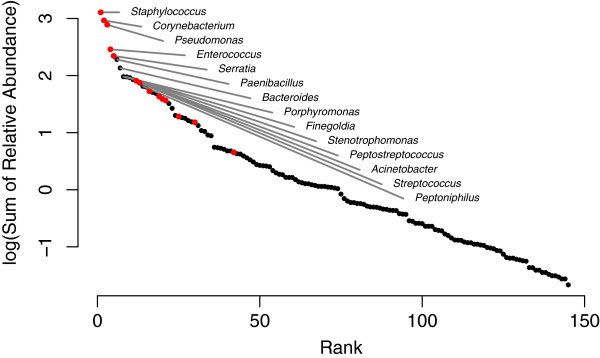
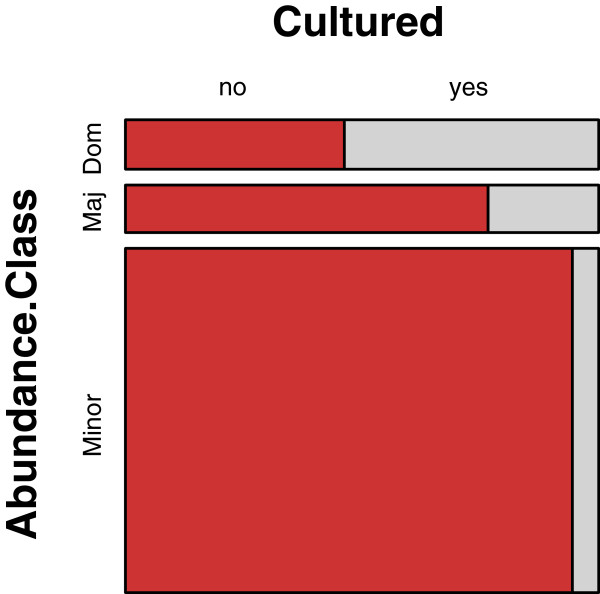
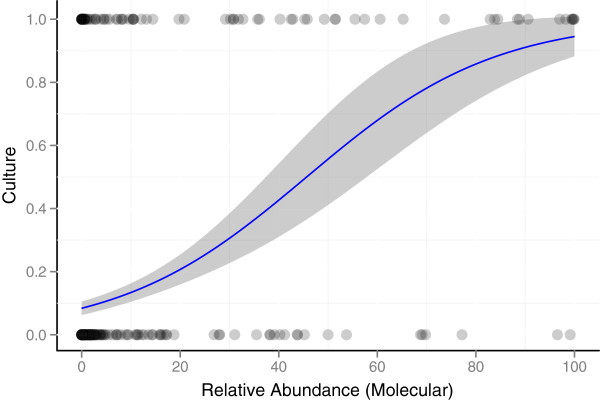
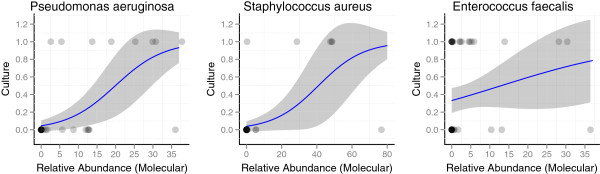
Background: Chronic wounds affect millions of people and cost billions of dollars in the United States each year. These wounds harbor polymicrobial biofilm communities, which can be difficult to elucidate using culturing methods. Clinical molecular microbiological methods are increasingly being employed to investigate the microbiota of chronic infections, including wounds, as part of standard patient care. However, molecular testing is more sensitive than culturing, which results in markedly different results being reported to clinicians. This study compares the results of aerobic culturing and molecular testing (culture-free 16S ribosomal DNA sequencing), and it examines the relative abundance score that is generated by the molecular test and the usefulness of the relative abundance score in predicting the likelihood that the same organism would be detected by culture. Methods: Parallel samples from 51 chronic wounds were studied using aerobic culturing and 16S DNA sequencing for the identification of bacteria. Results: One hundred forty-five (145) unique genera were identified using molecular methods, and 68 of these genera were aerotolerant. Fourteen (14) unique genera were identified using aerobic culture methods. One-third (31/92) of the cultures were determined to be < 1% of the relative abundance of the wound microbiota using molecular testing. At the genus level, molecular testing identified 85% (78/92) of the bacteria that were identified by culture. Conversely, culturing detected 15.7% (78/497) of the aerotolerant bacteria and detected 54.9% of the collective aerotolerant relative abundance of the samples. Aerotolerant bacterial genera (and individual species including Staphylococcus aureus , Pseudomonas aeruginosa , and Enterococcus faecalis ) with higher relative abundance scores were more likely to be detected by culture as demonstrated with regression modeling. Conclusion: Discordance between molecular and culture testing is often observed. However, culture-free 16S ribosomal DNA sequencing and its relative abundance score can provide clinicians with insight into which bacteria are most abundant in a sample and which are most likely to be detected by culture.
Overview
The claims and statistics of this paper haven’t been checked yet.
Run the check — free, no account needed. It reads the open-access text and checks the sources it cites.
Integrity signals
Registry
Cites
Statistics
Figures
Verification
Claims the paper makes
The claims and statistics of this paper haven’t been checked yet.
Run the check — free, no account needed. It reads the open-access text and checks the sources it cites.
Claims other papers make about this one
Each is checked against this paper’s own text: does it say what the citing paper says it does?
In the citing paper
“The identification of particular polymicrobial organisms (179) or the observation of high protease levels, such as MMPs or ADAMs (a disintegrin and metalloproteinases), found in the wound bed (180) are already being used to modify treatment plans and improve outcomes.”
From Wound repair and regeneration: Mechanisms, signaling, and translation (2014) · cites this paper as [179]
Self-check
Percentages, sums and reported differences re-computed from the paper’s own numbers.
The self-check needs the paper’s full text.
Citations
Cites
James, G. A., Swogger, E., Wolcott, R., Pulcini, E. D., Secor, P., Sestrich, J., Costerton, J. W., & Stewart, P. S. (2008) · Wound Repair and Regeneration · doi:10.1111/j.1524-475x.2007.00321.x · Cited by 1,543
Self-citationRecent findings on the viable but nonculturable state in pathogenic bacteria.
Oliver, J. (2010) · FEMS Microbiology Reviews · doi:10.1111/j.1574-6976.2009.00200.x · Cited by 1,231
Dowd, S. E., Sun, Y., Secor, P. R., Rhoads, D. D., Wolcott, B. M., James, G. A., & Wolcott, R. D. (2008) · BMC Microbiology · doi:10.1186/1471-2180-8-43 · Cited by 783
Self-citationDistribution, Organization, and Ecology of Bacteria in Chronic Wounds
Kirketerp‐Møller, K., Jensen, P. Ø., Fazli, M., Madsen, K. G., Pedersen, J., Moser, C. E., Tolker‐Nielsen, T., Høiby, N., Givskov, M., & Bjarnsholt, T. (2008) · Journal of Clinical Microbiology · doi:10.1128/jcm.00501-08 · Cited by 547
Towards diagnostic guidelines for biofilm-associated infections
Hall‐Stoodley, L., Stoodley, P., Kathju, S., Høiby, N., Moser, C. E., Costerton, J. W., Moter, A., & Bjarnsholt, T. (2012) · FEMS Immunology & Medical Microbiology · doi:10.1111/j.1574-695x.2012.00968.x · Cited by 366
Price, L. B., Liu, C. M., Melendez, J. H., Frankel, Y. M., Engelthaler, D., Aziz, M., Bowers, J., Rattray, R., Ravel, J., Kingsley, C., et al. (2009) · PLoS ONE · doi:10.1371/journal.pone.0006462 · Cited by 237
The microbiology of infected and noninfected leg ulcers
Bowler, P. G., & Davies, B. J. (1999) · International Journal of Dermatology · doi:10.1046/j.1365-4362.1999.00738.x · Cited by 233
Comparison of Culture and Molecular Identification of Bacteria in Chronic Wounds
Rhoads, D. D., Wolcott, R. D., Sun, Y., & Dowd, S. E. (2012) · International Journal of Molecular Sciences · doi:10.3390/ijms13032535 · Cited by 221
Self-citationCulture Enriched Molecular Profiling of the Cystic Fibrosis Airway Microbiome
Sibley, C. D., Grinwis, M. E., Field, T. R., Eshaghurshan, C. S., Faria, M. M. P., Dowd, S. E., Parkins, M. D., Rabin, H. R., & Surette, M. G. (2011) · PLoS ONE · doi:10.1371/journal.pone.0022702 · Cited by 196
Biofilms in wounds: management strategies
Rhoads, D. D., Wolcott, R. D., & Percival, S. L. (2008) · Journal of Wound Care · doi:10.12968/jowc.2008.17.11.31479 · Cited by 175
Self-citation
Cited by
Sorted by citations
Wound repair and regeneration: Mechanisms, signaling, and translation
Eming, S. A., Martin, P., & Tomic-Canic, M. (2014) · Science Translational Medicine · doi:10.1126/scitranslmed.3009337 · Cited by 3,562
Analysis of the chronic wound microbiota of 2,963 patients by 16S rDNA pyrosequencing
Wolcott, R. D., Hanson, J. D., Rees, E. J., Koenig, L., Phillips, C. D., Wolcott, R. A., Cox, S. B., & White, J. S. (2015) · Wound Repair and Regeneration · doi:10.1111/wrr.12370 · Cited by 432
Self-citationKalan, L., Meisel, J. S., Loesche, M. A., Horwinski, J., Soaita, I., Chen, X., Uberoi, A., Gardner, S. E., & Grice, E. A. (2019) · Cell Host & Microbe · doi:10.1016/j.chom.2019.03.006 · Cited by 423
Boers, S. A., Jansen, R., & Hays, J. P. (2019) · European Journal of Clinical Microbiology & Infectious Diseases · doi:10.1007/s10096-019-03520-3 · Cited by 297
Endometrial microbiota—new player in town
Moreno, I., & Franasiak, J. M. (2017) · Fertility and Sterility · doi:10.1016/j.fertnstert.2017.05.034 · Cited by 203
Traditional wound-healing plants used in the Balkan region (Southeast Europe)
Jarić, S., Kostić, O., Mataruga, Z., Pаvlović, D., Pavlović, M., Mitrović, M., & Pavlović, P. (2017) · Journal of Ethnopharmacology · doi:10.1016/j.jep.2017.09.018 · Cited by 176
Kim, P. J., Attinger, C. E., Steinberg, J. S., Evans, K. K., Powers, K., Hung, R. W., Smith, J. R., Rocha, Z. M., & Lavery, L. A. (2014) · Plastic & Reconstructive Surgery · doi:10.1097/01.prs.0000438060.46290.7a · Cited by 168
Challenges in the diagnosis and management of wound infection
Malone, M., & Schultz, G. S. (2022) · British Journal of Dermatology · doi:10.1111/bjd.21612 · Cited by 169
Olofsson, T. C., Butler, È., Markowicz, P., Lindholm, C., Larsson, L., & Vásquez, A. (2014) · International Wound Journal · doi:10.1111/iwj.12345 · Cited by 166
The role of the microbiome in nonhealing diabetic wounds
Kalan, L., & Brennan, M. B. (2018) · Annals of the New York Academy of Sciences · doi:10.1111/nyas.13926 · Cited by 162
Becerra, S. C., Roy, D. C., Sánchez, C. J., Christy, R. J., & Burmeister, D. M. (2016) · BMC Research Notes · doi:10.1186/s13104-016-1902-0 · Cited by 154
Nanocoatings for Chronic Wound Repair—Modulation of Microbial Colonization and Biofilm Formation
Mihai, M. M., Preda, M., Lungu, I. I., Gestal, M. C., Popa, M. I., & Holban, A. M. (2018) · International Journal of Molecular Sciences · doi:10.3390/ijms19041179 · Cited by 148
Gupta, S., Mortensen, M. S., Schjørring, S., Trivedi, U., Vestergaard, G., Stokholm, J., Bisgaard, H. F., Krogfelt, K. A., & Sørensen, S. J. (2019) · Communications Biology · doi:10.1038/s42003-019-0540-1 · Cited by 149
Almasian, A., Najafi, F., Eftekhari, M., Ardekani, M. R. S., Sharifzadeh, M. S., & Khanavi, M. (2020) · Materials Science and Engineering C · doi:10.1016/j.msec.2020.111039 · Cited by 139
Kao, P. H. N., & Kline, K. A. (2019) · Journal of Molecular Biology · doi:10.1016/j.jmb.2019.05.030 · Cited by 111
Next Generation DNA Sequencing of Tissues from Infected Diabetic Foot Ulcers
Malone, M., Johani, K., Jensen, S. O., Gosbell, I. B., Dickson, H. G., Hu, H., & Vickery, K. (2017) · EBioMedicine · doi:10.1016/j.ebiom.2017.06.026 · Cited by 109
Franasiak, J. M., & Scott, R. T. (2015) · Fertility and Sterility · doi:10.1016/j.fertnstert.2015.10.021 · Cited by 105
Rezaei, F. M., Damoogh, S., Reis, R. L., Kundu, S. C., Mottaghitalab, F., & Farokhi, M. (2020) · Biofabrication · doi:10.1088/1758-5090/abbb82 · Cited by 93
Cummings, L. A., Kurosawa, K., Hoogestraat, D. R., SenGupta, D. J., Candra, F., Doyle, M., Thielges, S., Land, T. A., Rosenthal, C. A., Hoffman, N. G., et al. (2016) · Clinical Chemistry · doi:10.1373/clinchem.2016.258806 · Cited by 92
The nasopharyngeal microbiota of feedlot cattle
Holman, D. B., Timsit, E., & Alexander, T. W. (2015) · Scientific Reports · doi:10.1038/srep15557 · Cited by 97
Chronic Wounds: Innovations in Diagnostics and Therapeutics
Haalboom, M. (2018) · Current Medicinal Chemistry · doi:10.2174/0929867324666170710120556 · Cited by 88
Isolation and characterization of diverse microbial representatives from the human skin microbiome
Timm, C. M., Loomis, K. H., Stone, W., Mehoke, T. S., Brensinger, B. R., Pellicore, M. J., Staniczenko, P. P. A., Charles, C., Nayak, S., & Karig, D. (2020) · Microbiome · doi:10.1186/s40168-020-00831-y · Cited by 93
The Microbiome and Chronic Rhinosinusitis
Cho, D., Hunter, R. C., & Ramakrishnan, V. R. (2020) · Immunology and Allergy Clinics of North America · doi:10.1016/j.iac.2019.12.009 · Cited by 87
Phytochemicals as a potential source for anti-microbial, anti-oxidant and wound healing - a review
Selvakumar, P. M., Thanapaul, R. J. R. S., & Muthukumar Nadar, M. S. A. (2018) · MOJ Bioorganic & Organic Chemistry · doi:10.15406/mojboc.2018.02.0058 · Cited by 81
Sinus culture poorly predicts resident microbiota
Hauser, L. J., Feazel, L. M., Ir, D., Fang, R., Wagner, B. D., Robertson, C. E., Frank, D. N., & Ramakrishnan, V. R. (2014) · International Forum of Allergy & Rhinology · doi:10.1002/alr.21428 · Cited by 79
Clinical Microbiology Informatics
Rhoads, D. D., Sintchenko, V., Rauch, C. A., & Pantanowitz, L. (2014) · Clinical Microbiology Reviews · doi:10.1128/cmr.00049-14 · Cited by 79
Self-citationSerena, T. E., Harrell, K., Serena, L., & Yaakov, R. A. (2019) · Journal of Wound Care · doi:10.12968/jowc.2019.28.6.346 · Cited by 72
As-yet-uncultivated oral bacteria: breadth and association with oral and extra-oral diseases
Siqueira, J. F., Jr., & Rôças, I. N. (2013) · Journal of Oral Microbiology · doi:10.3402/jom.v5i0.21077 · Cited by 73
Diabetes mellitus and the skin
Makrantonaki, E., Jiang, D., Hossini, A. M., Nikolakis, G. D., Wlaschek, M., Scharffetter‐Kochanek, K., & Zouboulis, C. C. (2016) · Reviews in Endocrine and Metabolic Disorders · doi:10.1007/s11154-016-9373-0 · Cited by 71
Antimicrobial assessment of phage therapy using a porcine model of biofilm infection
Milho, C., Andrade, M., Boas, D. V., Alves, D. F., & Sillankorva, S. (2018) · International Journal of Pharmaceutics · doi:10.1016/j.ijpharm.2018.12.004 · Cited by 70
The Impact of Microbial Communities on Wound Healing
Xu, Z., & Hsia, H. C. (2018) · Annals of Plastic Surgery · doi:10.1097/sap.0000000000001450 · Cited by 71
Relative Abundance and Detection of Pseudomonas aeruginosa from Chronic Wound Infections Globally
Phan, S., Feng, C. H., Huang, R. Y., Lee, Z. X., Moua, Y., Phung, O. J., & Lenhard, J. R. (2023) · Microorganisms · doi:10.3390/microorganisms11051210 · Cited by 67
Current In Vitro Biofilm-Infected Chronic Wound Models for Developing New Treatment Possibilities
Thaarup, I. C., & Bjarnsholt, T. (2020) · Advances in Wound Care · doi:10.1089/wound.2020.1176 · Cited by 71
Fida, M., Khalil, S., Saleh, O. A., Challener, D. W., Sohail, M. R., Yang, J. N., Pritt, B. S., Schuetz, A. N., & Patel, R. (2021) · Clinical Infectious Diseases · doi:10.1093/cid/ciab167 · Cited by 65
Wound biofilms: Lessons learned from oral biofilms
Mancl, K. A., Kirsner, R. S., & Ajdić, D. (2013) · Wound Repair and Regeneration · doi:10.1111/wrr.12034 · Cited by 65
Maver, T., Kurečič, M., Pivec, T., Maver, U., Gradišnik, L., Gašparič, P., Kaker, B., Bratuša, A., Hribernik, S., & Kleinschek, K. S. (2020) · Cellulose · doi:10.1007/s10570-020-03079-9 · Cited by 61
Franasiak, J. M., & Scott, R. T. W. (2017) · Current Opinion in Obstetrics & Gynecology · doi:10.1097/gco.0000000000000357 · Cited by 59
Willner, D. L., Low, S., Steen, J. A., George, N., Nimmo, G. R., Schembri, M. A., & Hugenholtz, P. (2014) · mBio · doi:10.1128/mbio.01064-13 · Cited by 58
Farzaei, M. H., Abbasabadi, Z., Shams‐Ardekani, M. R., Abdollahi, M. R., & Rahimi, R. (2014) · PubMed · Cited by 57
Putting on the brakes: Bacterial impediment of wound healing
Brothers, K. M., Stella, N. A., Hunt, K. M., Romanowski, E. G., Liu, X., Klarlund, J. K., & Shanks, R. M. Q. (2015) · Scientific Reports · doi:10.1038/srep14003 · Cited by 55
Co-occurrence of Anaerobes in Human Chronic Wounds
Choi, Y., Banerjee, A., McNish, S., Couch, K. S., Torralba, M., Lucas, S. K., Tovchigrechko, A., Madupu, R., Yooseph, S., Nelson, K. E., et al. (2018) · Microbial Ecology · doi:10.1007/s00248-018-1231-z · Cited by 58
Williams, H., Campbell, L., Crompton, R. A., Singh, G., McHugh, B. J., Davidson, D. J., McBain, A. J., Cruickshank, S. M., & Hardman, M. J. (2018) · Journal of Investigative Dermatology · doi:10.1016/j.jid.2018.04.014 · Cited by 53
Bacterial Floras and Biofilms of Malignant Wounds Associated with Breast Cancers
Fromantin, I., Seyer, D., Watson, S., Rollot, F., Elard, J., Escande, M. C., Rycke, Y. D., Kriegel, I., & Larreta‐Garde, V. (2013) · Journal of Clinical Microbiology · doi:10.1128/jcm.01277-13 · Cited by 52
Chaney, S. B., Ganesh, K., Mathew‐Steiner, S. S., Stromberg, P. C., Roy, S., Sen, C. K., & Wozniak, D. J. (2017) · Wound Repair and Regeneration · doi:10.1111/wrr.12527 · Cited by 51
Clinical Implications of Polymicrobial Synergism Effects on Antimicrobial Susceptibility
Little, W., Black, C., & Smith, A. C. (2021) · Pathogens · doi:10.3390/pathogens10020144 · Cited by 49
Heat-Killed Lactobacilli Preparations Promote Healing in the Experimental Cutaneous Wounds
Tsai, W.-H., Chou, C., Huang, T.-Y., Wang, H., Chien, P., Chang, W., & Lee, H. (2021) · Cells · doi:10.3390/cells10113264 · Cited by 49
Kostov, M. T., Arsić, I., Pavlovič, D., Stojanović, S., Najman, S. J., Naumović, S., & Tadić, V. (2019) · Journal of Ethnopharmacology · doi:10.1016/j.jep.2019.03.016 · Cited by 49
Mudrik‐Zohar, H., Carasso, S., Gefen, T., Zalmanovich, A., Katzir, M., Cohen, Y. C., Paitan, Y., Geva‐Zatorsky, N., & Chowers, M. (2022) · Frontiers in Cellular and Infection Microbiology · doi:10.3389/fcimb.2022.836699 · Cited by 48
Travis, J., Malone, M., Hu, H., Baten, A., Johani, K., Huygens, F., Vickery, K., & Benkendorff, K. (2020) · BMC Microbiology · doi:10.1186/s12866-020-01843-2 · Cited by 47
Butler, É., Öien, R. F., Lindholm, C., Olofsson, T. C., Nilson, B., & Vásquez, A. (2014) · International Wound Journal · doi:10.1111/iwj.12360 · Cited by 43
Wound swab and wound biopsy yield similar culture results
Haalboom, M., Blokhuis‐Arkes, M. H. E., Beuk, R. J., Klont, R., Guebitz, G. M., Heinzle, A., & van der Palen, J. A. M. (2018) · Wound Repair and Regeneration · doi:10.1111/wrr.12629 · Cited by 42
Salgado, V. R., Queiroz, A. T. L., Sanabani, S. S., de Oliveira, C. I., Carvalho, E. M., Costa, J. M. L., Barral‐Netto, M., & Barral, A. M. P. (2016) · Memórias do Instituto Oswaldo Cruz · doi:10.1590/0074-02760150436 · Cited by 40
Multipronged Micelles–Hydrogel for Targeted and Prolonged Drug Delivery in Chronic Wound Infections
Zhao, Q., Liu, J., Liu, S., Han, J., Chen, Y., Shen, J., Zhu, K., & Ma, X. (2022) · ACS Applied Materials & Interfaces · doi:10.1021/acsami.2c12530 · Cited by 39
Vyas, K. S., & Wong, L. K. (2015) · Annals of Plastic Surgery · doi:10.1097/sap.0000000000000440 · Cited by 39
der Kolk, T. N., van der Wall, H. E. C., Balmforth, C., van Doorn, M. B. A., & Rißmann, R. (2018) · British Journal of Clinical Pharmacology · doi:10.1111/bcp.13662 · Cited by 38
Lathe, R., Schultek, N. M., Balin, B. J., Ehrlich, G. D., Alberi, L. A., Perry, G. L., Breitschwerdt, E. B., Corry, D. B., Doty, R. L., Rissman, R. A., et al. (2023) · Alzheimer s & Dementia · doi:10.1002/alz.13076 · Cited by 39
Shimekaw, M., Tigabu, A., & Tessema, B. (2020) · The International Journal of Lower Extremity Wounds · doi:10.1177/1534734620933731 · Cited by 36
Kao, P. H. N., Ch’ng, J.-H., Chong, K. K. L., Stocks, C. J., Wong, S. L., & Kline, K. A. (2023) · FEMS Microbes · doi:10.1093/femsmc/xtad019 · Cited by 38
Host–Microbiome Crosstalk in Chronic Wound Healing
Mihai, M. M., Bălăceanu-Gurău, B., Ion, A., Holban, A. M., Gurău, C.-D., Popescu, M. N., Beiu, C., Popa, L. G., Popa, M. I., Dragomirescu, C. C., et al. (2024) · International Journal of Molecular Sciences · doi:10.3390/ijms25094629 · Cited by 36
Integrins regulation of wound healing processes: insights for chronic skin wound therapeutics
Dong, Y., Lu, Z., Nie, F., & Chong, Y. (2024) · Frontiers in Cellular and Infection Microbiology · doi:10.3389/fcimb.2024.1324441 · Cited by 34
The diagnosis of infection in chronic leg ulcers: A narrative review on clinical practice
Bui, U. T., Finlayson, K. J., & Edwards, H. E. (2019) · International Wound Journal · doi:10.1111/iwj.13069 · Cited by 31
Economic aspects of biofilm-based wound care in diabetic foot ulcers
Wolcott, R. D. (2015) · Journal of Wound Care · doi:10.12968/jowc.2015.24.5.189 · Cited by 29
Self-citationImpact of endometrial microbiome on fertility
Elnashar, A. M. (2021) · Middle East Fertility Society Journal · doi:10.1186/s43043-020-00050-3 · Cited by 29
Utility of MolecuLight i:X for Managing Bacterial Burden in Pediatric Burns
Farhan, N., & Jeffery, S. (2019) · Journal of Burn Care & Research · doi:10.1093/jbcr/irz167 · Cited by 27
Mahnič, A., Breznik, V., Ihan, M. B., & Rupnik, M. (2021) · Frontiers in Medicine · doi:10.3389/fmed.2021.607255 · Cited by 26
Wu, S., Kuo, P., Rau, C., Huang, L., Lin, C.-W., Wu, Y.-C., Wu, C., Tsai, C.-W., Hsieh, T.-M., Liu, H.-T., et al. (2021) · International Journal of Molecular Sciences · doi:10.3390/ijms22168877 · Cited by 26
Tran, H. A., Ly, K. L., Fox, K. E., Tran, P. A., & Nguyen, H. T. (2019) · International Journal of Nanomedicine · doi:10.2147/ijn.s230214 · Cited by 25
Biofilms in clinical infection: pathophysiology, diagnosis, and the evolving therapeutic landscape
Domouchtsidou, A., Ιωάννου, Π., Lianou, A., Tsante, K. A., Tsakri, D., Bonova, E., Baliou, S., Fortis, S. P., Chaldoupis, A. E., Samonis, G., et al. (2025) · Journal of Clinical Microbiology · doi:10.1128/jcm.01042-25 · Cited by 23
Towards standardized and reproducible research in skin microbiomes
Ruuskanen, M. O., Vats, D., Potbhare, R., RaviKumar, A., Munukka, E., Ashma, R., & Lahti, L. (2022) · Environmental Microbiology · doi:10.1111/1462-2920.15945 · Cited by 24
Skin Physiology and its Microbiome as Factors Associated with the Recurrence of Pressure Injuries
Shibata, K., Ogai, K., Ogura, K., Urai, T., Aoki, M., Arisandi, D., Takahashi, N., Okamoto, S., Sanada, H., & Sugama, J. (2020) · Biological Research For Nursing · doi:10.1177/1099800420941100 · Cited by 23
Choe, H., Deirmengian, C. A., Hickok, N. J., Morrison, T. N., & Tuan, R. S. (2015) · Journal of the American Academy of Orthopaedic Surgeons · doi:10.5435/jaaos-d-14-00409 · Cited by 24
Willett, J. L. E., & Dunny, G. M. (2024) · Microbiology and Molecular Biology Reviews · doi:10.1128/mmbr.00081-23 · Cited by 22
Matricaria Chamomilla Extract Improves Diabetic Wound Healing in Rat Models
Nematollahi, P., Aref, N. M., Meimandi, F. Z., Rozei, S. L., Zaree, H., Mirlohi, S. M. J., Rafiee, S., Mohsenikia, M., Soleymani, A., Ashkani‐Esfahani, S., et al. (2019) · Trauma Monthly · doi:10.5812/traumamon.14318 · Cited by 22
Are anaerobes a major, underappreciated cause of necrotizing infections?
Zhao-Fleming, H. H., Dissanaike, S., & Rumbaugh, K. P. (2017) · Anaerobe · doi:10.1016/j.anaerobe.2017.04.012 · Cited by 21
Das, A., Behera, B. K., Acharya, S., Paria, P., Chakraborty, H. J., Parida, P. K., & Das, B. K. (2019) · Folia Microbiologica · doi:10.1007/s12223-019-00701-7 · Cited by 21
Biofilms cause chronic infections
Wolcott, R. D. (2017) · Journal of Wound Care · doi:10.12968/jowc.2017.26.8.423 · Cited by 21
Self-citationUse of fluorescence imaging to optimize location of tissue sampling in hard-to-heal wounds
Serena, T. E., Snyder, R., & Bowler, P. G. (2023) · Frontiers in Cellular and Infection Microbiology · doi:10.3389/fcimb.2022.1070311 · Cited by 20
Microbial Flora of Cochlear Implants by Gene Pyrosequencing
Antonelli, P. J., & Ojano-Dirain, C. P. (2013) · Otology & Neurotology · doi:10.1097/mao.0b013e3182941101 · Cited by 19
Lower leg ulcer diagnosis and principles of treatment
something, A. G. 1. R. I. A. S. R. T. D. (. N. D., most, W. B. C. O. R. (. V. V. F., all, I. N., & …”., P. M. C. A. P. W. W. T. F. A. S. R. U. T. I. A. C. R. F. A. A. A. A. S. R. U. S. W. T. S. W. “. R. …. O. “. I. R. (2023) · Journal of Wound Management Official journal of the European Wound Management Association · doi:10.35279/jowm2023.24.02.sup01 · Cited by 18
Biofilm-derived oxylipin 10-HOME–mediated immune response in women with breast implants
Khan, I., Minto, R. E., Kelley-Patteson, C., Singh, K., Timsina, L., Suh, L. J., Rinne, E., Van Natta, B. W., Neumann, C. R., Mohan, G., et al. (2023) · Journal of Clinical Investigation · doi:10.1172/jci165644
Leuvenhaege, C. V., Vandelannoote, K., Affolabi, D., Portaels, F., Sopoh, G. E., de Jong, B. C., Eddyani, M., & Meehan, C. J. (2017) · PLoS ONE · doi:10.1371/journal.pone.0181994 · Cited by 18
Phalak, P., & Henson, M. A. (2019) · Journal of Applied Microbiology · doi:10.1111/jam.14421 · Cited by 20
The wound microbiome in chronic wounds: a biomarker and therapeutic target
Molasy, B., & Wrzosek, M. (2026) · Journal of Applied Microbiology · doi:10.1093/jambio/lxag025 · Cited by 17
Bacterial Strain Diversity Within Wounds
Kirkup, B. C. (2014) · Advances in Wound Care · doi:10.1089/wound.2014.0560 · Cited by 19
Site specific microbiome of Leishmania parasite and its cross-talk with immune milieu
Misra, P., & Singh, S. (2019) · Immunology Letters · doi:10.1016/j.imlet.2019.10.004 · Cited by 17
Cutaneous Wound Biofilm and the Potential for Electrical Stimulation in Management of the Microbiome
Ashrafi, M. H., Baguneid, M. S., Alonso-Rasgado, T. A., Rautemaa‐Richardson, R., & Bayat, A. (2017) · Future Microbiology · doi:10.2217/fmb-2016-0204 · Cited by 17
Repurposing Farnesol for Combating Drug-Resistant and Persistent Single and Polymicrobial Biofilms
Tan, L., Ma, R., Reeves, T. E., Katz, A. J., & Levi, N. (2024) · Antibiotics · doi:10.3390/antibiotics13040350 · Cited by 17
Ruppitsch, W. (2016) · Die Bodenkultur Journal of Land Management Food and Environment · doi:10.1515/boku-2016-0017 · Cited by 18
Functional Genome Screening to Elucidate the Colistin Resistance Mechanism
Kumar, M., Gupta, A., Sahoo, R. K., Jena, J., Debata, N. K., & Subudhi, E. (2016) · Scientific Reports · doi:10.1038/srep23156 · Cited by 16
Mazzoni, C., Piacentini, A., Bella, L. D., Aldega, L., Perinelli, C., Conte, A. M., Ingrassia, M., Ruspandini, T., Bonfanti, A., Caraba, B., et al. (2024) · Frontiers in Microbiology · doi:10.3389/fmicb.2024.1391968 · Cited by 15
Effect of Topical Linum usitatissimum on Full Thickness Excisional Skin Wounds
Rafiee, S., Nekouyian, N., Hosseini, S., Sarabandi, F., Chavoshi-Nejad, M., Mohsenikia, M., Yadollah-Damavandi, S., Seifaee, A., Jangholi, E., Eghtedari, D., et al. (2016) · Trauma Monthly · doi:10.5812/traumamon.39045 · Cited by 15
Hovaneț, M. V., Ozon, E. A., Moroșan, E., Șeremet, O. C., Oprea, E., Geană, E., Anghel, A. I., Bădiceanu, C. D., Duțu, L. E., Stoicescu, C. S., et al. (2022) · Life · doi:10.3390/life12121947 · Cited by 15
Gangwar, R., Ray, D., Khatun, S., Subrahmanyam, C., Rengan, A. K., & Vanjari, S. R. K. (2023) · Biosensors and Bioelectronics · doi:10.1016/j.bios.2023.115674 · Cited by 15
Lysozyme‐responsive polymer systems for detection of infection
Schiffer, D., Verient, V., Luschnig, D., Blokhuis‐Arkes, M. H. E., van der Palen, J. A. M., Gamerith, C., Burnet, M. W. M., Sigl, E., Heinzle, A., & Guebitz, G. M. (2015) · Engineering in Life Sciences · doi:10.1002/elsc.201400145 · Cited by 15
Czajkowska, J., Junka, A., Hoppe, J., Toporkiewicz, M., Pawlak, A., Migdał, P., Oleksy-Wawrzyniak, M., Fijałkowski, K., Śmiglak, M., & Markowska‐Szczupak, A. (2021) · International Journal of Molecular Sciences · doi:10.3390/ijms22115826 · Cited by 14
Mihai, M. M., Popa, M. I., Holban, A. M., Gheorghe-Barbu, I., Popa, L. G., Chifiriuc, M. C., Giurcăneanu, C., Bleoţu, C., Cucu, C. I., & Lazăr, V. (2024) · Frontiers in Microbiology · doi:10.3389/fmicb.2023.1326904 · Cited by 11
Integrins as a bridge between bacteria and cells: key targets for therapeutic wound healing
Dong, Y., Lu, Z., & Chong, Y. (2024) · Burns & Trauma · doi:10.1093/burnst/tkae022 · Cited by 11
Hoxha, A., Nikolaou, A., Wilkinson, H. N., Hardman, M. J., Gutierrez‐Merino, J., Felipe-Sotelo, M., & Carta, D. (2024) · ACS Applied Materials & Interfaces · doi:10.1021/acsami.4c07035 · Cited by 11
Choi, O. N., Corl, A. B., Wolfenden, A., Lublin, A., Ishaq, S. L., Turjeman, S., Getz, W. M., Nathan, R., Bowie, R. C. K., & Kamath, P. L. (2021) · Frontiers in Ecology and Evolution · doi:10.3389/fevo.2021.683183 · Cited by 11
Metadata
- Authors
- Rhoads, D. D., Cox, S. B., Rees, E. J., Sun, Y., & Wolcott, R. D.
- Affiliations
- University of Pittsburgh Medical Center (US)
- Southwest Regional Wound Care Center (US)
- Corresponding author
- Wolcott, Randall D
- Venue
- BMC Infectious Diseases
- Published
- 2012-11-24
- Volume
- 12
- Issue
- 1
- Pages
- 321-321
- ISSN
- 1471-2334 (ISSN-L)
- PMC
- PMC3542000
- OpenAlex
- W2115171049
- Cited by
- 167
- References
- 17
- Citations by year
- 2026: 6 · 2025: 5 · 2024: 15 · 2023: 15 · 2022: 11 · 2021: 15 · 2020: 12 · 2019: 19 · 2018: 15 · 2017: 14 · 2016: 10 · 2015: 11 · 2014: 13 · 2013: 6
- FWCI
- 6.16
- Type
- journal article
- Language
- en
- Open access
- gold
- doi.org
- Licence
- Locations
- BMC Infectious Diseases (publishedVersion, cc-by)
- PubMed Central (publishedVersion, cc-by)
- PubMed (publishedVersion)
- D-Scholarship@Pitt (University of Pittsburgh) (acceptedVersion)
- DOAJ (DOAJ: Directory of Open Access Journals) (submittedVersion, cc-by-sa)
- Topics
- Health Sciences › Medicine › Microbiology (medical) › Bacterial Identification and Susceptibility Testing
- Health Sciences › Medicine › Surgery › Wound Healing and Treatments
- Health Sciences › Medicine › Microbiology (medical) › Actinomycetales infections and treatment
- Keywords
- chronic wound infection, wound microbiota, polymicrobial biofilms, Staphylococcus aureus, Pseudomonas aeruginosa, Enterococcus faecalis, bacterial identification
- MeSH terms
- Bacteria, Bacterial Infections, Bacteriological Techniques, Chronic Disease, DNA, Ribosomal, Humans, RNA, Ribosomal, 16S, United States, Wound Infection, Molecular Diagnostic Techniques
About these checks
Registry, retraction, Cites and statistics results are computed, not judged, with one exception: a printed reference that no index lists is read once by a model before it counts as a citation error. Claims are extracted by a model and kept only when their quote appears verbatim in the text; each cited source is then checked, with a model’s help, for whether it says what the claim relies on. Those verdicts can be wrong — read the claim’s quote and the cited source before relying on one.
Statistics and arithmetic are recomputed, not judged.
Confidence bands are shown only for fields calibrated on our annotated test set. None is calibrated yet, so no band is shown.
What counts as a claim ›How we measure confidence ›How we check this ›
Are you an author, or do you see a problem with this page? Request a review
