

The DOI matches its Crossref record; 17 of the 17 references it cites were found in a registry or an index.
Clinical identification of bacteria in human chronic wound infections: culturing vs. 16S ribosomal DNA sequencing
Open accessAbstract
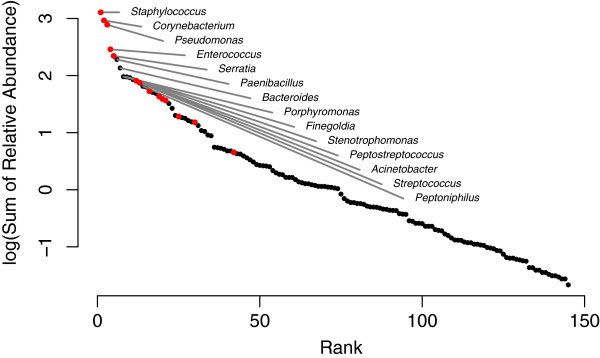
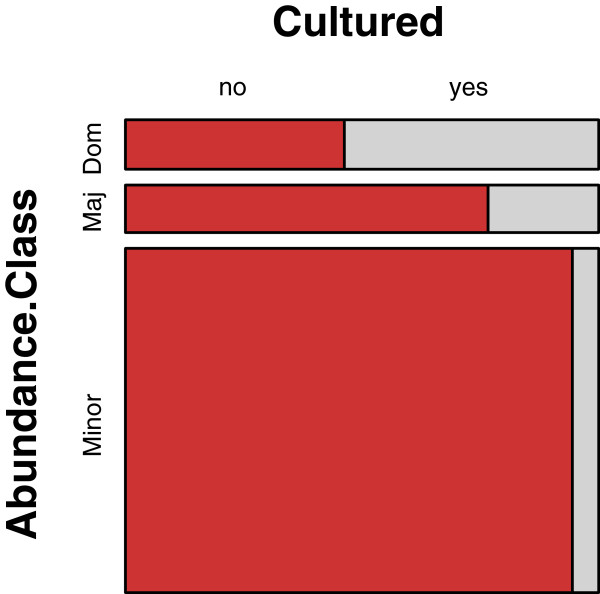
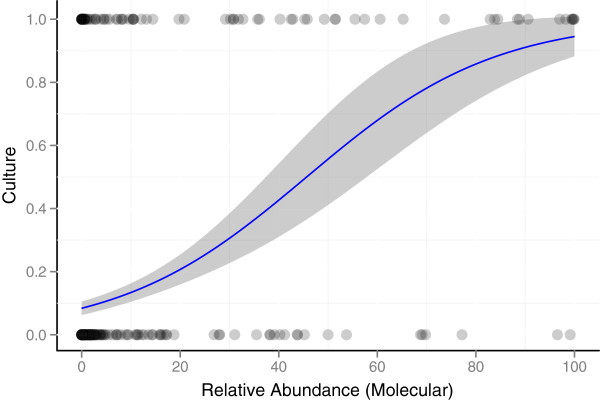
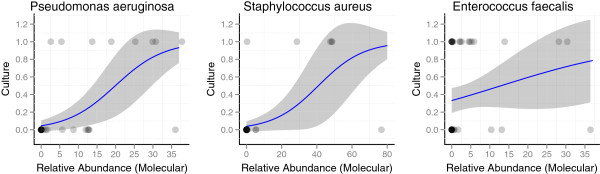
Background: Chronic wounds affect millions of people and cost billions of dollars in the United States each year. These wounds harbor polymicrobial biofilm communities, which can be difficult to elucidate using culturing methods. Clinical molecular microbiological methods are increasingly being employed to investigate the microbiota of chronic infections, including wounds, as part of standard patient care. However, molecular testing is more sensitive than culturing, which results in markedly different results being reported to clinicians. This study compares the results of aerobic culturing and molecular testing (culture-free 16S ribosomal DNA sequencing), and it examines the relative abundance score that is generated by the molecular test and the usefulness of the relative abundance score in predicting the likelihood that the same organism would be detected by culture. Methods: Parallel samples from 51 chronic wounds were studied using aerobic culturing and 16S DNA sequencing for the identification of bacteria. Results: One hundred forty-five (145) unique genera were identified using molecular methods, and 68 of these genera were aerotolerant. Fourteen (14) unique genera were identified using aerobic culture methods. One-third (31/92) of the cultures were determined to be < 1% of the relative abundance of the wound microbiota using molecular testing. At the genus level, molecular testing identified 85% (78/92) of the bacteria that were identified by culture. Conversely, culturing detected 15.7% (78/497) of the aerotolerant bacteria and detected 54.9% of the collective aerotolerant relative abundance of the samples. Aerotolerant bacterial genera (and individual species including Staphylococcus aureus , Pseudomonas aeruginosa , and Enterococcus faecalis ) with higher relative abundance scores were more likely to be detected by culture as demonstrated with regression modeling. Conclusion: Discordance between molecular and culture testing is often observed. However, culture-free 16S ribosomal DNA sequencing and its relative abundance score can provide clinicians with insight into which bacteria are most abundant in a sample and which are most likely to be detected by culture.
Overview
The claims and statistics of this paper haven’t been checked yet.
Run the check — free, no account needed. It reads the open-access text and checks the sources it cites.
Integrity signals
Registry
Cites
Statistics
Figures
Verification
Claims the paper makes
The claims and statistics of this paper haven’t been checked yet.
Run the check — free, no account needed. It reads the open-access text and checks the sources it cites.
Claims other papers make about this one
Each is checked against this paper’s own text: does it say what the citing paper says it does?
In the citing paper
“The identification of particular polymicrobial organisms (179) or the observation of high protease levels, such as MMPs or ADAMs (a disintegrin and metalloproteinases), found in the wound bed (180) are already being used to modify treatment plans and improve outcomes.”
From Wound repair and regeneration: Mechanisms, signaling, and translation (2014) · cites this paper as [179]
Self-check
Percentages, sums and reported differences re-computed from the paper’s own numbers.
The self-check needs the paper’s full text.
Citations
Cites
James, G. A., Swogger, E., Wolcott, R., Pulcini, E. D., Secor, P., Sestrich, J., Costerton, J. W., & Stewart, P. S. (2008) · Wound Repair and Regeneration · doi:10.1111/j.1524-475x.2007.00321.x · Cited by 1,543
Self-citationRecent findings on the viable but nonculturable state in pathogenic bacteria.
Oliver, J. (2010) · FEMS Microbiology Reviews · doi:10.1111/j.1574-6976.2009.00200.x · Cited by 1,231
Dowd, S. E., Sun, Y., Secor, P. R., Rhoads, D. D., Wolcott, B. M., James, G. A., & Wolcott, R. D. (2008) · BMC Microbiology · doi:10.1186/1471-2180-8-43 · Cited by 783
Self-citationDistribution, Organization, and Ecology of Bacteria in Chronic Wounds
Kirketerp‐Møller, K., Jensen, P. Ø., Fazli, M., Madsen, K. G., Pedersen, J., Moser, C. E., Tolker‐Nielsen, T., Høiby, N., Givskov, M., & Bjarnsholt, T. (2008) · Journal of Clinical Microbiology · doi:10.1128/jcm.00501-08 · Cited by 547
Towards diagnostic guidelines for biofilm-associated infections
Hall‐Stoodley, L., Stoodley, P., Kathju, S., Høiby, N., Moser, C. E., Costerton, J. W., Moter, A., & Bjarnsholt, T. (2012) · FEMS Immunology & Medical Microbiology · doi:10.1111/j.1574-695x.2012.00968.x · Cited by 366
Price, L. B., Liu, C. M., Melendez, J. H., Frankel, Y. M., Engelthaler, D., Aziz, M., Bowers, J., Rattray, R., Ravel, J., Kingsley, C., et al. (2009) · PLoS ONE · doi:10.1371/journal.pone.0006462 · Cited by 237
The microbiology of infected and noninfected leg ulcers
Bowler, P. G., & Davies, B. J. (1999) · International Journal of Dermatology · doi:10.1046/j.1365-4362.1999.00738.x · Cited by 233
Comparison of Culture and Molecular Identification of Bacteria in Chronic Wounds
Rhoads, D. D., Wolcott, R. D., Sun, Y., & Dowd, S. E. (2012) · International Journal of Molecular Sciences · doi:10.3390/ijms13032535 · Cited by 221
Self-citationCulture Enriched Molecular Profiling of the Cystic Fibrosis Airway Microbiome
Sibley, C. D., Grinwis, M. E., Field, T. R., Eshaghurshan, C. S., Faria, M. M. P., Dowd, S. E., Parkins, M. D., Rabin, H. R., & Surette, M. G. (2011) · PLoS ONE · doi:10.1371/journal.pone.0022702 · Cited by 196
Biofilms in wounds: management strategies
Rhoads, D. D., Wolcott, R. D., & Percival, S. L. (2008) · Journal of Wound Care · doi:10.12968/jowc.2008.17.11.31479 · Cited by 175
Self-citation
Cited by
Sorted by citations
Items 101–168 of 168
Gang, R., Okello, D., & Kang, Y. (2024) · Heliyon · doi:10.1016/j.heliyon.2024.e29717 · Cited by 11
Rondas, A., Halfens, R. J. G., Schols, J. M. G. A., Thiesen, K. P., Trienekens, T. A. M., & Stobberingh, E. E. (2015) · Future Microbiology · doi:10.2217/fmb.15.97 · Cited by 11
Antioxidant and in vivo Wound Healing Activities of Clausena anisata
Agyepong, N., Agyare, C., Ossei, P. P. S., & Boakye, Y. D. (2015) · European Journal of Medicinal Plants · doi:10.9734/ejmp/2015/19792 · Cited by 11
Okorie, P. C., Olasupo, N. A., Anike, F. N., Elemo, G. N., & Isikhuemhen, O. S. (2017) · International Journal of Food Contamination · doi:10.1186/s40550-017-0057-7 · Cited by 11
Zhang, B., Li, M., Liu, Y., Zhang, B., Liu, Z., Chen, X., Huo, J., & Han, Y. (2022) · International Wound Journal · doi:10.1111/iwj.13943 · Cited by 10
Gieroń, M., Żarnowiec, P., Zegadło, K., Gmiter, D., Czerwonka, G., Kaca, W., & Kręcisz, B. (2023) · International Journal of Molecular Sciences · doi:10.3390/ijms25010411 · Cited by 10
Evaluation of bacterial transmission to the paranasal sinuses through sinus irrigation
Hauser, L. J., Ir, D., Kingdom, T. T., Robertson, C. E., Frank, D. N., & Ramakrishnan, V. R. (2016) · International Forum of Allergy & Rhinology · doi:10.1002/alr.21755 · Cited by 10
Precise management of chronic wound by nisin with antibacterial selectivity
Qu, W., Yang, K., Liu, J., Liu, K., Liu, F., Ji, J., & Zhang, W. (2019) · Biomedical Materials · doi:10.1088/1748-605x/ab12b3 · Cited by 9
Gates, L., Klein, N. J., Sebire, N. J., & Alber, D. (2021) · Frontiers in Microbiology · doi:10.3389/fmicb.2021.649312 · Cited by 9
Rahman, M. M., Lim, S. J., & Park, Y. C. (2022) · Animals · doi:10.3390/ani12080979 · Cited by 9
McCarty, S. M., Jones, E. M., Finnegan, S., Woods, E. J., Cochrane, C. A., & Percival, S. L. (2014) · Elsevier eBooks · doi:10.1016/b978-0-12-397043-5.00018-9 · Cited by 9
The Potential Effect of Medicinal Plants for Cartilage Regeneration
Alaribe, F. N., Razwinani, M., Maepa, M., & Motaung, K. S. (2019) · IntechOpen eBooks · doi:10.5772/intechopen.84780 · Cited by 9
Malczynski, M., Zhu, A. M., Zembower, T., & Qi, C. (2021) · Diagnostic Microbiology and Infectious Disease · doi:10.1016/j.diagmicrobio.2021.115451 · Cited by 9
Weber, K. S., Wagener, K., Blanco, M., Bauersachs, S., & Bollwein, H. (2021) · BMC Genomics · doi:10.1186/s12864-021-07701-3 · Cited by 9
Tibbits, G., Mohamed, A. H., Gelston, S., Flurin, L., Raval, Y. S., Greenwood‐Quaintance, K. E., Patel, R., & Beyenal, H. (2022) · Biotechnology and Bioengineering · doi:10.1002/bit.28248 · Cited by 8
Bello–López, J. M., López-Ornelas, A., Vilchis-Rangel, R. E., Ribas‐Aparicio, R. M., Del-Moral, P., Donis-Rocandio, J. E., Cueto, J., Aparicio‐Ozores, G., & Moreno, J. G. (2020) · Journal of Medical Microbiology · doi:10.1099/jmm.0.001204 · Cited by 7
Are bacteria, fungi, and archaea present in the midtrimester amniotic fluid?
Romero, R. J., Gervasi, M. T., DiGiulio, D. B., Jung, E., Suksai, M., Miranda, J., Theis, K. R., Gotsch, F., & Relman, D. A. (2023) · Journal of Perinatal Medicine · doi:10.1515/jpm-2022-0604 · Cited by 7
Biofilm in Infective Endocarditis and Clinical Implications
Elgharably, H., Hussain, S. T., Shrestha, N. K. M., & Pettersson, G. (2018) · Recent clinical techniques, results, and research in wounds · doi:10.1007/15695_2018_109 · Cited by 7
Molecular diagnostics for infectious disease
Sayeli, F. G., Pirmoradian, M., Zanjaniha, S., Moradi, H., Khorrami, Y., Saedi, M., Bayati, Z., Zahedi, P., & Jafari, D. (2025) · Clinica Chimica Acta · doi:10.1016/j.cca.2025.120619 · Cited by 6
Farnesol Emulsion as an Effective Broad-Spectrum Agent against ESKAPE Biofilms
Tan, L., Ma, R., Katz, A. J., & Levi, N. (2024) · Antibiotics · doi:10.3390/antibiotics13080778 · Cited by 7
Rad, N. M., Shafie, F., Chaghervand, M. M., Kashfi, S., Rashidipour, M., Chehelcheraghi, F., Mozaffarpur, S. A., & Rasoulian, B. (2018) · DOAJ (DOAJ: Directory of Open Access Journals) · doi:10.22087/hmj.v3i1.702 · Cited by 6
Cheong, J., Irvine, J. M., Roesemann, S., Nora, A., Morgan, C. E., Daniele, C., Kalan, L., & Brennan, M. B. (2022) · Therapeutic Advances in Endocrinology and Metabolism · doi:10.1177/20420188221118747 · Cited by 6
Kohta, M., Koyanagi, H., Inagaki, Y., Nishikawa, K., Kobayashi, N., Tamura, S., Ishikawa, M., Banno, Y., Takekoshi, K., Mano, K., et al. (2023) · Geriatrics and gerontology international/Geriatrics & gerontology international · doi:10.1111/ggi.14624 · Cited by 6
Brar, A., & Bergmann, D. (2019) · International Journal of Speleology · doi:10.5038/1827-806x.48.2.2226 · Cited by 6
HOCl-producing electrochemical bandage is active in murine polymicrobial wound infection
Fleming, D. F., Bozyel, I., Koscianski, C. A., Ozdemir, D., Karau, M. J., Cuello, L., Anoy, M. M. I., Gelston, S., Schuetz, A. N., Greenwood‐Quaintance, K. E., et al. (2024) · Microbiology Spectrum · doi:10.1128/spectrum.00626-24 · Cited by 5
Nayak, N., Satyamoorthy, K., & Murali, T. S. (2023) · Journal of Wound Care · doi:10.12968/jowc.2023.32.sup6a.xcvii · Cited by 6
Hussain, M. A., Rathnayake, I. U., & Huygens, F. (2017) · International Journal of Basic & Clinical Pharmacology · doi:10.18203/2319-2003.ijbcp20171079 · Cited by 4
Gates, L., Mistry, T., Ogunbiyi, O. K., Kite, K., Klein, N. J., Sebire, N. J., & Alber, D. (2023) · Frontiers in Microbiology · doi:10.3389/fmicb.2023.1171670 · Cited by 4
Genomic characterisation of bioaerosols within livestock facilities: A systematic review
Farrell, C., Hunter, E., Wilson, P., & White, S. (2024) · The Science of The Total Environment · doi:10.1016/j.scitotenv.2024.170722 · Cited by 4
Глахоевна, К. Е., & Padrul, M. M. (2018) · Obstetrics Gynecology and Reproduction · doi:10.17749/2313-7347.2017.11.4.014-022 · Cited by 4
The utility of MolecuLight bacterial sensing in the management of burns and traumatic wounds
Jeffery, S. (2019) · Photonic Diagnosis, Monitoring, Prevention, and Treatment of Infections and Inflammatory Diseases · doi:10.1117/12.2504377 · Cited by 4
Future of Cellular and Molecular Diagnostics
Raghavendra, P. B., & Pullaiah, T. (2018) · Elsevier eBooks · doi:10.1016/b978-0-12-813679-9.00008-7 · Cited by 4
Taxonomic diversity in the global wheat phyllosphere mycobiome – a meta analysis
Fischer, M. H., Rzepczynska, A., & Kjøller, R. (2025) · Frontiers in Plant Science · doi:10.3389/fpls.2025.1597807 · Cited by 3
Karminska, M., Czernikiewicz, K., Głowacka-Kamińska, W., Skrzypska, N., Wróblewska, J., Wojtczak, O., Tarczykowski, J., & Zagaja, K. K. (2026) · Cureus · doi:10.7759/cureus.105081 · Cited by 3
The Use of DNA Methods to Characterize Biofilm Infection
Wolcott, R. D., & Cox, S. B. (2014) · Springer series on biofilms · doi:10.1007/978-3-642-53833-9_2 · Cited by 3
Self-citationNeas, E. D., Dunn, J., Silva, E. D., Chambers, A. M., Luckasen, G. J., & Jaskowiak, A. J. (2016) · Advances in Wound Care · doi:10.1089/wound.2015.0682 · Cited by 3
Phenotypic and Molecular Identification of Bacteria Involved in Decubitus Ulcers
Dolati, M., Jahromy, S. H., Javadi, A., Karizi, S. Z., & Saki, B. G. (2017) · DOAJ (DOAJ: Directory of Open Access Journals) · Cited by 3
Ragothaman, K. K., Elmarsafi, T., Mobaraki, A., Zarick, C. S., Evans, K. K., Steinberg, J. S., Attinger, C. E., & Kim, P. J. (2021) · The Journal of Foot & Ankle Surgery · doi:10.1053/j.jfas.2020.07.009 · Cited by 3
Main microorganisms found and products used in contaminated tissular lesions: an integrative review
Pessanha, F. S., Barreto, B. M. F., de Oliveira, B. G. R. B., Chrizóstimo, M. M., de Souza, D. F., & Mafort, T. T. (2015) · Online Brazilian Journal of Nursing · doi:10.5935/1676-4285.20155111 · Cited by 3
Bens, L., Vanhoutvin, T., Kerremans, A., Jansen, D., Depypere, M., Hillary, T., Vermeire, S., Green, S. I., Matthijnssens, J., Sabino, J., et al. (2023) · bioRxiv (Cold Spring Harbor Laboratory) · doi:10.1101/2023.11.12.566737 · Cited by 3
Developments and insights into the analysis of the human microbiome
Rücker, O., Dangel, A., & Klein, H. (2013) · Journal of Laboratory Medicine · doi:10.1515/labmed-2013-0018 · Cited by 2
Microbiome in Embryonic Implantation and Implantation Failure
Franasiak, J. M., Moreno, I., & Simón, C. (2017) · Springer eBooks · doi:10.1007/978-3-319-71967-2_11 · Cited by 3
Prevalence and assessment of (infected) chronic wounds
Rondas, A. (2016) · doi:10.26481/dis.20160122ar · Cited by 2
Sasiene, Z. J., LeBrun, E. S., Velappan, N., Anderson, A. R., Patterson, N. H., Dufresne, M., Farrow, M. A., Norris, J. L., Caprioli, R. M., Mach, P. M., et al. (2024) · The Analyst · doi:10.1039/d4an00325j · Cited by 1
PROFIL SENSITIVITAS ANTIBIOTIK TERHADAP ISOLAT BAKTERI SWAB LUKA PENDERITA DIABETES MELITUS
Nugroho, R. B., Wibawa, D. A. A., & Prasetyanto, M. E. (2024) · GEMA KESEHATAN · doi:10.47539/gk.v16i1.448 · Cited by 1
Microbiology of Pressure Ulcers: A Systematic Review
Shelepenko, D., Jardim, B., Almeida, L. M., Azevedo, J. M., Catalão, I., Sítima, M., & Tomé, G. (2025) · Cureus · doi:10.7759/cureus.95912 · Cited by 1
Acet, F., Şahin, G., Göker, E. N. T., & Tavmergen, E. (2021) · Türk Üreme Tıbbı ve Cerrahisi Dergisi · doi:10.24074/tjrms.2020-80464 · Cited by 1
Biofilm Derived Oxylipin Mediated Autoimmune Response in Breast Implant SubjectsPreprint
Khan, I., Minto, R. E., Kelley-Patteson, C., Natta, B. W. V., Neumann, C. R., Suh, L., Singh, K., Lester, M. E., VonDerHaar, R. J., Gordillo, G. M., et al. (2020) · medRxiv · doi:10.1101/2020.11.18.20233510 · Cited by 1
Towards the Identification of Condition‐Specific Microbial Populations from Human Metagenomic Data
Laczny, C. C., & Wilmes, P. (2014) · Wiley eBooks · doi:10.1002/9783527672165.ch11
Vogl, I., Benet‐Pagès, A., Eck, S. H., Kuhn, M., Vosberg, S., Greif, P. A., Metzeler, K. H., Biskup, S., Müller‐Reible, C., & Klein, H. (2013)
Hussain, M. A. (2017) · Queensland University of Technology · doi:10.5204/thesis.eprints.110339
Endometrial Gene Expression for HHV-6
Coulam, C. B. (2019) · Springer eBooks · doi:10.1007/978-3-030-28584-5_8
Assessment Of Presumed Sterility Of The Human Placenta And Maternal Bladder
Alhousseini, A. (2019) · Human Biology
Greenberg, J. M. (2020) · Human Biology
Engineering Human Skin Equivalents to Prevent Infections in Skin Wounds
Vargas, M. I. P. (2021) · University of Groningen research database (University of Groningen / Centre for Information Technology) · doi:10.33612/diss.191419793
Lu, H., Gao, Y.-B., Qiu, X., Wang, Q., Liu, C.-M., Huang, X., Chen, H.-Y., Zeng, K., & Li, C. (2022) · World Journal of Clinical Cases · doi:10.12998/wjcc.v10.i35.13064
Profiling of Bacterial Species from Covid-19 Faecal Samples in Kurdistan Region-Iraq
Hama–Ali, M. A., & Hasan, A. H. (2023) · Science Journal of University of Zakho · doi:10.25271/sjuoz.2023.11.1.1031
Women in Infectious Agents and Disease: 2023
Chen, Z. (2024) · Frontiers research topics · doi:10.3389/978-2-8325-5069-4
Kariyawasam, R. M., Gascon, B., Challa, P., Mah, J., Lau, R., Valencia, B. M., Llanos‐Cuentas, A., & Boggild, A. K. (2024) · Therapeutic Advances in Infectious Disease · doi:10.1177/20499361241274200
Sung, M.-Y., Hsu, P.-C., Kuo, C., Chen, L.-K., Tsai, C.-C., & Hsu, Y. (2025) · Journal of Dental Sciences · doi:10.1016/j.jds.2025.11.004
基于多任务深度学习的3D‑EEM荧光光谱技术在细菌快速识别与定量分析中的应用
Xiaotong, 王. W., Jingshu, 倪. N., Yuhan, 王. W., Yong, 刘. L., Yang, 张. Z., Qian, 朱. Z., Yikun, 王. W., & Meili, 董. D. (2026) · Chinese Journal of Lasers · doi:10.3788/cjl260461
The Structural Genome Shapes the Chronic Wound MicrobiomePreprint
Omeir, K., Ancira, J. S., Gabrilska, R. A., Tipton, C. D., Phillips, N., Wolcott, J., & Phillips, C. D. (2026) · medRxiv · doi:10.64898/2026.10.13.26365461
Niezgoda, J., Abdo, R., Liden, B. A., Couch, A. L., Jones, G., Kamepalli, R., & Tettelbach, W. H. (2026) · Journal of Wound Care · doi:10.12968/jowc.2026.0400
Motte, L. R. D. L., Deflorio, L., Carreras, F., Salvatici, M., Corrado, C., & Drago, L. (2026) · Microorganisms · doi:10.3390/microorganisms14102401
Chronic Wounds as Biofilm Ecosystems: Modernizing Microbiology Beyond Planktonic Paradigms
Drago, L., & Motte, L. R. D. L. (2026) · Advances in Wound Care · doi:10.1177/21621918261501846
Metadata
- Authors
- Rhoads, D. D., Cox, S. B., Rees, E. J., Sun, Y., & Wolcott, R. D.
- Affiliations
- University of Pittsburgh Medical Center (US)
- Southwest Regional Wound Care Center (US)
- Corresponding author
- Wolcott, Randall D
- Venue
- BMC Infectious Diseases
- Published
- 2012-11-24
- Volume
- 12
- Issue
- 1
- Pages
- 321-321
- ISSN
- 1471-2334 (ISSN-L)
- PMC
- PMC3542000
- OpenAlex
- W2115171049
- Cited by
- 167
- References
- 17
- Citations by year
- 2026: 6 · 2025: 5 · 2024: 15 · 2023: 15 · 2022: 11 · 2021: 15 · 2020: 12 · 2019: 19 · 2018: 15 · 2017: 14 · 2016: 10 · 2015: 11 · 2014: 13 · 2013: 6
- FWCI
- 6.16
- Type
- journal article
- Language
- en
- Open access
- gold
- doi.org
- Licence
- Locations
- BMC Infectious Diseases (publishedVersion, cc-by)
- PubMed Central (publishedVersion, cc-by)
- PubMed (publishedVersion)
- D-Scholarship@Pitt (University of Pittsburgh) (acceptedVersion)
- DOAJ (DOAJ: Directory of Open Access Journals) (submittedVersion, cc-by-sa)
- Topics
- Health Sciences › Medicine › Microbiology (medical) › Bacterial Identification and Susceptibility Testing
- Health Sciences › Medicine › Surgery › Wound Healing and Treatments
- Health Sciences › Medicine › Microbiology (medical) › Actinomycetales infections and treatment
- Keywords
- chronic wound infection, wound microbiota, polymicrobial biofilms, Staphylococcus aureus, Pseudomonas aeruginosa, Enterococcus faecalis, bacterial identification
- MeSH terms
- Bacteria, Bacterial Infections, Bacteriological Techniques, Chronic Disease, DNA, Ribosomal, Humans, RNA, Ribosomal, 16S, United States, Wound Infection, Molecular Diagnostic Techniques
About these checks
Registry, retraction, Cites and statistics results are computed, not judged, with one exception: a printed reference that no index lists is read once by a model before it counts as a citation error. Claims are extracted by a model and kept only when their quote appears verbatim in the text; each cited source is then checked, with a model’s help, for whether it says what the claim relies on. Those verdicts can be wrong — read the claim’s quote and the cited source before relying on one.
Statistics and arithmetic are recomputed, not judged.
Confidence bands are shown only for fields calibrated on our annotated test set. None is calibrated yet, so no band is shown.
What counts as a claim ›How we measure confidence ›How we check this ›
Are you an author, or do you see a problem with this page? Request a review
