

Why do some women still prefer traditional birth attendants and home delivery?: a qualitative study on delivery care services in West Java Province, Indonesia
Open accessThe DOI matches its Crossref record; 51 of the 53 references it cites were found in a registry or an index.
Abstract
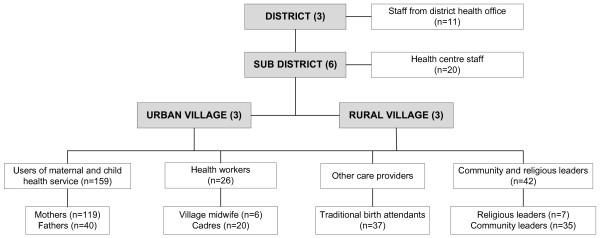
BACKGROUND: Trained birth attendants at delivery are important for preventing both maternal and newborn deaths. West Java is one of the provinces on Java Island, Indonesia, where many women still deliver at home and without the assistance of trained birth attendants. This study aims to explore the perspectives of community members and health workers about the use of delivery care services in six villages of West Java Province. METHODS: A qualitative study using focus group discussions (FGDs) and in-depth interviews was conducted in six villages of three districts in West Java Province from March to July 2009. Twenty FGDs and 165 in-depth interviews were conducted involving a total of 295 participants representing mothers, fathers, health care providers, traditional birth attendants and community leaders. The FGD and in-depth interview guidelines included reasons for using a trained or a traditional birth attendant and reasons for having a home or an institutional delivery. RESULTS: The use of traditional birth attendants and home delivery were preferable for some community members despite the availability of the village midwife in the village. Physical distance and financial limitations were two major constraints that prevented community members from accessing and using trained attendants and institutional deliveries. A number of respondents reported that trained delivery attendants or an institutional delivery were only aimed at women who experienced obstetric complications. The limited availability of health care providers was reported by residents in remote areas. In these settings the village midwife, who was sometimes the only health care provider, frequently travelled out of the village. The community perceived the role of both village midwives and traditional birth attendants as essential for providing maternal and health care services. CONCLUSIONS: A comprehensive strategy to increase the availability, accessibility, and affordability of delivery care services should be considered in these West Java areas. Health education strategies are required to increase community awareness about the importance of health services along with the existing financing mechanisms for the poor communities. Public health strategies involving traditional birth attendants will be beneficial particularly in remote areas where their services are highly utilized.
Overview
The claims and statistics of this paper haven’t been checked yet.
Free: it reads the open-access text and checks the first 5 claims that cite a source we can check. Create a free account to check every claim.
Integrity signals
Registry
Cites
Statistics
Figures
Verification
Claims the paper makes
The claims and statistics of this paper haven’t been checked yet.
Free: it reads the open-access text and checks the first 5 claims that cite a source we can check. Create a free account to check every claim.
Claims other papers make about this one
Each is checked against this paper’s own text: does it say what the citing paper says it does?
The source backs part of the claim, not all of it — or backs it for a different population, condition or comparison.
In the citing paper
“Facilitator/barrier: Health insurance schemes, national population policies, and national policies aimed to shift deliveries from the home to a facility”
From Facilitators and barriers to facility-based delivery in low- and middle-income countries: a qualitative evidence synthesis (2014) · cites this paper as [33]
Experimental — accuracy not yet measuredThe source backs part of the claim, not all of it — or backs it for a different population, condition or comparison.
In the citing paper
“Barrier: Inaccessibility of transportation and facilities during off-hours”
From Facilitators and barriers to facility-based delivery in low- and middle-income countries: a qualitative evidence synthesis (2014) · cites this paper as [33]
Experimental — accuracy not yet measuredThe source backs part of the claim, not all of it — or backs it for a different population, condition or comparison.
In the citing paper
“Barrier: TBAs perceived as providing high quality care”
From Facilitators and barriers to facility-based delivery in low- and middle-income countries: a qualitative evidence synthesis (2014) · cites this paper as [33]
Experimental — accuracy not yet measuredThe source backs part of the claim, not all of it — or backs it for a different population, condition or comparison.
In the citing paper
“Facilitator: TBAs perceived as providing low quality care”
From Facilitators and barriers to facility-based delivery in low- and middle-income countries: a qualitative evidence synthesis (2014) · cites this paper as [33]
Experimental — accuracy not yet measuredThe source backs part of the claim, not all of it — or backs it for a different population, condition or comparison.
In the citing paper
“Across many contexts, parturient women may not be in full control of the decision to seek facility-based delivery, instead relying on the decisions made by many actors, including elder women, husbands, family members, and neighbors.”
From Facilitators and barriers to facility-based delivery in low- and middle-income countries: a qualitative evidence synthesis (2014) · cites this paper as [33]
Experimental — accuracy not yet measured
50 more claims about this paper
Create a free account to see every claim other papers make about this one.
Self-check
Percentages, sums and reported differences re-computed from the paper’s own numbers.
The self-check needs the paper’s full text.
Citations
Cites
Qualitative research practice: a guide for social science students and researchers
(2003) · Choice Reviews Online · doi:10.5860/choice.41-1319 · Cited by 10,543
Qualitative methods for health research
(2009) · Choice Reviews Online · doi:10.5860/choice.47-0901 · Cited by 4,596
4 million neonatal deaths: When? Where? Why?
Lawn, J. E., Cousens, S., & Zupan, J. (2005) · The Lancet · doi:10.1016/s0140-6736(05)71048-5 · Cited by 3,670
Too far to walk: Maternal mortality in context
Thaddeus, S., & Maine, D. (1994) · Social Science & Medicine · doi:10.1016/0277-9536(94)90226-7 · Cited by 3,240
Maternal mortality: who, when, where, and why
Ronsmans, C., & Graham, W. J. (2006) · The Lancet · doi:10.1016/s0140-6736(06)69380-x · Cited by 1,801
Evidence-based, cost-effective interventions: How many newborn babies can we save?
Darmstadt, G. L., Bhutta, Z. A., Cousens, S., Adam, T., Walker, N., & de Bernis, L. (2005) · The Lancet · doi:10.1016/s0140-6736(05)71088-6 · Cited by 1,541 · cited 1×
“A recent review reported that around 20-30% of neonatal mortality could be reduced by implementing skilled birth care services [8].”
BackgroundEducation as a Factor in Mortality Decline An Examination of Nigerian Data
Caldwell, J. C. (1979) · Population Studies · doi:10.2307/2173888 · Cited by 1,093 · cited 1×
“A deprived financial situation is often linked to low education levels, which affects one’s ability to seek the most appropriate health care services [4,46].”
BackgroundThe World Health Report 2005 - make every mother and child count
Lerberghe, W. V., Manuel, A., Matthews, Z., & Wolfheim, C. (2005) · ePrints Soton (University of Southampton) · Cited by 1,015
Manandhar, D. S., Osrin, D., Shrestha, B. P., Mesko, N., Morrison, J., Tumbahangphe, K. M., Tamang, S., Thapa, S., Shrestha, D., Thapa, B., et al. (2004) · The Lancet · doi:10.1016/s0140-6736(04)17021-9 · Cited by 847
Bang, A. T., Bang, R. A., Baitule, S. B., Reddy, M. H., & Deshmukh, M. D. (1999) · The Lancet · doi:10.1016/s0140-6736(99)03046-9 · Cited by 842 · cited 1×
“Previous trials of delivery and postnatal care services involving traditional birth attendants in India and Pakistan demonstrated that engaging traditional birth attendants in the maternal and child health services had a favourable impact on neonatal and perinatal mortality [ 52 ,53].”
Background
Research works printed but not linked: 13
- Hull T Widayatun Raharto A Setiawan B Neither dukun nor doctor: Some problems of the village midwife programme in eastern Indonesia Australian Council for Overseas Aid Development Bulletin 1998 48
- Ministry of Health Republic of Indonesia - The Directorate General of Community Health Technical Guidelines for Health Insurance Scheme for the Population in Health Centres and its networks Year 2008 (Petunjuk teknis Jaminan Kesehatan Masyarakat (Jamkesmas) di Puskesmas dan Jaringannya Tahun 2008) 2008 Jakarta Ministry of Health Republic of Indonesia - The Directorate General of Community Health
- Badan Pusat Statistik-Statistics Indonesia (BPS), National Family Planning Coordinating Board, Ministry of Health, ORC Macro Indonesia Demographic and Health Survey 2007 2008 Calverton, Maryland: BPS and ORC Macro
- National Institute of Health Research and Development MoH, Republic of Indonesia Report on Results of National Basic Health Research 2007 2008 Jakarta: National Institute of Health Research and Development, Ministry of Health, Republic of Indonesia
- Ministry of Health Republic of Indonesia Indonesia Health Profile 2005 2007 Jakarta: Ministry of Health Republic of Indonesia
- Ministry of Health Republic of Indonesia Indonesia Health Profile 2007 2008 Jakarta: Ministry of Health Republic of Indonesia
- District Health Office of Garut Health Profile of Garut District (Profil Kesehatan Kabupaten Garut) 2008 2008 Garut District: District Health Office of Garut
- District Health Office of Ciamis Health Profile of Ciamis District (Profil Kesehatan Ciamis) 2008 2008 Ciamis District: District Health Office of Ciamis
- District Health Office of Sukabumi Health Profile of Sukabumi District (Profil Kesehatan Sukabumi) 2008 2008 Sukabumi District: District Health Office of Sukabumi
- Badan Pusat Statistik-Statistics Indonesia (BPS) Population of Indonesia: results of the 2005 Intercensal Population Survey [Penduduk Indonesia: hasil Survei Penduduk antar Sensus 2005] 2006 Jakarta: Badan Pusat Statistik-Statistics Indonesia (BPS)
- Ministry of Health Republic of Indonesia - Center for Data and Information Glosarium: Data & Informasi Kesehatan (Glossarium: Health Data and Information) 2006 Jakarta: Ministry of Health Republic of Indonesia - Center for Data and Information
- World Health Organization Traditional Birth Attendants: a joint WHO/UNFPA/UNICEF statement 1992 Geneva: World Health Organization
- Hunter CL Rozario S, Samuel G Embracing modernity: transformations in Sasak confinement practices The daughters of Hariti: childbirth and female healers in South and Southeast Asia 2002 London: Routledge
Cited by
Bohren, M. A., Hunter, E. C., Munthe-Kaas, H. M., Souza, J. P., Vogel, J. P., & Gülmezoglu, A. M. (2014) · Reproductive Health · doi:10.1186/1742-4755-11-71 · Cited by 823
“Facilitator: Facility delivery valued for obstetric complications [18,19,26,29-38]”
BackgroundInfluentialMannava, P., Durrant, K., Fisher, J., Chersich, M., & Luchters, S. (2015) · Globalization and Health · doi:10.1186/s12992-015-0117-9 · Cited by 485
“In nine studies set in countries of Africa, Asia, Latin America and the Middle East, doctors, midwives and nurses were said to be impatient and made women feel rushed during the process of childbirth [39, 43, 52 68, 84, 90, 99, 102, 104].”
BackgroundInfluentialWithers, M., Kharazmi, N., & Lim, E. (2018) · Midwifery · doi:10.1016/j.midw.2017.10.019 · Cited by 311
Sarker, B. K., Rahman, M., Rahman, T., Hossain, J., Reichenbach, L., & Mitra, D. K. (2016) · PLOS ONE · doi:10.1371/journal.pone.0146161 · Cited by 232
“The study might not have explored the religious norms in this regard [19].”
BackgroundSialubanje, C., Massar, K., Hamer, D. H., & Ruiter, R. A. (2015) · BMC Pregnancy and Childbirth · doi:10.1186/s12884-015-0652-7 · Cited by 203
“outcomes, based on the available information their past experience [10, 11, 17].”
BackgroundResultInfluentialTitaley, C. R., Hunter, C. L., Heywood, P., & Dibley, M. J. (2010) · BMC Pregnancy and Childbirth · doi:10.1186/1471-2393-10-61 · Cited by 192
“As mentioned earlier, the present analysis will focus on antenatal and postnatal services, as we have reported on delivery care services elsewhere [31].”
BackgroundMethodInfluentialSelf-citationKwambai, T. K., Dellicour, S., Desai, M., Ameh, C. A., Person, B., Achieng, F., Mason, L., Laserson, K. F., & ter Kuile, F. O. (2013) · BMC Pregnancy and Childbirth · doi:10.1186/1471-2393-13-134 · Cited by 164
“Therefore, it is important, during the initial ANC attendance and any community health education, to ensure that the populations understand that facility care is to be utilised, not just by those with complications, a misconception reported in other studies conducted in developing countries [30-32].”
ResultMbuagbaw, L., Medley, N., Darzi, A. J., Richardson, M., Habiba Garga, K., & Ongolo-Zogo, P. (2015) · Cochrane Database of Systematic Reviews · doi:10.1002/14651858.cd010994.pub2 · Cited by 156
Health-Seeking Behavior of People in Indonesia: A Narrative Review
Widayanti, A. W., Green, J., Heydon, S. J., & Norris, P. (2020) · Journal of Epidemiology and Global Health · doi:10.2991/jegh.k.200102.001 · Cited by 249
“People believed that birth is sacred and should be consistent with traditional beliefs [29,34,55].”
InfluentialFactors associated with institutional delivery service utilization in Ethiopia
Teklehaymanot, A. N., Kebede, A., & Hassen, K. (2016) · International Journal of Women s Health · doi:10.2147/ijwh.s109498 · Cited by 163
“This finding is in agreement with the study conducted in Philippines and qualitative study conducted in Indonesia.(50,55) The possible explanation might be that mothers who had history of problems have practical experience about the life treating care conditions than those who did not, this experience could motivate t…”
Kumbani, L. C., Bjune, G. A., Chirwa, E. M., Malata, A. M., & Odland, J. Ø. (2013) · Reproductive Health · doi:10.1186/1742-4755-10-9 · Cited by 195
“Specifically, services of skilled birth attendants were perceived important only during complications [48,49].”
BackgroundPiecing Together the Maternal Death Puzzle through Narratives: The Three Delays Model Revisited
Thorsen, V. C., Sundby, J., & Malata, A. M. (2012) · PLoS ONE · doi:10.1371/journal.pone.0052090 · Cited by 178
“For the other two it was a matter of having no other choice, as observed in other studies [27,30,31].”
ResultFactors influencing the use of antenatal care in rural West Sumatra, Indonesia
Agus, Y., & Horiuchi, S. (2012) · BMC Pregnancy and Childbirth · doi:10.1186/1471-2393-12-9 · Cited by 130
Kaso, M., & Addise, M. (2014) · Reproductive Health · doi:10.1186/1742-4755-11-55 · Cited by 128
“Study done in northern Ethiopia, Tanzania, Ghana and Indonesia indicate that some socio-demographic variables and financial limitations were determined whether the community members accessing and using trained attendants and institutional deliveries or not (G/Hiwot F: Assessment of Factors for Safe Delivery Service Ut…”
BackgroundSialubanje, C., Massar, K., Hamer, D. H., & Ruiter, R. A. C. (2014) · Health Education Research · doi:10.1093/her/cyu011 · Cited by 125
“Our findings are in line with past research from other low-income countries [15–19, 29–32], which has shown the importance of quality of care during labour and nurse-midwife’s attitudes in predicting women’s decision to use maternal healthcare services in subsequent pregnancies.”
BackgroundResultInfluentialFeyissa, T. R., & Agero, G. (2014) · PLoS ONE · doi:10.1371/journal.pone.0097194 · Cited by 132
“Similar studies in low income countries [21,22,30,31] showed that physical distance is one of the major constraints that prevented community members from accessing and using trained attendants and institutional deliveries.”
ResultWhat is quality in maternal and neonatal health care?
Raven, J., Tolhurst, R., Tang, S., & van den Broek, N. R. (2011) · Midwifery · doi:10.1016/j.midw.2011.09.003 · Cited by 141
“For example in many countries, traditional birth attendants are still preferred as they are seen to be more friendly and understanding of the needs of women during childbirth (Titaley et al., 2010).”
BackgroundRizkianti, A., Afifah, T., Saptarini, I., & Rakhmadi, M. F. (2020) · Midwifery · doi:10.1016/j.midw.2020.102816 · Cited by 121
Ganle, J. K., Parker, M., Fitzpatrick, R., & Otupiri, E. (2014) · International Journal for Equity in Health · doi:10.1186/s12939-014-0089-z · Cited by 96
“Within the literature, there is debate about the acceptable level at which a given population should be receiving CS [35-38].”
BackgroundSychareun, V., Hansana, V., Somphet, V., Xayavong, S., Phengsavanh, A., & Popenoe, R. (2012) · BMC Pregnancy and Childbirth · doi:10.1186/1471-2393-12-86 · Cited by 114
Titaley, C. R., Dibley, M. J., & Roberts, C. (2011) · Health Policy and Planning · doi:10.1093/heapol/czr053 · Cited by 110
“Studies have indicated that low midwife density aggravated by poor infrastructure in rural areas might hinder the ability of village midwives or other health professionals to provide health services (Thaddeus and Maine 1994; Makowiecka et al. 2008; Titaley et al. 2010a).”
BackgroundResultInfluentialSelf-citationLack of prenatal care in a traditional community: trends and perinatal outcomes
Abu‐Ghanem, S., Sheiner, E., Sherf, M., Wiznitzer, A., Sergienko, R., & Shoham‐Vardi, I. (2011) · Archives of Gynecology and Obstetrics · doi:10.1007/s00404-011-2153-x · Cited by 88
Determinants of health care seeking behaviour during pregnancy in Ogun State, Nigeria
and the CLIP Nigeria Feasibility Working Group, Akeju, D. O., Oladapo, O. T., Vidler, M., Adepoju, A., Sawchuck, D., Qureshi, R. N., Solarin, M., Adetoro, O. O., & von Dadelszen, P. (2016) · Reproductive Health · doi:10.1186/s12978-016-0139-7 · Cited by 86
“Cost affects health care behaviour significantly as do other socio-demographic factors such as occupation, parity, education, maternal age, and distance to health facility [9, 10].”
BackgroundTreacy, L., Bolkan, H. A., & Sagbakken, M. (2018) · PLOS ONE · doi:10.1371/journal.pone.0188280 · Cited by 82
Wilunda, C., Quaglio, G., Putoto, G., Lochoro, P., Dall’Oglio, G., Manenti, F., Atzori, A., Lochiam, R. M., Takahashi, R., Mukundwa, A., et al. (2014) · BMC Pregnancy and Childbirth · doi:10.1186/1471-2393-14-259 · Cited by 97
“This could be done through antenatal clinics [33,34] since almost 97% of women in Karamoja attend at least 1 antenatal care visit [19], or community health education [35].”
BackgroundResultInfluentialOnta, S. R., Choulagai, B. P., Shrestha, B., Subedi, N., Bhandari, G. P., & Krettek, A. (2014) · Global Health Action · doi:10.3402/gha.v7.24580 · Cited by 82
“Indonesia, Uganda, and Kenya, where transport facilities and irregularities among health care providers are the main causes of unavailability and poor utilization of SBA services, have reported a similar scarcity of SBAs (23, 34, 35).”
BackgroundRural Indonesia women’s traditional beliefs about antenatal care
Agus, Y., Horiuchi, S., & Porter, S. E. (2012) · BMC Research Notes · doi:10.1186/1756-0500-5-589 · Cited by 75
Traditional birth attendants and birth outcomes in low-middle income countries: A review
Garcés, A., McClure, E. M., Espinoza, L., Saleem, S., Figueroa, L., Bucher, S., & Goldenberg, R. L. (2019) · Seminars in Perinatology · doi:10.1053/j.semperi.2019.03.013 · Cited by 92
Does a ban on informal health providers save lives? Evidence from Malawi
Godlonton, S., & Okeke, E. N. (2015) · Journal of Development Economics · doi:10.1016/j.jdeveco.2015.09.001 · Cited by 91
“2 Despite the best efforts of regulators to shift births into the formal sector, the use of these informal (or traditional) birth attendants has remained popular (Titaley et al., 2010).”
(2013) · PubMed · Cited by 71
Kaphle, S., Hancock, H., & Newman, L. (2013) · Midwifery · doi:10.1016/j.midw.2013.06.002 · Cited by 79
“…medical view of pregnancy and birth often fails to acknowledge socio-cultural dimensions important to women (Kitzinger 1997; Johnson, 2008; MacCourt, 2009; Titaley et al., 2009, 2010a, 2010b; Benoit et al., 2010; Haines et al., 2010, 2011a; Lori and Boyle, 2011; Sawyer et al., 2011; Teman, 2011).”
BackgroundHabte, F., & Demissie, M. (2015) · BMC Pregnancy and Childbirth · doi:10.1186/s12884-015-0716-8 · Cited by 82
“This finding of the study is very consistent with other studies conducted in Afghanistan, Indonesia, Tanzania and Ethiopia [24, 29, 36, 37].”
ResultAziato, L., & Omenyo, C. N. (2018) · BMC Pregnancy and Childbirth · doi:10.1186/s12884-018-1691-7 · Cited by 68
“It is thus, observed that health policies that neglect the impact of TBAs would not be effective because some women still prefer home delivery and TBA services [5, 17].”
BackgroundBhattacharyya, S., Srivastava, A., Roy, R., & Avan, B. I. (2016) · BMC Pregnancy and Childbirth · doi:10.1186/s12884-016-0839-6 · Cited by 63
Mbuagbaw, L. C. E., Garga, K. H., & Ongolo‐Zogo, P. (2014) · Cochrane Database of Systematic Reviews · doi:10.1002/14651858.cd010994 · Cited by 71
Community health workers in Ghana: the need for greater policy attention
Baatiema, L., Sumah, A. M., Tang, P. N., & Ganle, J. K. (2016) · BMJ Global Health · doi:10.1136/bmjgh-2016-000141 · Cited by 61
Khatri, R. B., Dangi, T. P., Gautam, R. K., Shrestha, K. N., & Homer, C. (2017) · PLoS ONE · doi:10.1371/journal.pone.0177602 · Cited by 70
“The time taken to reach the health institution and the waiting time affect the income of women indirectly (for example through lost daily wages), which had also been observed in a study in South East Nigeria [47] and Indonesia [48].”
ResultShah, R., Rehfuess, E. A., Paudel, D., Maskey, M. K., & Delius, M. (2018) · Reproductive Health · doi:10.1186/s12978-018-0553-0 · Cited by 74
“Lack of confidence in midwives working in rural health facilities has also been reported by studies in Ethiopia [41] and Indonesia [35], where village midwives were perceived to be young and inexperienced whereas TBAs were considered to be more mature and caring.”
BackgroundResultInfluentialLassi, Z. S., Middleton, P., Bhutta, Z. A., & Crowther, C. A. (2019) · F1000Research · doi:10.12688/f1000research.17828.1 · Cited by 74
Ntoimo, L. F. C., Okonofua, F. E., Ekwo, C., Ojuolape, S., Igboin, B., Imongan, W., & Yaya, S. (2021) · Midwifery · doi:10.1016/j.midw.2021.103158 · Cited by 89
Women's perspective of maternity care in Cambodia
Ith, P., Dawson, A. J., & Homer, C. (2012) · Women and Birth · doi:10.1016/j.wombi.2012.05.002 · Cited by 76
Husbands’ experiences and perceptions regarding the use of maternity waiting homes in rural Zambia
Sialubanje, C., Massar, K., Kirch, E. M., van der Pijl, M. S. G., Hamer, D. H., & Ruiter, R. A. C. (2016) · International Journal of Gynecology & Obstetrics · doi:10.1016/j.ijgo.2015.08.023 · Cited by 57
“Consistent with previous studies from Zambia [2,5–7] and other low-income countries [21,22], the present findings show that most respondents’ wives did not use MWHs during their previous pregnancy because of reasons such as the perceived poor state and low quality of services in the MWHs and the non-availability of nu…”
ResultSemwanga, A. R., Nakubulwa, S., & Adam, T. (2016) · Health Research Policy and Systems · doi:10.1186/s12961-016-0101-8 · Cited by 69
Turinawe, E. B., Rwemisisi, J. T., Musinguzi, L. K., de Groot, M., Muhangi, D., de Vries, D. H., Mafigiri, D. K., Katamba, A., Parker, N., & Pool, R. (2016) · Reproductive Health · doi:10.1186/s12978-016-0147-7 · Cited by 54
“It has been argued that the generally poor functionality of the health system means that TBAs will continue to remain a source of care for many especially in rural areas of Uganda [16, 39 – 42].”
Brooks, M. I., Thabrany, H., Fox, M. P., Wirtz, V. J., Feeley, F. G., & Sabin, L. (2017) · BMC Health Services Research · doi:10.1186/s12913-017-2028-3 · Cited by 66
“For families in poor households with limited financial means, the problem of distance is a commonly-noted rationale for using TBAs within the community [18, 31].”
InfluentialTransfer from Planned Home Birth to Hospital: Improving Interprofessional Collaboration
Vedam, S., Leeman, L. M., Cheyney, M. J., Fisher, T. J., Myers, S. M., Low, L. K., & Ruhl, C. (2014) · Journal of Midwifery & Women s Health · doi:10.1111/jmwh.12251 · Cited by 61
Sialubanje, C., Massar, K., Hamer, D. H., & Ruiter, R. A. C. (2014) · Health Education Research · doi:10.1093/her/cyu057 · Cited by 61
“in Indonesia [32].”
The long road to health: Healthcare utilization impacts of a road pavement policy in rural India
Aggarwal, S. (2021) · Journal of Development Economics · doi:10.1016/j.jdeveco.2021.102667 · Cited by 71
Sexual and reproductive health and rights in changing health systems
Sen, G., & Govender, V. (2014) · Global Public Health · doi:10.1080/17441692.2014.986161 · Cited by 71
Utomo, B., Sucahya, P. K., & Utami, F. R. (2011) · International Journal for Equity in Health · doi:10.1186/1475-9276-10-47 · Cited by 65
“There is also reluctance to use the trained but young and often unmarried midwives by the village women [14] and there is also opposition from the traditional birth attendants (TBAs) [15].”
BackgroundALUKO, J. O., Anthea, R., & Modeste, R. R. M. (2019) · BMC Health Services Research · doi:10.1186/s12913-018-3819-x · Cited by 62
“The unskilled may not be able to recognise, manage or refer complications during pregnancy, labour, childbirth and puerperium [19, 20].”
BackgroundOnonokpono, D. N., Odimegwu, C. O., Imasiku, E. N. S., & Adedini, S. A. (2013) · Maternal and Child Health Journal · doi:10.1007/s10995-013-1323-9 · Cited by 49
August, F., Pembe, A. B., Kayombo, E. J., Mbekenga, C., Axemo, P., & Darj, E. (2015) · Global Health Action · doi:10.3402/gha.v8.26922 · Cited by 59
“Another explanation for the dissonance between planned and actual behaviour could be due to the lack of money for transportation, the availability of TBA, and an inability to recognise the progress of labour (56, 63).”
BackgroundSialubanje, C., Massar, K., Hamer, D. H., & Ruiter, R. A. C. (2017) · BMC Pregnancy and Childbirth · doi:10.1186/s12884-017-1317-5 · Cited by 55
Factors influencing Indonesian women's use of maternal health care services
Kurniati, A., Chen, C., Efendi, F., & Berliana, S. M. (2017) · Health Care For Women International · doi:10.1080/07399332.2017.1393077 · Cited by 59
“In other studies, women’s decision for not using institutional delivery and other maternal health care could be influenced by their previous experience with non-complication pregnancy (Titaley et al., 2010) or incompetent health providers (Birmeta et al., 2013).”
BackgroundAhmed, M., Demissie, M., Worku, A., Medhanyie, A. A., & Berhane, Y. (2019) · Reproductive Health · doi:10.1186/s12978-019-0833-3 · Cited by 59
Rishworth, A., Dixon, J., Luginaah, I., Mkandawire, P., & Tampah Prince, C. (2016) · Social Science & Medicine · doi:10.1016/j.socscimed.2015.11.018 · Cited by 46
Maternal deaths in eastern Indonesia: 20 years and still walking: an ethnographic study
Belton, S., Myers, B. A., & Ngana, F. R. (2014) · BMC Pregnancy and Childbirth · doi:10.1186/1471-2393-14-39 · Cited by 65
“Antenatal care is generally infrequent for women from rural areas, from poor households and with little education [7] and women have particular preferences for birth at home [8].”
BackgroundAynalem, B. Y., Melesse, M. F., & Bazezew, Y. (2023) · Women s Health Reports · doi:10.1089/whr.2023.0024 · Cited by 89
Mageda, K., & Mmbaga, E. J. (2015) · Pan African Medical Journal · doi:10.11604/pamj.2015.21.51.6347 · Cited by 54
Singh, D., Cumming, R. G., & Negin, J. (2015) · Health Education Research · doi:10.1093/her/cyv045 · Cited by 51
Tiruneh, G. T., Demissie, M., Worku, A., & Berhane, Y. (2021) · PLoS ONE · doi:10.1371/journal.pone.0255404 · Cited by 46
Contraceptive use and maternal mortality in Indonesia: a community-level ecological analysis
Aryanty, R. I., Romadlona, N. A., Besral, B., Panggabean, E. D. P., Utomo, B., Makalew, R., & Magnani, R. J. (2021) · Reproductive Health · doi:10.1186/s12978-020-01022-6 · Cited by 42
Abrahams‐Gessel, S., Denman, C. A., Montano, C. M., Gaziano, T. A., Levitt, N. S., Rivera‐Andrade, A., Munguía, D., Zulu, J., Khanam, M. A., & Puoane, T. R. (2015) · Global Heart · doi:10.1016/j.gheart.2014.12.009 · Cited by 46
Parity and institutional delivery in rural Tanzania: a multilevel analysis and policy implications
Ndao-Brumblay, S. K., Mbaruku, G., & Kruk, M. E. (2013) · Health Policy and Planning · doi:10.1093/heapol/czs104 · Cited by 41
“Qualitative studies further found that on top of structural factors, alignment in the belief systems between traditional birth attendants (TBA) and rural residents, rivalry between TBA and healthcare workers, and cultural views of childbirth as women’s personal battle also emphasize the role of community belief system…”
BackgroundTerefe, B., Workneh, B. S., Zeleke, G. A., Mekonen, E. G., Zegeye, A. F., Aemro, A., Tekeba, B., Tamir, T. T., Wassie, M., & Ali, M. S. (2025) · PLoS ONE · doi:10.1371/journal.pone.0314309 · Cited by 69
Kananura, R. M., Kiwanuka, S. N., Kiracho, E. E., & Waiswa, P. (2017) · Reproductive Health · doi:10.1186/s12978-017-0402-6 · Cited by 45
“Like other LMICs, the maternal and prenatal deaths in Uganda occur from complications that occur during pregnancy, at the time of and after delivery [1].”
BackgroundResultInfluentialAre traditional birth attendants good for improving maternal and perinatal health? Yes
Ana, J. (2011) · BMJ · doi:10.1136/bmj.d3310 · Cited by 39
“Traditional birth attendants have no formal training and some are illiterate, but they are ubiquitous and accessible at all hours of the day and night. Every village has at least one, but most have several. Because traditional birth attendants are from the village, they understand the traditions, cultures, and languag…”
BackgroundGanle, J. K., Fitzpatrick, R., Otupiri, E., & Parker, M. (2016) · The International Journal of Health Planning and Management · doi:10.1002/hpm.2291 · Cited by 37
Tripathi, V., & Singh, R. (2017) · BMJ Open · doi:10.1136/bmjopen-2016-013408 · Cited by 43
Fantaye, A. W., Gunawardena, N., & Yaya, S. (2019) · PLoS ONE · doi:10.1371/journal.pone.0222110 · Cited by 53
Owais, A., Faruque, A. S. G., Das, S. K., Ahmed, S., Rahman, S., & Stein, A. D. (2013) · PLoS ONE · doi:10.1371/journal.pone.0080164 · Cited by 42
Widyawati, W., Jans, S. M. P. J., Utomo, S., van Dillen, J., & Janssen, A. L. (2015) · BMC Pregnancy and Childbirth · doi:10.1186/s12884-015-0478-3 · Cited by 37
“The reasons of choosing traditional healer because they do not have to pay more to the traditional healer, easy to be accessed, the myth of traditional healer, and they will be helped for household chores [40,41].”
BackgroundBeing Insured Improves Safe Delivery Practices in Rwanda
Hong, R., Ayad, M., & Ngabo, F. (2011) · Journal of Community Health · doi:10.1007/s10900-011-9376-4 · Cited by 37
“Yet poverty-stricken, expectant mothers largely rely on TBAs due to their lack of access to public health services because they do not have the means to pay for transportation to the nearest clinic or hospital [ 3 ].”
BackgroundMelaku, Y. A., Sahle, B. W., Tesfay, F. H., Abera, S. F., Abraham, L., Aregay, A., Ashebir, Y., Eshetu, F., Haile, A., Lakew, Y., et al. (2014) · BMC Pregnancy and Childbirth · doi:10.1186/s12884-014-0418-7 · Cited by 43
Alatinga, K. A., Affah, J., & Abiiro, G. A. (2021) · PLOS ONE · doi:10.1371/journal.pone.0261316 · Cited by 36
“Previous studies established that household level factors such as husband’s occupation, and the financial status of families, and individual level factors such as age and educational level of women, greatly influence their choices of a place of delivery [2, 11].”
BackgroundKayombo, E. J. (2013) · Tanzania journal of health research/Tanzania Journal of Health Research · doi:10.4314/thrb.v15i2.7 · Cited by 41
“However some other scholars went as far as prohibiting TBAs from conducting any form of delivery, even when there was no skilled midwife around (Titaley et al., 2010).”
BackgroundJacobs, C. N., Michelo, C., & Moshabela, M. (2018) · Implementation Science · doi:10.1186/s13012-018-0766-1 · Cited by 43
“The SMAGs’ unique position and moral authority within these communities had the potential to influence outcomes to the intervention positively [28, 29, 32–34] given their existing social networks [28, 29] and inclination to be natural helpers through personalised care provision [35].”
BackgroundResultKisiangani, I., Mohamed, E., Bakibinga, P., Mohamed, S. F., Kisia, L., Kibe, P., Otieno, P., Afeich, N., Nyaga, A. A., Njoroge, N., et al. (2020) · BMC Pregnancy and Childbirth · doi:10.1186/s12884-020-02955-3 · Cited by 50
Khanal, V., Lee, A. H., da Cruz, J. L. N. B., & Karkee, R. (2014) · BMC International Health and Human Rights · doi:10.1186/1472-698x-14-14 · Cited by 38
“In view of our findings, future studies should focus on the feasibility of implementing incentive schemes and safe motherhood programmes, similar to those in other developing countries [3,37].”
BackgroundMugambe, R. K., Yakubu, H., Wafula, S. T., Ssekamatte, T., Kasasa, S., Isunju, J. B., Halage, A. A., Osuret, J., Bwire, C., Ssempebwa, J. C., et al. (2021) · BMC Pregnancy and Childbirth · doi:10.1186/s12884-021-03789-3 · Cited by 38
“On the other hand, the reasons identified for opting for non-facility deliveries included sudden onset of labour, high costs of hospital deliveries, poor access to transportation, and long distance to facilities, which have been, previously reported [41 – 44].”
BackgroundAre Women Deciding against Home Births in Low and Middle Income Countries?
Johnson, F. A., Padmadas, S. S., & Matthews, Z. (2013) · PLoS ONE · doi:10.1371/journal.pone.0065527 · Cited by 41
“Community perceptions and positive experiences associated with traditional birth attendants might also favour women to choose a home birth [16], although there is evidence that presence of even a trained traditional birth attendant is of little help to women who develop complications at birth [17–18].”
BackgroundGanle, J. K. (2015) · Ethnicity and Health · doi:10.1080/13557858.2015.1015499 · Cited by 46
“Neonatal tetanus is an important cause of death among neonates and infants (Titaley et al. 2010).”
BackgroundKonje, E. T., Hatfield, J. M., Kuhn, S., Sauve, R. S., Magoma, M., & Dewey, D. (2020) · BMC Pregnancy and Childbirth · doi:10.1186/s12884-020-02967-z · Cited by 45
“In most LMICs, women are the primary caregivers to their families and their priority is to care for their husband and children [25, 26, 28, 41].”
BackgroundTraditional practices influencing the use of maternal health care services in Indonesia
Aryastami, N. K., & Mubasyiroh, R. (2021) · PLoS ONE · doi:10.1371/journal.pone.0257032 · Cited by 54
“The second variable captures the mother’s family composition, categorized as either nuclear or extended family [17,26,32].”
BackgroundVallely, L. M., Homiehombo, P., Kelly‐Hanku, A., Vallely, A. J., Homer, C., & Whittaker, A. M. (2013) · Midwifery · doi:10.1016/j.midw.2013.03.011 · Cited by 44
“These findings are similar to many developing countries, including Laos (Eckermann and Deodato, 2008), Pakistan (Shaikh and Hatcher, 2005), Nigeria (Onah et al., 2006), Uganda (AmootiKaguna and Nuwaha, 2000), Tanzania (Magoma et al., 2010), Burkina Faso (Some et al., 2011) and Indonesia (Titaley et al., 2010).”
BackgroundNegero, M. G., Mitike, Y. B., Worku, A. G., & Abota, T. L. (2018) · BMC Research Notes · doi:10.1186/s13104-018-3140-0 · Cited by 37
“Among the level 2 variables; the distance of WHDT from the nearest health center or hospital determines the utilization of skilled delivery service, consistent with other studies [16, 20, 22, 36, 37, 40, 49, 50, 52].”
ResultCofie, L. E., Barrington, C., Singh, K., Sodzi-Tettey, S., & Akaligaung, A. J. (2015) · BMC Pregnancy and Childbirth · doi:10.1186/s12884-015-0604-2 · Cited by 51
“Many homebirths in LMICs, especially in rural areas, are assisted by TBAs who are usually more readily accessible than SBAs at a health facility [10, 36].”
BackgroundResultInfluentialSialubanje, C., Massar, K., Horstkotte, L., Hamer, D. H., & Ruiter, R. A. C. (2017) · Reproductive Health · doi:10.1186/s12978-017-0342-1 · Cited by 37
“These findings are consistent with the results of our previous study [12] and research from other countries [28], which showed that Sialubanje et al.”
BackgroundResultMahumud, R. A., Alamgir, N. I., Hossain, M. T., Baruwa, E. M., Sultana, M., Gow, J., Alam, K., Ahmed, S. M., & Khan, J. A. M. (2019) · Journal of Clinical Medicine · doi:10.3390/jcm8020132 · Cited by 34
“Sometimes women may not prefer to share critical and complex medical information or conduct delivery with a male doctor [43,44].”
BackgroundExploration of perceptions and decision-making processes related to childbirth in rural Sierra Leone
Treacy, L., & Sagbakken, M. (2015) · BMC Pregnancy and Childbirth · doi:10.1186/s12884-015-0500-9 · Cited by 44
“Treatment within the professional sector [28] is predominantly sought only if a problem has already arisen [20,34,37].”
BackgroundSiramaneerat, I., Astutik, E., Agushybana, F., Bhumkittipich, P., & Lamprom, W. (2024) · BMC Public Health · doi:10.1186/s12889-024-18824-z · Cited by 153
“Importantly, families opting for home births or deliveries in public health centers or village delivery posts may be more likely to belong to lower socioeconomic strata [36].”
BackgroundTawfiq, E., Azimi, M. D., Feroz, A., Hadad, A. S., Soroush, M. S., Jafari, M., Yaftali, M. S., & Saeedzai, S. A. (2023) · BMC Pregnancy and Childbirth · doi:10.1186/s12884-023-05750-y · Cited by 37
“Sociodemographic factors such as occupation, multiparity, education, maternal age, and distance to health facilities may affect healthcare seeking behavior of women [23, 24].”
Okafor, I. P., Sekoni, A., Ezeiru, S. S., Ugboaja, J., & Inem, V. A. (2014) · PubMed · Cited by 31
Salve, H. R., Charlette, L., Kankaria, A., Rai, S., Krishnan, A., & Kant, S. (2017) · Indian Journal of Community Medicine · doi:10.4103/0970-0218.205223 · Cited by 31
Ogbo, F. A., Trinh, F., Ahmed, K. Y., Senanayake, P., Rwabilimbo, A. G., Uwaibi, N. E., Agho, K., & Global Maternal And Child Health Research Collaboration GloMACH (2020) · International Journal of Environmental Research and Public Health · doi:10.3390/ijerph17010372 · Cited by 39
Titaley, C. R., Loh, P. C., Prasetyo, S., Ariawan, I., & Shankar, A. H. (2014) · PubMed · doi:10.6133/apjcn.2014.23.1.18 · Cited by 38
Self-citationSarfraz, M., Tariq, S., Hamid, S., & Iqbal, N. (2015) · PubMed · Cited by 51
Egharevba, J., Pharr, J. R., van Wyk, B. E., & Ezeanolue, E. E. (2017) · International Journal of Maternal and Child Health and AIDS · doi:10.21106/ijma.213 · Cited by 40
Cheelo, C., Nzala, S. H., & Zulu, J. M. (2016) · BMC Pregnancy and Childbirth · doi:10.1186/s12884-016-1111-9 · Cited by 36
Metadata
- Authors
- Titaley, C. R., Hunter, C. L., Dibley, M. J., & Heywood, P.
- Affiliations
- The University of Sydney (AU)
- Corresponding author
- Titaley, Christiana R
- Venue
- BMC Pregnancy and Childbirth
- Published
- 2010-08-11
- Volume
- 10
- Issue
- 1
- Pages
- 43-43
- ISSN
- 1471-2393 (ISSN-L)
- PMC
- PMC2928756
- OpenAlex
- W1965905056
- Cited by
- 346
- References
- 53
- Citations by year
- 2026: 7 · 2025: 12 · 2024: 12 · 2023: 23 · 2022: 20 · 2021: 23 · 2020: 32 · 2019: 27 · 2018: 29 · 2017: 32 · 2016: 31 · 2015: 29 · 2014: 30 · 2013: 17 · 2012: 12
- FWCI
- 11.30
- Type
- journal article
- Language
- en
- Open access
- gold
- doi.org
- Licence
- cc-by
- creativecommons.org/licenses/by/2.0 (tdm)
- Locations
- BMC Pregnancy and Childbirth (publishedVersion, cc-by)
- PubMed Central (publishedVersion, cc-by)
- PubMed (publishedVersion)
- DOAJ (DOAJ: Directory of Open Access Journals) (submittedVersion, cc-by-sa)
- Funders
- Ford Foundation
- Australian Agency for International Development
- University of Sydney
- Topics
- Health Sciences › Medicine › Pediatrics, Perinatology and Child Health › Global Maternal and Child Health
- Health Sciences › Medicine › Obstetrics and Gynecology › Maternal and Perinatal Health Interventions
- Health Sciences › Medicine › Pediatrics, Perinatology and Child Health › Maternal and Neonatal Healthcare
- Keywords
- traditional birth attendants, home delivery, institutional delivery, village midwives, access to maternal health services, barriers to health care access, health care financing, maternal and newborn health, community perceptions, West Java
- MeSH terms
- Community-Institutional Relations, Decision Making, Female, Financing, Personal, Health Services Accessibility, Home Childbirth, Humans, Indonesia, Male, Maternal Health Services, Midwifery, Patient Acceptance of Health Care, Pregnancy, Health Care Costs, Qualitative Research
About these checks
Registry, retraction, Cites and statistics results are computed, not judged, with one exception: a printed reference that no index lists is read once by a model before it counts as a citation error. Claims are extracted by a model and kept only when their quote appears verbatim in the text; each cited source is then checked, with a model’s help, for whether it says what the claim relies on. Those verdicts can be wrong — read the claim’s quote and the cited source before relying on one.
Statistics and arithmetic are recomputed, not judged.
Confidence bands are shown only for fields calibrated on our annotated test set. None is calibrated yet, so no band is shown.
What counts as a claim ›How we measure confidence ›How we check this ›
Are you an author, or do you see a problem with this page? Request a review
Data sources
Bibliographic data: Semantic Scholar, OpenAlex, Crossref.
Contains information from the Semantic Scholar Academic Graph Datasets, made available under the ODC Attribution License (ODC-BY 1.0).
Semantic Scholar’s data is described in: Kinney, R., et al. (2023). The Semantic Scholar Open Data Platform. arXiv:2301.10140.
