

Why do some women still prefer traditional birth attendants and home delivery?: a qualitative study on delivery care services in West Java Province, Indonesia
Open accessThe DOI matches its Crossref record; 51 of the 53 references it cites were found in a registry or an index.
Abstract
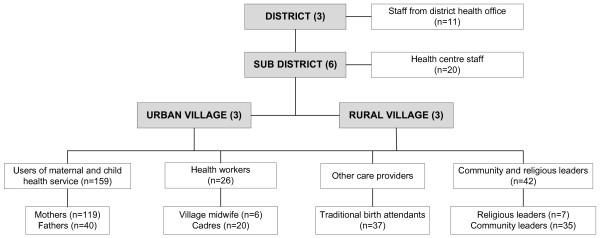
BACKGROUND: Trained birth attendants at delivery are important for preventing both maternal and newborn deaths. West Java is one of the provinces on Java Island, Indonesia, where many women still deliver at home and without the assistance of trained birth attendants. This study aims to explore the perspectives of community members and health workers about the use of delivery care services in six villages of West Java Province. METHODS: A qualitative study using focus group discussions (FGDs) and in-depth interviews was conducted in six villages of three districts in West Java Province from March to July 2009. Twenty FGDs and 165 in-depth interviews were conducted involving a total of 295 participants representing mothers, fathers, health care providers, traditional birth attendants and community leaders. The FGD and in-depth interview guidelines included reasons for using a trained or a traditional birth attendant and reasons for having a home or an institutional delivery. RESULTS: The use of traditional birth attendants and home delivery were preferable for some community members despite the availability of the village midwife in the village. Physical distance and financial limitations were two major constraints that prevented community members from accessing and using trained attendants and institutional deliveries. A number of respondents reported that trained delivery attendants or an institutional delivery were only aimed at women who experienced obstetric complications. The limited availability of health care providers was reported by residents in remote areas. In these settings the village midwife, who was sometimes the only health care provider, frequently travelled out of the village. The community perceived the role of both village midwives and traditional birth attendants as essential for providing maternal and health care services. CONCLUSIONS: A comprehensive strategy to increase the availability, accessibility, and affordability of delivery care services should be considered in these West Java areas. Health education strategies are required to increase community awareness about the importance of health services along with the existing financing mechanisms for the poor communities. Public health strategies involving traditional birth attendants will be beneficial particularly in remote areas where their services are highly utilized.
Overview
The claims and statistics of this paper haven’t been checked yet.
Free: it reads the open-access text and checks the first 5 claims that cite a source we can check. Create a free account to check every claim.
Integrity signals
Registry
Cites
Statistics
Figures
Verification
Claims the paper makes
The claims and statistics of this paper haven’t been checked yet.
Free: it reads the open-access text and checks the first 5 claims that cite a source we can check. Create a free account to check every claim.
Claims other papers make about this one
Each is checked against this paper’s own text: does it say what the citing paper says it does?
The source backs part of the claim, not all of it — or backs it for a different population, condition or comparison.
In the citing paper
“Facilitator/barrier: Health insurance schemes, national population policies, and national policies aimed to shift deliveries from the home to a facility”
From Facilitators and barriers to facility-based delivery in low- and middle-income countries: a qualitative evidence synthesis (2014) · cites this paper as [33]
Experimental — accuracy not yet measuredThe source backs part of the claim, not all of it — or backs it for a different population, condition or comparison.
In the citing paper
“Barrier: Inaccessibility of transportation and facilities during off-hours”
From Facilitators and barriers to facility-based delivery in low- and middle-income countries: a qualitative evidence synthesis (2014) · cites this paper as [33]
Experimental — accuracy not yet measuredThe source backs part of the claim, not all of it — or backs it for a different population, condition or comparison.
In the citing paper
“Barrier: TBAs perceived as providing high quality care”
From Facilitators and barriers to facility-based delivery in low- and middle-income countries: a qualitative evidence synthesis (2014) · cites this paper as [33]
Experimental — accuracy not yet measuredThe source backs part of the claim, not all of it — or backs it for a different population, condition or comparison.
In the citing paper
“Facilitator: TBAs perceived as providing low quality care”
From Facilitators and barriers to facility-based delivery in low- and middle-income countries: a qualitative evidence synthesis (2014) · cites this paper as [33]
Experimental — accuracy not yet measuredThe source backs part of the claim, not all of it — or backs it for a different population, condition or comparison.
In the citing paper
“Across many contexts, parturient women may not be in full control of the decision to seek facility-based delivery, instead relying on the decisions made by many actors, including elder women, husbands, family members, and neighbors.”
From Facilitators and barriers to facility-based delivery in low- and middle-income countries: a qualitative evidence synthesis (2014) · cites this paper as [33]
Experimental — accuracy not yet measured
50 more claims about this paper
Create a free account to see every claim other papers make about this one.
Self-check
Percentages, sums and reported differences re-computed from the paper’s own numbers.
The self-check needs the paper’s full text.
Citations
Cites
Qualitative research practice: a guide for social science students and researchers
(2003) · Choice Reviews Online · doi:10.5860/choice.41-1319 · Cited by 10,543
Qualitative methods for health research
(2009) · Choice Reviews Online · doi:10.5860/choice.47-0901 · Cited by 4,596
4 million neonatal deaths: When? Where? Why?
Lawn, J. E., Cousens, S., & Zupan, J. (2005) · The Lancet · doi:10.1016/s0140-6736(05)71048-5 · Cited by 3,670
Too far to walk: Maternal mortality in context
Thaddeus, S., & Maine, D. (1994) · Social Science & Medicine · doi:10.1016/0277-9536(94)90226-7 · Cited by 3,240
Maternal mortality: who, when, where, and why
Ronsmans, C., & Graham, W. J. (2006) · The Lancet · doi:10.1016/s0140-6736(06)69380-x · Cited by 1,801
Evidence-based, cost-effective interventions: How many newborn babies can we save?
Darmstadt, G. L., Bhutta, Z. A., Cousens, S., Adam, T., Walker, N., & de Bernis, L. (2005) · The Lancet · doi:10.1016/s0140-6736(05)71088-6 · Cited by 1,541 · cited 1×
“A recent review reported that around 20-30% of neonatal mortality could be reduced by implementing skilled birth care services [8].”
BackgroundEducation as a Factor in Mortality Decline An Examination of Nigerian Data
Caldwell, J. C. (1979) · Population Studies · doi:10.2307/2173888 · Cited by 1,093 · cited 1×
“A deprived financial situation is often linked to low education levels, which affects one’s ability to seek the most appropriate health care services [4,46].”
BackgroundThe World Health Report 2005 - make every mother and child count
Lerberghe, W. V., Manuel, A., Matthews, Z., & Wolfheim, C. (2005) · ePrints Soton (University of Southampton) · Cited by 1,015
Manandhar, D. S., Osrin, D., Shrestha, B. P., Mesko, N., Morrison, J., Tumbahangphe, K. M., Tamang, S., Thapa, S., Shrestha, D., Thapa, B., et al. (2004) · The Lancet · doi:10.1016/s0140-6736(04)17021-9 · Cited by 847
Bang, A. T., Bang, R. A., Baitule, S. B., Reddy, M. H., & Deshmukh, M. D. (1999) · The Lancet · doi:10.1016/s0140-6736(99)03046-9 · Cited by 842 · cited 1×
“Previous trials of delivery and postnatal care services involving traditional birth attendants in India and Pakistan demonstrated that engaging traditional birth attendants in the maternal and child health services had a favourable impact on neonatal and perinatal mortality [ 52 ,53].”
Background
Research works printed but not linked: 13
- Hull T Widayatun Raharto A Setiawan B Neither dukun nor doctor: Some problems of the village midwife programme in eastern Indonesia Australian Council for Overseas Aid Development Bulletin 1998 48
- Ministry of Health Republic of Indonesia - The Directorate General of Community Health Technical Guidelines for Health Insurance Scheme for the Population in Health Centres and its networks Year 2008 (Petunjuk teknis Jaminan Kesehatan Masyarakat (Jamkesmas) di Puskesmas dan Jaringannya Tahun 2008) 2008 Jakarta Ministry of Health Republic of Indonesia - The Directorate General of Community Health
- Badan Pusat Statistik-Statistics Indonesia (BPS), National Family Planning Coordinating Board, Ministry of Health, ORC Macro Indonesia Demographic and Health Survey 2007 2008 Calverton, Maryland: BPS and ORC Macro
- National Institute of Health Research and Development MoH, Republic of Indonesia Report on Results of National Basic Health Research 2007 2008 Jakarta: National Institute of Health Research and Development, Ministry of Health, Republic of Indonesia
- Ministry of Health Republic of Indonesia Indonesia Health Profile 2005 2007 Jakarta: Ministry of Health Republic of Indonesia
- Ministry of Health Republic of Indonesia Indonesia Health Profile 2007 2008 Jakarta: Ministry of Health Republic of Indonesia
- District Health Office of Garut Health Profile of Garut District (Profil Kesehatan Kabupaten Garut) 2008 2008 Garut District: District Health Office of Garut
- District Health Office of Ciamis Health Profile of Ciamis District (Profil Kesehatan Ciamis) 2008 2008 Ciamis District: District Health Office of Ciamis
- District Health Office of Sukabumi Health Profile of Sukabumi District (Profil Kesehatan Sukabumi) 2008 2008 Sukabumi District: District Health Office of Sukabumi
- Badan Pusat Statistik-Statistics Indonesia (BPS) Population of Indonesia: results of the 2005 Intercensal Population Survey [Penduduk Indonesia: hasil Survei Penduduk antar Sensus 2005] 2006 Jakarta: Badan Pusat Statistik-Statistics Indonesia (BPS)
- Ministry of Health Republic of Indonesia - Center for Data and Information Glosarium: Data & Informasi Kesehatan (Glossarium: Health Data and Information) 2006 Jakarta: Ministry of Health Republic of Indonesia - Center for Data and Information
- World Health Organization Traditional Birth Attendants: a joint WHO/UNFPA/UNICEF statement 1992 Geneva: World Health Organization
- Hunter CL Rozario S, Samuel G Embracing modernity: transformations in Sasak confinement practices The daughters of Hariti: childbirth and female healers in South and Southeast Asia 2002 London: Routledge
Cited by
Items 101–200 of 345
Ono, M., Matsuyama, A., Karama, M., & Honda, S. (2013) · BMC Pregnancy and Childbirth · doi:10.1186/1471-2393-13-214 · Cited by 30
Creanga, A. A., Odhiambo, G. A., Odera, B., Odhiambo, F., Desai, M. R., Goodwin, M., Laserson, K., & Goldberg, H. I. (2016) · PLoS ONE · doi:10.1371/journal.pone.0162017 · Cited by 29
Adinew, Y. M., Asseffa, N. A., & Adinew, Y. M. (2018) · BioMed Research International · doi:10.1155/2018/3249786 · Cited by 31
Schröders, J., Wall, S., Kusnanto, H., & Ng, N. (2015) · PLoS ONE · doi:10.1371/journal.pone.0123629 · Cited by 40
Shaikh, B. T., Khan, S., Maab, A., & Amjad, S. (2014) · BMJ Open · doi:10.1136/bmjopen-2014-006238 · Cited by 34
“4 To increase the availability and accessibility of maternal and child healthcare services, training of traditional birth attendants (TBAs) and strengthening the partnership between community midwives (CMWs) and TBAs are widely acknowledged worldwide.(5) 6 Nonetheless, the role of the TBAs cannot be effective in a wea…”
BackgroundJacobs, C. N., Michelo, C., & Moshabela, M. (2018) · BMC Health Services Research · doi:10.1186/s12913-018-3212-9 · Cited by 27
Titaley, C. R., & Dibley, M. J. (2012) · BMJ Open · doi:10.1136/bmjopen-2012-001399 · Cited by 34
Self-citationOhaja, M., & Murphy-Lawless, J. (2016) · Women and Birth · doi:10.1016/j.wombi.2016.11.004 · Cited by 37
Socioeconomic determinants of accessibility to birth registration in Lao PDR
Nomura, M., Xangsayarath, P., Takahashi, K., Kamiya, Y., Siengsounthone, L., Ogino, H., & Kobayashi, J. (2018) · BMC Public Health · doi:10.1186/s12889-017-5009-x · Cited by 33
“Widely throughout Southeast Asian countries, and especially in the Lao PDR, home is the major place for the delivery of children [20, 21].”
BackgroundHill, P., Goeman, L., Sofiarini, R., & Djara, M. M. (2013) · Health Policy and Planning · doi:10.1093/heapol/czt027 · Cited by 29
“There had been a conscious programme shift from ‘entertainment-education’ to community mobilization: whole communities were now encouraged to formalize systems that would provide notification of pregnant women, coordinate transport, collect funding and develop blood donation registers that would ensure safe motherhood…”
BackgroundUtilization and quality: How the quality of care influences demand for obstetric care in Nigeria
Peet, E. D., & Okeke, E. N. (2019) · PLoS ONE · doi:10.1371/journal.pone.0211500 · Cited by 30
Gebreyesus, H., Mamo, A., Teweldemedhin, M., Gidey, B., Kahsay, Z. H., & Birhanu, Z. (2019) · BMC Health Services Research · doi:10.1186/s12913-019-4201-3 · Cited by 32
Kassie, A., Wale, A., Girma, D., Amsalu, H., & Yechale, M. (2022) · BMC Pregnancy and Childbirth · doi:10.1186/s12884-022-04753-5 · Cited by 50
Spagnoletti, B. R. M., Bennett, L. R., Kermode, M., & Wilopo, S. A. (2018) · BMC Pregnancy and Childbirth · doi:10.1186/s12884-018-1991-y · Cited by 24
Tesema, G. A., & Tessema, Z. T. (2021) · PLoS ONE · doi:10.1371/journal.pone.0250447 · Cited by 26
Rahman, S., Choudhury, A. A., Khanam, R., Moin, S. M. I., Ahmed, S., Begum, N., Naher, N., Quaiyum, M. A., Baqui, A. H., & for the Projahnmo Study Group in Bangladesh (2017) · PLoS ONE · doi:10.1371/journal.pone.0186182 · Cited by 25
Mahiti, G. R., Kiwara, A. D., Mbekenga, C., Hurtig, A., & Goicolea, I. (2015) · BMC Pregnancy and Childbirth · doi:10.1186/s12884-015-0445-z · Cited by 27
“Another example is highlighted in a quantitative study conducted in South Africa, where 76% of TBAs reported making post-natal visits to their clients [23].”
BackgroundBiswas, R. K., Rahman, N., Islam, H., Senserrick, T. M., & Bhowmik, J. (2020) · Contemporary South Asia · doi:10.1080/09584935.2020.1770698 · Cited by 29
Owolabi, O., Glenton, C., Lewin, S. A., & Pakenham-Walsh, N. M. (2014) · BMC Pregnancy and Childbirth · doi:10.1186/1471-2393-14-118 · Cited by 27
“Similar considerations have also been highlighted in other studies [2,7,15,27,28].”
BackgroundResultVyagusa, D. B., Mubyazi, G. M., & Masatu, M. (2013) · International Journal for Equity in Health · doi:10.1186/1475-9276-12-83 · Cited by 33
“Moreover, a considerable number of women find themselves being faced with domestic occupational commitments that keep them too busy for them to secure convenient time for visiting health care facilities [9-13].”
BackgroundMedicinal Plants used during Antenatal Care by Pregnant Women in Eastern Uganda
Nalumansi, P. A., Kamatenesi‐Mugisha, M., & Anywar, G. (2017) · African Journal of Reproductive Health · doi:10.29063/ajrh2017/v21i4.4 · Cited by 23
Agus, Y., Horiuchi, S., & Iida, M. (2018) · Women and Birth · doi:10.1016/j.wombi.2018.01.007 · Cited by 23
“…study in Indonesia found that family members, namely, sisters, parents, and husbands constituted another factor influencing women's chose of a TBA (Titaley, 2010).29 This is in contrast to a study of 210 women in Kalimantan, Indonesia which reported that the mother and other family members…”
ResultTitaley, C. R., Dibley, M. J., & Roberts, C. L. (2010) · Maternal and Child Health Journal · doi:10.1007/s10995-010-0697-1 · Cited by 29
“Although the health insurance scheme for the poor and near poor population, called the Health Insurance Scheme for the Population or Jaminan Kesehatan Masyarakat, has been developed by the Indonesia Government [51] to enable financially deprived populations to access health services for free, misconceptions about its…”
BackgroundResultInfluentialSelf-citationMothers employed in paid work and their predictors for home delivery in Pakistan
Jafree, S. R., Zakar, R., Mustafa, M., & Fischer, F. (2018) · BMC Pregnancy and Childbirth · doi:10.1186/s12884-018-1945-4 · Cited by 20
Eke, P. C., Ossai, E. N., Eze, I. I., & Ogbonnaya, L. U. (2021) · PLoS ONE · doi:10.1371/journal.pone.0252024 · Cited by 40
Culhane‐Pera, K. A., Sriphetcharawut, S., Thawsirichuchai, R., Yangyuenkun, W., & Kunstadter, P. (2015) · Maternal and Child Health Journal · doi:10.1007/s10995-015-1757-3 · Cited by 24
Diamond‐Smith, N., Thet, M. M., Khaing, E. E., & Sudhinaraset, M. (2016) · Culture Health & Sexuality · doi:10.1080/13691058.2016.1144792 · Cited by 22
“Past research in Indonesia has also found that women perceive there to be important roles for both traditional and modern providers in delivery services (Titaley et al. 2010).”
BackgroundNasir, S., Kea, A. Z., Steege, R., Limato, R., Tumbelaka, P., Datiko, D. G., Syafruddin, S., Kok, M. C., Ahmed, R., & Taegtmeyer, M. (2020) · International Journal of Health Promotion and Education · doi:10.1080/14635240.2020.1719862 · Cited by 21
“The findings in Indonesia were in line with previous studies in the country, despite the inclusion of Southwest Sumba, a site not included in previous studies (Belton, Myers, and Ngana 2014; Ambaretnani 2012; Titaley et al. 2010).”
BackgroundMethodResultInfluentialRahmartani, L. D., Carson, C., & QUIGLEY, M. A. (2020) · PLoS ONE · doi:10.1371/journal.pone.0243097 · Cited by 21
“Residual confounding may also explain some of the association, as home births are more frequent among women in poorer and more rural communities [50].”
BackgroundInfluentialDeterminants of postnatal service utilisation among mothers in rural settings of Malawi
Phiri, P. W. C., Rattanapan, C., & Mongkolchati, A. (2014) · Health & Social Care in the Community · doi:10.1111/hsc.12165 · Cited by 25
Jiang, H., Qian, X., Chen, L., Li, J., Escobar, E., Story, M., & Tang, S. (2016) · BMC Pregnancy and Childbirth · doi:10.1186/s12884-016-0854-7 · Cited by 21
“cultural barriers must be taken into account since these factors affect women’s access and use of care [27, 28].”
BackgroundOrya, E. E., Adaji, S. E., Pyone, T., Wurie, H. R., van den Broek, N. R., & Theobald, S. (2017) · BMC Health Services Research · doi:10.1186/s12913-017-2400-3 · Cited by 25
Chukwuma, A., Mbachu, C. O., Cohen, J. L., Bossert, T. J., & McConnell, M. A. (2017) · BMC Pregnancy and Childbirth · doi:10.1186/s12884-017-1616-x · Cited by 25
“TBA-specific Ability to recognize obstetric complications [5, 6, 21, 22]; understanding postnatal care is necessary in the absence of obstetric complications [19, 20]; lack of perception of negative social or economic consequences of postnatal referral [5, 6]; monetary rewards for referrals [23, 27, 34]; TBA perceptio…”
BackgroundImproving Maternal Health Using Incentives for Mothers and Health Care Workers: Evidence from India
Debnath, S. (2019) · Economic Development and Cultural Change · doi:10.1086/703083 · Cited by 24
“Supply-side factors would include low quality of health care services, absence of care providers, paucity of drugs and other consumables, lack of transport, and so on, while demand-side factors would include household income, social attitude and norms (Titaley et al. 2010), and lack of information (Phoxay et al.”
BackgroundAnthropologies of Global Maternal and Reproductive Health: From Policy Spaces to Sites of Practice
Wallace, L. J., MacDonald, M. E., & Storeng, K. T. (2022) · Global maternal and child health · doi:10.1007/978-3-030-84514-8 · Cited by 27
Peprah, P., Abalo, E. M., Nyonyo, J., Okwei, R., Agyemang‐Duah, W., & Amankwaa, G. (2018) · International Journal of Africa Nursing Sciences · doi:10.1016/j.ijans.2018.03.003 · Cited by 28
Ibrhim, M. A., Demissie, M., Medhanyie, A. A., Worku, A., & Berhane, Y. (2018) · Pan African Medical Journal · doi:10.11604/pamj.2018.30.51.14420 · Cited by 22
Pardosi, J. F., Parr, N., & Muhidin, S. (2016) · Journal of Biosocial Science · doi:10.1017/s0021932016000134 · Cited by 27
“It Is My Destiny as a Woman”: On Becoming a New Mother in Indonesia
Afiyanti, Y., & Solberg, S. M. (2014) · Journal of Transcultural Nursing · doi:10.1177/1043659614526243 · Cited by 30
“They remain an integral part of maternal care in Indonesia (Titaley et al., 2010).”
BackgroundOkeke, E. N., Wagner, Z., & Abubakar, I. S. (2020) · Health Affairs · doi:10.1377/hlthaff.2019.00893 · Cited by 26
Liem, A., & Rahmawati, K. D. (2017) · Journal of Chinese Integrative Medicine · doi:10.1016/s2095-4964(17)60336-4 · Cited by 18
Sisay, D., Ewune, H. A., Muche, T., & Molla, W. (2022) · Obstetrics and Gynecology International · doi:10.1155/2022/4480568 · Cited by 18
Shaikh, B. T., Noorani, Q. A., & Abbas, S. S. (2017) · Archives of Public Health · doi:10.1186/s13690-017-0227-3 · Cited by 25
“Due to financial constraints, most of the women have preferred home-based delivery care [18, 19].”
BackgroundOpting for home birth in rural Bangladesh: An assessment of the current status and reasons
Perkins, J. E., Rahman, A. E., Siddique, A. B., Haider, M. R., Banik, G., Tahsina, T., & Arifeen, S. E. (2018) · Birth · doi:10.1111/birt.12404 · Cited by 19
A Study on the Implementation of Jampersal Policy in Indonesia
Achadi, E. L., Achadi, A., Pambudi, E. S., & Marzoeki, P. (2014) · doi:10.1596/20740 · Cited by 18
“Alleviating the risks for adverse maternal outcome may require reducing deliveries by the TBAs, among other efforts (Titaley et al. 2010).”
InfluentialBennett, L. R. (2016) · Medical Anthropology · doi:10.1080/01459740.2016.1142990 · Cited by 22
Ossai, E. N., Eze, I. I., Eke, P. C., Onah, C. K., Agu, C. I., & Ogbonnaya, L. U. (2023) · BMC Pregnancy and Childbirth · doi:10.1186/s12884-022-05306-6 · Cited by 17
“The women implied that facility delivery were meant for women who experienced obstetric complications [47].”
BackgroundYamashita, T., Suplido, S. A., Llave, C., Tuliao, M. T. R., Tanaka, Y., & Matsuo, H. (2015) · Tropical Medicine and Health · doi:10.2149/tmh.2014-40 · Cited by 17
Why women chose unassisted home birth in Malaysia: a qualitative study
Tajuddin, N. A. A., Suhaimi, J., Ramdzan, S. N., Malek, K. A., Ismail, I. A., Shamsuddin, N. H., Bakar, A. I. A., & Othman, S. B. (2020) · BMC Pregnancy and Childbirth · doi:10.1186/s12884-020-02987-9 · Cited by 27
Sendo, E. G., Chauke, M. E., & Ganga-Limando, M. (2020) · BMJ Open · doi:10.1136/bmjopen-2020-039189 · Cited by 16
Yamashita, T., Tuliao, M. T. R., Meana, M. C., Suplido, S. A., Llave, C., Tanaka, Y., & Matsuo, H. (2017) · International Journal of Women s Health · doi:10.2147/ijwh.s141689 · Cited by 17
Wijaya-Erhardt, M., Muslimatun, S., & Erhardt, J. G. (2013) · Health Education Journal · doi:10.1177/0017896913485741 · Cited by 16
Village midwives and their changing roles in Brunei Darussalam: A qualitative study
Mumin, K. H. A. (2016) · Women and Birth · doi:10.1016/j.wombi.2016.04.002 · Cited by 17
Kuwawenaruwa, A., Mtei, G., Baraka, J., & Tani, K. (2016) · Journal of Health Population and Nutrition · doi:10.1186/s41043-016-0075-8 · Cited by 18
“transport, as well as health system and financial factors, as has been reported elsewhere [11, 20, 21].”
BackgroundResultWidyaningsih, V., Khotijah, & Balgis (2017) · Global Health Action · doi:10.1080/16549716.2017.1339534 · Cited by 19
Cheptum, J. J., Gitonga, M. M., Mutua, E. M., Mukui, S. J., Ndambuki, J. M., & Koima, W. J. (2017) · International Journal of Africa Nursing Sciences · doi:10.1016/j.ijans.2017.07.002 · Cited by 21
Oruh, S. (2021) · Preventif Jurnal Kesehatan Masyarakat · doi:10.22487/preventif.v12i1.297 · Cited by 14
Rutledge, J., Kiyanda, A., Jean-Louis, C., Raskin, E., Gaillard, J., Maxwell, M. L., Smith, T. A., Kershaw, T., & Abrams, J. A. (2024) · International Journal of Maternal and Child Health and AIDS · doi:10.25259/ijma_16_2024 · Cited by 22
Situmorang, H. E., Sweet, L. P., Graham, K. P., & Grant, J. M. (2021) · Women and Birth · doi:10.1016/j.wombi.2021.04.007 · Cited by 19
Tarik, Y. D., Nigussie, A. A., Balcha, W. F., & Getu, A. A. (2022) · BMJ Open · doi:10.1136/bmjopen-2022-061218 · Cited by 18
Exploring social and health care representations about home birth: An Integrative Literature Review
Rodríguez‐Garrido, P., Pino‐Morán, J. A., & Tricas, J. G. (2020) · Public Health Nursing · doi:10.1111/phn.12724 · Cited by 21
Allou, L. A. (2018) · Scientific African · doi:10.1016/j.sciaf.2018.e00010 · Cited by 13
Understanding birthing preferences of women in Benin City, Nigeria: a qualitative study
Eluobaju, D., Okonofua, F. E., Weine, S. M., & Goba, G. K. (2023) · BMJ Open · doi:10.1136/bmjopen-2021-054603 · Cited by 17
Bell, S. O., Passano, P., Bohl, D. D., Islam, A., & Prata, N. (2014) · Europe PMC (PubMed Central) · Cited by 12
Pardosi, J. F., Parr, N., & Muhidin, S. (2014) · Journal of Biosocial Science · doi:10.1017/s0021932014000522 · Cited by 15
“This pattern is consistent with studies in West Java Province and Kendari and Cirebon districts (Anggorodi 2009; Titaley et al., 2010).”
BackgroundResultNgunyulu, R. N., Mulaudzi, F. M., & Peu, M. D. (2015) · Curationis · doi:10.4102/curationis.v38i1.1252 · Cited by 12
Alam, C. E., Abbas, L. A., Ramadan, M., & Asmar, M. K. (2025) · BMC Health Services Research · doi:10.1186/s12913-025-12444-y · Cited by 16
“Cultural beliefs play a significant role in shaping how pregnant women perceive and prioritize their ANC needs [18–20].”
Helmyati, S., Wigati, M., Hariawan, M. H., Safika, E. L., Dewi, M., Yuniar, C. T., & Mahmudiono, T. (2022) · Nutrients · doi:10.3390/nu14183740 · Cited by 19
“, 2010 [24] 1994, 1997, 2002–2003 Cohort Indonesia 442 Mothers with recent early death neonate 40134 Mothers with singleton live-born infants Iron/folic acid supplementation Neonatal mortality HR 0.”
BackgroundInfluentialHodgkin, K., Joshy, G., Browne, J., Bartini, I., Hull, T. H., & Lokuge, K. (2019) · Reproductive Health · doi:10.1186/s12978-019-0724-7 · Cited by 17
“Most of Indonesia’s maternal deaths are related to hypertension and delays in accessing care; poor quality of care and lack of provisions in health services are common [34, 36].”
BackgroundAnalyzing spatial and space-time clustering of facility-based deliveries in Bangladesh
Chowdhury, A. I., Abdullah, A. Y. M., Haider, R., Alam, A., Billah, S. M., Bari, S., Rahman, Q. S.-U., Jochem, W. C., Dewan, A. M., & Arifeen, S. E. (2019) · Tropical Medicine and Health · doi:10.1186/s41182-019-0170-9 · Cited by 12
Duong, D. T. T., Bui, H. T. T., Le, T. M., Đức, D. M., Luu, H. T., Dinh, A. T., & Mirzoev, T. N. (2016) · International Journal of Women s Health · doi:10.2147/ijwh.s112996 · Cited by 10
“15 A study in Indonesia supports the idea of importance of shared culture and language by local community members, 10 the two important components of trust.”
Awotunde, O. T., Awotunde, T. A., Fehintola, F. O., Adesina, S. A., A., O. O., Fehintola, A. O., & Ajala, D. E. (2017) · International Journal of Reproduction Contraception Obstetrics and Gynecology · doi:10.18203/2320-1770.ijrcog20172894 · Cited by 10
Udofia, E. A., Fobil, J. N., & Guliš, G. (2018) · Journal of Environmental Protection · doi:10.4236/jep.2018.913081 · Cited by 10
“TBAs have been associated with maternity care, particularly in rural areas of countries including Indonesia, Tanzania, Zambia and Ghana [5] [6] [7] [8].”
BackgroundUtilization of Maternal Healthcare Services among Adolescent Mothers in Indonesia
Gayatri, R. V., Hsu, Y.-Y. A., & Damato, E. G. (2023) · Healthcare · doi:10.3390/healthcare11050678 · Cited by 10
“A qualitative study conducted in Indonesia found that pregnant women in rural areas often prefer to use traditional birth attendants and give birth at home [18].”
BackgroundGardiner, E., Lai, J. F., Khanna, D., Meza, G., de Wildt, G., & Taylor, B. (2021) · PLoS ONE · doi:10.1371/journal.pone.0257135 · Cited by 15
Yalew, M., Molla, A., Bogale, G. G., Birhane, T., Arefaynie, M., Damtie, Y., Kefale, B., & Adane, B. (2023) · BMC Women s Health · doi:10.1186/s12905-023-02229-y · Cited by 9
The Use of Maternal Health Services in Nigeria: Does Ethnicity and Religious Beliefs Matter?
Umar, A. S. (2017) · MOJ Public Health · doi:10.15406/mojph.2017.06.00190 · Cited by 16
“Female autonomy was further reported to be low among the Hausa-Fulani and kanuri/Bari-Bari ethic groups of Northern Nigeria due to adherence to aged long stereotyping as to what is an ideal woman that was based on ethnic and religious norms, beliefs, traditions and practices which was reported to result in low use of…”
BackgroundInfluentialBegashaw, B., Berkesa, S. T., Tefera, E., & Kumalo, A. (2018) · Journal of Pharmaceutics · doi:10.1155/2018/1749137 · Cited by 10
“This was lower than findings from Pakistan (69%), China (48%) [26], Sudan (one-month period prevalence was 74%) [27], Yemen (60%) (within two-week recall period) [28], and Ghana (70%) [1].”
ResultInfluentialJha, P., Larsson, M., Christensson, K., & Svanberg, A. S. (2019) · PLoS ONE · doi:10.1371/journal.pone.0211364 · Cited by 10
Akin-Otiko, B. O., & Bhengu, B. R. (2012) · Midwifery · doi:10.1016/j.midw.2011.11.011 · Cited by 11
Culture, traditional beliefs and practices during pregnancy among the Madurese tribe in Indonesia
Rachmayanti, R. D., Diana, R., Anwar, F., Khomsan, A., Riyadi, H., Christianti, D. F., Kusuma, R., Siswantara, P., Muthmainnah, M., Bayumi, F. Q. A., et al. (2023) · British Journal of Midwifery · doi:10.12968/bjom.2023.31.3.148 · Cited by 22
Dektar, B., Beckford, A. N., Kemba, J., & Crayson, B. (2023) · Frontiers in Public Health · doi:10.3389/fpubh.2023.1180945 · Cited by 8
Association between birth attendant type and delivery site and perinatal outcomes
Manasyan, A., Chomba, E., Moore, J., Wallace, D., McClure, E. M., Koso-Thomas, M. W., & Carlo, W. A. (2019) · International Journal of Gynecology & Obstetrics · doi:10.1002/ijgo.12786 · Cited by 8
Yidana, A., & Issahaku, M. (2014) · Cited by 11
Vallely, L. M., Homiehombo, P., Walep, E., Moses, M., Tom, M., Kelly‐Hanku, A., Vallely, A. J., Nataraye, E., Ninnes, C., Mola, G., et al. (2016) · International Journal of Gynecology & Obstetrics · doi:10.1016/j.ijgo.2015.10.018 · Cited by 8
“More than half thewomen in the present study underwent unsupervised birth in their village owing to difficulties with transport, distance, and decision making, a finding in line with previous research in the same location [22] and elsewhere [23].”
ResultMaliwichi-Nyirenda, C. P., & Maliwichi, L. L. (2016) · Studies on Ethno-Medicine · doi:10.1080/09735070.2016.11905495 · Cited by 8
“Reasons that make women seek TBAs include beliefs that TBAs are culturally acceptable, high cost associated with hospital deliveries, inaccessibility of health facilities, and poor quality of care and negative experience with hospital staff (Titaley et al. 2010; Shiferaw et al. 2013).”
BackgroundNew nurses and community maternal care education: A qualitative study
Fadilah, N., & McKenna, L. (2018) · Nurse Education in Practice · doi:10.1016/j.nepr.2018.11.011 · Cited by 8
Emergency obstetrics care services in District Neelum, Azad Jammu and Kashmir.
Mateen, A., Shaikh, B. T., & Kumar, R. (2013) · PubMed · Cited by 10
Widyawati, W., Jans, S. M. P. J., Bor, H. H. J., Siswishanto, R., van Dillen, J., & Lagro-Janssen, A. L. M. (2014) · BMC Pregnancy and Childbirth · doi:10.1186/1471-2393-14-163 · Cited by 11
“The studies suggested that antenatal care training for nursemidwives be improved, as an important strategy to help solve these problems [11-14].”
BackgroundPrevalence and determinants of home delivery among reproductive age women, Margibi County, Liberia
Maximore, L., Mohammed, A. G., Issahaku, G. R., Sackey, S. O., & Kenu, E. (2022) · BMC Pregnancy and Childbirth · doi:10.1186/s12884-022-04975-7 · Cited by 7
Oluwole, E. O., Oluwadumila, T. E., Okafor, I. P., & Temitayo-Oboh, A. O. (2024) · PLoS ONE · doi:10.1371/journal.pone.0304856 · Cited by 12
Berhan, Y., & Berhan, A. (2014) · Ethiopian Journal of Health Sciences · doi:10.4314/ejhs.v24i0.10s · Cited by 7
“In a little bit extended perspective, the major subdivisions that play direct and indirect roles on maternal and perinatal health include: the utilization and quality of care provided for pregnant women starting from pre-conception, exposure to obstetric and medical complications, the health facilities’ infrastructure…”
BackgroundYebei, V. N., Baliddawa, J. B., Koech, B., Karfakis, J., & Nyagoha, N. (2018) · African Journal of Reproductive Health · doi:10.29063/ajrh2018/v22i1.8 · Cited by 9
Right to Health: A Buzzword in Health Policy in Indonesia
Magrath, P. A. (2019) · Medical Anthropology · doi:10.1080/01459740.2019.1604701 · Cited by 7
Yadav, A., Singh, T. B., & Sachan, S. (2022) · International Journal of Health Sciences and Research · doi:10.52403/ijhsr.20220216 · Cited by 7
“At the same time, the previous experience of disrespect and abuse at a facility can prevent women from adopting further maternal and child health care services, including institutional delivery [18]–[21].”
BackgroundSiagian, C., Arifiani, S. D., Amanda, P., & Kusumaningrum, S. (2019) · Social Sciences · doi:10.3390/socsci8020064 · Cited by 7
Halimatusa’diyah, I. (2020) · Asian Politics & Policy · doi:10.1111/aspp.12555 · Cited by 9
Social Institutions and International Human Rights Law Implementation: Every Organ of Society
Fraser, J. (2020) · Cambridge University Press eBooks · doi:10.1017/9781108777711 · Cited by 24
Mohamed, A. A., Akın, A., Mıhçıokur, S., Üner, S., Mohamoud, S. A., & Gele, A. A. (2025) · BMC Pregnancy and Childbirth · doi:10.1186/s12884-025-08361-x · Cited by 6
“…of the community members interviewed preferred the use of traditional birth attendants and home deliveries because of economic preferences, since they perceive the costs with a midwife or healthcare professional as unaffordable, which is also consistent with a study conducted in Indo-nesia [27] .”
Nanur, F. N., Widarini, N. P., & Karmaya, I. N. M. (2016) · Public Health and Preventive Medicine Archive · doi:10.15562/phpma.v4i1.52 · Cited by 6
Metadata
- Authors
- Titaley, C. R., Hunter, C. L., Dibley, M. J., & Heywood, P.
- Affiliations
- The University of Sydney (AU)
- Corresponding author
- Titaley, Christiana R
- Venue
- BMC Pregnancy and Childbirth
- Published
- 2010-08-11
- Volume
- 10
- Issue
- 1
- Pages
- 43-43
- ISSN
- 1471-2393 (ISSN-L)
- PMC
- PMC2928756
- OpenAlex
- W1965905056
- Cited by
- 346
- References
- 53
- Citations by year
- 2026: 7 · 2025: 12 · 2024: 12 · 2023: 23 · 2022: 20 · 2021: 23 · 2020: 32 · 2019: 27 · 2018: 29 · 2017: 32 · 2016: 31 · 2015: 29 · 2014: 30 · 2013: 17 · 2012: 12
- FWCI
- 11.30
- Type
- journal article
- Language
- en
- Open access
- gold
- doi.org
- Licence
- cc-by
- creativecommons.org/licenses/by/2.0 (tdm)
- Locations
- BMC Pregnancy and Childbirth (publishedVersion, cc-by)
- PubMed Central (publishedVersion, cc-by)
- PubMed (publishedVersion)
- DOAJ (DOAJ: Directory of Open Access Journals) (submittedVersion, cc-by-sa)
- Funders
- Ford Foundation
- Australian Agency for International Development
- University of Sydney
- Topics
- Health Sciences › Medicine › Pediatrics, Perinatology and Child Health › Global Maternal and Child Health
- Health Sciences › Medicine › Obstetrics and Gynecology › Maternal and Perinatal Health Interventions
- Health Sciences › Medicine › Pediatrics, Perinatology and Child Health › Maternal and Neonatal Healthcare
- Keywords
- traditional birth attendants, home delivery, institutional delivery, village midwives, access to maternal health services, barriers to health care access, health care financing, maternal and newborn health, community perceptions, West Java
- MeSH terms
- Community-Institutional Relations, Decision Making, Female, Financing, Personal, Health Services Accessibility, Home Childbirth, Humans, Indonesia, Male, Maternal Health Services, Midwifery, Patient Acceptance of Health Care, Pregnancy, Health Care Costs, Qualitative Research
About these checks
Registry, retraction, Cites and statistics results are computed, not judged, with one exception: a printed reference that no index lists is read once by a model before it counts as a citation error. Claims are extracted by a model and kept only when their quote appears verbatim in the text; each cited source is then checked, with a model’s help, for whether it says what the claim relies on. Those verdicts can be wrong — read the claim’s quote and the cited source before relying on one.
Statistics and arithmetic are recomputed, not judged.
Confidence bands are shown only for fields calibrated on our annotated test set. None is calibrated yet, so no band is shown.
What counts as a claim ›How we measure confidence ›How we check this ›
Are you an author, or do you see a problem with this page? Request a review
Data sources
Bibliographic data: Semantic Scholar, OpenAlex, Crossref.
Contains information from the Semantic Scholar Academic Graph Datasets, made available under the ODC Attribution License (ODC-BY 1.0).
Semantic Scholar’s data is described in: Kinney, R., et al. (2023). The Semantic Scholar Open Data Platform. arXiv:2301.10140.
