

Key components of early intervention programs for preterm infants and their parents: a systematic review and meta-analysis
Open accessThe DOI matches its Crossref record; 78 of the 78 references it cites were found in a registry or an index.
Abstract
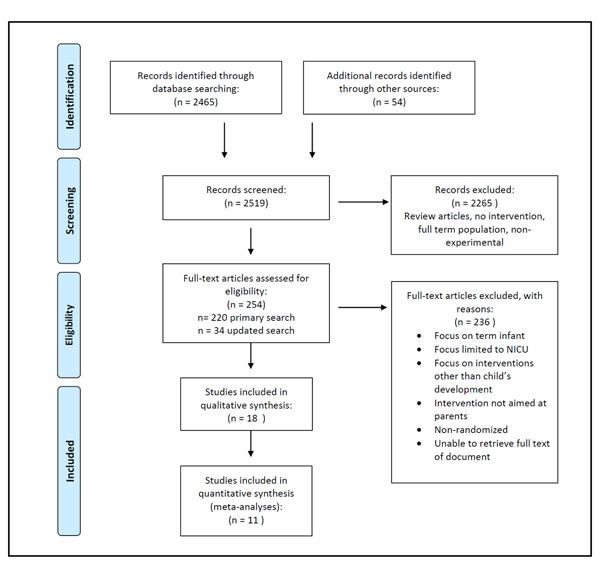
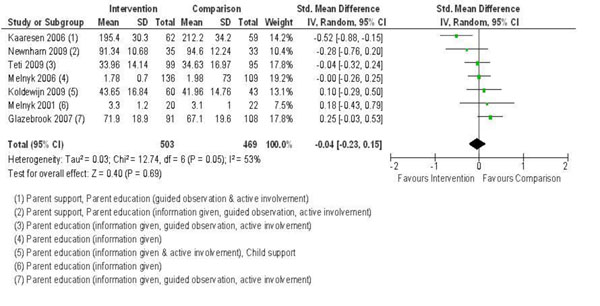
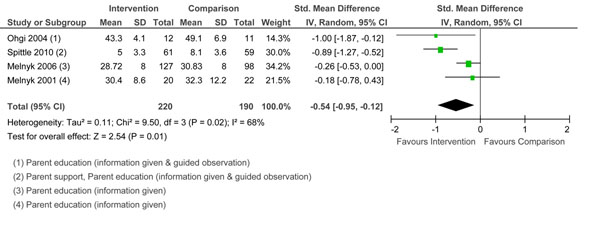
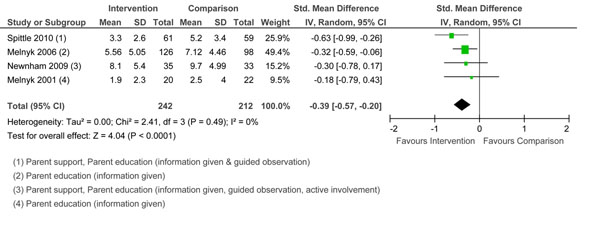
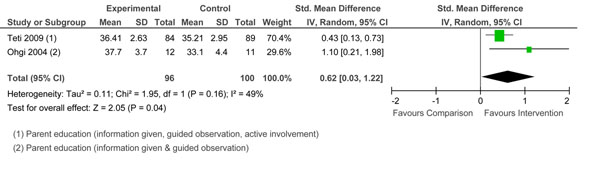
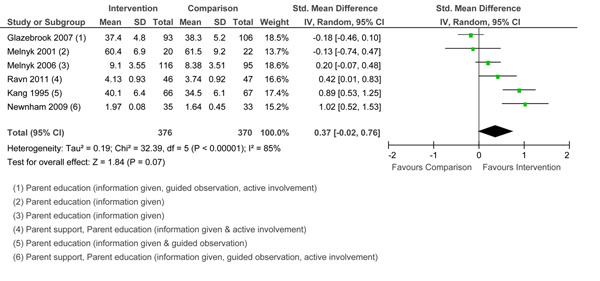
BACKGROUND: Preterm infants are at greater risk for neurodevelopmental disabilities than full term infants. Interventions supporting parents to improve the quality of the infant's environment should improve developmental outcomes for preterm infants. Many interventions that involve parents do not measure parental change, nor is it clear which intervention components are associated with improved parental outcomes. The aim of this review was to categorize the key components of early intervention programs and determine the direct effects of components on parents, as well as their preterm infants. METHODS: MEDLINE, EMBASE, CINAHL, ERIC, and Cochrane Database of Systematic Reviews were searched between 1990 and December 2011. Eligible randomized controlled trials (RCTs) included an early intervention for preterm infants, involved parents, and had a community component. Of 2465 titles and abstracts identified, 254 full text articles were screened, and 18 met inclusion criteria. Eleven of these studies reported maternal outcomes of stress, anxiety, depressive symptoms, self-efficacy, and sensitivity/responsiveness in interactions with the infant. Meta-analyses using a random effects model were conducted with these 11 studies. RESULTS: Interventions employed multiple components categorized as (a) psychosocial support, (b) parent education, and/or (c) therapeutic developmental interventions targeting the infant. All interventions used some form of parenting education. The reporting quality of most trials was adequate, and the risk of bias was low based on the Cochrane Collaboration tool. Meta-analyses demonstrated limited effects of interventions on maternal stress (Z = 0.40, p = 0.69) and sensitivity/responsiveness (Z = 1.84, p = 0.07). There were positive pooled effects of interventions on maternal anxiety (Z = 2.54, p = 0.01), depressive symptoms (Z = 4.04, p <.0001), and self-efficacy (Z = 2.05, p = 0.04). CONCLUSIONS: Positive and clinically meaningful effects of early interventions were seen in some psychosocial aspects of mothers of preterm infants. This review was limited by the heterogeneity of outcome measures and inadequate reporting of statistics. IMPLICATIONS OF KEY FINDINGS: Interventions for preterm infants and their mothers should consider including psychosocial support for mothers. If the intervention involves mothers, outcomes for both mothers and preterm infants should be measured to better understand the mechanisms for change.
Overview
The claims and statistics of this paper haven’t been checked yet.
Free: it reads the open-access text and checks the first 5 claims that cite a source we can check. Create a free account to check every claim.
Integrity signals
Registry
Cites
Statistics
Figures
Verification
Claims the paper makes
The claims and statistics of this paper haven’t been checked yet.
Free: it reads the open-access text and checks the first 5 claims that cite a source we can check. Create a free account to check every claim.
Claims other papers make about this one
Each is checked against this paper’s own text: does it say what the citing paper says it does?
The source backs part of the claim, not all of it — or backs it for a different population, condition or comparison.
In the citing paper
“These emotions increase during the transition to home from hospital,14–16 depending on the child’s condition and the parent’s readiness for discharge11 and their medical caregiving role.17 18”
From Coached, Coordinated, Enhanced Neonatal Transition (CCENT): Protocol for a multicentre pragmatic randomised controlled trial of transition-to-home support for parents of high-risk infants (2021) · cites this paper as [14]
Experimental — accuracy not yet measuredThe source backs part of the claim, not all of it — or backs it for a different population, condition or comparison.
In the citing paper
“In order to address the lack of evidence-based interventions supporting fathers of high-risk infants,9 14 we have included both fathers and mothers in our study.”
From Coached, Coordinated, Enhanced Neonatal Transition (CCENT): Protocol for a multicentre pragmatic randomised controlled trial of transition-to-home support for parents of high-risk infants (2021) · cites this paper as [14]
Experimental — accuracy not yet measuredThe source backs part of the claim, not all of it — or backs it for a different population, condition or comparison.
In the citing paper
“Enhanced psychosocial support for parents has the potential to improve parent-infant attachment and developmental outcomes for preterm infants (4).”
From Exploring Acceptance and Commitment Therapy for parents of preterm infants. (2021) · cites this paper as [4]
Experimental — accuracy not yet measuredThe cited source says what the claim attributes to it.
In the citing paper
“A systematic review of interventions for NICU parents including psychosocial support, education, and/or developmental interventions reported positive effect on depression and anxiety, but limited effect on stress.14”
The cited source says what the claim attributes to it.
In the citing paper
“A systematic review of early interventions to support parents of preterm infants found interventions composed of psychosocial support, education, and/or therapeutic developmental interventions had positive effects on depressive symptoms, anxiety, and self-efficacy, but limited effects on stress, and no overall significant effect on parental sensitivity/responsiveness (4).”
From Exploring Acceptance and Commitment Therapy for parents of preterm infants. (2021) · cites this paper as [4]
Self-check
Percentages, sums and reported differences re-computed from the paper’s own numbers.
The self-check needs the paper’s full text.
Citations
Cites
The Hospital Anxiety and Depression Scale
Zigmond, A. S., & Snaith, R. P. (1983) · Acta Psychiatrica Scandinavica · doi:10.1111/j.1600-0447.1983.tb09716.x · Cited by 47,139
Cochrane Handbook for Systematic Reviews of Interventions: Cochrane Book Series
(2008) · doi:10.1002/9780470712184 · Cited by 25,048
(1970) · Cited by 24,983
Pharmacological interventions for somatoform disorders in adults
Kleinstäuber, M., Witthöft, M., Steffanowski, A., van Marwijk, H., Hiller, W., & Lambert, M. J. (2014) · Cochrane Database of Systematic Reviews · doi:10.1002/14651858.cd010628.pub2 · Cited by 11,335
Developing and evaluating complex interventions: the new Medical Research Council guidance
Craig, P., Dieppe, P., Macintyre, S., Michie, S., Nazareth, I., & Petticrew, M. (2008) · BMJ · doi:10.1136/bmj.a1655 · Cited by 10,995
Funnel plots for detecting bias in meta-analysis
Sterne, J. A. C., & Egger, M. (2001) · Journal of Clinical Epidemiology · doi:10.1016/s0895-4356(01)00377-8 · Cited by 3,779
Cognitive and Behavioral Outcomes of School-Aged Children Who Were Born Preterm: A Meta-analysis
Bhutta, A. T., Cleves, M. A., Casey, P. H., Cradock, M. M., & Anand, K. J. S. (2002) · JAMA · doi:10.1001/jama.288.6.728 · Cited by 2,392
Less is more: meta-analyses of sensitivity and attachment interventions in early childhood
Bakermans-Kranenburg, M. J., van IJzendoorn, M. H., & Juffer, F. (2003) · Psychological Bulletin · doi:10.1037/0033-2909.129.2.195 · Cited by 1,883
The Worldwide Incidence of Preterm Birth: A Systematic Review of Maternal Mortality and Morbidity
Beck, S., Wojdyla, D., Say, L., Pilar Bertran, A., Meraldi, M., Harris Requejo, J., Rubens, C., Menon, R., & Van Look, P. (2010) · Bulletin of the World Health Organization · doi:10.2471/blt.08.062554 · Cited by 1,523
Postpartum depression effects on early interactions, parenting, and safety practices: a review
Field, T. (2010) · Infant Behavior and Development · doi:10.1016/j.infbeh.2009.10.005 · Cited by 1,493 · cited 1×
“Together, these psychosocial factors influence maternal sensitivity and responsiveness in interactions with the infant [25], which ultimately affect child developmental outcomes [26].”
Background
Research works printed but not linked: 5
- Bronfenbrenner U Bronfenbrenner U The biological theory of human development Making human beings human: Biological perspectives on human development 2005 Thousand Oaks, CA: Sage Publications 3 15
- IHDP - The Infant Health and Development Program Enhancing the outcomes of low-birth-weight, premature infants: A multisite, randomized trial Journal of the American Medical Association 1990 263 22 3035 3042 2188023
- The Cochrane Collaboration Review Manager (RevMan) 2011 5.1 Copenhagen: The Nordic Cochrane Centre
- IHDP (The Infant Health and Development Program) Enhancing the outcomes of low-birth-weight, premature infants: A multisite, randomized trial Journal of the American Medical Association 1990 263 22 3035 3042 2188023
- Egeland B Weinfield NS Bosquet M Cheng VK Osofsky JD, Fitzgerald HE Remembering, repeating, and working through: Lessons from attachment-based interventions Handbook of infant mental health Vol 4: Infant mental health in groups at high risk 2000 New York: Wiley 35 89
Cited by
Allotey, J., Zamora, J., Cheong‐See, F., Kalidindi, M., Arroyo‐Manzano, D., Asztalos, E., van der Post, J., Mol, B., Moore, D., Birtles, D., et al. (2018) · BJOG: An International Journal of Obstetrics & Gynaecology · doi:10.1111/1471-0528.14832 · Cited by 551
Morgan, C., Fetters, L., Adde, L., Badawi, N., Bancale, A., Boyd, R. N., Chorna, O., Cioni, G., Damiano, D. L., Darrah, J., et al. (2021) · JAMA Pediatrics · doi:10.1001/jamapediatrics.2021.0878 · Cited by 461
Brockway, M., Benzies, K., & Hayden, K. A. (2017) · Journal of Human Lactation · doi:10.1177/0890334417707957 · Cited by 428
Self-citationBrain injury in premature neonates: A primary cerebral dysmaturation disorder?
Back, S. A., & Miller, S. P. (2014) · Annals of Neurology · doi:10.1002/ana.24132 · Cited by 360
Using the Bayley-III to assess neurodevelopmental delay: which cut-off should be used?
Johnson, S., Moore, T., & Marlow, N. (2014) · Pediatric Research · doi:10.1038/pr.2014.10 · Cited by 358
A pilot cohort analytic study of Family Integrated Care in a Canadian neonatal intensive care unit
O’Brien, K., Bracht, M., Macdonell, K., McBride, T., Robson, K., O’Leary, L., Christie, K., Galarza, M., Dicky, T., Levin, A., et al. (2013) · BMC Pregnancy and Childbirth · doi:10.1186/1471-2393-13-s1-s12 · Cited by 358
“, suggest that providing psychosocial supports for parents may have the greatest long term benefits for families [7].”
BackgroundFranck, L. S., & O'Brien, K. (2019) · Birth Defects Research · doi:10.1002/bdr2.1521 · Cited by 314
Defining the Neurologic Consequences of Preterm Birth
Inder, T. E., Volpe, J. J., & Anderson, P. J. (2023) · New England Journal of Medicine · doi:10.1056/nejmra2303347 · Cited by 256
Hadders-Algra, M. (2021) · Journal of Clinical Medicine · doi:10.3390/jcm10040861 · Cited by 220
Music Therapy for Preterm Infants and Their Parents: A Meta-analysis
Bieleninik, Ł., Ghetti, C., & Gold, C. (2016) · Pediatrics · doi:10.1542/peds.2016-0971 · Cited by 224
Early intervention in neurodevelopmental disorders: underlying neural mechanisms
Cioni, G., Inguaggiato, E., & Sgandurra, G. (2016) · Developmental Medicine & Child Neurology · doi:10.1111/dmcn.13050 · Cited by 212
“modifying their anxiety, depressive symptoms, and self-efficacy).(9) A systematic Cochrane review carried out for preterm infants, who are at increased risk for neurodevelopmental disorders, shows evidence that early intervention in the first months of life has positive effects on early psychomotor development and par…”
BackgroundEarly Diagnosis and Early Intervention in Cerebral Palsy
Hadders-Algra, M. (2014) · Frontiers in Neurology · doi:10.3389/fneur.2014.00185 · Cited by 206
Trumello, C., Candelori, C., Cofini, M., Cimino, S., Cerniglia, L., Paciello, M., & Babore, A. (2018) · Frontiers in Public Health · doi:10.3389/fpubh.2018.00359 · Cited by 201
A global perspective on parental stress in the neonatal intensive care unit: a meta-analytic study
Caporali, C., Pisoni, C., Gasparini, L., Ballante, E., Zecca, M., Orcesi, S., & Provenzi, L. (2020) · Journal of Perinatology · doi:10.1038/s41372-020-00798-6 · Cited by 200
Preterm birth lifetime costs in the United States in 2016: An update
Waitzman, N. J., Jalali, A., & Grosse, S. D. (2021) · Seminars in Perinatology · doi:10.1016/j.semperi.2021.151390 · Cited by 193
Spittle, A., & Treyvaud, K. (2016) · Seminars in Perinatology · doi:10.1053/j.semperi.2016.09.006 · Cited by 193
Scharf, R. J., Scharf, G. J., & Stroustrup, A. (2016) · Pediatrics In Review · doi:10.1542/pir.2014-0103 · Cited by 169
Treyvaud, K., Spittle, A., Anderson, P. J., & O'Brien, K. (2019) · Early Human Development · doi:10.1016/j.earlhumdev.2019.104838 · Cited by 160
Roué, J.-M., Kuhn, P., Lopez Maestro, M., Maastrup, R. A., Mitanchez, D., Westrup, B., & Sizun, J. (2017) · Archives of Disease in Childhood - Fetal and Neonatal Edition · doi:10.1136/archdischild-2016-312180 · Cited by 159
Effect of early intervention in infants at very high risk of cerebral palsy: a systematic review
Hadders‐Algra, M., Boxum, A. G., Hielkema, T., & Hamer, E. G. (2016) · Developmental Medicine & Child Neurology · doi:10.1111/dmcn.13331 · Cited by 193
“For instance, the infant may be irritable, may have problems in self-regulation, may be floppy or stiff, or show signs of transient dystonia.(7,9,10) This implies that support of parent–infant interaction may be one of the primary needs of families of high-risk infants.”
BackgroundHolditch-Davis, D., White-Traut, R. C., Levy, J. A., O'Shea, T. M., Geraldo, V., & David, R. J. (2014) · Infant Behavior and Development · doi:10.1016/j.infbeh.2014.08.005 · Cited by 153
Savage, V., & Castro, A. (2017) · Reproductive Health · doi:10.1186/s12978-017-0403-5 · Cited by 201
Puthussery, S., Chutiyami, M., Tseng, P.-C., Kilby, L., & Kapadia, J. (2018) · BMC Pediatrics · doi:10.1186/s12887-018-1205-9 · Cited by 140
Yeji, F., Shibanuma, A., Oduro, A., Debpuur, C., Kikuchi, K., Owusu-Agei, S., Gyapong, M., Okawa, S., Ansah, E., Asare, G. Q., et al. (2015) · PLOS ONE · doi:10.1371/journal.pone.0142849 · Cited by 137
Rogers, H. J., Hogan, L., Coates, D., Homer, C. S. E., & Henry, A. (2020) · Health & Social Care in the Community · doi:10.1111/hsc.12950 · Cited by 125
Sabnis, A., Fojo, S., Nayak, S. S., Lopez, E., Tarn, D. M., & Zeltzer, L. (2019) · Journal of Perinatology · doi:10.1038/s41372-018-0310-9 · Cited by 133
“However, prior reviewers have commented on the challenges of operationalizing this class of intervention owing to the heterogeneity of treatment components, clinical sites, and families [21, 37].”
BackgroundLakshmanan, A., Agni, M., Lieu, T., Fleegler, E., Kipke, M., Friedlich, P. S., McCormick, M. C., & Belfort, M. B. (2017) · Health and Quality of Life Outcomes · doi:10.1186/s12955-017-0602-3 · Cited by 132
“A recent meta-analysis suggests that community-based developmental programs had beneficial pooled effects on maternal anxiety, depressive symptoms, and self-efficacy [71].”
BackgroundNICU-based Interventions To Reduce Maternal Depressive and Anxiety Symptoms: A Meta-analysis
Mendelson, T., Cluxton-Keller, F., Vullo, G. C., Tandon, S. D., & Noazin, S. (2017) · Pediatrics · doi:10.1542/peds.2016-1870 · Cited by 130
Khurana, S. G., Kane, A. E., Brown, S. E., Tarver, T., & Dusing, S. C. (2020) · Developmental Medicine & Child Neurology · doi:10.1111/dmcn.14485 · Cited by 156
“Supporting and engaging parents in the implementation of an intervention program empowers them, which leads to an increase in self-efficacy and a decrease in anxiety and depressive symptoms that have been associated with better developmental outcomes of at-risk infants.(23,24) A Cochrane review on the efficacy of earl…”
BackgroundEarly Diagnosis and Treatment of Cerebral Palsy in Children with a History of Preterm Birth
Spittle, A. J., Morgan, C., Olsen, J. E., Novak, I., & Cheong, J. L. Y. (2018) · Clinics in Perinatology · doi:10.1016/j.clp.2018.05.011 · Cited by 211
Soleimani, F., Azari, N., Ghiasvand, H., Shahrokhi, A., Rahmani, N., & Fatollahierad, S. (2020) · BMC Pediatrics · doi:10.1186/s12887-020-1953-1 · Cited by 143
A realist review of the partograph: when and how does it work for labour monitoring?
Bedwell, C., Levin, K., Pett, C., & Lavender, T. (2017) · BMC Pregnancy and Childbirth · doi:10.1186/s12884-016-1213-4 · Cited by 111
Griffiths, N., Spence, K., Loughran‐Fowlds, A., & Westrup, B. (2019) · Early Human Development · doi:10.1016/j.earlhumdev.2019.104840 · Cited by 133
Kehl, S. M., Ghaemmaghami, P., Haller, M., Pichler-Stachl, E., Bucher, H. U., Bassler, D., & Haslbeck, F. B. (2020) · International Journal of Environmental Research and Public Health · doi:10.3390/ijerph18010265 · Cited by 124
“Apparently, it requires more than education [22].”
BackgroundSensitivity and attachment interventions in early childhood: A systematic review and meta-analysis
Mountain, G., Cahill, J., & Thorpe, H. (2017) · Infant Behavior and Development · doi:10.1016/j.infbeh.2016.10.006 · Cited by 102
Borghini, A., Habersaat, S., Forcada-Guex, M., Nessi, J., Pierrehumbert, B., Ansermet, F., & Müller-Nix, C. (2014) · Infant Behavior and Development · doi:10.1016/j.infbeh.2014.08.003 · Cited by 102
Preterm brain Injury: White matter injury
Schneider, J., & Miller, S. P. (2019) · Handbook of clinical neurology · doi:10.1016/b978-0-444-64029-1.00007-2 · Cited by 122
Autonomic regulation of preterm infants is enhanced by Family Nurture Intervention.
Porges, S. W., Davila, M. I., Lewis, G. F., Kolacz, J., Okonmah‐Obazee, S., Hane, A. A., Kwon, K. Y., Ludwig, R. J., Myers, M. M., & Welch, M. G. (2019) · Developmental Psychobiology · doi:10.1002/dev.21841 · Cited by 98
Serpeloni, F., Radtke, K., de Assis, S. G., Henning, F., Nätt, D., & Elbert, T. (2017) · Translational Psychiatry · doi:10.1038/tp.2017.153 · Cited by 98
Hoffenkamp, H. N., Tooten, A., Hall, R. A. S., Braeken, J., Eliëns, M. P. J., Vingerhoets, A. J. J. M., & van Bakel, H. J. A. (2015) · Journal of Consulting and Clinical Psychology · doi:10.1037/a0038401 · Cited by 92
The prevention of violence in childhood through parenting programmes: a global review
Coore-Desai, C., Reece, J.-A., & Shakespeare‐Pellington, S. (2017) · Psychology Health & Medicine · doi:10.1080/13548506.2016.1271952 · Cited by 110
High-risk follow-up: Early intervention and rehabilitation
Novak, I., & Morgan, C. (2019) · Handbook of clinical neurology · doi:10.1016/b978-0-444-64029-1.00023-0 · Cited by 111
Prado, E. L., Sebayang, S. K., Apriatni, M., Adawiyah, S. R., Hidayati, N., Islamiyah, A., Siddiq, S., Harefa, B., Lum, J., Alcock, K. J., et al. (2017) · The Lancet Global Health · doi:10.1016/s2214-109x(16)30354-0 · Cited by 86
Ahlqvist‐Björkroth, S., Boukydis, Z., Axelin, A., & Lehtonen, L. (2016) · Behavioural Brain Research · doi:10.1016/j.bbr.2016.10.020 · Cited by 133
Gitimu, A., Herr, C., Oruko, H., Karijo, E., Gichuki, R., Ofware, P., Lakati, A. S., & Nyagero, J. M. (2015) · BMC Pregnancy and Childbirth · doi:10.1186/s12884-015-0442-2 · Cited by 95
Parents as practitioners in preterm care
Jiang, S., Warre, R., Qiu, X., O’Brien, K., & Lee, S. K. (2014) · Early Human Development · doi:10.1016/j.earlhumdev.2014.08.019 · Cited by 95
Systematic review of developmental care interventions in the neonatal intensive care unit since 2006
Burke, S. (2018) · Journal of Child Health Care · doi:10.1177/1367493517753085 · Cited by 79
“As such, a coding system categorized by Benzies et al. (2013) was used to organize interventions into similar groups.”
BackgroundMethodMicai, M., Fulceri, F., Caruso, A., Guzzetta, A., Gila, L., & Scattoni, M. L. (2020) · Neuroscience & Biobehavioral Reviews · doi:10.1016/j.neubiorev.2020.06.027 · Cited by 105
“, modifying their anxiety; depressive symptoms; self-efficacy) (Benzies et al., 2013; Cioni et al., 2016; Dawson et al., 2010; Landa et al., 2012; Oberklaid & Drever, 2011; Sullivan et al., 2014; Wetherby & Woods, 2006).”
BackgroundParenting self-compassion: A systematic review and meta-analysis
Jefferson, F. A., Shires, A., & McAloon, J. (2020) · Mindfulness · doi:10.1007/s12671-020-01401-x · Cited by 77
Ettenberger, M., Bieleninik, Ł., Epstein, S., & Elefant, C. (2021) · International Journal of Environmental Research and Public Health · doi:10.3390/ijerph18041733 · Cited by 95
“Such interventions usually focus on improving parental mental health, infant development, and on promoting healthy parent–infant in‐ teractions [24].”
BackgroundPsychological risks to mother–infant bonding during the COVID-19 pandemic
Liu, C. H., Hyun, S., Mittal, L. P., & Erdei, C. (2021) · Pediatric Research · doi:10.1038/s41390-021-01751-9 · Cited by 96
Parental engagement in early intervention for infants with cerebral palsy—A realist synthesis
Harniess, P., Gibbs, D., Bezemer, J., & Basu, A. P. (2021) · Child Care Health and Development · doi:10.1111/cch.12916 · Cited by 89
“However, parents of high-risk infants are at risk of anxiety, stress and depression due to their infant's adverse neonatal experiences; this can disrupt the parent-infant relationship (Aagaard & Hall, 2008; Benzies et al., 2013; Gibbs et al., 2015).”
BackgroundHorsch, A., Tolsa, J., Gilbert, L., du Chêne, L. J., Müller‐Nix, C., & Graz, M. B. (2015) · Child Psychiatry & Human Development · doi:10.1007/s10578-015-0611-6 · Cited by 89
Landsem, I. P., Handegård, B. H., Tunby, J., Ulvund, S. E., & Rønning, J. A. (2014) · Trials · doi:10.1186/1745-6215-15-387 · Cited by 67
Fotiou, C., Vlastarakos, P. V., Bakoula, C., Papagaroufalis, K., Bakoyannis, G., Darviri, C., & Chrousos, G. P. (2015) · Intensive and Critical Care Nursing · doi:10.1016/j.iccn.2015.08.006 · Cited by 91
“Some of these programmes may assess the therapeutic effect on the infant, but they do not generally evaluate their direct effect on the psychological status of the parents (Benzies et al., 2013).”
BackgroundHe, F. B., Axelin, A., Ahlqvist‐Björkroth, S., Raiskila, S., Löyttyniemi, E., & Lehtonen, L. (2021) · BMC Pediatrics · doi:10.1186/s12887-020-02474-2 · Cited by 75
Ferreira, R. D. C., Alves, C. R. L., Guimarães, M. A. P., de Menezes, K. K. P., & Magalhães, L. D. C. (2019) · Jornal de Pediatria · doi:10.1016/j.jped.2019.05.002 · Cited by 79
Ballantyne, M., Benzies, K., Rosenbaum, P., & Lodha, A. (2015) · Child: Care, Health and Development · doi:10.1111/cch.12202 · Cited by 64
“Studies that provide support interventions guided by professionals have resulted in positive effects on maternal outcomes and ultimately improved child outcomes (Benzies et al. 2013).”
BackgroundSelf-citationAcolhimento no cuidado à saúde da mulher no puerpério
Corrêa, M. S. M., Feliciano, K. V. D. O., Pedrosa, E. N., & de Souza, A. I. (2017) · Cadernos de Saúde Pública · doi:10.1590/0102-311x00136215 · Cited by 63
Castel, S., Creveuil, C., Beunard, A., Blaizot, X., Proia, N., & Guillois, B. (2016) · Early Human Development · doi:10.1016/j.earlhumdev.2016.05.007 · Cited by 60
The Welch Emotional Connection Screen: validation of a brief mother–infant relational health screen
Hane, A. A., LaCoursiere, J. N., Mitsuyama, M., Wieman, S. T., Ludwig, R. J., Kwon, K. Y., Browne, J. V., Austin, J., Myers, M. M., & Welch, M. G. (2018) · Acta Paediatrica · doi:10.1111/apa.14483 · Cited by 67
Symptoms of depression in parents after discharge from NICU associated with family‐centred care
Axelin, A., Feeley, N., Campbell-Yeo, M. L., Tandberg, B. S., Szczapa, T., Wielenga, J. M., Weis, J., Bošnjak, A. P., Jónsdóttir, R. B., George, K., et al. (2021) · Journal of Advanced Nursing · doi:10.1111/jan.15128 · Cited by 72
“(Benzies et al., 2013).”
BackgroundBeing the Father of a Preterm-Born Child: Contemporary Research and Recommendations for NICU Staff
Baldoni, F., Ancora, G., & Latour, J. M. (2021) · Frontiers in Pediatrics · doi:10.3389/fped.2021.724992 · Cited by 80
“It is a threatening event that imposes the need for hospitalization in the neonatal intensive care unit (NICU), causing a condition of stress and concern in which not only the health and life of the infant is in danger, but also the emotional balance of the family members (4, 20, 26, 27).”
BackgroundAlberta FICare Level II NICU Study Team, Benzies, K., Shah, V. S., Aziz, K., Isaranuwatchai, W., Palacios-Derflingher, L. M., Scotland, J., Larocque, J., Mrklas, K., Suter, E., et al. (2017) · Trials · doi:10.1186/s13063-017-2181-3 · Cited by 65
“Although effective psycho-educational interventions for mothers of preterm infants exist [30], evidence is generally limited to the extremely preterm infants and cost-effectiveness data are lacking.”
BackgroundSelf-citationSentenac, M., Benhammou, V., Ådén, U., Ancel, P., Bakker, L. A., Bakøy, H., Barros, H., Baumann, N., Bilsteen, J. F., Boerch, K., et al. (2021) · International Journal of Epidemiology · doi:10.1093/ije/dyab170 · Cited by 58
Potijk, M. R., de Winter, A. F., Bos, A. F., Kerstjens, J. M., & Reijneveld, S. A. (2014) · European Child & Adolescent Psychiatry · doi:10.1007/s00787-014-0623-y · Cited by 67
Welch, M. G., Barone, J. L., Porges, S. W., Hane, A. A., Kwon, K. Y., Ludwig, R. J., Stark, R. I., Surman, A. L., Kołacz, J., & Myers, M. M. (2020) · PLoS ONE · doi:10.1371/journal.pone.0236930 · Cited by 58
Petteys, A. R., & Adoumie, D. (2018) · Advances in Neonatal Care · doi:10.1097/anc.0000000000000474 · Cited by 52
Advances in family-based interventions in the neonatal ICU
Welch, M. G., & Myers, M. M. (2016) · Current Opinion in Pediatrics · doi:10.1097/mop.0000000000000322 · Cited by 52
“These studies report the effects on weight gain [27], length of stay [28], and neurobehavioral function [29], all with no significant adverse effects reported.”
BackgroundHead Growth and Intelligence from Birth to Adulthood in Very Preterm and Term Born Individuals
Jaekel, J., Sorg, C., Baeuml, J., Bartmann, P., & Dieter Wolke, C. (2018) · Journal of the International Neuropsychological Society · doi:10.1017/s135561771800084x · Cited by 56
Beyond the first wave: Consequences of COVID-19 on high-risk infants and families
Lemmon, M. E., Chapman, I., Malcolm, W., Kelley, K., Shaw, R. J., Milazzo, A., Cotten, C. M., & Hintz, S. R. (2020) · American Journal of Perinatology · doi:10.1055/s-0040-1715839 · Cited by 51
Ettenberger, M., & Ardila, Y. M. B. (2018) · The Arts in Psychotherapy · doi:10.1016/j.aip.2018.03.001 · Cited by 66
Hodgson, C. R., Mehra, R., & Franck, L. S. (2024) · Children · doi:10.3390/children11080949 · Cited by 93
“Half of the studies in our review included both mothers and fathers, suggesting a slight advancement in knowledge about FCC in relation to parental roles compared to previous research [56].”
ResultPsychological distress in the neonatal intensive care unit: a meta-review
van Wyk, L., Majiza, A. P., Ely, C. S. E., & Singer, L. T. (2024) · Pediatric Research · doi:10.1038/s41390-024-03599-1 · Cited by 74
Early developmental interventions for infants born very preterm – what works?
Anderson, P. J., Treyvaud, K., & Spittle, A. J. (2020) · Seminars in Fetal and Neonatal Medicine · doi:10.1016/j.siny.2020.101119 · Cited by 61
Neonatal Care Unit Interventions on Preterm Development
Seassau, A., Munos, P., Gire, C., Tosello, B., & Carchon, I. (2023) · Children · doi:10.3390/children10060999 · Cited by 80
“For example, the meta-analysis by Benzies [59] concludes that multi-sensory interventions involving parents result in a decrease in maternal stress and anxiety, an improvement in sensitivity, and a decrease in depressive symptoms.”
BackgroundWu, Y., Leng, C.-H., Hsieh, W., Hsu, C.-H., Chen, W. J., Gau, S. S., Chiu, N., Yang, M., Fang, L.-J., Hsu, H., et al. (2014) · Research in Developmental Disabilities · doi:10.1016/j.ridd.2014.06.009 · Cited by 57
Barlow, J., Schrader‐McMillan, A., Axford, N., Wrigley, Z., Sonthalia, S., Wilkinson, T., Rawsthorn, M., Toft, A., & Coad, J. (2016) · Child and Adolescent Mental Health · doi:10.1111/camh.12138 · Cited by 47
Murthy, S., Haeusslein, L., Bent, S., Fitelson, E., Franck, L. S., & Mangurian, C. (2021) · Journal of Perinatology · doi:10.1038/s41372-021-01005-w · Cited by 45
Sgandurra, G., Bartalena, L., Cecchi, F., Cioni, G., Giampietri, M., Greisen, G. O., Herskind, A., Inguaggiato, E., Lorentzen, J., Nielsen, J. B., et al. (2016) · Research in Developmental Disabilities · doi:10.1016/j.ridd.2016.01.013 · Cited by 45
Finch‐Edmondson, M., Morgan, C., Hunt, R. W., & Novak, I. (2019) · Frontiers in Physiology · doi:10.3389/fphys.2019.00015 · Cited by 52
Time Together: A Feasible Program to Promote parent-infant Interaction in the NICU
Shoemark, H. (2017) · Music Therapy Perspectives · doi:10.1093/mtp/mix004 · Cited by 53
Naef, R., Kläusler-Troxler, M., Ernst, J., Huber, S., Dinten-Schmid, B., Karen, T., & Petry, H. (2019) · International Journal of Nursing Studies · doi:10.1016/j.ijnurstu.2019.103448 · Cited by 54
Primary prevention of depression: An umbrella review of controlled interventions
de Pablo, G. S., Solmi, M., Vaquerizo‐Serrano, J., Raduà, J., Passina, A., Mosillo, P., Correll, C. U., Borgwardt, S., Galderisi, S., Bechdolf, A., et al. (2021) · Journal of Affective Disorders · doi:10.1016/j.jad.2021.07.101 · Cited by 46
“81.1% individuals were female (range from 29% females (Young et al., 2019) to 100% females (Benzies et al., 2013; Carter et al., 2019; Cluxton-Keller and Bruce, 2018; Dennis and Dowswell, 2013; Dennis et al., 2008; Goodman et al., 2018; O’Connor et al., 2019)) (eTable 4).”
InfluentialPisoni, C., Spairani, S., Manzoni, F., Ariaudo, G., Naboni, C., Moncecchi, M., Balottin, U., Tinelli, C., Gardella, B., Tzialla, C., et al. (2019) · Journal of Affective Disorders · doi:10.1016/j.jad.2019.07.039 · Cited by 42
Early Intervention for Preterm Infants and Their Mothers: A Systematic Review
Zhang, X., Kurtz, M., Lee, S.-Y., & Liu, H. (2021) · Journal of Perinatal & Neonatal Nursing · doi:10.1097/jpn.0000000000000065 · Cited by 41
The potential role of statins in preeclampsia and dyslipidemia during gestation: a narrative review
Maierean, S. M., Mikhailidis, D. P., Toth, P. P., Grzesiak, M., Mazidi, M., Maciejewski, M., & Banach, M. (2018) · Expert Opinion on Investigational Drugs · doi:10.1080/13543784.2018.1465927 · Cited by 47
Brunson, E., Thierry, A., Ligier, F., Vulliez‐Coady, L., Novo, A., Rolland, A.-C., & Eutrope, J. (2021) · PLoS ONE · doi:10.1371/journal.pone.0246758 · Cited by 50
“suggests that an early effective intervention after preterm birth was based on three key components: parents’ support, parents’ education, and child’s development support [57].”
BackgroundEffects of Early Intervention on Visual Function in Preterm Infants: A Randomized Controlled Trial
Fontana, C., Carli, A. D., Ricci, D., Dessimone, F., Passera, S., Pesenti, N., Bonzini, M., Bassi, L., Squarcina, L., Cinnante, C. M., et al. (2020) · Frontiers in Pediatrics · doi:10.3389/fped.2020.00291 · Cited by 49
McLean, M. A., Scoten, O. C., Yu, W. K., Ye, X. Y., Petrie, J., Church, P., Soraisham, A. S., Mirea, L., Weinberg, J., Synnes, A. R., et al. (2021) · The Journal of Pediatrics · doi:10.1016/j.jpeds.2021.12.055 · Cited by 48
Hodgson, C. R., Mehra, R., & Franck, L. S. (2025) · Children · doi:10.3390/children12030290 · Cited by 38
“Studies in the NICU have traditionally included more mothers than fathers [66], yet over half of the studies in our review included both mothers and fathers, which suggests greater attention to parental gender in study recruitment.”
Mother-Very Preterm Infant Relationship Quality: RCT of Baby Triple P
Evans, T., Boyd, R. N., Colditz, P. B., Sanders, M. R., & Whittingham, K. (2016) · Journal of Child and Family Studies · doi:10.1007/s10826-016-0555-x · Cited by 45
“EA Scales in the preterm population where infant developmental delays (Montagna & Nosarti 2016) and maternal difficulties can exist (Benzies et al. 2013).”
BackgroundMethodMcLean, E., McFerran, K. S., & Thompson, G. A. (2018) · Journal of Neonatal Nursing · doi:10.1016/j.jnn.2018.09.005 · Cited by 37
Schuetz Haemmerli, N., Lemola, S., Holditch-Davis, D., & Cignacco, E. (2020) · Advances in Neonatal Care · doi:10.1097/anc.0000000000000714 · Cited by 35
Kynø, N. M., Fugelseth, D., Knudsen, L. M. M., & Tandberg, B. S. (2021) · PLoS ONE · doi:10.1371/journal.pone.0258358 · Cited by 46
“This parent-initiated measure worked as psychosocial support and probably also through an educational aspect, which met both effective core elements in structured interventions [32].”
BackgroundCardenas, A., Esser, K., Wright, E., Netten, K., Edwards, A., Rose, J., Vigod, S. N., Cohen, E., & Orkin, J. (2022) · Academic Pediatrics · doi:10.1016/j.acap.2022.06.001 · Cited by 38
Prediction of 2-Year Cognitive Outcomes in Very Preterm Infants Using Machine Learning Methods
Bowe, A. K., Lightbody, G., Staines, A. S., Murray, D. M., & Norman, M. (2023) · JAMA Network Open · doi:10.1001/jamanetworkopen.2023.49111 · Cited by 39
A meta‐ethnographic synthesis of qualitative research on women's experience of midwifery care
Aannestad, M., Herstad, M., & Severinsson, E. (2020) · Nursing and Health Sciences · doi:10.1111/nhs.12714 · Cited by 39
Hadders‐Algra, M., Tacke, U., Pietz, J., Rupp, A., & Philippi, H. (2019) · Developmental Medicine & Child Neurology · doi:10.1111/dmcn.14423 · Cited by 36
“Infants were excluded if they had: (1) a known progressive neurological disorder (n=4: early onset myotonic dystrophy; genetic refractory epileptic encephalopathy, CDLK5; refractory focal epilepsy, multiple side effects of antiepileptic drugs; structural West syndrome, cortical malformation) and (2) a behavioural stat…”
BackgroundMethodInfluentialThe effect of maternal presence on premature infant response to recorded music
Dearn, T., & Shoemark, H. (2014) · Journal of Obstetric, Gynecologic & Neonatal Nursing · doi:10.1111/1552-6909.12303 · Cited by 31
Metadata
- Authors
- Benzies, K. M., Magill-Evans, J. E., Hayden, K., & Ballantyne, M.
- Affiliations
- University of Calgary (CA)
- Corresponding author
- Benzies, Karen M
- Venue
- BMC Pregnancy and Childbirth
- Published
- 2013
- Volume
- 13
- Issue
- Suppl 1
- Pages
- S10
- ISSN
- 1471-2393 (ISSN-L)
- PMC
- PMC3561170
- OpenAlex
- W2123988943
- Cited by
- 385
- References
- 77
- Citations by year
- 2026: 26 · 2025: 23 · 2024: 22 · 2023: 38 · 2022: 30 · 2021: 41 · 2020: 39 · 2019: 28 · 2018: 29 · 2017: 39 · 2016: 28 · 2015: 15 · 2014: 21 · 2013: 4
- Type
- conference abstract
- Language
- en
- Open access
- gold
- doi.org
- Licence
- cc-by
- Locations
- BMC Pregnancy and Childbirth (publishedVersion, cc-by)
- Europe PMC (PubMed Central) (publishedVersion, cc-by)
- PubMed Central (publishedVersion, cc-by)
- PubMed (publishedVersion)
- DOAJ (DOAJ: Directory of Open Access Journals) (submittedVersion)
- Funders
- Fondation pour la Recherche Médicale
- Alberta Innovates (200700595)
- Topics
- Health Sciences › Medicine › Pediatrics, Perinatology and Child Health › Infant Development and Preterm Care
- Social Sciences › Psychology › Clinical Psychology › Family and Disability Support Research
- Health Sciences › Medicine › Public Health, Environmental and Occupational Health › Maternal Mental Health During Pregnancy and Postpartum
- Keywords
- preterm infants, early intervention, parental involvement, maternal stress, maternal anxiety, depressive symptoms, maternal self-efficacy, parent education, psychosocial support, community-based intervention, neurodevelopmental outcomes, intervention components, maternal mental health, parent-infant interaction, intervention mechanisms, reporting quality, risk of bias, reporting bias, selection bias, attrition bias
- MeSH terms
- Female, Humans, Infant, Infant, Newborn, Infant, Premature, Male, Parents, Treatment Outcome, Early Intervention, Educational
About these checks
Registry, retraction, Cites and statistics results are computed, not judged, with one exception: a printed reference that no index lists is read once by a model before it counts as a citation error. Claims are extracted by a model and kept only when their quote appears verbatim in the text; each cited source is then checked, with a model’s help, for whether it says what the claim relies on. Those verdicts can be wrong — read the claim’s quote and the cited source before relying on one.
Statistics and arithmetic are recomputed, not judged.
Confidence bands are shown only for fields calibrated on our annotated test set. None is calibrated yet, so no band is shown.
What counts as a claim ›How we measure confidence ›How we check this ›
Are you an author, or do you see a problem with this page? Request a review
Data sources
Bibliographic data: Semantic Scholar, OpenAlex, Crossref.
Contains information from the Semantic Scholar Academic Graph Datasets, made available under the ODC Attribution License (ODC-BY 1.0).
Semantic Scholar’s data is described in: Kinney, R., et al. (2023). The Semantic Scholar Open Data Platform. arXiv:2301.10140.
