

Key components of early intervention programs for preterm infants and their parents: a systematic review and meta-analysis
Open accessThe DOI matches its Crossref record; 78 of the 78 references it cites were found in a registry or an index.
Abstract
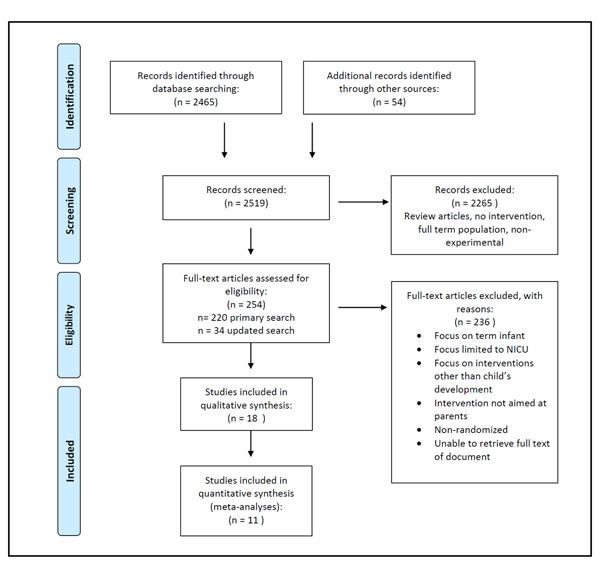
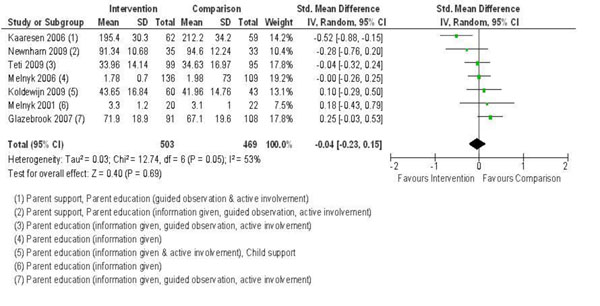
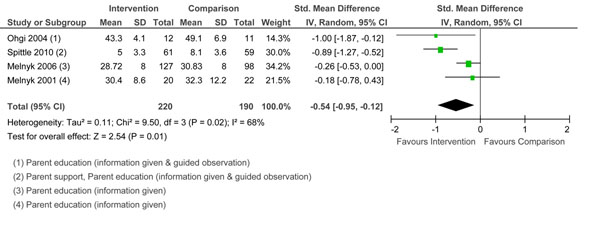
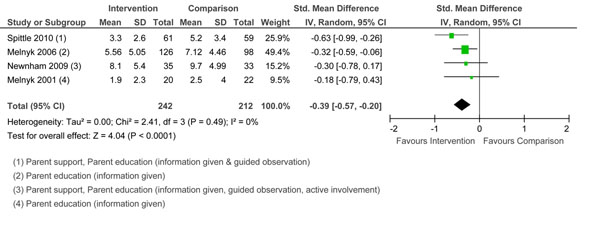
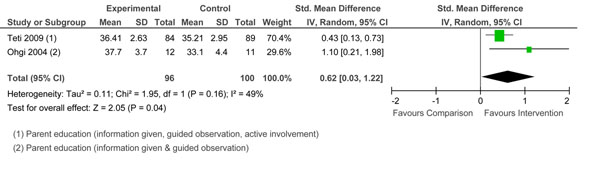
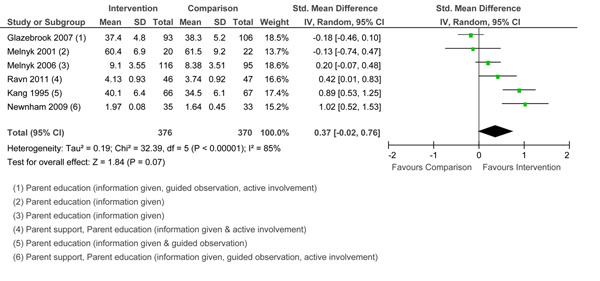
BACKGROUND: Preterm infants are at greater risk for neurodevelopmental disabilities than full term infants. Interventions supporting parents to improve the quality of the infant's environment should improve developmental outcomes for preterm infants. Many interventions that involve parents do not measure parental change, nor is it clear which intervention components are associated with improved parental outcomes. The aim of this review was to categorize the key components of early intervention programs and determine the direct effects of components on parents, as well as their preterm infants. METHODS: MEDLINE, EMBASE, CINAHL, ERIC, and Cochrane Database of Systematic Reviews were searched between 1990 and December 2011. Eligible randomized controlled trials (RCTs) included an early intervention for preterm infants, involved parents, and had a community component. Of 2465 titles and abstracts identified, 254 full text articles were screened, and 18 met inclusion criteria. Eleven of these studies reported maternal outcomes of stress, anxiety, depressive symptoms, self-efficacy, and sensitivity/responsiveness in interactions with the infant. Meta-analyses using a random effects model were conducted with these 11 studies. RESULTS: Interventions employed multiple components categorized as (a) psychosocial support, (b) parent education, and/or (c) therapeutic developmental interventions targeting the infant. All interventions used some form of parenting education. The reporting quality of most trials was adequate, and the risk of bias was low based on the Cochrane Collaboration tool. Meta-analyses demonstrated limited effects of interventions on maternal stress (Z = 0.40, p = 0.69) and sensitivity/responsiveness (Z = 1.84, p = 0.07). There were positive pooled effects of interventions on maternal anxiety (Z = 2.54, p = 0.01), depressive symptoms (Z = 4.04, p <.0001), and self-efficacy (Z = 2.05, p = 0.04). CONCLUSIONS: Positive and clinically meaningful effects of early interventions were seen in some psychosocial aspects of mothers of preterm infants. This review was limited by the heterogeneity of outcome measures and inadequate reporting of statistics. IMPLICATIONS OF KEY FINDINGS: Interventions for preterm infants and their mothers should consider including psychosocial support for mothers. If the intervention involves mothers, outcomes for both mothers and preterm infants should be measured to better understand the mechanisms for change.
Overview
The claims and statistics of this paper haven’t been checked yet.
Free: it reads the open-access text and checks the first 5 claims that cite a source we can check. Create a free account to check every claim.
Integrity signals
Registry
Cites
Statistics
Figures
Verification
Claims the paper makes
The claims and statistics of this paper haven’t been checked yet.
Free: it reads the open-access text and checks the first 5 claims that cite a source we can check. Create a free account to check every claim.
Claims other papers make about this one
Each is checked against this paper’s own text: does it say what the citing paper says it does?
The source backs part of the claim, not all of it — or backs it for a different population, condition or comparison.
In the citing paper
“These emotions increase during the transition to home from hospital,14–16 depending on the child’s condition and the parent’s readiness for discharge11 and their medical caregiving role.17 18”
From Coached, Coordinated, Enhanced Neonatal Transition (CCENT): Protocol for a multicentre pragmatic randomised controlled trial of transition-to-home support for parents of high-risk infants (2021) · cites this paper as [14]
Experimental — accuracy not yet measuredThe source backs part of the claim, not all of it — or backs it for a different population, condition or comparison.
In the citing paper
“In order to address the lack of evidence-based interventions supporting fathers of high-risk infants,9 14 we have included both fathers and mothers in our study.”
From Coached, Coordinated, Enhanced Neonatal Transition (CCENT): Protocol for a multicentre pragmatic randomised controlled trial of transition-to-home support for parents of high-risk infants (2021) · cites this paper as [14]
Experimental — accuracy not yet measuredThe source backs part of the claim, not all of it — or backs it for a different population, condition or comparison.
In the citing paper
“Enhanced psychosocial support for parents has the potential to improve parent-infant attachment and developmental outcomes for preterm infants (4).”
From Exploring Acceptance and Commitment Therapy for parents of preterm infants. (2021) · cites this paper as [4]
Experimental — accuracy not yet measuredThe cited source says what the claim attributes to it.
In the citing paper
“A systematic review of interventions for NICU parents including psychosocial support, education, and/or developmental interventions reported positive effect on depression and anxiety, but limited effect on stress.14”
The cited source says what the claim attributes to it.
In the citing paper
“A systematic review of early interventions to support parents of preterm infants found interventions composed of psychosocial support, education, and/or therapeutic developmental interventions had positive effects on depressive symptoms, anxiety, and self-efficacy, but limited effects on stress, and no overall significant effect on parental sensitivity/responsiveness (4).”
From Exploring Acceptance and Commitment Therapy for parents of preterm infants. (2021) · cites this paper as [4]
Self-check
Percentages, sums and reported differences re-computed from the paper’s own numbers.
The self-check needs the paper’s full text.
Citations
Cites
The Hospital Anxiety and Depression Scale
Zigmond, A. S., & Snaith, R. P. (1983) · Acta Psychiatrica Scandinavica · doi:10.1111/j.1600-0447.1983.tb09716.x · Cited by 47,139
Cochrane Handbook for Systematic Reviews of Interventions: Cochrane Book Series
(2008) · doi:10.1002/9780470712184 · Cited by 25,048
(1970) · Cited by 24,983
Pharmacological interventions for somatoform disorders in adults
Kleinstäuber, M., Witthöft, M., Steffanowski, A., van Marwijk, H., Hiller, W., & Lambert, M. J. (2014) · Cochrane Database of Systematic Reviews · doi:10.1002/14651858.cd010628.pub2 · Cited by 11,335
Developing and evaluating complex interventions: the new Medical Research Council guidance
Craig, P., Dieppe, P., Macintyre, S., Michie, S., Nazareth, I., & Petticrew, M. (2008) · BMJ · doi:10.1136/bmj.a1655 · Cited by 10,995
Funnel plots for detecting bias in meta-analysis
Sterne, J. A. C., & Egger, M. (2001) · Journal of Clinical Epidemiology · doi:10.1016/s0895-4356(01)00377-8 · Cited by 3,779
Cognitive and Behavioral Outcomes of School-Aged Children Who Were Born Preterm: A Meta-analysis
Bhutta, A. T., Cleves, M. A., Casey, P. H., Cradock, M. M., & Anand, K. J. S. (2002) · JAMA · doi:10.1001/jama.288.6.728 · Cited by 2,392
Less is more: meta-analyses of sensitivity and attachment interventions in early childhood
Bakermans-Kranenburg, M. J., van IJzendoorn, M. H., & Juffer, F. (2003) · Psychological Bulletin · doi:10.1037/0033-2909.129.2.195 · Cited by 1,883
The Worldwide Incidence of Preterm Birth: A Systematic Review of Maternal Mortality and Morbidity
Beck, S., Wojdyla, D., Say, L., Pilar Bertran, A., Meraldi, M., Harris Requejo, J., Rubens, C., Menon, R., & Van Look, P. (2010) · Bulletin of the World Health Organization · doi:10.2471/blt.08.062554 · Cited by 1,523
Postpartum depression effects on early interactions, parenting, and safety practices: a review
Field, T. (2010) · Infant Behavior and Development · doi:10.1016/j.infbeh.2009.10.005 · Cited by 1,493 · cited 1×
“Together, these psychosocial factors influence maternal sensitivity and responsiveness in interactions with the infant [25], which ultimately affect child developmental outcomes [26].”
Background
Research works printed but not linked: 5
- Bronfenbrenner U Bronfenbrenner U The biological theory of human development Making human beings human: Biological perspectives on human development 2005 Thousand Oaks, CA: Sage Publications 3 15
- IHDP - The Infant Health and Development Program Enhancing the outcomes of low-birth-weight, premature infants: A multisite, randomized trial Journal of the American Medical Association 1990 263 22 3035 3042 2188023
- The Cochrane Collaboration Review Manager (RevMan) 2011 5.1 Copenhagen: The Nordic Cochrane Centre
- IHDP (The Infant Health and Development Program) Enhancing the outcomes of low-birth-weight, premature infants: A multisite, randomized trial Journal of the American Medical Association 1990 263 22 3035 3042 2188023
- Egeland B Weinfield NS Bosquet M Cheng VK Osofsky JD, Fitzgerald HE Remembering, repeating, and working through: Lessons from attachment-based interventions Handbook of infant mental health Vol 4: Infant mental health in groups at high risk 2000 New York: Wiley 35 89
Cited by
Items 201–300 of 385
Francisco Barrera, Q., Francisco Moraga, M., Sonia Escobar, M., & H, R. A. (2007) · Revista chilena de pediatría · doi:10.4067/s0370-41062007000100012 · Cited by 28
The preterm infant–parent programme for attachment—PIPPA Study: a randomised controlled trial
Twohig, A., Murphy, J., McCarthy, A., Segurado, R., Underdown, A., Smyke, A. T., McNicholas, F., & Molloy, E. J. (2021) · Pediatric Research · doi:10.1038/s41390-020-01262-z · Cited by 17
Lazzerini, M., Bua, J., Vuillard, C. L. J., Squillaci, D., Tumminelli, C., Panunzi, S., Girardelli, M., & Mariani, I. (2024) · BMJ Paediatrics Open · doi:10.1136/bmjpo-2023-002469 · Cited by 11
Exploring Acceptance and Commitment Therapy for parents of preterm infants.
Esser, K., Barreira, L., Miller, D., Church, P., Major, N., Cohen, E., & Orkin, J. (2021) · Paediatrics & Child Health · doi:10.1093/pch/pxaa003 · Cited by 9
“The NICU experience for parents is often characterized by heightened stress and high rates of anxiety and depression (1,3,4).”
BackgroundInfluentialLeppänen, M. H., Korja, R., Rautava, P. T., & Ahlqvist‐Björkroth, S. (2024) · Frontiers in Psychology · doi:10.3389/fpsyg.2024.1380826 · Cited by 11
The Effect of Family-Based Care on Stress, Anxiety, and Depression of Mothers With Premature Infants
Pourkhani, S., Chehrzad, M. M., Masouleh, S. R., & Leyli, E. K. N. (2018) · Journal of Holistic Nursing and Midwifery · doi:10.29252/hnmj.28.2.121 · Cited by 11
Torbert, N., Taladay-Carter, C., Kauer, T., Hackenburg, L., Weaver, M. S., & Kellas, J. K. (2022) · American Journal of Perinatology · doi:10.1055/s-0042-1758725 · Cited by 12
Lee, J., Kang, J. C., & Ji, E. S. (2019) · Asian Nursing Research · doi:10.1016/j.anr.2019.04.004 · Cited by 12
Sensitivity Training for Mothers With Premature Infants: A Randomized Controlled Trial
Yu, N. K. K., Shum, K. K., Lam, Y. Y., Kwan, Q. K. L., Ng, S. Y. P., & Chan, N. T. T. (2022) · Journal of Pediatric Psychology · doi:10.1093/jpepsy/jsac051 · Cited by 11
Maternal wellbeing of Malaysian mothers after the birth of a preterm infant
Jones, L., Mariapun, J., Tan, A. X. Q., Kassim, Z., & Su, T. T. (2023) · BMC Pregnancy and Childbirth · doi:10.1186/s12884-023-05823-y · Cited by 11
Fang, Z., Liu, X., Zhang, C., Lachman, J. M., & Qiao, D. (2023) · Trauma Violence & Abuse · doi:10.1177/15248380231207965 · Cited by 11
“…and socio-emotional development; parent–child attachment and interaction; parenting knowledge; and positive parenting practices, as well as reducing child behavioral problems and parental mental health symptoms (Benzies et al., 2013; Britto et al., 2017; Geeraert et al., 2004; Jeong et al., 2021).”
BackgroundInfluentialKeys, E., Benzies, K., Kirk, V. G., & Duffett‐Leger, L. (2021) · Journal of Clinical Sleep Medicine · doi:10.5664/jcsm.9618 · Cited by 8
“40 Our findings demonstrated that families who are experiencing infant sleep difficulties may already be at risk of lower overall quality parent-child interactions at age 5 months.”
Self-citationZorlular, R., Akkaya, K. U., & Elbasan, B. (2024) · Infant Behavior and Development · doi:10.1016/j.infbeh.2024.101944 · Cited by 13
Parenting Style Interventions in Parents of Preterm and High-Risk Infants
Neel, M. L. (2023) · Clinics in Perinatology · doi:10.1016/j.clp.2022.10.008 · Cited by 12
Gärtner, K. A., Vetter, V. C., Schäferling, M., Reuner, G., & Hertel, S. (2018) · British Journal of Educational Psychology · doi:10.1111/bjep.12218 · Cited by 9
Dempsey, A. G., Goode, R. H., Colon, M. T., Holubeck, P. A., Nsier, H., Zopatti, K. L., & Needelman, H. W. (2020) · Journal of Developmental & Behavioral Pediatrics · doi:10.1097/dbp.0000000000000852 · Cited by 9
“have examined the benefits of EI, including improved cognitive functioning and maternal mental health.(7) Specifically, Park et al.”
BackgroundMontoro‐Pérez, N., Oliver‐Roig, A., Montejano‐Lozoya, R., & Richart‐Martínez, M. (2023) · Journal of Clinical Nursing · doi:10.1111/jocn.16920 · Cited by 11
Baraldi, E., Allodi, M. W., Löwing, K., Wadström, N., Smedler, A., Örtqvist, M., Westrup, B., & Ådén, U. (2024) · Acta Paediatrica · doi:10.1111/apa.17399 · Cited by 10
Kavitha, K., Patil, M. M., & Sikandar, B. J. (2023) · Journal of Neonatal Nursing · doi:10.1016/j.jnn.2023.02.005 · Cited by 8
Nadar, U. D., Thakkar, P. A., & Shah, C. (2017) · International Journal of Contemporary Pediatrics · doi:10.18203/2349-3291.ijcp20175582 · Cited by 7
Understanding the impact of newborn touch upon mothers of hospitalized preterm neonates.
Barnes, C. R., & Adamson-Macedo, E. N. (2022) · Journal of Human Growth and Development · doi:10.36311/jhgd.v32.13322 · Cited by 7
Oyugi, B., Kioko, U., Kaboro, S. M., Gikonyo, S., Okumu, C., Ogola-Munene, S., Kalsi, S., Thiani, S., Korir, J., Odundo, P. A., et al. (2017) · BMC Health Services Research · doi:10.1186/s12913-017-2164-9 · Cited by 7
The global scope and components of family-centred care for preterm infants: An umbrella review
Adella, F. J., Maraschin, F. G., & Nagraj, S. (2025) · PLOS Global Public Health · doi:10.1371/journal.pgph.0004900 · Cited by 12
Dambi, J. M., Jelsma, J. M., Mlambo, T., & Chiwaridzo, M. (2017) · European Journal of Physiotherapy · doi:10.1080/21679169.2017.1381313 · Cited by 6
Rabbitt, A. L., Bretl, D., Parker, M., Yan, K., & Zhang, L. (2018) · The Journal of Perinatal & Neonatal Nursing · doi:10.1097/jpn.0000000000000362 · Cited by 6
Lovato, I., Vanes, L. D., Sacchi, C., Simonelli, A., Hadaya, L., Kanel, D., Falconer, S., Counsell, S. J., Redshaw, M., Kennea, N. L., et al. (2022) · Children · doi:10.3390/children9040508 · Cited by 9
“As parental knowledge and self-efficacy are associated with reduced dysfunctional parenting [79], interventions designed to increase parental awareness and skills may be a useful tool for parents of both difficult and easy preterm infants [80].”
BackgroundMusic therapy modulates mothers’ perception of their preterm infants
Kobus, S., Diezel, M., Dewan, M. V., Hüning, B. M., Dathe, A.-K., Marschik, P. B., Felderhoff‐Mueser, U., & Bruns, N. (2023) · Frontiers in Psychology · doi:10.3389/fpsyg.2023.1231741 · Cited by 6
Mothers’ perinatal and infant mental health knowledge in a Johannesburg township setting
Bain, K., & Richards, J. (2016) · Journal of Child and Adolescent Mental Health · doi:10.2989/17280583.2016.1200585 · Cited by 7
McNeil, E., Patterson, N., Manetto-Spratt, P., & Patsch, A. J. (2016) · Newborn and Infant Nursing Reviews · doi:10.1053/j.nainr.2016.09.023 · Cited by 8
Håkstad, R. B., Obstfelder, A. U., & Øberg, G. K. (2018) · Physiotherapy Theory and Practice · doi:10.1080/09593985.2017.1423524 · Cited by 11
The PREEMI as a measure of parent engagement in the NICU
Makris, N. M., Vittner, D. J., Samra, H. A., & McGrath, J. M. (2019) · Applied Nursing Research · doi:10.1016/j.apnr.2019.03.007 · Cited by 6
Hearing, Speech, and Language in Infants and Toddlers Born Prematurely
Hunter, L. L., Vannest, J. J., Moore, D. R., Barnes‐Davis, M. E., Blankenship, C. M., Prather, L., Caldwell-Kurtzman, J., & Parikh, M. (2023) · The Volta Review · doi:10.17955/tvr.123.1.symp1 · Cited by 6
Dibley, A. L., Rydin‐Orwin, T., Stedmon, J., & Dallos, R. (2016) · Infant Mental Health Journal · doi:10.1002/imhj.21572 · Cited by 5
Fernández, X. (2022) · Clínica Contemporánea · doi:10.5093/cc2022a3 · Cited by 7
Sampaio, S. S. S., Rodrigues, N. A. D. A., Moura, J. R., de Lima-Alvarez, C. D., & Pereira, S. A. (2023) · International Journal of Environmental Research and Public Health · doi:10.3390/ijerph20032375 · Cited by 8
“Studies have shown that, even with motor alterations caused by prematurity, early interventions and stimuli provided by the family have positive effects on infants’ motor development [19,35].”
BackgroundInfluentialBrain Injury in the Preterm Infant
Riddle, A., Miller, S. P., & Back, S. A. (2023) · Elsevier eBooks · doi:10.1016/b978-0-323-82823-9.00054-4 · Cited by 4
Schneider, J., Harari, M. M., Faure, N., Lacroix, A., Borghini, A., Tolsa, J., & Horsch, A. (2024) · PLoS ONE · doi:10.1371/journal.pone.0301594 · Cited by 11
Infant/Early Childhood Mental Health and Collaborative Partnerships: Beyond the NICU
Tomlin, A. M., Deloian, B., & Wollesen, L. (2016) · Newborn and Infant Nursing Reviews · doi:10.1053/j.nainr.2016.09.025 · Cited by 5
Envolvimento paterno: validade interna da versão brasileira do Inventory of Father Involvement
de Santis, L., Barham, E. J., Coimbrã, S., & Fontaine, A. M. (2017) · Revista Avaliação Psicológica · doi:10.15689/ap.2017.1602.13 · Cited by 6
Reliability and Validity Assessment of the Chinese Version of MBI-PPD Self-efficacy Scale
Chen, H., Liu, C., Liu, C.-Y., Lo, L., Lin, R., Huang, D., & Chiou, W. (2020) · Lecture notes in computer science · doi:10.1007/978-3-030-49913-6_2 · Cited by 5
Keyser, L. E., McKinney, J. L., Hosterman, L., & Chen, C. C. G. (2021) · International Urogynecology Journal · doi:10.1007/s00192-021-04845-4 · Cited by 5
Mobbs, C. A., Spittle, A. J., & Johnston, L. M. (2020) · Open Journal of Pediatrics · doi:10.4236/ojped.2020.104073 · Cited by 5
Mothers singing and speaking to preterm infants in NICU
Filippa, M., Frassoldati, R., Talucci, G., & Ferrari, F. (2015) · Journal of pediatric and neonatal individualized medicine · doi:10.7363/040238 · Cited by 8
“However, in the interventions for preterm infants and their parents, outcomes for both parents and preterm infants should be measured to better understand the mechanisms for change [10, 11].”
BackgroundBenzies, K., Bartram, F. C., & McNeil, D. A. (2025) · Journal of Clinical Medicine · doi:10.3390/jcm14020586 · Cited by 4
Self-citationLubbe, W., Kruger, I. M., & Donald, K. A. (2026) · Children · doi:10.3390/children13020280 · Cited by 9
“For example, Benzies et al. [51] reviewed early interventions without isolating the educational components.”
Vallepu, R., Kadapa, M. I., Katheragandla, C., & Nagaraju, C. (2023) · Archives of Medicine and Health Sciences · doi:10.4103/amhs.amhs_3_23 · Cited by 6
Montirosso, R., Micheletti, S., Pisoni, C., Mascheroni, E., Scarano, E., Naboni, C., Rosa, E., Castagna, A., Bonino, M., Fazzi, E. M., et al. (2025) · Frontiers in Psychology · doi:10.3389/fpsyg.2024.1504338 · Cited by 5
Living with a birthmark: Phenomenology of prematurity for mothers in Turkey
Taştekin, E., & Bayhan, P. (2023) · Journal of Pediatric Nursing · doi:10.1016/j.pedn.2023.01.002 · Cited by 6
Collette, K., Feeley, N., Galipeau, R., & Lebel, V. (2023) · Early Human Development · doi:10.1016/j.earlhumdev.2023.105717 · Cited by 8
Abbasinia, N., Rad, Z. A., Qalehsari, M. Q., Gholinia, H., & Arzani, A. (2023) · Journal of Education and Health Promotion · doi:10.4103/jehp.jehp_514_22 · Cited by 5
“The key components of early intervention programs include determination of the direct effects of components on parents and their pre‑term infants categorized by the review of Benzies et al. (2013).”
BackgroundEarly Intervention in Cerebral Palsy: From Theory to Current Practice
Festante, F., Antonelli, C., Mazzotti, S., & Guzzetta, A. (2023) · Springer eBooks · doi:10.1007/978-3-031-34252-3_8 · Cited by 8
Tschamper, M. K., Wahl, A. K., Jakobsen, R., & Larsen, M. H. (2025) · Journal of Clinical Nursing · doi:10.1111/jocn.17652 · Cited by 4
Raghupathy, M. K., Jahangir, S., Khurana, S. G., Lewis, L., & Rao, B. K. (2025) · Child Care Health and Development · doi:10.1111/cch.70045 · Cited by 8
“Therefore, educating and engaging the family in infant treatment is essential for achieving a greater impact on developmental outcomes (Benzies et al. 2013).”
The Congenital Heart Disease Intervention Program (CHIP) and Interventions in Infancy
Doherty, N. N., & McCusker, C. G. (2016) · Elsevier eBooks · doi:10.1016/b978-0-12-801640-4.00009-3 · Cited by 5
Early Intervention in Pediatric Occupational Therapy
Pekçetin, S., & Günal, A. (2017) · InTech eBooks · doi:10.5772/intechopen.68316 · Cited by 7
Environmental Risks to NICU Outcomes
Vanderbilt, D. L., Mirzaian, C. B., & Schifsky, K. (2018) · Springer eBooks · doi:10.1007/978-3-319-73275-6_10 · Cited by 5
Brain Injury in the Preterm Infant
Back, S. A., & Miller, S. P. (2018) · Elsevier eBooks · doi:10.1016/b978-0-323-40139-5.00060-7 · Cited by 7
Dyches, T. T., Smith, T. B., Korth, B. B., & Mandleco, B. L. (2018) · ScholarsArchive (Brigham Young University) · Cited by 5
Keyser, L. E., Myer, E. N. B., McKinney, J. L., Maroyi, R., Mukwege, D. M., & Chen, C. C. G. (2021) · International Journal of Gynecology & Obstetrics · doi:10.1002/ijgo.13740 · Cited by 5
Pierce, S. K., Reynolds, K., Jakobson, L. S., Ricci, M. F., & Roos, L. E. (2023) · Children · doi:10.3390/children10071174 · Cited by 9
“Previous literature supports the effectiveness of online platforms offering both peer support and psychoeducation in improving mental health outcomes among NICU parents over online resources only offering psychoeducation [62].”
BackgroundErnst, M., Schuster, A. K.-G., Mildenberger, E., Otten, D., Brähler, E., Tesarz, J., Urschitz, M. S., Pfeiffer, N., Beutel, M. E., & Fieß, A. (2023) · Psychiatry Research · doi:10.1016/j.psychres.2023.115374 · Cited by 6
Sonderer, P., Ziegler, S. A., Oertle, B. G., Meichtry, A., & Hadders‐Algra, M. (2017) · Pediatric Physical Therapy · doi:10.1097/pep.0000000000000398 · Cited by 4
“Number of therapists involveda 9 8 40 Years of experience as PT Median (range) 23 (9-33) 24 (9-36) 18 (3-40) Years of experience as pediatric PT Median (range) 21 (3-30) 19 (3-34) 14 (1-34) Sex: male/female 0/9 0/8 4/37 Additional education NDT, bobath, n 36 NDT, baby, n 10 Vojta, n 6 Sensory integration, n 15”
BackgroundImpact of Two Touch Types on Preterm's Behavioral Reaction
SHEHATA, D. N. S. S. R. E.-G. M. E., RASHAD, D. N. S. F. H. E.-A. H. M., & ABOUHUSSEIN, H. H. (2018) · The Medical Journal of Cairo University/The Medical Journal of Cairo University · doi:10.21608/mjcu.2018.60292 · Cited by 4
Effect of music on the growth monitoring of low birth weight newborns
Shabnam, J., Mahsa, A., Mahram, M., & Oveisi, S. (2021) · International Journal of Africa Nursing Sciences · doi:10.1016/j.ijans.2021.100312 · Cited by 9
AUTOEFICÁCIA MATERNA PARA O CUIDADO DO RECÉM-NASCIDO PREMATURO
Viera, C. S., Rocha, L. C., Toso, B. R. G. D. O., Machineski, G. G., Minosso, K. C., & Barreto, G. M. S. (2022) · Varia Scientia - Ciências da Saúde · doi:10.48075/vscs.v8i2.29792 · Cited by 3
Hugoson, P., Haslbeck, F. B., Ådén, U., & Eulau, L. (2025) · Frontiers in Psychology · doi:10.3389/fpsyg.2025.1440905 · Cited by 7
Msisiri, L. S., Masoud, N. S., Masika, G. M., & Msoka, E. F. (2025) · Systematic Reviews · doi:10.1186/s13643-025-02907-y · Cited by 4
“Several systematic reviews evaluated the impact of early educational interventions on the outcomes of mothers and newborns in the NICU [33, 34].”
A Compassion-Focused Approach to Support Parents After Preterm Birth
Lloyd-Collins, T. M., Fitzallen, G. C., & Kirby, J. N. (2025) · Clinical Child and Family Psychology Review · doi:10.1007/s10567-025-00549-z · Cited by 3
“Several reviews have examined the effectiveness of interventions aimed at supporting the mental health of parents after preterm birth (Benzies et al., 2013; Chan & Shorey, 2024; Dewi et al., 2025; Laccetta et al., 2023; Mendelson et al., 2017; Puthussery et al., 2018; Seiiedi-Biarag et al., 2020;…”
Fernandes, R. O., Bernardi, J. R., da Fonseca, J. D., da Silva, F. G., Procianoy, R. S., & Silveira, R. C. (2022) · Frontiers in Nutrition · doi:10.3389/fnut.2022.981818 · Cited by 6
Clemencic-Jones, V., Trajkovski, S., Fuller, A. M., Mattock, K., & Stulz, V. M. (2024) · International Journal of Environmental Research and Public Health · doi:10.3390/ijerph21081018 · Cited by 4
Creating a Holding Environment for Caregivers
Warren, I. (2017) · The Journal of Perinatal & Neonatal Nursing · doi:10.1097/jpn.0000000000000227 · Cited by 5
Early Intervention for NICU Graduates
Miller, K. (2018) · Springer eBooks · doi:10.1007/978-3-319-73275-6_17 · Cited by 4
Soberón, A., Carlier, M. E. M., Jiménez, C., Harmony, T., & Cycyk, L. M. (2018) · Revista de Logopedia Foniatría y Audiología · doi:10.1016/j.rlfa.2018.06.003 · Cited by 5
Babirye, Z., Ekirapa, E. K., Okeny, G. G., Kisakye, A. N., & Ssengooba, F. (2021) · Journal of Interventional Epidemiology and Public Health · doi:10.37432/jieph.2021.4.3.37 · Cited by 3
French translation and validation of the Karitane Parenting Confidence Scale
Ribeiro, M.-H., Coulon, N., & Guerrién, A. (2022) · European Review of Applied Psychology · doi:10.1016/j.erap.2022.100759 · Cited by 6
Parent-Integrated Interventions to Improve Language Development in Children Born Very Preterm
Synnes, A. R., Luu, T. M., Afifi, J. K., Khairy, M. A., de Cabo, C., Moddemann, D. M., Hendson, L., Reichert, A., Coughlin, K. W., Nguyen, K. A., et al. (2023) · Children · doi:10.3390/children10060953 · Cited by 6
Quiñones-Preciado, J. A., Peña-García, Á. A., Vallecilla-Zambrano, D. G., Yama-Oviedo, J. A., Hernández, N. L., & Ordóñez-Hernández, C. A. (2023) · Interface - Comunicação Saúde Educação · doi:10.1590/interface.220671 · Cited by 3
Crianza Positiva: Combining Group Workshops and E-Messages to Strengthen Parenting Competences
Balsa, A. I., Gómez, E., González, M. L., Bloomfield, J., Cid, A., & Valdés, R. (2023) · Child & Youth Care Forum · doi:10.1007/s10566-023-09768-3 · Cited by 8
Davis, H., & Hornsby, B. W. Y. (2023) · The Volta Review · doi:10.17955/tvr.123.1.symp2 · Cited by 3
Padilla-Muñoz, E. M., Barbancho-Morant, M. M., Lanzarote-Fernández, M. D., Sanduvete‐Chaves, S., & Moscoso, S. C. (2024) · Family Process · doi:10.1111/famp.13002 · Cited by 6
Filisetti, M., Cattarelli, D., & Bonomi, S. (2019) · International Journal of Pediatrics & Neonatal Care · doi:10.15344/2455-2364/2019/154 · Cited by 2
“Some systematic reviews shows the effectiveness of early interventions based on a program that enhances parent-infant interactions, provides optimal environment for learning, promotes motor, social and cognitive skills within an enriched environment [12,24,25].”
BackgroundPathophysiology of Neonatal White Matter Injury
Miller, S. P., & Back, S. A. (2016) · Elsevier eBooks · doi:10.1016/b978-0-323-35214-7.00169-4 · Cited by 4
Roué, J., Rioualen, S., & Sizun, J. (2017) · Springer eBooks · doi:10.1007/978-3-319-65077-7_17 · Cited by 4
Ferreira, R. D. C., Alves, C. R. L., & Magalhães, L. D. C. (2020) · Early Child Development and Care · doi:10.1080/03004430.2020.1851214 · Cited by 4
“Benzies, Magilil-Evans, Hayden, and Ballantyne (2013) and Ferreira, Alves, Guimaraes, Menezes, and Magalhães (2020) reviews demonstrated that children born prematurely and undergoing family-focused early intervention had better overall development (Benzies et al., 2013) and better cognitive development (Ferreira et al.”
BackgroundResultInfluentialEarly Intervention Services for Young Children with Cerebral Palsy
Fiss, A. L., & Jeffries, L. M. (2020) · Springer eBooks · doi:10.1007/978-3-319-74558-9_153 · Cited by 3
Preterm Birth and Healthy Outcomes Team: the science and strategy of team-based investigation
Tough, S. (2013) · BMC Pregnancy and Childbirth · doi:10.1186/1471-2393-13-s1-s1 · Cited by 3
“A systematic review completed by team members is the first to attempt to untangle the effects of intervention components on parent and preterm child outcomes over the short and longer term [20].”
Ahlqvist‐Björkroth, S. (2017) · Acta Paediatrica · doi:10.1111/apa.14111 · Cited by 3
“relationship between the parent and infant, parenting in general and parental well-being (3).”
BackgroundFontana, C., Provitera, L., Bonfanti, C., Schiavolin, P., Polimeni, B., Marasca, F., Pesenti, N., Iuliano, R., Gangi, S., Bodega, B., et al. (2025) · Scientific Reports · doi:10.1038/s41598-025-28564-8 · Cited by 41
Badura, A., Dietz, A., Zeman, F., Klarner, S., Ammon, L., Waltner‐Romen, M., Griesmaier, E., Wellmann, M., Lehnerer, V., & Wellmann, S. M. (2026) · Pediatric Research · doi:10.1038/s41390-025-04734-2 · Cited by 3
Amelon-Petit, C., Toullet, P., Larrouse, C., Bayle, N., & Graciès, J. (2017) · Motricité Cérébrale · doi:10.1016/j.motcer.2017.06.002 · Cited by 2
Tool to Enhance Relationships Between Staff and Parents in the Neonatal Unit
Eeles, A. L., & Gibbs, D. (2020) · Journal of Obstetric, Gynecologic & Neonatal Nursing · doi:10.1016/j.jogn.2020.08.007 · Cited by 2
Early Neonatal Intervention: A Newer Conceptual Paradigm
Goyal, G., Chetan, C., Patra, S., Gupta, G., & Prasad, H. (2022) · Journal of Neonatology · doi:10.1177/09732179221131171 · Cited by 2
Effectiveness of Current Interventions to Alleviate Parental Distress in the NICU: A Rapid Review
Shudra, D., Papathanassoglou, E. D. E., & Reichert, A. (2022) · International Journal of Critical Care · doi:10.29173/ijcc23 · Cited by 2
“The few published reviews on interventions focused almost exclusively on developmental care and family-centered care interventions and/or did not focus on parental stress, or anxiety as primary outcomes (Benzies et al., 2013; Ding et al., 2019; Lavalle et al., 2019; Vetcho et al., 2020).”
BackgroundMorawska, A., Armstrong, R. M., McBryde, C., Mitchell, A. E., Etel, E., McAuliffe, T., & Johnston, L. M. (2024) · International Journal of Early Years Education · doi:10.1080/09669760.2024.2367508 · Cited by 2
“An emphasis on psychosocial support aligns with an earlier systematic review which showed that early intervention programmes for preterm infants prior to 3 years should consider including psychosocial support for mothers (Benzies et al. 2013).”
Ferraz, L. P. L., Xavier, M. R., Gameiro, M., Cardoso, A. F., Cardoso, D., Paradela, L., Dinis, D., Coutinho, E., & Fernandes, A. M. (2024) · JBI Evidence Synthesis · doi:10.11124/jbies-23-00422 · Cited by 4
Jang, E. E., Burns, S., Hunte, M. R., Vincett, M., Chiarotto, L., & Church, P. (2024) · Early Human Development · doi:10.1016/j.earlhumdev.2024.106112 · Cited by 3
Barnets första år lägger grunden för framtida lärande
Baraldi, E. (2025) · doi:10.16993/bct.g · Cited by 2
del Río, R., Ochoa, C., de Dios, J. G., Estrada, D., Balaguer, A., & Garcı́a-Alix, A. (2015) · International Journal of Pediatrics & Neonatal Care · doi:10.15344/2455-2364/2015/105 · Cited by 2
Baby Triple P for Parents of a Very Preterm Infant: A Case Study
Evans, T., Boyd, R. N., Colditz, P. B., Sanders, M. R., & Whittingham, K. (2016) · Journal of Child and Family Studies · doi:10.1007/s10826-016-0571-x · Cited by 3
Cortés, A., & Wachholtz, D. (2016) · Revista Chilena de Terapia Ocupacional · doi:10.5354/0719-5346.2016.44752 · Cited by 4
Metadata
- Authors
- Benzies, K. M., Magill-Evans, J. E., Hayden, K., & Ballantyne, M.
- Affiliations
- University of Calgary (CA)
- Corresponding author
- Benzies, Karen M
- Venue
- BMC Pregnancy and Childbirth
- Published
- 2013
- Volume
- 13
- Issue
- Suppl 1
- Pages
- S10
- ISSN
- 1471-2393 (ISSN-L)
- PMC
- PMC3561170
- OpenAlex
- W2123988943
- Semantic Scholar
- 4d85bf8ed2a990b5d25829f38a637c8a2d00b869
- Cited by
- 385
- References
- 77
- Citations by year
- 2026: 26 · 2025: 23 · 2024: 22 · 2023: 38 · 2022: 30 · 2021: 41 · 2020: 39 · 2019: 28 · 2018: 29 · 2017: 39 · 2016: 28 · 2015: 15 · 2014: 21 · 2013: 4
- Type
- conference abstract
- Language
- en
- Open access
- gold
- doi.org
- Licence
- cc-by
- Locations
- BMC Pregnancy and Childbirth (publishedVersion, cc-by)
- Europe PMC (PubMed Central) (publishedVersion, cc-by)
- PubMed Central (publishedVersion, cc-by)
- PubMed (publishedVersion)
- DOAJ (DOAJ: Directory of Open Access Journals) (submittedVersion)
- Funders
- Fondation pour la Recherche Médicale
- Alberta Innovates (200700595)
- Topics
- Health Sciences › Medicine › Pediatrics, Perinatology and Child Health › Infant Development and Preterm Care
- Social Sciences › Psychology › Clinical Psychology › Family and Disability Support Research
- Health Sciences › Medicine › Public Health, Environmental and Occupational Health › Maternal Mental Health During Pregnancy and Postpartum
- Keywords
- preterm infants, early intervention, parental involvement, maternal stress, maternal anxiety, depressive symptoms, maternal self-efficacy, parent education, psychosocial support, community-based intervention, neurodevelopmental outcomes, intervention components, maternal mental health, parent-infant interaction, intervention mechanisms, reporting quality, risk of bias, reporting bias, selection bias, attrition bias
- MeSH terms
- Female, Humans, Infant, Infant, Newborn, Infant, Premature, Male, Parents, Treatment Outcome, Early Intervention, Educational
About these checks
Registry, retraction, Cites and statistics results are computed, not judged, with one exception: a printed reference that no index lists is read once by a model before it counts as a citation error. Claims are extracted by a model and kept only when their quote appears verbatim in the text; each cited source is then checked, with a model’s help, for whether it says what the claim relies on. Those verdicts can be wrong — read the claim’s quote and the cited source before relying on one.
Statistics and arithmetic are recomputed, not judged.
Confidence bands are shown only for fields calibrated on our annotated test set. None is calibrated yet, so no band is shown.
What counts as a claim ›How we measure confidence ›How we check this ›
Are you an author, or do you see a problem with this page? Request a review
Data sources
Bibliographic data: Semantic Scholar, OpenAlex, Crossref.
Contains information from the Semantic Scholar Academic Graph Datasets, made available under the ODC Attribution License (ODC-BY 1.0).
Semantic Scholar’s data is described in: Kinney, R., et al. (2023). The Semantic Scholar Open Data Platform. arXiv:2301.10140.
