

Key components of early intervention programs for preterm infants and their parents: a systematic review and meta-analysis
Open accessThe DOI matches its Crossref record; 78 of the 78 references it cites were found in a registry or an index.
Abstract
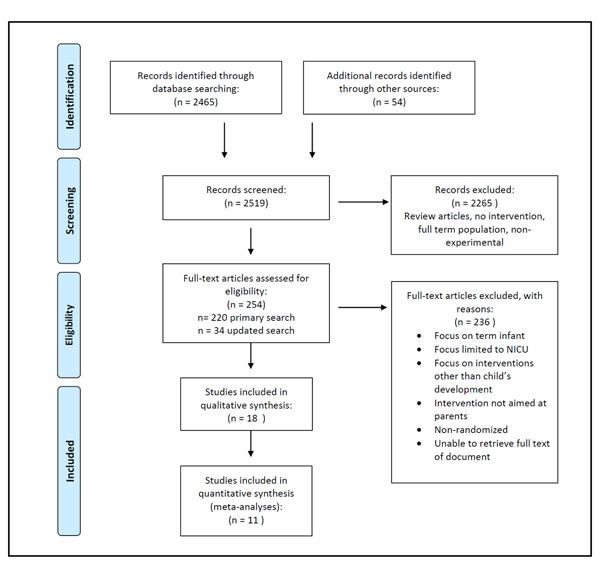
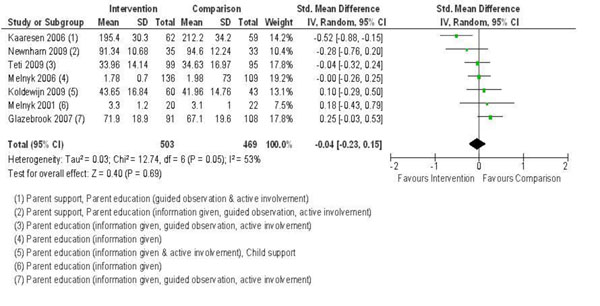
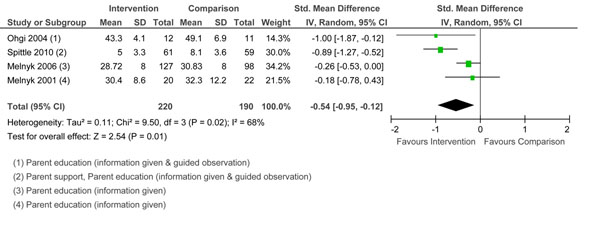
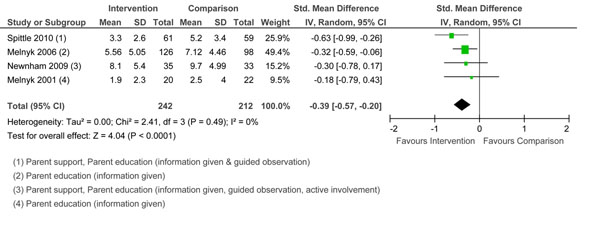
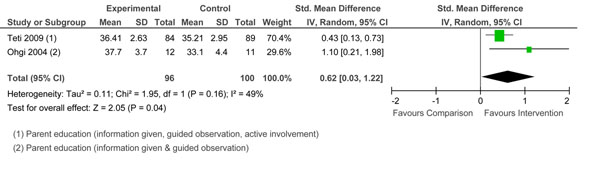
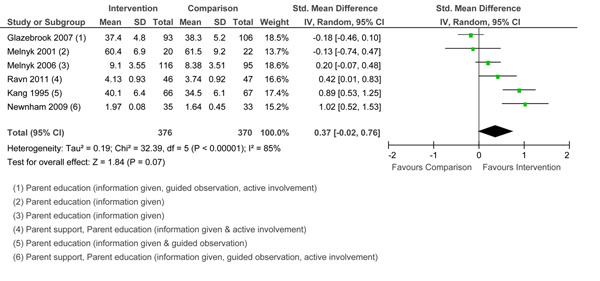
BACKGROUND: Preterm infants are at greater risk for neurodevelopmental disabilities than full term infants. Interventions supporting parents to improve the quality of the infant's environment should improve developmental outcomes for preterm infants. Many interventions that involve parents do not measure parental change, nor is it clear which intervention components are associated with improved parental outcomes. The aim of this review was to categorize the key components of early intervention programs and determine the direct effects of components on parents, as well as their preterm infants. METHODS: MEDLINE, EMBASE, CINAHL, ERIC, and Cochrane Database of Systematic Reviews were searched between 1990 and December 2011. Eligible randomized controlled trials (RCTs) included an early intervention for preterm infants, involved parents, and had a community component. Of 2465 titles and abstracts identified, 254 full text articles were screened, and 18 met inclusion criteria. Eleven of these studies reported maternal outcomes of stress, anxiety, depressive symptoms, self-efficacy, and sensitivity/responsiveness in interactions with the infant. Meta-analyses using a random effects model were conducted with these 11 studies. RESULTS: Interventions employed multiple components categorized as (a) psychosocial support, (b) parent education, and/or (c) therapeutic developmental interventions targeting the infant. All interventions used some form of parenting education. The reporting quality of most trials was adequate, and the risk of bias was low based on the Cochrane Collaboration tool. Meta-analyses demonstrated limited effects of interventions on maternal stress (Z = 0.40, p = 0.69) and sensitivity/responsiveness (Z = 1.84, p = 0.07). There were positive pooled effects of interventions on maternal anxiety (Z = 2.54, p = 0.01), depressive symptoms (Z = 4.04, p <.0001), and self-efficacy (Z = 2.05, p = 0.04). CONCLUSIONS: Positive and clinically meaningful effects of early interventions were seen in some psychosocial aspects of mothers of preterm infants. This review was limited by the heterogeneity of outcome measures and inadequate reporting of statistics. IMPLICATIONS OF KEY FINDINGS: Interventions for preterm infants and their mothers should consider including psychosocial support for mothers. If the intervention involves mothers, outcomes for both mothers and preterm infants should be measured to better understand the mechanisms for change.
Overview
The claims and statistics of this paper haven’t been checked yet.
Free: it reads the open-access text and checks the first 5 claims that cite a source we can check. Create a free account to check every claim.
Integrity signals
Registry
Cites
Statistics
Figures
Verification
Claims the paper makes
The claims and statistics of this paper haven’t been checked yet.
Free: it reads the open-access text and checks the first 5 claims that cite a source we can check. Create a free account to check every claim.
Claims other papers make about this one
Each is checked against this paper’s own text: does it say what the citing paper says it does?
The source backs part of the claim, not all of it — or backs it for a different population, condition or comparison.
In the citing paper
“These emotions increase during the transition to home from hospital,14–16 depending on the child’s condition and the parent’s readiness for discharge11 and their medical caregiving role.17 18”
From Coached, Coordinated, Enhanced Neonatal Transition (CCENT): Protocol for a multicentre pragmatic randomised controlled trial of transition-to-home support for parents of high-risk infants (2021) · cites this paper as [14]
Experimental — accuracy not yet measuredThe source backs part of the claim, not all of it — or backs it for a different population, condition or comparison.
In the citing paper
“In order to address the lack of evidence-based interventions supporting fathers of high-risk infants,9 14 we have included both fathers and mothers in our study.”
From Coached, Coordinated, Enhanced Neonatal Transition (CCENT): Protocol for a multicentre pragmatic randomised controlled trial of transition-to-home support for parents of high-risk infants (2021) · cites this paper as [14]
Experimental — accuracy not yet measuredThe source backs part of the claim, not all of it — or backs it for a different population, condition or comparison.
In the citing paper
“Enhanced psychosocial support for parents has the potential to improve parent-infant attachment and developmental outcomes for preterm infants (4).”
From Exploring Acceptance and Commitment Therapy for parents of preterm infants. (2021) · cites this paper as [4]
Experimental — accuracy not yet measuredThe cited source says what the claim attributes to it.
In the citing paper
“A systematic review of interventions for NICU parents including psychosocial support, education, and/or developmental interventions reported positive effect on depression and anxiety, but limited effect on stress.14”
The cited source says what the claim attributes to it.
In the citing paper
“A systematic review of early interventions to support parents of preterm infants found interventions composed of psychosocial support, education, and/or therapeutic developmental interventions had positive effects on depressive symptoms, anxiety, and self-efficacy, but limited effects on stress, and no overall significant effect on parental sensitivity/responsiveness (4).”
From Exploring Acceptance and Commitment Therapy for parents of preterm infants. (2021) · cites this paper as [4]
Self-check
Percentages, sums and reported differences re-computed from the paper’s own numbers.
The self-check needs the paper’s full text.
Citations
Cites
The Hospital Anxiety and Depression Scale
Zigmond, A. S., & Snaith, R. P. (1983) · Acta Psychiatrica Scandinavica · doi:10.1111/j.1600-0447.1983.tb09716.x · Cited by 47,139
Cochrane Handbook for Systematic Reviews of Interventions: Cochrane Book Series
(2008) · doi:10.1002/9780470712184 · Cited by 25,048
(1970) · Cited by 24,983
Pharmacological interventions for somatoform disorders in adults
Kleinstäuber, M., Witthöft, M., Steffanowski, A., van Marwijk, H., Hiller, W., & Lambert, M. J. (2014) · Cochrane Database of Systematic Reviews · doi:10.1002/14651858.cd010628.pub2 · Cited by 11,335
Developing and evaluating complex interventions: the new Medical Research Council guidance
Craig, P., Dieppe, P., Macintyre, S., Michie, S., Nazareth, I., & Petticrew, M. (2008) · BMJ · doi:10.1136/bmj.a1655 · Cited by 10,995
Funnel plots for detecting bias in meta-analysis
Sterne, J. A. C., & Egger, M. (2001) · Journal of Clinical Epidemiology · doi:10.1016/s0895-4356(01)00377-8 · Cited by 3,779
Cognitive and Behavioral Outcomes of School-Aged Children Who Were Born Preterm: A Meta-analysis
Bhutta, A. T., Cleves, M. A., Casey, P. H., Cradock, M. M., & Anand, K. J. S. (2002) · JAMA · doi:10.1001/jama.288.6.728 · Cited by 2,392
Less is more: meta-analyses of sensitivity and attachment interventions in early childhood
Bakermans-Kranenburg, M. J., van IJzendoorn, M. H., & Juffer, F. (2003) · Psychological Bulletin · doi:10.1037/0033-2909.129.2.195 · Cited by 1,883
The Worldwide Incidence of Preterm Birth: A Systematic Review of Maternal Mortality and Morbidity
Beck, S., Wojdyla, D., Say, L., Pilar Bertran, A., Meraldi, M., Harris Requejo, J., Rubens, C., Menon, R., & Van Look, P. (2010) · Bulletin of the World Health Organization · doi:10.2471/blt.08.062554 · Cited by 1,523
Postpartum depression effects on early interactions, parenting, and safety practices: a review
Field, T. (2010) · Infant Behavior and Development · doi:10.1016/j.infbeh.2009.10.005 · Cited by 1,493 · cited 1×
“Together, these psychosocial factors influence maternal sensitivity and responsiveness in interactions with the infant [25], which ultimately affect child developmental outcomes [26].”
BackgroundLong-Term Medical and Social Consequences of Preterm Birth
Moster, D., Lie, R. T., & Markestad, T. (2008) · New England Journal of Medicine · doi:10.1056/nejmoa0706475 · Cited by 1,402
Spittle, A., Orton, J., Anderson, P. J., Boyd, R., & Doyle, L. W. (2015) · Cochrane Database of Systematic Reviews · doi:10.1002/14651858.cd005495.pub4 · Cited by 1,069
Anderson, P. (2003) · JAMA · doi:10.1001/jama.289.24.3264 · Cited by 921
Clinical Outcomes of Near-Term Infants
Wang, M. L., Dorer, D. J., Fleming, M. P., & Catlin, E. A. (2004) · Pediatrics · doi:10.1542/peds.114.2.372 · Cited by 771
Raju, T. N. K., Higgins, R. D., Stark, A. R., & Leveno, K. J. (2006) · Pediatrics · doi:10.1542/peds.2006-0018 · Cited by 737
Singer, L. T. (1999) · JAMA · doi:10.1001/jama.281.9.799 · Cited by 726 · cited 5×
“Anxiety is an important construct to measure in mothers of preterm infants [21].”
BackgroundMethodInfluentialMelnyk, B. M., Feinstein, N. F., Alpert-Gillis, L., Fairbanks, E., Crean, H. F., Sinkin, R. A., Stone, P. W., Small, L., Tu, X., & Gross, S. J. (2006) · Pediatrics · doi:10.1542/peds.2005-2580 · Cited by 623 · cited 10×
“Five studies included fathers in their interventions [23,39,50,53,62], but only Kaaresen et al.”
BackgroundMethodResultInfluentialParental Stressor Scale: Neonatal Intensive Care Unit
MILES, M. S., FUNK, S. G., & CARLSON, J. (1993) · Nursing Research · doi:10.1097/00006199-199305000-00005 · Cited by 561 · cited 2×
“Melnyk [38,39] measured stress using the Parental Stressor Scale: NICU [71].”
MethodEarly Dyadic Patterns of Mother–Infant Interactions and Outcomes of Prematurity at 18 Months
Forcada-Guex, M., Pierrehumbert, B., Borghini, A., Moessinger, A., & Muller-Nix, C. (2006) · Pediatrics · doi:10.1542/peds.2005-1145 · Cited by 473
McCormick, M. C., Brooks-Gunn, J., Buka, S. L., Goldman, J., Yu, J., Salganik, M., Scott, D. T., Bennett, F. C., Kay, L. L., Bernbaum, J. C., et al. (2006) · Pediatrics · doi:10.1542/peds.2005-1316 · Cited by 437
Increased Risk of Adverse Neurological Development for Late Preterm Infants
Petrini, J. R., Dias, T., McCormick, M. C., Massolo, M. L., Green, N. S., & Escobar, G. J. (2009) · The Journal of Pediatrics · doi:10.1016/j.jpeds.2008.08.020 · Cited by 423
The Health and Developmental Status of Very Low—Birth-Weight Children at School Age
McCormick, M. C. (1992) · JAMA: The Journal of the American Medical Association · doi:10.1001/jama.1992.03480160062035 · Cited by 334
Depressive Symptoms in Mothers of Prematurely Born Infants
Miles, M. S., Holditch-Davis, D., Schwartz, T. A., & Scher, M. (2007) · Journal of Developmental & Behavioral Pediatrics · doi:10.1097/01.dbp.0000257517.52459.7a · Cited by 328
Chyi, L. J., Lee, H. C., Hintz, S. R., Gould, J. B., & Sutcliffe, T. L. (2008) · The Journal of Pediatrics · doi:10.1016/j.jpeds.2008.01.027 · Cited by 322
Kaaresen, P. I., Rønning, J. A., Ulvund, S. E., & Dahl, L. B. (2006) · Pediatrics · doi:10.1542/peds.2005-1491 · Cited by 318 · cited 16×
“In their Cochrane review of randomized controlled trials (RCTs) or quasi-RCTs of preventive early intervention programs for preterm infants up to 2009, Spittle et al. [35] and Orton et al. [32] found positive effects on preschool cognitive development that were not sustained at school age.”
BackgroundInfluentialTomashek, K. M., Shapiro-Mendoza, C. K., Davidoff, M. J., & Petrini, J. R. (2007) · The Journal of Pediatrics · doi:10.1016/j.jpeds.2007.05.002 · Cited by 291
Educational and behavioural problems in babies of 32–35 weeks gestation
Huddy, C. L. J., Johnson, A., & Hope, P. L. (2001) · Archives of Disease in Childhood - Fetal and Neonatal Edition · doi:10.1136/fn.85.1.f23 · Cited by 264 · cited 1×
“[4,11], behavioral and emotional problems [3,4], and learning disabilities [12-14].”
BackgroundORTON, J., SPITTLE, A., DOYLE, L., ANDERSON, P., & BOYD, R. (2009) · Developmental Medicine & Child Neurology · doi:10.1111/j.1469-8749.2009.03414.x · Cited by 241
Vanderveen, J. A., Bassler, D., Robertson, C. M. T., & Kirpalani, H. (2009) · Journal of Perinatology · doi:10.1038/jp.2008.229 · Cited by 233
The stress response of mothers and fathers of preterm infants
Miles, M. S., Funk, S. G., & Kasper, M. A. (1992) · Research in Nursing & Health · doi:10.1002/nur.4770150405 · Cited by 231
Early Sensitivity Training for Parents of Preterm Infants: Impact on the Developing Brain
Milgrom, J., Newnham, C., Anderson, P. J., Doyle, L. W., Gemmill, A. W., Lee, K., Hunt, R. W., Bear, M., & Inder, T. (2010) · Pediatric Research · doi:10.1203/pdr.0b013e3181cb8e2f · Cited by 229
Spittle, A., Orton, J., Doyle, L. W., & Boyd, R. (2007) · Cochrane Database of Systematic Reviews · doi:10.1002/14651858.cd005495.pub2 · Cited by 227
Als, H., & Gilkerson, L. (1997) · Seminars in Perinatology · doi:10.1016/s0146-0005(97)80062-6 · Cited by 215
Gestational age, birth weight, and the risk of hyperkinetic disorder
Linnet, K. M. (2006) · Archives of Disease in Childhood · doi:10.1136/adc.2005.088872 · Cited by 213
Early Intervention Improves Behavioral Outcomes for Preterm Infants: Randomized Controlled Trial
Nordhov, S. M., Rønning, J. A., Ulvund, S. E., Dahl, L. B., & Kaaresen, P. I. (2012) · Pediatrics · doi:10.1542/peds.2011-0248 · Cited by 207
Kirkegaard, I., Obel, C., Hedegaard, M., & Henriksen, T. B. (2006) · Pediatrics · doi:10.1542/peds.2005-2700 · Cited by 196
Melnyk, B. M., Alpert‐Gillis, L., Feinstein, N. F., Fairbanks, E., Schultz‐Czarniak, J., Hust, D., Sherman, L., LeMoine, C., Moldenhauer, Z., Small, L., et al. (2001) · Research in Nursing & Health · doi:10.1002/nur.1038 · Cited by 194
Long-Term Medical and Social Consequences of Preterm Birth
Moster, D., Lie, R. T., & Markestad, T. (2009) · Obstetric Anesthesia Digest · doi:10.1097/01.aoa.0000350603.68744.9e · Cited by 192
Newnham, C. A., Milgrom, J., & Skouteris, H. (2009) · Infant Behavior and Development · doi:10.1016/j.infbeh.2008.09.004 · Cited by 190 · cited 11×
“Eight studies provided parent support and parenting education [23,48-51,53,54,64], while two interventions combined parenting education with therapeutic child development support [60,62].”
BackgroundMethodInfluentialImpaired executive functioning in young adults born very preterm
NOSARTI, C., GIOUROUKOU, E., MICALI, N., RIFKIN, L., MORRIS, R. G., & MURRAY, R. M. (2007) · Journal of the International Neuropsychological Society · doi:10.1017/s1355617707070725 · Cited by 177
Neonatal and 5-Year Outcomes After Birth at 30–34 Weeks of Gestation
Marret, S., Ancel, P.-Y., Marpeau, L., Marchand, L., Pierrat, V., Larroque, B., Foix-L’Hélias, L., Thiriez, G., Fresson, J., Alberge, C., et al. (2007) · Obstetrics & Gynecology · doi:10.1097/01.aog.0000267498.95402.bd · Cited by 160
Preventive Care at Home for Very Preterm Infants Improves Infant and Caregiver Outcomes at 2 Years
Spittle, A. J., Anderson, P. J., Lee, K. J., Ferretti, C., Eeles, A., Orton, J., Boyd, R. N., Inder, T., & Doyle, L. W. (2010) · Pediatrics · doi:10.1542/peds.2009-3137 · Cited by 155
Preterm Birth–Associated Cost of Early Intervention Services: An Analysis by Gestational Age
Clements, K. M., Barfield, W. D., Ayadi, M. F., & Wilber, N. (2007) · Pediatrics · doi:10.1542/peds.2006-1729 · Cited by 154
Parent-Child Interactions, Parenting Stress, and Developmental Outcomes at 4 Years
Magill-Evans, J., & Harrison, M. J. (2001) · Children's Health Care · doi:10.1207/s15326888chc3002_4 · Cited by 150
Self-citationEarly Intervention: A Global Perspective
Blackman, J. A. (2002) · Infants & Young Children · doi:10.1097/00001163-200210000-00004 · Cited by 147
Early Intervention Improves Cognitive Outcomes for Preterm Infants: Randomized Controlled Trial
Nordhov, S. M., Rønning, J. A., Dahl, L. B., Ulvund, S. E., Tunby, J., & Kaaresen, P. I. (2010) · Pediatrics · doi:10.1542/peds.2010-0778 · Cited by 145
Incident major depression does not affect neuropsychological functioning in HIV-infected men
CYSIQUE, L. A., DEUTSCH, R., ATKINSON, J. H., YOUNG, C., MARCOTTE, T. D., DAWSON, L., GRANT, I., HEATON, R. K., & THE HNRC GROUP (2007) · Journal of the International Neuropsychological Society · doi:10.1017/s1355617707070026 · Cited by 128
Olafsen, K. S., Rønning, J. A., Kaaresen, P. I., Ulvund, S. E., Handegård, B. H., & Dahl, L. B. (2006) · Infant Behavior and Development · doi:10.1016/j.infbeh.2006.07.004 · Cited by 121
Randomised trial of a parenting intervention during neonatal intensive care
Glazebrook, C., Marlow, N., Israel, C., Croudace, T., Johnson, S., White, I. R., & Whitelaw, A. (2007) · Archives of Disease in Childhood - Fetal and Neonatal Edition · doi:10.1136/adc.2006.103135 · Cited by 119
Ravn, I. H., Smith, L., Lindemann, R., Smeby, N. A., Kynø, N. M., Bunch, E. H., & Sandvik, L. (2011) · Infant Behavior and Development · doi:10.1016/j.infbeh.2010.11.004 · Cited by 117
Bagner, D. M., Sheinkopf, S. J., Vohr, B. R., & Lester, B. M. (2010) · Journal of Developmental & Behavioral Pediatrics · doi:10.1097/dbp.0b013e3181d5a294 · Cited by 115
Koldewijn, K., Wolf, M., Leemhuis, A. G., Meijssen, D., van Sonderen, L., van Baar, A. L., Beelen, A., Nollet, F., & Kok, J. H. (2008) · The Journal of Pediatrics · doi:10.1016/j.jpeds.2008.07.039 · Cited by 114
Visuospatial and verbal fluency relative deficits in ‘complicated’ late-preterm preschool children
Baron, I. S., Erickson, K., Ahronovich, M. D., Coulehan, K., Baker, R., & Litman, F. R. (2009) · Early Human Development · doi:10.1016/j.earlhumdev.2009.10.002 · Cited by 113
Mother and father interactions over the first year with term and preterm infants
Harrison, M. J., & Magill-Evans, J. (1996) · Research in Nursing & Health · doi:10.1002/(sici)1098-240x(199612)19:6<451::aid-nur1>3.0.co;2-n · Cited by 107
Self-citationSinger, L. T., Davillier, M., Bruening, P., Hawkins, S., & Yamashita, T. S. (1996) · Family Relations · doi:10.2307/585507 · Cited by 102
BRISCH, K. H., BECHINGER, D., BETZLER, S., & HEINEMANN, H. (2003) · Attachment & Human Development · doi:10.1080/1461673031000108504 · Cited by 100
Neu, M., & Robinson, J. (2010) · Journal of Obstetric, Gynecologic & Neonatal Nursing · doi:10.1111/j.1552-6909.2010.01152.x · Cited by 96
Effect of an early intervention programme on low birthweight infants with cerebral injuries
Ohgi, S., Fukuda, M., Akiyama, T., & Gima, H. (2004) · Journal of Paediatrics and Child Health · doi:10.1111/j.1440-1754.2004.00512.x · Cited by 94
Physical growth and neurodevelopmental outcome of nonhandicapped low-risk children born preterm
Pietz, J., Peter, J., Graf, R., Rauterberg-Ruland, I., Rupp, A., Sontheimer, D., & Linderkamp, O. (2004) · Early Human Development · doi:10.1016/j.earlhumdev.2004.05.001 · Cited by 93
Maternal attachment representations after very preterm birth and the effect of early intervention
Meijssen, D., Wolf, M., van Bakel, H. J. A., Koldewijn, K., Kok, J. H., & van Baar, A. L. (2010) · Infant Behavior and Development · doi:10.1016/j.infbeh.2010.09.009 · Cited by 87
Meijssen, D., Wolf, M., Koldewijn, K., Houtzager, B. A., van Wassenaer, A., Tronick, E., Kok, J., & van Baar, A. (2010) · Journal of Child Psychology and Psychiatry · doi:10.1111/j.1469-7610.2010.02237.x · Cited by 85
Sajaniemi, N. K., Mäkelä, J., Salokorpi, T., von Wendt, L., Hämäläinen, T., & Hakamies-Blomqvist, L. (2001) · European Child & Adolescent Psychiatry · doi:10.1007/s007870170035 · Cited by 80
Randomised trial of parental support for families with very preterm children
Project, A. P. I. (1998) · Archives of Disease in Childhood - Fetal and Neonatal Edition · doi:10.1136/fn.79.1.f4 · Cited by 77
Ballantyne, M., Benzies, K. M., & Trute, B. (2013) · BMC Pregnancy and Childbirth · doi:10.1186/1471-2393-13-s1-s11 · Cited by 64
Self-citationGiannì, M. L., Picciolini, O., Ravasi, M., Gardon, L., VEGNI, C., Fumagalli, M., & Mosca, F. (2006) · Early Human Development · doi:10.1016/j.earlhumdev.2006.01.011 · Cited by 61
Differences in bereavement reactions within couples following death of a child
Moriarty, H. J., Carroll, R., & Cotroneo, M. (1996) · Research in Nursing & Health · doi:10.1002/(sici)1098-240x(199612)19:6<461::aid-nur2>3.0.co;2-m · Cited by 60
Self-citationSpittle, A. J., Ferretti, C., Anderson, P. J., Orton, J., Eeles, A., Bates, L., Boyd, R. N., Inder, T. E., & Doyle, L. W. (2009) · BMC Pediatrics · doi:10.1186/1471-2431-9-73 · Cited by 60
Anderson, L., Riesch, S. K., Pridham, K. A., Lutz, K. F., & Becker, P. T. (2010) · Journal for Specialists in Pediatric Nursing · doi:10.1111/j.1744-6155.2009.00223.x · Cited by 56
Meijssen, D. E., Wolf, M. J., Koldewijn, K., van Wassenaer, A. G., Kok, J. H., & van Baar, A. L. (2011) · Child: Care, Health and Development · doi:10.1111/j.1365-2214.2010.01119.x · Cited by 53
Kang, R., Barnard, K., Hammond, M., Oshio, S., Spencer, C., Thibodeaux, B., & Williams, J. (1995) · Public Health Nursing · doi:10.1111/j.1525-1446.1995.tb00006.x · Cited by 51
Teti, D. M., Black, M. M., Viscardi, R., Glass, P., O'Connell, M. A., Baker, L., Cusson, R., & Reiner Hess, C. (2009) · Journal of Early Intervention · doi:10.1177/1053815109331864 · Cited by 48
Pridham, K. A., Lutz, K. F., Anderson, L., Riesch, S. K., & Becker, P. T. (2009) · Journal for Specialists in Pediatric Nursing · doi:10.1111/j.1744-6155.2009.00216.x · Cited by 42
Early brain injury and plasticity: Reorganization and functional Recovery
Katušić, A. (2011) · Translational Neuroscience · doi:10.2478/s13380-011-0006-5 · Cited by 35
Preventive interventions with low birth weight premature infants: An evaluation of their success
MCCARTON, C. M., Wallace, I., & Bennett, F. C. (1995) · Seminars in Perinatology · doi:10.1016/s0146-0005(05)80049-7 · Cited by 33
Lutz, K. F., Anderson, L., Riesch, S. K., Pridham, K. A., & Becker, P. T. (2009) · Journal for Specialists in Pediatric Nursing · doi:10.1111/j.1744-6155.2009.00209.x · Cited by 33
Predictors of Developmental Outcomes for Medically Fragile Early Intervention Participants
Saylor, C. F., Casto, G. C., & Huntington, L. (1996) · Journal of Pediatric Psychology · doi:10.1093/jpepsy/21.6.869 · Cited by 17
Gestational Age, Birth Weight, and Risk for Injuries in Childhood
Sun, Y., Hsu, P., Vestergaard, M., Christensen, J., Li, J., & Olsen, J. (2010) · Epidemiology · doi:10.1097/ede.0b013e3181e94253 · Cited by 14
Spontaneous speech at 6½ years of age in children who required neonatal intensive care in 19861989
Jennische, G. S. M. (2001) · Acta Paediatrica · doi:10.1080/080352501750064833 · Cited by 13
Research works printed but not linked: 5
- Bronfenbrenner U Bronfenbrenner U The biological theory of human development Making human beings human: Biological perspectives on human development 2005 Thousand Oaks, CA: Sage Publications 3 15
- IHDP - The Infant Health and Development Program Enhancing the outcomes of low-birth-weight, premature infants: A multisite, randomized trial Journal of the American Medical Association 1990 263 22 3035 3042 2188023
- The Cochrane Collaboration Review Manager (RevMan) 2011 5.1 Copenhagen: The Nordic Cochrane Centre
- IHDP (The Infant Health and Development Program) Enhancing the outcomes of low-birth-weight, premature infants: A multisite, randomized trial Journal of the American Medical Association 1990 263 22 3035 3042 2188023
- Egeland B Weinfield NS Bosquet M Cheng VK Osofsky JD, Fitzgerald HE Remembering, repeating, and working through: Lessons from attachment-based interventions Handbook of infant mental health Vol 4: Infant mental health in groups at high risk 2000 New York: Wiley 35 89
Cited by
Allotey, J., Zamora, J., Cheong‐See, F., Kalidindi, M., Arroyo‐Manzano, D., Asztalos, E., van der Post, J., Mol, B., Moore, D., Birtles, D., et al. (2018) · BJOG: An International Journal of Obstetrics & Gynaecology · doi:10.1111/1471-0528.14832 · Cited by 551
Morgan, C., Fetters, L., Adde, L., Badawi, N., Bancale, A., Boyd, R. N., Chorna, O., Cioni, G., Damiano, D. L., Darrah, J., et al. (2021) · JAMA Pediatrics · doi:10.1001/jamapediatrics.2021.0878 · Cited by 461
Brockway, M., Benzies, K., & Hayden, K. A. (2017) · Journal of Human Lactation · doi:10.1177/0890334417707957 · Cited by 428
Self-citationBrain injury in premature neonates: A primary cerebral dysmaturation disorder?
Back, S. A., & Miller, S. P. (2014) · Annals of Neurology · doi:10.1002/ana.24132 · Cited by 360
Using the Bayley-III to assess neurodevelopmental delay: which cut-off should be used?
Johnson, S., Moore, T., & Marlow, N. (2014) · Pediatric Research · doi:10.1038/pr.2014.10 · Cited by 358
Metadata
- Authors
- Benzies, K. M., Magill-Evans, J. E., Hayden, K., & Ballantyne, M.
- Affiliations
- University of Calgary (CA)
- Corresponding author
- Benzies, Karen M
- Venue
- BMC Pregnancy and Childbirth
- Published
- 2013
- Volume
- 13
- Issue
- Suppl 1
- Pages
- S10
- ISSN
- 1471-2393 (ISSN-L)
- PMC
- PMC3561170
- OpenAlex
- W2123988943
- Semantic Scholar
- 4d85bf8ed2a990b5d25829f38a637c8a2d00b869
- Cited by
- 385
- References
- 77
- Citations by year
- 2026: 26 · 2025: 23 · 2024: 22 · 2023: 38 · 2022: 30 · 2021: 41 · 2020: 39 · 2019: 28 · 2018: 29 · 2017: 39 · 2016: 28 · 2015: 15 · 2014: 21 · 2013: 4
- Type
- conference abstract
- Language
- en
- Open access
- gold
- doi.org
- Licence
- cc-by
- Locations
- BMC Pregnancy and Childbirth (publishedVersion, cc-by)
- Europe PMC (PubMed Central) (publishedVersion, cc-by)
- PubMed Central (publishedVersion, cc-by)
- PubMed (publishedVersion)
- DOAJ (DOAJ: Directory of Open Access Journals) (submittedVersion)
- Funders
- Fondation pour la Recherche Médicale
- Alberta Innovates (200700595)
- Topics
- Health Sciences › Medicine › Pediatrics, Perinatology and Child Health › Infant Development and Preterm Care
- Social Sciences › Psychology › Clinical Psychology › Family and Disability Support Research
- Health Sciences › Medicine › Public Health, Environmental and Occupational Health › Maternal Mental Health During Pregnancy and Postpartum
- Keywords
- preterm infants, early intervention, parental involvement, maternal stress, maternal anxiety, depressive symptoms, maternal self-efficacy, parent education, psychosocial support, community-based intervention, neurodevelopmental outcomes, intervention components, maternal mental health, parent-infant interaction, intervention mechanisms, reporting quality, risk of bias, reporting bias, selection bias, attrition bias
- MeSH terms
- Female, Humans, Infant, Infant, Newborn, Infant, Premature, Male, Parents, Treatment Outcome, Early Intervention, Educational
About these checks
Registry, retraction, Cites and statistics results are computed, not judged, with one exception: a printed reference that no index lists is read once by a model before it counts as a citation error. Claims are extracted by a model and kept only when their quote appears verbatim in the text; each cited source is then checked, with a model’s help, for whether it says what the claim relies on. Those verdicts can be wrong — read the claim’s quote and the cited source before relying on one.
Statistics and arithmetic are recomputed, not judged.
Confidence bands are shown only for fields calibrated on our annotated test set. None is calibrated yet, so no band is shown.
What counts as a claim ›How we measure confidence ›How we check this ›
Are you an author, or do you see a problem with this page? Request a review
Data sources
Bibliographic data: Semantic Scholar, OpenAlex, Crossref.
Contains information from the Semantic Scholar Academic Graph Datasets, made available under the ODC Attribution License (ODC-BY 1.0).
Semantic Scholar’s data is described in: Kinney, R., et al. (2023). The Semantic Scholar Open Data Platform. arXiv:2301.10140.
