

Poor glycated haemoglobin control and adverse pregnancy outcomes in type 1 and type 2 diabetes mellitus: Systematic review of observational studies
Open accessThe DOI matches its Crossref record; 40 of the 40 references it cites were found in a registry or an index.
Abstract
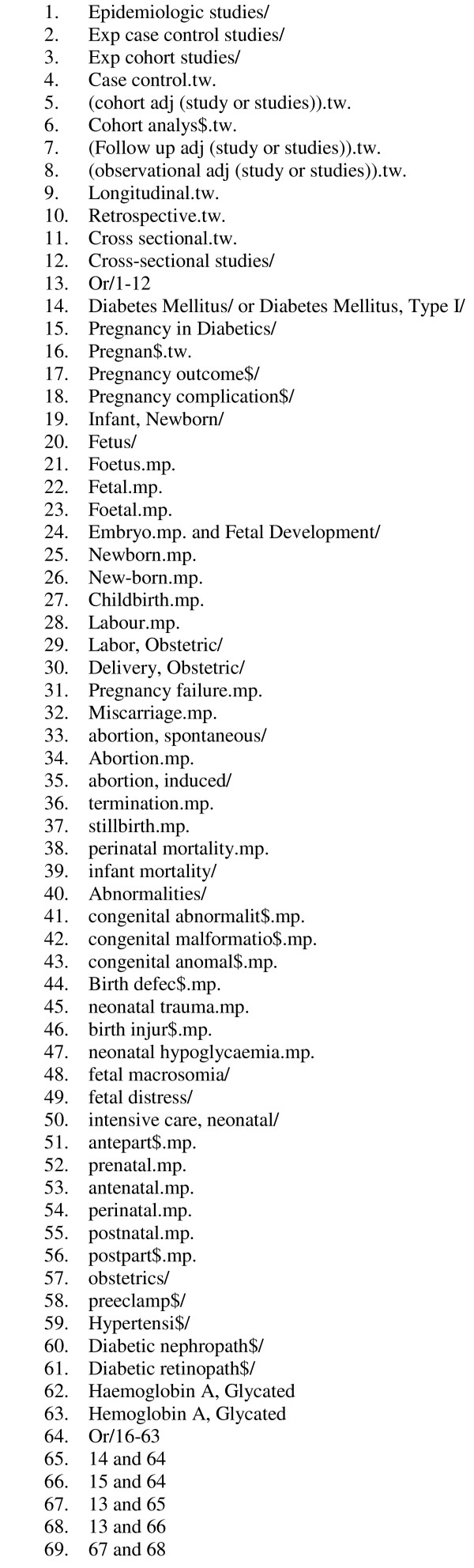
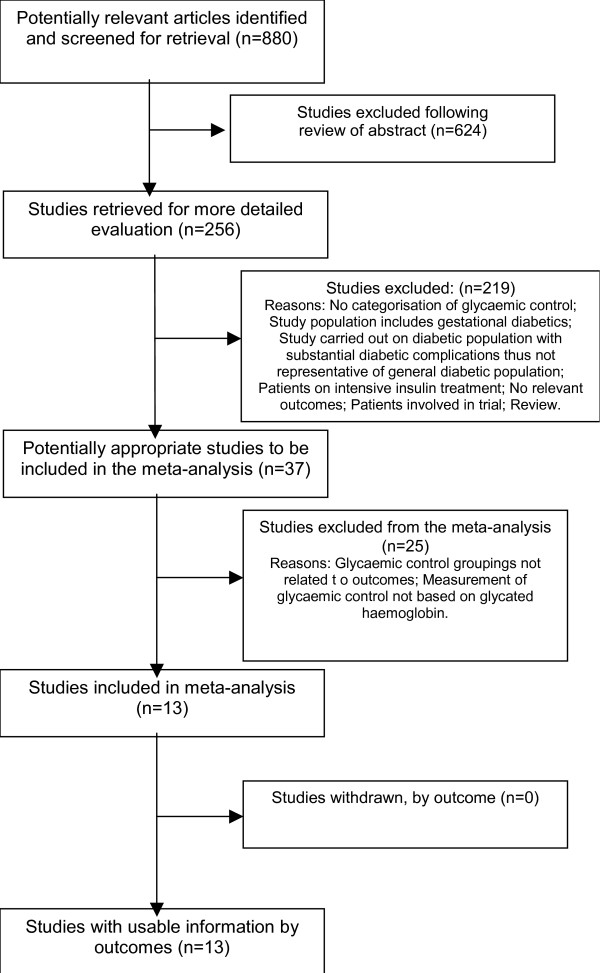
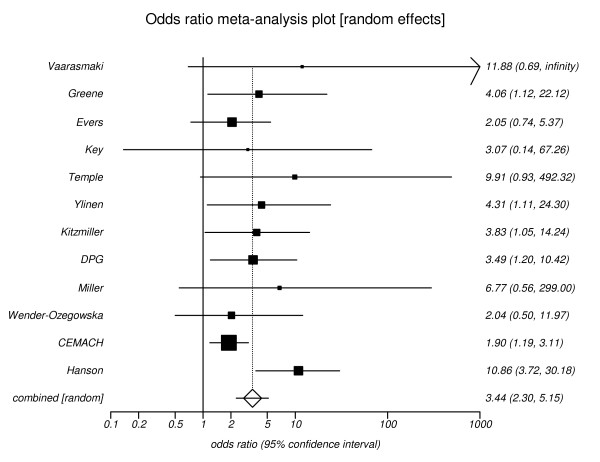
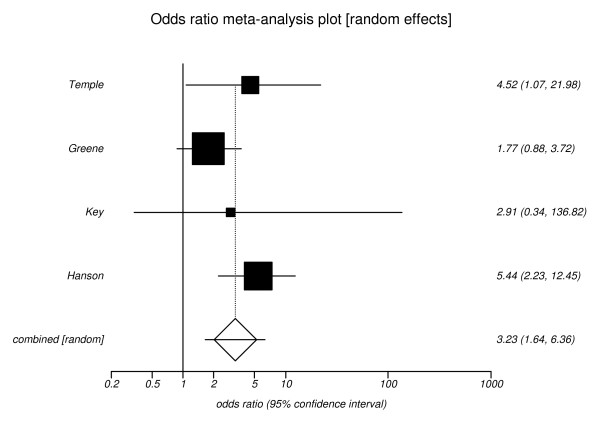
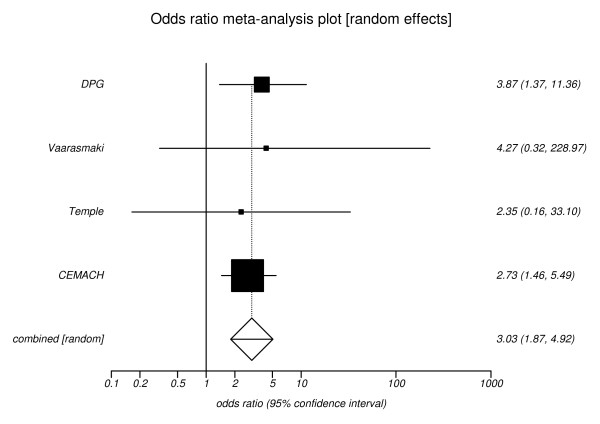
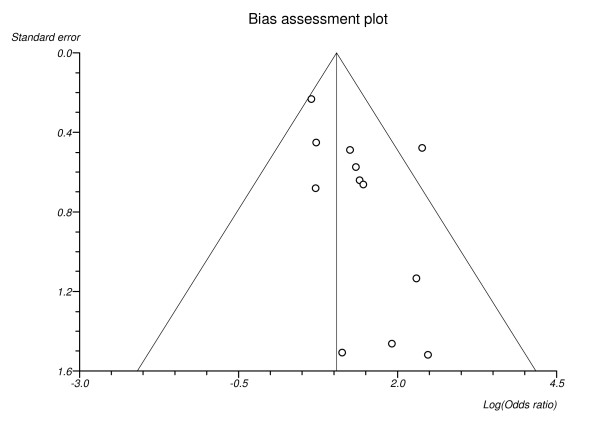
BACKGROUND: Glycaemic control in women with diabetes is critical to satisfactory pregnancy outcome. A systematic review of two randomised trials concluded that there was no clear evidence of benefit from very tight versus tight glycaemic control for pregnant women with diabetes. METHODS: A systematic review of observational studies addressing miscarriage, congenital malformations and perinatal mortality among pregnant women with type 1 and type 2 diabetes was carried out. Literature searches were performed in MEDLINE, EMBASE, CINAHL and Cochrane Library. Observational studies with data on glycated haemoglobin (HbA1c) levels categorised into poor and optimal control (as defined by the study investigators) were selected. Relative risks and odds ratios were calculated for HbA1c and pregnancy outcomes. Adjusted relative risk estimates per 1-percent decrease in HbA1c were calculated for studies which contained information on mean and standard deviations of HbA1c. RESULTS: The review identified thirteen studies which compared poor versus optimal glycaemic control in relation to maternal, fetal and neonatal outcomes. Twelve of these studies reported the outcome of congenital malformations and showed an increased risk with poor glycaemic control, pooled odds ratio 3.44 (95%CI, 2.30 to 5.15). For four of the twelve studies, it was also possible to calculate a relative risk reduction of congenital malformation for each 1-percent decrease in HbA1c, these varied from 0.39 to 0.59. The risk of miscarriage was reported in four studies and was associated with poor glycaemic control, pooled odds ratio 3.23 (95%CI, 1.64 to 6.36). Increased perinatal mortality was also associated with poor glycaemic control, pooled odds ratio 3.03 (95%CI, 1.87 to 4.92) from four studies. CONCLUSION: This analysis quantifies the increase in adverse pregnancy outcomes in women with diabetes who have poor glycaemic control. Relating percentage risk reduction in HbA1c to relative risk of adverse pregnancy events may be useful in motivating women to achieve optimal control prior to conception.
Overview
The claims and statistics of this paper haven’t been checked yet.
Free: it reads the open-access text and checks the first 5 claims that cite a source we can check. Create a free account to check every claim.
Integrity signals
Registry
Cites
Statistics
Figures
Verification
Claims the paper makes
The claims and statistics of this paper haven’t been checked yet.
Free: it reads the open-access text and checks the first 5 claims that cite a source we can check. Create a free account to check every claim.
Claims other papers make about this one
Each is checked against this paper’s own text: does it say what the citing paper says it does?
The cited source says what the claim attributes to it.
In the citing paper
“Maternal hyperglycemia in the first few weeks of pregnancy increases the risk of fetal malformations, spontaneous abortions, and perinatal mortality (14–18).”
From Diabetes and Pregnancy: An Endocrine Society Clinical Practice Guideline (2013) · cites this paper as [14]
In the citing paper
“Maternal hyperglycemia in the first few weeks of pregnancy increases the risk of fetal malformations, spontaneous abortions, and perinatal mortality (14–18).”
From Diabetes and Pregnancy: An Endocrine Society Clinical Practice Guideline (2013) · cites this paper as [14]
In the citing paper
“Maternal hyperglycemia in the first few weeks of pregnancy increases the risk of fetal malformations, spontaneous abortions, and perinatal mortality (14–18).”
From Diabetes and Pregnancy: An Endocrine Society Clinical Practice Guideline (2013) · cites this paper as [14]
Self-check
Percentages, sums and reported differences re-computed from the paper’s own numbers.
The self-check needs the paper’s full text.
Citations
Cites
2 retracted
Outcome of pregnancy in diabetic women in northeast England and in Norway, 1994-7
Hawthorne, G. (2000) · BMJ · doi:10.1136/bmj.321.7263.730 · Cited by 37 · cited 1×
“The presence of diabetes is said to increase the risk of congenital malformation (by ten-fold), the risk of stillbirth (by five-fold), and the risk of neonatal death (by three-fold) [2-7] These disappointing data are in contrast to the optimism of the 1989 St Vincent's Declaration that proposed as a five year target t…”
RetractedVery tight versus tight control for diabetes in pregnancy
Walkinshaw, S. (1996) · Cochrane Database of Systematic Reviews · doi:10.1002/14651858.cd000226 · Cited by 16
RetractedBias in meta-analysis detected by a simple, graphical test
Egger, M., Smith, G. D., Schneider, M., & Minder, C. (1997) · BMJ · doi:10.1136/bmj.315.7109.629 · Cited by 56,722
(1993) · New England Journal of Medicine · doi:10.1056/nejm199309303291401 · Cited by 24,667
Pharmacological interventions for somatoform disorders in adults
Kleinstäuber, M., Witthöft, M., Steffanowski, A., van Marwijk, H., Hiller, W., & Lambert, M. J. (2014) · Cochrane Database of Systematic Reviews · doi:10.1002/14651858.cd010628.pub2 · Cited by 11,335
QUANTITATIVE METHODS IN THE REVIEW OF EPIDEMIOLOGIC LITERATURE1
GREENLAND, S. (1987) · Epidemiologic Reviews · doi:10.1093/oxfordjournals.epirev.a036298 · Cited by 1,644 · cited 1×
“We calculated the 25th and 75th percentiles and divided the log relative risk by the difference of these 2 values to give an estimate of the effect of a 1-percent change in HbA1c [12].”
American Diabetes Association (2003) · Diabetes Care · doi:10.2337/diacare.26.2007.s106 · Cited by 988
Evers, I. M., de Valk, H. W., & Visser, G. H. A. (2004) · BMJ · doi:10.1136/bmj.38043.583160.ee · Cited by 775 · cited 5×
“Definitions for several of the outcomes varied across the studies, for example, the outcome of congenital malformations included both major and minor malformations in some studies [16,26] while in others only included major malformations [7,18].”
InfluentialMiller, E., Hare, J. W., Cloherty, J. P., Dunn, P. J., Gleason, R. E., Soeldner, J. S., & Kitzmiller, J. L. (1981) · New England Journal of Medicine · doi:10.1056/nejm198105283042204 · Cited by 665
Goldstein, D. E., Little, R. R., Lorenz, R. A., Malone, J. I., Nathan, D., Peterson, C. M., & Sacks, D. B. (2004) · Diabetes Care · doi:10.2337/diacare.27.7.1761 · Cited by 625 · cited 1×
“Glycated haemoglobin (HbA1c) reflects long-term glycaemic control and is a more accurate and stable measure than fasting blood glucose levels [ 9 ].”
Research works printed but not linked: 1
- CEMACH Confidential Enquiry into Maternal and Child Health: Pregnancy in Women with Type 1 and Type 2 Diabetes in 2002–03, England, Wales and Northern Ireland London 2005
Cited by
Items 201–233 of 233
Fall 30: Schwangerschaft – 32 Jahre, ♀, schwanger, DM Typ 1, Ernährungsoptimierung
Zech, U. (2018) · Springer eBooks · doi:10.1007/978-3-662-55972-7_30
Glycaemic control in pregnancies complicated by type 1 diabetes
Stewart, Z. A. (2018) · Apollo (University of Cambridge) · doi:10.17863/cam.23269 · Cited by 1
Bahauddin, A., Sina, M., & Simmons, D. (2019) · Internal Medicine Journal · doi:10.1111/imj.14715
(2014) · Elsevier eBooks · doi:10.1016/b978-2-294-71330-9.00003-9
FREQUENCY OF PRE-GESTATIONAL DIABETES MELLITUS AMONG PREGNANT WOMEN WITH MISCARRIAGE
Ghafoor, M., Farhat, N., Khatoon, F., Ghazi, A., Anbreen, F., & Irum, Q. (2019) · Gomal Journal of Medical Sciences · doi:10.46903/gjms/17.01.1919
Ricci, T. A., & Akbar, H. (2021) · Undergraduate Research in Natural and Clinical Science and Technology (URNCST) Journal · doi:10.26685/urncst.218
COVID-19 Pandemisinde Dezenfektan Kullanımına Bağlı Kontakt Dermatit Olgusu
Fidancı, İ., Bulut, B., Aksoy, H., Başer, D. A., & Cankurtaran, M. (2022) · Turkish Journal of Family Practice · doi:10.54308/tahd.2022.30092
Type 1 diabetes: pathophysiology and diagnosis
(2013) · Clinical pharmacist · doi:10.1211/cp.2013.11119460
(2013) · Canadian Journal of Diabetes · doi:10.1016/j.jcjd.2013.03.437
Kapoor, D., & Jones, N. W. (2017) · Wiley eBooks · doi:10.1002/9781119043805.ch19
Diabetes management in pregnancy
McCance, D. R. (2011) · doi:10.1093/med/9780199235292.003.1499
Şakiroğlu, F., & Çayır, Y. (2022) · Turkish Journal of Family Practice · doi:10.54308/tahd.2022.50570 · Cited by 2
Metabolik Sendromda Ortalama Trombosit Hacmi ve Trombosit Düzeylerinin Değerlendirilmesi
Yiğit, Ş., Eğici, M. T., & Dayan, A. (2022) · Turkish Journal of Family Practice · doi:10.54308/tahd.2022.77486
Tariq, M., Nazir, M., Farooq, S. M. Y., Komel, A., Batool, R., Liaqat, M., Idrees, S., Tariq, A., Abideen, Z. U., & Usman, M. (2023) · International Journal of Health Sciences · doi:10.53730/ijhs.v6ns7.13894
Song, A.-Y., Jee, J., Noh, E., Kim, H., Ahn, K. H., Hong, S.-C., Kim, H., Oh, M., & Cho, G. J. (2022) · Perinatology · doi:10.14734/pn.2022.33.4.181
“4,22,23 Thus, it could be cautiously inferred that a high BMI is related to preterm labor and medically indicated delivery.”
Sarker, M. R., Jacobs, M. B., Boggess, K., Battarbee, A. N., Refuerzo, J., Zork, N. M., Eichelberger, K. Y., Durnwald, C. P., Landon, M. B., Aagaard, K. M., et al. (2025) · Pregnancy · doi:10.1002/pmf2.12040 · Cited by 3
Gestational Diabetes and Type 2 Diabetes during Pregnancy
Bond, R., & Peters, T. M. (2025) · Elsevier eBooks · doi:10.1016/b978-0-443-23940-3.00050-8
Glycemic Control in Diabetic Pregnancies: Effects on Fetal and Maternal Outcome
Suhonen, L. (2009) · Helda - University of Helsinki Institutional Repository · Cited by 3
Semertzidou, A., Grout-Smith, H., Kalliala, I. E. J., Garg, A., Terzidou, V., Marchesi, J. R., MacIntyre, D. A., Bennett, P. R., Tsilidis, K. K., & Kyrgiou, M. (2023) · Figshare · doi:10.6084/m9.figshare.22655484
Semertzidou, A., Grout-Smith, H., Kalliala, I. E. J., Garg, A., Terzidou, V., Marchesi, J. R., MacIntyre, D. A., Bennett, P. R., Tsilidis, K. K., & Kyrgiou, M. (2023) · Figshare · doi:10.6084/m9.figshare.22655499
Semertzidou, A., Grout-Smith, H., Kalliala, I. E. J., Garg, A., Terzidou, V., Marchesi, J. R., MacIntyre, D. A., Bennett, P. R., Tsilidis, K. K., & Kyrgiou, M. (2023) · Figshare · doi:10.6084/m9.figshare.22655508
Semertzidou, A., Grout-Smith, H., Kalliala, I. E. J., Garg, A., Terzidou, V., Marchesi, J. R., MacIntyre, D. A., Bennett, P. R., Tsilidis, K. K., & Kyrgiou, M. (2023) · Figshare · doi:10.6084/m9.figshare.22655511
Sushko, K., Strachan, P., Butt, M. L., Nerenberg, K. A., & Sherifali, D. (2024) · Figshare · doi:10.6084/m9.figshare.26586321
Semertzidou, A., Grout-Smith, H., Kalliala, I. E. J., Garg, A., Terzidou, V., Marchesi, J. R., MacIntyre, D. A., Bennett, P. R., Tsilidis, K. K., & Kyrgiou, M. (2023) · Figshare · doi:10.6084/m9.figshare.22655481
Semertzidou, A., Grout-Smith, H., Kalliala, I. E. J., Garg, A., Terzidou, V., Marchesi, J. R., MacIntyre, D. A., Bennett, P. R., Tsilidis, K. K., & Kyrgiou, M. (2023) · Figshare · doi:10.6084/m9.figshare.22655505
Semertzidou, A., Grout-Smith, H., Kalliala, I. E. J., Garg, A., Terzidou, V., Marchesi, J. R., MacIntyre, D. A., Bennett, P. R., Tsilidis, K. K., & Kyrgiou, M. (2023) · Figshare · doi:10.6084/m9.figshare.22655496
Semertzidou, A., Grout-Smith, H., Kalliala, I. E. J., Garg, A., Terzidou, V., Marchesi, J. R., MacIntyre, D. A., Bennett, P. R., Tsilidis, K. K., & Kyrgiou, M. (2023) · Figshare · doi:10.6084/m9.figshare.22655493
Semertzidou, A., Grout-Smith, H., Kalliala, I. E. J., Garg, A., Terzidou, V., Marchesi, J. R., MacIntyre, D. A., Bennett, P. R., Tsilidis, K. K., & Kyrgiou, M. (2023) · Figshare · doi:10.6084/m9.figshare.22655487
Semertzidou, A., Grout-Smith, H., Kalliala, I. E. J., Garg, A., Terzidou, V., Marchesi, J. R., MacIntyre, D. A., Bennett, P. R., Tsilidis, K. K., & Kyrgiou, M. (2023) · Figshare · doi:10.6084/m9.figshare.22655490
Semertzidou, A., Grout-Smith, H., Kalliala, I. E. J., Garg, A., Terzidou, V., Marchesi, J. R., MacIntyre, D. A., Bennett, P. R., Tsilidis, K. K., & Kyrgiou, M. (2023) · Figshare · doi:10.6084/m9.figshare.22655502
Implantation Failure Linked to Altered Uterine NK Cells in PCOS-Like MicePreprint
Torstensson, S., Lu, H., Zhao, A. Z., Gauthier, C., Eriksson, G., Lindgren, E., Deng, Q., Johansson, M. H., Chambers, B. J., Benrick, A., et al. (2026) · SSRN Electronic Journal · doi:10.2139/ssrn.6556560
Glucagon-Like Peptide-1 Receptor Agonists Use Among Reproductive-Aged Women with Type 2 Diabetes
Bailey, S. C., Cameron, N. A., Batio, S., Wismer, G. A., Wolf, M. S., Wallia, A., Schauer, J. M., Gemkow, J. W., Eggleston, A., Tenfelde, S., et al. (2026) · Journal of Women s Health · doi:10.1177/15409996261478007
The transition from pre- to early pregnancy for women with type 2 diabetes – a qualitative study
Lorenzen, L. E., Aalders, J., Rasmussen, B., Jensen, D. M., Vinter, C. A., & Rothmann, M. J. (2026) · Midwifery · doi:10.1016/j.midw.2026.105011
Metadata
- Authors
- Inkster, M. E., Fahey, T. P., Donnan, P. T., Leese, G. P., Mires, G. J., & Murphy, D. J.
- Affiliations
- University of Dundee (GB)
- Royal College of Surgeons in Ireland (IE)
- Ninewells Hospital (GB)
- Trinity College Dublin (IE)
- Corresponding author
- Inkster, Melanie E
- Venue
- BMC Pregnancy and Childbirth
- Published
- 2006-10-30
- Volume
- 6
- Issue
- 1
- Pages
- 30-30
- ISSN
- 1471-2393 (ISSN-L)
- PMC
- PMC1635059
- OpenAlex
- W2133189589
- Cited by
- 233
- References
- 40
- Citations by year
- 2026: 3 · 2025: 5 · 2024: 15 · 2023: 23 · 2022: 27 · 2021: 11 · 2020: 11 · 2019: 12 · 2018: 9 · 2017: 13 · 2016: 15 · 2015: 9 · 2014: 16 · 2013: 15 · 2012: 15
- FWCI
- 0.83
- Type
- journal article
- Language
- en
- Open access
- gold
- doi.org
- Licence
- cc-by
- creativecommons.org/licenses/by/2.0 (tdm)
- Locations
- BMC Pregnancy and Childbirth (publishedVersion, cc-by)
- PubMed (publishedVersion)
- Aberdeen University Research Archive (Aberdeen University) (submittedVersion)
- Discovery Research Portal (University of Dundee) (submittedVersion, cc-by)
- DOAJ (DOAJ: Directory of Open Access Journals) (submittedVersion, cc-by-sa)
- Figshare (submittedVersion, cc-by-nc-nd)
- Topics
- Health Sciences › Medicine › Obstetrics and Gynecology › Gestational Diabetes Research and Management
- Health Sciences › Medicine › Public Health, Environmental and Occupational Health › Pregnancy and Medication Impact
- Health Sciences › Medicine › Endocrinology, Diabetes and Metabolism › Diabetes Management and Research
- Keywords
- HbA1c, glycemic control, pregnancy outcomes, type 1 diabetes, type 2 diabetes, congenital malformations, miscarriage, perinatal mortality, maternal outcomes, neonatal outcomes, preconception care
About these checks
Registry, retraction, Cites and statistics results are computed, not judged, with one exception: a printed reference that no index lists is read once by a model before it counts as a citation error. Claims are extracted by a model and kept only when their quote appears verbatim in the text; each cited source is then checked, with a model’s help, for whether it says what the claim relies on. Those verdicts can be wrong — read the claim’s quote and the cited source before relying on one.
Statistics and arithmetic are recomputed, not judged.
Confidence bands are shown only for fields calibrated on our annotated test set. None is calibrated yet, so no band is shown.
What counts as a claim ›How we measure confidence ›How we check this ›
Are you an author, or do you see a problem with this page? Request a review
Data sources
Bibliographic data: Semantic Scholar, OpenAlex, Crossref.
Contains information from the Semantic Scholar Academic Graph Datasets, made available under the ODC Attribution License (ODC-BY 1.0).
Semantic Scholar’s data is described in: Kinney, R., et al. (2023). The Semantic Scholar Open Data Platform. arXiv:2301.10140.
