

Fear of hypoglycaemia in parents of young children with type 1 diabetes: a systematic review
Open accessThe DOI matches its Crossref record; 37 of the 38 references it cites were found in a registry or an index.
Abstract
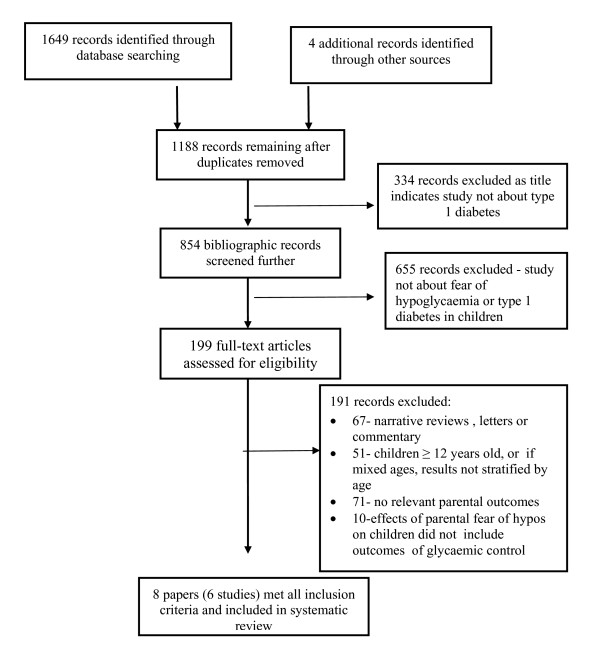
BACKGROUND: Many children with type 1 diabetes have poor glycaemic control. Since the Diabetes Control and Complications Trial (DCCT) showed that tighter control reduces complication rates, there has been more emphasis on intensified insulin therapy. We know that patients and families are afraid of hypoglycaemia. We hypothesised that fear of hypoglycaemia might take precedence over concern about long-term complications, and that behaviour to avoid hypoglycaemia might be at the cost of poorer control, and aimed to evaluate the effectiveness of any interventions designed to prevent that. The objective of this review was to systematically review studies concerning the extent and consequences of fear of hypoglycaemia in parents of children under 12 years of age with type 1 diabetes, and interventions to reduce it. DATA SOURCES: MEDLINE, EMBASE, PsycINFO, The Cochrane Library, Web of Science, meeting abstracts of EASD, ADA and Diabetes UK, Current Controlled Trials, ClinicalTrials.gov, UK CRN, scrutiny of bibliographies of retrieved papers and contact with experts in the field.Inclusions: Relevant studies of any design of parents of children under 12 years of age with Type 1 diabetes were included. The key outcomes were the extent and impact of fear, hypoglycaemia avoidance behaviour in parents due to parental fear of hypoglycaemia in their children, the effect on diabetes control, and the impact of interventions to reduce this fear and hypoglycaemia avoidance behaviour. RESULTS: Eight articles from six studies met the inclusion criteria. All were cross sectional studies and most were of good quality. Parental fear of hypoglycaemia, anxiety and depression were reported to be common. There was a paucity of evidence on behaviour to avoid hypoglycaemia, but there were some suggestions that higher than desirable blood glucose levels might be permitted in order to avoid hypoglycaemia. No studies reporting interventions to reduce parental fear of hypoglycaemia were found. CONCLUSIONS: The evidence base was limited. Parents of children with Type 1 diabetes reported considerable parental fear of hypoglycaemia, affecting both parental health and quality of life. There is some suggestion that hypoglycaemia avoidance behaviours by parents might adversely affect glycaemic control. Trials of interventions to reduce parental anxiety and hypoglycaemia avoidance behaviour are needed. We suggest that there should be a trial of structured education for parents of young children with Type 1 diabetes.
Overview
The claims and statistics of this paper haven’t been checked yet.
Free: it reads the open-access text and checks the first 5 claims that cite a source we can check. Create a free account to check every claim.
Integrity signals
Registry
Cites
Statistics
Figures
Verification
Claims the paper makes
The claims and statistics of this paper haven’t been checked yet.
Free: it reads the open-access text and checks the first 5 claims that cite a source we can check. Create a free account to check every claim.
Claims other papers make about this one
Each is checked against this paper’s own text: does it say what the citing paper says it does?
The source backs part of the claim, not all of it — or backs it for a different population, condition or comparison.
In the citing paper
“This fear is associated with reduced self-care and poor glucose control (4)(5)(6).”
From Hypoglycemia (2018) · cites this paper as [4]
Experimental — accuracy not yet measured
Self-check
Percentages, sums and reported differences re-computed from the paper’s own numbers.
The self-check needs the paper’s full text.
Citations
Cites
Systematic reviews in the social sciences: a practical guide
(2006) · Choice Reviews Online · doi:10.5860/choice.43-5664 · Cited by 4,089
Systematic Reviews in the Social Sciences: A Practical Guide
Petticrew, M., & Roberts, H. (2006) · doi:10.1002/9780470754887 · Cited by 3,586
Systematic reviews: CRD's guidance for undertaking reviews in health care
Tacconelli, E. (2010) · The Lancet Infectious Diseases · doi:10.1016/s1473-3099(10)70065-7 · Cited by 3,245
Good practice in the conduct and reporting of survey research
KELLEY, K. (2003) · International Journal for Quality in Health Care · doi:10.1093/intqhc/mzg031 · Cited by 2,157
Patterson, C. C., Dahlquist, G. G., Gyürüs, E., Green, A., & Soltész, G. (2009) · The Lancet · doi:10.1016/s0140-6736(09)60568-7 · Cited by 1,854 · cited 2×
“It is predicted that in European children under the age of 5 years, the incidence rate will double between 2005 and 2020, with prevalent cases younger than 15 years rising by 70% [2].”
BackgroundMortality from heart disease in a cohort of 23,000 patients with insulin-treated diabetes
Laing, S. P., Swerdlow, A. J., Slater, S. D., Burden, A. C., Morris, A., Waugh, N. R., Gatling, W., Bingley, P. J., & Patterson, C. C. (2003) · Diabetologia · doi:10.1007/s00125-003-1116-6 · Cited by 724 · cited 1×
“Heart disease is the main cause of death in type 1 diabetes in developed countries [4].”
BackgroundSelf-citationAmiel, S. A., Beveridge, S., Bradley, C., Gianfrancesco, C., Heller, S. R., James, P., McKeown, N., Newton, D. F., Newton, L. D., Oliver, L., et al. (2002) · Deakin Research Online (Deakin University) · Cited by 723
Cited by
Katsarou, A., Gudbjörnsdottir, S., Rawshani, A., Dabelea, D., Bonifacio, E., Anderson, B. J., Jacobsen, L. M., Schatz, D. A., & Lernmark, Å. (2017) · Nature Reviews Disease Primers · doi:10.1038/nrdp.2017.16 · Cited by 1,475
Cryer, P. E., Davis, S. N., & Shamoon, H. (2003) · Diabetes Care · doi:10.2337/diacare.26.6.1902 · Cited by 1,160
Amiel, S. A., Aschner, P., Childs, B., Cryer, P. E., de Galan, B. E., Frier, B. M., Gonder-Frederick, L., Heller, S. R., Jones, T., Khunti, K., et al. (2019) · The Lancet Diabetes & Endocrinology · doi:10.1016/s2213-8587(18)30315-2 · Cited by 526
Nocturnal Glucose Control with an Artificial Pancreas at a Diabetes Camp
Phillip, M., Battelino, T., Atlas, E., Kordonouri, O., Bratina, N., Miller, S., Biester, T., Avbelj Stefanija, M., Muller, I., Nimri, R., et al. (2013) · New England Journal of Medicine · doi:10.1056/nejmoa1206881 · Cited by 435
Grunberger, G., Sherr, J., Allende, M., Blevins, T., Bode, B., Handelsman, Y., Hellman, R., Lajara, R., Roberts, V. L., Rodbard, D., et al. (2021) · Endocrine Practice · doi:10.1016/j.eprac.2021.04.008 · Cited by 288
Delamater, A. M., de Wit, M., McDarby, V., Malik, J. A., Hilliard, M. E., Northam, E., & Acerini, C. L. (2018) · Pediatric Diabetes · doi:10.1111/pedi.12736 · Cited by 279
“Fear of hypoglycemia has also been found to be common in parents of children with diabetes (94) and is associated with emotional distress and poorer glycemic control in children (95).”
Ryan, R. E., Santesso, N., Lowe, D., Hill, S., Grimshaw, J. M., Prictor, M., Kaufman, C., Cowie, G., & Taylor, M. (2014) · Cochrane Database of Systematic Reviews · doi:10.1002/14651858.cd007768.pub3 · Cited by 273
Hypoglycemia: An overview of fear of hypoglycemia, quality-of-life, and impact on costs
Fidler, C., Elmelund Christensen, T., & Gillard, S. (2011) · Journal of Medical Economics · doi:10.3111/13696998.2011.610852 · Cited by 244
Psychological care of children and adolescents with type 1 diabetes
Delamater, A. M., de Wit, M., McDarby, V., Malik, J., & Acerini, C. L. (2014) · Pediatric Diabetes · doi:10.1111/pedi.12191 · Cited by 220
“Fear of hypoglycemia has also been found to be common in parents of children with diabetes (86) and is associated with emotional distress and poorer glycemic”
Robinson, D. J., Coons, M., Haensel, H., Vallis, M., & Yale, J.-F. (2018) · Canadian Journal of Diabetes · doi:10.1016/j.jcjd.2017.10.031 · Cited by 209
Mauras, N., Beck, R., Xing, D., Ruedy, K., Buckingham, B., Tansey, M., White, N. H., Weinzimer, S. A., Tamborlane, W., Kollman, C., et al. (2012) · Diabetes Care · doi:10.2337/dc11-1746 · Cited by 204
de Wit, M., Gajewska, K. A., Goethals, E. R., McDarby, V., Zhao, X., Hapunda, G., Delamater, A. M., & DiMeglio, L. A. (2022) · Pediatric Diabetes · doi:10.1111/pedi.13428 · Cited by 185
Assessing fear of hypoglycemia in children with Type 1 diabetes and their parents
Gonder-Frederick, L., Nyer, M., Shepard, J. A., Vajda, K., & Clarke, W. (2011) · Diabetes Management · doi:10.2217/dmt.11.60 · Cited by 171
Barnard, K. D., Wysocki, T., Allen, J. M., Elleri, D., Thabit, H., Leelarathna, L., Gulati, A., Nodale, M., Dunger, D. B., Tinati, T., et al. (2014) · BMJ Open Diabetes Research & Care · doi:10.1136/bmjdrc-2014-000025 · Cited by 159
Fear of Hypoglycemia in Children and Adolescents and Their Parents with Type 1 Diabetes
Driscoll, K. A., Raymond, J., Naranjo, D., & Patton, S. R. (2016) · Current Diabetes Reports · doi:10.1007/s11892-016-0762-2 · Cited by 150
Johnson, S. R., Cooper, M. N., Davis, E. A., & Jones, T. W. (2013) · Diabetic Medicine · doi:10.1111/dme.12247 · Cited by 140
ISPAD Clinical Practice Consensus Guidelines 2018: Diabetes education in children and adolescents
Phelan, H., Lange, K., Cengiz, E., Gallego, P., Majaliwa, E., Pélicand, J., Smart, C. E., & Hofer, S. E. (2018) · Pediatric Diabetes · doi:10.1111/pedi.12762 · Cited by 160
Diabetes education in children and adolescents
Lange, K., Swift, P., Pańkowska, E., & Danne, T. (2014) · Pediatric Diabetes · doi:10.1111/pedi.12187 · Cited by 137
“Education on prevention, recognition, risk, and management are therefore a priority (69, 70).”
Diabetes education in children and adolescents
Swift, P. G. F. (2009) · Pediatric Diabetes · doi:10.1111/j.1399-5448.2009.00570.x · Cited by 153
Yale, J.-F., Paty, B., & Senior, P. A. (2018) · Canadian Journal of Diabetes · doi:10.1016/j.jcjd.2017.10.010 · Cited by 105
Nimri, R., Muller, I., Atlas, E., Miller, S., Kordonouri, O., Bratina, N., Tsioli, C., Stefanija, M. A., Danne, T., Battelino, T., et al. (2014) · Pediatric Diabetes · doi:10.1111/pedi.12071 · Cited by 103
Barnard, K. D., Wysocki, T., Thabit, H., Evans, M. L., Amiel, S., Heller, S., Young, A., Hovorka, R., & the Angela Consortium (2015) · Diabetic Medicine · doi:10.1111/dme.12706 · Cited by 104
Self-citationDiabetes in Childhood and Adolescence
Ziegler, R., & Neu, A. (2018) · Deutsches Ärzteblatt international · doi:10.3238/arztebl.2018.0146 · Cited by 147
Immunomodulatory therapy to preserve pancreatic β-cell function in type 1 diabetes
Waldron-Lynch, F., & Herold, K. C. (2011) · Nature Reviews Drug Discovery · doi:10.1038/nrd3402 · Cited by 106
“This reduction in the number of episodes of hypoglycaemia could lead to a considerable improvement in quality of life for individuals with type 1 diabete”
BackgroundManaging diabetes in preschool children
Sundberg, F., Barnard, K., Cato, A., de Beaufort, C., DiMeglio, L. A., Dooley, G., Hershey, T., Hitchcock, J., Jain, V., Weissberg-Benchell, J., et al. (2017) · Pediatric Diabetes · doi:10.1111/pedi.12554 · Cited by 91
“The risk of hypoglycemia presents a major physiological and psychological barrier to achieving optimal glycemic control, and may result in significant emotional morbidity for patients and caregivers.(29,141,142) Young age is traditionally regarded as a marker of high risk of severe hypoglycemia during insulin treatmen…”
BackgroundDiagnostik, Therapie und Verlaufskontrolle des Diabetes mellitus im Kindes- und Jugendalter
Neu, A., Bürger-Büsing, J., Danne, T., Dost, A., Holder, M., Holl, R. W., Holterhus, P., Kapellen, T., Karges, B., Kordonouri, O., et al. (2016) · Diabetologie und Stoffwechsel · doi:10.1055/s-0042-111213 · Cited by 91
Bergenstal, R. M., Kerr, M. S. D., Roberts, G. J., Souto, D., Nabutovsky, Y., & Hirsch, I. B. (2021) · Journal of the Endocrine Society · doi:10.1210/jendso/bvab013 · Cited by 89
“Apart from its acute clinical outcomes, episodes of severe hypoglycemia can impact patient adherence to therapy, which can lead to poor glycemic control and increased risk of long-term complications [24, 25].”
BackgroundGiles, E. L., Robalino, S., Sniehotta, F. F., Adams, J. M., & McColl, E. (2015) · Preventive Medicine · doi:10.1016/j.ypmed.2014.12.029 · Cited by 111
“The quality of empirical research papers using qualitative methods was assessed using a tool developed for this purpose (Barnard et al., 2010, Petticrew and Roberts, 2005).”
MethodIdentifying challenges of living with type 1 diabetes: child and youth perspectives
Freeborn, D., Dyches, T. T., Roper, S. O., & Mandleco, B. L. (2013) · Journal of Clinical Nursing · doi:10.1111/jocn.12046 · Cited by 154
“It is manifested by tremor, palpitations, agitation, weakness, confusion and seizures; if untreated, hypoglycaemia can cause irreversible brain damage or death (Barnard et al. 2010).”
BackgroundUnderstanding the construct of fear of hypoglycemia in pediatric type 1 diabetes
Shepard, J. A., Vajda, K., Nyer, M., Clarke, W., & Gonder-Frederick, L. (2014) · Journal of Pediatric Psychology · doi:10.1093/jpepsy/jsu068 · Cited by 82
“The most widely used instruments for quantifying FoH in pediatric diabetes are adaptations of the original Hypoglycemia Fear Survey (HFS) developed for adults (Cox, Irvine, Gonder-Frederick, Nowacek, & Butterfield, 1987), including separate versions for children (CHFS) and parents (PHFS) (Barnard et al., 2010; GonderF…”
BackgroundMethodInfluentialLaffel, L. M., Aleppo, G., Buckingham, B. A., Forlenza, G. P., Rasbach, L. E., Tsalikian, E., Weinzimer, S. A., & Harris, D. R. (2017) · Journal of the Endocrine Society · doi:10.1210/js.2017-00389 · Cited by 79
Respiratory sounds in healthy people: A systematic review
Oliveira, A., & Marques, A. S. P. D. D. (2014) · Respiratory Medicine · doi:10.1016/j.rmed.2014.01.004 · Cited by 81
ISPAD Clinical Practice Consensus Guidelines 2022: Managing diabetes in preschoolers
Sundberg, F., de Beaufort, C. E., Krogvold, L., Patton, S. R., Piloya, T., Smart, C. E., Name, M. A. V., Weissberg-Benchell, J. A., da Silva, J. S. P., & DiMeglio, L. A. (2022) · Pediatric Diabetes · doi:10.1111/pedi.13427 · Cited by 97
“DEVELOPMENT IN CHILDREN WITH EARLY ONSET T1D Multiple risk factors have been associated with potential suboptimal cognitive and fine motor development in children and adolescents with T1D.”
BackgroundInfluentialRiemsma, R., Corro Ramos, I., Birnie, R., Büyükkaramikli, N., Armstrong, N., Ryder, S., Duffy, S., Worthy, G., Al, M., Severens, J., et al. (2016) · Health Technology Assessment · doi:10.3310/hta20170 · Cited by 73
Robinson, D. J., Hanson, K., Jain, A. B., Kichler, J. C., Mehta, G., Melamed, O. C., Vallis, M., Bajaj, H. S., Barnes, T., Gilbert, J., et al. (2023) · Canadian Journal of Diabetes · doi:10.1016/j.jcjd.2023.04.009 · Cited by 73
Nimri, R., Atlas, E., Ajzensztejn, M., Miller, S., Oron, T., & Phillip, M. (2012) · Diabetes Technology & Therapeutics · doi:10.1089/dia.2012.0004 · Cited by 71
“Therefore, parents of children with diabetes may choose hypoglycemia avoidance strategies at the expense of good glycemic control.(4) Approximately one-third of each day is spent in sleep with no meals or exercise; hence the overnight period is a significant proportion of the time requiring good glycemic control for p…”
de Beaufort, C. E., Lange, K., Swift, P. G., Aman, J., Cameron, F., Castano, L., Dorchy, H., Fisher, L. K., Hoey, H., Kaprio, E., et al. (2013) · Pediatric Diabetes · doi:10.1111/j.1399-5448.2012.00922.x · Cited by 68
Liese, A. D., Ma, X., Maahs, D. M., & Trilk, J. L. (2012) · Journal of sport and health science/Journal of Sport and Health Science · doi:10.1016/j.jshs.2012.10.005 · Cited by 87
“The Hypoglycemia Fear Survey is one of the most common instruments used to assess this issue.(42,102) As reviewed by Barnard et al.”
MethodGrace, T., & Salyer, J. (2022) · Diabetes Technology & Therapeutics · doi:10.1089/dia.2021.0212 · Cited by 64
“In addition to the clinical consequences of severe hypoglycemia, these episodes have been shown to diminish patient’s willingness to adhere to their prescribed treatment regimens, which can lead to deterioration of glycemic control and increased risk of long-term complications.(14,15) Despite a growing body of evidenc…”
BackgroundNimri, R., Danne, T., Kordonouri, O., Atlas, E., Bratina, N., Biester, T., Avbelj, M., Miller, S., Muller, I., Phillip, M., et al. (2013) · Pediatric Diabetes · doi:10.1111/pedi.12025 · Cited by 62
“at the expense of good glycemic control (7, 8).”
BackgroundLawton, J., Waugh, N. R., Barnard, K. D., Noyes, K., Harden, J., Stephen, J., McDowell, J. R., & Rankin, D. (2014) · Diabetic Medicine · doi:10.1111/dme.12660 · Cited by 85
“Furthermore, in line with others’ speculations [7], we”
BackgroundResultSelf-citationPate, T., Klemenčič, S., Battelino, T., & Bratina, N. (2016) · Journal of Health Psychology · doi:10.1177/1359105316650931 · Cited by 75
Oliveira, A., Monteiro, Â., Jácome, C. I. O., Afreixo, V. M. A., & Marques, A. S. P. D. D. (2016) · Scandinavian Journal of Medicine and Science in Sports · doi:10.1111/sms.12784 · Cited by 77
“The quality of the included studies was assessed independently by two reviewers with a checklist adapted by Petticrew and colleagues based on the “Crombie criteria” (Petticrew & Roberts, 2006) (Crombie, 1996), according to previous systematic reviews (Barnard et al., 2010; Oliveira et al., 2014).”
MethodBrew‐Sam, N., Chhabra, M., Parkinson, A., Hannan, K., Brown, E., Pedley, L., Brown, K., Wright, K., Pedley, E., Nolan, C. J., et al. (2021) · JMIR Diabetes · doi:10.2196/20973 · Cited by 70
“Reliable devices are needed to engender trust and encourage practices that optimize diabetes management, avoiding risky behaviors that were reported by some participants in this review (eg, parents allowing higher than desirable blood glucose levels to avoid overnight hypoglycemia) [59].”
BackgroundHerbert, L., Clary, L., Owen, V., Monaghan, M. C., Alvarez, V. C., & Streisand, R. M. (2014) · Journal of Clinical Nursing · doi:10.1111/jocn.12658 · Cited by 68
Introduction to ISPAD Clinical Practice Consensus Guidelines 2014 Compendium
Acerini, C. L., Craig, M. E., de Beaufort, C. E., Maahs, D. M., & Hanås, R. (2014) · Pediatric Diabetes · doi:10.1111/pedi.12182 · Cited by 68
Diagnosis, Therapy and Follow-Up of Diabetes Mellitus in Children and Adolescents
Neu, A., Bürger-Büsing, J., Danne, T., Dost, A., Holder, M., Holl, R. W., Holterhus, P., Kapellen, T. M., Karges, B., Kordonouri, O., et al. (2019) · Experimental and Clinical Endocrinology & Diabetes · doi:10.1055/a-1018-8963 · Cited by 72
Ziegler, C., Liberman, A., Nimri, R., Muller, I., Klemenčič, S., Bratina, N., Bläsig, S., Remus, K., Phillip, M., Battelino, T., et al. (2015) · Journal of Diabetes Research · doi:10.1155/2015/590308 · Cited by 56
“It can impair well-being and is generally accepted as major obstacle to reach near-normoglycaemia [18, 19].”
BackgroundFear of hypoglycemia, a game changer during physical activity in type 1 diabetes mellitus patients
Berković, M. C., Bilić-Čurčić, I., Sabolić, L. L. G., Mrzljak, A., & Cigrovski, V. (2021) · World Journal of Diabetes · doi:10.4239/wjd.v12.i5.569 · Cited by 59
Biester, T., Blaesig, S., Remus, K., Aschemeier, B., Kordonouri, O., Granhall, C., Søndergaard, F., Kristensen, N. R., Haahr, H., & Danne, T. (2014) · Pediatric Diabetes · doi:10.1111/pedi.12116 · Cited by 53
“Glycaemic control may also be compromised by suboptimal dosing due to fear of hypoglycaemia among parents and children (9).”
BackgroundPhysical fitness and exercise training on individuals with Spina Bifida: A systematic review
Oliveira, A., Jácome, C. I. O., & Marques, A. S. P. D. D. (2014) · Research in Developmental Disabilities · doi:10.1016/j.ridd.2014.02.002 · Cited by 61
Evaluation of a Predictive Low-Glucose Management System In-Clinic
Buckingham, B. A., Bailey, T. S., Christiansen, M., Garg, S., Weinzimer, S., Bode, B., Anderson, S. M., Brazg, R., Ly, T. T., & Kaufman, F. R. (2017) · Diabetes Technology & Therapeutics · doi:10.1089/dia.2016.0319 · Cited by 52
Patton, S. R., Clements, M. A., Marker, A. M., & Nelson, E. (2020) · Pediatric Diabetes · doi:10.1111/pedi.12934 · Cited by 52
“Up to 50%-60% of parents report moderate FH and 20%-30% report severe FH.(5-7) FH impairs quality of life and parents who experience FH often engage in hypoglycemia avoidance behaviors such as maintaining elevated blood glucose levels in their child.”
BackgroundThe Impact of Parents' Sleep Quality and Hypoglycemia Worry on Diabetes Self-Efficacy
Herbert, L., Monaghan, M. C., Cogen, F. R., & Streisand, R. M. (2014) · Behavioral Sleep Medicine · doi:10.1080/15402002.2014.898303 · Cited by 66
Melmer, A., & Laimer, M. W. (2016) · Endocrine development · doi:10.1159/000439364 · Cited by 58
Deeb, L. C., Dulude, H., Guzman, C. B., Zhang, S., Reiner, B. J., Piché, C. A., Pradhan, S., & Zhang, X. M. (2018) · Pediatric Diabetes · doi:10.1111/pedi.12668 · Cited by 50
Clayton, D., Woo, V. C., & Yale, J. (2013) · Canadian Journal of Diabetes · doi:10.1016/j.jcjd.2013.01.022 · Cited by 77
Influences on Technology Use and Efficacy in Type 1 Diabetes
Franklin, V. L. (2016) · Journal of Diabetes Science and Technology · doi:10.1177/1932296816639315 · Cited by 52
“Fear of nocturnal hypoglycemia is common, leading to regular overnight testing.(66) Parents may chose SAPT in hope of reducing sleep disturbance, but sleep may actually worsen if they wake frequently to check displayed glucose readings to see if adjustments are required.”
BackgroundMoreira, H., Frontini, R., Bullinger, M., & Canavarro, M. C. (2013) · Journal of Family Psychology · doi:10.1037/a0034198 · Cited by 64
Freckleton, E., Sharpe, L., & Mullan, B. A. (2013) · International Journal of Behavioral Medicine · doi:10.1007/s12529-013-9360-8 · Cited by 62
“Fear of hypoglycaemia may lead parents to downplay the risks and long-term complications associated with elevated BSLs [25–27].”
BackgroundWinkley, K., Upsher, R., Stahl, D., Pollard, D., Brennan, A., Heller, S., & Ismail, K. (2020) · Diabetic Medicine · doi:10.1111/dme.14264 · Cited by 47
Quirk, H., Blake, H., Dee, B., & Glazebrook, C. (2014) · BMC Pediatrics · doi:10.1186/s12887-014-0313-4 · Cited by 67
“Parents of children with T1DM report anxiety and fear associated with hypoglycaemia [16].”
Viaene, A.-S., Daele, T. V., Bleys, D., Faust, K. L., & Massa, G. (2017) · Journal of Clinical Psychology in Medical Settings · doi:10.1007/s10880-017-9489-8 · Cited by 55
Sleep Behaviors and Parent Functioning in Young Children With Type 1 Diabetes
Monaghan, M. C., Herbert, L., Cogen, F. R., & Streisand, R. M. (2012) · Children s Health Care · doi:10.1080/02739615.2012.685385 · Cited by 55
“Child sleep may also be directly impacted by nighttime BG monitoring and treatment of hypoglycemic or hyperglycemic episodes ( Barnard, Thomas, Royle, Noyes, & Waugh, 2010 ; Clarke, Jones, Rewers, Dunger, & Klingensmith, 2009 ).”
BackgroundLy, T. T., Brnabic, A. J. M., Eggleston, A., Kolivos, A., McBride, M. E., Schrover, R., & Jones, T. W. (2014) · Value in Health · doi:10.1016/j.jval.2014.05.008 · Cited by 43
“Given the effect of hypoglycemia on health-related quality of life in patients with type 1 diabetes [10,25], we calculated quality-oflife utility scores associated with each treatment based on the EQ-5D-3L questionnaire instrument.”
BackgroundMethodDiabetes Technology and the Human Factor
Liberman, A., Buckingham, B. A., & Phillip, M. (2014) · Diabetes Technology & Therapeutics · doi:10.1089/dia.2014.1513 · Cited by 46
Parental sleep quality and continuous glucose monitoring system use in children with type 1 diabetes
Landau, Z., Rachmiel, M., Pinhas‐Hamiel, O., Boaz, M., Bar‐Dayan, Y., Wainstein, J., & Tauman, R. (2013) · Acta Diabetologica · doi:10.1007/s00592-013-0545-z · Cited by 45
“Particularly, onerous is the fear of hypoglycemia, especially during the night [3].”
BackgroundElleri, D., Allen, J. M., Tauschmann, M., El-Khairi, R., Benitez-Aguirre, P., Acerini, C. L., Dunger, D. B., & Hovorka, R. (2014) · BMJ Open Diabetes Research & Care · doi:10.1136/bmjdrc-2014-000040 · Cited by 40
Insulin analogues in children with Type 1 diabetes: a 52‐week randomized clinical trial
Thalange, N., Bereket, A., Larsen, J., Hiort, L. C., & Peterkova, V. (2013) · Diabetic Medicine · doi:10.1111/dme.12041 · Cited by 41
Marker, A. M., Monzon, A. D., Nelson, E.-L., Clements, M. A., & Patton, S. R. (2020) · Diabetes Technology & Therapeutics · doi:10.1089/dia.2019.0244 · Cited by 37
“25 Consequently, fear of hypoglycemia (FH) is a concern for many parents of young children with T1D, including parents whose child has never experienced severe hypoglycemia.4 FH is an excessive worry/discomfort that interferes with diabetes management through behavioral avoidance and affective distress.5 Current estim…”
BackgroundInfluentialGampelaere, C. V., Luyckx, K., van der Straaten, S., Laridaen, J., Goethals, E. R., Casteels, K., Vanbesien, J., den Brinker, M., Depoorter, S., Klink, D. T., et al. (2019) · Pediatric Diabetes · doi:10.1111/pedi.12942 · Cited by 52
“With regard to anxiety, many parents, and mothers especially, fear hypoglycemia in their child.(13) Concerns about long-term health consequences and access to daycare are also regularly reported by mothers.”
BackgroundDiagnosis, Therapy and Follow-up of Diabetes Mellitus in Children and Adolescents
Neu, A., Bürger-Büsing, J., Danne, T., Dost, A., Holder, M., Holl, R. W., Holterhus, P., Kapellen, T. M., Karges, B., Kordonouri, O., et al. (2019) · Experimental and Clinical Endocrinology & Diabetes · doi:10.1055/a-0869-0210 · Cited by 39
“[39] Barnard K, Thomas S, Royle P, Noyes K, Waugh N.”
BackgroundBurckhardt, M.-A., Abraham, M. B., Mountain, J., Coenen, D., Paniora, J., Clapin, H., Jones, T. W., & Davis, E. A. (2019) · Diabetes Technology & Therapeutics · doi:10.1089/dia.2019.0149 · Cited by 36
Zhao, X., Ai, Z., Chen, Y., Wang, J., Zou, S., & Zheng, S. (2019) · Worldviews on Evidence-Based Nursing · doi:10.1111/wvn.12399 · Cited by 38
Galindo, R. J., Parkin, C. G., Aleppo, G., Carlson, A. L., Kruger, D. F., Levy, C. J., Umpierrez, G. E., & McGill, J. B. (2021) · Diabetes Technology & Therapeutics · doi:10.1089/dia.2021.0107 · Cited by 39
“Apart from the acute clinical outcomes resulting from severe hypoglycemia events, these episodes also impact patients’ willingness to adhere to their prescribed therapy, which can result in suboptimal glycemic control and increased risk of long-term complications.(48,49) An international survey of 27,585 diabetes pati…”
Anxiety in Children and Adolescents With Type 1 Diabetes
Majidi, S., Driscoll, K. A., & Raymond, J. K. (2015) · Current Diabetes Reports · doi:10.1007/s11892-015-0619-0 · Cited by 42
Abraham, M. B., de Bock, M., Paramalingam, N., O'Grady, M. J., Ly, T. T., George, C., Roy, A., Spital, G., Karula, S., Heels, K., et al. (2016) · Diabetes Technology & Therapeutics · doi:10.1089/dia.2015.0364 · Cited by 34
“Fear of hypoglycemia experienced by the patient or caregiver detrimentally affects quality of life and leads to hypoglycemia avoidance behaviors that promote hyperglycemia and the associated risk of long-term diabetes complications.(3)”
New uses and formulations of glucagon for hypoglycaemia
Beato-Víbora, P. I., & Arroyo-Díez, F. J. (2019) · Drugs in Context · doi:10.7573/dic.212599 · Cited by 40
Macaulay, G. C., Galland, B. C., Styles, S. E., Wiltshire, E. J., Haszard, J. J., Campbell, A. J., Black, S. M., Smith, C., Elder, D. E., & Wheeler, B. J. (2019) · SLEEP · doi:10.1093/sleep/zsz226 · Cited by 36
Management of Hypoglycemia in Children and Adolescents with Type 1 Diabetes Mellitus
McGill, D. E., & Levitsky, L. L. (2016) · Current Diabetes Reports · doi:10.1007/s11892-016-0771-1 · Cited by 39
The multinational second Diabetes, Attitudes, Wishes and Needs study: results of the French survey
Reach, G., Consoli, S. M., Colas, C., Duclos, M., Fontaine, P., Martineau, C., Avril, C., Pucheu, S., Brunet, O., Halimi, S., et al. (2015) · Patient Preference and Adherence · doi:10.2147/ppa.s68941 · Cited by 35
“These findings are consistent with those of previous studies, showing that diabetes affects both the persons with diabetes and their relatives.(30,31) This highlights that the psychological problems of FMs should be addressed to support them in the management of the diabetes of the person they care for or live with.”
Zhang, L., Xu, H., Liu, L., Bi, Y., Li, X., Kan, Y., Liu, H., Li, S., Zou, Y., Yuanyuan, et al. (2022) · Journal of Pediatric Nursing · doi:10.1016/j.pedn.2022.05.022 · Cited by 45
Fear of hypoglycemia in parents of children with type 1 diabetes
Hawkes, C. P., McDarby, V., & Cody, D. (2014) · Journal of Paediatrics and Child Health · doi:10.1111/jpc.12621 · Cited by 38
Abitbol, L., & Palmert, M. R. (2021) · Canadian Journal of Diabetes · doi:10.1016/j.jcjd.2020.08.098 · Cited by 32
The Consequences of Type 1 Diabetes Onset On Family Life. An Integrative Review
Fornasini, S., Miele, F., & Piras, E. M. (2019) · Journal of Child and Family Studies · doi:10.1007/s10826-019-01544-z · Cited by 52
“conflicts with peers or parents, premature parental withdrawal from diabetes management and excessive emphasis on encouraging children to achieve independence) good diabetes self-care in childhood and adolescence (Barnard et al. 2010).”
BackgroundInfluentialLiving With Diabetes: Perceived Barriers of Adolescents
Gürkan, K. P., & Bahar, Z. (2019) · Journal of Nursing Research · doi:10.1097/jnr.0000000000000349 · Cited by 49
Shah, N., Karguppikar, M. B., Bhor, S., Ladkat, D., Khadilkar, V. V., & Khadilkar, A. V. (2020) · Journal of Pediatric Endocrinology and Metabolism · doi:10.1515/jpem-2020-0460 · Cited by 31
Ensling, M., Steinmann, W. C., & Whaley‐Connell, A. T. (2011) · Cardiorenal Medicine · doi:10.1159/000322886 · Cited by 32
“Herein, we review the phenomena of lipid abnormalities and IR found in obesity and diabetes as well as conditions such as caloric restriction, kidney disease and the cardiorenal syndrome. Observations of IR and metabolic dyslipidemia in disparate medical conditions suggest that the presence of low glucose levels may b…”
BackgroundAssociation of Youth and Caregiver Anxiety and Asthma Care Among Urban Young Adolescents
Bruzzese, J., Reigada, L. C., Lamm, A., Wang, J., Li, M., Zandieh, S. O., & Klein, R. G. (2016) · Academic Pediatrics · doi:10.1016/j.acap.2016.03.009 · Cited by 32
Wood, M. A., Shulman, D. I., Forlenza, G. P., Bode, B. W., Pinhas-Hamiel, O., Buckingham, B. A., Kaiserman, K. B., Liljenquist, D. R., Bailey, T. S., Shin, J., et al. (2018) · Diabetes Technology & Therapeutics · doi:10.1089/dia.2018.0209 · Cited by 30
Verbeeten, K. C., Trejo, M. E. P., Tang, K., Chan, J., Courtney, J. M., Bradley, B., McAssey, K., Clarson, C. L., Kirsch, S. E., Curtis, J. R., et al. (2020) · Pediatric Diabetes · doi:10.1111/pedi.13150 · Cited by 32
“Fear of hypoglycemia is an important determinant of quality of life for children with type 1 diabetes and their families.(1-4) An important step in insulin pump technology was the development of the low glucose suspend (LGS) feature which allows low readings on a continuous glucose monitor (CGM) to automatically stop…”
BackgroundAbdelmaksoud, A. A., Salah, N. Y., Ali, Z., Rashed, H. R., & Abido, A. Y. (2021) · Diabetes Research and Clinical Practice · doi:10.1016/j.diabres.2021.108774 · Cited by 32
Adolfsson, P., Rentoul, D., Klinkenbijl, B., & Parkin, C. G. (2018) · touchREVIEWS in Endocrinology · doi:10.17925/ee.2018.14.2.50 · Cited by 39
“Moreover, parental fears can prompt ‘hypoglycaemia avoidance’ behaviours, which lead to poor glycaemic control and increased risk of long-term complications.(25,59)”
BackgroundGlocker, V., Bachmann, S., Hess, M., Szinnai, G., & Burckhardt, M.-A. (2022) · Frontiers in Endocrinology · doi:10.3389/fendo.2022.958671 · Cited by 25
Quirk, H., Blake, H., Dee, B., & Glazebrook, C. (2015) · BMC Pediatrics · doi:10.1186/s12887-015-0389-5 · Cited by 29
“Fear of hypoglycaemia has been identified as a barrier to physical activity in adults with T1DM [7], children with T1DM [8] and their parents [8–10].”
Youth and Parent Versions of the Asthma-Related Anxiety Scale: Development and Initial Testing
Bruzzese, J., Unikel, L. H., Shrout, P. E., & Klein, R. G. (2011) · Pediatric Allergy Immunology and Pulmonology · doi:10.1089/ped.2011.0076 · Cited by 26
Kruger, D. F., & Anderson, J. E. (2021) · Diabetes Technology & Therapeutics · doi:10.1089/dia.2021.0193 · Cited by 30
Gupta, O. T., Mackenzie, M., Burris, A., Jenkins, B. B., Collins, N., Shade, M., Santa-Sosa, E. J., Stewart, S. M., & White, P. C. (2017) · Pediatric Diabetes · doi:10.1111/pedi.12624 · Cited by 26
Jensen, M. V., Broadley, M. M., Speight, J., Scope, A., Preston, L., Heller, S. R., de Galan, B. E., Pouwer, F., & Hendrieckx, C. (2021) · Diabetic Medicine · doi:10.1111/dme.14666 · Cited by 26
“Previous research on the impact of hypoglycaemia on family members’ lives has focused largely on parents and caregivers of children with type 1 diabetes (9, 10), as parents are often the persons to recognize and treat episodes of hypoglycaemia (9).”
BackgroundEmad-Eldin, M., Balata, G. F., el-Shorbagy, E., Hamed, M. S., & Attia, M. S. (2024) · World Journal of Diabetes · doi:10.4239/wjd.v15.i5.828 · Cited by 31
Metadata
- Authors
- Barnard, K., Thomas, S., Royle, P., Noyes, K., & Waugh, N.
- Affiliations
- University of Aberdeen (GB)
- Royal Hospital for Sick Children (GB)
- Venue
- BMC Pediatrics
- Published
- 2010-07-15
- Volume
- 10
- Issue
- 1
- Pages
- 50-50
- ISSN
- 1471-2431 (ISSN-L)
- PMC
- PMC2912881
- OpenAlex
- W2169169764
- Cited by
- 239
- References
- 38
- Citations by year
- 2026: 6 · 2025: 4 · 2024: 11 · 2023: 10 · 2022: 15 · 2021: 21 · 2020: 13 · 2019: 22 · 2018: 13 · 2017: 14 · 2016: 21 · 2015: 17 · 2014: 22 · 2013: 20 · 2012: 16
- FWCI
- 2.17
- Type
- journal article
- Language
- en
- Open access
- gold
- doi.org
- Licence
- cc-by
- creativecommons.org/licenses/by/2.0 (tdm)
- Locations
- BMC Pediatrics (publishedVersion, cc-by)
- PubMed Central (publishedVersion, cc-by)
- PubMed (publishedVersion)
- Warwick Research Archive Portal (University of Warwick) (acceptedVersion)
- Aberdeen University Research Archive (Aberdeen University) (submittedVersion)
- DOAJ (DOAJ: Directory of Open Access Journals) (submittedVersion, cc-by-sa)
- Topics
- Health Sciences › Medicine › Endocrinology, Diabetes and Metabolism › Diabetes Management and Research
- Health Sciences › Medicine › Endocrinology, Diabetes and Metabolism › Diabetes Management and Education
- Life Sciences › Biochemistry, Genetics and Molecular Biology › Genetics › Diabetes and associated disorders
- Keywords
- fear of hypoglycemia, type 1 diabetes, children, parents, glycemic control, parental anxiety, parental depression, quality of life, parent education
- MeSH terms
- Anxiety, Blood Glucose, Child, Child, Preschool, Diabetes Mellitus, Type 1, Fear, Humans, Hypoglycemia, Hypoglycemic Agents, Insulin, Parents, Socioeconomic Factors
About these checks
Registry, retraction, Cites and statistics results are computed, not judged, with one exception: a printed reference that no index lists is read once by a model before it counts as a citation error. Claims are extracted by a model and kept only when their quote appears verbatim in the text; each cited source is then checked, with a model’s help, for whether it says what the claim relies on. Those verdicts can be wrong — read the claim’s quote and the cited source before relying on one.
Statistics and arithmetic are recomputed, not judged.
Confidence bands are shown only for fields calibrated on our annotated test set. None is calibrated yet, so no band is shown.
What counts as a claim ›How we measure confidence ›How we check this ›
Are you an author, or do you see a problem with this page? Request a review
Data sources
Bibliographic data: Semantic Scholar, OpenAlex, Crossref.
Contains information from the Semantic Scholar Academic Graph Datasets, made available under the ODC Attribution License (ODC-BY 1.0).
Semantic Scholar’s data is described in: Kinney, R., et al. (2023). The Semantic Scholar Open Data Platform. arXiv:2301.10140.
