

The DOI matches its Crossref record; 37 of the 37 references it cites were found in a registry or an index; 1 of the 40 sources its claims cite were checked for support.
Clinical outcomes of an early intervention program for preschool children with Autism Spectrum Disorder in a community group setting.
Open accessAbstract
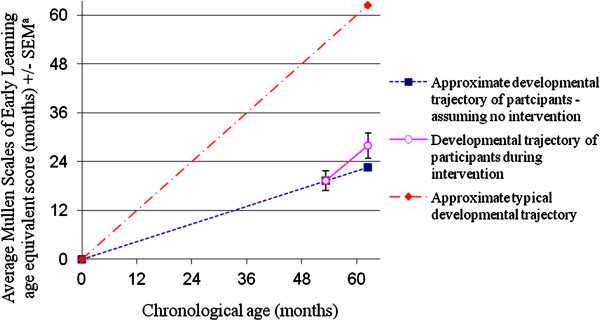
BACKGROUND: Available evidence indicates that early intervention programs, such as the Early Start Denver Model (ESDM), can positively affect key outcomes for children with Autism Spectrum Disorder (ASD). However, programs involving resource intensive one-to-one clinical intervention are not readily available or deliverable in the community, resulting in many children with ASD missing out on evidence-based intervention during their early and most critical preschool years. This study evaluated the effectiveness of the ESDM for preschool-aged children with ASD using a predominantly group-based intervention in a community child care setting. METHODS: Participants were 26 children (21 male) with ASD with a mean age of 49.6 months. The ESDM, a comprehensive early intervention program that integrates applied behaviour analysis with developmental and relationship-based approaches, was delivered by trained therapists during the child's attendance at a child care centre for preschool-aged children with ASD. Children received 15-20 hours of group-based, and one hour of one-to-one, ESDM intervention per week. The average intervention period was ten months. Outcome measures were administered pre- and post-intervention, and comprised a developmental assessment - the Mullen Scales of Early Learning (MSEL); and two parent-report questionnaires - the Social Communication Questionnaire (SCQ) and Vineland Adaptive Behaviours Scales-Second Edition (VABS-II). RESULTS: Statistically significant post-intervention improvements were found in children's performance on the visual reception, receptive language and expressive language domains of the MSEL in addition to their overall intellectual functioning, as assessed by standardised developmental quotients. Parents reported significant increases in their child's receptive communication and motor skills on the VABS-II, and a significant decrease in autism-specific features on the SCQ. These effects were of around medium size, and appeared to be in excess of what may have been expected due to maturation. Nonetheless, these results need to be confirmed in a controlled study. CONCLUSIONS: This study suggests community dissemination of the ESDM using predominantly group-based intervention may be an effective intervention. Making the ESDM accessible to the wider ASD community in child care settings has the potential for significant clinical and economic benefits. Further studies are indicated in this area, including those with younger children, and which incorporate a control group and standardised ASD assessments. TRIAL REGISTRATION: This trial is registered with the Australian New Zealand Clinical Trials Registry: Registry number ACTRN12612000461897.
Overview
AI snapshot
Written from the paper’s full text.
TL;DR
In a pre-post community study, 26 preschool-aged children with ASD received the Early Start Denver Model (ESDM) mainly in a group child-care setting and showed significant improvements in several developmental, adaptive, and autism-symptom measures. The authors conclude this delivery model may be effective and feasible, but call for controlled confirmation.
Key findings
- Significant post-intervention gains were found on the MSEL for overall developmental quotient (36.8 to 46.7, p<0.001, d=0.47), Visual Reception (35.9 to 51.5, p=0.001, d=0.63), Receptive Language (27.6 to 38.7, p<0.001, d=0.48), and Expressive Language (32.6 to 40.7, p=0.001, d=0.40); Fine Motor DQ did not improve significantly (47.9 to 51.3, p=0.28, d=0.14).
- On the VABS-II, significant increases were reported for Receptive Communication (7.6 to 9.3, p=0.005, d=0.49), Gross Motor (9.3 to 11.7, p<0.001, d=0.87), and the Motor Skills domain standard score (66.4 to 73.7, p=0.02, d=0.45).
- SCQ total scores decreased significantly from 18.5 to 15.7 (p=0.04, d=−0.39), and the percentage of children scoring below the clinical cut-off of 15 or more doubled from 21% at Time 1 to 42% at Time 2; parent-reported use of full sentences increased from 52% to 68%.
- The authors note effect sizes were generally lower than those in Dawson et al.’s one-to-one ESDM trial, e.g., overall MSEL d=0.47 versus 0.87 in Dawson et al.
Methods
- Pre-post study of 26 children (21 male) with DSM-IV-TR Autistic Disorder, mean age 49.6 months (SD 6.08, range 36–58 months), attending an Autism Specific Early Learning and Care Centre in metropolitan Sydney, Australia.
- ESDM was delivered by trained therapists during child-care attendance: 15–20 hours per week of group intervention plus 1 hour per week of one-to-one intervention; average time between initial and follow-up assessment was 9.72 months (SD 2.91).
- Outcomes were measured pre- and post-intervention with the MSEL, SCQ, and VABS-II; paired samples t-tests compared scores, with Cohen’s d effect sizes reported.
Limitations
- Stated by the paper: lack of a control group; lack of a standardised observational measure of ASD diagnosis and severity; need for further studies with younger children and follow-up to assess durability.
- Evident from the text: the pre-post design cannot establish that observed improvements were caused by ESDM rather than maturation or other factors; the sample was small (n=26), and there were missing data because some families did not complete measures within required timeframes.
Model-written summary. Check it against the paper before relying on it.
Integrity signals
Registry
Cites
Statistics
Figures
Verification
Claims the paper makes
30 Not checked yet · 17 Own result · 10 Own interpretation · 9 Own method · 1 Partly supported · accuracy not yet measured
The cited sources support only part of this claim — read each source’s verdict below.
In the paper
“Without intervention, ASD symptoms are generally thought to be stable over time, particularly where symptoms are at the more severe end of the spectrum [34]”
§ Clinical outcomes of an early intervention program for preschool children with Autism Spectrum Disorder in a community group setting > Discussion
What the sources say
- Partly supportedcites [34] Kleinman JM: Diagnostic stability in very young children with autism spectrum disorders. J Autism Dev Disord. 2008, 38 (4): 606-615. 10.1007/s10803-007-0427-8. sourceExperimental — accuracy not yet measured
The Results and Discussion (page unavailable) report high diagnostic stability in children followed from about ages 2 to 4, with Autistic Disorder more likely to persist than PDD-NOS; the Results also identify the Autistic Disorder group as having more severe symptoms. But the paper does not establish stability without intervention, and its Discussion says symptoms were more likely to improve than worsen. Diagnostic persistence therefore supports only part of the claim about symptom stability. (LLM, conf=0.88)
hedged- Asserted: passes — The authors put it forward as true.
- Checkable: passes — It can be checked against evidence.
- Load-bearing: passes — The paper’s conclusions depend on it.
- Based: passes — The paper gives a reason why it holds.
- Partly supported
A result the paper reports from its own data — it cites no other source for it, so there is none to check. The quote shows it is in the paper.
In the paper
“These effects were of around medium size, and appeared to be in excess of what may have been expected due to maturation.”
§ Clinical outcomes of an early intervention program for preschool children with Autism Spectrum Disorder in a community group setting > Abstract > Results
plain- Asserted: passes — The authors put it forward as true.
- Checkable: passes — It can be checked against evidence.
- Load-bearing: passes — The paper’s conclusions depend on it.
- Based: passes — The paper gives a reason why it holds.
A result the paper reports from its own data — it cites no other source for it, so there is none to check. The quote shows it is in the paper.
In the paper
“Parents reported significant increases in their child’s receptive communication and motor skills on the VABS-II, and a significant decrease in autism-specific features on the SCQ.”
§ Clinical outcomes of an early intervention program for preschool children with Autism Spectrum Disorder in a community group setting > Abstract > Results
plaindirect- Asserted: passes — The authors put it forward as true.
- Checkable: passes — It can be checked against evidence.
- Load-bearing: passes — The paper’s conclusions depend on it.
- Based: passes — The paper gives a reason why it holds.
A result the paper reports from its own data — it cites no other source for it, so there is none to check. The quote shows it is in the paper.
In the paper
“Significant improvement was also found in children’s performance on the Visual Reception, Receptive Language and Expressive Language scales of the MSEL, as assessed by standardised DQs.”
§ Clinical outcomes of an early intervention program for preschool children with Autism Spectrum Disorder in a community group setting > Results > Mullen scales of early learning
plain- Asserted: passes — The authors put it forward as true.
- Checkable: passes — It can be checked against evidence.
- Load-bearing: passes — The paper’s conclusions depend on it.
- Based: passes — The paper gives a reason why it holds.
A result the paper reports from its own data — it cites no other source for it, so there is none to check. The quote shows it is in the paper.
In the paper
“Parents reported significant increases in their child’s receptive communication and motor skills on the VABS-II, and a significant decrease in autism-specific features on the SCQ.”
§ Clinical outcomes of an early intervention program for preschool children with Autism Spectrum Disorder in a community group setting > Abstract > Results
plain- Asserted: passes — The authors put it forward as true.
- Checkable: passes — It can be checked against evidence.
- Load-bearing: passes — The paper’s conclusions depend on it.
- Based: passes — The paper gives a reason why it holds.
A result the paper reports from its own data — it cites no other source for it, so there is none to check. The quote shows it is in the paper.
In the paper
“No significant increase was found in children’s DQ on the Fine Motor scale.”
§ Clinical outcomes of an early intervention program for preschool children with Autism Spectrum Disorder in a community group setting > Results > Mullen scales of early learning
plain- Asserted: passes — The authors put it forward as true.
- Checkable: passes — It can be checked against evidence.
- Load-bearing: unclear — It is unclear whether the paper’s conclusions depend on it.
- Based: passes — The paper gives a reason why it holds.
A result the paper reports from its own data — it cites no other source for it, so there is none to check. The quote shows it is in the paper.
In the paper
“Significant improvement was also found in children’s performance on the Visual Reception, Receptive Language and Expressive Language scales of the MSEL, as assessed by standardised DQs.”
§ Clinical outcomes of an early intervention program for preschool children with Autism Spectrum Disorder in a community group setting > Results > Mullen scales of early learning
plain- Asserted: passes — The authors put it forward as true.
- Checkable: passes — It can be checked against evidence.
- Load-bearing: passes — The paper’s conclusions depend on it.
- Based: passes — The paper gives a reason why it holds.
A result the paper reports from its own data — it cites no other source for it, so there is none to check. The quote shows it is in the paper.
In the paper
“Parents reported significant increases in their child’s receptive communication and motor skills on the VABS-II, and a significant decrease in autism-specific features on the SCQ.”
§ Clinical outcomes of an early intervention program for preschool children with Autism Spectrum Disorder in a community group setting > Abstract > Results
plaindirect- Asserted: passes — The authors put it forward as true.
- Checkable: passes — It can be checked against evidence.
- Load-bearing: passes — The paper’s conclusions depend on it.
- Based: passes — The paper gives a reason why it holds.
A result the paper reports from its own data — it cites no other source for it, so there is none to check. The quote shows it is in the paper.
In the paper
“There was a significant increase in children’s mean overall DQ, a standardised index of their overall intellectual functioning, from pre- to-post-intervention.”
§ Clinical outcomes of an early intervention program for preschool children with Autism Spectrum Disorder in a community group setting > Results > Mullen scales of early learning
plaindirect- Asserted: passes — The authors put it forward as true.
- Checkable: passes — It can be checked against evidence.
- Load-bearing: passes — The paper’s conclusions depend on it.
- Based: passes — The paper gives a reason why it holds.
- It may state two separate claims as one. 10
- Probably not a substantial claim. 15
In the paper
“For example, the Cohen’s d effect size for overall MSEL developmental quotient was 0.47 in the current study, as compared to 0.87 in Dawson et al. [13].”
§ Clinical outcomes of an early intervention program for preschool children with Autism Spectrum Disorder in a community group setting > Discussion
What the sources say
- Not checked yetcites [13] Dawson G: Randomized, controlled trial of an intervention for toddlers with autism: the early start Denver model. Pediatrics. 2010, 125 (1): e17-e23. 10.1542/peds.2009-0958. source
plain- Asserted: passes — The authors put it forward as true.
- Checkable: passes — It can be checked against evidence.
- Load-bearing: passes — The paper’s conclusions depend on it.
- Based: passes — The paper gives a reason why it holds.
It may state two separate claims as one.
What the paper did — it cites no source for this, so there is none to check. The quote shows it is in the paper.
In the paper
“All interventions were delivered by therapists formally trained in the ESDM by accredited trainers.”
§ Clinical outcomes of an early intervention program for preschool children with Autism Spectrum Disorder in a community group setting > Methods > Intervention
plain- Asserted: passes — The authors put it forward as true.
- Checkable: passes — It can be checked against evidence.
- Load-bearing: passes — The paper’s conclusions depend on it.
- Based: passes — The paper gives a reason why it holds.
Probably not a substantial claim.
What the paper did — it cites no source for this, so there is none to check. The quote shows it is in the paper.
In the paper
“No families withdrew from the study during the course of the intervention; however, there were some instances of missing data due to families not completing measures within the necessary timeframes.”
§ Clinical outcomes of an early intervention program for preschool children with Autism Spectrum Disorder in a community group setting > Methods > Participants
plainn = 26- Asserted: passes — The authors put it forward as true.
- Checkable: passes — It can be checked against evidence.
- Load-bearing: fails — The paper’s conclusions may not depend on it.
- Based: passes — The paper gives a reason why it holds.
Probably not a substantial claim. The paper’s conclusions may not depend on it.
None of the sources cited for this claim have been checked yet.
In the paper
“Several meta-analyses conducted in recent years have tended to conclude that Early Intensive Behavioural Intervention (EIBI), incorporating the principles of applied behaviour analysis (ABA), is the treatment of choice for young children with ASD (cf. [8,9]).”
§ Clinical outcomes of an early intervention program for preschool children with Autism Spectrum Disorder in a community group setting > Background
What the sources say
- Not checked yetcites [8] Reichow B: Overview of meta-analyses on early intensive behavioral intervention for young children with autism spectrum disorders. J Autism Dev Disord. 2012, 42 (4): 512-520. 10.1007/s10803-011-1218-9. source
- Not checked yetcites [9] Vismara LA, Rogers SJ: Behavioral treatments in autism spectrum disorder: what do we know?. Annu Rev Clin Psychol. 2010, 6: 447-468. 10.1146/annurev.clinpsy.121208.131151. source
hedgeddirect- Asserted: passes — The authors put it forward as true.
- Checkable: passes — It can be checked against evidence.
- Load-bearing: passes — The paper’s conclusions depend on it.
- Based: passes — The paper gives a reason why it holds.
Probably not a substantial claim.
In the paper
“The VABS-II has well-established strong psychometric properties [29].”
§ Clinical outcomes of an early intervention program for preschool children with Autism Spectrum Disorder in a community group setting > Methods > Measures
What the sources say
- Not checked yetcites [29] Sparrow S, Cicchetti D, Balla D: Vineland adaptive behavior scales. 2005, Minneapolis, MN: Pearson Assessment, 2
boosted- Asserted: passes — The authors put it forward as true.
- Checkable: passes — It can be checked against evidence.
- Load-bearing: fails — The paper’s conclusions may not depend on it.
- Based: passes — The paper gives a reason why it holds.
Probably not a substantial claim. The paper’s conclusions may not depend on it.
None of the sources cited for this claim have been checked yet.
In the paper
“The SCQ has robust psychometric properties [26-28].”
§ Clinical outcomes of an early intervention program for preschool children with Autism Spectrum Disorder in a community group setting > Methods > Measures
What the sources say
- Not checked yetcites [26] Chandler S: Validation of the social communication questionnaire in a population cohort of children with autism spectrum disorders. J Am Acad Child Adolesc Psychiatry. 2007, 46 (10): 1324-1332. 10.1097/chi.0b013e31812f7d8d. source
- Not checked yetcites [27] Skuse DH, Mandy WPL, Scourfield J: Measuring autistic traits: heritability, reliability and validity of the social and communication disorders checklist. Br J Psychiatry. 2005, 187 (6): 568-572. 10.1192/bjp.187.6.568. source
- Not checked yetcites [28] Snow AV, Lecavalier L: Sensitivity and specificity of the modified checklist for autism in toddlers and the social communication questionnaire in preschoolers suspected of having pervasive developmental disorders. Autism. 2008, 12 (6): 627-644. 10.1177/1362361308097116. source
plain- Asserted: passes — The authors put it forward as true.
- Checkable: passes — It can be checked against evidence.
- Load-bearing: fails — The paper’s conclusions may not depend on it.
- Based: passes — The paper gives a reason why it holds.
Probably not a substantial claim. The paper’s conclusions may not depend on it.
None of the sources cited for this claim have been checked yet.
In the paper
“The literature indicates that superior outcomes are associated with entry into EIBI at the earliest possible age [10,11].”
§ Clinical outcomes of an early intervention program for preschool children with Autism Spectrum Disorder in a community group setting > Background
What the sources say
- Not checked yetcites [10] Granpeesheh D, Tarbox J, Dixon DR: Applied behavior analytic interventions for children with autism: a description and review of treatment research. Ann Clin Psychiatry. 2009, 21 (3): 162-173.
- Not checked yetcites [11] Wallace KS, Rogers SJ: Intervening in infancy: implications for autism spectrum disorders. J Child Psychol Psychiatry. 2010, 51 (12): 1300-1320. 10.1111/j.1469-7610.2010.02308.x. source
hedgedcorrelational- Asserted: passes — The authors put it forward as true.
- Checkable: passes — It can be checked against evidence.
- Load-bearing: passes — The paper’s conclusions depend on it.
- Based: passes — The paper gives a reason why it holds.
Probably not a substantial claim.
In the paper
“Vivanti et al. reported significant developmental gains following the intervention, with skills in functional use of objects, goal understanding and imitation predicting positive response to treatment [15].”
§ Clinical outcomes of an early intervention program for preschool children with Autism Spectrum Disorder in a community group setting > Background
What the sources say
- Not checked yetcites [15] Vivanti G: Brief Report: Predictors of Outcomes in the Early Start Denver Model Delivered in a Group Setting. J Autism Dev Disord. 2012, Epub ahead of print retrieved December 11 2012, from http://link.springer.com/article/10.1007%2Fs10803-012-1705-7?LI=true#
plaindirectn = 21- Asserted: passes — The authors put it forward as true.
- Checkable: passes — It can be checked against evidence.
- Load-bearing: passes — The paper’s conclusions depend on it.
- Based: passes — The paper gives a reason why it holds.
Probably not a substantial claim.
What the paper did — it cites no source for this, so there is none to check. The quote shows it is in the paper.
In the paper
“None of the participants were receiving an EIBI outside of the ESDM intervention offered as part of the study.”
§ Clinical outcomes of an early intervention program for preschool children with Autism Spectrum Disorder in a community group setting > Methods > Participants
plainn = 26- Asserted: passes — The authors put it forward as true.
- Checkable: passes — It can be checked against evidence.
- Load-bearing: fails — The paper’s conclusions may not depend on it.
- Based: passes — The paper gives a reason why it holds.
Probably not a substantial claim. The paper’s conclusions may not depend on it.
None of the sources cited for this claim have been checked yet.
In the paper
“Preliminary data are already available for the efficacy of the Denver model [16,17] with reports of positive outcomes in cognitive, social, language and play skills, as well as a reduction in ASD symptomatology, in children with ASD.”
§ Clinical outcomes of an early intervention program for preschool children with Autism Spectrum Disorder in a community group setting > Background
What the sources say
- Not checked yetcites [16] Rogers SJ, Lewis HAL: An effective Day treatment model for young children with pervasive developmental disorders. J Am Acad Child Adolesc Psychiatry. 1989, 28 (2): 207-214. 10.1097/00004583-198903000-00010. source
- Not checked yetcites [17] Rogers SJ, Ozonoff S, Maslin-Cole C: A comparative study of attachment behavior in young children with autism or other psychiatric disorders. J Am Acad Child Adolesc Psychiatry. 1991, 30 (3): 483-488. 10.1097/00004583-199105000-00021. source
plaindirectn = 31- Asserted: passes — The authors put it forward as true.
- Checkable: passes — It can be checked against evidence.
- Load-bearing: passes — The paper’s conclusions depend on it.
- Based: passes — The paper gives a reason why it holds.
It may state two separate claims as one.
In the paper
“Studies exploring the effectiveness of EIBI interventions, such as ABA, in community settings have produced generally favourable results [18], although effect sizes reported are typically smaller than in clinic-based efficacy studies.”
§ Clinical outcomes of an early intervention program for preschool children with Autism Spectrum Disorder in a community group setting > Background
What the sources say
- Not checked yetcites [18] Eikeseth S: Outcome for children with autism receiving early and intensive behavioral intervention in mainstream preschool and kindergarten settings. Research in Autism Spectrum Disorders. 2012, 6 (2): 829-835. 10.1016/j.rasd.2011.09.002. source
plaincorrelational- Asserted: passes — The authors put it forward as true.
- Checkable: passes — It can be checked against evidence.
- Load-bearing: passes — The paper’s conclusions depend on it.
- Based: passes — The paper gives a reason why it holds.
It may state two separate claims as one.
In the paper
“The ESDM is a manualised, comprehensive play-based intervention that integrates ABA with developmental and relationship-based approaches [14].”
§ Clinical outcomes of an early intervention program for preschool children with Autism Spectrum Disorder in a community group setting > Background
What the sources say
- Not checked yetcites [14] Rogers S, Dawson G: Early start Denver model for young children with autism. 2009, New York: Guilford Press
plain- Asserted: passes — The authors put it forward as true.
- Checkable: passes — It can be checked against evidence.
- Load-bearing: fails — The paper’s conclusions may not depend on it.
- Based: passes — The paper gives a reason why it holds.
Probably not a substantial claim. The paper’s conclusions may not depend on it. It may state two separate claims as one.
What the paper did — it cites no source for this, so there is none to check. The quote shows it is in the paper.
In the paper
“No families withdrew from the study during the course of the intervention; however, there were some instances of missing data due to families not completing measures within the necessary timeframes.”
§ Clinical outcomes of an early intervention program for preschool children with Autism Spectrum Disorder in a community group setting > Methods > Participants
plaindirect- Asserted: passes — The authors put it forward as true.
- Checkable: passes — It can be checked against evidence.
- Load-bearing: fails — The paper’s conclusions may not depend on it.
- Based: passes — The paper gives a reason why it holds.
Probably not a substantial claim. The paper’s conclusions may not depend on it.
In the paper
“The first and only randomised controlled trial of the ESDM demonstrated significant gains in visual processing and improvements in language abilities, with subsequent gains in IQ and adaptive behaviours, among children receiving the ESDM [13].”
§ Clinical outcomes of an early intervention program for preschool children with Autism Spectrum Disorder in a community group setting > Background
What the sources say
- Not checked yetcites [13] Dawson G: Randomized, controlled trial of an intervention for toddlers with autism: the early start Denver model. Pediatrics. 2010, 125 (1): e17-e23. 10.1542/peds.2009-0958. source
boosteddirect- Asserted: passes — The authors put it forward as true.
- Checkable: passes — It can be checked against evidence.
- Load-bearing: passes — The paper’s conclusions depend on it.
- Based: passes — The paper gives a reason why it holds.
It may state two separate claims as one.
What the paper did — it cites no source for this, so there is none to check. The quote shows it is in the paper.
In the paper
“The one-to-one sessions were conducted by a consistent key worker.”
§ Clinical outcomes of an early intervention program for preschool children with Autism Spectrum Disorder in a community group setting > Methods > Intervention
plain- Asserted: passes — The authors put it forward as true.
- Checkable: passes — It can be checked against evidence.
- Load-bearing: fails — The paper’s conclusions may not depend on it.
- Based: passes — The paper gives a reason why it holds.
Probably not a substantial claim. The paper’s conclusions may not depend on it.
In the paper
“In that study, the intervention was provided by trained therapists and children received 20 hours per week of one-to-one ESDM intervention in a University clinic setting.”
§ Clinical outcomes of an early intervention program for preschool children with Autism Spectrum Disorder in a community group setting > Background
What the sources say
- Not checked yetcites [13] Dawson G: Randomized, controlled trial of an intervention for toddlers with autism: the early start Denver model. Pediatrics. 2010, 125 (1): e17-e23. 10.1542/peds.2009-0958. source
plain- Asserted: passes — The authors put it forward as true.
- Checkable: passes — It can be checked against evidence.
- Load-bearing: passes — The paper’s conclusions depend on it.
- Based: passes — The paper gives a reason why it holds.
It may state two separate claims as one.
In the paper
“The Rogers and Lewis [16] study of 31 children (mean age 45 months), which employed a staff-to-child ratio of 1:2 with children treated in groups of six using the Denver Model, found significant improvement in play skills and reduction in autism symptoms.”
§ Clinical outcomes of an early intervention program for preschool children with Autism Spectrum Disorder in a community group setting > Background
What the sources say
- Not checked yetcites [16] Rogers SJ, Lewis HAL: An effective Day treatment model for young children with pervasive developmental disorders. J Am Acad Child Adolesc Psychiatry. 1989, 28 (2): 207-214. 10.1097/00004583-198903000-00010. source
plaindirectn = 31- Asserted: passes — The authors put it forward as true.
- Checkable: passes — It can be checked against evidence.
- Load-bearing: unclear — It is unclear whether the paper’s conclusions depend on it.
- Based: passes — The paper gives a reason why it holds.
It may state two separate claims as one.
In the paper
“While children improved in their mental age scores in that study, IQ standard scores were unaffected after treatment.”
§ Clinical outcomes of an early intervention program for preschool children with Autism Spectrum Disorder in a community group setting > Background
What the sources say
- Not checked yetcites [19] Magiati I, Charman T, Howlin P: A two-year prospective follow-up study of community-based early intensive behavioural intervention and specialist nursery provision for children with autism spectrum disorders. J Child Psychol Psychiatry. 2007, 48 (8): 803-812. 10.1111/j.1469-7610.2007.01756.x. source
plain- Asserted: passes — The authors put it forward as true.
- Checkable: passes — It can be checked against evidence.
- Load-bearing: passes — The paper’s conclusions depend on it.
- Based: passes — The paper gives a reason why it holds.
Probably not a substantial claim. It may state two separate claims as one.
In the paper
“Vivanti et al. reported significant developmental gains following the intervention, with skills in functional use of objects, goal understanding and imitation predicting positive response to treatment [15].”
§ Clinical outcomes of an early intervention program for preschool children with Autism Spectrum Disorder in a community group setting > Background
What the sources say
- Not checked yetcites [15] Vivanti G: Brief Report: Predictors of Outcomes in the Early Start Denver Model Delivered in a Group Setting. J Autism Dev Disord. 2012, Epub ahead of print retrieved December 11 2012, from http://link.springer.com/article/10.1007%2Fs10803-012-1705-7?LI=true#
plaincorrelationaln = 21- Asserted: passes — The authors put it forward as true.
- Checkable: passes — It can be checked against evidence.
- Load-bearing: fails — The paper’s conclusions may not depend on it.
- Based: passes — The paper gives a reason why it holds.
Probably not a substantial claim. The paper’s conclusions may not depend on it.
In the paper
“Following the recommendations of Dunlap et al. [31], and in order to provide a conservative estimate of the size of observed effects, Cohen’s d scores were calculated using the pooled standard deviation uncorrected for the correlation between pre- and post-scores.”
§ Clinical outcomes of an early intervention program for preschool children with Autism Spectrum Disorder in a community group setting > Methods > Statistical analyses
What the sources say
- Not checked yetcites [31] Dunlap WP, Cortina JM, Vaslow JB, Burke MJ: Meta-analysis of experiments with matched groups or repeated measures designs. Psychol Methods. 1996, 1 (2): 170-177. source
plain- Asserted: passes — The authors put it forward as true.
- Checkable: passes — It can be checked against evidence.
- Load-bearing: passes — The paper’s conclusions depend on it.
- Based: passes — The paper gives a reason why it holds.
Probably not a substantial claim.
A conclusion the paper draws from its own results — it cites no other source for it, so there is none to check. The quote shows it is in the paper.
In the paper
“Our findings of significant clinical improvements from the delivery of the ESDM in a less costly, more sustainable, group-based child care program provide a strong suggestion of the feasibility and effectiveness of this empirically validated treatment approach for children with ASD in the community during their critical early years of development.”
§ Clinical outcomes of an early intervention program for preschool children with Autism Spectrum Disorder in a community group setting > Conclusions
hedgedconditional- Asserted: passes — The authors put it forward as true.
- Checkable: passes — It can be checked against evidence.
- Load-bearing: passes — The paper’s conclusions depend on it.
- Based: passes — The paper gives a reason why it holds.
It may state two separate claims as one.
What the paper did — it cites no source for this, so there is none to check. The quote shows it is in the paper.
In the paper
“It is to be noted these are pre-post results that did not involve comparison with a control group.”
§ Clinical outcomes of an early intervention program for preschool children with Autism Spectrum Disorder in a community group setting > Results > Social communication questionnaire
plain- Asserted: passes — The authors put it forward as true.
- Checkable: passes — It can be checked against evidence.
- Load-bearing: fails — The paper’s conclusions may not depend on it.
- Based: passes — The paper gives a reason why it holds.
Probably not a substantial claim. The paper’s conclusions may not depend on it.
A conclusion the paper draws from its own results — it cites no other source for it, so there is none to check. The quote shows it is in the paper.
In the paper
“The findings from the present study suggest that preschool-aged children with ASD receiving the ESDM intervention in a group format showed statistically and clinically significant gains on a range of clinical outcomes, particularly in the areas of receptive language and communication.”
§ Clinical outcomes of an early intervention program for preschool children with Autism Spectrum Disorder in a community group setting > Discussion
hedgeddirect- Asserted: passes — The authors put it forward as true.
- Checkable: passes — It can be checked against evidence.
- Load-bearing: passes — The paper’s conclusions depend on it.
- Based: passes — The paper gives a reason why it holds.
It may state two separate claims as one.
The paper relies on this without support.
The observed pre-post improvements are attributable to the ESDM intervention rather than to maturation or other concurrent factors.
“This study suggests community dissemination of the ESDM using predominantly group-based intervention may be an effective intervention.”
The paper relies on this without support.
The sample of 26 preschool children with ASD attending an ASELCC is representative of the wider population of preschool children with ASD in community settings.
“This study suggests community dissemination of the ESDM using predominantly group-based intervention may be an effective intervention.”
The paper relies on this without support.
No other interventions or therapies were received by the children during the study period.
“None of the participants were receiving an EIBI outside of the ESDM intervention offered as part of the study.”
The paper relies on this without support.
The missing data did not bias the results.
“No families withdrew from the study during the course of the intervention; however, there were some instances of missing data due to families not completing measures within the necessary timeframes.”
The paper relies on this without support.
The ESDM curriculum can be delivered in a group setting without losing its efficacy.
“Other than accommodations to allow translation to the group context, no modifications were made to the ESDM curriculum.”
The paper relies on this without support.
The SCQ and VABS-II have acceptable test-retest reliability.
“The SCQ and VABS-II have acceptable test-retest reliability, suggesting that measurement errors were not a key factor.”
The paper relies on this without support.
The ESDM is designed to enhance the social attention and communicative abilities of young children with ASD, with particular focus on social attention, affect sharing, imitation and joint attention.
“Given that the ESDM is designed to enhance the social attention and communicative abilities of young children with an ASD, with particular focus on the critical skills of social attention, affect sharing, imitation and joint attention, the significant gains made in the respective domains of visual reception and receptive and expressive communication are noteworthy.”
The paper relies on this without support.
One-to-one intervention starting at the youngest possible age offers the best opportunity for improving outcomes in children with ASD.
“this is in keeping with the existing evidence that one-to-one intervention starting at the youngest possible age offers the best opportunity for improving outcomes in children with ASD.”
The paper relies on this without support.
Intervention programs provided within day care and preschool settings offer greater opportunities for generalisation of skills and improvements to school readiness, resulting in easier transition to other education settings following intervention.
“Intervention programs provided within day care and preschool settings offer greater opportunities for generalisation of skills and improvements to school readiness, resulting in easier transition to other education settings following intervention.”
Claims other papers make about this one
Each is checked against this paper’s own text: does it say what the citing paper says it does?
In the citing paper
“On the basis of evidence linking early treatment to improved outcomes (36–39), it is important that children with developmental concerns be evaluated and referred to services as soon as possible.”
Self-check
Percentages, sums and reported differences re-computed from the paper’s own numbers.
Each contradiction between two passages listed here was confirmed by an independent check.
Rated minor: it would not touch a result — a value no result rests on, a p-value that stays on the same side of the significance level, or a conflict that is clerical, resolved elsewhere in the paper, or outside its own findings.
In the paper
§ Clinical outcomes of an early intervention program for preschool children with Autism Spectrum Disorder in a community group setting > Results > Mullen scales of early learning
“| Adaptive Behaviour Composited | 61.9 | 13.9 | 63.6 | 14.4 | −0.9 | 14 | 0.38 | 0.12 |”
§ Clinical outcomes of an early intervention program for preschool children with Autism Spectrum Disorder in a community group setting > Discussion
“| Adaptive Behaviour Composite | 0.07 | −0.49b |”
Citations
Cites
Diagnostic and Statistical Manual of Mental Disorders
Williams, J. B. W., & First, M. B. (2013) · Oxford University Press eBooks · doi:10.1093/acrefore/9780199975839.013.104 · Cited by 109,845
Diagnostic and Statistical Manual of Mental Disorders ( DSM ‐ IV ‐ TR )
Segal, D. L. (2010) · Wiley eBooks · doi:10.1002/9780470479216.corpsy0271 · Cited by 4,687
Dawson, G., Rogers, S., Munson, J., Smith, M., Winter, J., Greenson, J., Donaldson, A., & Varley, J. (2010) · Pediatrics · doi:10.1542/peds.2009-0958 · Cited by 2,835
Global Prevalence of Autism and Other Pervasive Developmental Disorders
Elsabbagh, M., Divan, G., Koh, Y., Kim, Y. S., Kauchali, S., Marcín, C., Montiel‐Nava, C., Patel, V., Paula, C. S., Wang, C., et al. (2012) · Autism Research · doi:10.1002/aur.239 · Cited by 2,636
Mullen Scales of Early Learning
Bradley‐Johnson, S. (1997) · Psychology in the Schools · doi:10.1002/(sici)1520-6807(199710)34:4 · Cited by 2,329
Identification and Evaluation of Children With Autism Spectrum Disorders
Johnson, C. P., Myers, S. M., & and the Council on Children With Disabilities (2007) · Pediatrics · doi:10.1542/peds.2007-2361 · Cited by 2,011 · cited 1×
“Consistent with this view, the American Academy of Pediatrics has recommended that children be screened for ASD from around 18 months of age to aid in early intervention efforts [12].”
BackgroundVineland Adaptive Behavior Scales
Sparrow, S. S. (2010) · Springer eBooks · doi:10.1007/978-0-387-79948-3_1602 · Cited by 1,984
Meta-analysis of experiments with matched groups or repeated measures designs
Dunlap, W. P., Cortina, J. M., Vaslow, J. B., & Burke, M. J. (1996) · Psychological Methods · doi:10.1037/1082-989x.1.2.170 · Cited by 1,693 · cited 3×
“[31], and in order to provide a conservative estimate of the size of observed effects, Cohen’s d scores were calculated using the pooled standard deviation uncorrected for the correlation between pre- and post-scores.”
BackgroundMethodInfluentialEarly behavioral intervention, brain plasticity, and the prevention of autism spectrum disorder
Dawson, G. (2008) · Development and Psychopathology · doi:10.1017/s0954579408000370 · Cited by 1,138 · cited 2×
“Moreover, early intervention in the first years of life offers the best potential for children as brain plasticity is greatest during this period, enabling the establishment and reorganisation of neuronal networks in response to environmental stimulation [5].”
Background
Research works printed but not linked: 2
- Rutter M, Bailey A, Lord C: Social communication questionnaire (SCQ). 2003, Los Angeles, CA: Western Psychological Services
- Sparrow S, Cicchetti D, Balla D: Vineland adaptive behavior scales: (Vineland II), survey interview form/caregiver rating form. 2005, Livonia, MN: Pearson Assessments
Cited by
Sorted by citations
Items 201–224 of 224
Chapter 6. Digital Biomarkers in Diagnostics and Monitoring
Nezgovorova, V., Tsvetovat, M., Hollander, E., & Kanzaveli, T. (2022) · American Psychiatric Association Publishing eBooks · doi:10.1176/appi.books.9781615379521.lg06
MacFarlane, H., Salem, A. C., Lawley, G. O., Hill, A. P., Zuckerman, K. E., & Fombonne, E. J. (2022) · American Psychiatric Association Publishing eBooks · doi:10.1176/appi.books.9781615379521.lg01
Chapter 7. Social Communication
Constantino, J. N. (2022) · American Psychiatric Association Publishing eBooks · doi:10.1176/appi.books.9781615379521.lg07
Chapter 13. Electrophysiological Studies
Lippé, S., Schneider, A. K., Schmitt, L., & Erickson, C. A. (2022) · American Psychiatric Association Publishing eBooks · doi:10.1176/appi.books.9781615379521.lg13
Chapter 16. Fragile X Syndrome and Associated Disorders
Potter, L. A., & Hagerman, R. J. (2022) · American Psychiatric Association Publishing eBooks · doi:10.1176/appi.books.9781615379521.lg16
Chapter 40. Transcranial Magnetic Stimulation
Enticott, P. G., Pallanti, S., & Hollander, E. (2022) · American Psychiatric Association Publishing eBooks · doi:10.1176/appi.books.9781615379521.lg40
Chapter 42. Gene Therapy and Molecular Interventions
Hooper, A. W. M., Wong, H., & Hampson, D. R. (2022) · American Psychiatric Association Publishing eBooks · doi:10.1176/appi.books.9781615379521.lg42
Reetzke, R., & Landa, R. J. (2025) · Journal of Speech Language and Hearing Research · doi:10.1044/2024_jslhr-24-00322
“…emerging evidence has shown that NDBIs can also be effective in improving social communication outcomes in young autistic children when implemented in a group-based setting (Eapen et al., 2013; Landa et al., 2011; Tupou et al., 2022) with a relatively lesser intensity over a shorter period of time.”
Zitter, A., Fernandes, S. J., & Vivanti, G. (2025) · Springer eBooks · doi:10.1007/978-3-031-78143-8_5
Beamish, W., & Johnston, C. (2025) · Advancing inclusive and special education in the Asia-Pacific · doi:10.1007/978-981-96-5662-2_9
Dan, L., Yaping, H., Xiaobing, C., jiaojiao, B., Youhong, S., & huazhan, Y. (2025) · Research in Autism · doi:10.1016/j.reia.2025.202656 · Cited by 1
Mead, J., Lee, T.-J., O’Flaherty, M., Judd, C., Kliese, J.-L., & Bullot, A. (2025) · Topics in Early Childhood Special Education · doi:10.1177/02711214251358817
“Early learning skills were assessed using the MSEL (Mullen, 1995), a standardized assessment of early developmental skills commonly used to assess cognitive functioning in young autistic children (e.g., Denisova & Lin, 2023; Eapen et al., 2013; Vivanti et al., 2013).”
InfluentialWu, W. T., John, J. R., Diaz, A. M., Dissanayake, C., & Eapen, V. (2026) · Journal of Autism and Developmental Disorders · doi:10.1007/s10803-026-07387-0
Self-citationMa, L.-L., Lv, Q.-Q., & Xiao, Y. (2025) · Frontiers in Psychiatry · doi:10.3389/fpsyt.2025.1669476
“…Start Denver Model (ESDM) and the Treatment and Education of Autistic and Communication-Handicapped Children (TEACCH) program have demonstrated positive outcomes in children with autism spectrum disorder (ASD), existing studies have primarily evaluated these interventions in isolation (8 – 10).”
The development and implementation of ECHO Autism within the Part C Early Intervention system
Howard, M., Richardson, L., Rouch, E. F., & Mazurek, M. O. (2026) · Research in Autism · doi:10.1016/j.reia.2026.202911
Seng, G., Lin, J.-Y., Chiu, Y., Tsai, W., Li, S.-C., Hsiao, M., Soong, W., Gau, S. S., & Shang, C. (2026) · Journal of the Formosan Medical Association · doi:10.1016/j.jfma.2026.04.126
Eapen, V., Williams, K. J., Rinehart, N., Wall, E., Bernie, C., Moseley, D., & McGillivray, J. (2026) · Autism and child psychopathology series · doi:10.1007/978-3-032-11802-8_2
Self-citationAlharbi, H. (2026) · Open Journal of Social Sciences · doi:10.4236/jss.2026.146002
Seng, G., Lin, J.-Y., Huang, W., Lai, H.-Y., Kao, W.-C., Chen, H., & Gau, S. S. (2026) · Autism · doi:10.1177/13623613261462574
“For example, previous ESDM studies—across both one-on-one and group-based formats—similarly reported significant adaptive gains only after 9 to 24 months of intervention (Dawson et al., 2010; Eapen et al., 2013; Vivanti et al., 2014).”
Wang, S., You, C., Chen, K., Liu, L., Xing, Y., Lv, S., Zou, Y., Liang, F., Xu, Y., Ye, Q., et al. (2026) · Journal of Neurodevelopmental Disorders · doi:10.1186/s11689-026-09725-w
“MSEL exhibits strong psychometric properties for measuring developmental abilities in ASD [52].”
Stylianakis, A. A., Pincham, H. L., Chawla, S., Mathew, N. E., & Eapen, V. (2026) · Journal of Neurodevelopmental Disorders · doi:10.1186/s11689-026-09714-z
“This study employed the previously published ESDM curriculum and teaching principles within a group setting [45].”
Self-citation
Metadata
- Authors
- Eapen, V., Črnčec, R., & Walter, A.
- Affiliations
- South Western Sydney Local Health District (AU)
- UNSW Sydney (AU)
- Corresponding author
- Eapen, Valsamma
- Venue
- BMC Pediatrics
- Published
- 2013-01-07
- Volume
- 13
- Issue
- 1
- Pages
- 3-3
- ISSN
- 1471-2431 (ISSN-L)
- PMC
- PMC3631131
- OpenAlex
- W2123545643
- Semantic Scholar
- 8bd9c0a64f6d5f1e607acda7005e2ea0c8e857b5
- Cited by
- 230
- References
- 37
- Citations by year
- 2026: 10 · 2025: 13 · 2024: 16 · 2023: 18 · 2022: 63 · 2021: 11 · 2020: 13 · 2019: 18 · 2018: 15 · 2017: 12 · 2016: 10 · 2015: 14 · 2014: 10 · 2013: 6
- FWCI
- 7.18
- Type
- journal article
- Language
- en
- Open access
- gold
- doi.org
- Licence
- Locations
- BMC Pediatrics (publishedVersion, cc-by)
- Europe PMC (PubMed Central) (publishedVersion, cc-by)
- PubMed Central (publishedVersion, cc-by)
- PubMed (publishedVersion)
- UNSWorks (University of New South Wales, Sydney, Australia) (submittedVersion, cc-by-nc-nd)
- Funders
- Australian Government
- University of New South Wales
- University of California, Davis
- Topics
- Life Sciences › Neuroscience › Cognitive Neuroscience › Autism Spectrum Disorder Research
- Social Sciences › Psychology › Developmental and Educational Psychology › Behavioral and Psychological Studies
- Health Sciences › Medicine › Psychiatry and Mental health › Child Nutrition and Feeding Issues
- Keywords
- autism spectrum disorder, Early Start Denver Model, early intervention, preschool children, group intervention, community-based childcare, community dissemination, applied behaviour analysis, language development, adaptive behavior, parent-reported outcomes, Mullen Scales of Early Learning
- MeSH terms
- Behavior Therapy, Child, Child Development Disorders, Pervasive, Child, Preschool, Female, Humans, Male, New South Wales, Treatment Outcome, Early Intervention, Educational
About these checks
Registry, retraction, Cites and statistics results are computed, not judged, with one exception: a printed reference that no index lists is read once by a model before it counts as a citation error. Claims are extracted by a model and kept only when their quote appears verbatim in the text; each cited source is then checked, with a model’s help, for whether it says what the claim relies on. Those verdicts can be wrong — read the claim’s quote and the cited source before relying on one.
A language model drew the claims from the paper on 2026-10-08, under version 3 of the claim definition (model deepseek-v4.1-flash, prompt extract-v3).
A second model labelled each claim on 2026-10-08 (model jev-1.13-20260917, definition revision gold-guideline-v0.2).
Cited sources are checked with a language model’s help (gpt-6-sol).
Statistics and arithmetic are recomputed, not judged.
Confidence bands are shown only for fields calibrated on our annotated test set. None is calibrated yet, so no band is shown.
What counts as a claim ›How we measure confidence ›How we check this ›
Are you an author, or do you see a problem with this page? Request a review
