

Recovery from depressive symptoms, state anxiety and post-traumatic stress disorder in women exposed to physical and psychological, but not to psychological intimate partner violence alone: A longitudinal study
Open accessThe DOI matches its Crossref record; 78 of the 78 references it cites were found in a registry or an index.
Abstract
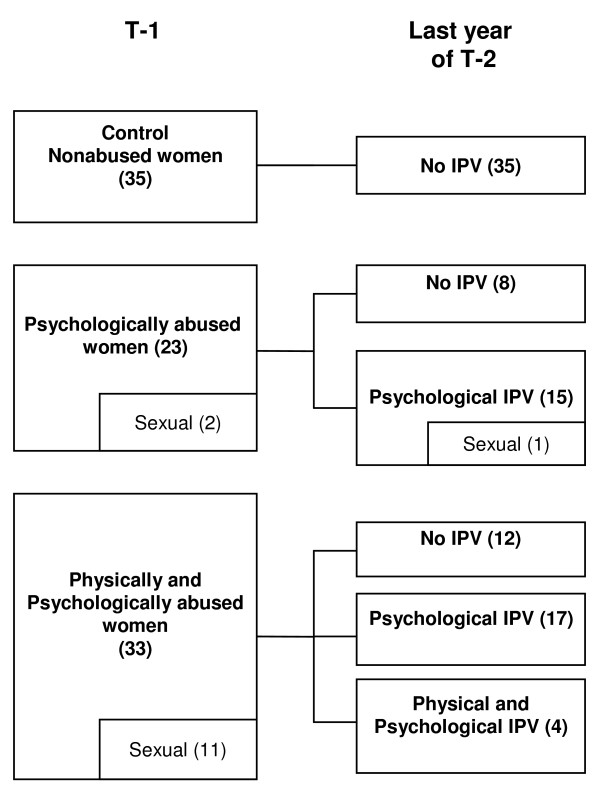
Background: It is well established that intimate male partner violence (IPV) has a high impact on women's mental health. It is necessary to further investigate this impact longitudinally to assess the factors that contribute to its recovery or deterioration. The objective of this study was to assess the course of depressive, anxiety and post-traumatic stress disorder (PTSD) symptoms and suicidal behavior over a three-year follow-up in female victims of IPV. Methods: Women (n = 91) who participated in our previous cross-sectional study, and who had been either physically/psychologically (n = 33) or psychologically abused (n = 23) by their male partners, were evaluated three years later. A nonabused control group of women (n = 35) was included for comparison. Information about mental health status and lifestyle variables was obtained through face-to-face structured interviews. Results: Results of the follow-up study indicated that while women exposed to physical/psychological IPV recovered their mental health status with a significant decrease in depressive, anxiety and PTSD symptoms, no recovery occurred in women exposed to psychological IPV alone. The evolution of IPV was also different: while it continued across both time points in 65.21% of psychologically abused women, it continued in only 12.12% of physically/psychologically abused women while it was reduced to psychological IPV in 51.5%. Hierarchical multiple regression analyses indicated that cessation of physical IPV and perceived social support contributed to mental health recovery, while a high perception of lifetime events predicted the continuation of PTSD symptoms. Conclusion: This study shows that the pattern of mental health recovery depends on the type of IPV that the women had been exposed to. While those experiencing physical/psychological IPV have a higher likelihood of undergoing a cessation or reduction of IPV over time and, therefore, could recover, women exposed to psychological IPV alone have a high probability of continued exposure to the same type of IPV with a low possibility of recovery. Thus, women exposed to psychological IPV alone need more help to escape from IPV and to recuperate their mental health. Longitudinal studies are needed to improve knowledge of factors promoting or impeding health recovery to guide the formulation of policy at individual, social and criminal justice levels.
Overview
The claims and statistics of this paper haven’t been checked yet.
Free: it reads the open-access text and checks the first 5 claims that cite a source we can check. Create a free account to check every claim.
Integrity signals
Registry
Cites
Statistics
Figures
Verification
Claims the paper makes
The claims and statistics of this paper haven’t been checked yet.
Free: it reads the open-access text and checks the first 5 claims that cite a source we can check. Create a free account to check every claim.
Claims other papers make about this one
Each is checked against this paper’s own text: does it say what the citing paper says it does?
The source backs part of the claim, not all of it — or backs it for a different population, condition or comparison.
In the citing paper
“All sixteen reviewed studies on anxiety reported finding a positive association between a history of intimate partner violence and increased levels of anxiety in women.”
From Mental and Physical Health and Intimate Partner Violence against Women: A Review of the Literature (2013) · cites this paper as [15]
Experimental — accuracy not yet measuredThe cited source says what the claim attributes to it.
In the citing paper
“IPV was associated with a range of mental health issues including depression, PTSD, anxiety, self-harm, and sleep disorders.”
From Mental and Physical Health and Intimate Partner Violence against Women: A Review of the Literature (2013) · cites this paper as [15]
The cited source says what the claim attributes to it.
In the citing paper
“All studies agreed on the fact that a history of intimate partner violence was positively associated with the increased incidence of PTSD symptoms and PTSD diagnoses.”
From Mental and Physical Health and Intimate Partner Violence against Women: A Review of the Literature (2013) · cites this paper as [15]
Self-check
Percentages, sums and reported differences re-computed from the paper’s own numbers.
The self-check needs the paper’s full text.
Citations
Cites
Diagnostic and Statistical Manual of Mental Disorders
Williams, J. B. W., & First, M. (2013) · Encyclopedia of Social Work · doi:10.1093/acrefore/9780199975839.013.104 · Cited by 109,519
An inventory for measuring depression
BECK, A. T. (1961) · Archives of General Psychiatry · doi:10.1001/archpsyc.1961.01710120031004 · Cited by 38,032 · cited 5×
“1)-Depressive symptoms The severity of depressive symptoms was measured with the Beck Depression Inventory (BDI) [59].”
MethodInfluential(1970) · Cited by 24,983
Diagnostic and Statistical Manual of Mental Disorders
(2012) · SpringerReference · doi:10.1007/springerreference_121117 · Cited by 20,570
Diagnostic and Statistical Manual of Mental Disorders, 5th Edition
(2013) · American Psychiatric Association Publishing eBooks · doi:10.1176/appi.books.9780890425596.893619 · Cited by 4,383
Health consequences of intimate partner violence
Campbell, J. C. (2002) · The Lancet · doi:10.1016/s0140-6736(02)08336-8 · Cited by 4,055
STAI manual for the State-trait anxiety inventory
Cd, S. (1970) · Medical Entomology and Zoology · Cited by 2,492
Physical and mental health effects of intimate partner violence for men and women
Coker, A. L., Davis, K. E., Arias, I., Desai, S., Sanderson, M., Brandt, H. M., & Smith, P. H. (2002) · American Journal of Preventive Medicine · doi:10.1016/s0749-3797(02)00514-7 · Cited by 2,258 · cited 1×
“The most prevalent sequelae include depression, anxiety and posttraumatic stress disorder (PTSD) [8-14].”
BackgroundEllsberg, M., Jansen, H. A., Heise, L., Watts, C. H., & Garcia-Moreno, C. (2008) · The Lancet · doi:10.1016/s0140-6736(08)60522-x · Cited by 1,820
Broadhead, W. E., Gehlbach, S. H., De Gruy, F. V., & Kaplan, B. H. (1988) · Medical Care · doi:10.1097/00005650-198807000-00006 · Cited by 1,314 · cited 1×
“The Duke-UNC scale (11 item version) was used to measure functional social support [ 57 ].”
Method
Research works printed but not linked: 2
- Conde V Useros E Adaptación castellana de la escala de evaluación conductual para la depresión de Beck Rev Psiquiatria Psicol Med Eur Am 1975 12 217 236
- Spielberger CD Gorsuch RL Lushene RE Manual STAI. Cuestionario de Ansiedad Estado Rasgo 1988 Adaptación española. Madrid: TEA Ediciones
Cited by
Mental and Physical Health and Intimate Partner Violence against Women: A Review of the Literature
Dillon, G., Hussain, R., Loxton, D., & Rahman, S. (2013) · International Journal of Family Medicine · doi:10.1155/2013/313909 · Cited by 992
“is appears to be the case in several other PTSD studies as well [15, 18, 23, 36].”
ResultA systematic review of the correlates of violence against sex workers
Deering, K. N., Amin, A., Shoveller, J., Nesbitt, A., Garcia-Moreno, C., Duff, P., Argento, E., & Shannon, K. (2014) · American Journal of Public Health · doi:10.2105/ajph.2014.301909 · Cited by 611
Intimate partner abuse and suicidality: a systematic review
McLaughlin, J., O'Carroll, R. E., & O'Connor, R. C. (2012) · Clinical Psychology Review · doi:10.1016/j.cpr.2012.08.002 · Cited by 248
“Blasco-Ros et al. (2010) used a follow up period of 3 years, comparing those with no experience of IPA, thosewith experienceof psychologicalabuse, and thosewith experience of both physical and psychological abuse.”
BackgroundMethodInfluentialDokkedahl, S. B., Kirubakaran, R., Bech-Hansen, D., Kristensen, T. R., & Elklit, A. (2022) · Systematic Reviews · doi:10.1186/s13643-022-02025-z · Cited by 172
Lövestad, S., Löve, J., Vaez, M., & Krantz, G. (2017) · BMC Public Health · doi:10.1186/s12889-017-4222-y · Cited by 151
“This supports the repeatedly confirmed findings in earlier literature that psychological abuse, including controlling behavior is as detrimental to women’s mental health as other forms of IPV [16, 57].”
BackgroundResultBreaking the Links in Intergenerational Violence: An Emotional Regulation Perspective
Siegel, J. P. (2013) · Family Process · doi:10.1111/famp.12023 · Cited by 111
The Impact and Consequences of Partner Abuse on Partners
Lawrence, E. E., Orengo‐Aguayo, R., Langer, A., & Brock, R. L. (2012) · Partner Abuse · doi:10.1891/1946-6560.3.4.406 · Cited by 126
Schnurr, M. P., Mahatmya, D., & Basche, R. A. (2013) · Psychology of Violence · doi:10.1037/a0030601 · Cited by 90
South Asian Women in the U.S. and their Experience of Domestic Violence
Mahapatra, N. (2012) · Journal of Family Violence · doi:10.1007/s10896-012-9434-4 · Cited by 119
“Blasco-Ros et al. (2010) also found that women who were exposed to psychological abuse needed more time to escape from the abuse and were less likely to recover their mental health.”
BackgroundRisk factors for male perpetration of intimate partner violence: A review
Clare, C. A., Velasquez, G., Martorell, G. M. M., Fernández, D. A., Dinh, J., & Montague, A. M. (2020) · Aggression and Violent Behavior · doi:10.1016/j.avb.2020.101532 · Cited by 103
Chmielowska, M., & Fuhr, D. C. (2017) · Social Psychiatry and Psychiatric Epidemiology · doi:10.1007/s00127-017-1375-z · Cited by 96
Treatment-refractory posttraumatic stress disorder (TRPTSD): a review and framework for the future
Koek, R. J., Schwartz, H. N., Scully, S., Langevin, J., Spangler, S. L., Korotinsky, A., Jou, K., & Leuchter, A. F. (2016) · Progress in Neuro-Psychopharmacology and Biological Psychiatry · doi:10.1016/j.pnpbp.2016.01.015 · Cited by 81
Kim, J., & Lee, J. (2013) · Social Science & Medicine · doi:10.1016/j.socscimed.2013.10.014 · Cited by 76
Fiorillo, D., McLean, C., Pistorello, J., Hayes, S. C., & Follette, V. M. (2017) · Journal of Contextual Behavioral Science · doi:10.1016/j.jcbs.2016.11.003 · Cited by 61
del Río, I. D., & del Valle, E. S. G. (2016) · Violence Against Women · doi:10.1177/1077801216671220 · Cited by 94
“Some previous literature has suggested that psychological violence may be at least as detrimental to women’s health as physical or sexual violence (Arias & Pape, 1999; Blasco-Ros et al., 2010; Coker et al., 2002; Lawrence et al., 2009).”
BackgroundBrignone, E., Sorrentino, A. E., Roberts, C. B., & Dichter, M. E. (2018) · General Hospital Psychiatry · doi:10.1016/j.genhosppsych.2018.10.006 · Cited by 58
Intimate Partner Stalking Victimization and Posttraumatic Stress Symptoms in Post-Abuse Women
Fleming, K. N., Newton, T. L., Fernandez-Botran, R., Miller, J. J., & Burns, V. E. (2012) · Violence Against Women · doi:10.1177/1077801212474447 · Cited by 49
The Therapeutic Efficacy of Domestic Violence Victim Interventions
Hackett, S. M., McWhirter, P. T., & Lesher, S. (2015) · Trauma Violence & Abuse · doi:10.1177/1524838014566720 · Cited by 67
“Blasco-Ros, Sanchez-Lorente, and Martinez (2010) followed victims of IPV for 3 years and found that over this time period significant decreases occurred in depression, anxiety, and post-traumatic stress disorder symptoms.”
BackgroundWatkins, L. E., Jaffe, A. E., Hoffman, L., Gratz, K. L., Messman‐Moore, T. L., & DiLillo, D. (2014) · Journal of Family Psychology · doi:10.1037/fam0000018 · Cited by 69
Wolke, D., Zhou, Y., Liu, Y., Eves, R., Mendonça, M., & Twilhaar, E. S. (2025) · Nature Mental Health · doi:10.1038/s44220-025-00479-3 · Cited by 43
“Common operationaliza-tions of resilient outcomes include stable functioning 39,53 , recovery to baseline 70 and exceeding expectations 71 .”
Remission of PTSD after victims of intimate partner violence leave a shelter
Johnson, D. M., & Zlotnick, C. (2012) · Journal of Traumatic Stress · doi:10.1002/jts.21673 · Cited by 48
Jina, R., Jewkes, R., Hoffman, S., Dunkle, K. L., Nduna, M., & Shai, N. J. (2012) · Journal of Interpersonal Violence · doi:10.1177/0886260511423247 · Cited by 42
Clinically speaking, psychological abuse matters
Começanha, R., Basto-Pereira, M., & Maia, Â. (2016) · Comprehensive Psychiatry · doi:10.1016/j.comppsych.2016.11.015 · Cited by 53
Ford-Gilboe, M., Varcoe, C., Wuest, J., Campbell, J., Pajot, M., Heslop, L., & Perrin, N. (2023) · Journal of Interpersonal Violence · doi:10.1177/08862605221090595 · Cited by 40
“…health (e.g., Cavanaugh et al., 2014; La Flair et al., 2012; Loxton, Dolja-Gore et al., 2017; Tsai et al., 2016); and c) the type (i.e., physical, sexual, psychological) and severity of abuse may impact a woman’s recovery (e.g., Blasco-Ros et al., 2010; Hill et al., 2009; Suvak et al., 2013).”
BackgroundResultLa violencia de género: evolución, impacto y claves para su abordaje
González, G. C., & Camacho‐Bejarano, R. (2014) · Enfermería Global · doi:10.6018/eglobal.13.1.181941 · Cited by 40
Miller, L. E. (2015) · Trauma, Violence, & Abuse · doi:10.1177/1524838013517563 · Cited by 38
Cerdá, M., DiGangi, J., Galea, S., & Koenen, K. (2012) · Depression and Anxiety · doi:10.1002/da.21947 · Cited by 34
“Twenty-seven of the studies examined the psychopathological correlates of child victimization,[12–38] five assessed the effects of violence in an adult population[39–43] and three studies included experience of violence as either a child and/or adult.”
BackgroundMethodResultInfluentialDougé, N., Lehman, E. B., & McCall‐Hosenfeld, J. S. (2014) · Women s Health Issues · doi:10.1016/j.whi.2014.03.006 · Cited by 44
Influence of the Relational Context on Reproductive Coercion and the Associated Consequences
Lévesque, S., Rousseau, C., & Dumerchat, M. (2020) · Violence Against Women · doi:10.1177/1077801220917454 · Cited by 34
“These findings concur with Blasco-Ros et al. (2010), who found that, compared with women who were exposed to both coercive control and physical violence, women Lévesque et al. 831 who were exposed to coercive control alone were more likely to report persistent exposure 3 years later.”
ResultEscribà‐Agüir, V., Royo-Marqués, M., Artazcoz, L., Romito, P., & Ruíz-Pérez, I. (2012) · European Archives of Psychiatry and Clinical Neuroscience · doi:10.1007/s00406-012-0336-5 · Cited by 38
“In contrast, the longitudinal effect of psychological partner violence on maternal mental health is less well-known [4].”
BackgroundJaquier, V., Hellmuth, J. C., & Sullivan, T. P. (2012) · Psychiatry Research · doi:10.1016/j.psychres.2012.09.020 · Cited by 41
“Further, IPV-victimized women endure a high probability of repeat victimization, continued negative effects of IPV victimization, and a minimal likelihood of recovery over time compared to women who experience other traumatic life events (Beeble et al., 2009; Blasco-Ros et al., 2010).”
BackgroundMental health care in the context of intimate partner violence: Survivor perspectives.
Sorrentino, A. E., Iverson, K. M., Tuepker, A., True, G., Cusack, M. C., Newell, S., & Dichter, M. E. (2021) · Psychological Services · doi:10.1037/ser0000427 · Cited by 40
Co-occurrence Patterns of Intimate Partner Violence
Hacıaliefendioğlu, A., Yılmaz, S., Koyutürk, M., & Karakurt, G. (2020) · Biocomputing 2021 · doi:10.1142/9789811232701_0008 · Cited by 29
Ngo, Q. M., Ramirez, J. I., Stein, S. F., Cunningham, R. M., Chermack, S. T., Singh, V., & Walton, M. A. (2018) · Violence Against Women · doi:10.1177/1077801218781886 · Cited by 26
Tirado-Muñoz, J., Gilchrist, G., Fischer, G., Taylor, A., Moskalewicz, J., Giammarchi, C., Köchl, B., Munro, A., Dąbrowska, K., Shaw, A., et al. (2017) · Archives of Women s Mental Health · doi:10.1007/s00737-017-0800-3 · Cited by 39
“Recently, research has reported that women exposed to IPV may be more than twice as likely to suffer with depression in comparison as nonabused women (Blasco-Ros et al. 2010; Devries et al. 2013).”
BackgroundGray, R. M., Lewis, P., Mokany, T., & O’Neill, B. (2014) · Australian Social Work · doi:10.1080/0312407x.2013.853196 · Cited by 28
Patton, S. C., Szabo, Y. Z., & Newton, T. L. (2021) · Trauma Violence & Abuse · doi:10.1177/1524838020985554 · Cited by 39
“Control groups of women without a history of IPA can serve a similar purpose (e.g., Blasco-Ros et al., 2010; Sanchez-Lorente et al., 2012).”
BackgroundInfluentialVolpe, E. M., Hardie, T., & Cerulli, C. (2012) · Journal of Obstetric, Gynecologic & Neonatal Nursing · doi:10.1111/j.1552-6909.2012.01384.x · Cited by 35
Costa, E. C. V., & Botelheiro, A. A. L. P. (2020) · European Journal of Trauma & Dissociation · doi:10.1016/j.ejtd.2020.100151 · Cited by 36
Family Violence in Context: An Intergenerational Systemic Model
Southern, S., & Sullivan, R. D. (2021) · The Family Journal · doi:10.1177/10664807211006274 · Cited by 35
“Effects of emotional abuse can be more destructive than physical abuse in young adult IPV due to the relational vulnerability (Blasco-Ros et al., 2010).”
BackgroundIntimate Partner Violence as a Risk Factor for Mental Health Problems in South Africa
Jewkes, R. K. (2013) · Key issues in mental health (Online)/Key issues in mental health (Print) · doi:10.1159/000342013 · Cited by 24
Machorrinho, J., Veiga, G., Santos, G., & Marmeleira, J. (2021) · Journal of Trauma & Dissociation · doi:10.1080/15299732.2021.1989109 · Cited by 33
Intimate Partner Violence: A Literature Review
Yonfa, E. D. A., Fasol, M., Cueva, C. M., & Zavgorodniaya, A. I. C. (2021) · The Open Psychology Journal · doi:10.2174/1874350102114010011 · Cited by 43
“For example, women who were abused by an intimate partner reported increased symptoms of depression, anxiety [39, 40], and obsessive-compulsive characteristics [40].”
BackgroundBlasco‐Ros, C., Herbert, J., & Martínez, M. (2014) · Journal of Acute Disease · doi:10.1016/s2221-6189(14)60066-4 · Cited by 32
“Funding for this study was provided by The Institute of the Woman, Ministry of Work and Social Affairs (ref: 53/98), FEDER and the Ministry of Science and Innovation (Plan Nacional de Investigación Científica, Desarrollo e Innovación Tecnológica; ref: BSO2001-3134, Spain), and the Conselleria D’Educació (PROMETEO 2011…”
BackgroundSelf-citationFrom hoping to help: Identifying and responding to suicidality amongst victims of domestic abuse
Munro, V. E., & Aitken, R. (2019) · International Review of Victimology · doi:10.1177/0269758018824160 · Cited by 38
Gray, R. M., Broady, T. R., Gaffney, I., Lewis, P., Mokany, T., & O’Neill, B. (2014) · Child Abuse Review · doi:10.1002/car.2318 · Cited by 22
“, T2009a, 2009b; Feder and Wilson, 2005; World Health Organization, 2005), as have the negative consequences for victims and survivors (Blasco-Ros et al., 2010; Brosi and Rolling, 2010; Carrell and Hoekstra, 2010; Field and Caetano, 2005; McLeod et al., 2008; Murray and Graybeal, 2007; York et al., 2010).”
Background‘I Miss My Little One A Lot’: How Father Love Motivates Change in Men Who Have Used Violence
Broady, T. R., Gray, R. M., Gaffney, I., & Lewis, P. (2015) · Child Abuse Review · doi:10.1002/car.2381 · Cited by 25
Sánchez-Lorente, S., Blasco‐Ros, C., & Martínez, M. (2012) · Women s Health Issues · doi:10.1016/j.whi.2012.07.003 · Cited by 24
“(Blasco-Ros et al., 2010).”
Self-citationPomicino, L., Beltramini, L., & Romito, P. (2018) · Violence Against Women · doi:10.1177/1077801218802641 · Cited by 27
Unperceived intimate partner violence and women's health
Sonego, M., Gandarillas, A., Zorrilla, B., Lozano, L. L., Alcaide, M. P., Anes, A., & Ordobás, M. (2013) · Gaceta Sanitaria · doi:10.1016/j.gaceta.2012.11.009 · Cited by 19
Pre-Pregnancy Dating Violence and Birth Outcomes Among Adolescent Mothers in a National Sample
Madkour, A. S., Xie, Y., & Harville, E. W. (2013) · Journal of Interpersonal Violence · doi:10.1177/0886260513511699 · Cited by 19
Graham‐Bermann, S. A., Howell, K. H., Miller‐Graff, L. E., Galano, M. M., Lilly, M. M., & Grogan‐Kaylor, A. C. (2018) · Journal of Aggression Maltreatment & Trauma · doi:10.1080/10926771.2018.1494652 · Cited by 21
“Studies have consistently shown that women exposed to IPV have greater depression, anxiety and posttraumatic stress symptoms than similar women not exposed to IPV (Blasco-Ros et al., 2010).”
BackgroundHyper-Sensitivity to the Perpetrator and the Likelihood of Returning to Abusive Relationships
Lahav, Y. (2022) · Journal of Interpersonal Violence · doi:10.1177/08862605221092075 · Cited by 26
“…(Campbell, 2002; Coker et al., 2000; Tiwari et al., 2008), posttraumatic stress disorder (PTSD), depression, anxiety, and suicide attempts (Blasco-Ros et al., 2010; Breiding et al., 2014; Caldwell et al., 2012; Campbell, 2002; Dekel et al., 2019; Lahav et al., 2018; Lahav et al., 2019a;…”
BackgroundSesar, K., Šimić, N., & Dodaj, A. (2015) · Journal of Sociology and Social Work · doi:10.15640/jssw.v3n2a7 · Cited by 18
Predicting emotional abuse among a sample of college students
Spadine, M. N., Patterson, M. S., Brown, S., Nelon, J. L., Lanning, B. A., & Johnson, D. M. (2020) · Journal of American College Health · doi:10.1080/07448481.2020.1740709 · Cited by 19
Selič, P., Švab, I., & Guček, N. K. (2014) · BMC Public Health · doi:10.1186/1471-2458-14-223 · Cited by 23
“A history of IPV was also found to be positively associated with increased incidence of PTSD symptoms, PTSD diagnoses [54,55], and increased levels of anxiety in women [47,54,56,57].”
BackgroundResultDavies, M., Satyen, L., & Toumbourou, J. W. (2025) · Trauma Violence & Abuse · doi:10.1177/15248380251383933 · Cited by 19
Ferreira, R. M., de Vasconcelos, T. B., Filho, R. E. M., & Macena, R. H. M. (2016) · Ciência & Saúde Coletiva · doi:10.1590/1413-812320152112.09092015 · Cited by 16
Лохматкина, Н. В., Feder, G. S., Blake, S., Morris, R. W., Powers, V., & Lightman, S. L. (2013) · BMC Psychiatry · doi:10.1186/1471-244x-13-188 · Cited by 21
“Blasco et al. [10] concluded that the pattern of mental health recovery depends on the type of DVA that the women had been exposed to.”
Keynejad, R. C., Bitew, T., Sorsdahl, K., Myers, B., Honikman, S., Medhin, G., Deyessa, N., Mulushoa, A., Fekadu, E., Howard, L. M., et al. (2023) · PLOS Global Public Health · doi:10.1371/journal.pgph.0002054 · Cited by 12
Counseling Intimate Partner Abuse Survivors: Effective and Ineffective Interventions
Leedom, L. J., Andersen, D., Glynn, M. A., & Barone, M. (2019) · Journal of Counseling & Development · doi:10.1002/jcad.12285 · Cited by 16
Hui, V. C. C., Eby, M., Constantino, R. E., Lee, H., Zelazny, J. M., Chang, J. C., He, D., & Lee, Y. J. (2023) · Journal of Medical Internet Research · doi:10.2196/48607 · Cited by 14
“More importantly, XSL • FO RenderX 49.5% of women were shown to develop psychological illnesses after experiencing IPV [38].”
InfluentialPTSD symptom course during the first year of college.
Read, J. P., Bachrach, R. L., Wright, A. G. C., & Colder, C. R. (2016) · Psychological Trauma Theory Research Practice and Policy · doi:10.1037/tra0000087 · Cited by 14
“This is consistent with work showing evidence for a natural recovery process in those with PTSD (Blasco-Ros et al., 2010; Krause et al., 2008).”
Parker, M. K., Lehman, E. B., Abram, M. C., Weisman, C. S., & McCall‐Hosenfeld, J. S. (2020) · Women s Health Issues · doi:10.1016/j.whi.2020.04.005 · Cited by 13
Williams, K., Harb, M., Satyen, L., & Davies, M. (2024) · Frontiers in Global Women s Health · doi:10.3389/fgwh.2024.1404599 · Cited by 17
Pinto, R. J., Lamela, D. J. P. D. V., Simães, C., Levendosky, A. A., & Jongenelen, I. (2019) · Journal of Child and Family Studies · doi:10.1007/s10826-019-01454-0 · Cited by 11
“…and benefits of shelter residence, which are mostly related to the cessation of the violence cycle, the end of the relationship with the abusive partner, positive feelings associated with being safe, and the growing perception of an effective social support environment (Blasco-Ros et al. 2010).”
BackgroundPredictors of Intimate Partner Violence Victimization by Multiple Partners Over a Period of 8 Years
Stein, S. F., Galano, M. M., Grogan‐Kaylor, A. C., Clark, H. M., Ribaudo, J., & Graham‐Bermann, S. A. (2021) · Journal of Traumatic Stress · doi:10.1002/jts.22723 · Cited by 15
Physical and verbal abuse amid COVID-19: a nationwide cross-sectional survey in Japan
Bhandari, D., Ozaki, A., Suzuki, T., Kotera, Y., Shrestha, S., Horiuchi, S., Miyachi, T., & Tabuchi, T. (2022) · BMJ Open · doi:10.1136/bmjopen-2021-054915 · Cited by 12
ESTRÉS POST-TRAUMÁTICO Y ESTRÉS SUBJETIVO EN ESTUDIANTES UNIVERSITARIOS TRAS ALUVIÓN DE BARRO
Dulčić, F. J. L., & Salgado-Roa, J. A. (2016) · Ciencias Psicológicas · doi:10.22235/cp.v10i2.1250 · Cited by 13
Correlates of psychological intimate partner violence with HIV care outcomes on patients in HIV care
Fredericksen, R. J., Nance, R. M., Whitney, B. M., Harding, B. N., Fitzsimmons, E., del Río, C., Eron, J. J., Feaster, D. J., Kalokhe, A. S., Mathews, W. C., et al. (2021) · BMC Public Health · doi:10.1186/s12889-021-11854-x · Cited by 10
“Given a) the suspected impact of psy-IPV on health outcomes even in the absence of physical or sexual IPV, b) the high prevalence of psy-IPV among PLWH compared to other types of IPV, and c) that those reporting psy-IPV in the absence of physical or sexual IPV have shown to be more at risk for continued exposure to ps…”
BackgroundToplu‐Demirtaş, E., Murray, C. E., & Sümer, Z. (2018) · Journal of Aggression Conflict and Peace Research · doi:10.1108/jacpr-11-2017-0333 · Cited by 11
Tohan, M. M., Zaman, S., Saha, B. R., Juhi, N. J., Mahbub, S. B., & Howlader, M. H. (2025) · BMC Psychiatry · doi:10.1186/s12888-025-07133-3 · Cited by 15
“Studies indicate that women who have experienced IPVs are significantly more likely to develop anxiety disorders [13, 14].”
Variables asociadas a la experiencia de abuso en la pareja y su denuncia en una muestra de mujeres
Sierra, J. C., Monge, F. S., Bermúdez, M. P., Buela‐Casal, G., & Salinas, J. M. (2014) · Universitas Psychologica · doi:10.11144/javeriana.upsy13-1.vaea · Cited by 11
A competency framework for domestic violence counselling
Roddy, J., & Gabriel, L. (2019) · British Journal of Guidance and Counselling · doi:10.1080/03069885.2019.1599322 · Cited by 11
Reaching Out To Women Who Are Victims of Intimate Partner Violence
Svavarsdóttir, E. K., Örlygsdóttir, B., & Guðmundsdóttir, B. (2014) · Perspectives In Psychiatric Care · doi:10.1111/ppc.12080 · Cited by 16
Dawson, D. N., Volpe, V. V., & Laurent, H. K. (2019) · Journal of Interpersonal Violence · doi:10.1177/0886260519844274 · Cited by 10
“Cross-sectional studies do not provide a complete picture of the impact of IPV, given that mental health problems associated with psychological IPV may persist long after cessation of abuse (Blasco-Ros et al., 2010).”
BackgroundCintora, P., & Laurent, H. K. (2020) · Journal of Traumatic Stress · doi:10.1002/jts.22545 · Cited by 14
Zhao, S., Long, F., Wei, X., Tuo, J., Wang, H., Ni, X., & Wang, X. (2022) · Frontiers in Public Health · doi:10.3389/fpubh.2022.857472 · Cited by 7
Puig-Amores, I., Gordillo, I. C., & Parra, G. M.-M. (2022) · International Journal of Environmental Research and Public Health · doi:10.3390/ijerph192215340 · Cited by 13
“Additionally, the data confirm that women who experience IPVp+ have a greater risk of experiencing suicidal behaviours, especially when it comes to making SAs [20,21].”
BackgroundAnxiety Disorders and Suicide: Psychiatric Interventions
Hocaoğlu, Ç. (2015) · InTech eBooks · doi:10.5772/60594 · Cited by 5
“This may explain the high ratio of suicide attempts and anxiety among physically/psychologically abused women [64, 65].”
BackgroundEpigenetic modifications and transgenerational inheritance in women victims of violence (EWVV)
Gemmati, D., Villanova, M., Scarpellini, F., Milani, D., Cecchi, R., Singh, A. V., Gaudio, R. M., & Tisato, V. (2025) · Environmental Epigenetics · doi:10.1093/eep/dvaf025 · Cited by 8
Cesari, V., Vallefuoco, A., Agrimi, J., Gemignani, A., Paolocci, N., & Menicucci, D. (2022) · Frontiers in Behavioral Neuroscience · doi:10.3389/fnbeh.2022.943081 · Cited by 8
“Perceived social support in an enriched environment is associated with mental health recovery from anxiety, depression, and PTSD (Blasco-Ros et al., 2010).”
BackgroundThe Role of Positivity on Depressive Symptoms in Women Seeking Help for Intimate Partner Violence
Crapolicchio, E., Cinquegrana, V., & Regalia, C. (2023) · International Journal of Environmental Research and Public Health · doi:10.3390/ijerph20227078 · Cited by 9
Gender violence: trends, impact and keys for approach
González, G. C., & Camacho‐Bejarano, R. (2014) · Enfermería Global · Cited by 5
Jarnecke, A. M., & South, S. C. (2018) · Journal of Interpersonal Violence · doi:10.1177/0886260518764105 · Cited by 5
“…perpetration and IPA victimization at each time point (e.g., Afifi et al., 2009; Shorey, Febres, et al., 2012; Smith et al., 2012), and IPA victimization would predict subsequent internalizing and externalizing symptoms (e.g., Blasco-Ros et al., 2010; Brown et al., 2009; McPherson et al., 2007).”
Torrioni, P. M., Benfante, A., Bullaro, F., Cangelosi, M., & Zara, G. (2025) · Trauma Violence & Abuse · doi:10.1177/15248380251372151 · Cited by 4
Tanriverdi, A. E., Iverson, G. L., & Valera, E. M. (2026) · Journal of Family Violence · doi:10.1007/s10896-025-01032-7 · Cited by 6
“Several studies have found a link between psychological IPV and worse mental health (Beeble et al., 2009; Blasco-Ros et al., 2010; Coker et al., 2002; Começanha et al., 2017; Estefan et al., 2016; Pico-Alfonso, 2005).”
Gendered Mental Health Consequences of Violent Victimization: An Asymmetric Fixed Effects Analysis
Kim, J., & Park, K. (2025) · American Journal of Criminal Justice · doi:10.1007/s12103-025-09852-5 · Cited by 6
“When individuals remove themselves from environments or relationships marked by violence, they may begin to regain a sense of safety, stability, and control—factors that are crucial for mental health recovery (Blasco-Ros et al., 2010).”
Space for Action and Mental Health of Women Survivors of Psychological Intimate Partner Violence
Álvarez, N. F., Fontanil, M. Y., Juarros‐Basterretxea, J., & Alcedo, M. Á. (2024) · Anuario de Psicología Jurídica · doi:10.5093/apj2024a5 · Cited by 13
Murugan, V. (2017) · Open Scholarship Institutional Repository (Washington University in St. Louis) · doi:10.7936/k78s4pbx · Cited by 8
Epigenetic changes produced in women victims of intimate partner violence: A systematic review
González‐Martínez, C., Haarkötter, C., Carnero‐Montoro, E., Lorente, J. A., & Acosta, M. L. (2024) · Women s Health · doi:10.1177/17455057241290335 · Cited by 9
Malevolent object relations: A multimethod study of female survivors of childhood abuse
Adams, B. E., Porcerelli, J. H., Abell, S. C., & Huprich, S. K. (2021) · Personality and Mental Health · doi:10.1002/pmh.1512 · Cited by 3
Ith, S., Yi, S., Tuot, S., Yem, S., Chhoun, P., Jimba, M., & Shibanuma, A. (2022) · PLOS Global Public Health · doi:10.1371/journal.pgph.0000873 · Cited by 3
“In Soweto, South Africa, FSWs reported significantly higher rates of GBV than the general population for reasons including social norms, increased exposure to violent partners, and lack of support services [4].”
BackgroundResultInfluentialFredericksen, R. J., Mixson, L. S., Drumright, L. N., Nance, R. M., Delaney, J. A., Ruderman, S. A., Whitney, B. M., Hahn, A., Ma, J., Mayer, K. H., et al. (2024) · AIDS and Behavior · doi:10.1007/s10461-024-04402-2 · Cited by 5
“…IPV relative to physical/sexual IPV, coupled with its near-identical associations with adverse health outcomes, underscores the importance of a multidimensional measure, particularly as psychological IPV has been found more likely to continue in the absence of physical or sexual IPV [48].”
Davies, M., Satyen, L., & Toumbourou, J. W. (2026) · Frontiers in Psychology · doi:10.3389/fpsyg.2026.1742876 · Cited by 3
Sotskova, A. V., & Woodin, E. M. (2013) · Journal of Interpersonal Violence · doi:10.1177/0886260513496896 · Cited by 3
“Finally, depression can either precede or follow IPV (Blasco-Ros et al., 2010).”
BackgroundIntimate Partner Violence Against Women: Impact on Mental Health
Palacio, A. F. C., Fuente, E. D., del Castillo, R. P., & Usaola, C. P. (2019) · Springer eBooks · doi:10.1007/978-3-030-15179-9_3 · Cited by 2
Romero‐Martínez, Á., Blasco‐Ros, C., Martínez, M., & Moya‐Albiol, L. (2019) · The Spanish Journal of Psychology · doi:10.1017/sjp.2019.43 · Cited by 3
Self-citationPir, S., Hashemi, L., Gulliver, P. J., Wiles, J. L., McIntosh, T., & Fanslow, J. (2021) · Violence Against Women · doi:10.1177/10778012211037380 · Cited by 2
“Our findings align with other studies, which have highlighted social support as an important contributor to better mental health outcomes for women who have experienced IPV (Blasco-Ros et al., 2010; Coker et al., 2002; Ford-Gilboe et al., 2009; Howell et al., 2018).”
BackgroundResultU.S. Changes in Intimate Partner Violence During the COVID-19 Pandemic
Cannon, C. E. B., First, J. M., Ranjit, Y. S., & Houston, J. B. (2024) · Journal of Loss and Trauma · doi:10.1080/15325024.2024.2366877 · Cited by 5
“In their longitudinal study, Blasco-Ros et al. (2010) found that women who experienced psychological and physical IPV were more likely to recover from adverse mental health outcomes (i.e., PTSD, depressive symptoms, anxiety) than those who experienced psychological IPV alone since this type of…”
Metadata
- Authors
- Blasco-Ros, C., Sánchez-Lorente, S., & Martinez, M.
- Affiliations
- Universitat de València (ES)
- Venue
- BMC Psychiatry
- Published
- 2010-11-25
- Volume
- 10
- Issue
- 1
- Pages
- 98-98
- ISSN
- 1471-244X (ISSN-L)
- PMC
- PMC3009625
- OpenAlex
- W2172080500
- Cited by
- 133
- References
- 76
- Citations by year
- 2026: 7 · 2025: 8 · 2024: 7 · 2023: 7 · 2022: 10 · 2021: 10 · 2020: 9 · 2019: 9 · 2018: 7 · 2017: 6 · 2016: 7 · 2015: 4 · 2014: 16 · 2013: 13 · 2012: 12
- FWCI
- 8.44
- Type
- journal article
- Language
- en
- Open access
- gold
- doi.org
- Licence
- cc-by
- creativecommons.org/licenses/by/2.0 (tdm)
- creativecommons.org/licenses/by/2.0 (vor)
- Locations
- BMC Psychiatry (publishedVersion, cc-by)
- PubMed Central (publishedVersion, cc-by)
- PubMed (publishedVersion)
- DOAJ (DOAJ: Directory of Open Access Journals) (submittedVersion, cc-by-sa)
- Repository of Digital Objects for Teaching Research and Culture (University of Valencia) (submittedVersion, cc-by-nc)
- Funders
- Generalitat Valenciana
- Ministerio de Ciencia e Innovación
- Topics
- Social Sciences › Health › Intimate Partner and Family Violence
- Social Sciences › Psychology › Clinical Psychology › Child Abuse and Trauma
- Social Sciences › Psychology › Clinical Psychology › Posttraumatic Stress Disorder Research
- Keywords
- intimate partner violence, physical abuse, psychological violence, depressive symptoms, state anxiety, post-traumatic stress disorder, suicidal behavior, mental health recovery, women, perceived social support
- MeSH terms
- Adult, Anxiety Disorders, Depression, Female, Follow-Up Studies, Health Status, Humans, Life Change Events, Longitudinal Studies, Male, Mental Health, Middle Aged, Surveys and Questionnaires, Sex Factors, Social Environment, Social Support, Spouse Abuse, Stress Disorders, Post-Traumatic, Comorbidity, Women's Health, Outcome Assessment, Health Care, Domestic Violence
About these checks
Registry, retraction, Cites and statistics results are computed, not judged, with one exception: a printed reference that no index lists is read once by a model before it counts as a citation error. Claims are extracted by a model and kept only when their quote appears verbatim in the text; each cited source is then checked, with a model’s help, for whether it says what the claim relies on. Those verdicts can be wrong — read the claim’s quote and the cited source before relying on one.
Statistics and arithmetic are recomputed, not judged.
Confidence bands are shown only for fields calibrated on our annotated test set. None is calibrated yet, so no band is shown.
What counts as a claim ›How we measure confidence ›How we check this ›
Are you an author, or do you see a problem with this page? Request a review
Data sources
Bibliographic data: Semantic Scholar, OpenAlex, Crossref.
Contains information from the Semantic Scholar Academic Graph Datasets, made available under the ODC Attribution License (ODC-BY 1.0).
Semantic Scholar’s data is described in: Kinney, R., et al. (2023). The Semantic Scholar Open Data Platform. arXiv:2301.10140.
