

Low-intensity blue-enriched white light (750 lux) and standard bright light (10 000 lux) are equally effective in treating SAD. A randomized controlled study
Open accessThe DOI matches its Crossref record; 44 of the 44 references it cites were found in a registry or an index; 13 of the 38 sources its claims cite were checked for support.
Abstract
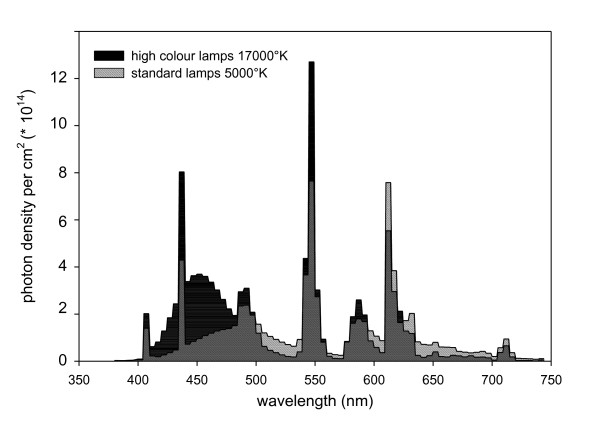
BACKGROUND: Photoreceptor cells containing melanopsin play a role in the phase-shifting effects of short-wavelength light. In a previous study, we compared the standard light treatment (SLT) of SAD with treatment using short-wavelength blue-enriched white light (BLT). Both treatments used the same illuminance (10,000 lux) and were equally highly effective. It is still possible, however, that neither the newly-discovered photoreceptor cells, nor the biological clock play a major role in the therapeutic effects of light on SAD. Alternatively, these effects may at least be partly mediated by these receptor cells, which may have become saturated as a result of the high illuminances used in the therapy. This randomized controlled study compares the effects of low-intensity BLT to those of high-intensity SLT. METHOD: In a 22-day design, 22 patients suffering from a major depression with a seasonal pattern (SAD) were given light treatment (10,000 lux) for two weeks on workdays. Subjects were randomly assigned to either of the two conditions, with gender and age evenly distributed over the groups. Light treatment either consisted of 30 minutes SLT (5000 °K) with the EnergyLight® (Philips, Consumer Lifestyle) with a vertical illuminance of 10,000 lux at eye position or BLT (17,000 °K) with a vertical illuminance of 750 lux using a prototype of the EnergyLight® which emitted a higher proportion of short-wavelengths. All participants completed questionnaires concerning mood, activation and sleep quality on a daily basis. Mood and energy levels were also assessed on a weekly basis by means of the SIGH-SAD and other assessment tools. RESULTS: On day 22, SIGH-SAD ratings were significantly lower than on day 1 (SLT 65.2% and BLT 76.4%). On the basis of all assessments no statistically significant differences were found between the two conditions. CONCLUSION: With sample size being small, conclusions can only be preliminary. Both treatment conditions were found to be highly effective. The therapeutic effects of low-intensity blue-enriched light were comparable to those of the standard light treatment. Saturation effects may play a role, even with a light intensity of 750 lux. The therapeutic effects of blue-enriched white light in the treatment of SAD at illuminances as low as 750 lux help bring light treatment for SAD within reach of standard workplace and educational lighting systems.
Overview
CoChat Summary
TL;DR
In 22 patients with seasonal affective disorder, two weeks of low-intensity blue-enriched white light (750 lux, 17,000°K) and standard bright light (10,000 lux, 5,000°K) both substantially reduced depressive symptoms, with no statistically significant differences between conditions. The authors conclude the treatments were equally effective but preliminary because of the small sample.
Key findings
- On day 22, SIGH-SAD ratings were significantly lower than on day 1 in both groups: SLT 65.2% response and BLT 76.4% response, with effect sizes d = 2.54 and 3.53, respectively.
- No statistically significant between-condition differences were found across weekly assessments: for SIGH-SAD, main effect “time” F(3,18) = 30.2, p < 0.001; main effect “condition” F(1,20) = 0.012, ns; interaction “time*condition” F(3,60) = 0.95, ns. Similar patterns were reported for HRSD, ATYP, BDI-II, and SFQ.
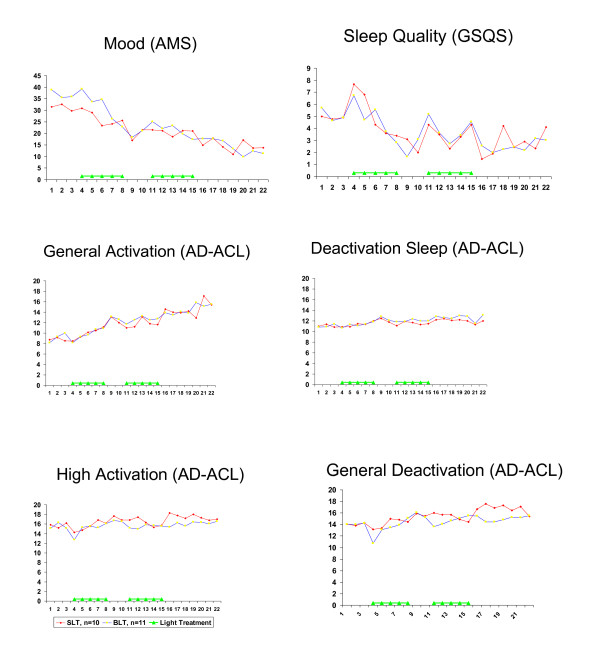
- Daily self-ratings also showed significant time effects in all models but no significant time*condition interactions; for mood (AMS), time estimate = -0.946, p = .000, condition p = .283, time*condition p = .152.
- Participants rated blue-enriched light as less comfortable than standard bright light: F(1,20) = 9.61, p = 0.006.
Methods
- Randomized controlled study in winter 2008–2009 with 22 SAD patients from the University Medical Center Groningen outpatient clinic; 23 were included and 1 dropped out after concussion. SLT group: 3 men and 8 women, mean age 39.9 ± 12.7 years; BLT group: 2 men and 9 women, mean age 41.7 ± 13.1 years.
- Over a 22-day protocol, patients received 2 weeks of light treatment on 10 workdays for 30 minutes between 7:45 and 8:45 a.m.: SLT at 10,000 lux, 5000°K with EnergyLight, or BLT at 750 lux, 17,000°K with a prototype EnergyLight. Weekly assessments used SIGH-SAD, BDI-II-NL, and SFQ at days 1, 8, 15, and 22; daily assessments used AMS, GSQS, and AD-ACL.
- Baseline differences were tested with t-tests and chi-square tests; effect sizes were calculated; weekly outcomes were compared with repeated measures ANOVA for completers (n = 11 vs. 11); daily outcomes used linear mixed models with all 22 subjects, including time, condition, time*condition, and baseline score as a covariate.
Limitations
- The paper states the sample size is very small, so results can only be preliminary.
- The study had no placebo condition, so the similar responses could be interpreted as placebo effects only; the authors note this cannot be ruled out, though response rates of 65–76% were relatively high compared with placebo responses of 21–41% in prior studies and 36% in their earlier extraocular light study.
- Evident from the text: the trial was small, single-clinic, mostly female, and had no direct comparison of standard light at 750 lux versus 10,000 lux; follow-up ended at day 22, and participants were not told their condition, though SIGH-SAD interviewers were unaware of treatment assignment.
Model-written summary. Check it against the paper before relying on it.
Integrity signals
Registry
Cites
Statistics
Figures
Verification
Claims the paper makes
9 Valid · 1 Not valid · 9 Not checked · 22 Own results and interpretations
The sources with a verdict support this claim; the rest weren’t checked yet, have no full text we could read, or their verdicts aren’t rated yet.
In the paper
“The few studies testing light therapy in winter depressives using some kind of placebo condition (for example a deactivated negative-ion generator) revealed placebo effects that ranged from 21% to 41% [38-40].”
§ Low-intensity blue-enriched white light (750 lux) and standard bright light (10 000 lux) are equally effective in treating SAD. A randomized controlled study > Discussion
What the sources say
- Not checked — no full text of the sourcecites [38] Levitt AJ Wesson VA Joffe RT Maunder RG King EF A controlled comparison of light box and head-mounted units in the treatment of seasonal depression J Clin Psychiatry 1996 57 105 110 8617693
- Not checked — no full text of the sourcecites [39] Eastman CI Young MA Fogg LF Liu L Meaden PM Bright light treatment of winter depression. A placebo-controlled trial Arch Gen Psychiatry 1998 55 883 889 10.1001/archpsyc.55.10.883 9783558 source
- Supportedcites [40] Desan PH Weinstein AJ Michalak EE Tam EM Meesters Y Ruiter MJ Horn E Telner J Iskandar H Boivin DB Lam RW A controlled trial of the Litebook light-emitting diode (LED) light therapy device for treatment of Seasonal Affective Disorder (SAD) BMC Psychiatry 2007 7 38 10.1186/1471-244X-7-38 17683643 PMC1971065 source
The Background and Discussion describe this as a placebo-controlled light-therapy trial for winter depression using an inactive negative-ion generator. The Results report that the control group’s final symptom score was 60.4% of its initial score in the intent-to-treat analysis—an improvement of about 40%, within the cited range. (LLM, conf=0.85)
plain- Asserted: passes — The authors put it forward as true.
- Checkable: passes — It can be checked against evidence.
- Load-bearing: passes — The paper’s conclusions depend on it.
- Based: passes — The paper gives a reason why it holds.
The sources with a verdict support this claim; the rest weren’t checked yet, have no full text we could read, or their verdicts aren’t rated yet.
In the paper
“Blue light plays a role in the working mechanism of the biological clock, but the role of the biological clock itself in the aetiology of SAD has not been fully established yet [35-37].”
§ Low-intensity blue-enriched white light (750 lux) and standard bright light (10 000 lux) are equally effective in treating SAD. A randomized controlled study > Discussion
What the sources say
- Not checked — no full text of the sourcecites [35] Meesters Y Jansen JHC Lambers PA Bouhuys AL Beersma DGM Van den Hoofdakker RH Morning and evening light treatment of seasonal affective disorder: response, relapse, and prediction J Affect Disorders 28 165 177 10.1016/0165-0327(93)90102-P 8408979 source
- Not checked — no full text of the sourcecites [36] Wirz-Justice A Graw P Kraüchi K Gisin B Jochum A Arendt J Fisch HU Buddeberg C Poldinger W Light therapy in seasonal affective disorder is independent of time of day or circadian phase Arch Gen Psych 1993 50 929 937 8250678 source
- Supportedcites [37] Koorengevel KM Beersma DGM Den Boer JA Van den Hoofdakker RH Mood regulation in seasonal affective disorder patients and healthy controls studied in forced desynchrony Psych Res 2003 117 57 74 10.1016/S0165-1781(02)00305-0 12581821 source
The Discussion reports no evidence of an abnormal circadian-pacemaker influence in the SAD patients studied, but cautions that the sample was small and calls for replication. The Introduction also describes competing circadian explanations, supporting the claim that the biological clock’s role in SAD remains unsettled. (LLM, conf=0.91)
plain- Asserted: passes — The authors put it forward as true.
- Checkable: passes — It can be checked against evidence.
- Load-bearing: unclear — It is unclear whether the paper’s conclusions depend on it.
- Based: passes — The paper gives a reason why it holds.
The cited sources support only part of this claim — read each source’s verdict below.
In the paper
“Studies by Smith et al. [32,33], have demonstrated that, in a similar way, frequently used bright-light therapy photon densities (4.2 vs. 4.9 10E15 photons/cm2/s), blue-enriched white light (17 000 °K) does not outperform standard white light (4100 °K) in phase-advancing or phase-delaying effects.”
§ Low-intensity blue-enriched white light (750 lux) and standard bright light (10 000 lux) are equally effective in treating SAD. A randomized controlled study > Discussion
What the sources say
- Partly supportedcites [32] Smith MR Eastman CI Phase delaying the human circadian clock with blue-enriched polychromatic light Chronobiology International 2009 26 709 725 10.1080/07420520902927742 19444751 PMC2828683 sourceExperimental — accuracy not yet measured
The Abstract reports no significant difference between phase delays under 17,000 K blue-enriched and 4,100 K white light, and says a previous study found no difference in phase advances. However, the Methods (Bright-Light Treatment; page unavailable) state that both conditions in this study delivered 4.2 × 10¹⁵ photons/cm²/s; this paper does not establish the cited 4.9 × 10¹⁵ figure. (LLM, conf=0.86)
- Partly supportedcites [33] Smith MR Revell VL Eastman CI Phase advancing the human circadian clock with blue-enriched polychromatic light Sleep Medicine 2009 10 287 294 10.1016/j.sleep.2008.05.005 18805055 PMC2723863 sourceExperimental — accuracy not yet measured
The Methods (Light Treatment; page unavailable) report the stated color temperatures and photon densities, and the Discussion says blue-enriched light did not produce larger phase advances than standard white light. This paper used a phase-advancing protocol, however, and does not establish the claimed comparison for phase delays. Its Discussion mentions a different phase-delay study but not a delay comparison of these two lights. (LLM, conf=0.88)
boosted- Asserted: passes — The authors put it forward as true.
- Checkable: passes — It can be checked against evidence.
- Load-bearing: passes — The paper’s conclusions depend on it.
- Based: passes — The paper gives a reason why it holds.
- Partly supported
Every source the paper cites for this claim was checked and supports it.
In the paper
“It has been shown that sleep quality and alertness improved when workers spent their day in an office with blue-enriched white light with an intensity of 310.35 lux in the daytime instead of in the standard white (4000 °K) office lighting conditions with a mean intensity of 421.07 lux [29].”
§ Low-intensity blue-enriched white light (750 lux) and standard bright light (10 000 lux) are equally effective in treating SAD. A randomized controlled study > Discussion
What the sources say
- Supportedcites [29] Viola AU James LM Schlangen LJM Dijk DJ Blue-enriched white light in the workplace improves self-reported alertness, performance and sleep quality Scand J Work Environ Health 2008 34 297 306 18815716 source
The Abstract reports improved subjective alertness and sleep quality under blue-enriched white light compared with 4000 K white light. The Lighting section gives mean work-surface illuminances of 310.35 lx and 421.07 lx, respectively. The paper reports these as self-reported outcomes. (LLM, conf=0.94)
plainstates a cause- Asserted: passes — The authors put it forward as true.
- Checkable: passes — It can be checked against evidence.
- Load-bearing: unclear — It is unclear whether the paper’s conclusions depend on it.
- Based: passes — The paper gives a reason why it holds.
- Supported
A result the paper reports from its own data — it cites no other source for it, so there is none to check. The quote shows it is in the paper.
In the paper
“As can be seen from Table 2, in all models baseline severity was related to outcome, with higher baseline scores predicting higher overall follow-up scores.”
§ Low-intensity blue-enriched white light (750 lux) and standard bright light (10 000 lux) are equally effective in treating SAD. A randomized controlled study > Results > Impact of baseline severity on outcome
plainstates an association- Asserted: passes — The authors put it forward as true.
- Checkable: passes — It can be checked against evidence.
- Load-bearing: unclear — It is unclear whether the paper’s conclusions depend on it.
- Based: passes — The paper gives a reason why it holds.
10 more claims
Create a free account to see all 41 claims and to verify the 4 references still open.
- It may state two separate claims as one. 12
- Probably not a substantial claim. 17
- The quote only partly states this claim. 1
Claims other papers make about this one
Each is checked against this paper’s own text: does it say what the citing paper says it does?
The cited source says what the claim attributes to it.
In the citing paper
“Fourteen articles[25–36,38,39] reported the effects of various visible light interventions on SIGH-SAD of patients with SAD.”
From Effectiveness of visible light for seasonal affective disorder: A systematic review and network meta-analysis (2025) · cites this paper as [31]
The cited source says what the claim attributes to it.
In the citing paper
“Thirteen articles[23,28–38,40] reported the effects of different visible light interventions on HDRS of patients with SAD”
From Effectiveness of visible light for seasonal affective disorder: A systematic review and network meta-analysis (2025) · cites this paper as [31]
Statistics recomputed
Every reported test result, recomputed from its test statistic and degrees of freedom. A result shows as not adding up only once an independent check has confirmed it.
- ConsistentF(3, 18) = 30.2reported p < .001 · recomputed p < .001
“F(3,18) = 30.2, p < .001”
- ConsistentF(1, 20) = 0.012reported n.s. · recomputed p = .914
“F(1,20) = 0.012, ns”
- ConsistentF(3, 60) = 0.95reported n.s. · recomputed p = .422
“F(3,60) = 0.95, ns”
- ConsistentF(3, 18) = 28.2reported p < .001 · recomputed p < .001
“F(3,18) = 28.2, p < .001”
- ConsistentF(1, 20) = 0reported n.s. · recomputed p = 1.000
“F(1,20) = 0.00, ns”
11 more recomputed tests
Create a free account to see every test the Stats check recomputed.
Self-check
Percentages, sums and reported differences re-computed from the paper’s own numbers.
Each contradiction between two passages listed here was confirmed by an independent check.
Rated minor: it would not touch a result — a value no result rests on, a p-value that stays on the same side of the significance level, or a conflict that is clerical, resolved elsewhere in the paper, or outside its own findings.
In the paper
§ Low-intensity blue-enriched white light (750 lux) and standard bright light (10 000 lux) are equally effective in treating SAD. A randomized controlled study > Abstract > Method
“22 patients suffering from a major depression with a seasonal pattern (SAD) were given light treatment (10 000 lux) for two weeks on workdays.”
§ Low-intensity blue-enriched white light (750 lux) and standard bright light (10 000 lux) are equally effective in treating SAD. A randomized controlled study > Abstract > Method
“Light treatment either consisted of 30 minutes SLT (5000°K) with the EnergyLight® (Philips, Consumer Lifestyle) with a vertical illuminance of 10 000 lux at eye position or BLT (17 000°K) with a vertical illuminance of 750 lux”
Rated minor: it would not touch a result — a value no result rests on, a p-value that stays on the same side of the significance level, or a conflict that is clerical, resolved elsewhere in the paper, or outside its own findings.
In the paper
§ Low-intensity blue-enriched white light (750 lux) and standard bright light (10 000 lux) are equally effective in treating SAD. A randomized controlled study > Discussion
“The response rates in the current study between 65% and 76% for remission are relatively high compared to the placebo responses from the placebo-controlled studies”
§ Low-intensity blue-enriched white light (750 lux) and standard bright light (10 000 lux) are equally effective in treating SAD. A randomized controlled study > Results > Weekly assessments
“| SIGH-SAD | SLT | 11 | 25.6 (6.3) | 18.1 (8.0) | 10.9 (4.4) | 8.9 (6.8) | 2.54 | 65.2 | 8 | | | BLT | 11 | 25.4 (6.9) | 19 (6.0) | 14 (10.1) | 6 (4.0) | 3.53 | 76.4 | 11 |”
Citations
Cites
Diagnostic and Statistical Manual of Mental Disorders
Williams, J. B. W., & First, M. (2013) · Encyclopedia of Social Work · doi:10.1093/acrefore/9780199975839.013.104 · Cited by 109,519
Diagnostic and Statistical Manual of Mental Disorders
(2012) · SpringerReference · doi:10.1007/springerreference_121117 · Cited by 20,570
(1998) · The Journal of Clinical Psychiatry · Cited by 19,139
Journal of Clinical Psychiatry
(2018) · Journal of Clinical Psychiatry · doi:10.5505/kpd · Cited by 13,651
(1998) · PubMed · Cited by 10,216
Beck, A. T., Steer, R. A., & Brown, G. (2011) · PsycTESTS Dataset · doi:10.1037/t00742-000 · Cited by 7,535
The mini international neuropsychiatric interview
Lecrubier, Y., Sheehan, D., Hergueta, T., & Weiller, E. (1998) · European Psychiatry · doi:10.1016/s0924-9338(99)80239-9 · Cited by 5,872
Phototransduction by retinal ganglion cells that set the circadian clock
Berson, D. M., Dunn, F. A., & Takao, M. (2002) · Science · doi:10.1126/science.1067262 · Cited by 3,629 · cited 2×
“This new photoreceptor plays a major role in regulating the biological clock [5,7] and is also involved in pupillary constriction [8].”
BackgroundMendelson, G. (1995) · Australian & New Zealand Journal of Psychiatry · doi:10.3109/00048679509064964 · Cited by 2,858
Hattar, S., Liao, H.-W., Takao, M., Berson, D. M., & Yau, K.-W. (2002) · Science · doi:10.1126/science.1069609 · Cited by 2,734 · cited 1×
“A recent scientific development has been the discovery of a novel photoreceptor, melanopsin, within the basal ganglia of the retina [ 4-6 ].”
Background
Research works printed but not linked: 6
- CIE Central Bureau,Vienna, Austria Photobiological Safety of Lamps and Lamp Systems, CIE Standard CIE S 009/E 2002 UDC: 612.014.481
- Williams JBW Link MJ Rosenthal NE Amira L Terman M Structured Interview Guide for the Hamilton Depression Rating Scale- Seasonal affective disorder version 1994 New York: New York State Psychiatric Institute
- Alberts M Smets EMA Vercoulen JHMM Garssen B Bleijenberg G Verkorte Vermoeidheids Vragenlijst: een praktisch hulpmiddel bij het scoren van vermoeidheid Nederlands Tijdschrift voor de Geneeskunde 1997 141 1526 1530 9543741
- Von Zerssen D Die Befindlichkeitsskala. Manual 1976 Weinheim: Beltz Test Verlag
- Mulder-Hajonides v.d. Meulen WREH Wijnberg JR Hollander JJ De Diana IPF Van den Hoofdakker RH Measurement of subjective sleep quality Fifth European Sleep Congress of the European Sleep Research Society, September, 2-5 1980 Amsterdam, The Netherlands 98 [abstract]
- Cohen J Statistical power analysis for the behavioural sciences 1988 Hillsdale, New Jersey: Lawrence Erlbaum
Cited by
Malhi, G. S., Bassett, D., Boyce, P., Bryant, R., Fitzgerald, P. B., Fritz, K., Hopwood, M., Lyndon, B., Mulder, R., Murray, G., et al. (2015) · Australian & New Zealand Journal of Psychiatry · doi:10.1177/0004867415617657 · Cited by 842
“There is some evidence that light treatment can be effective at lower intensity if the source emits blue-enriched light (Meesters et al., 2011).”
BackgroundFigueiro, M., Plitnick, B., Lok, A., Jones, G., Higgins, P., Hornick, T., & Rea, M. (2014) · Clinical Interventions in Aging · doi:10.2147/cia.s68557 · Cited by 211
Circadian rhythms and depression: Human psychopathology and animal models
Kronfeld-Schor, N., & Einat, H. (2012) · Neuropharmacology · doi:10.1016/j.neuropharm.2011.08.020 · Cited by 166
Human phase response curve to a single 6.5 h pulse of short‐wavelength light
Rüger, M., St Hilaire, M. A., Brainard, G. C., Khalsa, S. S., Kronauer, R. E., Czeisler, C. A., & Lockley, S. W. (2013) · The Journal of Physiology · doi:10.1113/jphysiol.2012.239046 · Cited by 161
“The Journal of Physiology C© 2012 The Physiological Society white light typically employed (2500–10,000 lux), at lower irradiances and with relatively short exposures (45 min) (Glickman et al. 2006; Anderson et al. 2009; Strong et al. 2009; Meesters et al. 2011).”
BackgroundBiological rhythms and chronotherapeutics in depression
Geoffroy, P. A., & Palagini, L. (2021) · Progress in Neuro-Psychopharmacology and Biological Psychiatry · doi:10.1016/j.pnpbp.2020.110158 · Cited by 127
The post illumination pupil response is reduced in seasonal affective disorder
Roecklein, K., Wong, P., Ernecoff, N., Miller, M., Donofry, S., Kamarck, M., Wood-Vasey, W. M., & Franzen, P. (2013) · Psychiatry Research · doi:10.1016/j.psychres.2013.05.023 · Cited by 110
Bright light as a personalized precision treatment of mood disorders
Maruani, J., & Geoffroy, P. A. (2019) · Frontiers in Psychiatry · doi:10.3389/fpsyt.2019.00085 · Cited by 112
Geoffroy, P. A., Schroder, C. M., Reynaud, E., & Bourgin, P. (2019) · Sleep Medicine Reviews · doi:10.1016/j.smrv.2019.101213 · Cited by 100
Melatonin has multiorgan effects
Opie, L. H., & Lecour, S. (2016) · European Heart Journal - Cardiovascular Pharmacotherapy · doi:10.1093/ehjcvp/pvv037 · Cited by 95
Melanopsin, photosensitive ganglion cells, and seasonal affective disorder
Roecklein, K. A., Wong, P. M., Miller, M. A., Donofry, S. D., Kamarck, M. L., & Brainard, G. C. (2013) · Neuroscience & Biobehavioral Reviews · doi:10.1016/j.neubiorev.2012.12.009 · Cited by 92
“…lights at significantly lower light irradiances, yield similar rates of improvement in SAD as traditional bright white light therapy units (Anderson et al., 2009; Glickman et al., 2006; Meesters et al., 2011; Strong et al., 2009), and are able to phase advance rhythms (Smith et al., 2009).”
BackgroundMünch, M. Y., & Kawasaki, A. (2012) · Current Opinion in Neurology · doi:10.1097/wco.0b013e32835c5e78 · Cited by 96
Chronobiological Therapy for Mood Disorders
Dallaspezia, S., Suzuki, M., & Benedetti, F. (2015) · Current Psychiatry Reports · doi:10.1007/s11920-015-0633-6 · Cited by 76
Seasonal affective disorder, winter type: current insights and treatment options
Meesters, Y., & Gordijn, M. C. M. (2016) · Psychology Research and Behavior Management · doi:10.2147/prbm.s114906 · Cited by 66
“light compared to bright white light, with no differences in treatment outcome.(39)”
Self-citationTherapeutic lighting design for the elderly: a review
Shikder, S., Mourshed, M. M., & Price, A. D. F. (2011) · Perspectives in Public Health · doi:10.1177/1757913911422288 · Cited by 81
Gordijn, M. C. M., 't Mannetje, D., & Meesters, Y. (2012) · Journal of Affective Disorders · doi:10.1016/j.jad.2011.08.016 · Cited by 63
“…it is difficult to estimate the amount of light reaching the retina under normal working conditions, the intensities in the blue spectrum seem to be pretty similar to the intensities used in Anderson et al. (2009) and Meesters et al. (2011), and thus much lower then used in the present study.”
BackgroundResultSelf-citationLight therapy in insomnia disorder: A systematic review and meta‐analysis
Chambe, J., Reynaud, E., Maruani, J., Fraih, E., Geoffroy, P. A., & Bourgin, P. (2023) · Journal of Sleep Research · doi:10.1111/jsr.13895 · Cited by 61
“K) (Meesters et al., 2011 White or blue-enriched Note : green: solid scientific basis. orange: hypothesis with some scientific basis, need to be confirmed. red: hypothesis, need some proof of concept.”
BackgroundInfluentialMcGlashan, E. M., Nandam, L. S., Vidafar, P., Mansfield, D. R., Rajaratnam, S. M. W., & Cain, S. W. (2018) · Psychopharmacology · doi:10.1007/s00213-018-5019-0 · Cited by 61
Brainard, G. C., Barger, L. K., Soler, R. R., & Hanifin, J. P. (2016) · Current Opinion in Pulmonary Medicine · doi:10.1097/mcp.0000000000000329 · Cited by 63
Bartman, C., Oyama, Y., Brodsky, K. S., Khailova, L., Walker, L., Koeppen, M., & Eckle, T. (2017) · PLoS ONE · doi:10.1371/journal.pone.0176243 · Cited by 48
Effects of dynamic ambient lighting on female permanent morning shift workers
Canazei, M., Dehoff, P., Staggl, S., & Pohl, W. (2013) · Lighting Research & Technology · doi:10.1177/1477153513475914 · Cited by 54
Kim, S. J., Lee, S. H., Suh, I. B., Jang, J.-W., Jhoo, J. H., & Lee, J. H. (2021) · Scientific Reports · doi:10.1038/s41598-021-89521-9 · Cited by 43
Menculini, G., Verdolini, N., Murru, A., Pacchiarotti, I., Volpe, U., Cervino, A., Steardo, L., Moretti, P., Vieta, E., & Tortorella, A. (2018) · Journal of Affective Disorders · doi:10.1016/j.jad.2018.08.071 · Cited by 44
Depressive disorders: Processes leading to neurogeneration and potential novel treatments
Brown, G. M., McIntyre, R. S., Rosenblat, J. D., & Hardeland, R. (2017) · Progress in Neuro-Psychopharmacology and Biological Psychiatry · doi:10.1016/j.pnpbp.2017.04.023 · Cited by 46
“It has been used especially for the treatment of seasonal affective disorder(Danilenko and Ivanova, 2015; Gordijn et al., 2012; Meesters et al., 2016, 2011; Oldham and Ciraulo, 2014; Pail et al., 2011; Prasko, 2008; Rastad et al., 2011) , but also in bipolar disorder(Pail et al., 2011; Prasko,…”
MethodYang, J.-W., Choi, W., Ko, Y., Joe, S.-H., Han, C., & Kim, Y. (2012) · General Hospital Psychiatry · doi:10.1016/j.genhosppsych.2012.05.003 · Cited by 40
Baxendale, S., O'Sullivan, J., & Heaney, D. C. (2013) · The British Journal of Psychiatry · doi:10.1192/bjp.bp.112.122119 · Cited by 43
Do, A., Li, V. W., Huang, S., Michalak, E. E., Tam, E. M., Chakrabarty, T., Yatham, L. N., & Lam, R. W. (2022) · The Canadian Journal of Psychiatry · doi:10.1177/07067437221097903 · Cited by 37
Decreased sensitivity of the circadian system to light in current, but not remitted depression
McGlashan, E. M., Coleman, M. Y., Vidafar, P., Phillips, A. J. K., & Cain, S. W. (2019) · Journal of Affective Disorders · doi:10.1016/j.jad.2019.05.076 · Cited by 33
Faulkner, S., Dijk, D., Drake, R., & Bee, P. (2020) · Sleep Health · doi:10.1016/j.sleh.2020.01.014 · Cited by 37
Light therapy: Methodological issues from an engineering perspective
van Hoof, J., Westerlaken, A. C., Aarts, M. M., Wouters, E., Schoutens, A. M. C., Sinoo, M. M., & Aries, M. M. (2012) · Technology and Health Care · doi:10.3233/thc-2011-0650 · Cited by 36
“[20], which used 17,000 K lighting in offices and for people suffering from a major depression with a seasonal pattern, neither ambient temperature nor colour temperature of the emitted light were measured and reported.”
Background“Shedding Light on Light”: A Review on the Effects on Mental Health of Exposure to Optical Radiation
Bertani, D. E., Novellis, A. M. P. D., Farina, R., Latella, E., Meloni, M., Scala, C., Valeo, L., Galeazzi, G. M., & Ferrari, S. (2021) · International Journal of Environmental Research and Public Health · doi:10.3390/ijerph18041670 · Cited by 39
Meesters, Y., Winthorst, W. H., Duijzer, W. B., & Hommes, V. (2016) · BMC Psychiatry · doi:10.1186/s12888-016-0729-5 · Cited by 37
Self-citationThe duration of light treatment and therapy outcome in seasonal affective disorder
Knapen, S. E., Werken, M. V. D., Gordijn, M. C. M., & Meesters, Y. (2014) · Journal of Affective Disorders · doi:10.1016/j.jad.2014.05.034 · Cited by 31
“The second study compared low‐intensity blue‐enriched light to standard light treatment over a period of two weeks (Meesters et al., 2011).”
BackgroundSelf-citationFrom eminence-based practice to evidence-based practice: a paradigm shift.
Bhandari, M., Zlowodzki, M. P., & Cole, P. A. (2004) · PubMed · Cited by 42
Meesters, Y., Duijzer, W. B., & Hommes, V. (2018) · Journal of Affective Disorders · doi:10.1016/j.jad.2018.01.024 · Cited by 30
Self-citationBisdounis, L., Saunders, K. E. A., Farley, H. J., Lee, C. K., McGowan, N. M., Espie, C. A., & Kyle, S. D. (2022) · Neuroscience & Biobehavioral Reviews · doi:10.1016/j.neubiorev.2021.12.002 · Cited by 27
Traits related to bipolar disorder are associated with an increased post-illumination pupil response
Bullock, B., McGlashan, E. M., Burns, A. C., Lu, S., & Cain, S. W. (2019) · Psychiatry Research · doi:10.1016/j.psychres.2019.05.025 · Cited by 33
Adamsson, M., Laike, T., & Morita, T. (2018) · Journal of Circadian Rhythms · doi:10.5334/jcr.153 · Cited by 35
Circadian entrainment and its role in depression: a mechanistic review
Lall, G. S., Atkinson, L., Corlett, S. A., Broadbridge, P., & Bonsall, D. R. (2012) · Journal of Neural Transmission · doi:10.1007/s00702-012-0858-z · Cited by 37
“However, more recently lower intensity narrow bandwidth blue light, aimed at the spectral sensitivity of melanopsin, was shown to be as effective as white light in its antidepressant responses, suggesting therapy directed towards photoreceptor specificity to be beneficial (Meesters et al. 2011).”
BackgroundRailway suicide attempts are associated with amount of sunlight in recent days
Kadotani, H., Nagai, Y., & Sozu, T. (2013) · Journal of Affective Disorders · doi:10.1016/j.jad.2013.08.040 · Cited by 26
“Blue light presented at 750 lux for 30 min has been reported to have similar effects on SAD as bright white light at 10,000 lux for the same duration (Meesters et al., 2011).”
BackgroundThe relation between chronotype and treatment outcome with light therapy on a fixed time schedule
Knapen, S. E., Gordijn, M. C. M., & Meesters, Y. (2016) · Journal of Affective Disorders · doi:10.1016/j.jad.2016.05.009 · Cited by 29
“Low intensity blue enriched light and short durations of blue enriched light exposure have been found to be as successful in treating SAD as normal white polychromatic light suggesting the possible involvement of melanopsin cells (9,11).”
BackgroundSelf-citationPrecision Light for the Treatment of Psychiatric Disorders
Kaladchibachi, S., & Fernandez, F. (2018) · Neural Plasticity · doi:10.1155/2018/5868570 · Cited by 27
Bais, B., Kamperman, A. M., Bijma, H. H., Hoogendijk, W. J., Souman, J. L., Knijff, E., & Lambregtse-van den Berg, M. P. (2020) · BMJ Open · doi:10.1136/bmjopen-2020-038030 · Cited by 24
Bright light therapy as an add on treatment for medically intractable epilepsy
Baxendale, S., O'Sullivan, J., & Heaney, D. C. (2012) · Epilepsy & Behavior · doi:10.1016/j.yebeh.2012.04.123 · Cited by 25
Liu, D.-Q., Li, J., Wu, J., Dai, J., Chen, X., Huang, Y., Zhang, S., Tian, B., & Mei, W. (2020) · Frontiers in Neural Circuits · doi:10.3389/fncir.2020.00055 · Cited by 23
“It can treat the seasonal affective disorder (SAD; Glickman et al., 2006; Meesters et al., 2011), improve alertness, performance, and cognition (Viola et al.”
BackgroundGuido, G., Piper, L., Prete, M. I., Mileti, A., & Trisolini, C. M. (2017) · Psychology and Marketing · doi:10.1002/mar.20984 · Cited by 31
Are short (blue) wavelengths necessary for light treatment of seasonal affective disorder?
Anderson, J. L., St Hilaire, M. A., Auger, R. R., Glod, C. A., Crow, S. J., Rivera, A. N., Fuentes Salgado, S. M., Pullen, S. J., Kaufman, T. K., Selby, A. J., et al. (2016) · Chronobiology International · doi:10.1080/07420528.2016.1207660 · Cited by 22
“Earlier speculation that the short-wavelengthsensitive retinohypothalamic pathway might play a unique role clinically (Glickman et al., 2006) has not been borne out by preferential antidepressant potency (Anderson et al., 2009; Meesters et al., 2011; Gordijn et al., 2012).”
BackgroundUsing Flickering Light to Enhance Nonimage-Forming Visual Stimulation in Humans
Vartanian, G. V., Zhao, X., & Wong, K. Y. (2015) · Investigative Ophthalmology & Visual Science · doi:10.1167/iovs.15-16468 · Cited by 27
Red white and blue – bright light effects in a diurnal rodent model for seasonal affective disorder
Bilu, C., Einat, H., Tal-Krivisky, K., Mizrahi, J., Vishnevskia‐Dai, V., Agam, G., & Kronfeld‐Schor, N. (2019) · Chronobiology International · doi:10.1080/07420528.2019.1595638 · Cited by 23
“The advantage of blue light resides in enabling the use of lower light illuminance while still keeping the effectiveness of the treatment (Anderson et al. 2009; Glickman et al. 2006; Meesters et al. 2011, 2018).”
BackgroundResultInfluentialEffects of blue light and caffeine on mood
Ekström, J., & Beaven, C. M. (2014) · Psychopharmacology · doi:10.1007/s00213-014-3503-8 · Cited by 27
“It is also noteworthy that the positive effects of light on mood have shown to be applicable in clinical psychology and psychiatry, such as in treatment of non-seasonal depression (Golden et al. 2005; Lieverse et al. 2011) and seasonal affective disorder (Glickman et al. 2006; Meesters et al. 2011).”
Schwartz, R. S., & Olds, J. (2015) · Harvard Review of Psychiatry · doi:10.1097/hrp.0000000000000078 · Cited by 21
Jurvelin, H., Takala, T., Nissilä, J., Timonen, M., Rüger, M., Jokelainen, J. J., & Räsänen, P. K. (2014) · BMC Psychiatry · doi:10.1186/s12888-014-0288-6 · Cited by 23
Daily and Seasonal Variation in Light Exposure among the Old Order Amish
Lee, E., Amritwar, A., Hong, L. E., Mohyuddin, I., Brown, T. M., & Postolache, T. T. (2020) · International Journal of Environmental Research and Public Health · doi:10.3390/ijerph17124460 · Cited by 19
Zambrowski, O., Tavernier, E., Souied, E. H., Desmidt, T., Gouge, A. L., Bellicaud, D., Cochener, B., Limousin, N., Hommet, C., Autret‐Leca, E., et al. (2017) · Aging & Mental Health · doi:10.1080/13607863.2017.1348482 · Cited by 20
Geoffroy, P. A., Abbassi, E. M. B. E., Maruani, J., Etain, B., Lejoyeux, M., Amad, A., Courtet, P., Dubertret, C., Gorwood, P., Vaiva, G., et al. (2018) · Psychiatry Investigation · doi:10.30773/pi.2018.09.27.1 · Cited by 16
Premenstrual mood and empathy after a single light therapy session
Rot, M. A. H., Miloserdov, K., Buijze, A. L. F., Meesters, Y., & Gordijn, M. C. M. (2017) · Psychiatry Research · doi:10.1016/j.psychres.2017.06.052 · Cited by 13
“Light therapy, which involves controlled exposure to bright light for at least 30 min, is the first choice for SAD treatment (Gordijn et al., 2012; Meesters et al., 2011; Rosenthal et al., 1984b; Winkler et al., 2006).”
Self-citationYang, C., Yang, P., Liang, S., & Wang, T. (2019) · Lighting Research & Technology · doi:10.1177/1477153519884097 · Cited by 12
Seasonal affective disorder: Is there light at the end of the tunnel?
Sanassi, L. A. (2014) · JAAPA · doi:10.1097/01.jaa.0000442698.03223.f3 · Cited by 17
The physiological role of TRP channels in sleep and circadian rhythm
Woodard, G. E., Rosado, J. A., & He, L. (2024) · Journal of Cellular and Molecular Medicine · doi:10.1111/jcmm.18274 · Cited by 11
Meng, Q., Lian, Y., Jiang, J., Wang, W., Hou, X., Pan, Y., Chu, H., Shang, L., Wei, X., & Hao, W. (2018) · Photochemical & Photobiological Sciences · doi:10.1039/c7pp00271h · Cited by 11
Daytime light exposure : effects and preferences
Smolders, K. K. (2013) · TU/e Research Portal · doi:10.6100/ir762825 · Cited by 15
Wan, Y., Ding, J., Fan, M., & Huang, H. (2025) · Medicine · doi:10.1097/md.0000000000043107 · Cited by 7
35 years of light treatment for mental disorders in the Netherlands
Meesters, Y., van Tuinen, E. J. D., & Gordijn, M. C. M. (2023) · Annals of Medicine · doi:10.1080/07853890.2023.2269574 · Cited by 10
“Here no differences in treatment outcome were found either [25].”
BackgroundSelf-citationSustainable Architecture and Human Health: A Case for Effective Circadian Daylighting Metrics
Mukherjee, B., & Boubekri, M. (2025) · Buildings · doi:10.3390/buildings15030315 · Cited by 14
Light Therapy for QoL/Depression in AYA With Cancer: A Randomized Trial
LaRosa, K. N., MacArthur, E., Wang, F., Zhang, H., Pan, H., Brigden, J., Pappo, A. S., Wilson, M. W., & Crabtree, V. M. (2021) · Journal of Pediatric Psychology · doi:10.1093/jpepsy/jsab098 · Cited by 6
How Light Resets Circadian Clocks
Johnsson, A., Helfrich‐Förster, C., & Engelmann, W. (2014) · Springer eBooks · doi:10.1007/978-1-4939-1468-5_18 · Cited by 6
Rossi, M. (2019) · Research for development · doi:10.1007/978-3-030-11087-1_2 · Cited by 4
The effect of light therapy on insomnia: A systematic review and meta-analysis
Wang, Y., Zhao, X., Ren, J., Xue, S., Liu, Y., Zhang, L., Fan, M., Su, C., & Cheng, J. (2024) · Sleep And Breathing · doi:10.1007/s11325-024-03204-z · Cited by 8
“For instance, Meesters et al. proved that low-intensity blue light has the same effect as white light [41].”
Makateb, A., Rashidinia, A., Khosravifard, K., & Dabaghi, P. (2023) · Chronobiology International · doi:10.1080/07420528.2023.2222816 · Cited by 6
Bright light therapy improved sleep disturbances in a patient with dementia with Lewy bodies
Akkaoui, M. A., Paquet, C., & Geoffroy, P. A. (2019) · Psychogeriatrics · doi:10.1111/psyg.12448 · Cited by 4
A guide to what works for depression: An evidence-based review
Morgan, A. J., Reavley, N. J., Jorm, A. F., Bassilios, B., Hopwood, M., Allen, N. B., & Purcell, R. (2019) · Cited by 5
A Breakthrough Treatment for Major Depression
Kripke, D. F. (2015) · The Journal of Clinical Psychiatry · doi:10.4088/jcp.14com09644 · Cited by 5
Silva, E. H. A., Santana, N. N. M., Seixas, N. R. D. M., Bezerra, L. L. F., da Silva, M. M. O., dos Santos, S. F., Cavalcante, J. S., Leocádio-Miguel, M. A., & Engelberth, R. C. G. J. (2023) · PLoS ONE · doi:10.1371/journal.pone.0292342 · Cited by 5
Aarts, M. M., & Rosemann, A. L. P. (2018) · Journal of Affective Disorders · doi:10.1016/j.jad.2018.04.020 · Cited by 5
Lenzi, G., & Bonsanto, F. (2017) · Springer eBooks · doi:10.1007/978-3-319-62731-1_15 · Cited by 4
An insight into light as a chronobiological therapy in affective disorders
Lall, G. S., Walsh, J., Atkinson, L., & Corlett, S. A. (2014) · ChronoPhysiology and Therapy · doi:10.2147/cpt.s56589 · Cited by 3
“However, following the discovery of melanopsin, light stimuli shifted toward the blue visual spectral range may be beneficial in achieving greater potency.(24) In addition to discrete bursts of light, a paradigm simulating the onset of dawn using illumination has also shown promise in the treatment of affective disord…”
BackgroundBlue light from screen and depression – A review
Blazhkova, A., Czaja, M., Rehan, D., Rzym, K., Sitka, H., Solisch, S., Susłow, A., & Szczęsna, E. (2025) · Polish Journal of Public Health · doi:10.12923/2083-4829/2025-0010 · Cited by 3
Effect of bright light therapy on depression in patients with schizophrenia: A pilot study
Guo, C.-S., Phiri, D., Lee, H., Lin, Y., Kwa, J. A. M., & Chung, M. (2025) · Journal of Psychiatric Research · doi:10.1016/j.jpsychires.2025.02.050 · Cited by 4
Introduction to Circadian Rhythm Disorders
Lee, E. K. (2020) · Springer eBooks · doi:10.1007/978-3-030-43803-6_3 · Cited by 4
Lichttherapie: Zum Stand der aktuellen Forschung
Bassa, D., Canazei, M., Hinterhuber, H., & Weiss, E. M. (2013) · Neuropsychiatrie · doi:10.1007/s40211-013-0067-5 · Cited by 5
Supportive design Therapeutic effects of color and light of inpatient spaces
Tamamm, D., Morghany, E. A. E.-M., & Abdelmagid, K. S. S. (2022) · التصميم الدولية · doi:10.21608/idj.2022.135702.1047 · Cited by 4
Szulborski, K. J., Prosniewski, M. D., Anjum, S., Alwreikat, A. M., Aquino, P. R., & Ramsey, D. J. (2022) · Vision · doi:10.3390/vision6020032 · Cited by 1
“Narrow-band blue-light treatment has been suggested to be equally as effective as bright white-light treatment [31,32].”
BackgroundKinoshita, T., Tanigawa, T., Maruyama, K., & Morimoto, K. (2020) · Work · doi:10.3233/wor-203282 · Cited by 1
“Bright light therapy is one of the treatment meth-ods for seasonal affective disorder [6–11].”
Influence of Light Exposure on the Melanopsin Driven Pupil Response and Circadian Rhythm
Abbott, K. S. (2018) · Masters Thesis · Cited by 3
EVEN, C. (2012) · Encyclopédie médico-chirurgicale. Psychiatrie · doi:10.1016/s0246-1072(12)60001-7 · Cited by 3
Bright light therapy for post-stroke sleep disturbances: a systematic review and meta-analysis
Tang, X., Gu, Q., Zhan, Y., Sun, X., Wang, F., Pan, L., & Zhao, H. (2026) · Frontiers in Neurology · doi:10.3389/fneur.2026.1875347
Qi, J., Liu, Q., Chen, M., Jiang, J., Wei, X., Meng, Q., & Hao, W. (2026) · Brain Research Bulletin · doi:10.1016/j.brainresbull.2026.111781 · Cited by 1
Jing, X., Wei, C., Delong, Z., Junxin, Y., Xiwen, F., & Mei, Z. (2026) · Lifespan development and mental health. · doi:10.70322/ldmh.2026.10004
Zhu, S., Zhan, W., Jin, W. Y., Xu, Z., Yang, H., Ming, T., & Li, L. (2024) · Medicine · doi:10.1097/md.0000000000040523
A Systematic Review of Light Therapy on Mental Health on and Beyond Earth
Song, W., Zheng, Z., & Wu, J. (2024) · Psychology and Behavioral Sciences · doi:10.11648/j.pbs.20241303.12 · Cited by 2
Effectiveness of Social Skills Training for children with autism spectrum disorder
Dekker, V. (2021) · University of Groningen research database (University of Groningen / Centre for Information Technology) · doi:10.33612/diss.193918122 · Cited by 3
Self-citationZhu, R., Jia, Z., & Zhou, L. (2021) · Neuroscience Letters · doi:10.1016/j.neulet.2021.136256
DONG, Y., & ZHANG, X. (2019) · Quadrennial Session of the International Commission on Illumination (CIE Session) · doi:10.25039/x46.2019.op33
An Evaluation of Melanopsin Function and Light Exposure in Depressive Disorders
Ojha, G. (2017) · Queensland University of Technology · doi:10.5204/thesis.eprints.107922
“Most studies showing comparable treatment as psychopharmacotherapy in SAD patients used illumination 2500 lux, 5000 lux and 10,000 lux for 2 hrs, 1 hr and 1⁄2 hr respectively (Even et al., 2008; Gallin et al., 1995; Glickman et al., 2006; Haffmans et al., 2008; Kräuchi et al., 1990; Meesters et al., 2011; Naus et al.,…”
BackgroundMethodInfluentialMaximizing Outcome in Light Treatment: Patient Behavior as the Light Treatment Delivery System
Young, M. A. (2016) · Neuropsychobiology · doi:10.1159/000477137
Circadian, neuroendocrine and neurobehavioral effects of polychromatic light in humans.
Hanifin, J. P. (2015) · University of Surrey Open Research repository · Cited by 2
Optimal of LED assembled light source for strawberry
Cui, W., & Yang, L.-N. (2012) · Cross Strait Quad-Regional Radio Science and Wireless Technology Conference (CSQRWC) · doi:10.1109/csqrwc.2012.6294973
Praschak-Rieder, N. (2011) · Springer eBooks · doi:10.1007/978-3-642-19844-1_65
Metadata
- Authors
- Meesters, Y., Dekker, V., Schlangen, L. J., Bos, E. H., & Ruiter, M. J.
- Affiliations
- University Medical Center Groningen (NL)
- Signify (Netherlands) (NL)
- University of Groningen (NL)
- Corresponding author
- Meesters, Ybe
- Venue
- BMC Psychiatry
- Published
- 2011-01-28
- Volume
- 11
- Issue
- 1
- Pages
- 17-17
- ISSN
- 1471-244X (ISSN-L)
- PMC
- PMC3042929
- OpenAlex
- W1980697377
- Cited by
- 98
- References
- 43
- Citations by year
- 2026: 3 · 2025: 4 · 2024: 4 · 2023: 4 · 2022: 3 · 2021: 6 · 2020: 7 · 2019: 11 · 2018: 9 · 2017: 7 · 2016: 7 · 2015: 6 · 2014: 7 · 2013: 6 · 2012: 9
- FWCI
- 3.84
- Type
- journal article
- Language
- en
- Open access
- gold
- doi.org
- Licence
- cc-by
- creativecommons.org/licenses/by/2.0 (tdm)
- Locations
- BMC Psychiatry (publishedVersion, cc-by)
- PubMed Central (publishedVersion, cc-by)
- PubMed (publishedVersion)
- TU/e Research Portal (submittedVersion)
- DOAJ (DOAJ: Directory of Open Access Journals) (submittedVersion)
- University of Groningen research database (University of Groningen / Centre for Information Technology) (submittedVersion, cc-by)
- Topics
- Life Sciences › Neuroscience › Endocrine and Autonomic Systems › Circadian rhythm and melatonin
- Health Sciences › Medicine › Pharmacology (medical) › Treatment of Major Depression
- Life Sciences › Agricultural and Biological Sciences › Plant Science › Light effects on plants
- Keywords
- seasonal affective disorder, phototherapy, low-intensity light, illuminance, photoreceptors, melanopsin, circadian rhythm, mood, sleep quality, energy levels, receptor saturation, short-wavelength light, treatment efficacy comparison
- MeSH terms
- Adult, Ambulatory Care, Circadian Rhythm, Color, Female, Humans, Light, Male, Phototherapy, Sleep, Seasonal Affective Disorder, Treatment Outcome, Photons, Luminescence
About these checks
Registry, retraction, Cites and statistics results are computed, not judged, with one exception: a printed reference that no index lists is read once by a model before it counts as a citation error. Claims are extracted by a model and kept only when their quote appears verbatim in the text; each cited source is then checked, with a model’s help, for whether it says what the claim relies on. Those verdicts can be wrong — read the claim’s quote and the cited source before relying on one.
The claim verdicts this report counts are experimental: their accuracy is not yet measured.
A language model drew the claims from the paper on 2026-10-10, under version 3 of the claim definition (model deepseek-v4.1-flash, prompt extract-v3).
A second model labelled each claim on 2026-10-10 (model jev-1.13-20260917, definition revision gold-guideline-v0.2).
Cited sources are checked with a language model’s help (gpt-6-sol).
Statistics and arithmetic are recomputed, not judged.
Confidence bands are shown only for fields calibrated on our annotated test set. None is calibrated yet, so no band is shown.
What counts as a claim ›How we measure confidence ›How we check this ›
Are you an author, or do you see a problem with this page? Request a review
Data sources
Bibliographic data: Semantic Scholar, OpenAlex, Crossref.
Contains information from the Semantic Scholar Academic Graph Datasets, made available under the ODC Attribution License (ODC-BY 1.0).
Semantic Scholar’s data is described in: Kinney, R., et al. (2023). The Semantic Scholar Open Data Platform. arXiv:2301.10140.
