

The working alliance in a randomized controlled trial comparing online with face-to-face cognitive-behavioral therapy for depression
Open accessThe DOI matches its Crossref record; 47 of the 51 references it cites were found in a registry or an index.
Abstract
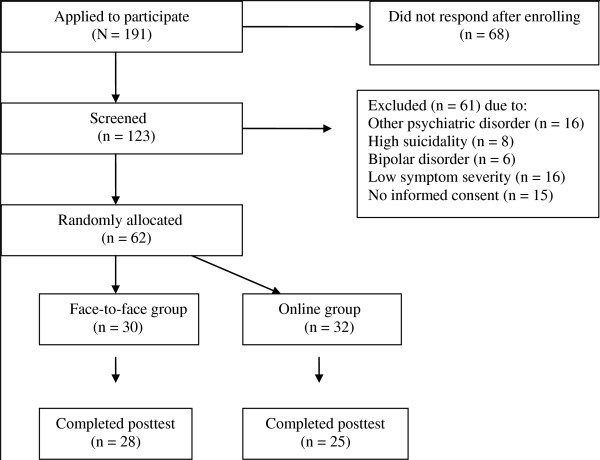
Background: Although numerous efficacy studies in recent years have found internet-based interventions for depression to be effective, there has been scant consideration of therapeutic process factors in the online setting. In face-to face therapy, the quality of the working alliance explains variance in treatment outcome. However, little is yet known about the impact of the working alliance in internet-based interventions, particularly as compared with face-to-face therapy. Methods: This study explored the working alliance between client and therapist in the middle and at the end of a cognitive-behavioral intervention for depression. The participants were randomized to an internet-based treatment group (n = 25) or face-to-face group (n = 28). Both groups received the same cognitive behavioral therapy over an 8-week timeframe. Participants completed the Beck Depression Inventory (BDI) post-treatment and the Working Alliance Inventory at mid- and post- treatment. Therapists completed the therapist version of the Working Alliance Inventory at post-treatment. Results: With the exception of therapists' ratings of the tasks subscale, which were significantly higher in the online group, the two groups' ratings of the working alliance did not differ significantly. Further, significant correlations were found between clients' ratings of the working alliance and therapy outcome at post-treatment in the online group and at both mid- and post-treatment in the face-to-face group. Correlation analysis revealed that the working alliance ratings did not significantly predict the BDI residual gain score in either group. Conclusions: Contrary to what might have been expected, the working alliance in the online group was comparable to that in the face-to-face group. However, the results showed no significant relations between the BDI residual gain score and the working alliance ratings in either group. Trial registration: ACTRN12611000563965
Overview
The claims and statistics of this paper haven’t been checked yet.
Free: it reads the open-access text and checks the first 5 claims that cite a source we can check. Create a free account to check every claim.
Integrity signals
Registry
Cites
Statistics
Figures
Verification
Claims the paper makes
The claims and statistics of this paper haven’t been checked yet.
Free: it reads the open-access text and checks the first 5 claims that cite a source we can check. Create a free account to check every claim.
Claims other papers make about this one
Each is checked against this paper’s own text: does it say what the citing paper says it does?
The source backs part of the claim, not all of it — or backs it for a different population, condition or comparison.
In the citing paper
“Since ARM data was collected at post-intervention only, it was not possible to perform the analyses on an intention-to-treat basis [24].”
From Therapeutic alliance with a fully automated mobile phone and web-based intervention: secondary analysis of a randomized controlled trial (2016) · cites this paper as [24]
Experimental — accuracy not yet measuredThe cited source says what the claim attributes to it.
In the citing paper
“similar TA scores have been found for face-to-face therapy and IBIs [3,14,18,19,20]”
The cited source says what the claim attributes to it.
In the citing paper
“The majority of evidence relating to the therapeutic alliance in Internet-delivered interventions derives from studies of interventions that are therapist-assisted to some extent.”
From Therapeutic alliance with a fully automated mobile phone and web-based intervention: secondary analysis of a randomized controlled trial (2016) · cites this paper as [24]
In the citing paper
“Similarly, Preschl et al [73] found that high WAI ratings, equivalent to the face-to-face comparison group, were not associated with treatment outcomes following a supported digital intervention for depression.”
From The therapeutic alliance in digital mental health interventions for serious mental illnesses: narrative review (2020) · cites this paper as [73]
In the citing paper
“While alliance was present and comparable in the two groups, it could not predict treatment outcome in any of the two treatment groups.”
From Internet-based psychological treatments for depression (2012) · cites this paper as [40]
Self-check
Percentages, sums and reported differences re-computed from the paper’s own numbers.
The self-check needs the paper’s full text.
Citations
Cites
Cohen, J. (1992) · Psychological Bulletin · doi:10.1037//0033-2909.112.1.155 · Cited by 8,771
(1997) · Obesity Surgery · doi:10.1381/096089297765555359 · Cited by 3,916
Development and validation of the working alliance inventory
Horvath, A. O., & Greenberg, L. S. (1989) · Journal of Counseling Psychology · doi:10.1037//0022-0167.36.2.223 · Cited by 3,520 · cited 10×
“Therapists completed the therapist version of the Working Alliance Inventory at post-treatment.”
MethodInfluentialRelation of the therapeutic alliance with outcome and other variables: a meta-analytic review
Martin, D. J., Garske, J. P., & Davis, M. K. (2000) · Journal of Consulting and Clinical Psychology · doi:10.1037//0022-006x.68.3.438 · Cited by 3,355 · cited 1×
“In a review article, Martin and colleagues [50] reported a moderate but consistent relationship between the therapeutic alliance and outcomes of faceto-face psychotherapy.”
BackgroundRelation between working alliance and outcome in psychotherapy: A meta-analysis
Horvath, A. O., & Symonds, B. D. (1991) · Journal of Counseling Psychology · doi:10.1037/0022-0167.38.2.139 · Cited by 2,673 · cited 2×
“Numerous empirical studies have demonstrated the importance of the working alliance– that is, the relationship or collaboration between therapist and patient–for therapeutic outcomes in conventional treatment settings [16].”
BackgroundInternet-based cognitive behaviour therapy for symptoms of depression and anxiety: A meta-analysis
SPEK, V., CUIJPERS, P., NYKLÍČEK, I., RIPER, H., KEYZER, J., & POP, V. (2007) · Psychological Medicine · doi:10.1017/s0033291706008944 · Cited by 1,586 · cited 1×
“This pattern of results replicates the findings of a previously published meta-analysis [6].”
ResultCredibility of analogue therapy rationales
Borkovec, T. D., & Nau, S. D. (1972) · Journal of Behavior Therapy and Experimental Psychiatry · doi:10.1016/0005-7916(72)90045-6 · Cited by 1,553 · cited 1×
“Nevertheless, both groups rated the intervention as similarly satisfying (Treatment Satisfaction Questionnaire-Modified, TSQ; [26]) and credible (Treatment Credibility Scale, TCS-M; [27]).”
MethodFactor structure of the working alliance inventory
Tracey, T. J., & Kokotovic, A. M. (1989) · Psychological Assessment: A Journal of Consulting and Clinical Psychology · doi:10.1037/1040-3590.1.3.207 · Cited by 1,501 · cited 1×
“In this study, both the client and the therapist version of the 12-item WAI-S [36] were administered at post-treatment.”
MethodInternet-Based and Other Computerized Psychological Treatments for Adult Depression: A Meta-Analysis
Andersson, G., & Cuijpers, P. (2009) · Cognitive Behaviour Therapy · doi:10.1080/16506070903318960 · Cited by 1,368 · cited 6×
“Spek V, Nyklicek I, Smits N, Cuijpers P, Riper H, Keyzer J, Pop V: Internetbased cognitive behavioural therapy for subthreshold depression in people over 50 years old: a randomized controlled clinical trial.”
BackgroundInfluentialBarak, A., Hen, L., Boniel-Nissim, M., & Shapira, N. (2008) · Journal of Technology in Human Services · doi:10.1080/15228830802094429 · Cited by 1,283 · cited 1×
“In the past decade, accumulating research has demonstrated that internet-based interventions can have beneficial effects on psychological health [1].”
Background
Research works printed but not linked: 7
- Hautzinger M Cognitive Behaviour Therapy of Depression 2003 6 Weinheim, Beltz
- Maercker A Lebensrückblicksinterventionen als wirksame Therapietechniken [Life-review interventions as effective psychotherapeutic techniques] Ärztliche Psychotherapie 2009 4 10 16
- Beck AT Steer RA Brown GK Manual for the Beck Depression Inventory-II 1996 San Antonio, Psychological Corporation
- Fidy R Psychologische Suizidalitäts-Diagnostik im Internet [Internet diagnosis of suicidal ideation] Unpublished Lizenziat thesis 2008
- Hautzinger M Keller F Kühner C Das Beck Depressionsinventar II. Deutsche Bearbeitung und Handbuch zum BDI II [The Beck Depression Inventory II. German version and manual for the BDI II] 2006 Frankfurt am Main, Harcourt Test Services
- Franke G SCL-90-R. Die Symptom-Checkliste von Derogatis. [SCL-90-R. The Symptom-Checklist from Derogatis] 1995 Göttingen, Beltz Test GmbH
- Maercker A Posttraumatic Stress Scale-10 (PTSS-10) - German version adapted after Schüffel & Schade (unpublished) 1998 Dresden
Cited by
The alliance in adult psychotherapy: A meta-analytic synthesis
Flückiger, C., Del Re, A. C., Wampold, B. E., & Horvath, A. O. (2018) · Psychotherapy · doi:10.1037/pst0000172 · Cited by 1,763
Interactive telemedicine: effects on professional practice and health care outcomes
Flodgren, G., Rachas, A., Farmer, A. J., Inzitari, M., & Shepperd, S. (2015) · Cochrane Database of Systematic Reviews · doi:10.1002/14651858.cd002098.pub2 · Cited by 806
Internet-based psychological treatments for depression
Johansson, R., & Andersson, G. (2012) · Expert Review of Neurotherapeutics · doi:10.1586/ern.12.63 · Cited by 509
Ebert, D. D., Van Daele, T., Nordgreen, T., Karekla, M., Compare, A., Zarbo, C., Brugnera, A., Øverland, S., Trebbi, G., Jensen, K. L., et al. (2018) · European Psychologist · doi:10.1027/1016-9040/a000318 · Cited by 437
“…not find a significant association between therapeutic alliance and outcome (Andersson, Paxling, Wiwe, et al., 2012; Knaevelsrud &Maercker, 2006; Preschl et al., 2011), others’ did (Anderson et al., 2012; Knaevelsrud & Maercker, 2007; Nordgren, Carlbring, Linna, & Andersson, 2013; Wagner,…”
BackgroundResultBerger, T. (2017) · Psychotherapy Research · doi:10.1080/10503307.2015.1119908 · Cited by 364
“In a study on Interapy for depression, Preschl, Maercker, and Wagner (2011) investigated the therapeutic alliance in a RCT directly comparing Interapy with conventional face-to-face CBT. Main results of this trial indicated significant symptom changes in both treatment conditions, but no…”
BackgroundResultInfluentialWagner, B., Horn, A. B., & Maercker, A. (2014) · Journal of Affective Disorders · doi:10.1016/j.jad.2013.06.032 · Cited by 311
“A number of studies have revealed that therapeutic relationships in an online setting are consistently rated as positively and as stable as in face-to-face settings by study participants (Knaevelsrud and Maercker, 2006; Preschl et al., 2011; Wagner et al., 2012).”
BackgroundSelf-citationDarcy, A., Daniels, J., Salinger, D., Wicks, P., & Robinson, A. (2021) · JMIR Formative Research · doi:10.2196/27868 · Cited by 260
“For comparison, relevant external studies were drawn from recent reviews of literature [11-19] that also reported unmodified WAI-SR subscores for other CBT modalities.”
Tremain, H., McEnery, C., Fletcher, K., & Murray, G. (2020) · JMIR Mental Health · doi:10.2196/17204 · Cited by 193
“Similarly, Preschl et al [73] found that high WAI ratings, equivalent to the face-to-face comparison group, were not associated with treatment outcomes following a supported digital intervention for depression.”
BackgroundOnline group psychotherapy: Challenges and possibilities during COVID-19—A practice review.
Weinberg, H. (2020) · Group Dynamics: Theory, Research, and Practice · doi:10.1037/gdn0000140 · Cited by 206
Cameron, S. K., Rodgers, J., & Dagnan, D. (2018) · Clinical Psychology & Psychotherapy · doi:10.1002/cpp.2180 · Cited by 128
Kaiser, J., Hanschmidt, F., & Kersting, A. (2021) · Computers in Human Behavior · doi:10.1016/j.chb.2020.106512 · Cited by 106
Bergman Nordgren, L., Carlbring, P., Linna, E., & Andersson, G. (2013) · JMIR Research Protocols · doi:10.2196/resprot.2292 · Cited by 92
“Previous studies showed similarities between working alliance measured during face-to-face treatment and working alliance measured during Internet treatment [16-18], by using comparision groups [16,18], and by comparing with earlier research on face-to-face therapy [16].”
Only connect: The working alliance in computer-based cognitive behavioral therapy
Kiluk, B. D., Serafini, K., Frankforter, T., Nich, C., & Carroll, K. M. (2014) · Behaviour Research and Therapy · doi:10.1016/j.brat.2014.10.003 · Cited by 80
“…guiding/providing the technology-based intervention are in line with ratings found in face-to-face therapies (Andersson et al., 2012; Cook & Doyle, 2002; Kay-Lambkin, Baker, Lewin, & Carr, 2011; Knaevelsrud & Maercker, 2007; Preschl, Maercker, & Wagner, 2011; Sucala et al., 2012).”
ResultCyber Counseling: Illuminating Benefits and Challenges
Mishna, F., Bogo, M., & Sawyer, J.-L. (2013) · Clinical Social Work Journal · doi:10.1007/s10615-013-0470-1 · Cited by 124
“…online therapies are effective and generally as effective and satisfying as faceto-face therapy (Attridge 2011; Murphy et al. 2009; Penate 2012), and that the therapeutic or working alliance in e-Therapy is equivalent overall to that in traditional counseling (Hanley 2009; Preschl et al. 2011).”
Result(Inter)personal Computing: The Role of the Therapeutic Relationship in E-mental Health
Cavanagh, K., & Millings, A. (2013) · Journal of Contemporary Psychotherapy · doi:10.1007/s10879-013-9242-z · Cited by 88
Side effects in internet-based interventions for social anxiety disorder
Boettcher, J., Rozental, A., Andersson, G., & Carlbring, P. (2014) · Internet Interventions · doi:10.1016/j.invent.2014.02.002 · Cited by 88
“…influence of the overall working alliance between patient and therapist seems less pronounced in Internet-based treatments compared to face-to-face treatments (Andersson et al., 2012) even though alliance ratings are positive and comparable to those in traditional therapies (Preschl et al., 2011).”
ResultClarke, J., Proudfoot, J., Whitton, A., Birch, M.-R., Boyd, M., Parker, G., Manicavasagar, V., Hadzi-Pavlovic, D., & Fogarty, A. (2016) · JMIR Mental Health · doi:10.2196/mental.4656 · Cited by 86
“Since ARM data was collected at post-intervention only, it was not possible to perform the analyses on an intention-to-treat basis [24].”
Wagner, B., Brand, J., Schulz, W., & Knaevelsrud, C. (2012) · Depression and Anxiety · doi:10.1002/da.21962 · Cited by 84
Self-citationHerrero, R., Vara, M. D., Miragall, M., Botella, C., García-Palacios, A., Riper, H., Kleiboer, A., & Baños, R. M. (2020) · International Journal of Environmental Research and Public Health · doi:10.3390/ijerph17176169 · Cited by 81
Milgrom, J., Danaher, B. G., Seeley, J. R., Holt, C. J., Holt, C., Ericksen, J., Tyler, M. S., Gau, J. M., & Gemmill, A. W. (2021) · Journal of Medical Internet Research · doi:10.2196/17185 · Cited by 78
“Alliance with a trustworthy coach is central to this model, and a number of studies have shown that a strong web-based working alliance can be achieved in guided internet-delivered treatments for posttraumatic stress disorder and depression [22,23].”
Knaevelsrud, C., Böttche, M., Pietrzak, R. H., Freyberger, H. J., & Kuwert, P. (2017) · American Journal of Geriatric Psychiatry · doi:10.1016/j.jagp.2017.02.024 · Cited by 83
Ebert, D. D., Harrer, M., Apolinário-Hagen, J., & Baumeister, H. (2019) · Advances in Experimental Medicine and Biology · doi:10.1007/978-981-32-9721-0_29 · Cited by 76
Jasper, K., Weise, C., Conrad, I., Andersson, G., Hiller, W., & Kleinstäuber, M. (2014) · Internet Interventions · doi:10.1016/j.invent.2014.04.002 · Cited by 68
“…contrast to earlier research which found similar alliance ratings in ICBT and face-to-face therapy (Kiropoulos et al., 2008 Dec; Sucala et al., 2012; Preschl et al., 2011; Cook and Doyle, 2002; Reynolds et al., 2006), the current trial showed generally higher ratings in the face-to-face condition.”
BackgroundResultInfluentialHadjistavropoulos, H. D., Pugh, N. E., Hesser, H., & Andersson, G. (2017) · Clinical Psychology & Psychotherapy · doi:10.1002/cpp.2014 · Cited by 61
“For example, using the WAI-S, some researchers have not found therapeutic alliance to be related to outcome (G. Andersson et al., 2012; Preschl et al., 2011) while others have (Bergman Nordgren et al.”
BackgroundMethodResultInfluentialWorking alliance as a predictor of change in depression during blended cognitive behaviour therapy
Vernmark, K., Hesser, H., Topooco, N., Berger, T., Riper, H., Luuk, L., Backlund, L., Carlbring, P., & Andersson, G. (2019) · Cognitive Behaviour Therapy · doi:10.1080/16506073.2018.1533577 · Cited by 59
“While there are several published studies on the patient-rated working alliance, there are only a few studies that assess the therapist-rated alliance (Knaevelsrud & Maercker, 2007; Preschl et al., 2011).”
BackgroundCognitive interventions for memory and psychological well-being in aging and dementias
Dinius, C. J., Pocknell, C. E., Caffrey, M. P., & Roche, R. A. P. (2023) · Frontiers in Psychology · doi:10.3389/fpsyg.2023.1070012 · Cited by 68
“Structured RT, where triggers and prompts are provided for discussion in a group setting, seems to increase psychological well-being such as life satisfaction, communication, and self-esteem (Baines et al., 1987; Chao et al., 2006; Yamagami et al., 2007; Preschl et al., 2011; Zhang et al., 2015; Allen et al., 2018).”
BackgroundProbst, G. H., Berger, T., & Flückiger, C. (2022) · Verhaltenstherapie · doi:10.1159/000503432 · Cited by 54
“, 2015], nonsignificant alliance-outcome correlations [Knaevelsrud and Maercker, 2007; Preschl et al., 2011; Andersson et al., 2012; Jasper et al., 2014] as well as mixed results [Berger et al.”
ResultTherapists' Experiences of Conducting Cognitive Behavioural Therapy Online vis-à-vis Face-to-Face
Bengtsson, J., Nordin, S., & Carlbring, P. (2015) · Cognitive Behaviour Therapy · doi:10.1080/16506073.2015.1053408 · Cited by 48
“This is supported by Sucala et al. (2013), who argue that clinicians experienced that negative impact on the working alliance is related to fewer modalities of communication (mail, chat, video chat) accessible.”
BackgroundPugh, N. E., Hadjistavropoulos, H. D., Hampton, A. J. D., Bowen, A., & Williams, J. L. (2014) · Archives of Women s Mental Health · doi:10.1007/s00737-014-0449-0 · Cited by 68
“In line with previous research suggesting that a strong therapeutic relationship can be established in TAICBT for depression (Sheeber et al. 2012; Preschl et al. 2011), participant responses consistently highlighted the value of therapist assistance, and the vast majority described their internet…”
ResultSvartvatten, N., Segerlund, M., Dennhag, I., Andersson, G., & Carlbring, P. (2015) · Internet Interventions · doi:10.1016/j.invent.2015.02.004 · Cited by 51
“Most of the studies that have measured alliance within the framework of iCBT have used the short version of theWorking Alliance Inventory self-assessment questionnaire (WAI; Horvath and Greenberg, 1989) (Andersson et al., 2012; Knaevelsrud and Maercker, 2007; Preschl et al., 2011; Richards et al., 2012).”
BackgroundMethodWehmann, E., Köhnen, M., Härter, M., & Liebherz, S. (2020) · Journal of Medical Internet Research · doi:10.2196/17195 · Cited by 50
“There are randomized controlled trials (RCTs) addressing therapeutic alliance in TBIs for people with depression [21,22].”
BackgroundHanlon, I., Hewitt, C., Bell, K., Phillips, A., & Mikocka‐Walus, A. (2018) · Alimentary Pharmacology & Therapeutics · doi:10.1111/apt.14840 · Cited by 50
“There is evidence that the working alliance between the therapist and the patients receiving online CBT for depression can be as good as in F2F psychotherapy.(58) In addition, the dropout rate for patients with depression is significantly higher in CBT than in other psychotherapies.”
BackgroundDuffy, D., Enrique, A., Connell, S., Connolly, C., & Richards, D. (2020) · Frontiers in Psychiatry · doi:10.3389/fpsyt.2019.00902 · Cited by 49
Krzystanek, M., Borkowski, M., Skałacka, K., & Krysta, K. (2019) · Schizophrenia Research · doi:10.1016/j.schres.2018.08.016 · Cited by 49
#socialwork: Informal Use of Information and Communication Technology in Social Work
Mishna, F., Sanders, J. E., Fantus, S., Fang, L., Greenblatt, A., Bogo, M., & Milne, B. (2019) · Clinical Social Work Journal · doi:10.1007/s10615-019-00729-9 · Cited by 63
“Research on formal ICT use has shown no difference in the working relationship when compared with face-to-face treatment (Freeman et al. 2013; Hanley and Reynolds 2009; Holmes and Foster 2012; Preschl et al. 2011).”
Dirkse, D., Hadjistavropoulos, H. D., Hesser, H., & Barak, A. (2015) · Cognitive Behaviour Therapy · doi:10.1080/16506073.2014.952773 · Cited by 44
Women’s expectations and experiences regarding e-health treatment: A systematic review
Verhoeks, C. M., Teunissen, D. A. M., van der Stelt-Steenbergen, A., & Lagro-Janssen, A. L. M. (2017) · Health Informatics Journal · doi:10.1177/1460458217720394 · Cited by 52
Working alliance with an avatar: How far can we go with internet interventions?
Heim, E., Rötger, A., Lorenz, N., & Maercker, A. (2018) · Internet Interventions · doi:10.1016/j.invent.2018.01.005 · Cited by 41
Self-citationPsicoterapia pela Internet: viável ou inviável?
Pieta, M. A. M., & Gomes, W. B. (2014) · Psicologia Ciência e Profissão · doi:10.1590/s1414-98932014000100003 · Cited by 85
Gieselmann, A., & Pietrowsky, R. (2015) · Computers in Human Behavior · doi:10.1016/j.chb.2015.08.027 · Cited by 41
“Most studies could not find any substantial difference across the conditions (Preschl et al., 2011; Reynolds, Stiles, & Grohol, 2006; Richards, Timulak, & Hevey, 2013).”
BackgroundResultvan Lotringen, C. M., Jeken, L., Westerhof, G. J., ten Klooster, P. M., Kelders, S. M., & Noordzij, M. L. (2021) · Frontiers in Digital Health · doi:10.3389/fdgth.2021.689750 · Cited by 47
Evaluation of CancerChatCanada: A Program of Online Support for Canadians Affected by Cancer
Stephen, J., Rojubally, A., MacGregor, K., McLeod, D., Speca, M., Taylor–Brown, J., Fergus, K., Collie, K., Turner, J., Sellick, S., et al. (2013) · Current Oncology · doi:10.3747/co.20.1210 · Cited by 36
Mathiasen, K., Andersen, T. E., Lichtenstein, M. B., Ehlers, L. H., Riper, H., Kleiboer, A., & Roessler, K. K. (2022) · Journal of Medical Internet Research · doi:10.2196/36577 · Cited by 34
“Similar findings are also emerging in other studies of blended care [66].”
Rini, C. K., Porter, L. S., Somers, T. J., McKee, D. C., & Keefe, F. J. (2014) · Journal of Medical Internet Research · doi:10.2196/jmir.3374 · Cited by 38
An integrated early care pathway for autism
Green, J., Leadbitter, K., Ainsworth, J. D., & Bucci, S. (2022) · The Lancet Child & Adolescent Health · doi:10.1016/s2352-4642(22)00037-2 · Cited by 50
Gómez Penedo, J. M., Babl, A. M., grosse Holtforth, M., Hohagen, F., Krieger, T., Lutz, W., Meyer, B., Moritz, S., Klein, J. P., & Berger, T. (2020) · Journal of Medical Internet Research · doi:10.2196/15824 · Cited by 33
“To measure the alliance, most of the studies used the same instruments usually administered in face-to-face psychotherapy (ie, the Working Alliance Inventory [WAI]) [11] with very slight modifications (eg, talking about a treatment instead of therapy) and focused on the effects of the relationship between the patient…”
MethodBisseling, E., Cillessen, L., Spinhoven, P., Schellekens, M., Compen, F., van der Lee, M., & Speckens, A. (2019) · Journal of Medical Internet Research · doi:10.2196/14065 · Cited by 31
“However, in other studies, no significant relationship between treatment outcome and the therapeutic alliance was found [28,29].”
Kooistra, L., Ruwaard, J., Wiersma, J., van Oppen, P., & Riper, H. (2020) · Journal of Clinical Medicine · doi:10.3390/jcm9020347 · Cited by 30
“Initial evaluations showed patient-rated alliance in online interventions to be high and comparable to ratings in face-to-face treatment [32,33].”
BackgroundResultMathiasen, K., Riper, H., Ehlers, L. H., Valentin, J. B., & Rosenberg, N. K. (2016) · Internet Interventions · doi:10.1016/j.invent.2016.03.001 · Cited by 29
“This might have compromised the patients expectancy of treatment effect of the iCBT and damaged the working alliance which might have compromised treatment outcome (Waller and Gilbody, 2009; Ritterband et al., 2010; Preschl et al., 2011).”
BackgroundCavanagh, K., Belnap, B. H., Rothenberger, S. D., Abebe, K. Z., & Rollman, B. L. (2017) · Internet Interventions · doi:10.1016/j.invent.2017.10.005 · Cited by 36
Die therapeutische Beziehung in internetbasierten Therapieverfahren: Ein Überblick
Klasen, M., Knaevelsrud, C., & Böttche, M. (2012) · Der Nervenarzt · doi:10.1007/s00115-012-3659-6 · Cited by 39
Involving clients in treatment methods: a neglected interaction in the therapeutic relationship
Kaldo, V., Ramnerö, J., & Jernelöv, S. (2015) · Journal of Consulting and Clinical Psychology · doi:10.1037/ccp0000039 · Cited by 27
Alfonsson, S., Olsson, E. M. G., Linderman, S., Winnerhed, S., & Hursti, T. J. (2016) · Computers in Human Behavior · doi:10.1016/j.chb.2016.01.035 · Cited by 31
SAÚDE MENTAL E INTERVENÇÕES PSICOLÓGICAS DURANTE A PANDEMIA DA COVID-19: UM PANORAMA
Borloti, E., Haydu, V. B., Kienen, N., & Zacarin, M. R. J. (2020) · Revista Brasileira de Análise do Comportamento · doi:10.18542/rebac.v16i1.8885 · Cited by 45
An Analysis of the Positive and Negative Effects of Cyberpsychotherapy: A Systematic Review
Al-Tarawneh, A. M. A. (2024) · International Conference on Cyber Resilience (ICCR) · doi:10.1109/iccr61006.2024.10533082 · Cited by 22
Internetbasierte psychologische Behandlung bei Depressionen
Klein, J. P., & Berger, T. (2013) · Verhaltenstherapie · doi:10.1159/000354046 · Cited by 22
“Besonders zu computer- und internetgestützten Behandlungen bei älteren Menschen gibt es bereits einiges an Forschungsmaterial [Preschl et al., 2011].”
BackgroundChen, J. A., Fortney, J. C., Bergman, H. E., Browne, K. C., Grubbs, K. M., Hudson, T. J., & Raue, P. J. (2019) · Psychological Services · doi:10.1037/ser0000329 · Cited by 27
Internet- und mobilebasierte Psychotherapie der Depression
Sander, L., Ebert, D., & Baumeister, H. (2017) · Fortschritte der Neurologie · Psychiatrie · doi:10.1055/s-0042-123540 · Cited by 18
Probst, G. H., Berger, T., & Flückiger, C. (2019) · Verhaltenstherapie · doi:10.1159/000501565 · Cited by 19
“…al., 2014 self-help guide + Telefon- Therapie (3) ja 36 früh andere 36,70 Ormrod et al., 2010 unguided self-help (1) ja 9 Durchschnitt spezifisch 44,00 Preschl et al., 2011 E-Mail-Therapie (3) nein 8 mittel spezifisch 34,90 Richards et al., 2013 (a) E-Mail-Therapie (3) ja 8 früh spezifisch 26,45…”
BackgroundSchäfer, L. M., Köhler, S., & Krause, T. (2025) · Frontiers in Digital Health · doi:10.3389/fdgth.2025.1576135 · Cited by 26
“…behavioral therapy (ICBT) for depression and anxiety, evidence on the relationship between the alliance and clinical outcomes remains mixed; while some studies report no signi fi cant association (75, 76), others found correlations at various stages, including early (77) and mid-treatment (78, 79).”
A Case Study Illustrating Therapist-Assisted Internet Cognitive Behavior Therapy for Depression
Pugh, N. E., Hadjistavropoulos, H. D., Klein, B., & Austin, D. W. (2014) · Cognitive and Behavioral Practice · doi:10.1016/j.cbpra.2013.08.002 · Cited by 16
Jagayat, J., Kumar, A., Shao, Y., Pannu, A., Patel, C. B., Shirazi, A., Omrani, M., & Alavi, N. (2024) · JMIR Mental Health · doi:10.2196/51704 · Cited by 18
“In contrast, other studies have found the opposite and report no correlation between the therapeutic alliance and treatment outcomes in digital interventions [90-93].”
Internet- und mobilebasierte Intervention bei psychischen Störungen
Paganini, S., Lin, J., Ebert, D. D., & Baumeister, H. (2016) · NeuroTransmitter · doi:10.1007/s15016-016-5393-y · Cited by 16
Bur, O. T., Bielinski, L. L., Krauss, S., Häfliger, A., Guggisberg, J., Krieger, T., & Berger, T. (2022) · Internet Interventions · doi:10.1016/j.invent.2022.100593 · Cited by 16
“Furthermore, Preschl et al. (2011) found the positive association only for WAI measures assessed at post- but not mid-treatment.”
BackgroundAndersson, G., Wagner, B., & Cuijpers, P. J. (2016) · Springer eBooks · doi:10.1007/978-3-319-06083-5_2 · Cited by 18
Self-citationBeintner, I., Görlich, D., Berger, T., Ebert, D. D., Zeiler, M., Herrero Camarano, R., Waldherr, K., & Jacobi, C. (2019) · Internet Interventions · doi:10.1016/j.invent.2018.05.001 · Cited by 14
Caregiver Response to an Online Dementia and Caregiver Wellness Education Platform
Rodriguez, K., Fugard, M. I., Amini, S., Smith, G. E., Marasco, D., Shatzer, J., Guerrero, M., GARVAN, C. W., Davis, J., & Price, C. C. (2021) · Journal of Alzheimer s Disease Reports · doi:10.3233/adr-200292 · Cited by 19
“Changes in cognitive, motor, and perceptual function coupled with the fast-paced evolution of technology is a considerable barrier for caregivers among the aging population [17].”
BackgroundSchaub, M. P., Maier, L. J., Wenger, A., Stark, L., Berg, O., Beck, T., Quednow, B. B., & Haug, S. (2015) · BMC Psychiatry · doi:10.1186/s12888-015-0518-6 · Cited by 15
“Therapeutic alliance has been shown to reach high levels in the guided webbased individual cognitive-behavioral treatment of depression, generalized anxiety and social anxiety disorders, and post-traumatic stress disorder, with mixed evidence of its impact on the respective main outcomes [26–28].”
BackgroundFacilitating social work role plays in online courses: The use of video conferencing
Fitch, D., Canada, K. E., Cary, S., & Freese, R. (2016) · Advances in Social Work · doi:10.18060/20874 · Cited by 15
Fromberger, P., Schröder, S., Bauer, L., Siegel, B., Tozdan, S., Briken, P., Buntrock, C., Etzler, S., Rettenberger, M., Leha, A., et al. (2021) · Frontiers in Psychiatry · doi:10.3389/fpsyt.2020.575464 · Cited by 17
Omylinska‐Thurston, J., Aithal, S., Liverpool, S., Clark, R. D., Moula, Z., Wood, J., Viliardos, L., Rodríguez-Dorans, E., Farish-Edwards, F., Parsons, A. S., et al. (2024) · JMIR Mental Health · doi:10.2196/55500 · Cited by 18
“Another study [50] involved collecting data from potential users and 2 groups of experts formed by researchers and health care professionals.”
BackgroundZagorscak, P., Heinrich, M., Schulze, J., Böttcher, J., & Knaevelsrud, C. (2020) · Psychotherapy · doi:10.1037/pst0000276 · Cited by 14
Individually tailored internet-based cognitive behavioural therapy for anxiety disorders
Nordgren, L. B. (2013) · Linköping University Electronic Press eBooks · doi:10.3384/diss.diva-100969 · Cited by 12
“, 2007) and that the alliance ratings mirror the ratings in conventional treatment format (Knaevelsrud & Maercker, 2007; Preschl et al., 2011).”
BackgroundApolinario-Hagen, J. A., & Tasseit, S. (2015) · International Journal of Health Professions · doi:10.1515/ijhp-2015-0010 · Cited by 11
“…young adults and middle- aged people have been treated: The average age ranged in many studies from 28 years (27.7 years, SD = 6.9; Wagner et al., 2012) to 37 years (36.7 years, SD = 10.9; Preschl et al., 2011), reflecting the needs and preferences of participants mostly in their early to late 30s.”
BackgroundResultInfluentialLygidakis, C., Wallace, P., Tersar, C., Marcatto, F., Ferrante, D., Vedova, R. D., Scafuri, F., Scafato, E., & Struzzo, P. (2016) · JMIR Research Protocols · doi:10.2196/resprot.5232 · Cited by 11
“There is a large body of evidence suggesting that it plays an important role in the achievement of positive outcomes in face-to-face psychotherapy [29-31], where patients who experience a strong alliance show more motivation and invest more effort to complete their treatment [30].”
Guided Internet-Delivered Treatment for Depression: Scoping Review
Børtveit, L., Dechsling, A., Sütterlin, S., Nordgreen, T., & Nordahl‐Hansen, A. (2022) · JMIR Mental Health · doi:10.2196/37342 · Cited by 14
“In Multimedia Appendix 5 [17,73-182], the data charted from and the characteristics of the different sources of evidence are presented.”
BackgroundInfluentialSchuster, R., Berger, T., & Laireiter, A. (2017) · Psychotherapeut · doi:10.1007/s00278-017-0214-8 · Cited by 17
“Obwohl einige Studien versuchten, die therapeutische Allianz beider Interventionsformen direkt zu vergleichen (Preschl et al. 2011), besitzen die Teilnehmer der jeweiligen Versuchsbedingung lediglich Erfahrung mit nur einer der beiden Interventionsarten, weshalb unterschiedliche Referenzpunkte der…”
BackgroundStrengths-based CBT: Internet-Based Versus Face-to-Face Therapy in A Randomized Controlled Trial
Victor, P. P., Krug, I., Vehoff, C., Lyons, N., & Willutzki, U. (2018) · Journal of Depression & Anxiety · doi:10.4172/2167-1044.1000301 · Cited by 9
“Overall, the alliance results are in contrast to current research stating equal therapeutic alliances in face-to-face and electronic treatments [51-54].”
ResultPersonality as predictor of outcome in internet-based treatment of bulimic eating disorders
Levallius, J., Clinton, D. N., Högdahl, L., & Norring, C. E. A. (2019) · Eating Behaviors · doi:10.1016/j.eatbeh.2019.101360 · Cited by 15
Korkmaz, B., & Şen, G. (2018) · Klinik Psikoloji Dergisi · doi:10.31828/kpd2602443829092018m000004 · Cited by 13
Outcomes in clients transitioning from in‐person counselling to telehealth counselling with trainees
Gerton, J. M., Aoyagi, K., León, G. A., Bludworth, J., Spille, S., & Holzapfel, J. (2022) · Counselling and Psychotherapy Research · doi:10.1002/capr.12541 · Cited by 11
Phenomenology and intersubjectivity: considerations for webcam-facilitated psychotherapy
Sanders, J. E. (2019) · Journal of Social Work Practice · doi:10.1080/02650533.2019.1604498 · Cited by 12
Internet-based treatments - Experiences from Sweden
(2013) · Verhaltenstherapie · doi:10.1159/000188079 · Cited by 8
“E.g., we and researchers in Germany have studied the role of therapeutic alliance [Knaevelsrud and Maercker, 2006; Preschl et al., 2011; Andersson et al., 2012b], but there may be other aspects such as knowledge acquisition and indeed observations [Berger et al., 2011] making it important in some…”
BackgroundSelf-citationO’Donnell, L. A., Brydon, D. M., & González-Prendes, A. A. (2022) · American Journal of Psychotherapy · doi:10.1176/appi.psychotherapy.20220003 · Cited by 10
A short-term manual for webcam-based telemedicine treatment of Internet use disorders
Pape, M., Geisler, B. L., Cornelsen, L., Bottel, L., Wildt, B. T. T., Dreier, M., Herpertz, S., & Dieris-Hirche, J. (2023) · Frontiers in Psychiatry · doi:10.3389/fpsyt.2023.1053930 · Cited by 12
Singulane, B. A. R., & Sartes, L. M. A. (2017) · Psicologia Ciência e Profissão · doi:10.1590/1982-3703000832016 · Cited by 23
Tutus, D., Plener, P. L., & Niemitz, M. (2018) · Zeitschrift für Kinder- und Jugendpsychiatrie und Psychotherapie · doi:10.1024/1422-4917/a000640 · Cited by 8
Young, D. K. W., Carlbring, P., Petrus, Y. N. N. G., & Chen, Q.-R. J. (2022) · Research on Social Work Practice · doi:10.1177/10497315221079236 · Cited by 9
“This kind of synchronous support and interactions with the counselor were appreciated by participants, which in turn facilitated the establishment of a therapeutic alliance between participants and the counselor (Jasper et al., 2014; Irvine et al., 2020; Preschl et al., 2011).”
BackgroundLuo, X., Bugatti, M., Molina, L., Tilley, J. L., Mahaffey, B., & Gonzalez, A. (2022) · JMIR Mental Health · doi:10.2196/35496 · Cited by 7
Múzquiz-Barberá, P., Ruiz-Cortés, M., Herrero, R., Vara, M. D., Escrivá‐Martínez, T., Baños, R., Rodilla, E., & Lisón, J. F. (2023) · Frontiers in Public Health · doi:10.3389/fpubh.2023.1115711 · Cited by 13
van Beers, E., Melisse, B., de Jonge, M., Peen, J., van den Berg, E. M., & de Beurs, E. (2024) · Frontiers in Psychiatry · doi:10.3389/fpsyt.2024.1332360 · Cited by 8
“Therapeutic alliance is expected to be the similar between groups (82).”
BackgroundDeveloping a reflective self in cyber space
Ringel, S., Mishna, F., & Sanders, J. (2017) · Psychoanalytic Psychology · doi:10.1037/pap0000113 · Cited by 5
The Use of Telehealth in Depression Treatment during the Crisis Caused by COVID-19
Lin, B., & Ye, S. (2022) · Social Work in Public Health · doi:10.1080/19371918.2022.2053631 · Cited by 8
“Preschl, Maercker, and Wagner (2011) corroborated this view in a comparison of online and face-to-face cognitive behavioral therapy for depression.”
BackgroundColeman, J. J., Owen, J. J., Wright, J. H., Eells, T. D., Antle, B. F., McCoy, M., & Soma, C. S. (2024) · Clinical Psychology & Psychotherapy · doi:10.1002/cpp.70023 · Cited by 10
Psychotherapists’ rated working alliance in an internet-based intervention for bereaved siblings
Hiemeyer, R.-B., Berger, T., Braun, T., & Wagner, B. (2021) · Death Studies · doi:10.1080/07481187.2021.1995533 · Cited by 8
“High therapists’ ratings in a working alliance were also found in writing-based online interventions with related indications—for depression (Preschl et al., 2011) and posttraumatic stress disorder (Knaevelsrud & Maercker, 2007).”
BackgroundInfluentialSelf-citationShaw, B. M., Lee, G., & Benton, S. A. (2016) · Springer eBooks · doi:10.1007/978-3-319-23736-7_19 · Cited by 5
Case Examples and Process‐Oriented Questions in Teletherapy with Couples and Families
Drieves, A. A. (2021) · Family Process · doi:10.1111/famp.12680 · Cited by 5
Rotger, J. M., Coromina, L., & Segarra, V. C. (2025) · Frontiers in Psychology · doi:10.3389/fpsyg.2025.1624438 · Cited by 9
Novella, J. K., & Ng, K. (2024) · Journal of Technology in Behavioral Science · doi:10.1007/s41347-024-00421-x · Cited by 8
“Preschl et al. (2011) conducted a randomized controlled study ( N = 53) looking at cognitive-behavioral therapy for depression delivered online (with direct therapist communication) and in-person.”
Schuster, R., Berger, T., & Laireiter, A. (2018) · doi:10.7892/boris.113561 · Cited by 4
Metadata
- Authors
- Preschl, B., Maercker, A., & Wagner, B.
- Affiliations
- University of Zurich (CH)
- University Hospital Leipzig (DE)
- Corresponding author
- Wagner, Birgit
- ORCID
- Wagner, Birgit
- Venue
- BMC Psychiatry
- Published
- 2011-12
- Volume
- 11
- Issue
- 1
- Pages
- 189-189
- ISSN
- 1471-244X (ISSN-L)
- PMC
- PMC3248847
- OpenAlex
- W2054662650
- Cited by
- 158
- References
- 51
- Citations by year
- 2026: 2 · 2025: 12 · 2024: 10 · 2023: 11 · 2022: 12 · 2021: 11 · 2020: 14 · 2019: 8 · 2018: 18 · 2017: 9 · 2016: 13 · 2015: 10 · 2014: 12 · 2013: 11 · 2012: 4
- FWCI
- 9.67
- Type
- journal article
- Language
- en
- Open access
- gold
- doi.org
- Licence
- Locations
- BMC Psychiatry (publishedVersion, cc-by)
- Europe PMC (PubMed Central) (publishedVersion, cc-by)
- PubMed Central (publishedVersion, cc-by)
- PubMed (publishedVersion)
- Zurich Open Repository and Archive (University of Zurich) (acceptedVersion, cc-by)
- DOAJ (DOAJ: Directory of Open Access Journals) (submittedVersion, cc-by-sa)
- Zurich Open Repository and Archive (University of Zurich)
- Topics
- Social Sciences › Psychology › Clinical Psychology › Psychotherapy Techniques and Applications
- Social Sciences › Psychology › Applied Psychology › Digital Mental Health Interventions
- Social Sciences › Psychology › Experimental and Cognitive Psychology › Anxiety, Depression, Psychometrics, Treatment, Cognitive Processes
- Keywords
- therapeutic relationship, internet-based cognitive behavioral therapy, depression, treatment outcome prediction, residual gain
- MeSH terms
- Adult, Depression, Depressive Disorder, Female, Humans, Male, Middle Aged, Professional-Patient Relations, Cognitive Behavioral Therapy, Treatment Outcome, Remote Consultation, Internet
About these checks
Registry, retraction, Cites and statistics results are computed, not judged, with one exception: a printed reference that no index lists is read once by a model before it counts as a citation error. Claims are extracted by a model and kept only when their quote appears verbatim in the text; each cited source is then checked, with a model’s help, for whether it says what the claim relies on. Those verdicts can be wrong — read the claim’s quote and the cited source before relying on one.
Statistics and arithmetic are recomputed, not judged.
Confidence bands are shown only for fields calibrated on our annotated test set. None is calibrated yet, so no band is shown.
What counts as a claim ›How we measure confidence ›How we check this ›
Are you an author, or do you see a problem with this page? Request a review
Data sources
Bibliographic data: Semantic Scholar, OpenAlex, Crossref.
Contains information from the Semantic Scholar Academic Graph Datasets, made available under the ODC Attribution License (ODC-BY 1.0).
Semantic Scholar’s data is described in: Kinney, R., et al. (2023). The Semantic Scholar Open Data Platform. arXiv:2301.10140.
