

Glucocorticoid receptor mRNA and protein isoform alterations in the orbitofrontal cortex in schizophrenia and bipolar disorder
Open accessThe DOI matches its Crossref record; 75 of the 75 references it cites were found in a registry or an index.
Abstract
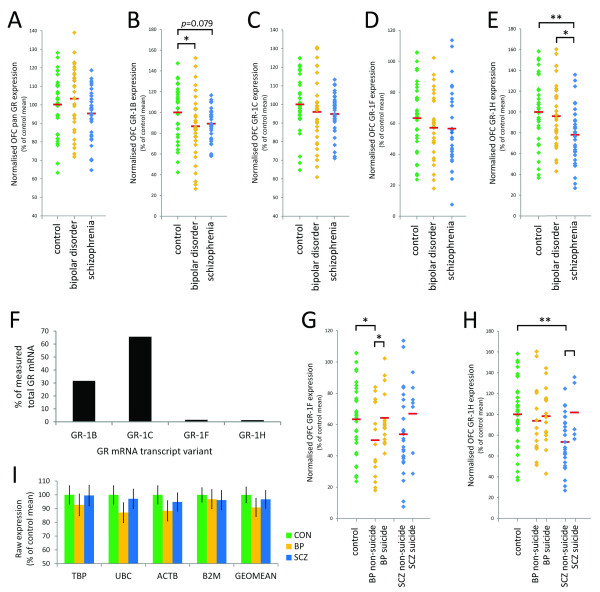
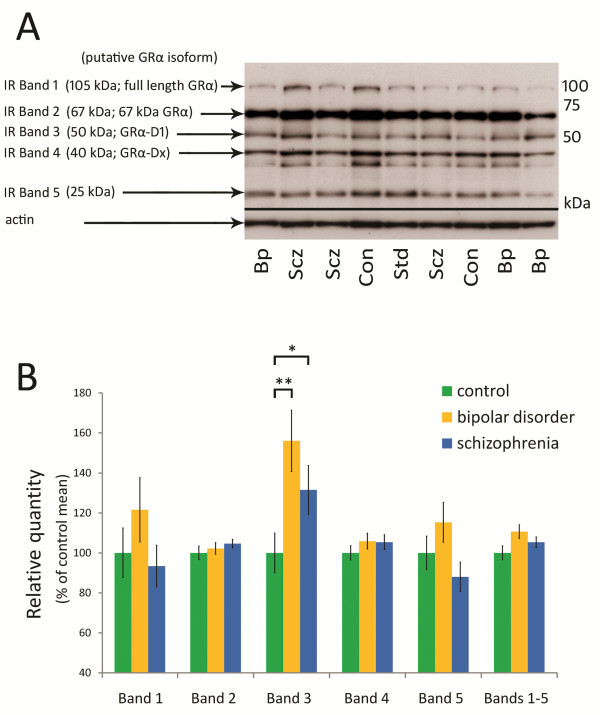
BACKGROUND: The orbitofrontal cortex (OFC) may play a role in the pathogenesis of psychiatric illnesses such as bipolar disorder and schizophrenia, in which hypothalamic-pituitary-adrenal (HPA) axis abnormalities are observed and stress has been implicated. A critical component of the HPA axis which mediates cellular stress responses in the OFC, and has been implicated in psychiatric illness, is the glucocorticoid receptor (GR). METHODS: In the lateral OFC, we employed quantitative real-time PCR and western blotting to investigate GR mRNA and protein expression in 34 bipolar disorder cases, 35 schizophrenia cases and 35 controls. Genotype data for eleven GR gene (NR3C1) polymorphisms was also used to explore possible effects of NR3C1 sequence variation on GR mRNA and protein expression in the lateral OFC. RESULTS: We found no diagnostic differences in pan GR, GR-1C or GR-1F mRNA expression. However, the GR-1B mRNA transcript variant was decreased (14.3%) in bipolar disorder cases relative to controls (p < 0.05), while GR-1H mRNA was decreased (22.0%) in schizophrenia cases relative to controls (p < 0.005). By western blotting, there were significant increases in abundance of a truncated GRα isoform, putative GRα-D1, in bipolar disorder (56.1%, p < 0.005) and schizophrenia (31.5% p < 0.05). Using genotype data for eleven NR3C1 polymorphisms, we found no evidence of effects of NR3C1 genotype on GR mRNA or GRα protein expression in the OFC. CONCLUSIONS: These findings reveal selective abnormalities of GR mRNA expression in the lateral OFC in psychiatric illness, which are more specific and may be less influenced by NR3C1 genotype than those of the dorsolateral prefrontal cortex reported previously. Our results suggest that the GRα-D1 protein isoform may be up-regulated widely across the frontal cortex in psychiatric illness.
Overview
The claims and statistics of this paper haven’t been checked yet.
Free: it reads the open-access text and checks the first 5 claims that cite a source we can check. Create a free account to check every claim.
Integrity signals
Registry
Cites
Statistics
Figures
Verification
Claims the paper makes
The claims and statistics of this paper haven’t been checked yet.
Free: it reads the open-access text and checks the first 5 claims that cite a source we can check. Create a free account to check every claim.
Claims other papers make about this one
Each is checked against this paper’s own text: does it say what the citing paper says it does?
In the citing paper
“Moreover, the relative levels of the GRα subtypes expressed in the human brain were found to change during development and the aging process69, 70.”
From Corticosteroids (2016) · cites this paper as [70]
Self-check
Percentages, sums and reported differences re-computed from the paper’s own numbers.
The self-check needs the paper’s full text.
Citations
Cites
Analysis of Relative Gene Expression Data Using Real-Time Quantitative PCR and the 2−ΔΔCT Method
Livak, K. J., & Schmittgen, T. D. (2001) · Methods · doi:10.1006/meth.2001.1262 · Cited by 180,860 · cited 1×
“To estimate the relative abundances of each GR mRNA variant within each individual, relative amounts of each transcript were calculated by the 2 method [45], using the ACTB housekeeper as internal control gene and pan GR mRNA as the calibrator.”
MethodPLINK: a tool set for whole-genome association and population-based linkage analyses.
Purcell, S., Neale, B., Todd-Brown, K., Thomas, L., Ferreira, M. A. R., Bender, D., Maller, J., Sklar, P., de Bakker, P. I. W., Daly, M. J., et al. (2007) · The American Journal of Human Genetics · doi:10.1086/519795 · Cited by 34,089 · cited 1×
“edu/purcell/plink) [47] was used for HardyWeinberg equilibrium testing.”
MethodThe reward circuit: linking primate anatomy and human imaging
Haber, S. N., & Knutson, B. (2010) · Neuropsychopharmacology · doi:10.1038/npp.2009.129 · Cited by 3,718 · cited 2×
“Since the OFC is an integral component of the brain’s reward circuitry [2], and is involved in integrating sensory information [4,6], it is possible that abnormal GR signalling may impact these cognitive functions, particularly during the experience of stress.”
BackgroundOngur, D. (2000) · Cerebral Cortex · doi:10.1093/cercor/10.3.206 · Cited by 2,627 · cited 8×
“Öngür D, Price JL: The organization of networks within the orbital and medial prefrontal cortex of rats, monkeys and humans.”
MethodInfluentialMapping the Onset of Psychosis: The Comprehensive Assessment of At-Risk Mental States
Yung, A. R., Yung, A. R., Pan Yuen, H., Mcgorry, P. D., Phillips, L. J., Kelly, D., Dell'olio, M., Francey, S. M., Cosgrave, E. M., Killackey, E., et al. (2005) · Australian & New Zealand Journal of Psychiatry · doi:10.1080/j.1440-1614.2005.01714.x · Cited by 2,196 · cited 1×
“A number of retrospective and prospective epidemiological studies have demonstrated that early life stress increases the risk of psychosis later in life [16-20], while stress later in life can impact the course of psychotic illness [21,22].”
BackgroundThe human orbitofrontal cortex: linking reward to hedonic experience
Kringelbach, M. L. (2005) · Nature Reviews Neuroscience · doi:10.1038/nrn1747 · Cited by 2,180 · cited 3×
“It integrates multimodal sensory information and is involved in reward encoding and the evaluation of punishment [4,7].”
BackgroundLichtenstein, P., Yip, B. H., Björk, C., Pawitan, Y., Cannon, T. D., Sullivan, P. F., & Hultman, C. M. (2009) · The Lancet · doi:10.1016/s0140-6736(09)60072-6 · Cited by 2,125
Neurocircuitry of Mood Disorders
Price, J. L., & Drevets, W. C. (2010) · Neuropsychopharmacology · doi:10.1038/npp.2009.104 · Cited by 1,606 · cited 6×
“It integrates multimodal sensory information and is involved in reward encoding and the evaluation of punishment [4,7].”
BackgroundInfluentialRead, J., van Os, J., Morrison, A. P., & Ross, C. A. (2005) · Acta Psychiatrica Scandinavica · doi:10.1111/j.1600-0447.2005.00634.x · Cited by 1,534 · cited 1×
“A number of retrospective and prospective epidemiological studies have demonstrated that early life stress increases the risk of psychosis later in life [16-20], while stress later in life can impact the course of psychotic illness [21,22].”
BackgroundThe stressed synapse: the impact of stress and glucocorticoids on glutamate transmission
Popoli, M., Yan, Z., McEwen, B. S., & Sanacora, G. (2012) · Nature Reviews Neuroscience · doi:10.1038/nrn3138 · Cited by 1,393 · cited 1×
“regions, can impact glutamatergic and GABAergic neurotransmitter signalling [67-72], and in excess can cause neuronal loss and impair brain function [73-75].”
BackgroundObstetric Complications and Schizophrenia: Historical and Meta-Analytic Review
Cannon, M., Jones, P. B., & Murray, R. M. (2002) · American Journal of Psychiatry · doi:10.1176/appi.ajp.159.7.1080 · Cited by 1,137 · cited 1×
“A number of retrospective and prospective epidemiological studies have demonstrated that early life stress increases the risk of psychosis later in life [16-20], while stress later in life can impact the course of psychotic illness [21,22].”
BackgroundSelemon, L. D. (1995) · Archives of General Psychiatry · doi:10.1001/archpsyc.1995.03950220015005 · Cited by 876
Starkman, M. N., Gebarski, S. S., Berent, S., & Schteingart, D. E. (1992) · Biological Psychiatry · doi:10.1016/0006-3223(92)90079-f · Cited by 840 · cited 1×
“regions, can impact glutamatergic and GABAergic neurotransmitter signalling [67-72], and in excess can cause neuronal loss and impair brain function [73-75].”
BackgroundCannon, M., Caspi, A., Moffitt, T. E., Harrington, H., Taylor, A., Murray, R. M., & Poulton, R. (2002) · Archives of General Psychiatry · doi:10.1001/archpsyc.59.5.449 · Cited by 783 · cited 1×
“[62-66].”
Rolls, E. T. (1996) · Philosophical Transactions of the Royal Society of London. Series B: Biological Sciences · doi:10.1098/rstb.1996.0128 · Cited by 755
Sensory and premotor connections of the orbital and medial prefrontal cortex of macaque monkeys
Carmichael, S. T., & Price, J. L. (1995) · Journal of Comparative Neurology · doi:10.1002/cne.903630409 · Cited by 678 · cited 2×
“The lateral OFC network, consisting of central, lateral and caudal areas of orbital cortex, is characterised by inputs from sensory cortical areas, such as the olfactory cortex and visual areas in the inferior temporal cortex [8].”
BackgroundHypofrontality in schizophrenia: distributed dysfunctional circuits in neuroleptic-naïve patients
Andreasen, N. C., O'Leary, D. S., Flaum, M., Nopoulos, P., Watkins, G. L., Ponto, L. L. B., & Hichwa, R. D. (1997) · The Lancet · doi:10.1016/s0140-6736(96)08258-x · Cited by 597 · cited 2×
“Decreased metabolic activity in the OFC networks of drug-free schizophrenia patients has also been reported [5].”
BackgroundArseneault, L., Cannon, M., Fisher, H. L., Polanczyk, G., Moffitt, T. E., & Caspi, A. (2011) · American Journal of Psychiatry · doi:10.1176/appi.ajp.2010.10040567 · Cited by 584 · cited 1×
“A number of retrospective and prospective epidemiological studies have demonstrated that early life stress increases the risk of psychosis later in life [16-20], while stress later in life can impact the course of psychotic illness [21,22].”
BackgroundKhashan, A. S., Abel, K. M., McNamee, R., Pedersen, M. G., Webb, R. T., Baker, P. N., Kenny, L. C., & Mortensen, P. B. (2008) · Archives of General Psychiatry · doi:10.1001/archgenpsychiatry.2007.20 · Cited by 575 · cited 1×
“A number of retrospective and prospective epidemiological studies have demonstrated that early life stress increases the risk of psychosis later in life [16-20], while stress later in life can impact the course of psychotic illness [21,22].”
BackgroundRajkowska, G., Halaris, A., & Selemon, L. D. (2001) · Biological Psychiatry · doi:10.1016/s0006-3223(01)01080-0 · Cited by 570 · cited 1×
“[62-66].”
Agid, O., Shapira, B., Zislin, J., Ritsner, M., Hanin, B., Murad, H., Troudart, T., Bloch, M., Heresco-Levy, U., & Lerer, B. (1999) · Molecular Psychiatry · doi:10.1038/sj.mp.4000473 · Cited by 568 · cited 2×
“Bipolar disorder and schizophrenia share similar psychotic symptoms, genetic and environmental risk factors, HPA axis abnormalities and some similar neuropathological changes [19,2325,60,61].”
BackgroundPrefrontal cortical projections to the hypothalamus in Macaque monkeys
Öngür, D., An, X., & Price, J. L. (1998) · The Journal of Comparative Neurology · doi:10.1002/(sici)1096-9861(19981130)401:4<480::aid-cne4>3.3.co;2-6 · Cited by 541 · cited 3×
“The DLPFC may be more sensitive to this effect, having stronger connections than the lateral OFC (BA11L) with other stresssensitive regions which are involved in regulating HPA axis activity, such as the hippocampus and hypothalamus [3,4,6,9,10].”
BackgroundThe Stanley Foundation brain collection and Neuropathology Consortium
Torrey, E. F., Webster, M., Knable, M., Johnston, N., & Yolken, R. H. (2000) · Schizophrenia Research · doi:10.1016/s0920-9964(99)00192-9 · Cited by 533 · cited 2×
“patients and processing of tissues have been described previously [42].”
MethodSelf-citationHanson, J. L., Chung, M. K., Avants, B. B., Shirtcliff, E. A., Gee, J. C., Davidson, R. J., & Pollak, S. D. (2010) · The Journal of Neuroscience · doi:10.1523/jneurosci.0859-10.2010 · Cited by 455 · cited 1×
“Structural changes in both the lateral and medial OFC networks have been associated with prior experience of early life trauma or chronic stress [13-15].”
BackgroundDecrease in cortisol reverses human hippocampal atrophy following treatment of Cushing’s disease
Starkman, M. N., Giordani, B., Gebarski, S. S., Berent, S., Schork, M. A., & Schteingart, D. E. (1999) · Biological Psychiatry · doi:10.1016/s0006-3223(99)00203-6 · Cited by 455 · cited 1×
“regions, can impact glutamatergic and GABAergic neurotransmitter signalling [67-72], and in excess can cause neuronal loss and impair brain function [73-75].”
BackgroundLu, N. Z., & Cidlowski, J. A. (2005) · Molecular Cell · doi:10.1016/j.molcel.2005.03.025 · Cited by 455 · cited 2×
“GRα-D1 has been previously shown to function as a transcription factor at glucocorticoid response elements [40], and to activate and repress the transcription of numerous target genes [54].”
BackgroundCortical Thickness and Subcortical Volumes in Schizophrenia and Bipolar Disorder
Rimol, L. M., Hartberg, C. B., Nesvåg, R., Fennema-Notestine, C., Hagler, D. J., Pung, C. J., Jennings, R. G., Haukvik, U. K., Lange, E., Nakstad, P. H., et al. (2010) · Biological Psychiatry · doi:10.1016/j.biopsych.2010.03.036 · Cited by 454 · cited 1×
“Bipolar disorder and schizophrenia share similar psychotic symptoms, genetic and environmental risk factors, HPA axis abnormalities and some similar neuropathological changes [19,2325,60,61].”
BackgroundWebster, M. J., Knable, M. B., O'Grady, J., Orthmann, J., & Weickert, C. S. (2002) · Molecular Psychiatry · doi:10.1038/sj.mp.4001139 · Cited by 420 · cited 2×
“In contrast, total GR mRNA expression is decreased in the entorhinal cortex in bipolar disorder but not schizophrenia, and is decreased in the DLPFC in schizophrenia but is not significantly changed in bipolar disorder [38,41].”
BackgroundSelf-citationPRICE, J. L. (2007) · Annals of the New York Academy of Sciences · doi:10.1196/annals.1401.008 · Cited by 395 · cited 5×
“; licensee BioMed Central Commons Attribution License (http://creativec reproduction in any medium, provided the or which have few connections between them, receive different inputs and project to different cortical and subcortical areas [4,6].”
BackgroundInfluentialMizoguchi, K., Ishige, A., Aburada, M., & Tabira, T. (2003) · Neuroscience · doi:10.1016/s0306-4522(03)00105-2 · Cited by 369 · cited 2×
“The DLPFC may be more sensitive to this effect, having stronger connections than the lateral OFC (BA11L) with other stresssensitive regions which are involved in regulating HPA axis activity, such as the hippocampus and hypothalamus [3,4,6,9,10].”
BackgroundLadd, C. O., Huot, R. L., Thrivikraman, K. V., Nemeroff, C. B., & Plotsky, P. M. (2004) · Biological Psychiatry · doi:10.1016/j.biopsych.2003.10.007 · Cited by 368 · cited 1×
“Stress has been shown to downregulate GR mRNA expression [55-58].”
BackgroundLabonte, B., Yerko, V., Gross, J., Mechawar, N., Meaney, M. J., Szyf, M., & Turecki, G. (2012) · Biological Psychiatry · doi:10.1016/j.biopsych.2012.01.034 · Cited by 345 · cited 1×
“GR promoter methylation may also play a role, since GR promoter hypermethylation has been associated with decreased GR-1B mRNA expression in the hippocampus of child abuse sufferers [50].”
BackgroundPremorbid Social Functioning in Schizophrenia and Bipolar Disorder: Similarities and Differences
Cannon, M., Jones, P., Gilvarry, C., Rifkin, L., McKenzie, K., Foerster, A., & Murray, R. M. (1997) · American Journal of Psychiatry · doi:10.1176/ajp.154.11.1544 · Cited by 345 · cited 1×
“[62-66].”
Hypothalamic-pituitary-adrenal axis function in patients with bipolar disorder
Watson, S., Gallagher, P., Ritchie, J. C., Ferrier, I. N., & Young, A. H. (2004) · British Journal of Psychiatry · doi:10.1192/bjp.184.6.496 · Cited by 343
Hippocampal volume, spectroscopy, cognition, and mood in patients receiving corticosteroid therapy
Brown, E. S., J. Woolston, D., Frol, A., Bobadilla, L., Khan, D. A., Hanczyc, M., Rush, A. J., Fleckenstein, J., Babcock, E., & Cullum, C. M. (2004) · Biological Psychiatry · doi:10.1016/j.biopsych.2003.09.010 · Cited by 279 · cited 1×
“regions, can impact glutamatergic and GABAergic neurotransmitter signalling [67-72], and in excess can cause neuronal loss and impair brain function [73-75].”
BackgroundBradley, A. J., & Dinan, T. G. (2010) · Journal of Psychopharmacology · doi:10.1177/1359786810385491 · Cited by 256 · cited 1×
“In many individuals with schizophrenia or bipolar disorder, dysregulation of the hypothalamic-pituitary-adrenal (HPA) axis, the primary hormonal stress response pathway, is also observed [23-25].”
BackgroundTurner, J. D., & Muller, C. P. (2005) · Journal of Molecular Endocrinology · doi:10.1677/jme.1.01822 · Cited by 256 · cited 1×
“This effect could be mediated by brain region-specific transcription factors, which may influence regional patterns of GR mRNA transcript variant expression [59].”
BackgroundBowers, G., Cullinan, W. E., & Herman, J. P. (1998) · The Journal of Neuroscience · doi:10.1523/jneurosci.18-15-05938.1998 · Cited by 249 · cited 1×
“regions, can impact glutamatergic and GABAergic neurotransmitter signalling [67-72], and in excess can cause neuronal loss and impair brain function [73-75].”
BackgroundHu, W., Zhang, M., Czéh, B., Flügge, G., & Zhang, W. (2010) · Neuropsychopharmacology · doi:10.1038/npp.2010.31 · Cited by 246 · cited 1×
“regions, can impact glutamatergic and GABAergic neurotransmitter signalling [67-72], and in excess can cause neuronal loss and impair brain function [73-75].”
BackgroundDay, R., Nielsen, J. A., Korten, A., Ernberg, G., Dube, K. C., Gebhart, J., Jablensky, A., Leon, C., Marsella, A., Olatawura, M., et al. (1987) · Culture, Medicine and Psychiatry · doi:10.1007/bf00122563 · Cited by 232 · cited 1×
“A number of retrospective and prospective epidemiological studies have demonstrated that early life stress increases the risk of psychosis later in life [16-20], while stress later in life can impact the course of psychotic illness [21,22].”
BackgroundOhnuma, T., Augood, S. J., Arai, H., McKenna, P. J., & Emson, P. C. (1998) · Molecular Brain Research · doi:10.1016/s0169-328x(98)00063-1 · Cited by 210 · cited 1×
“At a molecular level, decreased glutamic acid decarboxylase 67 (GAD 67) expression has been reported in the lateral OFC in schizophrenia and bipolar disorder [31], while increased dopamine receptor (D3 and D4) mRNA, serotonin receptor 1A binding, N-methyl-D-aspartate receptor binding and metabotropic glutamate recepto…”
BackgroundVersace, A., Thompson, W. K., Zhou, D., Almeida, J. R. C., Hassel, S., Klein, C. R., Kupfer, D. J., & Phillips, M. L. (2010) · Biological Psychiatry · doi:10.1016/j.biopsych.2009.11.025 · Cited by 194 · cited 1×
“Decreased functional activation of the lateral OFC network, and altered functional connectivity of the medial OFC network with the amygdala, are observed in bipolar disorder and schizophrenia during emotion processing and regulation tasks [28-30].”
BackgroundThompson, M., Weickert, C. S., Wyatt, E., & Webster, M. J. (2009) · Journal of Psychiatric Research · doi:10.1016/j.jpsychires.2009.02.005 · Cited by 185 · cited 1×
“At a molecular level, decreased glutamic acid decarboxylase 67 (GAD 67) expression has been reported in the lateral OFC in schizophrenia and bipolar disorder [31], while increased dopamine receptor (D3 and D4) mRNA, serotonin receptor 1A binding, N-methyl-D-aspartate receptor binding and metabotropic glutamate recepto…”
BackgroundSelf-citationAlt, S. R., Turner, J. D., Klok, M. D., Meijer, O. C., Lakke, E. A. J. F., DeRijk, R. H., & Muller, C. P. (2010) · Psychoneuroendocrinology · doi:10.1016/j.psyneuen.2009.09.001 · Cited by 184 · cited 1×
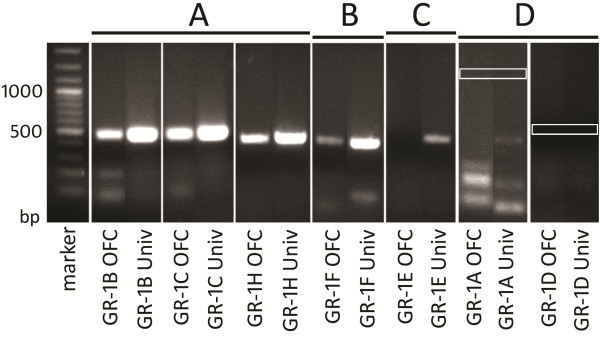
“2%) of total measured GR mRNA in this study, as in other studies [52].”
ResultReduced anterior cingulate and orbitofrontal volumes in child abuse-related complex PTSD
Thomaes, K., Dorrepaal, E., Draijer, N., de Ruiter, M. B., van Balkom, A. J., Smit, J. H., & Veltman, D. J. (2010) · The Journal of Clinical Psychiatry · doi:10.4088/jcp.08m04754blu · Cited by 173 · cited 1×
“Structural changes in both the lateral and medial OFC networks have been associated with prior experience of early life trauma or chronic stress [13-15].”
BackgroundManiam, J., & Morris, M. J. (2010) · Psychoneuroendocrinology · doi:10.1016/j.psyneuen.2009.10.013 · Cited by 172 · cited 1×
“Stress has been shown to downregulate GR mRNA expression [55-58].”
BackgroundVersace, A., Almeida, J. R. C., Quevedo, K., Thompson, W. K., Terwilliger, R. A., Hassel, S., Kupfer, D. J., & Phillips, M. L. (2010) · Biological Psychiatry · doi:10.1016/j.biopsych.2010.04.036 · Cited by 172 · cited 1×
“Structural OFC changes, such as reduced gray matter density and reduced white matter fractional anisotropy, have been identified in individuals with bipolar disorder relative to healthy controls [26,27].”
BackgroundPerlman, W. R., Webster, M. J., Kleinman, J. E., & Weickert, C. S. (2004) · Biological Psychiatry · doi:10.1016/j.biopsych.2004.09.006 · Cited by 163 · cited 1×
“A network of regions, including the hippocampus, amygdala and temporal cortex, display decreased total GR mRNA expression in both schizophrenia and bipolar disorder [38-40].”
BackgroundSelf-citationGlucocorticoids act on glutamatergic pathways to affect memory processes
Sandi, C. (2011) · Trends in Neurosciences · doi:10.1016/j.tins.2011.01.006 · Cited by 162 · cited 1×
“regions, can impact glutamatergic and GABAergic neurotransmitter signalling [67-72], and in excess can cause neuronal loss and impair brain function [73-75].”
BackgroundGupta, D. S., McCullumsmith, R. E., Beneyto, M., Haroutunian, V., Davis, K. L., & Meador‐Woodruff, J. H. (2005) · Synapse · doi:10.1002/syn.20164 · Cited by 146 · cited 1×
“At a molecular level, decreased glutamic acid decarboxylase 67 (GAD 67) expression has been reported in the lateral OFC in schizophrenia and bipolar disorder [31], while increased dopamine receptor (D3 and D4) mRNA, serotonin receptor 1A binding, N-methyl-D-aspartate receptor binding and metabotropic glutamate recepto…”
BackgroundMeador-Woodruff, J. H. (1997) · Archives of General Psychiatry · doi:10.1001/archpsyc.1997.01830240045007 · Cited by 143 · cited 1×
“At a molecular level, decreased glutamic acid decarboxylase 67 (GAD 67) expression has been reported in the lateral OFC in schizophrenia and bipolar disorder [31], while increased dopamine receptor (D3 and D4) mRNA, serotonin receptor 1A binding, N-methyl-D-aspartate receptor binding and metabotropic glutamate recepto…”
BackgroundPlasma cortisol-dehydroepiandrosterone (DHEA) ratios in schizophrenia and bipolar disorder
GALLAGHER, P., WATSON, S., SMITH, M., YOUNG, A., & FERRIER, I. (2007) · Schizophrenia Research · doi:10.1016/j.schres.2006.11.020 · Cited by 129
Maggio, N., & Segal, M. (2009) · The Journal of Neuroscience · doi:10.1523/jneurosci.4399-08.2009 · Cited by 128 · cited 1×
“regions, can impact glutamatergic and GABAergic neurotransmitter signalling [67-72], and in excess can cause neuronal loss and impair brain function [73-75].”
BackgroundLack of cortico-limbic coupling in bipolar disorder and schizophrenia during emotion regulation
Morris, R. W., Sparks, A., Mitchell, P. B., Weickert, C. S., & Green, M. J. (2012) · Translational Psychiatry · doi:10.1038/tp.2012.16 · Cited by 123
Self-citationEckart, C., Stoppel, C., Kaufmann, J., Tempelmann, C., Hinrichs, H., Elbert, T., Heinze, H.-J., & Kolassa, I.-T. (2011) · Journal of Psychiatry and Neuroscience · doi:10.1503/jpn.100010 · Cited by 119 · cited 1×
“Structural changes in both the lateral and medial OFC networks have been associated with prior experience of early life trauma or chronic stress [13-15].”
BackgroundTissue specific glucocorticoid receptor expression, a role for alternative first exon usage?
Turner, J. D., Schote, A. B., Macedo, J. A., Pelascini, L. P. L., & Muller, C. P. (2006) · Biochemical Pharmacology · doi:10.1016/j.bcp.2006.07.005 · Cited by 115 · cited 1×
“Furthermore, GR mRNA transcript variants, including GR-1B, are likely to be also regulated by tissue-specific transcription factors, which mediate tissue-specific GR action [49].”
BackgroundSimpson, M. D. C., Lubman, D. I., Slater, P., & Deakin, J. F. W. (1996) · Biological Psychiatry · doi:10.1016/0006-3223(95)00026-7 · Cited by 115
Selection of Reference Gene Expression in a Schizophrenia Brain Cohort
Weickert, C. S., Sheedy, D., Rothmond, D. A., Dedova, I., Fung, S., Garrick, T., Wong, J., Harding, A. J., Sivagnanansundaram, S., Hunt, C., et al. (2010) · Australian & New Zealand Journal of Psychiatry · doi:10.3109/00048670903393662 · Cited by 106 · cited 1×
“cDNA was then synthesised from total RNA using the Superscript First-Strand Synthesis Kit (Invitrogen, Carlsbad, CA), and qPCR analysis conducted as previously reported [44].”
MethodSelf-citationPatel, P. D., Katz, M., Karssen, A. M., & Lyons, D. M. (2008) · Psychoneuroendocrinology · doi:10.1016/j.psyneuen.2007.12.003 · Cited by 102 · cited 1×
“Stress has been shown to downregulate GR mRNA expression [55-58].”
BackgroundCarpenter, W. T., Bustillo, J. R., Thaker, G. K., van Os, J., Krueger, R. F., & Green, M. J. (2009) · Psychological Medicine · doi:10.1017/s0033291709990286 · Cited by 99 · cited 1×
“[62-66].”
Alterations in phencyclidine and sigma binding sites in schizophrenic brains
Simpson, M. D. C., Slater, P., Royston, M. C., & Deakin, J. F. W. (1991) · Schizophrenia Research · doi:10.1016/0920-9964(91)90019-n · Cited by 93 · cited 1×
“At a molecular level, decreased glutamic acid decarboxylase 67 (GAD 67) expression has been reported in the lateral OFC in schizophrenia and bipolar disorder [31], while increased dopamine receptor (D3 and D4) mRNA, serotonin receptor 1A binding, N-methyl-D-aspartate receptor binding and metabotropic glutamate recepto…”
BackgroundCognitive and emotion recognition deficits in obsessive–compulsive disorder
Aigner, M., Sachs, G., Bruckmüller, E., Winklbaur, B., Zitterl, W., Kryspin‐Exner, I., Gur, R. C., & Katschnig, H. (2006) · Psychiatry Research · doi:10.1016/j.psychres.2005.12.006 · Cited by 83 · cited 1×
“However, the effect of this illness parameter on GR-1B expression is difficult to interpret, since earlier age of onset has been linked to increased illness severity [51], but is associated with higher GR-1B mRNA levels among bipolar disorder cases, more reminiscent of normal controls.”
BackgroundJames, A., Hough, M., James, S., Burge, L., Winmill, L., Nijhawan, S., Matthews, P. M., & Zarei, M. (2011) · Bipolar Disorders · doi:10.1111/j.1399-5618.2011.00891.x · Cited by 81 · cited 1×
“Structural OFC changes, such as reduced gray matter density and reduced white matter fractional anisotropy, have been identified in individuals with bipolar disorder relative to healthy controls [26,27].”
BackgroundOrbitofrontal cortex neurons as a common target for classic and glutamatergic antipsychotic drugs
Homayoun, H., & Moghaddam, B. (2008) · Proceedings of the National Academy of Sciences · doi:10.1073/pnas.0806669105 · Cited by 79 · cited 1×
“Furthermore, OFC neurons have been identified as the targets for a number of antipsychotic drugs [37].”
BackgroundSinclair, D., Fullerton, J. M., Webster, M. J., & Shannon Weickert, C. (2012) · PLoS ONE · doi:10.1371/journal.pone.0031720 · Cited by 71 · cited 10×
“Previously, we identified an NR3C1 SNP, rs41423247 (Bcl1), which had a possible effect on GRα protein expression in the DLPFC [41].”
BackgroundMethodResultInfluentialSelf-citationSinclair, D., Tsai, S.-Y., Woon, H. G., & Weickert, C. S. (2011) · Neuropsychopharmacology · doi:10.1038/npp.2011.160 · Cited by 70 · cited 7×
“Antibody specificity has been previously demonstrated, with amelioration of GRα immunoreactivity by pre-incubation of this same P-20 antibody batch with blocking peptide [40].”
BackgroundMethodResultInfluentialSelf-citationArabadzisz, D., Heijtz, R. D., Knuesel, I., Weber, E., Pilloud, S., Dettling, A. C., Feldon, J., Law, A. J., Harrison, P. J., & Pryce, C. R. (2010) · Biological Psychiatry · doi:10.1016/j.biopsych.2009.12.016 · Cited by 67 · cited 1×
“Stress has been shown to downregulate GR mRNA expression [55-58].”
BackgroundSinclair, D., Webster, M. J., Wong, J., & Weickert, C. S. (2011) · Molecular Psychiatry · doi:10.1038/mp.2010.28 · Cited by 66 · cited 3×
“Using this technique previously, in combination with cloning and in vitro expression, we established that immunoreactive (IR) band 1 is likely to represent the full-length GRα, and IR band 2 represents an uncharacterised 67 kDa isoform [46].”
BackgroundMethodSelf-citationCao-Lei, L., Leija, S. C., Kumsta, R., Wüst, S., Meyer, J., Turner, J. D., & Muller, C. P. (2011) · Human Genetics · doi:10.1007/s00439-011-0949-1 · Cited by 58 · cited 1×
“GR-1B mRNA transcript expression is driven by a unique upstream promoter region [48], and can be influenced by sequence variation in the NR3C1 promoter region in the human DLPFC [41].”
BackgroundEffects of pre‐ and postnatal corticosterone exposure on the rat hippocampal GABA system
Stone, D. J., Walsh, J. P., Sebro, R., Stevens, R., Pantazopolous, H., & Benes, F. M. (2001) · Hippocampus · doi:10.1002/hipo.1066 · Cited by 55 · cited 1×
“regions, can impact glutamatergic and GABAergic neurotransmitter signalling [67-72], and in excess can cause neuronal loss and impair brain function [73-75].”
BackgroundTrait and state dependent functional impairments in bipolar disorder
van der Schot, A. C., Kahn, R. S., Ramsey, N. F., Nolen, W. A., & Vink, M. (2010) · Psychiatry Research Neuroimaging · doi:10.1016/j.pscychresns.2010.07.009 · Cited by 54 · cited 1×
“Decreased functional activation of the lateral OFC network, and altered functional connectivity of the medial OFC network with the amygdala, are observed in bipolar disorder and schizophrenia during emotion processing and regulation tasks [28-30].”
BackgroundYau, J. L. W., Noble, J., Chapman, K. E., & Seckl, J. R. (2004) · Molecular Brain Research · doi:10.1016/j.molbrainres.2004.06.033 · Cited by 28 · cited 1×
“The effects of antidepressant use in general, and fluoxetine use in particular, were explored in this study, since previous work has showed selective effects of fluoxetine on total GR and GR-1F mRNA expression in rodent hippocampus [53].”
ResultSzatkowska, I., Szymańska, O., Marchewka, A., Soluch, P., & Rymarczyk, K. (2011) · Neurobiology of Learning and Memory · doi:10.1016/j.nlm.2011.06.014 · Cited by 26 · cited 1×
“The orbitofrontal cortex (OFC) is a critical associative area of the human cortex, which plays a central role in emotion processing, reward encoding and goal directed learning [1-3].”
BackgroundConnectional networks within the orbital and medial prefrontal cortex of macaque monkeys
Carmichael, S. T., & Price, J. L. (1996) · Journal of Comparative Neurology · doi:10.1002/(sici)1096-9861(19960722)371:2<179::aid-cne1>3.0.co;2-#
Rempel-Clower, N. L., & Barbas, H. (1998) · The Journal of Comparative Neurology · doi:10.1002/(sici)1096-9861(19980831)398:3<393::aid-cne7>3.0.co;2-v · cited 1×
“from the DLPFC, and projects to the hypothalamus and periaquaductal gray [6,9,10,12].”
Background
Cited by
The biology of the glucocorticoid receptor: New signaling mechanisms in health and disease
Oakley, R. H., & Cidlowski, J. A. (2013) · Journal of Allergy and Clinical Immunology · doi:10.1016/j.jaci.2013.09.007 · Cited by 1,068
“Moreover, a selective increase in GRα-D was measured in specific regions of the brain in patients with schizophrenia and bipolar disorder (92, 93).”
BackgroundRamamoorthy, S., & Cidlowski, J. A. (2016) · Rheumatic Disease Clinics of North America · doi:10.1016/j.rdc.2015.08.002 · Cited by 692
The HPA axis in bipolar disorder: Systematic review and meta-analysis
Belvederi Murri, M., Prestia, D., Mondelli, V., Pariante, C., Patti, S., Olivieri, B., Arzani, C., Masotti, M., Respino, M., Antonioli, M., et al. (2016) · Psychoneuroendocrinology · doi:10.1016/j.psyneuen.2015.10.014 · Cited by 391
Comprehensive Overview of the Structure and Regulation of the Glucocorticoid Receptor
Vandevyver, S., Dejager, L., & Libert, C. (2014) · Endocrine Reviews · doi:10.1210/er.2014-1010 · Cited by 265
Morning cortisol levels in schizophrenia and bipolar disorder: a meta-analysis
Girshkin, L., Matheson, S. L., Shepherd, A. M., & Green, M. J. (2014) · Psychoneuroendocrinology · doi:10.1016/j.psyneuen.2014.07.013 · Cited by 215
Metadata
- Authors
- Sinclair, D., Webster, M. J., Fullerton, J. M., & Weickert, C. S.
- Affiliations
- UNSW Sydney (AU)
- Stanley Medical Research Institute (US)
- Corresponding author
- Sinclair, Duncan
- Venue
- BMC Psychiatry
- Published
- 2012-07-20
- Volume
- 12
- Issue
- 1
- Pages
- 84-84
- ISSN
- 1471-244X (ISSN-L)
- PMC
- PMC3496870
- OpenAlex
- W2083472062
- Cited by
- 55
- References
- 75
- Citations by year
- 2026: 1 · 2025: 1 · 2024: 2 · 2023: 2 · 2022: 6 · 2021: 1 · 2020: 5 · 2019: 5 · 2018: 4 · 2017: 3 · 2016: 6 · 2015: 7 · 2014: 5 · 2013: 7
- FWCI
- 2.52
- Type
- journal article
- Language
- en
- Open access
- gold
- doi.org
- Licence
- Locations
- BMC Psychiatry (publishedVersion, cc-by)
- Europe PMC (PubMed Central) (publishedVersion, cc-by)
- PubMed Central (publishedVersion, cc-by)
- PubMed (publishedVersion)
- UNSWorks (UNSW Sydney) (submittedVersion, cc-by-nc-nd)
- DOAJ (DOAJ: Directory of Open Access Journals) (submittedVersion)
- Figshare (submittedVersion)
- Funders
- Stanley Medical Research Institute
- Neuroscience Research Australia
- University of New South Wales
- NSW Ministry of Health
- Macquarie Group Foundation
- Topics
- Life Sciences › Neuroscience › Behavioral Neuroscience › Stress Responses and Cortisol
- Health Sciences › Medicine › Psychiatry and Mental health › Schizophrenia research and treatment
- Health Sciences › Medicine › Psychiatry and Mental health › Bipolar Disorder and Treatment
- Keywords
- glucocorticoid receptor, NR3C1, orbitofrontal cortex, schizophrenia, bipolar disorder, splice variants, hypothalamic-pituitary-adrenal axis, stress response, gene expression
- MeSH terms
- Adult, Bipolar Disorder, Female, Frontal Lobe, Genotype, Humans, Male, Middle Aged, Receptors, Glucocorticoid, RNA, Messenger, Schizophrenia, Up-Regulation, Genetic Predisposition to Disease, Protein Isoforms, Polymorphism, Single Nucleotide
About these checks
Registry, retraction, Cites and statistics results are computed, not judged, with one exception: a printed reference that no index lists is read once by a model before it counts as a citation error. Claims are extracted by a model and kept only when their quote appears verbatim in the text; each cited source is then checked, with a model’s help, for whether it says what the claim relies on. Those verdicts can be wrong — read the claim’s quote and the cited source before relying on one.
Statistics and arithmetic are recomputed, not judged.
Confidence bands are shown only for fields calibrated on our annotated test set. None is calibrated yet, so no band is shown.
What counts as a claim ›How we measure confidence ›How we check this ›
Are you an author, or do you see a problem with this page? Request a review
Data sources
Bibliographic data: Semantic Scholar, OpenAlex, Crossref.
Contains information from the Semantic Scholar Academic Graph Datasets, made available under the ODC Attribution License (ODC-BY 1.0).
Semantic Scholar’s data is described in: Kinney, R., et al. (2023). The Semantic Scholar Open Data Platform. arXiv:2301.10140.
