

CBT for depression: a pilot RCT comparing mobile phone vs. computer
Open accessThe DOI matches its Crossref record; 35 of the 36 references it cites were found in a registry or an index, and 1 are not checked yet.
Abstract
Background: This paper reports the results of a pilot randomized controlled trial comparing the delivery modality (mobile phone/tablet or fixed computer) of a cognitive behavioural therapy intervention for the treatment of depression. The aim was to establish whether a previously validated computerized program (The Sadness Program) remained efficacious when delivered via a mobile application. Method: 35 participants were recruited with Major Depression (80% female) and randomly allocated to access the program using a mobile app (on either a mobile phone or iPad) or a computer. Participants completed 6 lessons, weekly homework assignments, and received weekly email contact from a clinical psychologist or psychiatrist until completion of lesson 2. After lesson 2 email contact was only provided in response to participant request, or in response to a deterioration in psychological distress scores. The primary outcome measure was the Patient Health Questionnaire 9 (PHQ-9). Of the 35 participants recruited, 68.6% completed 6 lessons and 65.7% completed the 3-months follow up. Attrition was handled using mixed-model repeated-measures ANOVA. Results: Both the Mobile and Computer Groups were associated with statistically significantly benefits in the PHQ-9 at post-test. At 3 months follow up, the reduction seen for both groups remained significant. Conclusions: These results provide evidence to indicate that delivering a CBT program using a mobile application, can result in clinically significant improvements in outcomes for patients with depression. Trial registration: Australian New Zealand Clinical Trials Registry ACTRN 12611001257954
Overview
The claims and statistics of this paper haven’t been checked yet.
Free: it reads the open-access text and checks the first 5 claims that cite a source we can check. Create a free account to check every claim.
Integrity signals
Registry
Cites
Statistics
Figures
Verification
Claims the paper makes
The claims and statistics of this paper haven’t been checked yet.
Free: it reads the open-access text and checks the first 5 claims that cite a source we can check. Create a free account to check every claim.
Claims other papers make about this one
Each is checked against this paper’s own text: does it say what the citing paper says it does?
The cited source says what the claim attributes to it.
In the citing paper
“Some DMHIs, such as the Get Happy Program [13], consist of a series of lessons or modules that are designed to be completed in a sequential fashion over a specified number of weeks.”
From Digital Mental Health Interventions for Depression: Scoping Review of User Engagement (2022) · cites this paper as [13]
The cited source says what the claim attributes to it.
In the citing paper
“We have identified through our systematic review four apps in English that offer CBT or BA treatment for depression and have been studied by researchers and published in scientific papers, the Behavioural Activation Scheduling [50], the Get Happy Program [40], CBT Mobilwork [65] and Mobilyze [45].”
From A Systematic Review of Cognitive Behavioral Therapy and Behavioral Activation Apps for Depression (2016) · cites this paper as [40]
The cited source says what the claim attributes to it.
In the citing paper
“We have started to conduct trials in smartphone-delivered treatments and so did other research groups [Watts et al., 2013].”
From Internet-based treatments - Experiences from Sweden (2013) · cites this paper as Watts et al., 2013
The cited source says what the claim attributes to it.
In the citing paper
“Other studies also report positive outcomes with the use of mobile applications for the management of different mood disorders (106–108).”
From Mobile intervention for individuals with psychosis, dual disorders, and their common comorbidities: A literature review (2019) · cites this paper as [108]
The cited source says what the claim attributes to it.
In the citing paper
“and improving depressive symptoms (e.g., 107, 108, 112, 114)”
From Mobile intervention for individuals with psychosis, dual disorders, and their common comorbidities: A literature review (2019) · cites this paper as [108]
3 more claims about this paper
Create a free account to see every claim other papers make about this one.
Self-check
Percentages, sums and reported differences re-computed from the paper’s own numbers.
The self-check needs the paper’s full text.
Citations
Cites
The PHQ-9: Validity of a brief depression severity measure
Kroenke, K., Spitzer, R. L., & Williams, J. B. W. (2001) · Journal of General Internal Medicine · doi:10.1046/j.1525-1497.2001.016009606.x · Cited by 44,910
(1998) · The Journal of Clinical Psychiatry · Cited by 19,139
KESSLER, R. C., ANDREWS, G., COLPE, L. J., HIRIPI, E., MROCZEK, D. K., NORMAND, S.-L. T., WALTERS, E. E., & ZASLAVSKY, A. M. (2002) · Psychological Medicine · doi:10.1017/s0033291702006074 · Cited by 10,327
Self-citation(1998) · PubMed · Cited by 10,216
The mini international neuropsychiatric interview
Lecrubier, Y., Sheehan, D., Hergueta, T., & Weiller, E. (1998) · European Psychiatry · doi:10.1016/s0924-9338(99)80239-9 · Cited by 5,872
Higgins, S. M. F., Macken, A. P., Cullen, W., Saunders, J., Dunne, C. P., & O’Gorman, C. S. (2013) · PubMed · doi:10.34961/9953 · Cited by 4,808
Depression, chronic diseases, and decrements in health: results from the World Health Surveys
Moussavi, S., Chatterji, S., Verdes, E., Tandon, A., Patel, V., & Ustun, B. (2007) · The Lancet · doi:10.1016/s0140-6736(07)61415-9 · Cited by 4,070
Robins, L. N. (1988) · Archives of General Psychiatry · doi:10.1001/archpsyc.1988.01800360017003 · Cited by 2,909
Webb, T. L., Joseph, J., Yardley, L., & Michie, S. (2010) · Journal of Medical Internet Research · doi:10.2196/jmir.1376 · Cited by 2,517
Psychometric properties of the credibility/expectancy questionnaire
Devilly, G. J., & Borkovec, T. D. (2000) · Journal of Behavior Therapy and Experimental Psychiatry · doi:10.1016/s0005-7916(00)00012-4 · Cited by 2,295 · cited 3×
“All participants completed the questionnaire outcome measures (BDI-II, PHQ-9, K-10, CEQ, ERS and SDS) at 1-week post treatment and at 3-months follow up.”
Background
Research works printed but not linked: 4
- Murray CJL Lopez AD The Global Burden of Disease 1996 Geneva: World Health Organization, Harvard School of Public Health, World Bank
- International Telecommunication Union The World in 2011 ICT Facts and Figures 2011 Geneva, Switzerland: ITU 1 8
- Larson R Csikszentimihalyi M The experience sampling method: new directions for methodology Social Behavioural Science 1980 15 1 15
- Beck AT Steer RA Brown GK Beck Depression Inventory-II manual 1996 2 San Antonio, TX: Harcourt Brace
Cited by
Items 201–300 of 330
The Feasibility of eHealth in Mental Health Care
Basnet, S. (2014) · Journal of Addiction Research & Therapy · doi:10.4172/2155-6105.1000205 · Cited by 15
Are Digitally Delivered Psychological Interventions for Depression the Way Forward? A Review
Stefanopoulou, E., Lewis, D., Taylor, M., Broscombe, J., Ahmad, J., & Larkin, J. (2018) · Psychiatric Quarterly · doi:10.1007/s11126-018-9576-5 · Cited by 12
Testing a gamified Spider App to reduce spider fear and avoidance
Haberkamp, A., Walter, H., Althaus, P., Schmuck, M., Rief, W., & Schmidt, F. (2020) · Journal of Anxiety Disorders · doi:10.1016/j.janxdis.2020.102331 · Cited by 12
Guided Internet-Delivered Treatment for Depression: Scoping Review
Børtveit, L., Dechsling, A., Sütterlin, S., Nordgreen, T., & Nordahl‐Hansen, A. (2022) · JMIR Mental Health · doi:10.2196/37342 · Cited by 14
Ruh Sağlığında Mobil Uygulamalar: Etkinliğe Yönelik Sistematik Bir Gözden Geçirme
AKGÜN, B. D., Gürbüz, A. A., & Yorulmaz, O. (2019) · Psikiyatride Guncel Yaklasimlar - Current Approaches in Psychiatry · doi:10.18863/pgy.441765 · Cited by 14
Internet-delivered interventions for personality disorders – A scoping review
van der Boom, B., Boumparis, N., Donker, T., Beurs, D. P. D., Arntz, A. R., & Riper, H. M. (2022) · Internet Interventions · doi:10.1016/j.invent.2022.100525 · Cited by 17
Skaczkowski, G., van der Kruk, S., Loxton, S., Hughes-Barton, D., Howell, C., Turnbull, D., Jensen, N., Smout, M., & Gunn, K. (2022) · JMIR Mental Health · doi:10.2196/31018 · Cited by 9
Agyapong, B., Shalaby, R., Eboreime, E., Hay, K., Pattison, R., Korthuis, M., Wei, Y., & Agyapong, V. I. O. (2024) · Journal of Clinical Medicine · doi:10.3390/jcm13020580 · Cited by 10
“Moreover, delivery of CBT through mobile phones has been associated with significant positive outcomes for individuals with depression with sustained effect at three-month follow-up [46].”
BackgroundFulford, H., McSwiggan, L. C., Kroll, T., & MacGillivray, S. A. (2016) · JMIR Mental Health · doi:10.2196/mental.5966 · Cited by 12
Mobile Health (m-health) on Mental Health
Jang, J. S., & Cho, S. (2016) · Korean Journal of Stress Research · doi:10.17547/kjsr.2016.24.4.231 · Cited by 9
Internet-based treatments - Experiences from Sweden
(2013) · Verhaltenstherapie · doi:10.1159/000188079 · Cited by 8
“We have started to conduct trials in smartphone-delivered treatments and so did other research groups [Watts et al., 2013].”
MethodTing, A., & McLachlan, C. S. (2023) · PeerJ · doi:10.7717/peerj.15366 · Cited by 10
“The effectiveness of mobile app-based therapies and management for mental health has been validated by prior research and empirical investigations (Donker et al., 2013; Lippman, 2013; Watts et al., 2013; Rathbone & Prescott, 2017).”
MethodWilliams, A. D., Blackwell, S. E., Holmes, E. A., & Andrews, G. (2013) · BMJ Open · doi:10.1136/bmjopen-2013-004049 · Cited by 9
“previous trials (20-23) and a quality assurance effectiveness study conducted in primary care”
BackgroundSelf-citationReduced Contact Cognitive-Behavioral Interventions for Adult Depression: A Review
Beshai, S., Wallace, L. M., McDougall, K. H., Waldmann, K., & Stea, J. N. (2015) · The Journal of Psychology · doi:10.1080/00223980.2015.1087376 · Cited by 10
Köhnen, M., Kriston, L., Härter, M. C., Baumeister, H., & Liebherz, S. (2020) · Journal of Medical Internet Research · doi:10.2196/24584 · Cited by 17
“Interventions of 8 weeks’ duration were the most frequent (26/89; 29%) in the included studies (see Multimedia Appendix 2 [22-99] for baseline diagnoses).”
BackgroundMethodInfluentialBright, K., Stuart, S., Mcneil, D., Murray, L., & Kingston, D. (2022) · JMIR Formative Research · doi:10.2196/23879 · Cited by 7
Disaster psychiatry in Asia: The potential of smartphones, mobile, and connected technologies
Sobowale, K., & Torous, J. B. (2016) · Asian Journal of Psychiatry · doi:10.1016/j.ajp.2016.03.004 · Cited by 8
“Fortunately, emerging evidence also supports the role of mobile technologies like smartphones to offer a range of therapies including cognitive behavioral therapy (Watts et al., 2013), behavioral activation therapy (Ly et al.”
BackgroundPeut-on faire une TCC sans thérapeute ? Composantes actives des TCC informatisées pour la dépression
Iakimova, G., Dimitrova, S., & Burté, T. (2016) · L Encéphale · doi:10.1016/j.encep.2016.08.006 · Cited by 34
Evidence-based health and clinical informatics: a systematic review on randomized controlled trials
Christopoulou, S. C., Kotsilieris, T., & Anagnostopoulos, I. E. (2017) · Health and Technology · doi:10.1007/s12553-016-0170-2 · Cited by 7
“Several rating scales are used to evaluate the symptoms of depression, mood and feelings e.g. the Patient Health Questionnaire-9 [48, 70], the Reynolds Adolescent Depression Score to evaluate self-rated depressive symptoms [58], the Moods & Feelings Questionnaire [58], the Questionnaire measuring…”
BackgroundMethodDesigning behavioral self-regulation application for preventive personal mental healthcare
Hirano, M., Ogura, K., Kitahara, M., Sakamoto, D., & Shimoyama, H. (2017) · Health Psychology Open · doi:10.1177/2055102917707185 · Cited by 10
“In recent years, many uses of CCBT that utilize more convenient mobile applications have been developed (e.g. Birney et al., 2016; Watts et al., 2013), and there have been continuous extensions of target-specific programs to address illnesses such as eating disorders (Nitsch et al., 2016), social…”
Mental health apps for depression: A meta‐analysis
Luo, Y., Stice, B. L., & Lenz, A. S. (2024) · Journal of Counseling & Development · doi:10.1002/jcad.12535 · Cited by 9
Smartphone and video game use and perceived effects in a community mental health service
Rowntree, R., & Feeney, L. (2019) · Irish Journal of Medical Science (1971 -) · doi:10.1007/s11845-019-02016-5 · Cited by 8
Nowrouzi‐Kia, B., Stier, J., Ayyoub, L., Hutchinson, L., Laframboise, J., & Mihailidis, A. (2021) · Health Psychology Open · doi:10.1177/20551029211062029 · Cited by 7
“Common features of existing mental health apps include the provision of specific diagnoses such as depression and anxiety (Chawathey & Ford, 2016; Donker et al., 2013; Grassi et al., 2009; Watts et al., 2013) and do not focus on the relationship between mental health changes and engagement in activities (Bar & Jarus,…”
BackgroundAn IT Platform Enabling Remote Therapeutic Interventions
Schickler, M., Pryss, R. C., Stach, M., Schobel, J., Schlee, W., Probst, T., Langguth, B., & Reichert, M. (2017) · Proceedings - IEEE Symposium on Computer-Based Medical Systems · doi:10.1109/cbms.2017.78 · Cited by 6
“In addition, there exist IT-driven approaches that may be configured by domain experts to increase the efficacy of psychotherapy [22].”
BackgroundSchaich, A., Westermair, A. L., Munz, M., Nitsche, S., Willenborg, B., Willenborg, C., Schunkert, H., Erdmann, J., & Schweiger, U. (2018) · Frontiers in Psychiatry · doi:10.3389/fpsyt.2018.00338 · Cited by 7
Zaman, A., Silenzio, V., & Kautz, H. (2020) · International Conference on Pervasive Computing Technologies for Healthcare · doi:10.1145/3421937.3421959 · Cited by 6
“It has been found that usage of mobile application to deliver Cognitive behavioral therapy has resulted in significant improvements in outcomes for patients with depression [27].”
BackgroundGil, M., & Kim, S. (2022) · International Journal of Environmental Research and Public Health · doi:10.3390/ijerph19042142 · Cited by 9
“kr, accessed on 12 February 2022) is a new online self-help intervention that focuses on promoting mental health and preventing depression in college students’ families through the integration of CBT [30], mindfulness [31], and the emotional regulation approach [32].”
BackgroundInfluentialNeumayr, C., Voderholzer, U., & Schlegl, S. (2020) · Verhaltenstherapie · doi:10.1159/000510954 · Cited by 6
“Die Follow-up-Zeiträume variierten zwischen 12 Wochen [Watts et al., 2013] und 8 Monaten [Ly et al., 2014].”
BackgroundInfluentialPsychotherapy Using Electronic Media
Mucić, D., & Hilty, D. M. (2019) · Springer eBooks · doi:10.1007/978-3-030-24082-0_15 · Cited by 7
Smartphones and academic performance: evidence from India
Ammunje, R. N., Mahesh Prabhu, H., & Barkur, G. (2022) · Interactive Technology and Smart Education · doi:10.1108/itse-11-2021-0204 · Cited by 13
Mental health mobile app use to manage psychological difficulties: an umbrella review
Badesha, K., Wilde, S., & Dawson, D. L. (2022) · Mental Health Review Journal · doi:10.1108/mhrj-02-2021-0014 · Cited by 11
mHealth and Physical Activity Interventions Among People With Mental Illness
Carney, R., & Firth, J. (2018) · Elsevier eBooks · doi:10.1016/b978-0-12-812605-9.00012-5 · Cited by 7
Cognitive Behavioral Therapy for Depression
Nyer, M., Fisher, L. B., & Farabaugh, A. H. (2015) · Springer eBooks · doi:10.1007/978-1-4939-2605-3_6 · Cited by 6
Design of a technology-delivered motivational interviewing intervention for youth empowerment
Liu, Z., Warren, J., & Christie, G. (2018) · Australasian Computer Science Week Multiconference (ACSW) · doi:10.1145/3167918.3167934 · Cited by 7
Kleinau, E., Lamba, T., Jaskiewicz, W., Gorentz, K., Hungerbuehler, I., Rahimi, D., Kokota, D., Maliwichi, L., Jamu, E. S., Zumazuma, A., et al. (2023) · medRxiv · doi:10.1101/2023.01.24.23284959 · Cited by 5
Aplicaciones móviles en salud mental: percepción y perspectivas en Argentina
Garay, C. J., & Celleri, M. (2022) · Psicodebate · doi:10.18682/pd.v22i1.4869 · Cited by 11
Apolinário-Hagen, J., Fritsche, L., Albers, L., & Salewski, C. (2018) · Springer eBooks · doi:10.1007/978-981-10-4358-1_21 · Cited by 4
Cognitive Behavioral Therapy Online for Adult Depression: A 10 Year Systematic Literature Review
Stavropoulos, V., Cokorilo, S., Kambouropoulos, A., Collard, J. J., & Gomez, R. (2019) · Current Psychiatry Research and Reviews · doi:10.2174/1573400515666190628125914 · Cited by 4
Henderson, E. L. (2020) · Archives of Suicide Research · doi:10.1080/13811118.2020.1779152 · Cited by 5
“…is the most highly successful evidence-based treatment for PTSD producing the highest number of studies with consistent evidence of efficacy with large effect sizes (Bisson, Cosgrove, Lewis, & Roberts, 2015; Bisson, Roberts, Andrew, Cooper, & Lewis, 2013; Jonas et al., 2013; Watts et al., 2013).”
BackgroundSmartphone assisted oral health data recording – an android based software application development
Nagarajappa, S., & Vyas, S. (2021) · Medicine and Pharmacy Reports · doi:10.15386/mpr-1467 · Cited by 8
“In health research, several studies have been conducted comparing the pen-paper method with various electronic devices such as personal digital assistants (PDA, Palmtop computer), tablet computers and smartphones [11,12].”
BackgroundManaging Traumatic Stress Using a Mental Health Care Mobile App: A Pilot Study
Choi, Y., Ko, E., Choi, E., & Um, Y.-J. (2021) · International Journal of Mental Health Promotion · doi:10.32604/ijmhp.2021.015018 · Cited by 5
“Prior studies have shown that a threemonth program (mobile or computer-based) for patients with depression improved brain activity and symptoms [24], which is in line with the results of this study.”
ResultOliveira, A. L. S., Matos, L. N., Júnior, M. C., & Delabrida, Z. N. C. (2021) · Lecture notes in computer science · doi:10.1007/978-3-030-86979-3_39 · Cited by 11
Efficacy of Smartphone Apps in Patients With Depressive Disorders: A Systematic Review
Hernández-Gómez, A., Valdés-Florido, M. J., Lahera, G., & Andrade-González, N. (2022) · Frontiers in Psychiatry · doi:10.3389/fpsyt.2022.871966 · Cited by 5
Jacobson, N. C., Areán, P. A., & Schueller, S. M. (2022) · PLOS Digital Health · doi:10.1371/journal.pdig.0000126 · Cited by 4
LOGOTERAPI EFEKTIF UNTUK MENURUNKAN TINGKAT DEPRESI: STUDI META-ANALISIS
Widiaratri, R. B., & Yudiarso, A. (2022) · JIP (Jurnal Intervensi Psikologi) · doi:10.20885/intervensipsikologi.vol14.iss2.art3 · Cited by 10
“…2022 109 diantaranya Integrative Positive Psychological Intervention (Chaves et al., 2019), Cognitive Behavior Therapy (Foroushani et al., 2011; Watts et al., 2013), Online CBT (Saddichha et al., 2014), mindfulness (Asiah et al., 2019; Fourianalistyawati & Listiyandini, 2018), terapi pencarian…”
BackgroundPromoting awareness of depression with a mobile application: A usability study and evaluation
Noori, S., Mansor, E., Ibrahim, N., & Hinds, J. (2016) · International Conference on User Science and Engineering · doi:10.1109/iuser.2016.7857934 · Cited by 3
“application called Mobilyze! In three separate studies, Watts [15], Johannson [16] and Perini [17] evaluated the same treatment program known as “The Sadness Program” [15] and as the “Get Happy Program” in [16] and [17].”
MethodSupporting Remote Therapeutic Interventions with Mobile Processes
Schickler, M., Pryss, R. C., Schobel, J., & Reichert, M. (2017) · doi:10.1109/aims.2017.13 · Cited by 4
“According to numerous clinical studies, therapeutic interventions constitute a fundamental part of most therapies to increase their efficacy [1], [2].”
BackgroundChang, D., Carlo, A. D., Khor, S., Drake, L., Lee, E. S., Avery, M., Unützer, J., & Flum, D. R. (2020) · Journal of General Internal Medicine · doi:10.1007/s11606-020-06136-y · Cited by 4
Lindhiem, O. J., & Harris, J. L. (2018) · Springer eBooks · doi:10.1007/978-3-319-69638-6_18 · Cited by 4
A smartphone-based behavioural activation application using recommender system
Zhang, T., Jarrad, G., Murphy, S. A., & Bidargaddi, N. P. (2019) · ACM International Joint Conference on Pervasive and Ubiquitous Computing (UbiComp) · doi:10.1145/3341162.3343785 · Cited by 3
Psychological Treatment for Depressive Disorder
Li, X., & Wang, Q. (2019) · Advances in experimental medicine and biology · doi:10.1007/978-981-32-9271-0_13 · Cited by 5
Liu, I., Chen, W., Ge, Q., Song, D., & Ni, S. (2022) · Proceedings of the Tenth International Symposium of Chinese CHI · doi:10.1145/3565698.3565787 · Cited by 3
“Burns et al. and Watts et al. found the between-group effect size was 1.9 and 1.56, respectively, in their eight-week experiments[50], [51].”
BackgroundInfluentialAkechi, T., Furukawa, T. A., Hashimoto, H., Harada, Y., Ito, Y., Furukawa, Y., Kitano, A., Maeda, N., Kojima, Y., Tada, Y., et al. (2024) · Japanese Journal of Clinical Oncology · doi:10.1093/jjco/hyae111 · Cited by 6
Steyn, S., & Slabbert, M. (2025) · JMIR Formative Research · doi:10.2196/54216 · Cited by 6
“Their findings were comparable with those of Watts et al [50], whose study participants’mean aggregated score for homework completion within the mobile-based intervention was 11 (range 6-17; n=35).”
CAN INTERNET-BASED INTERVENTIONS BE AN ALTERNATIVE DURING THE COVID-19 OUTBREAK?
Ulusoy, S., & Çelik, Z. (2020) · Journal of Cognitive-Behavioral Psychotherapy and Research · doi:10.5455/jcbpr.106343 · Cited by 4
Ly, K. H. (2015) · Linköping University Electronic Press eBooks · doi:10.3384/diss.diva-113996 · Cited by 17
e-THERAPY USING COMPUTER AND MOBILE TECHNOLOGIES IN TREATMENT
Stasiak, K., & Merry, S. (2013) · ResearchSpace (University of Auckland) · Cited by 3
Hofman, J., Pollitt, A., Broeks, M., Stewart, K., & Stolk, C. V. (2016) · Rand health quarterly · doi:10.7249/rhq-06-04-12 · Cited by 3
Mobile applications as good intervention tools for individuals with depression
Marešová, P., Klímová, B., & Kuča, K. (2017) · Česká a slovenská farmacie · doi:10.36290/csf.2017.007 · Cited by 3
Psychotherapy for schizophrenia and bipolar disorder
Irfan, M., Muzaffar, S., Kingdon, D., Rathod, S., & Naeem, F. (2019) · Elsevier eBooks · doi:10.1016/b978-0-12-814932-4.00010-0 · Cited by 5
Smartphone apps based psychotherapy in India: Potential benefits and pitfalls
Parmar, A., & Sharma, P. (2016) · Asian Journal of Psychiatry · doi:10.1016/j.ajp.2016.02.008 · Cited by 5
“For example, a pilot RCT with depression app showed a significant improvement in depression (Watts et al., 2013) however no Indian researches on the same are available.”
BackgroundVernmark, K. (2017) · doi:10.3384/diss.diva-142389 · Cited by 7
Sathe, A., Nainani, A., Elaraby, A., Jones, A. L., & Lowe, M. (2026) · Australian & New Zealand Journal of Psychiatry · doi:10.1177/00048674261439533 · Cited by 2
“In response to these challenges, mobile-based applications (apps) offer a promising solution by providing accessible, cost-effective and convenient platforms for delivering CBT interventions to adolescents (Linardon et al., 2019; Watts et al., 2013).”
Hamoud, J., Devkota, J., Regan, T., Luken, A., Waring, J. J. C., Han, J. J., Naughton, F., Vilardaga, R., Bricker, J. B., Latkin, C. A., et al. (2025) · BMC Public Health · doi:10.1186/s12889-025-22995-8 · Cited by 4
“CBT is focused on changing maladaptive thought and behavior patterns, and has been established as an effective therapy for the treatment of a variety of mental health and substance use disorders, including smoking cessation treatment [37–40], for in-person as well as digital delivery.”
Gao, Z., Zhao, T., Li, Y., Huang, W. D., Tang, J., Yu, X., Li, Y., & Peng, T. (2025) · Frontiers in Medicine · doi:10.3389/fmed.2025.1710291 · Cited by 2
The Use of Technology to Augment Clinical Care in Depression and Anxiety Disorders: An Evidence Map
Maher, A. R., Apaydin, E. A., Raaen, L. B., Motala, A., Shanman, R., & Hempel, S. (2019) · RAND Corporation eBooks · doi:10.7249/rr2177 · Cited by 2
Assessment of the Impacts from the Addition of Novel Assistive Technologies in Mental Health Care
Garafalo, J., & Nathan-Roberts, D. (2016) · Proceedings of the Human Factors and Ergonomics Society Annual Meeting · doi:10.1177/1541931213601290 · Cited by 2
“The process begins with the clinician (psychologist, psychiatrist, or therapist) prescribing the patient medication, activity, homework, or coping strategy (Watts et al., 2013; Matthews & Doherty, 2011).”
BackgroundMethodInfluentialIs it Time to Adopt Information Technology in Play Therapy?
Lee, A., Oh, M. A., Park, J. C., Jin, S. Y., Hwangbo, R., Cho, S. W., & Bahn, G. H. (2017) · Psychoanalysis · doi:10.18529/psychoanal.2017.28.2.28 · Cited by 2
Bibliometric Analysis of Interventional Literature on Mobile Health: The Most Highly Cited Articles
Ameri, A., Salmanizadeh, F., & Bahaadinbeigy, K. (2021) · Frontiers in Health Informatics · doi:10.30699/fhi.v10i1.262 · Cited by 4
“…diseases 30 157 Borland et al., 2013 [53] Addiction Cigarette smoking quitting 31 153 King et al., 2013 [54] Obesity Impact on lifestyle 32 150 Watts et al., 2013 [55] Mental health disorders Disease controls 33 149 Downer et al., 2005 [56] General medicine Attendance/appointment reminders 34…”
BackgroundVillarino, R. T., & Villarino, M. L. (2023) · International Journal of Psychology and Psychoanalysis · doi:10.23937/2572-4037.1510062 · Cited by 2
“Specifically, CBT has been evaluated in computer vs. conventional settings [ 11], as a mobile phone service [ 12 ], as an Internet-based service [ 13 ], as a gamified smartphone application [ 3 ], and as a smartphone-based conversational agent [14].”
Towards Flexible Remote Therapeutic Interventions
Schickler, M., Prysss, R., Schobel, J., Schlee, W., Probst, T., & Reichert, M. (2017) · Proceedings - IEEE Symposium on Computer-Based Medical Systems · doi:10.1109/cbms.2017.93 · Cited by 3
“In addition, there exist IT-driven approaches that may be configured by domain experts to increase the efficacy of a psychotherapy [6].”
BackgroundEconomides, M., Ranta, K., Nazander, A., Hilgert, O., Goldin, P. R., Raevuori, A., & Forman‐Hoffman, V. L. (2019) · PsyArXiv (OSF Preprints) · doi:10.31234/osf.io/mh38y · Cited by 2
Assistive Chatbots for healthcare: a succinct reviewPreprint
Bhattacharya, B. S. (2023) · doi:10.36227/techrxiv.23741469.v1 · Cited by 5
Munteanu, T., Kannis‐Dymand, L., Millear, P. M. R., & Jones, M. (2024) · Cyberpsychology Journal of Psychosocial Research on Cyberspace · doi:10.5817/cp2024-4-6 · Cited by 4
“CBT delivered this way can significantly ameliorate anxiety symptoms, including for GAD (Miller et al., 2021; Watts et al., 2013).”
BackgroundRizzo, A., Laachi, S., Ali, D. A., Khabbache, H., Öztekin, G. G., Aksoy, Ş., Alkhulayfi, A. M. A., Yıldırım, M., & Chirico, F. (2025) · Mental Health and Social Inclusion · doi:10.1108/mhsi-02-2025-0078 · Cited by 5
Marciniak, M. A., Rohde, J., Yuen, K. S. L., Binder, H., Walter, H., Wieser, M. J., Kalisch, R., Roelofs, K., & Kleim, B. (2025) · Internet Interventions · doi:10.1016/j.invent.2025.100843 · Cited by 3
“…components that could potentially be included in Powerly, such as acceptance, meditation, relaxation, problem-solving, gratitude, distancing, and self-monitoring, for instance (Bakker and Rickard, 2018; Carissoli et al., 2015; Hur et al., 2018; Shrier and Spalding, 2017; Watts et al., 2013).”
Technology-Based Cognitive-Behavioral Therapy in School Settings
Tazeau, Y. N., & Fortugno, D. A. (2014) · Springer eBooks · doi:10.1007/978-1-4939-1972-7_16 · Cited by 1
Jeyashree, K., Sathiavadivu, J. S., & Abdulkader, R. S. (2020) · International Journal of Adolescent Medicine and Health · doi:10.1515/ijamh-2018-0296 · Cited by 4
Γιαννοπούλου, Π., Vrahatis, A. G., Papalaskari, M.-A., & Vlamos, P. (2023) · Healthcare · doi:10.3390/healthcare11222985 · Cited by 3
“The aforementioned digital technologies provide a means of remotely administering cognitive training and rehabilitation programs while monitoring cognitive health through the utilization of new data streams and identifying indicators sensitive to detecting subtle transitions in cognitive function.”
BackgroundA Framework for Analyzing Patient-centered Mobile Applications for Mental Health
Batoroev, K., Boehmann, T., & Tokar, O. (2015) · AIS Electronic Library (AISeL) · Cited by 2
Gratzer, D., Khalid-Khan, F., & Khalid‐Khan, S. (2015) · InTech eBooks · doi:10.5772/60816 · Cited by 1
“While there are some studies focused on devel‐ oping a single program for mixed anxiety and depression [25, 30, 58], there is room for improvement of the programs, diversification into other comorbidities, and developing alternative strategies such as a variety of modules that can be mixed and matched for each individ…”
BackgroundPredicting Participant Consent in mHealth Trials – A Caregiver’s Perspective
O’Connor, Y., Heavin, C., Gallagher, J., & O’Donoghue, J. (2017) · AJIS. Australasian journal of information systems/AJIS. Australian journal of information systems/Australian journal of information systems · doi:10.3127/ajis.v21i0.1470 · Cited by 1
Internet-Based/Technology-Based Interventions in Major Depressive Disorder
Rajagopalan, A., & Ho, R. (2019) · Elsevier eBooks · doi:10.1016/b978-0-323-58131-8.00011-2 · Cited by 1
Chaix, B., Lobre, G., Mahboub, S., Delamon, G., Bibault, J.-E., & Brouard, B. (2020) · Psycho-Oncologie · doi:10.3166/pson-2020-0113 · Cited by 1
Stand-Alone KVT-basierte Interventionen via Smartphone zur Förderung der psychischen Gesundheit
Marciniak, M. A., Shanahan, L., Rohde, J., Ehrt‐Schäfer, Y., Schulz, A., Wackerhagen, C., Kobylińska, D., Tüscher, O., Binder, H., Walter, H., et al. (2021) · Nervenheilkunde · doi:10.1055/a-1488-4943 · Cited by 1
“565 naten nach Studienende befunden wurde [30].”
BackgroundInfluentialE-mindful health: Evaluation of mobile apps for mindfulness
Mani, M. (2017) · Queensland University of Technology · doi:10.5204/thesis.eprints.102651 · Cited by 6
The Use of Mobile Apps and Technologies in Child and Adolescent Mental Health (Preprint)Preprint
Punukollu, M. (2019) · doi:10.2196/preprints.14205 · Cited by 1
Social Media, Patients and Health Care: What's the Story?
Abògúnr̀in, Ṣ., & Lombard, L. (2014)
Internet-based Treatment of Depression in Primary Care: Effectiveness and Feasibility
Kivi, M. (2015) · Gothenburg University Publications Electronic Archive (Gothenburg University)
Online therapy : client and counsellor experiences
Khan, S. (2014) · cIRcle (University of British Columbia) · doi:10.14288/1.0135566 · Cited by 2
Understanding and treating obesity in daily life: a cognitive behavioral perspective
Boh (2017) · Research Publications (Maastricht University) · doi:10.26481/dis.20170413bb
La cyberthérapie dans le traitement de l’hyperphagie boulimique : recension de la littérature
St-Amour, N., Léveillée, S., & Wilkins, J. (2016) · Revue québécoise de psychologie · doi:10.7202/1040104ar · Cited by 1
“…plus personnalisées et évaluer l’apport des technologies mobiles (Apps) comme c’est le cas pour d’autres troubles en santé mentale (Boschen & Casey, 2008; Donker et al., 2013; Watts et al., 2013) en lien avec la réduction de la symptomatologie, le degré d’engagement et l‘adhérence au traitement.”
BackgroundUsing Technology to Enhance Behavioral Health
Campise, R. L., Kinn, J. T., & Cooper, D. (2017) · Springer eBooks · doi:10.1007/978-3-319-66192-6_26
Electronic Communication, Telehealth, and Social Media
Khanna, M. S., & Chou, T. (2018) · Oxford University Press eBooks · doi:10.1093/oxfordhb/9780190634841.013.46
Krentz, A. (2019) · Mspace (University of Manitoba)
Jang, S.-H., Woo, Y. S., Lee, S.-Y., & Bahk, W. (2020) · Mood and Emotion · doi:10.35986/me.2020.18.1.1
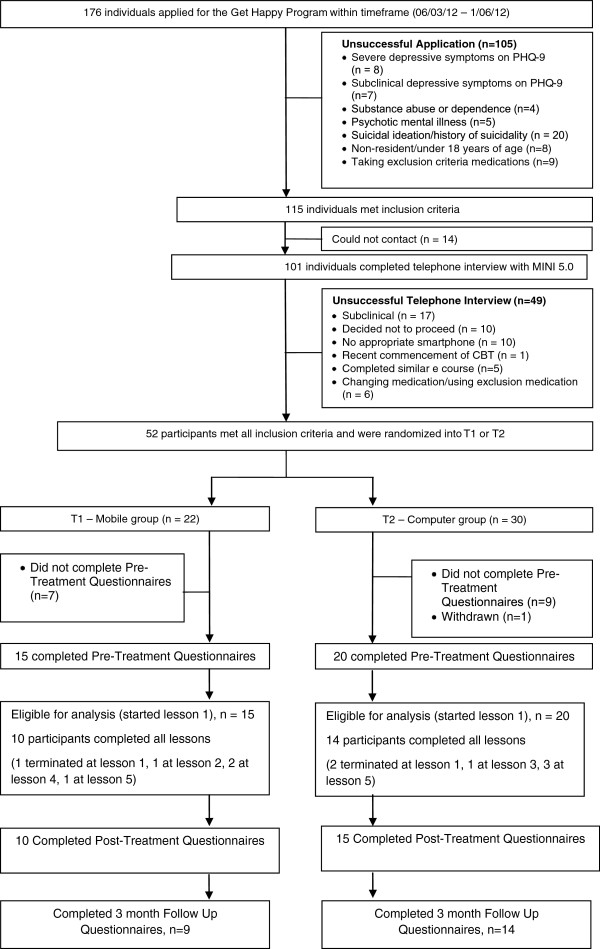
“’s [15] RCT with 35 patients with depression, 15 patients were placed in the mobile CBT group and 20 in the computer CBT group.”
MethodNew technologies applied as alternative approaches in averting depression
Blithe Group, Ngabo-Woods, H., Instituto ITACA, U. P. D. V., Cuesta, S. A., Garcia-Gomez, J. M., & Instituto ITACA, U. P. D. V. (2017) · doi:10.46844/bri.17.00001.1
Marciniak, M. A., Shanahan, L., Rohde, J., Schulz, A., Wackerhagen, C., Kobylińska, D., Tüscher, O., Binder, H., Walter, H., Kalisch, R., et al. (2020) · PsyArXiv (OSF Preprints) · doi:10.31234/osf.io/r4vwz
Jacobson, N. C., Chen, W. C., & Huang, R. (2020) · doi:10.31234/osf.io/v48w9
“The prior meta-analysis included a total of 3,414 participants (Firth, Torous, Nicholas, Carney, Pratap, et al., 2017) and included an additional randomized controlled trial targeting primary depression not contained within the Weisel et al. study (Watts et al., 2013).”
BackgroundInfluential
Metadata
- Authors
- Watts, S., Mackenzie, A., Thomas, C., Griskaitis, A., Mewton, L., Williams, A., & Andrews, G.
- Affiliations
- UNSW Sydney (AU)
- Corresponding author
- Andrews, Gavin
- Venue
- BMC Psychiatry
- Published
- 2013-02-07
- Volume
- 13
- Issue
- 1
- Pages
- 49-49
- ISSN
- 1471-244X (ISSN-L)
- PMC
- PMC3571935
- OpenAlex
- W1968667849
- Cited by
- 329
- References
- 35
- Citations by year
- 2026: 4 · 2025: 11 · 2024: 16 · 2023: 14 · 2022: 24 · 2021: 25 · 2020: 33 · 2019: 37 · 2018: 34 · 2017: 42 · 2016: 32 · 2015: 31 · 2014: 16 · 2013: 10
- FWCI
- 45.35
- Type
- journal article
- Language
- en
- Open access
- gold
- doi.org
- Licence
- Locations
- BMC Psychiatry (publishedVersion, cc-by)
- Europe PMC (PubMed Central) (publishedVersion, cc-by)
- PubMed Central (publishedVersion, cc-by)
- PubMed (publishedVersion)
- DOAJ (DOAJ: Directory of Open Access Journals) (submittedVersion)
- Topics
- Social Sciences › Psychology › Applied Psychology › Digital Mental Health Interventions
- Social Sciences › Psychology › Experimental and Cognitive Psychology › Anxiety, Depression, Psychometrics, Treatment, Cognitive Processes
- Health Sciences › Health Professions › General Health Professions › Mobile Health and mHealth Applications
- Keywords
- cognitive behavioral therapy, depression, mobile health, mobile application, computer-based intervention, major depressive disorder, attrition, PHQ-9
- MeSH terms
- Adolescent, Adult, Computers, Major Depressive Disorder, Female, Humans, Male, Middle Aged, Patient Compliance, Pilot Projects, Psychiatric Status Rating Scales, Cognitive Behavioral Therapy, Treatment Outcome, Telemedicine, Cell Phone, Young Adult
About these checks
Registry, retraction, Cites and statistics results are computed, not judged, with one exception: a printed reference that no index lists is read once by a model before it counts as a citation error. Claims are extracted by a model and kept only when their quote appears verbatim in the text; each cited source is then checked, with a model’s help, for whether it says what the claim relies on. Those verdicts can be wrong — read the claim’s quote and the cited source before relying on one.
Statistics and arithmetic are recomputed, not judged.
Confidence bands are shown only for fields calibrated on our annotated test set. None is calibrated yet, so no band is shown.
What counts as a claim ›How we measure confidence ›How we check this ›
Are you an author, or do you see a problem with this page? Request a review
Data sources
Bibliographic data: Semantic Scholar, OpenAlex, Crossref.
Contains information from the Semantic Scholar Academic Graph Datasets, made available under the ODC Attribution License (ODC-BY 1.0).
Semantic Scholar’s data is described in: Kinney, R., et al. (2023). The Semantic Scholar Open Data Platform. arXiv:2301.10140.
