

CBT for depression: a pilot RCT comparing mobile phone vs. computer
Open accessThe DOI matches its Crossref record; 35 of the 36 references it cites were found in a registry or an index, and 1 are not checked yet.
Abstract
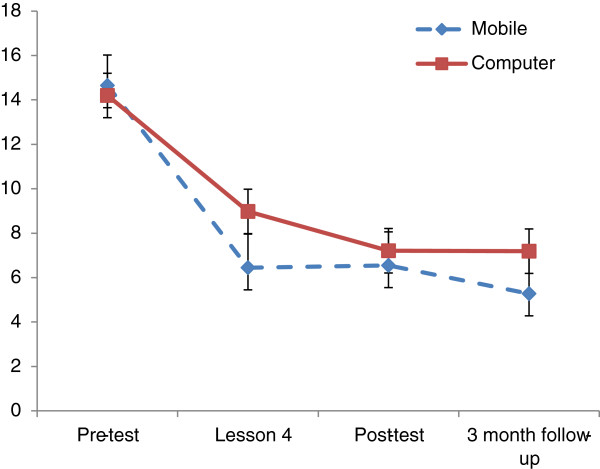
Background: This paper reports the results of a pilot randomized controlled trial comparing the delivery modality (mobile phone/tablet or fixed computer) of a cognitive behavioural therapy intervention for the treatment of depression. The aim was to establish whether a previously validated computerized program (The Sadness Program) remained efficacious when delivered via a mobile application. Method: 35 participants were recruited with Major Depression (80% female) and randomly allocated to access the program using a mobile app (on either a mobile phone or iPad) or a computer. Participants completed 6 lessons, weekly homework assignments, and received weekly email contact from a clinical psychologist or psychiatrist until completion of lesson 2. After lesson 2 email contact was only provided in response to participant request, or in response to a deterioration in psychological distress scores. The primary outcome measure was the Patient Health Questionnaire 9 (PHQ-9). Of the 35 participants recruited, 68.6% completed 6 lessons and 65.7% completed the 3-months follow up. Attrition was handled using mixed-model repeated-measures ANOVA. Results: Both the Mobile and Computer Groups were associated with statistically significantly benefits in the PHQ-9 at post-test. At 3 months follow up, the reduction seen for both groups remained significant. Conclusions: These results provide evidence to indicate that delivering a CBT program using a mobile application, can result in clinically significant improvements in outcomes for patients with depression. Trial registration: Australian New Zealand Clinical Trials Registry ACTRN 12611001257954
Overview
The claims and statistics of this paper haven’t been checked yet.
Free: it reads the open-access text and checks the first 5 claims that cite a source we can check. Create a free account to check every claim.
Integrity signals
Registry
Cites
Statistics
Figures
Verification
Claims the paper makes
The claims and statistics of this paper haven’t been checked yet.
Free: it reads the open-access text and checks the first 5 claims that cite a source we can check. Create a free account to check every claim.
Claims other papers make about this one
Each is checked against this paper’s own text: does it say what the citing paper says it does?
The cited source says what the claim attributes to it.
In the citing paper
“Some DMHIs, such as the Get Happy Program [13], consist of a series of lessons or modules that are designed to be completed in a sequential fashion over a specified number of weeks.”
From Digital Mental Health Interventions for Depression: Scoping Review of User Engagement (2022) · cites this paper as [13]
The cited source says what the claim attributes to it.
In the citing paper
“We have identified through our systematic review four apps in English that offer CBT or BA treatment for depression and have been studied by researchers and published in scientific papers, the Behavioural Activation Scheduling [50], the Get Happy Program [40], CBT Mobilwork [65] and Mobilyze [45].”
From A Systematic Review of Cognitive Behavioral Therapy and Behavioral Activation Apps for Depression (2016) · cites this paper as [40]
The cited source says what the claim attributes to it.
In the citing paper
“We have started to conduct trials in smartphone-delivered treatments and so did other research groups [Watts et al., 2013].”
From Internet-based treatments - Experiences from Sweden (2013) · cites this paper as Watts et al., 2013
The cited source says what the claim attributes to it.
In the citing paper
“Other studies also report positive outcomes with the use of mobile applications for the management of different mood disorders (106–108).”
From Mobile intervention for individuals with psychosis, dual disorders, and their common comorbidities: A literature review (2019) · cites this paper as [108]
The cited source says what the claim attributes to it.
In the citing paper
“and improving depressive symptoms (e.g., 107, 108, 112, 114)”
From Mobile intervention for individuals with psychosis, dual disorders, and their common comorbidities: A literature review (2019) · cites this paper as [108]
3 more claims about this paper
Create a free account to see every claim other papers make about this one.
Self-check
Percentages, sums and reported differences re-computed from the paper’s own numbers.
The self-check needs the paper’s full text.
Citations
Cites
The PHQ-9: Validity of a brief depression severity measure
Kroenke, K., Spitzer, R. L., & Williams, J. B. W. (2001) · Journal of General Internal Medicine · doi:10.1046/j.1525-1497.2001.016009606.x · Cited by 44,910
(1998) · The Journal of Clinical Psychiatry · Cited by 19,139
KESSLER, R. C., ANDREWS, G., COLPE, L. J., HIRIPI, E., MROCZEK, D. K., NORMAND, S.-L. T., WALTERS, E. E., & ZASLAVSKY, A. M. (2002) · Psychological Medicine · doi:10.1017/s0033291702006074 · Cited by 10,327
Self-citation(1998) · PubMed · Cited by 10,216
The mini international neuropsychiatric interview
Lecrubier, Y., Sheehan, D., Hergueta, T., & Weiller, E. (1998) · European Psychiatry · doi:10.1016/s0924-9338(99)80239-9 · Cited by 5,872
Higgins, S. M. F., Macken, A. P., Cullen, W., Saunders, J., Dunne, C. P., & O’Gorman, C. S. (2013) · PubMed · doi:10.34961/9953 · Cited by 4,808
Depression, chronic diseases, and decrements in health: results from the World Health Surveys
Moussavi, S., Chatterji, S., Verdes, E., Tandon, A., Patel, V., & Ustun, B. (2007) · The Lancet · doi:10.1016/s0140-6736(07)61415-9 · Cited by 4,070
Robins, L. N. (1988) · Archives of General Psychiatry · doi:10.1001/archpsyc.1988.01800360017003 · Cited by 2,909
Webb, T. L., Joseph, J., Yardley, L., & Michie, S. (2010) · Journal of Medical Internet Research · doi:10.2196/jmir.1376 · Cited by 2,517
Psychometric properties of the credibility/expectancy questionnaire
Devilly, G. J., & Borkovec, T. D. (2000) · Journal of Behavior Therapy and Experimental Psychiatry · doi:10.1016/s0005-7916(00)00012-4 · Cited by 2,295 · cited 3×
“All participants completed the questionnaire outcome measures (BDI-II, PHQ-9, K-10, CEQ, ERS and SDS) at 1-week post treatment and at 3-months follow up.”
Background
Research works printed but not linked: 4
- Murray CJL Lopez AD The Global Burden of Disease 1996 Geneva: World Health Organization, Harvard School of Public Health, World Bank
- International Telecommunication Union The World in 2011 ICT Facts and Figures 2011 Geneva, Switzerland: ITU 1 8
- Larson R Csikszentimihalyi M The experience sampling method: new directions for methodology Social Behavioural Science 1980 15 1 15
- Beck AT Steer RA Brown GK Beck Depression Inventory-II manual 1996 2 San Antonio, TX: Harcourt Brace
Cited by
Items 101–200 of 330
Vally, Z., & Hichami, F. E. (2019) · Addictive Behaviors Reports · doi:10.1016/j.abrep.2019.100185 · Cited by 64
“needed in-person treatment might not be feasible (Fjeldsoe, Marshall, & Miller, 2009; Norris, Swartz, & Tomlinson, 2013; Tsai et al., 2014; Watts et al., 2013).”
BackgroundImproving Smartphone Users' Affect and Wellbeing with Personalized Positive Psychology Interventions
Jeong, S., & Breazeal, C. L. (2016) · Proceedings of the Fourth International Conference on Human Agent Interaction · doi:10.1145/2974804.2974831 · Cited by 52
Roncero, M., Belloch, A., & Doron, G. (2019) · JMIR mhealth and uhealth · doi:10.2196/11443 · Cited by 55
“Our findings are consistent with those of previous research showing the efficacy of CBT-based apps in cognitive and behavioral change [52,53].”
ResultAcceptability of Digital Mental Health Interventions for Depression and Anxiety: Systematic Review
Lau, C. K. Y., Saad, A., Camara, B., Rahman, D., & Bolea-Alamanac, B. (2024) · Journal of Medical Internet Research · doi:10.2196/52609 · Cited by 51
Measuring Psychiatric Symptoms Remotely: a Systematic Review of Remote Measurement-Based Care
Goldberg, S. B., Buck, B., Raphaely, S., & Fortney, J. C. (2018) · Current Psychiatry Reports · doi:10.1007/s11920-018-0958-z · Cited by 59
Christoforou, M., Sáez Fonseca, J. A., & Tsakanikos, E. (2017) · Journal of Medical Internet Research · doi:10.2196/jmir.7747 · Cited by 48
Wahle, F., Bollhalder, L., Kowatsch, T., & Fleisch, E. (2017) · Journal of Medical Internet Research · doi:10.2196/jmir.7381 · Cited by 48
“95) 15 Computer-based CBT Smartphone-based CBT Watts [66]”
BackgroundInfluentialBoettcher, J., Magnusson, K., Marklund, A., Berglund, E., Blomdahl, R., Braun, U., Delin, L., Lundén, C., Sjöblom, K., Sommer, D., et al. (2018) · Computers in Human Behavior · doi:10.1016/j.chb.2018.04.052 · Cited by 47
Prada, P., Zamberg, I., Bouillault, G., Jimenez, N., Zimmermann, J., Hasler, R., Aubry, J.-M., Nicastro, R., & Perroud, N. (2017) · Perspectives In Psychiatric Care · doi:10.1111/ppc.12178 · Cited by 47
“…et al., 2014; Gee, Coventry, & Birkenhead, 2005; Gustafson et al., 2014; Lucht et al., 2014; Ly, Dahl, Carlbring, & Andersson, 2012; Macias et al., 2015; PalmierClaus et al., 2012; Schaffer, Kreindler, Reis, & Levitt, 2013; Shapiro et al., 2010; Silk et al., 2011; Watts et al., 2013).”
BackgroundHall, A. E., Nguyen, N. H., Cascavita, C. T., Shariati, K., Patel, A. K., Chen, W., Kang, Y., Ren, X., Tseng, C.-H., Hidalgo, M. A., et al. (2025) · Annals of Surgery · doi:10.1097/sla.0000000000006677 · Cited by 52
Smith, J., Newby, J. M., Burston, N., Murphy, M. J., Michael, S., Mackenzie, A., Kiln, F., Loughnan, S. A., O'Moore, K. A., Allard, B. J., et al. (2017) · Internet Interventions · doi:10.1016/j.invent.2017.05.001 · Cited by 45
“The program has been evaluated in four previous trials and its e ffi cacy has been established (Perini et al., 2008, 2009, Titov et al., 2010, Watts et al., 2013) (between-groups e ff ect sizes: d = 0.8 – 1.3, within-group pre-post e ff ect sizes: d = 0.9 – 1.0).”
InfluentialSelf-citationInternet‐Based Psychotherapy for Adult Depression: What About the Mechanisms of Change?
Mogoașe, C., Cobeanu, O., David, O., Giosan, C., & Szentagotai, A. (2017) · Journal of Clinical Psychology · doi:10.1002/jclp.22326 · Cited by 45
“, 2012] and treatment credibility and expectancies for improvement [Arpin-Cribbie, Irvine, & Ritvo, 2012; Watts et al., 2013]), but none of them conducted mediation or moderation analyses.”
BackgroundYin, R., Martinengo, L., Smith, H. E., Subramaniam, M., Griva, K., & Car, L. T. (2024) · The Lancet Healthy Longevity · doi:10.1016/j.lanhl.2024.08.007 · Cited by 57
Marcelle, E. T., Nolting, L., Hinshaw, S. P., & Aguilera, A. (2019) · JMIR mhealth and uhealth · doi:10.2196/10948 · Cited by 57
“In addition, mobile phone-based psychotherapy for adult depression has been demonstrated to be efficacious [28], yet this workaround does not come without its own set of limitations.”
BackgroundSystematic review and meta-analysis of adverse events in clinical trials of mental health apps
Linardon, J., Fuller-Tyszkiewicz, M., Firth, J., Goldberg, S. B., Anderson, C., McClure, Z., & Torous, J. (2024) · npj Digital Medicine · doi:10.1038/s41746-024-01388-y · Cited by 44
Garnett, C., Crane, D., Michie, S., West, R., & Brown, J. (2016) · BMC Public Health · doi:10.1186/s12889-016-3140-8 · Cited by 42
Tønning, M. L., Faurholt-Jepsen, M., Frost, M., Martiny, K., Tuxen, N., Rosenberg, N., Busk, J., Winther, O., Melbye, S. A., Thaysen-Petersen, D., et al. (2021) · Journal of Affective Disorders · doi:10.1016/j.jad.2020.12.141 · Cited by 42
“…2019) identified only seven RCTs investigating the effect of smartphone-based treatment in patients with a validated diagnosis of a depressive disorder (Hur et al., 2018; Ly et al., 2015; Ly et al., 2014; Mantani et al., 2017; Roepke et al., 2015; Stiles-Shields et al., 2019; Watts et al., 2013).”
BackgroundMethodInfluentialIntegrating Cultural Relevance into a Behavioral mHealth Intervention for Native American Youth
Vigil-Hayes, M., Collier, A. F., Hagemann, S., Castillo, G., Mikkelson, K., Dingman, J., Muñoz, A., Luther, J., & McLaughlin, A. (2021) · Proceedings of the ACM on Human-Computer Interaction · doi:10.1145/3449239 · Cited by 46
“One example of a CBT mHealth intervention is “The Get Happy Program,” designed to help depressed participants in a clinical trial [117].”
BackgroundTønning, M. L., Kessing, L. V., Bardram, J. E., & Faurholt-Jepsen, M. (2019) · Journal of Medical Internet Research · doi:10.2196/15362 · Cited by 40
“…BDIIIe, K-10f, and other) Open (3 months); advertising + application on a Web page MINIc phone inter- view + PHQ-9d Major depressive disorder (Rb) Watts et al, 2013 [22] Internet platform Questionnaire (LSAS-SRi)aOpen (2011 and 2012); advertising in media and Facebook.”
BackgroundMethodInfluentialBoh, B., Lemmens, L. H. J. M., Jansen, A. T. M., Nederkoorn, C., Kerkhofs, V., Spanakis, G., Weiß, G., & Roefs, A. (2016) · Trials · doi:10.1186/s13063-016-1280-x · Cited by 49
Reger, G. M., Skopp, N. A., Edwards-Stewart, A., & Lemus, E. L. (2015) · Military Psychology · doi:10.1037/mil0000083 · Cited by 40
“…apps have been evaluated to support patients with psychiatric disorders such as schizophrenia (Ben-Zeev et al., 2013), psychosis (Killackey et al., 2011), depression (Burns et al., 2011; Watts et al., 2013), and generalized anxiety disorder (Pallavicini, Algeri, Repetto, Gorini, & Riva, 2009).”
BackgroundLindner, P., Ivanova, E., Ly, K. H., Andersson, G., & Carlbring, P. (2013) · Trials · doi:10.1186/1745-6215-14-437 · Cited by 39
“computer-delivered CBTstyle self-help for depression found equal improvements in the two groups [16].”
Wang, X., Shi, J. J., & Lee, K. M. (2022) · Journal of Medical Internet Research · doi:10.2196/24086 · Cited by 49
“…technology and the spread of its use, smartphones have facilitated several positive health-related outcomes, including the increased provision of psychological interventions [1], improved access to health services, and reductions in various forms of social inequality [2] in populations worldwide.”
Use of Computer and Mobile Technologies in the Treatment of Depression
Callan, J. A., Wright, J. H., Siegle, G. J., Howland, R. H., & Kepler, B. B. (2016) · Archives of Psychiatric Nursing · doi:10.1016/j.apnu.2016.10.002 · Cited by 44
Goldin, P. R., Lindholm, R., Ranta, K., Hilgert, O., Helteenvuori, T., & Raevuori, A. (2019) · JMIR Formative Research · doi:10.2196/11509 · Cited by 38
“ANOVA: analysis of variance BDI-II: Beck Depressive Inventory-II CBT: cognitive behavioral therapy HIPAA: Health Insurance Portability and Accountability Act PHQ-9: Patient Health Questionnaire 9-item version RCT: randomized controlled trial WHO: World Health Organization Edited by G Eysenbach; submitted 06.07.18; pee…”
BackgroundInfluentialBiagianti, B., Foti, G., Liberto, A. D., Bressi, C., & Brambilla, P. (2023) · Journal of Affective Disorders · doi:10.1016/j.jad.2023.01.057 · Cited by 45
Tuerk, P. W., Schaeffer, C. M., Mcguire, J. F., Larsen, M. A., Capobianco, N. B., & Piacentini, J. C. (2019) · Current Psychiatry Reports · doi:10.1007/s11920-019-1092-2 · Cited by 35
Design for mobile mental health: an exploratory review
Aryana, B., Brewster, L., & Abdelnour-Nocera, J. (2018) · Health and Technology · doi:10.1007/s12553-018-0271-1 · Cited by 41
Coaching to Support Mental Health Apps: Exploratory Narrative Review
Meyer, A., Wisniewski, H., & Torous, J. (2022) · JMIR Human Factors · doi:10.2196/28301 · Cited by 34
Pennou, A., Lecomte, T., Potvin, S., & Khazaal, Y. (2019) · Frontiers in Psychiatry · doi:10.3389/fpsyt.2019.00302 · Cited by 34
Rathbone, A. L., & Prescott, J. (2018) · FOCUS The Journal of Lifelong Learning in Psychiatry · doi:10.1176/appi.focus.16406 · Cited by 39
mHealth App Prescription in Australian General Practice: Pre-Post Study
Byambasuren, O., Beller, E., Hoffmann, T., & Glasziou, P. (2020) · JMIR mHealth and uHealth · doi:10.2196/16497 · Cited by 34
Rohani, D. A., Tuxen, N., Lopategui, A. Q., Faurholt-Jepsen, M., Kessing, L. V., & Bardram, J. E. (2019) · Proceedings of the 13th EAI International Conference on Pervasive Computing Technologies for Healthcare · doi:10.1145/3329189.3329214 · Cited by 33
“Examples include depression [22, 36], bipolar disorder (BD) [3], schizophrenia [4, 35], ADHD [9, 26], anxiety [8], and sleep disorders [10] Many of these studies use smartphone technology (mHealth)”
BackgroundNorris, L., Swartz, L. M., & Tomlinson, M. (2013) · South African Journal of Psychology · doi:10.1177/0081246313493376 · Cited by 44
“Mobile phones are particularly suited to CBT given its highly structured framework and the way it employs homework as a learning tool (Watts et al., 2013).”
BackgroundThe paradox of technology innovativeness and risk perceptions – A profile of Asian smartphone users
Wang, X., & Lee, K. M. (2020) · Telematics and Informatics · doi:10.1016/j.tele.2020.101415 · Cited by 42
Ha, S. W., & Kim, J. (2020) · International Journal of Human-Computer Interaction · doi:10.1080/10447318.2020.1750792 · Cited by 37
“Our experimental results on depression aligns with previous studies that psychological interventions using CBT on mobile apps could alleviate depression in app users (Arean et al., 2016; Watts et al., 2013).”
ResultWatts, S. E., & Andrews, G. (2014) · Asian Journal of Psychiatry · doi:10.1016/j.ajp.2014.06.007 · Cited by 32
“The online programs can be accessed online using a computer and more recently on a smart mobile phone, as we have shown that the depression course remained efficacious when delivered in this modality (Watts et al., 2013).”
BackgroundSelf-citationKleinau, E., Lamba, T., Jaskiewicz, W., Gorentz, K., Hungerbuehler, I., Rahimi, D., Kokota, D., Maliwichi, L., Jamu, E. S., Zumazuma, A., et al. (2024) · PLoS ONE · doi:10.1371/journal.pone.0303370 · Cited by 54
Karcher, N. R., & Presser, N. R. (2016) · Ethics & Behavior · doi:10.1080/10508422.2016.1229187 · Cited by 40
“Two studies found that guided apps led to a reduction in depressive symptoms (Burns et al., 2011;Watts et al., 2013), or an increase in emotional self-awareness (Kauer et al.”
BackgroundKoçak, V., Ege, E., & Iyısoy, M. S. (2021) · Archives of Psychiatric Nursing · doi:10.1016/j.apnu.2021.06.009 · Cited by 37
Leong, Q. Y., Sridhar, S., Blasiak, A., Tadeo, X., Yeo, G., Remus, A., & Ho, D. (2022) · Journal of Medical Internet Research · doi:10.2196/27388 · Cited by 40
“7% (145/8362) of articles (Multimedia Appendix 2 [22-166]).”
Featherall, J. T., Lapin, B. R., Chaitoff, A. M., Havele, S. A., Thompson, N. R., & Katzan, I. L. (2018) · Journal of Medical Internet Research · doi:10.2196/jmir.7766 · Cited by 36
“Recent trials of mobile apps have also demonstrated efficacy in managing depression [55-57].”
Mobile Health Interventions for Psychiatric Conditions in Children
Archangeli, C., Marti, F., Pasiah, E., & Zima, B. T. (2016) · Child and Adolescent Psychiatric Clinics of North America · doi:10.1016/j.chc.2016.07.009 · Cited by 39
On behalf of steering committee of the Fun to Learn to Act and Think through Technology (FLATT) project, Watanabe, N., Horikoshi, M., Yamada, M., Shimodera, S., Akechi, T., Miki, K., Inagaki, M., Yonemoto, N., Imai, H., et al. (2015) · Trials · doi:10.1186/s13063-015-0805-z · Cited by 28
Hamamura, T., Suganuma, S., Ueda, M., Mearns, J., & Shimoyama, H. (2018) · JMIR Mental Health · doi:10.2196/mental.8984 · Cited by 27
“Evidence-based apps are only a small portion of available apps, but studies have shown that mobile phone-based CDIs have the potential to reduce psychological and physical symptoms [5-7] and possibly risky drinking [8].”
Faurholt-Jepsen, M., Frost, M., Martiny, K., Tuxen, N., Rosenberg, N., Busk, J., Winther, O., Bardram, J. E., & Kessing, L. V. (2017) · Trials · doi:10.1186/s13063-017-2015-3 · Cited by 28
Akechi, T., Yamaguchi, T., Uchida, M., Imai, F., Momino, K., Katsuki, F., Sakurai, N., Miyaji, T., Horikoshi, M., Furukawa, T. A., et al. (2018) · BMJ Open · doi:10.1136/bmjopen-2018-024794 · Cited by 27
Online Cognitive Behavioral Therapy for Depressed Primary Care Patients: A Pilot Feasibility Project
Whiteside, U., Richards, J., Steinfeld, B., Simon, G., Caka, S., Tachibana, C., Stuckey, S., & Ludman, E. (2014) · The Permanente Journal · doi:10.7812/tpp/13-155 · Cited by 27
Hurley, O. A. (2021) · Frontiers in Psychology · doi:10.3389/fpsyg.2021.621283 · Cited by 33
de Valle, M. K., & Wade, T. D. (2022) · International Journal of Eating Disorders · doi:10.1002/eat.23756 · Cited by 40
Evaluating User Needs in Wellness Apps
Platt, A. J., Outlay, C. N., Sarkar, P., & Karnes, S. (2015) · International Journal of Human-Computer Interaction · doi:10.1080/10447318.2015.1099803 · Cited by 33
“Although Donker et al. suggested that there is promise for utilizing apps such as the app tested by Watts et al. (2013), to manage conditions such as anxiety and depression, the assertion is cautionary because of the lack of supporting evidence from randomized controlled trials.”
BackgroundPurkayastha, S., Addepally, S. A., & Bucher, S. (2020) · JMIR Human Factors · doi:10.2196/14146 · Cited by 33
An Interactive Mobile App Game to Address Aggression (RegnaTales): Pilot Quantitative Study
Ong, J. G., Lim-Ashworth, N., Ooi, Y. P., Boon, J. S. T., Ang, R. P.-H., Goh, D. H., Ong, S. H., & Fung, D. S. S. (2019) · JMIR Serious Games · doi:10.2196/13242 · Cited by 30
“With advancements in technology, there have been attempts to increase access to therapy through alternatives or adjuncts (eg, computers, internet, and mobile phones) to clinic-based therapy [11-18].”
Almodóvar, A. S., Surve, S., Axon, D. R., Cooper, D., & Nahata, M. C. (2018) · JMIR mhealth and uhealth · doi:10.2196/mhealth.9612 · Cited by 33
Zhao, D., Lustria, M. L. A., & Hendrickse, J. (2017) · Patient Education and Counseling · doi:10.1016/j.pec.2017.01.004 · Cited by 31
Giosan, C., Cobeanu, O., Mogoaşe, C., Szentagotai, A., Mureşan, V., & Boian, R. (2017) · Trials · doi:10.1186/s13063-017-1960-1 · Cited by 23
“Several preliminary studies on some depression apps have shown promising results in reducing subthreshold or mild to moderate depressive symptoms [19 – 24].”
BackgroundMethodResultEvidence on Technology-Based Psychological Interventions in Diagnosed Depression: Systematic Review
Köhnen, M., Dreier, M., Seeralan, T., Kriston, L., Härter, M., Baumeister, H., & Liebherz, S. (2021) · JMIR Mental Health · doi:10.2196/21700 · Cited by 23
Păsărelu, C.-R., Dobrean, A., Andersson, G., & Zaharie, G. C. (2021) · Internet Interventions · doi:10.1016/j.invent.2021.100479 · Cited by 29
Crookston, B. T., West, J. H., Hall, P. C., Dahle, K. M., Heaton, T. L., Beck, R. N., & Muralidharan, C. (2017) · JMIR Mental Health · doi:10.2196/mental.7262 · Cited by 23
“Additional mental and emotional self-help apps, including Get Happy Program [26], CopeSmart [27], Mobile Type, and Mobile Stress Management [9], have also shown significant potential for improving mental and emotional health.”
BackgroundPalmer, K. M., & Burrows, V. (2020) · Journal of Technology in Behavioral Science · doi:10.1007/s41347-020-00160-9 · Cited by 30
Efficacy, Safety, and Evaluation Criteria of mHealth Interventions for Depression: Systematic Review
Duarte‐Díaz, A., Perestelo‐Pérez, L., Gelabert, E., Robles, N., Pérez-Navarro, A., Vidal‐Alaball, J., Solà-Morales, O., Sales-Masnou, A., & Carrión, C. (2023) · JMIR Mental Health · doi:10.2196/46877 · Cited by 31
“Results were inconsistent, with 4 observing significant stress reductions with the mHealth interventions compared with the control group [44,48,49,58], and 3 indicating no significant effects [35,46,51].”
BackgroundMethodInfluentialBriffault, X., Morgiève, M., & Courtet, P. (2018) · Brain Sciences · doi:10.3390/brainsci8060098 · Cited by 23
“, MoodHacker [62] and Get Happy [63]), improve psychological flexibility, regulate emotions and guilt more effectively, and identify what is really important to him in life in order to act in this direction using elements of Acceptance-Based Therapy (e.”
MethodFrançois, J., Audrain‐Pontevia, A., Boudhraâ, S., & Vial, S. (2024) · Journal of Medical Internet Research · doi:10.2196/48182 · Cited by 29
“These apps are designed and used for patients with major depressive disorders [23], bipolar disorders [24], anxiety disorders [17], substance abuse disorders [25], schizophrenia [26], and psychotic disorders [27].”
Chau, L. W., Lam, R. W. M., Minas, H., Hayashi, K., Nguyen, V. C., & O’Neil, J. (2025) · JMIR Mental Health · doi:10.2196/68296 · Cited by 40
“Research suggests that there is presently limited theoretical and practical training on novel digital tools and interventions in psychiatry, which influences clinicians’ understanding and perceptions of DMHIs [159].”
Dynamics of Metabolism and Decision Making During Alcohol Consumption: Modeling and Analysis
Giraldo, L. F., Passino, K. M., Clapp, J. D., & Ruderman, D. E. (2016) · IEEE Transactions on Cybernetics · doi:10.1109/tcyb.2016.2593009 · Cited by 21
“Current technologies, such as smartphones, could possibly assist with interventions at the individual and group level and help minimize high-risk situations [27], [28].”
BackgroundPark, C., Zhu, J., Ho, R., Rosenblat, J. D., Iacobucci, M., Gill, H., Mansur, R. B., & McIntyre, R. S. (2020) · Annals of Clinical Psychiatry · doi:10.1177/104012372003200109 · Cited by 21
Behavioral Health Apps Abundant, but Evidence-Based Research Nearly Nonexistent
Wiederhold, B. K. (2015) · Cyberpsychology Behavior and Social Networking · doi:10.1089/cyber.2015.29001.bkw · Cited by 21
“It found that both the smartphone/tablet and computer groups were associated with statistically significantly benefits in the PHQ-9 (Patient Health Questionnaire, 9 questions) at post-test and at 3 month follow-up.(6) The authors suggested a larger sample size and the addition of a control group.”
Christopoulou, S., Kotsilieris, T., & Anagnostopoulos, I. (2018) · Healthcare · doi:10.3390/healthcare6030109 · Cited by 20
Forchuk, C., Donelle, L., Ethridge, P., & Warner, L. (2015) · JMIR Mental Health · doi:10.2196/mental.3926 · Cited by 20
“For example, studies have shown that mobile and Web-based interventions can effectively deliver cognitive behavioral therapy for depression [14], enhance psychosocial functioning in depressed individuals [15], and decrease psychological distress for individuals experiencing anxiety disorders [16].”
Mouchabac, S., Leray, P., Adrien, V., Gollier-Briant, F., & Bonnot, O. (2021) · Journal of Medical Internet Research · doi:10.2196/24560 · Cited by 20
“Some of them focus on providing in-app therapy, such as iBobbly [6], SuperBetter [7], Get Happy [8], or ACT Smart [9].”
Kim, S. K., Lee, M., Jeong, H. C., & Jang, Y. M. (2022) · Japan Journal of Nursing Science · doi:10.1111/jjns.12476 · Cited by 25
Khadivi, R., Taleban, R., Zamani, A., Moafi, M., & Jiryaee, N. (2016) · International Journal of Preventive Medicine · doi:10.4103/2008-7802.177889 · Cited by 24
Addepally, S. A., & Purkayastha, S. (2017) · Lecture notes in computer science · doi:10.1007/978-3-319-58466-9_1 · Cited by 27
“Research evidence suggest that CBT delivered via mobile application can have clinically significant improvement in the disease outcomes for depression patients [13].”
BackgroundLan, A., Lee, A., Munroe, K., McRae, C., Kaleis, L., Keshavjee, K., & Guergachi, A. (2018) · BioMedical Engineering OnLine · doi:10.1186/s12938-018-0611-4 · Cited by 27
Responding to women's needs and preferences in an online program to prevent postpartum depression
Ramphos, E. S., Kelman, A. R., Stanley, M., & Barrera, A. Z. (2019) · Internet Interventions · doi:10.1016/j.invent.2019.100275 · Cited by 22
Ali, D., Azale, T., Wondie, M., & Tadessa, J. (2022) · Psychology Research and Behavior Management · doi:10.2147/prbm.s338823 · Cited by 23
Yang, Y. J., & Chung, K. (2022) · Journal of Autism and Developmental Disorders · doi:10.1007/s10803-022-05617-9 · Cited by 23
“App-based interventions typically show high accessibility and usability at a low cost (Ben-Zeev et al., 2014; Watts et al., 2013).”
BackgroundMorello, K., Schäfer, S. K., Kunzler, A. M., Priesterroth, L., Tüscher, O., & Kubiak, T. (2023) · Frontiers in Digital Health · doi:10.3389/fdgth.2023.1253390 · Cited by 28
Navigating the Realities of Metaphor and Psychotherapy Research
Tay, D. (2022) · Cambridge University Press eBooks · doi:10.1017/9781108975049 · Cited by 18
“This is often understood as the application of ‘gold standard’ research designs like randomized controlled trials (Dyer & Joseph, 2006) to measure the effects of specific therapeutic interventions under strictly regulated settings (Craske et al., 2014; Sensky et al., 2000; Watts et al., 2013).”
MethodPositive Technology: Using Mobile Phones for Psychosocial Interventions
Konrath, S. (2015) · Encyclopedia of Mobile Phone Behavior · doi:10.4018/978-1-4666-8239-9.ch072 · Cited by 19
Thiha, P., Pisani, A. R., Gurditta, K., Cherry, E., Peterson, D. R., Kautz, H., & Wyman, P. A. (2016) · JMIR Public Health and Surveillance · doi:10.2196/publichealth.6207 · Cited by 19
Onyeaka, H., Wisniewski, H., Henson, P., & Torous, J. B. (2020) · Journal of Behavioral and Cognitive Therapy · doi:10.1016/j.jbct.2020.03.017 · Cited by 20
Planas, R., & Yuguero, O. (2021) · Informatics for Health and Social Care · doi:10.1080/17538157.2021.1887196 · Cited by 19
Ju, M., Zhang, Z., Tao, X., Yong, L., Gao, L., & Yu, W. (2023) · Medicine · doi:10.1097/md.0000000000035419 · Cited by 28
Smartphone Applications for Mental Health—A Rapid Review
Hind, J., & Sibbald, S. L. (2014) · Western Undergraduate Research Journal Health and Natural Sciences · doi:10.5206/wurjhns.2014-15.16 · Cited by 17
Schmädeke, S., & Bischoff, C. (2015) · Verhaltenstherapie · doi:10.1159/000441856 · Cited by 15
French, B., Hall, C. L., Vallejos, E. P., Sayal, K. S., & Daley, D. (2020) · JMIR Medical Education · doi:10.2196/19871 · Cited by 15
“Although many pilot RCTs struggle to establish statistically significant results often because of small sample sizes [39-41], this study indicates the potential efficacy of the intervention, despite the limited sample size.”
Enabling prescription-based health apps
Osmani, V., Forti, S., Mayora, O., & Conforti, D. (2017) · International Conference on Pervasive Computing Technologies for Healthcare · doi:10.1145/3154862.3154911 · Cited by 17
“[14] carried out a RCT (n=35) comparing delivery of Cognitive Behaviour Therapy (CBT) through a mobile phone app, versus a traditional computer in patients with major depression.”
MethodBurnett‐Zeigler, I., Waldron, E. M., Hong, S. H., Yang, A., Wisner, K. L., & Ciolino, J. D. (2018) · Complementary Therapies in Clinical Practice · doi:10.1016/j.ctcp.2018.09.001 · Cited by 16
Antunes, E., Alcaire, R., & Amaral, I. (2022) · Social Sciences · doi:10.3390/socsci12010003 · Cited by 18
Mobile-based ecological momentary assessment and intervention: bibliometric analysis
Yin, H., Zhu, H., Gu, J., Qin, H., Ding, W., Guo, N., Fu, J., & Yang, Y. X. (2024) · Frontiers in Psychiatry · doi:10.3389/fpsyt.2024.1300739 · Cited by 19
Giosan, C., Cobeanu, O., Mogoaşe, C., Szentágotai Tătar, A., Mureşan, V., & Boian, R. (2016) · Trials · doi:10.1186/s13063-016-1740-3 · Cited by 13
Akechi, T., Furukawa, T. A., Noma, H., Iwata, H., Toyama, T., Higaki, K., Matsuoka, H., Zenda, S., Iwatani, T., Akahane, K., et al. (2024) · Psychiatry and Clinical Neurosciences · doi:10.1111/pcn.13657 · Cited by 16
“20 We recently developed a smartphone CBT app comprising behavioral activation (BA) and problem-solving (PS), which helped reduce depressive symptoms and fear of cancer recurrence among breast cancer survivors.”
BackgroundThe Development of the Postpartum Depression Self-Management Mobile Application “Happy Mother”
Seo, J. M., Kim, S., Na, H., Kim, J. H., & Lee, H. (2021) · CIN Computers Informatics Nursing · doi:10.1097/cin.0000000000000738 · Cited by 13
MacLean, S. E., & Hatcher, S. (2019) · Frontiers in Communication · doi:10.3389/fcomm.2019.00052 · Cited by 30
mHealth for Mental Health in the COVID-19 Era
Lee, S., Shin, H., & Hur, J. (2020) · The Korean Journal of Clinical Psychology · doi:10.15842/kjcp.2020.39.4.007 · Cited by 13
User Reviews of Depression App Features: Sentiment Analysis
Meyer, J. M., & Okuboyejo, S. R. (2021) · JMIR Formative Research · doi:10.2196/17062 · Cited by 18
Omylinska‐Thurston, J., Aithal, S., Liverpool, S., Clark, R. D., Moula, Z., Wood, J., Viliardos, L., Rodríguez-Dorans, E., Farish-Edwards, F., Parsons, A. S., et al. (2024) · JMIR Mental Health · doi:10.2196/55500 · Cited by 18
Amer, N. A., Abdelrazek, S., Eladrosy, W., El-Bakry, H., & Shohieb, S. M. (2024) · International Journal of Cognitive Therapy · doi:10.1007/s41811-024-00225-0 · Cited by 11
“Watts et al. (2013) investigated a narrative griev-ing program but ran into problems with incomplete data and short follow-up times.”
Dempsey, A. F., Maertens, J., Beaty, B. L., & O’Leary, S. T. (2015) · BMC Research Notes · doi:10.1186/s13104-015-1721-8 · Cited by 13
“This negative finding is important because iPad-based interventions have been successfully used in primary care settings for other health issues, and many researchers are currently examining the utility of web-based interventions to improve adolescent health [21–33].”
Background
Metadata
- Authors
- Watts, S., Mackenzie, A., Thomas, C., Griskaitis, A., Mewton, L., Williams, A., & Andrews, G.
- Affiliations
- UNSW Sydney (AU)
- Corresponding author
- Andrews, Gavin
- Venue
- BMC Psychiatry
- Published
- 2013-02-07
- Volume
- 13
- Issue
- 1
- Pages
- 49-49
- ISSN
- 1471-244X (ISSN-L)
- PMC
- PMC3571935
- OpenAlex
- W1968667849
- Cited by
- 329
- References
- 35
- Citations by year
- 2026: 4 · 2025: 11 · 2024: 16 · 2023: 14 · 2022: 24 · 2021: 25 · 2020: 33 · 2019: 37 · 2018: 34 · 2017: 42 · 2016: 32 · 2015: 31 · 2014: 16 · 2013: 10
- FWCI
- 45.35
- Type
- journal article
- Language
- en
- Open access
- gold
- doi.org
- Licence
- Locations
- BMC Psychiatry (publishedVersion, cc-by)
- Europe PMC (PubMed Central) (publishedVersion, cc-by)
- PubMed Central (publishedVersion, cc-by)
- PubMed (publishedVersion)
- DOAJ (DOAJ: Directory of Open Access Journals) (submittedVersion)
- Topics
- Social Sciences › Psychology › Applied Psychology › Digital Mental Health Interventions
- Social Sciences › Psychology › Experimental and Cognitive Psychology › Anxiety, Depression, Psychometrics, Treatment, Cognitive Processes
- Health Sciences › Health Professions › General Health Professions › Mobile Health and mHealth Applications
- Keywords
- cognitive behavioral therapy, depression, mobile health, mobile application, computer-based intervention, major depressive disorder, attrition, PHQ-9
- MeSH terms
- Adolescent, Adult, Computers, Major Depressive Disorder, Female, Humans, Male, Middle Aged, Patient Compliance, Pilot Projects, Psychiatric Status Rating Scales, Cognitive Behavioral Therapy, Treatment Outcome, Telemedicine, Cell Phone, Young Adult
About these checks
Registry, retraction, Cites and statistics results are computed, not judged, with one exception: a printed reference that no index lists is read once by a model before it counts as a citation error. Claims are extracted by a model and kept only when their quote appears verbatim in the text; each cited source is then checked, with a model’s help, for whether it says what the claim relies on. Those verdicts can be wrong — read the claim’s quote and the cited source before relying on one.
Statistics and arithmetic are recomputed, not judged.
Confidence bands are shown only for fields calibrated on our annotated test set. None is calibrated yet, so no band is shown.
What counts as a claim ›How we measure confidence ›How we check this ›
Are you an author, or do you see a problem with this page? Request a review
Data sources
Bibliographic data: Semantic Scholar, OpenAlex, Crossref.
Contains information from the Semantic Scholar Academic Graph Datasets, made available under the ODC Attribution License (ODC-BY 1.0).
Semantic Scholar’s data is described in: Kinney, R., et al. (2023). The Semantic Scholar Open Data Platform. arXiv:2301.10140.
