

Predictors of depression stigma
Open accessThe DOI matches its Crossref record; 39 of the 39 references it cites were found in a registry or an index.
Abstract
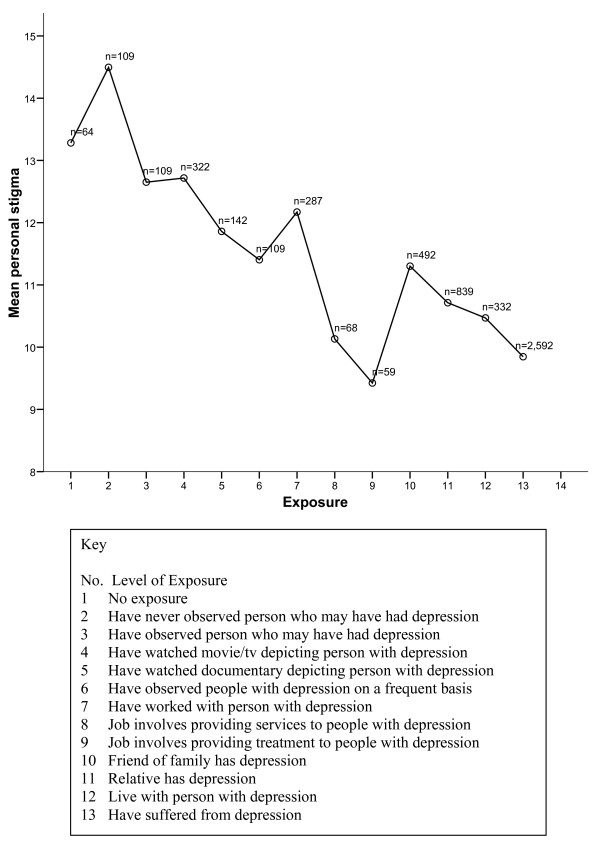
BACKGROUND: To investigate and compare the predictors of personal and perceived stigma associated with depression. METHOD: Three samples were surveyed to investigate the predictors: a national sample of 1,001 Australian adults; a local community sample of 5,572 residents of the Australian Capital Territory and Queanbeyan aged 18 to 50 years; and a psychologically distressed subset (n = 487) of the latter sample. Personal and Perceived Stigma were measured using the two subscales of the Depression Stigma Scale. Potential predictors included demographic variables (age, gender, education, country of birth, remoteness of residence), psychological distress, awareness of Australia's national depression initiative beyondblue, depression literacy and level of exposure to depression. Not all predictors were used for all samples. RESULTS: Personal stigma was consistently higher among men, those with less education and those born overseas. It was also associated with greater current psychological distress, lower prior contact with depression, not having heard of a national awareness raising initiative, and lower depression literacy. These findings differed from those for perceived stigma except for psychological distress which was associated with both higher personal and higher perceived stigma. Remoteness of residence was not associated with either type of stigma. CONCLUSION: The findings highlight the importance of treating the concepts of personal and perceived stigma separately in designing measures of stigma, in interpreting the pattern of findings in studies of the predictors of stigma, and in designing, interpreting the impact of and disseminating interventions for stigma.
Overview
The claims and statistics of this paper haven’t been checked yet.
Free: it reads the open-access text and checks the first 5 claims that cite a source we can check. Create a free account to check every claim.
Integrity signals
Registry
Cites
Statistics
Figures
Verification
Claims the paper makes
The claims and statistics of this paper haven’t been checked yet.
Free: it reads the open-access text and checks the first 5 claims that cite a source we can check. Create a free account to check every claim.
Claims other papers make about this one
Each is checked against this paper’s own text: does it say what the citing paper says it does?
The cited source says what the claim attributes to it.
In the citing paper
“Stigmatising attitudes towards people with mental health problems were primarily assessed with Social Distance Scales based on Link et al[26] and Personal Stigma Scales based on Griffiths et al [27]. Other validated stigma scales included the Attitudes to Mental Illness Scale,[28] Opening Minds Scale for Healthcare Providers[29] and the Personal Attributes scale [30].”
From Systematic review and meta-analysis of Mental Health First Aid training: Effects on knowledge, stigma, and helping behaviour (2018) · cites this paper as [27]
Self-check
Percentages, sums and reported differences re-computed from the paper’s own numbers.
The self-check needs the paper’s full text.
Citations
Cites
Tabachnick, B. G., & Fidell, L. S. (1983) · Cited by 80,042
The CES-D Scale: A Self-Report Depression Scale for Research in the General Population
Radloff, L. S. (1977) · Applied Psychological Measurement · doi:10.1177/014662167700100306 · Cited by 53,267
O’connor, B. P. (2000) · Behavior Research Methods, Instruments, & Computers · doi:10.3758/bf03200807 · Cited by 4,116 · cited 1×
“The estimated number of components in the scale was initially determined using both parallel analyses (95 th percentile) and the Velicer's Minimum Average Partial Method (MAP, [27]) using a script developed by O'Connor [ 28 ].”
MethodJorm, A. F., Korten, A. E., Jacomb, P. A., Christensen, H., Rodgers, B., & Pollitt, P. (1997) · Medical Journal of Australia · doi:10.5694/j.1326-5377.1997.tb140071.x · Cited by 2,585 · cited 1×
“Respondent capacity to recognise the problem depicted in the vignette as depression was evaluated [21].”
BackgroundSelf-citationMental health literacy: Public knowledge and beliefs about mental disorders
Jorm, A. F. (2000) · British Journal of Psychiatry · doi:10.1192/bjp.177.5.396 · Cited by 2,114
Self-citationInterpreting scores on the Kessler Psychological Distress Scale (K10)
Andrews, G., & Slade, T. (2001) · Australian and New Zealand Journal of Public Health · doi:10.1111/j.1467-842x.2001.tb00310.x · Cited by 2,021 · cited 6×
“This raises the possibility that the K10 is tapping a factor other than level of depressive symptoms that is important in personal stigma.”
MethodInfluentialPublic conceptions of mental illness: labels, causes, dangerousness, and social distance.
Link, B. G., Phelan, J. C., Bresnahan, M., Stueve, A., & Pescosolido, B. A. (1999) · American Journal of Public Health · doi:10.2105/ajph.89.9.1328 · Cited by 1,949 · cited 1×
“Respondents also completed a 5-item attitudinal Social Distance scale [20].”
MethodUnderstanding the impact of stigma on people with mental illness.
(2002) · Europe PMC (PubMed Central) · Cited by 1,786
Cognitive self-statements in depression: Development of an automatic thoughts questionnaire
Hollon, S. D., & Kendall, P. C. (1980) · Cognitive Therapy and Research · doi:10.1007/bf01178214 · Cited by 1,480 · cited 1×
“The second survey comprised questions designed to evaluate the severity of participants' depressive symptoms (Center for Epidemiologic Studies Depression Scale (CES-D, [25]) and their level of dysfunctional thoughts using the Automatic Thoughts Questionnaire (ATQ) [ 26 ].”
MethodAffects of variable and subject sampling on factor pattern recovery.
Velicer, W. F., & Fava, J. L. (1998) · Psychological Methods · doi:10.1037/1082-989x.3.2.231 · Cited by 998
Research works printed but not linked: 1
- Griffiths KM Christensen H Jorm AF Evans K Groves C Effect of web-based depression literacy and cognitive-behavioural therapy interventions on stigmatising attitudes to depression: randomised controlled trial British Journal of Psychiatry 2004 185 342 349 15458995 10.1192/bjp.185.4.342 · DOI · Paper page
Cited by
Items 201–300 of 454
Jin, H., & Wu, S. (2020) · Journal of Medical Internet Research · doi:10.2196/17282 · Cited by 16
“AUROC: area under the receiver operating characteristic curve DAS: Dysfunctional Attitudes Scale DCAT: Diabetes-Depression Care-management Adoption Trial DSS: Depression Stigma Scale GAD: Generalized Anxiety Disorder ICC: intraclass correlation coefficient INTW: interviewer LASSO: least absolute shrinkage and selectio…”
MethodInfluentialLee, E., Jeong, Y. M., & Yi, S. J. (2020) · International Journal of Environmental Research and Public Health · doi:10.3390/ijerph17145073 · Cited by 17
RetractedRozbroj, T., Lyons, A., Pitts, M. K., Mitchell, A., & Christensen, H. M. (2015) · Journal of Medical Internet Research · doi:10.2196/jmir.4013 · Cited by 15
“This included content to assist users to manage and address public stigma, such as discrimination and prejudice, as well as self-stigma, such as experiences of shame or having negative beliefs and attitudes toward their own sexuality [41,42].”
Self-citationEconomou, M. P., Bergiannaki, J. D., Peppou, L. Ε., Karayanni, I., Skalkotos, G., Patelakis, A., Souliotis, K. N., & Stefanis, C. N. (2016) · International Journal of Social Psychiatry · doi:10.1177/0020764015626188 · Cited by 20
“Concerning the correlates of attitudes to depression and psychiatric medication, male gender, older age, no experience with mental illness and low educational attainment were found to bear an independent effect on stigma endorsement, a finding which is in agreement with existing literature (Aromaa et al., 2011; Coppen…”
ResultCaplan, S. (2016) · Community Mental Health Journal · doi:10.1007/s10597-016-0005-7 · Cited by 19
“The original nine-item scale had a reliability of a = 0.77 (Griffiths et al. (2008).”
BackgroundInfluentialWong, M. H. M., Keng, S., Buck, P. J., Suthendran, S., Wessels, A., & Østbye, T. (2019) · Journal of Immigrant and Minority Health · doi:10.1007/s10903-019-00907-4 · Cited by 17
Connolly, C. E., Norris, K., Dawkins, S., & Martin, A. (2022) · Frontiers in Veterinary Science · doi:10.3389/fvets.2022.1051571 · Cited by 14
Hao, Y., Wu, Q., Wang, X., Ma, Y., Wang, Y., Peng, P., Wang, X., Yang, Q., Liu, Y., Li, M., et al. (2023) · Frontiers in Public Health · doi:10.3389/fpubh.2023.1071954 · Cited by 19
“Exposure to people with mental illnesses has previously been found to be associated with lower personal stigma (54, 55) and higher perceived stigma (54) toward people with mental illnesses because diagnosis leads to a greater understanding of the disorders and less stigmatizing viewpoints about people with these disor…”
BackgroundService Providers' Attitudes Toward Athletes With Eating Disorders
McArdle, S., Meade, M. M., & Burrows, E. (2016) · Clinical Journal of Sport Medicine · doi:10.1097/jsm.0000000000000406 · Cited by 18
“Practitioners perceived that it would be difficult to communicate with an athlete showing symptoms of AN.”
InfluentialHeyeres, M., McCalman, J., Langham, E., Bainbridge, R. G., Redman-MacLaren, M. L., Britton, A., Rutherford, K., & Tsey, K. (2019) · The Australian Journal of Indigenous Education · doi:10.1017/jie.2017.42 · Cited by 22
Using counterframing strategies to enhance anti-stigma campaigns related to mental illness
Vyncke, B., & Gorp, B. V. (2020) · Social Science & Medicine · doi:10.1016/j.socscimed.2020.113090 · Cited by 19
Modelli, A., Setti, V. P. C., van de Bilt, M. T., Gattaz, W. F., Loch, A. A., & Rössler, W. (2021) · Frontiers in Psychiatry · doi:10.3389/fpsyt.2020.582180 · Cited by 16
Préville, M., Mechakra-Tahiri, S. D., Vasiliadis, H., Quesnel, L., Guerra, S. G., Lamoureux‐Lamarche, C., & Berbiche, D. (2014) · Aging & Mental Health · doi:10.1080/13607863.2014.944092 · Cited by 21
“The reliability of the DSS-perceived subscale was 0.82 (Griffiths et al., 2008).”
BackgroundMethodInfluentialDepression stigma among adolescents in Ireland.
Dolphin, L., & Hennessy, E. (2016) · Stigma and Health · doi:10.1037/sah0000025 · Cited by 16
Zhang, Y., Zhou, M., Liang, R., Chen, J., Shi, P., Zheng, Y., Luo, X., Wu, Y., Yu, X., Wu, Y., et al. (2025) · The Lancet Regional Health - Western Pacific · doi:10.1016/j.lanwpc.2025.101642 · Cited by 27
Psychometric validation of the Reported and Intended Behavior Scale (RIBS) with adolescents.
Mansfield, R., Humphrey, N., & Patalay, P. (2020) · Stigma and Health · doi:10.1037/sah0000200 · Cited by 15
Harrer, M., Apolinário-Hagen, J., Fritsche, L., Drüge, M., Krings, L., Beck, K., Salewski, C., Zarski, A.-C., Lehr, D., Baumeister, H., et al. (2019) · Frontiers in Psychiatry · doi:10.3389/fpsyt.2019.00361 · Cited by 13
“Mental health stigma, a known barrier to treatment utilization, has been shown to be greatest among highly distressed individuals with low depression literacy (116).”
BackgroundToo Sick, Not Sick Enough? Effects of Treatment Type and Timing on Depression Stigma
Henshaw, E. J. (2014) · The Journal of Nervous and Mental Disease · doi:10.1097/nmd.0000000000000121 · Cited by 16
“Among a large sample of depressed individuals, those who experienced more severe symptoms also reported greater personal and public stigma than those with less severe symptoms (Griffiths et al., 2008).”
BackgroundShi‐Jie, F., Hong‐Mei, G., Li, W., Bin‐Hong, W., Yi‐Ru, F., Wang, G., & Si, T. (2016) · Asia-Pacific Psychiatry · doi:10.1111/appy.12260 · Cited by 15
“…& Lai, 2008; Wolkenstein & Meyer, 2009), those with no personal history of MDD (Griffiths et al., 2008), those being less educated (Griffiths et al., 2008), those with lower MDD literacy (Griffiths et al., 2008), and higher psychological distress or depressive symptoms (Griffiths et al., 2008).”
BackgroundMethodInfluentialBrijnath, B., & Antoniades, J. (2018) · Transcultural Psychiatry · doi:10.1177/1363461518756519 · Cited by 14
Jeong, Y. M., Lee, Y.-M., Bernstein, K. S., & Park, C. (2018) · Journal of Psychosocial Nursing and Mental Health Services · doi:10.3928/02793695-20180815-01 · Cited by 17
Recognition and stigma of prescription drug abuse disorder: personal and community determinants
Shupp, R., Loveridge, S., Skidmore, M. L., Green, B., & Albrecht, D. E. (2020) · BMC Public Health · doi:10.1186/s12889-020-09063-z · Cited by 14
Tsantila, F., Coppens, E., Witte, H. D., Arensman, E., Amann, B. L., Pashoja, A. C., Corcoran, P. E., Cresswell‐Smith, J., Cully, G., Tóth, M. D., et al. (2023) · International Archives of Occupational and Environmental Health · doi:10.1007/s00420-023-01996-3 · Cited by 17
“The DSS is a valid and reliable instrument developed by Griffiths and colleagues (K. M. Griffiths et al. 2004) and originally measures stigma towards depression.”
MethodTablet-based education to reduce depression-related stigma
Lu, C., Winkelman, M., & Wong, S. S. (2015) · Health Education Journal · doi:10.1177/0017896914568434 · Cited by 12
“However, other studies have shown that increased contact with an individual with mental illness may be associated with greater psychiatric stigma (Griffiths et al., 2008).”
BackgroundMethodInfluentialReyniers, T., Zimmermann, H. M. L., Davidovich, U., Vuylsteke, B., Laga, M., Hoornenborg, E., Prins, M., de Vries, H. J. C., & Nöstlinger, C. (2021) · Sociology of Health & Illness · doi:10.1111/1467-9566.13283 · Cited by 14
Dzemaili, S., Pasquier, J., Bachmann, A. O., & Mohler‐Kuo, M. (2023) · International Journal of Environmental Research and Public Health · doi:10.3390/ijerph20021303 · Cited by 23
Li, L., Lu, S., Xie, C., & Li, Y. (2023) · Frontiers in Psychiatry · doi:10.3389/fpsyt.2023.1180034 · Cited by 15
“The present study used the personal depression stigma subscale of the standardized DSS (47, 48).”
MethodAttitudes towards people with mental disorders in a general population in Finland
Aromaa, E. (2011) · STM:n Hallinnonalan avoin julkaisuarkisto (Julkari) · Cited by 39
Akinsulore, A., Esimai, O. A., Mapayi, B. M., & Aloba, O. O. (2018) · Community Mental Health Journal · doi:10.1007/s10597-017-0222-8 · Cited by 19
Mental Health Literacy from the Perspective of Multi-Field Experts in the Context of Chinese Culture
Wu, J., Zhang, L., Zhu, X., & Guangrong, J. (2021) · International Journal of Environmental Research and Public Health · doi:10.3390/ijerph18041387 · Cited by 14
A Mixed Method Investigation of Parent-Adolescent Communication About Mental Health
Wecht, S., Hendrixson, M., & Radović, A. (2024) · Journal of Adolescent Health · doi:10.1016/j.jadohealth.2024.07.012 · Cited by 11
Hansen, A., Wade, C., & Yap, M. B. H. (2022) · Mental Health & Prevention · doi:10.1016/j.mhp.2022.200232 · Cited by 14
da Conceição, V., Rothes, I., Severo, M., Griffiths, K. M., Hegerl, U., & Gusmão, R. (2022) · Health and Quality of Life Outcomes · doi:10.1186/s12955-022-01945-7 · Cited by 17
“We based validity evidence on the test of two of the better-documented hypotheses [7, 34, 37]: (1) women present lower scores of personal stigma and higher perceived stigma than men, and (2) depressive symptomatology is associated with higher personal and perceived stigma.”
BackgroundMethodResultInfluentialSelf-citationTehrani, H., Vali, M., Nejatian, M., Moshki, M., Khorasani, E. C., & Jafari, A. (2022) · BMC Psychiatry · doi:10.1186/s12888-022-04251-0 · Cited by 16
Development of a Faith-Based Stress Management Intervention in a Rural African American Community
Bryant, K., Moore, T., Willis, N., & Hadden, K. B. (2015) · Progress in community health partnerships · doi:10.1353/cpr.2015.0060 · Cited by 12
Methods to Fight Mental Illness Stigma.
Klarić, M., & Lovrić, S. (2017) · PubMed · Cited by 16
Qiu, L., Feng, Y., Luo, J., Zhang, Y., & Yang, Q. (2022) · Medical Education Online · doi:10.1080/10872981.2022.2093427 · Cited by 15
“, ‘Depression is a sign of personal weakness’), which are scored on a 5-point Likert scale (0 = strongly disagree to 4 = strongly agree) [26].”
BackgroundQiu, L., Wangzhou, K., Liu, Y., Ding, J., Li, H., & Ma, J. (2024) · Frontiers in Psychiatry · doi:10.3389/fpsyt.2024.1376170 · Cited by 15
Lanfredi, M., Rossi, G., Rossi, R., Bortel, T. V. V., Thornicroft, G., Quinn, N., Zoppei, S., & Lasalvia, A. (2013) · Epidemiology and Psychiatric Sciences · doi:10.1017/s2045796013000085 · Cited by 13
“In a survey on the Australian general population (Griffiths et al. 2008), personal stigma was associated with greater current psychological distress and lower depression literacy.”
BackgroundHanlon, H. R., & Swords, L. (2019) · Journal of Public Mental Health · doi:10.1108/jpmh-07-2018-0049 · Cited by 15
The stereotype content model and mental disorders: Distinct perceptions of warmth and competence
Torras, R. A., Scheel, C. N., & Dorrough, A. R. (2023) · Frontiers in Psychology · doi:10.3389/fpsyg.2023.1069226 · Cited by 11
“, 2009; Asbrock, 2010) or investigated only one or a small number of specific categories of mental disorders such as depression (Griffiths et al., 2008), anxiety (Curcio and Corboy, 2020), and schizophrenia (e.”
BackgroundA brief web-based depression literacy, efficacy, and stigma intervention among college students
Chow, G. M., Bird, M. D., Cox, C., Cooper, B. T., & Gabana, N. T. (2023) · Advances in Mental Health · doi:10.1080/18387357.2023.2213357 · Cited by 12
“A modi fi ed version of the Depression Stigma Scale (DSS; Gri ffi ths et al., 2008) was used to measure perceived (9-items) and personal stigma (9-items).”
BackgroundMethodInfluentialDepression stigma in Australian high school students
Reavley, N. J., & Jorm, A. F. (2011) · Youth studies Australia · Cited by 13
Self-citationDardas, L. A., Silva, S. G., Scott, J., Gondwe, K. W., Smoski, M. J., Noonan, D., & Simmons, L. A. (2018) · Perspectives In Psychiatric Care · doi:10.1111/ppc.12270 · Cited by 10
Hahm, S., Speerforck, S., Fleischer, T., Grabe, H. J., Beutel, M. E., & Schomerus, G. (2020) · Psychiatrische Praxis · doi:10.1055/a-1081-7614 · Cited by 9
“[9] Griffiths KM, Christensen H, Jorm AF.”
BackgroundInfluentialDavidson, M. C., Lu, S., Barrie, M. B., Freeman, A., Mbayoh, M., Kamara, M., Tsai, A. C., Crea, T. M., Rutherford, G. W., Weiser, S. D., et al. (2022) · SSM - Mental Health · doi:10.1016/j.ssmmh.2022.100064 · Cited by 11
“Previous studies show that having contact with people with mental health disorders is associated with lower levels of personal stigma towards these individuals, but having a prior history of mental illness and greater levels of depression symptomatology are associated with greater perceived community stigma (Batterham…”
BackgroundRodwin, A. H., Shimizu, R., Banya, M., Moore, K. L., Bessaha, M. L., Pahwa, R., Yanos, P. T., & Munson, M. R. (2025) · Stigma and Health · doi:10.1037/sah0000454 · Cited by 10
A national survey of young Australians
Oh, E., Jorm, A. F., & Wright, A. (2009) · Cited by 9
Self-citationVirgolino, A., Heitor, M. J., Carreiras, J., Lopes, E., Øverland, S. N., Torp, S., Guðmundsdóttir, D. G., Miguel, J. P., Reis, M. F., & Santos, O. (2017) · BMC Psychiatry · doi:10.1186/s12888-017-1416-x · Cited by 9
“• Anxiety Literacy Questionnaire (A-Lit) [46]”
Public stigma for men and women veterans with combat-related posttraumatic stress disorder
Caldwell, H. L., & Lauderdale, S. A. (2018) · Current Psychology · doi:10.1007/s12144-018-9940-5 · Cited by 16
Implicit and Explicit Stigma Surrounding Bulimia and Depression in a College Population
Morse, E. (2013) · Digital Commons @ Connecticut College (Connecticut College) · Cited by 8
Assessing attitudes toward mental health illnesses in Saudi Arabia: A national cross-sectional study
BinDhim, N. F., Althumiri, N. A., Al-Luhaidan, S. M., Alhajji, M., Saad, S. Y. A., Alyami, H., Al-Duraihem, R. A., & Alhabeeb, A. A. (2024) · International Journal of Social Psychiatry · doi:10.1177/00207640241263247 · Cited by 9
“In contrast, assessments of public attitudes aim to measure the general societal views toward mental illnesses as a whole, providing a broader picture of stigma in society (Griffiths et al., 2008).”
Amor, M. B., Zgueb, Y., Bouguira, E., Metsahel, A., Aissa, A., Thonicroft, G., & Ouali, U. (2023) · Frontiers in Psychiatry · doi:10.3389/fpsyt.2023.1241611 · Cited by 11
“Several studies have shown that mental health knowledge specific to symptom recognition, treatment efficacy, and help-seeking can facilitate understanding when communicating with clinicians and decrease fear and embarrassment when interacting with people with mental illness (9, 10).”
BackgroundBurke, S. E., Wang, K., & Dovidio, J. F. (2014) · Journal of Social and Clinical Psychology · doi:10.1521/jscp.2014.33.6.536 · Cited by 12
“This exception to the connection between disclosure and positive evaluations may exist because of men’s particular biases against people with depression, their aversion to emotional disclosure, and their relatively low likelihood of involvement with past depression disclosures (Aromaa et al., 2011; Griffiths et al., 2…”
BackgroundThe development and validation of the adolescent level of contact with dementia scale
Parveen, S., Griffiths, A. W., & Farina, N. (2020) · International Journal of Geriatric Psychiatry · doi:10.1002/gps.5335 · Cited by 9
“As such, researchers have attempted to capture the level of contact with people with mental illness, to increase understanding of its role in stigma towards mental illness.(20) Understanding adolescents' level of contact with people with dementia will better enable us to understand how their experiences impact stigma…”
BackgroundDepression Literacy: An Analysis of the Stigmatization of Depression in Thailand
Pruksarungruang, J., & Rhein, D. L. (2022) · SAGE Open · doi:10.1177/21582440221140376 · Cited by 15
“Evidence suggests that the personal stigma is more common among men and the less educated (Crisp et al., 2005; Griffiths et al., 2008).”
BackgroundResultInfluentialLee, E., Kourgiantakis, T., Logan, J. R., Hu, R., Wilson, R., & Greenblatt, A. (2023) · Social Work Education · doi:10.1080/02615479.2023.2225535 · Cited by 13
“Rubio-Valera et al. (2018) also used the following four measures to evaluate the attitudinal changes and stigma about mental health: Catalan version of the Reported and Intended Behaviour Scale (Evans Lacko et al., 2011), Depression Stigma Scale (Griffiths et al., 2008), Community Attitudes Towards the Mentally III Sc…”
Measuring internalized stigma of mental illness among Chinese outpatients with mood disorders
Smith, M. L., Yang, L. H., Huang, D., Pike, K. M., Yuan, C., & Wang, Z. (2018) · International Journal of Culture and Mental Health · doi:10.1080/17542863.2018.1442484 · Cited by 9
“…differences were observed, males (Griffiths, Christensen, & Jorm, 2008) and less educated individuals (Alonso et al., 2009; Brohan et al., 2011; Griffiths et al., 2008; Yen et al., 2005) generally have INTERNATIONAL JOURNAL OF CULTURE AND MENTAL HEALTH 523 displayed more internalized stigma of…”
BackgroundPandhi, N., Gaines, M. E., Deci, D. M., Schlesinger, M. J., Culp, C., Karp, Z., Legler, C., & Grob, R. (2019) · Academic Medicine · doi:10.1097/acm.0000000000002893 · Cited by 8
Reducing Discrimination against Individuals with Mental Impairments: Influence of Section 503
Nittrouer, C., Fa-Kaji, N. M., Hebl, M. R., Janakiraman, R., & Rutigliano, P. J. (2024) · Journal of Business and Psychology · doi:10.1007/s10869-024-09957-4 · Cited by 9
“…get a sense of participants’ pre-existing attitudes toward those with depression (the mental impairment exemplar used in this study), we asked them to complete a validated scale by Griffiths (2008) 4 and used it as a covariate in our analyses to better isolate the effect of exposure to Section 503.”
Arazan, C. L., & Weich, L. (2023) · Police Quarterly · doi:10.1177/10986111231169275 · Cited by 7
Ao, M. Q., Lin, X., Wang, X. Q., Fang, S., Yang, B. X., Liu, Q., Chen, J., Zhou, S. C., Li, X. Y., Sun, T., et al. (2023) · Administration and Policy in Mental Health and Mental Health Services Research · doi:10.1007/s10488-023-01277-8 · Cited by 8
“The 18-item DSS has two subscales that assess personal stigma and perceived stigma associated with depression (Griffiths et al., 2008).”
BackgroundBizzotto, N., de Bruijn, G., & Schulz, P. J. (2025) · Health Expectations · doi:10.1111/hex.70153 · Cited by 7
“Literacy of the declarative type (factual knowledge related to health issues; see [37]) is especially important in the mental health field, where knowledge about symptoms is necessary to seek appropriate care when needed [38 – 40].”
Turner, N., Foley, S. R., Kinsella, A., O’Callaghan, E., & Clarke, M. (2013) · Early Intervention in Psychiatry · doi:10.1111/eip.12056 · Cited by 8
Mental Health Illiteracy? Perceiving Depression as a Disorder
Blease, C. (2012) · Review of General Psychology · doi:10.1037/a0026494 · Cited by 11
“Indeed, the vignettes standardly embraced the same symptoms which included: “John doesn’t feel like eating and has lost weight” (Goldney et al., 2001, p. 283; Griffiths et al., 2008; Griffiths et al., 2006; Peluso & Blay, 2009).”
BackgroundEguchi, H., Wada, K., Higuchi, Y., & SMITH, D. R. (2017) · Environmental Health and Preventive Medicine · doi:10.1186/s12199-017-0630-y · Cited by 9
Public depression stigma does not vary by symptom severity
Makowski, A. C., & Knesebeck, O. V. D. (2022) · Journal of Mental Health · doi:10.1080/09638237.2021.2022626 · Cited by 7
“Public depression stigma was shown to be associated with male gender, older age, less depression literacy, lower levels of education, and less familiarity with the disease (Aromaa et al., 2011; Busby Grant et al., 2016; Coppens et al., 2013; Griffiths et al., 2008; von dem Knesebeck et al., 2014).”
BackgroundResultInfluentialGrohmann, E., Al-Addous, A., Sander, C., Dogan-Sander, E., Baumann, E., Angermeyer, M. C., & Schomerus, G. (2024) · Social Psychiatry and Psychiatric Epidemiology · doi:10.1007/s00127-024-02660-y · Cited by 6
“Moreover, the premise that precise recognition of mental conditions requires substantial engagement with the subject indicates that such an approach could collectively promote understanding and acceptance, dismantle stereotypes, and amplify empathy [20, 21].”
BackgroundBeliefs about the causes and treatment of common mental illnesses and suicidality in rural Uganda
Lee, Y. J., Mbabazi, R., Jevremov, O., Nakaweesi, S., Brodey, E., Wykoff, J. A., Sivakumar, R., Kazungu, R., Ssekalo, I., Rosenheck, R. A., et al. (2025) · BJPsych Open · doi:10.1192/bjo.2025.10066 · Cited by 11
“9,10 An intriguing facet of mental healthcare seeking in LMICs lies in the diverse modalities individuals pursue in the absence of robust biomedical mental healthcare systems.”
Guo, J., Wang, L., Zhao, X., Wang, D., & Zhang, X. (2024) · Journal of Psychiatric Research · doi:10.1016/j.jpsychires.2024.02.026 · Cited by 10
Jeong, Y. M., & Park, H. (2020) · International Journal of Environmental Research and Public Health · doi:10.3390/ijerph17207656 · Cited by 8
Dempsey, B., Looney, K., McNamara, R., Michalek, S. A., & Hennessy, E. (2022) · Computers in Human Behavior · doi:10.1016/j.chb.2022.107229 · Cited by 6
Pitanupong, J., & Aunjitsakul, W. (2023) · Quality of Life Research · doi:10.1007/s11136-023-03527-6 · Cited by 7
“Additionally, male patients with a lower educational level experience higher personal stigma and more significant psychological distress [19].”
Liu, S., Yang, B. X., Gong, X., Chen, J., Liu, Z., Zhang, J., & Wang, X. Q. (2021) · Frontiers in Psychiatry · doi:10.3389/fpsyt.2021.559844 · Cited by 7
“Depression Stigma Scale (DSS) The self-reported Depression Stigma Scale (DSS) (33, 34) is mainly used to investigate respondents’ stigma toward depression.”
MethodBamgbade, B. A., Barner, J. C., Brown, C. M., Ford, K. H., Lawson, W. B., & Burdine, K. (2024) · Transcultural Psychiatry · doi:10.1177/13634615241253167 · Cited by 8
Holm, A. L., Lyberg, A. M., Berggren, I., Åström, S., & Severinson, E. (2014) · Open Journal of Nursing · doi:10.4236/ojn.2014.410073 · Cited by 5
“Generally, beliefs about people with these disorders, societal attitudes and the desire for social distancing have been explored [38] [39].”
BackgroundDussault, J. M., Zimba, C. C., Malava, J., Akello, H., Stockton, M. A., Udedi, M. M., Gaynes, B. N., Hosseinipour, M. C., Pence, B. W., & Masiye, J. (2021) · Social Psychiatry and Psychiatric Epidemiology · doi:10.1007/s00127-021-02202-w · Cited by 5
Pengaruh Literasi Kesehatan Mental pada Stigma Depresi
Magasi, N., & Hamdan, S. R. (2023) · Bandung Conference Series Psychology Science · doi:10.29313/bcsps.v3i1.5325 · Cited by 5
A study of factors affecting help-seeking behavior in major depressive disorder
Parikh, M., Valipay, S. K., Desai, M., & Nathametha, B. (2019) · Annals of Indian Psychiatry · doi:10.4103/aip.aip_30_19 · Cited by 6
“DSS was used to determine stigma associated with major depression and help seeking for the same.[16] It has a 9-item personal stigma subscale and a 9-item perceived stigma subscale, with responses on a continuum ranging from 0 to 4, with 0 standing for “strongly disagree” and 4 for “strongly agree.”
MethodCognitive‐Behaviour Therapy and Psychological Treatments in Australia
Moulding, R., Nedeljkovic, M., & King, R. M. (2020) · Australian Psychologist · doi:10.1111/ap.12358 · Cited by 6
Pfeiffer, S., Huffer, A., Feil, A., & In‐Albon, T. (2022) · Clinical Psychology in Europe · doi:10.32872/cpe.7375 · Cited by 5
“A prior experience with a mental disorder or psychotherapy, or familiarity with someone who has a mental disorder, which is associated with less stigmatizing attitudes in children, youths, and adults (Bellanca & Pote, 2013; Griffiths et al., 2008; Sandhu et al., 2019) may be seen as protective factors for stigmatizing…”
BackgroundLeung, D. K. Y., Wong, F. H. C., Yau, J. H.-Y., Zhang, A. Y., Au, W. S. H., Liu, T., Wong, G. H. Y., & Lum, T. Y. S. (2023) · Aging & Mental Health · doi:10.1080/13607863.2023.2179973 · Cited by 5
“Identifying risk factors of personal stigma of depression may allow anti-stigma interventions to be better tailored to certain populations (Griffiths et al., 2008).”
BackgroundMethodResultInfluentialJin, H., & Wu, S. (2019) · JMIR Research Protocols · doi:10.2196/12392 · Cited by 5
“Depression stigma: Depression Stigma Scale (DSS) [43].”
Jafri, M. A. K., Minhas, F. A., Tamiz-ud-Din, A., Slatch, M. A., & Mujeeb, F. (2011) · PubMed · Cited by 5
Large language models exhibit stigmatizing behaviour in contextual judgements of health conditions
Wang, X., Zhou, Y., & Zhou, G. (2026) · Nature Health · doi:10.1038/s44360-026-00164-4 · Cited by 5
“The Depression Stigma Scale (DSS) 74 consists of 40 items assessing stigma towards individuals with depression.”
Alemu, W. G., Tilahun, S. Y., Bekele, E., Eshitu, B., & Kerebih, H. (2022) · BMJ Open · doi:10.1136/bmjopen-2021-056665 · Cited by 5
Understanding mental health help-seeking and stigma among Hungarian adults: A network perspective
Swisher, V. S., Őri, D., Rihmer, Z., & Wernigg, R. (2024) · European Psychiatry · doi:10.1192/j.eurpsy.2024.1772 · Cited by 7
“Men tend to have more negative attitudes toward seeking help, under-utilize services, and experience greater self and public stigma relative to females [22, 23], though other studies find that females report higher perceived stigma relative to males [24 – 26].”
Felder, J. N., Banchefsky, S., Park, B., & Dimidjian, S. (2017) · Psychiatric Services · doi:10.1176/appi.ps.201600154 · Cited by 6
“Our findings that men had more negative attitudes toward depressed individuals than women are consistent with prior research (26,29) and highlight potentially important priorities for stigma-reduction interventions.”
BackgroundResultBertilsson, M., Löve, J., Martinsson, J., Wängnerud, L., & Hensing, G. K. E. (2022) · Work · doi:10.3233/wor-205181 · Cited by 6
“Negative attitudes towards depression were measured by the Depression Stigma Scale (DSS), used in several other studies [21, 22].”
MethodPerceived risk of COVID-19 diagnosis and stigma among Nigerians
Esiaka, D. K., Nwakasi, C. C., Mahmoud, K., & Philip, A. A. (2022) · Scientific African · doi:10.1016/j.sciaf.2022.e01411 · Cited by 5
“In line with a common finding in health research [8,18,50] , we found that higher levels of educational attainment were predictive of reduced levels of perceived stigma.”
Dardas, L. A. (2017) · DukeSpace (Duke University) · Cited by 8
Wadian, S. (2013) · ThinkTech (Texas Tech University) · Cited by 5
da Conceição, V., Rothes, I., Severo, M., Griffiths, K. M., Hegerl, U., & Gusmão, R. M. (2020) · medRxiv · doi:10.1101/2020.09.14.20194167 · Cited by 4
“Many of the recent research has been focusing on two types of social stigma: personal stigma and perceived stigma (Griffiths et al., 2008).”
BackgroundMethodResultInfluentialSelf-citationFreher, N. K., Bexkens, A., van Bennekom, M. J., Veling, W., & Bockting, C. (2022) · Psychiatry Research Communications · doi:10.1016/j.psycom.2022.100086 · Cited by 3
Rural US residents recognize anxiety better than urbanites and suburbanites but hold similar stigma
Loveridge, S., Skidmore, M. L., Shupp, R., Miller, P. K., Cuthbertson, C. A., & Goetz, S. J. (2023) · The Journal of Rural Health · doi:10.1111/jrh.12757 · Cited by 4
Matousian, N., & Otto, K. (2023) · Frontiers in Psychiatry · doi:10.3389/fpsyt.2023.1225838 · Cited by 9
“In a series of studies Griffiths and her colleagues generated measurements for stigma concerning depression and general anxiety disorders, identifying statements specific to stigmatizing beliefs about these illnesses (54, 55).”
BackgroundŐri, D., Vass, E., Vajsz, K., Vincze, K., Sztancsik, V., Szemán-Nagy, A., & Simon, L. (2023) · BMC Public Health · doi:10.1186/s12889-023-16707-3 · Cited by 5
“Although there are tools designed specifically for various conditions, such as depression [49] or suicide stigma [50], currently, there is a lack of stigma measures that assess stigma towards different conditions in a single measure.”
BackgroundMartinez, V., Vasquez, C., Nava, E., Smith, K., & Avilla, R. (2017) · UC Merced Undergraduate Research Journal · doi:10.5070/m4101037213 · Cited by 3
Widowati, I., Balgis, B., & Mulyani, S. (2021) · Indonesian Journal of Public Health Nutrition · doi:10.7454/ijphn.v2i1.5346 · Cited by 5
“al, 2008 it was also found that self-stigma was significantly higher in older patients (13) ,”
BackgroundStigmatization of a person visiting psychiatrist depends on observer's gender
Munjiza, A., Stojiljkovic, D. J., Milekić, B., Latkovic, O., Jašović‐Gašić, M., & Marić, N. P. (2010) · Medicinski pregled · doi:10.2298/mpns1010638m · Cited by 4
“Griffiths sa saradnicima navodi da odrasli muškarci u Australiji stigmatizuju u većoj meri nego žene, dok Crisp i saradnici navode slično za Veliku Britaniju [12,13].”
Background
Metadata
- Authors
- Griffiths, K. M., Christensen, H., & Jorm, A. F.
- Affiliations
- Australian National University (AU)
- The University of Melbourne (AU)
- Corresponding author
- Griffiths, Kathleen M
- Venue
- BMC Psychiatry
- Published
- 2008-04-18
- Volume
- 8
- Issue
- 1
- Pages
- 25-25
- ISSN
- 1471-244X (ISSN-L)
- PMC
- PMC2386456
- OpenAlex
- W2133327824
- Cited by
- 454
- References
- 38
- Citations by year
- 2026: 23 · 2025: 20 · 2024: 36 · 2023: 44 · 2022: 36 · 2021: 25 · 2020: 27 · 2019: 28 · 2018: 32 · 2017: 26 · 2016: 22 · 2015: 18 · 2014: 29 · 2013: 21 · 2012: 16
- FWCI
- 22.67
- Type
- journal article
- Language
- en
- Open access
- gold
- doi.org
- Licence
- cc-by
- creativecommons.org/licenses/by/2.0 (tdm)
- Locations
- BMC Psychiatry (publishedVersion, cc-by)
- PubMed Central (publishedVersion, cc-by)
- PubMed (publishedVersion)
- Minerva Access (University of Melbourne) (submittedVersion, cc-by)
- DOAJ (DOAJ: Directory of Open Access Journals) (submittedVersion, cc-by-sa)
- ANU Open Research (Australian National University) (submittedVersion, cc-by)
- Funders
- National Health and Medical Research Council (179805)
- Topics
- Health Sciences › Medicine › Psychiatry and Mental health › Mental Health Treatment and Access
- Social Sciences › Psychology › Clinical Psychology › Suicide and Self-Harm Studies
- Social Sciences › Gender Studies › Gender Roles and Identity Studies
- Keywords
- depression stigma, personal stigma, perceived stigma, predictors of stigma, psychological distress, depression literacy, gender differences, educational attainment, birthplace, community mental health
- MeSH terms
- Adolescent, Adult, Attitude to Health, Australia, Awareness, Depression, Female, Humans, Male, Middle Aged, Perception, Prejudice, Public Opinion, Sex Characteristics, Socioeconomic Factors, Stereotyping
About these checks
Registry, retraction, Cites and statistics results are computed, not judged, with one exception: a printed reference that no index lists is read once by a model before it counts as a citation error. Claims are extracted by a model and kept only when their quote appears verbatim in the text; each cited source is then checked, with a model’s help, for whether it says what the claim relies on. Those verdicts can be wrong — read the claim’s quote and the cited source before relying on one.
Statistics and arithmetic are recomputed, not judged.
Confidence bands are shown only for fields calibrated on our annotated test set. None is calibrated yet, so no band is shown.
What counts as a claim ›How we measure confidence ›How we check this ›
Are you an author, or do you see a problem with this page? Request a review
Data sources
Bibliographic data: Semantic Scholar, OpenAlex, Crossref.
Contains information from the Semantic Scholar Academic Graph Datasets, made available under the ODC Attribution License (ODC-BY 1.0).
Semantic Scholar’s data is described in: Kinney, R., et al. (2023). The Semantic Scholar Open Data Platform. arXiv:2301.10140.
